
North Goa vs South Goa: How to Actually Choose
Ask the internet a single question about Goa and it is almost always this one: north or south? It is the first fork every trip hits, and the forums are full of it, usually answered with the same tired shorthand, north is the party, south is the peace. That is true at the extremes and misleading everywhere in between. The honest version takes about two minutes to explain, and it depends less on north versus south than on who you are, how long you have, and how you plan to get around. So here is the actual decision, laid out, with the trade-offs nobody mentions.
I write for Refuje and I do not live in Goa. So this leans on what Goans and repeat visitors thrash out on r/Goa and r/goatravel, plus the facts that actually decide it: which airport, how far, how clean the water is, all checked against current sources. It doubles as a map to the rest of our Goa writing. Most of our guides cover the north, because that is where Goas quiet, offbeat side is least explored, and I point you to the right ones as we go. Read this, pick your half of the state, then go deep on it.
The lazy version, and why it is half wrong

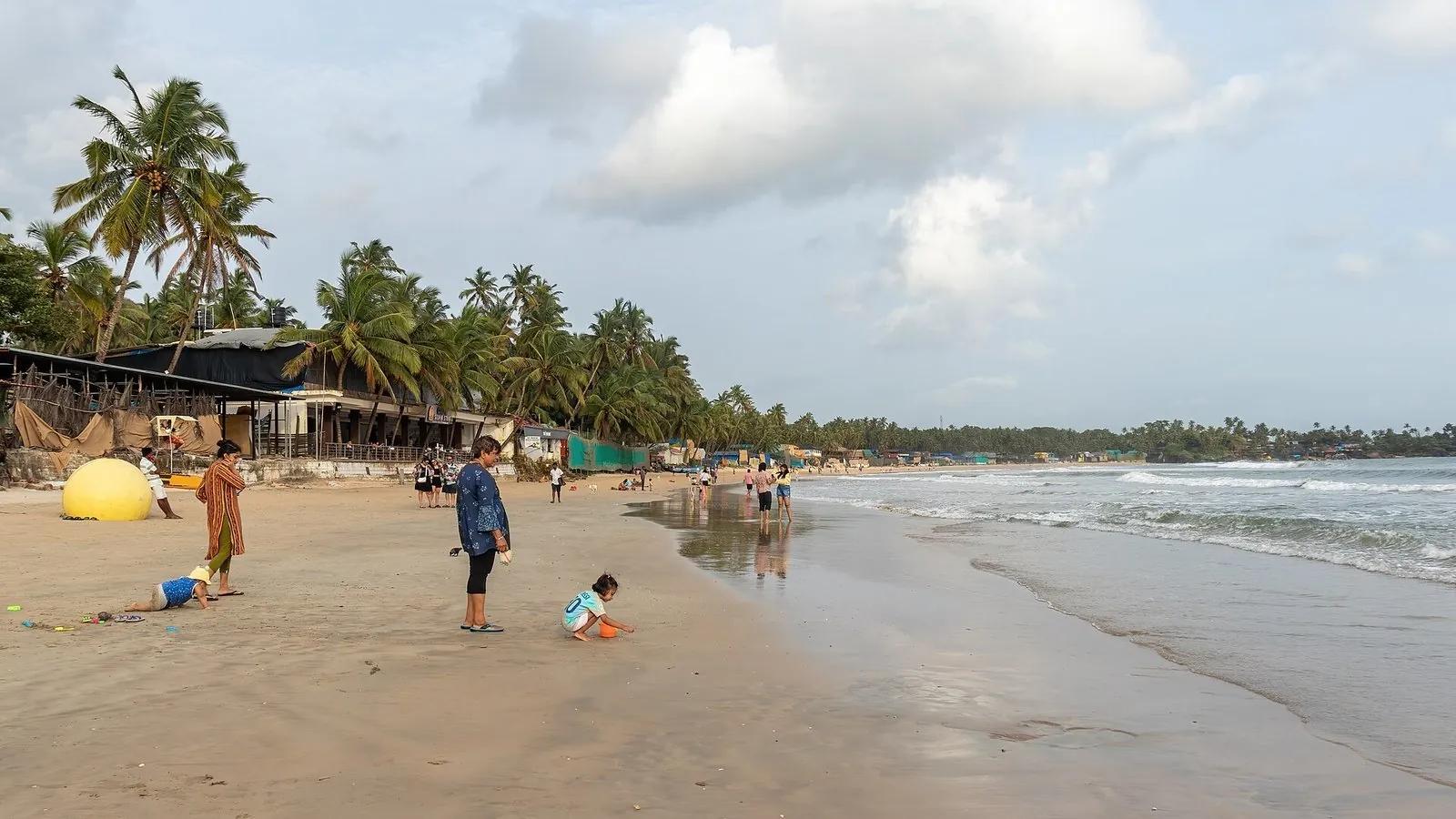
The cliche says north Goa is Baga, Calangute and Anjuna, one long strip of shacks, jet-skis, clubs and crowds, and south Goa is Palolem and Colva, empty sand and early nights. Both halves of that are real, and if all you know of the north is the Baga-to-Candolim run, you would be forgiven for booking straight south. But the north is not one place, it is two. There is the built-up party coast, and then, a short drive away, there is a completely different north: the quiet, boho far-north beaches up towards the border, the ferry-only islands in the river, the empty forts and rock-cut caves inland, the mangroves and the village markets. Almost none of that is on the postcards. It is the reason most of what we write about Goa is set in the north, and the reason the north-versus-south question is more interesting than it looks.

If the loud north is not your thing, you do not automatically have to go south to escape it, you just have to go one lane inland or one beach further up. That is the whole argument of our piece on why Goa is not overrated once you get past the beaches, and it runs through everything from a paddle in the backwaters and mangroves to the ferry-and-fields calm of Divar island. So before you decide north or south, decide which north you mean.
Choose the north if...
The north is the right call for most first-timers, and for anyone on a short trip or without their own transport. It is compact and walkable in places, taxis and rented scooters are everywhere, and there is simply more of everything within easy reach: more beaches, more food, more nightlife, more to do on a rainy afternoon. If you want variety and you do not want to plan hard, the north hands it to you. It is also, quietly, where the doing is: this is where you learn to surf a beginner break, take a watersports or dolphin trip without getting fleeced, do a yoga week around Arambol and Mandrem, ride the back-lanes and forts by bike, or paddle the mangroves. For eating, the north is where Goa is densest and best, from an honest guide to what to actually order to a cooking class, the real Mapusa Friday market, and the feni and urrak worth trying. And the north hides the heritage most people skip, the churches of Old Goa and the wildlife of the Cumbarjua backwaters. In short: come north for range and ease, then use it to find the quiet bits.
One honest note on the north. The famous strip, Baga, Calangute, Candolim, is developed, crowded and, in high season, genuinely hectic, and it is not what most people mean when they dream of Goa. The trick is to sleep away from it. Base yourself in Assagao, Anjuna, Vagator or further up around Morjim and Mandrem, and the north gives you the range without the crush.
Choose the south if...
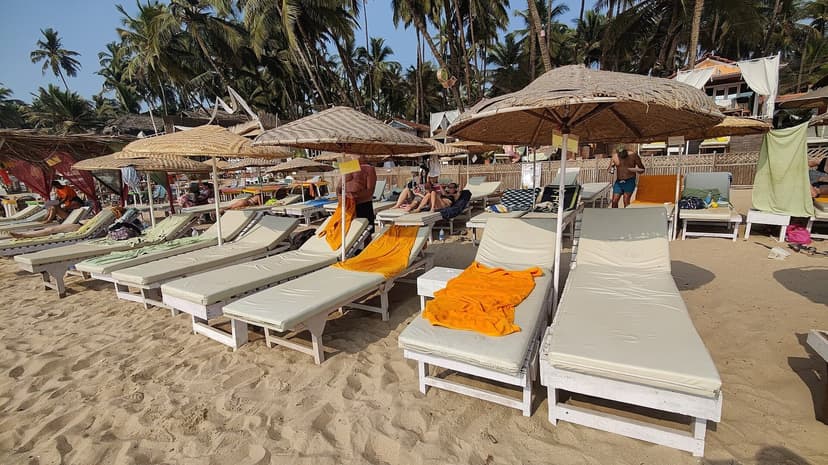
The south is the right call if you have been to Goa before, if you are travelling as a family or a couple, or if your whole goal is to do very little on a long, clean, quiet beach. This is where the coast opens out into the postcard bays, Palolem, Agonda, Patnem, Colva, Benaulim, Varca, Cavelossim, wide and calm and, for now, far less built up. As one r/Goa regular put it, the south is beautiful for quiet, lazy relaxation, less noisy than the north; another said the best days of their trip were on peaceful Agonda rather than the overhyped north. It is the half of Goa people fall for slowly. Away from the beaches there is real substance too: the older, sleepier Portuguese villages, spice country and waterfalls inland, turtle-nesting beaches like Galgibaga, and the clifftop drama of Cabo de Rama. We are still building our south Goa coverage, so for now this section is the honest overview rather than a stack of guides.
But the south asks more of you, and this is the part the dreamy posts leave out. You really do need your own scooter or car, because the beaches are spread out and taxis are dear; a Goan warned bluntly not to bother with the south unless you have your own transport, or you can end up stuck with a handful of expensive hotels and nowhere to walk to. There is less choice of food, fewer late options, and the sea can be rougher, with more aggressive waves than the calmer northern beaches, which matters with children. And the secret is getting out: locals now grumble that even Palolem is turning into the Baga of the south. The south is still the quieter half. It just is not the empty stretch of coast it was ten years ago, and it rewards people who come prepared.
If this is your first time I would spend all the time in one place. Goa looks small, but it is actually long, distance-wise. North and south both have beauty.
The practical bits that actually decide it
Three facts settle most of these arguments. Start with the airport, because it changed recently and trips people up. Goa has two now. The old one, Dabolim (code GOI), sits central and handy for the south; the new one, Manohar International at Mopa (code GOX), opened up in far-north Pernem in 2023 and now swallows most of the domestic flights. Land at Mopa and you are three-quarters of an hour from a north base, but the thick end of three hours from Palolem. Land at Dabolim and the south is on your doorstep. So book the airport that matches your half, and double-check which one your ticket actually uses. They are nowhere near each other.
The second fact is distance, and it catches everyone out. Goa looks tiny on the map. It is not. North to south is a good sixty to seventy kilometres of slow coastal road, two hours-plus by car and worse on a scooter, so do not plan to bounce between the two. On a short trip, do not even try to do both; you will spend it in traffic. Base in one half, day-trip within it, and if you have a week or more, split the stay, a few slow days south and the rest up north, or the other way round, but move once, not daily. Then there is the water, which nobody puts on a poster. Goas own pollution board tested the sea across 2024 and 2025 and found most tourist beaches, north and south alike, over the safe line for sewage; of nineteen tested, exactly one came back clean, Varca, in the south. Swim with a bit of sense wherever you are, pick the open, less built-up stretches, and do not assume pretty water is clean water. We go into that in our guide to the quieter places to swim.
| North Goa | South Goa | |
|---|---|---|
| The vibe | Lively, developed, lots going on | Quiet, slow, spread right out |
| The beaches | Busy strip (Baga/Calangute) plus quiet far-north (Arambol/Morjim) | Long, calm, emptier bays (Palolem/Agonda/Colva) |
| Getting around | Easy, walkable in places, taxis and scooters everywhere | You really need your own scooter or car |
| Food and nightlife | Huge choice, clubs, cafes, shacks, late nights | Low-key, fewer options, early nights |
| The airport | Mopa (GOX), the new far-north one | Dabolim (GOI), central and closer south |
| Best for | First-timers, short trips, variety, doing things | Repeat visitors, families, couples, switching off |
How to actually choose. First trip, short stay, or no transport: go north, and sleep away from the Baga-Calangute strip (Assagao, Anjuna, Vagator or up around Morjim). Been before, or after a quiet, slow, family or couples beach holiday: go south, but only if you are happy to rent a scooter or car. Match your flight to your half (Mopa for the north, Dabolim for the south) and confirm which airport your ticket uses. Do not day-trip between north and south, it is two-plus hours each way; base in one, or split a longer trip and move just once. Go in the dry season, roughly November to February. And wherever you swim, remember most Goa beaches failed recent water-quality tests, so pick open stretches and take care. When in doubt on a first trip, the north gives you more to fall back on.
- The short answer
- North for variety, nightlife, doing things and first trips; south for quiet, clean, spread-out beaches, families and repeat visitors. The cliche of north-party, south-peace is half true, the north also has a large quiet, offbeat side most people never see.
- Choose north if
- It is your first trip, you are short on time, you do not have your own transport, or you want range, food, nightlife and things to do. Sleep away from the Baga-Calangute strip and the north is far calmer than its reputation.
- Choose south if
- You have been before, you want to switch off on a long empty beach, or you are travelling as a family or couple. Bring your own scooter or car, because the south is spread out with fewer taxis, food options and late nights.
- The practical deciders
- Two airports: Mopa (GOX) for the north, Dabolim (GOI) for the south, and they are far apart. North to south is 2 to 2.5 hours, so do not day-trip between them, base in one half or split a longer trip and move once.
- The honest caveats
- The south now crowds up too (even Palolem), needs own transport, and can have rougher waves. And water quality is a Goa-wide problem, most tourist beaches north and south failed recent safe-bathing tests, with only Varca in the south passing clean.
If you want the one-line version: most first-timers should base in the north, sleep away from the famous strip, and use it to reach the quiet, offbeat Goa the crowds miss, which is exactly what most of our guides are about. Repeat visitors and anyone chasing a slow, spread-out beach should go south, with their own wheels. Everyone with more than a week should do a bit of both, and move only once. Whichever way you go, the Goa worth having is the one beyond the obvious beaches, and you can see the North Goa experiences that are currently bookable on the North Goa things-to-do page.
Common questions
Is North Goa or South Goa better for a first trip?
For most first-timers, the north. It is more compact, has far more choice of beaches, food, nightlife and things to do, and works even if you do not rent your own transport, since taxis and scooters are everywhere and the strips are walkable. The south is quieter and cleaner but spread out, with fewer options and a real need for your own wheels, which suits repeat visitors and people who just want to switch off more than a curious first-timer. The trick in the north is to sleep away from the crowded Baga-Calangute strip, in somewhere like Assagao, Anjuna or up around Morjim.
What is the real difference between North and South Goa?
North Goa is livelier and more developed, with the famous party beaches (Baga, Calangute, Anjuna), the bulk of the nightlife and food, and, less obviously, a large quiet and offbeat side inland and up towards the border. South Goa is slower, greener and much less built up, with long, calm, emptier beaches (Palolem, Agonda, Colva, Benaulim), fewer crowds and fewer facilities. The lazy summary is north-party, south-peace, but it misses that the north is really two places, a busy strip and a quiet hinterland, so the honest choice is about pace and convenience more than noise.
How far is North Goa from South Goa, and can you do both?
Further than it looks. North to south is roughly 60 to 70 km of slow coastal road, about 2 to 2.5 hours by car and longer on a scooter, so you should not plan to hop between them daily. On a short trip (up to about four days), pick one half and take day trips within it. With a week or more you can split your stay, for example a few quiet days in the south and the rest in the north, but move once rather than commuting back and forth. Trying to do both in a couple of days mostly means sitting in traffic.
Which Goa airport should you fly into, Mopa or Dabolim?
Match it to your half of the state. Goa has two airports: the older Dabolim (GOI), which is central and closer to the south, and the newer Manohar International at Mopa (GOX) in the far north of Pernem, opened in 2023, which now handles most domestic flights. If you are staying in the north, fly to Mopa (around 45 minutes from the north beaches); if you are staying in the south, fly to Dabolim, since Mopa to Palolem is nearly three hours. Just as important, check which airport your specific flight uses, because they are a long way apart and getting it wrong adds hours.
Is South Goa good for families and couples?
Yes, it is often the better half for both, which is why families and couples gravitate there. The long, calm, less crowded beaches around Benaulim, Varca, Cavelossim and Agonda suit slow days and small children, and the quieter pace is easier with a couple. The caveats are practical: you really need your own scooter or car because things are spread out and taxis are pricey, food and nightlife choices are limited, and some south beaches have rougher waves, so watch young children in the water. Come prepared with transport and you get the calmest, cleanest stretch of Goa.
Is South Goa still quiet, or is it getting crowded too?
Still the quieter half, but not the deserted coast it was a decade ago. Locals now openly grumble that popular spots like Palolem are becoming, in their words, the Baga of the south, busier and more built up each season. The genuinely quiet corners have shifted further out, to beaches like Agonda, Patnem, Cola, Kakolem or Galgibaga, several of which need a bit of effort to reach. So the south still delivers space and calm, especially outside peak season and away from Palolem itself, but go in expecting a lived-in, developing coast rather than a deserted one, and it will not disappoint you.
Sources and a note on this guide
I write for Refuje and I do not live in Goa. The north-versus-south framing, the vibe of each half, the practical warnings about transport in the south and about the crowds creeping into Palolem, comes from Goans and repeat visitors on r/Goa and r/goatravel, quoted and attributed and reported rather than endorsed. The hard facts are sourced: the two airports and their locations and distances (Dabolim and the 2023 Mopa/Manohar International) from airport and travel references; the water-quality figures, most tourist beaches failing the safe-bathing standard and only Varca compliant, from Goas State Pollution Control Board as reported in the Goan press. Distances and drive times are approximate and traffic-dependent, and our own detailed guides, which this piece links to, are almost all about the north for now; south Goa coverage is coming. The facts were checked in August 2026, and access, prices and conditions all change, so confirm before you book.
- The north-versus-south vibe, the do-not-try-to-do-both advice, the south-needs-transport warning and the Palolem-crowding note: attributed r/Goa and r/goatravel threads, quoted inline.
- The two airports (Dabolim GOI, and Mopa / Manohar International GOX, opened 2023) and the distances to the north and south beaches: airport and travel references.
- The water quality (most tourist beaches north and south failing the CPCB safe-bathing standard, only Varca compliant): Goa State Pollution Control Board testing as reported in the Goan press.
Goa changes fast, and the line between the quiet Goa and the crowded one moves every season, so treat this as a starting framework and check current conditions before you commit. If you know a corner that breaks these rules, keep it to yourself and a couple of friends, and, if you like, tell us so we can go quietly.
You Might Also Like
Edge City India 2026: The Practical Guide
Three weeks in Mandrem, North Goa. October 11 to November 1, 2026. Hundreds of founders, researchers, engineers, and creators living and building on a stretch of beach that is usually known for yoga retreats and quiet cafés, not hackathons. If you have applied, or you are wondering whether you...
Solo Female Travel in Goa: An Honest Safety Guide
An honest, balanced safety guide for women travelling to Goa alone: why it's comparatively safe and loved by many yet has a real, worsening harassment problem concentrated on the party beaches, where to base for a calmer trip, and the practical choices that tilt the odds in your favour.

Working Remotely from North Goa: The Honest Digital-Nomad Guide
An outsider's honest guide to working remotely from North Goa: why it isn't the beach-office of the photos, the power-and-internet problem that decides everything, where to base (Assagao, Siolim, Caranzalem), the cost, solo-female safety, and how to be a good guest rather than a coloniser.