
The Honest Guide to Goan Food: What to Actually Eat (and the Beach-Shack Version to Skip)
The Goan food most tourists eat is a lie of omission. It arrives at a beach shack as a Goan fish curry that is really a generic red gravy, a prawn balchao with the fire and none of the sourness, a butter chicken for the people who did not want Goan food anyway. It tastes fine. It is not Goan food. The real thing is one of the most distinct cuisines in India, and you could eat a week of it in Goa without ever meeting the version on the shack menu. You just have to know it is there, and mostly to leave the beach to find it.
I write for Refuje and I do not live in Goa, so none of this is home cooking I grew up with. It comes from food historians, the Goan cooks and eaters of r/Goa who argue about this with real heat, and a plate-by-plate reading of what they actually recommend. Hold on to two things before you order. Goan food is really two cuisines wearing one name, split down a Hindu and a Catholic line. And the famous dishes you think you know, vindaloo most of all, are not what the curry house taught you. Here is what to eat, where the locals say it is real, and how to take it home.
Two cuisines wearing one name
Goa was a Hindu land when the Portuguese took it in 1510, and they stayed four and a half centuries, far longer than the British lasted anywhere in India. That left the food split in two. The Catholic kitchen absorbed Portugal wholesale, its pork and its vinegar, its deep-frying and oven-baking, its egg-rich sweets and its easy way with alcohol, and turned all of it into vindaloo, sorpotel and bebinca. The Hindu kitchen, the one they call Saraswat, kept its older line, coconut and kokum and the sea, fish and rice and a sour-sweet balance, mostly without beef or pork. Same coast, same chillies, two different tables. A lot of eating well in Goa is just knowing which one you are sitting at.
| Hindu / Saraswat | Goan Catholic | |
|---|---|---|
| Meat | Fish and seafood; usually no beef or pork | Pork is the staple, beef too; sausage everywhere |
| Flavour base | Coconut, kokum and tamarind; sour-sweet, gentler | Goa vinegar, garlic and red chilli; bold, sharp, deep |
| Technique | Ground-coconut gravies, steaming, light frying | Deep-frying, slow vinegar braises, oven-baking (Portuguese) |
| Signature dishes | Fish curry rice (xitt kodi), the bhajis, sannas | Vindaloo, sorpotel, xacuti, cafreal, chourico sausage |
| Sweets | Coconut sweets, patoleo, doce | Bebinca, dodol, the Christmas kuswar box |
Order the fish curry rice
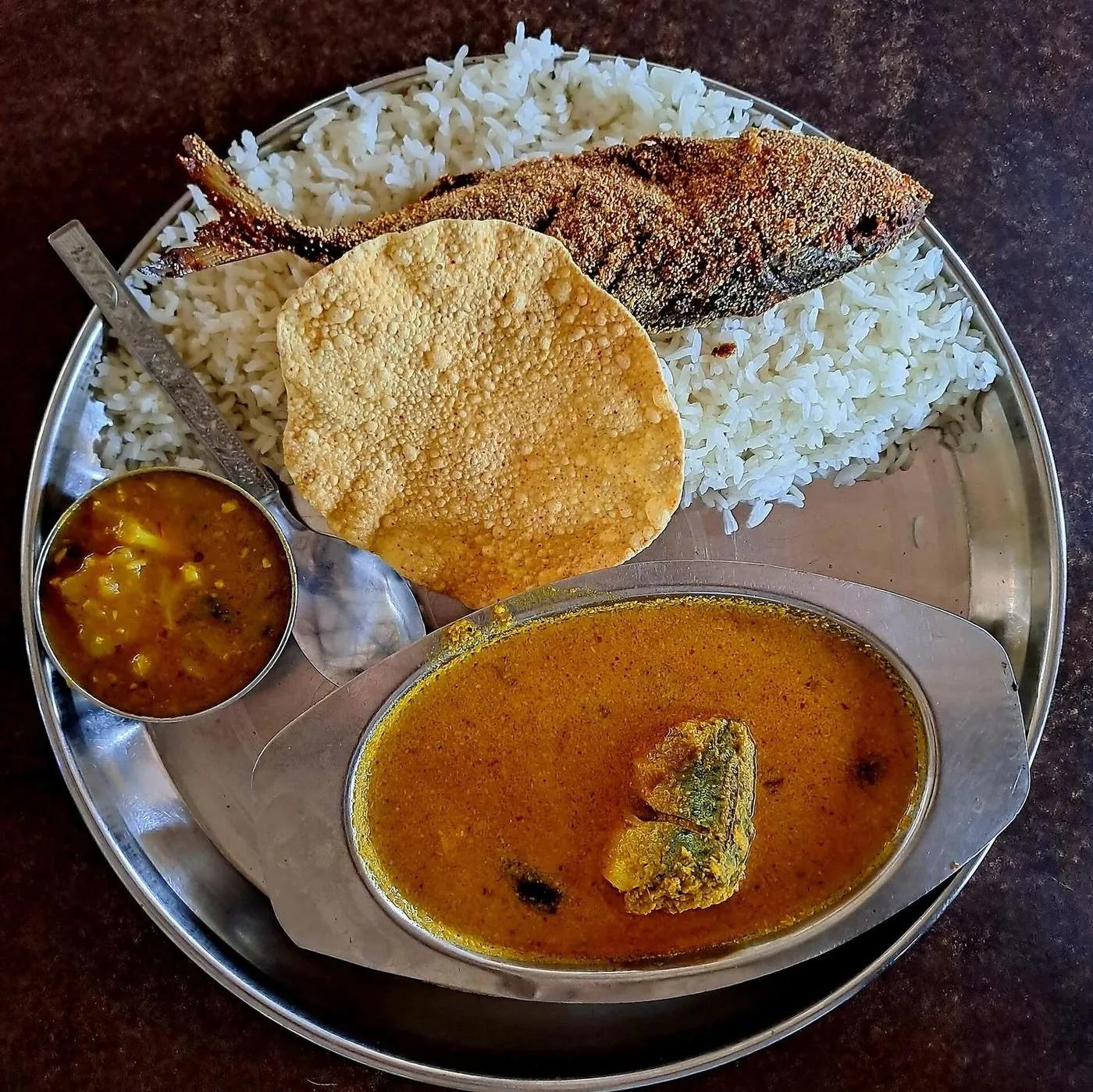
If you eat one thing, eat xitt kodi, fish curry rice, the plate at the top of this page and the meal most Goans actually eat most days. A whole fried mackerel or a slab of kingfish, rice, a papad, and the curry that matters, coconut ground with red chillies and turmeric and soured with kokum until it is orange and tangy and faintly sweet. The good ones are never on the beach. On r/Goa the fish-thali obsessives trade addresses like contraband, naming the same small, home-style rooms over and over: Vinayak, Kuttikar, Anand, the fish thali near the Anjuna police station, Rukhmini in Arambol. One described a place where they did not even order the thali, just plates of kingfish and chonak and salad. That is the register to look for, a shabby room, a fixed plate, a queue of locals. Vegetarians have it harder, and Goans admit it, but the Saraswat side has its own quiet repertoire of bhajis, patal, suki, usal, that a good Hindu kitchen does beautifully.
You will find better authentic Goan thalis at very local spots.
The famous ones, honestly
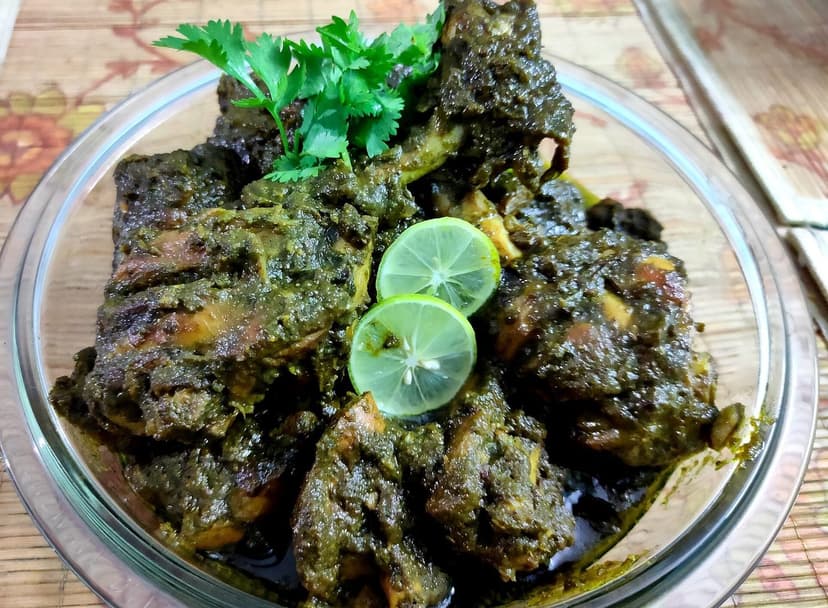
Now the dishes with reputations, starting with the one everyone gets wrong. Vindaloo is not a dare. The name is Portuguese, carne de vinha d alhos, meat in wine and garlic, and the real Goan version is pork cooked slow with Goa vinegar, garlic, red chillies and a little palm jaggery, sour and deep rather than merely hot. The curry-house vindaloo, the hottest thing on the menu, is a British invention that lost the plot. Sorpotel is its offal cousin, thick and dark and better on the second day. Xacuti is the coconut curry whose masala is roasted almost black before grinding. Cafreal is the green one, chicken in a coriander-and-chilli paste that reached Goa from Portuguese Africa. And chourico, the vinegar-cured pork sausage, turns up in a bread roll, in a rice, in the bean stew called feijoada. None of it is subtle. All of it is exact.
Street food, Christmas sweets and the drink
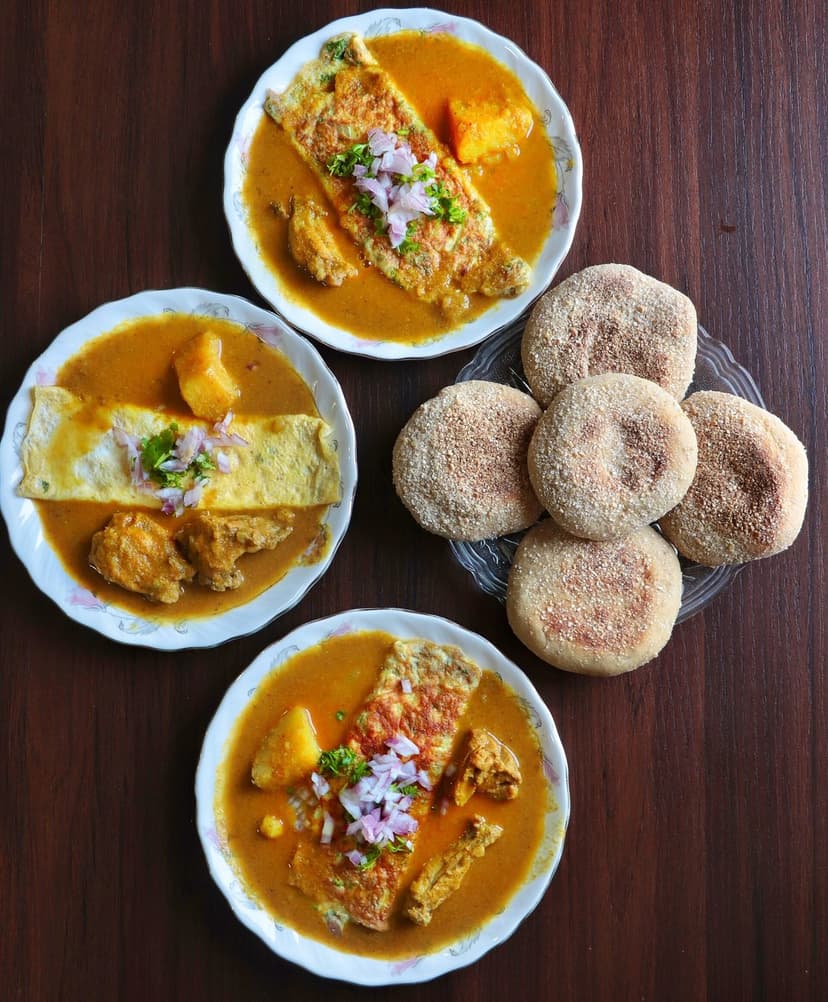
The street food has its own legends. Ross omelette is the one to chase, an omelette drowned in a spicy meat gravy and eaten with poi, the soft local bread, off a cart after dark; on r/Goa the arguments over whose is best, Ulhas or Gopal, have run for years. Poi and pao, the Goan breads, are a small culture on their own, the poder still cycling them round the villages at first light.
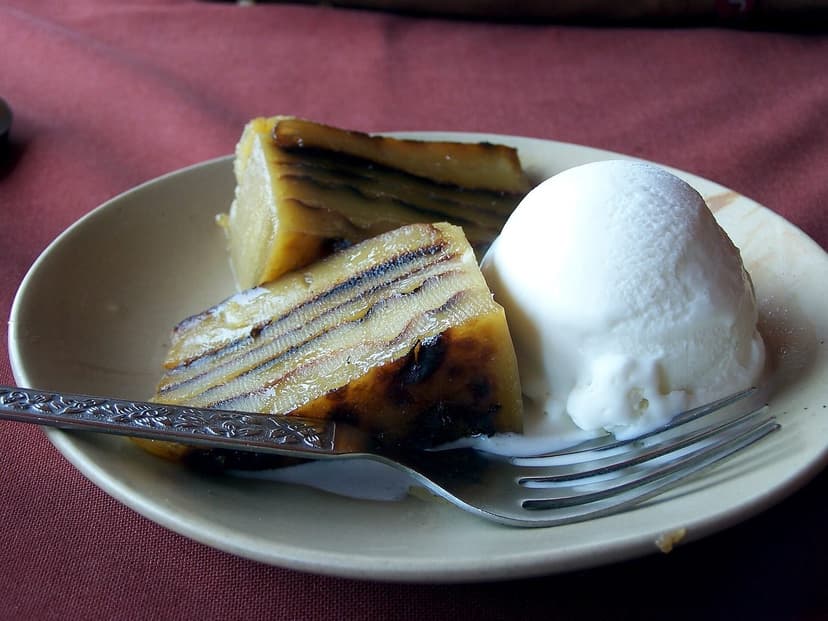
The sweets are where the Catholic kitchen shows off. Bebinca is the queen, a cake of coconut milk, egg yolks and sugar baked one thin layer at a time, sometimes a dozen layers deep, so it slices like fine plywood. It belongs to Christmas, to kuswar, the box of home-made sweets, dodol and neuroes and kulkuls, that Goan Catholic families still make every December. And here is the lovely part, as one Goan explained on Reddit: kuswar is not sold, it is given, carried round to Hindu and Muslim neighbours and to any family that lost someone that year. You will not find that on a menu. You have to be let into a kitchen.
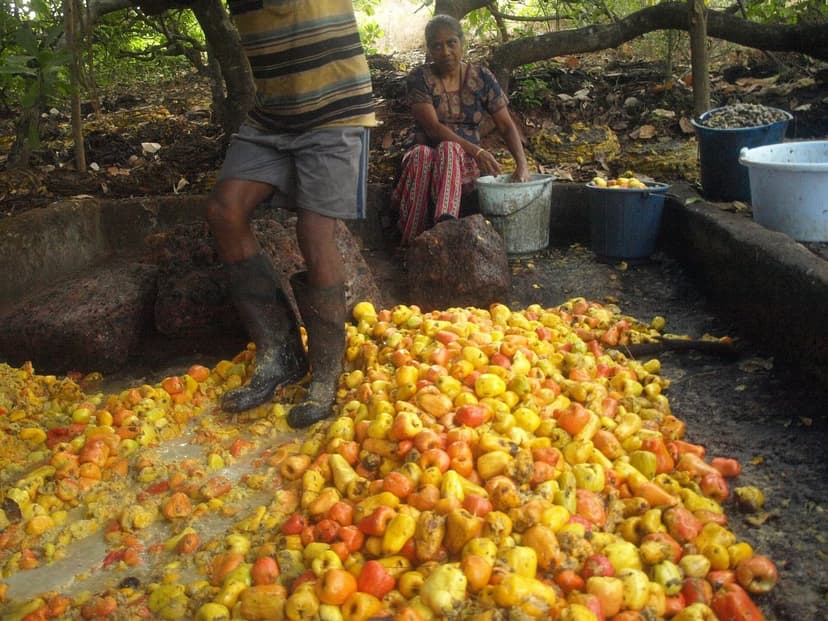
The drink is feni, distilled from the fruit the cashew nut hangs off, or from coconut toddy, still pressed the old way underfoot in the villages. It is an acquired taste and it announces itself, the smell arriving well before the glass. Drink the cashew kind cold, with a squeeze of lime, and do not treat it like a beach cocktail. It is a country spirit with a GI tag and a temper.
How to eat the real thing
So, plainly. Get off the beach strip to eat, into Panjim and Margao and the villages, and follow the locals rather than the English menus and the neon multi-cuisine boards. Order the fish thali, the pork, the sausage, the things a shack will not do well. And if you want to actually understand it, learn to cook it. North Goa has a clutch of small cooking classes run by home cooks, and a morning grinding a xacuti masala from scratch teaches you more than a week of eating out. One Goan on Reddit taught himself chicken cafreal from a local chef's videos and got the meat falling off the bone, and named the tell of a good one, not drowned in gravy like the restaurants. That is the whole lesson. Goan food is a home food the tourist economy flattened, and the way back to it runs through a kitchen, not a buffet.
This is the edible half of the quiet, Portuguese-shadowed Goa the rest of this series keeps turning up, the one behind the beaches. It goes with a walk through the old Latin quarter of Fontainhas and the wider case for whether Goa is overrated at all. Same argument, different sense.
Small home-cook cooking classes are one of the best things you can do to actually learn Goan food, and Refuje is looking at adding a Goan kitchen experience. In the meantime, you can see the North Goa experiences that are currently bookable on the North Goa things-to-do page. Wherever you eat, the rule holds: off the beach, follow the locals, and order the thing the shack will not make.
Common questions
What makes Goan food different from other Indian food?
Two things. It is coastal Konkani cooking, built on rice, fresh fish, coconut and the sour fruit kokum. And it carries four and a half centuries of Portuguese rule, which gave the Catholic side pork, vinegar, deep-frying, oven-baking and egg-rich sweets. The result is a cuisine that is at once tropical and sour-sweet and distinctly un-north-Indian, with dishes like fish curry rice, vindaloo, xacuti, sorpotel and bebinca that exist nowhere else in quite this form.
What is the difference between Hindu and Catholic Goan food?
They are almost two cuisines. The Hindu (Saraswat) kitchen leans on coconut, kokum and tamarind, fish and vegetables, and mostly avoids beef and pork, with fish curry rice and coconut-based bhajis at its heart. The Catholic kitchen, shaped by Portugal, makes pork the staple and uses a lot of Goa vinegar, garlic and chilli, in vindaloo, sorpotel, sausage and the layered Christmas sweets. Knowing which table you are at tells you what to order.
What should I order for real Goan food, not tourist food?
Start with xitt kodi, fish curry rice, at a small local place rather than a beach shack. Add the pork if you eat it (a real vindaloo, sorpotel), chicken cafreal or xacuti, and the Goan chourico sausage. Look for shabby, home-style rooms full of locals with a fixed thali, not English menus and multi-cuisine boards. Goans on forums repeatedly name tiny, unglamorous spots over the famous tourist restaurants.
Is Goan vindaloo really that spicy?
Not the real one. Vindaloo comes from the Portuguese carne de vinha d alhos, meat in wine or vinegar and garlic, and the authentic Goan dish is pork cooked slowly with Goa vinegar, garlic, chillies and a little palm jaggery, sour and deep rather than punishing. The idea that vindaloo means the hottest dish on the menu is a British curry-house invention. Ordered in Goa, it is tangy and rich, not a heat challenge.
Where do locals actually eat in Goa?
Away from the beach strip, in Panjim, Margao and the villages, at small home-style eateries rather than shacks. On r/Goa, fish-thali lovers repeatedly recommend modest, unfancy places (names like Vinayak, Kuttikar, Anand come up again and again) over the tourist restaurants. The tells of a good one are a fixed thali, a plain room and a queue of local regulars. Those specific names change over time, so treat them as a register to look for rather than a fixed list.
What are the famous Goan sweets, and what is bebinca?
Bebinca is the star, a rich cake of coconut milk, egg yolks and sugar baked one thin layer at a time, sometimes a dozen or more layers, so it slices in distinct bands. It is central to kuswar, the box of home-made Christmas sweets (also dodol, neuroes, kulkuls) that Goan Catholic families make every December and traditionally give away to neighbours rather than sell. Most of these sweets live in homes, not restaurants.
Can you take a Goan cooking class?
Yes. North Goa has several small cooking classes run by home cooks and chefs, and they are one of the best ways to actually understand the food, learning to build a xacuti or cafreal masala from scratch. It is a common recommendation for travellers who want more than a restaurant meal, and it travels home with you as a skill. Refuje is looking at adding a Goan kitchen experience; until then, the classes run independently around the north-coast villages.
Sources and a note on this guide
I write for Refuje and I do not live in Goa or cook its food. The history and the dishes are from food-history and culinary sources; the passion about what is authentic, the named local eateries, the Ross-omelette rivalries and the kuswar tradition come from Goans on r/Goa, quoted and attributed as they appear. The restaurant names are their recommendations, not our verified picks, and small places change, so treat them as a guide to the kind of place to look for. Nothing here is a first-hand claim of mine. The facts were checked in August 2026.
- Portuguese conquest of Goa (1510) and its 450-year influence on the Catholic kitchen (pork, vinegar, deep-frying, oven-baking, egg sweets), and the Hindu/Saraswat split (coconut, kokum, fish): English Wikipedia (Goan cuisine, Goan Catholic cuisine) and food-history sources.
- Xitt kodi (fish curry rice) as the staple; vindaloo etymology (carne de vinha d alhos) and the real-vs-curry-house distinction; sorpotel, xacuti, cafreal, chourico, feijoada: culinary references and Wikipedia.
- Ross omelette, poi/pao, sannas, bebinca, dodol and the kuswar Christmas-sweets tradition; feni (cashew and coconut, GI-tagged): Wikipedia and Goan food writing.
- Where locals eat vs tourist shacks, the fish-thali recommendations, the Ulhas/Gopal Ross-omelette debate, cooking-at-home and the cooking-class tip: attributed r/Goa threads, quoted inline.
Menus, prices and small eateries change constantly, so check current reviews and ask locally before you build an evening around any one place. If you know Goan food better than the sources here do, that is the correction this guide should carry, so tell us.
You Might Also Like
Edge City India 2026: The Practical Guide
Three weeks in Mandrem, North Goa. October 11 to November 1, 2026. Hundreds of founders, researchers, engineers, and creators living and building on a stretch of beach that is usually known for yoga retreats and quiet cafés, not hackathons. If you have applied, or you are wondering whether you...
Solo Female Travel in Goa: An Honest Safety Guide
An honest, balanced safety guide for women travelling to Goa alone: why it's comparatively safe and loved by many yet has a real, worsening harassment problem concentrated on the party beaches, where to base for a calmer trip, and the practical choices that tilt the odds in your favour.

Working Remotely from North Goa: The Honest Digital-Nomad Guide
An outsider's honest guide to working remotely from North Goa: why it isn't the beach-office of the photos, the power-and-internet problem that decides everything, where to base (Assagao, Siolim, Caranzalem), the cost, solo-female safety, and how to be a good guest rather than a coloniser.