The Caves Before the Beaches: Ancient Rock-Cut Goa
Goa sells its history in one flavour, Portuguese: the churches of Old Goa, the whitewashed villas, four and a half centuries of Estado da India. That is real, and it is barely half the story. Cut into the laterite hills of the interior, an hour inland from the beaches, are caves that were old before a single Portuguese ship arrived, some of them fifteen hundred years old, carved by hand into solid rock as shrines and shelters. Almost nobody visits them. There is a thread on r/Goa where a traveller asks for places with a real historic feel that are totally unheard of, and a local reels off a list, a Jain temple ruin here, roadside stones there, rock-cut caves on a highway that are, in his word, completely neglected. That neglect is exactly why they are worth your morning.
I write for Refuje and I do not live in Goa, so the archaeology here is sourced, from the Archaeological Survey, heritage records and the Goan press, with the on-the-ground feel drawn from Goans on r/Goa who have actually gone looking. This is a guide to the oldest human-made things you can still stand inside in North Goa: three sets of rock-cut caves in the Bicholim and Ponda interior, and a note on the even older marks their ancestors left further out. Take a scooter and a sense of the improbable. You will likely be the only visitor there.
Start at Arvalem
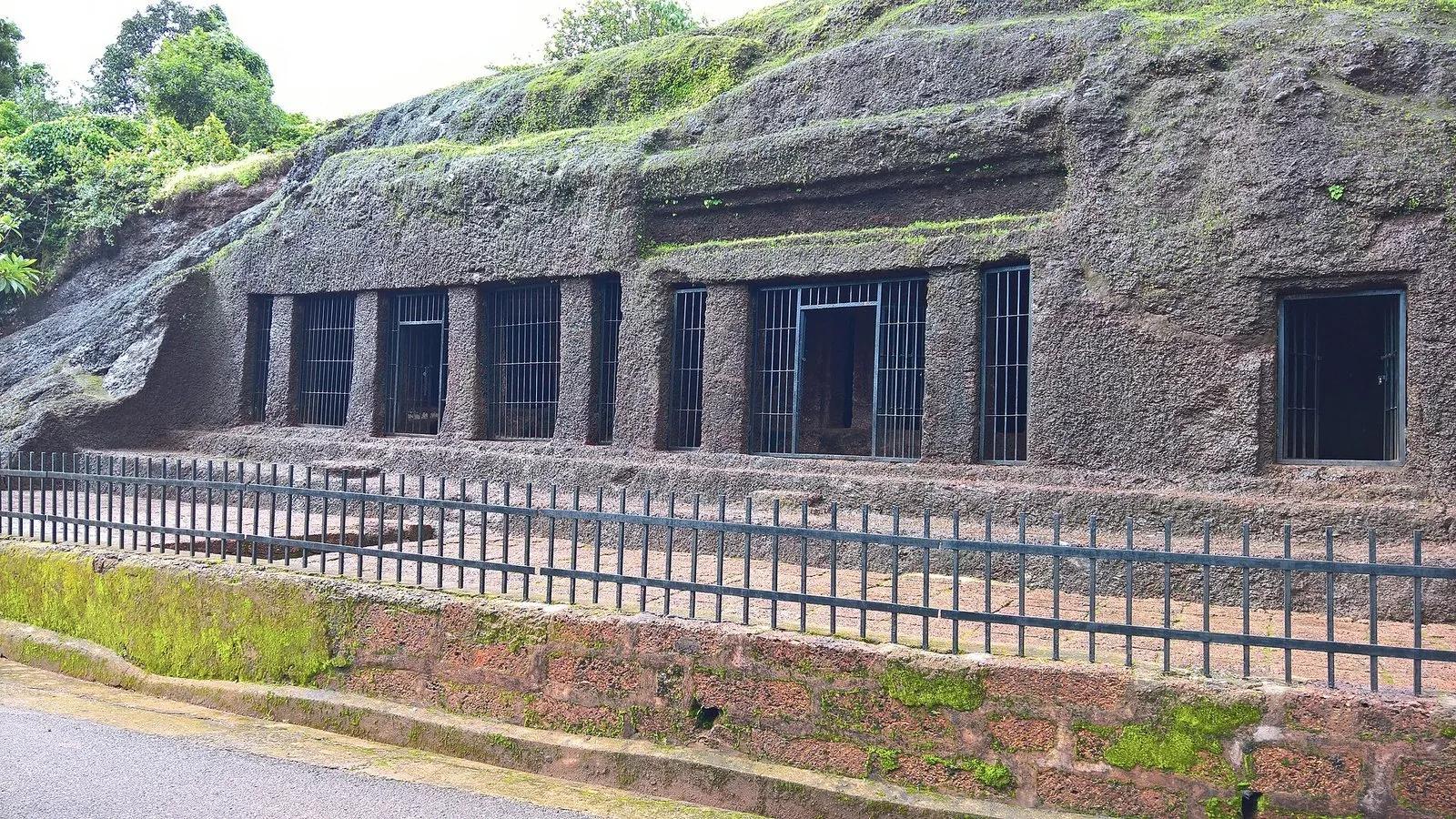
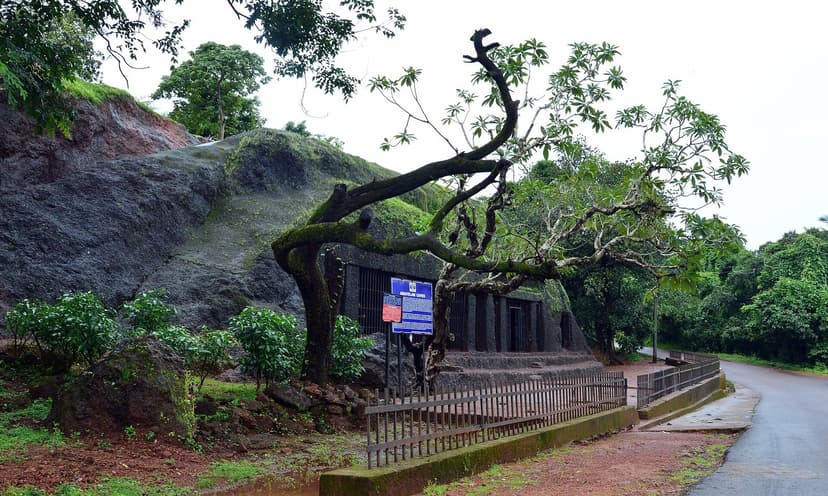
If you do only one, do Arvalem. Near Sanquelim in Bicholim, also called the Pandava caves, and a genuinely strange thing to find in this state. Most rock-cut caves in India were hacked out of hard basalt; these were cut into soft red laterite, the crumbly stone the whole coast is built on, which almost nobody attempts because it will not hold a clean edge. Date them to the 5th to 7th century and they are older than a lot of what gets called ancient India. Six chambers in a row. Five held shrines, the sixth was probably a kitchen or a store; Shiva lingas sit in them now, so the place reads as Hindu. Then again, a large Buddha statue turned up nearby, and the bare monk-cell plainness of the rooms argues the other way: Buddhists first, a Hindu temple grafted on centuries later. And local legend, of course, gives the whole site to the Pandava brothers of the Mahabharata, waiting out their exile. History and myth, one address.
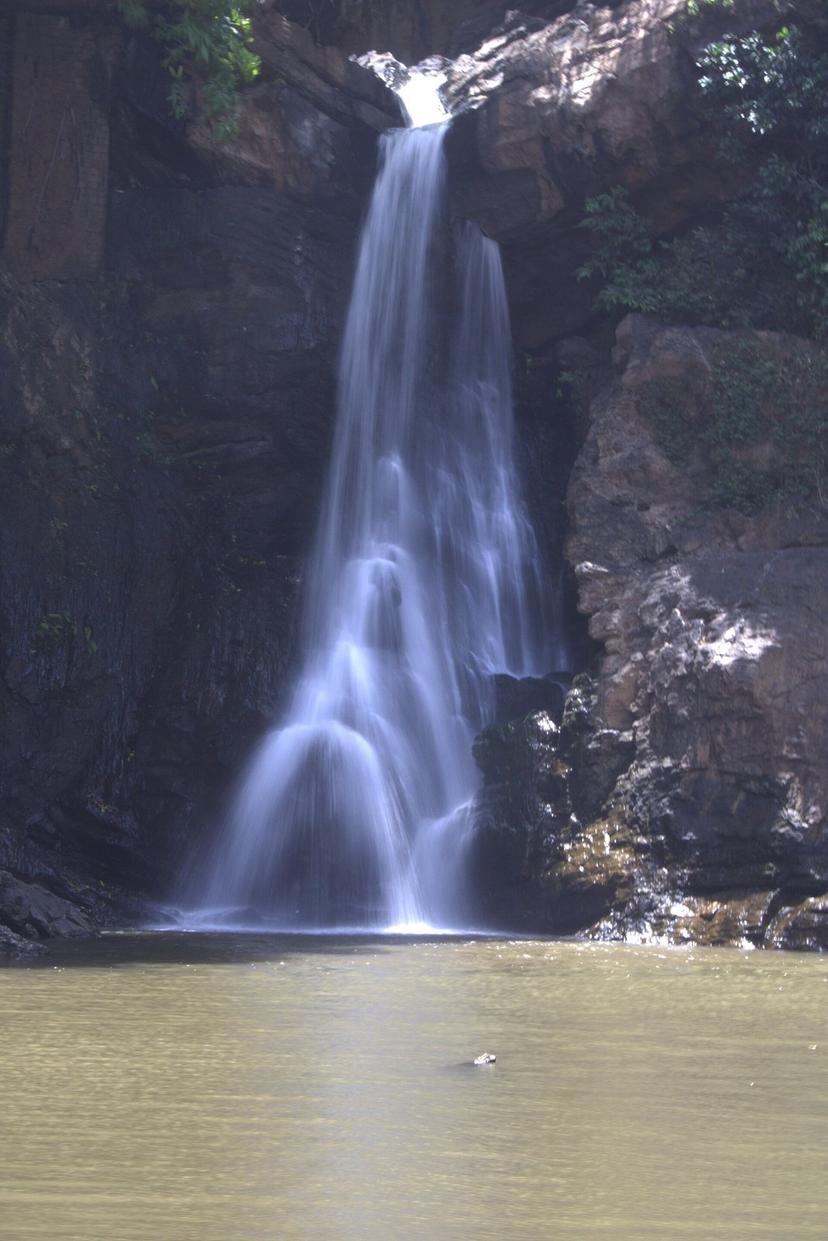
The other reason to start here is that Arvalem comes with a day built around it. Walk a few minutes from the caves and you reach the Arvalem waterfall, a single clean drop into a green pool that roars in the monsoon and thins to a trickle by April; above it stands the old Rudreshwar temple. Caves, a waterfall and a working shrine inside one small loop, and on most mornings nobody in any of them. Go early, before the light goes flat and the heat gets silly, wear something with grip for the laterite, and give the caves ten quiet minutes before you go chasing the water. They are fifteen hundred years old. They can have ten minutes.
For the keen: Lamgao and Khandepar
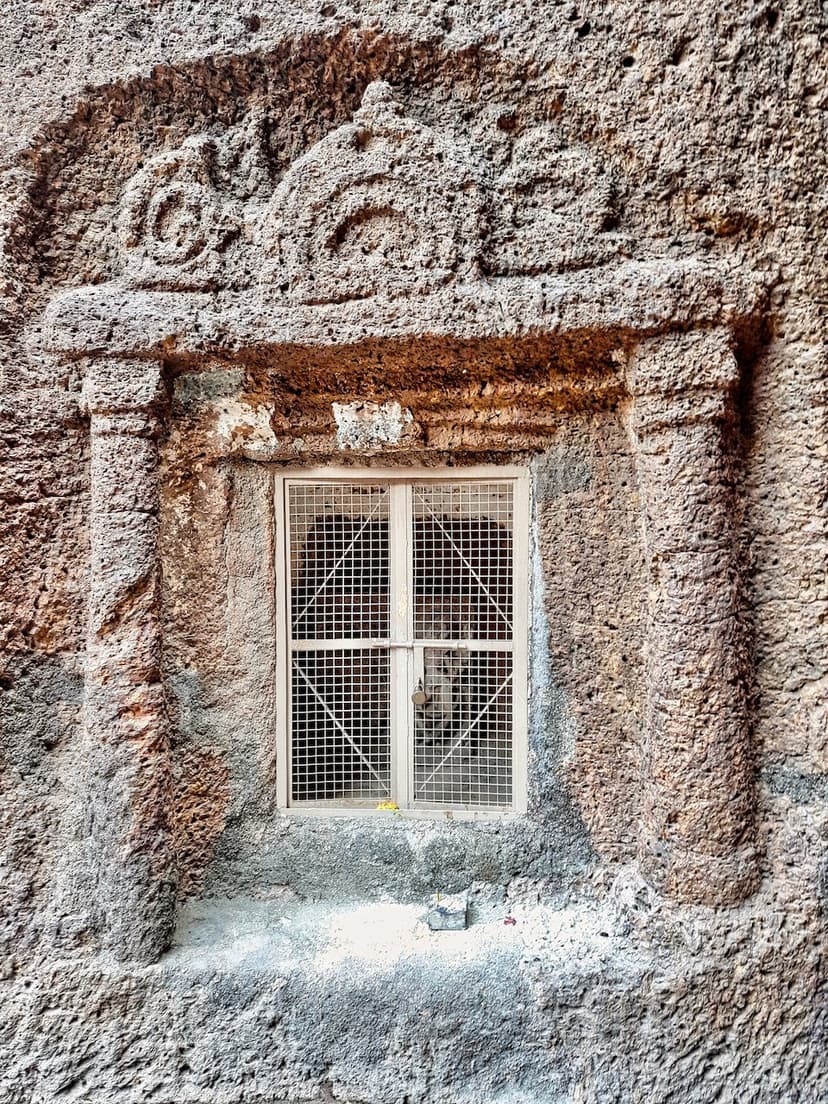
Two more sets of caves reward anyone who catches the bug. Lamgao, about four kilometres from Bicholim town, has two rock-cut caves at the foot of a hill that mining has chewed at over the years, which is its own sad Goan story. The first cave has a two-pillared front and an antechamber, with a linga inside that the late archaeologist V R Mitragotri dated to around 800 CE; the second is unmistakably Buddhist in plan, a flat-roofed rectangle held up by four squat laterite pillars. Then there is Khandepar, tucked in forest near Ponda behind the Mandovi, four small laterite caves that are among the oldest built things left in Goa and were, astonishingly, only rediscovered in 1970. Each is a pair of plain cells; the Kadamba dynasty later added tiered roofs and turned them to Hindu use around the 10th and 11th centuries, though one cave keeps a meditation pedestal that argues for Buddhist monks first. None of these are grand. They are small, quiet, and cut by hand out of the same red rock the whole state is built on, and standing in one is the closest you will get in Goa to touching the pre-Portuguese past.
Most temples in Goa are ancient. They survived. Each one tells a tale.
The even older layer
If the caves are old, the marks under them are ancient. Scattered across the Konkan, including Goa, are petroglyphs, images pecked into flat laterite by people thousands of years ago, long before any temple or cave. There is a good r/Goa thread where someone shares Goas rock carvings and the comments light up: a note that the same carvings run up the coast into Ratnagiri in Maharashtra, that some seem to show animals no longer found here, even, one commenter swears, a creature that looks more like a mammoth than an elephant. It is the oldest human signature in the region, and it reframes the whole place. Honesty, though: the best and most accessible of these carving sites, and the well-known rock-cut caves at Rivona, are down in the south of Goa, in Sanguem, not the north. Chase them if the bug bites hard. For a North Goa day, the three caves above are your layer of deep time, and they are plenty.
| Arvalem, the easy one | Lamgao and Khandepar, for the keen | |
|---|---|---|
| Age | 5th to 7th century, laterite rock-cut | Roughly 6th to 12th century, laterite rock-cut |
| What is there | Six chambers, Shiva lingas, a Buddhist backstory | Small plain cells, clear Buddhist and later Hindu use |
| The extra | A waterfall and a temple in the same loop | Deep quiet and the sense of a real find |
| Effort | Easy roadside stop near Sanquelim | A bit of hunting near Bicholim and Ponda |
| Best for | Anyone, as a half-day inland | People who liked Arvalem and want more |
Seeing the caves, practically. These are inland, in Bicholim and Ponda, so plan a half-day away from the coast rather than a quick hop; a scooter or car is the only sensible way. Arvalem is the simplest to find and pairs with its waterfall, which is fullest in the monsoon and just after; the caves themselves are fine year-round. Lamgao and Khandepar take a little hunting, so use a map app and be ready to ask a local. Wear shoes with grip, carry water, go in the morning, and treat the sites gently: do not touch or climb on carvings, do not leave litter, and remember the lingas are still worshipped. There are no tickets or facilities to speak of, which is part of the deal. Confirm access before a long detour, especially at Lamgao, where mining has changed the ground around it.
- The idea
- Goas history is sold as Portuguese, but a layer 1,000 to 1,500 years older sits inland: rock-cut caves carved by hand into laterite, from a time of Buddhist monks and early Hindu kings, and almost completely ignored by beach tourism.
- Arvalem (Pandava) Caves
- Near Sanquelim in Bicholim. Cut into laterite between the 5th and 7th centuries, six chambers with Shiva lingas and a likely Buddhist origin (a Buddha statue was found nearby). A waterfall and the Rudreshwar temple sit alongside, making one easy inland loop.
- Lamgao and Khandepar
- Lamgao, near Bicholim, has two rock-cut caves, one clearly Buddhist, with a linga dated to around 800 CE. Khandepar, near Ponda, has four small laterite caves, among Goas oldest, rediscovered only in 1970 and later adapted by the Kadamba dynasty.
- The older layer
- Prehistoric petroglyphs, images pecked into laterite thousands of years ago, survive across the Konkan including Goa, some showing animals no longer found here. The best carving sites and the Rivona caves are mostly in south Goa (Sanguem), not the north.
- Practical
- All inland, best by scooter or car as a half-day. No tickets or facilities. Go in the morning, wear grippy shoes, do not touch the carvings, and remember the lingas are still worshipped. Arvalem is the easy start; Lamgao and Khandepar take some hunting.
Standing in a fifteen-hundred-year-old room cut out of the same red rock the beaches sit on is a quiet kind of thrill, and it belongs to the Goa this series keeps chasing. It sits on the same laterite that shapes the state's plateaus and sadas, alongside the later, grander heritage of Old Goa, and it is part of the wider case for the Goa beyond the beaches. You can see the North Goa experiences that are currently bookable on the North Goa things-to-do page.
Common questions
Are there ancient caves in North Goa worth visiting?
Yes, though hardly anyone does. In the Bicholim and Ponda interior are three sets of rock-cut caves carved by hand into laterite long before the Portuguese arrived: the Arvalem or Pandava caves near Sanquelim, the Lamgao caves near Bicholim, and the Khandepar caves near Ponda. They date from roughly the 5th to 12th centuries and mix early Buddhist and Hindu use. They are small, quiet and unticketed, and for anyone curious about the Goa that predates the beaches they are among the most interesting half-days in the state.
What are the Arvalem or Pandava caves?
They are a set of rock-cut caves near Sanquelim in Bicholim, North Goa, carved into soft red laterite somewhere between the 5th and 7th centuries. There are six chambers, five with Shiva lingas, so the site is Hindu in use today, but a Buddha statue found nearby and the plain, monastic layout point to a Buddhist origin. Local legend links them to the exiled Pandava brothers of the Mahabharata. A waterfall and the Rudreshwar temple sit close by, so most people see all three together on one inland loop.
How old are Goas rock-cut caves?
Older than most visitors expect. The Arvalem caves are dated to the 5th to 7th centuries. Lamgao is put at the 6th to 7th centuries, from the Bhoja period, with a linga inside dated to around 800 CE. The Khandepar caves near Ponda are usually dated between the 9th and 12th centuries and were adapted by the Kadamba dynasty. Beneath all of them, prehistoric rock carvings across the Konkan are older still, by thousands of years. So Goas human history runs far deeper than its Portuguese chapter suggests.
How do you get to the Lamgao and Khandepar caves?
Both are inland and take a little effort. Lamgao is about 4 km from Bicholim town, at the base of a hill, and the area has been affected by mining, so use a map app and ask locally for the exact spot. Khandepar is near Ponda, set back in forest behind the Mandovi river, and was so overlooked it was only rediscovered in 1970. A scooter or car is really the only practical way to reach either, ideally combined with Arvalem into a single inland day. There are no facilities, so carry water and go in daylight.
Are the Goa caves the same as the Ajanta and Ellora caves?
No, and it is worth knowing the difference. Ajanta and Ellora in Maharashtra are vast, elaborately sculpted caves cut into hard basalt. Goas caves are small, plain and cut into soft laterite, and they were shelters and simple shrines rather than grand monuments. What they share is the rock-cut idea, chambers carved by hand out of solid stone, and a Buddhist-then-Hindu history. Come to Goas caves for age, atmosphere and solitude, not for scale or carving, and you will appreciate them for what they are.
Are there prehistoric rock carvings in Goa?
Yes. Petroglyphs, images pecked into flat laterite thousands of years ago, survive in Goa as part of a wider band of such carvings across the Konkan coast into Maharashtra. Some appear to show animals no longer found in the region, which makes them a genuine window onto deep prehistory. The most accessible and well-known carving sites, and the rock-cut Rivona caves, are largely in south Goa, in the Sanguem area, rather than the north. For a North Goa trip, the Arvalem, Lamgao and Khandepar caves are the practical way to reach the states ancient past.
Sources and a note on this guide
I write for Refuje and I do not live in Goa, and I have not crawled through all of these caves myself. The archaeology, the dates for Arvalem, Lamgao and Khandepar, the laterite rock-cut technique, the Buddhist-then-Hindu histories and the Kadamba and Bhoja links, comes from the Archaeological Survey, heritage encyclopaedias, the Goan press and travel references. The feel of the places, the sense that they are neglected and the pleasure of finding them, comes from Goans on r/Goa and r/goatravel, quoted and attributed, and reported rather than endorsed. Where I have said something is in the south rather than the north, that is deliberate, so you do not drive to Bicholim expecting Sanguem. Access changes, especially around Lamgao where mining has reshaped the ground, so check before a long detour. The facts were checked in August 2026.
- Arvalem (Pandava) Caves, 5th-7th century, laterite rock-cut, six chambers, Shiva lingas and Buddhist origin, plus the waterfall and Rudreshwar temple: Archaeological Survey, Wikipedia and Goan heritage references.
- Lamgao caves (6th-7th century, Bhoja period, Buddhist second cave, linga dated c. 800 CE) and Khandepar caves (near Ponda, four laterite caves, rediscovered 1970, adapted by the Kadambas): heritage records, the Goan press and travel references.
- The neglected-heritage framing, the ancient-temples point and the Konkan petroglyphs (including the animal carvings): attributed r/Goa and r/goatravel threads, quoted inline.
Old sites can be fenced off, damaged or simply hard to find, and inland Goa changes with mining and roads, so confirm access before you travel. If you know these caves and their history better than these sources do, tell us and we will make this more accurate.
You Might Also Like
Edge City India 2026: The Practical Guide
Three weeks in Mandrem, North Goa. October 11 to November 1, 2026. Hundreds of founders, researchers, engineers, and creators living and building on a stretch of beach that is usually known for yoga retreats and quiet cafés, not hackathons. If you have applied, or you are wondering whether you...
Solo Female Travel in Goa: An Honest Safety Guide
An honest, balanced safety guide for women travelling to Goa alone: why it's comparatively safe and loved by many yet has a real, worsening harassment problem concentrated on the party beaches, where to base for a calmer trip, and the practical choices that tilt the odds in your favour.

Working Remotely from North Goa: The Honest Digital-Nomad Guide
An outsider's honest guide to working remotely from North Goa: why it isn't the beach-office of the photos, the power-and-internet problem that decides everything, where to base (Assagao, Siolim, Caranzalem), the cost, solo-female safety, and how to be a good guest rather than a coloniser.