
The Forts Nobody Photographs: North Goa Beyond Aguada and Chapora
Goa has two forts everybody visits and about a dozen it drives straight past. The two are Aguada, where the coach parties queue for the lighthouse, and Chapora, which most people know as the fort from Dil Chahta Hai and climb for the Instagram shot rather than the history. There is a wonderful moment on r/goatravel where someone posts a reel captioned your Goa trip is not complete until you visit this sea fort, and a local replies, deadpan, yes, all tourists please go there, Candolim, Baga, Calangute is the bestest. Someone else adds the correction that stings: the thing in the reel is not even a fort, it is a bastion of Aguada, the bit that stuck out into the sea. That is the state of fort tourism in Goa. The famous ones are half-understood and mobbed, and five genuinely good forts sit empty a short drive away.
I write for Refuje and I do not live in Goa, so the history below is looked up, not remembered, off Goa Tourism, INTACH and the heritage records, with the ground-level colour from Goans on r/Goa. Five forts, worth the detour, and each a different kind of thing: one restored so well you can walk right into it, three left as romantic ruins nobody tends, and one quietly turned into a hotel most Goans cannot afford to enter. Take a scooter, a bottle of water, and an afternoon you do not mind losing. Not one of them will be crowded.
The one you keep driving past: Reis Magos
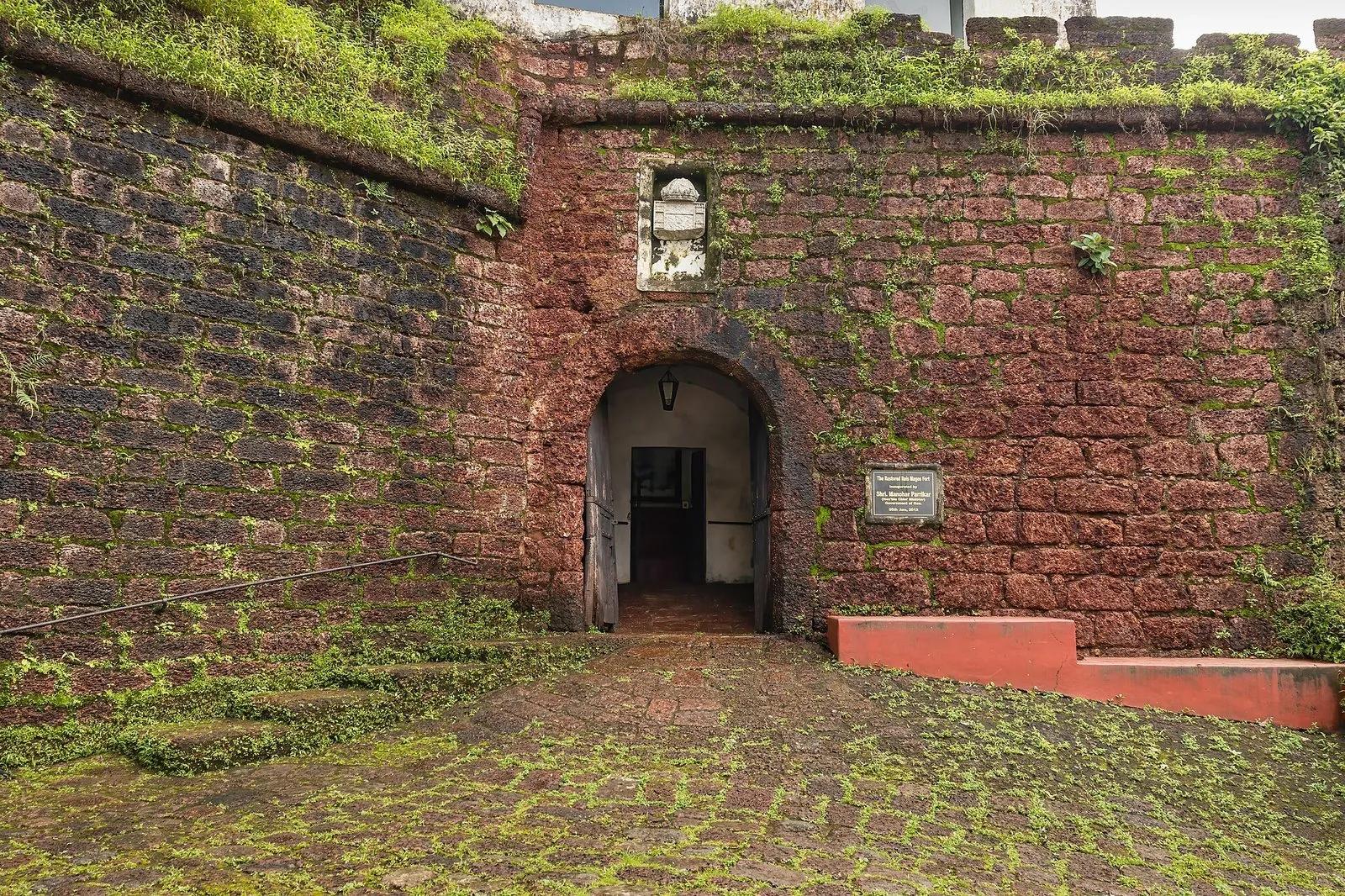
If you have crossed the Mandovi bridge into Panjim, you have passed Reis Magos and probably not noticed it, a compact laterite fort on the north bank below the bright Reis Magos church. It is the oldest of the lot, built by the Portuguese in 1551 to guard the narrowest point at the rivers mouth, rebuilt in 1707, and then, in the way these things go, demoted: it became a prison and stayed one until 1993, after which it fell to rubble and weeds. What makes it worth your time is that somebody saved it. The Helen Hamlyn Trust, INTACH and the Goa government restored it and reopened it in 2012 as a heritage centre, which makes it the rare Goa fort you can actually walk into, with clean ramparts, galleries and a straight drop of a view over the river and the bridge. There is a lovely tell in one r/Goa thread: a regular admits they visit the area all the time but only in the evenings, and had never once had the urge to go inside. That is the fort in a sentence. Everyone passes it. Almost nobody goes in.
Practical, because this is the one with rules. Reis Magos opens Tuesday to Sunday and closes at 5pm, and there is a small entry ticket, in the region of fifty rupees when this was written, so it is the one fort here you cannot roll up to at sunset. Go in the late afternoon, leave time before it shuts, and if you want the view with a drink afterwards, a commenter points to Carlitos nearby for a sick view by day and good food. Confirm the timings and the ticket before you go; both drift.
The romantic ruins: Alorna, Corjuem, St Estevam
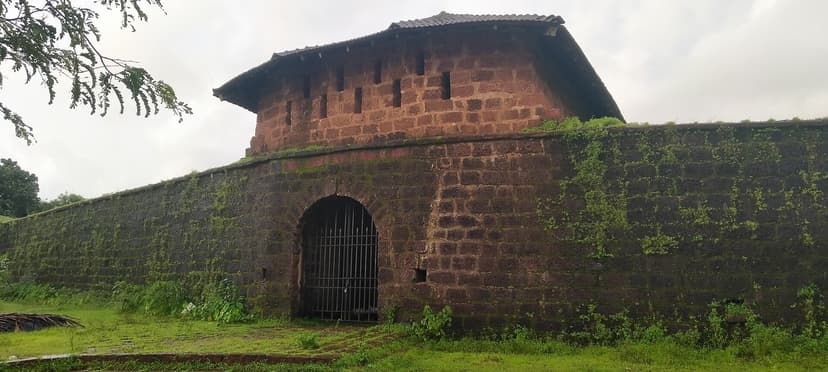
Now the ones nobody bothered to restore, which, for my money, make the better afternoon. Alorna sits up in the Pernem interior, forty-odd minutes past Mapusa, a 17th-century river fort the Bhonsles of Sawantwadi threw up on the bank of the Chapora to mark their line against the Portuguese; the Portuguese took it in 1746, renamed it Santa Cruz de Alorna, lost it, took it again. What is left is raw. A moat you can still trace, four bastions, laterite walls going green in the rains, and a bend in the river with nobody in it. No ticket, no guard, which is both the appeal and the reason it is quietly falling down. The Portuguese thought enough of the place to name a governor after it, the Marquis of Alorna. Today it is yours alone.
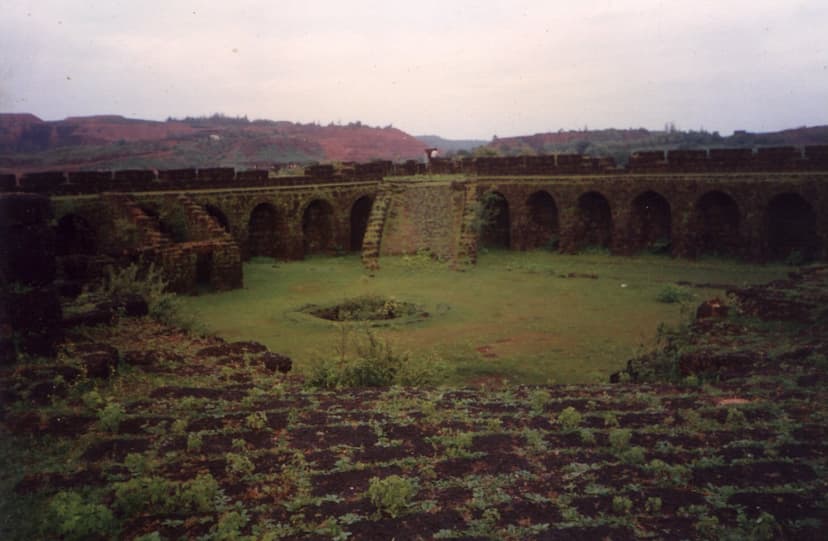
Corjuem is the one I would drive out for first. It is a small square fort on a river island near Aldona, reached over a bridge, built in 1705 by a Portuguese viceroy to hold the eastern edge of their territory against Maratha and Rajput raids, and it is one of only two inland laterite forts left in Goa. It briefly ran as a military school with four guns before being abandoned in 1834. It is tiny, you can walk the walls in fifteen minutes, but the setting does the work: red laterite ramparts, a grassy interior, and behind it the ochre plateaus of the Bicholim mining country. Free, quiet, and genuinely old. Then there is St Estevam, or Juve fort, on an island in the Mandovi that got its bridge only in the 1980s; the little fort on the hillock dates to 1668 and is now mostly a wall and a view, the sort of place a Goan on r/Goa noted people never realise is even there, in the same breath as being surprised Old Goa once had a 21-kilometre fortification wall. It is a sunset spot the beach crowd will never find.
The one that became a hotel: Tiracol
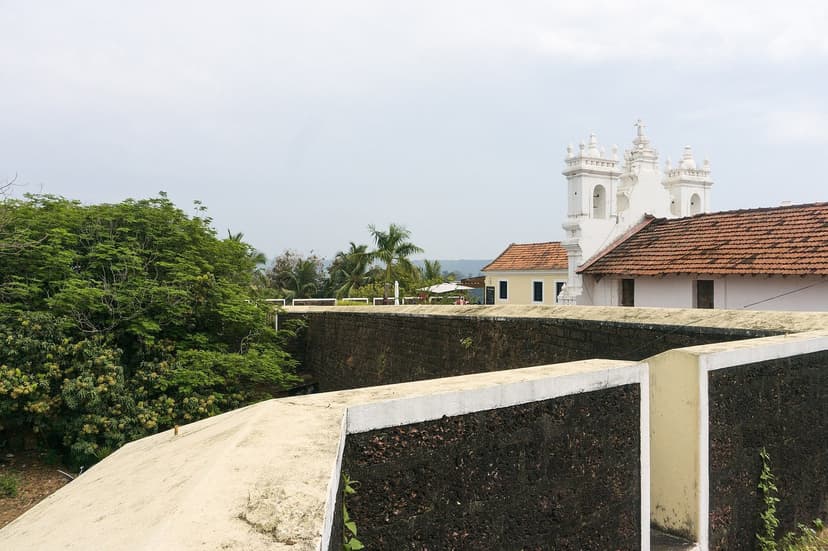
At the very top of Goa, across the Terekhol river from Querim, stands Fort Tiracol, and it comes with an asterisk. The Sawantwadi ruler Khem Sawant Bhonsle built it in the 17th century and called it Terekhol, steep river bank in Konkani; the Portuguese stormed it in 1746, put a church to St Anthony inside the walls, and held it until 1961, when it was among the last places to surrender at Liberation. Then the modern part. The state ran it as a small hotel from 1976, and in 2009 a private company took it over and turned it into a boutique heritage hotel. It is beautifully done. It is also, now, largely closed to you unless you are paying. That is exactly the complaint Goans make about it. On the thread where someone shared photos of Tiracol, a commenter wrote that once again Goans have been kept out of their own heritage, the room rates unaffordable to locals, and another put it flatly: almost the entire fort is now with the resort. You can still drive up, see the church and the ramparts from outside and take in the view down the river mouth, but the fort proper is somebody elses lobby now. Worth seeing, worth being a little angry about.
Once again, Goans have been kept out of their own heritage. The room rates are unaffordable to locals.
| The two forts everyone does | The five in this guide | |
|---|---|---|
| Which | Aguada and Chapora (the Dil Chahta Hai fort) | Reis Magos, Corjuem, St Estevam, Alorna, Tiracol |
| The crowd | Coach parties, reels, sunset queues | Usually you, a few locals, a stray cow |
| What you get | A photo everyone already has | Real history and an empty rampart |
| The state | Mobbed but maintained | One restored, three raw ruins, one now a hotel |
| The cost | Free, but you pay in crowds | Free, except Reis Magos ticket and Tiracol (hotel only) |
Doing a fort afternoon, sensibly. Pair two that are near each other rather than chasing all five in a day: Reis Magos and Corjuem sit close to Panjim and Aldona; Alorna and Tiracol are a northern run through Pernem. Go in the late afternoon for the light and the cooler air, but remember Reis Magos shuts at 5pm and charges a small ticket, while the ruins (Corjuem, Alorna, St Estevam) are free, unstaffed and open whenever. Carry water and decent shoes, because none of the ruins have a shop or a railing. Do not carve names or move the stones. And with Tiracol, accept that seeing the inside means eating or staying at the hotel; from outside you still get the church and the river view. Confirm Reis Magos timings and any fees before you ride out.
- The idea
- Everyone does Aguada and Chapora; five better North Goa forts sit almost empty a short drive away. One is restored and walkable, three are free ruins, one is now a private hotel.
- Reis Magos
- Below the Reis Magos church on the Mandovi. Built 1551, a prison until 1993, restored by INTACH and the Helen Hamlyn Trust and reopened in 2012 as a heritage centre. Open Tuesday to Sunday, closes 5pm, small ticket (around fifty rupees, confirm).
- Corjuem and St Estevam
- Corjuem is a 1705 laterite island fort near Aldona, one of only two inland laterite forts left in Goa, free and quiet. St Estevam (Juve) fort, built 1668 on a Mandovi island, is now mostly a wall and a sunset view.
- Alorna
- A ruined 17th-century Bhonsle river fort in the Pernem interior, about 40 minutes past Mapusa, with a moat, four bastions and a Chapora river-bend view. Unstaffed, free and slowly crumbling.
- Tiracol
- Goas northernmost fort, across the Terekhol river from Querim. Built by the Sawantwadi Bhonsles, taken by the Portuguese in 1746, and since 2009 run as a private heritage hotel, which locals say has shut them out. Visible from outside; interior for guests only.
A fort with nobody in it is a strange, good feeling, and North Goa has five of them going spare. This runs alongside the other quiet-heritage corners this series keeps finding: the churches and ghost-lanes of Old Goa, the ferry-only calm of Divar island, and the wider case for the Goa beyond the beaches. You can see the North Goa experiences that are currently bookable on the North Goa things-to-do page.
Common questions
What are the best offbeat forts in North Goa?
Beyond the crowded Aguada and Chapora, five North Goa forts are worth the detour: Reis Magos, the only one restored and open to walk through; Corjuem, a small 1705 laterite island fort near Aldona; St Estevam (Juve) fort, an island fort on the Mandovi with a sunset view; Alorna, a raw ruined river fort in the Pernem interior; and Tiracol at the northern tip, now a private heritage hotel. Four of the five are free and almost always empty, which is much of the appeal.
Which Goa fort can you actually go inside and explore?
Reis Magos, on the north bank of the Mandovi below the Reis Magos church, is the one properly restored for visitors. It was rebuilt by INTACH and the Helen Hamlyn Trust and reopened in 2012 as a heritage centre, with ramparts, galleries and river views. It is open Tuesday to Sunday, closes at 5pm and charges a small entry ticket (around fifty rupees when this was written, so confirm). The ruined forts, Corjuem, Alorna and St Estevam, you can wander freely, but they are unstaffed and unmaintained.
Is Fort Tiracol open to the public?
Only partly. Fort Tiracol at Goas northern tip was turned into a private boutique heritage hotel in 2009, and the interior is effectively reserved for hotel guests. Goans on r/Goa are openly unhappy about it, saying they have been priced out of their own heritage. You can still drive up, see the church of St Anthony and the ramparts from outside and take in the view over the Terekhol river mouth, but to go inside properly you would need to eat or stay there.
How do you get to Corjuem and Alorna forts?
Corjuem Fort is about 4 km from Aldona village in Bardez, on a river island reached by a bridge (there was historically a hand ferry too); it is small, free and takes maybe fifteen minutes to walk. Alorna Fort is deeper north, in the Pernem interior roughly 40 minutes past Mapusa, near Alorna village on the Chapora river. Both are best by scooter or car, neither has facilities, so carry water and go in daylight. Late afternoon gives the best light for the laterite walls.
Are the offbeat Goa forts worth visiting, or are they just ruins?
They are mostly ruins, and that is the point. If you want polished heritage with a ticket counter, Reis Magos delivers. If you want an empty rampart, a river bend and the feeling of having the place to yourself, Corjuem, Alorna and St Estevam are quietly wonderful and completely uncrowded. They reward a bit of curiosity about who built them and why more than they reward a checklist. Go for the history and the quiet, not for facilities, and you will not be disappointed.
Why is the fort in all the Goa reels not really a fort?
The much-photographed sea fort near Sinquerim, the one that juts into the water below Aguada, is technically a bastion of the larger Aguada fort rather than a fort in its own right, as a knowledgeable Goan pointed out on r/goatravel. It was the part of Aguadas defences that extended out towards the beach and sea. It is a fine view, but the real, complete Aguada fort sits up the hill by the lighthouse and jail, and the genuinely quiet forts are the five in this guide, away from the reels entirely.
Sources and a note on this guide
A word on sources, because it matters. I write for Refuje and I do not live in Goa; none of this history is mine to remember, so I looked it up, off Goa Tourism, INTACH, Wikipedia and the heritage records. The living detail is the Redditors, not me. The habit of driving past Reis Magos without going in, the Carlitos tip, the plain anger over Tiracol going private; all quoted and attributed, reported rather than endorsed. Fees and hours drift, so treat the Reis Magos ticket as a rough guide and check before you travel. Every photo is the fort named in its caption. Checked August 2026.
- Reis Magos (1551, prison to 1993, INTACH and Helen Hamlyn Trust restoration, reopened 2012, Tuesday-to-Sunday hours and ticket): Goa Tourism, INTACH and heritage records.
- Corjuem (1705 laterite island fort, one of two surviving inland laterite forts), St Estevam / Juve fort (built 1668), and Alorna (17th-century Bhonsle river fort, taken by the Portuguese in 1746): Goa Tourism, Wikipedia and heritage references.
- Tiracol (Sawantwadi Bhonsle origin, 1746 Portuguese capture, church of St Anthony, private heritage hotel since 2009) and the local objection to being shut out, plus the Aguada-bastion correction, the pass-but-never-enter habit and the Carlitos tip: attributed r/Goa and r/goatravel threads, quoted inline.
Access, fees and ownership all shift, and a fort that is free and open today can be leased tomorrow, as Tiracol shows. Check current details before you go, and if you know these forts better than these sources do, tell us and we will fix it.
You Might Also Like
Edge City India 2026: The Practical Guide
Three weeks in Mandrem, North Goa. October 11 to November 1, 2026. Hundreds of founders, researchers, engineers, and creators living and building on a stretch of beach that is usually known for yoga retreats and quiet cafés, not hackathons. If you have applied, or you are wondering whether you...
Solo Female Travel in Goa: An Honest Safety Guide
An honest, balanced safety guide for women travelling to Goa alone: why it's comparatively safe and loved by many yet has a real, worsening harassment problem concentrated on the party beaches, where to base for a calmer trip, and the practical choices that tilt the odds in your favour.

Working Remotely from North Goa: The Honest Digital-Nomad Guide
An outsider's honest guide to working remotely from North Goa: why it isn't the beach-office of the photos, the power-and-internet problem that decides everything, where to base (Assagao, Siolim, Caranzalem), the cost, solo-female safety, and how to be a good guest rather than a coloniser.