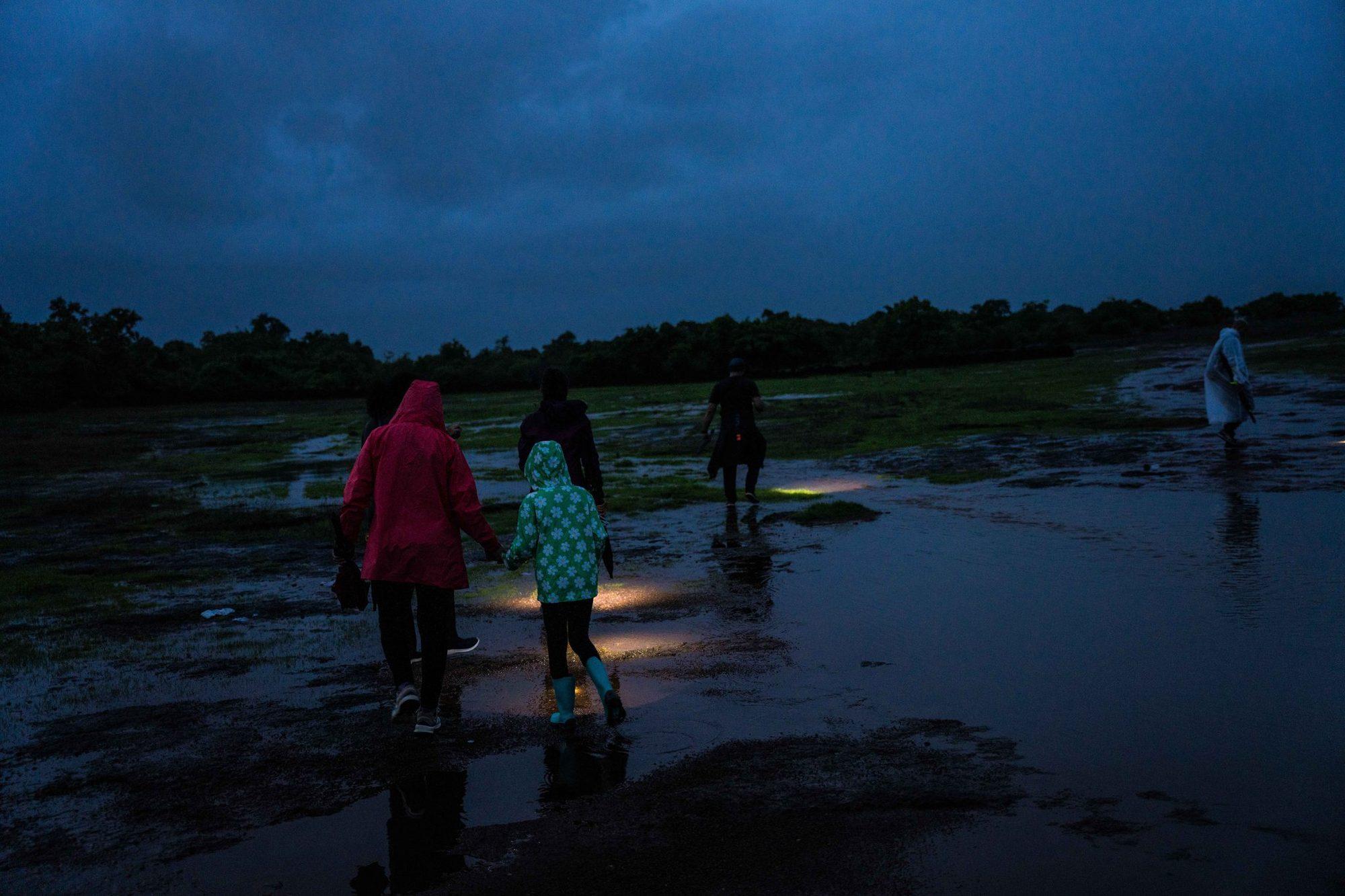
Divar Island: The Goan Island Everyone Calls 'Dead' (and Why It Isn't)
Someone posted a question on r/Goa not long ago that stuck with me. They had gone back to Divar, an island in the Mandovi where they had stayed as a child, and found it, in their word, dead: empty roads, shuttered houses, hardly a soul about. The replies did not agree. The first and most upvoted came back flat. Divar is not dead, it is preserved. It is a time capsule. That one line is the whole island, and the whole argument about it.
I write for Refuje and I do not live in Goa. What follows is drawn from the island's own history, from the ferry crossings and the church records, and from the Goans on r/Goa who grew up on Divar or whose families still keep a locked-up house there. I want to be careful with this one, because the loudest thing those Goans say is a request: please leave the island alone. So take this less as a things-to-do list and more as an explanation of why one of the quietest places in Goa is quiet, and how to visit without being the reason it stops being so.
The island that time forgot
Divar sits in the Mandovi off Old Goa, a small island, maybe five kilometres end to end: three villages with saints' names, Piedade, Sao Matias and Naroa, a single low hill, some paddy, and trees that have taken back whatever nobody is using. The first thing you notice is how few people there are. You pass house after house with a grand Portuguese front, the balcao seat by the door and the old oyster-shell windows and all, and every second one is shuttered, the lime paint going, the garden a thicket. A first-time visitor reads that as abandonment. It is closer to the opposite. Those houses belong to families who left, the way Catholic Goa has been leaving for a century, for the ships and the Gulf and Lisbon and Toronto, and who hold onto the family home from wherever they washed up. As one islander said on Reddit, most families have simply moved away, and they will not sell to a builder because they would rather keep the quiet than cash it in. The emptiness is not the island dying. It is the island being kept, in trust, by people who mostly live somewhere else.
Getting there is the point
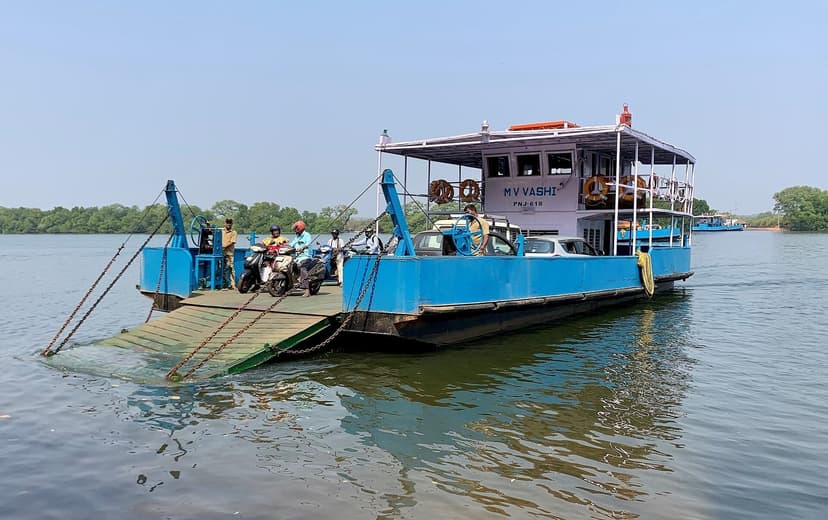
There is no bridge to Divar. You reach it the way people always have, on a flat-bottomed ferry that grinds across the Mandovi from Old Goa, or from Ribandar on the far side, carrying a dozen scooters and a car or two, free of charge, every few minutes. The crossing takes about ten minutes and it does something to you: the moment the ramp lifts and the near bank slides away, the mainland's noise falls off. That ferry is more than transport. It is the island's moat. Every so often someone proposes a bridge, and every time the island revolts. The threads are almost funny in their unanimity until you see how serious they are. Ruin it, one Goan wrote of the idea. Let it be the way it is. Another: it would be like laying out a red carpet for construction to enter your village. The most honest reply granted that a bridge would genuinely help the people who actually live there, the ones ferrying groceries and sick relatives across on a boat, and then named the real fear, that it is the outsiders who follow the bridge who would ruin the island. That tension, between the residents who bear the inconvenience and everyone who loves the island because of it, is Divar's whole present-day story.
The hill: a church, a lost temple, a view
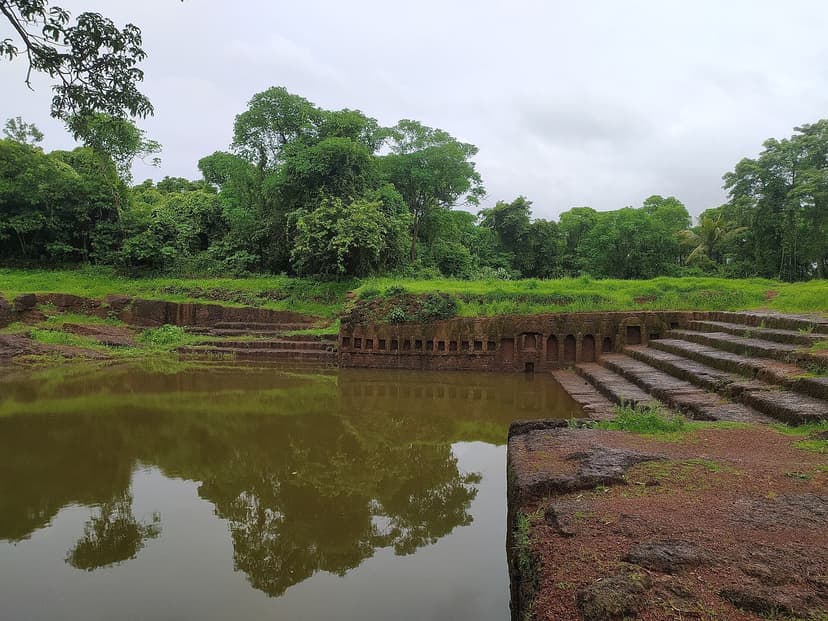
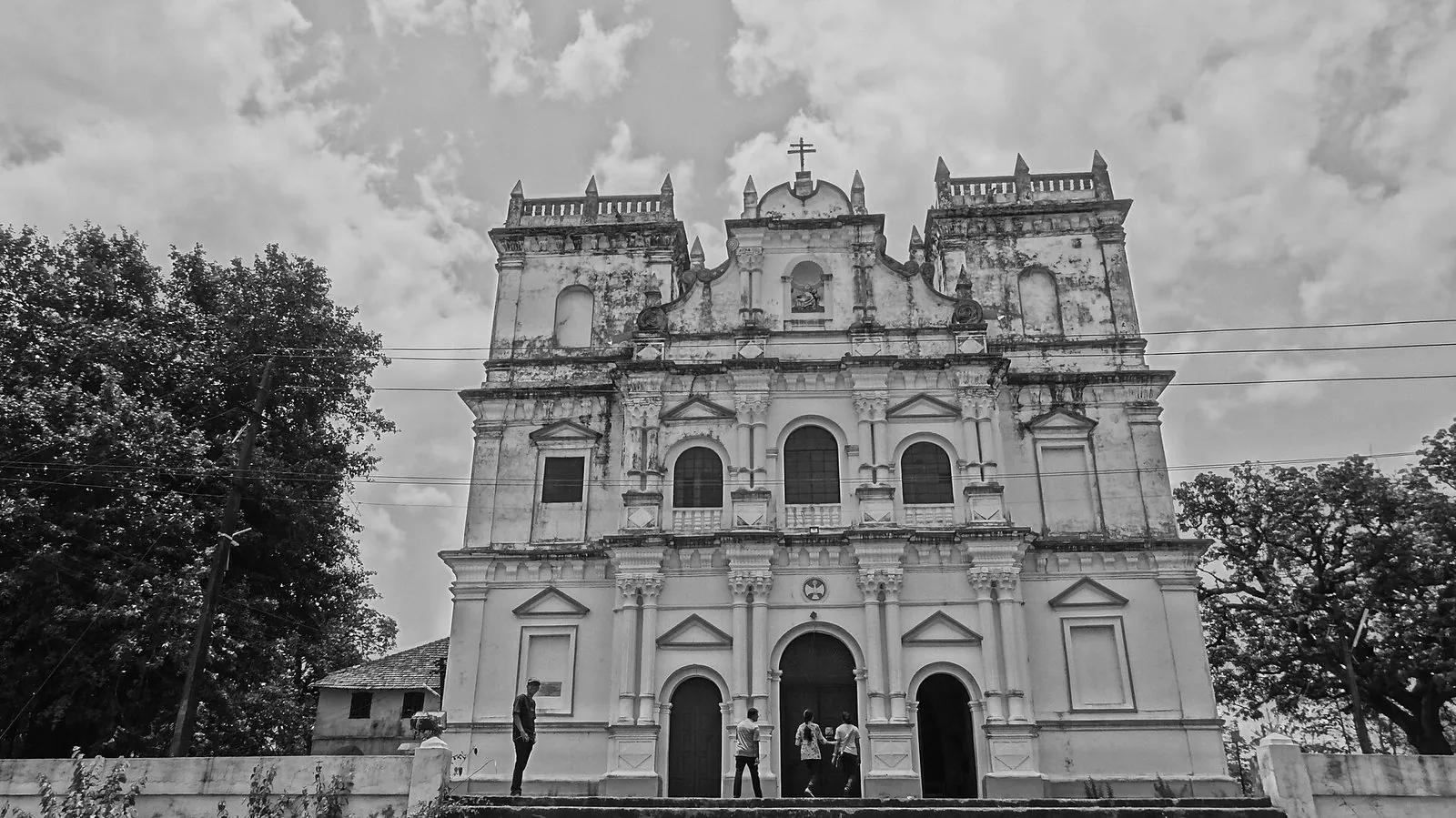
At the centre of Divar is that low hill, and on top of it the Church of Our Lady of Compassion, the first church built on the island, a pale Baroque pile that catches the light from all across the river. Climb to it and the reason people have fought over this hill for a thousand years is obvious: the whole Mandovi opens out below, Old Goa's cathedrals on one bank, Panaji on another, the bridges strung between. But the hill was holy long before the church. It was the original site of the Saptakoteshwar temple, one of the most important shrines of the Kadamba kings who ruled here, until it was destroyed in the upheavals of the fourteenth and fifteenth centuries and the deity was carried across the water to Naroa in Bicholim, where the temple stands rebuilt today. Down the slope, half swallowed by green, an old stepped temple tank still holds water, a quiet Hindu ghost beneath a Catholic hill. Divar wears its layers lightly, and almost nobody is up there to explain them to you, which is part of the point.
Bonderam: the one day it is loud
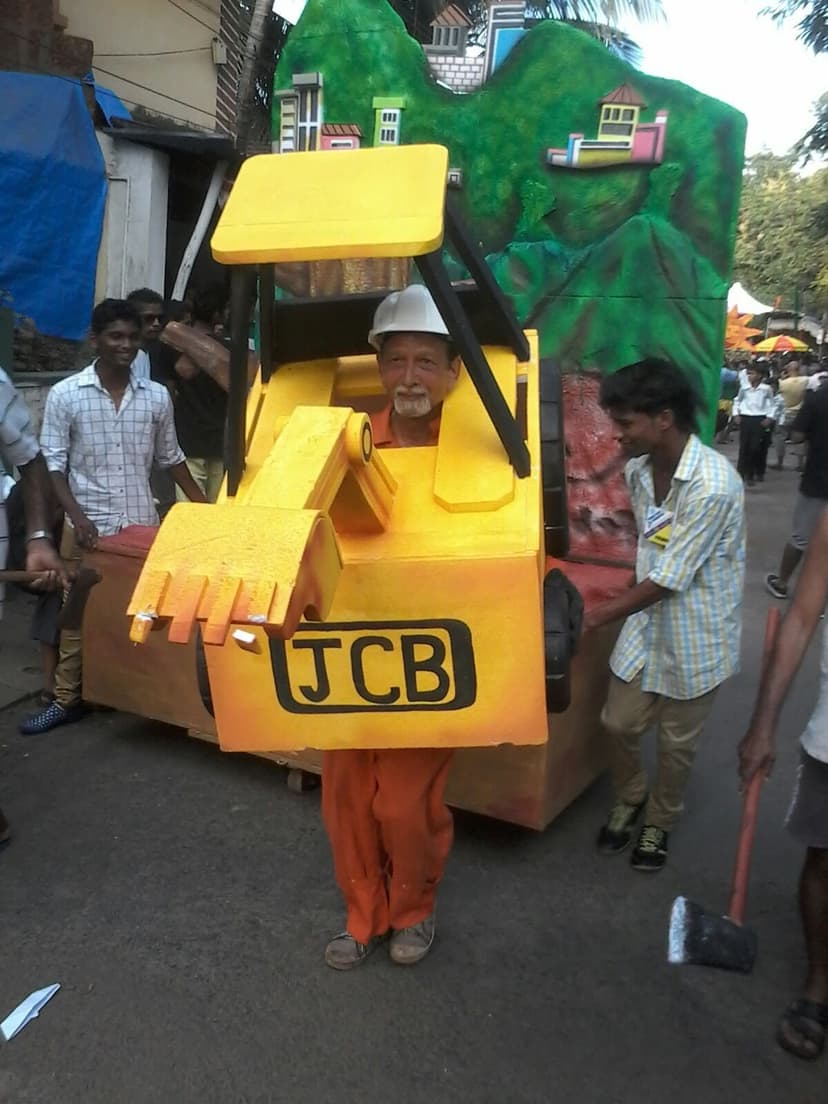
For all its quiet, Divar has one day a year when it is anything but. Bonderam, the island's festival of flags, comes in August, and it is one of the odder and better festivals in Goa. The name is from the Portuguese bandeira, a flag, and the whole thing commemorates something very local: the old boundary disputes between Divar's villages, which the Portuguese used to settle by planting flags that the villagers would then furiously tear down. Today that is re-enacted as a good-natured mock battle, a parade of floats and brass bands through which people fire fotash, little popguns of bamboo, at each other and at a flag. The two celebrations fall on the Saturdays of August, Malar village on the third, the sixteenth in most years and the fifteenth in 2026, and Piedade on the fourth, the twenty-second. The floats are the thing to watch, because the island uses them to say what it cannot the rest of the year; a recent one was a hand-built model of a JCB digger, the machine every islander associates with the construction they dread, wheeled through the lanes as a joke that is not quite a joke. If you want to see Divar awake, this is the day. If you want to see Divar as it actually lives, come any other.
How to visit without wrecking it
So, how to be on Divar without becoming the problem. Go for a day, not a season. Take the ferry over in the morning, walk or cycle the lanes slowly, sit under the church and watch the river, find a quiet lunch if somewhere is open, and take the ferry back. Keep your voice and your engine down. Do not treat the shuttered houses as a photo set or a film location; people own them and miss them. And carry your rubbish out, because the islanders are painfully honest that the litter is not only a tourist problem; one wrote that his own people come of an evening with their beer bottles and leave the place a mess. Nobody on Divar is asking you never to come. They are asking you to come the way the island is, gently, briefly, and without wanting to change it. That is the entire etiquette of the quiet Goa, and Divar is its purest test.
Divar island is preserved, not dead. It is like a time capsule.
How to visit Divar gently. It is a day trip, not a resort. Take the free flat-bottom ferry from Old Goa (it lands at Piedade) or from Ribandar; there is no bridge and no ticket. Go slow: walk or cycle the lanes, climb to the Church of Our Lady of Compassion for the Mandovi view, find the old temple tank below it. Keep noise and engines low, do not photograph people's homes as if they were empty film sets, and carry every scrap of rubbish back off the island. Come for Bonderam in August if you want it loud (Malar on the 15th, Piedade on the 22nd in 2026); come any other day if you want it as it is. The one local request is simple: enjoy it, and leave it exactly as you found it.
- What it is
- A quiet island in the Mandovi off Old Goa, three villages (Piedade, Sao Matias, Naroa), reached only by free ferry, no bridge. Old Catholic-Portuguese Goa, its shuttered houses kept by families who mostly live abroad.
- Getting there
- A free flat-bottom ferry from Old Goa (to the Piedade terminal) or from Ribandar, every few minutes, about a 10-minute crossing, carrying scooters and cars. No ticket, no bridge.
- On the hill
- The Church of Our Lady of Compassion, the first church on the island, with a panorama over the Mandovi. It stands on the site of the old Saptakoteshwar temple, whose deity was moved to Naroa in Bicholim; a stepped temple tank survives below.
- Bonderam festival
- Divars festival of flags, in August: Malar village on the third Saturday (15 August in 2026), Piedade on the fourth (22 August). Floats, brass bands and fotash bamboo popguns, commemorating old village flag disputes.
- The one ask
- Islanders want it left quiet and un-publicised. Visit as a gentle day trip: keep the noise down, carry rubbish out, and do not treat the empty homes as a photo set.
| Divar | The Goa strip (Baga and Calangute) | |
|---|---|---|
| Getting there | A free ten-minute ferry; no bridge | Drive straight in, into the traffic and touts |
| The feel | Empty lanes, shuttered heritage homes, birdsong | Shacks, jet-skis, crowds, music |
| What you do | Walk, cycle, climb to the church, watch the river | Beach clubs, watersports, nightlife |
| What locals want | Please leave it quiet | Tourism is the economy, come and spend |
| Best for | A slow half-day, heritage, solitude | Sun, party and convenience |
Where it is
Divar is the far end of the same argument this series keeps having, that the best of Goa is the part not for sale. If it draws you, the neighbouring island of Chorao makes a natural pair by bike, covered in the piece on cycling North Goa's villages and forts; Panjim's old Latin Quarter of Fontainhas is the town version of the same preserved Goa; and the wider case sits in the piece on whether Goa is overrated at all. You can see the North Goa experiences that are currently bookable on the North Goa things-to-do page.
Common questions
Is Divar Island worth visiting?
Yes, if you go for quiet rather than sights. Divar is one of the calmest, most preserved corners of Goa, an island of old Portuguese-era houses, empty lanes and a hilltop church with a wide Mandovi view, reached only by a free ferry. There is no big attraction and little that is open, and that is the appeal. If you want beaches, nightlife or a packed itinerary, skip it; if you want a slow, atmospheric half-day in old Goa, it is well worth the crossing.
How do you get to Divar Island?
By ferry only; there is no bridge. Free flat-bottom vehicle ferries cross the Mandovi from Old Goa (landing at the Piedade terminal) and from Ribandar on the other side, running every few minutes and taking about ten minutes. They carry pedestrians, scooters and cars at no charge. Most visitors bring a scooter or cycle over, since the island is small and there is little public transport once you are on it.
What is there to do on Divar Island?
Not much, deliberately. Walk or cycle the quiet lanes past shuttered heritage houses, climb the hill to the Church of Our Lady of Compassion for a panorama over the Mandovi and Old Goa, and find the old stepped temple tank that survives from a Hindu shrine that predated the church. In August you can catch the Bonderam festival. Divar is for slow wandering and atmosphere, not a checklist of sights.
When is the Bonderam festival on Divar?
Bonderam, Divars festival of flags, is held in August. Malar village celebrates on the third Saturday of the month (15 August in 2026) and Piedade on the fourth Saturday (22 August in 2026). It features float and brass-band parades and a good-natured mock flag-fight with fotash, bamboo popguns, re-enacting old village boundary disputes. Confirm the exact dates locally before planning around it, as they follow the Saturdays of August.
Why does Divar Island look so empty and abandoned?
Because much of Catholic Goa, Divar included, emigrated over generations to the Gulf, Portugal and the English-speaking world, and those families kept their ancestral homes but stopped living in them. The shuttered houses are owned and cared for, not abandoned, and locals say they would rather keep them empty than sell to developers. The emptiness is preservation, not decay, which is exactly why islanders want it left undisturbed.
Is it OK for tourists to visit Divar Island?
Yes, if you visit respectfully. Islanders are wary of the attention and openly ask people to keep Divar quiet, so treat it as a gentle day trip: keep noise and engines low, do not photograph or enter peoples homes, spend at whatever small places are open, and carry all your rubbish back off the island. Locals admit littering is not only a tourist problem, so the standard is simply to leave the place exactly as you found it.
Sources and a note on this guide
I write for Refuje and I do not live in Goa. The island's geography, the ferry access, the Church of Our Lady of Compassion, the Saptakoteshwar temple history and the Bonderam festival are from Goa Tourism, Wikipedia and Goa heritage and festival sources; the feeling of the place, the empty-houses-are-emigration explanation and the plea to leave it quiet come from Goans on r/Goa who grew up there or keep family homes on the island, quoted and attributed as they appear. Festival dates follow the Saturdays of August and are best confirmed locally. Nothing here is a first-hand claim of mine. The facts were checked in August 2026.
- Divar geography, the free Old Goa and Ribandar ferries and no bridge, the Church of Our Lady of Compassion and the Mandovi panorama, and the Saptakoteshwar temple history (deity moved to Naroa, Bicholim): Goa Tourism (GTDC), Wikipedia (Piedade, Goa) and Goa travel and heritage guides.
- Bonderam, the festival of flags (Portuguese bandeira), the Malar third-Saturday and Piedade fourth-Saturday dates, the fotash bamboo popguns and the flag-dispute origin: Navhind Times, Ghumakkar and Goa festival sources.
- The island's emptiness as emigration not decay, the plea to leave it quiet, the bridge debate and the honest note that locals litter it too: attributed r/Goa threads, quoted inline.
An island held in trust by people who mostly live elsewhere is a fragile thing, so if you go, go lightly. If you are from Divar and know it better than these sources do, that is the correction this guide should carry, so tell us.
You Might Also Like
Edge City India 2026: The Practical Guide
Three weeks in Mandrem, North Goa. October 11 to November 1, 2026. Hundreds of founders, researchers, engineers, and creators living and building on a stretch of beach that is usually known for yoga retreats and quiet cafés, not hackathons. If you have applied, or you are wondering whether you...
Solo Female Travel in Goa: An Honest Safety Guide
An honest, balanced safety guide for women travelling to Goa alone: why it's comparatively safe and loved by many yet has a real, worsening harassment problem concentrated on the party beaches, where to base for a calmer trip, and the practical choices that tilt the odds in your favour.

Working Remotely from North Goa: The Honest Digital-Nomad Guide
An outsider's honest guide to working remotely from North Goa: why it isn't the beach-office of the photos, the power-and-internet problem that decides everything, where to base (Assagao, Siolim, Caranzalem), the cost, solo-female safety, and how to be a good guest rather than a coloniser.