The Mapusa Friday Market: Where Goa Actually Shops (Not the Flea Market You've Heard Of)
Ask the internet about markets in Goa and it sends you to two places: the Wednesday flea market at Anjuna and the Saturday night market at Arpora, both photographed to death, both essentially for you, the visitor. Ask a Goan where they actually buy their food, and the answer is a different word entirely: Mapusa. On a Friday morning the covered lanes and pavements of the Mapusa Municipal Market fill up with the real business of the state, strings of red sausage, baskets of mango, warm bread, wet fish, pickles and spices, and almost nobody there is shopping for a souvenir. If you want to taste Goa rather than take home a fridge magnet, this is the market that matters. Here is what it is, what to buy, and how not to get fleeced.
I write for Refuje and I do not live in Goa. This is drawn from the market's own history and from Goans on r/Goa arguing about sausages, hunting down old bakeries and warning each other about mango sellers. The shop and stall names below are theirs, reported rather than recommended, and small shops close, so treat them as colour rather than a directory. And a plain caution first: a real market runs on cash, haggling and knowing what you are looking at, so the tips here are as much about not being the obvious out-of-towner as about what to put in your bag.
What Mapusa actually is
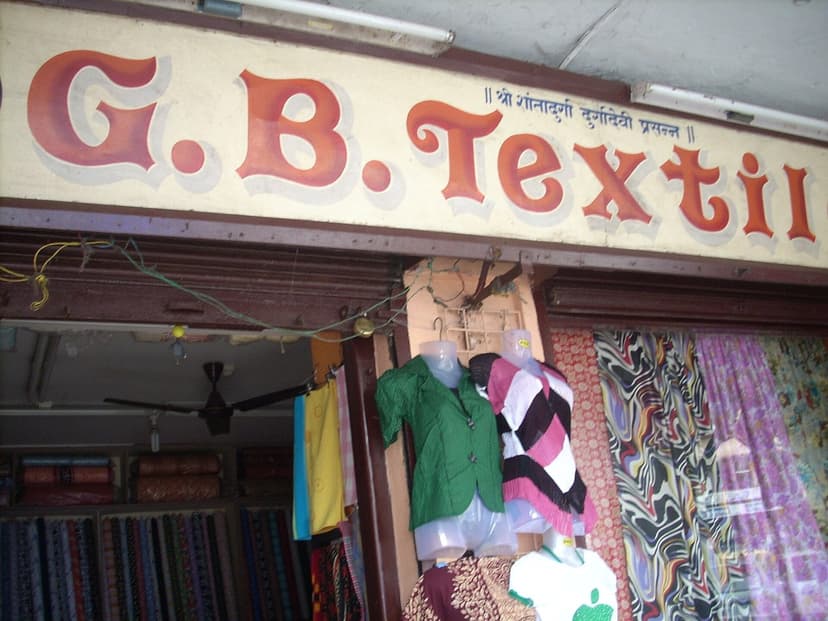
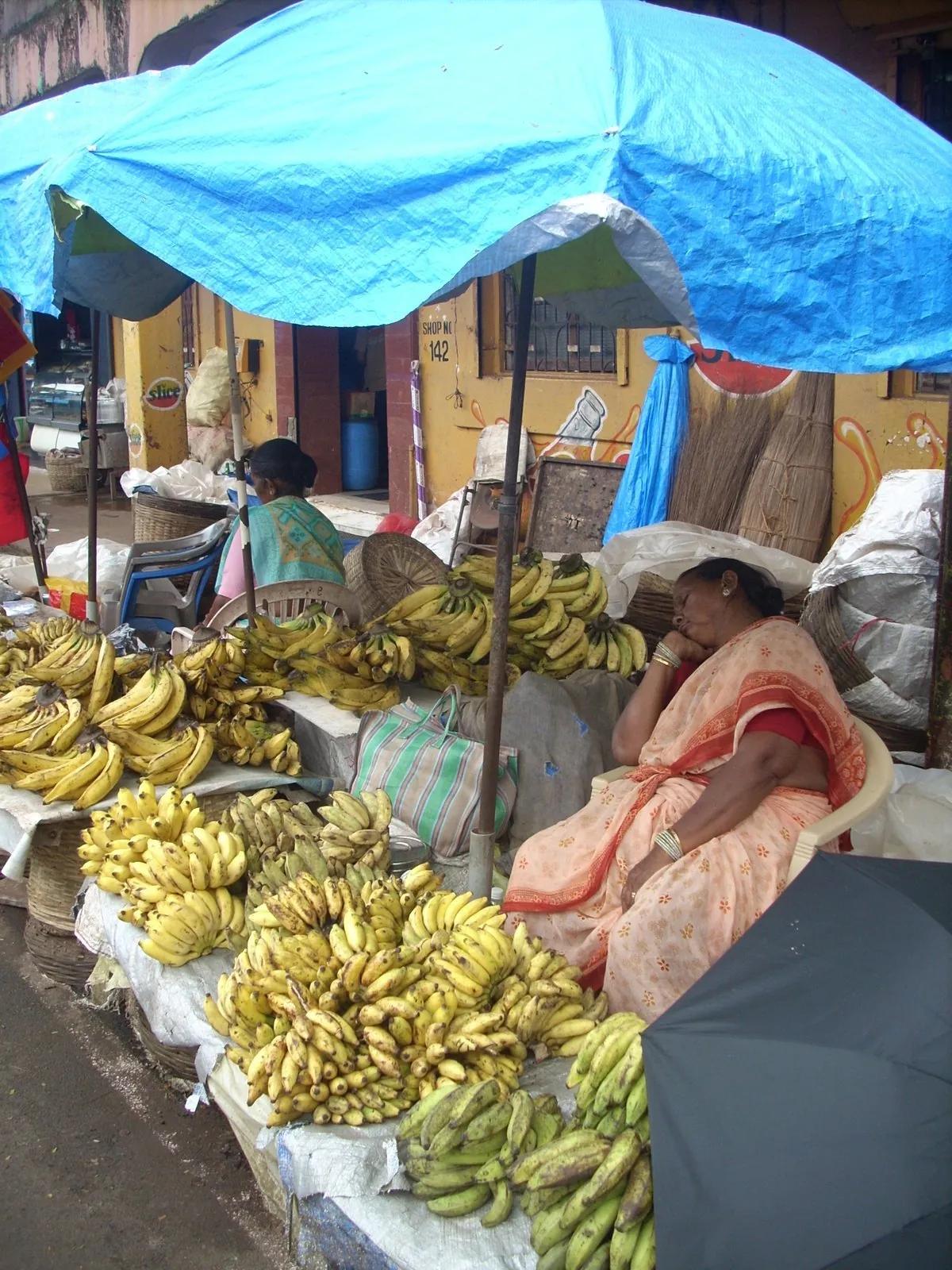
Mapusa, pronounced roughly map-sa, is the busy market town of North Goa, and its municipal market is the real thing: built in 1960, it was the first planned market in Goa, and the name itself is said to come from the Konkani word for a measure, which is about right for a place built around weighing and selling. It runs every day except Sunday, but Friday is the day it swells, when sellers come in from the villages and the whole thing spills out of its halls onto the surrounding streets. Inside, it is loosely organised by trade, one run of stalls for fish, another for sausages, another for produce, another for cloth and pots and the odd hand-painted family shopfront that has been there for generations. It is loud, close and functional, and none of it is arranged for a photograph, which is exactly why it is worth your morning.
What to buy
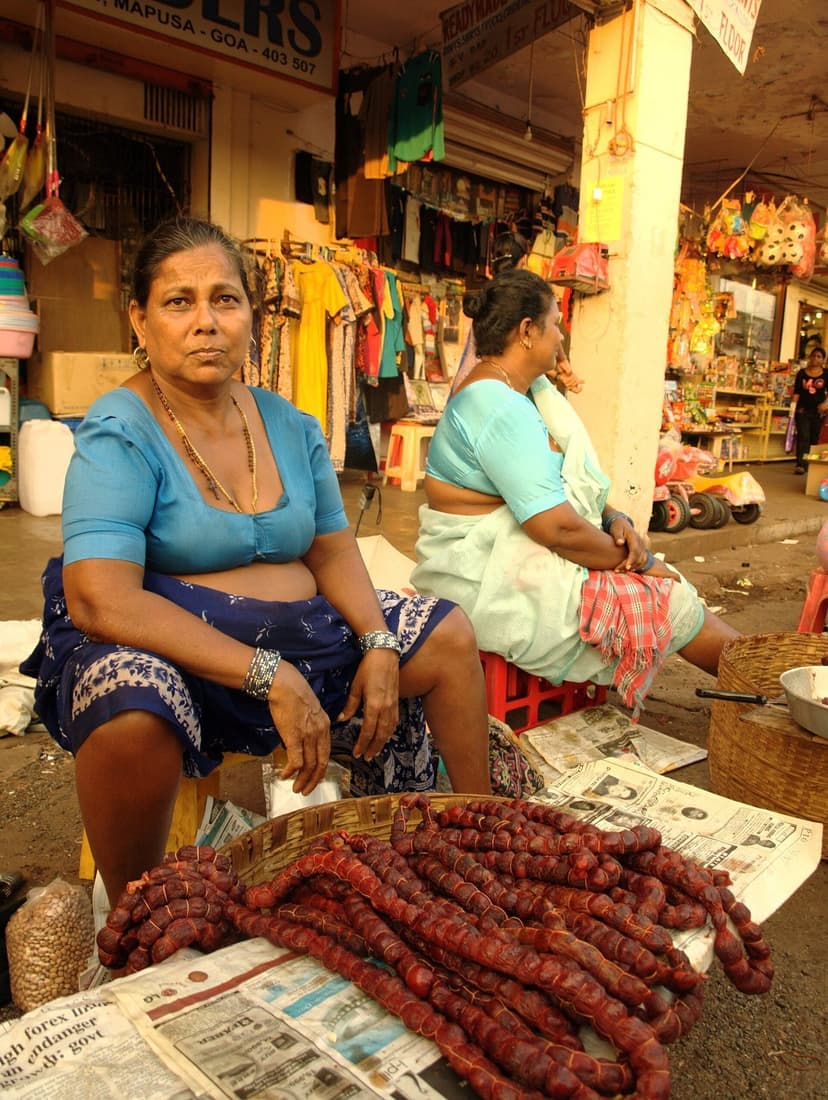
The signature buy is Goan chourico, the deep-red pork sausage cured with vinegar, chilli and spice, sold in long looped strings off sheets of newspaper (there are beef and chicken versions too). It is the taste of a Goan kitchen and it travels well, which is why people carry it home by the string. The one piece of insider advice worth having is about quality: as Goans on r/Goa put it, it is worth paying a bit more and choosing a batch that has been properly smoked and dried, because those keep for months and taste far better than the cheap, damp kind. Store them dry; if a little mould appears on the casing, one local noted, it can be wiped off with vinegar, and it is the gut, not the meat, that turns first.
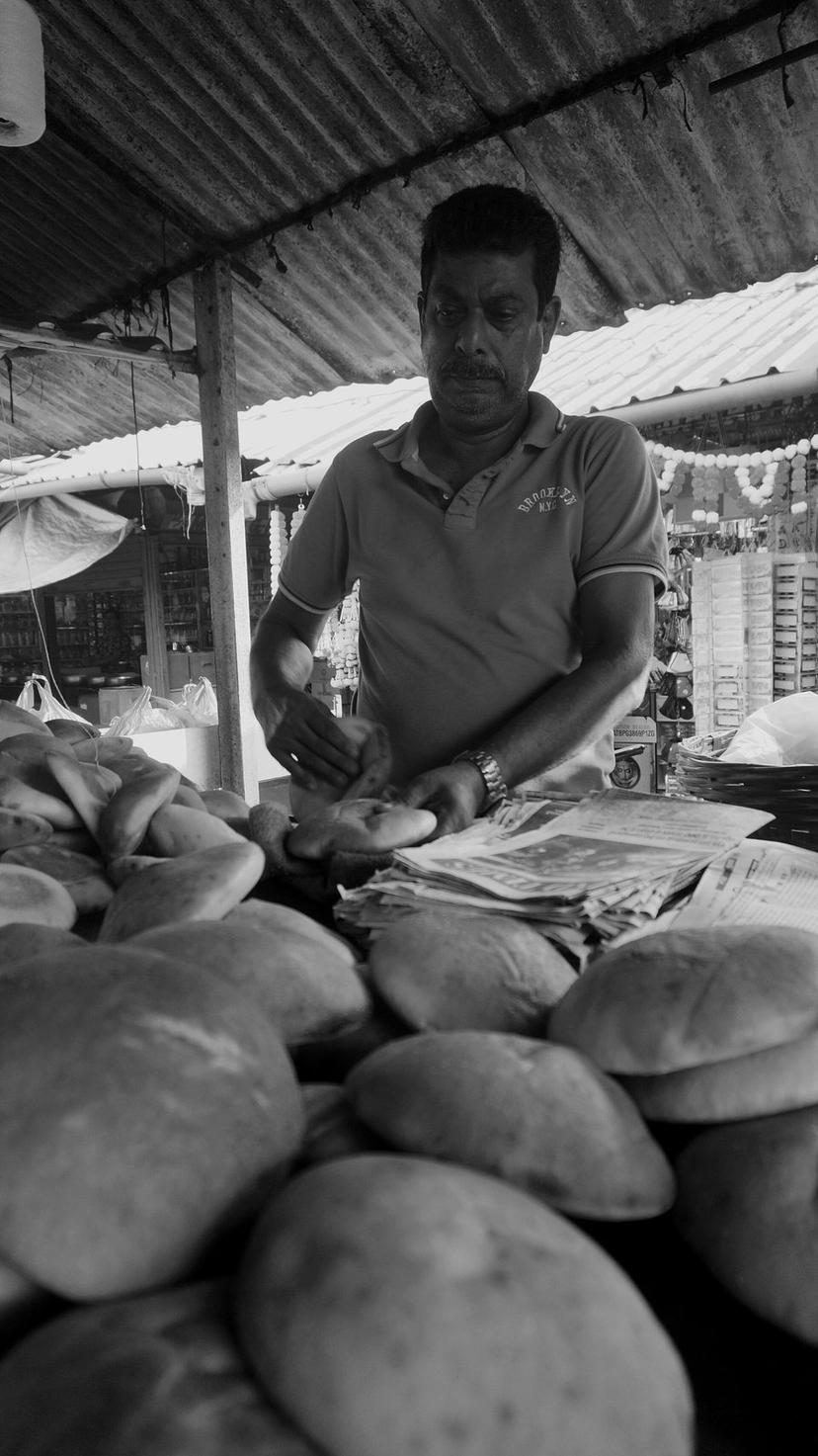
After the sausages, follow your nose to the bread. Goa runs on pao and poi, the soft rolls the poder still brings round by bicycle at first light, and the market is where you buy them warm by the dozen. After that, take whatever the season is handing out. In the hot weeks before the monsoon that means mango, and above all Mancurad, the small, intense, orange-gold variety Goans queue and argue over. This is exactly where an out-of-towner gets handed the wrong fruit, so borrow the tells the locals use: real Mancurad is a deep orange-yellow rather than red, its scent is heavy and hard to mistake, and it is fibrous to eat, though early in the season even the genuine article is still tart. The rest of your bag more or less writes itself into a Goan kitchen: cashews by the scoop, the sticky seedless tamarind and dried kokum that give the curries their sourness, a slab of bebinca for the sweet tooth, little twists of spice, a jar of pickle, and a bottle of feni to see it all home.
Not the flea market you've heard of
It is worth being clear about what Mapusa is not, because the famous markets are a completely different animal. The Anjuna flea market, on a field by the beach every Wednesday, and the Arpora Saturday night market are seasonal, running only through the winter tourist season from roughly November to April, and they are built around visitors: hippie clothes, jewellery, souvenirs, crafts, food stalls, and at Arpora a stage with live music and bars. They can be a fun night or a decent afternoon, and there is nothing wrong with them for what they are. But they are shopping as entertainment, priced for tourists, and they are not where Goa buys its dinner. And even Mapusa, it should be said, is a shadow of what older Goans remember; one lamented on r/Goa that the market of their parents' day, in the seventies and eighties, sold far more variety, and that today it is mostly food. That is still the best reason to go, but go without expecting a lost world.
Absolutely tired of being taken for a ride in Mapusa market.
| The Mapusa Friday market | The tourist markets (Anjuna, Arpora) | |
|---|---|---|
| What it is | A working local municipal market | Souvenir and entertainment markets for visitors |
| When | Year-round, best on Friday mornings | Winter season only, roughly November to April |
| What is sold | Chourico, mango, bread, fish, spices, pickles | Clothes, jewellery, crafts, souvenirs, food stalls |
| Who shops | Goans, doing their real shopping | Mostly tourists |
| The feel | Loud, functional, cash and haggle | Lively, priced-up, live music and bars at Arpora |
How to do it well
Go on a Friday, and go early. The market is at its fullest and freshest in the morning, before the heat and the crowds, and the best produce goes first. Carry cash in small notes, because almost nobody takes a card and change is a constant negotiation, and be ready to haggle gently, which is expected and not rude. Buy your sausages from a busy stall with properly dried strings, sniff your mangoes, and do not be shy about asking a price before you commit. If the old market holds you, wander beyond the food: Goans still name the market's veteran bakeries, some generations old and some now sadly closed, and small character shops like a tiny blue-painted incense and attar maker who, one Redditor swears, blends a scent only after he has met you. Bring a cloth bag, wear something you do not mind getting jostled in, and give it an hour more than you planned.
Doing Mapusa well. Go on a Friday morning, early, when it is fullest and freshest (it runs daily except Sunday, but Friday is the big one). Carry cash in small notes and haggle gently; it is expected. For chourico, pick a batch that is properly smoked and dried, not damp. For mango, learn real Mancurad: deep orange-yellow (not red), heavy aroma, plenty of fibre. Also load up on Goan bread, cashews, tamarind, kokum, pickles and spices. And keep it in perspective: this is a real, functional market, not the seasonal tourist flea markets at Anjuna (Wednesdays) or Arpora (Saturday nights), which are a different, souvenir-and-entertainment thing.
- What it is
- The Mapusa Municipal Market in North Goa, built 1960 as Goas first planned market. Open every day except Sunday, and busiest and best on Friday mornings. A working local market, not a tourist bazaar.
- What to buy
- Goan chourico (spiced pork sausage), Mancurad mango in season, warm Goan bread (pao and poi), fresh fish, cashews, seedless tamarind, kokum, spices, pickles, bebinca and feni.
- The tourist markets
- The Anjuna flea market (Wednesdays) and the Arpora Saturday night market are a different thing: seasonal (roughly November to April), tourist-focused, selling souvenirs, clothes and crafts with food and music.
- Shop smart
- Go early with cash, haggle gently, choose properly smoked-and-dried sausages, and learn to spot real Mancurad (deep orange-yellow, heavy aroma, fibrous). Even locals get overcharged if they are not paying attention.
- The honest note
- Mapusa has thinned over the decades; older Goans remember far more variety, and today it is mostly food and daily goods. That is still the best of it.
Where the markets are
A morning at Mapusa is the quickest way into the Goa this series keeps chasing, the working, local, un-Instagrammed one behind the beach. It is the shopping-basket companion to the plate, so read it beside the guide to the Goan food all these ingredients turn into, and to the quieter corners of the state like Divar island and the wider case for the Goa beyond the beaches. You can see the North Goa experiences that are currently bookable on the North Goa things-to-do page.
Common questions
What is the Mapusa Friday market?
It is the Mapusa Municipal Market in North Goa, a traditional local market built in 1960 as the first planned market in the state. It runs every day except Sunday but is at its biggest and best on Friday mornings, when village sellers pour in and stalls spill onto the surrounding streets. Unlike the tourist markets, it is where Goans do their real food and household shopping, so it is loud, functional and genuinely local.
What can you buy at Mapusa market?
Above all food: strings of Goan chourico (spiced pork sausage), warm Goan bread, fresh fish, cashews, seedless tamarind, kokum, spices, pickles and Goan sweets like bebinca, plus a bottle of feni. In the spring cashew and mango season you will also find Mancurad, the prized Goan mango. There are non-food stalls too, cloth and Kunbi sarees, pottery and household goods, and some old family shops, but food is what it is really about.
When is the Mapusa market open, and what time should you go?
It is open every day except Sunday, roughly through the morning and into the afternoon, but Friday morning is the day to go, when it is fullest, freshest and most alive. Aim to arrive early, soon after it gets going, to beat the heat and the crowds and to catch the best produce before it sells out. Confirm current days and timings locally, as they can shift.
Mapusa market versus the Anjuna flea market and the Saturday night market?
They are completely different things. Mapusa is a year-round working local market for food and daily goods. The Anjuna flea market (Wednesdays) and the Arpora Saturday night market are seasonal tourist markets, running only through the winter season from about November to April, selling clothes, jewellery, crafts and souvenirs, with food stalls and, at Arpora, live music and bars. For real Goan shopping go to Mapusa; for a souvenir-and-entertainment night, the others.
Is the Mapusa market worth visiting for tourists?
Yes, if you want the real Goa rather than a souvenir. It is one of the best places to understand Goan food and daily life, to buy chourico, spices and mango to take home, and to see the state as it actually lives. It is not polished or arranged for visitors, which is the appeal. Go on a Friday morning, treat it as a working market rather than an attraction, and it is one of the most rewarding hours in North Goa.
How do you shop smart at Mapusa market?
Carry cash in small notes, since cards are rarely taken, and haggle gently, which is normal and expected. For Goan sausages, choose a batch that has been properly smoked and dried rather than damp, as they keep far longer and taste better. For mango, learn to spot real Mancurad, a deep orange-yellow skin, a heavy aroma and plenty of fibre. Ask prices before you buy, and do not assume the first quote is the real one.
Sources and a note on this guide
I write for Refuje and I do not live in Goa. The market's history and layout, the goods it is known for, and the days and seasons of the Mapusa, Anjuna and Arpora markets are from Goa Tourism, Wikipedia and Goa market guides; the sausage and mango know-how, the old bakery names and the honest note that the market has thinned come from Goans on r/Goa, quoted and attributed as they appear, and reported rather than endorsed. Market days, timings, seasons and individual shops change, and some named shops have already closed, so check locally before relying on any of it. Nothing here is a first-hand claim of mine. The facts were checked in August 2026.
- The Mapusa Municipal Market (built 1960, first planned market in Goa, open daily except Sunday, biggest on Fridays) and its goods (chourico, breads, fish, cashews, tamarind, spices, Kunbi sarees): Wikipedia and Goa market guides.
- The Anjuna flea market (Wednesdays) and the Arpora Saturday night market, their winter-only November-to-April season and souvenir-and-entertainment character: Goa tourism and market sources.
- The chourico buying and storage tips, the Mancurad mango tells and the taken-for-a-ride warning, the veteran bakery names and the honest note on decline: attributed r/Goa threads, quoted inline.
A working market is a living thing, so what is on the stalls and who runs them will have shifted by the time you read this. If you know the Mapusa market better than these sources do, that is the correction this guide should carry, so tell us.
You Might Also Like
Edge City India 2026: The Practical Guide
Three weeks in Mandrem, North Goa. October 11 to November 1, 2026. Hundreds of founders, researchers, engineers, and creators living and building on a stretch of beach that is usually known for yoga retreats and quiet cafés, not hackathons. If you have applied, or you are wondering whether you...
Solo Female Travel in Goa: An Honest Safety Guide
An honest, balanced safety guide for women travelling to Goa alone: why it's comparatively safe and loved by many yet has a real, worsening harassment problem concentrated on the party beaches, where to base for a calmer trip, and the practical choices that tilt the odds in your favour.

Working Remotely from North Goa: The Honest Digital-Nomad Guide
An outsider's honest guide to working remotely from North Goa: why it isn't the beach-office of the photos, the power-and-internet problem that decides everything, where to base (Assagao, Siolim, Caranzalem), the cost, solo-female safety, and how to be a good guest rather than a coloniser.