
Himachal vs Uttarakhand: Which Should You Visit First?
Every April my phone fills up with the same question from friends of friends in Delhi: Himachal or Uttarakhand? They ask it the way people ask Android or iPhone, expecting a one-word answer and a fight if they get the wrong one. I grew up in the Kullu valley, I've written about Himachal for eight years, and I'm going to declare my bias in the first paragraph instead of hiding it in the byline. Himachal is home. Uttarakhand is the neighbour I have spent two years reading about, arguing about, and fielding questions on, without ever living there.
So this is not one of those fake-neutral comparisons. This is a Himachali laying out twelve rounds of an honest fight, with government numbers, 2026 prices, and the people of both states quarrelling on Reddit as witnesses. Where Uttarakhand wins, I say so plainly. It wins more rounds than my Kullu pride would like.
One thing before the scorecard. The two states get treated as twins, which the arithmetic flatly refuses to support. Uttarakhand logged 6.03 crore visitors in 2025, an all-time record. Himachal's own books for the same year count 1.45 crore tourists, or 3.11 crore once you add temple pilgrims the way Uttarakhand's headline number does. The neighbour you think of as quieter pulls double our all-in traffic and four times our tourist count. That single fact reorganises almost every assumption people carry into this choice, and almost no comparison article mentions it.
- Uttarakhand visitors 2025
- 6.03 crore, an all-time record (1,92,533 foreign)
- Himachal visitors 2025
- 1.45 crore tourists; 3.11 crore including pilgrims
- Delhi to Dehradun
- About 2.5 to 3 hours via the new expressway (opened 14 April 2026)
- Delhi to Manali
- 12 to 14 hours; HRTC Himsuta Volvo about Rs 1,450
- Highest peak
- Uttarakhand: Nanda Devi 7,816 m. Himachal: Reo Purgyil 6,816 m
- Best for first-timers
- Himachal (infrastructure, hostels, HRTC depth)
- Best for pilgrimage and yoga
- Uttarakhand (Char Dham, Rishikesh, Haridwar)
- Monsoon caution
- Both states. July to mid-September is landslide season in HP and UK alike
- Last verified
- June 2026
The scoreboard nobody reads first
Start with the crowd math, because it flips the lazy stereotype that paints Himachal as the commercial state and Uttarakhand as the untouched one. Haridwar alone hosted 3.42 crore pilgrims and tourists last year, per the Uttarakhand tourism department figures carried by ETV Bharat. One ghat town outdrew the whole of Himachal: 3.42 crore for Haridwar against our all-in 3.11 crore.
Dehradun added 67.35 lakh, and Tehri another 53.29 lakh. Meanwhile Himachal, wounded by the 2025 monsoon and a brutal news cycle, closed 2025 with 1,44,96,155 conventional tourists plus 1,66,51,000 religious visitors, per the state tourism department statistics sheet.
For a traveller, the shape of a crowd matters more than its size. Uttarakhand's traffic is overwhelmingly pilgrimage traffic, compressed into the Char Dham corridor and the Haridwar-Rishikesh belt between April and November. Step off that conveyor and the state empties out fast. Himachal's smaller crowd spreads itself across Shimla, Manali, Kasol, Dharamshala and a dozen valley systems, so the tourist places feel busy even with a third of the volume. Two different shapes of crowd. Neither state is empty. Anyone who tells you either one is a secret is selling a package.
It honestly seemed like Himachal is decades ahead when it comes to developing and managing its hill towns. And the surprising part is, Dharamshala is not even considered the most developed town in Himachal.
That line is not mine. It comes from a traveller from Uttarakhand, posting in the Uttarakhand subreddit after a first visit to Dharamshala, in a thread that collected over a thousand upvotes from his own people (u/Correct-Magician6521, r/Uttarakhand). When the other side's home crowd concedes a point, you can bank it.
Two different shapes of big
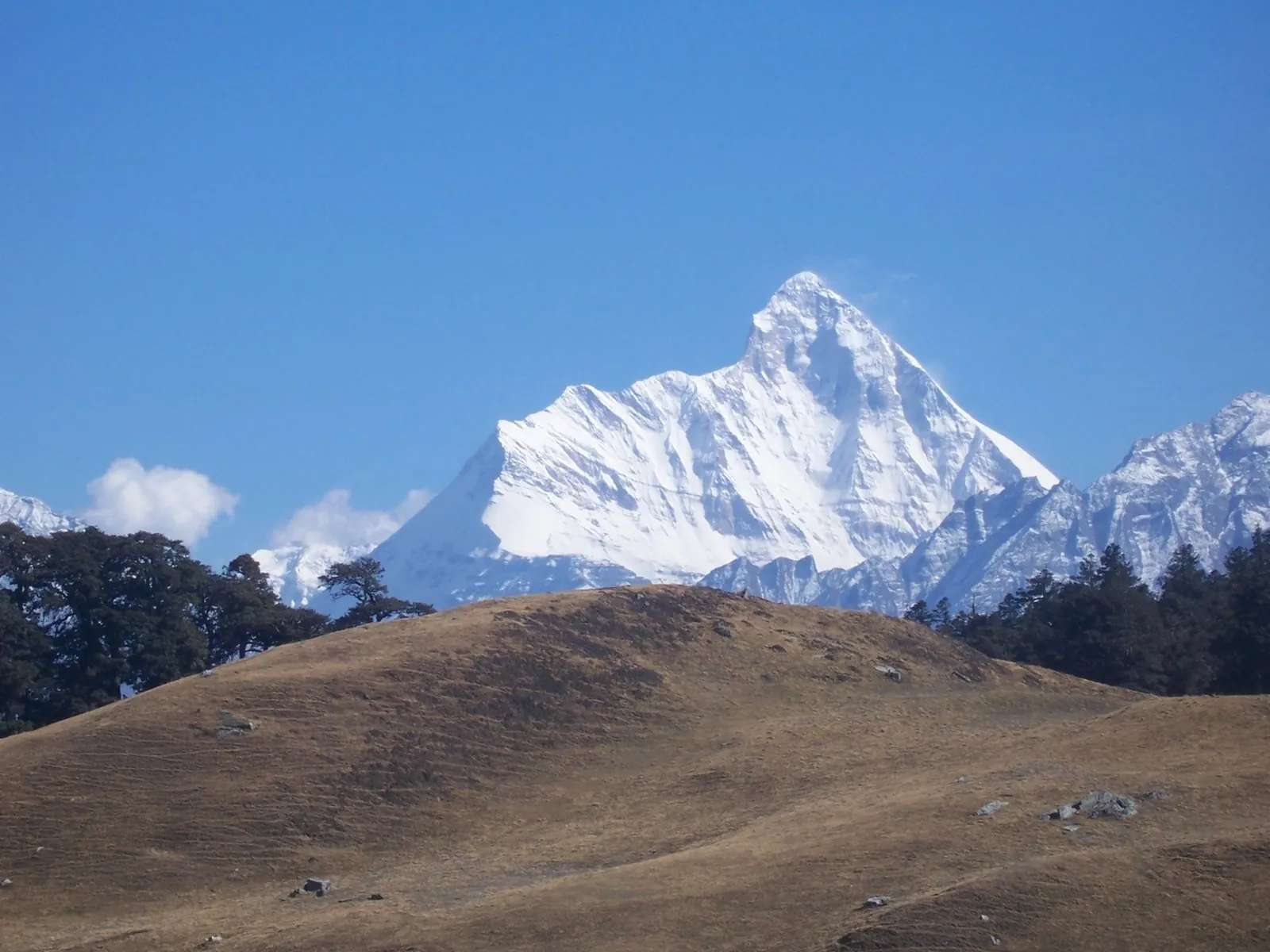
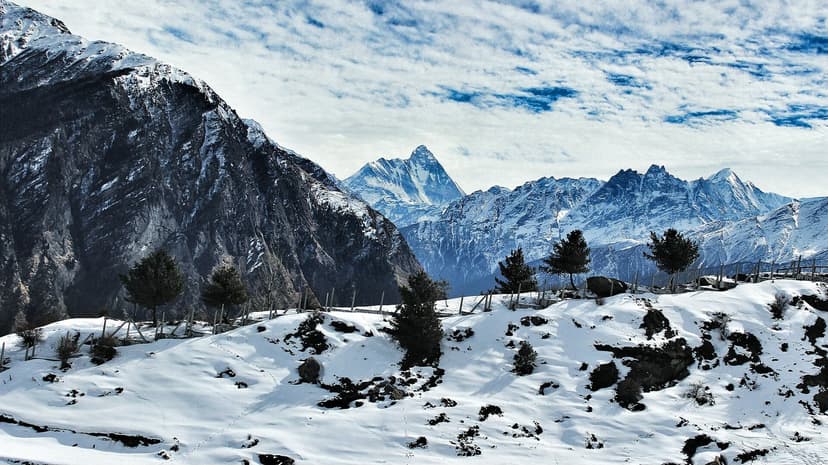
Uttarakhand owns the bigger mountains, and it isn't close. Nanda Devi stands at 7,816 m, the highest peak entirely inside India. Kamet, Trisul, Chaukhamba and the rest of the Garhwal giants all clear 7,000 m. Himachal's highest, Reo Purgyil above the Sutlej in Kinnaur, tops out at 6,816 m. A full kilometre of rock and ice separates the two states' ceilings. When you stand at the Gorson bugyal above Auli (bugyal is the Garhwali word for a high alpine meadow) and Nanda Devi fills the sky, you understand why Garhwalis call their state Devbhoomi and shrug at the rest of the Himalaya.
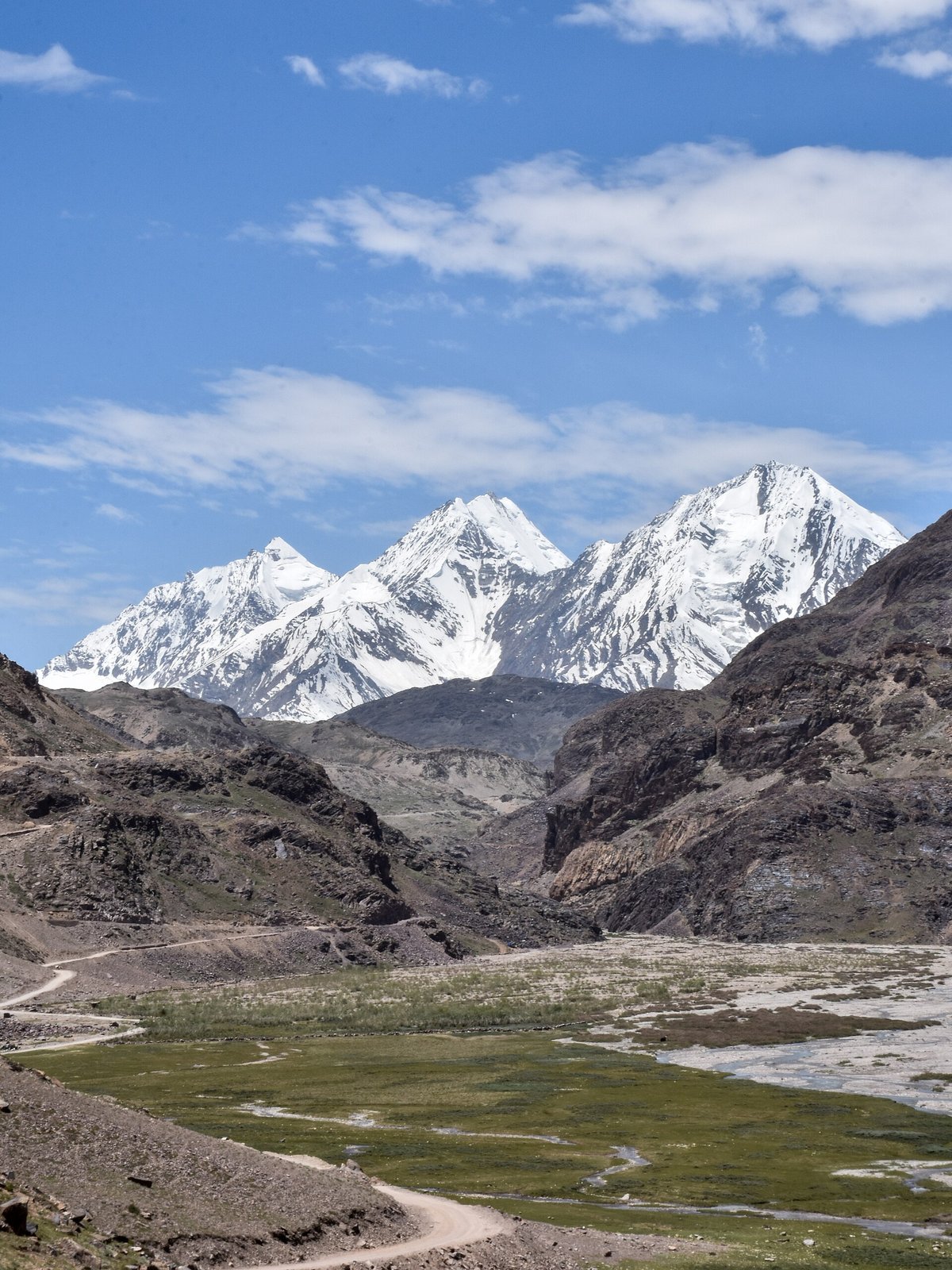
One commenter in the big Reddit debate put the counter-case with a sweep I mostly agree with: "The majesty of the Himalayas generally gets better as we move west from Kumaon to Garhwal to Himachal to Ladakh to Kashmir" (u/Direct-Replacement94). The peaks get lower as you come west, but the country gets stranger. Himachal's card is variety. Subtropical Kangra sits under pine and tea. Kullu is apple country with 4,000 m grass ridges. And then you cross Kunzum La and drop into Spiti, an actual cold desert at 3,800 m where the Tibetan plateau leaks into India. Uttarakhand has nothing that looks like Spiti. No state this side of Ladakh does.
A Kumaoni in another thread described the difference between the two states' terrain as sharpness: "UK mountains are a lot more sharp and vegetation is dryer compared to Himachal" (u/Liberlandu, r/Uttarakhand). Garhwal is vertical, gorge-cut, dramatic and geologically twitchy. Himachal rolls more, holds more flat valley floor, and gives you more places where you can simply live in the view rather than brace against it.
Verdict: Uttarakhand for scale and rawness, Himachal for range. If your dream photo is a 7,000 m wall, go east. Desert, orchard, gorge and meadow inside one state is our counter-offer.
Loud rivers, quiet monasteries
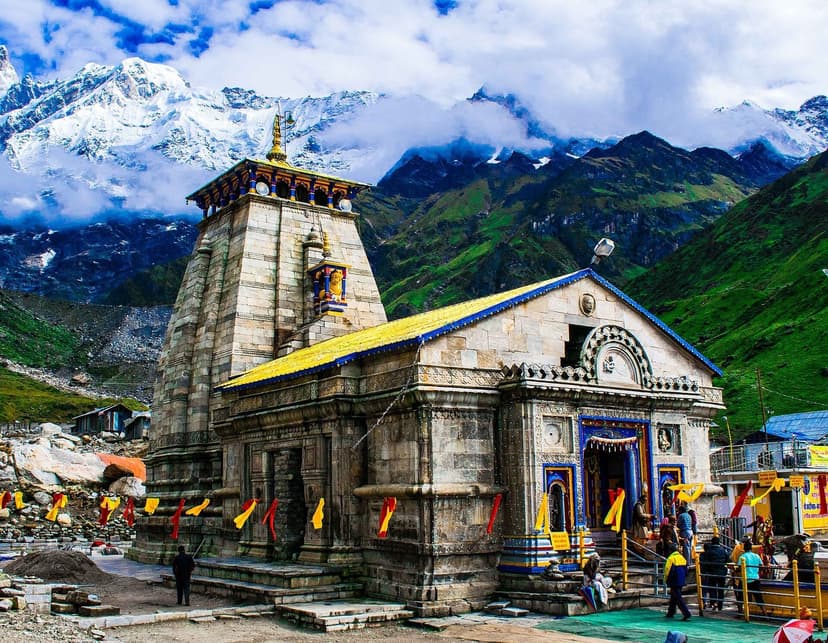
On pilgrimage, Uttarakhand wins so completely that the comparison is unfair. The Char Dham circuit (Yamunotri, Gangotri, Kedarnath, Badrinath) is the heaviest Hindu pilgrimage machine in the Himalaya. The 2026 yatra opened on 19 April for Gangotri and Yamunotri, 22 April for Kedarnath and 23 April for Badrinath, and registration is now mandatory and Aadhaar-linked through registrationandtouristcare.uk.gov.in, with 60 percent of slots online and 40 percent held offline. Kedarnath alone runs on helicopters, ponies, palanquins and a registration cap.
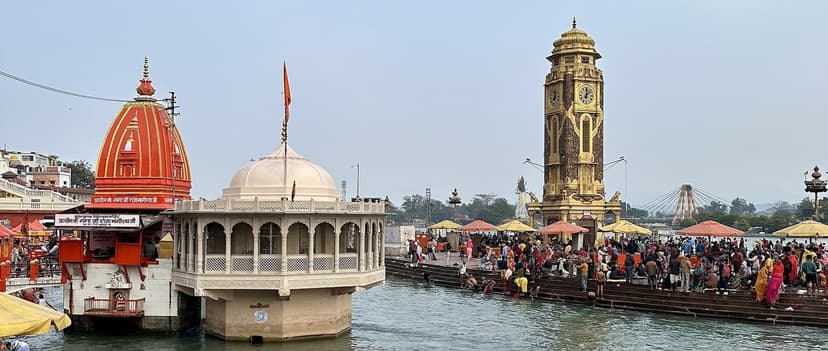
Then there is the Ganga belt. Haridwar's evening aarti at Har Ki Pauri runs every single day to a packed ghat. Rishikesh has been stacking yoga schools along the river since the Beatles wandered into Maharishi Mahesh Yogi's ashram in 1968 and accidentally invented a tourism category. None of this is subtle, and it isn't trying to be; the energy is communal, loud, bell-and-conch, and it works on plenty of people who arrived swearing it wouldn't.
Himachal's sacred geography works at a different volume. The Dalai Lama lives above Dharamshala, and McLeod Ganj is the centre of the Tibetan exile world; on teaching days the temple courtyard fills with monks, researchers and the merely curious (our guide to actually seeing him covers the schedule). Spiti holds Tabo, founded in 996 CE and still functioning, and Key Monastery stacked on its cone above the river. Manikaran's hot springs serve Sikhs and Hindus out of the same boiling ground. Himachal mixes Hindu, Buddhist and Sikh devotion in one river valley after another; Uttarakhand's sacredness runs deeper, on a single channel.
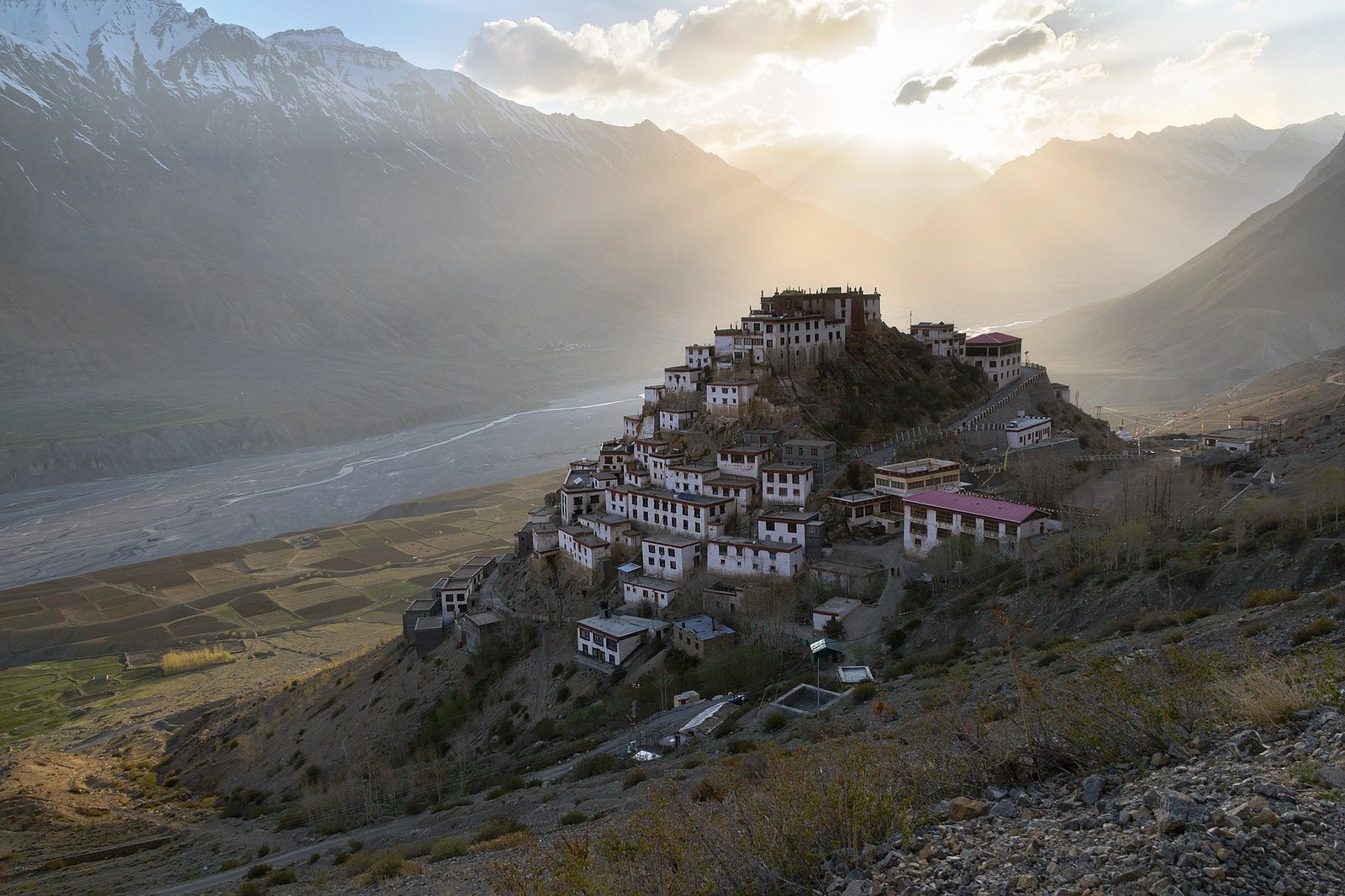
Verdict: Char Dham, Ganga ritual and yoga, Uttarakhand, no contest. Buddhist culture, interfaith shrines and quiet, Himachal. Pick your volume.
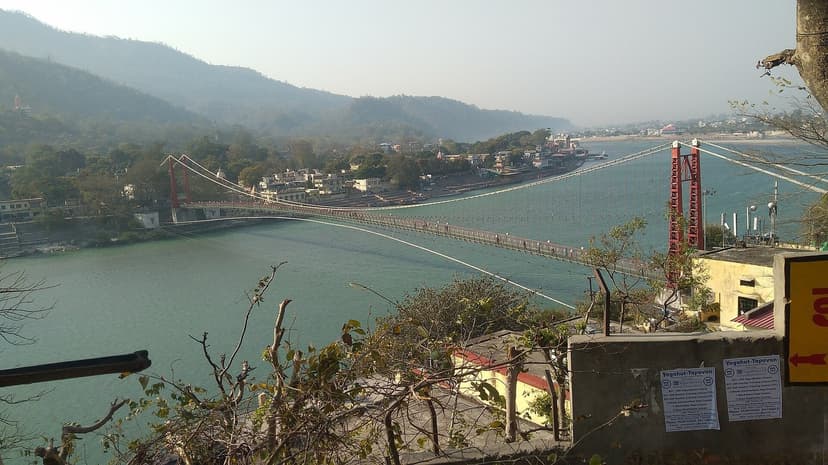
What each state sells when your palms sweat
Rishikesh is India's white-water capital and earned it. The standard 16 km Shivpuri run costs Rs 1,000 a person plus a Rs 20 entry fee in 2026, with Grade III and IV rapids that are genuinely fun rather than decorative. The bungee story changed recently: India's highest jump is now the 117 m Himalayan Bungee platform at Mohanchatti outside Rishikesh, with jumps from Rs 3,000 to Rs 4,600. The old 83 m record holder you will still find quoted in most comparison articles lost the crown. And Auli above Joshimath remains the country's most serious ski hill, with a proper ropeway and Nanda Devi staring at you down every run.
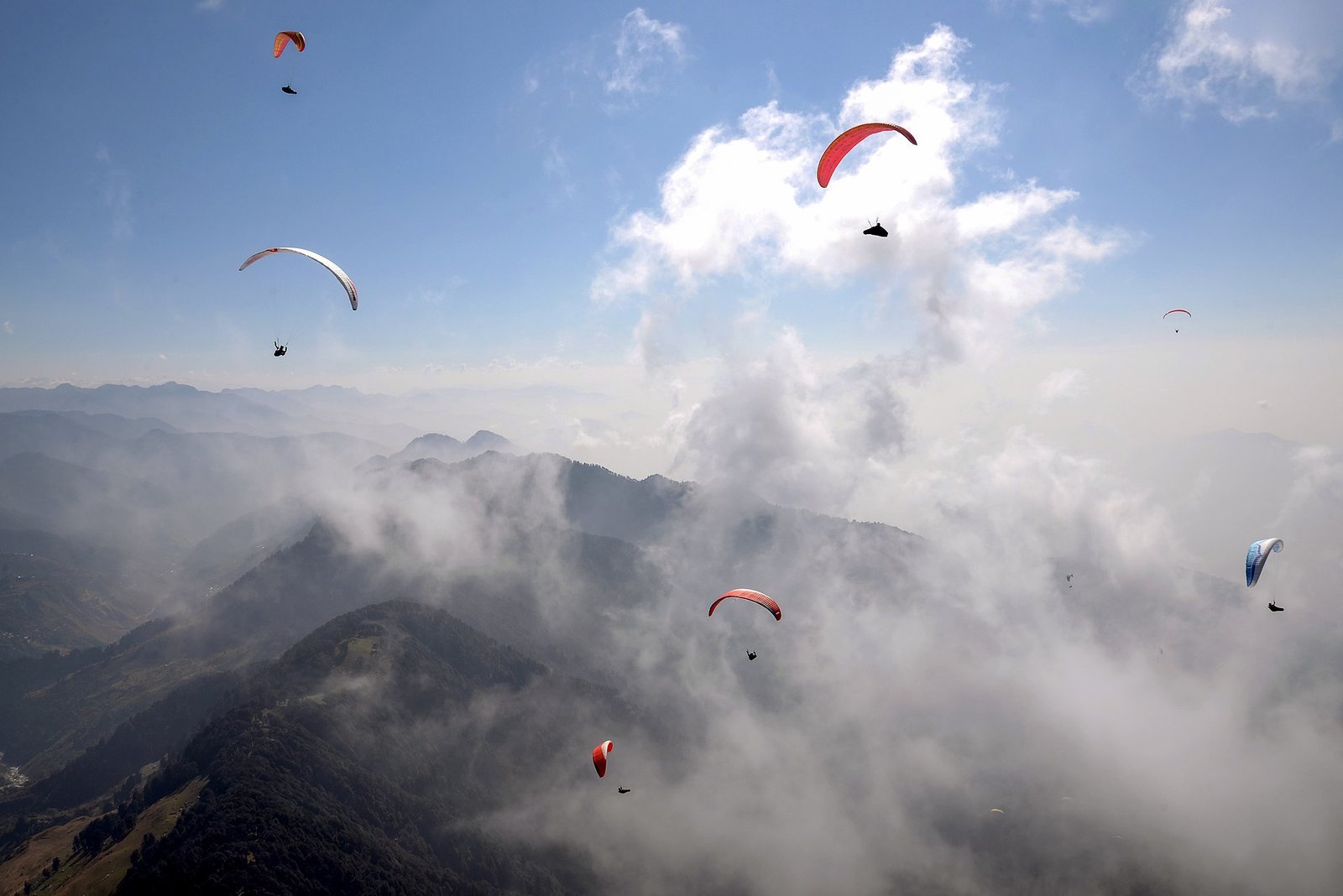
Himachal answers from the air and the road. Bir Billing is the second highest commercial paragliding site in the world and hosted the Paragliding World Cup back in 2015; a standard tandem runs Rs 2,500 to 3,500 in 2026, longer thermal flights Rs 4,000 to 6,000 (full details in our Bir Billing guide). The Spiti circuit is the best road trip in India that does not require a Ladakh budget, two days of acclimatising in Kaza included (we wrote the full route guide from the Manali side). Solang and Kufri cover skiing at a friendlier, shallower level than Auli, better for first-timers than for anyone chasing vertical.
Trekking splits down the middle. Himachal's classics (Triund, Hampta Pass, Beas Kund, the Pin Parvati if you are serious) are more accessible, with shorter approaches and better bus links to trailheads. Uttarakhand's treks are bigger commitments with bigger payoffs: Valley of Flowers, Har Ki Dun, Kedarkantha in winter, and the kind of multi-day Kumaon routes where, as the man behind the most-argued Reddit thread on this topic wrote, "The treks are harder. You earn the view" (u/akash31, r/india_tourism). Reddit consensus also gives Uttarakhand the nod on trekking professionalism, and the operator reviews I keep running into back that up, so I concede the round. I don't know Kumaon's interior the way I know Kullu's, and I'm not going to pretend a weekend of reading closes that gap.
Verdict: rafting, bungee, big treks and real skiing, Uttarakhand. Flying, road trips and learn-to-ski weekends, Himachal.
Where a thousand rupees goes further
Himachal is the cheaper state for the independent traveller, and the gap comes from infrastructure rather than menu prices. A dhaba meal costs Rs 80 to 150 in both states. The difference is everything around the meal. Himachal has hostel chains in every backpacker town (Manali, Kasol, McLeod Ganj, Bir, Jibhi), homestays from Rs 500 to 800, and HRTC buses that reach absurd places for double-digit fares. Uttarakhand's hostel scene concentrates in Rishikesh and a few Kumaon towns; in the Garhwal interior you're often choosing between a Rs 1,200 homestay and nothing.
Uttarakhand claws back ground on the pilgrim economy. Dharamshalas and ashrams around Haridwar and Rishikesh offer beds for Rs 200 to 500, sometimes with meals, sometimes by donation. If your trip is a pilgrimage, Uttarakhand might genuinely cost less. If your trip is cafes, treks and three towns in ten days, Himachal wins on arithmetic. Our Kullu-Manali cost breakdown has the line items.
| Dimension | Himachal Pradesh | Uttarakhand |
|---|---|---|
| Backpacker budget per day | Rs 800-1,200 | Rs 700-1,500 (wider swing) |
| Budget stay per night | Rs 500-800 homestay/hostel | Rs 1,000-1,500 hills; Rs 200-500 ashram/dharamshala |
| Dhaba meal | Rs 80-150 | Rs 80-150 |
| Volvo from Delhi | Rs 1,450 (Manali, 12-14 h) | Rs 600-900 (Rishikesh, 5-6 h) |
| Signature thrill | Paragliding Rs 2,500-3,500 | Rafting Rs 1,000; bungee Rs 3,000-4,600 |
| Skiing | Solang/Kufri, beginner-friendly | Auli, the real thing |
| State bus network | HRTC, exceptional reach | UTC, thin in the hills |
| Highest peak | Reo Purgyil 6,816 m | Nanda Devi 7,816 m |
| Cold desert | Spiti and upper Kinnaur | None |
| Pilgrimage scale | Regional (Manimahesh, Jwalamukhi) | National (Char Dham, Haridwar) |
| Crowd type | Leisure, spread across valleys | Pilgrim-heavy, corridor-concentrated |
| 2025 visitors | 3.11 crore all-in (1.45 crore tourists) | 6.03 crore (record) |
Planning a budget for either state and want a second pair of eyes on it? Email us your numbers and we will tell you which line items are off for 2026, where you are overpaying, and which leg of the trip will quietly eat your buffer.
Getting there: the expressway changed the answer
Until this spring the honest summary was that Uttarakhand starts closer to Delhi but Himachal moves you around better once you arrive. The first half of that just got supercharged. The Delhi-Dehradun Expressway opened on 14 April 2026: 210 km, six lanes, no signals, about two and a half hours from Akshardham to Dehradun, with a 12 km elevated stretch over Rajaji National Park that is the longest wildlife corridor of its kind in Asia. Haridwar and Rishikesh are now realistic Friday-night escapes from Delhi in a way no Himachali destination can match. Shimla is seven hours on a good day. Manali is twelve to fourteen.
Inside the states, the advantage reverses hard. HRTC is the best mountain bus network in India, and I'm not being a homer; even the loudest pro-Uttarakhand voice in the Reddit debate conceded it: "HRTC is hands down one of the best bus networks in the country" (u/akash31, same thread). The ordinary green buses smell of diesel and wet wool in January and they will still take you to a village of forty houses for the price of a samosa plate.
Uttarakhand's UTC will get you to the big towns. After that you're negotiating shared jeeps, which is its own skill, with its own timetable, set by whoever owns the jeep. A blunter Reddit assessment: "You get good connectivity to almost every part of Himachal through roads and HRTC buses. Uttarakhand has very less bus service for its mountain regions" (u/Deagled_u). Our HRTC guide and Delhi-Manali bus rundown exist because the buses here genuinely are the travel plan.
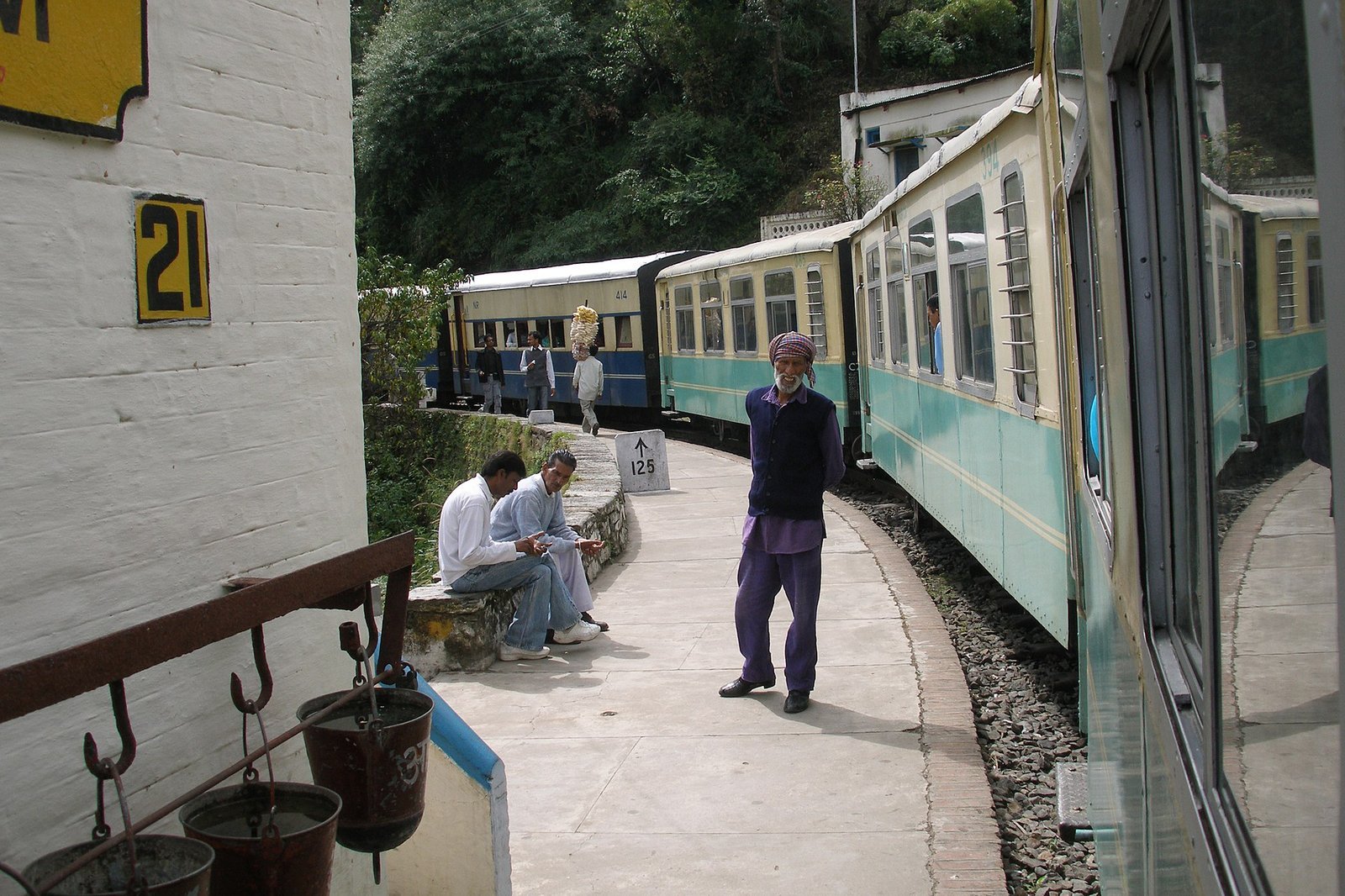
Verdict: a weekend or a pilgrimage from Delhi, Uttarakhand, and the margin grew in April. A two-week independent loop without your own vehicle, Himachal, and it isn't close.
Ghee country versus millet country
Himachali food is festive, dairy-rich and built around the dham, the ceremonial feast cooked by hereditary Boti chefs in brass pots over slow fires (we profiled the Botis and mapped all seven regional dhams). Madra, tudkiya bhath, siddu with ghee in winter. In Kullu households the siddu steamer coming out is how you know the cold has properly arrived. Add the Tibetan layer in McLeod Ganj and Spiti, and the cafe belts of Kasol and Old Manali, and Himachal simply offers a non-resident more to eat (start with our full food guide).
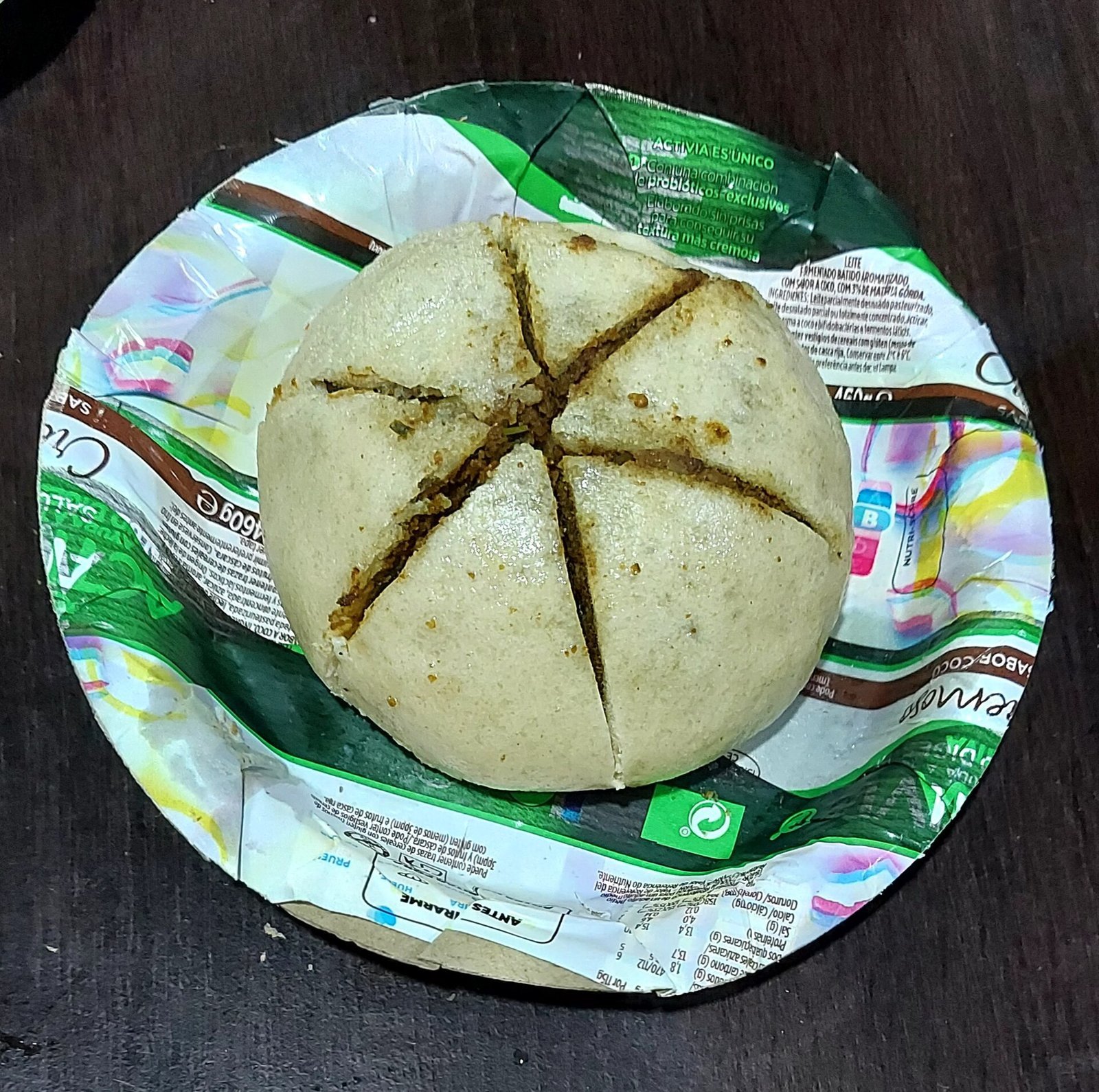
Uttarakhand's kitchen is leaner, older-tasting and quietly healthier. Kafuli, the slow-cooked greens dish; chainsoo from roasted urad dal; mandua (finger millet) rotis and jhangora kheer; bhatt ki churkani from black soybean; and bal mithai, the dark chocolate-looking fudge from Almora that ambushes first-timers. Garhwal and Kumaon cook differently and will tell you so. It is pahadi food with the oil turned down and the grain turned up, and nutritionists have been catching up to it for a decade.
One Reddit voice settled the food round on a technicality I endorse as a Kullu man: "Food wise, I prefer the Himachal cuisine because as a non vegetarian I get more local options there than the mostly vegetarian devbhoomi Uttarakhand" (u/Direct-Replacement94). Our chha gosht and trout culture is real; devbhoomi keeps its plates largely sattvik. Vegetarians may well score this round the other way.
The season that hates both states equally
From July to mid-September, stop comparing and start respecting. The 2025 monsoon killed hundreds in Himachal and shredded NH-3 between Mandi and Manali; Uttarakhand's Garhwal carries the memory of 2013 Kedarnath and remains, as one Uttarakhandi put it on his own state subreddit, "more unstable geologically than Himachal and Kumaon" (u/Puzzleheaded_Ask5538). Rafting suspends in Rishikesh when the Ganga runs high. Kinnaur drops rocks on its own highway. We keep a live accounting of what actually stays open in HP during monsoon, and the honest answer for both states is: less than the brochures say.
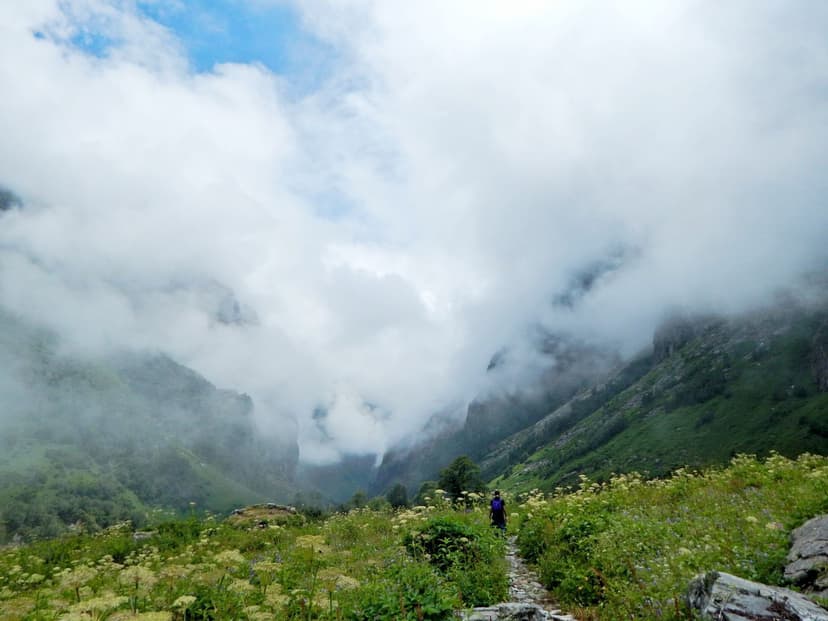
The one glorious exception belongs to Uttarakhand. The Valley of Flowers only exists in monsoon. The park opened on 1 June for the 2026 season (registration about Rs 200 for Indians, Rs 800 for foreigners), and the bloom peaks from mid-July through August, exactly when every other Himalayan plan is a gamble. Spiti is Himachal's rain-shadow counterargument, dry through July and August, but Spiti asks for acclimatisation and long drives. The Valley of Flowers asks for a 3.7 km walk from Ghangaria.
December: cozy versus serious
Winter is where Himachal's tourist machinery earns its keep. Snow is reachable (Solang, Kufri, Narkanda, upper Shimla), the cafes stay open, the hostels stay social, and the HRTC keeps ploughing through. It's bloody cold in the mornings and the bukhari-warmed common room at night is the whole point. Tirthan in snow, with the trout streams steaming at dawn, is the single most underrated winter scene in either state (our Tirthan guide makes the case).
Uttarakhand in winter divides into two experiences. Auli becomes the best skiing in India, full stop. Nainital and Mussoorie do a quieter, older-fashioned hill-station winter. But the high state shuts: Char Dham closes by November, the big treks ice over, and the interior empties. Even the loudest Uttarakhand partisan on Reddit steers December visitors carefully: "places like Munsiyari, Chopta would be having heavy snow. I would suggest for places like Almora, Mukteshwar and Kausani at that specific time" (u/akash31, r/SoloTravel_India).
Verdict: skiers go to Auli. Everyone else winters better in Himachal. Check our month-by-month matrix before you fix dates.
Where the crowds actually end
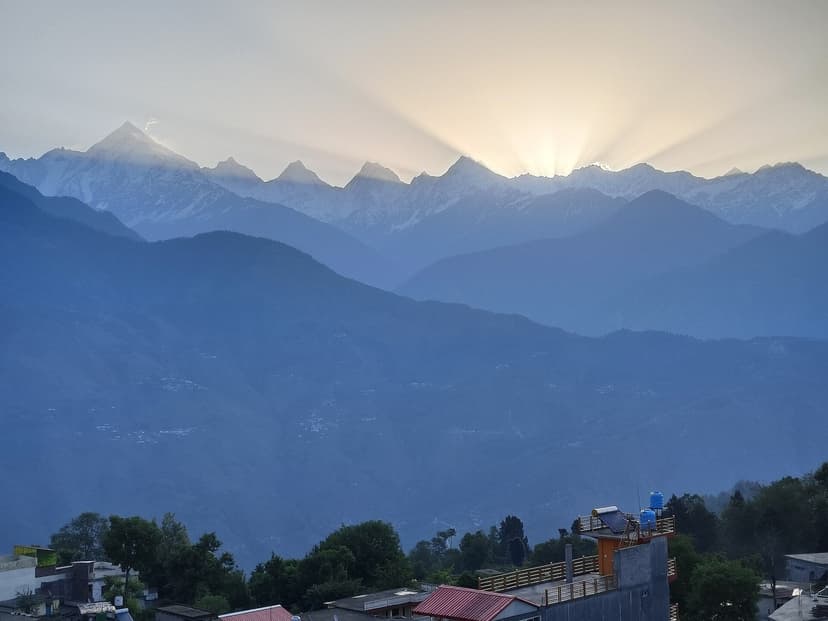
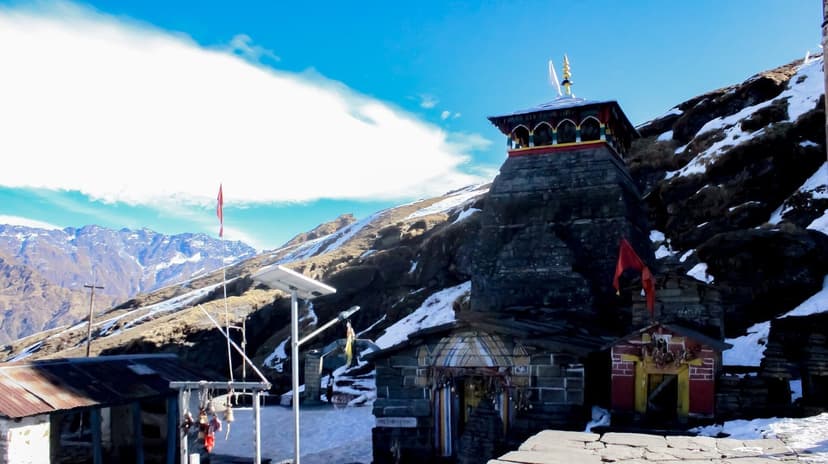
This is the round the internet fights about hardest. The pro-Uttarakhand case, in its strongest form, from the thread that started the war: "You get into places like Munsiyari or driving that route to Chopta, and the crowds disappear. The silence is heavy and real" (u/akash31). He has a point. Munsiyari sits two travel days from Delhi in eastern Kumaon, under the Panchachuli wall, and no expressway will ever fix that, which is precisely its protection. Chopta, Binsar, Peora, Khirsu, Har Ki Dun: Uttarakhand's quiet list runs deep, partly because hill-village migration has emptied whole valleys. The same census ghost villages that worry Garhwalis ("thousands of villages in the Garhwal region of Uttarakhand were completely deserted with zero population," noted a borderline resident in r/HimachalPradesh) read, to a certain kind of trekker, as solitude.
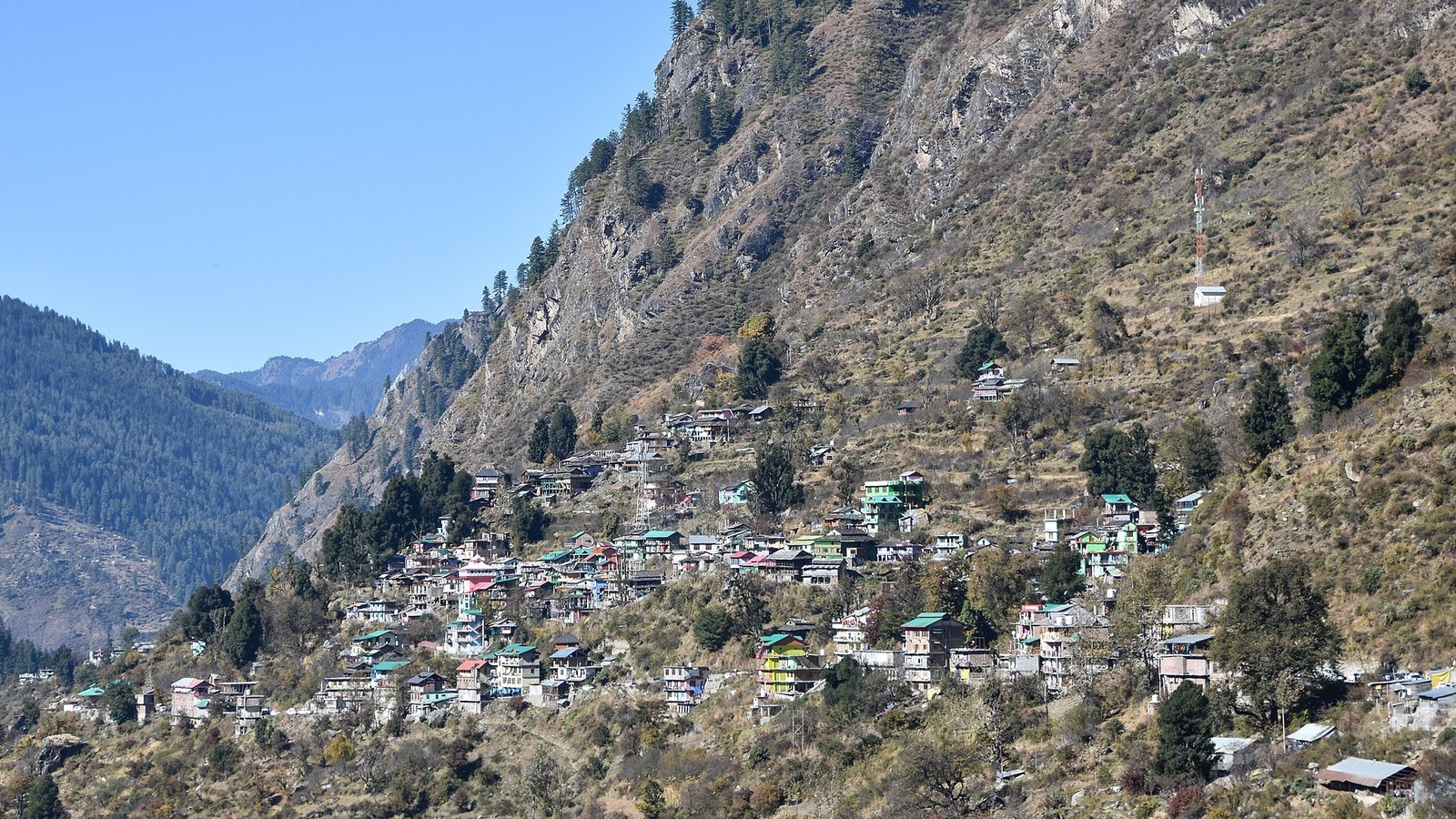
The Himachali rebuttal came fast in the same thread: "I can name you so many places in HP that are so off the tourist charts you won't find a tourist soul there," wrote u/Snoo_25371, and then actually named them: Kareri near Dharamshala, Deohari and Shanshar in the Sainj valley, Sajwar, Gada Gushaini and Seri around Tirthan, Barot, Banikhet in Chamba. I would add half of Kinnaur and everything in the twenty-places list we built from exactly this kind of Reddit testimony. Chitkul, the last village before the old Tibet border, still ends the road the way it has for centuries.
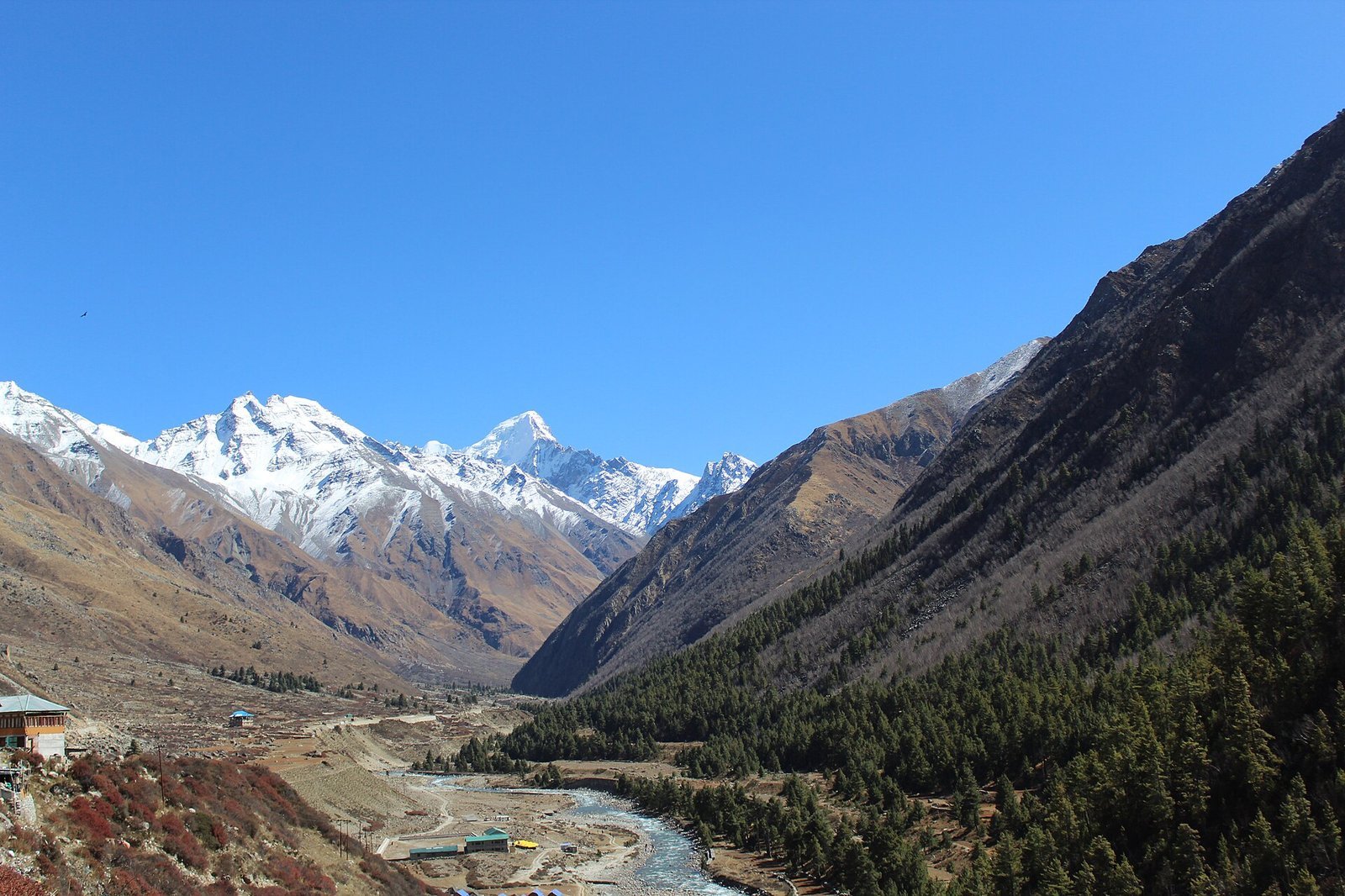
The honest difference: Himachal's quiet places are quiet valleys inside a connected state, an HRTC bus or one jeep away from a cafe with WiFi. Uttarakhand's quiet places are remote in the older sense, where the road itself filters who arrives. The first kind of quiet is easier to enjoy. The second kind is more absolute. I know which one my own bones prefer, and I also know that is the Kullu in me talking.
The bhai-bhai war, observed from a safe distance
Spend a week reading the two state subreddits and a pattern emerges. An Uttarakhandi posts a Himachal comparison. Himachalis arrive, mostly polite. Someone blames politicians. Someone mentions the bhoo kanoon, Himachal's land law that bars outsiders from buying hill land, and which many Uttarakhandis openly envy as the thing their state failed to pass in time. Someone calls the whole thread karma farming. And eventually someone says what most pahadis on both sides actually believe: "Uttarakhand and Himachal Pradesh are bhai bhai when it comes to mountains and beauty" (u/Adventurous_Zone353, r/Uttarakhand, 176 upvotes).
My favourite comment in the whole genre is a two-line play that ends the argument better than I can:
Uk is way better than HP bro, we have all the rivers bro. HP is better bro, we have the bhoo kanoon bro. Both live in Delhi.
(u/Novel_Advertising_51.) The serious version of that punchline: both diasporas romanticise home, and travellers on the ground report kindness in both states.
On safety, the single most useful account I found came from a solo woman who got stuck in a landslide in Uttarakhand, hitchhiked three vehicles back to Rishikesh through the night, and felt safe the entire way (u/hounsfieldscale, r/SoloTravel_India). She also found Himachal's tourist-strip vendors sharper-elbowed than ours would like to admit, with one exception she named and I'll co-sign: Spiti, where everyone was too kind. For women travelling alone in Himachal, our solo women's guide goes street-level.
So which one first?
For a first mountain trip, Himachal. I will take that fight with anyone, and not out of loyalty: the case is mechanical. Better buses, more beds at more prices, more forgiving treks, more food variety, and a tourist economy that knows how to absorb a beginner without fleecing them, mostly. The deeper your mountain experience gets, the harder Uttarakhand pulls: bigger peaks, harder-won solitude, the Ganga, and trekking infrastructure that professionals rate above ours.
Pick Himachal first if: it is your first Himalayan trip; you travel by bus; you want cafes, hostels and company; you want a road trip (Spiti) or to learn paragliding or skiing; you are going in December-February; you want Buddhist culture; your budget is tight and your appetite is non-vegetarian.
Pick Uttarakhand first if: the trip is a pilgrimage or a yoga reset; you have only a weekend from Delhi (the expressway settled this); you are an experienced trekker chasing 7,000 m views; you want rafting, the 117 m bungee or real skiing; you are going in July-August (Valley of Flowers); you want the kind of remoteness that takes two days to reach.
And if the real answer is both, do both properly.
The do-both route, 10 days, post-expressway edition
- Day 1: Delhi to Rishikesh
Take the expressway run to Dehradun (2.5-3 h) and the short hop to Rishikesh. Evening Ganga aarti at Triveni Ghat. - Day 2: Rishikesh
Morning rafting (16 km Shivpuri, Rs 1,000) or the 117 m bungee at Mohanchatti. Walk Lakshman Jhula at dusk. - Day 3: Haridwar day trip
Har Ki Pauri aarti at sunset. Go early, hold a railing spot on the far bank, keep your shoes in your bag. - Day 4: Cross to Himachal
Train or bus Dehradun to Chandigarh, then HRTC onward to Shimla (about 4 h) or sleeper to Manali. The long-haul day; pack patience. - Day 5: Shimla or straight to Kullu
If Shimla: ride a Kalka-Shimla toy train segment. If Kullu-bound: aim for Aut and the Tirthan turn-off. - Day 6-7: Tirthan or Manali
Quiet option: Tirthan valley, trout water and GHNP walks. Social option: Manali, Old Manali cafes, Solang day. - Day 8: Bir
HRTC across to Bir for a morning tandem flight off Billing (Rs 2,500-3,500). Tibetan colony momos after landing. - Day 9: Dharamshala
McLeod Ganj, Tsuglagkhang temple, Bhagsu waterfall walk. Check the Dalai Lama teaching schedule in advance. - Day 10: Return
Overnight Volvo Dharamshala to Delhi (10-12 h), or Gaggal airport if the budget allows.
Want a local sanity-check on your two-state route? Email us your draft itinerary. We will tell you which day is too ambitious, where the bus connection actually breaks, and which leg to cut when (not if) you fall behind.
| Item | Cost | Notes |
|---|---|---|
| Transport (expressway cab share, trains, HRTC, return Volvo) | Rs 4,500-6,000 | Solo on buses lands at the low end |
| Stay (hostels, homestays, 1 ashram night) | Rs 6,000-8,500 | Rs 600-900 a night average across both states |
| Food | Rs 3,500-4,500 | Dhaba thalis plus two cafe splurges |
| Rafting + bungee or paragliding | Rs 3,500-7,500 | Rafting Rs 1,000; bungee Rs 3,000-4,600; Bir tandem Rs 2,500-3,500 |
| Buffer (weather, jam days, extra chai) | Rs 1,500-2,000 | You will use it. Everyone uses it. |
The questions everyone actually asks
Is Himachal or Uttarakhand better for a first mountain trip?
Himachal, on mechanics rather than romance: the HRTC bus network reaches almost everywhere, hostels and homestays exist at every budget, and the classic treks are shorter with easier access. Save Uttarakhand for when you want bigger mountains and deeper remoteness.
Which state is cheaper?
Himachal is more consistently cheap for independent travellers (Rs 800-1,200 a day backpacking) thanks to hostels and HRTC. Uttarakhand can be cheaper for pilgrims using ashrams and dharamshalas (Rs 200-500 a night) but pricier in the hill interior where budget beds are scarce.
Which is better for trekking?
Uttarakhand for big, committed treks (Valley of Flowers, Har Ki Dun, Kedarkantha) under bigger peaks, with more professional operators. Himachal for accessible treks with short approaches (Triund, Hampta Pass, Beas Kund). Beginners start in Himachal; experienced trekkers will prefer Uttarakhand.
Which is safer for solo women?
Both rank among the safest states in India for solo women. Himachal has the edge in backpacker community and hostel culture; Uttarakhand spiritual towns are very safe but more conservative. Standard precautions apply in both, especially around party zones.
Himachal or Uttarakhand in December and January?
Himachal for most people: reachable snow, open cafes, working buses. Uttarakhand in winter is for skiers (Auli is India best slope) and for quiet lake-town stays in Nainital or Mussoorie; the high state largely closes.
Himachal or Uttarakhand in the monsoon?
Treat July to mid-September as risk season in both. The two exceptions: Valley of Flowers in Uttarakhand blooms precisely then (opened 1 June for the 2026 season), and Spiti in Himachal sits in rain shadow. Pick one exception and avoid the rest of the map.
How long is Delhi to Dehradun now?
About 2.5 to 3 hours since the Delhi-Dehradun Expressway opened on 14 April 2026 (210 km, access-controlled). Rishikesh is roughly another 45 minutes. That makes Uttarakhand the only real weekend Himalaya from Delhi.
Do I need any registration for the Char Dham yatra in 2026?
Yes. Registration is mandatory and Aadhaar-linked via registrationandtouristcare.uk.gov.in, the Tourist Care Uttarakhand app or WhatsApp; 60 percent of slots are online, 40 percent offline. Kedarnath opened 22 April and Badrinath 23 April for the 2026 season.
Can I do both states in one trip?
With 10 days, yes: Rishikesh and Haridwar first, then cross via Chandigarh into Himachal for Tirthan or Manali, Bir and Dharamshala. Do not try to combine the remote interiors of both states in one trip; that needs three weeks minimum.
Which state has better food for travellers?
Himachal offers more variety: the dham feast tradition, Tibetan food, trout, and strong cafe culture, plus more non-vegetarian options. Uttarakhand Garhwali and Kumaoni cooking (kafuli, mandua rotis, bal mithai) is leaner, millet-forward and mostly vegetarian. Foodies lean Himachal; the health-conscious lean Uttarakhand.
Sources
- Uttarakhand Tourist Care: official Char Dham 2026 registration portal (mandatory, Aadhaar-linked).
- ETV Bharat, Feb 2026: Uttarakhand 2025 record, 6,03,21,194 visitors, Haridwar 3.42 crore, Dehradun 67.35 lakh, Tehri 53.29 lakh.
- Himachal Tourism, official statistics sheet (PDF, April 2026): HP 2025 arrivals, 1,44,96,155 tourists plus 1,66,51,000 religious visitors, 3,11,47,155 all-in. Note: the site geo-blocks some networks; the figures were cross-checked against the Google-indexed copy in June 2026.
- Delhi-Dehradun Expressway: opened 14 April 2026, 210 km, 2.5 h, elevated Rajaji wildlife corridor.
- Himalayan Bungy, Mohanchatti: 117 m, India highest jump, Rs 3,000-4,600 (2026).
- Bir Billing Paragliding price list 2026: tandem Rs 2,500-3,500 standard.
- ETV Bharat: Valley of Flowers opens 1 June, virtual registration.
- r/india_tourism: Why I Always Choose Uttarakhand Over Himachal Pradesh: the 50-plus-comment debate quoted throughout (u/akash31, u/Snoo_25371, u/Deagled_u, u/Direct-Replacement94).
- r/Uttarakhand: Visited Himachal (Dharamshala) for the first time as a Pahadi: 1,045-upvote thread (u/Correct-Magician6521, u/Nomad7284, u/Local_Ad_6051, u/Puzzleheaded_Ask5538).
- r/SoloTravel_India crosspost: solo-women safety exchange (u/hounsfieldscale, u/akash31).
- r/HimachalPradesh: Difference between people of Himachal and Uttarakhand: ghost-village census discussion (u/Illustrious-Idea6359).
- Holidify: Food of Uttarakhand: Garhwali and Kumaoni dishes.
- Background reading: Nanda Devi and Reo Purgyil (peak elevations).
Written from Kullu. I have not lived in Uttarakhand, and everything I claim about it above is sourced rather than lived; where the evidence said my neighbour state wins a round, I wrote it down and grumbled privately. Disagree with a verdict? Tell us where we got it wrong.
You Might Also Like
Volunteering in Himachal Pradesh: 12 Organisations and How to Apply (2026)
Teach English in McLeod Ganj, conserve the Great Himalayan National Park, build with earth in Bir, or harvest apples in Kullu. Twelve real HP volunteer organisations with honest costs, the visa rule that gets foreigners deported, and how to apply.
How to Travel Himachal Without Wrecking It: A Quiet-Travel Manual
A non-preachy field manual for responsible travel in Himachal, by a Kullu local: how to behave, when to go, where to go instead, and the 2026 rules and bans that actually matter.
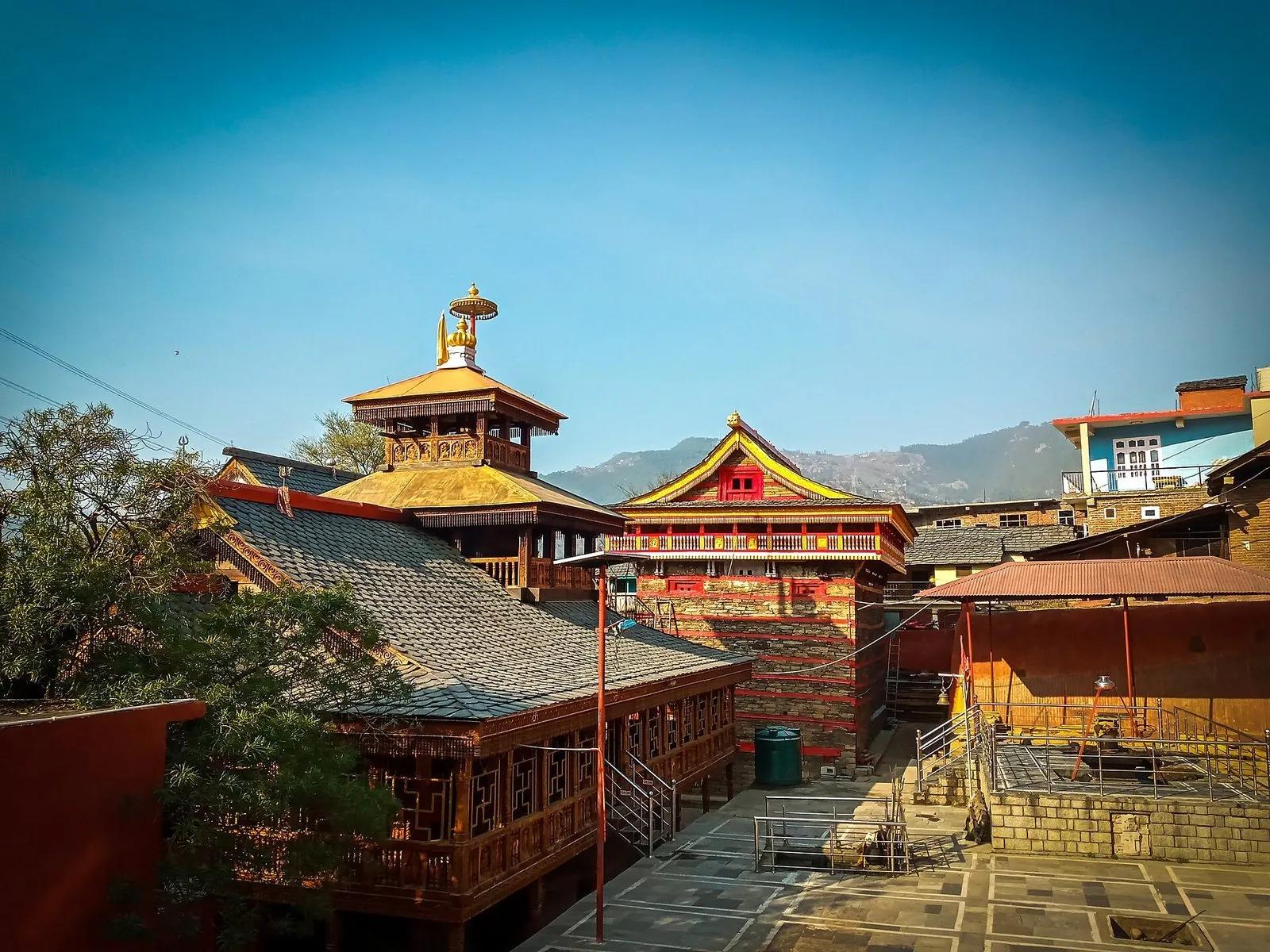
Mamleshwar Mahadev: The Eternal Flame Temple of Karsog
An eternal fire, a fist-sized wheat grain and a six-foot drum, kept in a mortar-less timber temple in the quiet Karsog valley. The honest story of Mamleshwar Mahadev: what is real, what is faith, and how to go.