
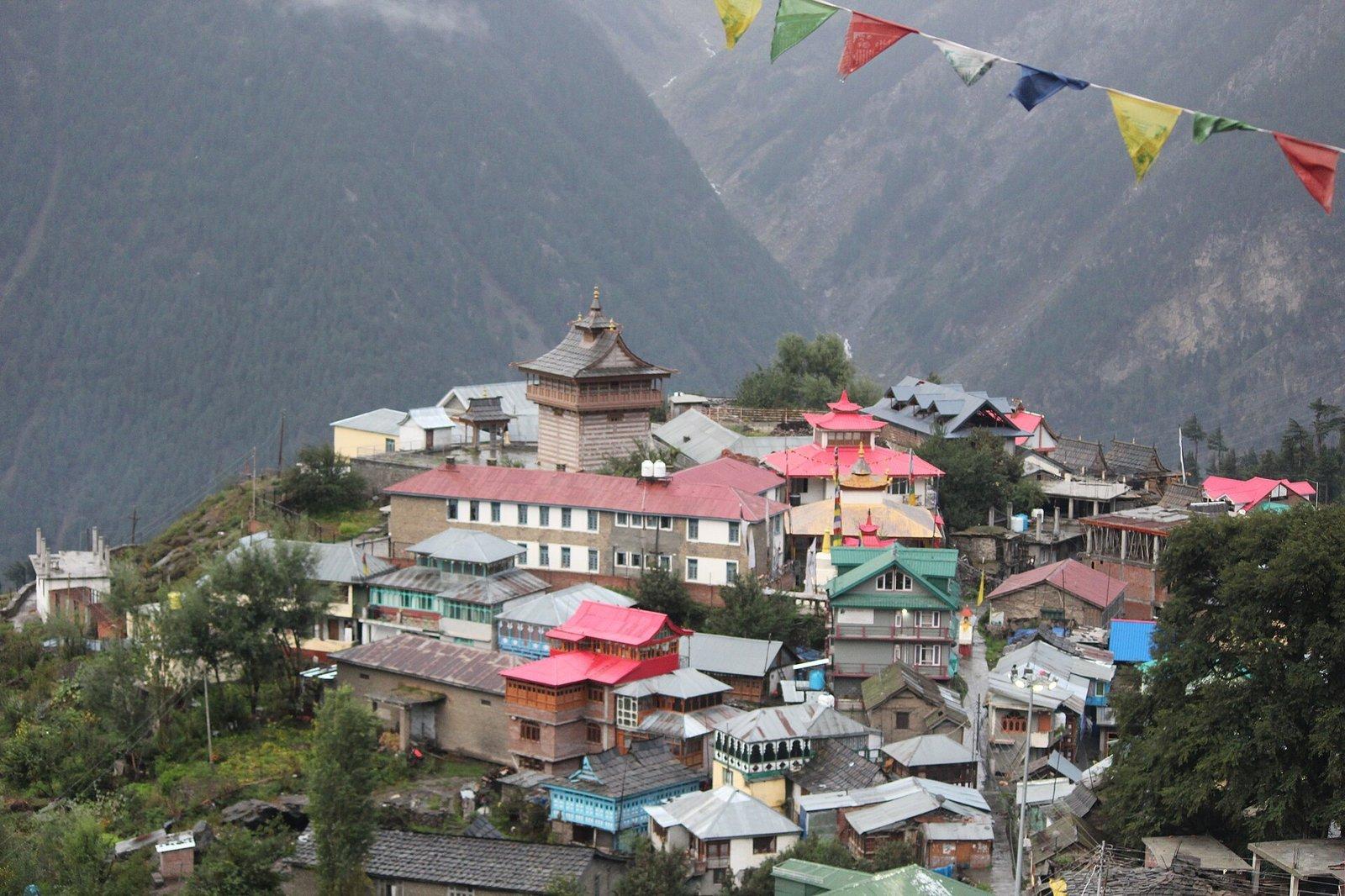
Best Time to Visit Himachal Pradesh 2026: Month-by-Month Guide
Quick answer (May 2026)
It depends on which Himachal. Lower valleys (Kangra, Dharamshala, Shimla, Kullu, Manali up to 2,500 m): best March to June and September to November. Higher valleys (Lahaul, Spiti, Pangi, Kinnaur above 3,000 m): accessible mid-May to early October; Rohtang opened 17 May 2026, Kunzum mid-June. October is the peak statewide month, with clear post-monsoon skies, apple harvest, shoulder pricing, and every pass still open. Avoid July-August in the lower valleys (landslides, 451 HP SDMA-recorded monsoon deaths in 2025); those same months are peak Spiti-Lahaul (rain-shadow geography).
October is the month nobody tells you about. Every "best time to visit Himachal" article on the internet says the same three things: summer is nice, monsoon is bad, December has snow. That is roughly as useful as telling someone India is hot. I have lived in Kullu most of my life, and the honest answer is that October, not May, not December, is when Himachal Pradesh is at its absolute best. Post-monsoon skies so clear you can count the ridges on Kinner Kailash from 80 km away. Apple harvest in full swing across Kinnaur. Kullu Dussehra pulling 200-odd deities down from the side valleys to Dhalpur Maidan. Shoulder pricing. Reliable roads. And nobody from Delhi because they already used their leave in June.
That is my biased opinion. I'll back it up with data.
But here is the thing most guides get wrong: Himachal Pradesh is not one destination. It is at least seven different climate zones stacked on top of each other, from 350 metres at the Haryana border to 6,975 metres at the top of Reo Purgyil. The "best time" depends entirely on which part you are going to, what you want to see, and how much road risk you can stomach. This guide gives you the full 12-month breakdown, zone by zone, with pass opening dates, festival windows, and the climate change data that nobody else in the Indian travel space is publishing yet.
- Best overall month
- October (post-monsoon clarity, apple harvest, Kullu Dussehra)
- Best for snow
- January (more reliable than December since 2020)
- Budget sweet spot
- Jul-Aug: Rs 400-1,200/night (40-50% off peak)
- All roads open
- Mid-June to mid-October
- Avoid unless Spiti
- July-August (monsoon landslides)
- Climate zones
- 7 distinct regions, 350 m to 6,975 m
- Last updated
- April 2026
The month-by-month answer: lower valleys vs higher valleys
The single biggest misconception about Himachal Pradesh is that it has one season at a time. It does not. Below the 2,500 m line and above the 3,000 m line are running on completely different calendars. Here is the canonical 12-row matrix, current to May 2026.
Best time to visit Himachal Pradesh, by month and zone
| Month | Lower valleys (Kangra, Dharamshala, Shimla, Kullu, Manali) | Higher valleys (Lahaul, Spiti, Pangi, upper Kinnaur) |
|---|---|---|
| January | Snow on the Manali-Solang-Kufri-Narkanda belt. Winter Carnival 2-6 Jan. Cold, but main roads open. Peak holiday crowd and peak winter pricing. | Closed beyond Sissu in Lahaul. Spiti reachable only via Kinnaur (long), most homestays shut. Winter Spiti expeditions only. |
| February | Last heavy snow window. Mandi Shivratri 16-22 Feb is the 500th edition with 216 deity palanquins (per hpmandi.nic.in). | Still closed. Only hardcore winter Spiti tours via Reckong Peo and Nako. Plan for the BSNL-only signal stretch (see our connectivity map). |
| March | Rhododendron bloom begins above 2,500 m. Passes still closed. Holi in Sangla, Bharmour, and the Kullu valley villages. Shoulder pricing. | Closed. First Sumdo-side thaw begins; road crews start working on Kunzum approaches. |
| April | Jalori Pass attempts to open late month (fragile road). Baisakhi 14 April. Cherry and apple blossom across Kotgarh, Kalpa, Naggar. | Still closed. Pre-monsoon clear skies above 3,000 m if you can get there via Kinnaur. Best for shoulder-season researchers and photographers. |
| May | Rohtang Pass opened 17 May 2026 (book the Rs 550 permit at rohtangpermits.hp.gov.in, see our permits guide). Apple-blossom peak in Kinnaur. Expensive and busy. | Manali side opens via the Atal Tunnel. Spiti accessible via Kinnaur (no permit needed for Indians, ILP for foreigners). Manali to Kaza loop still partial until Kunzum opens. |
| June | Lush and warm. Passes all open. Pre-monsoon cumulus building by month-end. Peak crowds (Delhi school break). | Kunzum Pass typically opens mid-June. Whole Spiti accessible. Chandratal Lake open. Best Spiti month for first-timers, before the rain-shadow advantage kicks in for July. |
| July | AVOID for lower valleys. Heavy rain, landslide deaths peak, NH-3 and NH-5 frequent closures. HP SDMA recorded 451 monsoon deaths in 2025. | PEAK month for Spiti and Lahaul. The rain-shadow keeps Spiti dry while the rest of HP floods. Clear skies, green lush ridges, fewest tourists. The connoisseurs window. |
| August | Still avoid. Same monsoon profile as July. Independence Day weekend creates Shimla gridlock. Hotel discounts up to 40 percent (HPTDC 7-property exclusion zone for the high belts). | Still peak for Spiti. Manimahesh Yatra preparation in Chamba (yatra runs 4-19 September 2026). Plan BSNL SIM ahead, see our connectivity map. |
| September | Monsoon receding. First half still landslide-risky; second half is excellent everywhere. Rates start dropping. Manimahesh Yatra peaks 4-19 September. | Still excellent in Spiti and Lahaul. Last reliable weather window before the high-altitude October cold sets in. Pin Valley still accessible. |
| October | PEAK STATEWIDE month: clear post-monsoon skies, apple harvest at Kotgarh and Kinnaur, Kullu Dussehra 20-26 October 2026 (per HP Tourism), shoulder pricing, all passes still open. | Last good month for Spiti and Lahaul. Crisp clear weather, low traffic. By mid-month, Kunzum starts feeling late-season; book accommodation before you drive in. |
| November | Excellent until mid-November. Cold but clear. Light snow possible above 2,500 m by month-end. The off-season nobody talks about. | Most Spiti homestays close. Spiti-via-Kunzum closes late October to early November. Only the Kinnaur side stays accessible to Sumdo. |
| December | Snow returns to Manali, Solang, Kufri. New Year peak pricing. Christmas crowds in Shimla. Reliable winter holiday window for first-time visitors. | Closed. Access via Kinnaur only, and only for serious winter Spiti expeditions with experienced drivers. |
Decay-verified May 2026: HP SDMA 2025 monsoon death toll (451, final bulletin 23 Sept 2025) per state disaster portal; Rohtang 2026 opening (17 May) and Kunzum (mid-June) per HP PWD road status; Mandi Shivratri 16-22 February confirmed via hpmandi.nic.in as the 500th edition; Kullu Dussehra 20-26 October per HP Tourism; Manimahesh Yatra 4-19 September per Tribune May 2026 NGT-framework piece.
The 12-month matrix (what every competitor refuses to build)
Every travel site gives you three seasons. I am giving you twelve months with six dimensions each because that is what you actually need to plan a trip. Bookmark this table. Come back to it.
Month | Temp (C) | Rain | Roads | Crowds | Price | Best for |
|---|---|---|---|---|---|---|
Jan | -5 to 10 | Low | Main roads open, passes closed | HIGH (holidays) | PEAK | Snow: Manali, Solang, Kufri. Winter Carnival Jan 2-6. Guaranteed snow. |
Feb | -2 to 12 | Low | Same | Moderate | High | Mandi Shivratri Feb 16-22 (7-day, 216 deities). Last heavy snow window. |
Mar | 2 to 18 | Low | Passes starting to clear | Low-Mod | Shoulder | Dharamshala, Shimla. Rhododendron bloom begins. Sangla Holi. |
Apr | 5 to 22 | Low | Jalori opens late Apr (fragile) | Moderate | Shoulder | All lower HP. Baisakhi Apr 14. Cherry and apple blossom. |
May | 10 to 28 | Low | Rohtang opens (May 17, 2026) | HIGH | PEAK | All HP open. Apple blossom peak in Kinnaur. Shimla Summer Fest. |
Jun | 12 to 30 | Increasing | All open (Kunzum mid-Jun) | HIGH | PEAK | Spiti fully accessible. Lush green everywhere. |
Jul | 12 to 25 | HEAVY | Landslide risk | LOW | OFF-PEAK | SPITI ONLY (rain-shadow). Minjar Fair Chamba Jul 26. Peak waterfalls. |
Aug | 12 to 24 | HEAVIEST | HIGH RISK | LOWEST | CHEAPEST | Spiti and Lahaul only. Apple harvest begins Kinnaur. Phulaich. |
Sep | 10 to 25 | Clearing | Improving | Low-Mod | Shoulder | Kinnaur apple harvest PEAK. Sair Festival Kullu/Mandi. Skies clearing. |
Oct | 5 to 22 | Minimal | All open, reliable | Moderate | Shoulder | ALL HP. Kullu Dussehra Oct 22-28. Apple harvest. Autumn colours begin. |
Nov | 0 to 18 | Minimal | Upper passes closing | Low-Mod | Shoulder | Tirthan, Kalpa, Shimla. Lavi Fair Rampur Nov 11-14. Peak autumn foliage. |
Dec | -5 to 15 | Low | High passes closed, Atal Tunnel open | HIGH (holidays) | PEAK | Manali, Shimla, Dalhousie. Christmas crowds. First snow NOT guaranteed Shimla. |
Two things to notice. The cheap months and the dangerous months are the same months. And the month with the best weather-to-crowd ratio is October, which barely registers as a travel season in most guides.
HP is not one place: 7 climate zones you need to know
Most planning mistakes for Himachal start the same way. Someone Googles "Himachal Pradesh weather in July" and applies the answer to the whole state, when it is roughly true for about 15% of it. Dharamshala drowns under 3,400 mm of annual rainfall, the wettest figure in HP. Kaza in Spiti, 200 km to the northeast, gets less than 200 mm in a whole year. One state. One month. Two completely different climates.
Here are the seven zones that actually matter for planning.
1. Lower Hills (Shimla, Solan, Kasauli). Between 1,500 and 2,200 metres. You can get here any time of year, which is the problem. Shimla in May is a parking lot with a view. December is the same parking lot with slush. March or October, when the Mall Road belongs to the monkeys again and hotel rates drop by half. That is when you go.
2. Mid-Kullu Valley (Manali, Kullu town). Around 2,000 metres. Snow December through February, monsoon landslides July through September, and a tourism industry that has been running past capacity since Covid reopened the floodgates. u/Aromatic-Ad8530, a Brit who has spent eight years travelling India, put it bluntly on Reddit: "All famous destinations in Himachal (Manali, Dharamshala, Kasol) are massively overcrowded with domestic tourists since Covid." He is not wrong. I live here. I can smell the traffic from my terrace in May.
3. Kangra Valley (Dharamshala, Bir, Palampur). The wettest corner of the state. Dharamshala eats 3,400 mm of rain a year, most of it dumped June through September in sheets that turn the Dhauladhar foothills into waterfalls. Bir is where the paragliders go. Dharamshala is where the Dalai Lama lives. Come in March-April when the buransh (rhododendron) paints every hillside between 1,500 and 3,000 metres red. Come in July and you will spend three days watching rain from a cafe window.

The Dhauladhar wall behind Dharamshala from the Kangra valley side, where 3,400 mm of annual rain makes this the wettest corner of the state. Photo: Wikimedia Commons.
4. Kinnaur (Kalpa, Chitkul, Sangla). The Sutlej and Baspa valleys, 2,600 to 3,700 metres, where the apple orchards run right up against the Tibet border. August to October is when you come: golden fruit against the 6,050-metre wall of Kinner Kailash. After November, snow shuts the upper roads and you are not getting past Reckong Peo. The Kinnaur guide has the full route.
5. Spiti (Kaza, Key, Komic). The outlier. Everything about Spiti is backwards. It rains less here than in Rajasthan. The best weather is during the monsoon. The closest fuel pump is a day apart from itself. At 3,500 to 4,500 metres with under 200 mm of annual rain, July and August are when Spiti is warmest and clearest. More on this below. The Spiti road trip covers the Manali-side route; the village-by-village guide covers what to do once you get there.
6. Lahaul (Keylong, Sissu). About 3,000 metres. The Atal Tunnel changed everything here in 2020, giving Lahaul year-round access from Manali without crossing Rohtang. But there is a catch most English guides skip: Sissu Valley enforces a 40-day tourist entry ban starting January 20 every year. Avalanche risk. The district administration does not negotiate on this. If your January plans include Sissu, move them.
7. Upper Chamba (Pangi Valley, Sach Pass). Wild. Truly wild. Sach Pass at 4,414 metres opens sometime in June or July, nobody can tell you exactly when, and closes again by mid-October. Between those months you can reach Killar and the Pangi villages. Outside those months, you cannot. The people who live there know this. The tourists who do not, get stuck.
When the passes open (and why your whole trip depends on it)
If you are heading anywhere above 3,000 metres, the pass calendar runs your life. Doesn't matter what your leave dates say. Doesn't matter what the hotel confirmed over WhatsApp. If Kunzum is closed, you are not getting to Spiti from the Manali side. Period.
Here is the 2026 calendar, verified against BRO announcements and Hindi-language news from Amar Ujala.
Pass | Altitude | Opens 2026 | Closes | Notes |
|---|---|---|---|---|
Atal Tunnel | 3,100 m | Year-round | Never | Manali to Lahaul without Rohtang. Game changer since 2020. |
Jalori Pass | 3,120 m | Late April (fragile) | Mid-December | Amar Ujala reported it opening and closing the same day in March 2026. Reliable only mid-May onward. |
Rohtang Pass | 3,978 m | May 17 | ~Oct 15 | Closed every Tuesday for BRO maintenance. Rs 550 permit, 1,400 vehicles/day cap. |
Sach Pass | 4,414 m | June-July | Mid-October | Only road into Pangi Valley. No BRO date yet for 2026. |
Kunzum Pass | 4,551 m | Mid-June | Late October | Opened May 29 in 2024 after six-month closure. Gateway to Spiti from Lahaul. |
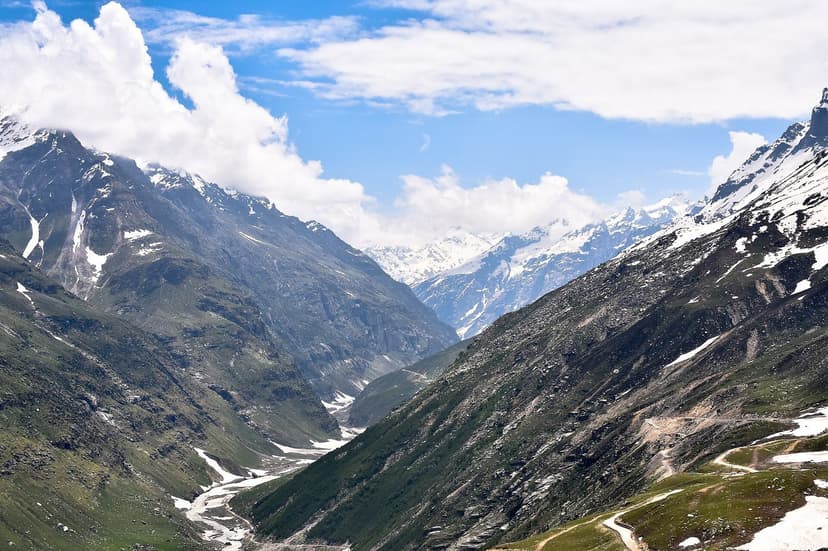
The Chandra valley below Rohtang, looking toward Lahaul. This road opens in late May and closes by mid-October, which means your Spiti-from-Manali window is roughly five months. Photo: Wikimedia Commons.
The practical takeaway: if your trip depends on a high pass, do not book anything non-refundable until you have checked the road status that morning. HRTC bus schedules and BRO Twitter updates are your friends. And if a pass opened "yesterday," wait a day. First-day openings are often followed by re-closures.
I still don't know why Jalori Pass behaves so erratically in March. It is the lowest of the bunch at 3,120 metres, yet it flip-flops more than Kunzum. There must be something about the NH-305 drainage pattern, but I have never found a satisfying explanation from anyone in the BRO or PWD.
The snow problem nobody in travel media will talk about
Here is the uncomfortable fact. Shimla snow is dying.
Winter 2024-25 was the driest in 23 years for snowfall. The numbers continued in February 2026: a 78% rainfall deficit, with only 14.4 mm against a normal of 64.1 mm (HimachalScape). December 2025 did briefly break a 12-year snow drought, but everything either side of it has been thin. The trend since 2019 points one way, downward.
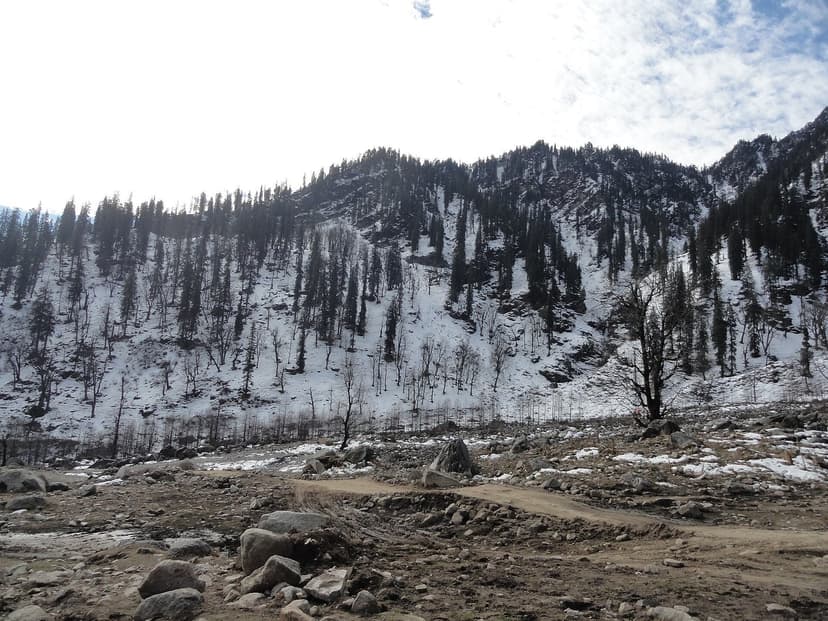
Solang Valley after a January dump, the kind of snowfall that used to be routine and is now something you plan around. At 2,560 m, Solang still delivers more reliably than Shimla. Photo: Wikimedia Commons.
What this means for your trip: if you are coming to Himachal specifically for snow, you need to adjust two variables. Go higher. And go later.
Climate change and HP snow (2026 reality). Shimla at 2,200 m is no longer a reliable snow destination in December. The data: 23-year record low snowfall in 2024-25, 78% rainfall deficit in February 2026, and a 12-year snow drought broken only briefly in December 2025. For guaranteed snow, go to 2,700 m or above (Sethan, Narkanda, Solang, Sissu) and go in January rather than December. The Reddit consensus on r/desitravellers backs this up: "December end and January = guaranteed snow window."
In January 2025, Shimla recorded maximum temperatures higher than Una, a town on the Punjab plains. The Amar Ujala headline read "una se zyada shimla ka nyuntam paara" (Shimla minimum higher than Una). That is a winter inversion anomaly, and it is happening more often. Shimla in December now feels, on bad years, like Chandigarh in October.
December is fine, but Shimla in December is not the snow trip people imagine. The Mall Road tends to be wet rather than white, and that is what then shows up on Reddit as a complaint. Solang has snow. Narkanda has snow. Sethan, the 2,700-metre village above Manali, gets buried every January. The snow is still in HP; it has just moved uphill.
Monsoon: everyone says don't go, and they are mostly right
The Reddit verdict on monsoon Himachal is unkind and accurate. The top-voted answer on r/SoloTravel_India: "NO Please dont go, this is a horrible time." From a separate thread, three words: "Don't. Kasol will always be there."
The data supports them. One night in July 2025, seventeen cloudbursts hit simultaneously: fifteen in Mandi district, one in Kullu, one in Kinnaur (Amar Ujala). By the end of the 2025 monsoon season (June through September), the cumulative toll was 63 dead, 109 injured, 40 missing, over 300 roads damaged and more than 100 bridges gone. Total economic loss: Rs 4,079 crore. One traveller documented a 52-hour Delhi-to-Manali ordeal in August, a trip that normally takes 12 hours by Volvo.
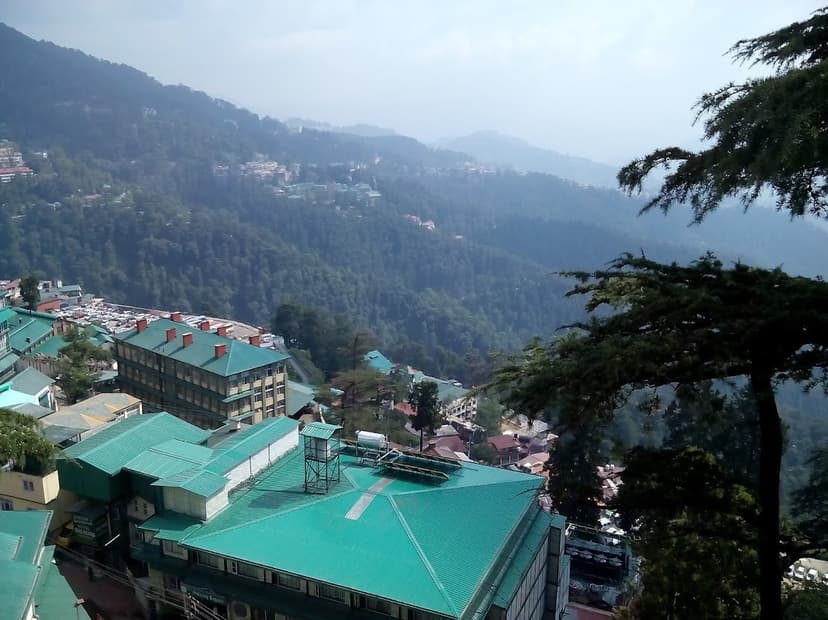
Shimla in monsoon is genuinely green and genuinely risky, which is the whole problem with July-August travel in lower Himachal. The hills look their best while the roads are at their worst. Photo: Wikimedia Commons.
Bloody dangerous, in the short version. The Kangra valley around Dharamshala and Palampur takes the worst of it: 3,400 mm of annual rain, the bulk of it falling between June and September. The NH-3 Mandi-Manali highway becomes a landslide lottery in July. NH-5 along the Sutlej into Kinnaur has stretches where parts of the mountain end up in the river almost every monsoon.
So why does anyone go? Because there is one exception that changes the entire calculus.
The Spiti exception. Spiti Valley sits in a rain-shadow behind the Greater Himalayan range and receives less than 200 mm of rainfall per year. While the rest of Himachal drowns in July and August, Spiti has clear skies, warm days (by 3,800 m standards), and the best weather of its short accessible season. Lahaul, accessible year-round via the Atal Tunnel, is also relatively safe during monsoon. If you can only travel in July-August, make it a Spiti road trip.
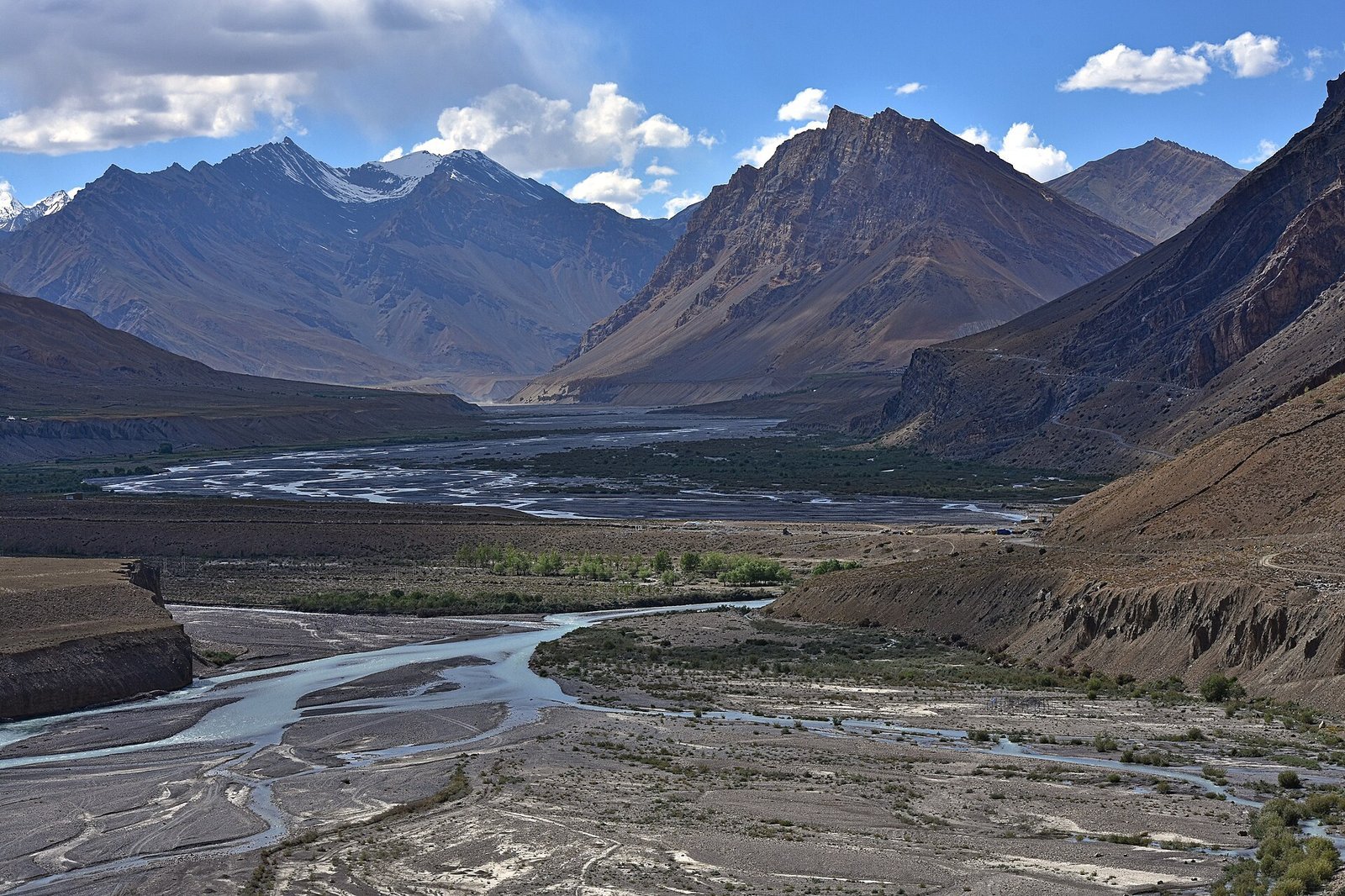
Spiti in July looks nothing like the rest of Himachal. Under 200 mm of rain a year means the summer sky here is often clearer than Delhi in November. Photo: Wikimedia Commons.
There is a contrarian minority. A 25-year-old female traveller on r/indiasocial wrote: "Go in monsoon, amazing weather, lush green, good smells." She has a point. The valleys do look incredible in July, green in a way nothing else in HP gets. The waterfalls hit their peak. The air smells like wet deodar and thandi mitti (cold earth). If you are young, flexible, carry no fixed hotel bookings, and accept that you might spend two days at a chai stall in Mandi while a landslide upstream gets cleared, monsoon HP can be something. I have done it. I would not recommend it to my parents.
When the hills change colour (and nobody photographs it)
There is a nature calendar in Himachal that runs parallel to the tourist calendar, and almost no travel guide covers it. Two seasons in particular are worth planning around if you care about what the landscape actually looks like.
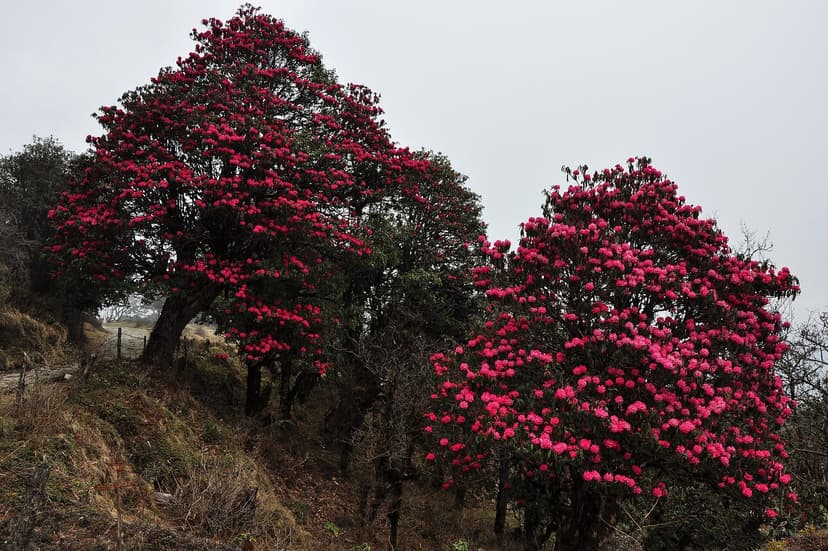
The buransh (rhododendron) blooms start in March around Dharamshala and Shimla and climb higher through April, turning entire hillsides red and pink at around 2,500-3,000 metres. Photo: Wikimedia Commons.
Spring bloom (March to May). Rhododendron, or buransh in the local tongue, starts blooming in the Dharamshala and Shimla forests in March. The flowers are red, sometimes deep pink, and they carpet entire hillsides between 2,500 and 3,000 metres. By April, cherry and plum trees blossom in the lower valleys. Then apple blossom takes over in late April and peaks in May, especially in Kinnaur where the orchards run up to 3,000 metres. I think the apple blossom weeks in early May near Kalpa are the most underrated visual event in all of Himachal. Nobody comes for them. Everyone should.
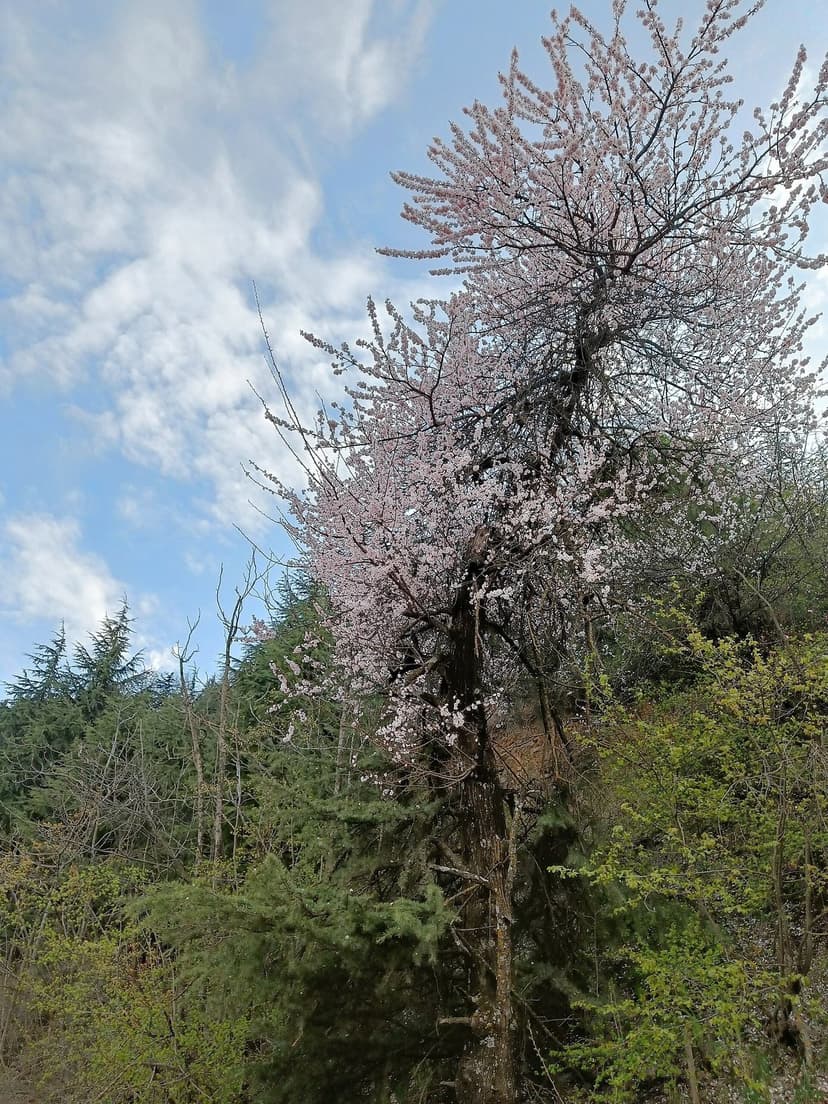
Apple blossom near Kotgarh in May, a sight that brings zero tourists despite being one of the most beautiful things Himachal does. The harvest that follows funds half the state economy. Photo: Wikimedia Commons.
Autumn harvest and colour (September to November). This is my favourite stretch. The apple harvest begins in August with early varieties in Kinnaur, peaks in September, and the HPMC bidding season hits its climax around August 26. By October, the orchards are golden, the walnut trees are dropping, and Tirthan Valley, Kalpa and Khajjiar start showing proper autumn colour that you would associate more with New England than northern India. November is peak foliage. The Lavi Fair in Rampur Bushahr (November 11-14, 2026) is an ancient trade fair that coincides perfectly with the colour.
The trout season in Tirthan opens March 1 and closes November for spawning. If you fish, that is a third calendar to stack.
Festivals that are actually worth rearranging your trip for
Himachal has a dharmik (religious) event roughly every ten days in every valley. Most are local, most involve a deity being carried from a temple to a ground and back, and most are not tourist events. That is fine. Four of them, though, are worth building your entire itinerary around.
Mandi Shivratri (February 16-22, 2026). Seven days. 216 deities from across the district, carried on palanquins by men who have been doing this since before their grandfathers were born. The Paddal Grounds in Mandi town become the largest Shivratri gathering in India outside Varanasi. February 20 is the international cultural parade day. Hotels triple their rates and sell out anyway. Book two weeks early or sleep in the car.
Minjar Fair, Chamba (starts July 26, 2026). A week-long fair along the Ravi that marks maize and paddy sowing season. The word minjar means "maize tassel." On the last day, the tassels get offered to the river. The fair sits in the middle of the monsoon, which is why almost no tourist has heard of it and why the ones who go remember it. Chamba in the rain is a different animal than Chamba in October.
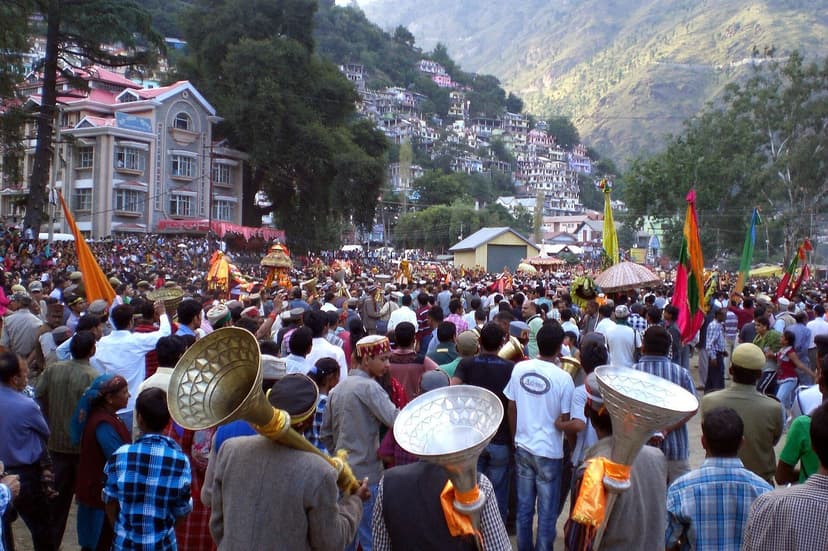
Kullu Dussehra runs October 22-28 in 2026 and starts after national Vijayadashami ends on October 20, which confuses every first-time visitor. Over 200 village deities are carried to Dhalpur Maidan in Kullu town. Photo: Wikimedia Commons.
Kullu Dussehra (October 22-28, 2026). The big one. This is the one I never miss. UNESCO-listed, and it starts on October 22, two days after national Vijayadashami on October 20. Every first-time visitor gets confused by this. In Kullu, the festival begins when the rest of India is done celebrating. Lord Raghunath gets pulled on a rath (chariot) to Dhalpur Maidan and over 200 village deities converge on the ground across the next week. I have been to every edition since 2010. Not one has felt the same as the last.
Lavi Fair, Rampur (November 11-14, 2026). This one I love for the weirdness. A centuries-old trade fair on the Hindustan-Tibet route where Kinnauri and Tibetan traders used to swap wool for salt. The trade is mostly commercial now, plastic tarpaulins and cheap electronics, but the cultural performances on the Sutlej bank still carry something. Eight hours from Shimla on a good day. Worth it if you are already in Kinnaur.
What it actually costs, season by season
Budget is the conversation nobody has honestly. "Himachal is cheap" is true if you are comparing it to Switzerland. It is not true if you go to Manali in May and expect to pay Rs 800 for a room. The pricing swings are dramatic.
| Category | Cost (INR) | Note |
|---|---|---|
| Peak season hotel (May-Jun, Dec-Jan) | Rs 2,000-5,000+/night | Manali and Shimla double rates in May. Book 2-3 weeks ahead. |
| Shoulder season hotel (Mar-Apr, Sep-Nov) | Rs 800-2,500/night | Best value-to-weather ratio. October is the sweet spot. |
| Off-peak monsoon hotel (Jul-Aug) | Rs 400-1,200/night | 40-50% discounts. But roads are the problem, not the price. |
| HRTC Volvo Delhi-Manali | Rs 1,200-1,800 | Peak season sells out 3-4 days early. Book on hrtchp.com. |
| Rohtang permit | Rs 550 | 1,400 vehicles/day cap. Book on rohtangpermits.nic.in. |
| Daily food (dhaba meals) | Rs 300-600 | Thali Rs 100-150 at highway dhabas. Cafe food in Manali 2x that. |
| Paragliding Bir Billing | Rs 2,500-3,500 | Price is stable year-round. Season: Mar-May, Sep-Nov. |
The cheapest Himachal trip I know of was documented by a Redditor on r/desitravellers who did 10 days for Rs 11,000 total including transport from Delhi. Monsoon, dorm beds, HRTC buses, dhaba food. It is doable. But I would not call it comfortable.
Want help figuring out what your Himachal trip will actually cost? Email us your dates and destinations and we will put together a realistic daily budget based on the season, the route, and how you feel about shared bathrooms.
October: why locals call it sona mahina
I need to make the case for October one more time because it is the month this entire article exists to recommend.
After the monsoon clears in late September, there is a window of about five weeks where everything clicks. The air has been washed clean by three months of rain. Visibility is at its annual peak. Every road in the state is open and the landslide crews have cleared the worst of the damage. Crowds are moderate because October is not a school holiday month and most Indian families plan their hill trips for May or December. Hotel rates are shoulder-season. And the landscape itself is doing something it does at no other time of year: turning gold.
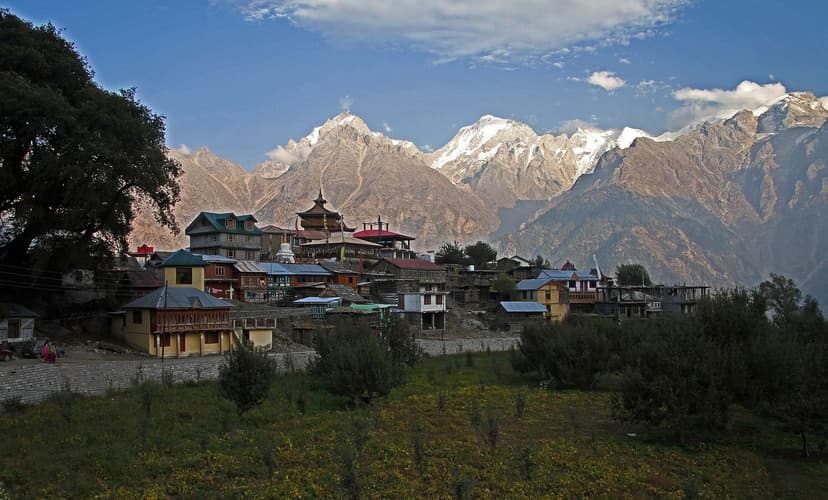
Kalpa in October with Kinner Kailash behind it. The apple orchards are in their final harvest weeks and the walnut trees are starting to turn. This is the view the tourism posters should use but never do. Photo: Wikimedia Commons.
u/Stoic_way, a local from Palampur, put it on r/HimachalPradesh as: "October to November (Autumn) cool weather, harvest festivals." Local perspective in eight words. Cool weather. Harvest. Festivals. The brochure version is not how anyone who lives here describes it.
Kullu Dussehra (October 22-28 this year) is the anchor event. The apple harvest is peaking in Kinnaur and winding down in Kullu. The seasonal Himachali dishes shift to winter preparation, siddu with ghee and maas ki dal. Tirthan Valley turns orange and red in the first proper chillai (cold snap) of the season. And if you drive the Hindustan-Tibet road from Shimla to Kalpa during the last week of October, I would put that drive against any autumn road trip in the world, including Vermont, including Hokkaido. That is my arguable claim and I will stand by it.
Three trips for three seasons
If you want me to just tell you what to do, here are three trips for three different seasons. Each one is tested, either by me or by someone I trust enough to put in print.
- Winter Snow Trip (January, 5 days)
Day 1: Delhi to Manali by overnight HRTC Volvo (Rs 1,500, book on hrtchp.com, departs 5 PM). Day 2: Arrive Manali by morning, check in, walk Old Manali, acclimatise. Day 3: Solang Valley for snow, ski or tube, return to Manali by evening. Day 4: Drive to Sissu via Atal Tunnel (2 hours), walk to Sissu waterfall (frozen in Jan). Day 5: Return to Manali, evening Volvo back to Delhi. Budget: Rs 12,000-18,000 per person including transport. Pack three layers minimum. - Spring Bloom Trip (April, 7 days)
Day 1: Delhi to Dharamshala by overnight bus (Rs 1,200). Day 2: Mcleodganj, Bhagsunag waterfall, Tibetan market. Buransh bloom in Dharamshala forests. Day 3: Day trip to Bir (1.5 hours). Paragliding if weather permits (Rs 2,500-3,500). Day 4: Dharamshala to Mandi (5 hours). Day 5: Mandi to Jibhi via Aut (3 hours). Walk to Jibhi waterfall. Day 6: Jalori Pass day hike if open (check morning of, fragile in April). Cherry blossom around Shoja. Day 7: Jibhi to Delhi via Aut and HRTC. Budget: Rs 15,000-22,000 per person. - Golden Autumn Trip (October, 10 days)
Day 1: Delhi to Shimla (10 hours bus or 4 hours Shatabdi to Kalka + toy train). Day 2: Shimla, skip Mall Road, drive to Narkanda instead (2,700 m, apple orchards). Day 3: Shimla to Sarahan (8 hours). Bhimakali temple. Day 4: Sarahan to Kalpa (4 hours). Kinner Kailash sunset. Day 5: Kalpa rest day, walk the apple orchards, visit the Nages temple. Day 6: Kalpa to Chitkul (3 hours). Last village on the Baspa. Day 7: Chitkul to Sangla to Rampur (5 hours). Day 8: Rampur to Kullu (5 hours). Arrive for Kullu Dussehra if your dates match (Oct 22-28, 2026). Day 9: Kullu Dussehra, Dhalpur Maidan. Day 10: Kullu to Delhi via overnight Volvo. Budget: Rs 25,000-35,000 per person. The best 10 days Himachal offers.
Planning one of these routes? Email us your draft itinerary and we will tell you which day is too ambitious, which stretch has road work this season, and where you should add a buffer day. Free, no strings.
For more offbeat places to add to any of these routes, or if you are a solo woman planning your first HP trip, we have separate guides for both. The complete travel guide covers logistics, permits and packing in one place.
Questions everyone asks (and honest answers)
What is the best time to visit Himachal Pradesh?
October. Post-monsoon clarity gives the clearest mountain views of the year. All roads are open. Crowds are moderate. Hotel rates are shoulder-season. Kullu Dussehra runs October 22-28 in 2026. Apple harvest peaks in Kinnaur. If October does not work, March-June gives pleasant weather and full road access. December-January for snow, but go above 2,700 m.
Which month is best for snowfall in Himachal?
January. It is more reliable than December, which has become unpredictable due to climate change (23-year record low snowfall in winter 2024-25). Go to Solang Valley, Narkanda, Sethan, or Kufri. Shimla itself at 2,200 m is no longer a guaranteed snow destination. Budget Rs 2,000-5,000 per night in peak season.
Is it safe to visit Himachal Pradesh in monsoon (July-August)?
Most of HP is risky. The 2025 monsoon killed 63 people, damaged 300+ roads, and one traveller took 52 hours to reach Manali from Delhi. The exception is Spiti Valley, which sits in a rain-shadow and gets under 200 mm of rain per year. July-August is actually the BEST time for Spiti. Lahaul is also accessible via Atal Tunnel.
When does Rohtang Pass open in 2026?
Rohtang Pass opened May 17, 2026. It closes around mid-October. The pass is closed every Tuesday for BRO maintenance. You need a permit (Rs 550) from rohtangpermits.nic.in, with a cap of 1,400 vehicles per day. Alternative: Atal Tunnel provides year-round access to Lahaul without crossing Rohtang.
What is the best month for Spiti Valley?
July and August. Sounds counterintuitive because it is monsoon season, but Spiti is in a rain-shadow with under 200 mm annual rainfall. Summer brings the warmest temperatures and clearest skies at 3,500 m+. Kunzum Pass opens mid-June and closes late October. The window is tight, so plan for mid-June through September.
When is apple season in Himachal Pradesh?
The full season runs June through November. Peak plucking is August-September, with the HPMC bidding season hitting its climax around August 26. Kinnaur is the prime apple region, especially around Kalpa and Chitkul. Apple blossom happens April-May. September-October is the best time to see orchards loaded with fruit.
When is Kullu Dussehra 2026?
October 22-28, 2026. It starts AFTER national Vijayadashami on October 20, which confuses first-time visitors. Over 200 village deities are carried to Dhalpur Maidan in Kullu town over the week. Book accommodation at least two weeks in advance. The festival is UNESCO-listed.
Is December good for Himachal Pradesh?
December is popular but increasingly unreliable for snow at lower altitudes. Shimla may or may not have snow. Manali is a better bet, and Solang Valley at 2,560 m almost always delivers by late December. Expect peak pricing (Rs 2,000-5,000+ per night) and large holiday crowds. The Atal Tunnel keeps Lahaul accessible even when high passes close.
What is the cheapest time to visit Himachal?
July-August offers 40-50% discounts on hotels (Rs 400-1,200 per night vs peak Rs 2,000-5,000+). But monsoon weather makes most of HP risky. The best value WITH good weather is October-November: shoulder-season pricing (Rs 800-2,500 per night), clear skies, autumn colours, and the apple harvest.
Is October a good time to visit Himachal Pradesh?
October is considered the best month by locals and repeat visitors. Post-monsoon skies are the clearest of the year. Apple harvest peaks. Autumn colours begin in Tirthan, Kalpa, and Khajjiar. Kullu Dussehra runs Oct 22-28. All roads are open. Temperature is perfect at 5-22 C. Shoulder pricing. If you can only visit once, make it October.
Sources
Primary and journalistic sources used in this guide:
HimachalScape: February 2026 rainfall deficit data (78%, 14.4 mm vs 64.1 mm normal)
EaseIndiaTrip: Rohtang Pass 2026 opening date (May 17)
TravelCoffee: Kunzum Pass opening timeline
ChalBanjare: Sach Pass access window
rohtangpermits.nic.in: Official Rohtang permit portal (Rs 550, 1,400 vehicle cap)
Amar Ujala: Hindi-language reporting on Jalori Pass instability (March 2026), cloudburst data (July 2025), Shimla temperature anomaly (February 2026), Kullu Dussehra 2026 dates, Mandi Shivratri dates
Wikipedia: Climate of HP: Baseline rainfall figures (Dharamshala 3,400 mm, Spiti under 200 mm, state average 1,251 mm)
Reddit communities: r/HimachalPradesh (u/Stoic_way, Palampur local), r/india_tourism (u/Aromatic-Ad8530), r/SoloTravel_India, r/indiasocial, r/desitravellers: traveller quotes sourced via Pullpush.io
hpchamba.nic.in: Minjar Fair dates confirmation
Personal reporting: Rajesh Thakur, Kullu valley resident since 1994. Kullu Dussehra attendance 2010-2025. Monsoon road conditions verified annually on NH-3 and NH-5.
- Best for first-timers: October (post-monsoon clear skies, all passes open, apple harvest, shoulder pricing)
- Best for monsoon greenery: July-August in Spiti and Lahaul only (rain-shadow keeps them dry while the rest of HP floods)
You Might Also Like
Volunteering in Himachal Pradesh: 12 Organisations and How to Apply (2026)
Teach English in McLeod Ganj, conserve the Great Himalayan National Park, build with earth in Bir, or harvest apples in Kullu. Twelve real HP volunteer organisations with honest costs, the visa rule that gets foreigners deported, and how to apply.
How to Travel Himachal Without Wrecking It: A Quiet-Travel Manual
A non-preachy field manual for responsible travel in Himachal, by a Kullu local: how to behave, when to go, where to go instead, and the 2026 rules and bans that actually matter.
Mamleshwar Mahadev: The Eternal Flame Temple of Karsog
An eternal fire, a fist-sized wheat grain and a six-foot drum, kept in a mortar-less timber temple in the quiet Karsog valley. The honest story of Mamleshwar Mahadev: what is real, what is faith, and how to go.