Offbeat Himachal Pradesh: 20 Places Beyond Shimla and Manali
I spent the first week of April this year bouncing around between Shoja, Janjehli and Karsog, three places that most people planning a Himachal trip have never heard of. On the drive back down to the Aut tunnel, my cousin called from Kasol. "Bhai, it’s gone. Construction everywhere. Tipper trucks all morning. I can’t hear the river." I told him what a Redditor on r/SoloTravel_India had posted a few months ago about Kasol, more or less word for word: "It feels like Bangalore. Broken roads, trucks, construction and dust." He laughed and said that was being generous.
This is the part of the Himachal story that the glossy listicles refuse to tell you. The five places everyone lists (Shimla, Manali, Kasol, Dharamshala, Spiti) are carrying an absurd share of the state’s tourism. And the moment any small village starts trending on Instagram, a construction boom follows within two monsoons. Jibhi was "the anti-Kasol" four years ago. It is now a building site in June. Shoja is being positioned as "the anti-Jibhi" for 2026. You see how this ends.
So I started keeping a list. Places I actually send friends to, places the HP government itself flags as "unexplored" under its Nai Raahein Nai Manzilein scheme, places I stumbled onto because a Gaddi shepherd told my father about them in the 1990s. This is that list. Twenty places across all twelve districts, with real costs, real access windows, and three sites with mysteries no one has explained yet.
- Places
- 20 across 12 HP districts
- Daily budget
- Rs 1,100 (Redditor verified)
- Govt-flagged unexplored
- 7 of 20
- Mysteries
- 3 (roofless temple, eternal flame, 5 glacial lakes)
- Last updated
- April 2026
- Tested by author
- 17 of 20
Which of these 20 places is right for you
Listicles usually dump twenty names on you and leave you to sort it out. I want to save you some time. If you are coming from Delhi or Chandigarh and have between four and ten days, pick the row that matches what you actually want:
| If you want... | Go here | Skip |
|---|---|---|
| Absolute silence, no cafes | Deohari (Sainj), Rakcham (Kinnaur), Bara Bhangal (Kangra) | Jibhi, Kasol, Tosh |
| A proper mystery to chase | Shikari Devi, Mamleshwar Mahadev (Karsog), Churah glacial lakes | Rohtang, Kufri |
| Real adventure, bad roads, real exposure | Pangi Valley via Sach Pass, Komic, Bara Bhangal trek | Spiti on a Scorpio |
| Heritage and history instead of selfies | Masrur, Chamunda Devi, Naggar Castle, Palampur tea belt | Mall Road Shimla |
| A working workation, not a vibe | Shoja (documented month-long stays), Bir | Kasol cafes in peak season |
| Budget under Rs 1,200 a day including travel | Jibhi, Barot, Karsog, Renuka Ji | Manali hotels in May |
The rest of this article walks through each place in six tiers, from the Reddit-validated classics you still haven’t heard of, through the mysteries, to the actual frontier. Each place has the altitude, the nearest transport hub, the window when it’s open, a daily cost estimate, and, where I could get it, a quote from someone who actually went.
Tier 1: Reddit’s favourites (the ones that still work)
When I started mining Reddit for offbeat HP names in 2025, four kept coming up together: Shoja, Jibhi, Shangarh, and Deohari. They are all within 50 km of each other in the Kullu district (Seraj and Sainj valleys), and together they form the one circuit I still recommend to first-time offbeat travellers from Delhi. You can do all four in five days without hurrying.
1. Shoja (Seraj Valley, Kullu)
Altitude: 2,700 m. Hub: 45 km from Aut exit, roughly two hours uphill through deodar. Season: March to June and October to November for walks. December to February for snow, but the Jalori Pass closes and you access via Banjar instead. Daily cost: Rs 1,500–2,500 for a double homestay with meals.
Shoja is the place a Reddit user called u/haimanshoo stayed for a month, alone, and described as "safe, locals helpful, she was staying for a month". Another commenter, u/nageshkyo, did a three-month workation here. What Shoja gets right is the thing Jibhi stopped offering two summers ago: you can still walk from your guesthouse into a forest trail that no one is posting on Reels. There are maybe three cafes and two serious homestays. The honest warning, from u/godspeedmellow: "Jibhi and Shoja are expensive because of lack of public transport. You spend a bomb on cabs." Budget accordingly.
2. Jibhi (Tirthan Valley, Kullu)
Altitude: 1,900 m. Hub: 32 km from Aut, one and a half hours. Season: March to June, September to November. Snow in Dec to Feb. Daily cost: Rs 1,200–2,500 for a riverside homestay with breakfast.
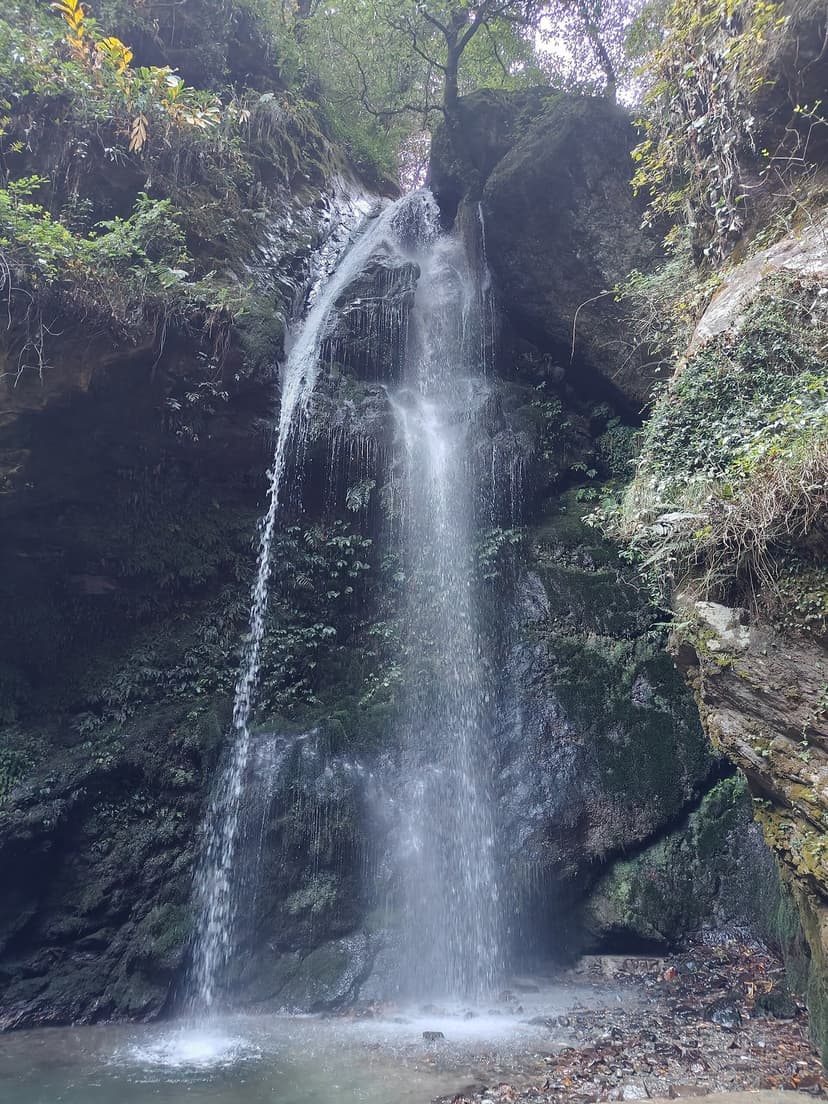
I will be honest about Jibhi because I owe you honesty. Five years ago it was the genuine alternative to Kasol: a pine valley with two streams, one waterfall, and half a dozen mud-and-stone guesthouses. Today it is a construction site. A 2021 travel writer called it "a rather commercialised tourist spot, brimming over with hostels and homestays by the river," and it has only got busier since. I still recommend it, but as a day trip from Shoja, not as a base. Come for the waterfall and the Mini Thailand rock pools above it, have lunch at one of the older cafes, and get out before the Airbnb crowd rolls in around 4 PM.
3. Shangarh Meadow (Sainj Valley, Kullu)
Altitude: 2,500 m. Hub: 50 km from Aut, two and a half hours. Season: April to June and September to November. Daily cost: Rs 1,500–2,800.
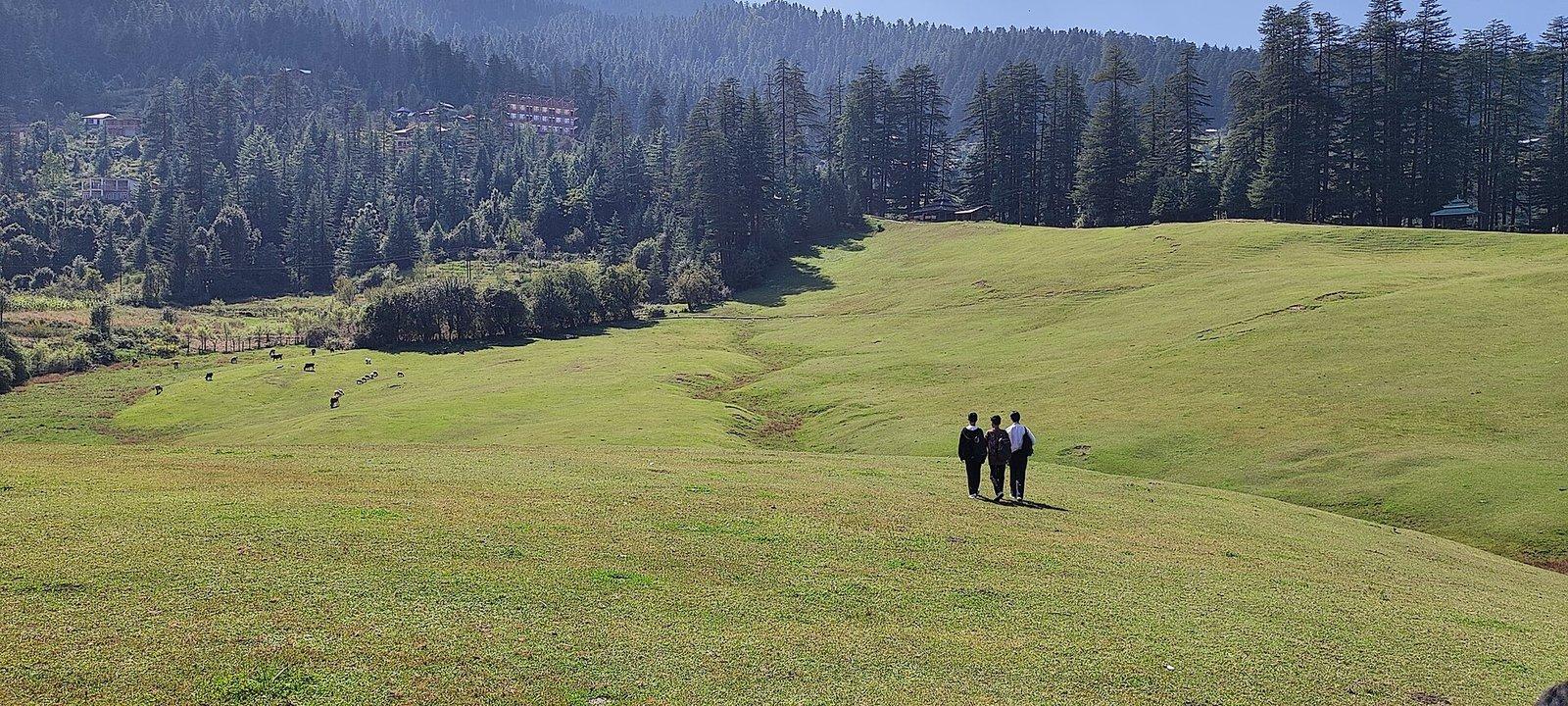
Shangarh is the meadow on the cover of this article. You park at the village, walk two hundred metres, and it opens out in front of you: ten acres of flat grass, with the buffer zone of the Great Himalayan National Park rising straight above. The villagers graze cattle on it every morning and evening, and the rule is simple: do not step on the grass with shoes on (locals treat it as a sacred meadow). Take them off at the edge, or walk the perimeter. This is on the HP Tourism unexplored list for a reason.
4. Deohari (Sainj Valley, Kullu)
Altitude: About 2,300 m. Hub: 52 km from Kullu town, two hours. Season: April to June, September to November. Daily cost: Rs 900–1,800 at the two village homestays.
Deohari is the Reddit insider tip, from u/Dry-Parking-4752 on r/SoloTravel_India: "Deohari village in Sainj, more peaceful than Shangarh." I can confirm it. The village is twenty minutes past Shangarh on foot and has no cafes. The one homestay I have stayed in charges Rs 900 a night with two meals. There is no trace of mobile signal. If what you want from the mountains is the version your parents knew, this is it.
Tier 2: Kinnaur’s raw edge
Kinnaur is the district that got skipped in the original listicles because the road used to be genuinely scary. It still is, in parts, but it is also the only place in HP where you can wake up to an unobstructed view of a 6,050 metre sacred peak and then walk down to your breakfast without passing a coffee shop. Three places to know.
5. Chitkul (Baspa Valley, Kinnaur)
Altitude: 3,450 m. Hub: 58 km from Reckong Peo, two hours on the Sangla road. Season: May to October. The road closes for parts of winter. Daily cost: Rs 1,800–3,200 (limited options so prices have climbed).
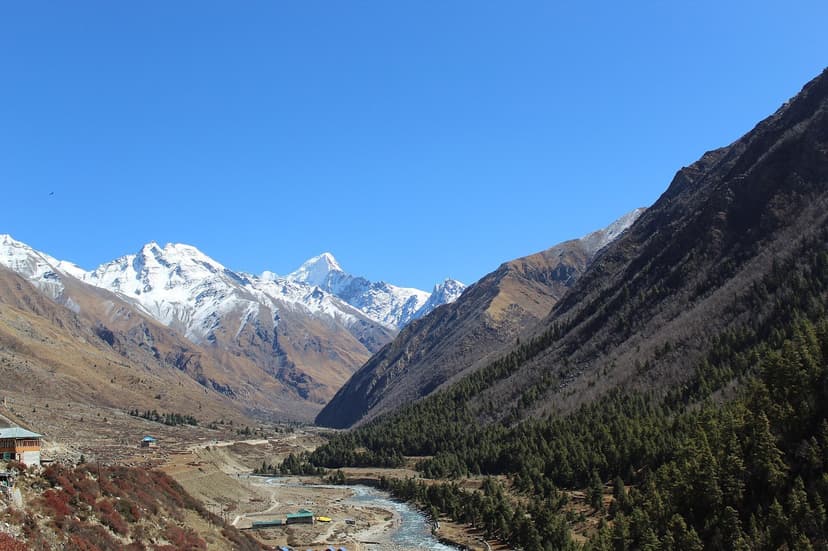
Chitkul has become a known quantity, which is why it is in Tier 2 and not Tier 1, but it is still in this guide because it genuinely delivers. Hindustan Ka Aakhri Dhaba (the "last restaurant of India") is the selfie stop everyone knows. What fewer visitors know is that the real thing to do here is walk the riverbank half an hour downstream, past the check post, until you reach the point where the Baspa turns and the village vanishes behind a ridge. You are then alone with a border, a river, and the sound of nothing. See Wikipedia on Chitkul for the village history.
6. Kalpa (Kinner Kailash sunrise seat)
Altitude: 2,680 m. Hub: 7 km from Reckong Peo, 20 minutes. Season: March to June, September to November. Winter is dramatic but the road from Peo gets icy. Daily cost: Rs 1,300–2,500.
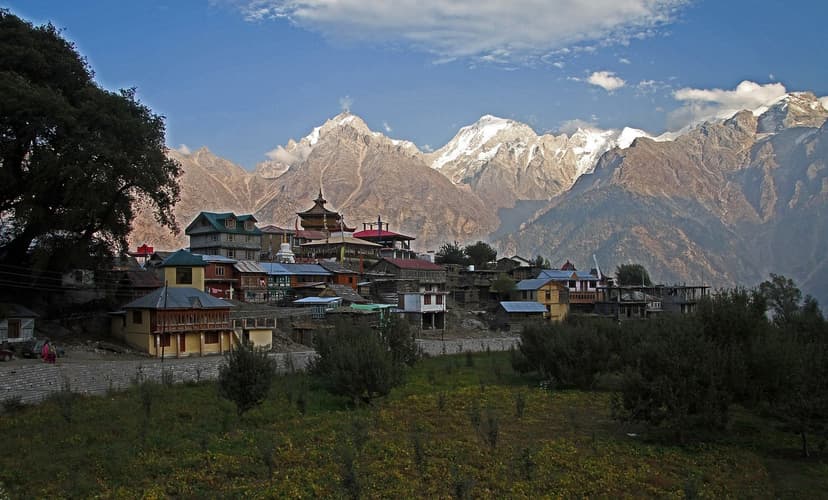
You stay in Kalpa for the sunrise. Every morning, twenty minutes before the sun appears over the ridge on the Tibetan side, the entire Kinner Kailash massif catches a pink light. It lasts four or five minutes. The whole village has a reasonable view, but the best one is from the small garden of the Kinnaur Kailash Cottages or from the path above Roghi (ten minutes further up the road) where the apple orchards frame the peak. No coffee shop culture, no rooftop bar, just the mountain.
7. Rakcham (between Sangla and Chitkul)
Altitude: 2,900 m. Hub: 14 km from Sangla, half an hour. Season: May to October. Daily cost: Rs 1,100–2,000 at Baspa-bank homestays.
Rakcham sits on the Baspa between Sangla (14 km) and Chitkul (10 km), and almost every car drives straight through without stopping. Population around 800. The village has maybe three homestays, no cafes, and a 3 to 4 hour round trek up the Baspa to the Rakcham glacier. No one calls this "the last village of India" so the Instagram traffic passes it by. If you liked Chitkul but wanted the valley without the signboards, this is the correction.
Tier 3: Himachal’s three unsolved mysteries
Every travel article about HP claims to reveal some secret. This section is the one part of the list where that phrase is literal: three places with phenomena that nobody has satisfyingly explained. I am not making this up and I am not over-spinning it. Each one has primary-source documentation that I will link.
8. Shikari Devi Temple (Mandi)
Altitude: 3,359 m. Hub: 16 km jeep-plus-trek from Janjehli (itself 120 km from Mandi town via Gohar and Thunag). Season: April to June, September to October. Closed by snow the rest of the year. Daily cost: Rs 900–1,800 at Janjehli.
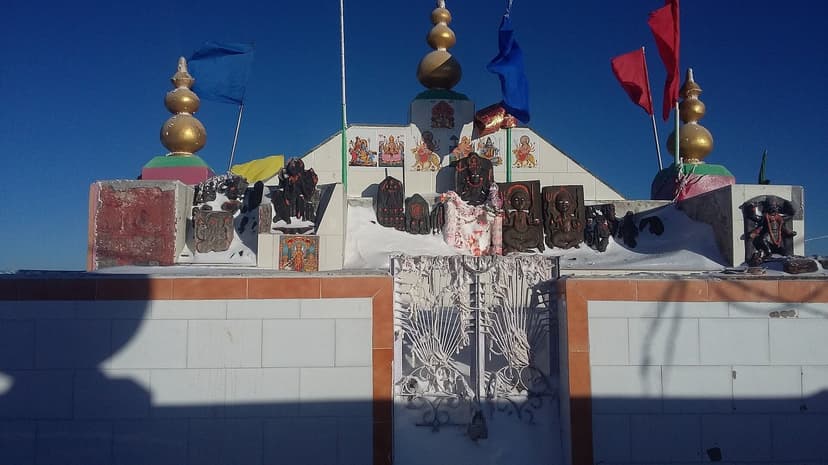
The Shikari Devi shrine has no roof. That is the first strange thing. Every attempt to build one, including one by the former Chief Minister Virbhadra Singh, has failed: the structure comes apart in a storm within days, according to local tradition and multiple news reports. The second strange thing is that snow does not accumulate on the idols or inside the sanctum, even when the surrounding ground is buried under two feet of it. The HP government Mandi district page frames it as a miracle; The Statesman has a fuller writeup that notes wind-pattern and thermal-activity hypotheses but no confirmed explanation. Amar Ujala reported in early April 2026 that the priest could not enter the temple because of nearly three feet of fresh snow around it, and that the shrine itself remained bare. You need to trek the last 15 km on foot or hire a four-by-four from Janjehli. Go in October for the best shot at a clear ridge.
9. Mamleshwar Mahadev, Karsog (Mandi)
Altitude: 1,404 m. Hub: 108 km from Shimla via Tattapani, 3.5 hours. 125 km from Mandi town, 4 hours. Season: Year-round. Best March to June and September to November. Daily cost: Rs 1,200–2,400 at HPTDC Mamleshwar or village homestays in Pangna.
The Mamleshwar temple at Karsog is rated 4.8 stars by around 960 reviewers on Google, and almost no English travel blog writes about it. Inside the sanctum there is what locals call an eternal flame, reportedly burning uninterrupted for centuries. The temple also preserves what the priests describe as Pandava-era relics: a massive wooden drum attributed to Bhima, and preserved wheat grains from the Mahabharata period. The wooden carvings on the temple walls are some of the finest kath-kuni craftsmanship in Mandi. The Karsog valley also has Kamaksha Devi (one night of darshan a year) and Mahunag (associated with Karna), which together form a Pandava-era temple circuit that no English-language guide has ever mapped. Sources: Mysterious Himachal and the Hindi-language Webdunia writeup (which is where most of the mystery details actually live).
10. The five glacial lakes of Churah (Chamba)
Altitude: Varies, around 3,000 m for the lakes themselves. Hub: 62 km from Chamba town via Tissa, roughly 3.5 hours. Season: May to October. Daily cost: Rs 800–1,500 if you camp or stay in Tissa homestays.
Most people who live in HP cannot name the five Churah lakes. They are Ghadasru, Mahadev Dal, Mahakali Dal, Maral Dal and Mehalwar Dal, and they sit inside Churah tehsil in the upper reaches of Chamba district. There is no road. There is no guidebook. There is a trail that locals use and a handful of guides in Tissa who will take you up. I have only been to Ghadasru, and my honest reaction was that it looked like Chandratal would have looked in 1995 (before the tent village). Go with a local, carry your own rations, and do not expect a signal. The hpchamba.nic.in district site mentions Churah but not the lakes specifically; your best preparation is to ask in Tissa.
Tier 4: The heritage nobody knows exists
This is the tier that frustrates me the most, because the four places in it are among the most culturally significant sites in all of Himachal, and you will find no mention of them in the default "10 places to visit" lists. Two of them carry Archaeological Survey of India protection. One has twenty-four thousand Google reviews. Zero English travel blogs feature any of them as a headline destination.
11. Chamunda Devi Temple (Kangra)
Altitude: 1,000 m. Hub: 17 km from Dharamshala, 30 minutes. Season: Year-round. October to March is pleasant. Daily cost: Nil if day-tripping from Dharamshala; Rs 800+ for a local dharamshala stay.
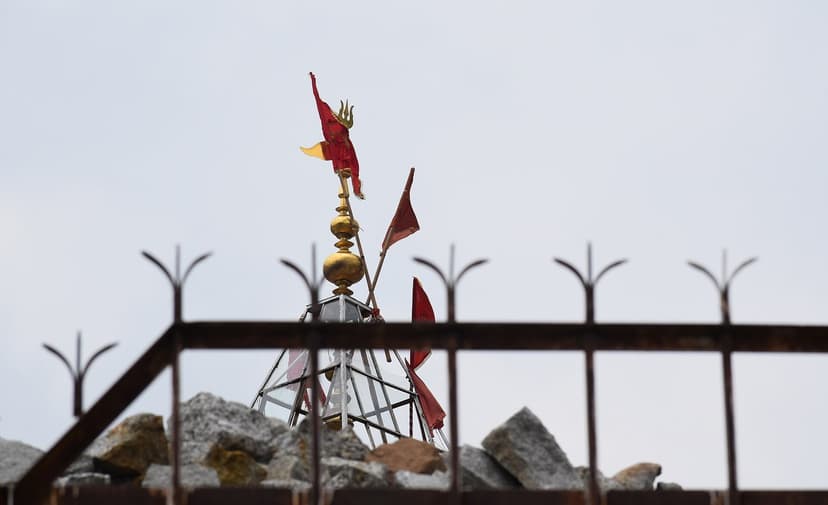
Let me say this clearly: Chamunda Devi has more Google reviews (24,000+, rated 4.7) than any other attraction in the state. That is more than Hadimba Temple, more than the Rock Garden, more than Rohtang. And yet you can scroll through a dozen "Top things to see in Himachal" listicles and find zero mention. Why? Because English blog writers do not actually travel; they read each other. The temple is on the bank of the Baner khad, 17 km from Dharamshala, and a stop at the Shakti Peeth here is a tradition for Kangra locals travelling on to Jwala Ji. Come on a weekday morning, leave the footwear outside, do the standard darshan. It is a genuinely central site in Kangra Shaktism, and you are the first person in your friend circle to have been there. Wikipedia has the basics.
12. Masrur Rock-Cut Temples (Kangra)
Altitude: 800 m. Hub: 35 km from Kangra town, one hour. 45 km from Dharamshala. Season: Year-round. October to March for the light. Daily cost: Nil day trip. Rs 1,000+ for Nagrota Surian or Pragpur homestays.
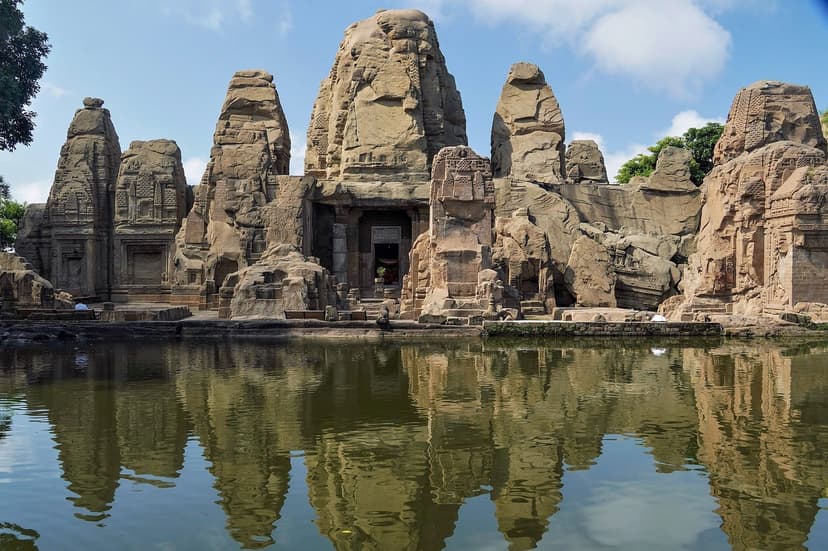
Masrur is what you get when a generation of 8th-century stonemasons decides that instead of building a temple from quarried blocks, they will carve fifteen free-standing shikharas out of one slab of living rock. Nothing else in north India compares. The closest equivalent is Ellora in Maharashtra, which gets two million visitors a year. Masrur gets perhaps a few hundred on a weekend. An earthquake in 1905 damaged some of the shikharas, and the pool in front is original (locals still call it sacred). The Archaeological Survey protects the site. Background: Wikipedia on Masrur Temples.
13. Naggar Castle (Kullu)
Altitude: 1,860 m. Hub: 22 km from Manali, 21 km from Kullu town. 45 minutes either way. Season: Year-round. Monsoon gets messy. Daily cost: Rs 2,200 for a HPTDC castle room in shoulder season; Rs 4,500+ in summer.
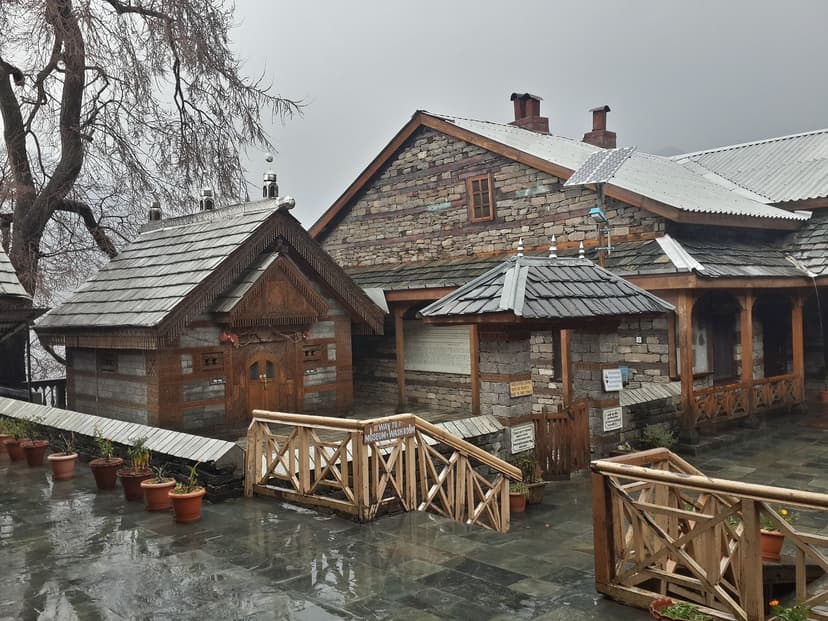
You can sleep in Naggar Castle. That is the headline. HPTDC runs it as a heritage property, and the rooms are exactly what you would expect from a 15th-century castle that has been gently updated: uneven floors, thick stone walls, tiny windows opening onto the Beas valley. Next door is the Nicholas Roerich Gallery (the Russian painter lived here for twenty years) and the Gauri Shankar Temple. The whole complex is kath-kuni, the interlocking stone-and-wood construction that has let Kullu buildings survive earthquakes for 500 years. Twenty-two kilometres from Manali and half the crowd. See Wikipedia on Naggar.
14. Palampur tea belt (Kangra)
Altitude: 1,457 m. Hub: 38 km from Dharamshala, one hour. Season: March to June, September to November. Daily cost: Rs 1,500–3,500 at Taragarh, Norwood Green or RS Estate homestays.
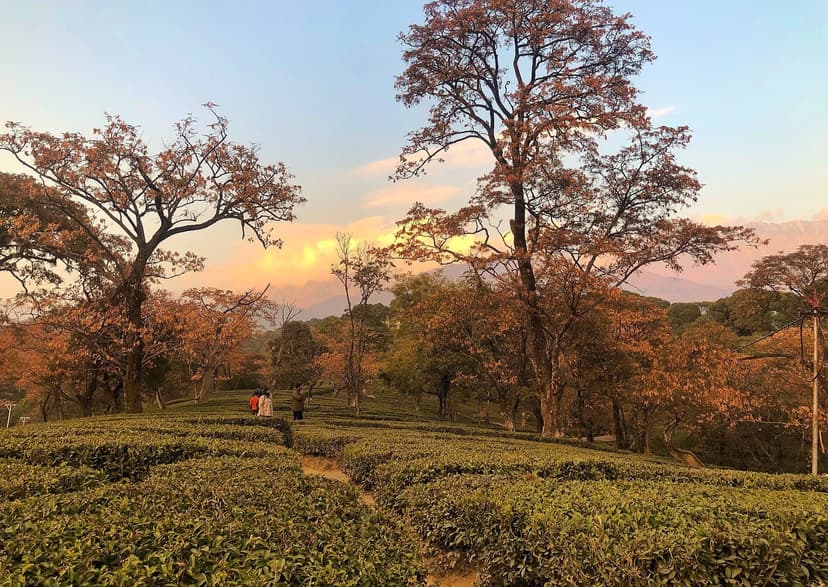
Palampur is where the Kangra tea industry still lives. Orthodox tea only (none of the CTC machinery you see in Assam), estates that date back to the 1850s, and a skyline of Dhauladhar peaks that look closer than they have any right to. The Wah Tea Estate is now four generations into the same family and runs an estate tour. Neugal Cafe is the old HPTDC restaurant on the khad with the 47-year view. It is twenty kilometres further east than Dharamshala and twenty degrees quieter. If you were thinking McLeod Ganj, come here instead, or at least as well.
Tier 5: The new frontier
The three places in this tier are not weekend trips. They are real journeys with real logistics, and I will not recommend them to anyone I do not trust to manage their own altitude, their own fuel, and their own weather. But they are also the three most rewarding offbeat trips in the whole of HP, and every one of them is on the government list of unexplored destinations.
15. Sissu (Lahaul)
Altitude: 2,700 m. Hub: 40 km from Manali via the Atal Tunnel, 1 hour. Season: Since 2020, year-round via the tunnel (this is the whole point). Earlier it was June to October only. Daily cost: Rs 1,400–2,800 at the new crop of Sissu homestays.
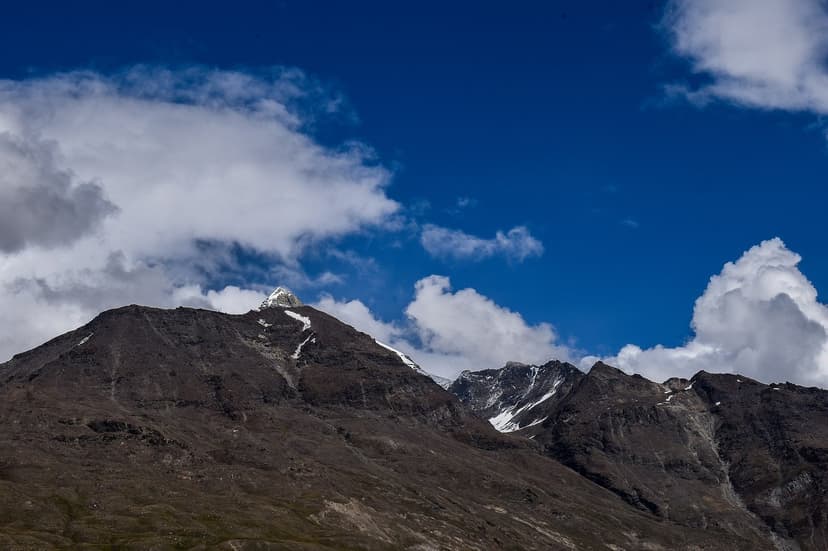
Sissu was one of those villages that only existed for travellers between June and October, because the Rohtang Pass sealed it off for the rest of the year. The Atal Tunnel changed that in October 2020. You now drive from Manali in one hour, through the tunnel, and Sissu is the first place you stop. The waterfall above the village is visible from the main road. The Ghepan Goh peak dominates every view. In winter there is a small frozen lake that is quite popular on Reels (an honest warning: it is often hosting a photo-shoot or two). Come on a weekday, off-season, and the village is still what it was: a Lahauli farming settlement with maybe fifteen homestays. I covered the tunnel itself and the wider corridor in my Spiti road trip guide if you want the drive in context.
16. Pangi Valley via Sach Pass (Chamba)
Altitude: Village 2,550 m, Sach Pass 4,395 m. Hub: Killar is 159 km from Chamba town via Sach Pass, around 10 hours. Alternative access: Manali via Rohtang (long), or Jammu via Kishtwar. Season: July to September for Sach Pass. Winter is effectively closed. Daily cost: Rs 800–1,500 at Pangwal homestays; HPTDC Chandrabhaga Killar is Rs 1,500–2,500.
Pangi is the most remote valley in all of Himachal. Roughly 17,600 people live in it, mostly from the Pangwal tribal community, spread across villages between 2,100 and 3,350 metres. There are parts of the valley with no electricity and no mobile signal at all. BSNL works in Killar and nowhere else consistently. The single access window through Sach Pass is tiny. The cultural pay-off is that you are in a valley that Western tourists do not reach and that most Indians have never heard of, with its own dialect, its own temples (the Det Nag shrine at Killar is the central one), and its own wooden architecture that looks nothing like the Kullu or Kinnaur style. You need three clear days in the Pangi valley to make the effort worth it. Background: Wikipedia on Pangi Valley.
17. Komic (Spiti)
Altitude: 4,587 m. Hub: 19 km from Kaza, 45 minutes. Season: June to September (Spiti roads are open year-round via Kinnaur in theory, but Komic itself is a snow trap in winter). Daily cost: Rs 1,200–2,400 at the homestays attached to the monastery.
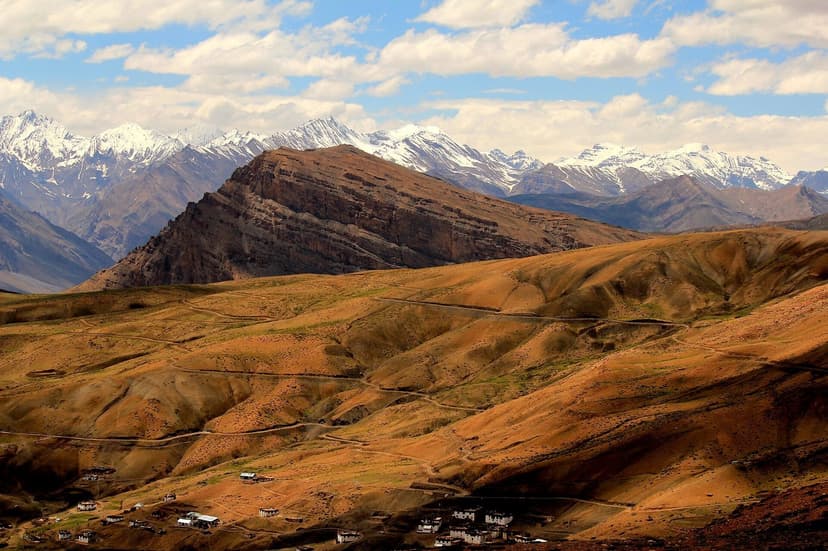
Komic is usually called "the highest village in the world with a motorable road" (there is a disputed claim from a village in Peru) and the small cafe at the village edge calls itself the highest in the world. What I find more interesting is that Komic has a working Tangyud monastery, a handful of families who still run homestays at the edge of the known road, and a landscape that looks more like Ladakh than like the rest of Himachal. Do not go if you have not spent two nights in Kaza first. Do not go if it is already snowing. It was in the cover shot of this article for a reason: when the light is right, nowhere else in the state looks like this.
Tier 6: Quiet valleys for a slower trip
The last three places are for a different kind of trip. No mystery, no frontier, no 4,000-metre pass. Just valleys where the water is clean, the traffic is thin, and the homestay owner will sit with you while you drink chai. This is what HP was before Instagram, and it is still the version I send my parents-in-law to.
18. Barot (Mandi)
Altitude: 1,800 m. Hub: 65 km from Mandi via Jogindernagar, 3 hours. Season: March to June, September to November. Daily cost: Rs 1,000–2,200 at riverside homestays.
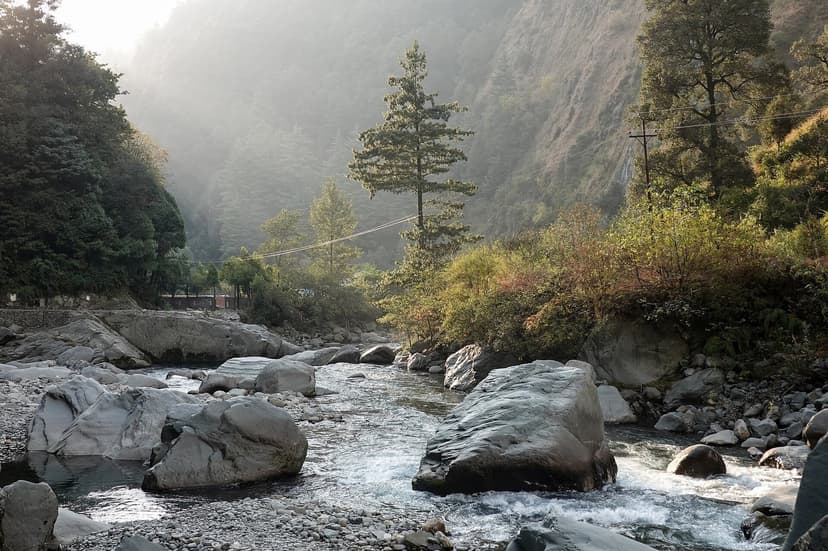
The colonial government set up the Shanan hydroelectric project at Barot in 1925 on a 99-year lease negotiated by one Colonel Battye; the plant was commissioned in 1932 (Mysterious Himachal background). The British also stocked the Uhl river with trout, and the trout reserve still operates. On the opposite bank is the Nagru wildlife sanctuary. The village itself is small and honest: maybe fifteen homestays, two dhabas, and a reservoir that everyone on TripAdvisor complains about (they are right, you can walk around it in thirty minutes, so do not build the trip around the reservoir). Build it around the Uhl, a walk to Lohardi village upstream, and a half-day at Nagru.
19. Parashar Lake (Mandi)
Altitude: 2,730 m. Hub: 51 km from Mandi town, about 2 hours drive plus optional trek. Season: March to June, September to November. December to February for the snow trek only. Daily cost: Rs 999–2,500 at the platform camps.
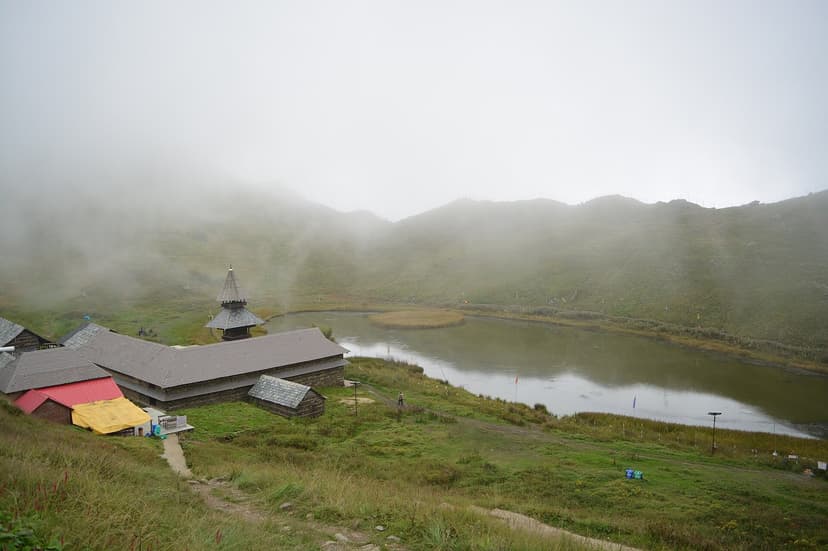
Parashar has two things that should make it impossible to ignore and have not: a 13th-century pagoda-roofed temple dedicated to the sage Parashar, and a small island in the lake that moves. Locals insist it shifts position, and while a 2024 Bali academic paper (yes, really) has proposed a gas-vent hypothesis, no one has produced a convincing mechanical explanation. The lake freezes in winter and the trek from Baggi takes about three hours on a clear day; there is also a drivable road for those who want to skip the walk. Avoid summer weekends when the reels crew arrives. The Wikipedia page has the basics.
20. Renuka Ji (Sirmaur)
Altitude: 672 m. Hub: 37 km from Nahan, 1 hour. 120 km from Chandigarh, 3.5 hours. Season: Year-round. The Renuka Fair runs in mid to late November. Daily cost: Rs 900–1,800 at the HPTDC Hotel Renuka Ji.
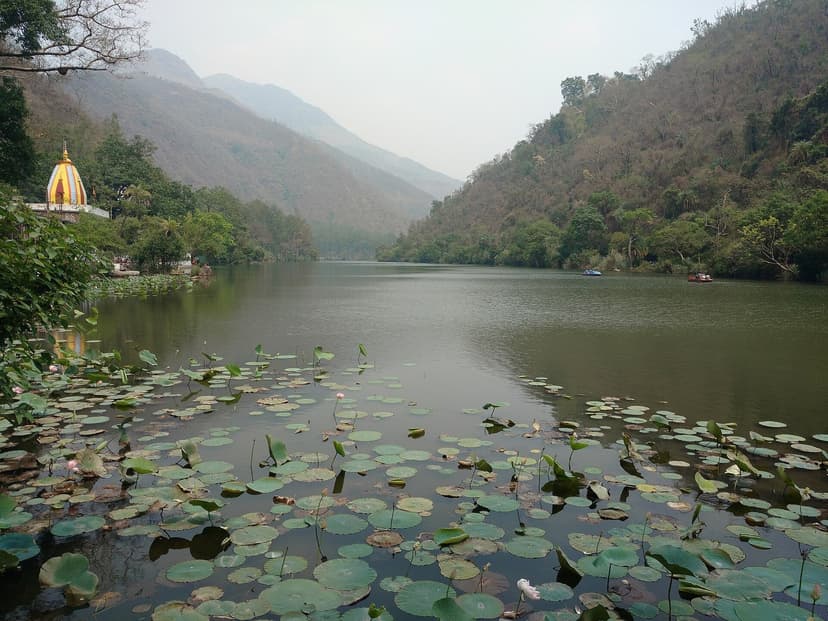
Renuka is the largest natural lake in Himachal, with a circumference of about 3.2 km. The legend is that the lake is shaped like the reclining figure of the goddess Renuka, mother of Parashurama. Every November, the Renuka Fair fills the surrounding ground with pilgrims, stalls, and one of the last properly traditional meena bazaars in this part of India. Outside fair week it is the most accessible offbeat destination in the state for anyone driving from Delhi or Chandigarh: a three-and-a-half hour drive gets you to a clean lake, a small zoo, and a temple complex that would be on every brochure if it were a hundred kilometres further north. See the Sirmaur district government page for official details.
How one Redditor did all of this for Rs 1,100 a day
The question I get most often is not about the places. It is about the money. Here is the one honest data point I trust: a Reddit user, u/Jealous_Object725, posted a trip report in 2024 where he spent Rs 20,000 over 18 days travelling through offbeat HP, including travel to and from Delhi. That works out to Rs 1,111 a day. I have broken down how this is structurally possible.
| Category | Amount (Rs) | Note |
|---|---|---|
| HRTC buses (Delhi to Aut and local) | 3,500 | Use Volvo and Ordinary pairs. Book the night bus to Aut to skip a days hotel. |
| Homestays x 14 nights | 8,400 | Rs 600 average, double-sharing with a friend halves this. Shoja, Jibhi, Barot, Karsog, Janjehli, Kalpa are all Rs 500 to 800 off-season. |
| Meals (dhabas, homestay) | 4,200 | Rs 230 a day. Dhaba meal Rs 60 to 100, homestay breakfast typically free. |
| Local cabs and shared taxis | 2,500 | Share the jeep to Shikari Devi. Share the cab Shoja to Jibhi. Walk where you can. |
| Entry fees, temple donations | 900 | Most sites are free. Masrur Rs 25, Roerich Gallery Rs 100, rest voluntary. |
| Buffer (SIM, medicine, one chai-binge) | 500 | Keep it for altitude problems at Komic or a missed bus connection. |
| Total | 20,000 | 18 days, 1 traveller, 2024 prices, adjust 10 to 15% up for 2026 |
Is this realistic for everybody? No. If you need private rooms, hot showers every night, or a car, double the number. But the important point is that offbeat HP is the cheapest part of the state, not the most expensive. Jibhi and Shoja are expensive, per u/godspeedmellow, only because you spend on cabs. Swap the cab for the 6.30 AM HRTC bus from Aut and everything else comes down.
The offbeat cycle is real. I want you to read this paragraph before you plan the trip. Every place on this list is somewhere between "undiscovered" and "construction boom". Kasol was Jibhi in 2010. Jibhi was Shoja in 2018. Shoja is becoming the new Jibhi in 2026. If you want the experience I am describing, you have a window of maybe two to four seasons per place before the Airbnb listings multiply and the small shops are replaced by hostels. That is not me being dramatic: it is the pattern, and it has played out the same way in four districts now. Go sooner. Tip the homestay owner more than you think you should. And if a place is already famous on your Instagram feed, it is probably already too late.
If you are trying to design a real trip out of this list and want a second pair of eyes on your plan, write me at hello@refuje.com. I read everything that comes in, and I usually reply within a day. I do not sell packages; I will just tell you which three of these twenty places actually fit your dates, your mobility, and your patience for bad roads.
Frequently asked questions
I have done Shimla and Manali. Whats a good first offbeat trip?
Shoja, Jibhi, and Shangarh in Kullu district, five days, via a night HRTC Volvo from Delhi to Aut. Budget around Rs 1,500 to 2,500 a day.
Is Kasol still worth visiting at all?
Mixed. The main bazaar is construction. Upper Parvati villages (Kalga, Pulga, Grahan) are still reasonable.
Whats the most unexplored place in HP?
Pangi Valley in Chamba. Sach Pass is the single access route, open July to September only. Parts of the valley have no electricity or mobile signal.
Can I do offbeat HP on a real budget?
Yes. A Redditor (u/Jealous_Object725) did 18 days for Rs 20,000. That is Rs 1,111 a day.
Whats the Shikari Devi mystery?
A roofless temple at 3,359 m in Mandi where snow reportedly does not accumulate on the sanctum. No confirmed explanation.
Is Shoja safe for solo women?
Yes, multiple documented month-long solo female stays. See Reddit r/SoloTravel_India threads.
Which of these places have snow in winter?
Shoja, Jibhi, Kalpa, Chitkul, Sissu via the Atal Tunnel. Shikari Devi is closed by snow for most of winter. Renuka Ji does not get snow.
Whats the fastest offbeat HP trip from Delhi?
Renuka Ji, 3.5 hours from Chandigarh. Or Shoja plus Jibhi plus Shangarh for a five-day trip via the night HRTC bus to Aut.
If you want Refuje to help you plan one of these
This site exists because I got tired of sending friends the same list of twenty offbeat HP places in WhatsApp. If any of this made you want to actually go, the fastest way to get a custom plan is to write me at hello@refuje.com with three lines: your dates, your mobility (bus, car, motorbike), and how much bad road you will tolerate. I will pick three of the twenty that fit you, send you a rough day-by-day, and tell you honestly which ones to skip for your trip. No fee, no upsell. If you eventually want a booked-end-to-end itinerary we can talk about that separately.
And if you have been to any of these twenty places in the last six months and want to correct me on something, please do. This file is updated each quarter. The last revision was early April 2026, and the next one is set for July.
You Might Also Like
Day Hikes and Forest Walks Around Shimla (2026): Jakhu, the Glen, Tara Devi & Shali Tibba
The on-foot Shimla, sorted by effort: from the Jakhu and Tara Devi temple walks and the easy Glen forest to the full-day Shali Tibba climb to a 2,870 m summit. What each one costs your legs, and what is at the top.
Day Trips from Shimla: 10 Excursions with Real Costs and Honest Verdicts
Ten day trips from Shimla, sorted by half-day vs full-day. Mashobra, Naldehra, Kufri, Fagu, Narkanda, Tattapani, Chail, Kotgarh, Kasauli, Sarahan. Distances re-verified against Wikipedia and OSM in April 2026. Honest verdicts on what is overrated, what changed (Tattapani natural springs are submerged now), and what HRTC bus or private taxi will cost. By a Kullu local who drives the Shimla day-trip belt every time he leaves the state.
Kotgarh: Where India's First Apple Was Planted
In 1916 a 33-year-old American Quaker, later known as Satyanand Stokes, planted a handful of Red Delicious saplings at Barubag village in Thanedhar panchayat. Today Himachal's apple industry is worth Rs 5,000 crore a year. Here's the real Kotgarh story, the visit guide, and how to stay with the Stokes family.