
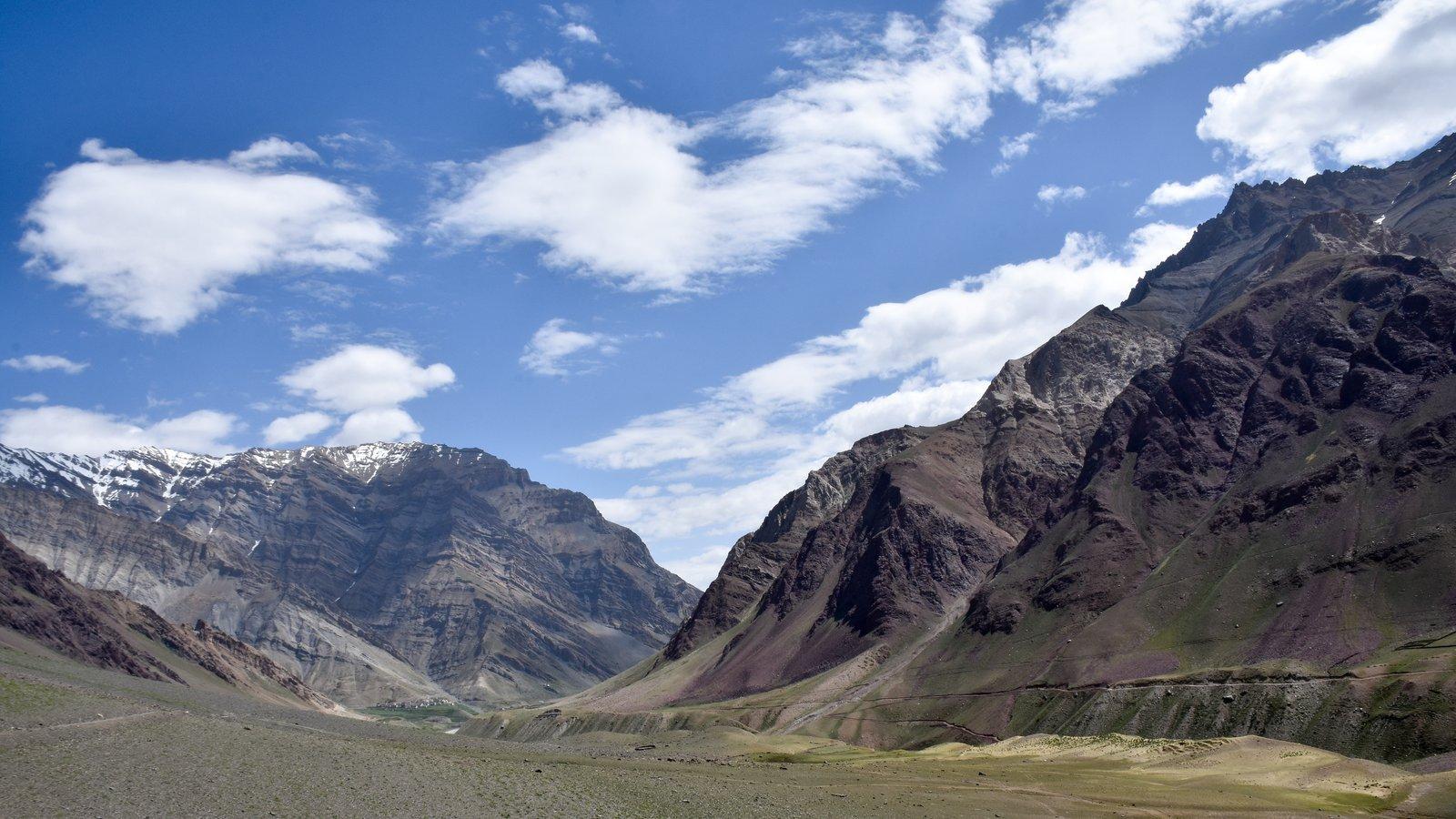
Spiti, village by village: an honest map of all 13 stops
TL;DR
- Spiti has roughly 13 villages worth stopping at, between 3,050 m (Tabo) and 4,587 m (Komic). Indians need no permit; foreigners need a Protected Area Permit (₹250 at Reckong Peo).
- One fuel pump in the entire valley, at Kaza. World's highest. Carry a 5-litre jerry can if you're driving past Losar toward Manali.
- Stay 2 nights in Kaza, 1 in Tabo, 1 in Mud, and a community homestay night in Demul, Lhalung, or Komic. The 6-village Ecosphere rotation is the only fair-trade homestay system in the valley — Rs 1,000 a night, dinner and breakfast included.
- Skip Hikkim as a destination (it's a 20-minute photo stop). Treat Komic the same way unless you want a headache.
- Best months
- Mid-June to early October for both routes; the Kinnaur side stays open most of the year. September–October is best for photography.
- Permits
- Indians: none. Foreigners: PAP, ₹250 at Reckong Peo SDM
- Altitude range
- 3,050 m (Tabo) to 4,587 m (Komic)
- Fuel
- One pump in all of Spiti — at Kaza, 12,270 ft. Digital payment since Aug 2023.
- Cost (7 days, 2 ppl)
- ₹18,000–28,000 / shared cab + homestays
- Connectivity
- BSNL only past Reckong Peo. Jio works in Kaza town. Airtel: nil.
Spiti is a ladder, not a circle
Most road-trip guides treat Spiti like a loop. Manali in, Shimla out, ten days, done. That's the logistics. But the valley itself isn't a loop. It's a ladder. Thirteen villages stacked between 3,050 m and 4,587 m, each one in a different fold of the same brown plateau, each one earning its altitude with a different trick. Tabo has the murals. Key has the cliff. Komic has the gym you'll regret climbing to. Hikkim has the post office that everybody photographs and nobody mails from.
I come into Spiti the Kinnaur way. Up the Sutlej from Reckong Peo, through Nako and Gue, the back door, and I've made that drive more times than I've kept count. The thing nobody tells you the first time is that the villages are mostly the same village. Same whitewashed walls. Same prayer flags. Same cold Maggi. The point isn't variety. The point is sleeping in one of them long enough to notice that the wind sounds different above 4,000 m, that the dogs in Kaza all answer to "tashi", and that the kid who sells fossils outside Langza will let you off the hook for fifty rupees if you tell him you're from Kinnaur.
So here's an honest pass at all 13. Not in the order you'll drive them. There are too many ways into Spiti for that. In the order they earn time on the page, instead. The village that surprises me hardest is the one I'm saving for last.
Tabo (3,050 m) — start here, not Kaza
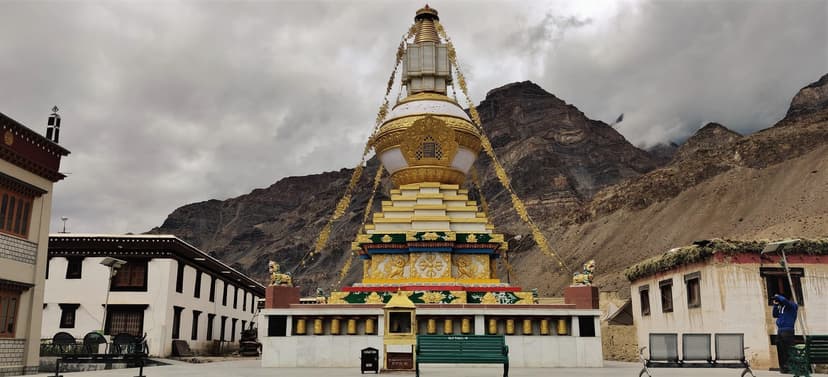
Sleep here on night one if you're coming from Shimla. It's the lowest village in the valley and the only sensible place to acclimatise. Most Indian cabs blow past it on the way to Kaza, which is exactly why you should stop.
Tabo is older than Key Monastery by almost a hundred years. Founded 996 CE. Rinchen Zangpo, the same Tibetan translator-scholar who built half of western Tibet, set it up. Inside the nine temples, the 10th-century murals are some of the last unrestored Indo-Tibetan Buddhist art on earth. Which is why nobody photographs them. The flash kills the pigment. Your phone stays in your pocket.
Stay at the monastery guesthouse if it's open (₹500 a bed, no notice required, unreliable hot water). Or HPTDC's Tabo Hotel for ₹1,800 with thick walls. Eat at Café Kunzum Top. The German bakery from Manali has a Tabo branch and the apple strudel is the only thing I'd cross the gorge for. Sometimes.
Dhankar (3,894 m) — the cliff that's about to fall off
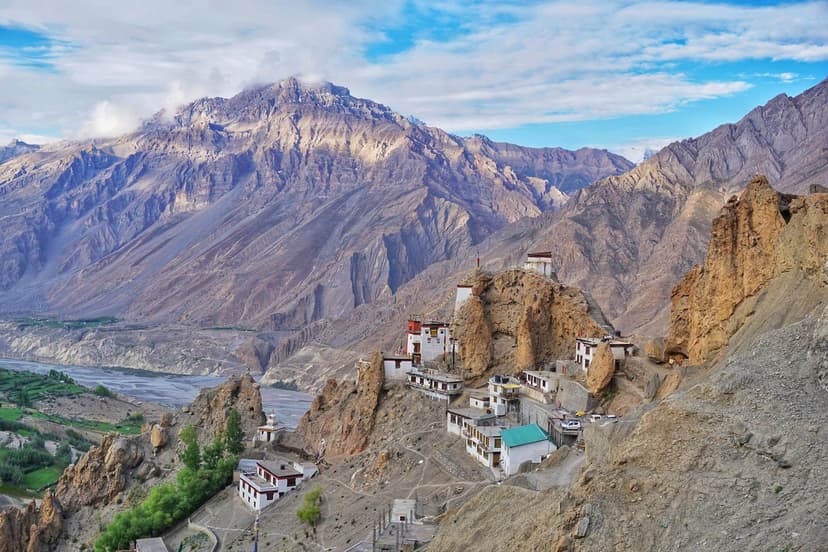
Dhankar used to run Spiti. It was the capital before the seat moved to Kaza. The old fort-monastery hangs off a rock spur over the confluence of the Spiti and Pin rivers, and "hangs" is the right word. It's on the World Monuments Watch list of crumbling sites, and the monks have politely moved tourists to the new monastery 10 minutes' walk away. Go inside the new one. Look at the old one from outside. Don't be the person who insists.
If you've still got daylight after the monastery, the Dhankar Lake hike is 1.5 km up from the village, gains about 300 m, and ends at a small green pool at 4,270 m that looks like it's painted on. It's the easiest "trek to a lake" payoff in Spiti. Two hours round trip if you don't stop, three if you do.
Lhalung and Demul — the two villages most travellers miss, and shouldn't
If you only do two off-circuit nights in Spiti, do these.
Lhalung sits in the Lingti Valley, off the main road, at 3,658 m. The Serkhang (the Golden Temple of Spiti) was founded in the 10th century by the same Rinchen Zangpo who built Tabo. Most travellers have never heard of it. The temple is small, cold, and full of clay statues whose paint is older than most of the European cathedrals you have heard of. The barley fields outside are the most peaceful 20 minutes you'll spend in the valley.
Demul is the headquarters of the Ecosphere community-homestay rotation. Six villages, one fair-trade booking system, ₹1,000 a night including dinner and breakfast. You don't pick the homestay. The system picks for you. The next family in the queue takes you in, you get a bedroll on a wooden bench in their kitchen, and you're up at 6 with the woman of the house churning butter for chai. This is the closest you'll come to honest Spitian life as a tourist. Book at spitiecosphere.com well in advance. They only run a fixed number of beds per night because the rotation depends on it.
Kaza (3,800 m) — the base, not the destination
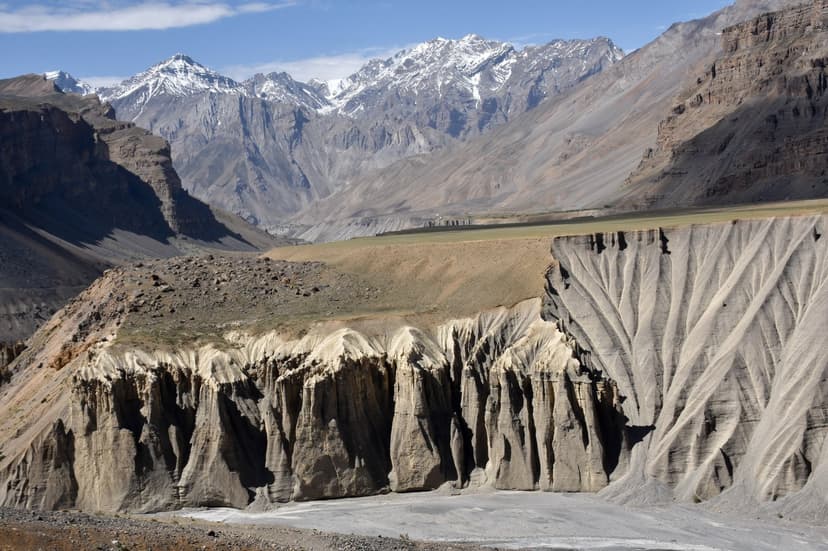
Kaza is the only place in Spiti where you can buy a North Face fleece, withdraw cash from an ATM (when it's working), and find a barista who knows what a flat white is. It's also the only place in Spiti with a fuel pump. And that pump is the highest retail outlet in India, at 12,270 ft. ETV Bharat reported in August 2023 that they finally got UPI working there, after years of cash-only complaints. Carry cash anyway. The card machine is mood-driven.
You'll be back in Kaza three or four times across a normal trip. It's the hub everything radiates from. Use it that way. Sleep here for the cafés and the ATM, do day-trips to Key, Kibber, Chicham, Langza, Komic, Hikkim. Don't try to base out of Tabo for the high-altitude clusters. Tabo is too low and too far.
Where to stay: Sakya Abode if you want history (it's the first homestay Spiti ever had. Tsering's family runs it, ₹1,500 a double, near the monastery), Deyzor if you want a hot shower and a real bed (₹2,800), and The Himalayan Cafe for food. Skip the places marketed as "boutique resorts". They're guesthouses with prices borrowed from Manali. You will get more out of a real homestay night in Demul or Lhalung than out of any guesthouse in Kaza pretending to be a hotel.
Key Monastery (4,166 m) — go at sunrise or don't bother
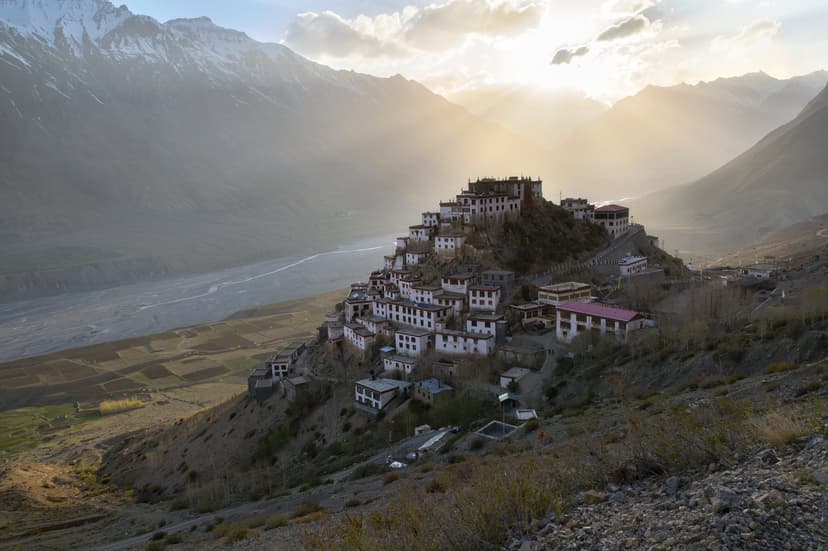
If you've seen one photo of Spiti in your life, it was probably Key. The monastery sits on a hill 13 km from Kaza like something a child stacked together. Boxes on boxes, whitewashed and lopsided and somehow earthquake-proof. Aaj Tak called it "1,000 साल पुराना ये मठ, कई आक्रमण झेलकर भी अडिग" in December 2025. "a thousand-year-old monastery that's withstood many invasions and still stands unshaken." Tracks. It's been sacked at least four times in its history.
Get there at 6 a.m. for the morning prayer. The monks let visitors sit at the back, hand you a small clay cup of butter tea (you don't have to drink it, but you should try), and chant for an hour while the light comes up over the valley. The monastery offers basic dorm beds for ₹250 a night including dinner. If you only do one stay-in-a-monastery night in your life, do it here, not at Tabo.
Kibber and Chicham — the village across the gorge
Kibber, at 4,205 m, used to claim the title of highest motorable village in the world. It lost that title to Komic, swallowed it like a local who knows the title is silly anyway, and now runs the gateway into the Kibber Wildlife Sanctuary. Which is about as close as you'll come to snow-leopard country in India. November to March, when the cats descend chasing blue sheep, the village sells out months in advance to wildlife photographers paying ₹1.5 lakh for a 10-day program with the Snow Leopard Trust.
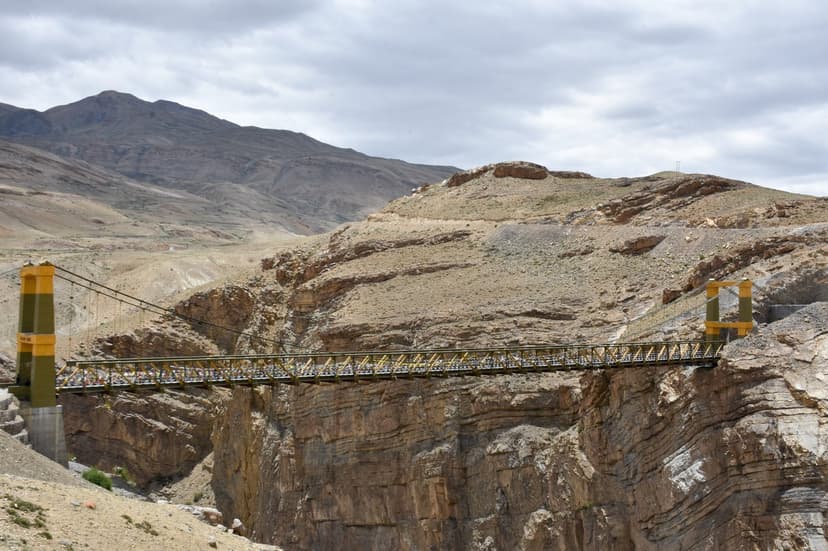
The other reason to come to Kibber now is the bridge to Chicham. Until August 2017, getting from one village to the other meant a hand-pulled rope trolley over a 1,000-foot gorge. The Border Roads Organisation finally built a proper suspension bridge. 135.7 metres long, sitting at 13,596 ft above sea level, currently the highest in Asia. The drive across feels longer than it is. Chicham itself is a 358-person village with one cafe, two homestays (Tara Homestay is the one to ask for) and views back across the gorge that are honestly better than the views from Kibber.
Langza, Hikkim, Komic — the high three (and which to skip)
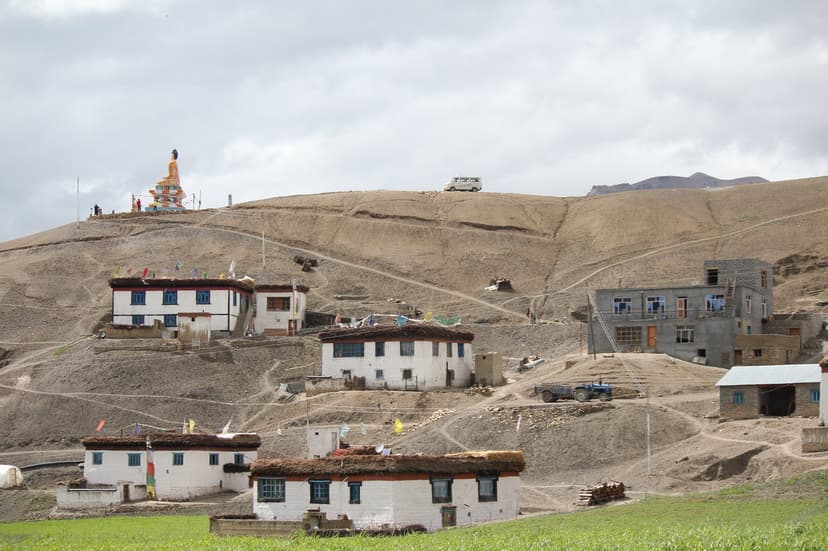
Every cab driver in Kaza will sell you the High Three as a single morning loop: Langza → Hikkim → Komic, ₹3,500 reserved, four hours. Take the loop. But know what you're getting.
Langza (4,420 m) is the one worth time. The 1,000-year-old golden Maitreya Buddha on the hillside is the visual everybody comes for, and it earns the visit. The village is the geological story Spiti likes to tell about itself: marine fossils from the Tethys Sea sit at 14,500 ft because India crashed into Asia and this used to be a beach. Local kids will sell you ammonites for ₹50 and trilobites for ₹100, which is a problem. The HP government banned the trade in 2023, and the official replacement is the Zama clay fossil replicas the village artists now make. Buy those instead. Tell the kid you'll bring his cousin business in the replica shop.
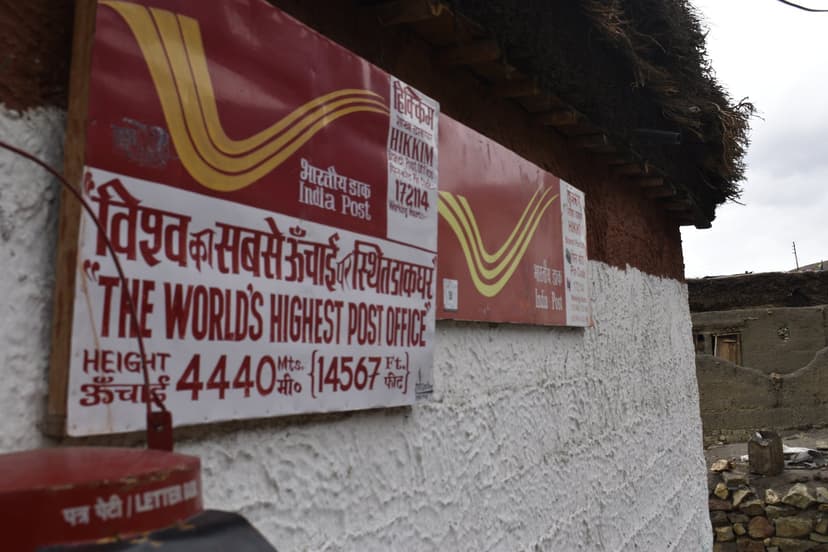
Hikkim (4,440 m) exists for one reason and it's printed on the wall: the world's highest post office. Buy a postcard for ₹25, write something to your past self, hand it to the postmaster (his name is Rinchen Chhering. He's been there nearly 30 years), and walk away. The whole stop takes 20 minutes. The postcards take three to six weeks to arrive in India and three months to arrive abroad, but they do arrive. I sent one to my grandmother in Reckong Peo in 2019. It got there in May.
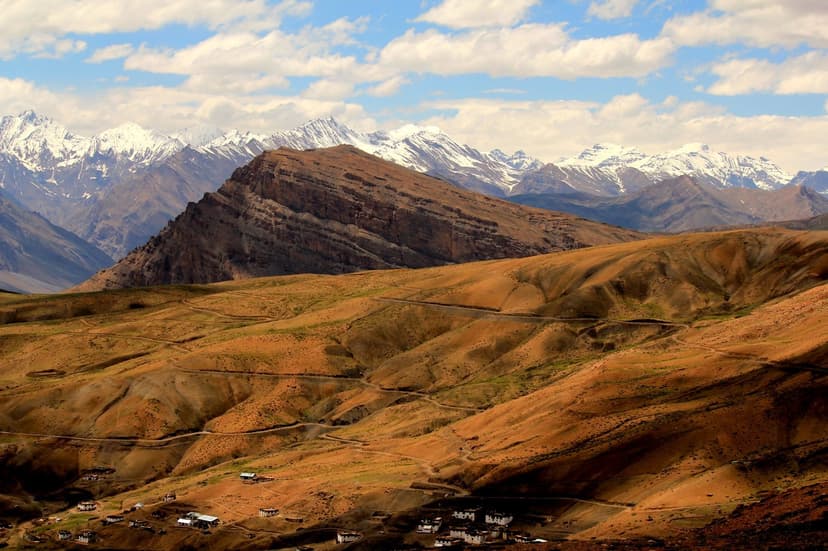
Komic (4,587 m) is where I'm going to lose some readers. The village is real, the title is real (Tashigang in Spiti contests it but the PWD signboard at Komic still says Highest Village Connected With Motorable Road, World; the gompa next to it is documented at Tangyud Monastery, early 14th c., Sakya sect), and the 14th-century Tangyud Monastery is the only Sakya-sect gompa in Spiti. But the visit itself, for a tourist who isn't going to spend a night, is a 20-minute sit-down with breathlessness and a cup of cold tea. There's a café that calls itself "the world's highest restaurant", and the food, I'll be honest, is bad. Two of the people I've sent up there walked back to the cab and asked to leave. Go for the photo. Do not expect the village to perform for you.
Altitude warning, the practical version. Komic at 4,587 m is roughly 600 m higher than Kaza. If you're doing the High Three on day two of your trip, you're climbing 1,500 m above the elevation you flew or drove in at. People get headaches. People get worse than headaches. Drink three litres of water on day one in Kaza, sit out anything above 4,000 m on day two if your head's pounding, and don't take Diamox without talking to a doctor first. There are no hospitals past Kaza.
Mud (3,810 m) — the village at the end of the road
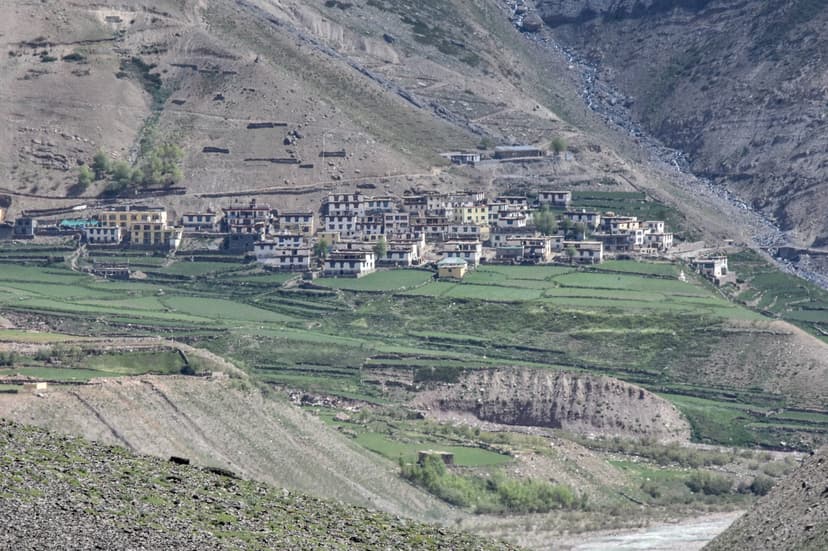
Mud sits at the literal end of the only road into Pin Valley, 50 km off the main Spiti circuit, and the Parbati range climbs 1,600 m vertically behind it. The village has about 200 people in 30 houses and not a single hotel. You stay at Tara Homestay & Guesthouse (the one everybody talks about), Mudh Homestay, or Pin Parbati Homestay, all of which charge ₹800–1,200 a night including dinner. There's no Wi-Fi past Sangam village, an hour back. There's no fuel. There's barely a phone signal.
People come here for two reasons: to start the Pin–Parvati or Pin–Bhaba pass treks, or to have one quiet night somewhere where the only sound after dark is the wind and an occasional dog. If you're not trekking, do it for the second reason. One night is enough. Two if you're tired.
Gue (≈3,500 m) — the mummy
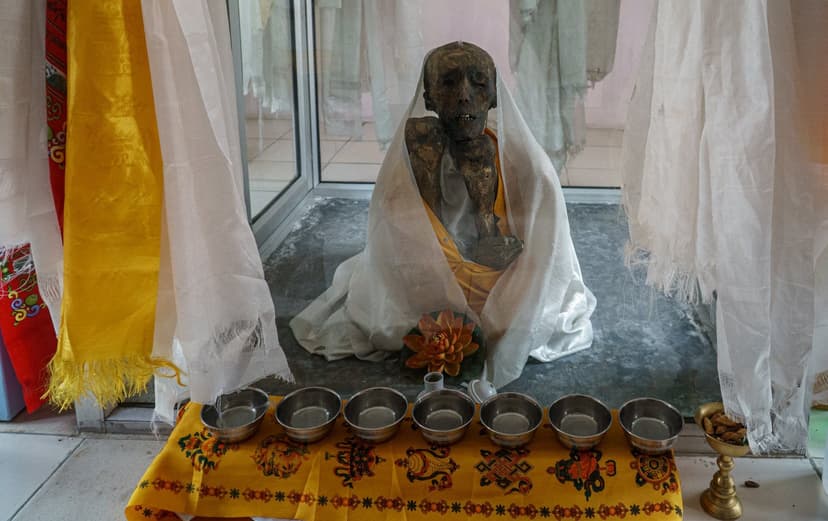
This is the village nobody puts in their Spiti itinerary, and it's the one I'll argue for hardest.
Gue is a tiny hamlet about 30 minutes off the main Tabo–Sumdo road. Inside its small monastery, in a glass case, there is a man. His name was Sangha Tenzin, a Gelugpa monk. Carbon dating places his death at 1475 CE. He died at 45. The local story is that he undertook self-mummification (a slow ascetic practice known across the Tibetan and Japanese Buddhist worlds) to lift a scorpion plague off the village. The earthquake of 1975 cracked open the tomb he'd been sealed in. The mummy was fully excavated in 2004. He's been on display ever since, and the monks dress him in fresh khata scarves every morning.
I don't know how to write about this without sounding like I'm selling a circus. He's not a curiosity. He's a teacher whose body, by accident or by intention, refused to leave. The monks treat him like he's still in the room. So should you. Take your shoes off, sit down for two minutes, and don't take photos until you've done that.
Gue is the single strongest reason to do the Tabo end of the valley properly. Do not skip it for the High Three.
Nako (3,625 m) — Kinnaur's gateway, but already Spiti in spirit
Technically Nako is in Kinnaur, not Spiti. The district line falls a few kilometres further up. I'm including it because the village is the natural overnight if you're driving in from the Shimla side, and because the Nako Monastery (founded 1025 CE, again under Rinchen Zangpo) holds a stone with what's said to be Padmasambhava's footprint. Around the village is the small Nako Lake, willow trees that turn yellow in October, and a road up to the Padmasambhava cave for those willing to climb half an hour. Stay at Reo Purguil Homestay (₹900–1,400 a night) and ask the family about the village's argument with the dam project on the Sutlej. They'll tell you more than you bargained for.
The map — all 13 stops with altitude in the marker
The honest seven-day plan
This is what I'd do, in this order, if I had a week:
- Day 1: Shimla / Reckong Peo → Nako or Tabo
Long driving day. 220 km from Reckong Peo. Push to Tabo so day two starts low. Sleep at the monastery guesthouse or HPTDC Tabo. - Day 2: Tabo → Dhankar → Lhalung → Kaza
Acclimatisation disguised as sightseeing. Tabo monastery in the morning, Dhankar before lunch, Lhalung after. Reach Kaza by 5 PM. Sleep at Sakya Abode. - Day 3: Kaza rest day + Key Monastery sunrise
Up at 5 AM for the 13 km drive to Key, sit at the back of the morning prayer, back in Kaza for breakfast. Walk the market. Drink coffee. Acclimatise. Trust me. - Day 4: The High Three + Kibber
Cab loop ₹3,500–4,500. Langza at 8, Hikkim by 10, Komic by 11 (do not linger), Kibber and Chicham bridge after lunch. - Day 5: Kaza → Demul community homestay
Drive 50 km, hand yourself over to the Ecosphere rotation, learn how to make sattu. Best night of the trip. - Day 6: Demul → Mud (Pin Valley)
Demul back to Kaza, Kaza to Mud via the Pin Valley road. Four hours of driving past nothing. The road in is the destination. - Day 7: Mud → Manali via Kunzum and Atal Tunnel
Up at 6, Kunzum by 11, Atal Tunnel by 4, Manali by 5:30. The tunnel cut the Manali leg from 8 hours to 1.5.
Want a Kinnauri sanity-check on your Spiti route before you commit cash to a cab? Email us your draft itinerary. We'll tell you which day is too ambitious, which homestay is worth the detour, and where the road has been rough this week.
What it costs (honest 2026 numbers, two people)
| Category | Cost (INR) | Note |
|---|---|---|
| Shared cab Reckong Peo → Kaza → Manali (one-way through) | ₹14,000 | 4-pax split, 7 days, Innova or Xylo |
| Homestays (6 nights) | ₹6,500 | Mix of Sakya Abode, Demul rotation, Mud, HPTDC Tabo |
| Food on the road | ₹3,500 | Dhabas + Kaza cafes + included monastery meals |
| The High Three day cab | ₹2,000 | 4-pax split of ₹4,000 reserved |
| Postcard + fossil replica | ₹150 | You will buy these. |
| Total | ₹22,000–28,000 / 2 people / 7 days |
These numbers are the Kinnaur-side baseline. Kaza road status, fuel pump queue, and homestay availability shift week to week. Drop us a note a week before you leave and we'll send you the current state of the road from someone who'll be on it that day.
What I still don't know
Honest moment. I don't know what the new yatra-style Manali–Kaza permit will cost when (if?) the HP government brings it in. There were rumours of a ₹500 fee in early 2024 and I wrote about them, and as of April 2026 it has never actually appeared on any official portal. So forget it. There's no permit for Indians right now.
I also don't know what's happening with the old Dhankar Gompa. The conservation people I've talked to say it's still slipping. The monks have moved tourists out. Whether any of the original mud walls survive the next earthquake is a coin toss. Go now.
And the name of the cook at Sakya Abode in 2026 is Tashi, but it might be a different Tashi. The family has three of them and I can't tell them apart. He'll feed you regardless.
FAQ
Do Indians need a permit for Spiti?
No. As of April 2026 (re-verified against the official HP Lahaul-Spiti district portal), Indian citizens do not need an Inner Line Permit or any other permit for the Kinnaur–Spiti circuit. Foreigners still need a Protected Area Permit (PAP), ₹250 at the SDM office in Reckong Peo. See hplahaulspiti.nic.in/foreigner-section for current official rules.
How many days do I really need in Spiti?
Seven nights from Manali back to Manali is the honest minimum, including the two driving days. Five nights is rushed. Ten nights lets you do Mud properly and add a Demul rotation night.
Which is the highest village in Spiti?
Komic at 4,587 m is generally listed as the highest motorable village in the world. Tashigang in Spiti contests the title at 4,510 m, but the official PWD board still sits at Komic.
Is Kaza really the only fuel pump in Spiti?
Yes. The HPCL outlet at Kaza is the world's highest retail fuel station at 12,270 ft. It accepts UPI as of August 2023. Carry a 5-litre jerry can if you're driving past Losar toward Kunzum and Manali.
Can I really stay in a Spiti monastery?
Yes. Key Monastery offers basic dorm beds for ₹250 a night including dinner. Tabo Monastery has a guesthouse for around ₹500. Both are simple and among the better experiences in the valley.
What are the Ecosphere community homestays?
Spiti Ecosphere runs a fair-trade rotation across six villages: Demul, Komic, Langza, Hikkim, Lhalung and Dhankar. ₹1,000 a night including dinner and breakfast. Book at spitiecosphere.com.
When is the best time to see Spiti?
Mid-June to early October if you want both routes open. September and early October are the best for photography. December to February is when snow leopard photographers come to Kibber.
Sources
- HP Lahaul-Spiti district portal (official): tourist places + village altitudes — tourist-places-in-spiti. Foreigner permit rules — foreigner-section.
- Spiti Ecosphere — community homestay rotation across six villages and the operator's responsible-travel programs: spitiecosphere.com.
- Himachal Tourism (HPTDC) — official Spiti Valley destination page: himachaltourism.gov.in/destination/spiti-valley.
- Key Monastery — official monastery site: keymonasteryspiti.org/about.
- ETV Bharat Hindi — Kaza fuel pump UPI rollout, August 2023: etvbharat.com.
- Aaj Tak — Key Monastery 1000-year history, December 2025: aajtak.in.
- The Better India — Sangha Tenzin and the Gue mummy: thebetterindia.com.
- Tale of 2 Backpackers — Mud village, Pin Valley homestays and trek base: taleof2backpackers.com.
- BRO / PIB — Chicham Bridge inauguration August 2017, 135.7 m suspension at 13,596 ft, then Asia's highest. Press Information Bureau release archived August 2017.
- snowleopardsindia.com — independent re-verification (December 2025) that the no-permit-for-Indians rule remains in force as of April 2026: snowleopardsindia.com/permit-to-spiti-in-reckong-peo.
- Background reading (Wikipedia, where primary sources don't exist): Tangyud Monastery, Tabo Monastery, Sangha Tenzin.
Last updated: 10 April 2026. Prices and schedules can change. If you spot something out of date, email us.
Written by Ajay Negi
Ajay Negi is from Kinnaur — grew up between Reckong Peo and Kalpa, on the Sutlej side of the Hindustan–Tibet road. He has been crossing into Spiti since his college days, mostly the back way through Nako and Gue, and has been writing about the Sutlej valley and its high cousins since 2019.
About Ajay Negi
Ajay Negi is from Kinnaur and writes about the Sutlej-side high country, Kinnaur, Spiti, and the old Hindustan-Tibet road. He grew up between Reckong Peo and Kalpa and has been crossing the Spiti border since his college days.
You Might Also Like
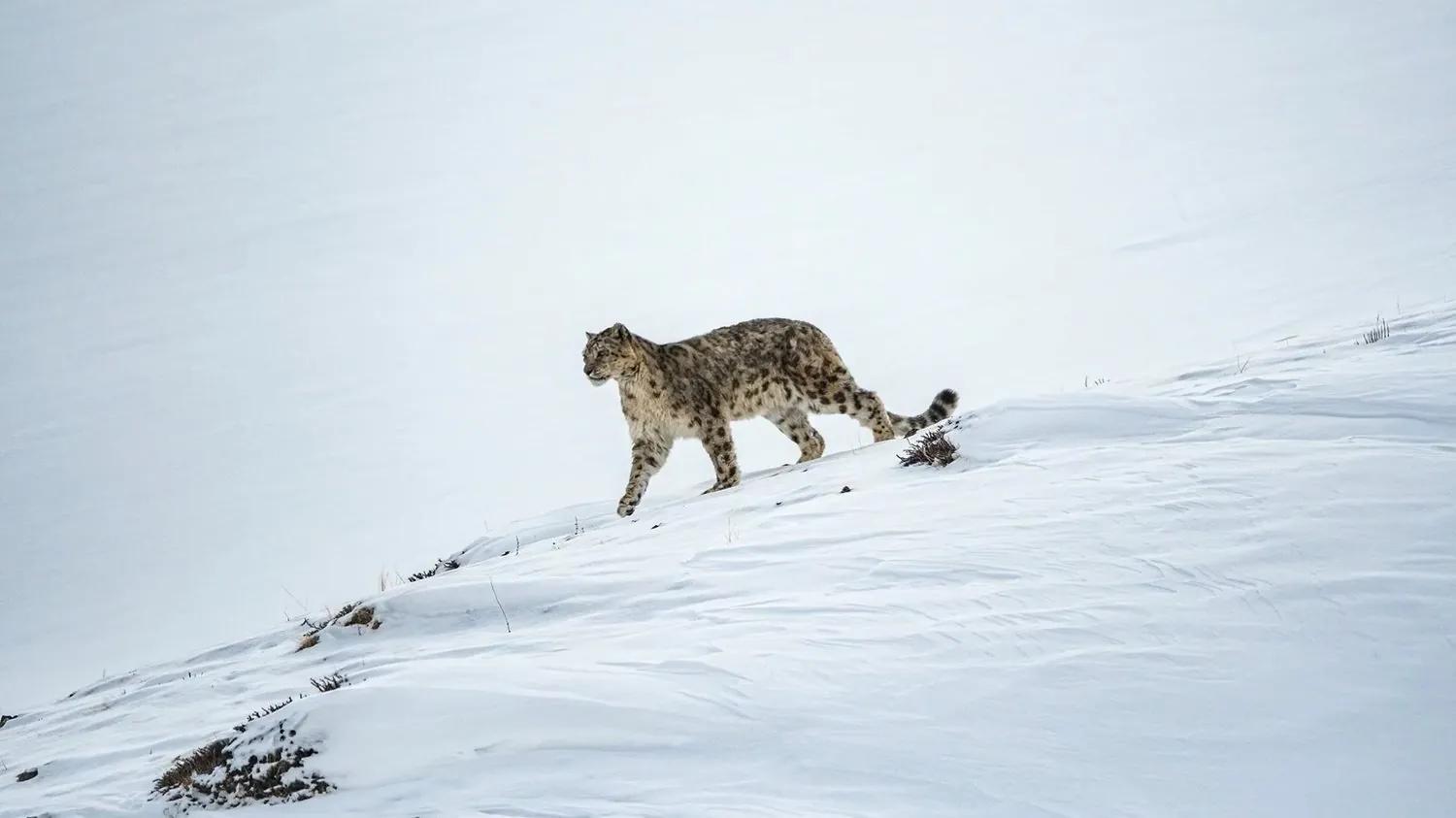
Snow Leopard Expedition in Spiti: Tracking Kibber's Ghost Cat
What a winter snow-leopard tracking trip to Kibber, Spiti is really like: honest sighting odds, the cost ladder, the conservation that funds it, the Kinnaur winter route, and how to view the cat without harming it.
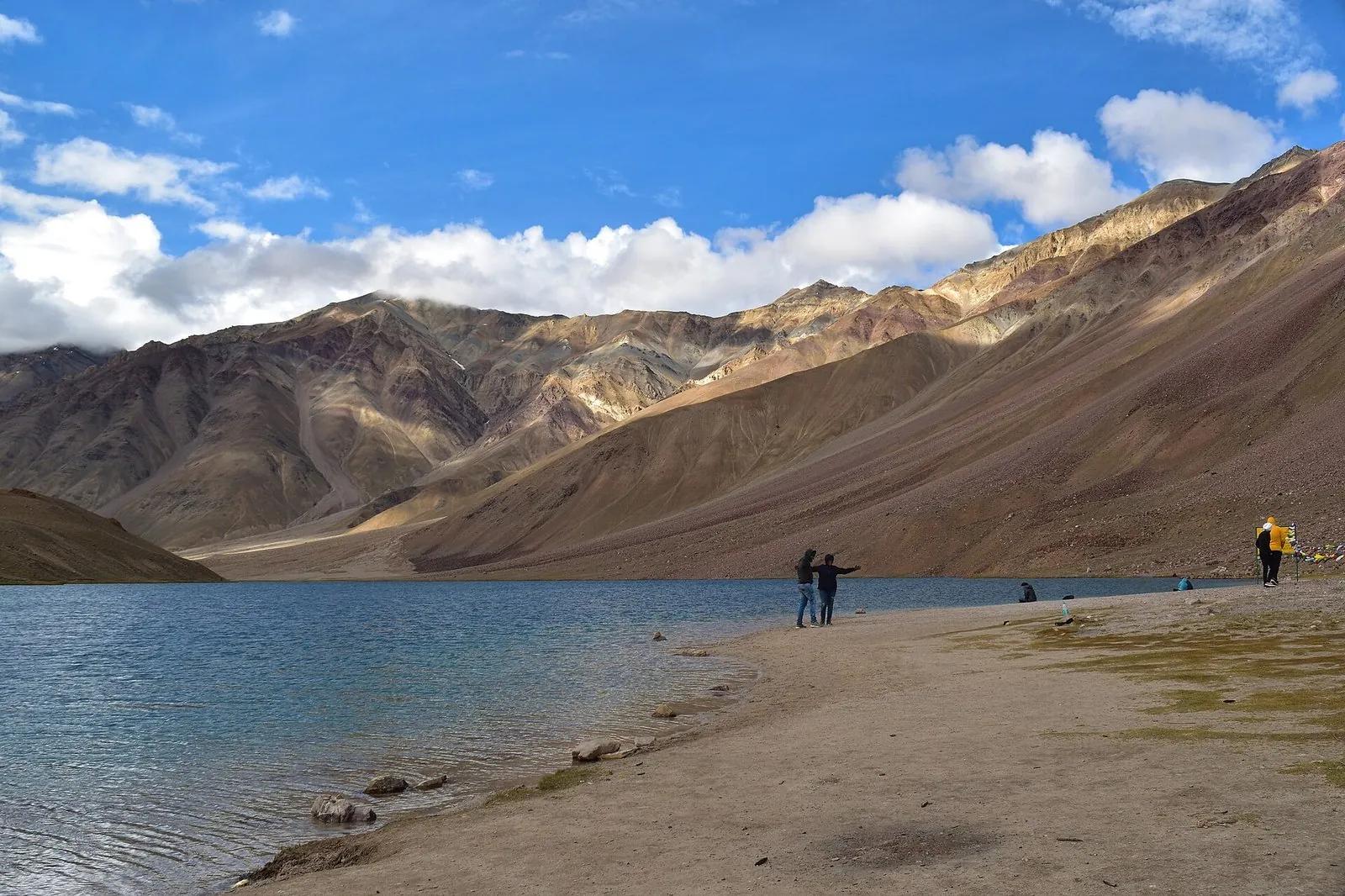
Chandratal Lake 2026: A Kinnauri Guide to the Eastern Approach
Chandratal opens late May to mid-June 2026. Lakeside camping is banned, the lake is a Ramsar wetland. Swiss tents Rs 1,200 to 2,500. The Kaza side via Kunzum beats a Manali day trip on every count except distance from Delhi.
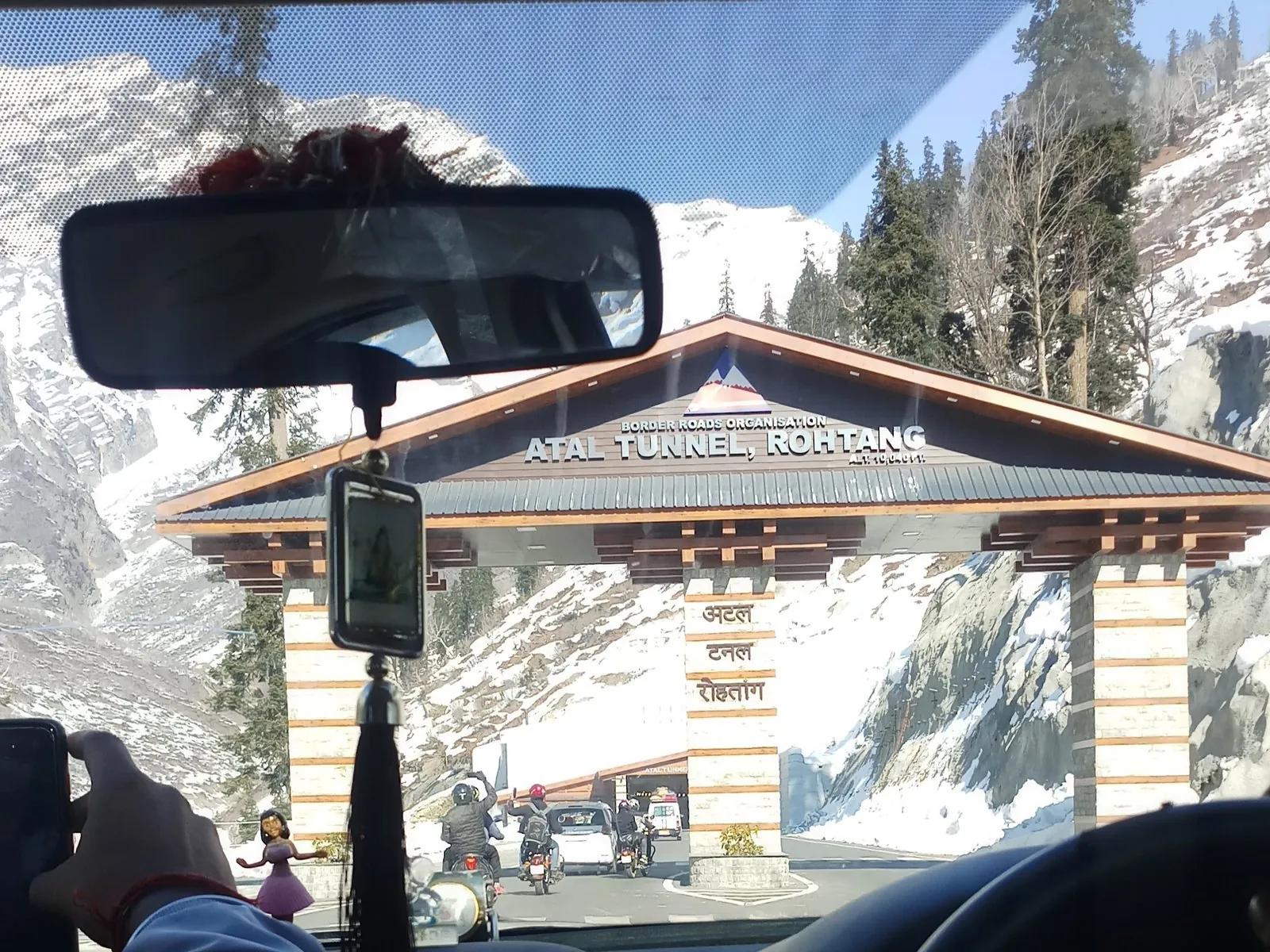
The Atal Tunnel: How One Tunnel Changed Lahaul Forever
Six hundred and twenty-two percent. That is what the Atal Tunnel did to tourism in Lahaul Valley. Before October 2020, Lahaul was six hours from Kullu and cut off six months a year. After October 2020, it became 45 minutes. A before-and-after of what one tunnel did to one valley, told by a Kullu local who has been driving through the portal since the month it opened.