
Volunteering in Himachal Pradesh: 12 Organisations and How to Apply (2026)
Every spring a particular kind of email lands in the inbox of every homestay owner I know in Kullu and Kangra. It is from a 24-year-old in Germany or Canada or Bengaluru who wants to spend three weeks giving back to the mountains, ideally for free, ideally somewhere with good wifi. The owners forward these to me because I have spent years sorting the real volunteer organisations in Himachal from the ones that will take your money and hand you a paintbrush.
Let me be straight about who is writing this. I am from Kullu. I have not taught English at a refugee centre in McLeod Ganj or built a rammed-earth wall in Bir. What I have done is read the actual application page of every organisation below, checked the ones whose details looked stale, and watched a decade of volunteers pass through this state, some doing real work and some paying a middleman agency a small fortune for tree-planting that did not outlast the season. This guide is the version I wish those forwarded emails came with.
Himachal has, genuinely, the richest volunteer ecosystem in the Indian Himalaya: Tibetan exile education in Dharamshala, conservation in the Great Himalayan National Park, organic farms across the apple belt, animal rescue near Dharamshala, earthen architecture in Bir, feminist grassroots work outside Palampur. Twelve organisations worth your time are listed below, two more that I will not list and why, and the one legal fact that can get a foreigner deported on arrival.
- Cheapest way in
- Lha or LIT drop-in teaching in McLeod Ganj, free
- Best months
- March to June, then September to mid-November
- Foreigner visa
- Employment visa with NGO endorsement, NOT a tourist visa
- FRRO rule
- Register within 14 days of arrival
- Honorarium cap
- Rs 10,000 per month maximum for foreign volunteers
- Platform fees 2026
- Workaway 69 USD per year, WWOOF India 40 USD, Volunteer Yatra Rs 1,999
- Avoid
- Orphanage voluntourism, and any agency charging lakhs
- Indian passport
- No visa needed, most NGOs free or nominal
The visa thing that gets people deported
This is the part most blogs skip, so it goes first. If you hold a foreign passport, you cannot legally volunteer with an Indian NGO on a tourist visa. People have been turned back at immigration for trying. The Indian mission is explicit: even unpaid honorary work with a registered organisation needs an Employment visa carrying a specific endorsement that reads To work with NGO, with the name of the NGO and the place of work printed on it (cgisf.gov.in employment-visa page; the deportation cases are documented by the SRR Foundation, blog.srr-foundation.org).
Three more rules follow from that. You must register with the FRRO or FRRRO within 14 days of arriving, now done online through the e-FRRO portal at indianfrro.gov.in, and the penalties for skipping it went up under the Immigration and Foreigners Act 2025. An NGO may pay a foreign volunteer an honorarium, but only up to a ceiling of Rs 10,000 a month, and it is not obliged to pay anything. None of this triggers FCRA problems for the organisation as long as no foreign cash donation crosses the threshold, and you can check any NGO registration yourself on fcraonline.nic.in.
| Point | Tourist visa | Employment visa, NGO endorsed |
|---|---|---|
| What it is for | Sightseeing, casual travel | Working, paid or unpaid, with a named NGO |
| Volunteering at an NGO | Not permitted, deportation risk | Permitted, this is the correct route |
| Endorsement needed | None | To work with NGO, name and place printed on visa |
| FRRO registration | Only if stay over 180 days | Within 14 days of arrival |
| Honorarium allowed | None | Up to Rs 10,000 per month |
If you carry an Indian passport, none of this applies to you. You walk in, fill a form, and start. Most of the organisations below are free or nominal for Indians, which is worth saying plainly because the internet talks about volunteering in India as if it were only a thing foreigners do. It is not. One traveller I read about this year spent a few weeks editing a Bir hostel website through an Indian platform, no farm, no teaching, just a skill somebody needed, and we will get to how he found it.
Do this first. Foreign passport: apply for the employment visa with the NGO endorsement before you fly, and budget the FRRO registration into your first week. For the visa mechanics country by country, our guide for international travellers in Himachal walks through the e-Visa fees and the e-Arrival Card.
Before you sign up: the part about doing no harm
Not all volunteering helps. Some of it actively hurts, and the clearest example is the one to rule out completely. Do not volunteer at an orphanage, not for a day. UNICEF and the Better Care Network have spent years documenting how short-term orphanage tourism drives children into institutions that do not need to exist, breaks the same attachment bonds again and again as each batch of volunteers leaves, and in the worst cases feeds trafficking, with children rented from living parents to keep the beds full for visitors (unicef.org/rosa child-protection pages). India sits among the most affected countries. If a programme puts you in a room with vulnerable children for two weeks and then waves you off, that is the model to refuse.
For everything else, four questions sort the real work from the feel-good kind. Does the organisation actually need your skill, or just your money? Are you doing a job a local person could be paid to do? Is it locally led, or run by a foreign agency taking a cut? And what is the minimum commitment, because anything serious will ask for weeks, not days. Apply directly to a registered trust, verify its 12A, 80G or FCRA number on the government portal, and walk away from any middleman quoting lakhs for a fortnight of tree planting.
That last point has teeth on the ground. When the topic comes up on Reddit, Himachalis themselves push back hard on the free-labour version of it. One commenter laid out the state youth unemployment figure and asked why a farm should get free foreign hands instead of paying a local; another raised the trafficking angle without prompting. They are not wrong. The honest framing is that you are a guest who is useful for a while, not a saviour, and the organisations worth joining talk about themselves the same way.
I have done four work exchanges, two in India and two abroad. Hundred percent worth it. I only went with hosts having higher ratings and feedback. Wonderful experience, no complaints whatsoever.
u/ZippyTyro, r/SoloTravel_India, on vetting hosts before you commit (reddit.com/r/SoloTravel_India/comments/1etu13p)
Teaching and the Tibetan community, McLeod Ganj
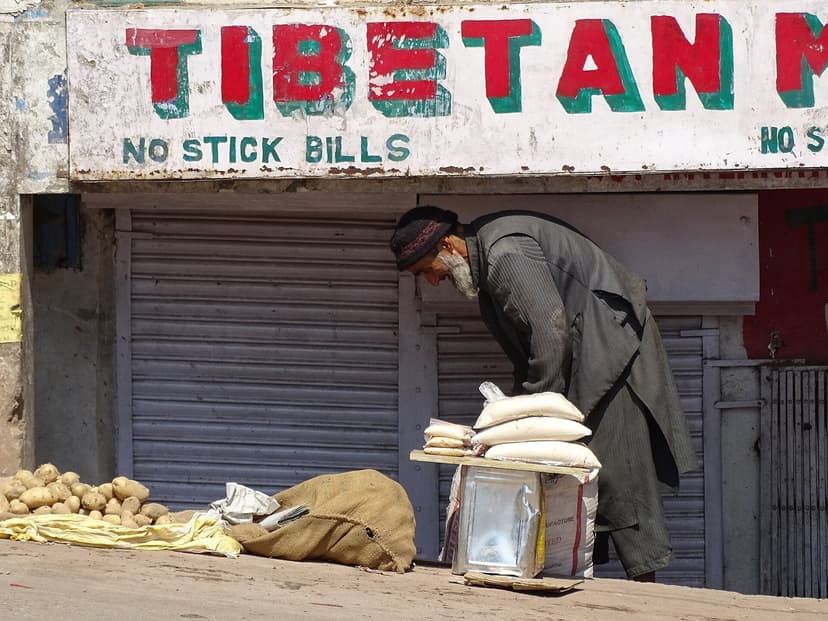
McLeod Ganj is where volunteering in Himachal is densest, because the Tibetan exile community runs its own schools, NGOs and language programmes and genuinely needs conversation partners. The lowest-friction option in the whole state lives here. Lha Charitable Trust, on Temple Road, runs a drop-in English conversation class every weekday afternoon, roughly 4 to 5 PM at its Ahimsa House, and you can simply turn up fifteen minutes early to register (lhasocialwork.org). No qualification, no fee. If you want to teach a full course rather than chat, Lha asks for a three-month minimum so students get one complete cycle, with a one-week minimum for one-on-one tutoring. Office: office@lhasocialwork.org, +91 98823 23455.
A few lanes over on Jogiwara Road, Learning and Ideas for Tibet, known as LIT, fills the short-term gap. Its volunteer roles need no qualification at all: conversational English, tutoring, web and graphic design, grant writing, kitchen, office admin. Email learningandideasfortibet@gmail.com or call +91 8360151085 (lit-dharamsala.org). Between Lha and LIT, a traveller with one free week and no teaching background can still be useful, which is rare.
The third name people mention, Tushita Meditation Centre up the hill, is a quieter story. Every course participant does a daily karma-yoga task, sweeping, dishes, recording teachings, as part of the practice, but that is not the same as volunteering. Tushita actual volunteer posts, reception or housekeeping, ask for four months to a year. Treat it as a retreat that includes service, not a place to drop in and help for the weekend (tushita.info).
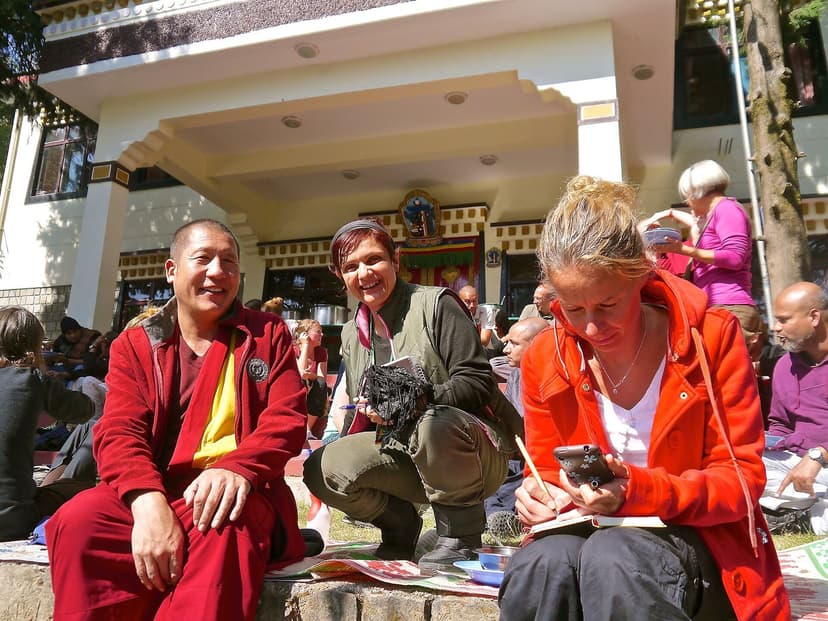
Reddit threads about Dharamshala volunteering circle the same advice. A redditor heading over for an autumn stint wrote that he would be volunteering in McLeod Ganj for five to six weeks in October and November and had signed up by reaching out to a monastery and filling a form (u/cygnus1899, r/Dharamshala). Another listed the canonical roster, Lha first, then Students for Free Tibet and the Tibetan Youth Congress, for anyone who wants the political-advocacy side rather than teaching (u/fraction00, r/tibet). And a reality check worth hearing: India does not pay native English speakers the way Korea or Thailand does, so if you are hoping to fund your stay by teaching, expect very little (u/v00123, r/HimachalPradesh).
If you only have a week, McLeod Ganj is your answer. Lha drop-in class plus a few days of LIT tutoring gives you real contact with the community without pretending a week is enough for anything deeper. Combine it with the temple circuit from our guide to seeing the Dalai Lama in McLeod Ganj.
Conservation and cleanups, from Tirthan to the trek routes
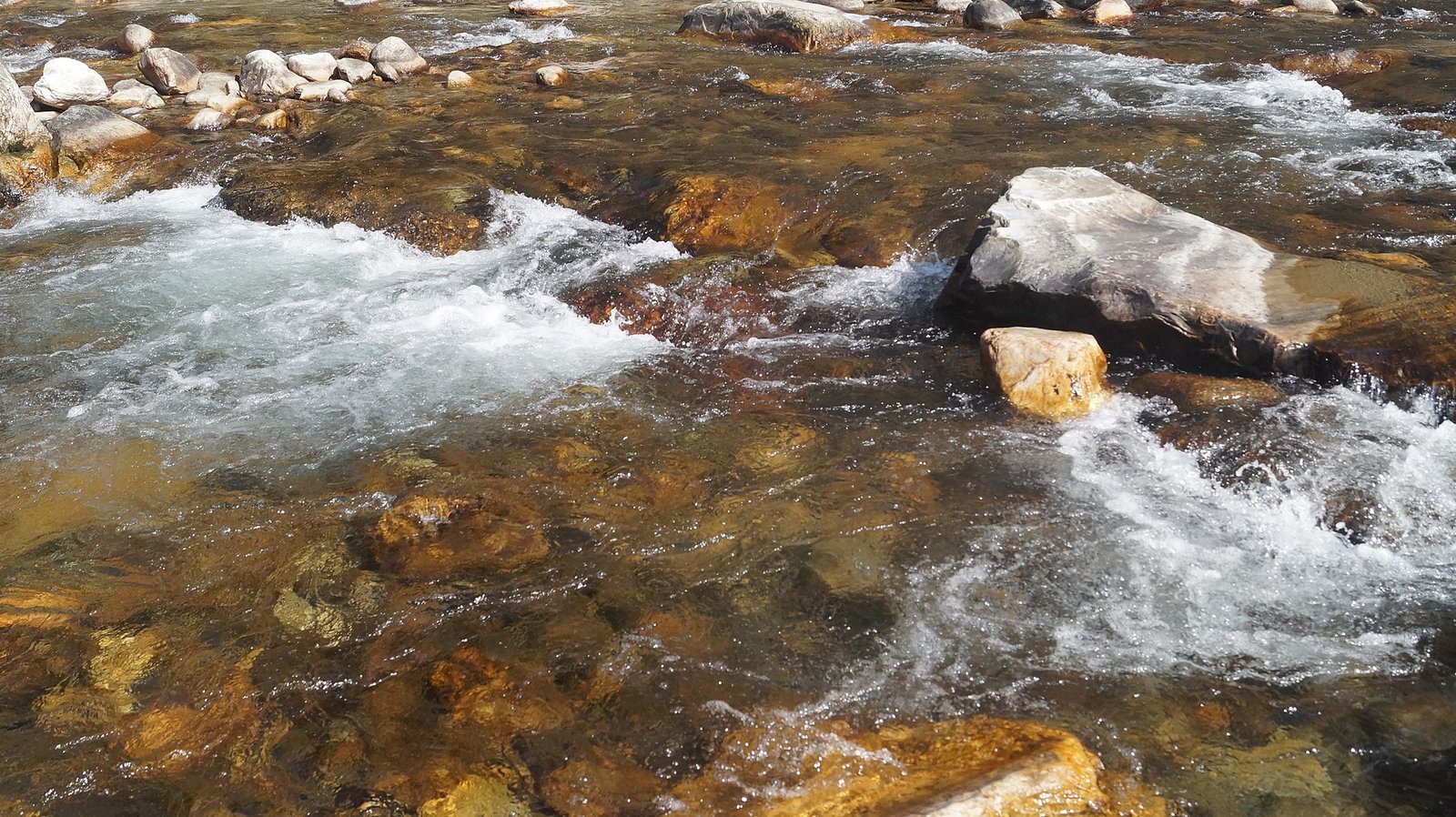
The Great Himalayan National Park, a UNESCO World Heritage site since 2014, sits at the head of the Tirthan and Sainj valleys, and the volunteer work around it is run by two linked outfits near Gushaini. Friends of GHNP and the cooperative Himalayan Ecotourism take volunteers for child education, women microenterprise, forest-fire awareness, ecological restoration near Chipni, and women-led treks, and they have run a tree-plantation and reforestation programme in the park buffer since 2019. Expect a homestay, a subsidised contribution rather than a free ride, and a three-week certificate at the end. Apply at get-involved@himalayanecotourism.com (himalayanecotourism.com). This is also the best base for combining work with walking, which our Tirthan Valley guide covers in full.
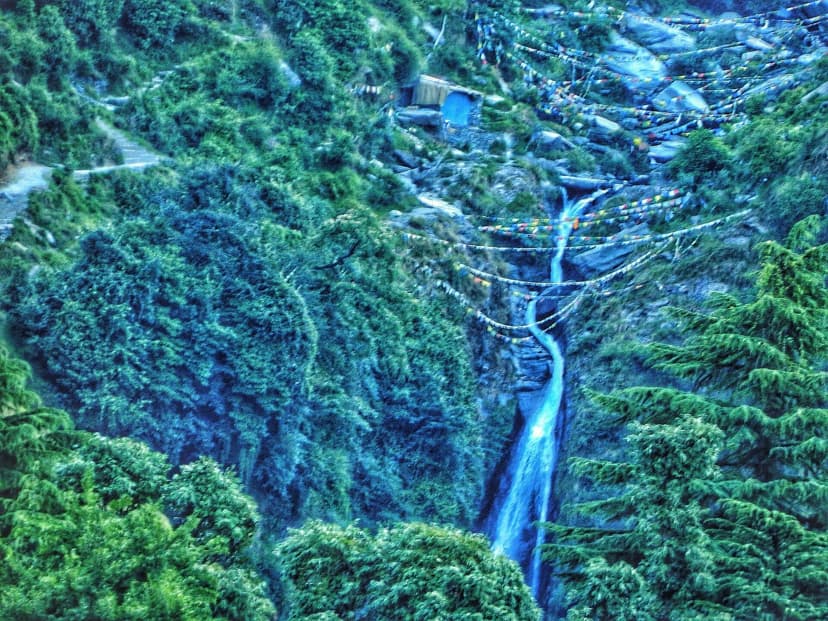
For cleanups, two organisations matter and they work differently. Waste Warriors, founded in 2012 by Jodie Underhill and Tashi Pareek and registered as a society that November, runs the steady infrastructure end: weekly cleanups on Triund and at Bhagsu, door-to-door collection, composting, waste education, out of a Bhagsu and Dharamshala base with a team of ninety-plus staff today. It is drop-in friendly for individuals and groups through a form or email (wastewarriors.org). The other, Healing Himalayas, is the trek-route end: founded in 2016 by army veteran Pradeep Sangwan, it has run more than a thousand cleanup drives and pulled over 1,600 tonnes of non-biodegradable waste off routes like Kheerganga, Hamta Pass, Prashar, Chandratal and the Manimahesh yatra, work that earned a mention in the Prime Minister Mann Ki Baat broadcast (healinghimalayas.org). It now works across five districts plus Chamba.
Healing Himalayas turns up in trip reports too. One redditor, on a thread about the 2024 Manimahesh pilgrimage that drew 227 upvotes, wrote simply that he volunteered for the clean-up with Healing Himalayas during the MM24 yatra (u/Affectionate-Cod9157, r/HimachalPradesh). Another, fielding a question about social-welfare NGOs, named Waste Warriors, and Nishtha in Rakkar village near Dharamshala where a lot of volunteers go (u/Savings_Economist431, r/SoloTravel_India). Both are real, both take drop-ins, and a cleanup drive is the one form of volunteering where a single weekend genuinely counts.
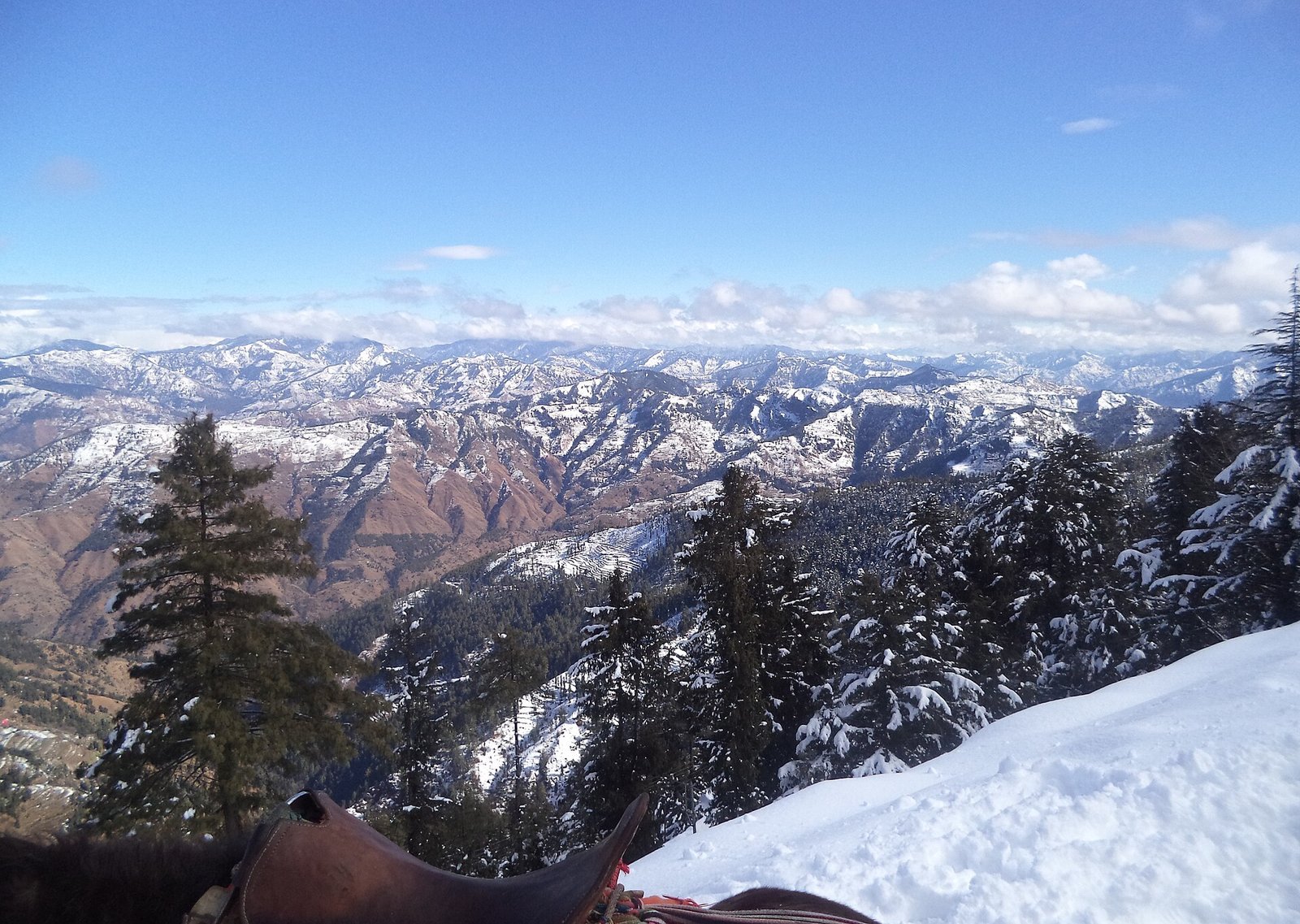
Farming, orchards and the apple harvest, Kullu and Kangra
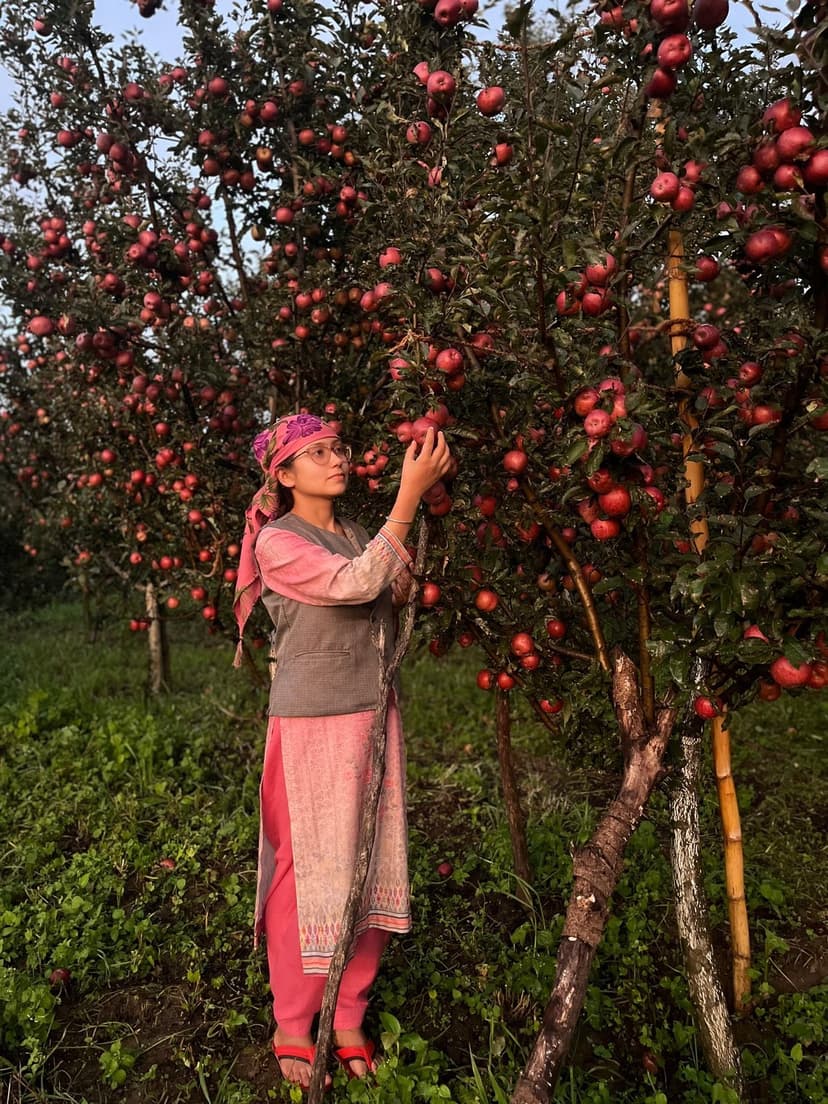
The apple belt across Kullu, Shimla and Kinnaur, and the tea and smallholding country in Kangra, is where farm volunteering happens, and it works through three channels. The first is platforms. Workaway is the global standard, raised to 69 US dollars a year for a single membership from January 2026, and HP has dozens of hosts offering orchard and farmstay work in exchange for food and a bed. WWOOF India, now 40 US dollars single or 60 for couples a year, lists certified organic farms in Kangra and Kullu. The third is the Indian option that has quietly taken over the budget end: Volunteer Yatra, running since 2021, charges a flat Rs 1,999 and connects you to a hundred-plus hosts across the country, food and stay covered for your skills (volunteeryatra.com).
Volunteer Yatra is the one I hear about most from Indian travellers, and the Reddit evidence is unusually concrete. One wrote that he did volunteering in two places through Volunteer Yatra for around 2,500 rupees, and got a Bir opportunity editing a hostel website (u/priyanshu5075). Another: I just completed my first volunteering in Bir through Volunteer Yatra, three weeks, it was really amazing (u/ComplaintCalm9727). Both on r/SoloTravel_India. The platform skews toward hostels and homestays rather than hard farm labour, which suits a content writer or designer better than someone who wants to be in the soil.
The second channel is a named foundation. Himalayan Volunteer Tourism, the HVT Foundation, set up in 2018 by Panki Sood and Mahima Mehra, is a registered Section 8 non-profit with proper 12A, 80G and Darpan paperwork, running agro-volunteering and community programmes in the Tirthan Valley and Sikkim (hvtfoundation.org). A volunteer in a recent thread vouched for it directly, pointing the asker at HVT and its opportunities page (u/Yaatsi, r/SoloTravel_India). Note the name carefully, it is Himalayan Volunteer Tourism, and its old web address now redirects to the foundation site.
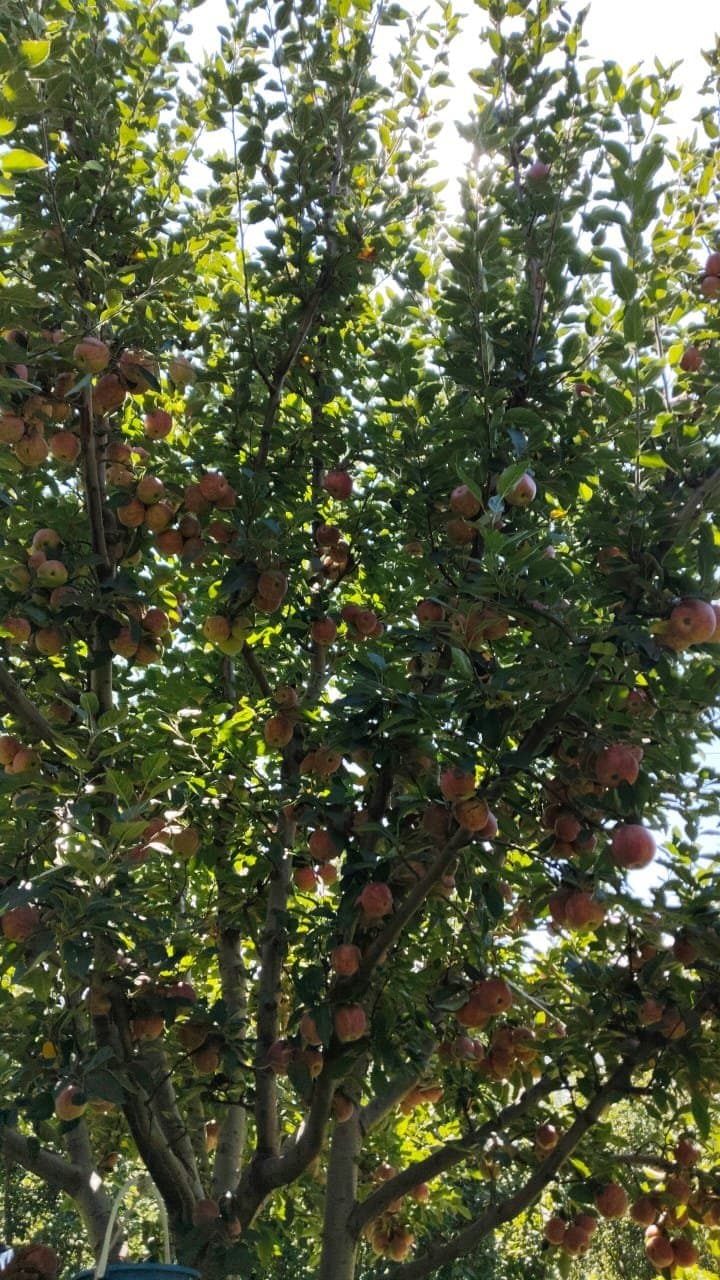
Two cautions before you book a free farm stay. First, vet the host: a four-exchange veteran on Reddit said he only ever went with hosts carrying high ratings, and that is the whole game. Second, free is not always free. As one traveller warned, some platforms list hosts who quietly charge a daily or weekly fee on top, which made opportunities look better at first glance than they actually were (u/cyprusnikos). Read the host listing to the end. If you want the harvest experience without the work-exchange ambiguity, our farm stays and apple-picking guide and the Kinnaur apple-season guide cover paid stays where the terms are clear.
Animal rescue, Peepal Farm near Dharamshala
Peepal Farm, in Dhanotu village in the Shahpur belt of Kangra, rescues injured and stray animals and runs an organic smallholding alongside. This is the entry where the old internet information is most wrong, so read carefully. The minimum commitment is two weeks. But there is no longer a paid trial period and no work-exchange: volunteers arrange and pay for their own food and accommodation, or take the farm-stay rate, and the organisation states plainly on its volunteer page that volunteering will not turn into a work exchange or a job (peepalfarm.org). If a guide tells you Peepal pays 400 rupees a day, that guide is years out of date. What you get instead is genuine animal-care work, feeding, cleaning, basic first aid, packaging the farm products, and the company of people who do this full time.
Building and social change, Bir and Palampur
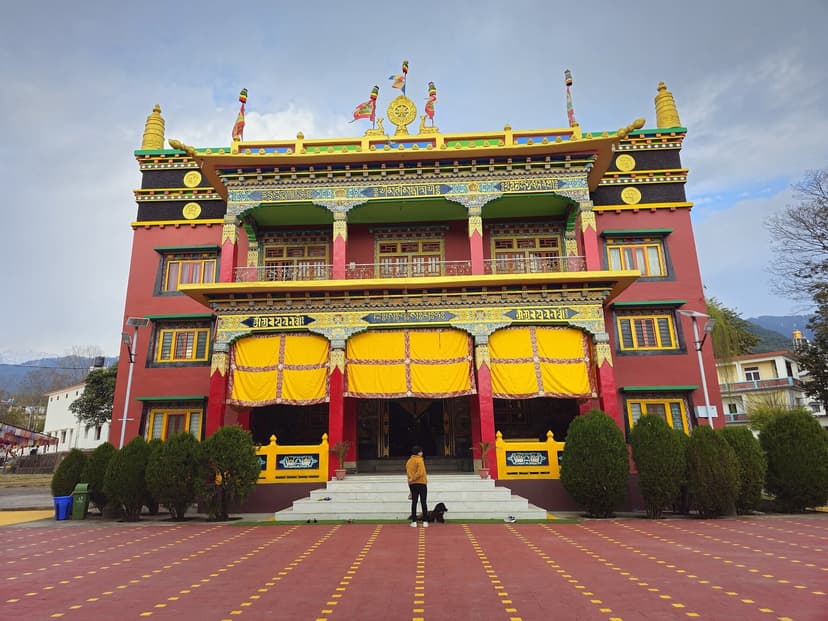
Bir is better known for paragliding, but it is also where you learn to build. The Dharmalaya Institute teaches Kangra-vernacular earthen construction, rammed earth and mud, alongside organic gardening and permaculture. This is the other entry where the facts changed: the residential programme now starts at a two-week minimum, not the four-to-six months older write-ups quote, and it is paid on a sliding scale, roughly Rs 6,000, 7,500 or 9,000 a week across the subsidised, standard and supporter rates, with reduced work-study rates from the second month. The 2026 monsoon work period runs 15 June to 30 August (dharmalaya.in). It is a serious place, and the money goes into a genuinely educational programme rather than a tour operator margin. Bir has more than monasteries and gliders, as our Bir-Billing guide gets into.
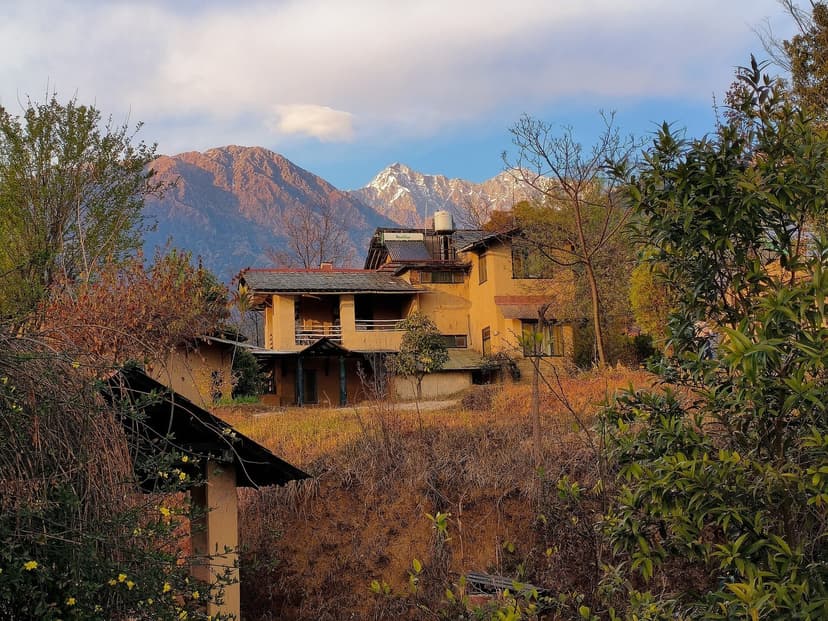
Twenty minutes from Palampur, in Kandbari village under the Dhauladhar, the Sambhaavnaa Institute runs structured programmes on social justice, gender, environment and development, and this is where to go if you want the activism side rather than the trowel. Its 2026 calendar is fixed and the fees are all-inclusive of board and lodging: the Nayi Dishayein summer school runs 21 May to 4 July 2026 at Rs 6,000, the two-month Buniyaad foundation course is Rs 13,500, and a ten-month fellowship runs November to August with a Rs 10,000 monthly honorarium and board. Apply to sutradhaar@sambhaavnaa.org (sambhaavnaa.org). One honest note: Sambhaavnaa casual volunteer and internship policy is being revisited right now, so do not arrive expecting an open slot, go through the structured programmes instead.
Two more, both around Sidhbari and Rakkar just south of Dharamshala, do quieter long-term work. Nishtha, founded by the Austrian doctor Barbara Nath-Wiser, runs women health and single-women collectives and welcomes volunteers with real skills, physiotherapists, nurses, special-needs professionals, with board and meals provided (contact@nishtha-hp.org). Jagori Rural, registered in 2002 and led by the feminist organiser Abha Bhaiya, works on gender, sustainable farming and violence against women across the same villages. Neither is a drop-in; both reward Hindi and a commitment of months over a passing visit.
The full list, side by side
Twelve organisations, what they want from you, and what it costs. I have kept the two I could not stand behind off this table and explained them below it.
| Organisation | Where | Work | Minimum time | Cost to you | Apply |
|---|---|---|---|---|---|
| Lha Charitable Trust | McLeod Ganj | Teaching English, admin, design | 1 day drop-in to 3 months | Free | Walk in 4 PM, or office@lhasocialwork.org |
| LIT | McLeod Ganj | English, tutoring, web, kitchen, admin | 1 week+ | Free | learningandideasfortibet@gmail.com |
| Tushita | McLeod Ganj | Karma yoga in courses; reception/housekeeping | 4 months to 1 year for posts | Course fees apply | tushita.info |
| Friends of GHNP / Himalayan Ecotourism | Tirthan Valley | Conservation, education, restoration | About 3 weeks | Subsidised homestay | get-involved@himalayanecotourism.com |
| Waste Warriors | Dharamshala / Bhagsu | Cleanups, composting, education | 1 day to weeks | Free | wastewarriors.org form |
| Healing Himalayas | Trek routes, 5 districts | Trek-route cleanup drives | Drive-based, 1 day+ | Free | healinghimalayas.org |
| HVT Foundation | Tirthan Valley | Agro-volunteering, community work | Flexible | Programme cost | hvtfoundation.org |
| Peepal Farm | Dhanotu, Kangra | Animal rescue, organic farm | 2 weeks minimum | Self-funded stay | peepalfarm.org |
| Dharmalaya | Bir | Earthen building, gardening | 2 weeks minimum | Rs 6,000 to 9,000 per week | dharmalaya.in |
| Sambhaavnaa | Kandbari, Palampur | Social justice, gender, environment | Course-length | Rs 6,000 to 13,500 per course | sutradhaar@sambhaavnaa.org |
| Nishtha | Sidhbari, Kangra | Women health, single-women collectives | Months, skilled roles | Board provided | contact@nishtha-hp.org |
| Jagori Rural | Sidhbari, Kangra | Gender, farming, anti-violence work | Months | Varies | jagorirural.org |
The two I left off. Kalasan Foundation, often listed for Mandi farm volunteering, has no findable registration, website or volunteer trail, so I will not send you to it until someone can show me it is real. And the name Himalayan Voluntary Trust floats around the internet attached to volunteering in HP; it is a garbled version of Himalayan Volunteer Tourism, the HVT Foundation already on the list, so use the correct name and the correct site.
How much time do you actually have?
The single most useful filter is your calendar. Match the time you have to the depth you can reach, and do not pretend a long weekend is a month.
- 1 to 3 days
Lha drop-in conversation class in McLeod Ganj, or a single Waste Warriors or Healing Himalayas cleanup drive. Real, if small. - 1 week
LIT short-term tutoring or office help. Enough to be useful in Dharamshala, not enough for a farm or the park. - 2 to 4 weeks
Peepal Farm animal care, a Volunteer Yatra or Workaway hostel and farm stint, or the GHNP conservation programme. The sweet spot for most travellers. - 1 to 3 months
Lha full teaching cycle, Dharmalaya building programme, a real organic-farm season. Deep enough to learn the place and the work. - 4 to 6 months
Dharmalaya long programme, Tushita posts, Nishtha or Jagori skilled roles. You stop being a visitor. - 10 months
The Sambhaavnaa fellowship. A different category: a paid, structured year inside the social-change world.
What it costs to live while you volunteer
The work is usually free; living is not. Most NGOs either house you or sit in a town cheap enough that a month does not hurt. Here is a realistic monthly figure for a volunteer paying their own way, on top of the platform fee and your travel to Himachal.
| Expense | Rs per month | Note |
|---|---|---|
| Accommodation | 3,000 to 9,000 | Free with some NGOs; budget room otherwise; Dharamkot dearer in season |
| Food | 4,500 to 9,000 | Tibetan and dhaba food is cheap; often included on farms |
| Local transport | 500 to 1,500 | Minimal if you live on site |
| Platform fee (annual) | 1,999 to 5,800 | Volunteer Yatra Rs 1,999; Workaway 69 USD; WWOOF India 40 USD |
| SIM, sundries | 500 to 1,000 | Local prepaid plus incidentals |
| Monthly total | Rs 8,000 to 15,000 in Dharamshala, less in Kullu and Bir | |
For scale, a digital nomad on r/digitalnomad logged a Dharamkot month at 600 to 800 US dollars all in, but that is a working stay in the dearest part of the area; a volunteer eating at the centre and sleeping in NGO housing lands far lower (u/metalvendetta). And keep one number in your head from the application stage: applying widely matters, because one traveller reported applying to ten places and getting shortlisted by two (u/Cosm1cBlip).
Where all of this is, on one map
When to come
Two windows do most of the work: March to June and September to mid-November. Spring is planting and pre-monsoon cleanups; autumn is harvest and the post-monsoon clean-up season when the trails need it most. Avoid the deep winter, December to February, in the upper places, McLeod Ganj, Bir and Tirthan get cold and heating is thin. And avoid the peak monsoon, July and August, for any outdoor or conservation work: the 2023 and 2025 cloudbursts that tore through Kullu, the Sainj and the Banjar side are the reason, and relief funds like the state Aapda Raahat Kosh and groups like Goonj were still cleaning up months later. The Kangra lowlands around Palampur stay workable nearly year-round. For the full month-by-month picture, see our best time to visit Himachal guide.
How to apply, step by step
The mechanics are the same everywhere, and skipping a step is how people end up disappointed or deported.
- Pick by skill and time, not by photos. Use the table above. A designer fits LIT or a Volunteer Yatra hostel; a builder fits Dharmalaya; a nurse fits Nishtha.
- Verify the organisation. Check its 12A, 80G or FCRA registration on fcraonline.nic.in before you commit a rupee. No registration, no go.
- Email directly, early, and widely. Apply to several, expect a low hit rate, and write a real message about your skills, not a form letter.
- Sort the visa, if foreign. Employment visa with the NGO endorsement, arranged before you fly, then FRRO within 14 days of landing.
- Confirm the cost in writing. Free, subsidised, or paid: get the number and what it covers before you arrive, so a free farm stay does not become a daily fee.
Fitting it into a real trip
Volunteering does not have to swallow your whole holiday. The geography lets you stack it. Teach two weeks at Lha in McLeod Ganj, then walk up to Triund and on toward the Dhauladhar passes. Do a GHNP conservation stint at Gushaini and spend the weekends deeper in the Tirthan and Sainj. Join a Healing Himalayas drive on the Manimahesh route and carry on to Bharmour and the Chaurasi temples, which our Manimahesh trek guide maps out. A redditor put the rhythm of it well: he volunteered with an NGO in Himachal for six months and then travelled around the country for three more (u/Darthlentils). Work first, then the road. It is a good order.
Planning a volunteer-and-travel stretch and not sure how to sequence it around permits, weather and the inner-line areas? Write to us at hello@refuje.com with your dates and skills and we will sketch a route that puts the work and the walking in the right order.
Common questions
Can I volunteer in Himachal Pradesh for free?
Yes. Lha Charitable Trust and LIT in McLeod Ganj take volunteers at no cost, and Waste Warriors and Healing Himalayas cleanups are free to join. Farm and platform stays trade work for food and a bed, though Workaway, WWOOF and Volunteer Yatra each charge an annual membership. Some programmes, like Dharmalaya and Sambhaavnaa, are genuinely paid.
Do foreigners need a special visa to volunteer in India?
Yes, and this is the one rule people get wrong. A tourist visa does not permit NGO work and people have been deported for trying. You need an Employment visa carrying the endorsement to work with a named NGO, arranged before you arrive, plus FRRO registration within 14 days of landing. Indian passport holders need none of this.
What is the minimum time to volunteer in HP?
As little as one day for a Lha drop-in class or a cleanup drive. But most worthwhile placements ask for two to four weeks, and teaching a full course at Lha or building at Dharmalaya needs months.
How do I volunteer with Tibetan refugees in Dharamshala?
Start at Lha Charitable Trust on Temple Road, McLeod Ganj, whose daily 4 PM English conversation class is open to walk-ins. For structured roles email LIT at learningandideasfortibet@gmail.com. No teaching qualification is needed for short-term conversation and tutoring.
Is it safe to volunteer in Himachal Pradesh?
It is among the safest states in India, with a large international volunteer community in McLeod Ganj and Bir. Rural farm stays in Kullu and Kangra are safe with normal precautions. Solo female travellers on Reddit consistently describe Bir in particular as relaxed and easy.
What does volunteering in HP cost per month?
Budget Rs 8,000 to 15,000 a month in Dharamshala and less in Kullu or Bir, covering room, food and local transport, plus a one-time platform fee if you use one. Many NGOs house and feed you, which cuts this sharply.
Should I use Workaway, WWOOF or Volunteer Yatra?
Workaway has the most global hosts at 69 US dollars a year. WWOOF India, 40 US dollars, is organic-farm specific. Volunteer Yatra, an Indian platform at Rs 1,999, is the cheapest and strongest for hostels and homestays. Whichever you pick, only choose hosts with strong reviews, and watch for hidden daily fees.
Can I volunteer at the Great Himalayan National Park?
Yes. Friends of GHNP and Himalayan Ecotourism, both near Gushaini in the Tirthan Valley, take volunteers for conservation, education and a reforestation programme running since 2019, usually as a three-week placement with a subsidised homestay. Apply at get-involved@himalayanecotourism.com.
Is orphanage volunteering a good way to help children?
No, and reputable organisations advise against it. UNICEF and child-protection researchers have shown that short-term orphanage tourism drives unnecessary institutionalisation, harms children through repeated broken attachments, and in some cases feeds trafficking. Support family-based and community programmes instead.
When is the best time to volunteer in HP?
March to June and September to mid-November. Spring suits planting and farm work, autumn suits harvest and post-monsoon cleanups. Avoid the deep winter in the high towns and the peak July to August monsoon for any outdoor work.
Read next
- Himachal for international travellers, for the visa and e-Arrival Card detail behind the volunteer rules above.
- Tirthan Valley guide, the base for GHNP conservation work.
- Seeing the Dalai Lama in McLeod Ganj, for the town where most volunteering starts.
- Farm stays and apple picking, for paid alternatives to work-exchange farms.
- Bir-Billing guide, the home of Dharmalaya and Deer Park.
If you would rather we vet an organisation for you before you commit weeks of your life to it, send the name to hello@refuje.com. We keep a running file on which HP NGOs are active, which have gone quiet, and which to avoid.
A note on how this was put together
Written from Kullu. I am not a foreign volunteer and I have not personally done these programmes; what is here comes from each organisation own application pages, a round of calls and emails to confirm the 2026 details, and the first-hand Reddit accounts quoted throughout, linked to their original threads wherever a public permalink survives. Costs, dates and visa rules were checked in June 2026 and they decay fast, so confirm the current figure with the organisation before you travel. Where I could not verify an organisation, I said so and left it off rather than guess.
Sources include: Lha Charitable Trust (lhasocialwork.org), LIT (lit-dharamsala.org), Tushita (tushita.info), Sambhaavnaa Institute (sambhaavnaa.org), Dharmalaya Institute (dharmalaya.in), Peepal Farm (peepalfarm.org), Waste Warriors (wastewarriors.org), Healing Himalayas (healinghimalayas.org), Himalayan Ecotourism and Friends of GHNP (himalayanecotourism.com), HVT Foundation (hvtfoundation.org), Nishtha (nishtha-hp.org), Jagori Rural (jagorirural.org); the Indian mission employment-visa page (cgisf.gov.in) and FRRO portal (indianfrro.gov.in); FCRA online (fcraonline.nic.in); UNICEF child-protection guidance (unicef.org); platform pricing from Workaway, WWOOF India and Volunteer Yatra; and reader accounts on r/HimachalPradesh, r/SoloTravel_India, r/Dharamshala, r/tibet and r/digitalnomad.
You Might Also Like
How to Travel Himachal Without Wrecking It: A Quiet-Travel Manual
A non-preachy field manual for responsible travel in Himachal, by a Kullu local: how to behave, when to go, where to go instead, and the 2026 rules and bans that actually matter.
Mamleshwar Mahadev: The Eternal Flame Temple of Karsog
An eternal fire, a fist-sized wheat grain and a six-foot drum, kept in a mortar-less timber temple in the quiet Karsog valley. The honest story of Mamleshwar Mahadev: what is real, what is faith, and how to go.
Lower Himachal: The Four Districts Nobody Visits
Una, Bilaspur, Hamirpur, Sirmaur: the forgotten half of Himachal Pradesh. Submerged temples that surface every summer, HP's largest natural lake, the room where the Dasam Granth was written, and the roof of the Shivaliks. By a Kullu local finally paying attention.