
Tirthan Valley Guide 2026: The Anti-Kasol
Kasol broke up with you. Good.
I watched Kasol turn into a construction site. Five years ago, the Parvati Valley road had potholes and charm. Now it has potholes and dust, plus a hundred cafes serving the same banana pancake to the same crowd wearing the same fisherman pants. If you went there looking for mountains and came back smelling of diesel and disappointment, you are not alone. A Redditor put it plainly: "Kasol feels like Bangalore now, broken roads, trucks, construction and dust." He is right to an extent.
Tirthan Valley is forty kilometres south of that mess, across a ridge, in a different water catchment entirely (approx 100 km by road). Same district (Kullu), same deodar forests, same cold river. But nobody is playing trance music at 2 a.m., nobody is selling you anything except maybe a fishing rod and a plate of rajma-chawal, and no fish in the river have DJ lights projected on to them. The first time I went there I kept waiting for the catch. There was no catch, as it was difficult to cast considering pressure of white waters there.
- Altitude
- 1,500-3,120 m (Banjar to Jalori Pass)
- Nearest airport
- Bhuntar (50 km, 2 hrs)
- Nearest bus stop
- Aut on NH-21 (25 km from Gushaini)
- Budget homestay
- From ₹905/night (Luxmi Homestay)
- UNESCO park
- Great Himalayan National Park (754 sq km)
- Best months
- March-June, October-November
- Known for
- Trout fishing, GHNP, riverside homestays, doing nothing
Tirthan vs Kasol: the honest comparison
Every travel forum in India eventually gets to this question. "Should I go to Kasol or Tirthan?" The answer depends on what you actually want from a mountain trip, and most people lie to themselves about that. So here is the table.
| Tirthan Valley | Kasol / Parvati | |
|---|---|---|
| Vibe | Quiet. Homestays with books and river sounds | Loud. Hostels, cafes, trance after dark |
| Crowds | You might be the only guest at your homestay | Shoulder-to-shoulder on the Kheerganga trail |
| Safety | Families, couples, solo women all fine | Peddler approaches, disappearance reports (1,078 missing 2003-2023) |
| Nature access | GHNP, Indias only UNESCO national park | Kheerganga (day-trek only since 2024 camping ban) |
| Food | Home-cooked Himachali meals at your homestay | Israeli cafes, banana pancakes, pizza |
| Budget stay | ₹905/night (Luxmi) to ₹3,000 (The VOID) | ₹300 dorm to ₹1,500+ hotel |
| Drug scene | None | Open, widely documented |
| WiFi/remote work | Growing, BSNL reliable, Jio patchy | Better connectivity but distracting |
| Best for | Nature lovers, readers, families, slow travelers | Backpackers, friend groups, party circuit |
| Signature activity | Trout fishing, river walks, GHNP treks | Cafe-hopping, Kheerganga, Malana |
u/wilpoop on Reddit, with seven upvotes (which in r/IndianEnts is a landslide): "Tirthan Valley is much better. It is secluded and much much less people than Parvati. Parvati valley is beautiful but Kasol and Tosh have too many people."
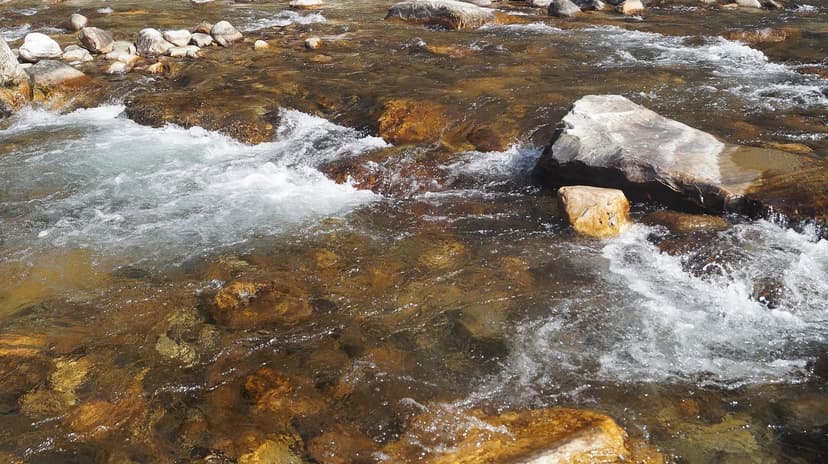
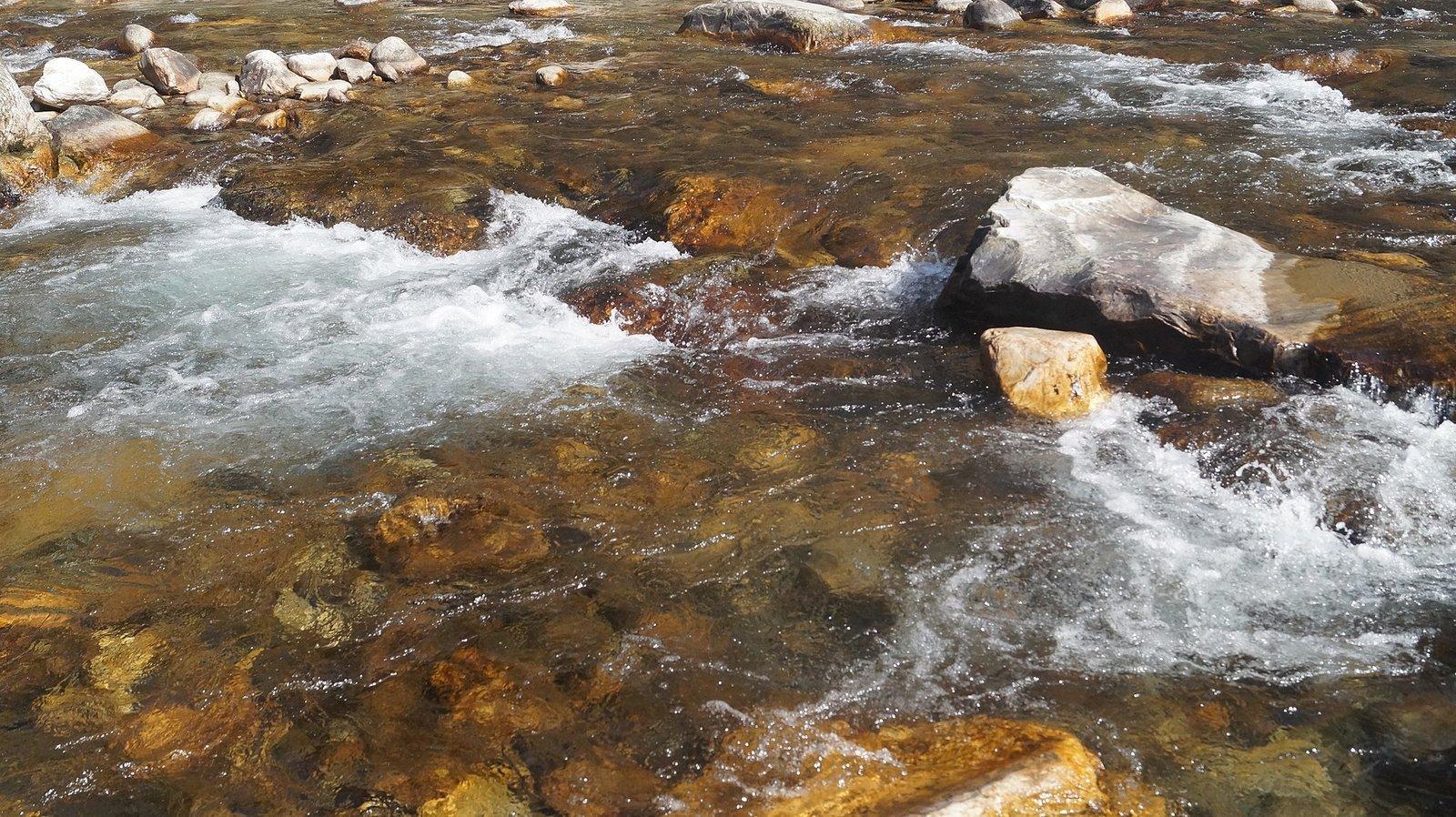
The Tirthan runs so clear you can count the stones at the bottom, which is half the reason people come here and half the reason the trout are so fat. Photo: Wikimedia Commons, CC BY-SA 4.0.
Where exactly is this valley
Tirthan is not one village. It is a system of four larger settlements strung along the Tirthan River and its feeders, each with a different personality.
Banjar (1,500 m) is the gateway town. ATMs, a market, bus connections to Kullu and Aut. You do not stay here unless your bus arrives at midnight and you are too tired to negotiate a taxi up the valley.
Gushaini (1,600 m) is where the homestays cluster and where the Great Himalayan National Park gate sits. This is the default base for most visitors. Raju Bharti, Luxmi, Khem Bharti, The VOID, and a dozen other homestays line the river within a fifteen-minute walk of each other.
Jibhi (1,900 m) is twenty minutes south. More cafes, more hostels, a growing tribe of laptop workers paying ₹15,000-20,000 a month for a room with WiFi and meals. u/dogee_chan on r/WorkationIndia called it "offbeat, super scenic, riverside cafes, ideal for solitude and nature lovers." It has more in common with pre-2018 Kasol than Kasol does today.
Shoja (2,200 m) is the quiet end. Misty, remote, few people. u/Mundane-Reality682 on r/gurgaon: "The views Shoja offers are amazing and you won't find many people there." This is the place for people who found Gushaini too busy, which tells you something about the valley's calibration.
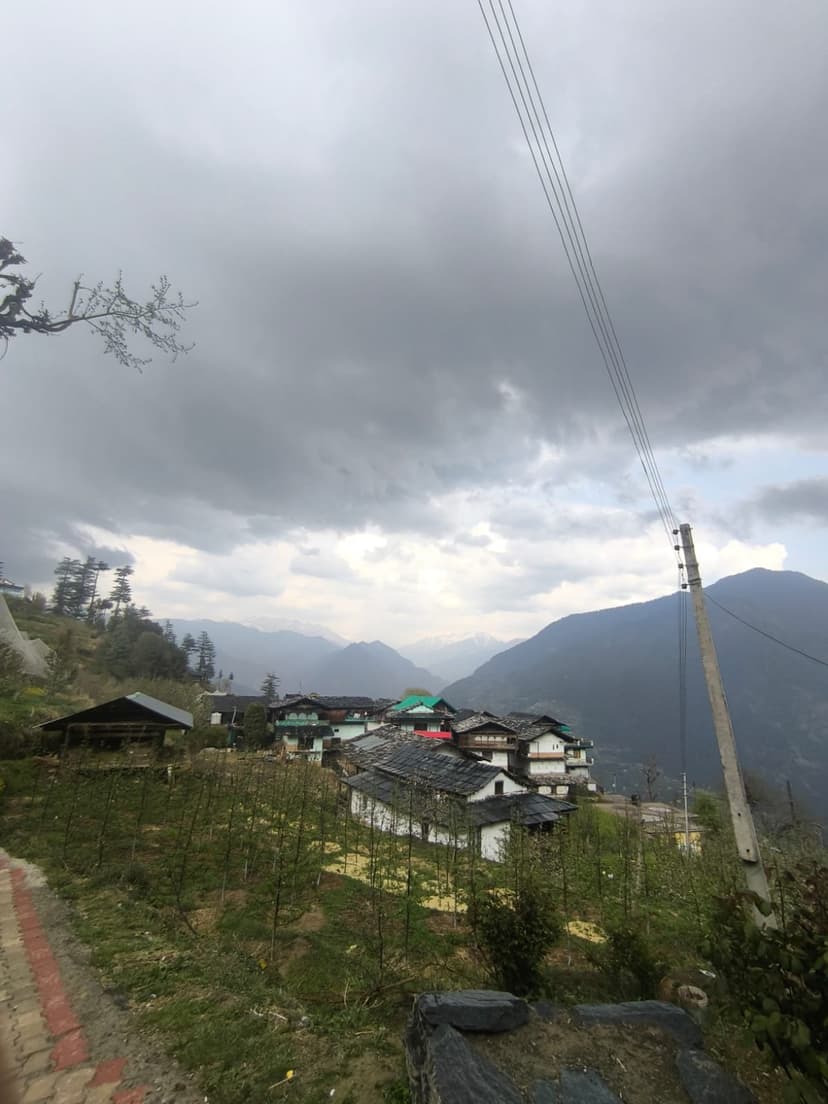
A village near Banjar, clinging to the mountain the way all Kullu valley villages do, with apple trees in the front yard and clouds for a ceiling. Photo: Wikimedia Commons, CC BY-SA 4.0.
Getting there without overpaying
The trick is knowing that Aut exists. Most Delhi-to-Manali buses barrel through this highway town at 4 a.m. without stopping, and most travel blogs tell you to get off at Kullu or Bhuntar. Both are wrong. Aut is where the Tirthan Valley road branches off NH-21, and it saves you a hundred kilometres of backtracking.
Route 1 (cheapest): HRTC Volvo from Delhi ISBT to Aut. 490 km, 12-14 hours overnight. Fare: ₹800-1,500 depending on bus class. From Aut, shared taxi to Gushaini costs ₹200-300 per person, private ₹1,000-1,500. Total: under ₹2,000 if you take the shared taxi.
Route 2 (fastest): Fly Delhi to Bhuntar (₹5,000-10,000, 1.5 hours). Taxi from Bhuntar to Gushaini: ₹2,000-3,000, 2 hours. Total: under ₹13,000 but you skip the overnight bus.
Route 3 (prettiest): Drive or bus from Shimla via Jalori Pass. 174 km, 6-7 hours, through apple country and over the pass at 3,120 m. Do this one in daylight or do not bother.
The "do nothing" guide
I need to say something that no travel blog will tell you. Tirthan's best activity is "no activity".
Sit by the river. Read. Eat whatever the homestay kitchen makes for lunch. Walk upstream until you find a pool deep enough to dip your feet. Come back. Eat again. If you have your angling rod, sit on the rock casting into the same pool during evenings. The river sounds different at night, faster somehow, and if you leave your window open you will sleep better than you have in months.
This is not a place to "cover." There is no checklist. There are no must-sees. If you have three days, spend them reading one book by the river and eating four meals a day. You will come home slower and that is the whole point.
u/AtmosphereConstant16 on r/SoloTravel_India, after staying at a hostel in Jibhi: "The amount of peace, silence and views was just out of the world." That is not a review. It is a diagnosis.
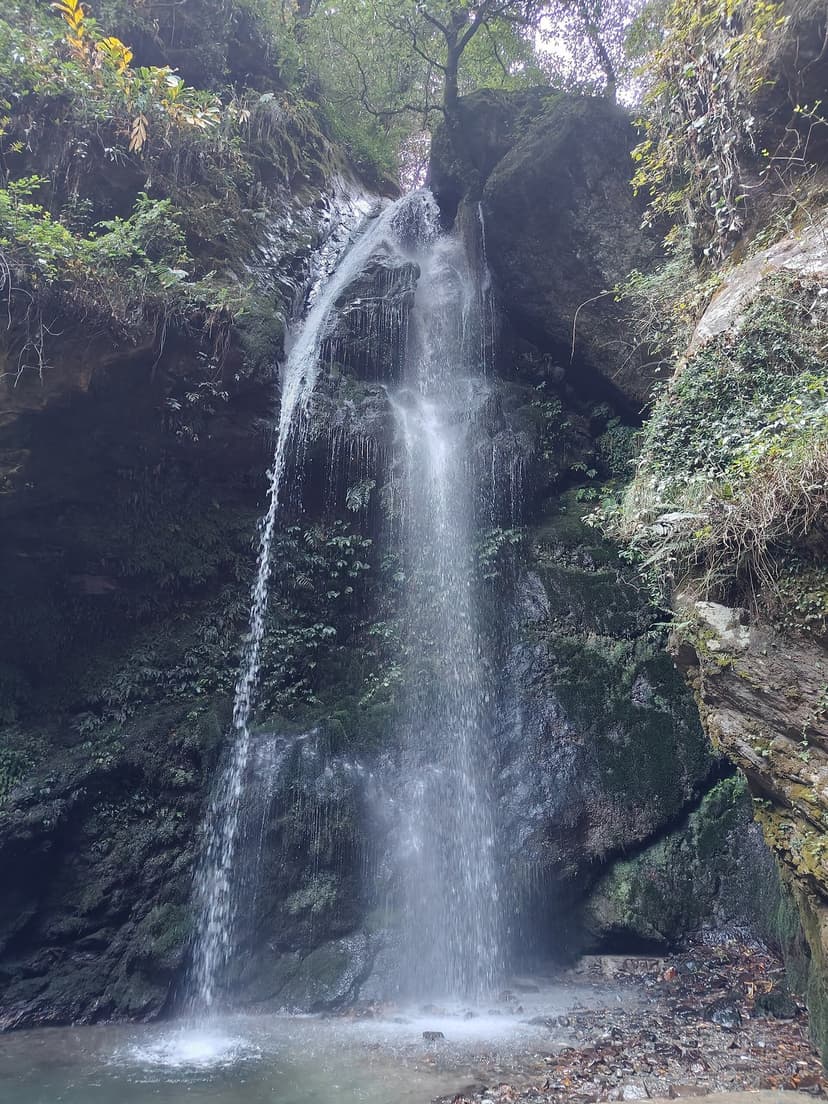
The Jibhi waterfall, a ten-minute walk from the main road, is loud enough to drown out the WhatsApp notifications you promised yourself you would ignore. Photo: Wikimedia Commons, CC BY-SA 4.0.
Things to do when you get restless
You will get restless on day two. Everyone does. Here is what actually exists.
Trout fishing (Fishing license: ₹300/day/rod, March-October, not during monsoons). The Tirthan is one of five HP rivers where brown and rainbow trout survive, and the state declared it an Angling Reserve, which means hydropower projects are banned on this river. Your homestay owner will arrange the rod and the licence. Catch-and-release is the norm, though nobody is going to stop you if you want to cook one but one of proper size 40cm & more. Season closes November through February to let them breed.
GHNP ecozone walks (free, no permit). The buffer zone around the park is open to anyone. Walk in from the Gushaini gate, follow the river trail for two hours, turn back when you get tired. You will hear birds you have never heard before. I counted seven different calls in the first kilometre and identified exactly zero of them.
Serolsar Lake trek (free, 5 km one way from Jalori Pass, easy). Drive to Jalori Pass at 3,120 m, then walk through a flat deodar forest to a green alpine lake with a small temple of Budhi Nagin at the shore. The whole thing takes four hours return and the only difficult part is persuading yourself to leave.
Chhoie Waterfall (free, 2 hours return from Nagini village, easy). Short forest walk to a waterfall that is somehow better in person than in every photo you have seen of it.
Raghupur Fort / 360 Point (free, 3-4 hours return, moderate). Above Jalori Pass. Panoramic views of snow peaks in every direction. Go early.
Homestay cooking class Ask your host if you can watch them make siddu or aktori. Most of them will say yes and then hand you a rolling pin.
| Category | Cost (INR) | Note |
|---|---|---|
| Trout fishing licence | ₹300/day/rod | March-October, arranged by homestay |
| GHNP ecozone walk | Free | No permit needed for buffer zone |
| GHNP core zone day trek | ₹100 Indian / ₹400 foreigner | Plus guide ₹2,000-3,000/day (mandatory) |
| Serolsar Lake trek | Free | 5 km from Jalori Pass, 4 hrs return |
| Chhoie Waterfall trek | Free | 2 hrs return from Nagini |
| Multi-day GHNP trek | ₹2,000-3,000/day guide fee | 3-7 days, serious trekking |
| Cooking class | Free | Ask your homestay host |
| Total | Varies |
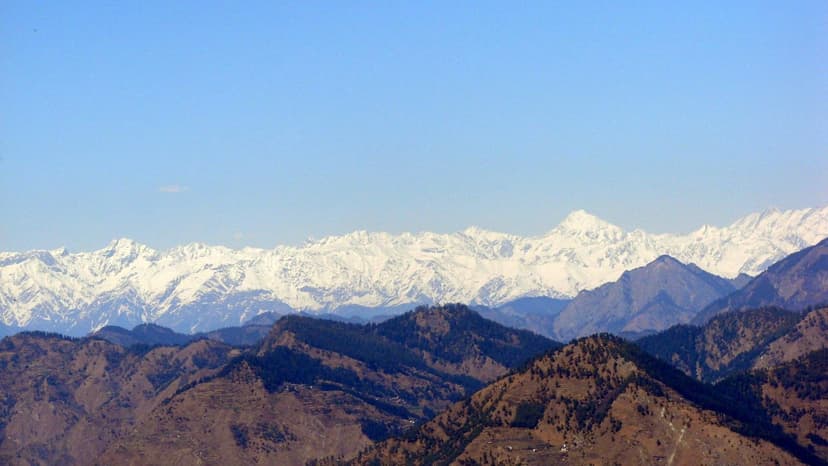
The view from Jalori Pass at 3,120 metres, where you can see the snow line and the tree line arguing about whose territory this is. Photo: Wikimedia Commons, CC BY 2.0.
GHNP: the park nobody talks about
India has over a hundred national parks. Exactly one of them is a UNESCO World Heritage Site. It is not Jim Corbett. It is not Kaziranga. It is this one, right here, behind Gushaini, and almost nobody outside Kullu district knows it exists.
The Great Himalayan National Park covers 754 square kilometres of core zone. The full UNESCO world heritage property is 905 sq km, and total GHNP area including ecozone is 1171 sq km. The ecozone is free to enter, no permit, no registration. Just walk in from the Gushaini gate and follow the river. The core zone costs ₹100 per day for Indians, ₹400 for foreigners (student discounts available), and requires a registered guide at ₹2,000-3,000 per day.
What lives in there: 31 mammal species including snow leopard, Himalayan brown bear, musk deer, and Himalayan tahr. Over 200 bird species, among them the Western Horned Tragopan (the state bird of Himachal Pradesh, so rare most Himachalis have never seen one) and the Himalayan Monal, whose feathers look like they were designed by someone on a deadline who used every colour in the box. 832 plant species. Camera trap citizen science programmes you can actually join through Himalayan Ecotourism, a community-owned operator out of Tirthan.
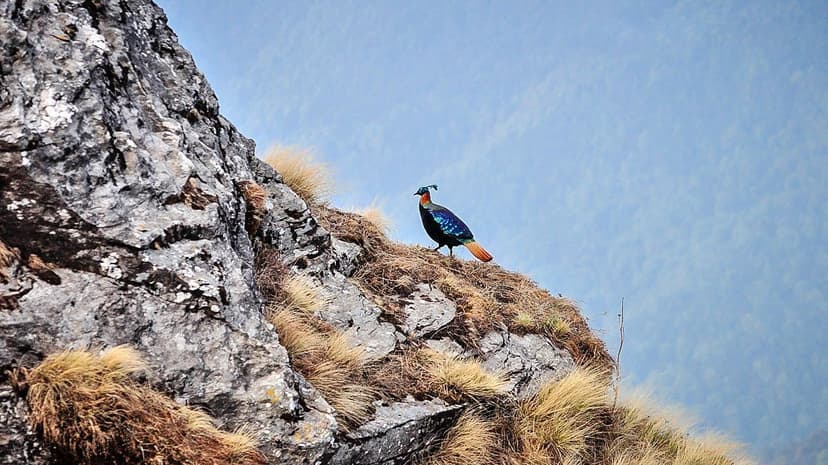
The Himalayan Monal is one of the most absurdly colourful things you will ever see at 3,000 metres, assuming you see one at all. Photo: Wikimedia Commons, CC BY 2.0.
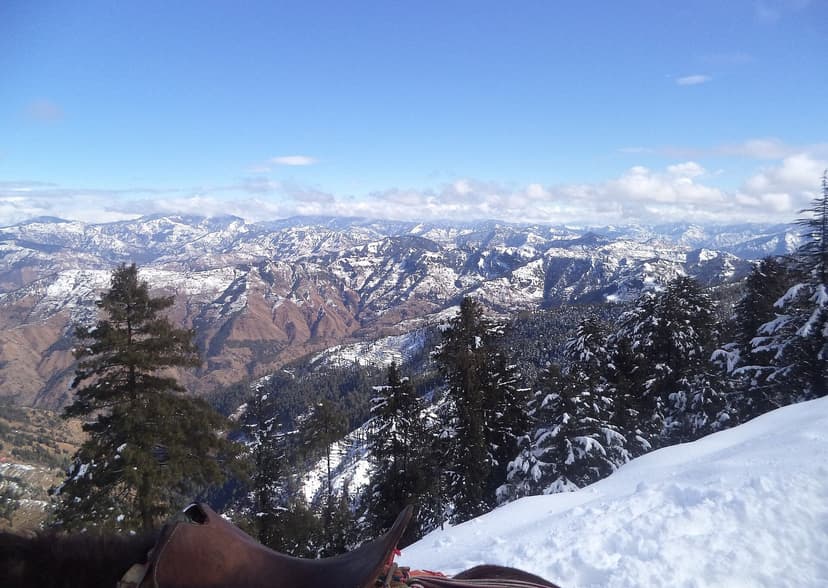
GHNP in winter, when the core zone closes to trekkers but the ecozone trails near Gushaini stay open for day walks. Photo: Wikimedia Commons, CC BY-SA 4.0.
Where to sleep: the homestay guide
Skip the word "hotel." Tirthan runs on homestays, and the best ones are run by families who will feed you four meals a day and get offended if you try to pay separately for tea.
Raju Bharti Guest House, Gushaini. The original. Eight rooms across two cottages, accessed via a rope bridge (charkhi pul) over the Tirthan River. All-inclusive with three meals. Phone: 9459833124 / 9625211848. No online booking, which is the point. Best season April to October (Monsoons can be risky).
Luxmi Homestay, Gushaini. From ₹905/night on JustDial, rated 4.8 stars across 262 reviews. Ranked number one specialty lodging in Gushaini on TripAdvisor. Consistent reviews about the food and the owner's willingness to arrange everything from fishing rods to GHNP guides.
The VOID, riverside. From ₹3,000/night on Booking.com. The upmarket option. Riverside cottages, the kind of place where the bathroom has actual hot water and the bedsheets are not polyester. Book directly if you can find their number.
Hostel La Vie, Jibhi. Dorm beds ₹500-800. Named by multiple Reddit travellers as the budget pick for solo backpackers. More social than the Gushaini homestays.
Zostel, Shoja. Backpacker hostel chain, reliable but corporate. Good if you want a known quantity.
One piece of real advice: book directly. Call the phone number, talk to the owner, negotiate a rate that includes meals. OTA prices are 30-50% higher and the owner gets less. Everyone wins when you call.
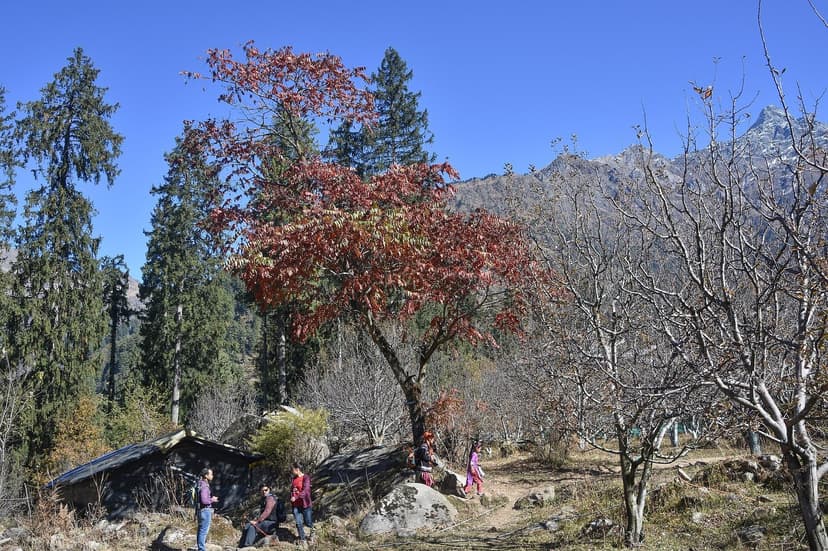
The homestays around Gushaini sit between apple orchards and deodar forest, which means October stays come with a soundtrack of apples hitting the tin roof at night. Photo: Wikimedia Commons, CC BY-SA 4.0.
When to go (and when to stay home)
March to June: Wildflowers, birding season, GHNP at its best. Rhododendrons bloom red across the Seraj hills in March and April. Jalori Pass opens by late March most years. This is the window.
October to November: Autumn colours. Apple harvest. Clear skies, cold nights, perfect walking weather. The valley turns copper and gold and the light in the mornings is the kind photographers lie about getting.
December to February: Cold. Properly cold. Jalori Pass closes, Shoja gets snow, but Gushaini and Jibhi stay accessible. Bring layers. The homestays have bukhari stoves and blankets that weigh as much as you do. Cozy if you are prepared, miserable if you are not.
July to September: No. Monsoon means landslides, road closures, and leeches. The Tirthan floods brown and the fishing season closes. Come back later.
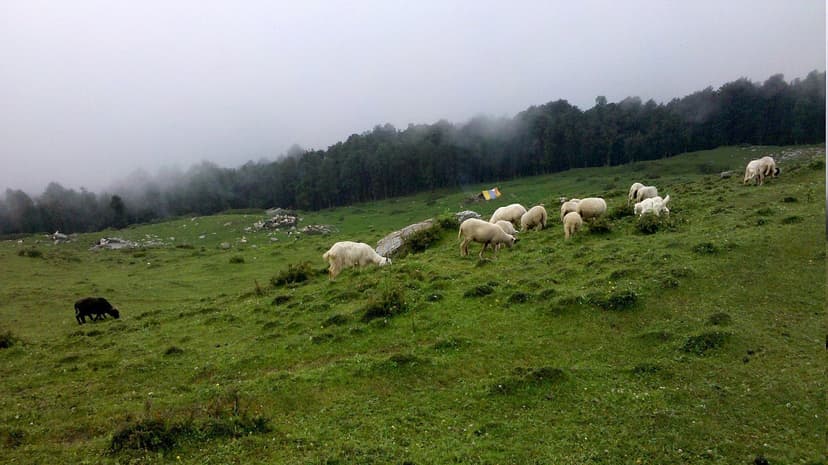
The meadows above Shoja in the pre-monsoon mist, where the sheep have better views than most four-star hotels in Shimla. Photo: Wikimedia Commons, CC BY-SA 3.0.
What it actually costs
| Category | Cost (INR) | Note |
|---|---|---|
| Budget (5 days) | ~₹8,000-10,000 | HRTC bus, ₹905 homestay, shared taxi, free treks, dhaba food |
| Comfortable (5 days) | ₹15,000-20,000 | Mid-range homestay ₹2,000-3,000/night, some private taxi, GHNP day trek |
| Premium (5 days) | ₹25,000+ | Riverside cottage, private transport, guided multi-day GHNP trek, fishing |
| Total | ₹8,000-25,000+ for 5 days |
The reason the budget tier is so low: most of the best things in Tirthan are free. The river is free. The ecozone walks are free. Serolsar Lake is free. The cooking class is free. The silence is free. You are basically paying for a bed, three meals, and a bus ticket.
Want a local sanity-check on your Tirthan route? Email us your draft itinerary. We will tell you which homestay is worth the detour, which trail is washed out this week, and whether Jalori Pass is actually open yet.
The workation angle
This section exists because twelve people a month Google "tirthan valley workation wifi" and nobody has written a real answer yet.
BSNL works. Jio is patchy. Airtel is worse. If your work requires a video call, Jibhi is your better bet, specifically the cafes near the main road. Gushaini homestays have WiFi but it is the kind of WiFi where you learn to schedule your uploads for 6 a.m.
u/Which_Ad_2493 on r/india_tourism: "Growing remote work community. You can find basic homestays with WiFi, 15-20K/month with meals." That is ₹500-650 a day, all in, for a room in the Himalayas with a river outside. Your WeWork membership costs more than that.
Bring a portable WiFi dongle as backup. Download everything offline before you leave Delhi. And accept that the first two days will be about fighting your inbox and the third day will be about giving up and reading a book by the river instead.
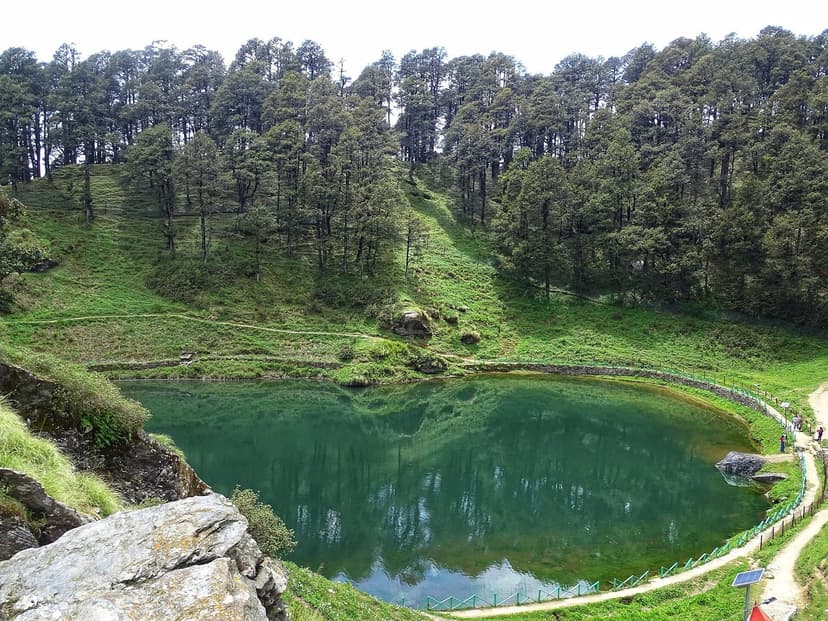
Serolsar Lake at 3,100 metres, where the temple to Budhi Nagin sits at the shore and the deodar forest wraps the water like a blanket nobody asked for. Photo: Wikimedia Commons, CC BY-SA 4.0.
A note on the trout
Conservation matters here more than most places. The Tirthan's trout population exists because of a 1975 decision by then-CM Dr. Y.S. Parmar and decades of advocacy by former MLA Dile Ram Shabab. The river is one of five in HP where brown and rainbow trout (bhuri trout and rainbow trout, in Hindi) still breed naturally. Hydropower is banned. The fishing season closes for four months every year to protect spawning.
The threat is poaching. Local environmentalists have documented illegal fishing using electric current, nets, and explosives (karant, jaal aur visfhotak). If you see it, report it to the Fisheries Department or your homestay owner. The trout are why this valley stays clean. Lose the trout, lose the river, lose the valley.
The trout fishing season closes November through February. Fishing without a licence (₹100/day per rod) is illegal. Catch-and-release is encouraged. If you see poaching, contact HP Fisheries Department.
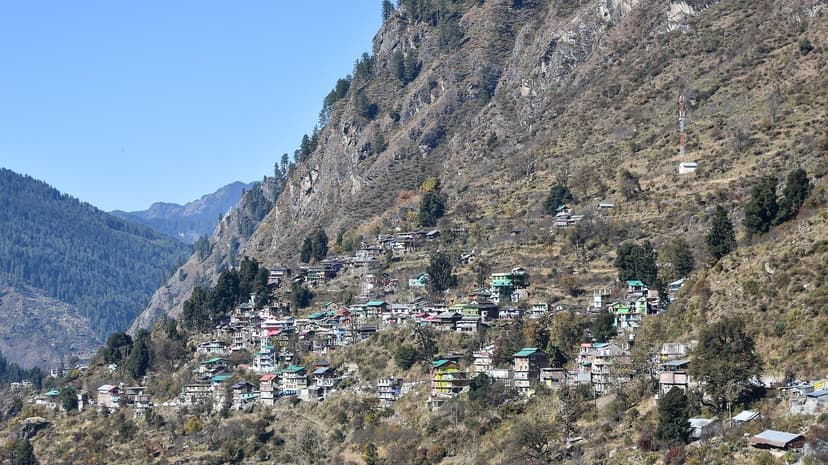
Villages in the Kullu district grow vertically, stacked up the mountainside like books on a shelf that someone keeps adding to. Photo: Wikimedia Commons, CC BY-SA 4.0.
The questions you actually have
Is Tirthan Valley better than Kasol?
For nature lovers, families, and anyone tired of the party scene, yes. Tirthan is quieter, safer (zero drug scene), and has Indias only UNESCO national park. Kasol suits backpackers wanting cafe culture and nightlife. Reddit traveller u/wilpoop: Tirthan is much better, secluded, much less people.
How do I reach Tirthan Valley from Delhi?
HRTC bus Delhi to Aut (490 km, 12-14 hrs, ₹800-1,500), then shared taxi to Gushaini (₹200-300, 45 min). Total: under ₹2,000. Alternative: fly to Bhuntar + 2hr taxi. Scenic option: drive from Shimla via Jalori Pass (174 km).
What is the best homestay in Tirthan Valley?
Budget: Luxmi Homestay (from ₹905, 4.8 stars, number one on TripAdvisor Gushaini). All-inclusive: Raju Bharti Guest House (phone only, rope bridge access). Riverside luxury: The VOID (from ₹3,000). Solo backpackers: Hostel La Vie in Jibhi (₹500-800 dorm).
What is the GHNP entry fee?
Ecozone (buffer area): free, no permit. Core zone: ₹100/day Indian, ₹400/day foreigner. Multi-day treks need a registered guide (₹2,000-3,000/day). The GHNP is Indias only national park with UNESCO World Heritage status.
Is trout fishing available in Tirthan?
Yes. Brown and rainbow trout in the Tirthan River. Licence: ₹100/day per rod, arranged by your homestay. Season: March to October (closed Nov-Feb for breeding). The Tirthan is a protected Angling Reserve with hydropower banned.
Is Tirthan Valley safe for couples?
Very safe. Family-oriented destination with zero party or drug culture. Riverside homestays offer privacy. GHNP walks make good day trips together. Best months for couples: March-May (wildflowers) or October-November (autumn colours, clear skies).
What is the best time to visit Tirthan Valley?
March-June for wildflowers, birding, and GHNP at its best. October-November for autumn colours and apple harvest. December-February for cozy winter (Jalori Pass may close). Avoid July-September completely (monsoon, landslides, road closures).
Can I work remotely from Tirthan?
Growing possibility. BSNL works, Jio is patchy. Jibhi has better connectivity than Gushaini. Budget: ₹15,000-20,000/month for room with WiFi and meals. Bring a portable WiFi dongle as backup.
What is the difference between Tirthan and Jibhi?
Jibhi is part of the Tirthan Valley system but has its own character: more cafes, hostels, and a backpacker vibe. Gushaini is quieter, more homestay-focused, and closer to GHNP. Only 20 km apart. Jibhi suits younger travellers, Tirthan suits nature lovers and families.
How much does a Tirthan trip cost?
Budget 5-day trip: ₹8,000-10,000 (HRTC bus, ₹905 homestay, free treks). Comfortable: ₹15,000-20,000 (mid-range homestay, some taxi, GHNP day trek). Premium: ₹25,000+ (riverside cottage, private transport, guided multi-day GHNP trek).
What should I pack for Tirthan?
Layers (15-25C day, 5-10C night in shoulder season). Rain jacket. Walking shoes (river trails are rocky). Sunscreen, power bank, offline maps. NO suitcase, backpack only. Carry a book.
Is there a direct bus from Delhi to Tirthan?
No direct bus to Gushaini. Take any Delhi-Manali or Delhi-Kullu HRTC bus and get off at Aut (ask the conductor). From Aut, shared taxi to Gushaini (₹200-300) or private (₹1,000-1,500). The Aut stop saves you a 100 km backtrack from Kullu.
Planning your Tirthan trip and want real answers, not SEO filler? Drop us an email. We will tell you which homestay to call, whether Jalori is open this week, and what to pack based on the actual forecast.
Sources: GHNP Official (fees and rules) · Wikipedia (GHNP UNESCO data) · The Tirthan Valley (trout fishing) · Discover with Dheeraj (transport, activities) · Himalayan Ecotourism (community GHNP operator) · JustDial (Luxmi Homestay pricing) · TripAdvisor (Luxmi #1 Gushaini) · Booking.com (The VOID pricing) · HP Fisheries Department (trout conservation, Angling Reserve status) · Hindi sources: abdnews.online (2026 trout season), Vikaspedia Hindi (trout species), Tripoto Hindi (Raju Bharti review).