Apple Season in Himachal Pradesh: The Kinnaur & Shimla Harvest Guide (2026)
Every September, the roads into Kinnaur slow to a crawl — not because of landslides, but because of apples. Tata 407s stacked with hand-labeled cartons. "Negi Orchards, Kalpa" written in permanent marker on every box. The trucks carry 400, sometimes 600 boxes each, and during peak harvest weeks something like 200-300 of them leave the district daily.[1] NH-5 turns into a single-lane conveyor belt between Rampur and Reckong Peo.
Here is a thing that annoys me. Go to any sabzi mandi in Delhi. The boxes say "Shimla Apple" in red paint. BigBasket calls them "Premium Shimla." They are from Kinnaur. Not all of them, but a lot of them. We produce about 12.86% of HP's apple crop now, and that number has been climbing for years while Shimla's lower orchards struggle with the heat.[2] "Shimla apple" is a brand name. It does not mean what people think it means.
I grew up watching this. My neighbors in Kalpa stacking boxes until their porches disappeared entirely. Kids sorting apples after homework, smallest on the left, biggest on the right, everyone knowing the grades by feel. My grandmother wrapped each Royal in tissue paper like she was packaging glass. September in Kinnaur is not a month. It is a verb. The entire district pivots on ten weeks, and if you want to understand what this place actually runs on, come during apple season.
Why Kinnaur apples are different
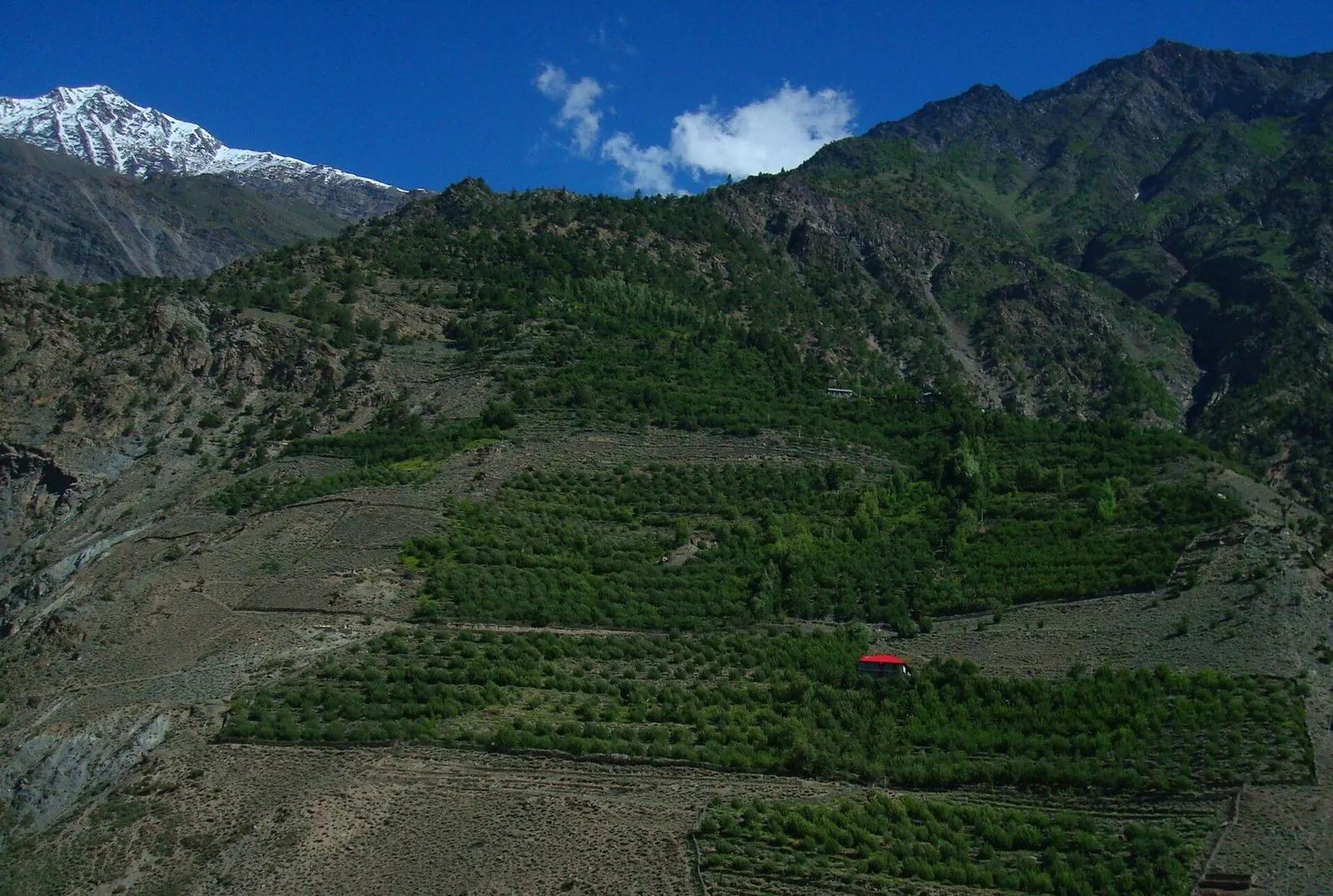
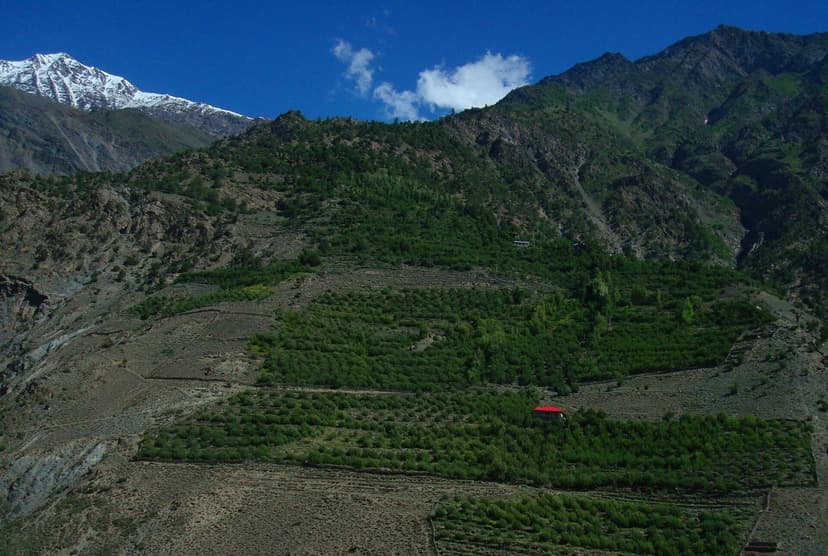
Altitude. That is it. The whole thing. Our orchards sit between 6,000 and 12,500 feet. Shimla's are at 4,000 to 8,000. No amount of branding changes physics.
What the altitude does is give the fruit more time. A Kinnaur apple spends 130 to 150 days on the branch from blossom to harvest. Shimla gets 100 to 120. Those extra weeks matter. The fruit builds more sugar, gets firmer, develops a deeper color. Wine people will recognize this. High-altitude vineyards in Mendoza or the Okanagan produce different grapes than valley floors. Same principle here: the wider the gap between daytime heat and nighttime cold, the more sugar the fruit stores as a defense against frost.[3] Kinnaur has enormous day-night swings. The apples taste like it.
Then there is the rain problem, which Kinnaur does not have. We sit in a rain shadow. Reckong Peo gets maybe 300-400 mm of rain a year. Shimla gets 1,500. Monsoon hits Shimla like a wall. Scab, rot, mildew, every year, and they spray for it. Our orchards stay dry. Less fungus, less spraying, and honestly, a cleaner bite when you eat the fruit.
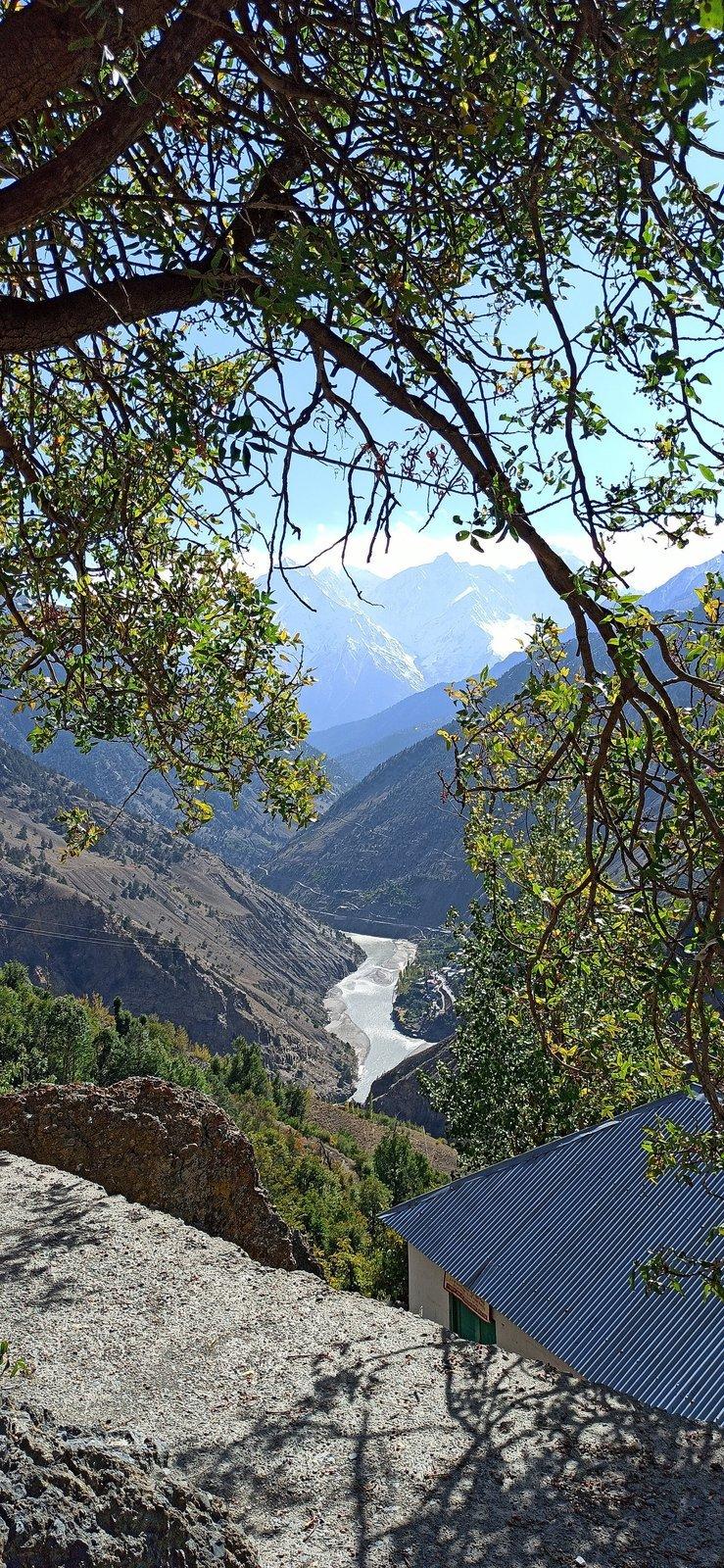
The water that does reach the trees comes from glaciers. Baspa, Tidong, Ropa, all tributaries of the Sutlej, all fed by snowmelt. Farmers channel this water through kuhls that have been running for as long as anyone remembers. Glacial water is cold and heavy with minerals. Calcium, magnesium. The trees seem to like it. You can feel the difference in how firm the flesh is compared to a Shimla apple grown on rainwater.[4]
None of this would exist without a 22-year-old from Philadelphia. Samuel Stokes showed up in India in 1904, a Quaker missionary with ideas. He married a local woman, eventually converted to Hinduism, changed his name to Satyanand, and somewhere in there started planting apple saplings from Stark Brothers Nursery in Missouri. Kotgarh, 80 km from Shimla, 1916. Those trees took. The varieties crept upward into Kinnaur over the next few decades. Today the descendants of those original Stark Brothers rootstock produce fruit that fetches double what anything at lower altitude commands.[5]
The variety guide
Eight apple varieties dominate Kinnaur orchards. Each has a different harvest window, price range, and personality.
- Red Delicious
- Aug-Sep, Rs 150-200/kg, the workhorse variety, 40% of total production
- Royal Delicious
- Sep-Oct, Rs 250-350/kg, premium grade, tissue-wrapped, the one that fetches export prices
- Golden Delicious
- Sep-Oct, Rs 200-300/kg, yellow skin, mild sweetness, good for baking
- Scarlet Spur
- Sep, Rs 180-250/kg, deep red color, crunchy, gaining popularity
- Granny Smith
- Oct, Rs 150-200/kg, tart green, rare in Kinnaur, mostly Kotgarh
- Fuji
- Oct, Rs 200-280/kg, newcomer variety, sweet and dense, requires less chilling hours
- Gala
- Aug-Sep, Rs 150-200/kg, early harvest, climate-resilient, replacing Royal in some orchards
- Rich-a-Red
- Sep-Oct, Rs 200-280/kg, sport of Red Delicious, darker skin, better shelf life
Royal Delicious is the king of Kinnaur apples. It commands the highest price, gets individually wrapped in tissue paper, and is the variety that buyers from Delhi, Chandigarh, and export markets specifically ask for. A perfect Royal has a deep crimson blush over a yellow-green base, five pronounced bumps on the bottom, and a sweetness that hits immediately without the mealy texture of lower-altitude Reds.
But Royal is declining. This is the thing most apple tourism articles skip. Royal Delicious requires 1,200-1,500 chilling hours (hours below 7°C) to fruit properly. As winters warm, even Kinnaur's higher orchards are falling short of that threshold in some years. The 2024 season saw a 15% drop in Royal yields compared to the five-year average.[6] Farmers are hedging. Gala needs only 500-700 chilling hours. Scarlet Spur needs 800. Fuji, introduced from Japan in the early 2000s, handles warmth better than any traditional variety and produces dense, sweet fruit that stores well. In 10 years, the varietal mix in Kinnaur will look very different.
Golden Delicious holds a sentimental place. Samuel Stokes reportedly sent a crate of Golden Delicious apples to his mother in Philadelphia as a Christmas gift in the 1920s. Whether the story is precisely true or simply well-told, Golden remains a favorite for local cooking. Kinnauri families stew it with jaggery, or slice it into siddu dough.
Two seasons, one orchard
Most travelers think apple season means harvest. It does not. There are two distinct seasons, and they offer completely different trips.
Blossom season runs from mid-April through late May. The orchards turn white and pink. Branches that were bare sticks in March suddenly look like they were decorated for a wedding. This is the quiet season. Few tourists come specifically for blossoms, which means you get Kinnaur without the September truck traffic. The weather is mild, 12-22°C during the day, and the skies are clear before monsoon clouds build up in June. Photographers who know what they are doing come during blossom, not harvest.
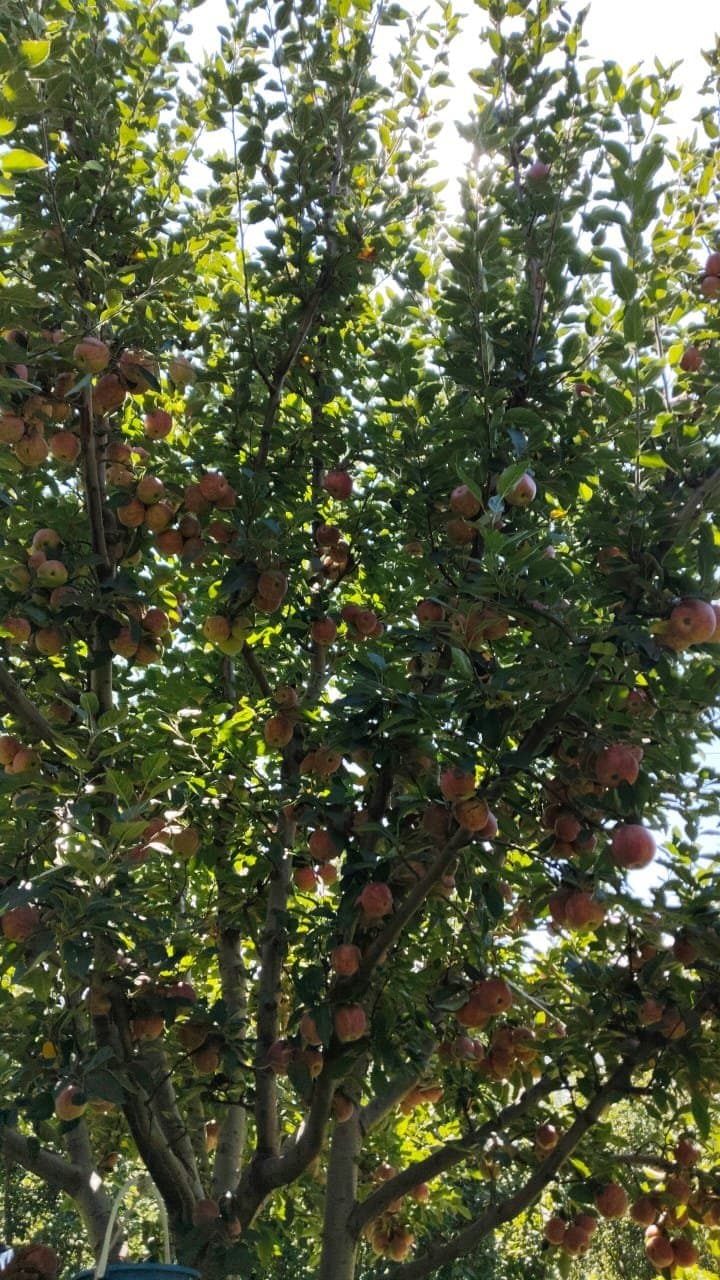
Harvest season runs from mid-August through October. This is the main event. Branches hang so low with fruit that farmers prop them up with wooden poles called thambas. Everyone works. The apple mandis in Reckong Peo and Rampur operate from dawn to dark. You can smell apples from 50 meters away. The air has a specific sweetness to it that I have never found anywhere else.
September is the month. Post-monsoon skies are clear. Temperatures sit between 10 and 20°C. The main varieties (Red Delicious, Royal, Golden) are all coming off the trees. The orchards are at peak activity. If you can only visit once, September is the answer.
October brings the late varieties. Fuji and Granny Smith ripen. The light turns golden as the sun drops lower. Poplar and walnut trees go yellow. The orchards thin out as the early varieties finish. October is quieter than September but more photogenic.
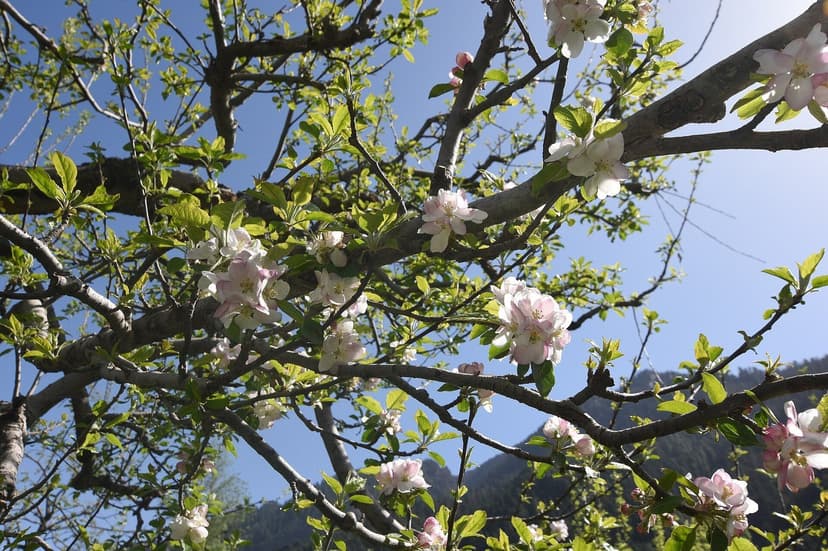
- April-May: Blossom Season: Orchards in full flower, clear pre-monsoon skies, 12-22°C, few tourists, best for photography and quiet walks through villages
- June-July: Monsoon and Growth: Roads can close due to landslides, fruit is small and green on branches, not a good time to visit for apples
- August: Early Harvest: Gala and early Red Delicious start coming off trees, orchards getting busy, some rain still possible
- September: Peak Harvest: The main month, Royal and Red Delicious at peak, clear skies 10-20°C, apple mandis running full speed, truck traffic on NH-5
- October: Late Harvest and Autumn: Fuji and Granny Smith ripen, golden light, autumn foliage, orchards winding down, cooler 5-15°C
Kinnaur vs Shimla: the honest comparison
People treat "Himachali apples" as one thing. They are not. Kinnaur and Shimla apples grow in different climates, at different altitudes, and arrive at market weeks apart. Here is how they actually compare.
| Category | Kinnaur Apples | Shimla Apples |
|---|---|---|
| Altitude range | 6,000-12,500 ft | 4,000-8,000 ft |
| Harvest window | Mid-Aug to late Oct | July to mid-Sep |
| Growing days | 130-150 days | 100-120 days |
| Sugar content | Higher (more diurnal variation) | Moderate |
| Shelf life | Longer (drier climate, firmer fruit) | Shorter (more moisture exposure) |
| Retail price (Delhi) | Rs 250-400/kg | Rs 150-250/kg |
| Production share (HP) | 12.86% and rising | ~60% but declining |
| Tourist infrastructure | Basic, few organized stays | Well-developed, many options |
| Best for | Serious apple interest, off-season travel | Convenient access, family trips |
The production share tells you where this is heading. Twenty years ago, Kinnaur was 2.5% of HP's output. Now 12.86%. Shimla's lower orchards keep failing, and the belt keeps creeping uphill.[2] Nobody in Kinnaur is celebrating that. We know the same heat is coming for us eventually.
Practically speaking, Shimla is set up for tourists. Hotels at every price, organized tours, a cafe that sells apple pie with "organic" in the name. Kinnaur is not. We have homestays and families who will let you walk through their orchards if you ask and are not weird about it. No tickets. No printed brochures. That is either exactly what you want or exactly what you do not want.
On taste: yes, a good Royal from Kinnaur is noticeably better than a Shimla Red Delicious. Sweeter. Firmer. A crunch that sounds different. But an average apple from either place tastes like a good apple. The premium you pay is part quality, part scarcity, part the fact that 235 km of bad road adds mystique to anything. Our Kinnaur Valley guide covers the broader trip planning.
Apple harvesting season in Himachal Pradesh, belt by belt
Himachal does not have one apple season. It has several, and they open in sequence as you climb. The lower orchards around Kotgarh and Thanedar pick first, from the back half of July and through August. The Pabbar valley belt of Kotkhai, Jubbal and Rohru follows through August and September. Kinnaur, higher and drier, runs latest, with September the busiest month and late varieties coming off into October. Down in the Kullu valley, some newer orchards start as early as mid-July. Chase it right and you can almost follow the harvest uphill, week by week.
Here is roughly when each belt is working, pieced together from horticulture reporting and orchard-town sources. Treat the windows as guidance, not a timetable: a warm spring or a late monsoon shifts them a week or two in either direction.
| Belt / valley | Harvest window | Why it lands then |
|---|---|---|
| Kotgarh, Thanedar, Narkanda (Shimla district) | Late July to August | HP's oldest and lowest apple belt, roughly 1,800 to 2,100 m, so it ripens first. |
| Kotkhai, Jubbal, Rohru: the Pabbar valley (Shimla district) | August into September | Sometimes called the golden apple belt, and still the state's biggest-producing cluster. |
| Kinnaur (Sutlej and Baspa valleys) | Mid-August to late October | Orchards sit higher and drier, about 1,800 to 3,000 m. September is the peak; Fuji and Granny Smith run into October. |
| Kullu valley (an emerging belt) | Mid-July to early October | A newer belt filling in as warmer weather pushes viable orchards uphill. |
So if a search for the "apple season in Himachal" landed you here expecting Shimla, that is the Kotgarh and Pabbar belt above, and it is a few weeks ahead of Kinnaur. For a belt-by-belt look at where to actually stay and pick fruit yourself, see our guide to farm stays and apple picking across Himachal.
Where to visit: six orchard locations
Kalpa
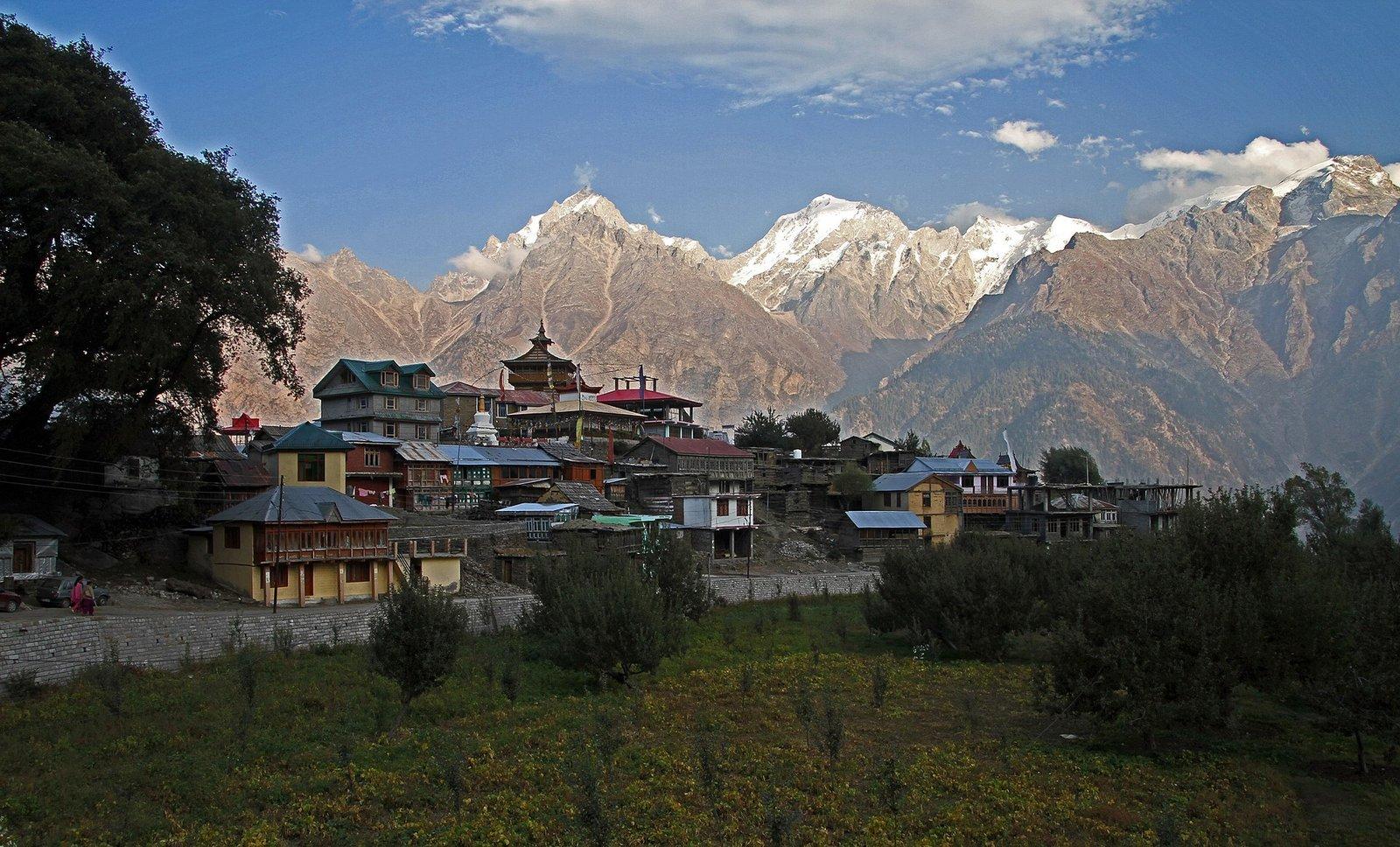
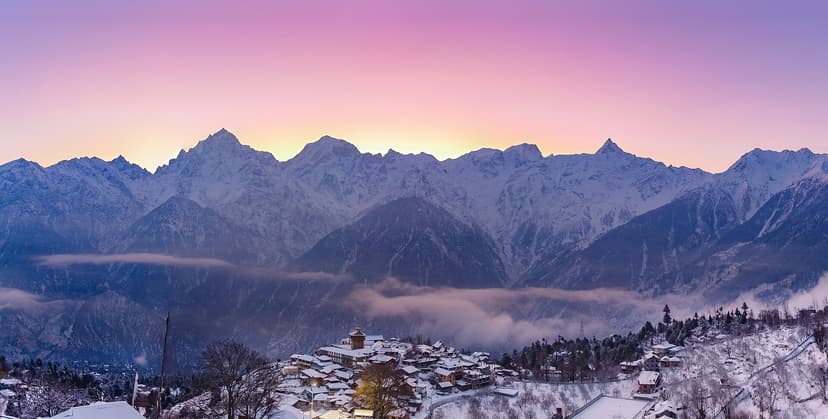
Kalpa is where I grew up, so I am biased. But the reason it works for apple tourism is simple geography. The village sits at 2,960 m on a south-facing slope. Orchards surround it on three sides. You walk out of your guesthouse and you are in an orchard. No taxi needed, no guide needed. The Kinner Kailash range (6,050 m) fills the skyline to the east. In September, loaded apple branches frame that view. It is the most photographed composition in Kinnaur for a reason.
Most families in Kalpa own orchards. If you are staying at a homestay, your host almost certainly grows apples. Ask if you can watch the picking. Most people will say yes. Some will put you to work sorting. The morning light on Kinner Kailash, around 6:30 AM in September, turns the peaks pink while the orchards below are still in blue shadow. Set an alarm.
Sangla
Sangla sits in the Baspa Valley at about 2,680 m. The valley is wider here than anywhere else in Kinnaur, which means larger orchards with more commercial operations. Apple Orchard Farm and Camping is the only organized apple tourism setup in the district. They have 13 tents and 2 rooms, and during harvest season guests can pick apples, watch the sorting and packing process, and buy directly from the farm. The Baspa River runs along the valley floor, and Kamru Fort is a 3 km day trip with views of the entire valley.
Chitkul
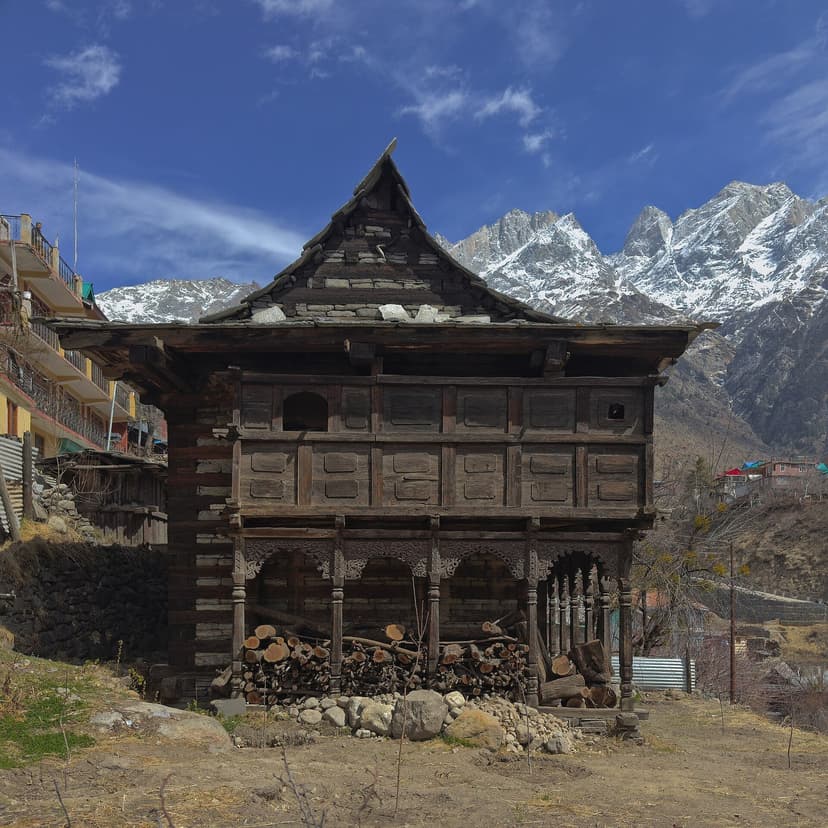
Chitkul at 3,450 m is the last inhabited village before the Indo-Tibetan border. The orchards here grow at extreme altitude. Fewer varieties succeed this high. Red Delicious and some hardy local cultivars are the main crops. The trees are smaller, the fruit is smaller, but the flavor concentration is intense. The village itself is tiny. Maybe 50 houses. A ITBP checkpost marks the end of the road. Beyond it, nothing but mountains and military posts for 80 km to the border.
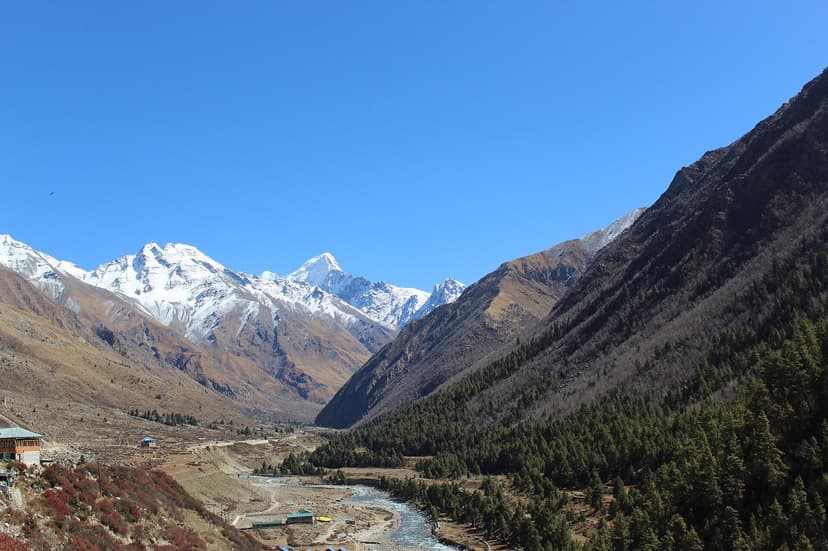
Rakcham
Rakcham sits between Sangla and Chitkul on the Baspa Valley road, at about 3,100 m. It has no organized tourism infrastructure. No tents, no farm stays, no Instagram handles. What it has is families who grow apples and are happy to let visitors walk through their orchards. The village is small enough that you can cover all of it on foot in an hour. The advantage of Rakcham is that it feels like Kinnaur did 15 years ago, before Chitkul became a destination name.
Kotgarh and Thanedar
Kotgarh is the origin story. This is where Samuel Stokes planted his first commercial apple orchard in 1916. His descendants still live here. The orchards in Kotgarh and neighboring Thanedar are lower altitude (about 2,100 m) than Kinnaur proper, and technically fall in Shimla district. But the connection to Kinnaur apple history makes them worth including. Christ Church in Kotgarh, built in 1923, sits among apple trees. Thanedar, on the old Hindustan-Tibet road, offers organized orchard walks during harvest. These towns are only 80 km from Shimla, making them accessible for a day trip if Kinnaur feels too far.
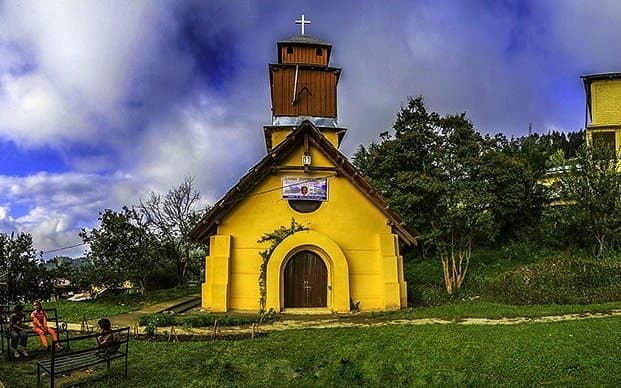
Nako
Nako is upper Kinnaur, at 3,662 m, on the road toward Spiti. The climate here is almost Tibetan. Dry, cold, stark. Apple orchards in Nako are small and late-season. The harvest runs into November some years. Nako Lake, considered sacred, reflects the monastery above it on still mornings. If you are driving the Spiti circuit, Nako is a natural stop. The apples here are a bonus, not the main draw, but they are worth tasting. The altitude gives them a tartness that lower orchards cannot replicate.
Planning an apple season trip to Kinnaur? Email us at hello@refuje.com for route advice, homestay contacts, and harvest timing updates. We grew up here.
The business of apples
The price of a Kinnaur apple multiplies roughly six times between the tree and your kitchen counter in Delhi. Here is where the money goes.
| Stage | Price (Rs/kg) | Notes |
|---|---|---|
| Farmgate price (orchard) | 30-60 | What the farmer gets from a trader or HPMC agent |
| HPMC procurement price | 50-80 | Government rate across 274 collection centres in HP |
| Mandi wholesale (Azadpur, Delhi) | 83-100 | After transport, commission, and handling fees |
| Transport markup | 30-50 | Truck freight Kinnaur to Delhi, 700 km, 18-24 hours |
| Metro retail (Delhi fruit shops) | 200-400 | Final consumer price varies by locality and season week |
| Online retail (BigBasket, Zepto) | 286-350 | Premium packaging and delivery markup included |
| Direct from farm (shipped) | 250-300 | Farmers selling via WhatsApp and Instagram, 5 kg minimum |
HPMC (Himachal Pradesh Horticultural Produce Marketing and Processing Corporation) is the government body that handles apple procurement. They operate 274 collection centres across the state and grade apples into six categories: Extra Large, Super, A-grade, B-grade, C-grade, and Pitu (undersized or blemished). Everything ships in standardized 20 kg cartons. The grading is done visually by hand. An experienced grader can sort 200 kg per hour.[7]
The 20 kg apple box is the basic unit of Kinnaur's economy. Families label their boxes by hand. The branding is a matter of pride. Some families have used the same box design for three generations. "Negi Orchards Est. 1962" or "Thakur Premium Kalpa" in red and blue marker. You see these boxes stacked at every bus stop, chai stall, and HPMC depot from August through November.
In 2025, Himachal produced approximately 1.09 crore apple boxes (about 218,000 metric tonnes). HPMC procured around 55,000 MT of that total.[8] The rest went through private traders and mandis. The gap between HPMC procurement price (Rs 50-80/kg) and private trader prices (sometimes Rs 30-40/kg) is a constant source of tension. Farmers who can afford to wait sell through HPMC. Those who need immediate cash sell to traders at lower rates.
Two things are changing the business. First, HPMC staff went unpaid for two months in late 2025, which shook farmer confidence in the government procurement system.[9] Second, CA (Controlled Atmosphere) cold storage facilities are being built in Kinnaur for the first time, using geothermal cooling technology suited to the high altitude. If these work as planned, farmers will be able to store fruit and sell in December or January when prices are 40-60% higher than peak harvest. That would change the economics of the entire district.
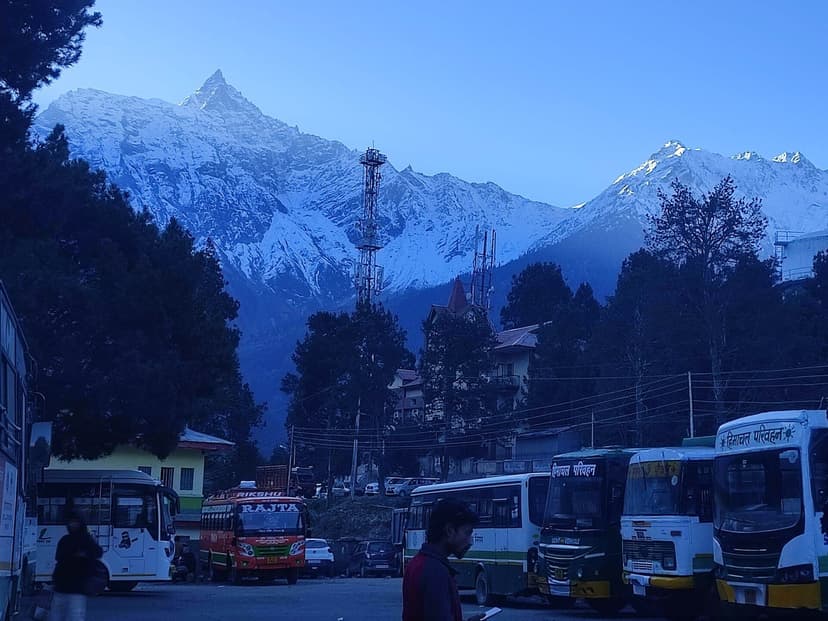
Practical logistics
Getting there
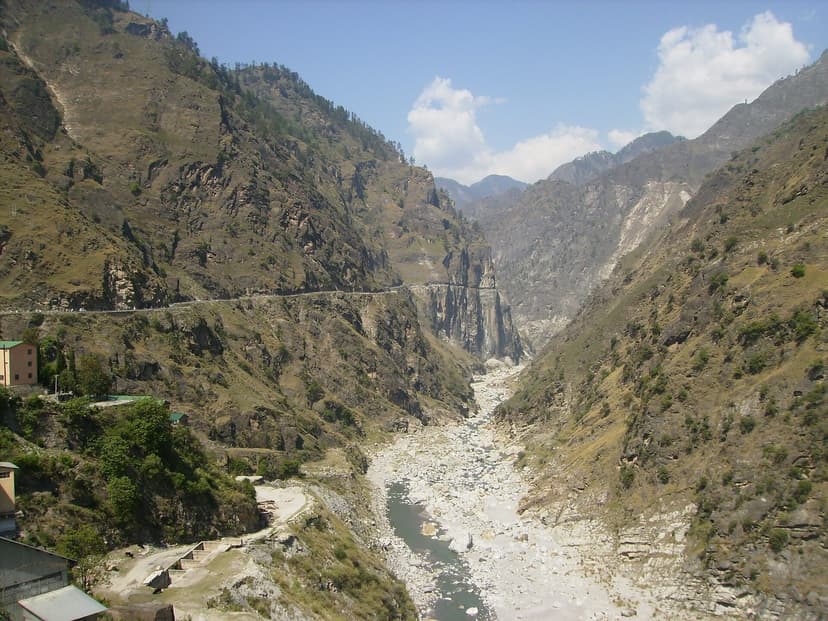
Shimla to Reckong Peo. 235 km. Takes 8 to 10 hours and there is no way around that number. The road follows the Sutlej through gorges, tunnels, and sections where last year's landslide left one lane and a prayer. HRTC runs a daily semi-deluxe from Shimla ISBT, Rs 400-600 depending on the class. The 6 AM departure gets you into Peo by 4 or 5 PM if nothing goes wrong. During apple season, add an hour. Maybe two. Trucks. Check live road status before you leave, and see the permits guide for paperwork.
From Delhi, figure two days. Overnight Volvo to Shimla (Rs 800-1,200), sleep, morning bus onward. Or the Shatabdi to Kalka, then taxi up. No direct flights to Kinnaur. No train either. The district is not set up for people in a hurry, and honestly, if you are in a hurry, apple season is not your trip.
Where to stay
- Kalpa
- Rs 800-3,000/night, homestays and HPTDC Hotel Kinner Kailash
- Sangla
- Rs 1,500-3,500/night, Apple Orchard Farm tents Rs 2,000-2,500
- Chitkul
- Rs 500-2,000/night, basic guesthouses and one HPTDC property
- Rakcham
- Rs 600-1,500/night, homestays only, no hotels
- Reckong Peo
- Rs 600-2,000/night, town hotels, convenient but not scenic
What to bring
Cash. The ATMs in Reckong Peo and Sangla exist, technically, but during harvest the apple economy sucks them dry by Wednesday. I have seen the Peo SBI machine empty for three days straight in September. Bring Rs 5,000-10,000 more than your plan says. Warm clothes for mornings, it drops to 5°C by October. Camera, obviously. And one thing nobody tells you: bring an empty bag. You will buy apples. Everyone does. Carting a 10 kg box onto the HRTC bus home is a Kinnaur rite of passage. BSNL SIM for phone coverage. Jio barely works past Sarahan. Airtel is a rumor.
Five things to know
Do not walk into an orchard and start picking. I know it looks like a postcard. It is someone's livelihood. Ask first. Every family I know will say yes if you ask, and most will hand you a bag and tell you to fill it. The ones near Chitkul have started putting up signs because too many tourists treated the orchards like a buffet. That is embarrassing for all of us.
Buy at the orchard, not the road. The NH-5 stalls between Narkanda and Rampur mark up everything 30 to 50%. A kg of Royal that costs Rs 200 at the farm goes for Rs 300-350 at those stalls. The farmers know this. It irritates them.
Boxes, not backpacks. A bruised apple rots in three days. Farmers sell empty 10 kg cartons for Rs 30-50. Cheap insurance. Pack your apples tight, and they last two weeks at room temperature in Delhi.
If you want harvest chaos, come in September. October is better looking, golden light, the poplars turning yellow. But September has the action. Sorting at dawn, trucks loading all morning, mandi negotiations that get loud after lunch. It is a different Kinnaur from the quiet postcard version.
One more thing. Apple trucks on NH-5 do not care about your schedule. They are slow, wide, and driven by men who have been doing this for twenty years. You will not pass them on the turns. Leave early. By 8 AM the road is a convoy. By noon it is a parking lot. For timing the rest of your HP trip, we have a seasonal guide.
Need help planning your Kinnaur apple trip, or want contacts for orchard homestays? Write to us at hello@refuje.com. We can connect you with families who host visitors during harvest.
Climate change and the apple belt shift
The Himachali apple belt is moving upward. Orchards that produced reliably at 4,000-6,000 feet for decades are now failing. The viable zone has shifted to 6,000-10,000 feet, and it continues to climb. This is not a projection. It is already happening.
I watched my uncle rip out a row of Royal Delicious last spring. Thirty-year-old trees. They were not producing the way they used to, and he needed the space for Gala saplings. That moment, more than any Mongabay article, is what climate change looks like in Kinnaur.
The numbers tell the same story. Shimla orchards below 5,000 feet have lost 20 to 40% of their yields over 15 years. Kotkhai and Jubbal, places that were core apple country when I was a kid, are switching to peaches and plums.[2] The belt is sliding uphill. That is good for Kinnaur right now. Our orchards at 6,000 to 10,000 feet are landing in the sweet spot. Production share keeps climbing. But the logic does not stop at our border. Give it another 20 years and the same heat that emptied Kotkhai will start pressing on lower Kinnaur too.
The backup plan nobody talks about is chilgoza. Pine nuts. The trees grow wild here between 6,000 and 10,000 feet, and in 2026 a kilo sells for Rs 2,200.[10] That is more per gram than most apples. Some families now make as much from two weeks of chilgoza collection as they do from a month of apple picking. Nobody planned this as a hedge. It just became one.
What actually determines Kinnaur's apple future are two things: whether the new CA cold storage being built with geothermal cooling actually works (if it does, farmers can hold fruit until January when prices are 40-60% higher), and whether Fuji and Gala perform commercially the way Royal once did. Both are open questions. But people in this district have been growing things at 10,000 feet for longer than apples have existed here. That counts for something.
Frequently asked questions
When is apple season in Kinnaur?
Harvest runs from mid-August through late October. September is peak season with the most activity, best weather (10-20°C, clear skies), and the widest variety of apples on the trees. Blossom season is April-May.
What is the best month to visit Kinnaur for apples?
September. Post-monsoon skies are clear, temperatures are comfortable, and the main varieties (Red Delicious, Royal Delicious, Golden Delicious) are all being harvested. October is quieter and more photogenic but has fewer active orchards.
How much do Kinnaur apples cost at the orchard?
Farmgate prices range from Rs 30-60 per kg depending on variety and grade. Royal Delicious commands Rs 60-80 at the farm. Retail in Delhi, the same apples sell for Rs 200-400 per kg.
Can I pick apples at orchards in Kinnaur?
Yes, but always ask permission first. Orchards are private property. Most families are welcoming if you ask, and some homestays include orchard access. Apple Orchard Farm and Camping in Sangla offers organized picking sessions.
Do I need a permit to visit Kinnaur?
Indian nationals do not need a permit for most of Kinnaur, including Kalpa, Sangla, and Reckong Peo. An Inner Line Permit is required for areas beyond Jangi toward the Tibetan border, including Chitkul (free, issued at Reckong Peo DC office or Karcham checkpoint). Foreign nationals need permits for all areas beyond Reckong Peo.
How do I get to Kinnaur from Delhi?
Delhi to Shimla by overnight Volvo bus (Rs 800-1,200, 8-10 hrs) or Shatabdi train to Kalka plus taxi. Then Shimla to Reckong Peo by HRTC bus (Rs 400-600, 8-10 hrs). Total travel time: 15-20 hours over two days. There is no direct flight or train to Kinnaur.
What is the difference between Kinnaur and Shimla apples?
Kinnaur apples grow at higher altitude (6,000-12,500 ft vs 4,000-8,000 ft), have longer growing seasons (130-150 days vs 100-120), and are generally sweeter and firmer due to greater diurnal temperature variation. They cost 30-60% more at retail.
Is it safe to drive to Kinnaur during apple season?
The road is open and generally safe in September-October after monsoon. NH-5 is narrow and busy with apple trucks. Drive early morning to avoid truck convoys. Check road status reports before departing, especially after rain. Landslides can close sections for hours.
Can I buy apples directly from farmers and ship them home?
Yes. Many farmers now sell direct via WhatsApp and Instagram. Minimum order is usually 5 kg (Rs 250-300/kg including shipping). Some use DTDC or India Post. Ask your homestay host for contacts. Quality is better than retail because you skip mandi handling.
What else can I do in Kinnaur during apple season?
Visit Kamru Fort near Sangla, trek to Kinner Kailash base camp from Kalpa, see Bhimakali Temple in Sarahan, drive to Nako Lake in upper Kinnaur, try Kinnauri siddu and chhang (barley beer), and buy chilgoza pine nuts (Rs 2,200/kg). For food ideas, see our Himachali food guide.
Go during harvest
Look, Kinnaur without apples is still Kinnaur. Kinner Kailash, the gorge, the old temples with roofs that lean at angles that should not work. All there year-round. But September Kinnaur is different. Louder. More alive. The porches are stacked, the trucks are running, and every chai stall within 50 km smells like fruit. I am biased, but it is the only time of year when visitors get to see what actually keeps this place going.
Go in September. Stay in a homestay, because hotels cannot give you what a family kitchen can. Ask your host about their trees. Buy a box of Royals, pack it properly, ship it home. Try siddu stuffed with apple. Leave before October starts biting, unless you own enough woolens to sleep in four layers.
If the route planning feels complicated, write to us at hello@refuje.com. Homestay contacts, harvest timing, which roads are open. We grew up in these orchards and we still go back every September.