
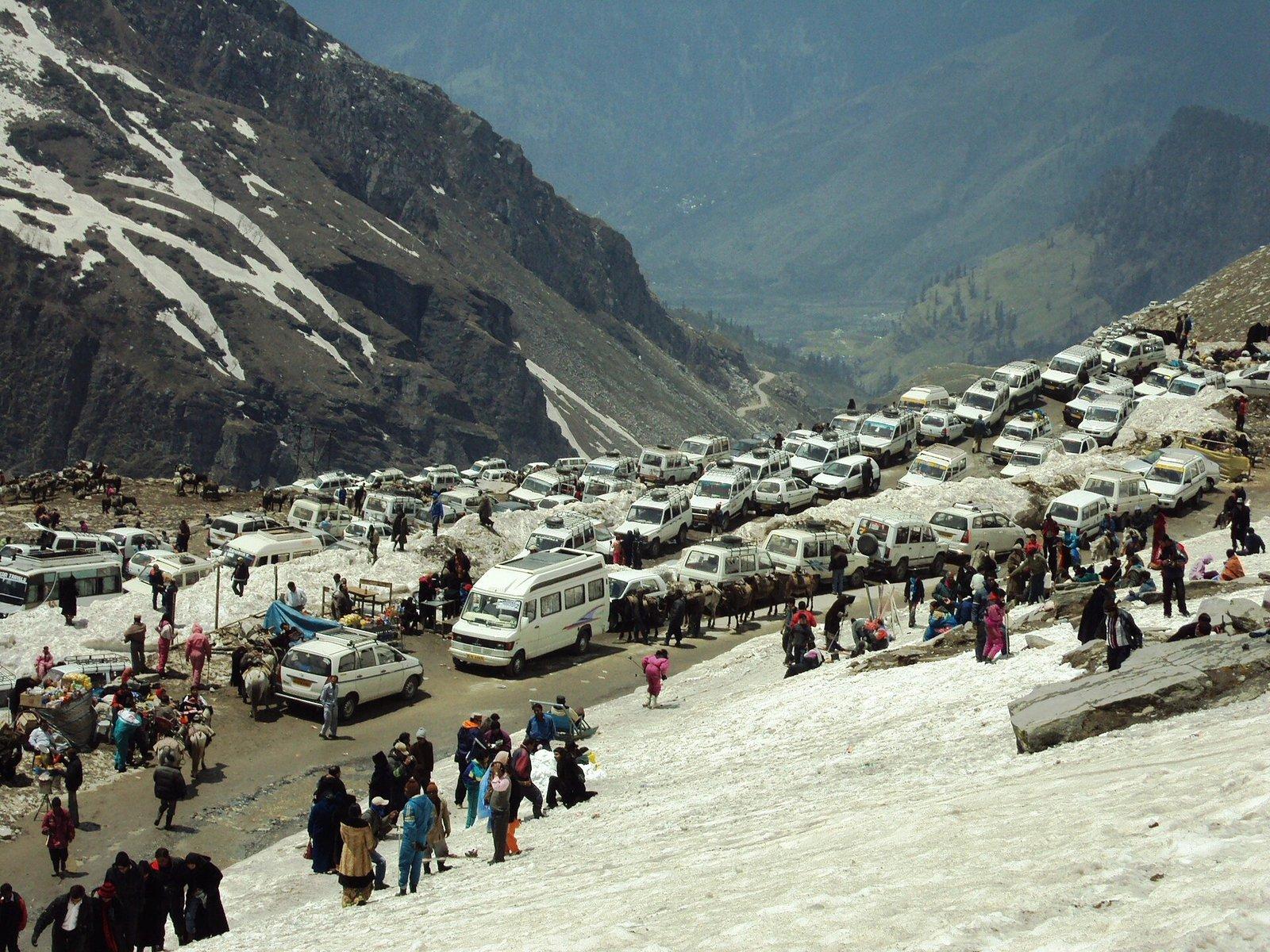
Himachal Pradesh Permits and Fees: A 2026 Guide to Rohtang, E-Aagman, PAP and Park Entry
Quick answer (checked 15 October 2026)
Indian citizens are not subject to the foreigner permit regime, but that is not the same as needing no permits. Crossing Rohtang Pass on a sightseeing trip needs an online vehicle permit at rohtangpermits.hp.gov.in: Rs 550 for cars and jeeps. Vehicles entering Lahaul-Spiti need an E-Aagman vehicle e-pass at eaagman.hp.gov.in; the fee is shown when you apply, and we could not verify a universal zero charge. Foreign nationals need a Protected Area Permit (PAP) for the Kinnaur and Spiti locations listed in the Immigration and Foreigners Order 2025. Shrikhand Mahadev Yatra registration at shrikhandyatra.hp.gov.in showed a Rs 250 per-person fee at our check. Non-HP passenger cars pay a Rs 100 per day state entry toll; motorcycles do not. Park entry, fishing and some trek routes carry their own permits and fees for everyone.
Himachal Pradesh stacks several permission systems on top of each other: vehicle-level charges, park entry permits, a protected-area regime that applies only to foreign nationals, and district orders that appear and expire. Most confusion comes from mixing them up, so this guide keeps them separate and says, for each one, what we verified and what we could not. Every number was checked against official sources on 15 October 2026; the sources are listed at the end.
This is not every fee in the state. It covers the permissions a tourist route touches: Rohtang, the Atal Tunnel and Lahaul-Spiti, Kinnaur, the parks and sanctuaries, trout fishing, trek registration and drones. Where a rule depends on an order we could not retrieve, the section says so instead of guessing.
- Rohtang permit (car, jeep, MUV)
- Rs 550 online; buses and HMVs Rs 600
- Foreign nationals
- PAP for locations on the 2025 Order schedule; Kinnaur fee page shows Rs 200 centre charge
- HP entry toll (passenger car)
- Rs 100/day or part; motorcycles exempt
- Park entry (Indian citizen)
- Rs 300/day, days 1-3 (June 2026 amendment)
- Trout licence
- Rs 300/day; four trout a day, 40 cm minimum
- Manali green tax (car)
- Rs 200, valid 7 days
What changed in 2026 (read this first)
1. Park and sanctuary entry fees were amended statewide, effective 10 June 2026. A Gazette amendment (Notification FFE-B-A(3)-5/2019, dated 6 June 2026) sets tourism entry at Rs 300 per day for Indian citizens and Rs 600 per day for others for the first three days, with higher rates after that. This replaces the older figures still circulating on travel blogs and on some park pages, including the Rs 100/Rs 400 pair this guide used to quote for GHNP.
2. The state entry toll for passenger cars is Rs 100 per day for 2026-27. The base schedule in the Toll Policy 2026-27 listed Rs 130 for passenger vehicles up to 12+1 seats; a commissioner notification dated 31 March 2026 reduced category 1(B) to Rs 100 per day or part for the financial year. Motorcycles and scooters are exempt. HP-registered light vehicles, both taxis and private cars, are exempt under the same amendment.
3. The Kangra trek registration order expired on 15 October 2026. A district order dated 8 July 2026 required in-person registration at disaster-management checkposts for ten Dhauladhar routes (Indrahar Pass, Minkiani, Jalsu and others). We checked for a successor on the day it expired and did not find one announced. If you are trekking those routes now, ask the district administration or a local operator whether a new order is in force before you set out.
4. A SADA order for Spiti travel by 4x4 expedition vehicles surfaced in February 2026, but only on a commercial mirror. The scanned order, dated 13 February 2026 and marked ADC-cum-Member Secretary SADA Kaza and Tabo, requires prior permission and Rs 500 per 4x4 expedition vehicle entering the SADA jurisdiction. We could not authenticate it on a government host, and it says nothing about ordinary cars, local exemptions or exit-direction charges. Treat Spiti entry fees as unverified until you confirm the current official tariff.
Permits at a glance: Indian citizens vs foreign nationals
Indian citizens skip the foreign-protected-area regime, but vehicle charges, park permits, fishing licences and trek rules apply to them like anyone else. Foreign nationals face an additional layer: the Protected Area Permit, tied to specific locations in the 2025 Order, not to whole valleys.
Indian vs foreign permit requirements (checked 15 October 2026)
| Corridor | Indian nationals | Foreign nationals |
|---|---|---|
| Spiti (Tabo, Dhankar, Pin Valley, Chandratal) | No PAP. Vehicle-level rules still apply: E-Aagman vehicle e-pass, SADA charges where an order applies, park entry permits. | PAP for the nine Spiti locations on the 2025 Order schedule (Tabo, Dhankar, Samdo and others). Kaza is not on that list, but that is not unconditional access: further orders and conditions can apply. Fee and validity are set by the issuing office, not by a statewide figure. |
| Lahaul / Atal Tunnel | No PAP. E-Aagman vehicle e-pass for the district; no tunnel toll schedule was found on official sources. | Same as Indian citizens for Lahaul itself. A PAP applies only to scheduled Spiti locations if the route continues east past Kunzum. |
| Shrikhand Mahadev Yatra (seasonal) | Mandatory registration at the official portal with medical fitness requirements; the portal displayed a Rs 250 per-person fee at our check. Season dates come from the yearly sanctioned notice. | Same registration and medical requirements. We found no basis for the older claim that the route crosses a restricted Kinnaur belt requiring a PAP; verify separately if your itinerary includes regulated areas. |
| Kinnaur (Sarahan, Sangla, Chitkul, Kalpa, Reckong Peo) | No PAP. Vehicle charges apply on the Hindustan-Tibet road like anywhere else. | The named towns are not on the protected list. Fourteen Kinnaur locations are, mostly in Pooh tehsil towards the border: Nako, Khab, Namgia, Chango and others. Check your exact route against the schedule and confirm with the issuing office. |
The 2025 Order supersedes the older 1958 and 1963 protected and restricted area orders. Older district pages still circulate with different office lists, group conditions and fees; we keep those as attributed references, not as settled rules.
The three systems that confuse everyone
Three separate fee systems overlap around Manali, and travelers mix them up constantly.
Rohtang Pass Permit (Rs 550 for cars) is for the sightseeing run up to the pass and back. E-Aagman is the district vehicle e-pass for entering Lahaul-Spiti, including the Atal Tunnel Rohtang-Koksar-Chandertal circuit. Manali green tax is an environmental charge on non-HP vehicles entering the Manali area: Rs 200 for a car, valid seven days. Three systems, three payment points. A trip can need one, two or all three depending on the route.
One more distinction: the Rohtang permit is for the pass itself. Driving through to places beyond Rohtang uses a separate congestion-charge process (Rs 50 for cars and passenger vehicles, Rs 100 for goods vehicles at the time of checking, with the page showing a closed quota message). Check which one your trip needs before paying.
Which permits do you actually need? (Route-based guide)
Work backwards from your route. Each line below adds the charges a typical trip picks up.
Just Manali, staying in town: HP entry toll (Rs 100/day or part for a non-HP passenger car) plus Manali green tax (Rs 200 for a car, valid seven days). Nothing else, unless you enter a sanctuary.
Manali to Rohtang Pass, day trip: everything above, plus the Rohtang vehicle permit: Rs 550 for cars and jeeps, Rs 600 for buses and heavy vehicles. Apply at rohtangpermits.hp.gov.in. Permits release at 10:00 and 16:00 IST; at our check the portal accepted applications for the next two days only.
Manali to Lahaul via the Atal Tunnel: HP entry toll plus green tax plus the E-Aagman vehicle e-pass. No Rohtang pass permit is involved. We found no official toll schedule for the tunnel itself, and no current order confirming or barring two-wheelers; check the district advisory before riding.
Full Manali-Kaza-Spiti circuit: all of the above, plus park entry at statutory rates (Rs 300/day for Indian citizens, days 1-3) if you visit Chandratal or enter a sanctuary, plus the separate E-Aagman e-permit for the Atal Tunnel Rohtang-Koksar-Chandertal circuit. Looping through Kinnaur brings you to the SADA checkpoint question, which is unresolved for ordinary cars; see the unverified list near the end.
Shimla to Kinnaur to Spiti (Hindustan-Tibet Road): HP entry toll. Indian citizens need no PAP anywhere on this route. Foreign nationals need a PAP for the scheduled Kinnaur and Spiti locations and should confirm the exact route with the issuing office. Four-wheel-drive expedition groups entering the SADA Kaza and Tabo area are covered by the February order above; ordinary cars are not, so verify the current tariff rather than budgeting a fixed number.
GHNP trek (Tirthan or Sainj entry): park entry permit at the statutory rate, Rs 300 per day for Indian citizens for days 1-3. Multi-day treks require certified guides and porters, and the range office approves the route. Permits come from the head office in Shamshi or the range offices at Shairopa (Tirthan) and Ropa (Sainj).
Tirthan Valley fishing: a trout-water licence at Rs 300 per day, issued by authorised fisheries officers (the department lists officers at Largi, Patlikuhl and the trout fish farm at Barot). Season runs 1 March to 31 October, with a four-trout daily cap and a 40 cm minimum.
The most useful distinction on this page: Indian citizenship exempts you from the foreign-protected-area permit, and from nothing else. The permits you still need are vehicle-level (Rohtang, E-Aagman, toll, green tax), activity-level (park entry, fishing), or event-level (yatra registration, trek orders).
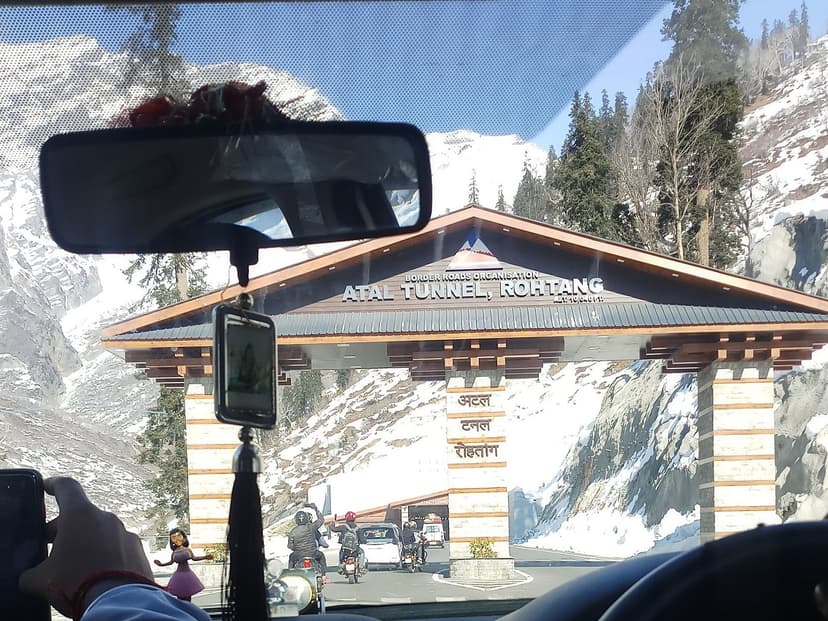
Rohtang Pass permit: the full breakdown
The Rohtang permit is a quota-limited online vehicle permit for the tourist run to the pass, run by the Kullu district administration. The details change often enough that the portal, not a blog (including this one), is the authority.
The fee table on the live portal: cars, jeeps and MUVs pay Rs 500 permit plus Rs 50 congestion charge, Rs 550 total. Buses and heavy motor vehicles pay Rs 500 plus Rs 100, Rs 600 total. The online form does not list a motorcycle category, and we found no verified bike fee; confirm with the issuing office in Manali rather than assuming Rs 550 covers a bike.
The daily quota for ordinary permits is 800 petrol and 400 diesel vehicles. A separate special-permit category has its own quota of 60 petrol and 40 diesel; it is a different tourism product, not extra capacity.
Booking the permit
Permits are released at 10:00 and 16:00 IST, each window releasing 400 petrol and 200 diesel permits. At our check the portal accepted applications for the next two days. An older NIC newsletter from July 2025 described a six-day advance window; treat that as history and check the portal before planning your booking day.
Each permit is for one day, to and fro. Have the vehicle ready before you apply: registration number and date, fuel type, vehicle class, driver details with licence, the identity details the form asks for, and valid PUC. The instructions say a vehicle older than ten years is not eligible. Print the permit; the checkpoint wants the printout, and the portal warns that mismatched details can stop you at the barrier.
Closures are set by dated district orders, not by a fixed rule. A May 2026 order regulated traffic on the Rohtang road up to Marhi through 19 May. The Tuesday closure older guides describe was temporarily withdrawn in 2025, which does not mean every Tuesday is open now. In some seasons traffic reaches Marhi or Gulaba rather than the pass; whether the road is open at all depends on snow clearance and the current order.
Use rohtangpermits.hp.gov.in, the domain District Kullu lists on its official service directory. An older nic.in address existed, but its DNS did not resolve when we tried. Book direct from the government portal, and verify any agent or third-party site independently before paying. A seasonal HRTC bus from Manali to Rohtang was reported in 2025 at Rs 500 per person; we could not verify the current fare or schedule, so confirm that option locally rather than banking on it.
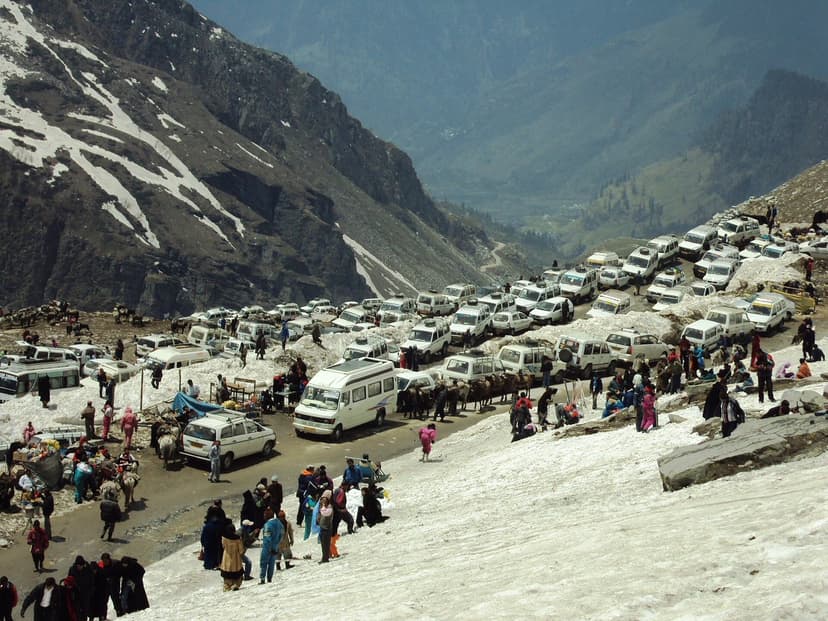
E-Aagman: the vehicle e-pass for Lahaul-Spiti
E-Aagman is the Himachal government vehicle e-pass system for Lahaul-Spiti district. The official homepage states that vehicles entering the district should apply for an e-pass, and it distinguishes an e-permit for the Atal Tunnel Rohtang-Koksar-Chandertal circuit from e-tickets for other places. It is a vehicle-level requirement, separate from the Rohtang pass permit and from any park fee.
Apply at eaagman.hp.gov.in before you drive in. The application form at our check listed two-wheelers, 2WD and 4WD light vehicles, and goods vehicles, with the Chandertal circuit e-permit as the exposed request type and a payable-amount field. What the homepage does not say is that the pass is free. We could not verify a universal zero fee, or that every route and vehicle class is checked the same way. Allow time to complete the application, and do not count on a two-minute process.
The common mistake is assuming the Atal Tunnel means no paperwork for the district. The tunnel is a road; the district has an e-pass system.
HP entry toll: what you actually pay at the border
Qualifying vehicles entering Himachal Pradesh pay a state toll at notified barriers. The operative documents are the Toll Policy 2026-27 and its amendments; the numbers below are what we retrieved from them on 15 October 2026.
| Category | Amount | Note |
|---|---|---|
| Passenger vehicles up to 12+1 seats (cars, SUVs, vans) | Rs 100/day or part | 31 March 2026 amendment, FY 2026-27; base schedule was Rs 130 |
| Motorcycles and scooters | Exempt | Schedule II exemption |
| Auto and scooter rickshaws | Rs 30/day | Non-HP registered |
| Light goods vehicles, 7,500-12,000 kg | Rs 320/day | Base schedule |
| Passenger vehicles over 12+1 up to 32+1 seats | Rs 200/day | Base schedule |
| Passenger vehicles over 32+1 seats | Rs 250/day | Base schedule |
| Three-axle commercial vehicles up to 25,000 kg | Rs 600/day | Base schedule; later heavy-vehicle amendments not checked |
| Heavy construction machinery / earth-moving equipment | Rs 800/day | Base schedule |
| Tractors | Rs 100/day (Rs 500 quarter, Rs 1,000 year) | Agricultural-purpose exemption applies separately |
| HP-registered light vehicles (taxi and private) | Exempt | 31 March 2026 amendment; do not extend to every HP heavy vehicle |
| Non-FASTag vehicle at a FASTag-enabled barrier | +25% on the applicable toll | Depends on the barrier, not on paying by UPI |
The official toll policy is published at egovef.hptax.gov.in; read it for classes we have not itemised. The receipt is valid 24 hours across the state, and collection is on incoming vehicles. This toll is separate from national highway tolls, from the Manali green tax, and from anything SADA charges in Spiti.
Permits for foreign travelers
If you hold an Indian passport, this section does not apply to you. Your permits are the vehicle, park, fishing and event ones described elsewhere on this page.
Foreign nationals need a Protected Area Permit (PAP) to enter the protected areas in Himachal listed by the central government. The current legal baseline is the Immigration and Foreigners Order 2025, which superseded the 1958 Protected Areas Order and the 1963 Restricted Areas Order. Its Himachal schedule names 14 locations in Kinnaur, mostly in Pooh tehsil on the border road (Kunnu, Charang, Nesang, Dubling, Dabling, Khab, Namgia, Tashigang, Kaa, Yangthang, Maling, Nako, Maling Dogri and Chango), and nine in Spiti (Dhankar, Shichiling, Poh, Tabo, Lari, Samdo, Korik, Gue and Hurling). Places like Kaza, Kibber and the Pin Valley gate are not on that schedule, but absence from the list is not an open door: other orders and conditions can apply, and the 2025 Order also lists separately restricted locations such as specific monasteries and settlements.
The 2025 Order provides an electronic route: paragraph 14 allows applications through the designated government portal and electronic issue of the permit. That is the legal framework, not a service promise; it does not establish instant approval or that no office visit will be needed. Treat same-day, one-hour and walk-in claims from travel forums as anecdotes, not rules.
What it costs and where you get it are set by the office, and the public pages disagree. The Kinnaur district page currently displays a Rs 200 centre charge plus separate agency charges; older pages described other amounts. Validity, group conditions and which offices will issue for your route are not settled by any statewide schedule we could retrieve. Decide your itinerary, check it against the schedule above, then confirm fee, validity and the issuing office with that office before you travel. The Kinnaur and Lahaul-Spiti district pages list offices that have issued these permits; use them as a starting point, not a guarantee.
Two more things to keep straight. Your visa and your PAP are different documents; the official eVisa page states that an eVisa alone is not valid for visiting protected or restricted areas, and that prior permission from the civil authority is required. And a PAP does not open park gates: park entry fees and wildlife rules apply on top of it, with Pin Valley covered in the parks section below.
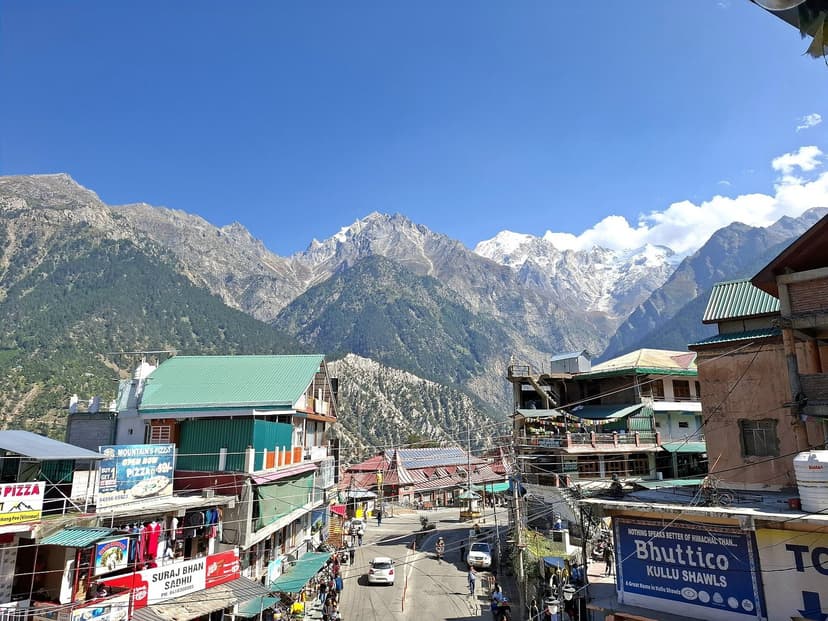
GHNP and wildlife sanctuary permits
Entry into a national park or sanctuary for tourism is permit-regulated, and the fees are statutory: the amendment published in the Gazette on 10 June 2026 applies statewide, to the Great Himalayan National Park as much as to Pin Valley, Kibber, Kalatop, Manali, Nargu and Renuka.
For an Indian citizen, entry is Rs 300 per day for each of the first three days and Rs 500 per day after that. For a non-citizen, Rs 600 and Rs 1,000. School students pay half the citizen rate of their category, and children below five enter free. Vehicles entering the protected area pay separately: Rs 1,000 per day for light vehicles, Rs 2,000 for heavy. Mobile-camera use is included in the entry fee; professional cameras and filming carry separate charges under rule 28(4). The historical base rule capped a permit at five days, and no consolidated text we could retrieve removes that cap, so get longer itineraries approved by the issuer rather than assuming one payment buys an unlimited trek.
For GHNP specifically: permits come from the park head office in Shamshi, or the range offices at Shairopa (Tirthan Valley) and Ropa (Sainj Valley). Prior permission is required and the range officer approves the trekking route. Multi-day treks require certified guides and porters, in the park's own words. The old Rs 100/Rs 400 figure, and even the Rs 200/Rs 800 revision some pages show, predate the 2026 amendment; the Gazette schedule above is the one that counts.
The ecozone question needs precision. Staying in a Tirthan Valley village and walking outside the notified park boundary is not a park entry, and the park's own ecozone guidance is about litter, private property and conduct, not a blanket no-permit, no-fee, all-seasons guarantee for every trail. The boundary is the notified one on the map and your permitted itinerary, not a tree line or a fixed walking time. If you are not sure whether your walk crosses into the park, ask at the range office; that is a five-minute question that settles it.
Pin Valley has one question we cannot settle. A 2018 Times of India travel article stated that foreign tourists are not allowed inside the park; the current Spiti Wildlife Division page neither confirms nor lifts that claim, and a PAP does not answer it. Until a current park-specific order or the division settles it, foreign visitors should check with the Spiti Wildlife Division before planning a Pin Valley trip, and Indian visitors should expect the standard permit process.
Fishing and angling permits
Trout fishing is licensed, and the numbers that matter come from the Himachal Pradesh Fisheries Rules 2020 (notification dated 19 May 2020). A trout-water licence costs Rs 300 per day, with weekly, monthly and yearly options (Rs 1,800 / Rs 7,200 / Rs 33,000). A general-water rod licence is a different, cheaper thing at Rs 100 per day, which is why you will see both numbers quoted and confused. The licence is personal and non-transferable, and a daily licence is valid on the specific stream named on it.
The conditions on the licence: no more than four trout in a day, a 40 cm minimum size, and artificial spoon or fly bait only in trout waters. Smaller fish go back into the water. The department's own angling page still tells a six-fish story, which contradicts the licence conditions; plan on four. The trout season runs 1 March to 31 October; the closure is 1 November through the last day of February. General waters have their own closure from 16 June to 15 August per the statutory schedule, though a department page gives different dates; check current closure notices before you fish either.
Licences are issued by the Director-cum-Warden of Fisheries or officers authorised by the director. The department's published contacts list the fisheries officer at Largi, a deputy director at Patlikuhl, the trout fish farm at Barot, and district offices. A homestay can help you get one, which is the easiest route, but the licence is valid only if an authorised officer issued it: check the holder name, stream, dates and fee on the document. A licence does not override closed reaches (Renuka, Rewalsar and several listed stretches are closed), and it does not permit fishing inside a national park.
The Tirthan and its tributaries above the Beas confluence are designated trout waters. Our older claim of a 45 km permitted fishing stretch is gone from this guide; the licence defines your stretch, not a guidebook.
Trekking registration
Trek registration in Himachal is set by district orders with issue dates and expiry dates, so the answer is route-specific, not statewide.
The clearest recent example: the Kangra order of 8 July 2026 required every trekker on ten Dhauladhar routes (Baleni, Minkiani, Bhimghasutri, Indrahar, Kundli, Toral, Talang, Singhar, Varu and Jalsu Pass) to register in person at the disaster-management checkpost before starting, submitting itinerary, contact details and expected return time. It expired on 15 October 2026, the day of this update, and we did not find a successor order in a bounded check. The rescue-cost clause in that order was conditional: it applied to people who entered without registering and then needed rescue, not to every trekker.
GHNP multi-day treks require certified guides and porters plus route approval, as above. Outside these named cases, we could not verify a standing statewide high-altitude registration rule, and we are not going to invent enforcement advice in either direction: register where an order asks you to, and check with the local forest or district office for your route. Registration also has a safety purpose worth stating plainly: if something goes wrong, the register is how anyone knows you are out there.
If you trek with an operator, the paperwork is usually handled for you. Confirm in writing which permits and registrations are included, and ask for copies; a registered operator will provide them without fuss.
Drone rules: check your exact spot, not the district
Two different government systems are involved, and conflating them is how people end up confused or fined.
Regulatory services, meaning aircraft registration and UIN, type certification and remote-pilot certification, moved to eGCA according to a government brief from February 2026. Digital Sky is where operational flight planning and the airspace map live: that is where you check whether your exact location is in a no-fly or permission-required zone on the day you fly. Neither answers the other's question. Registration does not authorise a flight, and a green patch on the airspace map does not authorise you to take off from private land, from a sanctuary, or near a security installation.
What we cannot give you is a district-shaped shortcut. The claim that most of Spiti or Kinnaur sits inside a single 25 km border no-fly belt is not something we could verify, and the 250 g threshold and a 400 ft ceiling are not complete compliance rules by themselves: they depend on the zone, the drone's class and where you are. There is no basis for promising that the lower hills are free to fly. The workable method: pick the exact spot, check it on the official airspace map, get the aircraft and pilot side in order through the current DGCA services, and obtain written permission where land, wildlife or security rules ask for it. Inside parks and sanctuaries that means the wildlife authority's written permission, and no, being far from a ranger station does not change the rule.
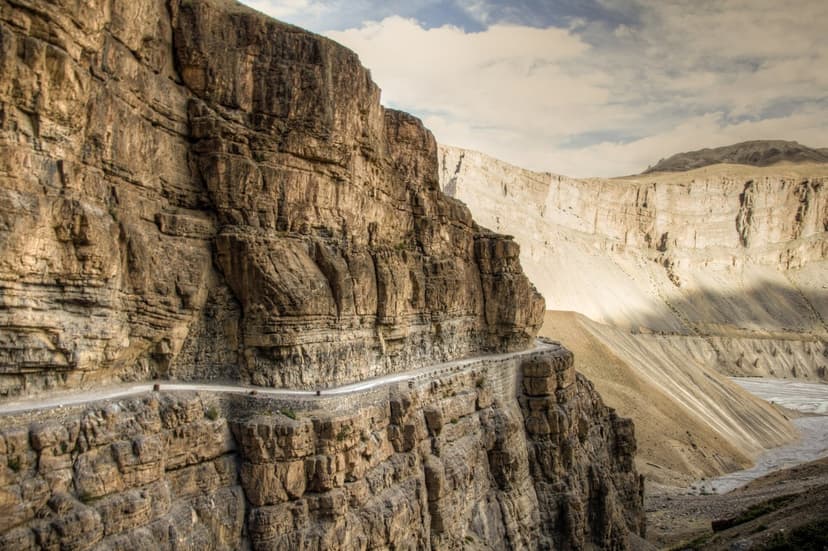
The Chandratal question
Chandratal stacks three separate rules, and each has its own authority.
First, the vehicle: the Atal Tunnel Rohtang-Koksar-Chandertal circuit requires an E-Aagman e-permit per vehicle, in the portal's own words. That is a vehicle document, and it is separate from the park fee.
Second, entry. Chandratal sits inside a notified wildlife sanctuary (declared final on 7 June 2013 at 38.56 sq km, with a further area the current division pages carry as 50.09 sq km), and entry follows the statutory tariff from the 2026 amendment: Rs 300 per day for Indian citizens (days 1-3), Rs 600 for others, with the protected-area vehicle charge (Rs 1,000 light, Rs 2,000 heavy) where a vehicle enters. The Rs 150/Rs 500 figures in older guides are 2025 history.
Third, camping. The lake is a Ramsar wetland (site 1569, designated 2005), and the lakeshore is not a campground. Official plans show the sites being moved and re-licensed over the years: nine licensed tent sites about 4 km away in 2016-17, then a 2019 panchayat direction shifting camps towards Batal, roughly 15 km downstream. There is no fixed distance rule we could verify, so do not book a camp on the promise of one. Camp only where the current allocation allows, which for tour operators means permission from the DFO (Wildlife), Spiti; independent travelers should confirm with the same office before paying for a tent.
The area has no medical facilities and no cellular coverage, per the wildlife division's own page. Carry what you need, and treat road conditions as seasonal facts to check, not assumptions.
Official portal directory (checked 15 October 2026)
These are the application routes and reference pages we used for this guide, with the authorities behind them. Dates matter here: rules pages go stale, and a portal that worked at our check may look different at yours.
| Portal / document | URL | What it is for |
|---|---|---|
| Rohtang Pass Permits (District Kullu) | rohtangpermits.hp.gov.in | Rohtang tourism permits, beyond-Rohtang congestion charges, Manali green tax |
| E-Aagman (Dept. of IT, HP) | eaagman.hp.gov.in | Vehicle e-pass / e-permit / e-ticket for Lahaul-Spiti |
| Immigration and Foreigners Order 2025 (MHA) | mha.gov.in (PDF) | Legal baseline for protected and restricted areas; Himachal schedule |
| District Kinnaur | hpkinnaur.nic.in | Kinnaur PAP fee page (Rs 200 centre charge at our check) |
| District Lahaul-Spiti | hplahaulspiti.nic.in | Foreigner section; legacy office and group references |
| HP Toll Policy 2026-27 (State Taxes & Excise) | egovef.hptax.gov.in (PDF) | State entry toll schedule and classes |
| HP Gazette 54/2026 wildlife entry amendment | rajpatra.hp.gov.in (PDF) | Current park and sanctuary entry tariff (effective 10 June 2026) |
| GHNP official | greathimalayannationalpark.org | Park rules, offices, guides and porters |
| Spiti Wildlife Division | spitiwildlifedivision.in | Chandratal sanctuary page; camping permission route |
| HP Fisheries | himachal.nic.in/fisheries | Licence rules, seasons, issuing offices |
| Shrikhand Mahadev Yatra | shrikhandyatra.hp.gov.in | Yatra registration; per-person fee and season notice |
| Digital Sky (DGCA) | digitalsky.dgca.gov.in | Operational airspace map and flight planning |
| District Kullu services | hpkullu.nic.in | Official listing of the current Rohtang permit portal |
What is still unverified (and how to check)
This guide does not guess, so here is what we could not establish from official sources, with the check that would settle each one.
Spiti entry fees for ordinary vehicles. The February 2026 SADA order we recovered covers 4x4 expedition vehicles and comes from a commercial mirror. News reports describe a separate ordinary-vehicle SADA system with several slabs that predates 2025, and later relief for Lahaul residents at Sumdo, but no current official tariff or exemption schedule was retrievable. Ask the Kaza or Tabo SADA office for your vehicle class and direction before you budget.
Atal Tunnel rules for two-wheelers and pedestrians. No standing order banning or permitting motorcycles was recovered; the dated restrictions we found are temporary or historical. The district advisory of the day is the only authority. The same goes for opening hours and any toll: no current official no-toll confirmation exists either, so verify rather than assume.
E-Aagman fee and route coverage. The system exists and the circuit e-permit is required by the portal's own text, but we could not verify a universal fee of zero, or which routes and vehicle classes get checked in practice. The application itself shows the payable amount.
Pin Valley for foreign nationals. The 2018 no-foreigners claim is neither confirmed nor lifted by a current park-specific order. Ask the Spiti Wildlife Division.
Chandratal campsite allocation. The direction of travel is clear, away from the lake and DFO-permitted, but the current site list is not published in anything we could retrieve. Ask the DFO (Wildlife), Spiti office before booking.
Kangra trek registration after 15 October 2026. The July order has lapsed. Ask the district administration or a local operator whether a successor is in force before trekking the Dhauladhar routes.
Planning an HP trip and want a hand untangling which of these apply to your route? Email us your route and we will point you to the relevant sections and official links. Found a discrepancy between this guide and what a checkpoint or office tells you? Send us the update with the date and location; ground reports are how this page stays accurate.
Do I need a permit for Rohtang Pass?
For the sightseeing run to the pass and back, yes: an online vehicle permit, Rs 550 for cars and jeeps, Rs 600 for buses and heavy vehicles. Releases happen at 10:00 and 16:00 IST on rohtangpermits.hp.gov.in, which at our check accepted applications for the next two days. Ordinary quota is 800 petrol and 400 diesel per day. Closures are set by dated district orders, and the permit, a printout and matching vehicle papers are checked at the barrier.
Do I need a permit for the Atal Tunnel?
No separate Atal Tunnel toll or permit schedule was found in official sources. What is documented is the district vehicle requirement: vehicles entering Lahaul-Spiti, including on the Atal Tunnel Rohtang-Koksar-Chandertal circuit, need the E-Aagman vehicle e-pass. Two-wheeler status at the tunnel is unverified; check the current district advisory.
What is E-Aagman?
The HP government vehicle e-pass system for Lahaul-Spiti district. The official homepage requires an e-pass per vehicle entering the district, an e-permit for the Atal Tunnel Rohtang-Koksar-Chandertal circuit, and e-tickets for other places. Apply at eaagman.hp.gov.in before travel; the payable amount shows during the application. A universal free pass is not verified.
Do Indian citizens need a permit for Spiti Valley?
Indian citizens do not need the foreign-national PAP for Spiti, Kinnaur or elsewhere in Himachal. They still need vehicle-level rules (Rohtang permit if crossing the pass, E-Aagman e-pass for the district, state entry toll, Manali green tax), park entry permits at the statutory tariff, and fishing licences where they fish.
Do foreigners need a permit for Spiti or Kinnaur?
Foreign nationals need a Protected Area Permit for the Kinnaur and Spiti locations listed in the Immigration and Foreigners Order 2025: 14 in Kinnaur (Nako, Khab, Chango and others) and 9 in Spiti (Tabo, Dhankar, Samdo and others). Kaza is not on the list, but that is not unconditional access. Fee and validity are set by the issuing office; the Kinnaur page displayed a Rs 200 centre charge plus agency charges at our check, and same-day service is not guaranteed anywhere in writing.
How much is the HP entry toll from April 2026?
Rs 100 per day or part for passenger vehicles up to 12+1 seats, after the 31 March 2026 amendment. Motorcycles and scooters are exempt, as are HP-registered light vehicles (taxi and private). At FASTag-enabled barriers a non-FASTag vehicle pays 25 percent more. The receipt is valid 24 hours statewide, on incoming vehicles.
What is the Sumdo Rs 500 fee?
The only current-looking document we recovered is a scanned order dated 13 February 2026, available on a commercial mirror, requiring prior permission and Rs 500 per 4x4 expedition vehicle entering the SADA Kaza and Tabo jurisdiction. It does not cover ordinary cars, and it is not authenticated on a government host. Historical reporting describes a separate ordinary-vehicle SADA system. Verify the current official tariff for your vehicle class before travelling.
Do I need a permit for GHNP?
Yes, entry to the park requires permission and a permit, for Indian citizens too. The statutory fee since 10 June 2026 is Rs 300 per day for Indian citizens (days 1-3, Rs 500 after), Rs 600 and then Rs 1,000 for non-citizens; school students pay half, children below five enter free. Permits come from the head office in Shamshi or the range offices at Shairopa (Tirthan) and Ropa (Sainj). Multi-day treks require certified guides and porters and an approved route. Staying in a village outside the notified boundary is not a park entry.
Can I fly a drone in Spiti Valley?
There is no district-level shortcut. Aircraft registration and pilot certification go through the current DGCA services (eGCA per the February 2026 brief), and operational flight planning and the airspace map are on Digital Sky. Check the exact coordinates for the day you fly; the claim that most of Spiti falls in a blanket border no-fly belt is unverified. Parks and sanctuaries require written permission from the wildlife authority regardless of the airspace map.
How do I get a fishing permit in Tirthan Valley?
A trout-water licence costs Rs 300 per day under the HP Fisheries Rules 2020, personal and stream-specific; general waters are Rs 100 per day. Conditions: four trout per day, 40 cm minimum, artificial spoon or fly only, season 1 March to 31 October. Licences come from authorised officers (Largi, Patlikuhl, Barot and district offices). A homestay can help arrange one, but the licence is only valid if an authorised officer issued it.
Is the Rohtang permit website real or fake?
The official portal is rohtangpermits.hp.gov.in, listed by District Kullu on its service directory. An older nic.in address existed but its DNS failed at our check, so do not rely on it. Book direct from the government portal, and verify any agent or third-party site independently before paying.
What is the Chandratal Lake entry fee?
Since the 10 June 2026 amendment, park and sanctuary entry is Rs 300 per day for Indian citizens (days 1-3, then Rs 500), Rs 600 and then Rs 1,000 for non-citizens, with school students at half rate and children below five free. Vehicles entering the protected area pay Rs 1,000 (light) or Rs 2,000 (heavy) per day. The E-Aagman e-permit for the Atal Tunnel Rohtang-Koksar-Chandertal circuit is a separate vehicle document. Camping is only at currently authorised sites with DFO (Wildlife), Spiti permission, never on the lakeshore; there is no verified fixed distance rule for campsites.
Are two-wheelers allowed on the Atal Tunnel in 2026?
Unverified, and worth checking on the day. No standing order was recovered that either bans or permits two-wheelers. The dated restrictions found are temporary (a 2024 restoration-period closure) or historical guidelines, none of which settles current access. Check the current Kullu district or BRO advisory before riding.
Where do I download my Shrikhand Mahadev Yatra registration in 2026?
The official portal is shrikhandyatra.hp.gov.in, with mandatory registration and medical fitness requirements. At our check on 15 October 2026 the portal displayed a Rs 250 per-person fee; older free-registration claims do not match the live portal. Season dates come from the yearly sanctioned notice, so confirm the current window and checklist on the portal before travelling to Jaon base camp.
What is the Atal Tunnel entry fee or toll in 2026?
No official toll schedule for the tunnel itself was found, so treat any specific tunnel fee, and any absolute no-toll promise, as unverified. The documented charges near it are the state entry toll (Rs 100 per day for non-HP passenger cars, at the state border, not the tunnel), the E-Aagman vehicle e-pass for the district, and the Manali green tax classes for non-HP vehicles.
Sources
Checked 15 October 2026 unless a document date is given: Immigration and Foreigners Order 2025 (MHA; Himachal schedule). Rohtang permit portal (fees, quota, release windows). District Kullu service listing. DM/ADM Kullu orders of May 2026 and May 2025. E-Aagman (homepage and application form). HP Toll Policy 2026-27 and the 31 March 2026 revision notification. SADA Kaza and Tabo order dated 13 February 2026 (scanned copy on a commercial mirror, not government-hosted). HP Gazette 54/2026, wildlife entry fee amendment effective 10 June 2026. GHNP fees, rules and guidelines. HP Fisheries Rules 2020 (notification of 19 May 2020) and the department contact and seasons pages. Ramsar site 1569 (Chandratal). Chandratal sanctuary final notification of 7 June 2013 and management plans. Spiti Wildlife Division. Shrikhand Mahadev Yatra portal. Kangra DC order of 8 July 2026 and contemporaneous reporting. PIB brief of February 2026 on drone services and Digital Sky. Official eVisa page (protected-area caveat). District Kinnaur and District Lahaul-Spiti foreigner pages (legacy references, internally inconsistent). Background: Times of India travel piece on Pin Valley (2018, foreigner claim unresolved).
You Might Also Like
Volunteering in Himachal Pradesh: 12 Organisations and How to Apply (2026)
Teach English in McLeod Ganj, conserve the Great Himalayan National Park, build with earth in Bir, or harvest apples in Kullu. Twelve real HP volunteer organisations with honest costs, the visa rule that gets foreigners deported, and how to apply.
How to Travel Himachal Without Wrecking It: A Quiet-Travel Manual
A non-preachy field manual for responsible travel in Himachal, by a Kullu local: how to behave, when to go, where to go instead, and the 2026 rules and bans that actually matter.
Mamleshwar Mahadev: The Eternal Flame Temple of Karsog
An eternal fire, a fist-sized wheat grain and a six-foot drum, kept in a mortar-less timber temple in the quiet Karsog valley. The honest story of Mamleshwar Mahadev: what is real, what is faith, and how to go.