
Himachali Food Guide: Every Dish, Every Region, By a Local
My mother makes siddu wrong on purpose. She puts too much walnut in the stuffing, more than the old Kullu recipe asks for, and then she sends a tin with me every time I fly to Delhi for work. The first time my Delhi landlord ate one he asked if it was a Tibetan momo. I almost stopped giving him siddu after that. Almost.
I grew up in the Kullu valley. I have eaten Himachali food in roadside dhabas, in wedding pangat lines, in Brahmin kitchens that took the dham seriously enough to make me wash twice before sitting down, and in petrol-pump shacks that taught me the difference between a real bhaturu and a Punjabi bhatura. The food is not what people who write listicles think it is. It is older, more regional, more aggressively non-vegetarian, and stranger than the websites suggest.
This guide is what I would tell a friend coming to Himachal for the first time. Eat at the dham if you can. Skip the touristy thali pictures on Mall Road. Know which district you are in. Bring loose trousers.
- Most famous dish
- Siddu (steamed walnut bread)
- Defining feast
- Dham, a sit-down community meal on sal leaves
- Number of regional Dhams
- 7 (one per major district)
- Is HP vegetarian?
- No. The HP government calls non-veg the norm
- Hardest dish to find
- Khamod meat (Chamba), wedding-only
- Easiest first taste
- Kangri Dham thali at Himachali Rasoi, Shimla, Rs 240-300 in 2026
The dham, and why it is not a thali
If you remember one word from this guide, make it dham. A dham is the communal feast that Himachalis eat at weddings, at temple festivals, at funerals, at any moment when the village needs to feed itself in numbers larger than a normal kitchen can handle. It is not a thali. A thali is a tray. A dham is a whole social institution.
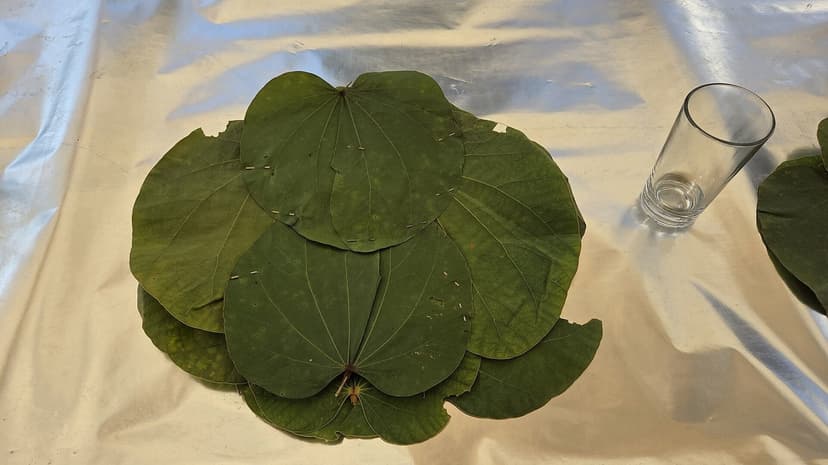
You sit on the floor in long pangat rows. You eat from a stitched plate of sal or tor leaves, never steel, never banana leaf (banana leaves are South India). The meal is cooked overnight in copper or brass charoti pots big enough to feed five hundred to two thousand people, and the cooks are not the household women. They are Botis, hereditary clans of Brahmin specialists who do nothing else for a living. Prabhasakshi, the Hindi news portal, puts it plainly: "the cooks are called Boti, primarily Brahmin by caste, families who pass the work down through generations." If you want to argue that hereditary cook clans are unfair in a 2026 context, fine, argue. But also taste the food first.
The order of courses on a dham is the part that confuses outsiders. In Mandi district, the sweet course (badana, a boondi-and-jaggery thing) comes first, not last. This is the opposite of every Punjabi wedding you have ever been to. Days before the dham, the older women of the village start cleaning, pounding and grinding the spice mix while singing ritual songs. None of this is performance. It is how the food gets made.
And the dham is sattvic. Strict. No onion, no garlic, no matter how meat-heavy the household kitchen normally runs. This is the part that surprises foreign travellers most: the same family that will roast a goat for Diwali will sit down to a wedding feast where every dish is yogurt-based and even the rice is cooked without oil. The dham is religion, not lunch.
Seven dhams, seven districts, seven different meals
Here is the thing nobody tells you: there is no single Himachali dham. There are seven, one for each major district, and a Kangri dham next to a Mandyali dham next to a Chambyali dham looks like three different cuisines. The HP government's own cuisine page says it directly: a Mandi Dham is much different from a Chamba, Kangra, Bilaspur, Shimla, Sirmaur or Kullu Dham.
Hindi Wikipedia goes further. It calls Kangri dham the best, and Kullu dham the oldest. Most travellers eat exactly one dham in their life, somewhere in Shimla, and assume that is the dham. It is not.
| Mandyali Dham | Kangri Dham | |
|---|---|---|
| Sweet course | Comes FIRST (badana, boondi + jaggery) | Meetha at the END (kheer or similar) |
| Hero dish | Sepu vadi (lentil dumplings in spinach gravy) | Chana madra and khatta meetha mahni |
| Distinctive Boti style | Mandi Botis cook in Charoti copper pots, slowest fire | Kangra Botis use tandoor for the bread course |
| Sourness comes from | Tamarind | Anardana (dried pomegranate seed) or amchur |
The other five are just as distinct. Chambyali dham opens with rice and moong dal, then madra, then boor ki kari, then khutta sweetened with gur and tamarind. Kulluvi dham, the oldest, leans heaviest on rajma and the simplest possible khatta. Shimla dham is the most Punjabi-influenced of the lot, with babru (a small fried-bread thing) showing up as a side. Sirmauri dham almost vanishes outside Sirmaur district itself; you have to be in Nahan or Paonta Sahib to find it served properly. Bilaspuri dham sits between Mandyali and Kangri in style, lighter on the ghee than either.
If you want to taste the Mandyali version (which most locals will tell you is the real one), look for Sharma Dhaba on the Mandi-Manali road. The most famous restaurant attempt to democratise the dham, though, is a small place called Dham Dhaba on the same stretch, which an enterprising Mandi local named Mohit opened to give ordinary people daily access to a meal that used to be wedding-only. ETV Bharat's Hindi desk has covered the project. The Mandyali dham, incidentally, is the version Hindi food press regularly names as the Prime Minister's favourite.Take that for what it is worth.
The iconic dishes, in the order I would feed them to you
Forget the listicle ordering. Here is what to actually eat first.
Siddu
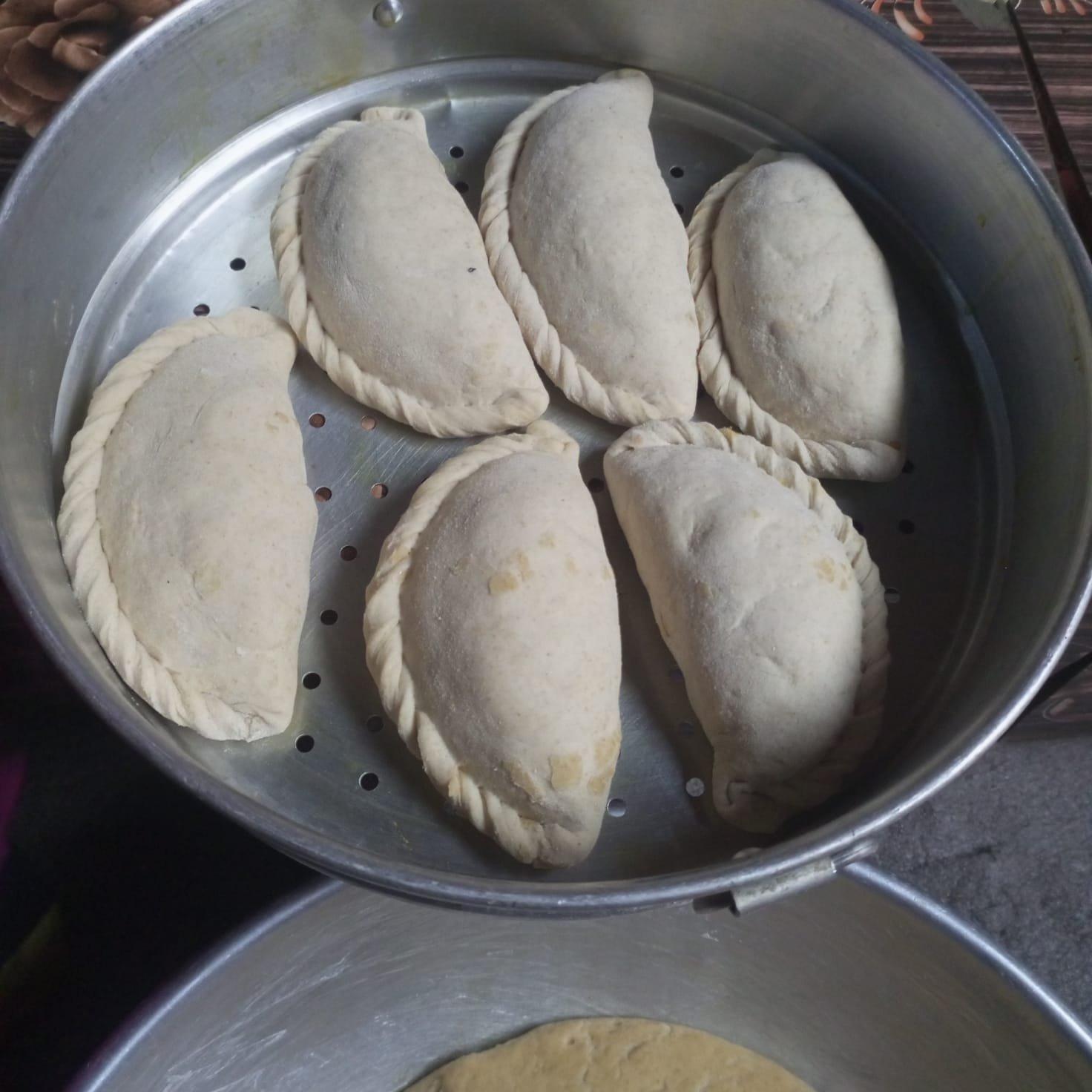
Siddu is a steamed wheat bread, fermented for an hour or two with a yeast starter, stuffed with a paste of walnut, poppy seed and crushed garlic, then crimped at the edges into a half-moon shape and steamed for fifteen to twenty minutes. The HP government's own cuisine page calls it "a steamed stuffed burger made of wheat flour base". Which is the most accurate description in English I have ever read.
Three things almost no English-language guide will tell you about siddu, all of which I learned the way every Himachali learns them, by being corrected by my mother:
- It is not pan-HP. Siddu is a Kullu and upper Shimla dish. Chamba people make a different bread. Kinnauris stuff their version with whatever the household has lying around, often dal. Chef Bhupi's Kitchen on Facebook got 8,500 reactions on a post that says exactly this in Hindi: "this dish is not from all of HP, it is from upper Shimla and Kullu."
- There is a sweet version. Most travellers eat the savoury walnut siddu and assume that is the only one. There is also a sweet siddu stuffed with crushed jaggery and ghee, eaten as a tea-time thing. No English food blog mentions it. Hindi YouTube knows: a single recipe video by Pihus Cookbook has over 2.1 million views.
- The chutney is walnut, not tomato. If a roadside place serves you siddu with ketchup, you have found the tourist version. Walk away. The real chutney is walnut, mint, green chilli, garlic, salt, and absolutely nothing else.
Reddit has the price right, by the way. A single siddu, at a Kullu roadside vendor in February 2026, costs roughly Rs 150 a piece, and two adults can comfortably share one. One r/IndianFoodPhotos post, with over sixty upvotes, calls it "pure delicacy, the outer skin steams to perfect fluff, inside has walnut paste." That is the right review.
Madra
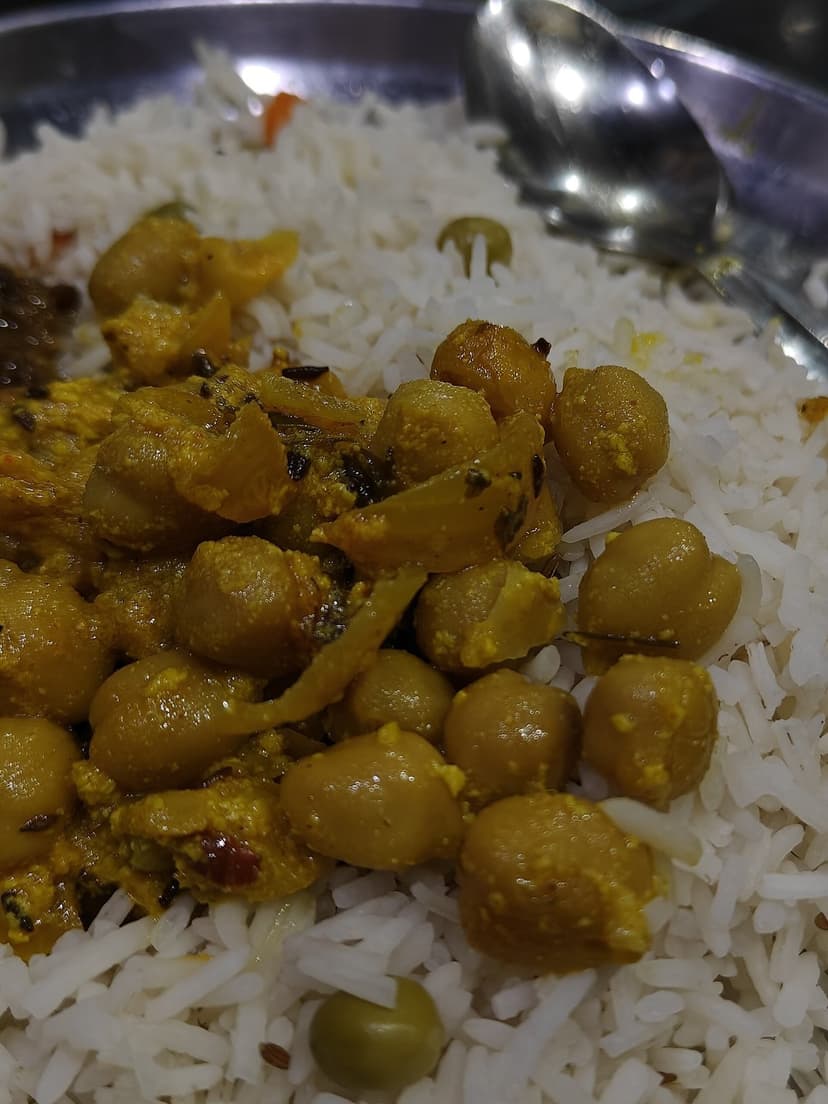
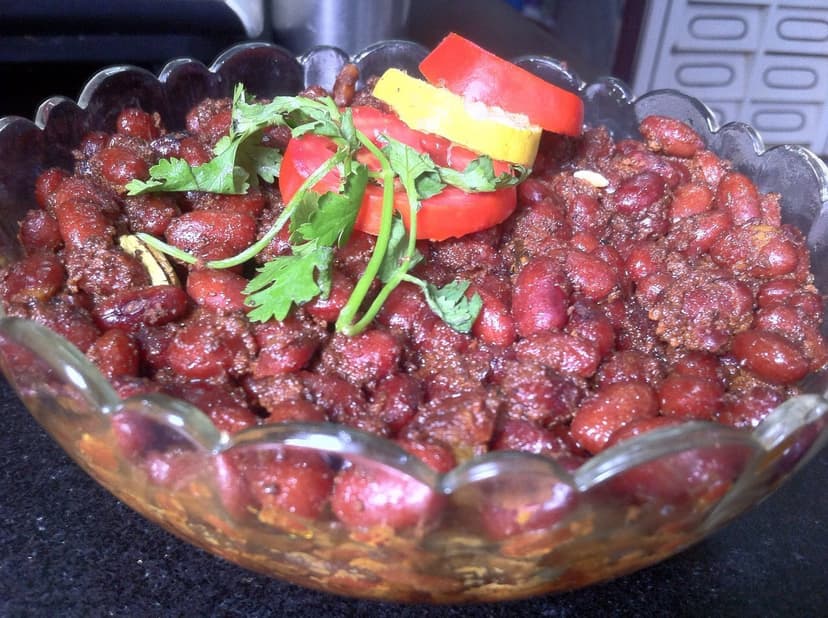
Madra is the yogurt-and-ghee curry that holds every dham together. White chickpeas, kidney beans, or sometimes black-eyed peas, slow-cooked in well-whipped curd until the gravy thickens to almost ivory and the beans soak up everything around them. No onion. No garlic. No tomato. The pulse and the dahi are the entire dish, and the cook's only job is to not let the curd split.
The chana version is the easy one. The rajma madra, made with the small dark Chamba kidney beans, is the harder one to find outside the dham circuit and the better-tasting if you do. If you stay in any homestay in Kullu, ask for it the night before and the family will probably soak the beans for you.
Khatta meetha mahni
Mahni is the sour-sweet finishing curry of the Kangri dham. Tamarind, jaggery, mango powder, a pinch of asafoetida, and the heat of dried red chilli, all reduced to a pourable sauce. You get it at the end of the meal, drizzled over the last spoonful of rice, as a sort of palate cleanser. It is the dish most outsiders find weirdest on first taste, and the dish most Kangra people will defend with personal violence. Try it twice before deciding.
Sepu vadi
This is the Mandyali dham's hero dish. Soaked black urad dal ground with ginger and green chilli, lifted with lemon juice and a pinch of Eno, steamed for fifteen minutes flat, sliced into discs, deep fried until they crisp at the edges, and then dropped into a spinach-puree gravy thinned with curd. The Mandi version uses spinach. The Kangra version uses plain dahi. The technique is fussy enough that homestay cooks in Mandi consider it a test of whether they will let you eat with the family.
Babru
A small fried bread, smaller than a poori, stuffed with a sweet-or-salty urad paste, eaten in Mandi, Kullu, Manali and Shimla. Babru is a Sair-festival dish in many villages, fried by the dozen on Ashwin Sankranti morning, the women starting before dawn. Zee News' Hindi food desk has a writeup.There is a sweet version with sugar inside the dough, and a salty version with chilli and ajwain, and a Kullu cook who knows you well will make both on the same day so you can compare them straight.
Bhaturu (not the Punjabi bhatura)
This is the one that needs the most disambiguation. A bhaturu is a Kullu sourdough flatbread, leavened with khameer (a wheat-flour starter that the household keeps alive for years), pan-cooked until soft, and eaten with rajma madra. It is not the Punjabi bhatura that comes with chole. Same word root, completely different bread. If you order "bhaturu" in a Kullu dhaba and they hand you a puffed Punjabi bhatura, you are in a tourist place. Find another.
Patrode and chiladru
Patrode are colocasia-leaf rolls, layered with a besan-ajwain batter, rolled tight, steamed, sliced and pan-fried until the edges crisp. They are a Sair-festival staple in Kangra and Mandi villages, and they are one of the few HP dishes that have crossed the border to Uttarakhand and become claimed by both. Kafal Tree's writeup is the best one I have read. Chiladru is a buckwheat-and-besan pancake from Kullu and Mandi, eaten on the morning of Sair, plain or with a smear of ghee.
The non-veg side that nobody writes about
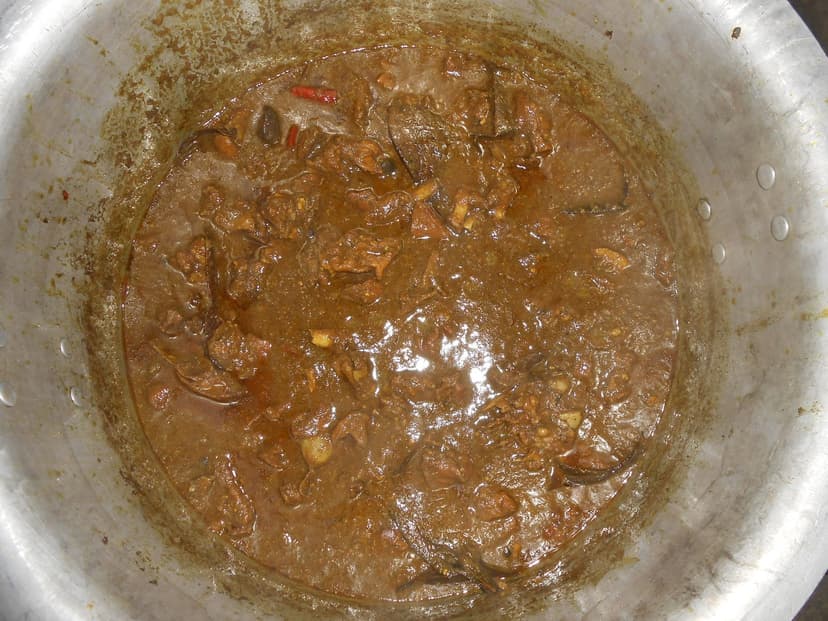
The single biggest misconception travellers carry into Himachal is that it is a vegetarian state. It is not. The HP government's own cuisine page uses an almost startling phrase: "non-vegetarian food is the norm in Himachal, and leafy vegetables are only a recent induction." Read that twice. The official tourism portal is telling you that the daily kitchen, in most of upper Kullu and Mandi and lower Lahaul, runs on meat.
The dham is sattvic for ritual reasons. The Tuesday lunch in the same household is not.
The dishes worth knowing:
- Khamod meat (Chamba). Mutton slow-cooked in ghee with curd, cashew, dates and raisins, finished with a pinch of saffron. It sounds like a Mughal dish and tastes like nothing else in HP. You will not find it on any restaurant menu I know of. You will find it at a Chamba wedding.
- Chha gosht. Lamb in a yogurt gravy, slow-cooked, finished with a tadka of jakhiya (more on jakhiya below). The most-ordered Himachali non-veg dish in India Today's Hindi food coverage.
- Khatta karai meat. The Kangra-Mandi sour mutton, finished with anardana. Sharper than chha gosht, less rich than khamod.
- Tudkiya bhath (Chamba). Rice cooked together with masoor dal, dahi, elaichi, dalchini, tomato, potato and peas. The Hindi recipe sites are firm on one thing: देसी घी के बिना यह डिश अधूरी मानी जाती है। Without desi ghee the dish is considered incomplete.
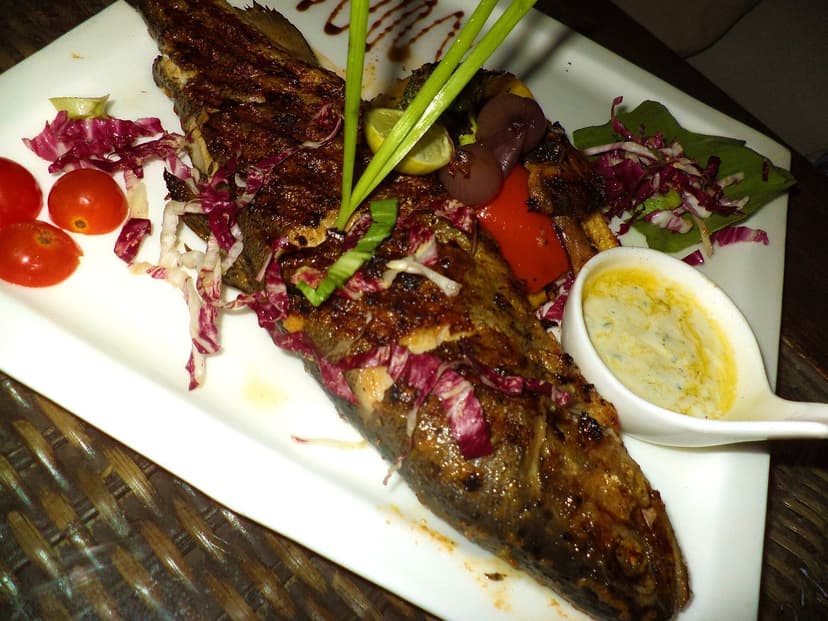
And the trout. Kullu, Tirthan and the Beas tributaries are stocked with rainbow trout (a colonial leftover, the fish were imported from Europe in the 1900s) and most Manali tourist menus will sell you a "Kullu trout" pan-fried in butter. The good ones use whole fish, the lazy ones serve fillets that have travelled in from Pathankot. If TripAdvisor rates a restaurant well in Manali for trout, it is almost always the whole-fish kind. Ask before ordering.
The two spices that hold the food together
Two spices do most of the work in a real Himachali kitchen, and most travellers leave the state without ever hearing their names.
Jakhiya. A small black mustard-like seed, Cleome viscosa, used as the foundational tadka for almost every aloo, lauki, kaddu, rajma and kadhi dish in upper Kullu and Lahaul. Kafal Tree, in a piece I have read three times, calls it "पहाड़ी मसालों की आत्मा", the soul of Pahari spices. A pinch of jakhiya in hot ghee gives a dish a slightly bitter, slightly nutty top note that is the single most identifiable Himachali flavour to anyone who grew up here. Jakhiya is also shared with Uttarakhand, which both states will fight you about.
Jambu. A wild Allium grass that grows above 3,000 metres in Kinnaur, Lahaul and Spiti. It is the dal tadka of the high villages. There is no good substitute. Friends in Reckong Peo press a small handful of dried jambu into my pocket every time I visit, and I ration it for months.
If a homestay kitchen in Kullu is using either of these, you are in a household that still cooks the way the village did fifty years ago. Compliment them. They will feed you better.
Mountain food: Kinnaur, Spiti and Lahaul
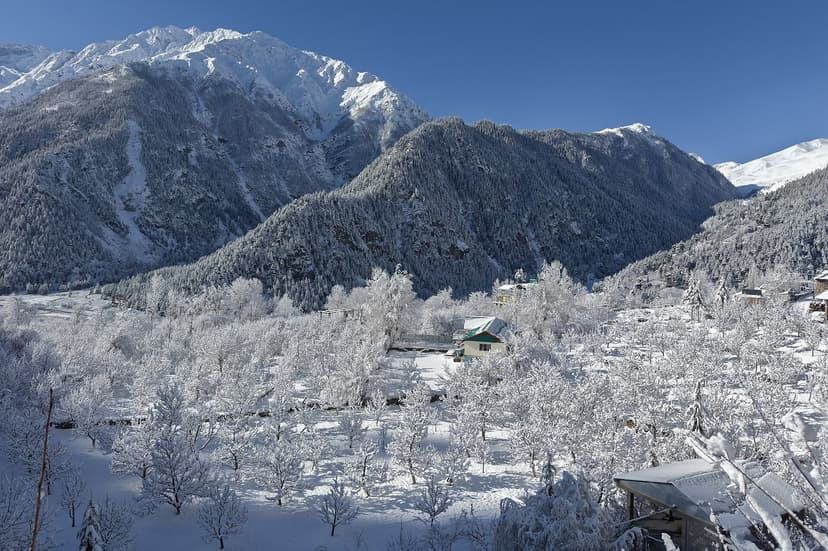
Above 2,500 metres, the food changes shape. The wheat thins out and barley takes over. The cooking fat shifts from ghee to butter. The Tibetan-Buddhist plateau starts to push into the kitchen, even in households that are still nominally Hindu. By the time you reach Tabo or Nako, the daily food is barely Indian at all.
What to actually eat:
- Thukpa. The Tibetan noodle soup that has become the default dinner in Spiti. Hand-pulled noodles, root vegetables, sometimes a bit of yak meat or chicken, broth that has been simmering all afternoon. Every village in Spiti has a thukpa cook the locals trust.
- Tsampa. Roasted barley flour, mixed with butter tea into a pliable dough, eaten by hand. This is the high-altitude breakfast of the Tibetan plateau and you will be served it in any genuine Spiti homestay if you ask.
- Po cha (butter tea). Salted, churned with yak butter, drunk in small bowls all day. Most travellers hate it on the first sip, tolerate it on the second and start asking for refills on the fourth. Stay long enough to get to the fourth.
- Chhang. The barley beer. Cloudy, mildly sour, slightly fizzy, fermented in clay pots for a few days. Halda and Losar (the Lahaul and Spiti new years) run on it.
- Lugdi. The Kinnauri equivalent, made from glutinous rice rather than barley, fermented with a starter cake of herbs in a clay pot for three or four days. Stronger than chhang. Less polite.
- Khapse. Fried barley cookies, deep-fried in mustard oil, eaten in vast quantities at Losar.
- Aktori. A Lahauli festival cake made from buckwheat leaves and wheat flour, baked rustic-style. Almost no English food writing covers it.
Kinnaur sits between the two worlds. It still eats siddu, but the stuffing might be dal or pine-nut paste rather than walnut. It still does dham, but with more emphasis on rajma than on madra. And it has the only food in Himachal that is genuinely apple-based: apple cider, apple-leather strips, apple chutney, dried apple slices that get added to winter dal. If you visit Sangla or Kalpa in autumn, the orchards are doing all the work for you. Our Spiti villages guide has the village-by-village logistics if you want to plan a Kinnaur-into-Spiti food route.
Wild foods: gucchi, buransh and the things you cannot buy in a shop
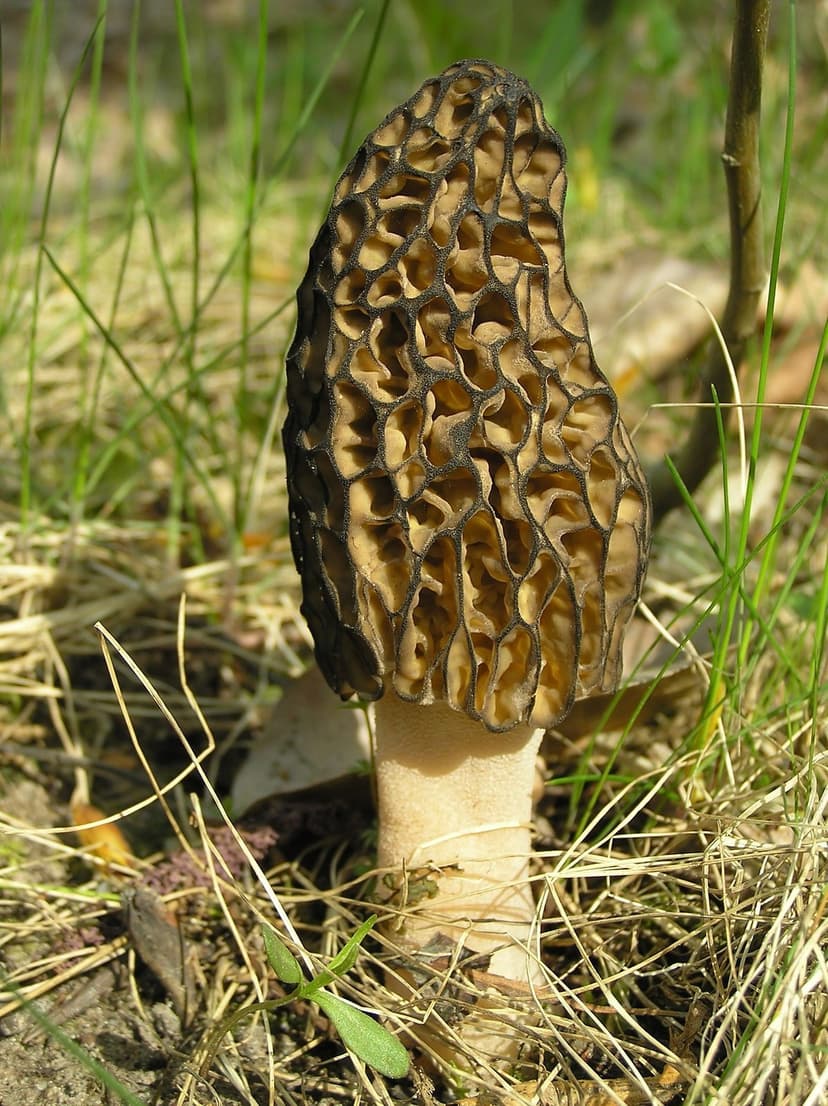
The most expensive food in Himachal is a wild mushroom called gucchi, locally also called dunghru, scientifically Morchella esculenta and a few related species. It is a morel, the same family of mushroom that French chefs go quietly insane over. Nobody has ever managed to farm it. It grows in the oak and deodar forests of upper Kullu, Mandi and Shimla after the spring lightning storms (Hindi folklore says "बारिश के दिनों में जब आसमानी बिजली चमकती है तो कुदरती रूप से गुच्छी उगती है", when lightning strikes during the rains, gucchi grows by itself).
The price has been climbing for years. Pahadi Amrut's market tracker, updated in February 2026, puts dried gucchi at Rs 25,000 to Rs 40,000 per kilo, with the better grades clearing Rs 40,000. Fresh, low-grade morels run Rs 8,000 to Rs 15,000. The Kuthah fair in Seraj, Mandi district, is where most of the year's harvest changes hands. The buyers are mostly middlemen feeding into Delhi celebrity weddings and diplomatic gifts. PM Modi reportedly likes gucchi. The local women who do the actual picking will not tell you which patch they hit yesterday, no matter how nicely you ask, and that is the right answer.
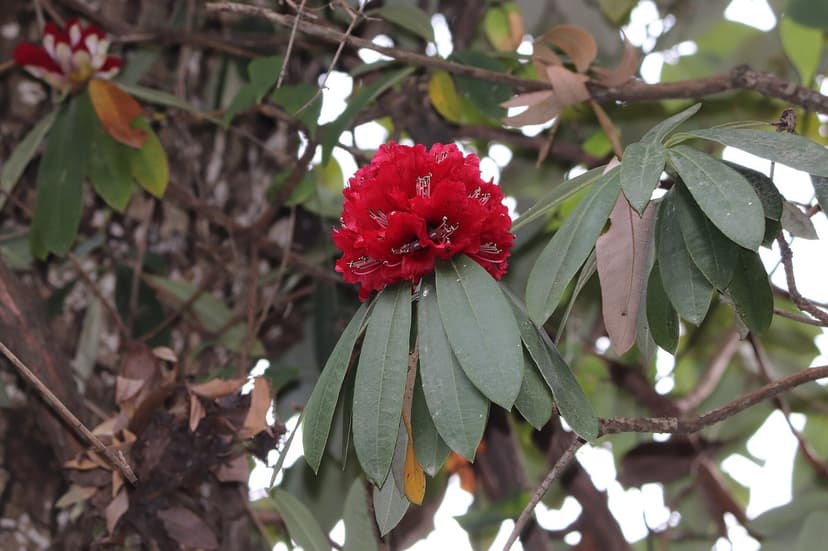
The other wild thing worth chasing is buransh, the rhododendron flower juice. The petals get boiled with sugar and lemon for a few minutes and the result is a deep pink, slightly tannic, weirdly mineral drink that locals swear is good for blood pressure. It only exists between mid-March and late April, when the rhododendrons bloom up and down the lower hills. Bottled supermarket versions are pasteurised to death. The roadside steel-tumbler version, served by a woman who has just walked down from a buransh tree with a basket, is the real one. Two rupees more, ten times the drink.
The drinks (and the tea everyone forgets)
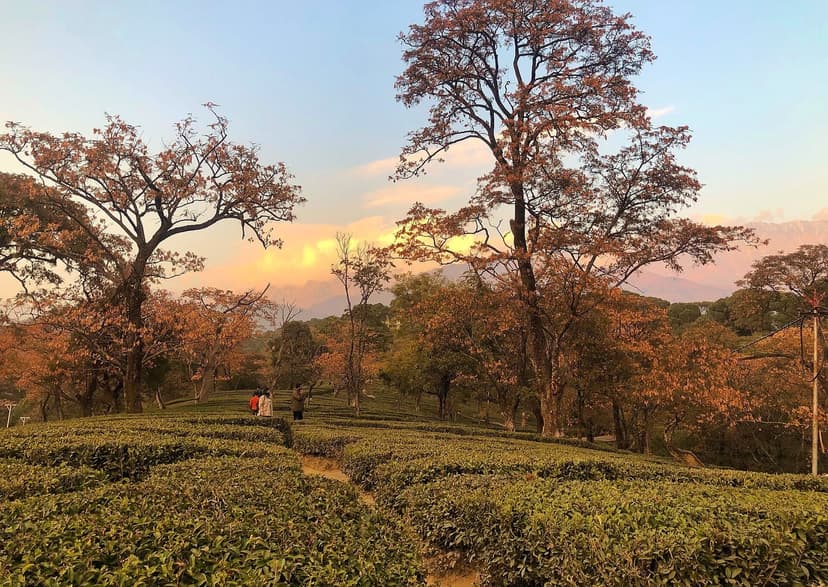
Kangra tea is the secret nobody outside HP knows about. The valley has been growing tea since 1849, planted by the British in the wake of the Anglo-Sikh wars, and the gardens around Palampur and Dharamshala have been producing orthodox black, oolong and green continuously since then. The most well-known of the working estates, Wah Tea Estate in Palampur, was founded in 1857 on 213 hectares of hill slope and is now run by the third and fourth generations of the Prakash family, who acquired it in 1953. They make 90 percent orthodox black, the rest split between oolong, green and white. They have been pesticide-free for over seven years. Most working days you can walk into the factory and ask for a tasting; some afternoons you cannot. Worth trying anyway.
The other drinks worth a mention:
- Buransh juice (above).
- Chhang and lugdi (above).
- Arak. A clear distillate made from chhang. Lahaul households make it at home. Rough, herbal, depending on whose home you are in, occasionally great.
- Local apple cider. A small but emerging Kinnaur thing. Sangla and Reckong Peo have a couple of producers worth trying if you are in the area in autumn.
- Old Monk and ginger-honey tea. The unofficial drink of every Manali backpacker hostel and every Lahaul truck stop. Yes, this counts.
Where to actually eat (and where to skip)
Shimla
Himachali Rasoi, 54 Middle Bazaar, is the right first stop. Climb down the stairs next to Baljees on the Mall and ask anyone in the bazaar where the rasoi is. They will point you. The Kangri Dham thali in 2026 is around Rs 240 to Rs 300 for a half thali, going up to about Rs 400 for the full sit-down, and the place is strictly vegetarian, no onion, no garlic, in keeping with the dham tradition. Google rates them 4.2 stars on over 2,300 reviews. The Shimla district administration has the place listed as a public utility, which tells you something about how seriously the local government takes the dham heritage. Skip the Mall Road thali joints. They are tourist-priced and shallow.
Mandi (and the road from Mandi to Manali)
Sharma Dhaba is the Mandyali dham name everyone in the district will give you. Dham Dhaba on the same Mandi-Manali highway is the more democratic version, the one Mohit opened so that regular people could eat dham on a Tuesday rather than waiting for a wedding invitation. Both are unfussy. Both serve sepu vadi properly. Both will let you sit on the floor if you ask.
Chamba
Mame da Dhaba in Sultanpur, in Chamba district, is the Chambyali dham reference. HPTDC Hotel Iravati in Chamba town will, if you ask the kitchen the night before, prepare madra and kadhi chawal for the next day. The HPTDC kitchens are not artistic. They are honest, which in this context is the higher compliment.
Manali and upper Kullu
The Mall Road has a place called Himachali Dham restaurant that does a passable thali, useful as an introduction. The honest Manali advice is to skip the restaurants on the highway and walk into Old Manali, where two or three small dhabas (the names rotate, so just ask which one is doing siddu that morning) will feed you better, cheaper, and with more wood-smoke in the food.
The best Himachali food I have eaten in Manali, by some distance, was a homestay dinner cooked by my landlords grandmother. Patrode, rajma madra, sweet siddu, and a tiny bowl of khatta meetha mahni, served on a steel plate that was older than I am. Nothing on a Mall Road menu has come close. The lesson generalises: in HP, you eat better with families than with restaurants. Always.
Kinnaur and Spiti
You will not find a great Himachali restaurant in Reckong Peo or Kaza. You will find homestays. Stay at any village homestay in Kalpa, Sangla, Tabo or Lhalung and ask for the local food, by name, the night before. They will cook it. The kitchens of those villages are still doing the work that the cities have outsourced to dhabas. Our Spiti road trip guide has the homestay logistics village by village.
| Item | Cost | Note |
|---|---|---|
| Half Kangri Dham thali at Himachali Rasoi, Shimla | Rs 240 | ~half portion, 2026 verified pricing |
| Full Kangri Dham thali at Himachali Rasoi | Rs 300-400 | unlimited refills |
| Single siddu at a Kullu roadside vendor | Rs 150 | feeds two adults, walnut chutney, desi ghee |
| Mandyali Dham at Sharma Dhaba or Dham Dhaba | Rs 250-450 | depending on day and crowd |
| Trout at a Manali tourist restaurant | Rs 600-1,200 | whole fish only, fillets are cheaper but usually frozen |
| Homestay dinner with the family | Rs 250-500 | included in most Kullu/Kinnaur/Spiti homestay rates |
| Kuthah fair gucchi (dried, retail 2026) | Rs 25,000-40,000 per kg | middlemen will tell you it is cheaper at the source. They are lying |
| Wah Tea Estate orthodox black, 250g | Rs 400-700 | buy at the estate, not at the airport |
Want a Himachali to sanity-check your food itinerary? Email us your draft route. We will tell you which dhaba is worth the detour, which town you should be skipping, and which day of the week the dham at Sharma is freshest.
How to actually eat like a local
The five rules I would give a friend visiting for the first time:
- Stay in homestays. Restaurants in HP, even good ones, are tourist-calibrated. The food in a Kullu or Kinnaur grandmothers kitchen is better, cheaper and stranger than anything on a menu. Ask for "ghar ka khana" the night before and write down the name of every dish she serves you.
- Time your visit to a festival. Sair (Ashwin Sankranti, around 17 September 2026), Lohri, Halda and Losar (Lahaul and Spiti new year, late January) are the days when the village kitchens fire up the dham food in earnest. You will not eat a real dham at any other time.
- Buy siddu from a village vendor, not a Mall Road shop. The Mall Road siddu is a polite generic version. The vendor in a roadside Kullu shack, with a steamer balanced on a kerosene stove, is making the right one.
- If the chutney is tomato, the place is a tourist trap. Walnut chutney for siddu. Tamarind-jaggery for the dham. Pomegranate seed for the Kangri food. Tomato sauce for nothing.
- Ask in Hindi. Even basic Hindi opens doors that English does not. The phrase "aaj kya banaya hai aapne ghar mein?" ("what have you cooked at home today?") will get you served better food than any restaurant order in the same town. I have tested this for years. It works.
FAQ
What is Himachali Dham?
Dham is the communal sit-down feast of Himachal Pradesh, served on stitched sal-leaf plates on the floor, prepared overnight by hereditary Boti cook clans in copper pots. Each major district has its own version (Mandyali, Kangri, Chambyali, Kulluvi, Sirmauri, Bilaspuri, Shimla), and the seven look like seven different cuisines once you get into the details.
Do Himachalis eat non-veg?
Yes, most of them, every day. The HP government cuisine page states it directly: non-vegetarian food is the norm, and leafy vegetables are a recent induction. The Dham is vegetarian by ritual, but the household kitchen runs on mutton, lamb, river trout and (in Spiti) yak.
What is Siddu and where should I eat it?
Siddu is a yeast-fermented wheat bread, stuffed with walnut paste (or poppy seeds, or jaggery for the sweet version), crimped into a half-moon and steamed for 15-20 minutes. It is a Kullu and upper Shimla speciality. Eat it at a roadside vendor in Kullu (around Rs 150 a piece in 2026), with walnut chutney and desi ghee.
Where can I eat authentic Himachali food in Shimla?
Himachali Rasoi at 54 Middle Bazaar. Strictly vegetarian, Kangri Dham thali around Rs 240 for half, Rs 300-400 for full, in 2026. 4.2 stars on over 2,300 Google reviews.
What is the difference between Mandyali and Kangri Dham?
Mandyali serves sweet FIRST and uses tamarind. Kangri serves sweet at the END and uses anardana. Mandyali heroes are sepu vadi; Kangri heroes are chana madra and khatta meetha mahni.
What is Madra?
A yogurt-and-ghee curry of chickpeas, kidney beans or black-eyed peas, slow-cooked. No onion, no garlic, no tomato. The spine of every regional dham.
What are Boti chefs?
Hereditary mostly-Brahmin clans of cooks who specialise in preparing dham. Each district has its own families. Almost no English-language documentation exists.
What non-veg dishes are famous in Himachal?
Khamod meat (Chamba), Chha gosht, Khatta karai meat (Kangra-Mandi), Tudkiya bhath (Chamba), Kullu trout.
What is Buransh juice?
A pink seasonal drink made from rhododendron flowers, boiled with sugar and lemon. Mid-March to late April only.
What is Gucchi mushroom and why is it expensive?
Wild morel mushroom from upper Kullu, Mandi and Shimla forests. Cannot be farmed. Rs 25,000-40,000 per kilo dried in 2026.
How much does a Himachali food trip cost per day?
Rs 500-800 a day on a homestay budget. Lunch thali Rs 240, siddu Rs 150, trout dinner Rs 300.
Where can I buy Himachali ingredients to take home?
Kangra tea from Wah Estate Palampur. Chamba rajma from Chowgan shops. Walnut from roadside Kullu in autumn. Gucchi from the Kuthah fair, Seraj.
Planning a Himachali food road trip? Tell us your dates and we will sketch the route. We will tell you which festivals are happening that week, which homestays are cooking the local food, and which one of the dhabas is honest about its trout.
Sources
Primary (government and operator):
- Himachal Pradesh Tourism, official cuisine page: himachaltourism.gov.in/cusine. The government's own list of Dhams, Boti chefs and the "non-veg is the norm" line.
- Shimla District Administration, Himachali Rasoi public utility listing: hpshimla.nic.in.
- Wah Tea Estate, Palampur, official history page: wahtea.com. 1857 founding, Prakash family, orthodox-only.
Journalistic and Hindi food press:
- Aaj Tak Hindi travel and food coverage. Year-round HP food reporting in Hindi.
- ETV Bharat Himachal Pradesh Hindi desk. The Mandi-area news outlet that has covered Mohit's Dham Dhaba project.
- Prabhasakshi on the Boti tradition.
- Kafal Tree on jakhiya, jambu and Pahari spice culture.
- Pahadi Amrut's gucchi market tracker, February 2026. Authoritative on current dried-morel pricing.
- TripAdvisor reviews of Himachali Rasoi, Shimla (4.5 stars on 196 reviews).
Background reading: Wikipedia on siddu; Hindi Wikipedia on Himachali Dham.
You Might Also Like
Volunteering in Himachal Pradesh: 12 Organisations and How to Apply (2026)
Teach English in McLeod Ganj, conserve the Great Himalayan National Park, build with earth in Bir, or harvest apples in Kullu. Twelve real HP volunteer organisations with honest costs, the visa rule that gets foreigners deported, and how to apply.
How to Travel Himachal Without Wrecking It: A Quiet-Travel Manual
A non-preachy field manual for responsible travel in Himachal, by a Kullu local: how to behave, when to go, where to go instead, and the 2026 rules and bans that actually matter.
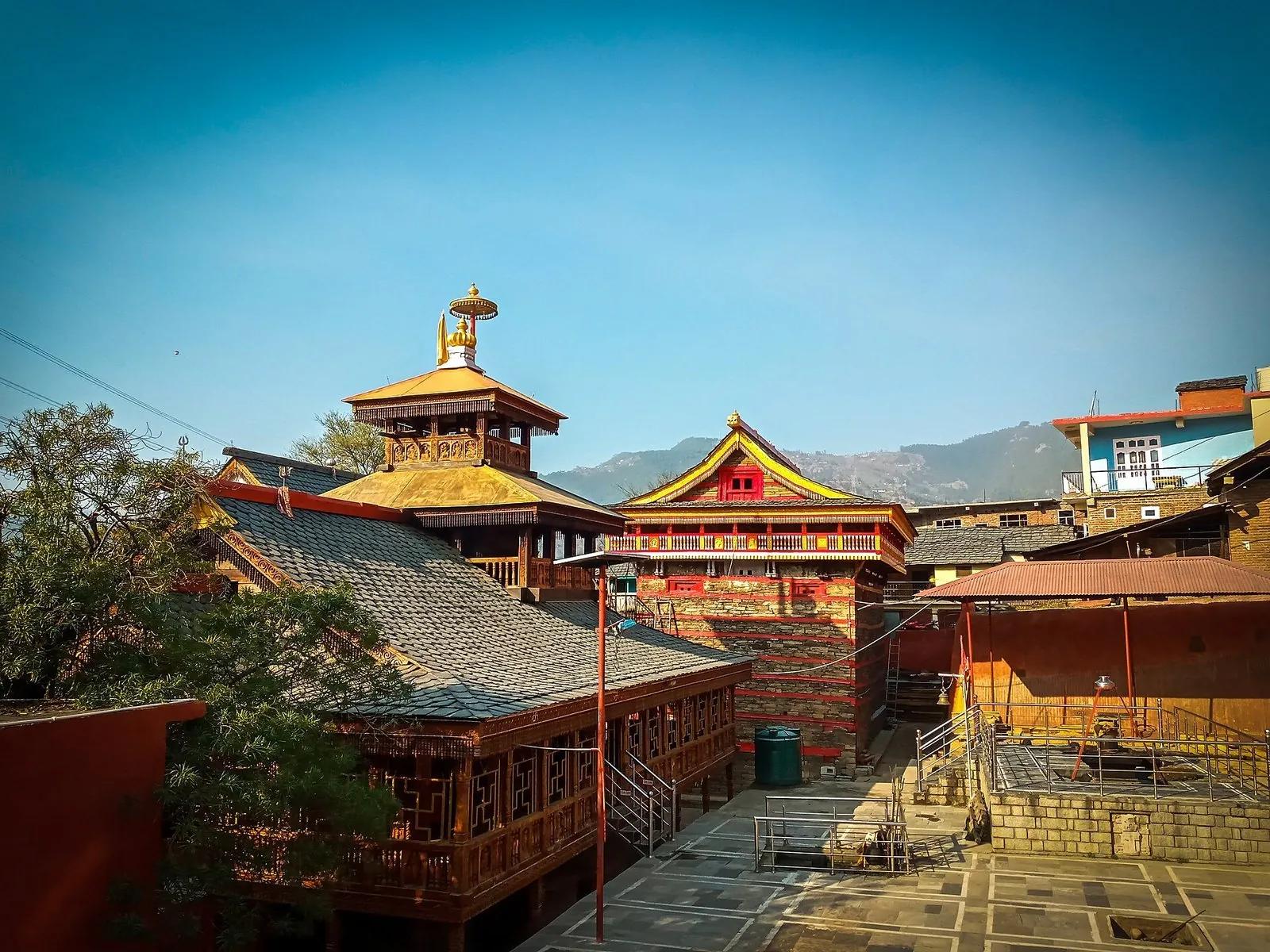
Mamleshwar Mahadev: The Eternal Flame Temple of Karsog
An eternal fire, a fist-sized wheat grain and a six-foot drum, kept in a mortar-less timber temple in the quiet Karsog valley. The honest story of Mamleshwar Mahadev: what is real, what is faith, and how to go.