
Manimahesh Lake Trek 2026: Sacred Pilgrimage Guide from Bharmour
I have been reading the Tribune on Manimahesh for as long as I have been writing about Himachal. There is one news story that always returns at the start of the monsoon, and another that always returns at the end of it. The first is the announcement of dates. The second is the count of who did not come back. I have never trekked to the lake. I am writing this as a Himachali who watched the 2025 yatra collapse on television, then read every Forest Department notice that followed, then waited to see what the 2026 administration would do differently.
What it has done, as of the Tribune piece on May 8, 2026, is bind the entire pilgrimage to a 2024 NGT order. The headline measures: no commercial activity in the Dal Lake catchment, mandatory online registration, daily pilgrim caps based on trail carrying capacity, new wooden bridges at Dunali and Dhancho, and an eco-fee plus sanitation charge being weighed. Bharmour Additional District Magistrate Vikas Sharma told the Tribune that temporary stalls between Hadsar and the lake will operate strictly under NGT norms or not at all. That is the kind of sentence which, in past years, would have been reported and forgotten by August. This year I think it sticks.
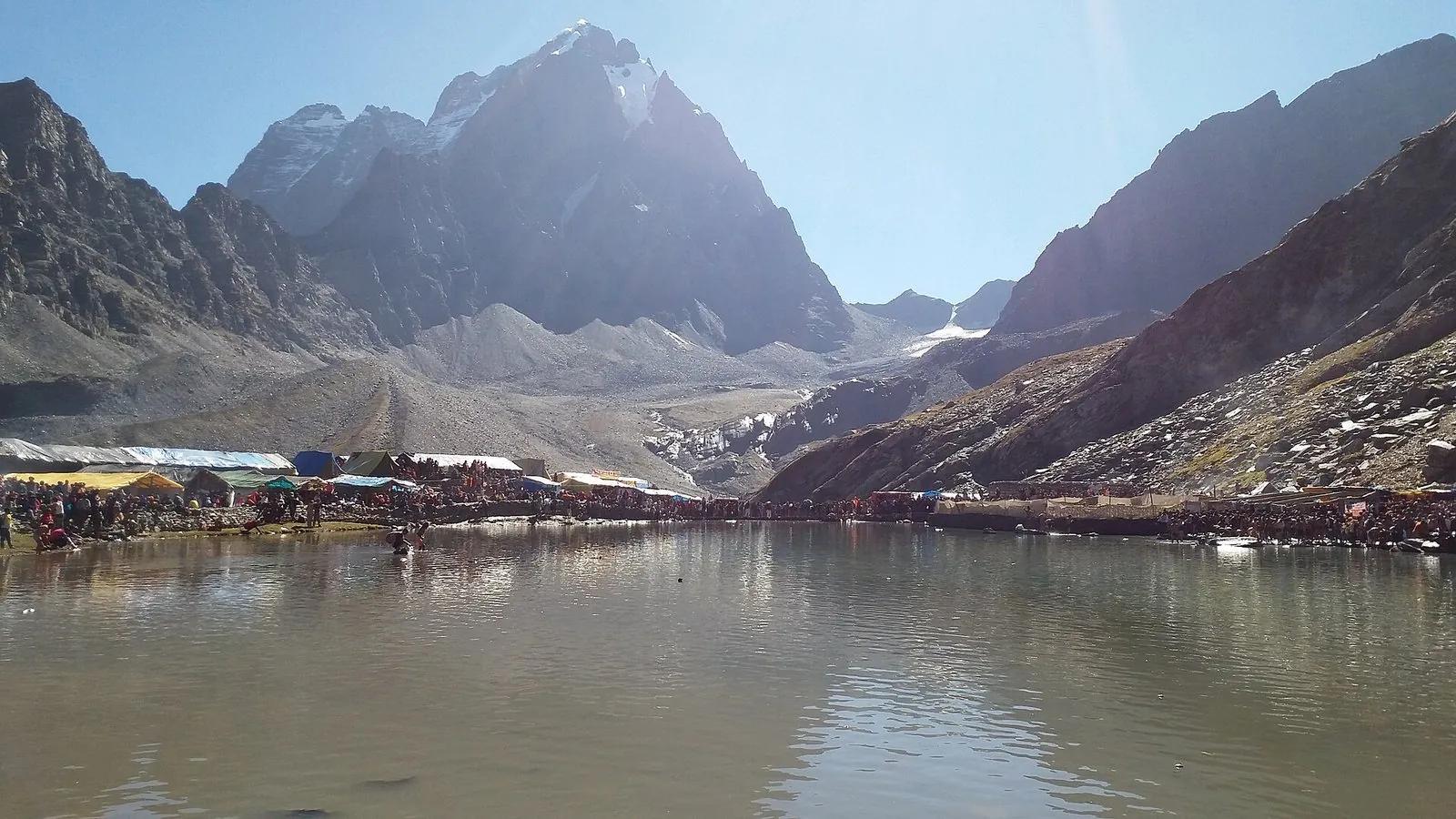
None of this changes what Manimahesh actually is: a glacial lake at 4,080 metres in Chamba district, with the unclimbed Manimahesh Kailash peak rising another 1,573 metres above it, ranked one of the five sacred Kailash mountains in Hindu cosmology and the only one of those five that you can reach with a moderately fit weekend. What the new framework does is change how you go, what you pay, and where you sleep.
Manimahesh at a glance
- Lake altitude: 4,080 m (13,390 ft)
- Peak altitude: 5,653 m unclimbed
- Trek length one way: 14 km from Hadsar
- Total ascent: ~1,800 m
- 2026 yatra dates: 4 to 19 September
- Registration: manimaheshyatra.hp.gov.in
- Registration fee: Rs 20 per pilgrim
- Difficulty: Moderate, with one steep section
- Frozen window: October to June
- Helicopter Bharmour to Gauri Kund: 10 to 15 minutes
Where Manimahesh sits in the Panch Kailash
Hindu cosmology recognises five sacred Kailash mountains. People know the first one. They almost never know the other four. The hierarchy matters because it tells you what kind of yatra Manimahesh is, and is not, compared to the others.
Mount Kailash in Tibet is the textbook Kailash, 6,638 metres of unclimbed quartzite, requiring a Chinese visa, a Nepal-side route, and three weeks. Adi Kailash in Pithoragarh, Uttarakhand, takes around ten days, an Inner Line Permit from the Dharchula SDM, and the patience to handle Lipu Lekh-side weather windows. Shrikhand Mahadev in Kullu district is a 35 km trek to a 75-foot natural shivling at 5,227 metres, considered the hardest of the five. Kinnaur Kailash, also in Himachal, climbs to a 79-foot rock formation that shifts colour from white to pink to crimson through the day.
Manimahesh Kailash, the fifth in this list, is the one you can do as an Indian-passport-holder with no permit, no border crossing, and a 14 km trek that most weekend trekkers manage. The catch sits in the elevation profile. The lake is at 4,080 metres, which is higher than Kheerganga or Triund, and the stretch immediately below it climbs hard enough that Bandar Ghati has been informally called the killer kilometre by locals in Bharmour.
The five Kailash mountains, side by side
| Mountain | Altitude | Trek | Permit | Days |
|---|---|---|---|---|
| Mount Kailash, Tibet | 6,638 m | 52 km parikrama | China visa via Nepal | 15 to 20 |
| Adi Kailash, Uttarakhand | 5,945 m | ~22 km | ILP Dharchula SDM | 9 to 10 |
| Shrikhand Mahadev, Kullu HP | 5,227 m | ~35 km | None | 5 to 6 |
| Kinnaur Kailash, Kinnaur HP | 6,050 m | ~16 km | ILP | 3 to 4 |
| Manimahesh Kailash, Chamba HP | 4,080 m lake / 5,653 m peak | 14 km | None | 2 to 3 |
The unclimbed peak
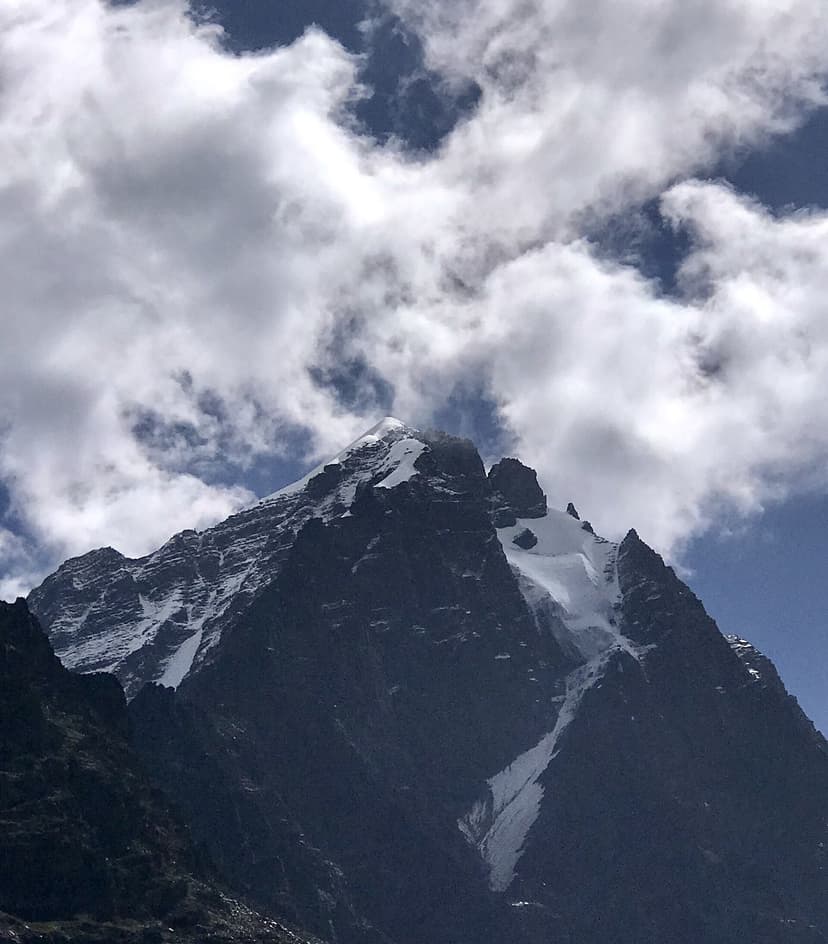
An Indo-Japanese expedition led by Nandini Patel attempted Manimahesh Kailash in 1968 and turned back without a summit. No team has officially climbed it since. The technical case is not why the peak is virgin. The reason is that the local Gaddi community treats the rock face as Shiva himself, and any climbing permit would require running over that sentiment in a way no district administrator has been willing to attempt.
This leaves Manimahesh Kailash as one of the few virgin 5,000-metre summits in the Indian Himalaya. The Wikipedia article gives you the technical specs and a paragraph on Nandini Patel. Walk into any Bharmour tea stall and ask about it, and the answer is shorter: Shiva refused. Both versions are true at the same time, and they happen to land on the same operational outcome.
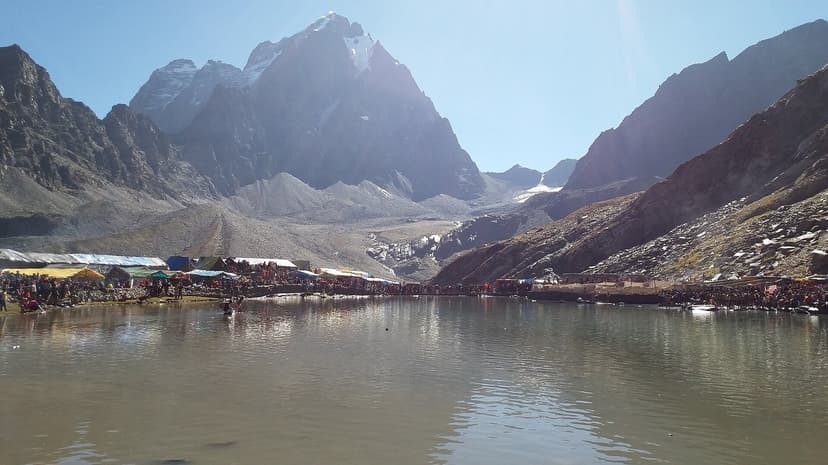
What you actually see from the lakeshore. The peak rises directly behind the lake on its northeast side. At dawn the first rays hit the summit and bounce off the snow into the water. The Gaddis call this the saffron tilak, and they wait for it. By 8 am the cloud usually closes in. If you want the photograph, you have to be at the shore by 5 am.
The trek, segment by segment
Hadsar is the road head. From Bharmour you take a shared jeep or local bus 13 km up the Budhil valley, gaining around 85 metres to land at 2,280 m. The trek begins from there.
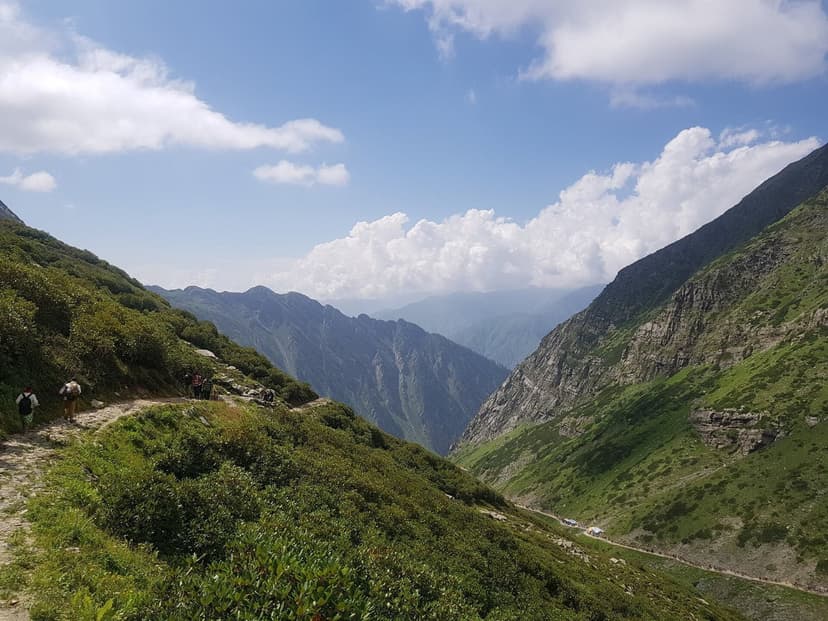
The first segment is Hadsar to Dhancho, six kilometres of forested climb to 3,170 m. You move through pine and deodar with intermittent waterfalls cutting the trail. Most pilgrims do this in three to four hours and stop for the night at Dhancho, where there is a tent colony, a langar that operates throughout yatra season, and the Gauri Nallah waterfall right beside the camp.
The second segment is Dhancho to Gauri Kund, around five and a half kilometres but climbing 800 m to 3,600 m. This is Bandar Ghati, the section locally named after the monkeys that used to share the cliffs. It is the steepest stretch of the trek, the one with the most loose-rock incident reports, and the one where 2025 went wrong. Gauri Kund itself is a small kund where women take their ritual bath. Manimahesh is one of the few major Hindu yatras that maintains a separate women-only kund.
The third segment is Gauri Kund to the lake, a kilometre and a half over grassy ridges and boulders, climbing to 4,080 m. By this point pilgrims who walked from Hadsar have been trekking for a day and a half. The Chaumukha, a marble four-faced Shiva idol, sits on the lakeshore. The dawn parikrama happens here.
4-day Manimahesh itinerary from Pathankot
- Day 0: Pathankot to Bharmour. Train or HRTC Volvo Pathankot to Chamba (~5 h), then bus or shared taxi Chamba to Bharmour (60 km, ~3 h). Stay at Bharmour, altitude 2,195 m.
- Day 1: Bharmour to Hadsar to Dhancho. Jeep 13 km to Hadsar (40 min). Trek 6 km Hadsar to Dhancho through forest (3 to 4 h), gaining 890 m to 3,170 m. Camp at Dhancho. Eat at the langar.
- Day 2: Dhancho to Manimahesh Lake. Trek 7 km Dhancho to Gauri Kund to lake (4 to 5 h), gaining 910 m. Bandar Ghati is the hard part. Camp lakeside.
- Day 3: Lake to Hadsar to Bharmour. Pre-dawn parikrama, then descend to Hadsar (6 to 8 h). Jeep to Bharmour.
- Day 4: Bharmour Chaurasi temples and return. Catch afternoon bus to Chamba and overnight train back from Pathankot.
What 2025 actually was
I want to write this section honestly because the version of 2025 that has gone around on travel blogs is sentimental, and a sentimental version is a bad basis for planning a 2026 trip. Here is what the news cycle actually contained.
The 2025 yatra opened on 9 August. By 23 August, the Bharmour subdivision had logged several days of heavy rainfall, and the early morning of 24 August brought multiple cloudbursts in the Budhil valley. Landslides closed the trail in three places, and the Bharmour-Hadsar road broke at Mehla Ghar. Around 5,000 pilgrims were on the route or above Dhancho when the slides hit. The Tribune and Free Press Journal counts that week put the death toll at 10 with four missing; Amar Ujala carried a follow-up that pushed it to around 20 as bodies were recovered through early September. The Chamba ADM cancelled the yatra outright on 24 August. The Indian Express headlined it as the first mid-yatra suspension in decades.
One Amar Ujala account from a survivor at Dhancho carried this line, in Hindi: "बारिश और भूस्खलन के बीच भी हजारों शिव भक्त जय भोले नाथ के जयकारों के साथ आगे बढ़ रहे थे" — even with rain and landslides, thousands of Shiva devotees were pushing forward chanting Jai Bhole Nath. That is what 2025 was. Not a failure of pilgrimage, but a weather event that hit at the worst possible point in the calendar. Helicopters were grounded by the same low ceiling that triggered the slides. Most fatalities, per HP Police accounts, came from oxygen deficiency and hypothermia in the hours of waiting for rescue rather than from rockfall directly. The IAF lifted around 6,000 pilgrims to Chamba over the following 72 hours.
Bandar Ghati is where the danger is. Most yatra deaths over the past decade, including in 2025, have happened on the Dhancho to Gauri Kund stretch and not at the lake itself. The cliffs are loose. The path is narrow. Shooting-stones, the local term for falling rock, are a daily monsoon-season fact. If you are slow on your feet, pony up. If the weather is closing in, do not push through.
What 2026 changes
The Tribune on 8 May 2026 reported the new framework in detail, citing a 2024 NGT order as the legal basis. Online registration becomes mandatory from the entry gates. Pilgrim movement will be regulated daily, which means a soft cap on numbers based on what the route can absorb. No shops or langars are permitted in the catchment area of the Dal Lake itself. Temporary stalls on the Hadsar to Dhancho stretch must hold Forest Department permission and pay sanitation charges. The administration is weighing an eco-fee on top of the existing Rs 20 registration fee, although as of this writing the eco-fee has not been formally notified. Two new wooden bridges are being built at Dunali and Dhancho to replace the structures that broke in 2025.
The practical implication for a 2026 pilgrim is that you cannot show up at Hadsar without a QR code. You cannot pitch your own tent at the lake. You cannot count on a stall outside the regulated zones. Pricing will be slightly higher because the levies fund waste management and trail maintenance.
I think these are good rules. The yatra has been dirty for years. Tribune photos from 2024 showed plastic strewn across the catchment. The NGT order is the only mechanism that would have ever forced the cleanup, and the 2025 disaster gave the administration the political room to enforce it.
The two Manimaheshes
There are really two distinct trips here, and people who go expecting one and get the other complain about it on TripAdvisor.
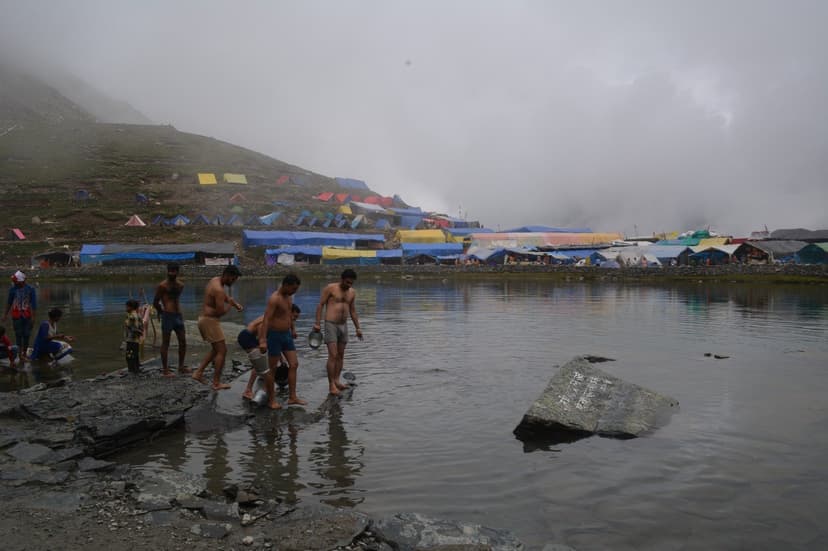
The yatra trip is the one you read about. Late August into early September, with five to eight thousand pilgrims a day moving up the trail. Free bhandara at Dhancho, Gauri Kund, and the lake itself serves dal, rice, and chai to anyone who walks up. The crowd is the experience. One TripAdvisor reviewer last year wrote that it was really crowded and dirty; another, on the same page, called it a pilgrimage to remember. Both were accurate, and they were describing the same week. The Hindi pilgrim accounts in Amar Ujala lean closer to the second framing: "बाबा भोले के दर्शन के लिए हम हर साल आते हैं, रास्ता कठिन है लेकिन आस्था आगे बढ़ाती है" — we come every year for darshan of Baba Bhole; the path is difficult but faith pulls us forward.
The off-season trip is the one almost no one writes about. Late May through early July is the early window; another opens in early October before the lake freezes for the winter. There are no langars in either window. There are no tent colonies. You carry your own food or you do not eat. The trail above Dhancho is often patchy with old snow into June. The lake, in those conditions, looks like the photographs that solo trekkers post on Reddit and Pinterest: turquoise-blue, reflecting the peak, with not a soul in the frame. That is the trip people are describing when they call Manimahesh the best trek they have ever done. They went in May.
Yatra season versus off season
| Question | Aug-Sep yatra | May-Jun and Oct |
|---|---|---|
| Crowd | 5,000 to 8,000 per day at peak | Solo trekkers, possibly nobody |
| Food | Free langar all the way up | Carry your own |
| Accommodation | Tent colonies, Rs 500 to 1,500 | Camp solo, no facilities |
| Difficulty | Moderate, well-marked | Same plus snow patches above Dhancho through June |
| Atmosphere | Devotion, music, chants, naga sadhus | Wind, silence, the lake |
The Gaddi connection
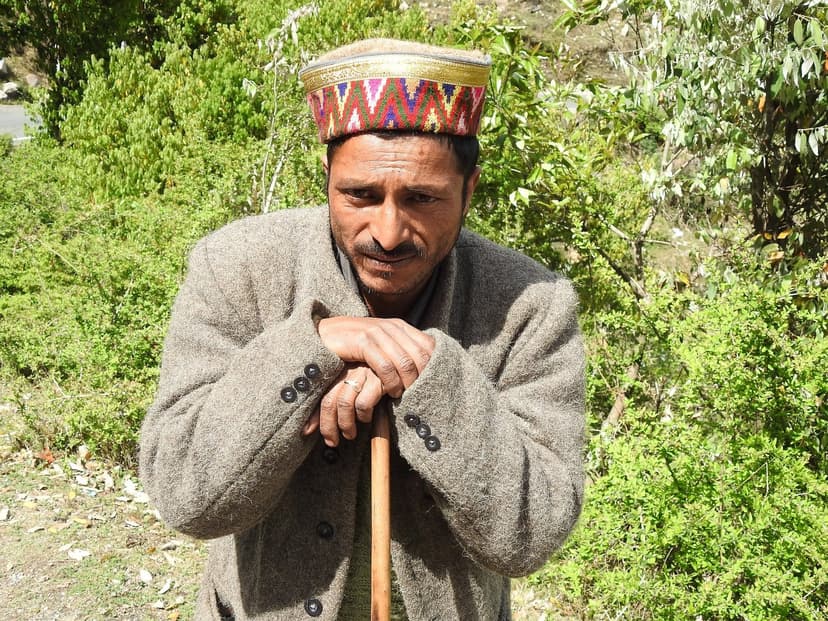
The Gaddis are a semi-nomadic shepherd community of upper Bharmour subdivision, and Manimahesh is theirs first. The yatra is not a generic Hindu pilgrimage that incidentally passes through Gaddi land. The Gaddis consider Manimahesh their ancestral deity. The chola (woolen cloak) and dora (rope-belt) of traditional Gaddi dress, in their telling, were gifts from Shiva at the lake.
The Chhari, the trident-staff of the Shri Dashnami Juna Akhara, departs from the Lakshmi Narayan temple at Chamba and walks the route on foot, halting at Radha Krishna temple Julakadi, then Rakh, Durgthi, Bharmour, Hadsar, Dhancho, and finally arriving at the lake at dawn on Radhashtami. The Mahanta of the Dashnami Akhara leads the procession. In 2025 the Chhari left Chamba on 24 August, the day the yatra was suspended. Naga sadhus from the same akhara, ash-smeared, walk barefoot from Haridwar or Prayagraj, and camp at Hadsar, Dhancho, and Gauri Kund through the yatra. If you go in season, you will see them. The visual register of Manimahesh in early September is naga babas plus Gaddi shepherds in dora and chola plus tens of thousands of devotees in shoes, shorts, and rain jackets.
Bharmour, the gateway you should not skip
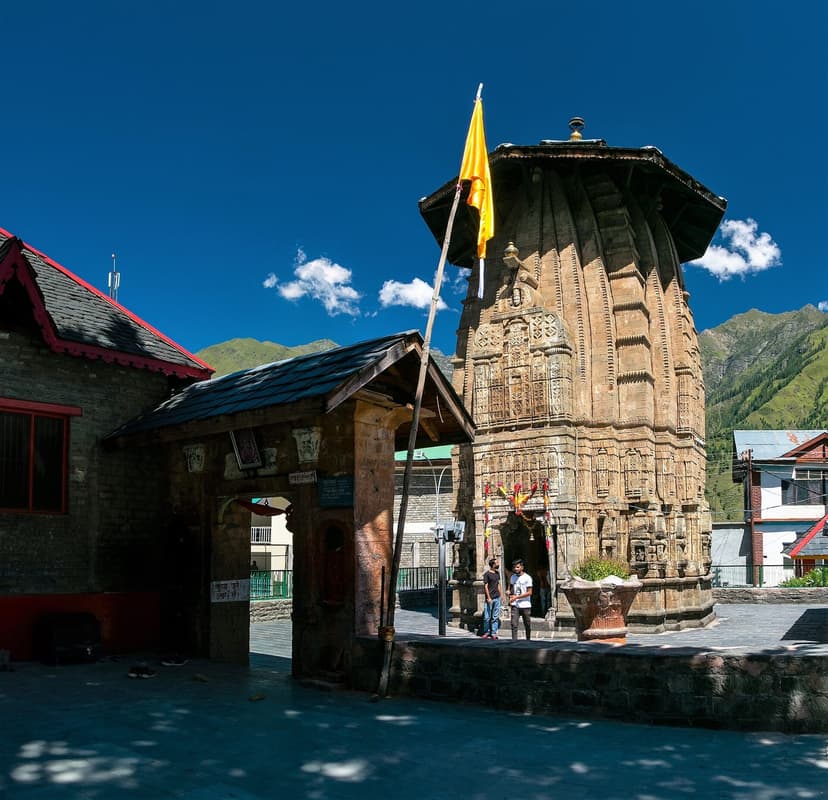
Almost everyone treats Bharmour as a single-night logistics stop on the way up to the lake. That is a small mistake worth correcting. Bharmour was the capital of the old Brahmpura kingdom from the seventh century onward, and the Chaurasi cluster in the centre of town holds 84 shikhara stone shrines built across the four hundred years between then and the eleventh century. The Lakshana Devi temple inside the same compound is one of the oldest standing wooden temples in India, dated by archaeological survey to around 680 CE, and the carved doorway alone is worth an extra hour off the yatra schedule. The short version for yatra planners: book an extra night in Bharmour, do Chaurasi at sunrise, and catch the late-morning bus to Hadsar. That single decision is the difference between a logistics trip and a meaningful one.
Registration mechanics
The official portal is manimaheshyatra.hp.gov.in, run by the HP government with the Chamba district administration as the back-end owner. One mobile number can register up to five pilgrims, which is what most family groups use. The fee is Rs 20 per person, payable online at the time of registration or in cash at the Hadsar entry gate. A medical self-declaration is part of the form. The Bharmour SDM coordinates entry-gate medical checks at Hadsar Base Camp during yatra season; staff actually look at blood pressure and oxygen saturation if you appear unwell. Pilgrims over 75 are formally barred. Pregnant women beyond six weeks of pregnancy are also barred. The portal issues a QR code; you must carry it printed or on your phone for the gate verification.
The Tribune piece says that for 2026, registration will be enforced more strictly than in 2025, where the disaster made head-counts impossible. Police and SDM staff will run the gate at Hadsar between 6 am and 6 pm through yatra season. If you walk up without registration, the gate sends you back to do it. Plan accordingly: if you have a fixed return train from Pathankot, do not leave registration to be done in Bharmour at the last minute.
Register early. Registration usually opens 4 to 6 weeks before yatra start. For the 2026 dates of 4 to 19 September, expect the portal to go live in late July or early August. The slot system is first-come, first-served on a daily basis, so registering on the morning the portal opens gets you better dates.
How to reach
The standard approach is Pathankot first. Pathankot in Punjab is the closest railhead, with direct overnight trains from Delhi (about 9 hours on the Sampark Kranti or the Dhauladhar Express), and connections from Mumbai, Howrah, and Jammu. There is also a small airport with limited Delhi flights. From Pathankot bus stand to Chamba, HRTC runs both Volvo AC and ordinary services; redBus is showing the basic non-AC fare from Rs 265 in May 2026, with Volvo AC services higher and the journey running about five hours through Banikhet and Dalhousie bypass.
From Chamba to Bharmour, regular HRTC buses run from early morning through evening for around Rs 100 on a 60 to 65 km road that takes about three hours. The road in question is NH-154A, and as of late May 2026 it is still under landslide-mitigation work near Mehla Ghar; the Tribune reported in April that traffic is staggered between 6 am and 6 pm with 25 to 30 minute halts every hour to allow blasting and stabilisation. Plan for the timing variability and avoid the last bus of the day if you can help it.
From Bharmour to Hadsar, shared jeeps run all day during yatra season at Rs 200 to 500 per seat depending on demand and weather. Off-season, you usually have to charter the whole jeep at Rs 500 to 1,000. The drive is 13 km of switchbacks up the Budhil valley and takes about 40 minutes when nothing has slid recently.
Helicopter
The HP government licences a seasonal heli-taxi between Bharmour and Gauri Kund through private operators during peak yatra. The flight is ten to fifteen minutes one way. From Gauri Kund the helipad to the lake is a one-kilometre walk along a defined path. Pricing has been a moving target. The 2024 rate was Rs 9,000 one way per person; the 2025 rate dropped sharply to around Rs 3,500 one way during the 9 to 31 August window, after the state subsidised it. For 2026, full helicopter packages from Pathankot via operators like HelloTravel and NTP Groups are advertised from Rs 13,250 (Hellotravel deal id 95913, three-night package), although per-segment pricing varies and a weight surcharge of Rs 50 per kg applies for passengers above 85 kg.
If you have ageing parents who want the darshan but cannot do the trek, helicopter is the obvious move. The cleanest booking path is through the Chamba district notice board at hpchamba.nic.in, which republishes each year the list of operators authorised for that season; an alternative is to work through a Bharmour-based agent who handles the yatra clientele year on year.
Budget
Three rough cost lines. Yatra-season DIY is the cheapest. Free bhandara, tent colonies for Rs 500 to 1,500, and shared transport throughout, comes in at Rs 3,000 to 8,000 for the full 5-day trip from Pathankot. Off-season DIY is around Rs 8,000 to 15,000 because nothing is included. Guided packages with all transport, accommodation, food, and a guide run Rs 15,500 to 22,000 with operators like Shikhar, Broza Adventures, and Kahlur. Helicopter packages add another Rs 13,000 to 18,000 on top of the base.
Manimahesh budget breakdown
| Line item | Cost in INR |
|---|---|
| Pathankot to Chamba HRTC | Rs 265 to Rs 1,200 (Volvo AC) |
| Chamba to Bharmour HRTC | Rs 100 to Rs 200 |
| Bharmour to Hadsar shared jeep | Rs 200 to Rs 500 |
| Bharmour stay (HPTDC Gaurikund) | Rs 1,500 to 3,000 per night |
| Tent colony at Hadsar or Dhancho | Rs 500 to 1,500 per night |
| Sevadar bhandara meals | Free during yatra season |
| Pony Hadsar to Gauri Kund | Rs 1,500 to 3,000 one way |
| Registration fee | Rs 20 per pilgrim |
| Helicopter Bharmour to Gauri Kund | Rs 3,500 to 9,000 one way |
| Total DIY yatra season | Rs 3,000 to 8,000 from Pathankot |
| Total guided package | Rs 15,500 to 22,000 from Pathankot |
If a custom Chamba-circuit plan would be useful (Manimahesh plus Khajjiar plus Dalhousie plus Bharmour Chaurasi), drop us a note with your dates and group size.
Where it fits in Chamba district
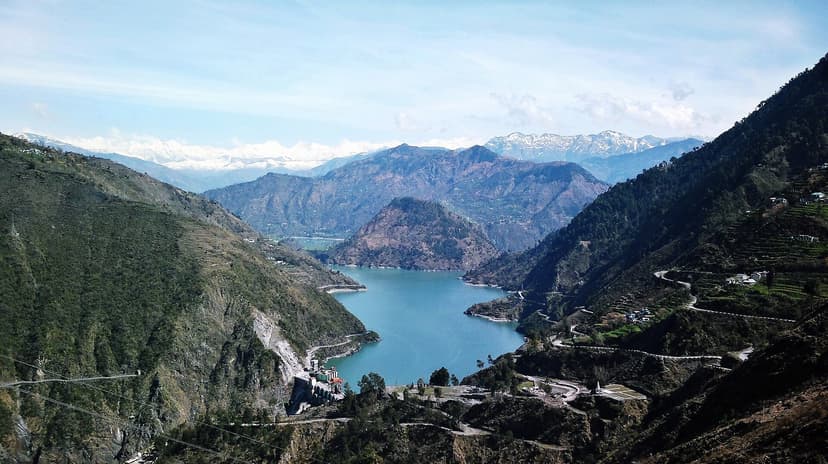
One of the underrated planning angles for Manimahesh is to combine it with Chamba town, Khajjiar, and Dalhousie into a single 6 to 7 day Chamba-circuit trip. Chamba town is the district headquarters, sits at 996 m on the Ravi River, and has the Lakshmi Narayan temple complex from where the Chhari yatra departs. Khajjiar is the meadow town often called the mini-Switzerland of India, 24 km from Dalhousie. Dalhousie was a colonial-era hill station founded in 1854. The road network between them is reasonable, and after the trek you are well-placed for two or three nights of recovery.
What to pack
The trek is not technically demanding, but the altitude and weather are. The minimum kit list, layered for 25 °C days at Bharmour and minus 5 °C nights above Dhancho, is roughly:
- One waterproof shell jacket and rain pants. Monsoon weather above Dhancho is wet most days.
- One fleece or down mid-layer for nights at Dhancho and the lake.
- Trekking shoes with proper grip. The Bandar Ghati section punishes worn soles.
- Walking pole or a stout stick. The pilgrim chhari serves the same purpose.
- Headlamp for the pre-dawn parikrama at the lake.
- Two-litre water bottle plus oral rehydration sachets.
- Diamox 250 mg, paracetamol, basic altitude medication after consulting a doctor.
- A small first-aid kit with antiseptic and crepe bandages.
- Sunglasses and high-SPF sunscreen. UV at 4,000 m is brutal even when overcast.
- Power bank that handles cold (sub-10 °C nights drain phone batteries).
- Cash. ATMs end at Bharmour. Beyond that is hand-to-hand.
If you are buying gear in Delhi or Chandigarh, Decathlon stocks the cheapest workable layers across the whole range, although a sleeping bag for the lakeside camp is a private-buy or rental decision. Manali, Shimla, and Bharmour itself have basic woollens for purchase; the carry-list above plus those local additions covers a moderate-fitness pilgrim.
Health and safety
The risks are altitude, weather, and the rocks above Dhancho. None of them are theoretical. Acute mountain sickness can hit even moderately fit trekkers above 3,500 m if you push the pace; the standard rule of climbing high and sleeping low is harder to follow on this route because the schedule is set by the sevadar camps. Take Diamox if your doctor approves it, and stop pushing if your headache is sharper than a normal effort headache.
The weather above Dhancho changes hourly. If clouds are closing in and the wind picks up, get below Dhancho rather than above it. Most fatalities historically have come from people who were caught between the camp and the lake when weather hit and chose to keep moving forward.
The Bharmour Civil Hospital is the nearest serious medical facility, around 4 hours from Dhancho if helicopters are flying and the road is open. Plan accordingly. Travel insurance is unambiguously a good idea for this one.
Frequently asked questions
When is the Manimahesh Yatra in 2026?
The 2026 yatra runs from 4 September (Janmashtami chhoti shahi snan) to 19 September (Radhashtami badi shahi snan). The Tribune confirmed the dates on 8 May 2026. Registration is mandatory and opens about 4 to 6 weeks before yatra start.
How long is the trek from Hadsar to Manimahesh Lake?
About 14 km one way, gaining 1,800 m. Most people split it across two days with a night halt at Dhancho. Total round trip from Hadsar including the rest day at the lake is 2 to 3 days.
Is the Manimahesh trek difficult?
Moderate. The trail is well-marked through yatra season. The Hadsar to Dhancho section is a steady climb through forest. The Dhancho to Gauri Kund section, called Bandar Ghati, is the steep one and the historically dangerous one.
Do I need to register for Manimahesh Yatra?
Yes. Registration through manimaheshyatra.hp.gov.in is mandatory in 2026 under the NGT framework. The fee is Rs 20 per pilgrim. One mobile number can register up to 5 people. You receive a QR code that must be shown at Hadsar entry gate.
Can I do the yatra without trekking?
Yes, by helicopter. A 10 to 15 minute flight from Bharmour to Gauri Kund, then a 1 km walk to the lake. The 2025 rate was around Rs 3,500 one way; 2026 packages from Pathankot start at Rs 13,250.
What was the 2025 disaster?
Cloudbursts and landslides hit the Bharmour subdivision on 24 August 2025, leading to the first mid-yatra suspension in decades. Around 5,000 pilgrims were stranded. The official confirmed death toll across the yatra reached at least 10, climbing to around 20 as bodies were recovered through early September. The IAF rescued around 6,000 over 72 hours.
How does the 2026 NGT framework change things?
Mandatory online registration. Daily pilgrim caps based on route carrying capacity. No commercial activity in the Dal Lake catchment area. New wooden bridges at Dunali and Dhancho. Possible eco-fee on top of the Rs 20 registration. Stricter monitoring of langars and shops between Hadsar and the lake.
What is Panch Kailash and where does Manimahesh fit?
Five sacred Shiva mountains: Mount Kailash in Tibet, Adi Kailash in Uttarakhand, and three in Himachal: Shrikhand Mahadev, Kinnaur Kailash, and Manimahesh Kailash. Manimahesh is the most accessible. Shortest trek, no permit, moderate difficulty.
Can elderly people do the Manimahesh Yatra?
Pilgrims over 75 are formally barred. A medical self-declaration is mandatory. Pregnant women beyond 6 weeks are also barred. Senior citizens with medical clearance can attempt it on a pony or palanquin from Hadsar.
How do I reach Manimahesh from Delhi?
Overnight train Delhi to Pathankot, around 9 hours. HRTC bus or shared taxi Pathankot to Chamba, around 5 hours. HRTC bus or shared taxi Chamba to Bharmour, around 3 hours. Shared jeep Bharmour to Hadsar, 40 minutes. Trek 14 km. Total 4 to 5 days for the full round trip.
Read next
If you are extending into a Chamba-circuit trip, the natural add-ons are Khajjiar and Dalhousie after the trek for two or three nights of recovery. For HP-wide context, our HP permits 2026 guide covers the rules across other districts; the best-time-to-visit guide sets the seasonal frame; and our snow drought analysis is the climate-change context for why August yatra weather is becoming less predictable. If you are weighing whether to come for the yatra at all, our contact line is open for specific date or fitness questions.
Sources
- Tribune, 8 May 2026: Manimahesh Yatra 2026 to run under strict NGT framework
- HP Chamba district portal: hpchamba.nic.in/manimahesh-yatra/
- Manimahesh Yatra registration: manimaheshyatra.hp.gov.in
- Wikipedia: Manimahesh Lake, Manimahesh Kailash Peak, Adi Kailash, Kinnaur Kailash, Shrikhand Mahadev, Mount Kailash
- Free Press Journal, August 2025: 10 dead, 4 missing in Manimahesh landslides
- Indian Express: first mid-yatra suspension in decades
- Amar Ujala: 20 devotees died, 390 rescued
- Down To Earth: 5,000 stranded after cloudbursts
- Kahlur Adventures, Shikhar.com, Broza Adventures: 2026 package pricing
- HelloTravel, NTP Groups: 2026 helicopter packages
- OpenStreetMap Nominatim: Hadsar, Khajjiar, Dalhousie, Pathankot coordinates
You Might Also Like
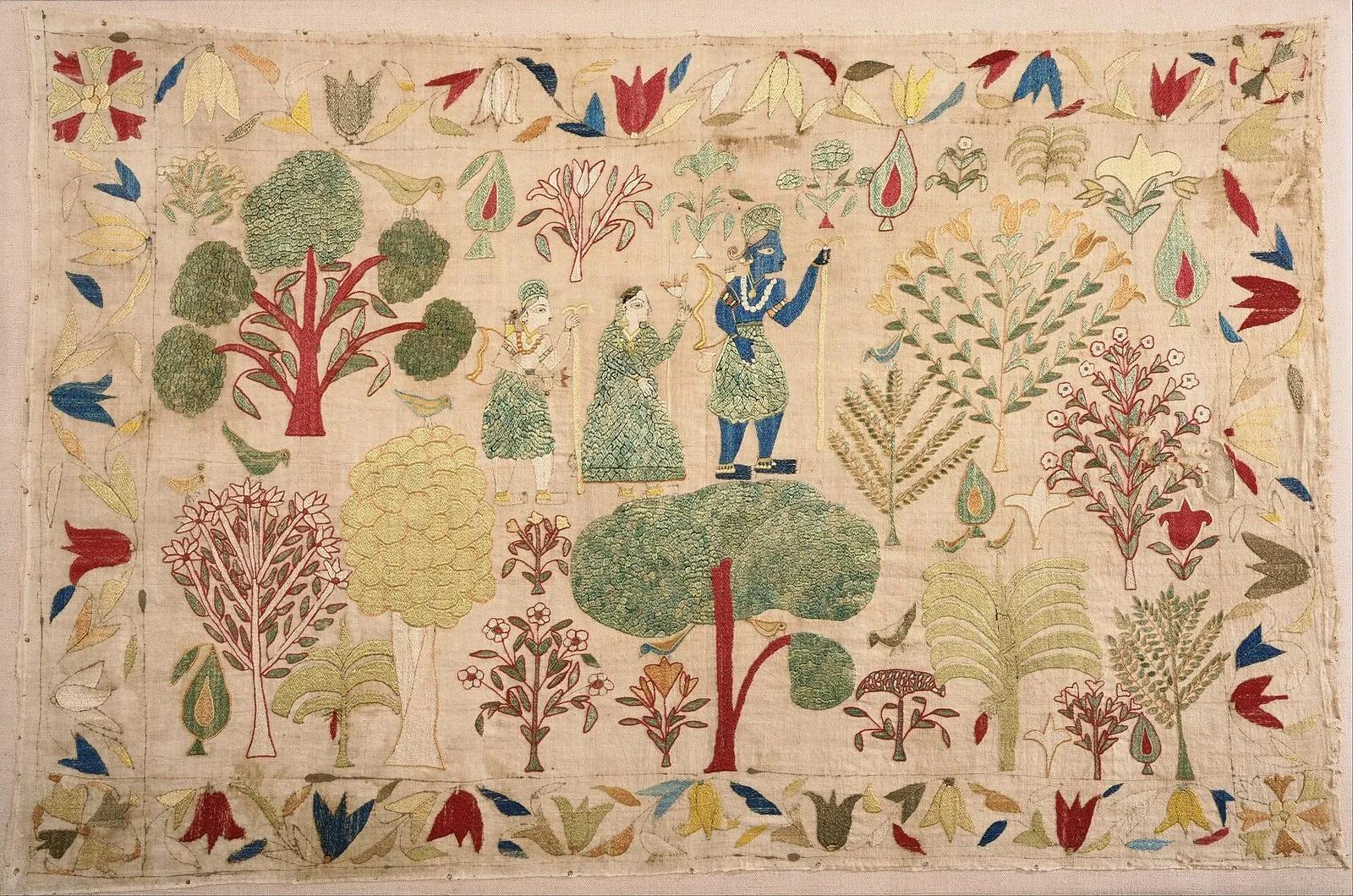
Chamba Rumal: The Embroidery With No Wrong Side
Flip a real Chamba rumal over and the back is identical to the front. The dorukha stitch, the Pahari painters who draw the designs, real 2026 prices, where to buy one, and the truth about that UNESCO claim.
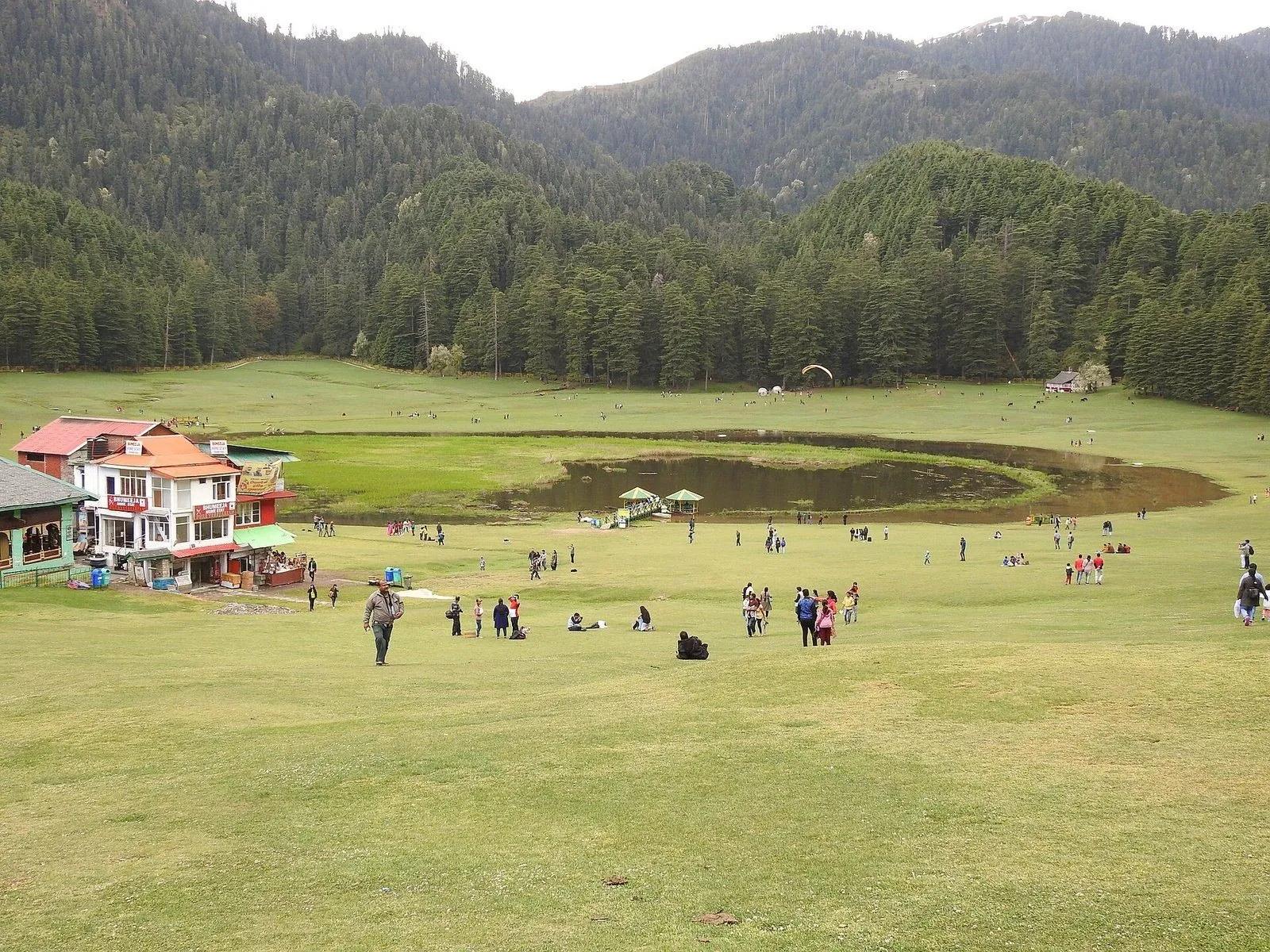
Dalhousie & Khajjiar in 2 to 3 Days: The Honest Itinerary, With the Chamba Upgrade
Reddit says Dalhousie has nothing except scenic beauty. Correct, and that is the pitch. A day-by-day Dalhousie-Khajjiar plan with Dainkund, Kalatop, real traveller budgets, and the Chamba day most people wrongly skip.
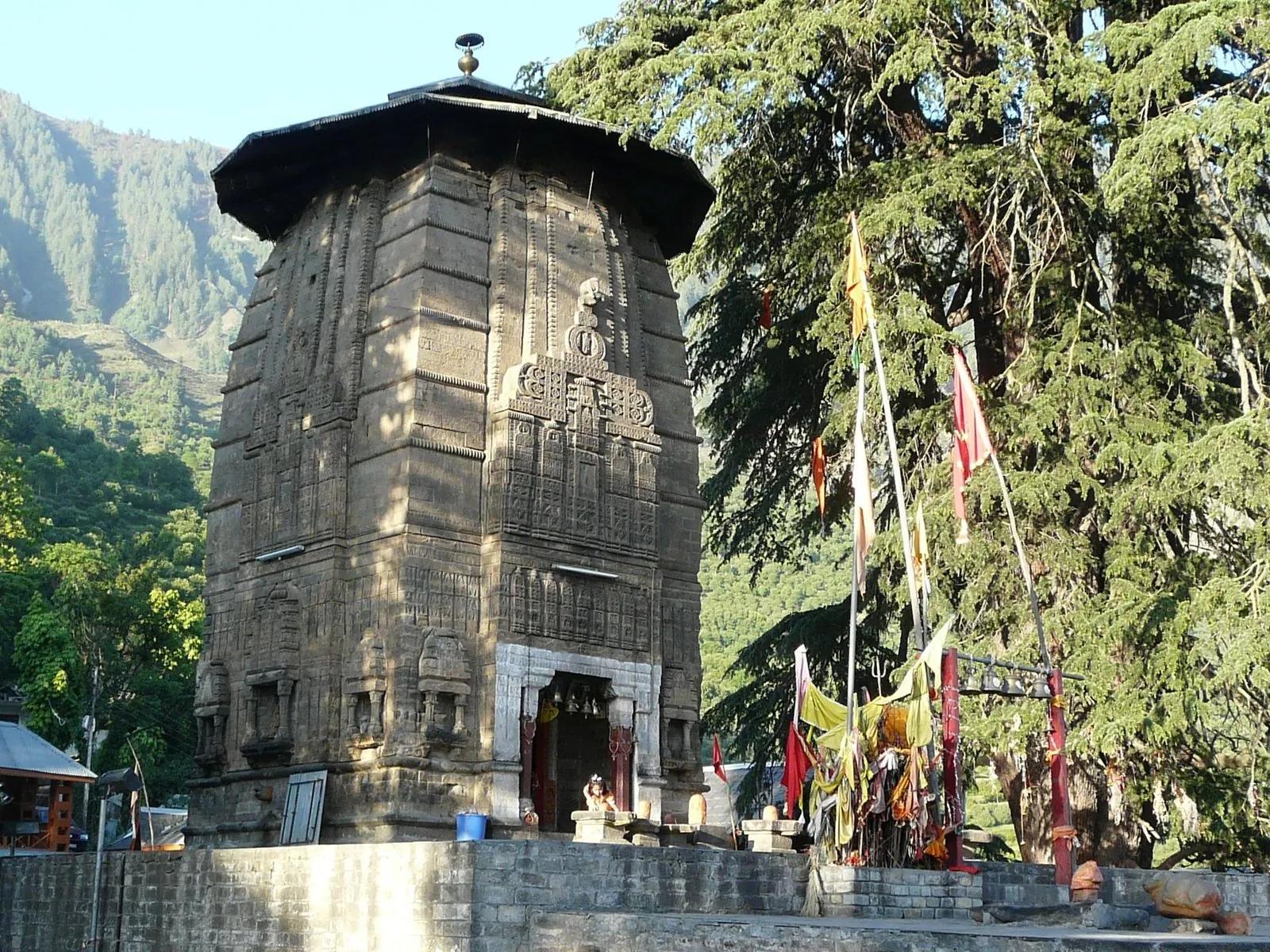
Bharmour: 84 Temples, Zero Tourists
Bharmour was the capital of the Chamba kingdom for four hundred years, and then a princess preferred a different valley. What got left behind is a courtyard of 84 temples almost nobody walks through, the only Yamraj temple on earth, the homeland of the Gaddi shepherds, and the trailhead for the Manimahesh Yatra. A full guide from a Kullu local who keeps going back: temple-by-temple, Gaddi culture, the 2026 yatra (Sep 4 to 19), routes, costs, and the honest hard parts.