
Dalhousie & Khajjiar in 2 to 3 Days: The Honest Itinerary, With the Chamba Upgrade
Somebody on r/desitravellers settled the Dalhousie argument in one line: "Dalhousie has nothing except scenic beauty." It was posted as a warning. I think it is the pitch. There is a kind of trip where you want eleven activities a day and a reel for each one, and there is a kind of trip where you want cold deodar air, a long walk, a hot paratha, and a mountain wall at sunset. Dalhousie is the second trip. Pretending otherwise is how people end up disappointed at 1,970 metres.
Full disclosure before we start: I am from Kullu, on the other side of Himachal. Chamba district is not my home turf, and I am not going to pretend it is. What follows is built from the HP Chamba district records, the Hindi press, the HPTDC tariff sheets, and a few hundred Reddit comments from people who actually went. Where a traveller said it better than I could, I quote them with their username. That is the deal.
- Trip length
- 2 days core, 3 with Chamba
- Dalhousie altitude
- 1,970 m
- Khajjiar altitude
- 1,920 m
- Dainkund Peak
- 2,755 m, easiest summit walk in HP
- Chamba town
- 996 m, noticeably warmer
- Nearest railhead
- Pathankot, 80 km, 2.5 to 3 hrs
- Best months
- April to June, October to November
- Budget for two
- Rs 1,500 to 2,900 per day at the budget end
Why Dalhousie, if everyone says there is nothing to do
Because "nothing to do" is doing a lot of work in that sentence. Dalhousie was built for doing nothing. The British bought five hills from the Raja of Chamba in 1854, named the place after the Viceroy of the day, and used it to escape the plains in summer (HP Chamba district records). It never grew into a Shimla. No state capital, no railway, no mall-road circus on the same scale. What survived instead: two stone churches, long forest walks, and hotels with terraces that face the Pir Panjal.
The five hills, by the way, are Kathlog, Potreyn, Tehra, Bakrota and Bolun. I have now read six sources on this and no two of them spell all five the same way, so I am going with the district website and accepting defeat.
Reddit, to be fair, keeps receipts on both sides. The same forums that call the town empty also keep producing people like u/Dear_Cup_4817: "been to Dalhousie 3 times and i can never get enough of it." Three visits to a town with nothing to do. That tells you the "nothing" is the point.
"Dalhousie has nothing except scenic beauty."
A r/desitravellers user, January 2025. They thought it was criticism.
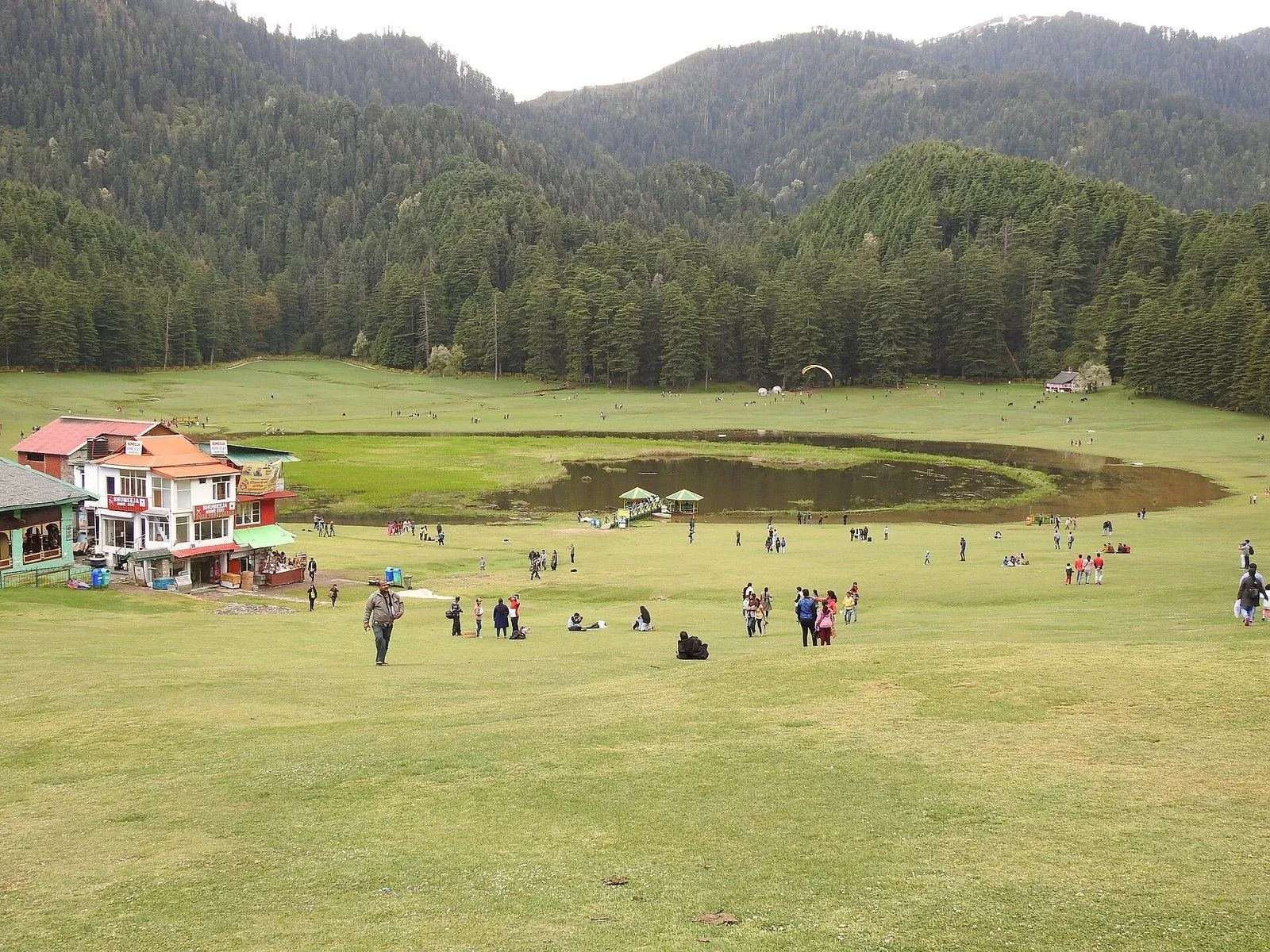
One more honest note before the itinerary. Khajjiar gets sold as the "Mini Switzerland of India", a tag it picked up on 7 July 1992 when Willy P. Blazer, then head of chancery at the Swiss embassy, put up a signboard and carried a stone from the meadow back to Bern (Wikipedia). Cute story, terrible marketing. The tag sets people up to expect the Alps and then blame a Himachali meadow for not being Interlaken. A commenter under one of those Mini Switzerland reels said it cleanly: "Beautiful place but lets it call the unique khajjiar, why always compare it with something else" (u/abbs002). Agreed. Khajjiar is a saucer of grass with a lake in the middle and a 12th-century serpent temple at its edge, ringed by deodars that go straight up for forty metres. That is enough.
The shape of the trip
Two days cover Dalhousie and Khajjiar without rushing. The third day is Chamba town, 45-odd km away, and it is the upgrade most people skip: a thousand-year-old former capital with a six-shikhara temple complex, one of the best small museums in north India, and food you will not find on a Dalhousie menu. Skip it if you only want pine air. Take it if the words "Pahari miniature painting" do anything for you.
Day 1: arrive, walk, do very little
Most people come via Pathankot. The overnight HRTC Volvo from Delhi runs about Rs 1,350 to 1,550 and takes around twelve and a half hours (bookable on the HRTC portal); the train-plus-bus combination is cheaper and honestly more pleasant. From Pathankot the ordinary HRTC bus up to Dalhousie cost one traveller exactly Rs 165 this season. The climb takes 2.5 to 3 hours, longer on weekends when traffic stacks up near Banikhet.
Banikhet matters more than the brochures admit. It is the junction town 6 km before Dalhousie where the Chamba road forks off, and as u/mojolife19 put it after a week there: "Dalhousie is definitely beautiful town, Banikhet is where main commercial area is." Buses drop you there; hostel crowd gets off, everyone else continues up to Gandhi Chowk.
Check in, eat, and resist the urge to make the first afternoon ambitious. The altitude is mild but the bus night was not.
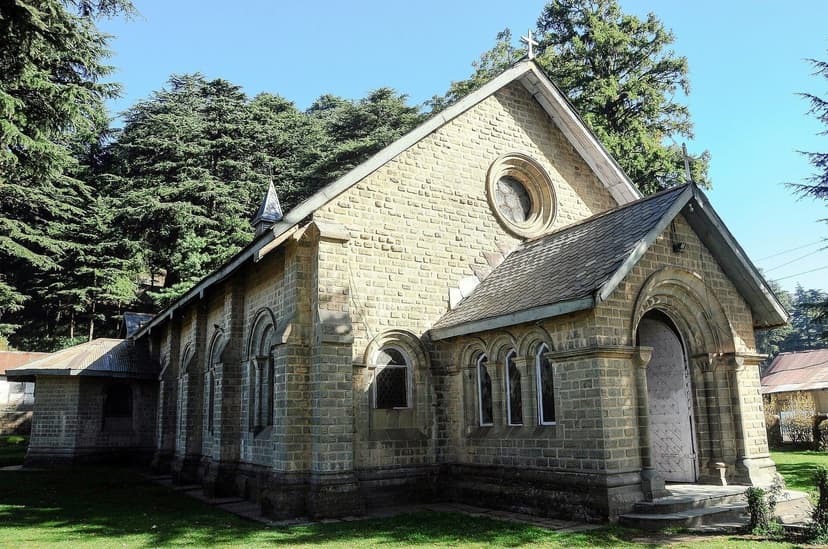
Then walk. Dalhousie is a walking town pretending to be a sightseeing town. From Gandhi Chowk you have St. John's Church, the oldest building in town, stone-built in 1863 with a rose window that has watched the town since nine years after the founding. Down at Subhash Chowk, fifteen minutes along the double road, St. Francis Church does coloured light through stained glass. Between the two chowks you will pass the Tibetan Market, worth it for cheap woollens, and a row of momos-and-thukpa stalls that have fed every backpacker since the 1990s.
Subhash Baoli is the short walk with the good story. Netaji Subhash Chandra Bose spent around seven months here in 1937, recovering from illness beside a natural spring in the pines, and the town has named the spot for him ever since (HP Chamba district). A baoli is a spring or small stepwell, if the word is new to you. The water is supposed to be medicinal. I make no medical claims; the view does the healing.
Panchpula, 3 km from the centre, is the other Day 1 stop, five small bridges over a cascading stream. It is also a freedom-struggle site that most visitors walk past without reading the plaque: the samadhi of Sardar Ajit Singh, revolutionary and uncle of Bhagat Singh, who died here on 15 August 1947, the very day the country he fought for became free. Go for the water, stay for the plaque.
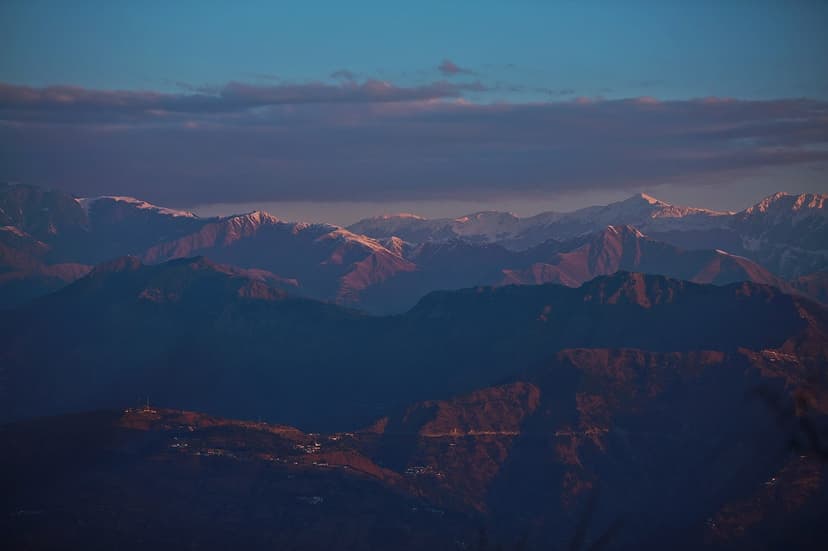
End the evening on the Bakrota Round, a 5 km circular walk on the highest of the five hills, deodars on one side and the Pir Panjal on the other. This is the best free hour in Dalhousie. In late light the snow wall goes pink, then purple, then disappears, and you understand why a town with nothing to do has been fully booked every May since the 1860s.
Day 2: Dainkund first, then the meadow
Do this day in the order written. Dainkund in the morning has clear views and empty trails; Khajjiar at midday has warm grass and all the food options. Reverse it and you will climb Dainkund in afternoon haze with tired legs.
Dainkund Peak is 2,755 metres, the highest point around Dalhousie, and the easiest genuine summit walk in Himachal. The road takes you most of the way up, 12 to 13 km from town to the turnoff near Lakkar Mandi, the roadside hamlet whose name literally means timber market. From the parking, the walk to the top is somewhere between 2.5 and 3.5 km depending on where the barrier stops you that day. It is a ridge stroll, not a trek. Families do it, and so do people in completely the wrong shoes. Budget two to three hours up and down with photo stops.

They call it the Singing Hill, for the sound the wind makes through the pines. The older name is darker and better. A traveller on r/india_tourism got the story from locals mid-walk: "Locals call it Dayan Kund, it was believed that this beautiful place was possessed by singing dayan/witches. But the spelling change helped them build the place as a tourist spot. Its a comfortable walk" (u/Leading-Celery9884). Dayan is Hindi for witch. The Pholani Mata temple on the summit is the guardian-goddess answer to that legend, and the priest up there will tell you the goddess protects the villages below from the dayans. Wind, witches, goddess. Pick your explanation; the 360-degree view is the same either way.
One warning that the listicles skip: the wind on that ridge is bloody cold even in May. Carry a layer you think you will not need.
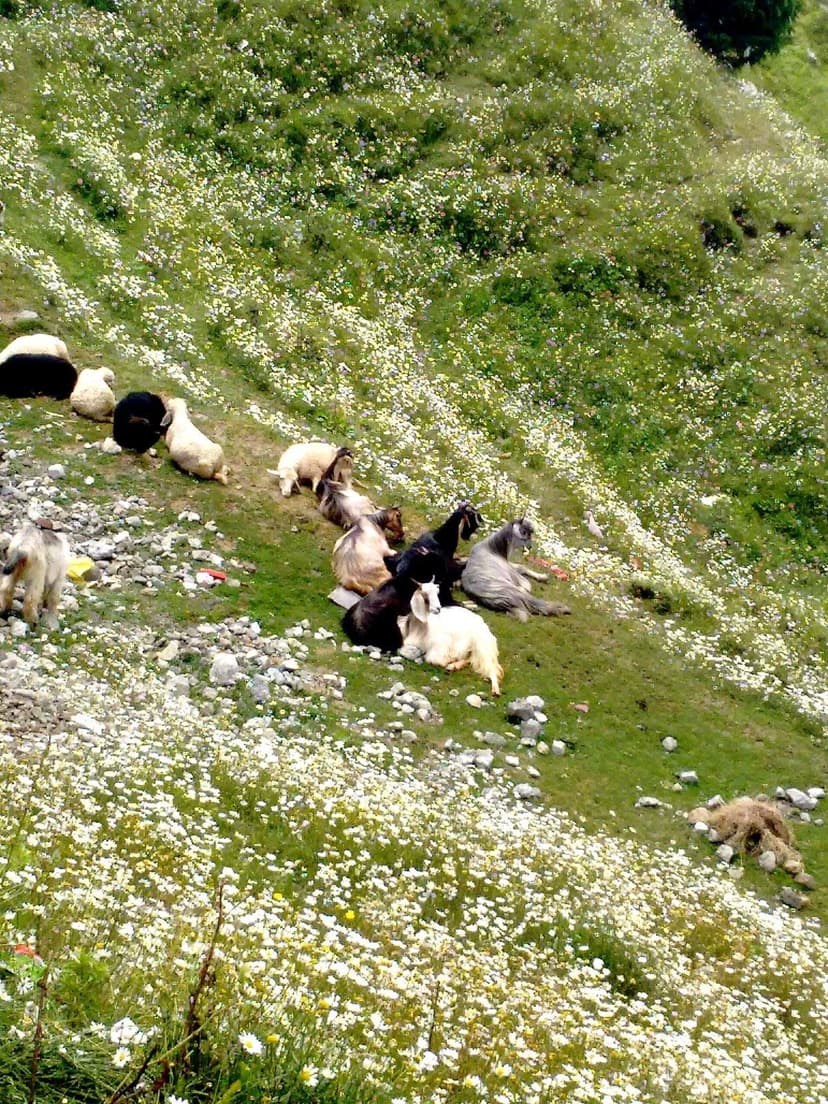
Drive on to Khajjiar, about 22 km from Dalhousie, 40 to 50 minutes through the edge of the Kalatop forest. Arrive before the day-trip wave if you can manage it; the meadow between 8 and 10 a.m. belongs to grazing cows, horse handlers setting up, and almost nobody else.
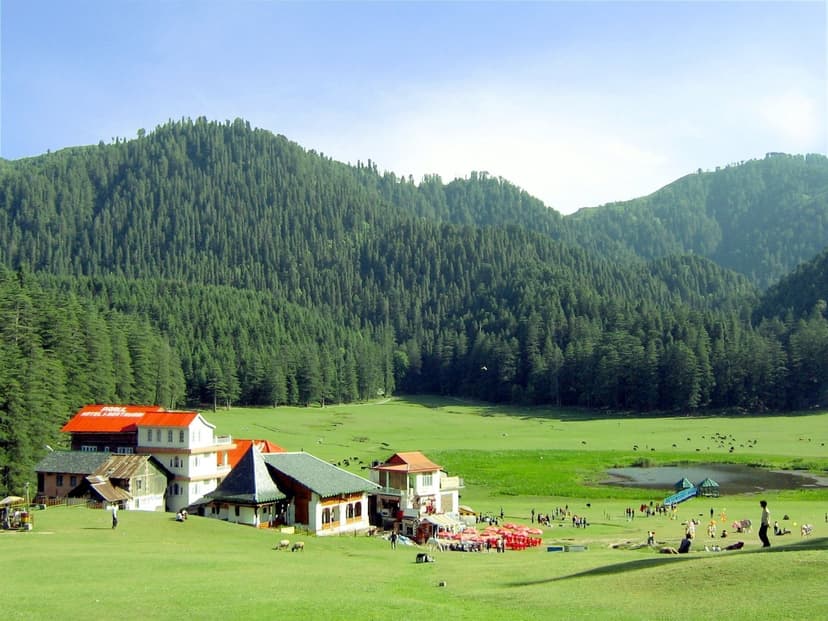
What is actually there: the saucer meadow, roughly a kilometre across, with a small lake in the middle that grows and shrinks by season. Horse rides circle it. A zorbing ball rolls tourists down the slope for a few hundred rupees. Paragliding launched here commercially in the last couple of years, with Amar Ujala reporting tourists flying through the winter season (Amar Ujala, January 2025); joyrides currently run Rs 1,500 to 3,500 with operators like Ayansh Paragliding working the meadow. Skip the zorbing. Take the flight if the day is clear, or just lie on the grass, which is free and underrated.
Do not skip the temple. Khajji Nag, the serpent-deity shrine at the meadow edge, is 12th century, wood-built, with carved serpent figures inside and a roof in the old hill style. It is the reason the place is called Khajjiar at all, and most visitors photograph the meadow for an hour without spending five minutes inside the one genuinely old thing standing on it.
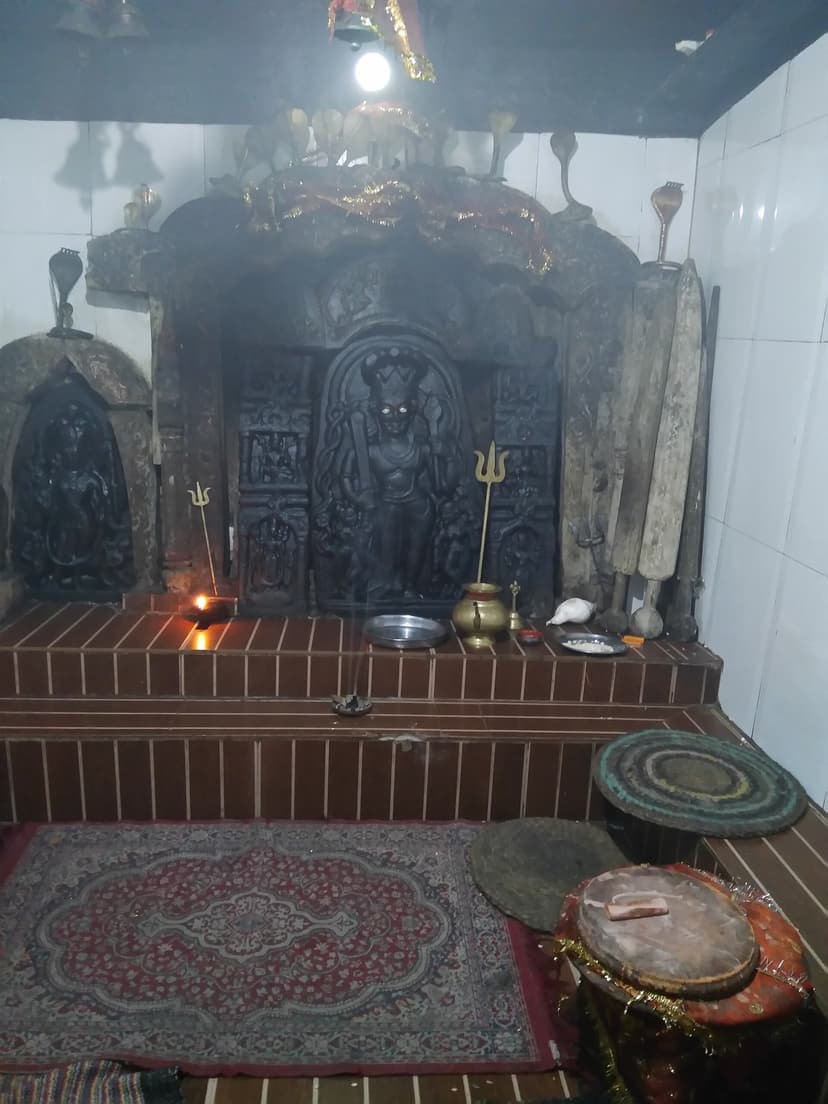
Lunch at the meadow means a handful of seasonal dhabas plus the HPTDC dining hall, and in the October shoulder half the shacks have already shut for the year. Carry fruit or biscuits as backup.
Kalatop, if you have the afternoon
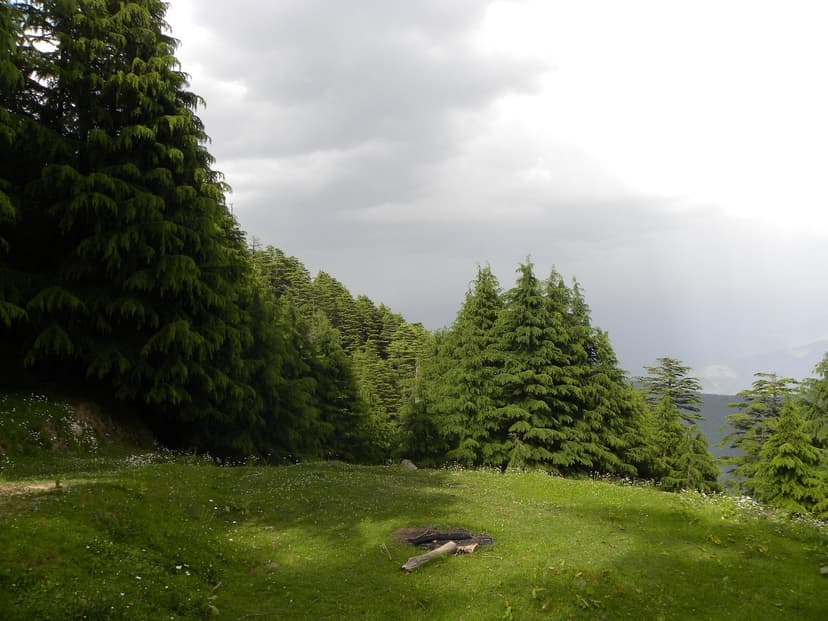
Between Dalhousie and Khajjiar sits the Kalatop Wildlife Sanctuary, a dense block of old deodar holding 117 recorded bird species along with leopard, Himalayan black bear, barking deer and serow (Holidify). You will hear monal and koklas pheasant; you will almost certainly see none of the mammals, which is how the mammals prefer it. Entry is by a permit of Rs 250 at the forest barrier, and the gates work daylight hours, roughly 7 a.m. to 6 p.m. There are around 8 km of walkable forest track inside, and the silence under those trees is a different category of silence from the meadow.
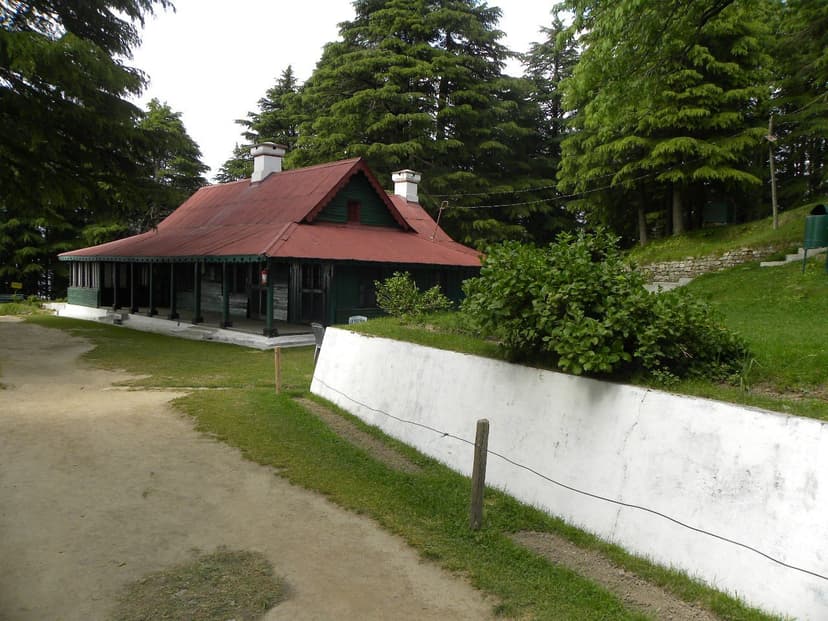
Deep inside the sanctuary stands the colonial-era Forest Rest House, green wood and red tin among the trees. Foresters built it for timber inspections over a century ago; it takes guests now with prior permission from the Divisional Forest Officer in Chamba, and waking up inside a closed sanctuary is the single most atmospheric night available in this corner of Himachal. Booking means a written request to the DFO office in Chamba, made days ahead, and whatever patience that office requires of you that week. Worth it.
Give Kalatop a miss in July and August, when the leeches own the undergrowth.
- Day 1, morning: Reach Dalhousie
Overnight Volvo from Delhi (Rs 1,350 to 1,550) or train to Pathankot plus the Rs 165 HRTC bus up. Check in near Gandhi Chowk and eat before you plan anything. - Day 1, afternoon: The two churches and Subhash Baoli
St. Johns (1863) at Gandhi Chowk, St. Francis at Subhash Chowk, and the spring where Bose recovered in 1937. All walkable. - Day 1, late afternoon: Panchpula
Five bridges, a cascading stream, and the samadhi of Sardar Ajit Singh, who died on Independence Day 1947. - Day 1, evening: Bakrota Round
The 5 km circular walk with Pir Panjal views. The best free hour in town. - Day 2, early: Dainkund Peak
Drive 12 to 13 km to the Lakkar Mandi turnoff, walk 2.5 to 3.5 km along the ridge to Pholani Mata temple at 2,755 m. Two to three hours round trip. - Day 2, midday: Khajjiar meadow
22 km on. Lake, horse rides, paragliding joyrides (Rs 1,500 to 3,500). Enter the 12th-century Khajji Nag temple, which most people skip. - Day 2, afternoon: Kalatop sanctuary
Deodar forest with 117 bird species. Rs 250 permit at the barrier, gates roughly 7 to 6. Skip in monsoon (leeches). - Day 3, morning: Drive to Chamba
About 45 km via Khajjiar, around 2 hours. You drop nearly 1,000 m, so dress lighter. - Day 3, midday: Lakshmi Narayan complex, Bhuri Singh Museum, the Chaugan
Six shikhara temples from the 10th century onward, Pahari miniatures in the 1908 museum (closed Mondays), and lunch around the town square. Try the madra. - Day 3, evening: Return or drop to Pathankot
Back to Dalhousie for a last night, or straight down to Pathankot for the evening train.
Want a Himachali sanity-check on your Dalhousie route? Email us your draft itinerary. We will tell you which day is too ambitious, whether the Chamba day fits your dates, and what the road has been doing this week.
Day 3: Chamba, the upgrade most people skip
Here is my one strong claim for this whole guide: a Dalhousie trip without Chamba town is a film trailer without the film. Dalhousie is 170 years old. Chamba has been a capital since the 10th century, sitting on a shelf above the Ravi river at 996 metres, and it stayed independent enough, for long enough, that its temples, its painting school and its embroidery tradition survived intact in a way almost nothing else in the western Himalaya did.
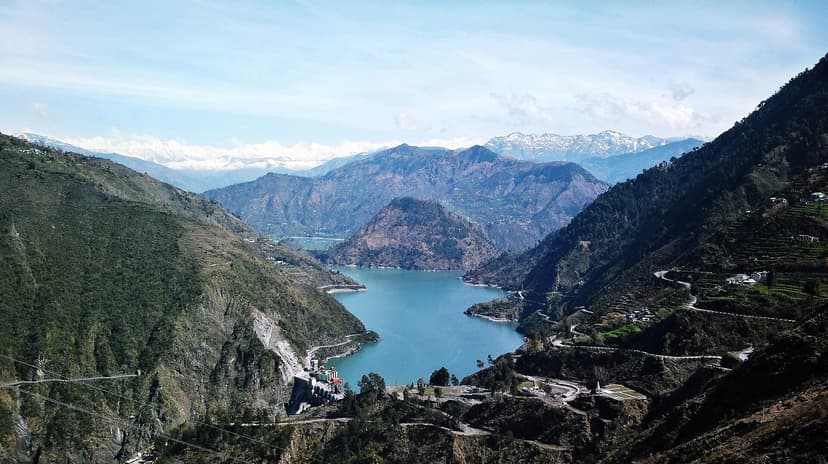
The drive is about 45 km via Khajjiar, two hours of descending switchbacks. If you take the Banikhet side instead, you pass above Chamera Lake, the long turquoise reservoir the Ravi fills behind its dam, with a boating point that makes a decent leg-stretch stop. Either road drops you almost a kilometre, from deodar weather into mango weather. One workation traveller staying above the valley put the consequence plainly: "Dont stay in Chamba proper. Chamba is a beautiful town but because of low altitude, gets very very hot" (u/Fast-Vacation-1035). For a day visit in spring or autumn the warmth is the reward; in June, when the valley floor pushes past 35 degrees, carry water and do the temples before noon.
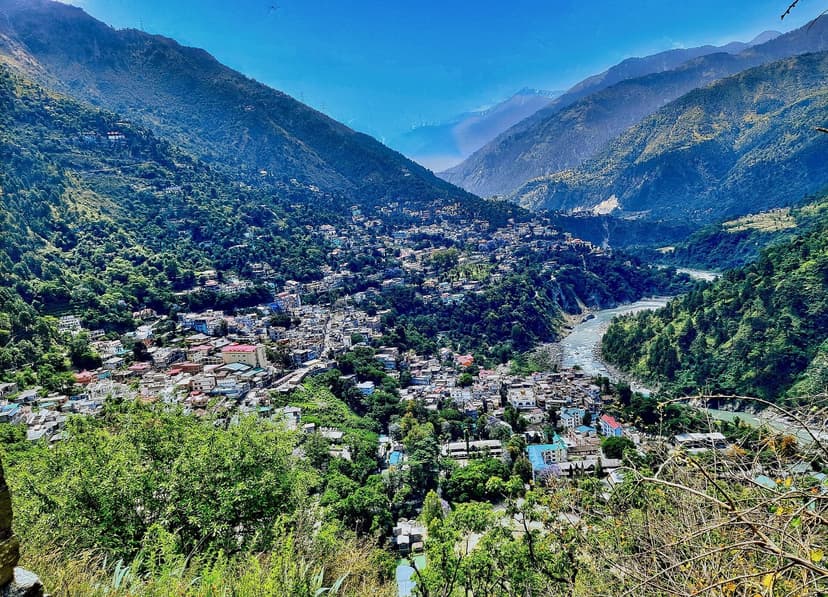
Three stops make the day.
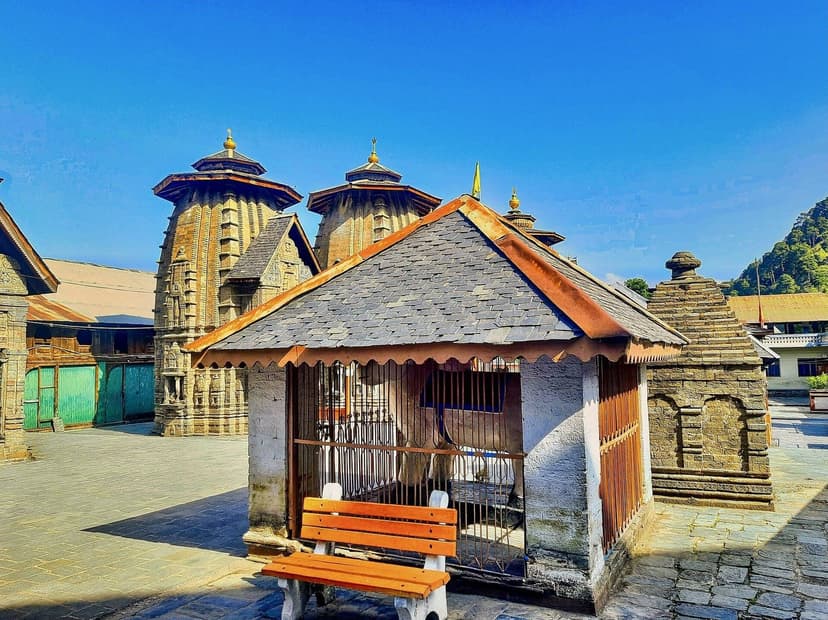
The Lakshmi Narayan complex first: six stone shikhara temples standing in a line, the oldest raised in the 10th century by Raja Sahil Varman, alternating between Vishnu and Shiva. Open roughly 6 a.m. to 12:30 p.m. and again 2:30 to 8:30 p.m., free entry (Tour My India). The carving rewards slow looking; so does the small slate-roofed pavilion in the courtyard, a very Chamba piece of architecture designed to shrug off snow that rarely falls this low anymore.
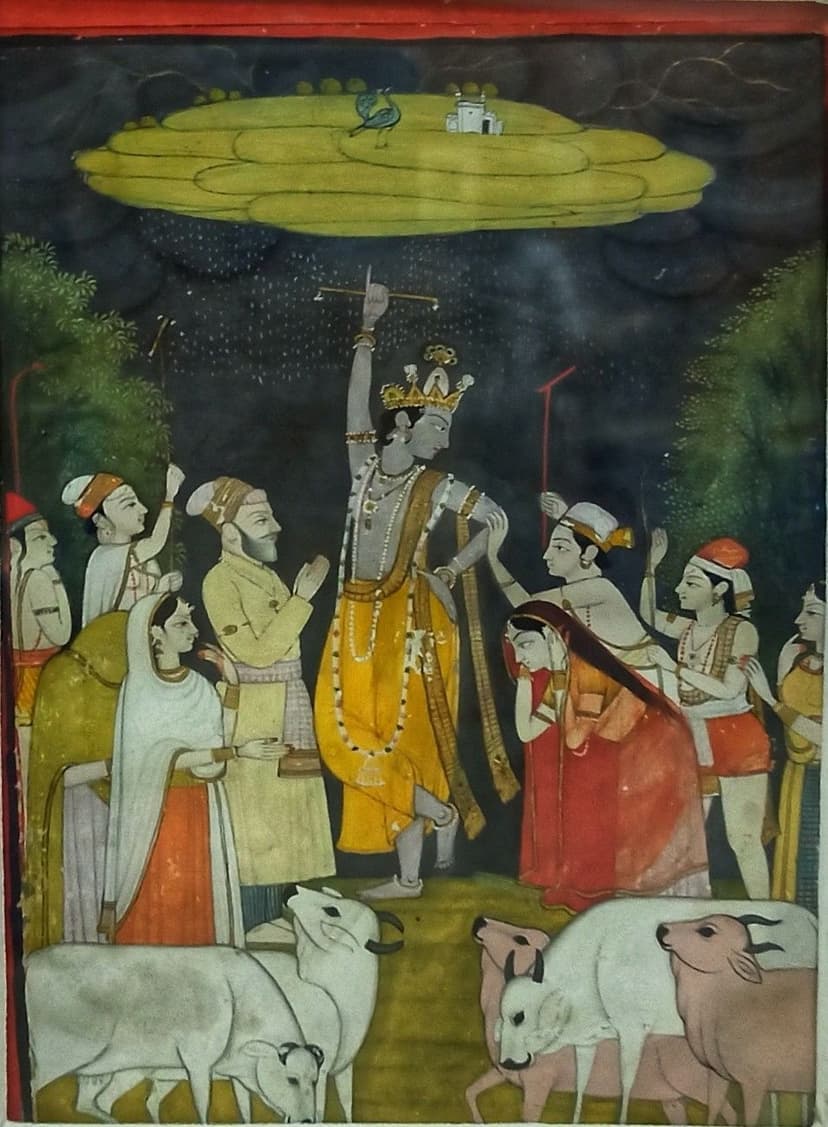
Then the Bhuri Singh Museum, open since 14 September 1908 and named for the Raja who donated his family collection to start it. Around 8,500 objects: Basohli and Kangra miniatures, Chamba Kalam paintings, carved temple doors, copper-plate land grants in the old Sharda script, royal costumes (official museum site). Entry Rs 50 for Indians, Rs 150 for foreign visitors, Rs 30 for children under ten, camera Rs 100 extra. Closed Mondays and gazetted holidays, otherwise 10 to 5. Fifty rupees to stand in front of paintings that auction houses fight over: the best ticket in the district, by a margin nobody else is contesting.
Last, the Chaugan, the long grass maidan at the centre of town. Chamba does its public life here: evening cricket, wedding processions, and every late July or early August the week-long Minjar Mela, when the town offers paddy and maize shoots to the Ravi and pulls deity processions through the streets. The 2026 edition is listed for 26 July to 2 August; reconfirm locally if you are planning around it, because the date follows the lunar calendar (HP Chamba district). Our HP festival calendar has the wider context.
Eat before you leave. Chamba is one of the seven Dham traditions of Himachal, and a proper Chambyali madra, chickpeas slow-cooked in yogurt with a small fortune of ghee, is the single best thing you can put in your mouth in this district. Ask for it anywhere locals are eating near the Chaugan. If a wedding is on, the smell of the wedding madra will find you first. The hereditary cooks behind that tradition get their own story in our guide to the seven regional Dhams.
If the old-capital angle grabs you, the road keeps going: Bharmour, the even older Chamba capital with its courtyard of 84 temples, is another 65 km up the Budhil valley. That is not a day trip add-on; it is its own trip, and we wrote a full guide to Bharmour for when you are ready.
Where to stay, and the court case nobody tells you about
First, the thing the booking sites will not mention. In November 2024 the Himachal High Court ordered 18 loss-making HPTDC hotels closed, and both government properties on this route, Hotel Geetanjali in Dalhousie and Hotel Devdar at Khajjiar, were on the list (The Tribune, November 2024). The corporation fought, got relief, and as of mid-2026 both hotels are listed, staffed and taking bookings, with the Devdar publishing current tariffs of roughly Rs 2,800 to 4,800 a night (HPTDC). But a property that has been in closure litigation is a property you reconfirm by phone before building a plan around it. Call. It takes two minutes.
Why bother? Because the Devdar is the only hotel ON the Khajjiar meadow, and Reddit has been quietly recommending it for years: "Try govt hotel The Devdar at Khajjiar, best location in Dalhousie to stay" (r/IncredibleIndia, February 2025). Wake there and you get the meadow at 7 a.m., cows and mist and nobody, a version of Khajjiar the day-trippers never meet. If the Devdar has a room and the phone call checks out, take it. That is my recommendation.
The HPTDC Devdar is the only hotel on the Khajjiar meadow itself. Court case or not, it has current 2026 tariffs of about Rs 2,800 to 4,800 and a working booking line. Reconfirm by phone, then take the meadow-at-dawn advantage no day-tripper gets.
In Dalhousie town, the pattern from traveller threads is consistent. Mid-range: hotels around Gandhi Chowk and Subhash Chowk so everything stays walkable; the heritage option is the Grand View, a 19th-century property that charges Rs 6,000 to 9,000 for the colonial bones and the Pir Panjal terrace. Budget: guesthouses from about Rs 800, or homestays where, as 24-day workation traveller u/young_wolf_10 found across Himachal, "If you can contact the owner directly you will often get a better deal... I paid around Rs 1,400 per night on average."
The hostel crowd has two anchors. Zostel sits at Banikhet, where one guest called the owner "just a gem" (u/Ok-Law2608), and The Hosteller is in Dalhousie proper, where u/Designick rated the staff "very helpful and nice. 10/10 Recommended to all the solo travellers." There is also a Zostel Homes at Khajjiar itself for the workation set.
What it costs
The cleanest real-world budget I found is from u/KingBig9811, who itemised a solo two-night trip: "Pathankot to Dalhousie by HRTC bus - Rs 165. Stay at a hotel for Rs 1500 per day... Rented a scooter for a day @ Rs 600 and 2 litres of fuel with which I covered more than 40 km comfortably." A scooter at Rs 600 plus fuel is the cheapest way to do the Dainkund-Khajjiar circuit if you ride confidently on mountain roads.
If you would rather be driven, the going rate for a full-day taxi covering Khajjiar, Dainkund and the local points is Rs 1,800 to 2,500, confirmed both by the threads ("rate should be approx. 1800 to 2500 or so", u/Initial-Prompt-2653) and by what drivers quote at the Gandhi Chowk stand.
| Category | Per day (2 people) | Notes |
|---|---|---|
| Room, budget | Rs 800 to 1,500 | Guesthouse or direct-booked homestay; hostels from Rs 500 a bed |
| Room, mid-range | Rs 2,000 to 4,000 | Gandhi Chowk hotels; HPTDC Devdar Rs 2,800 to 4,800 |
| Food | Rs 300 to 1,200 | Dhaba thalis Rs 100 to 200 a head; hotel restaurants double that |
| Full-day taxi | Rs 1,800 to 2,500 | Khajjiar + Dainkund + local points circuit |
| Scooter rental | Rs 600 plus fuel | Roughly 2 litres covers the whole circuit |
| Activities | Rs 250 to 3,500 | Kalatop permit Rs 250; museum Rs 50; paragliding Rs 1,500 to 3,500 |
| 3-day total, two people | Rs 4,500 to 8,700 budget | Mid-range lands Rs 11,700 to 23,100 |
Not sure if your Dalhousie budget is realistic for your dates? Email us your numbers and we will tell you where they will hold and where peak-season pricing will break them.
One scam flag from the mine, because every transport hub has one: a traveller this season reported being burned by a Pathankot agency, writing "Anyone expect Sonia tours and travels (Pathankot), they scamed me, rest of the trip was good. Ask your hotel for best cab services... In dalhousie its easier to get cab at Gandhi and Subhash chowk" (u/Complete_Nirvana). General rule for the whole state: book cabs through your hotel or at the marked stands, never through a tout at the railway station. Our HRTC bus guide covers the government-bus alternative end to end.
Two days or three? Decide with this
| 2 days: Dalhousie + Khajjiar | 3 days: add Chamba | |
|---|---|---|
| Who it suits | Weekend escapers, families with small kids, anyone mostly after pine air | History and food people, photographers, anyone already coming this far |
| Pace | Relaxed with one early start | Same, plus one descending road day |
| What you get | Churches, walks, Dainkund, the meadow, Kalatop | All of that plus 10th-century temples, the museum and a Dham lunch |
| What you miss | Everything older than 1854 | Nothing on this route; Bharmour stays for next time |
| Budget for two | Rs 3,000 to 5,800 budget tier | Rs 4,500 to 8,700 budget tier |
When to go, when to stay away
April to June is the classic window: 14 to 30 degrees, every trail open, rhododendrons on the upper slopes in April. October and November trade a little warmth for the clearest skies of the year and thinner crowds; hotel rates drop too. Both windows work. Our month-by-month HP guide has the statewide picture.
July to September is the one I will warn you off, and not gently. The 2025 monsoon blocked over 550 roads across Himachal at its peak, killed more than 400 people statewide by season end and pushed loss estimates past Rs 4,400 crore, with the Pathankot-Dalhousie-Chamba highway among the repeat closures (The Tribune, September 2025). The waterfalls are spectacular in the rain. So are the landslides. Even outside monsoon, hill roads keep their own schedule; one traveller this year sat three hours behind "a big boulder" on the Dharamshala-Dalhousie road and counted himself lucky for good company. If you must travel in those months, check the live road status before every leg, and read what actually stays open in monsoon first.
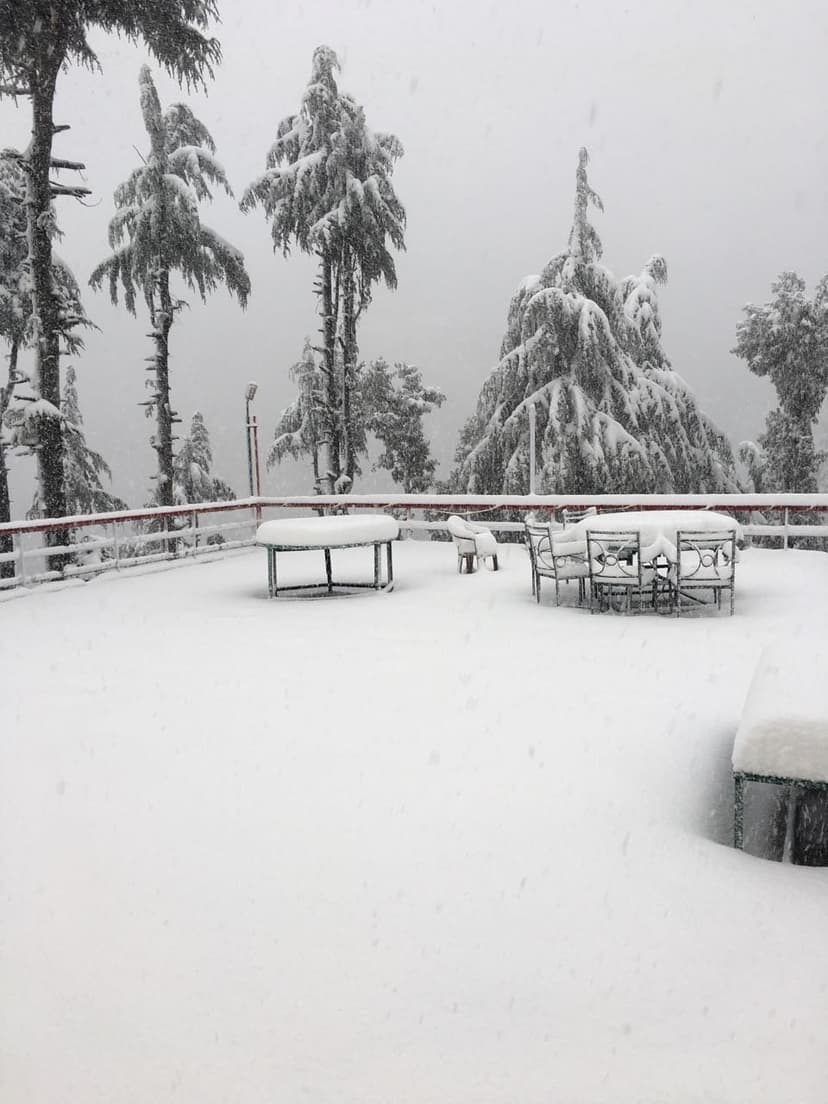
December to February flips the trip into a snow itinerary. Dalhousie gets proper snowfall several times a season, Khajjiar turns white, and the Dainkund walk often closes. Mall Road in falling snow is worth the cold; the driving is not for nervous hands, and you should book a hotel with heating rather than assume it. Pack like you mean it, three layers minimum, and our winter packing system explains exactly what that means. December visitors with a flexible week should also read when NOT to visit HP, because late February slush season is nobody's postcard.
Getting there, in brief
| Route | Distance / time | Cost notes |
|---|---|---|
| Delhi to Dalhousie, HRTC Volvo | 564 km, about 12.5 hrs overnight | Rs 1,350 to 1,550 |
| Delhi to Pathankot by train, then bus | 8 to 10 hrs + 80 km climb | Train fare + Rs 165 HRTC bus |
| Amritsar to Dalhousie by road | 190 km, 4 to 5 hrs | Taxi or bus via Pathankot |
| Fly to Kangra Airport (Gaggal) | About 130 km, 4 hrs by road | Limited flights, taxi onward |
| Dalhousie to Khajjiar | 22 km, 40 to 50 min | Shared taxis run in season |
| Dalhousie to Dainkund turnoff | 12 to 13 km, 30 min | Then 2.5 to 3.5 km on foot |
| Dalhousie to Chamba | About 45 km via Khajjiar, 2 hrs | Buses and taxis both run |
| Dalhousie to Kalatop gate | 8 km, 30 min | Rs 250 vehicle permit at the barrier |
Phone and ATM practicalities: Jio and Airtel hold signal in Dalhousie town and most of the circuit, with dead patches inside Kalatop and parts of the Khajjiar road. ATMs exist in Dalhousie and Chamba town; carry cash for the meadow, the dhabas and the permit barrier. The district hospital is in Dalhousie, with better facilities down in Chamba. Planning more of the state after this? Start with our full HP travel guide.
FAQ
How many days are enough for Dalhousie and Khajjiar?
Two days cover Dalhousie, Khajjiar and Dainkund comfortably. Add a third for Chamba town, 45 km away, which brings 10th-century temples and the Bhuri Singh Museum into the trip.
Is Khajjiar worth visiting?
Yes, with managed expectations. It is a beautiful saucer meadow with a lake and a 12th-century temple, ideal for two to three hours. It is not a full-day destination, and it is not Switzerland; it does not need to be.
How much does a Dalhousie trip cost per day?
Budget travellers spend Rs 1,500 to 2,900 a day for two with guesthouse rooms, dhaba food and shared transport. Mid-range with a private taxi and a 3-star hotel runs Rs 3,900 to 7,700. A 3-day budget trip for two lands between Rs 4,500 and 8,700.
What is the best time to visit Dalhousie?
April to June for trekking weather (14 to 30 degrees) and October to November for the clearest skies and lower rates. December to February brings snow. Avoid July to September; the 2025 monsoon shut hundreds of roads in HP including this highway.
Is the Dainkund Peak trek difficult?
No. It is a 2.5 to 3.5 km ridge walk to a 2,755 m summit, with the road doing most of the climbing for you. Families and first-timers do it in two to three hours round trip. Carry a windproof layer; the ridge is cold even in May.
How far is Chamba from Dalhousie?
About 45 km via Khajjiar, roughly 2 hours of descending mountain road. Chamba sits at 996 m, nearly 1,000 m lower than Dalhousie, so expect it to be much warmer.
How do I reach Dalhousie from Delhi?
Overnight HRTC Volvo (about 12.5 hours, Rs 1,350 to 1,550), or train to Pathankot followed by an 80 km bus (Rs 165) or taxi climb of 2.5 to 3 hours. Flying via Amritsar or Kangra Airport works but adds a long drive.
What can I do in Dalhousie in winter snow?
Walk Mall Road and the chowks in falling snow, visit the two churches, and see Khajjiar under white. The Dainkund walk often closes and roads can ice over, so build slack into the plan and book a hotel with heating.
Sources
Primary: HP Chamba district, Dalhousie and Places of Interest and Minjar Mela; HPTDC, The Devdar Khajjiar and The Geetanjali Dalhousie; Bhuri Singh Museum official site.
Press: The Tribune on the HPTDC closure order; Amar Ujala on Khajjiar paragliding; The Tribune monsoon 2025 coverage.
Travel references: OnlineHimachal on Dainkund; Holidify on Kalatop; Tour My India on Lakshmi Narayan temple; Devdar tariff sheet; HRTC online booking portal.
Traveller voices: threads on r/SoloTravel_India, r/desitravellers, r/india_tourism and r/WorkationIndia, quoted with usernames above. Background reading: Wikipedia on Khajjiar.
Written from Kullu by a Himachali who believes Chamba district is criminally under-visited, with quotes belonging to the travellers who said them.
You Might Also Like
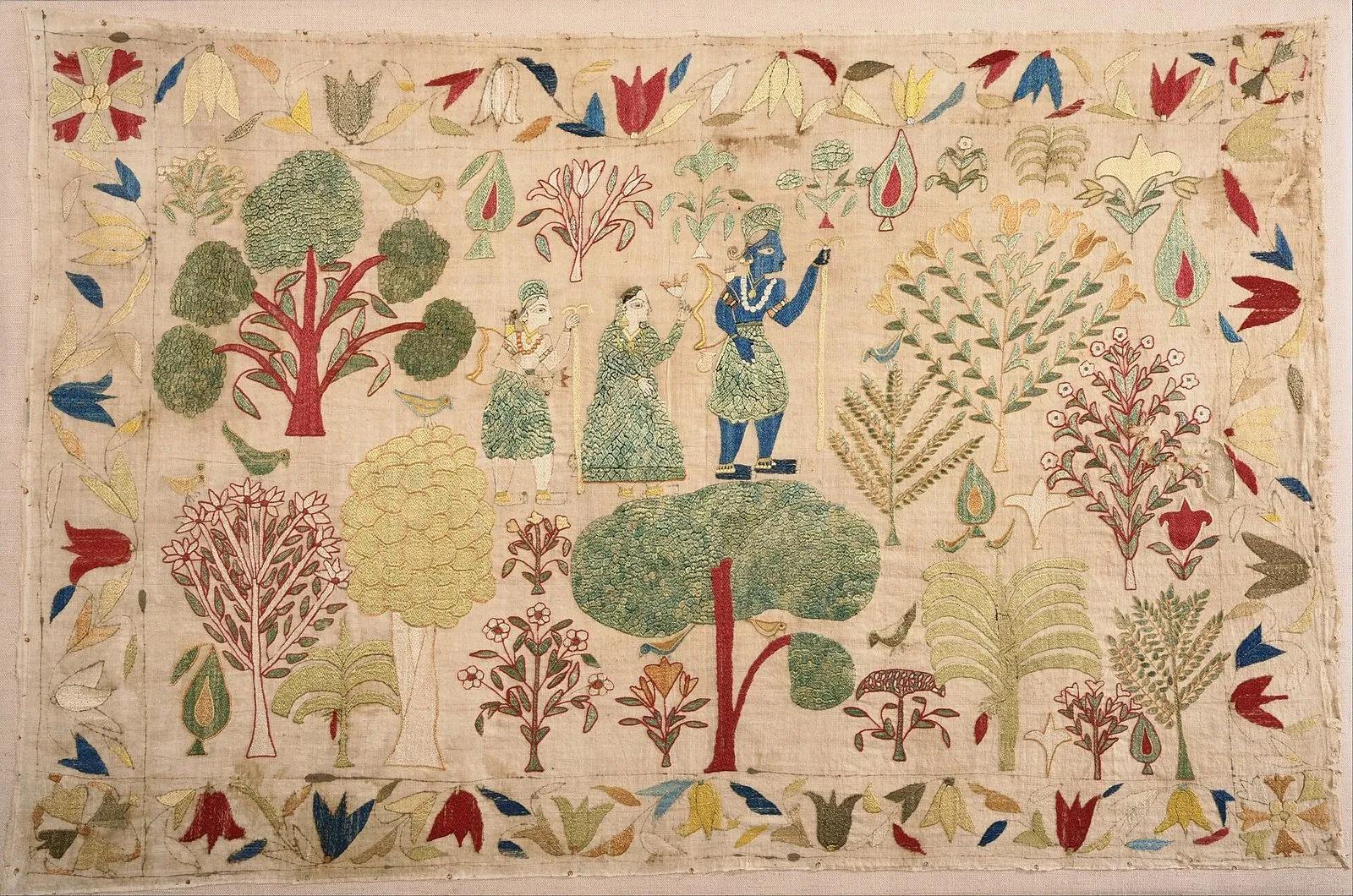
Chamba Rumal: The Embroidery With No Wrong Side
Flip a real Chamba rumal over and the back is identical to the front. The dorukha stitch, the Pahari painters who draw the designs, real 2026 prices, where to buy one, and the truth about that UNESCO claim.
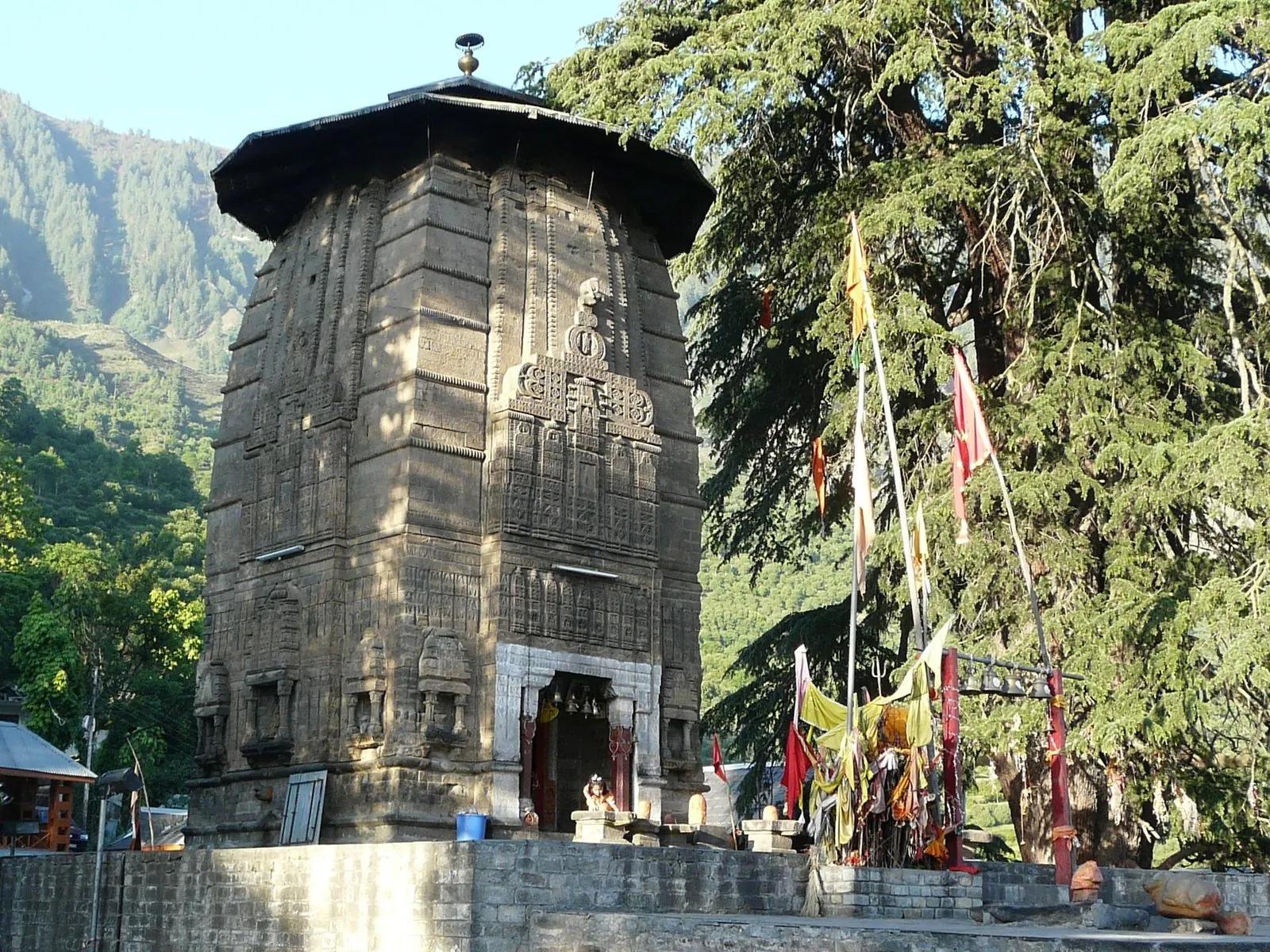
Bharmour: 84 Temples, Zero Tourists
Bharmour was the capital of the Chamba kingdom for four hundred years, and then a princess preferred a different valley. What got left behind is a courtyard of 84 temples almost nobody walks through, the only Yamraj temple on earth, the homeland of the Gaddi shepherds, and the trailhead for the Manimahesh Yatra. A full guide from a Kullu local who keeps going back: temple-by-temple, Gaddi culture, the 2026 yatra (Sep 4 to 19), routes, costs, and the honest hard parts.
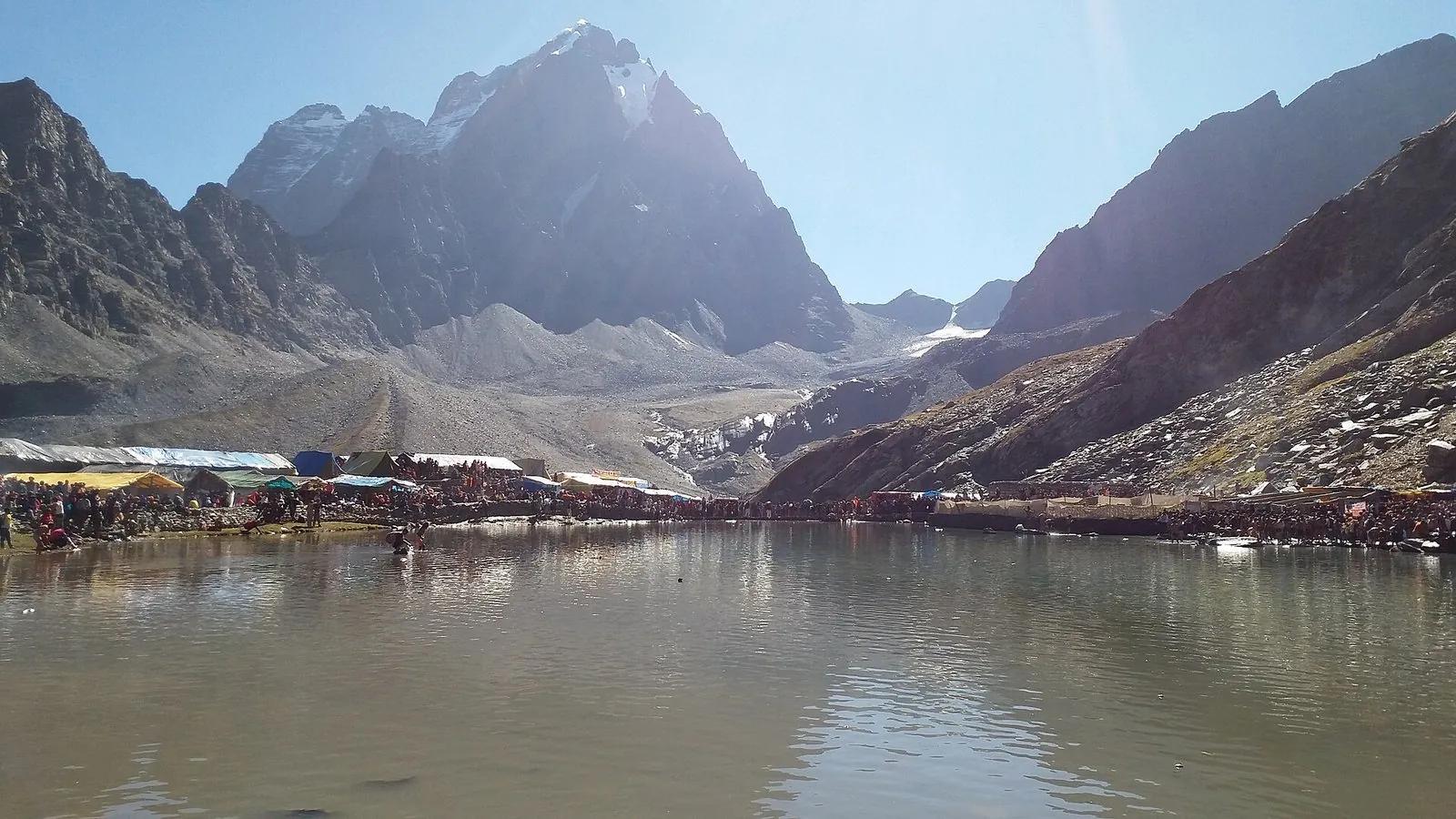
Manimahesh Lake Trek 2026: Sacred Pilgrimage Guide from Bharmour
Trek 14 km to Shiva's sacred lake at 4,080 m in Chamba: 2026 yatra dates, NGT-framework registration, route, budget, and why the 2025 disaster reshaped how to plan.