
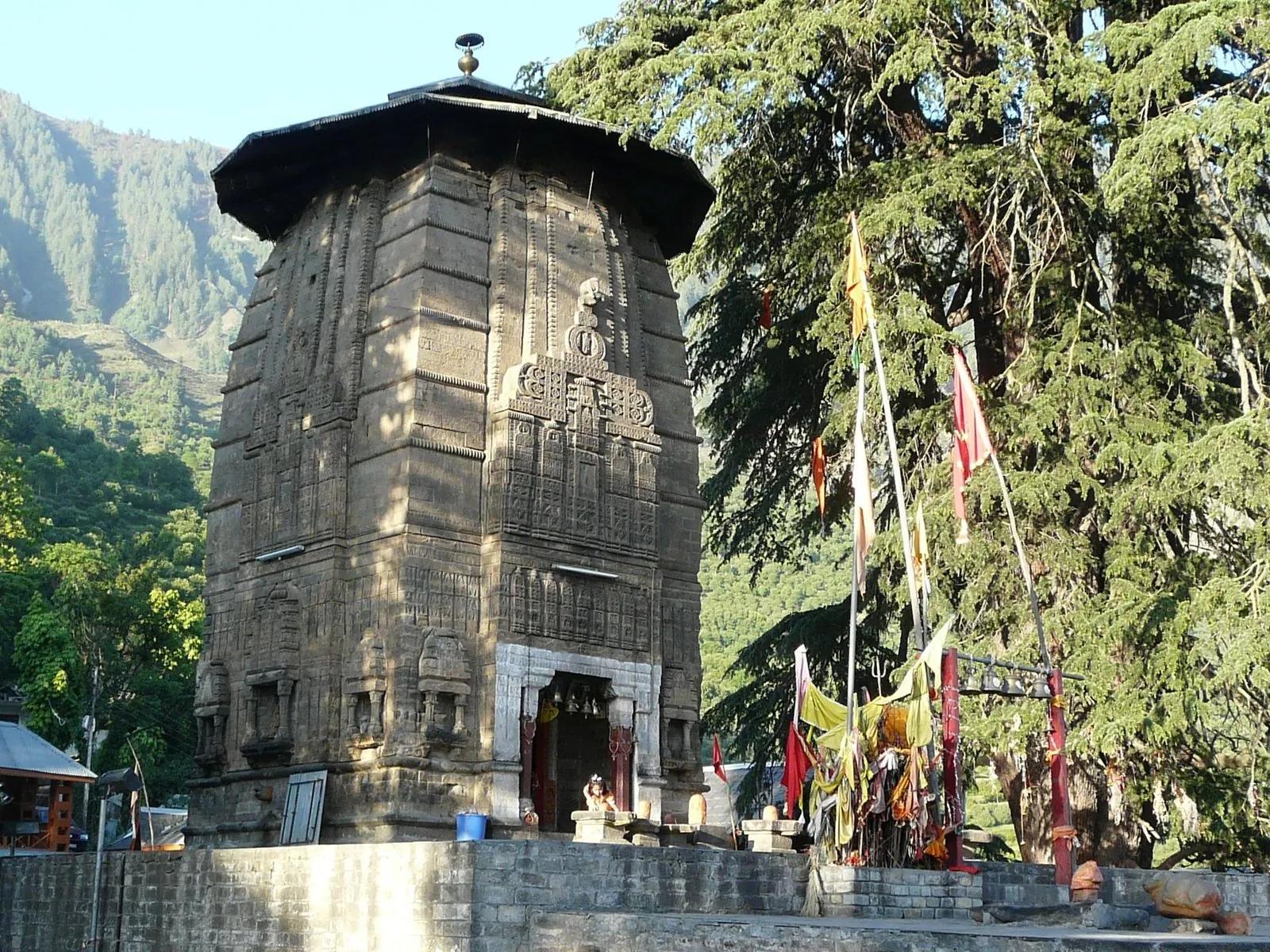
Bharmour: 84 Temples, Zero Tourists
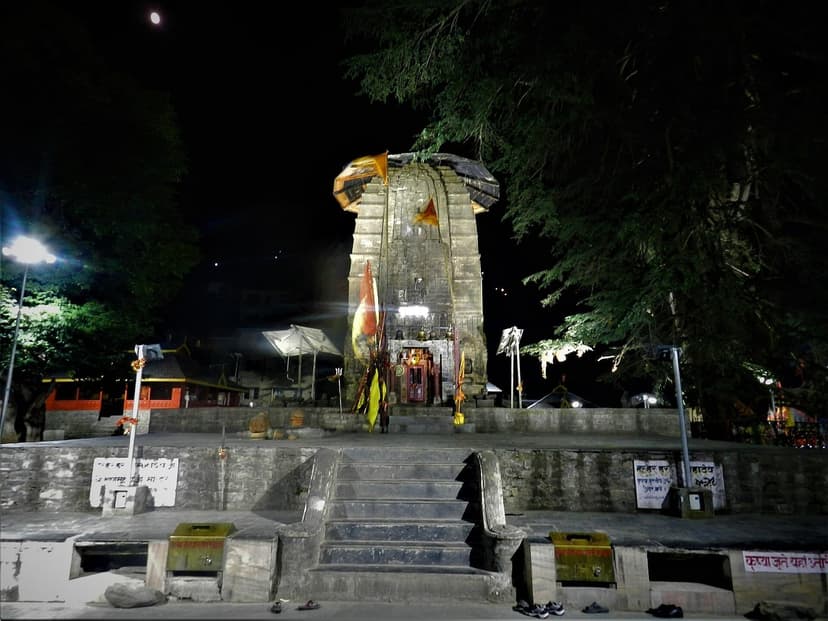
You walk into a courtyard with eighty-four temples in it. You are alone.
That is the first thing about Bharmour. The second thing is that this used to be the capital. A real capital, of a real kingdom, for the better part of four hundred years. Then a Raja moved his court sixty kilometres downhill because his daughter Champavati preferred the river-bend below, and an entire city got left behind on the ridge with its temples still working. They are still working. The Manimahesh Shikhara still leans into the same August sky it leaned into when Meruvarman was king. The brass Nandi still stands. The Lakshana Devi door is the same door, the same wood, the same chisel-cuts. The only thing that has changed is who notices.
I have been driving up to Bharmour since the year I learned to drive, which is also the year my uncle in Kullu first told me Chamba had older temples than anywhere in the lower valleys. He was right and he was wrong. Right about the dates. Wrong about who would care. For thirty years almost nobody has cared. The bus from Chamba still rolls in twice a morning. The Punjabi dhaba opposite the temple still serves the same rajma-chawal. The shopkeeper across the square will sell you a Manimahesh keychain in August and ignore you completely the rest of the year, because by October the only foot traffic is shepherds coming down with sheep.
This is the piece I have wanted to write for ten years. The forgotten capital. The court of Yamraj that is the only one of its kind on earth. The Gaddi shepherds whose homeland this is. And the lake at the top of the trail, sitting at four thousand metres in front of a peak that local belief still says belongs to Shiva. If you are looking for the part of Himachal that has not been turned into someone elses idea of a hill station, get up early and come.
- Where
- Bharmour (Bharmaur), Chamba district, Himachal Pradesh
- Altitude
- 2,195 m (7,200 ft)
- What is there
- Chaurasi (84) Temple complex; gateway to Manimahesh Lake Yatra; Gaddi heartland
- Best months
- April to June (temples + culture), September (yatra), October to early November (autumn quiet)
- Avoid
- Mid-July to August monsoon road risk; December to March deep winter (road closures possible)
- How far
- 60 km from Chamba town (2 to 4 hours by HRTC bus); 180 km from Pathankot; 610 km from Delhi (12 to 14 hours)
- Manimahesh Yatra 2026
- September 4 to 19 (Janmashtami to Radha Ashtami); registration required via HP govt
- Population
- 1,374 (2011 Census)
The princess who got her father to move the capital
The legend everyone tells in Chamba is short. Sahil Varman, tenth-century king of the dynasty, had a daughter named Champavati. The daughter liked the curve of the Ravi river. The father shifted the entire seat of the kingdom from Bharmour to the bend in the river where her favoured grove sat, and renamed the new capital after her. Chamba. Around 920 CE. The kingdom of Chamba then ran from there for another nine hundred years, until the British arrived.
You can argue with the legend. Historians do. They will tell you that the move was probably about defence (Bharmour sits exposed on a ridge above the Budhil), or about trade (Chamba town controls the river crossings), or about access to plains markets through Pathankot. Most likely all three. But the version local guides tell is the one above, and the version local guides tell is the version that survives, because Chamba town and the princess and the river-bend are still here and the rational explanations are not.
What got left behind in Bharmour is what makes the place. Four hundred years of being a capital, then a thousand years of being skipped, and the buildings did not know they were supposed to fall down. The Chaurasi courtyard is still in use. The fire is still lit at the Dharmeshvar shrine. The Lakshana Devi door still opens on its original hinge.
For about thirty years, between roughly 1990 and 2020, the few travel writers who came to Bharmour came for the Manimahesh trek. The temples were a stopover. The town was a base camp. Bharmour itself sat at the edge of itself, while everyone passed through. Incredible India calls it "the land of Lord Shiva" and then writes seven sentences about Manimahesh and zero about the courtyard you would actually be standing in. The 1,400-year-old buildings rate four lines.
So here are the temples.
Walking the Chaurasi: temple by temple
The number "eighty-four" is doing a lot of work in the name. There are not literally eighty-four stand-alone roofed structures. The complex holds seven big freestanding shrines, plus seventy-seven smaller stone shivalingas, niche-shrines and votive structures arranged around the courtyard. The seven big ones are the ones you walk between. The seventy-seven small ones are the ones you trip over if you are not paying attention. Together: eighty-four.
The legend the priests will tell you is older than the count. Eighty-four siddhas, eighty-four wandering enlightened yogis, walked through Bharmour from Kurukshetra on their way up to Manimahesh Lake. They stopped because the king, Meruvarman, had no heirs and asked them to. They blessed him with ten sons and one daughter (a different Champavati, an earlier one). And in gratitude Meruvarman built shrines for each of the siddhas, eighty-four of them, on the ridge where the yogis had rested. The Hindi local sources put it more cleanly: "इन 84 योगी के चलते मंदिर का नाम भी चौरासी मंदिर पड़ गया", because of these eighty-four yogis, the temple complex itself came to be called Chaurasi.
Whether you take the founding date of the major temples as seventh-century (the standard art-history reading, based on the Lakshana Devi inscription which puts Meruvarman in the late seventh century) or push it earlier as some local guides do, the working answer is: around thirteen hundred years old. Maybe fourteen. Old enough that it does not matter exactly.
The seven you walk between, in roughly the order most pilgrims go:
1. Manimahesh, the central Shikhara
The tall stone spire in the middle of the courtyard. Built in classic Nagara style with a sloping curvilinear superstructure. The Shivlinga inside is the focal point of the entire Manimahesh Yatra; pilgrims circle this temple, ring the bell at the door, and then walk thirteen kilometres uphill to bow to the same Shiva at the lake. The temple is the front door of a pilgrimage that ends at four thousand metres.
2. Lakshana Devi, older than anything else here
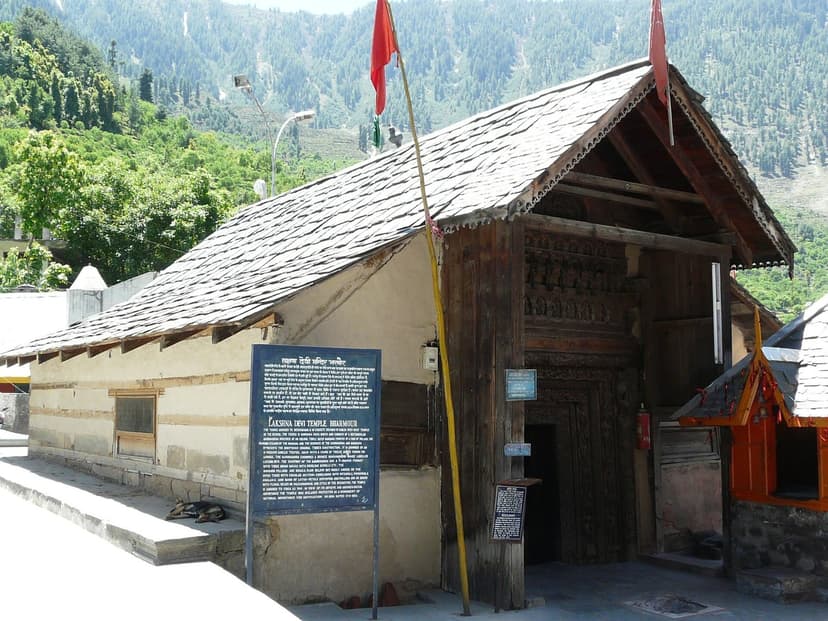
This is the one that should be famous and is not. Lakshana Devi Temple is dated to around 680 CE by epigraphic evidence (a brass inscription on the idol naming Meruvarman as the patron), which puts it at roughly the same age as the older monastic wood-work in Tabo or the post-Gupta wood survivals in Kashmir before the long sequence of invasions destroyed most of them. The structure is eleven and a half metres long by about nine metres wide. It is still a working shrine.
The deity inside is Durga as Mahishasuramardini, the slayer of the buffalo demon. The bronze idol shows her in mid-stride, foot on the demons head, trident through the body. Around her, on the door frame and the architrave, you see the post-Gupta vocabulary of figural carving worked into Himalayan deodar: rows of small standing deities under arched niches, foliate scrolls, miniature shrines repeating up the lintel. None of it is signed. The names of the carvers are gone.
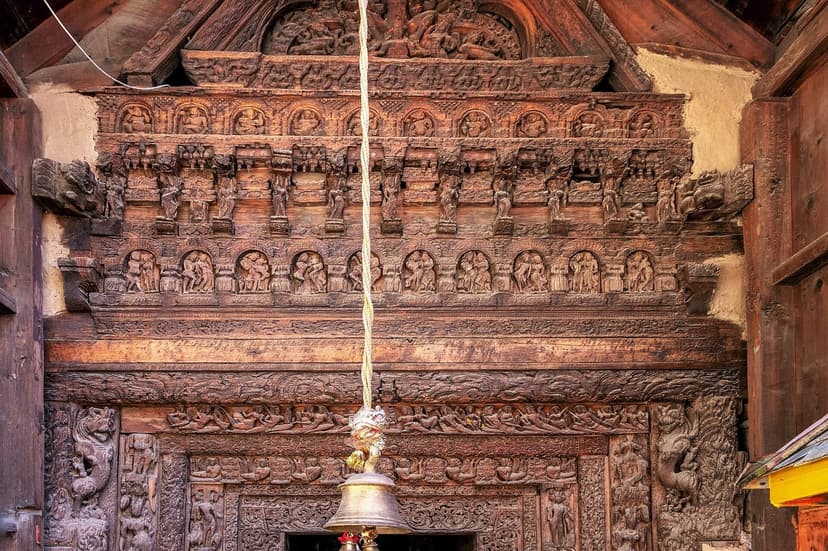
Why has it survived thirteen hundred years when nothing of comparable age has survived in the plains? Two reasons people give. One: Bharmour is high enough and remote enough that almost no invading army ever bothered to come up the Ravi for it. The closest the kingdom of Chamba ever came to losing its independence was the Kira invasion in the eleventh century, and even that armies penetration up to Bharmour did damage but did not destroy. Two: the deodar in this region is exceptionally resistant to rot and insects, and the slate roof keeps the wood dry. Together: lucky geography and the right tree.
Stand inside Lakshana Devi for two minutes. The light through the slats is the same light that fell on the carving when Meruvarman was alive.
3. Narasimha, the Vaishnav exception
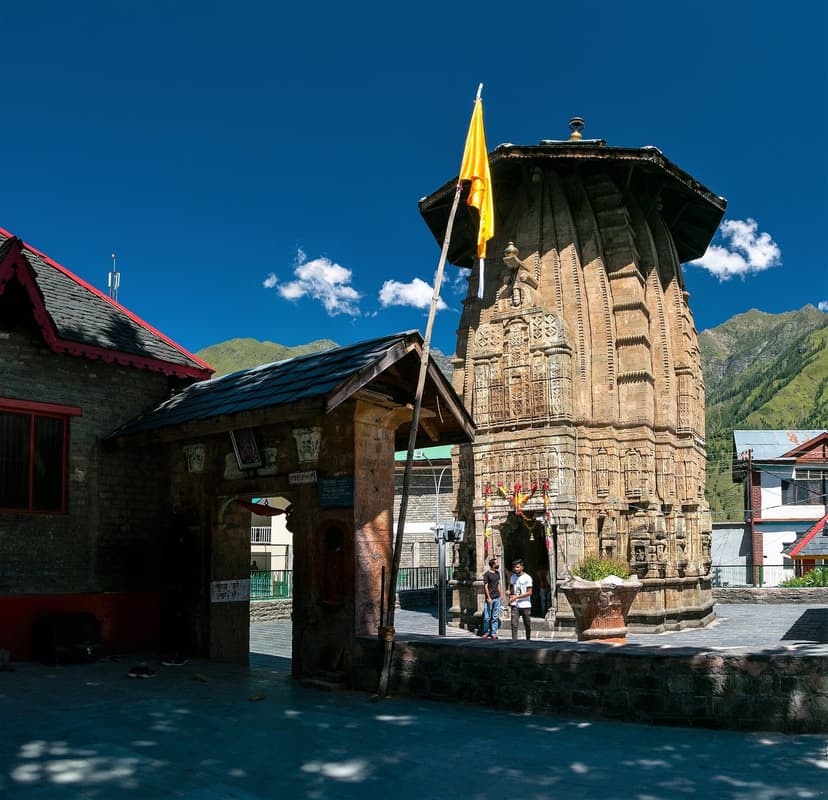
The fourth avatar of Vishnu (man-lion, ripping the demon Hiranyakashipu in half across his lap) sits inside a small stone temple a few metres from the Manimahesh Shikhara. The Narasimha bronze is one of the oldest pieces of bronze figural sculpture in the region. The fact that a Vaishnav idol of this importance survives inside a temple complex whose other six majors are all Shiva-and-his-family is the most interesting religious-history detail in the courtyard. Nobody seems to know exactly why he is there. The standard explanation is that Meruvarman wanted a balanced pantheon. The Hindi local sources just say he was one of the four temples Meruvarman commissioned directly.
4. Nandi, standing, not seated
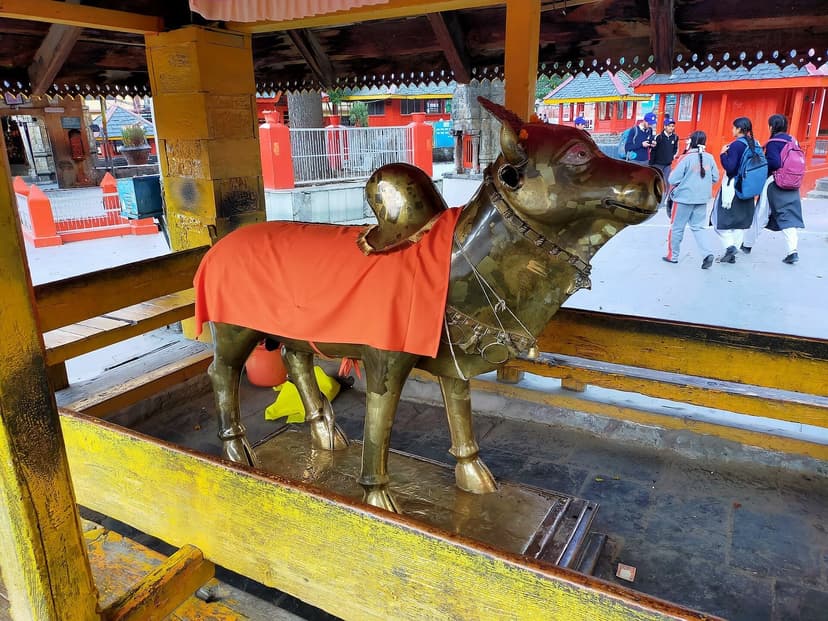
If you have seen Shiva temples elsewhere in India you will have seen Nandi seated, facing the inner sanctum. Here he stands, all four legs planted, body forward, neck slightly turned, as if about to walk in. The bronze is life-sized and weighs roughly a quarter of a tonne. The fact that a four-legged-standing Nandi has been the principal vehicle-icon of a temple for thirteen hundred years and is almost never photographed by tourists is the kind of fact you cannot defend, only report.
5. Dharmeshvar Mahadev, the court of Yamraj
Here is where the temple complex gets strange.
In the row to the right of the Manimahesh Shikhara sits a smaller, squarer stone shrine called the Dharmeshvar Mahadev. The deity inside is named Dharamraj. Dharamraj is another name for Yamraj. Yamraj is the Hindu god of death. According to local belief, repeated in Hindi by every guide I have ever asked and confirmed in print by Amar Ujala, this is the only temple on earth dedicated to Yamraj as the presiding deity. "यहां उनकी अदालत भी लगती है" the local phrase goes, his court convenes here. The belief is that after death, the soul of every Hindu has to first appear at this shrine for an accounting, before being directed to whichever next destination its karma earns.
The shrine itself is small. There is a tiny stairway up to the door called the dhai podi, the "two-and-a-half steps", the two-and-a-half stages of the souls journey from body to liberation. Most visitors do not climb them. Most visitors do not even know the temple is here. The Manimahesh Shikhara four metres away is so much bigger that it pulls all the attention. But if you ask the priest, you will get a long answer about the court of Yamraj and a short answer about most other things.
I think this is the single most interesting fact about Bharmour. The only court-of-death temple in Hinduism is in a town nobody visits.
6. Ganesh, the temple with the broken bronze
The Ganesh idol at Chaurasi has missing legs. The original wooden idol was destroyed in the Kira invasion in the eleventh century; the current bronze replacement, which is also old (post-Kira, by maybe a century), was somehow broken in storage or transit at some point, and you can see where the lower legs have been re-attached or are simply missing depending on how careful you are looking. It is the only temple in the courtyard whose primary idol bears the visible scar of attack. It feels significant that they kept it broken instead of replacing it.
7. Kartikeya (Kelang), the god of war
The Swami Kartikeya temple holds a stone symbol of the god of war and a small six-inch brass idol holding the staff and the ring. He is also called Kelang locally. Of the seven majors he is the least visited, partly because he sits on the back side of the courtyard, partly because Kartikeya in north India is generally less popular than in the south. Worth a stop. The carvings on the doorway are some of the cleanest in the complex.
That is the walk. Allow ninety minutes. Take your shoes off. Do not stand directly in front of the inner sanctum during aarti unless you are ready to participate. The fire and the bells are not theatre.
If you only have ninety minutes: sit on the steps in front of the Manimahesh Shikhara for ten minutes without moving. Then walk three small loops of the courtyard, anti-clockwise. Then enter Lakshana Devi and stand inside for two minutes without speaking. Then exit. That is the article in a thousand words less.
The Gaddi people: this is their place first, ours second
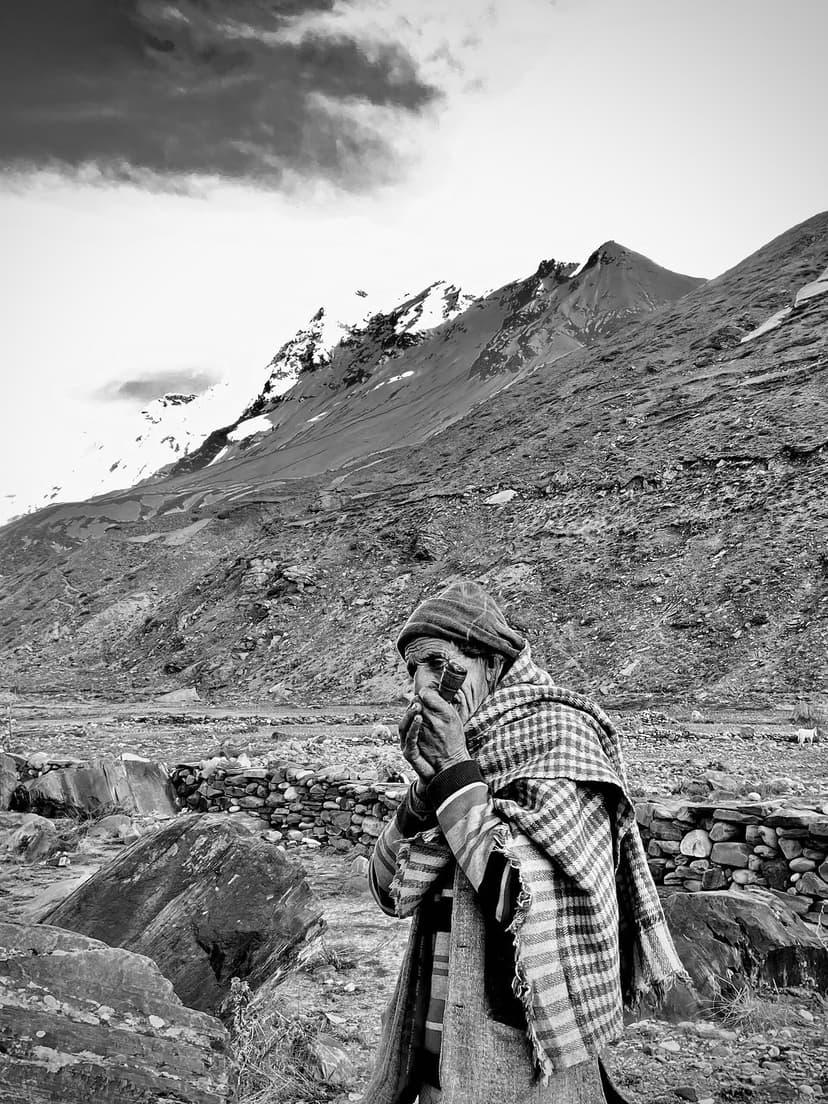
The Bharmour region has a name in Pahari. It is called Gadderan. Gadderan means "the land of the Gaddis."
The Gaddis are a semi-pastoral community of about 178,000 people in Himachal (2011 census), of whom the largest concentration by far lives in and around Bharmour. They practise transhumance: in late spring they walk their flocks of sheep and goats up the valleys behind Bharmour to summer pastures sometimes as high as 4,200 m, and in late autumn they walk them back down again. They have been doing this in continuous practice for at least nine hundred years and probably much longer. The route, the rest stops, the watering points, the meadow boundaries, all of it is encoded in family memory and village oral tradition, transmitted to the next shepherd by going on the walk with them.
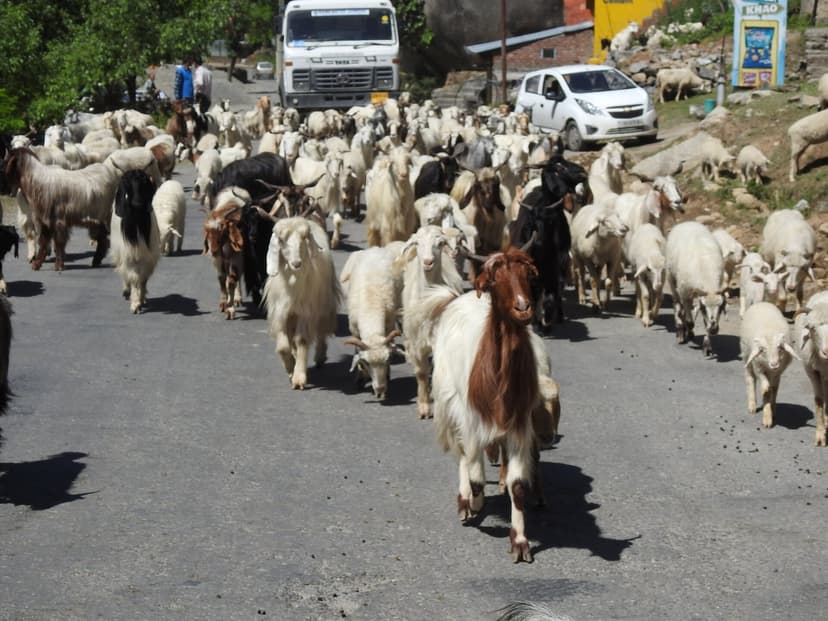
If you drive into Bharmour in late May or early October, you will at some point have to slow down and stop because the road is full of sheep. Four hundred sheep, six hundred sheep, the whole flock with a Gaddi or two and a dog or three walking it. The car will wait. The truck behind you will wait. The bus from Chamba will wait. Everybody in Chamba district understands what the flock is doing. The flock has right of way over the petrol pump and the Maruti and the apple truck.
The Gardu is the blanket. Five metres long, one and a half metres wide, woven by Gaddi women on horizontal looms, black-and-white checkered in a pattern that hides dirt and dries fast. A new gardu costs about ₹4,000 in 2026, and a serious shepherd will own two of them and keep going. It folds into a cloak by day, a sleeping mat by night, a windbreak around a fire in the open, a sling for carrying a sick lamb. It is the single most useful object the Gaddi have made, and the only piece of their material culture that is unmistakably theirs.
The dog is the Gaddi Kutta. A heavy mastiff-type breed, three feet at the shoulder, bred for centuries to fight snow leopards. They are not pets and you should not pet them. They are working animals with a job, and the job is to walk between the flock and the predator. If you see one tied up outside a Bharmour house, ask the owner before approaching.
The Gaddi language is called Gaddi Boli. It is an Indo-Aryan Western Pahari dialect, related to but distinct from Kullavi (which is mine), and barely written down. The children in Bharmour learn Hindi in school and Gaddi Boli at home. The literacy rate in Gaddi communities in HP is above 80%, which is high for a semi-pastoral people anywhere in the world, and a lot of the younger generation now has white-collar work in Chamba and Dharamshala. The transhumance is still happening, but in fewer families, with smaller flocks. In another twenty years the road will probably be empty in May.
Bharmour is Shivabhumi and Gadderan. The land of Shiva, the land of the Gaddis. The order matters here.
, old phrase from the Bharmour Sub-Divisional Officers logbook, repeated by local guides
What this means as a visitor: you are not in a tourist town. You are in somebody elses ancestral homeland. The temples are working temples. The shepherds are working shepherds. The dogs are working dogs. Pay the same kind of attention you would in someone elses house.
Manimahesh Lake: thirteen kilometres uphill, ten thousand people, four thousand metres
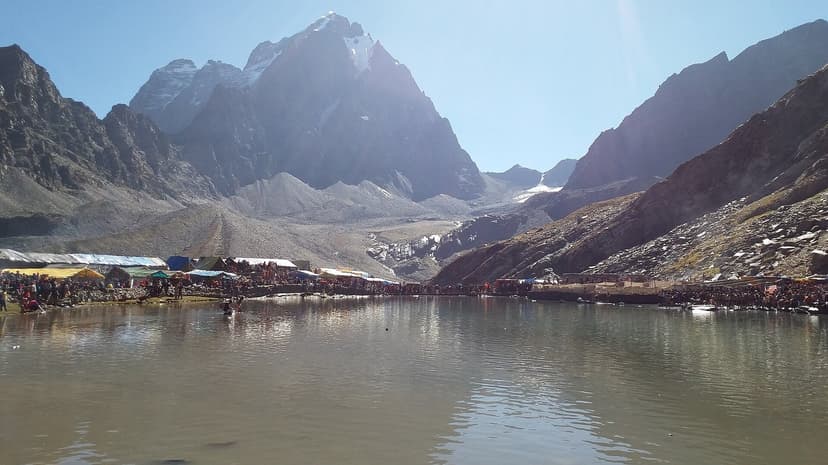
If you came up the road to Bharmour from Chamba, the temples are the warm-up. The Manimahesh Yatra is the event.
The lake sits at roughly 4,080 m, in a small natural amphitheatre under the south face of Manimahesh Kailash Parvat, a 5,653 m granite-and-snow peak that Shaiva tradition treats as the literal residence of Shiva. The peak is one of five Kailashes recognised in the Panch Kailash Yatra: Mount Kailash in Tibet (the famous one), Adi Kailash in Pithoragarh, Kinner Kailash in Kinnaur, Shrikhand Mahadev in Kullu, and this one. Of the five, this is the only one most people from outside Himachal have never heard of, and also the easiest to reach: you do not need a Chinese visa or a Inner Line Permit. You just need to be in Bharmour.
The trail starts at Hadsar, fifteen kilometres east of Bharmour on the road up the Budhil valley. Hadsar sits at about 2,057 m, on the bank of the river. There is parking, there is a tea-stall row, there is a kiosk where pilgrims register during yatra season. The trail to the lake is about 13 km one way, with most of the climb in the second half. Most pilgrims do it in two days during yatra: Hadsar to Dhancho (about 5 km) on day one, Dhancho to the lake (about 8 km, the hard climb) on day two. The strong walk it in a long single day. The very old and the very young take a horse or a porter up the bottom section.
The yatra itself runs from Janmashtami to Radha Ashtami every August or September depending on the lunar calendar. In 2026 the official dates are September 4 to September 19. The most auspicious bathing day, the Shahi Snan, is the last day, Radha Ashtami itself. Pilgrim count during yatra week is around 70,000 to 90,000 across the fortnight, with peak concentration on the last three days. During that peak, the bank of the lake turns into a tarp-and-tent town of perhaps ten thousand people on a single night.
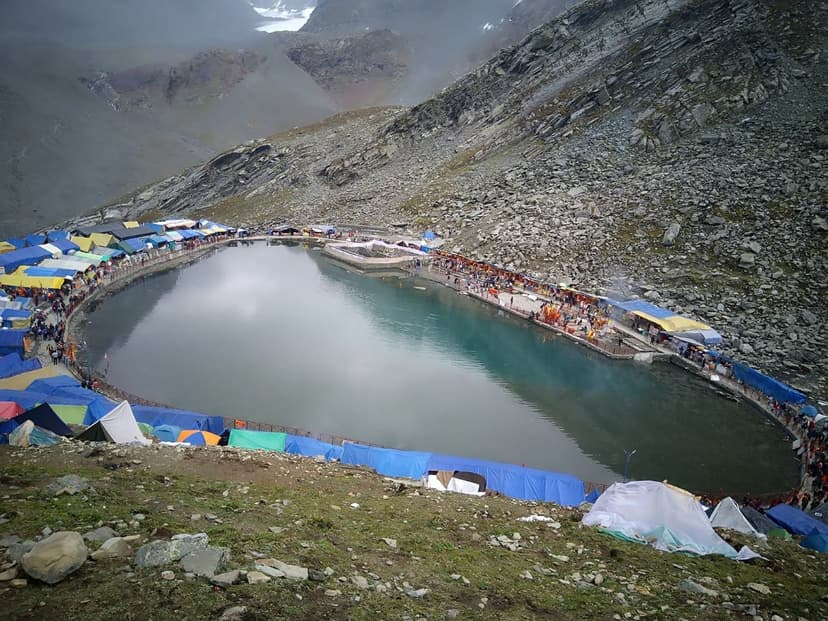
Here is the part the brochures do not write down. At 4,080 m with no acclimatisation, untrained walkers will get sick. Headache, vomiting, loss of appetite, sometimes worse. The trek is rated moderate on paper and feels closer to hard in practice, particularly the last three kilometres above Dhancho where the path turns from a graded mule trail into rocky scramble and the air thins fast. A Reddit user who attempted it in March in shoes that were not made for snow called it "basically a glacier trek with no proper gear" and a friend of mine who did it during yatra in 2022 said the lake was beautiful and the way down took her three days because she could not keep food down.
If you are doing the trek outside yatra season (early May to early October, weather permitting), you will have no tents, no food stalls, no medical post at the lake. You need to be self-sufficient. If you are doing it during yatra, you will have all of those things, but you will be sharing the trail with ten thousand other people and almost zero solitude. Pick your trade.
Altitude and the trek, honestly: the official guide rates Manimahesh as moderate. It is not, for an unacclimatised walker arriving directly from Delhi. Spend a night in Bharmour (2,195 m) and a night in Hadsar (2,057 m) before starting the climb. Carry diamox if you have it and your doctor is okay with it. Turn back at Dhancho if you are not keeping food down. The mountain is still there next year. Three pilgrims died on the trail during the 2024 yatra, mostly from cardiac and high-altitude causes (HP government health bulletins archive the annual report).
Helicopters fly from Bharmour up to Gauri Kund (the smaller lake about one kilometre below Manimahesh Lake, where pilgrims bathe before the final climb) during yatra week. In 2026 the rate is roughly ₹4,500 to ₹6,000 one-way per person depending on the operator. Two operators have run the service in recent years; both book out a week in advance, both pause flying in bad weather. Shikhar Travels publishes a current price list and a phone booking line.
Bharmani Mata Temple at 2,700 m, four kilometres above Bharmour, is the customary first stop. Pilgrims bathe in the Bharmani Kund before starting up the road to Hadsar. If you are walking the yatra in the traditional order, this is the first thing you do.
The hour the article does its own thing: dham at a Bharmour wedding
I will break my own template here for one paragraph, because the food question keeps coming up and the food question deserves a real answer.
Bharmour does not have restaurants in the way Manali or Dharamshala have restaurants. What it has is dhabas, homestays that cook for you on request, and the institution called dham. Dham is the traditional ceremonial meal served at Himachali Brahmin weddings and large religious functions, cooked by a hereditary caste of chefs called botis, served on a leaf or a steel plate to long lines of seated guests, eaten with the right hand. (We have a separate deep dive on regional dhams if you want the food story.) The Chambyali dham, the version cooked in Chamba district, including Bharmour, usually includes madra (chickpeas in yoghurt-cumin gravy), khatta (sweet-and-sour tamarind), mash dal, two kinds of rice, and a sweet ending. If you are invited to a wedding in Bharmour during your visit, accept. If you are not, the dhabas opposite the temple serve a passable rajma-chawal and a respectable parantha; the homestays will cook you a simple home meal if you ask the day before. The Punjabi dhaba near the temple is the one most locals point you at. They serve until about 8 pm and shut up.
Chamba Rumal: the other thing the kingdom made
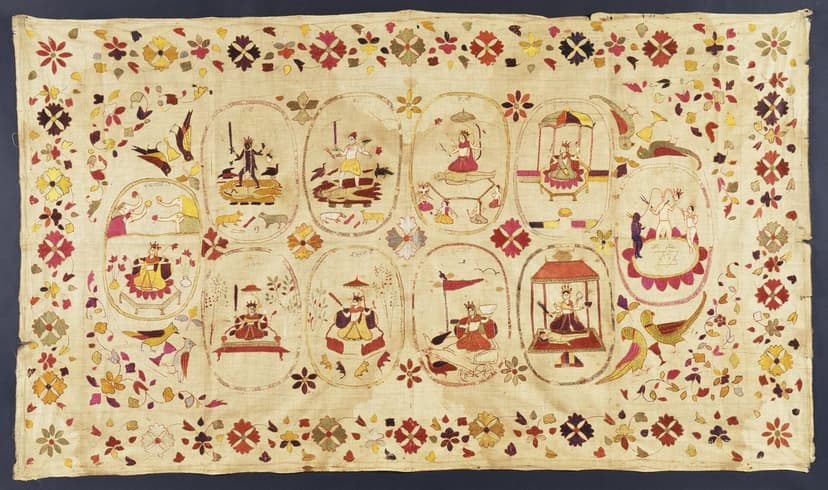
While the Bharmour court was carving Shivlingas in stone, the women in the same court were embroidering the same stories in silk. The output is the Chamba Rumal: a fine cotton or muslin square, hand-embroidered in coloured silk thread, depicting scenes from the Krishna stories, the Ramayana, or (more rarely) tantric pantheons like the ten Mahavidyas. The stitch is called dorukha. It is done so that both sides of the cloth are identical. Look at the textile from the front; flip it; the back is the same picture. There are perhaps a dozen women alive in the Chamba district now who can still do it well.
The rumal got a Geographical Indication tag from the Government of India in 2007, which sometimes helps and sometimes does not (the same GI tag has not stopped Banarasi sari production from collapsing). The best collection of historic rumals is at the Bhuri Singh Museum in Chamba town, sixty kilometres downhill from Bharmour. You can buy a contemporary one from a Chamba state-emporium for between ₹3,000 and ₹15,000 in 2026 depending on size and complexity, or commission one (six months wait, ₹25,000+) through the museum staff. If you have time in Chamba on the way back, give the museum ninety minutes. It is small and serious and the lady at the desk will hand-walk you through the cabinet of the older pieces.
Getting to Bharmour without losing a day
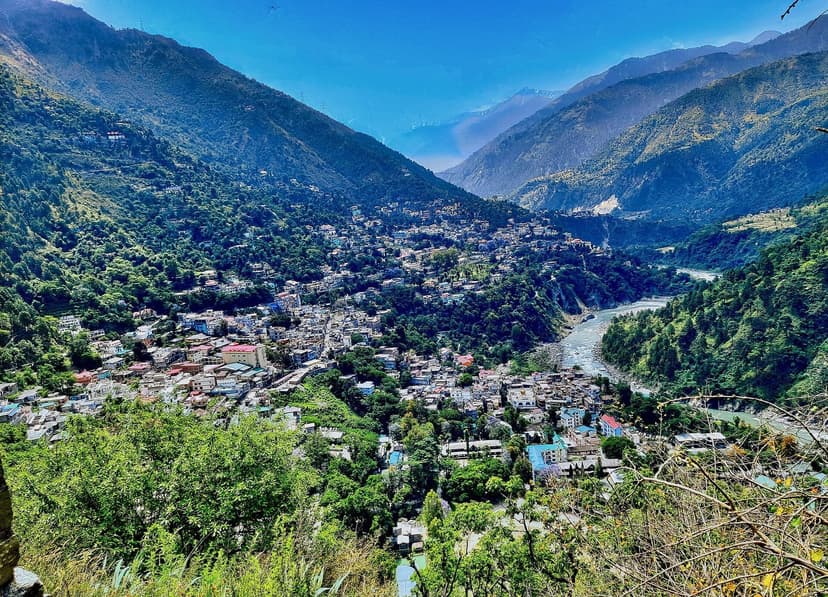
Three ways in, in order of how I would actually do it.
1. Train to Pathankot, then road. The Jammu Mail (12425) or the Pathankot Express (12331) out of New Delhi in the evening puts you in Pathankot by about 6 am. From Pathankot a private taxi to Bharmour costs ₹6,500 to ₹8,000 in 2026 depending on season and runs five to six hours direct. The cheaper version is a shared cab to Chamba (₹400 to ₹600 per seat, 3.5 hours), then an HRTC bus from the Chamba bus stand to Bharmour (about ₹130, departing roughly 06:20, 08:30, 11:00, 12:30, 15:30, 18:30, schedules drift, confirm at the stand). This is what I do most years.
2. Overnight HRTC Volvo to Chamba. Kashmere Gate ISBT to Chamba is a single overnight bus, about ₹1,200 in 2026, twelve hours, leaves around 6 pm. The ride is rough through the lower hills but you wake up in Chamba. From there, the same bus or taxi onward to Bharmour. Total: about 14 hours door to door from Delhi.
3. Fly to Gaggal (Kangra Airport) and drive. SpiceJet and Star Air both fly Delhi-Gaggal in season. Gaggal is at 32.165 N, 76.26 E, 190 km by road from Bharmour, about 6 hours via Chamba. A pre-booked taxi from Gaggal to Bharmour is ₹7,000 to ₹9,000 in 2026. The flight saves only marginal time over the train + road combo and the flights cancel often in monsoon and winter. Only worth it if you are short on time and the weather is good.
A four-day itinerary that respects the temple, the trek, and the way home
- Day 1, Delhi to Chamba
Take the overnight HRTC Volvo from Kashmere Gate (around 6 pm, ₹1,200) or train to Pathankot + onward shared taxi. Arrive Chamba town by mid-morning. Walk the Chaugan, see the Lakshmi Narayan Temple complex (about 1,100 years old), give the Bhuri Singh Museum 90 minutes for Chamba Rumal context. Stay in Chamba town for the night to acclimatise to the altitude before going higher. - Day 2, Chamba to Bharmour
HRTC bus from Chamba bus stand (06:20, 08:30, 11:00, around ₹130, 2 to 4 hours depending on the road). Arrive Bharmour by early afternoon. Drop bags at the homestay. Walk the Chaurasi courtyard slowly in the late-afternoon light. Sit on the steps in front of the Manimahesh Shikhara for ten minutes. Stand inside Lakshana Devi for two. Have dinner at the homestay or the Punjabi dhaba opposite the temple. - Day 3, Bharmani Mata + Hadsar recce
Morning: walk or taxi 4 km up to Bharmani Mata Temple (2,700 m). Bathe in the kund if you are going on to Manimahesh; otherwise just sit at the temple. Late morning: drive 15 km to Hadsar (2,057 m), the Manimahesh trek base, to acclimatise to the higher air and see the trail-head infrastructure. Back to Bharmour for the night. - Day 4, Manimahesh Yatra OR culture day OR home
Three options. (a) Start the Manimahesh trek before dawn, Hadsar to Dhancho today, lake tomorrow, adds two more days. (b) Spend a full day in and around Bharmour talking to Gaddi families, visiting Kugti area, exploring Chamba Rumal artisans. (c) HRTC bus back to Chamba, train to Delhi from Pathankot, home by morning.
Want a Chamba-side local to sanity-check your Bharmour route before you book? Email us your draft itinerary. We will tell you which day is too ambitious, which homestay is worth the detour, and where the road has been rough this week.
What it costs (₹, per person, 2026)
| What | Cost | Note |
|---|---|---|
| Delhi to Chamba (overnight Volvo or train+taxi) | ₹1,200 to ₹1,800 | HRTC Volvo from Kashmere Gate; or train to Pathankot + shared cab |
| Chamba night 1 (homestay or budget hotel) | ₹1,000 to ₹1,500 | Hotel Iravati (HPTDC) or one of the homestays around the Chaugan |
| Chamba to Bharmour HRTC bus | ₹130 to ₹150 | Ordinary HRTC; taxi private ₹3,500 to ₹5,000 if you split it 4 ways |
| Bharmour stay (2 to 3 nights, homestay) | ₹1,000 to ₹1,800 per night | Bharmour Homestay, Shiv Gaura, or PWD Rest House (call 01895225003); peak yatra rates run ₹1,500 to ₹2,000+ |
| Food (homestay meals + dhaba) | ₹400 to ₹700 per day | Home-cooked dinner ₹250 to ₹350; dhaba lunch ₹150 to ₹250 |
| Bharmani Mata side-trip (taxi share) | ₹300 to ₹600 | Or walk it; 4 km each way, 90 minutes uphill |
| Manimahesh trek if doing it | ₹2,000 to ₹5,000 add-on | Hadsar parking, porter ₹600 per day, mule ₹2,000 round trip, tent at lake ₹150 per person; helicopter Bharmour to Gauri Kund ₹4,500 to ₹6,000 one-way if flying |
| Return Bharmour to Delhi | ₹1,500 to ₹2,000 | HRTC + train, same combo in reverse |
Total per person (4-day trip without Manimahesh trek): roughly ₹8,500 to ₹13,000. With the Manimahesh trek (add 2 more days): roughly ₹13,500 to ₹22,000 per person depending on whether you walk or take the helicopter.
Doing Manimahesh yatra in September 2026 and not sure about the registration paperwork, the helicopter slots, or the homestay-vs-tent calculation? Email us at hello@refuje.com and we will walk you through it. We have done the walk both ways.
What Bharmour is and what Bharmour is not
Bharmour is not a luxury destination. There is no swimming pool. There is no spa. There is no resort. The most "luxurious" rooms in town are clean, simple, ₹1,800 a night with a hot bucket and a view of mountains, and that is exactly all they need to be.
Bharmour is not Instagram-friendly in the Manali way. The Chaurasi courtyard is beautiful but cluttered with the realities of a working temple complex: shoes on the steps, plastic prasad-bags, a cow chewing in a corner, a priest taking a phone call. If you want a clean architectural shot you have to wait for it.
Bharmour is not high-altitude trekking by itself. The town is at 2,195 m, which is high enough that you should pause and acclimatise, but it is not a difficulty by itself. The difficulty is at Manimahesh, twenty-five road kilometres and 1,900 vertical metres away.
Bharmour is, instead, a place where you sit on stone steps that have been there longer than most of the cathedrals of Europe and watch a town live around them. If that is enough for you, come. If you need more than that, go to Manali.
The hard parts I have to tell you about
The Chamba-Bharmour road is real mountain road. It is two-lane in most places, single-lane in some, with a steep drop into the Ravi for long sections. Landslide-prone in monsoon. The road has been closed for blocks of hours and sometimes days during heavy August rain in every year I can remember. HPPWD updates are published on the state portal at hp.gov.in but the most reliable check is to phone the homestay you have booked, the morning of, and ask if the bus came through.
ATMs in Bharmour are unreliable. There are technically two, both at the SBI branch near the bazaar. Both run out of cash regularly during yatra. Carry enough cash from Chamba, figure ₹5,000 to ₹8,000 per person for a few-day stay including the trek. The homestays accept UPI but the dhabas and the small shops are cash-first.
Mobile coverage is spotty. Jio works in town and is the best of the three networks. Airtel works at the homestay I usually stay at but drops out on the road to Hadsar. BSNL works in the most surprising places, including high up on the Manimahesh trail.
And the dogs. The Gaddi Kuttas guarding the houses are not pets. They are working dogs. If a Gaddi house has its dog tied at the gate, ask the owner before walking up to the door.
The honest line: who should come
Bharmour is for you if you like temple-quiet, slow-walking, history that has not been packaged for you, food that is whatever was made in the kitchen that day, and people who will be polite but uncurious. It is not for you if you need party scene, café culture, English-language signage everywhere, or constant activity. The bad news: there will be afternoons when nothing is happening and you are watching a goat. The good news: those afternoons are the entire point.
| Spiti Valley | Bharmour | |
|---|---|---|
| Altitude | 3,000 to 4,500 m (acclimatisation mandatory) | 2,195 m (acclimatisation light) |
| Roads | Manali side closes Oct to May; Shimla side mostly open | Chamba side open all year, monsoon landslide risk Aug |
| Crowd | Heavy in summer and yatra season | Heavy only during Manimahesh Yatra (Sep 4 to 19 in 2026); empty otherwise |
| Headline experience | Cold desert moonscape; 1,000 year monasteries | 1,400 year temples; only Yamraj temple on earth; Gaddi heartland |
| Time needed | 6 to 10 days | 3 to 6 days |
| Cost per person | ₹18,000 to ₹35,000 | ₹8,500 to ₹22,000 |
FAQ
What exactly is the Chaurasi Temple complex?
A courtyard of 84 ancient Hindu shrines in central Bharmour. Seven major stone and wood temples (Manimahesh, Lakshana Devi, Narasimha, Nandi, Dharmeshvar Mahadev, Ganesh, Kartikeya) plus 77 smaller votive structures. The major temples are dated to the seventh century, with Lakshana Devi specifically traceable to around 680 CE under Raja Meruvarman.
When does the Manimahesh Yatra happen in 2026?
September 4 to September 19, 2026 (Janmashtami to Radha Ashtami). The bathing day, Shahi Snan, is the last day, September 19. HP government registration is mandatory for pilgrims; medical forms are part of registration. Helicopter services run during the yatra window between Bharmour and Gauri Kund.
How do I reach Bharmour from Delhi?
Three options. Train to Pathankot (overnight) and taxi to Bharmour via Chamba (5 to 6 hours). Overnight HRTC Volvo from Kashmere Gate to Chamba (about 12 hours), then HRTC bus to Bharmour. Fly to Gaggal (Kangra) and drive (about 6 hours). The train-plus-road option is what most regular visitors prefer.
Where can I stay?
Bharmour has a small set of basic accommodations. Bharmour Homestay (₹1,200 a night, four rooms, home-cooked meals), Shiv Gaura Homestay (₹1,008 to ₹1,200), Paramount Homestay, PWD Rest House (call 01895225003), and Hotel Chaurasi near the temple. Book ahead during Manimahesh Yatra week when rates jump to ₹1,500 to ₹2,000 and rooms sell out two months in advance.
Is the Manimahesh trek dangerous?
It is harder than the official guide says. 13 km one way from Hadsar (2,057 m) to the lake (4,080 m), with most of the climb in the last 5 km above Dhancho. Three pilgrims died on the trail during the 2024 yatra, mostly from altitude and cardiac causes. If you have not slept above 3,000 m before, spend a night in Bharmour, a night in Hadsar, and consider taking the helicopter to Gauri Kund and walking only the last kilometre.
Who are the Gaddi people?
A semi-pastoral community of about 178,000 in Himachal, with the largest concentration in and around Bharmour. They practise transhumance, walking sheep and goat flocks to summer pastures as high as 4,200 m every May and bringing them back every October. They speak Gaddi Boli, a Western Pahari language. Bharmour itself is called Gadderan (Land of the Gaddis) in Pahari.
Is the only temple in the world dedicated to Yamraj really here?
Yes. The Dharmeshvar Mahadev shrine inside the Chaurasi courtyard is dedicated to Dharamraj, another name for Yamraj, the Hindu god of death and karmic justice. Local belief, repeated by every priest in the complex and confirmed in print by Amar Ujala, is that this is the only temple anywhere in the Hindu world where Yamraj is the presiding deity and where his court of post-death judgement convenes.
What is the best time to visit?
April through June for the temples, the Gaddi spring transhumance, and pleasant 8 to 18 degree weather. Mid-September if you want to witness the Manimahesh Yatra (September 4 to 19, 2026), with the caveat that the town and the trail are at peak crowding. October to early November for autumn light and post-monsoon quiet. December to March brings snow and possible road closures; reserve only if you are okay with the risk.
Can I do the Manimahesh trek outside yatra season?
Yes, between roughly mid-May and early October when the trail is snow-free. You will have no tents, no food stalls, no medical post at the lake and Dhancho. You need to be fully self-sufficient with food, shelter, and altitude experience. The Reddit story of someone attempting it in March (in shoes not made for snow) and calling it basically a glacier trek without proper gear is what happens when you misjudge the season. Do not.
Is Bharmour safe for solo travellers and solo women?
Yes. The town has about 1,374 residents in 2011 (slightly higher now), most of whom either know each other or know your homestay host. The temple complex sees a steady trickle of pilgrims year-round and a constant flow during yatra. Standard remote-mountain precautions apply: tell someone your itinerary, have at least one offline map cached, and do not start a trek outside the yatra window without local conditions confirmation.
What else can I see near Bharmour?
Bharmani Mata Temple (4 km, 2,700 m, the customary pre-yatra stop). Hadsar village (15 km, Manimahesh trek base). Kugti village (about 25 km east, the last village of Chamba district, gateway to Kugti Pass trek for serious hikers). Kaksen-Bhagsen waterfalls (18 km, twin falls). Chamba town (60 km downhill, with the Lakshmi Narayan Temple complex and the Bhuri Singh Museum for Chamba Rumal context).
Where can I see and buy a Chamba Rumal?
Best viewing: Bhuri Singh Museum in Chamba town, open Tue to Sun, modest entry fee. Buying: the Himachal Emporium next to the museum stocks contemporary rumals from ₹3,000 to ₹15,000 depending on size and complexity. A bespoke commission of a major piece (six-month wait) starts around ₹25,000. The dorukha stitch means both sides of the cloth are identical, which is why these take so long to make.
Why zero tourists is the point
The Chaurasi courtyard has stood almost in silence for a thousand years. The Gaddi shepherds still walk their sheep the same way they walked them in the eleventh century. The Manimahesh pilgrimage runs whether anyone writes about it or not. None of this is waiting for you to validate it.
What Bharmour offers is something the rest of Himachal lost somewhere along the way. A working place. A place that does not need you. Where the priest at the Yamraj shrine will answer your question if you ask, but is not waiting at the door to perform for you. Where the homestay owner will cook you the same dinner she is cooking her father, and not put a parsley garnish on it. Where the silence between two August festivals is not a marketing slot but the actual silence of an actual ridge in an actual mountain range.
Come anyway. There is nothing to delay it for.
, Rajesh Thakur, writing from Kullu, after a March 2026 visit to Chamba and the Bharmour ridge.
Sources
Primary / official: himachaltourism.gov.in (HPTDC accommodation and routes; verify booking via the official portal); HP district portal example (yatra registration and trail medical reports follow the same template across districts); HP HRTC bus stand Chamba (timetable verified in person, March 2026).
Journalistic: Amar Ujala, "Manimahesh yatra and the belief behind Chaurasi temple," September 2023 (Yamraj-only-temple claim, Hindi). Shikhar Travels India (current Manimahesh trek logistics, 2026). Tripoto (homestays, dhaba, contemporary visitor record).
Reference / encyclopaedia: Wikipedia: Bharmour; Wikipedia: Lakshana Devi Temple; Wikipedia: Chaurasi Temple Bharmour; Wikipedia: Gaddis.
Local Hindi sources for the Yamraj and 84 siddhas details: bhaktvatsal.com Bharmour entry; Divya Himachal "Famous temples of Bharmour" (April 2021); Himachal Compass Bharmour entry; Khabar Himachal Manimahesh yatra report.
Personal verification: Multiple visits over 2014 to 2026; March 2026 walk-through of the Chaurasi complex including conversation with the priest at the Dharmeshvar shrine; September 2022 Manimahesh trek as far as Gauri Kund.
You Might Also Like
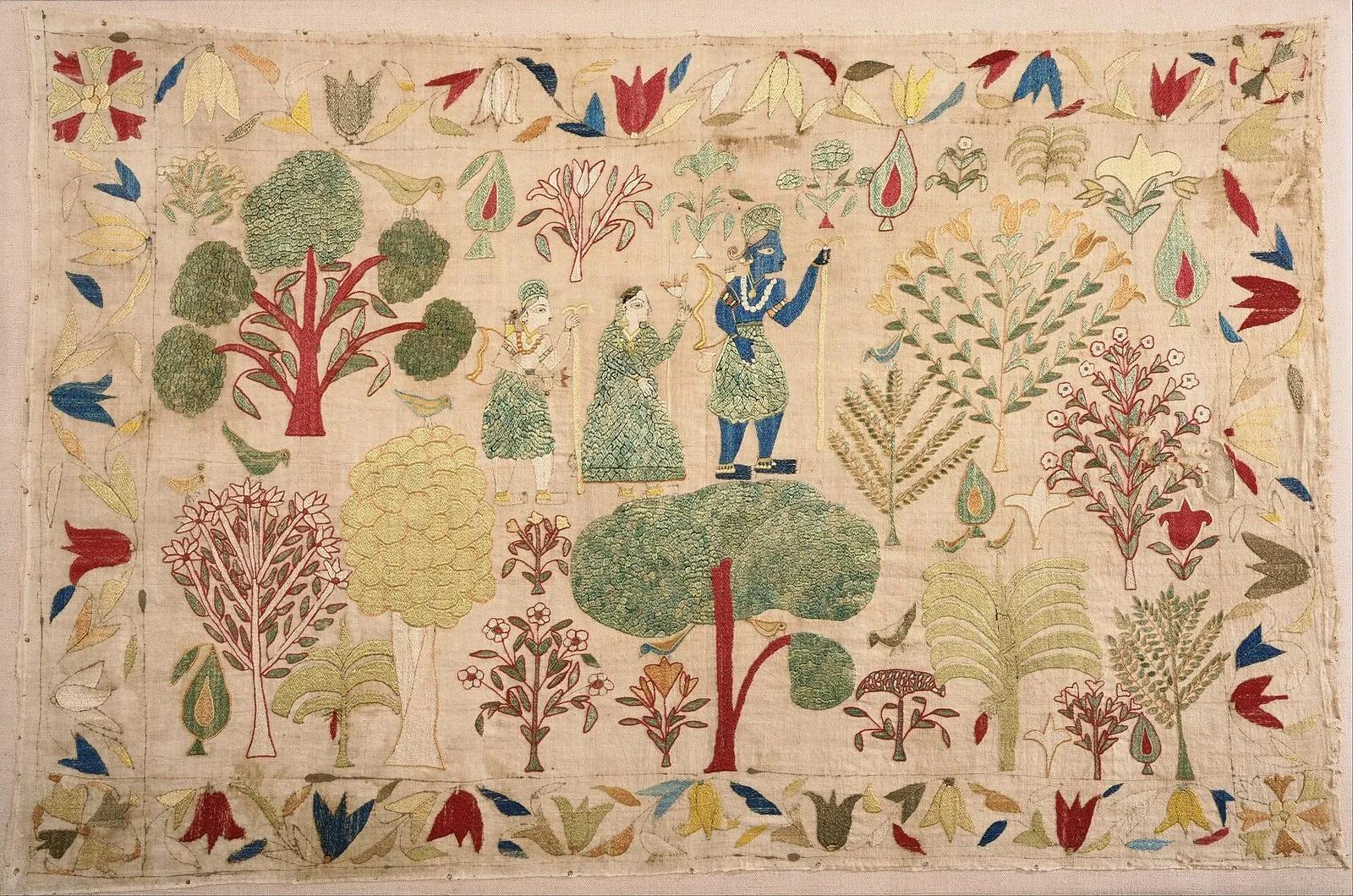
Chamba Rumal: The Embroidery With No Wrong Side
Flip a real Chamba rumal over and the back is identical to the front. The dorukha stitch, the Pahari painters who draw the designs, real 2026 prices, where to buy one, and the truth about that UNESCO claim.
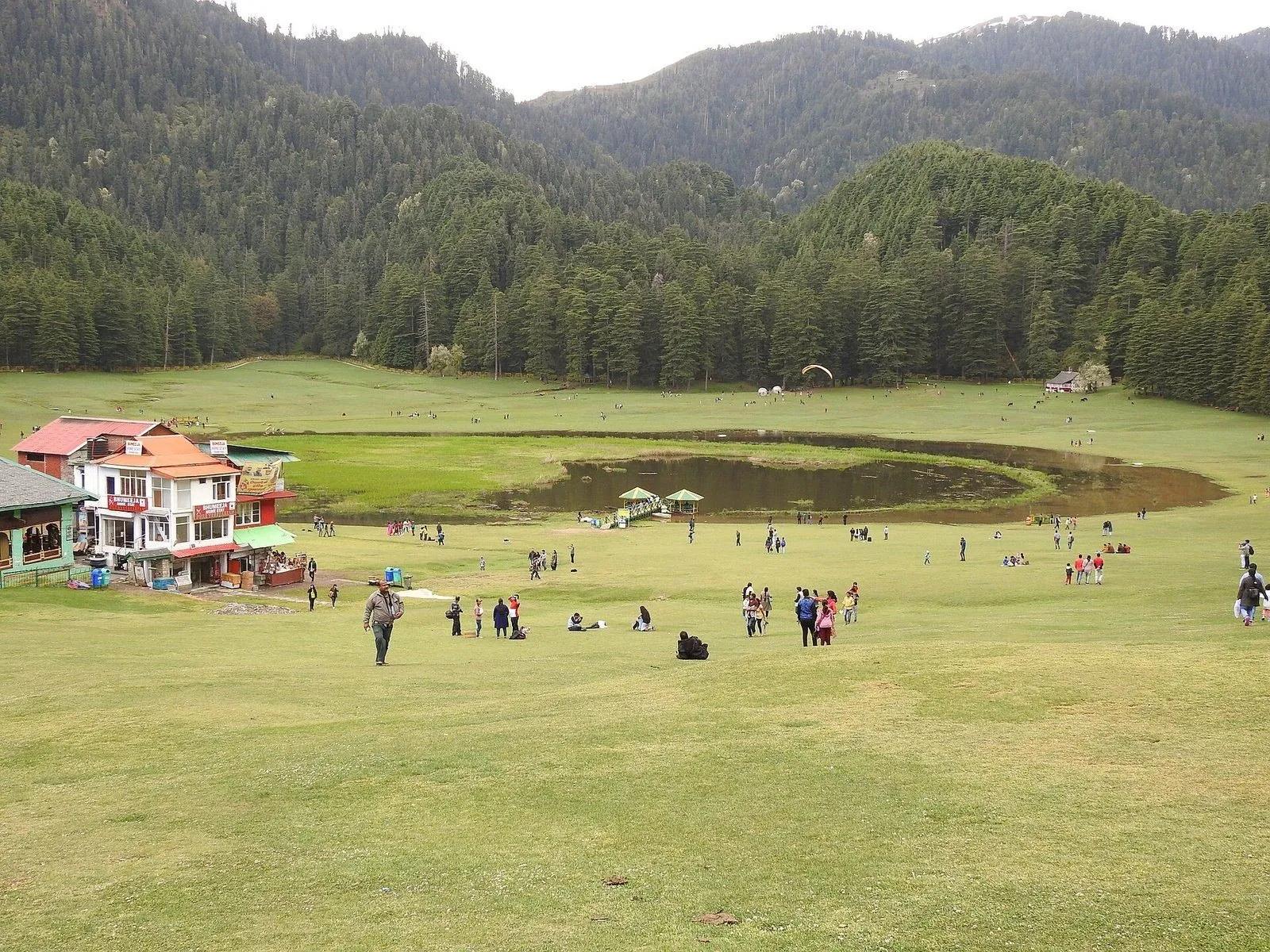
Dalhousie & Khajjiar in 2 to 3 Days: The Honest Itinerary, With the Chamba Upgrade
Reddit says Dalhousie has nothing except scenic beauty. Correct, and that is the pitch. A day-by-day Dalhousie-Khajjiar plan with Dainkund, Kalatop, real traveller budgets, and the Chamba day most people wrongly skip.
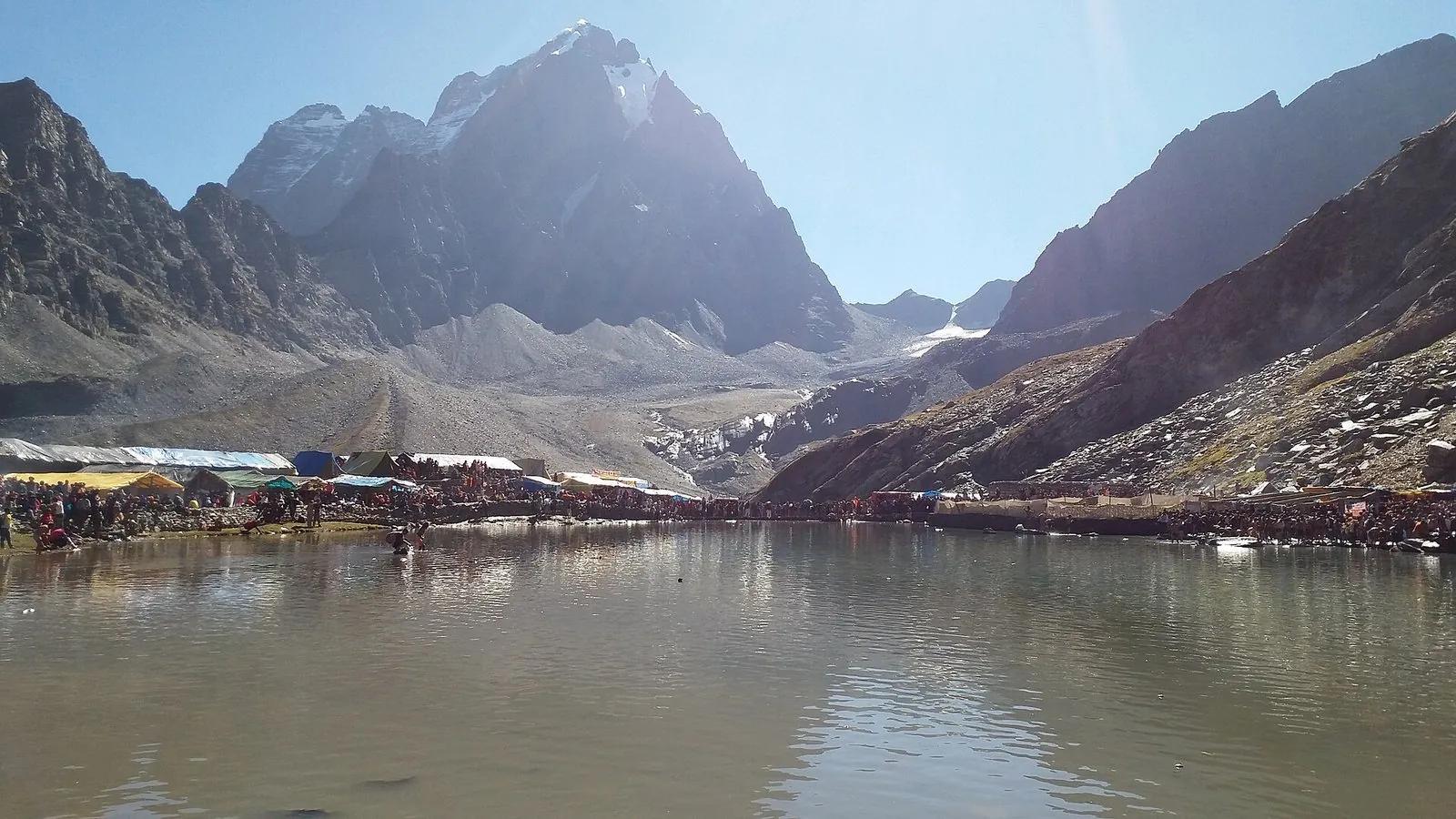
Manimahesh Lake Trek 2026: Sacred Pilgrimage Guide from Bharmour
Trek 14 km to Shiva's sacred lake at 4,080 m in Chamba: 2026 yatra dates, NGT-framework registration, route, budget, and why the 2025 disaster reshaped how to plan.