
HRTC Bus Guide 2026: Every Bus Type, Route and Booking Hack
The clearest thing anyone has ever said about Himachal Pradesh transport sits in five Hindi words from u/droid7ghost on r/HimachalPradesh: bhai ji HRTC Himachal ki lifeline hai. HRTC is the lifeline of Himachal. Nine upvotes, no replies. Nobody argued.
I am from Kullu. I have been riding HRTC ordinary buses since I was old enough to be put on one alone with a folded ten-rupee note in my pocket. The green-and-white bus is how you get to school, how you get to a wedding three valleys over, how you reach the doctor in Mandi, and how every Himachali tourist still gets to Spiti when the road opens in June. There are 3,302 buses across 3,700 routes [HRTC Wikipedia, Apr 2026]. They run from Leh to Delhi, from Sangla to Pathankot, from a roadside in Tabo at 4 am to the basement gate of Kashmere Gate ISBT eighteen hours later.
This guide is the version of HRTC nobody writes in English. The six official bus categories with their Devanagari names. The April 2026 fare hike that ended the Volvo discount and doubled the minimum ticket. The Him Bus Card that women now need to keep their 50 per cent concession. The Reckong Peo to Kaza departure at 5:30 am that has run almost unchanged since the 1980s. And the small Reddit-tested hack that lets a Mumbai college student do Mumbai-to-Chitkul for under thirteen thousand rupees.
Quick answer, June 2026. HRTC runs six bus categories: Himsuta (Volvo/Scania AC), Him Gaurav (AC deluxe), Him Mani (non-AC deluxe), Him-Dhara (AC ordinary), Him Tarang (electric, short routes), and Ordinary (the 74 paise per km backbone). Book on online.hrtchp.com, the HRTC app, RedBus, AbhiBus, or at the counter. Booking opens 60 days in advance. The Volvo 10 per cent discount ended on 1 April 2026. Minimum fare doubled from Rs 5 to Rs 10 in the same window. Women still get a 50 per cent concession on ordinary fares, but from 31 March 2026 you need a Him Bus Card (Rs 236 one-time RFID, then Rs 150 annual renewal) to claim it.
HRTC at a glance
- Fleet: 3,302 buses across 3,700 routes
- Founded: 1958
- Bus categories: 6 official (Himsuta, Him Gaurav, Him Mani, Him-Dhara, Him Tarang, Ordinary)
- Ordinary fare: 74 paise per km
- Min ticket (Apr 2026): Rs 10 (was Rs 5)
- Volvo Dharamshala-Delhi: Rs 1,619 (was Rs 1,457)
- Advance booking window: 60 days
- Free luggage: 30 kg / 2 bags
- Womens concession: 50% with Him Bus Card
- Longest single route: Leh-Delhi, 1,203 km, 36 hrs
Why HRTC is the single most important thing to learn about Himachal travel
A Redditor on r/desitravellers asked the obvious question one June: has someone explored Himachal entirely by bus? The thread ran to sixty-plus comments. Nobody pushed back. Everyone said yes, and everyone named HRTC.
Himachal Road Transport Corporation is not a small government operation. Founded in 1958, it runs 3,302 buses on 3,700 routes through every district in Himachal Pradesh and into seven other states: Delhi, Haryana, Punjab, Uttarakhand, Uttar Pradesh, Rajasthan, Jammu and Kashmir. It owns 31 depots, four divisional offices, seven driver training institutes, and its own body-building units that fabricate bus bodies in Mandi and Tara Devi [HRTC Wikipedia, Apr 2026]. Its longest route, Leh to Delhi, runs 1,203 km in roughly 36 hours and is regularly claimed as the longest state transport bus route in India.
When people on Reddit say take the HRTC, they are not pointing you to a hack. They are pointing you to the circulatory system of the state. u/Own-Assumption6345, replying on r/HimachalPradesh, put it the way every Himachali eventually does: having extensively travelled across India, I can confirm HRTC offers unparalleled service to common citizens in a tricky terrain, and night/long route buses are safe, punctual and economical. Thirty upvotes, no argument.
If you can read HRTC, you can move anywhere in Himachal for a fraction of the taxi price. That is the whole game.
The six bus categories, decoded
HRTC operates six official bus types. The Hindi names matter because they are what is painted on the bus and printed on your ticket. Knowing the difference is what stands between a Rs 415 seat to Manali and a Rs 1,847 one.
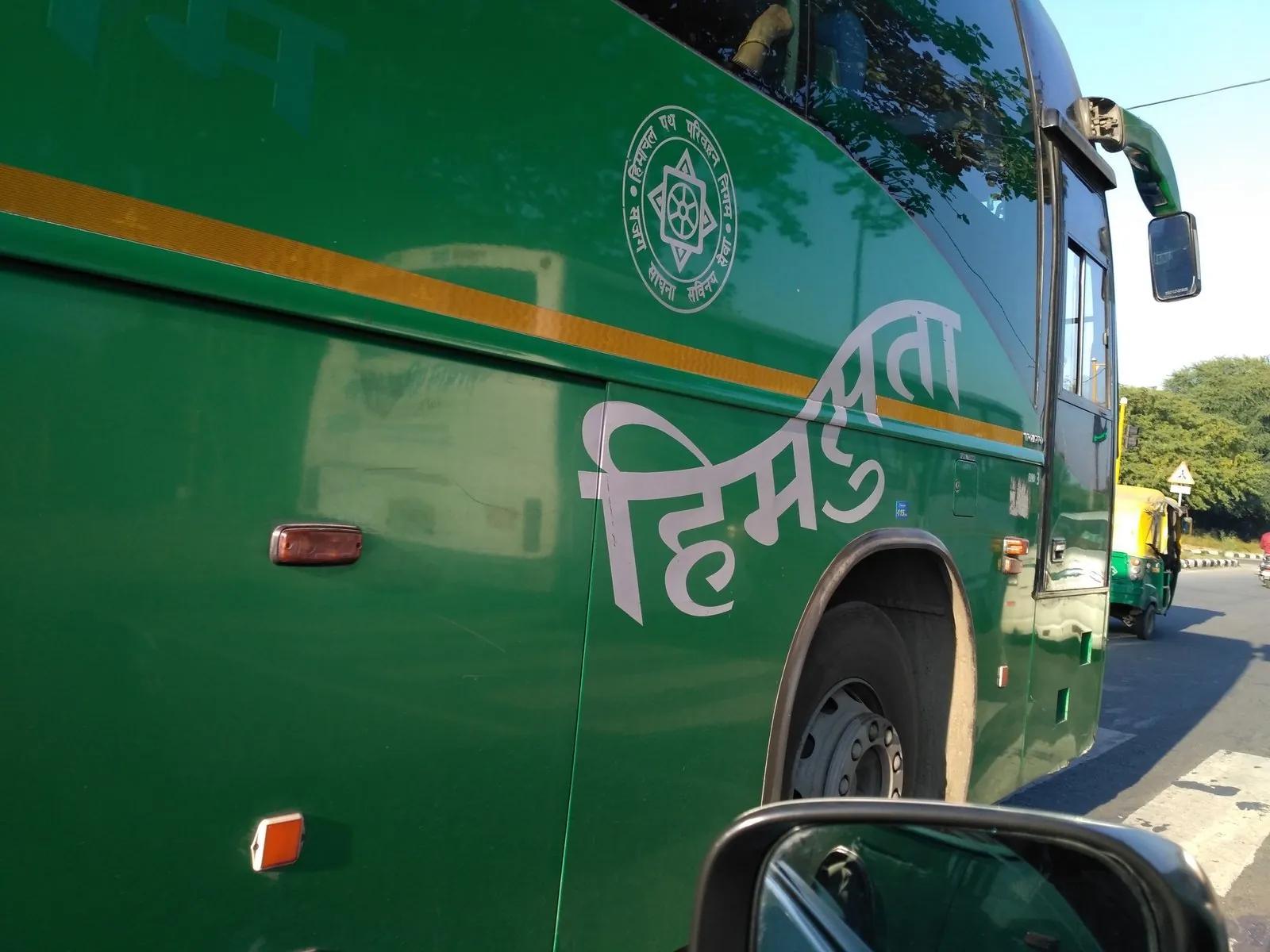
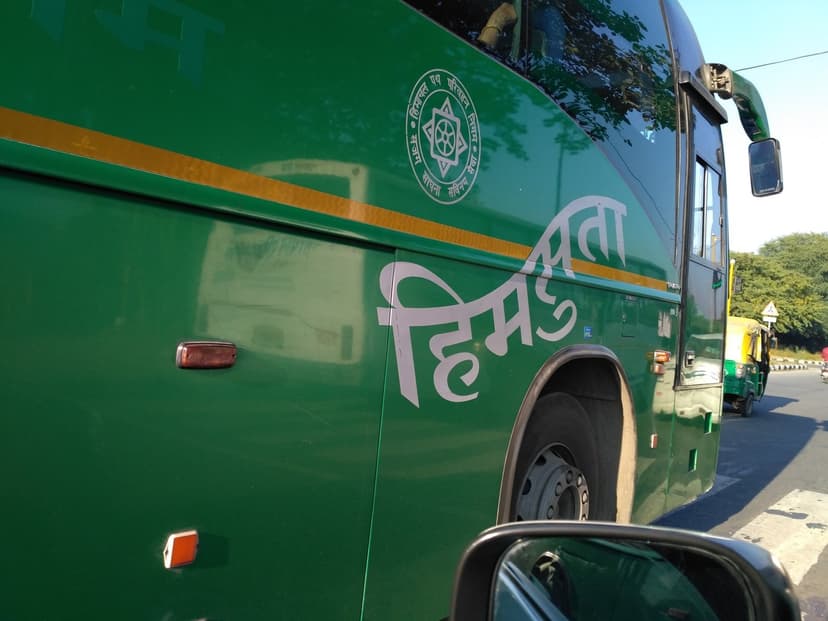
1. Himsuta (हिमसुता): the Volvo and Scania flagship
This is what Reddit means by HRTC Volvo. Volvo and Scania AB luxury coaches with 2+2 reclining semi-sleeper seats, air conditioning, blankets, water bottles on most services, LED entertainment, and a fleet of around 100 buses. The newest Himsutas are Mercedes chassis [Divya Himachal, Mar 2026].
- Delhi-Manali: Rs 1,550, 12-14 hours
- Delhi-Shimla: Rs 1,191, 8-10 hours
- Delhi-Dharamshala: Rs 1,619 from April 2026 (was Rs 1,457) [Amar Ujala, Mar 2026]
- Booking: online.hrtchp.com, HRTC app, RedBus, AbhiBus, MakeMyTrip
The Himsuta fleet expanded again in July 2025 when Chief Minister Sukhvinder Singh Sukhu launched a Solan-Delhi-Manali Volvo via Una and Hamirpur, the third daily Volvo frequency on the Manali corridor [ETV Bharat Solan, 3 July 2025]. As of April 2026 HRTC also runs more than twenty-two daily buses on the Hamirpur-Delhi route via Chandigarh, with both Himsuta Volvo and Him-Mani deluxe slots [Tribune India].
2. Him Gaurav (हिमगौरव): AC deluxe at half-Volvo prices
The middle tier. Isuzu and Tata AC deluxe buses, 2+2 seating, no Volvo badge. Fare runs roughly 50 to 75 per cent of the Himsuta on the same route. It is the right choice when the Volvo is sold out and you still want air conditioning, especially on shorter daytime routes where overnight semi-sleeper seats are overkill.
3. Him Mani (हिममणि): the non-AC deluxe sweet spot
2+2 non-AC seating with pushback. The official policy line on HRTC is that "in Deluxe and Semi-Deluxe services 100 per cent and 50 per cent additional is charged over and above the fare per KM of the ordinary services" [HRTC Volvo Details page]. In practice, a Him Mani is the right call between March and May, and again from September into November, when night temperatures in the hills are mild enough that you do not want AC blowing on you for fourteen hours.
4. Him-Dhara: AC ordinary
3x2 seating with 51-seat capacity, AC, but built on a standard bus chassis. Lower fare than Him Gaurav, higher than ordinary. The 3x2 layout means one passenger sits in a middle seat that nobody wants. Pick a window if you can.
5. Him Tarang (हिमतरंग): the electric fleet
HRTC's newest category. Electric buses manufactured by Goldstone with a 250 km range per charge. Currently limited to specific urban and short-distance routes around Shimla and Dharamshala. Quieter, smoother, no diesel fumes. The fleet is small but growing; the state has set an electrification target and Him Tarang is the vehicle.
6. Ordinary: the backbone
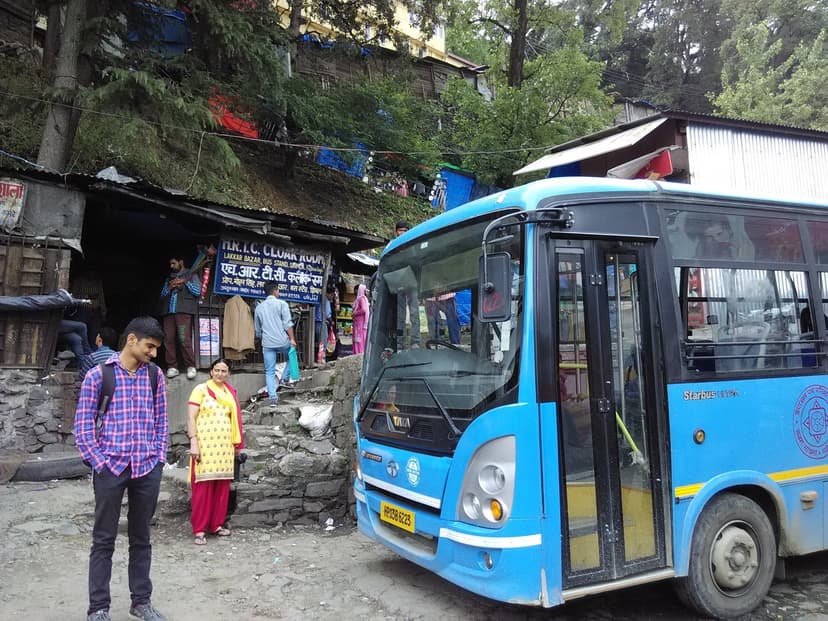
2x3 seating, 37 or 47 seats, non-AC, government-issue blue-and-green livery. This is what runs to Komic and Hikkim and the village beyond the village. The base rate is 74 paise per passenger per km, the lowest rural bus fare in any Indian state [Divya Himachal, fare hike proposal coverage, Mar 2026].
- Delhi-Manali ordinary: Rs 415 to Rs 900
- Delhi-Bhuntar: about Rs 700
- Bhuntar-Kasol: about Rs 100, runs every 30 minutes
- Shimla-Kaza: Rs 600 to Rs 900, two days with an overnight halt at Reckong Peo
- Manali-Kaza: Rs 400 to Rs 600, only June through October when Kunzum is open
Ordinary buses stop at every village, every chai shop, every random spot where someone waves. They are slower and noisier than anything else on the road. They are also where you meet Himachal. u/justbsaiyan, in a long r/HimachalPradesh thread, summarised the deal with no ceremony: Bawa, luxury chaiye toh gaadi lelo. HRTC me gaon walo ko apne kaam krne do. If you want luxury, hire a car. HRTC is for the village people to do their work.
| Himsuta Volvo | Ordinary | |
|---|---|---|
| Seating | 2+2 AC semi-sleeper, pushback | 2x3 non-AC, hard seats |
| Typical fare Delhi-Manali | Rs 1,550 | Rs 415-900 |
| Run time | 12-14 hours | 14-16 hours |
| Onboard | Blankets, water bottle, LED | Whatever you carried |
| Stops | 3-4 dinner halts | Every village |
| Booking | 60 days advance online | Counter, first-come |
| When it makes sense | Overnight long-haul | Local routes, budget, remote |
The 2026 fare reality nobody warns you about
Three things changed in HRTC pricing between January and April 2026, and almost no English source has them in one place.
The Volvo discount ended on 1 April
Through 2025 HRTC ran a 10 per cent discount on Himsuta Volvo bookings as a soft demand push. That ended on 1 April 2026. Amar Ujala's Kangra desk reported it bluntly: एचआरटीसी की वोल्वो बसों में 1 अप्रैल से 10 फीसदी की छूट खत्म, पर्यटन सीजन में जेब पर असर। The 10 per cent discount on HRTC Volvo buses ended from 1 April; tourist-season impact on the pocket [Amar Ujala, 30 Mar 2026]. The same piece notes that the Dharamshala-Delhi Volvo fare went from Rs 1,457 to Rs 1,619 the day the discount stopped.
Minimum fare doubled from Rs 5 to Rs 10
In the same fiscal window the Sukhu cabinet approved doubling the minimum HRTC ticket from Rs 5 to Rs 10 for any ride up to three kilometres [Babushahi Himachal Cabinet Decisions, 2026]. The reason given was the state's mounting fiscal stress and HRTC's accumulated losses. Public reaction was mixed; the government framed it as essential to "keep the public transport system afloat".
A 20 per cent across-the-board hike has been proposed
In parallel, the HRTC board sent a proposal to the state cabinet for a 20 per cent fare hike on all categories [thenewzradar HRTC fare proposal, 2026]. As of late May 2026 it had not been formally approved. If you book a Volvo ticket and the fare looks higher than what is quoted in this guide, the proposal has likely been cleared. Re-check on the booking page.
The Him Bus Card you now need for womens 50 per cent concession. The Naari Ko Naman scheme that gave women a 50 per cent concession on HRTC fares since 2022 is still live, but the way you claim it changed on 31 March 2026. From that date you need a Him Bus Card to get the discount. It is a Rs 236 RFID card (Rs 200 plus GST for the first year), with a Rs 150 annual renewal from year two. Apply via the Him Access portal, pay online, collect from your nearest HRTC pass office or get it by post [Wise Himachal coverage of HRTC Rs 236 Him Bus Card mandate, 2026]. Womens groups have protested the move, arguing it disadvantages daily-wage labourers and rural women without easy digital access [UNI India, Mar 2026], but the policy is in force.
Fares on the routes that matter
Fares cross-referenced with HRTC official, RedBus, AbhiBus and MakeMyTrip in April-May 2026. Numbers shift slightly by departure slot and season.
Sample HRTC fares, June 2026 (INR)
- Delhi to Manali, Himsuta Volvo: Rs 1,550
- Delhi to Manali, Him-Mani non-AC deluxe: Rs 800 to Rs 1,100
- Delhi to Manali, ordinary: Rs 415 to Rs 900
- Delhi to Shimla, Himsuta: Rs 1,191
- Delhi to Shimla, ordinary: Rs 400 to Rs 600
- Delhi to Dharamshala, Himsuta: Rs 1,619
- Shimla to Reckong Peo, ordinary: Rs 350 to Rs 500
- Reckong Peo to Kaza, ordinary: Rs 250 to Rs 400
- Manali to Kaza, ordinary (Jun-Oct only): Rs 400 to Rs 600
- Bhuntar to Kasol, local ordinary: Rs 100
- Minimum ticket up to 3 km: Rs 10
How to actually book an HRTC ticket
Four methods, each with its own logic.
The official site, online.hrtchp.com
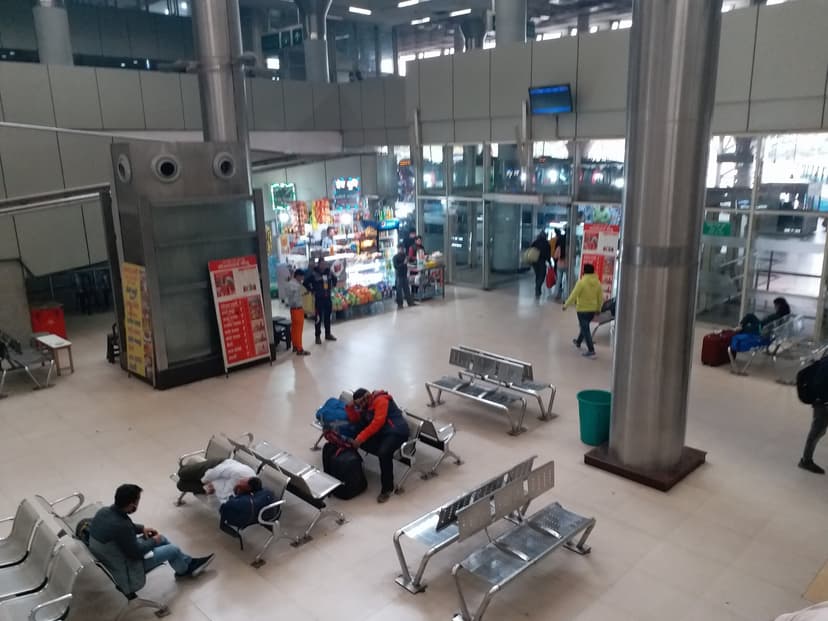
This is where you book Himsuta, Him Gaurav, and a chunk of Him Mani routes. Register or use guest checkout, pick city pair and date, choose your bus from the seat-map view, pay, get an e-ticket. The site supports foreign credit cards (confirmed by repeated TripAdvisor user reports). Booking opens exactly 60 days in advance. The site crashes during Dussehra, Christmas and New Year peak windows; this is a feature of the universe, not a bug you can route around.
The HRTC mobile app
Look for HRTC Online Booking Official on Google Play. Same login as the website, same inventory, same fares. The app is easier to use than the site, syncs your bookings, and lets you cancel from the e-ticket page. If you ride HRTC more than twice, install it.
Counter booking
Many intra-Himachal routes, especially ordinary buses past Reckong Peo and through Spiti, are not bookable online at all. For those you go to the bus stand and buy at the counter. For the popular ordinary routes (Shimla-Kaza, Reckong Peo-Chitkul, Manali-Kaza) book one day ahead at the stand. For everything else it is first-come first-served. On village routes you do not need a stand at all. As u/Available-Horror6819 explained on r/SoloTravel_India about the Parvati Valley chain: you can take a bus from Kasol to Manikaran, and then another from Manikaran to Barshaini. You wave from the road, you get on.
Third-party platforms
RedBus, AbhiBus, MakeMyTrip, Goibibo, Paytm and Yatra all list HRTC buses at the same fare as the official site. RedBus is what most Himachalis I know default to, because the seat-map UI is better and it shows availability when the official site is down. As one Reddit Himachal native put it on r/HimachalPradesh: as a native of Himachal, I always use RedBus and have never had a problem with it while booking HRTC buses (TATA AC and Volvo).
When the Volvo sells out
Himsuta peak season (May through June, the entire month around Dussehra in October, Christmas, New Year) sells out on the corridor routes. Book exactly when the 60-day window opens. If you miss it, try the third-party platforms because their allocations sometimes show seats the official site cannot. If still nothing, the private operators (Zingbus, Reo, Laxmi Holidays) are the backup. Pay attention to operator reviews before you book; on mountain roads the gap between a good private operator and a bad one is wider than the gap between HRTC and private overall.
The route network, by hub
HRTC's network is hub-and-spoke. Once you see the hubs it stops feeling random.
Delhi outbound
From Kashmere Gate ISBT every Himachal town with a depot gets at least one Himsuta and several ordinary departures a day: Shimla, Manali, Dharamshala, Dalhousie, Chamba, Kullu, Bhuntar, Mandi, Bilaspur, Hamirpur, Una, Palampur, Bir, Baijnath, Joginder Nagar, Nalagarh, Paonta Sahib. The first Dharamshala bus pulls out at 6:30 am, the last at 23:05.
Shimla
From ISBT Tutikandi, Shimla feeds Kinnaur and Spiti. Reckong Peo, Kalpa, Sangla, Chitkul are all reachable as ordinary buses. The most useful single departure is the 6:30 am Shimla to Kaza service, which runs in two segments via an overnight halt at Reckong Peo. The bus is also a road status proxy: if HRTC has a Kaza bus listed for tomorrow on online.hrtchp.com, the road is open. If it has not, the road is shut.
Manali
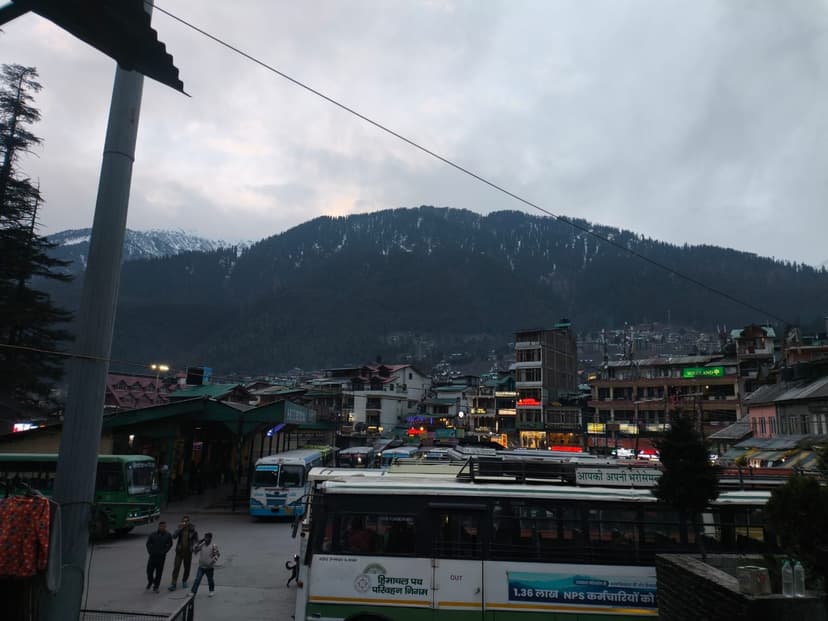
Manali bus stand on Mall Road is the northern Volvo and ordinary hub. The two daily Manali-Kaza ordinary buses leave between 5:00 and 5:30 am during the summer window (mid-June to early October, depending on Kunzum's snow), arriving in Kaza between 3:00 pm and 5:00 pm via Gramphu, Batal and Losar [Thrillophilia + Hawamahaltickets, May 2026 verified]. Through-buses to Leh and Keylong work the Manali-Leh corridor in the same season. From the same stand you can pick up Manali-Mandi-Pathankot-Joginder Nagar buses year-round.
A note Redditors specifically warn about: the HRTC stand is not the private Volvo stand. As u/notable_user_001 put it on r/Solotravelindia, private Volvo bus stand is different from HRTC stand. Walk an extra hundred metres if your phone-maps pin lands you at the wrong gate.
Reckong Peo
Kinnaur HQ. Bloggers call it the most beautiful bus stand in India for the obvious reason that the Kinner Kailash range sits behind it. u/warrior-1234's trip note on r/Solotravelindia captures the routing logic: catch bus from Reckong Peo (it's a main hub). Reckong peo - Kalpa - Reckong peo - Chitkul. Local bus to Kalpa runs multiple times a day. Two buses leave for Kaza at 5:30 am and 9:30 am. Sangla and Chitkul share a bus that goes to Chitkul at 9:30 am and 12:00 pm.
Kaza
Spiti's only proper bus stand. From here, ordinary services run to Tabo, Nako and Reckong Peo year-round (weather permitting), to Manali only between June and October, and to the upland villages (Hikkim, Komic, Langza, Ki) on a local rotation.
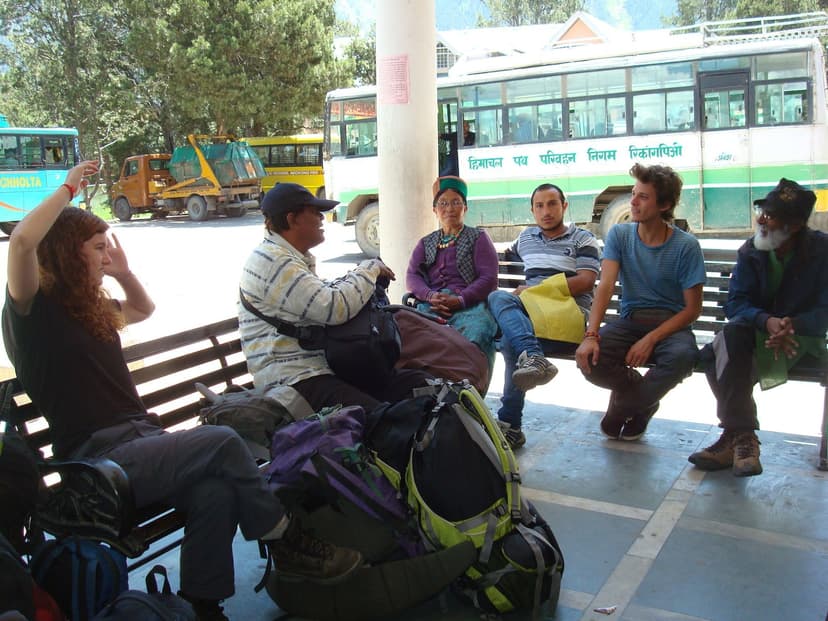
The HRTC-as-road-status proxy
This is the trick we leaned on while researching our HP road status guide, and it is useful enough to repeat in full.
If HRTC has buses listed for a route, the road is open. If HRTC has stopped a route, the road is shut.
HRTC does not operate on roads not cleared by the state's Road Inspection Committee. The Corporation is the first to halt service when a road becomes risky and one of the first signals back when conditions improve. So instead of Googling "is the Manali to Kaza road open today", you go to online.hrtchp.com, enter the city pair and a near-future date, and see if seats come back. They do, the road is open. They do not, the road is not.
This works on Kinnaur during monsoon. It works on the Manali side of Spiti through the entire shoulder of the season. It works on Lahaul through winter. It is the single most useful piece of operational knowledge any independent Himachal traveller has access to.
The HRTC budget hack: Rs 10,000 for 7-8 days
This is not a single tip. It is a strategy that surfaces every six months on r/desitravellers, r/HimachalPradesh and r/SoloTravel_India: do an entire Himachal trip for around ten thousand rupees by using HRTC ordinary buses, dorm beds, and dhaba food.
The cleanest expression of the maths is from u/Beginning-Lawyer3882, replying on r/Solotravelindia to a Mumbai college student who reached Chitkul on Rs 13K: under 13k from Mumbai to Chitkul is actually insane. Most people spend that just on the cab from Chandigarh to Shimla. u/warrior-1234, the OP of that thread, broke down where the money went: I mostly travelled on HRTC buses and booked a homestay in Kalpa for Rs 1,100 per day (including breakfast and dinner). In Chitkul, I booked a homestay for Rs 1,500 per day.
Run the same maths from Delhi:
- Transport on HRTC ordinary: Rs 150 to Rs 400 per leg, 4-6 legs over a week = Rs 1,000 to Rs 2,400
- Bunks and homestays at Rs 400 to Rs 1,100 a night = Rs 2,800 to Rs 7,000
- Dhaba meals at Rs 300 to Rs 500 a day = Rs 2,100 to Rs 3,500
Total Rs 5,900 to Rs 12,900 for seven days, depending on where on the comfort scale you sit. Compare with the tourist version where private taxis between towns run Rs 2,000-5,000 each, mid-range hotels run Rs 2,000-4,000 a night, and restaurant meals run Rs 800-1,500 a day. The HRTC version is one-fifth the cost. The only thing it asks of you is patience.
"Bhai ji HRTC Himachal ki lifeline hai."
u/droid7ghost, r/HimachalPradesh
How to execute the HRTC budget plan
- Install the HRTC app for live schedules. The app is more reliable than asking at a stand.
- Book a Himsuta Volvo only for the Delhi entry and exit legs. The seat-recline matters on a fourteen-hour overnight; it does not matter on a two-hour Bhuntar to Kasol hop.
- Use ordinary buses for everything inside Himachal. They are frequent on main routes and absurdly cheap.
- Pack snacks and water. Ordinary buses do not have onboard food and the dinner halts are unpredictable. Carry a roll of toilet paper for the same reason.
- Build buffer days. Mountain buses run late. Schedule a town as a flex day. Spiti, especially, eats time.
- Wave buses down from the village road. On rural routes you do not need to be at a stand. Stand on the road and signal.
- Ask the people at the bus stand. The man drinking chai at the next bench knows the schedule better than any app.
The HRTC drivers, and the Tokyo drifter joke
The folklore around HRTC drivers is its own genre on Indian Reddit. The single most-upvoted joke on the topic, with twelve upvotes on a viral thread, comes from u/Left_Ad9462: born to be a tokyo drifter but forced to be a hrtc driver.
The serious version is everywhere too. u/SirAren, two upvotes on the same thread: HRTC drivers are literal gods amongst us. u/Gloomy_Xplorer, replying to a viral accident clip: private ones are worse. HRTC has large fleet, so the percentage will be higher when compared to private. But in general HRTC drivers are responsible. Most accidents occur due to reasons beyond their control.
This is not nostalgia. HRTC drivers train at seven dedicated driver training institutes across HP. They drive the same routes year-round. They know the bend three switchbacks before Banjar where the village dogs sleep. The Corporation's accident rate per kilometre is lower than the private sector average even though it carries more passengers, runs more remote routes, and operates through winter [HRTC Passenger Safety page].
The same Reckong Peo thread that gave us u/Beginning-Lawyer3882 also contains u/Key-Addition-4961's logistical advice for first-time Kinnauris: start from Chandigarh to Reckong Peo (HRTC bus best one is 6:30 pm overnight bus from Chandigarh and you'll reach by 7 am to Peo). Then hike (if you're fit enough) 5 km to Kalpa. Five upvotes, no replies, no argument.
When HRTC goes wrong: the honest section
It does. Often. The most useful frame for a first-time HRTC rider is not the praise-thread version but the breakdown-thread version, because the breakdowns are part of the deal.
u/_bibu, replying on a 50-year-anniversary post for HRTC on r/HimachalPradesh, had three upvotes for the harshest sentence in the thread: adhi se zyada buses inki safar ke bich me hi kharab ho jati hai, inke officer ticket check karne itne bar ate hai par ek bar bhi inse inke engine check nhi ho pati. More than half their buses break down mid-route. The officers come to check tickets repeatedly but not once to check the engine.
Even on the corridor routes, weather and landslides routinely double the run time. u/psycho_monki on r/SoloTravel_India: the bus from Bhuntar to Delhi that takes 10 hours or so to reach took 38 hours due to landslides and clearing of roads by Mandi police. u/Easy_Environment_955, on the same monsoon week: I was coming from Spiti to Delhi on Saturday. It did take us 12 hours to reach Delhi from Manali but the earlier bus was stuck for 24 hours. u/Syd_abdullah, on a Spiti accident clip: been on such a bus this month thankfully came back from Spiti safely, was stranded in Kaza for 5 days. It was an experience lol.
The takeaway is not "do not take HRTC". The takeaway is: budget buffer days for monsoon (July through early September) and shoulder-snow weeks (early November, late March), do not try to make a connecting flight the same day, and carry the medications you need with you not in checked luggage.
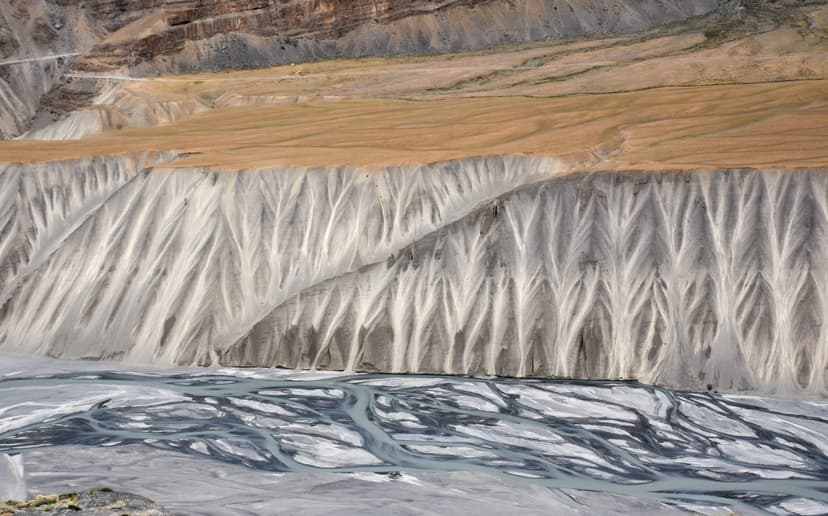
Bus stand disambiguation, town by town
The single most common HRTC mistake first-time travellers make is going to the wrong stand. HRTC and private operators usually leave from different yards, sometimes a kilometre apart.
| Town | HRTC location | What to watch for |
|---|---|---|
| Delhi | Kashmere Gate ISBT | Mostly the same hub; private operators leave from separate adjacent stands |
| Chandigarh | ISBT Sector 43 | Private operators run from Sector 17 and the highway pickups |
| Shimla | ISBT Tutikandi (long-haul) and Lakkar Bazar (local) | Private Volvos run from separate Bypass stands |
| Manali | Mall Road bus stand | Private Volvos run from a separate yard 200-500 m away |
| Dharamshala | Dharamshala bus stand (lower town) | McLeodganj is 9 km uphill on a separate local-bus loop |
| Reckong Peo | Single bus stand serves all HRTC routes | Local taxis stage in the same yard |
| Kaza | Kaza bus stand | No separate private long-haul stand here |
One concrete first-timer trick: when your maps app says "Manali bus stand", ask a local for "sarkari bus adda" if you want HRTC, and "Volvo stand" if you want private. The terms separate the yards cleanly.
The cancellation and luggage rules, in plain English
Cancellation, e-ticket
- 12+ hours before departure: 10 per cent deduction
- Within 4 hours of departure: no refund
- Reservation and handling charges are non-refundable in every case
Cancellation, counter ticket (more flexible)
- 12+ hours before departure: 10 per cent deduction
- Within 12 hours: 25 per cent deduction
- Within 2 hours after departure: 75 per cent deduction
- After 2 hours post-departure: no refund
Luggage policy (current since the August 2023 revision)
- 30 kg of personal items free per passenger, across two bags
- Excess above 30 kg: starts at one-fourth of a passenger fare, scales by weight up to 80 kg
- If luggage travels without an accompanying ticketed passenger, charges double
- Aadhaar card required when loading articles (a quirk of the policy)
- Pets in non-AC buses only, at a full passenger fare
- Commercial items (electronics, dry fruits, medicines) had their rates reduced in October 2024
For ordinary tourists with a backpack and a small bag (15-25 kg total), this never comes up. The policy is aimed at commercial carriers using passenger buses to move goods, which is a real problem on rural Himachal routes.
The Kinnaur-Spiti circuit, entirely by HRTC
This is the single most rewarding multi-day HRTC plan and the cheapest way to see two of the highest valleys in India. Five to seven days, all on ordinary buses, around Rs 3,000 in fare end-to-end. Itinerary is built around the actual current departure times.
The HRTC Kinnaur-Spiti circuit, day by day
- Day 1: Delhi to Shimla. Overnight HRTC Himsuta Volvo from Kashmere Gate, 12 hour overnight, arrive Shimla early morning at ISBT Tutikandi.
- Day 2: Shimla to Reckong Peo. Ordinary HRTC bus from ISBT Tutikandi, about 8-10 hours via the Sutlej gorge. Sit on the left for river views.
- Day 3: Reckong Peo to Kalpa to Chitkul day loop. Local bus to Kalpa for the morning view of Kinner Kailash. 12:00 pm bus to Chitkul via Sangla. Night in Chitkul.
- Day 4: Chitkul to Reckong Peo to Tabo. Morning return bus from Chitkul to Peo. From Peo take the early Kaza bus that stops at Nako and Tabo. Night at Tabo.
- Day 5: Tabo to Kaza. Short morning ordinary bus to Kaza. Use the afternoon for Key Monastery and the Hikkim post office (worlds highest).
- Day 6: Kaza local rotation. Local bus rotation up to Komic (4,587 m), Langza, Hikkim and Ki Monastery.
- Day 7: Kaza to Manali. 5:00 am ordinary bus through Losar, Kunzum Pass, Batal, Gramphu and the Atal Tunnel. 9-12 hours to Manali.
- Day 8: Manali to Delhi. Overnight Himsuta Volvo back to Kashmere Gate.
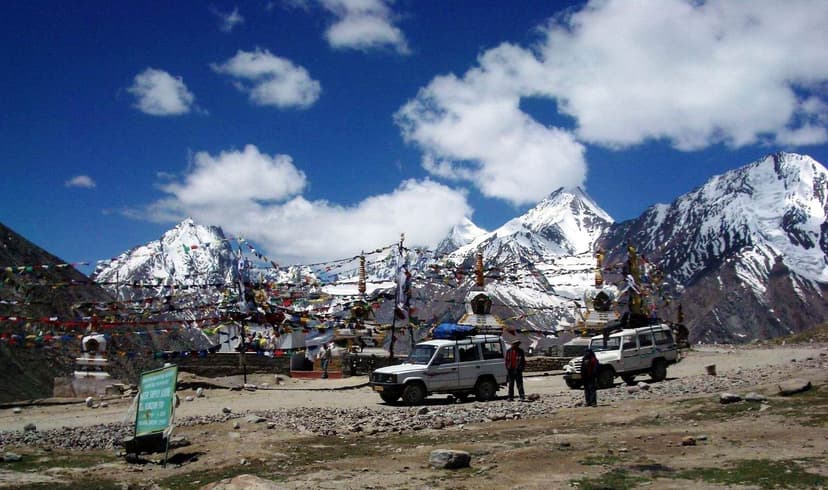
The scenic routes (and the seat that gets the view)
Not all HRTC routes are visual equals. These five deliver the most consistent landscape and the seat you want to be in.
Shimla to Reckong Peo, 8-10 hours, ordinary only
The Sutlej gorge from above. Apple orchards, terraced villages, snow-capped Kinner Kailash on the horizon by the last hour. Sit on the left side for river views. The road is rough but the ride is one of the best ordinary-bus runs in the country.
Reckong Peo to Kaza, 8-10 hours, ordinary only
The transition from green Kinnaur to the bare Spiti moonscape, via Nako Lake and Tabo. Ask the conductor if you can sit on the front bench near the driver; on this route the front windshield is the panoramic seat.
Manali to Kaza, 9-12 hours, ordinary only, June-October
Atal Tunnel, Chandra River, Lahaul Valley, Kunzum Pass at 4,551 m, the descent into Spiti. The Atal Tunnel cut two to three hours off the older Rohtang route; you now arrive in Kaza by 3-5 pm if you leave at 5:00. Sit anywhere; the view rotates.
Delhi to Manali, overnight Himsuta Volvo
The Beas River valley becomes visible from Mandi onwards if you are awake around 5-6 am. Right-side window seats catch the river in morning light.
Dharamshala to Chamba via Dalhousie, 6-8 hours, ordinary or Him Mani
The Dhauladhar range, then dense deodar forests, then the Chamba valley. The Him Mani deluxe is the right choice; it is high enough that AC is unnecessary and low enough that the suspension matters.
HRTC versus private operators, the honest comparison
The question every first-timer asks: should I just book Zingbus or Laxmi Holidays? The answer changes depending on what you are optimising for.
| Factor | HRTC | Private |
|---|---|---|
| Safety | Government-trained drivers at 7 institutes. Road Inspection Committee approves every route. | Variable. Top operators (Zingbus, Reo, IntrCity) are excellent. Smaller operators less so. |
| Price | Fixed government rates, transparent | Market-driven; can be cheaper or more expensive |
| Punctuality | TripAdvisor consensus: very punctual | Variable; some are sleeper-bus rapid, some push through marginal weather |
| Comfort | Himsuta blankets are thin; bring your own | Newer multi-axle sleeper buses on top routes |
| Network | Goes everywhere in HP, 3,700 routes | Only profitable corridors (Delhi-Manali, Delhi-Shimla, Delhi-Dharamshala) |
| Mountain roads | Drivers know every curve | Some drivers are new to mountain driving |
| First-timer verdict | Reddit's first choice for safety and value | Backup when HRTC is sold out |
The cleanest summary is in two opposing TripAdvisor lines that show up on the Manali forum every season: HRTC is considered far better than any private Volvo, and very punctual compared to others. They are about the same bus, with different riders saying the same thing in different words.
When you choose HRTC: mountain roads, budget trips, destinations past the main tourist circuit, your first time in Himachal, monsoon weeks where drivers' road-reading matters more than seat plush.
When you choose private: HRTC is sold out, you want a specific departure time HRTC does not offer, you specifically want a sleeper bus instead of a semi-sleeper, or you are leaving from a town without an HRTC stand.
Ten tips from frequent HRTC riders
- Book front-row Himsuta seats for the smoothest ride. Seats over the wheels are the bumpiest. Middle seats are the compromise.
- Ordinary buses stop anywhere on request. On village routes you do not need a formal stand. Tell the conductor your destination, they will drop you.
- Install the HRTC app even if you book at the counter. The schedule data is more reliable than asking at a strange stand.
- Carry your own blanket on overnight Volvo. HRTC blankets are thin.
- Take motion sickness medication before Mandi. The mountain curves start around hour 8 on Delhi-Manali. By then it is too late.
- Carry cash. Dhabas at dinner halts and remote counter agents do not always accept UPI. Rs 2,000-3,000 covers a week.
- Confirm timings the day before. Schedules shift with weather. Buses tend to get late or not show up at all for various reasons, as one TripAdvisor reviewer put it the polite way.
- The HRTC overnight halt at Reckong Peo is not a failure. Shimla-Kaza is engineered as two legs; book one of the small hotels near the Peo bus stand for the gap.
- Female travellers carry the Him Bus Card now. From 31 March 2026 it is the only way to claim the 50 per cent concession.
- Sit near a local who is going past your stop. They will know when you should get off better than the conductor.
"Oh, how I miss travelling on HRTC. Whenever I still see an HRTC bus in Delhi or even anywhere, it fills me with that homely feeling."
u/Similar_Kangaroo_114, r/HimachalPradesh
Want help planning the bus route for your Himachal trip?
If you want a route planned for you that uses HRTC as the spine, with homestays booked at the overnight stops and timing matched to the actual current departure windows, write to us at hello@refuje.com. We have local people in Kullu, Mandi, Kinnaur and Spiti who can confirm what is running this week.
FAQs about HRTC, by frequency of asking
Can I do all of Himachal by HRTC bus?
Yes. HRTC reaches Shimla, Manali, Dharamshala, Dalhousie, Kullu, Mandi, Chamba, Reckong Peo, Kaza and almost every village in between. The full Kinnaur-Spiti circuit can be done end-to-end on ordinary HRTC buses for around Rs 3,000 in fare.
Are HRTC buses safe on mountain roads?
They are the safest option. HRTC drivers train at seven institutes across HP. No HRTC bus operates on a road that has not been cleared by the state Road Inspection Committee.
How far in advance can I book?
60 days. Booking opens exactly 60 days before departure on online.hrtchp.com and the HRTC app.
What changed with HRTC fares in 2026?
Three things. The 10 per cent Volvo discount ended on 1 April 2026. Minimum ticket doubled from Rs 5 to Rs 10. A 20 per cent across-the-board fare hike has been proposed but not yet formally cleared as of late May 2026.
How do women claim the 50 per cent HRTC concession in 2026?
Women still get a 50 per cent concession on ordinary fares, but from 31 March 2026 you need a Him Bus Card to claim it. The card costs Rs 236 in year one and Rs 150 annually after.
What if the HRTC website crashes?
Common in peak season. Use RedBus, AbhiBus, MakeMyTrip or Goibibo. They list the same buses at the same fares.
Do I need to print the e-ticket?
No. Show it on your phone. A printout as backup is wise for areas with poor mobile signal.
What is the cheapest HRTC bus?
Ordinary. The base rate is 74 paise per km. Delhi-Manali on an ordinary bus can be as low as Rs 415.
Can I cancel my HRTC e-ticket?
Yes. 12+ hours before departure: 10 per cent deduction. Within 4 hours of departure: no refund.
How much luggage can I carry free?
30 kg total across two bags. Above that, excess charges start at one-fourth of a passenger fare.
Is HRTC better than HPTDC?
They are different. HRTC runs the bus network; HPTDC runs hotels and a smaller fleet of tourist Volvos. For transport, HRTC wins on frequency.
Are there HRTC buses to Spiti?
Yes. Shimla-Kaza year-round via Peo. Manali-Kaza only between mid-June and early October.
Where is the HRTC bus stand in Manali?
Mall Road. Private Volvo stand is a separate yard nearby.
Is an overnight HRTC Himsuta comfortable enough to sleep on?
Yes. Semi-sleeper seats recline. Most riders sleep 5-7 hours.
What is the longest single HRTC route?
Leh to Delhi, 1,203 km, around 36 hours.
The lifeline conclusion
Every working Himachali, by which I mean every person whose life is set somewhere in this state and not on holiday in it, depends on this bus. The dairy farmer in Banjar takes it to Mandi. The Tibetan-medicine doctor in Tabo takes it to Reckong Peo. The English teacher in Sissu takes it to Manali and back the same day. The migrant labourer working a Spiti potato season takes it home to Sundernagar in October.
If you want to understand Himachal beyond the tourist circuit, ride HRTC. Take the 5:30 am Reckong Peo to Kaza bus once. Watch the sun come up on the Sutlej gorge from a left-side seat. The bus is the country.
If you want help building a route that uses it well, write to us at hello@refuje.com and we will plan one with you.
Sources
- HRTC official site: hrtchp.com (Volvo Details, Deluxe Details, Ticket Cancellation, Luggage Policy, Passenger Safety, Social Obligations, FAQ)
- HRTC online booking: online.hrtchp.com
- HRTC Wikipedia: fleet and route data, founding 1958
- Babushahi: Himachal Cabinet Decisions, minimum bus fare doubled to Rs 10
- thenewzradar: HRTC board 20 per cent fare hike proposal
- Amar Ujala (Kangra): 10 per cent HRTC Volvo discount ends 1 April 2026, Dharamshala-Delhi fare Rs 1,457 to Rs 1,619
- Wise Himachal: HRTC mandates Rs 236 Him Bus Card
- Himachal Tonite: Free Travel in HRTC Buses Now Linked to Him Bus Card
- UNI India: Womens association protests Him Bus Card requirement
- Tribune India: HRTC starts two Hamirpur-New Delhi buses via Chandigarh
- Divya Himachal: HRTC fare-hike proposal, per-km rate of 74 paise
- ETV Bharat (Solan): CM Sukhu launches Solan-Delhi-Manali-Kullu Volvo, 3 July 2025
- Thrillophilia + Hawamahaltickets: Manali-Kaza HRTC timings May 2026
- VentureVista, Tripoto, TravellingSlacker: Kinnaur-Spiti HRTC route guides
- RaachoTrekkers: HRTC Baggage Policy Decoded
- Japji Travel: How to Book an HRTC Bus Ticket
- r/HimachalPradesh, r/desitravellers, r/SoloTravel_India, r/Solotravelindia: pull quotes via Browser-Vytel Reddit mine (June 2026), full thread comments saved to research
Written from Kullu by Rajesh Thakur, who has ridden HRTC ordinary buses since school and Himsuta Volvos since they were introduced. Numbers cross-checked against HRTC official, RedBus, AbhiBus and Hindi-press sources in April-May 2026; voice anchored on 200+ recent Reddit comments harvested for this piece.
About Rajesh Thakur
Rajesh Thakur grew up in the Kullu valley and has been writing about Himachal Pradesh travel and culture since 2018. He has ridden HRTC ordinary buses since school and Himsuta Volvos since the day they were introduced.
You Might Also Like
Volunteering in Himachal Pradesh: 12 Organisations and How to Apply (2026)
Teach English in McLeod Ganj, conserve the Great Himalayan National Park, build with earth in Bir, or harvest apples in Kullu. Twelve real HP volunteer organisations with honest costs, the visa rule that gets foreigners deported, and how to apply.
How to Travel Himachal Without Wrecking It: A Quiet-Travel Manual
A non-preachy field manual for responsible travel in Himachal, by a Kullu local: how to behave, when to go, where to go instead, and the 2026 rules and bans that actually matter.
Mamleshwar Mahadev: The Eternal Flame Temple of Karsog
An eternal fire, a fist-sized wheat grain and a six-foot drum, kept in a mortar-less timber temple in the quiet Karsog valley. The honest story of Mamleshwar Mahadev: what is real, what is faith, and how to go.