
Bir Billing Paragliding 2026: Cost, Safety, Solo Course, Beyond
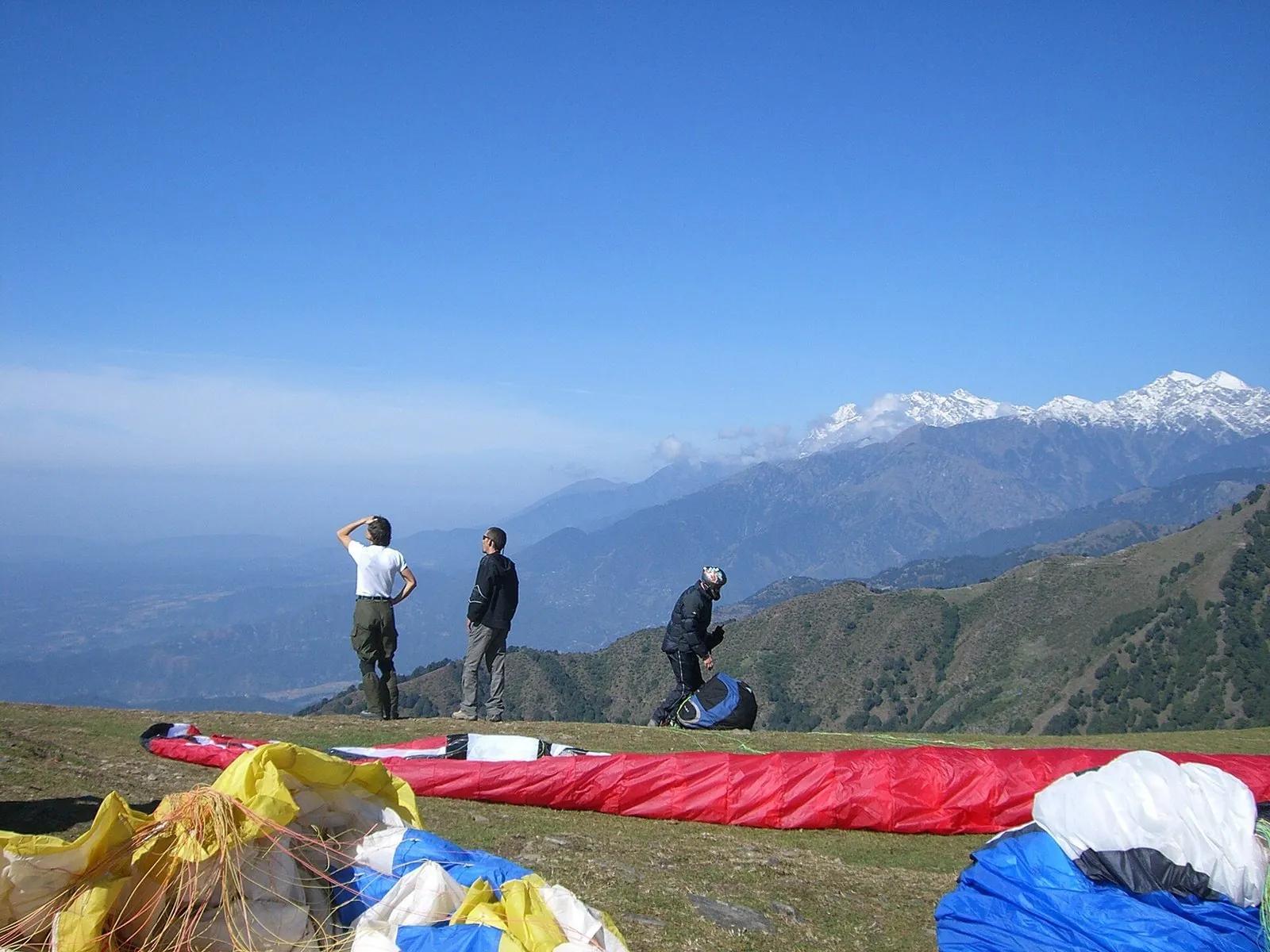
I have not paraglided at Bir. I have stood on the Billing ridge in October and watched fourteen pilots take off in forty minutes, each one running three steps before the wing caught air and the body folded into a seat that did not exist a moment earlier. I am writing this as a Himachali who has known the Bir-Billing industry through two decades of news cycles. The years it ran cleanly were the years nobody wrote about it. The years that stayed in the papers were 2024 and 2025, the two worst in the site's history.
The simple summary of where Bir-Billing stands in May 2026 is this. The site is open. Flights are running 9 am to 3:30 pm. The 2025 monsoon ban lifted on 16 September 2025 with new safety guidelines in place. The tandem floor has risen to Rs 3,000 for a fifteen-minute flight. The Pre World Cup that used to run every October was cancelled in 2025 with no formal communication received by the Bir-Billing Paragliding Association, and there has been no announcement so far for 2026. On 26 December 2025 a 35-year-old pilot named Mohan Singh died on a tandem flight; his ambulance was stuck in a traffic jam in Baijnath while he bled out. His passenger survived because, according to The Tribune, "his instinct was not self-preservation, but protection." That is the year the industry is coming out of, and the year you should be planning a trip into with your eyes open.
I will give you all the practical numbers below. I will also give you the safety section that operator-run blogs cannot publish. By the end of this piece you will know what a fair price is, which window of the year I would actually fly in, what to ask a pilot before you strap in, and what to do in Bir that has nothing to do with paragliding.
Bir-Billing at a glance, May 2026
- Takeoff altitude: Billing, 2,400 m (7,874 ft)
- Landing altitude: Bir Chaugan, 1,525 m (5,003 ft)
- Elevation drop: ~900 m one way
- 2026 tandem price floor: Rs 3,000 for 15 to 20 minutes
- P1 plus P2 course: Rs 25,000 to 27,000, 5 days plus 2 reserve
- Daily flight window: 9:00 am to 3:30 pm
- Best season: October to early November, March to June
- Monsoon ban: July to mid-September annually
- Tandem pilot limit: 2 flights per pilot per day since Feb 2025
- Nearest airport: Kangra (Gaggal), 67 km
- Nearest rail (currently): Baijnath Paprola, 17 km. The Pathankot stretch of the Kangra Valley Railway is suspended.
What Bir-Billing actually is
Bir is a village at 1,525 metres in Kangra district, on the southern slope of the Dhauladhar foothills. Billing is the ridge above it at 2,400 metres, around 14 km of switchback road north of the village. The two together form the longest-running commercial tandem paragliding site in India and one of the four highest in the world. The Indian government's Incredible India portal calls Bir the Paragliding Capital of India. The thermals here are some of the most consistent in the Indian Himalaya because the Dhauladhar wall heats up early and pushes lift up the south face through the middle of every fly-able day.
Bir was not built for paragliding. The Tibetan refugee community that arrived in the early 1960s settled what became the Chaugan colony, around 300 families, and the colony's open grassland turned out to be a near-perfect landing field. The first commercial paragliding operations began in the 1980s. The first World Cup at Bir happened in 2015, with the next held in 2024, by which point the site had reached around 200 pilots taking off daily from Billing through the season.
I want to be precise about one thing because the operator marketing keeps muddying it. Billing is not the highest commercial paragliding site in Asia. It is one of the highest. Kandersteg in Switzerland flies tandems from 2,500 m, several Indian sites at Manali fly from above 2,400 m on certain days, and the Kullu Aru valley clears 2,200 m. The marketing claim of Asia's highest does not survive a careful look. What Billing actually has is the most consistent thermal regime at this altitude band, plus a wide flat landing in Chaugan that almost no other 2,400 m takeoff in the region can match. Those two together, not raw altitude, are what made Bir.
2026 prices, with the operator-blog inflation removed
I have spent the past week pulling 2026 price lists from the actual operator pages rather than the recycled 2023 figures that still float on travel blogs. Here is what the floor actually looks like.
A standard 15-to-20-minute tandem flight in May 2026 costs Rs 3,000 at the lowest legitimate operators and Rs 3,500 to 4,000 for the better-reviewed names. The Rs 1,800 and Rs 2,500 rates you will still see quoted on some aggregator pages are 2023 numbers, not current ones. The 2026 BirBillingParagliding price list, which most local operators benchmark off, lists Rs 3,000 for the standard flight, Rs 4,200 for 20 to 30 minutes including insurance and entry fee, Rs 5,500 for 30 to 45 minutes, and Rs 6,500 for 45 to 60 minutes. The XC cross-country flight, in the rare hour-plus window, still costs around Rs 15,000.
GoPro video is Rs 500 to 800 extra. Negotiate this before takeoff, not on landing, because operators routinely upsell the footage to people who realise mid-flight they wanted it. The jeep transfer from Bir landing to Billing takeoff, around 14 km of switchback, is usually bundled but sometimes priced separately at Rs 200 to 400 per seat.
2026 Bir-Billing price breakdown
| Service | 2026 price (INR) |
|---|---|
| Standard tandem 15 to 20 minutes | Rs 3,000 |
| Extended tandem 20 to 30 minutes | Rs 4,200 (incl. insurance, entry) |
| Long tandem 30 to 45 minutes | Rs 5,500 |
| Very long tandem 45 to 60 minutes | Rs 6,500 |
| XC flight 60 minutes plus | Rs 15,000 |
| GoPro video add-on | Rs 500 to 800 |
| Bir to Billing jeep, if unbundled | Rs 200 to 400 |
| P1 plus P2 solo course, no accommodation | Rs 25,000 |
| P1 plus P2 solo course, with accommodation | Rs 27,000 |
| P3 intermediate course | Rs 30,000 to 33,000 |
| P4 thermalling course | Rs 45,000 |
If a price is below Rs 3,000, walk away. The floor exists for a reason. Below it, the corners being cut are equipment maintenance, pilot pay, and insurance. The Tribune's reporting on the 2025 accidents repeatedly flagged equipment past service life as a contributing factor. A Rs 500 saving is not worth the maths.
The safety section nobody writes
This is the section operator websites cannot publish. It is also the section every honest first-timer wants and almost no one gets. I am going to give you the data straight, then tell you what the data actually means for your booking decision.
Between 2020 and early 2025, The Tribune's investigation counted fourteen pilots killed at Bir-Billing across roughly thirty recorded accidents. The site has 281 licensed pilots on its rolls. In October 2024, a Belgian competitor was killed in a mid-air collision during the Paragliding World Cup. In January 2025, a separate incident at the Indrunag launch in Dharamshala, a smaller competitor site about 50 km away, killed a 19-year-old tourist named Bhavsar Khushi when her canopy collapsed at takeoff. In December 2024 a pilot died in a technical malfunction seconds after launching from Billing. On 7 February 2025, the Bir-Billing Paragliding Association called a seven-day industry-led suspension and introduced a hard two-flights-per-pilot-per-day limit. That limit is still in force in 2026. Unlicensed pilots were barred. A committee was formed for a comprehensive code of conduct.
Eleven months later, on 26 December 2025, a 35-year-old pilot named Mohan Singh, a resident of Barot in Mandi district with about fifteen years of flying experience and India representation at the World Cup, took off from Billing on a tandem with a tourist from West Bengal. Within seconds of launch the wing developed a technical fault and lost stability. According to Anurag Sharma, president of the Bir-Billing Paragliding Association, Singh prioritised the passenger's body position over his own through the descent. The glider crashed near the road below the takeoff. The tourist survived with injuries. The ambulance carrying Singh was caught in a traffic jam in Baijnath, delaying transfer to hospital by nearly an hour. He died en route.
"Realising the danger, Singh's instinct was not self-preservation, but protection. He secured the passenger, ensuring the tourist remained safe." The Tribune, 28 December 2025, in its obituary of pilot Mohan Singh
The Hindi-press coverage of the same incident carried the technical detail more bluntly. TV9 Bharatvarsh wrote, "टेक-ऑफ के तुरंत बाद तकनीकी खराबी से पैराग्लाइडर हवा में संतुलन खो बैठा", the paraglider lost balance in the air due to a technical fault immediately after take-off. ETV Bharat Hindi summarised the year that closed: "साल 2025 में पैराग्लाइडिंग क्रैश के तीन हादसे सामने आ चुके हैं, तीन लोगों की जान जा चुकी है", three paragliding crashes happened in 2025, three lives lost. Prime TV India framed the political consequence: "साहसिक खेल स्थलों पर सुरक्षा उपायों को लेकर फिर से चिंताएं उजागर हुई हैं", concerns over safety measures at adventure sport sites have once again surfaced.
Now the meaning. The honest read of the data is not that Bir-Billing is unsafe in any everyday sense. The honest read is that two distinct failures are intersecting. The first is equipment fatigue, which is fixable with mandated annual inspection. The second is the absence of a rescue helicopter at Bir-Billing, which is not fixable until the state government allocates one. The Tribune piece on the European rescue benchmark put it bluntly: a fall in the Alps gets a medical team to the casualty in around 40 minutes. The Mohan Singh ambulance took nearly an hour to clear Baijnath traffic.
The state's role here matters and is, in my reading, the actual issue. The HP Tourism Department's official position is that it facilitates rather than regulates aerosport, which means equipment inspection is not mandated by the state. The Aero Sports Rules 2022 require safety parachutes, helmets, on-site ambulances and GPS devices for solo pilots, but enforcement is industry-led through the BBPA rather than government-led through a sports authority. The BBPA's industry-led suspension in February 2025 was a sign that the operators themselves had recognised this gap. The two-flight-per-day limit is the kind of self-regulation you only see when the alternative is collapse.
The eight questions to ask before you strap in.
- Show me your Tourism Department licence. There are 281 licensed pilots; insist on seeing the laminated card.
- How old is this wing? Manufacturers rate paragliders for 5 to 7 years of commercial use. Older equipment fails harder.
- What is the wind speed right now in km per hour? Anything above 30 is grounding wind.
- How many flights have you done today? If the answer is two, this is the third one and that violates the BBPA limit.
- Does your operator carry third-party liability insurance, and what is the policy number?
- Where is the nearest ambulance positioned today? Billing has its own. Operators sharing one ambulance across multiple companies are cutting corners.
- What is the wing brand and the harness brand? Ozone, Nova, Skywalk, Advance and Niviuk are the major commercial-tandem brands.
- Will the flight stop at Rs 3,000 inclusive, or will video be added after landing?
The season, and the right month
October and the first half of November are the textbook peak. Strongest thermals, clearest skies, Dhauladhar snowline fully visible from the takeoff edge. This is also the busiest two-month window of the year, and almost everything below Rs 3,500 is booked out two weeks ahead. The Pre World Cup, when it happens, runs in this window in October. It is also the noisiest part of the year on the takeoff ridge, with 200 pilots a day cycling through.
The honest pick, in my view, is mid-March to mid-June. The wildflowers are out, the valley is warm, the snowline is still on the Dhauladhar through April, and the takeoff slots open up. Most operators have started running their Solo course schedules in this window since 2024, which means the better instructors are around. Bookings are easier and the photographic light, between 9 and 11 am, is softer than the harder October light at noon.
The monsoon ban runs July to mid-September. Operators sometimes claim a window in late August. Refuse. The 2023 to 2025 record on bad-weather flights is what The Tribune reported as norms flouted, and what it cost the industry. The lift around Billing in monsoon is unpredictable in ways the autumn lift is not because the Dhauladhar wall traps unstable air.
December through February is technically open, but the cold at takeoff is hard, the thermals are weak, and the valley fog at Chaugan grounds half the flights. If you are coming for paragliding specifically, do not pick winter. If you are coming for Bir and paragliding is one item on a longer list, winter gives you the quiet villages, the empty cafes, and the option of a fly-able day if the morning is clear.
Peak season versus the honest pick
| Factor | Oct to mid-Nov | Mid-Mar to mid-Jun |
|---|---|---|
| Window | Peak | Spring shoulder |
| Thermals | Strongest | Building, gentle |
| Crowd at Billing | 200 plus pilots a day | 60 to 100 |
| Booking | 2 weeks ahead | 2 to 3 days |
| Snowline visibility | Full Dhauladhar | Above 4,000 m through April |
| Light at takeoff | Hard noon light | Softer 9 to 11 am |
| Price | Upper end | Floor |
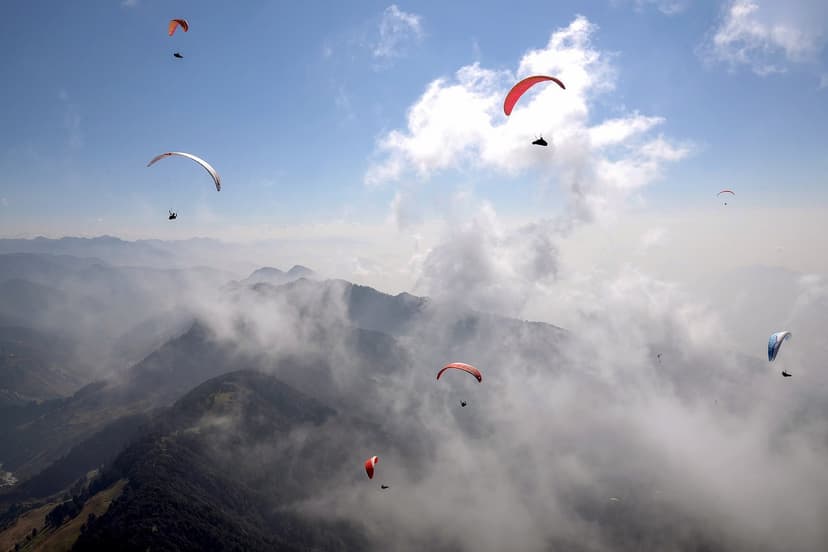
What actually happens, takeoff to landing
The full flow from booking to landing is shorter than most people expect. I will describe it the way a first-timer would experience it.
You book the morning of, or one day ahead. The operator confirms a 9 am to 11:30 am morning slot, which is the calmer window, or a noon to 3 pm afternoon slot, which tends to be more thermal-active. A jeep picks you up from your homestay in Bir or, more commonly, you walk to the Bir bus stand and join a shared jeep from the operator. The drive to Billing is 14 km of switchbacks, taking around 45 minutes, gaining roughly 900 m in elevation. You will feel the temperature drop sharply about halfway up; pack a windproof.
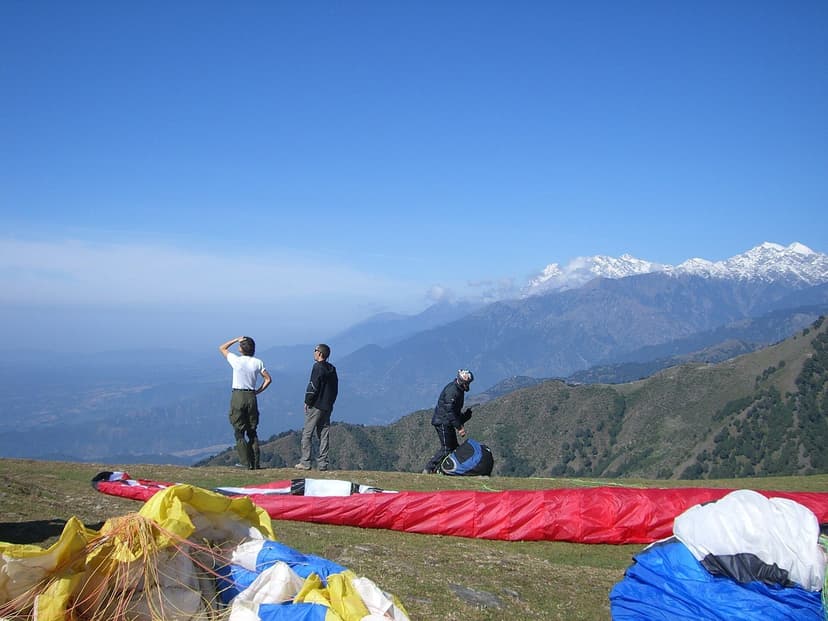
At Billing the takeoff site is a sloping grass field bounded on three sides by ridge. There is a small cluster of dhabas behind. Your pilot lays out the wing on the grass, walks you through the safety briefing (which is mostly about how to position your legs for takeoff and how to sit down on landing), straps you into the harness, then attaches you to him by the carabiners on the front of his own harness. You wait for a thermal window. When he sees the right gust line, he says go, runs three or four downhill steps, and the wing lifts you both into a seated position. You are airborne within five seconds of starting to run.
The flight itself is 15 to 30 minutes depending on what you paid for, with the longer flights only if the thermal allows holding altitude. The pilot does the work. You sit and watch. Bir village, the Tibetan colony at Chaugan, the Pir Panjal foothills running south, the Beas valley sweeping west, and the Dhauladhar wall to the north, fully visible above the takeoff ridge. The air at 2,400 m is cold and silent, so the only sound is the wing's fabric flexing in lift.
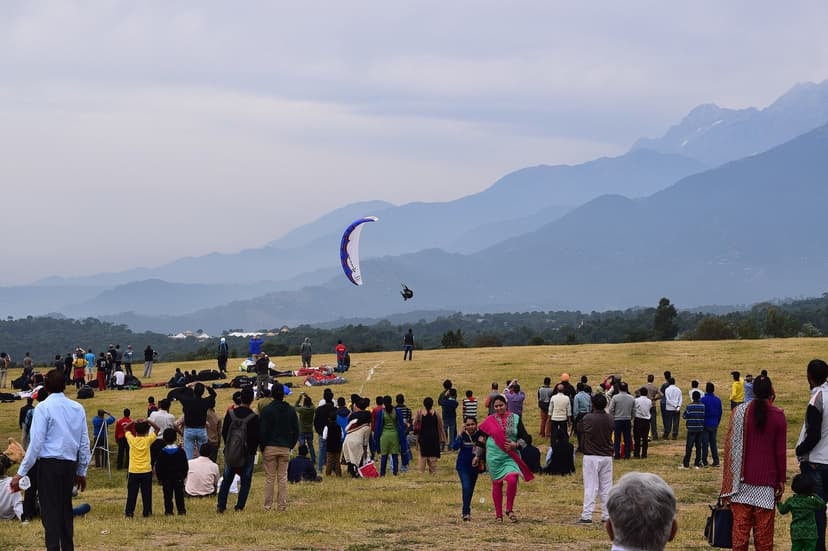
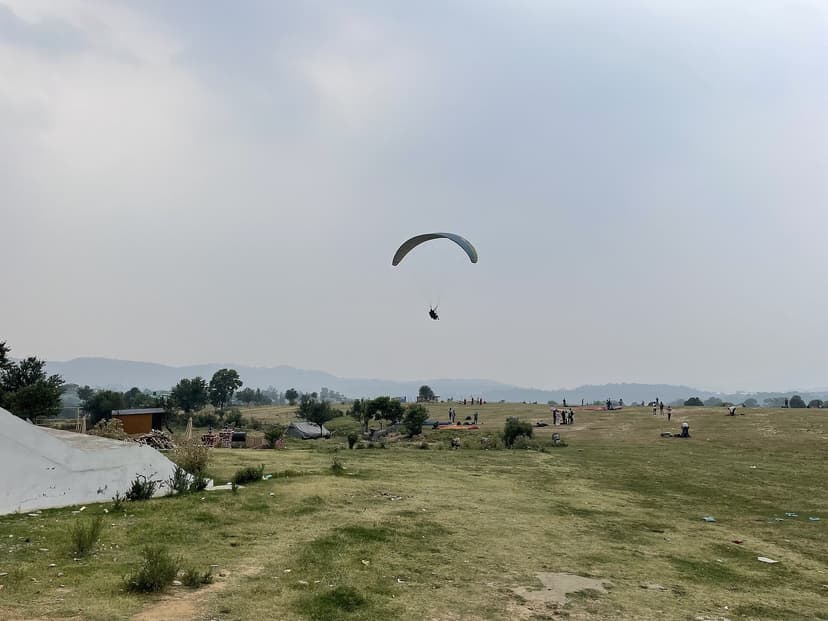
Landing is at the Chaugan field in Bir, a wide grass landing zone right next to the Tibetan colony. The pilot brings you in low across the trees, flares the wing five metres up, and you set down on your feet with the pilot directly behind you. A help-hand on the ground catches the wing. The whole event is over in about three hours including the jeep up and back, around forty-five minutes of which is in the air or at the launch.
Want to fly solo, the certification ladder
Tandem is the entry tier. If the flight changes something for you and you start thinking about flying yourself, the rest of this section is the actual ladder. Bir is the cheapest place in India to learn paragliding, by some distance, and the schools have been running structured courses long enough to have a clean teaching curriculum.
The Indian system uses Paragliding Association of India ratings, which map to international H-licence levels.
P1 plus P2 (Beginner, H1 plus H2 licence) is the foundation course. Five days of training plus two reserve days for weather. Days one and two are ground-handling drills, learning to inflate the wing on the slope without flying. Days three to five build to short solo flights at a low ridge. The school provides the wing, harness, helmet, and reserve. Cost is Rs 25,000 without accommodation and Rs 27,000 with accommodation included at a partnered homestay. By the end you are licensed to fly within 500 metres of a known landing zone.
P3 (Intermediate, H3 licence) adds another five-day course plus two reserve days. You learn ridge soaring, thermalling, and cross-country navigation basics. Cost is Rs 30,000 to 33,000 depending on accommodation. With P3 you can legally fly cross-country to up to 1,500 m of separation from launch.
P4 (Advanced thermalling) is a ten-day course at Rs 45,000. This is where you build the skills to fly the long XC flights that, in the right conditions, can take you 30 to 50 km down the Pir Panjal toward Mandi. You also build emergency procedure skills, including reserve deployment.
The course schedule at Bir runs in two main windows. Summer batch is roughly 25 February to 16 May 2026 with multiple start dates for P1+P2 and P3. Winter batch is 25 September 2026 to 1 January 2027. Reserve days are baked into both windows because Billing flights get cancelled by weather more often than the schools advertise.
If you are looking for a comparison, Kamshet in Maharashtra, the second-biggest Indian paragliding school cluster, charges around Rs 50,000 for P1+P2 and has less consistent thermals because the Sahyadris are flatter. Bir at Rs 25,000 to 27,000 is the only Indian site I would actually recommend for a first solo course.
Why you might bother going solo. Most people fly tandem once and move on. A few find that the run-off-the-edge moment, the silence at 2,400 m, and the act of controlling the wing yourself, all of those, change something. If they do, Bir is where you come back. The community is small, the instructors know each other, and the season is long enough to actually get hours in. P1+P2 is roughly 25 solo flights by graduation. Most students who hit that number keep flying.
Beyond paragliding, the rest of why Bir matters
Operator websites treat Bir as a paragliding day trip from Dharamshala. That is one possible visit. The honest case for the village is that paragliding is the third or fourth most interesting thing about it, after the Tibetan colony, the monasteries, the cafes that have built up around the digital-nomad crowd, and the access to high-altitude treks that almost nobody else uses.
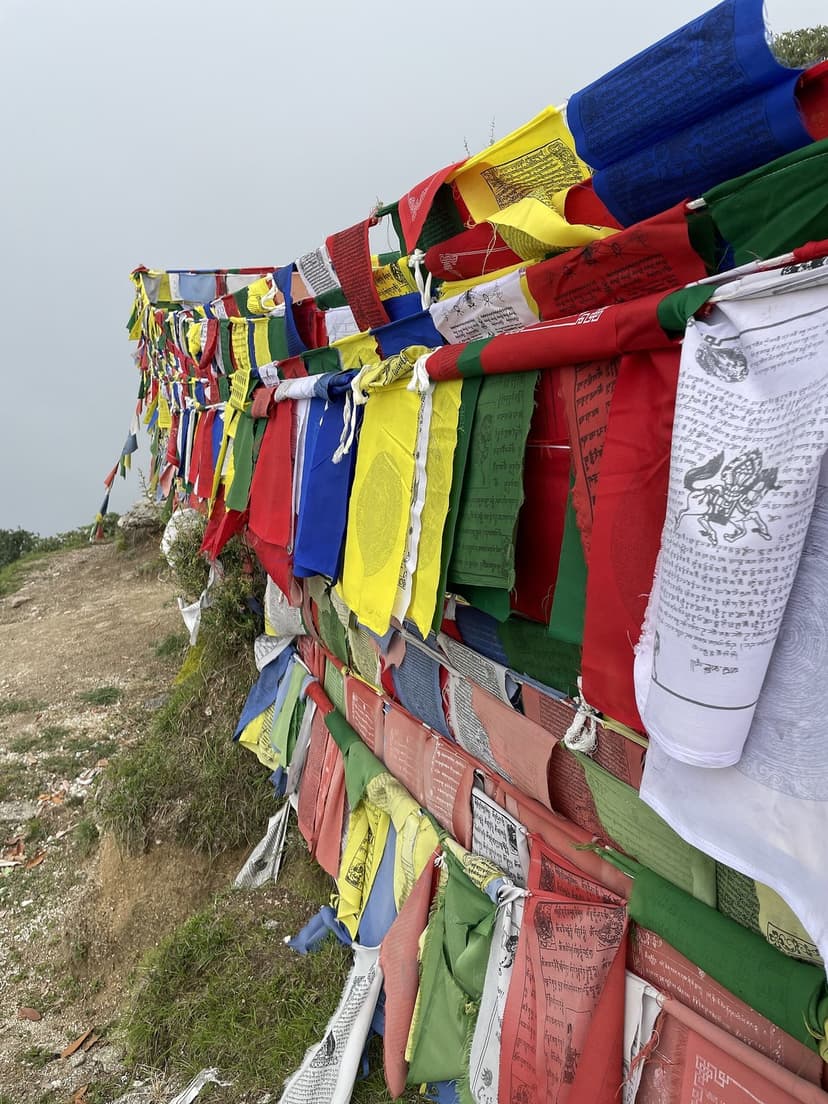
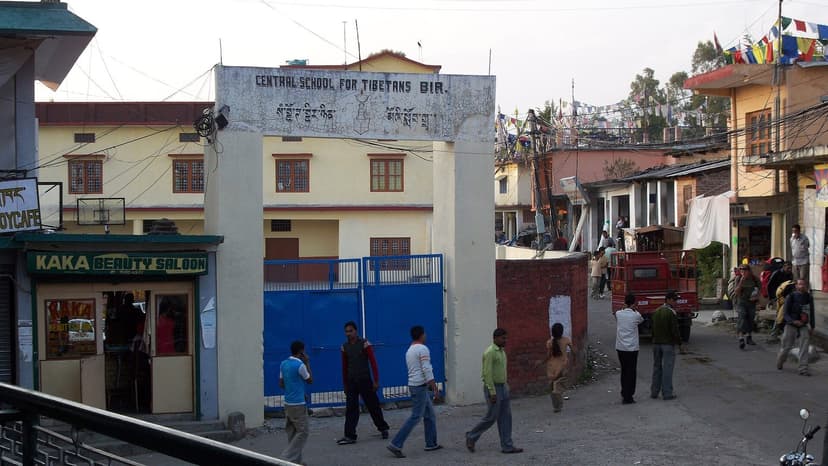
The Tibetan colony at Chaugan was established in the early 1960s by refugees from the Karma Kagyu school of Tibetan Buddhism, with around 300 families given land by the Indian government. Walk through it slowly and you will see the Central School for Tibetans, the Men-Tsee-Khang Tibetan medicine clinic, and a string of small bakeries, momo stalls and thukpa kitchens. The colony is not a tourist attraction in the curated sense. It is a living settlement that happens to be open to walking through.
Chokling Monastery, established in Bir by the third Neten Chokling from 1966, is the most visible monastery in the colony. The main shrine hall, the stupa, and the daily morning prayer at around 6 am are open to visitors. Photography is allowed in the courtyard, not the shrine. Walk in around 5:45 am with shoes off and you will sit through the prayer with a few dozen monks.
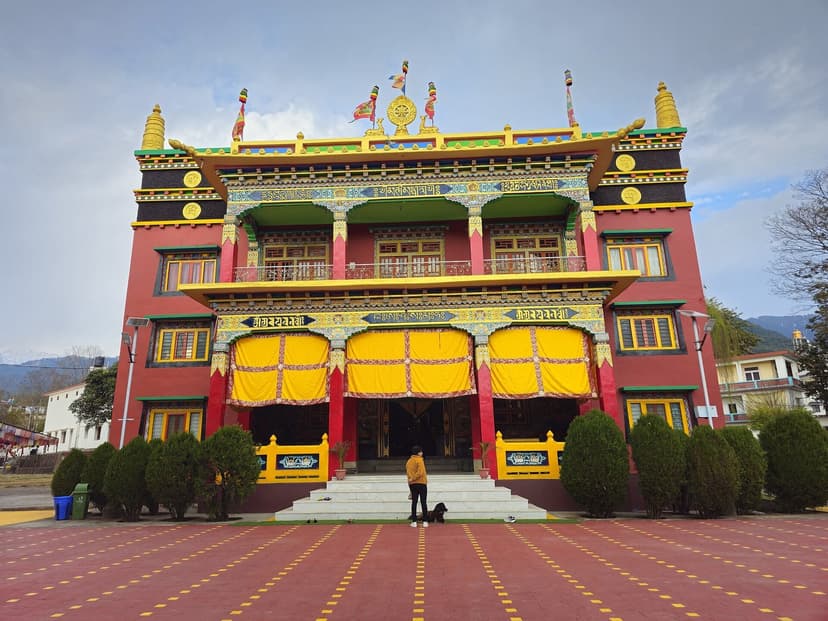
Palpung Sherabling, the seat of the 12th Chamgon Kenting Tai Situpa, sits about six kilometres west of Bir. It is a much larger institution than Chokling, with around 1,000 monks, four retreat centres, six smaller shrine rooms, and a long programme of teaching and meditation courses through the year. Visitors are welcome in the courtyard and the main shrine hall during darshan hours, typically 9 am to 5 pm. The Karma Kagyu monastic seat in Tibet was the original Palpung; Sherabling is the Indian re-establishment, built from 1975 onward under the 12th Tai Situ Rinpoche's direction.
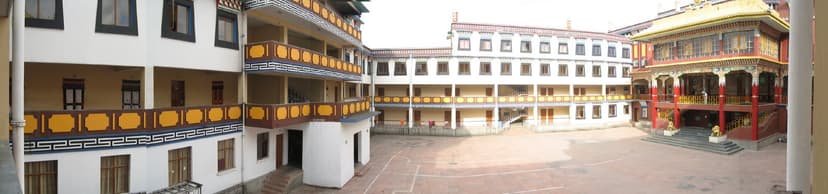
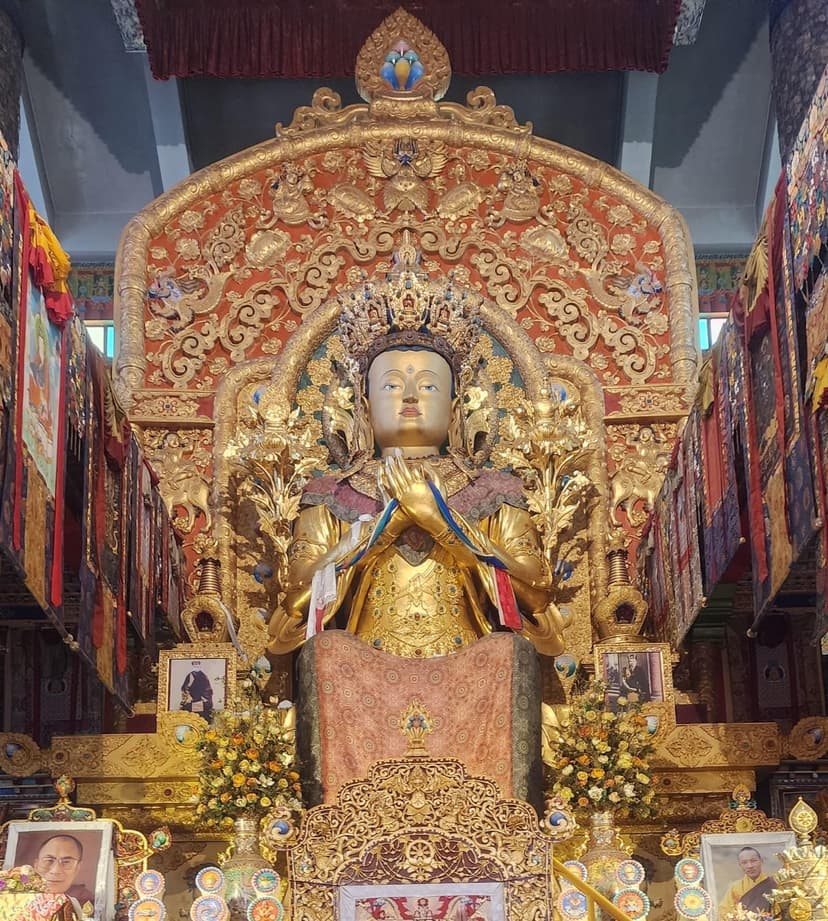
Deer Park Institute, founded by Dzongsar Khyentse Rinpoche in March 2006 under the patronage of the Dalai Lama, runs short residential courses in Indian classical philosophy, yoga, and Buddhism. The 2026 spring schedule includes Abhidharmakosha and Madhyamaka intensives, mostly 9 to 14 day formats, and meditation retreats. Walk-ins are welcome at the morning library and the afternoon talks; full courses require advance application.
Rajgundha is the trek that most paragliding visitors never hear about. From Billing, it is 14 km north over a low ridge into a wide alpine meadow at around 2,500 m, with the Dhauladhar wrapping the head of the valley. The trek is moderate, with two days and one night the standard plan, although a strong walker can do a 30 km out-and-back in one long day. The village is barely twenty households, a working dairy economy, no hotels, two homestays, and the kind of star sky that the Bir valley below cannot give you. March to June is the right window; the trail is snowbound December through March.
The cafe scene in Bir has built up around the digital nomad community over the last six years. Pahadee Coffee Roasters, founded by Pratyush Thakur in late 2021 in a glass-walled cafe in Chaugan a couple of kilometres from the landing site, roasts its own beans and runs the most consistent espresso programme in the village. Silver Linings Community Cafe, a mud-house design in Bir village, does homemade iced teas and lentil burgers. Garden Cafe, the oldest in Bir, is famous for its pancakes. Tenzin Jamdol Cafe in the Tibetan colony does the cleanest laphing and thukpa.
The workation case for Bir. Reddit threads on r/india_tourism and r/SoloTravel_India over 2024 and 2025 have repeatedly framed Bir as a cheap workation option, with budgets of around $800 to 1,000 a month covering a private room homestay, three meals a day, and steady wifi at the cafes. Pahadee, Silver Linings, and 4tables in Chaugan all run on Jio and Airtel fibre. The community is small enough that you can be in it within a week.
Reaching Bir, including the rail caveat
Three real options, in order of how I would weigh them.
By bus. The HRTC and private Volvo operators run nightly Delhi to Baijnath services, leaving Kashmere Gate or ISBT Anand Vihar between 6:30 and 9 pm, arriving Baijnath around 6 to 8 am the next morning. Baijnath is 15 km from Bir; a shared jeep or auto-rickshaw from the Baijnath bus stand costs Rs 80 to 150 per seat. The Delhi-Baijnath leg costs Rs 1,200 to 1,600 in May 2026, depending on operator and night. Most paragliding visitors do this overnight; you arrive in time for a morning flight.
By air. Kangra Airport at Gaggal is 67 km from Bir. SpiceJet, Alliance Air, and IndiGo run limited daily flights from Delhi, around 80 to 90 minutes one way. The airport itself is small with weather-cancellation rates of around 15 to 20 percent through the year. A taxi from Gaggal to Bir is Rs 1,800 to 2,500 and takes around 2 hours.
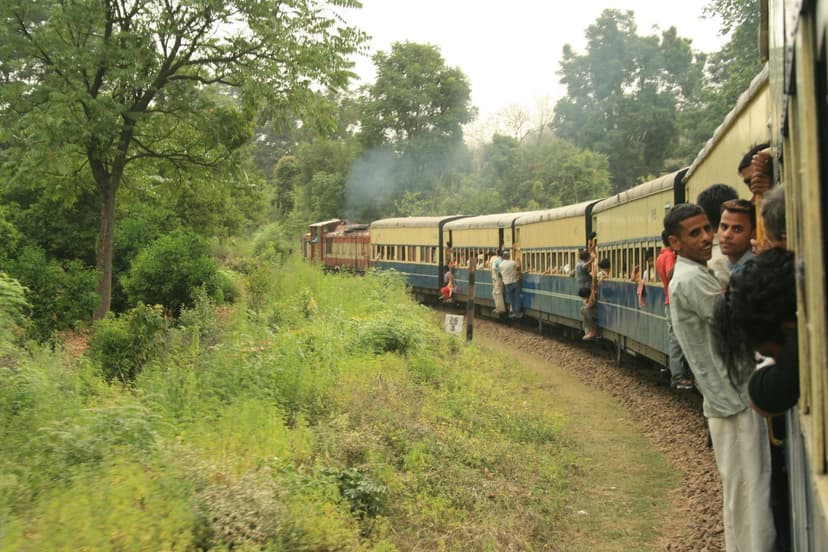
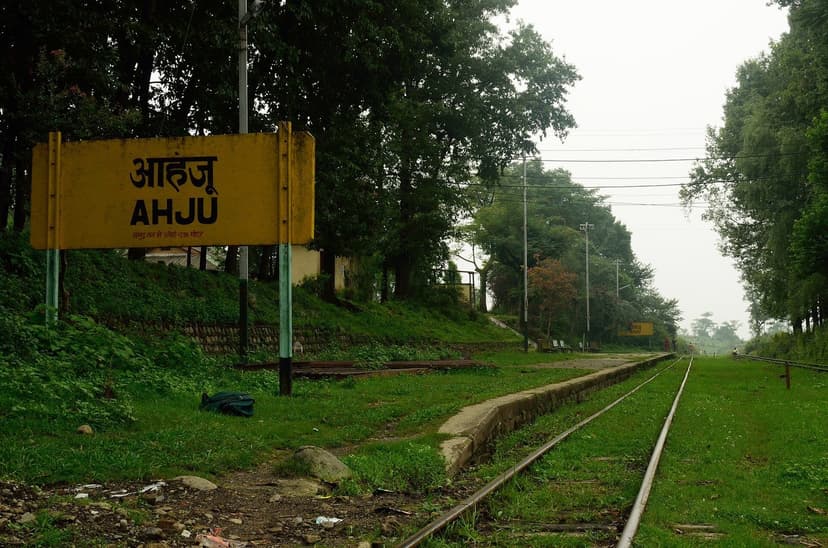
By rail, with a caveat. The textbook romantic option is the Kangra Valley Railway, a 164 km narrow-gauge line commissioned in 1929 that climbs from Pathankot through Kangra and Baijnath to Joginder Nagar. Ahju station, the highest point on the line at 1,290 m, is 3 km from Bir. The line is on India's UNESCO tentative list. The catch is that the line is currently fragmented. The Pathankot to Baijnath section has been suspended since August 2022, when the Chakki river bridge was swept away by flash floods, and the Ranital landslide in July 2025 further damaged the track. As of May 2026, services are running only on the Baijnath-Paprola to Joginder Nagar section (which includes Ahju) and the Kangra to Baijnath stretch, restored from December 2025 after trial runs. Pathankot-side services remain suspended pending track inspection. If you want the train experience, the practical move is to take a road or air leg to Baijnath Paprola, then ride the narrow gauge up to Ahju as a half-day experience, then walk or auto to Bir.
The 3-day Bir-Billing trip plan
If you have three days, here is the plan that works.
3-day Bir itinerary
- Day 1: Arrive Bir on an overnight bus from Delhi. Walk to Pahadee Coffee Roasters. Jeep up to Billing at noon, watch the takeoff site for an hour, eat at the Billing dhaba, return by 4 pm. Evening: Chokling Monastery 5 pm prayer.
- Day 2: Up at 7 am. Tandem flight in the 9:30 to 10 am slot. Land at Chaugan by 11 am. Late breakfast at Silver Linings. Afternoon: walk the Tibetan colony, then Palpung Sherabling.
- Day 3: Choose Rajgundha trek (14 km out-and-back from Billing) or Baijnath-Palampur cultural circuit. Overnight bus to Delhi at 7 pm.
Where Bir-Billing fits in your Himachal map
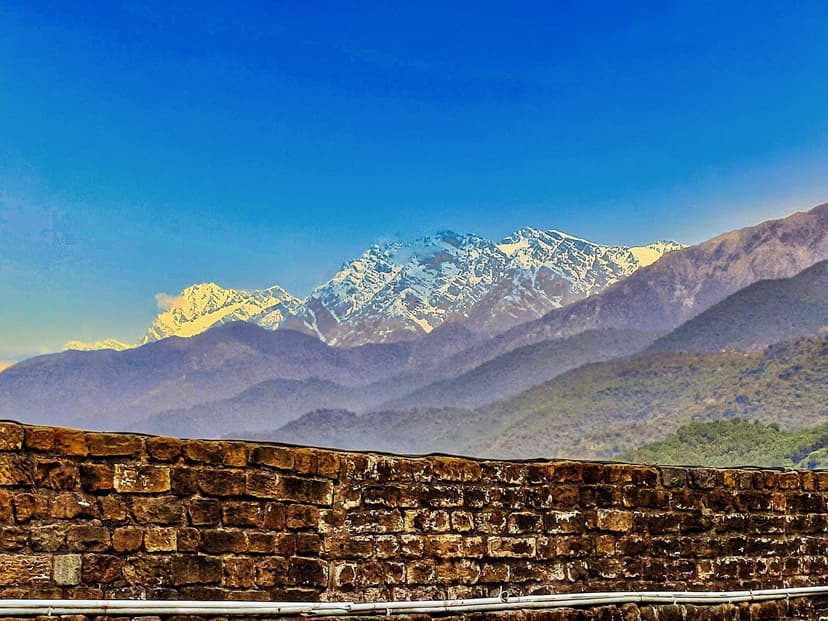
The map below covers the operational geography of a Bir-Billing trip: the two Billing takeoffs and the Chaugan landing, the monasteries and the Tibetan colony, the Bir village core, the Rajgundha trek line, Ahju station, the working Baijnath-Paprola railhead, Baijnath temple, and the broader Kangra context including Gaggal airport, McLeod Ganj for a day trip, Pathankot for the rail-suspended western end, and the Indrunag site near Dharamshala that the January 2025 fatality made part of the regional safety conversation.
The 2026 status of paragliding around Bir
Two specific 2026 items worth noting because they keep coming up.
The 30 April 2026 suspension. President Droupadi Murmu visited Palampur on 30 April 2026. The district administration ordered a complete ban on paragliding, drone operations, hot air ballooning, and all aerial adventure activities in Palampur and Baijnath subdivisions of Kangra district from 8 am to 1 pm that day. The ban was lifted by 2 pm. This is the kind of one-day disruption that happens annually around VIP movement and should not change a long-trip plan.
The 2026 Pre World Cup. The Pre World Cup that ran in October 2024 with 94 pilots from 26 countries was followed by no event in 2025. Anurag Sharma, president of the Bir-Billing Paragliding Association, told The Tribune in October 2025 that no official intimation or communication had been received from the government regarding that year's event. As of May 2026 there has been no announcement of a 2026 Pre World Cup either. If you are planning a trip specifically to catch World Cup energy, watch the BBPA notices through August; if you cannot find a confirmation by late August, treat the season as non-competition and plan accordingly. The flying itself runs regardless of the competition calendar.
Stay, eat, and the practical layer
Stays in Bir cover three bands. The hostel band runs Rs 500 to 800 a bed at Bunksters, Zostel, and Stops Hostel Bir, which all run social common rooms and pickup options to Billing. The homestay and boutique band runs Rs 1,500 to 4,000 per night for double rooms at Colonel's Resort, Dosanjh Niwas, and a string of Chaugan family homestays, most of which serve breakfast and have wifi. The high-end band runs Rs 5,000 to 12,000 a night at Avasara Retreat, Wild Whisper Glamping in Sansal, and similar boutique stays around the Bir Tea Factory road. Through the October peak, expect 30 to 50 percent surcharges across all bands.
Food in Bir is more varied than the village size suggests. Tibetan breakfast and lunch at Tenzin Jamdol or Norling in the colony for Rs 80 to 250 a plate; Italian and continental at June 16 Cafe and 4tables, with main courses Rs 250 to 600; espresso and cold brew at Pahadee Coffee Roasters at Rs 120 to 220. Buying a Himachali sit-down dinner is harder, mostly available in the larger homestays for guest groups. The Bir Tea Factory cooperative runs visitor tours by appointment.
The practical layer. ATMs in Bir are limited to one SBI branch and one Punjab National Bank ATM; both run dry in the October peak. Bring cash. Mobile network: Jio and Airtel run reliably in Bir village; coverage thins at Billing and is patchy in the Tibetan colony's deeper lanes. Helmets and reserve parachutes are equipment your tandem pilot is responsible for, not you, but a quick visual check before takeoff (no fraying on the carabiner, helmet strap intact) is fair and most pilots welcome it.
Do not pre-pay through aggregators for the lowest tier. Thrillophilia, MakeMyTrip and similar aggregators bulk-book the Rs 3,000 floor and resell it at Rs 3,500 to 4,500 with their margin. Walk into Bir, ask three operators at the bus stand, and book directly for the same Rs 3,000. The exception is the long XC flight at Rs 15,000 plus, where aggregator booking provides some operator-vetting value.
Frequently asked questions
How much does paragliding cost at Bir-Billing in 2026?
A standard 15 to 20 minute tandem flight starts at Rs 3,000 in May 2026. Extended 20 to 30 minute flights cost Rs 4,200 including insurance and entry fee, 30 to 45 minute flights cost Rs 5,500, and 45 to 60 minute flights cost Rs 6,500. The XC cross-country flight, when available, costs around Rs 15,000. GoPro video adds Rs 500 to 800. The 2023 prices of Rs 1,800 to 2,500 are no longer current.
Is paragliding at Bir-Billing safe in 2026?
Tandem flying with a properly licensed pilot is generally safe, but Bir-Billing has had a difficult two years. Fourteen pilots were killed across roughly thirty accidents between 2020 and early 2025. The Belgian competitor death at the 2024 World Cup, the December 2025 death of pilot Mohan Singh, and the January 2025 Indrunag fatality (at the smaller Dharamshala site) drove an industry-led suspension in February 2025 and a two-flight-per-pilot-per-day limit that remains in force. Verify your pilot's Tourism Department licence, check equipment age, refuse flights in cloudy or windy weather, and confirm operator insurance. Operations are running normally in May 2026.
What is the best time of year for paragliding at Bir-Billing?
October and the first half of November are the peak, with the strongest thermals and clearest skies. Mid-March to mid-June is the second-best window and, in our view, the smarter choice for a first-time tandem, because the thermals are gentler and predictable and the crowds are smaller. Avoid July to mid-September, the monsoon ban window. December to February is technically open but the cold at takeoff is hard and the valley fog grounds many flights.
What is the height of paragliding at Bir-Billing?
The Billing takeoff sits at 2,400 metres (7,874 ft) and the Bir landing at Chaugan sits at 1,525 metres (5,003 ft), giving around 900 metres of elevation drop on a one-way flight. The official Incredible India listing calls it the Paragliding Capital of India.
Can I learn solo paragliding at Bir-Billing?
Yes. The P1 plus P2 beginner course is five days plus two reserve days for weather, costing Rs 25,000 without accommodation and Rs 27,000 with. P3 intermediate adds another five-day course at Rs 30,000 to 33,000. P4 thermalling is a ten-day course at Rs 45,000. Bir is the cheapest place in India to learn paragliding by a significant margin; Kamshet in Maharashtra costs about Rs 50,000 for the equivalent P1+P2 course.
How do I reach Bir-Billing from Delhi?
Three options. By bus is the most common: HRTC or private Volvo from Kashmere Gate or ISBT Anand Vihar, evening departures arriving Baijnath at dawn, costing Rs 1,200 to 1,600 in May 2026. From Baijnath take a 15 km shared jeep or auto to Bir. By air, Kangra Airport at Gaggal is 67 km from Bir, with limited Delhi flights and a high weather-cancellation rate; taxi from Gaggal is Rs 1,800 to 2,500. By rail, take a train to Pathankot, then a road leg to Baijnath Paprola because the Pathankot stretch of the Kangra Valley Railway is currently suspended. From Baijnath you can ride the narrow gauge to Ahju, 3 km from Bir, as a short heritage experience.
What can I do in Bir besides paragliding?
Plenty. Walk through the Tibetan Colony at Chaugan. Visit Chokling Monastery for the 5 am or 5 pm prayer, Palpung Sherabling (the 12th Tai Situpa's seat, around 6 km out), and Deer Park Institute for short courses in Indian philosophy. Trek 14 km from Billing to Rajgundha, a quiet alpine meadow village. Tour the Bir Tea Factory by appointment. Sit in the cafe culture at Pahadee Coffee Roasters, Silver Linings, June 16, or 4tables. Day-trip 18 km to Baijnath Vaidyanatha, a 9th century Shiva temple.
Is Bir-Billing safe for solo female travellers?
Yes. Reddit threads on r/SoloTravel_India over 2024 and 2025 have repeatedly described Bir as comfortable for solo women, with a welcoming community of local families, expats, and digital nomads. Hostels like Bunksters and Zostel run social common areas. The Tibetan colony is well-lit and active until around 9 pm; the bigger note is that streets in the village proper are not lit after 10 pm, so plan night walks accordingly.
Can I take the toy train to Bir-Billing in 2026?
Partially. The Kangra Valley Railway, a 164 km narrow gauge from Pathankot to Joginder Nagar, has been fragmented since 2022. As of May 2026, the operational sections are Baijnath-Paprola to Joginder Nagar (which includes Ahju, 3 km from Bir) and Kangra to Baijnath, restored from December 2025. The Pathankot to Kangra section remains suspended pending track inspection after a flash flood took out the Chakki river bridge in August 2022. The practical move is a road or air leg to Baijnath Paprola, then a short narrow-gauge ride up to Ahju.
What is the weight limit for tandem paragliding at Bir-Billing?
Combined pilot plus passenger weight cap is typically 120 kg, with operator-specific variation between 110 and 130 kg. Minimum age is 12. Minimum solo passenger weight is around 30 kg. Passengers above 85 kg sometimes pay a weight surcharge of around Rs 50 per kg.
The bottom line
Bir-Billing in May 2026 is operating cleanly, with a tandem floor at Rs 3,000, a 2-flights-per-pilot-per-day cap in force, an industry that has spent the last year metabolising the worst accident year in its history, and an open question on the 2026 Pre World Cup that probably will not resolve until late August. If you want to fly, the smartest pick is a mid-March to mid-June window, a 9:30 am morning slot, a Rs 3,500 to 4,000 booking with a higher-reviewed operator, and a passport-photocopy verification of your pilot's licence before you strap in. Stay three days, not one. The village deserves it.
If you would like a custom Bir-Billing-plus-Dharamshala-plus-Kangra plan that pairs the flight with the monasteries, the Tibetan colony, and a Rajgundha or Baijnath day-trip, drop us a note with your dates, group size, and whether you want the cultural circuit or the trek option.
And if you are seriously considering coming back for a P1+P2 course after the tandem, the right months to plan around are mid-March through May and late September through October. Tell us your window and we will help you choose between the established schools.
Sources and field notes
Decay-verified for May 2026 against: Tribune India (paragliding suspension Feb 2025, 14 pilots killed in 5 years, Mohan Singh ambulance death Dec 26 2025 and 28 Dec 2025 obituary, Belgian World Cup fatality, 2026 Murmu visit ban April 30, 2025 World Cup cancellation Oct 25 2025), TV9 Hindi Mohan Singh technical-fault quote, ETV Bharat Hindi 2025 three-death summary, Prime TV India safety concerns piece, BirBillingParagliding 2026 price list (3000 floor) and 2026 course schedule (P1+P2 25-27K, P3 30-33K, P4 45K), Rudra Adventures 2026 batch dates, OutlookTraveller crash safety piece, Wikipedia Bir Himachal Pradesh (Tibetan colony 300 families 1960s, Chokling 1966, Deer Park 2006, Ahju 3 km, Billing 14 km), Himachal Headlines Kangra Valley Railway November 2025 update (Pathankot section suspended, Baijnath-Joginder Nagar operational since Dec 5 2025), TheWeek Dec 28 2025 Mohan Singh background, Tribune World Cup cancellation piece (Anurag Sharma BBPA quote Oct 2025), Aero Sports Rules 2022 framework.
If you find anything in this piece that has shifted since publication, tell us and we will update it.
You Might Also Like
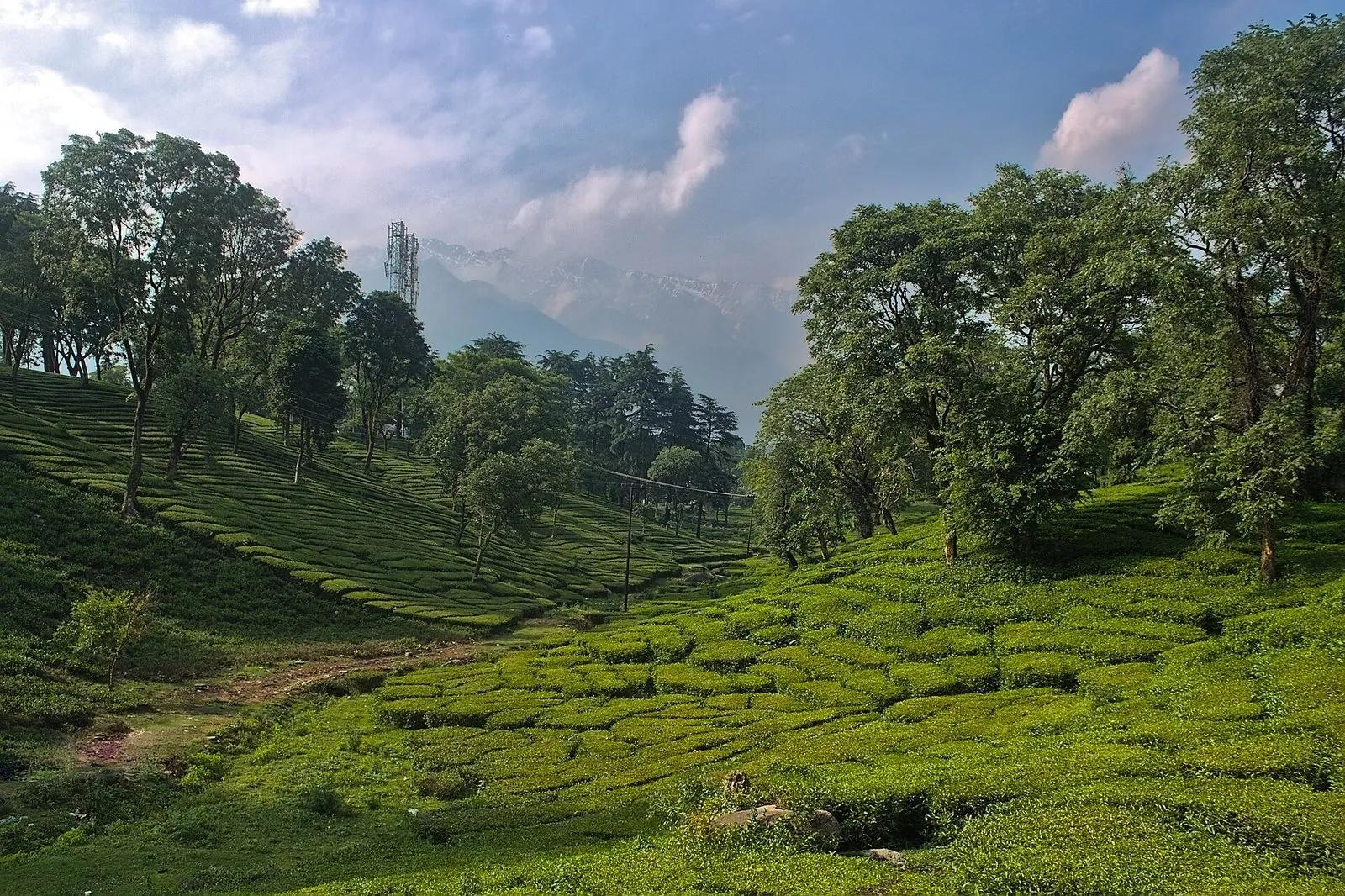
Palampur: India's Tea Capital That Nobody Visits
Thirty-five km from Dharamshala, a fraction of the tourists. India's only all-orthodox tea region, a 1204 CE temple that refuses to burn Ravana, a monastery of yogis, and a narrow-gauge railway that just came back from the dead.
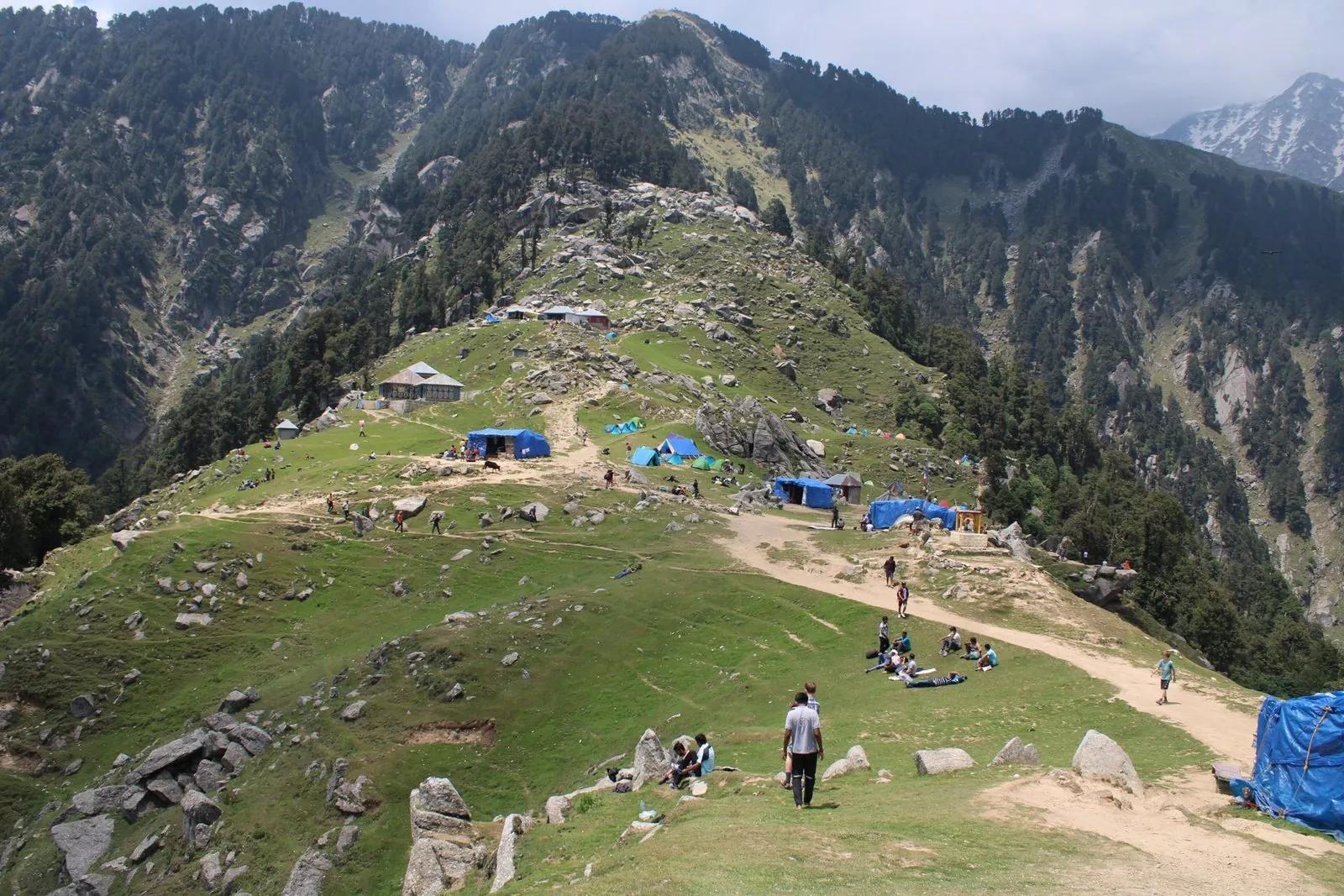
Triund Trek 2026: Complete Beginner's Guide (Route, Checkpoint, Camping & What Nobody Tells You)
Nine km, 1,100 m of gain, and one rule that turns hikers back: the 11:30 AM Gallu Devi check-post. Triund is HP's most-walked beginner ridge trek, with Forest Department fees halved to Rs 100 in January 2024 (per The Tribune), a HP High Court cap of 400 trekkers and 20 tents, and operator packages from Rs 999. Written from Kullu with the Tribune backbone, the Reddit deep-mine, and the four extensions almost no guide covers.
Kangra Fort and Masrur: HP's Ignored Heritage Belt (39,400 Reviews, Zero Coverage)
Three monuments inside a sixty-kilometre triangle on the Kangra plain quietly carry 39,400 Google reviews between them, yet not one comprehensive English-language travel guide exists. Kangra Fort, Masrur rock-cut temples, Chamunda Devi Nandikeshwar Dham, the Bajreshwari Shakti Peetha, Baijnath Vaidyanatha, and a one-day heritage circuit from Dharamshala. Written from Kullu, two valleys west.