
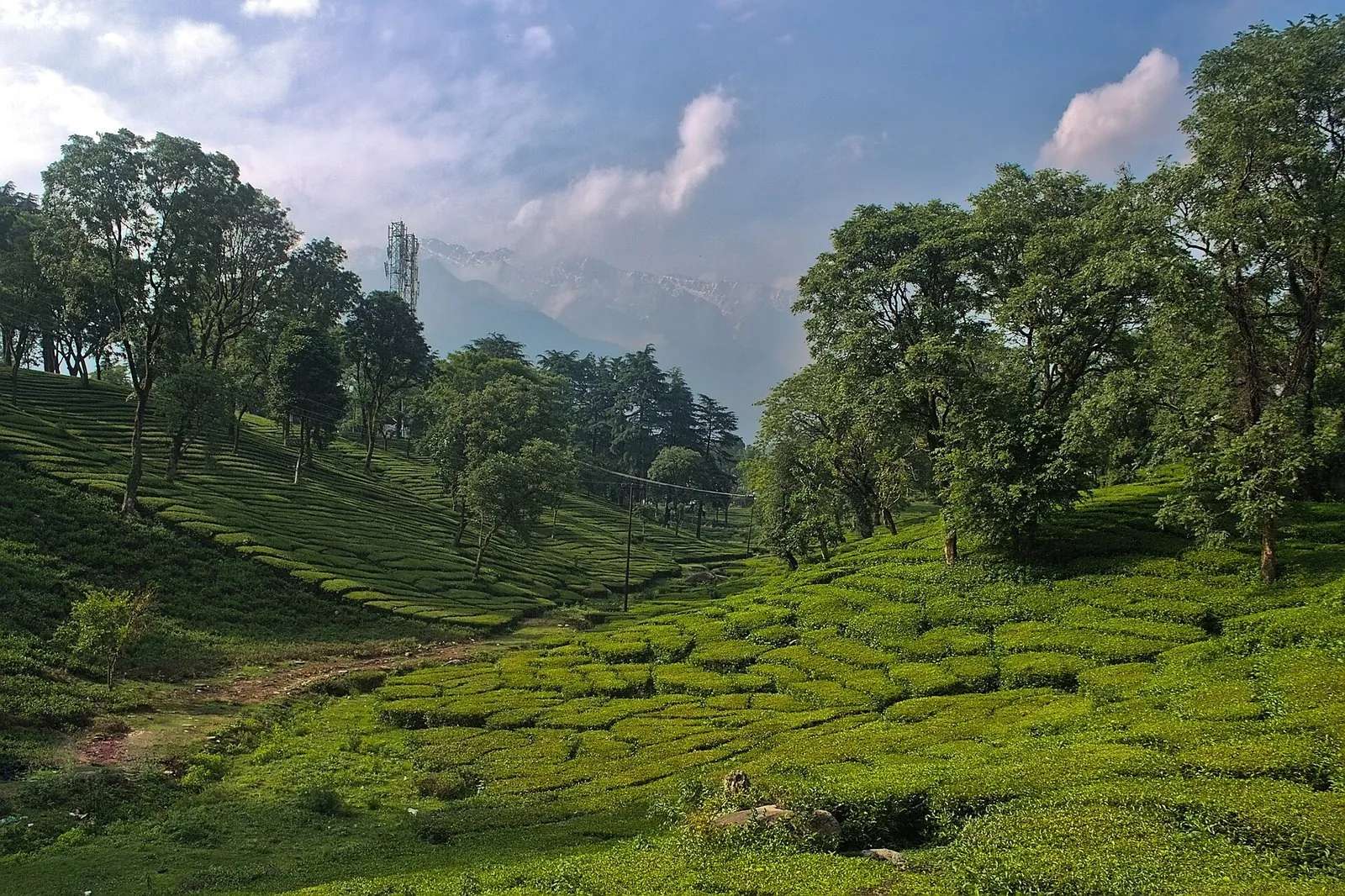
Palampur: India's Tea Capital That Nobody Visits
Thirty-five kilometres. That is the whole distance between the selfie scrum at McLeodganj and a town where you can walk into a tea garden at 6 a.m. and hear nothing except water. Palampur sits at 1,472 metres in the Kangra valley, under the same Dhauladhar wall that Dharamshala sells postcards of, and most travellers drive straight past it on NH-154 without lifting their eyes from the phone. I think that is a mistake, and I will spend the next four thousand words explaining why.
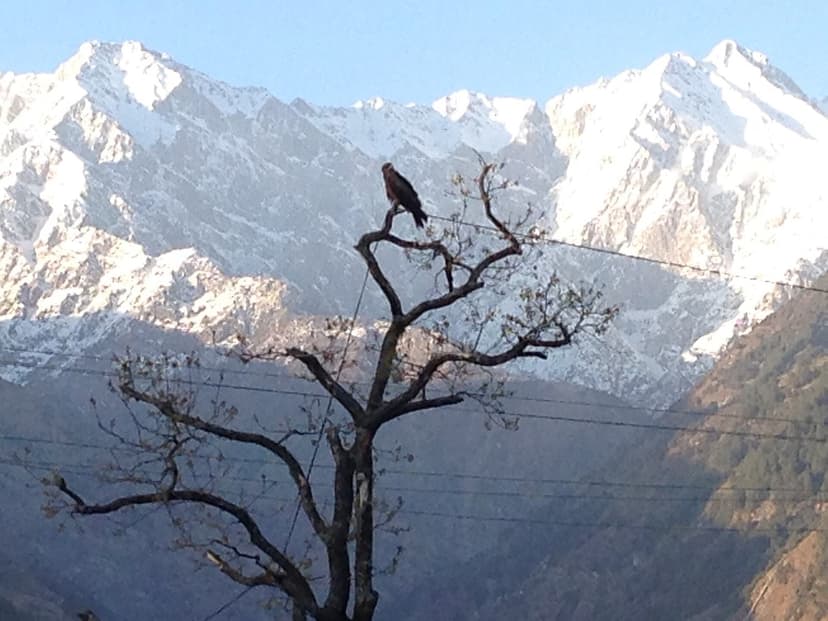
Here is my claim up front: Palampur is the best base in the whole Kangra valley, better than Dharamshala and, I would argue on a good day, better than Bir. It has the tea, the 1204 CE temple, a monastery most people have never heard of, a working narrow-gauge railway that came back from the dead eight days before I wrote this, and a cafe scene run by people who moved here on purpose. A Reddit user called u/ForcedGoodbye put it in nine words I cannot improve on: "Palampur is underrated, and that's how it stays peaceful."
- Altitude
- 1,472 m
- District
- Kangra, Himachal Pradesh
- Known for
- Kangra tea, the only all-orthodox tea region in India
- From Dharamshala
- 35 km, about 1 hour
- From Delhi
- 480 km, 10-11 hr overnight bus
- Nearest airport
- Gaggal (Kangra), 40 km
- Railway
- Narrow-gauge Kangra Valley line, full service back since 2 June 2026
- Best months
- March-June for green gardens, October-November for clear peaks
- Wah tea tour
- Rs 200 per person, daily, call ahead
- Days needed
- 2-3
The tea story, which is really an earthquake story
Every tea drinker in India knows Darjeeling. Almost nobody knows that Kangra was in the same race, and for a few decades was winning it. A British botanist named Dr. Jameson surveyed the Dhauladhar foothills in 1848 and planted the first tea at Holta, on the edge of Palampur, in 1852. The plants were Chinese stock, Camellia sinensis var. sinensis, the original variety, not the Assamica that most Indian tea later switched to. By the late 1800s Kangra tea was taking medals at exhibitions in London and Amsterdam.
Then, on the morning of 4 April 1905, the Kangra earthquake arrived at magnitude 7.8, killed around 20,000 people, and flattened the tea industry along with everything else: withering sheds, rolling machines, the bungalows of the planters themselves. Most of the British owners cut their losses and shifted toward Assam and Bengal, leaving behind the gardens run by local families who had nowhere else to go. The next century of investment and marketing went to Darjeeling, while Kangra slowly dropped out of the national conversation about tea.
A Reddit user from the area, u/Relative-Program6979, summed up the local memory of it on r/tea: "Kangra was the main tea growing region before the earthquake destroyed lot of estates in early British days and they shifted their focus to Assam." You will hear versions of that sentence from shopkeepers in Palampur bazaar too. It is the town's founding grievance, and honestly, a fair one.
What survived is small and strange and worth your attention. Kangra today has about 2,312 hectares under tea across 5,900 mostly tiny gardens, strung along the Shahpur, Palampur, Baijnath and Jogindernagar belt. And here is the fact I lead with whenever someone asks why they should care: Kangra produces no CTC at all. CTC, crush-tear-curl, is the machine-processed staple that goes into nearly every cup of Indian chai. Kangra makes only orthodox tea, whole leaf and hand-plucked, which no other Indian region growing tea at scale can claim. The black finishes sweet, the green has a woody nose, and in 2023 the European Union gave Kangra tea its Protected Geographical Indication, only the second Indian tea after Darjeeling to get one, eighteen years after India gave it a domestic GI tag in 2005.
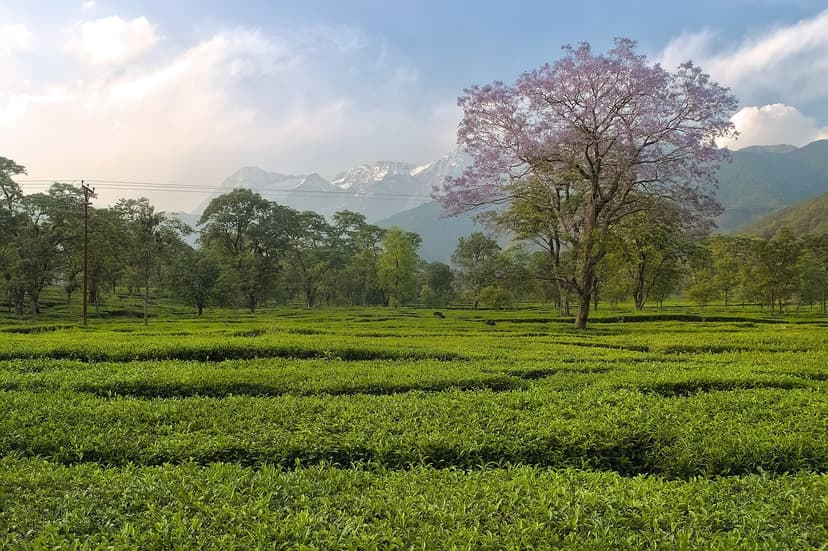
The industry's present tense is complicated. On r/tea, a Dharamshala local who grew up beside the gardens, u/BAAU007, wrote: "I hate to see Kangra tea at the state it is. While it has been improving but still not at very good place. I love the history and the place it grows in." Production stays low, margins stay thin, and in 2024 Amar Ujala ran an investigation alleging a plot to grab 2,300 kanal of tea-garden land around Palampur for construction. Tea land in Himachal is legally protected from sale for non-tea use, which is the only reason the gardens still ring the town. Go see them while that law holds.
Palampur is underrated, and that’s how it stays peaceful. (u/ForcedGoodbye on r/HimachalPradesh, under a 4 a.m. photo of the town)
Wah Tea Estate: four generations and a ₹200 masterclass
The estate to visit is Wah, at Deogran, 7 km south of town just off the Andretta road. Founded in 1857, the year of the Mutiny, by the Nawab of Wah, whose hometown now sits in Pakistan. The Prakash family has run it for four generations and 526 acres, which makes it the biggest single garden in the valley. The factory still runs the full orthodox line from withering to grading, April through October.
Their tea tour costs ₹200 a person as of June 2026 and runs daily, though you should call ahead. You walk the rows, learn to pluck two leaves and a bud, watch the factory work, then taste the results brewed properly. Two hundred rupees for ninety-odd minutes of someone's 170-year family obsession is the cheapest education in Himachal. The Lodge at Wah, their homestay among the bushes, is the splurge option if you want to wake up inside the postcard. The Better India profiled the place in 2024.
One honest caveat from the internet, because it made me laugh and it is useful. A Tamil traveller on r/HimachalPradesh, u/indianhobo89, who has eaten his share of temple dhams around Palampur, warned that "wah tea estate is a commercial establishment and won't give you the real taste of dham." Correct. Wah sells you tea, not lunch. For the real dham you wait for a wedding invitation or a temple festival, and for what it is worth the noon dham around Palampur and Nagrota Bagwan is served without chapatis, all rice and madra and mash daal. That detail matters in Kangra.
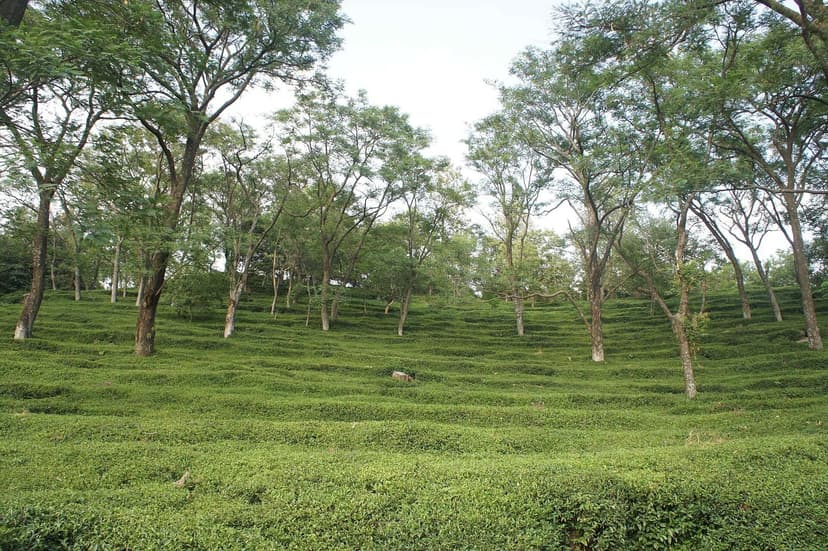
If you skip Wah, you can still walk into the gardens by the Holta road for nothing. The co-operative tea factory at Rajpur lets visitors watch the processing with the manager's nod, free. And the original 1852 Holta plot is now inside the campus of the agricultural university, CSKHPKV, which I find quietly funny. The birthplace of Kangra tea is a syllabus.
Baijnath: the town that refuses to burn Ravana
Sixteen kilometres east of Palampur, on the Binwa river, stands the temple that survived the earthquake that killed the tea industry. Baijnath was built in 1204 CE, the inscription names two merchant brothers, Ahuka and Manyuka, as the patrons, and it has been in continuous worship for over 800 years. Shiva lives here as Vaidyanath, the Lord of Physicians. The shikhara is classic Nagara with Orissan touches, ASI-protected, and photographs best in the morning when the carved stone goes honey-coloured against the snow line.
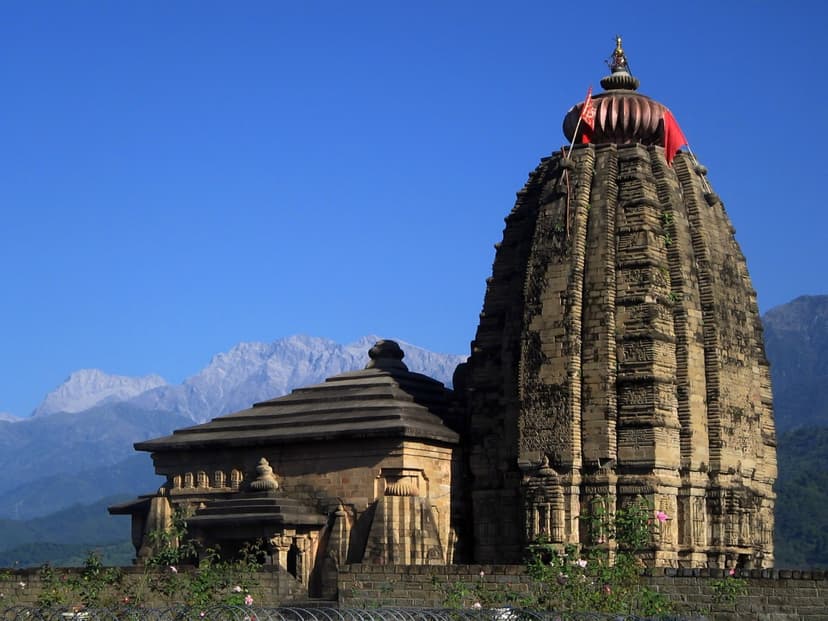
The legend is better than most. Ravana performed penance here, offering his ten heads one by one into the fire until Shiva appeared. He won a Shivling to carry home to Lanka on one condition, that it never touch the ground. Vishnu, disguised as a cowherd, tricked him into setting it down, and the lingam rooted itself at Baijnath forever. The town took a side and never switched. Baijnath is the one place in India where no Ravana effigy burns on Dussehra. Locals hold that burning him here invites misfortune, and Outlook India has reported on how the town marks the day with prayers to Shiva instead of a bonfire. A demon honoured for his devotion, eight centuries running. Tell me that is not a better Dussehra story than another burning effigy.
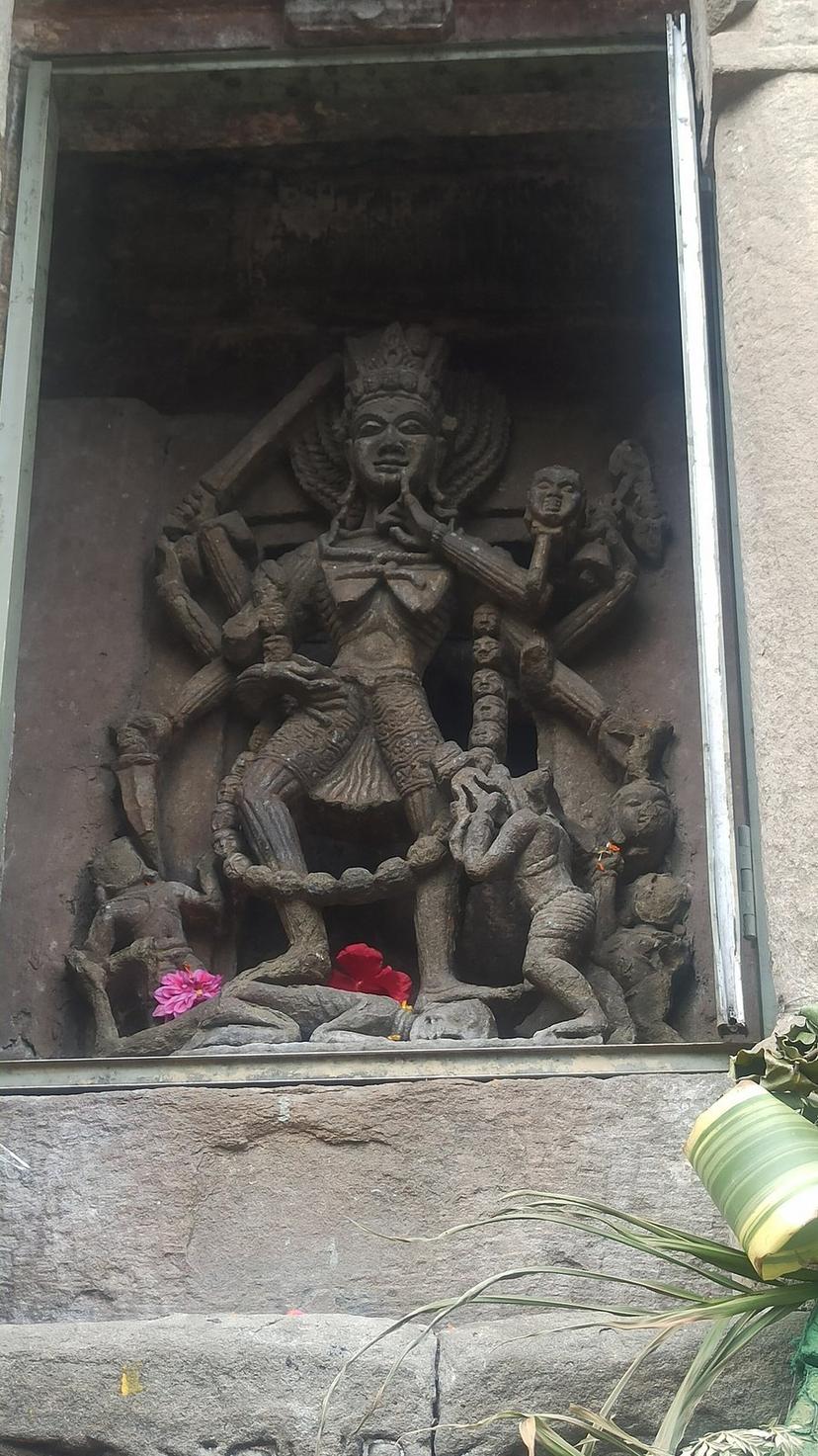
Even the building's imperfections have a fan club. Someone on r/HimachalPradesh noticed that one mandapa pillar is plain while its neighbours are carved, and the thread filled with theories. The most plausible, from u/Ruvy11: a damaged pillar was "replaced later by the authorities... with no one in the vicinity to carve the exact pattern, they simply cut the pillar in shape matching others." I cannot verify it, and I have not found an ASI note that settles the question. I like that an 821-year-old building still generates arguments.
The little train came back
This section would have read very differently a month ago. The Kangra Valley Railway, the 164 km narrow-gauge line from Pathankot up to Jogindernagar, had been cut in half since August 2022, when flash floods took out the Chakki bridge. For almost four years only the upper stub between Baijnath Paprola and Jogindernagar ran with any reliability.
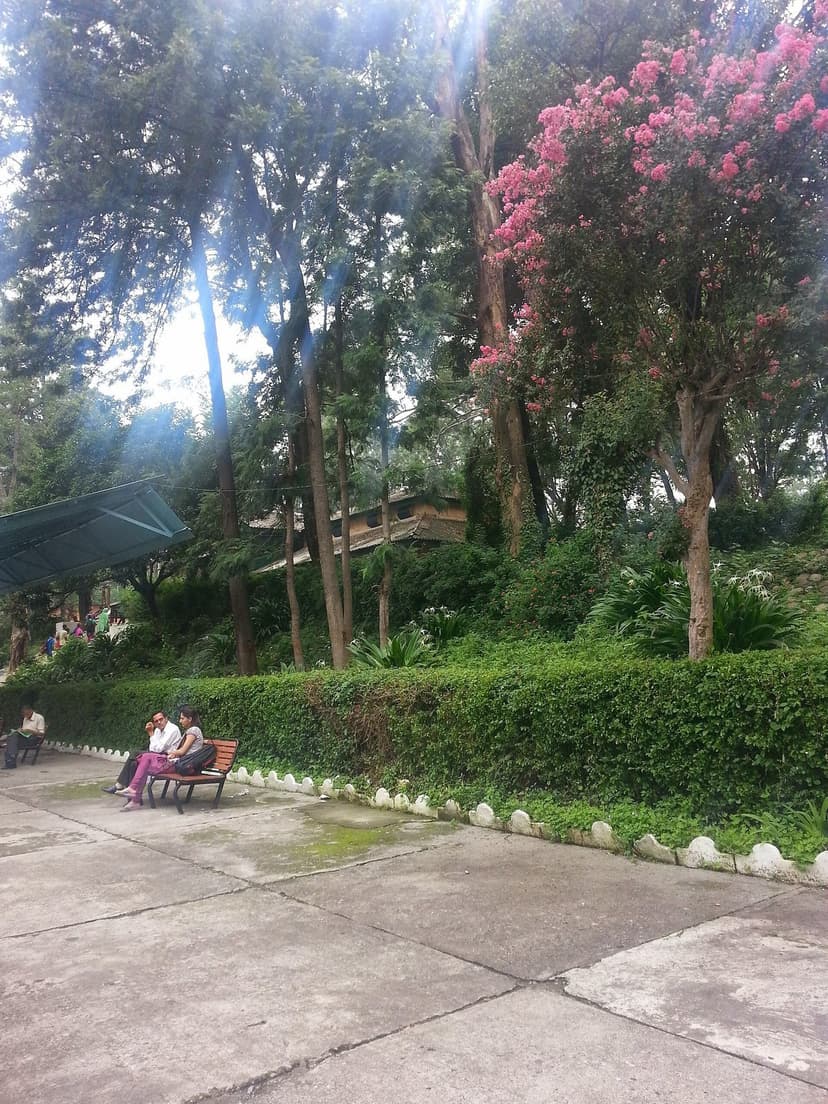
On 2 June 2026, eight days before this guide went up, the full line reopened. The Tribune covered the first trains out of Pathankot City, two seven-coach rakes at 5 and 7 in the morning, with services from the Kangra side starting at 8:30. The fare math is absurd in the best way: the bus from Pathankot to Jogindernagar costs around ₹392, the train about ₹40. Palampur has its own station out at Maranda, 4 km from the bazaar, where the platform is half garden and a crape myrtle blooms over the benches in monsoon.
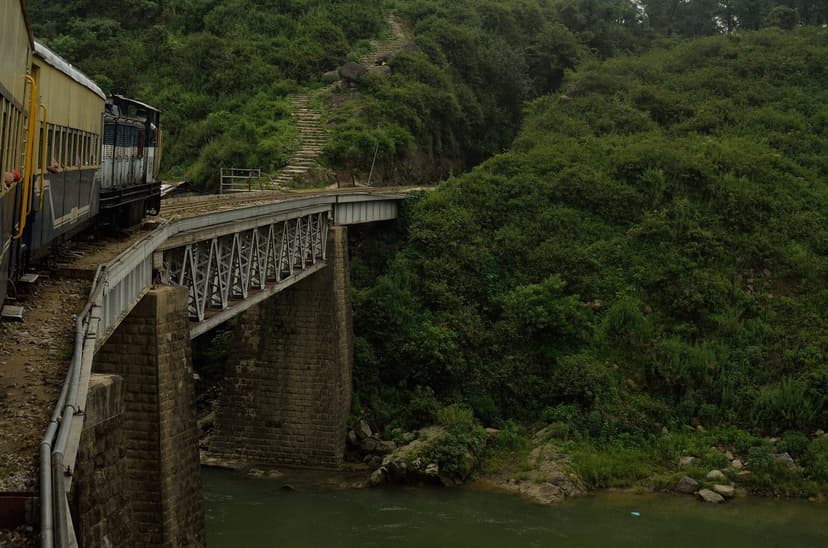
Should you ride it end to end? No. Ten-plus hours on wooden-adjacent seats is a pilgrimage, not a plan. Ride a chunk. Palampur to Baijnath Paprola gives you the Binwa bridge crossing and drops you at the temple for pocket change. We wrote a full guide to the line, its 1929 history and its two tunnels in our Kangra Valley Railway piece, which until this month had to describe the middle section in the past tense. Services on this line have died and revived twice in four years. Check the day-of status before you build an itinerary around it.
Neugal Khad and the park named for a 22-year-old captain
Two kilometres north of the bazaar the land splits open into Neugal Khad, a stream gorge fed straight off the Dhauladhar glaciers, close to 300 metres wide where the viewpoint stands. Neugal means roaring stream in Pahari, and in monsoon the town can hear it. Palampur's own name comes from palum, lots of water in the local dialect. The town is literally named after what falls out of that gorge.
The HPTDC cafe at the viewpoint, Cafe Neugal, has been pouring tea at the same railing since the 1970s, which makes it one of the oldest government cafes in the state. The menu is standard HPTDC, pakoras, thali, beer if you ask, and nobody hurries you. I rate it the single best value table in Kangra: the view does the work and the bill stays under ₹300.
Walk ten minutes upstream and you reach Saurabh Van Vihar, a 35-acre park along the stream in Bandla, entry ₹20. It is dedicated to Captain Saurabh Kalia of Palampur, who died at 22 in Kargil in 1999, the first Indian officer to report the intrusion. The bridge inside is named Tiger Hill. On r/HimachalPradesh a local, u/Training_Agency7945, called Palampur "the home of three immortal sons of India... Vikram Batra, Som Nath Sharma and Saurabh Kalia." Two Param Vir Chakras and Captain Kalia, from one tea town and its villages. The plaques here are not tourist decoration; people read them.
Now the bad news, because every honest guide needs some. The park installed an 826-metre toy train, three bogies, 36 seats, and as of Amar Ujala's last report in July 2025 it had never carried a passenger, stuck in electrical and safety clearances. I found no record that it has started since. Do not promise your kids a train ride here. Promise them the real one at Maranda station instead.
Tashi Jong and Andretta: the valley's two transplanted villages
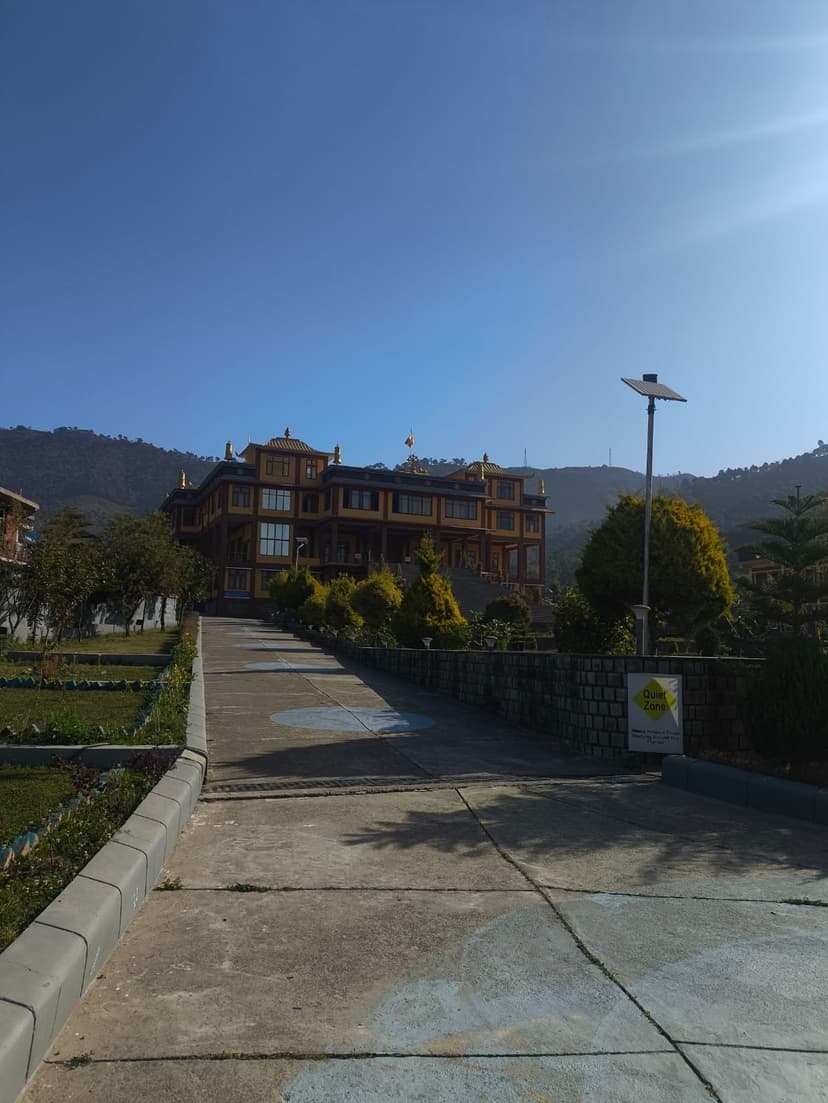
Fifteen kilometres toward Baijnath, above Taragarh, sits a village that should be on every Dharamshala-bound itinerary and is on almost none. Tashi Jong was built by the 8th Khamtrul Rinpoche, Dongyu Nyima, who left Tibet in 1959 with around 400 followers and planted a complete monastic community here: temple, stupa, retreat centre, handicraft workshop. The lineage is Drugpa Kagyu, a different school from the Dalai Lama's Gelugpa up in McLeodganj, and the community includes the Togdens, yogis with matted hair and white robes who practise Mahamudra meditation in long retreat. One of the last such communities anywhere. McLeodganj gets the buses; Tashi Jong gets the practice.
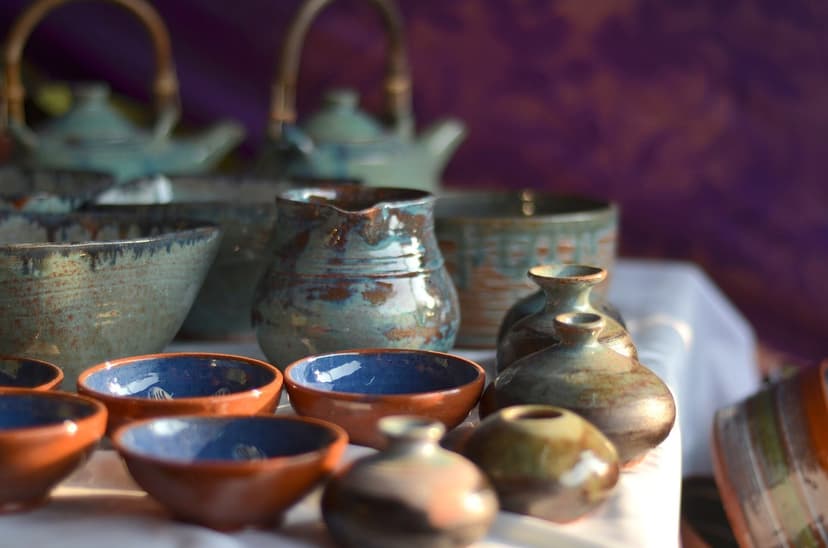
Andretta, 13 km south of Palampur, is the other transplant. An Irishwoman named Norah Richards moved here in the 1920s, built a mud-and-bamboo house she called Chameli Niwas, and turned a Kangra village into a theatre and arts colony; Punjabi theatre people still come out to stage plays at the restored house. The working draw today is Andretta Pottery, set up in 1983 by Mansimran Mini Singh, son of Delhi Blue Pottery pioneer Gurcharan Singh, where the slipware comes out in blue-green glazes you will recognise in cafes across Himachal. Call ahead if you want to throw a pot yourself; drop-ins get the gallery.
Cafes: from a 1970s government terrace to a Chennai pastry chef
Palampur's cafe scene is small, new, and oddly good, and the story it tells is of people choosing this town. Cliffy's Cafe was opened by a pastry chef who left Chennai for the Himalayas; the bakes are the real thing and the continental menu does not embarrass itself. Cloud 7 is a revolving restaurant, the only one for a hundred kilometres, and yes it is a gimmick, and yes the full-circle Dhauladhar view from a moving table is worth one overpriced coffee. Off-road Cafe and Pizzeria runs an actual Kangra tea tasting alongside its pizzas, which is more tea education than most Dharamshala cafes bother with. Coy's does colonial bones and outdoor seats.
The local pick is none of these. On a Palampur thread in r/SoloTravel_India, u/Legitimate_Power9674, who is from the town, told visitors: "do visit Nitya Cafe (offbeat) in Palampur", praising the ride out to it and the setting. Another repeat visitor, u/ghosttalks090, has a cheaper tip still: "Did you try the natural ice cream there near the government tea plantation! It's a must try." Three visits in, they called Palampur their comfort destination. That phrase fits the whole town.
For the wider context of where these fit among the state's coffee rooms, our cafe guide to every HP town covers the Palampur entries alongside their cousins in Bir and Dharamkot.
Using Palampur as a Bir base (the contrarian move)
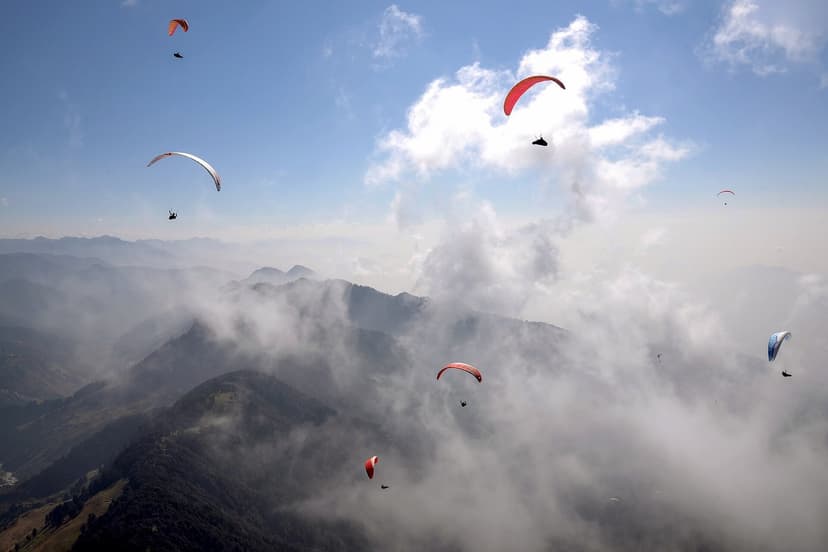
Bir, the paragliding capital, is 35 km east. Everyone stays in Bir village, which means everyone queues for the same six cafes and the same hostel beds. The contrarian move is to sleep in Palampur and day-trip to fly. Tandem flights off Billing, the 2,400-metre takeoff 14 km above Bir, ran ₹2,500 to ₹3,500 for the standard 15 to 20 minutes in June 2026, more for longer flights, ₹500 extra if you weigh over 90 kg. Season runs March to November, with October and November the prime window. The full how-to lives in our Bir Billing paragliding guide.
One Punjabi solo traveller on r/SoloTravel_India, u/Repulsivewatt, did the two towns in a single spontaneous Sunday: overnight bus from Chandigarh, "reached there at 6 in the morning, walked to the Tea Gardens, got really intrigued by the cemetery on my way. Spent 2 hours in the tea garden just admiring the beautiful Dhauladhars," then brunch at Cliffy's and a bus onward to Bir, where a no-plans sunset turned into a tandem flight. That cemetery, by the way, belongs to the old Anglican church near the tea gardens, British graves from before Independence. A local in the thread advised against photographing the graves. Take the advice; it costs nothing.
Palampur or Dharamshala? Pick your crowd tolerance
| Palampur | Dharamshala | |
|---|---|---|
| Crowds | Light all year, even in May | Heavy in season, McLeodganj jams |
| The view | Same Dhauladhar wall, over tea gardens | Same wall, over rooftops |
| Anchor experience | Tea estates, Baijnath, the little train | Dalai Lama complex, Tibetan quarter |
| Cafe scene | Small and personal, 6-7 that matter | Huge, Dharamkot is wall-to-wall cafes |
| Stay cost | Homestays avg Rs 1,926, third under Rs 1,000 | Wider range, higher floor in season |
| Nightlife | None. That is the product. | Modest, live music in Dharamkot |
| Day-trip reach | Bir 35 km, Baijnath 16 km, Andretta 13 km | Triund trailhead, Norbulingka, Kangra Fort |
| Verdict | Base here for Kangra valley breadth | Base here for Tibetan Buddhism depth |
My rule of thumb: stay in Dharamshala if your trip is about Tibetan Buddhism, the Dalai Lama's complex, or watching cricket at the world's prettiest stadium. Stay in Palampur for everything else. You can day-trip to McLeodganj in an hour; reversing that logic puts you in traffic twice a day for a quieter town you only see at lunch. Our Dharamshala guide covers that side of the wall, and the Kangra Fort and Masrur piece handles the heritage day west of both.
Three days, properly paced
- Day 1 - Tea and the gorge
Morning walk into the gardens on the Holta road (free, go before 8 for the light). Wah Tea Estate tour and tasting at Rs 200, booked a day ahead. Lunch in town, Cliffy bakes for dessert. Late afternoon at Neugal Khad viewpoint and tea at the 1970s HPTDC Cafe Neugal. Sunset from Saurabh Van Vihar, Rs 20 entry. - Day 2 - Temples and the train
Catch the narrow-gauge from Palampur Himachal station at Maranda toward Baijnath Paprola, around Rs 20-40. Baijnath Temple by late morning, carved-stone hour. Walk the Binwa ghats. Return via Tashi Jong monastery village (Drugpa Kagyu, Togden yogis, handicraft workshop) and Andretta pottery if the day stretches. Bus or taxi back. - Day 3 - Fly or slow down
Option A: day-trip to Bir, tandem off Billing at Rs 2,500-3,500, back for sunset tea. Option B: Chamunda Devi temple plus the Kangra Fort and Masrur heritage day to the west. Option C: nothing. A book, a garden bench, the natural ice cream near the government tea plantation. All three are correct.
Want a local sanity-check on your Kangra valley route? Email us your draft itinerary. We will tell you which day is overstuffed, whether the train is actually running that week, and which homestay edge of town fits your plan.
What it actually costs
| Item | Cost | Note |
|---|---|---|
| Delhi-Palampur bus, return | Rs 1,200-1,600 | Ordinary Rs 599-ish each way, Volvo from Rs 788, June 2026 fares |
| Homestay, 3 nights | Rs 3,000-6,000 | Town average Rs 1,926/night, a third of listings under Rs 1,000 |
| Food, 3 days | Rs 1,500-2,500 | Dhaba thalis Rs 120-180, cafe mains Rs 250-450 |
| Wah tea tour | Rs 200 | Per person, includes tasting |
| Local transport | Rs 600-1,200 | Local buses are pocket change, taxis for Tashi Jong/Andretta loops |
| Narrow-gauge train rides | Rs 40-80 | Cheapest heritage transport in India |
| Tandem flight at Bir (optional) | Rs 2,500-3,500 | Plus Rs 500 if you weigh over 90 kg |
| Tea to carry home | Rs 300-1,000 | Buy orthodox whole leaf at the estate, not at souvenir stalls |
Total: Rs 7,000-12,000 for 3 days, per person
Unsure if your budget maths works for the season you picked? Send us your numbers and we will flag what looks off, no charge, no newsletter ambush.
Getting there and when to come
From Delhi, the overnight HRTC route is the workhorse: 480-odd km, 10 to 11 hours, ordinary buses from roughly ₹599 and Volvos from about ₹788 as of June 2026, a dozen-plus departures daily from Kashmere Gate ISBT. Book on the HRTC portal; our HRTC guide explains the bus classes. Flying, Gaggal airport sits 40 km away with Delhi connections, fog-prone in winter. By rail, broad gauge ends at Pathankot, 112 km out, and the narrow gauge now takes over from there again, see above, slowly.
Seasons: March to June is the green season, when the gardens glow and plucking is in full swing. Post-monsoon, late September to November, brings the sharpest Dhauladhar views and the Bir flying window. July and August are heavy monsoon, beautiful and inconvenient in equal measure; the Neugal roars and the railway has historically been the first casualty of a bad cloudburst. Winter is underrated, cold mornings, snow on the wall, gardens dormant but quiet. Cross-check months in our best time to visit HP matrix.
Three things that go stale fast here: the Kangra Valley Railway timetable (resumed 2 June 2026 after four years down, history says check again), the Saurabh Van Vihar toy train (installed, never run as of July 2025), and monsoon road status on NH-154. Verify all three the week you travel, not the month before.
Where to stay
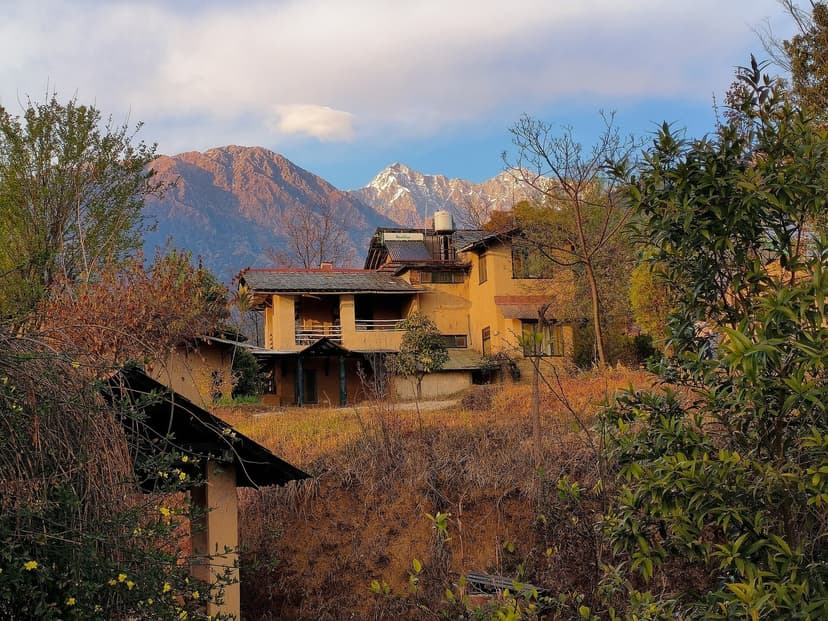
Homestays average around ₹1,926 a night across the town's listings in 2026, and a third of them sit under ₹1,000, which is the honest budget tier. Bundla Tea Estate Homestay puts you a kilometre from the bazaar with tea bushes at the fence. Budget hotels start near ₹1,352. The Lodge at Wah is the top of the pyramid, an eco-built homestay inside the working estate. August, October and November tend to carry the lowest rates. Skip anything in the main bazaar itself; the whole point of Palampur is sleeping where the gardens are, in Bandla, Kandbari or out toward Holta.
One thing I am genuinely unsure about: how long this stays true. The same Reddit threads that gush about 4 a.m. walks also carry locals worrying about flat colonies creeping into the municipal area. The tea-land protection law is the dam holding that back. Visit on the assumption that the version of Palampur in this guide has a shelf life.
FAQ
Is Palampur worth visiting?
Yes, and especially as a base. India only all-orthodox tea region, a 1204 CE temple, the Tashi Jong monastery village, a revived narrow-gauge railway and a real cafe scene, all with a fraction of Dharamshala crowds 35 km away.
What is special about Kangra tea?
Kangra produces zero CTC, only orthodox whole-leaf tea, the lone Indian region that can say so. The bushes are the original Chinese Camellia sinensis stock planted from 1852. India GI tag 2005, EU Protected Geographical Indication March 2023, the second Indian tea after Darjeeling.
Can you visit a tea factory in Palampur?
Yes. Wah Tea Estate runs a daily tour with tasting at Rs 200 per person, call ahead; the factory line works April to October. The co-operative tea factory near Rajpur also allows free visits with the manager permission.
Is the Kangra Valley Railway running in 2026?
Yes, as of 2 June 2026 the full Pathankot to Jogindernagar line is back after nearly four years cut by the 2022 Chakki bridge collapse. Fares are about Rs 40 for the long haul. The line has a history of weather suspensions, so confirm locally before planning around it.
Palampur vs Dharamshala, which should I choose?
Dharamshala for Tibetan Buddhism, the Dalai Lama complex and the cricket stadium. Palampur for tea, temples, quiet and better day-trip geometry to Bir, Baijnath and Andretta. They are an hour apart, so base in one and day-trip to the other.
How do I reach Palampur from Delhi?
Overnight HRTC bus from Kashmere Gate, 10-11 hours, ordinary from about Rs 599 and Volvo from about Rs 788 in June 2026. Or fly to Gaggal airport 40 km away. By train, broad gauge ends at Pathankot, then the narrow gauge or a 3-hour taxi.
Why does Baijnath not burn Ravana on Dussehra?
Local belief holds Baijnath as Ravana taposthali, the site of his penance to Shiva, and burning his effigy here is said to invite misfortune. It is the one town in India that sits Dussehra out, and the 1204 CE Shiva temple is the reason.
Is the toy train at Saurabh Van Vihar running?
No. An 826-metre track and a 36-seat train were installed, but as of the last credible report in July 2025 it had never operated, stuck in clearances. The park itself is open, Rs 20 entry, and worth the riverside walk.
What is Tashi Jong and is it open to visitors?
A Tibetan monastery village 15 km from Palampur, built by the 8th Khamtrul Rinpoche after 1959, of the Drugpa Kagyu lineage with the Togden yogi community. Visitors are welcome in the temple and handicraft workshop during daylight hours, dress and behave as in any active monastery.
How many days are enough for Palampur?
Two covers tea plus Baijnath. Three lets you add Bir paragliding or the Tashi Jong and Andretta loop without rushing. Workationers stay weeks; locals on Reddit pitch it as a small town with city facilities, Swiggy included, with tea gardens at the edge of it all.
Sources
- Kangra district administration, Palampur tea gardens (official)
- Wah Tea Estate, tea tour booking page (operator, ₹200 rate verified June 2026)
- HRTC online booking portal (fares verified June 2026)
- The Tribune, Kangra Valley Railway services resume after 4-year hiatus (June 2026)
- Amar Ujala, Kangra Valley toy train resumes, fares and timings (Hindi, 9 June 2026)
- European Commission IP Helpdesk, Kangra tea registered as EU GI (official, 2023)
- Amar Ujala, Saurabh Van Vihar toy train still not running (Hindi, July 2025)
- Amar Ujala, 2,300 kanal tea-garden land investigation (Hindi, 2024)
- Outlook India, Baijnath's unique Dussehra
- The Better India, The Lodge at Wah profile
- Reddit voices quoted with usernames in text: r/HimachalPradesh, r/SoloTravel_India, r/tea, r/EarthPorn threads, 2018 to 2026, permalinks on file
- Background reading: Wikipedia, Kangra tea; Baijnath Temple; Kangra Valley Railway
You Might Also Like
Triund Trek 2026: Complete Beginner's Guide (Route, Checkpoint, Camping & What Nobody Tells You)
Nine km, 1,100 m of gain, and one rule that turns hikers back: the 11:30 AM Gallu Devi check-post. Triund is HP's most-walked beginner ridge trek, with Forest Department fees halved to Rs 100 in January 2024 (per The Tribune), a HP High Court cap of 400 trekkers and 20 tents, and operator packages from Rs 999. Written from Kullu with the Tribune backbone, the Reddit deep-mine, and the four extensions almost no guide covers.
Kangra Fort and Masrur: HP's Ignored Heritage Belt (39,400 Reviews, Zero Coverage)
Three monuments inside a sixty-kilometre triangle on the Kangra plain quietly carry 39,400 Google reviews between them, yet not one comprehensive English-language travel guide exists. Kangra Fort, Masrur rock-cut temples, Chamunda Devi Nandikeshwar Dham, the Bajreshwari Shakti Peetha, Baijnath Vaidyanatha, and a one-day heritage circuit from Dharamshala. Written from Kullu, two valleys west.
Kangra Valley Railway: India's Forgotten Heritage Train (2026)
The Kangra Valley Railway is 164 km, 993 bridges, two tunnels, 4 hours from Pathankot if you could ride it end to end. As of April 2026, you can't — but here's where it stands, what's running, and why it matters.