
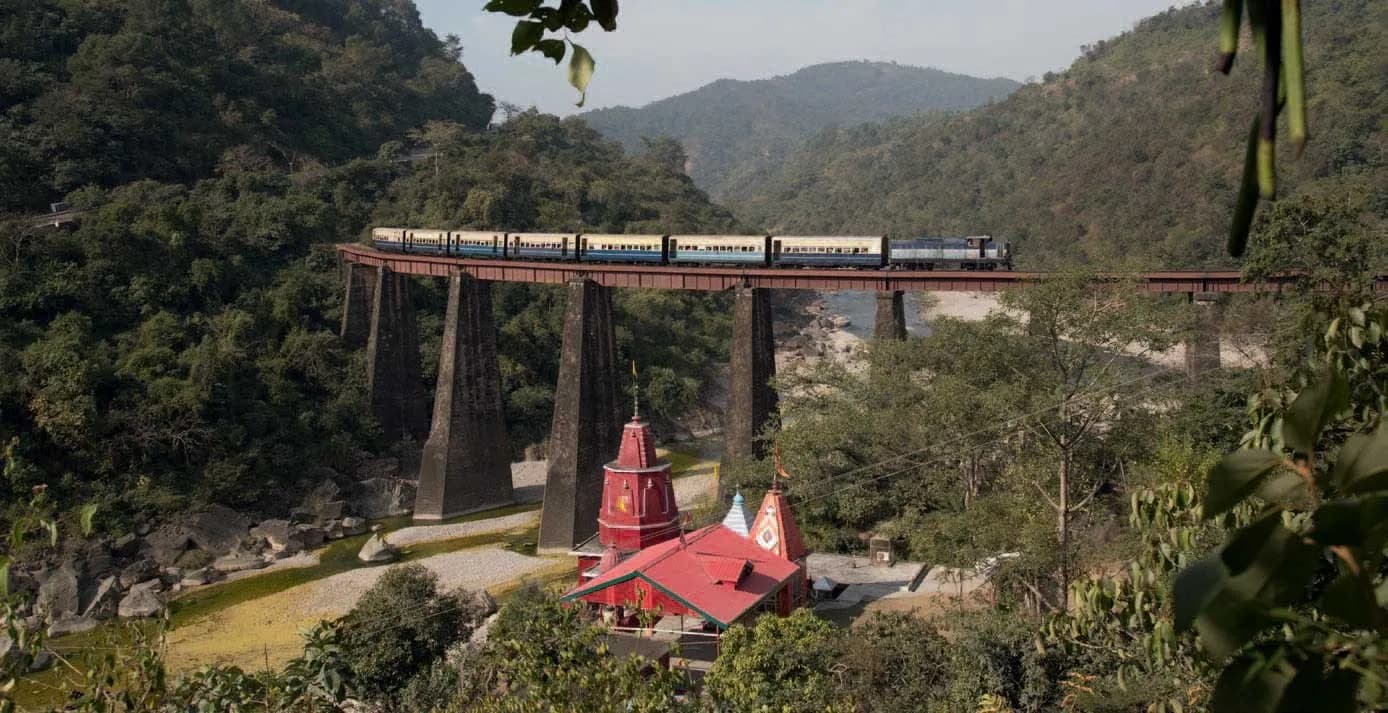
Kangra Valley Railway: India's Forgotten Heritage Train (2026)
On a hot Sunday in April 2026, a crowd from villages around Kophar Lahar near Kangra walked down to the tracks of the Kangra Valley Railway and refused to leave. Their banners said the same thing the Tribune had been writing for years and the Hindi-language papers had been writing every monsoon: train chalu karo, run the trains. The Chakki bridge had been rebuilt. The trial runs were done. The Pathankot–Joginder Nagar line still did not run.[1]
That protest, on the 5th of April, is where this story starts. Not at Pathankot Junction, not at Joginder Nagar, at a section of dormant track that hasn't carried a through-train in nearly four years. It is the strangest piece of railway in India: a route that is on UNESCO's tentative list of World Heritage Sites, that the Railway Minister has just sanctioned a Rs 30,000 crore conversion plan for, and that residents have to gather on the tracks to demand the resumption of.
I am from Kullu, not Kangra. The Beas runs past my house, not the Banganga or the Chakki. But the Kangra Valley Railway is the kind of thing that catches you whether you grew up beside its tracks or not. It is 164 km long, narrow gauge, with 993 bridges, two tunnels, four hundred and eighty-four curves. The longest narrow-gauge passenger line in India.[2] The third UNESCO-tentative mountain railway in a country with three already inscribed. And almost nobody outside the valley has heard of it.
The Kalka–Shimla toy train has 1,844 TripAdvisor reviews. The Kangra Valley Railway has 189.[3]
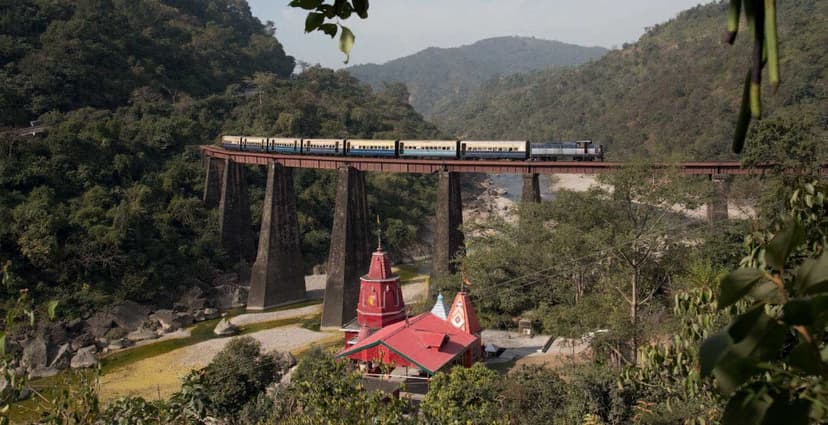
The numbers nobody can build again
What was built between 1926 and 1929 in the Kangra valley cannot be replicated. The British did not lay this line to move people. They laid it to move turbines.[4] In 1925 Raja Joginder Sen of Mandi state had partnered with a British engineer named Colonel Batty to plan a hydroelectric power house on the river Uhl at what would, with some flattery, come to be called Joginder Nagar. The freight had to come up from Pathankot in the plains. The freight was machinery, generators, turbines, sluice gates, and it weighed too much for animal columns up the existing carriage roads. So they laid track.
- Length
- 163.72 km (101.73 mi)
- Gauge
- 762 mm narrow gauge, longest in India
- Stations
- 34 stops
- Bridges
- 993
- Tunnels
- 2 (Dhundi 76 m, Daulatpur 328 m)
- Curves
- 484, sharpest radius 58.33 m
- Highest point
- Ahju station, 1,290 m / 4,230 ft
- Steepest gradient
- 1 in 25 near Baijnath Paprola
- Built
- May 1926 to April 1929
- UNESCO status
- Tentative List, added 15 April 2014 (with Matheran Light Railway) as extension to Mountain Railways of India
- Daily through-services (when running)
- 2 pairs each way; trains 52473/52474
- Pathankot to Joginder Nagar status (April 2026)
- SUSPENDED end-to-end since August 2022. Only Baijnath Paprola–Joginder Nagar runs reliably.
Freight services opened on the 1st of December, 1928. Passenger services followed in April 1929.[2] The Shanan power house opened in 1932 with an initial capacity of 48 MW, all of its generators winched up from the plains on these rails. The line had done what it was built for. Whatever else it has done since has been a kind of accidental afterlife, a heavy-engineering supply chain that the British forgot to take apart, which the locals turned into the cheapest mountain commute in the country.
The numbers behind those four sentences are not casual. Nine hundred and ninety-three bridges in 164 km is roughly one bridge every 165 metres of track. Four hundred and eighty-four curves means there is almost no straight section of any length. Two tunnels in a Himalayan railway is, by comparison, almost a rounding error: the Kalka–Shimla has 102 tunnels in 96 km.[5] The Kangra line did not punch through ridges. It threaded a single contour all the way up the valley, bending around each rib of the foothills, crossing each rivulet on its own little span.
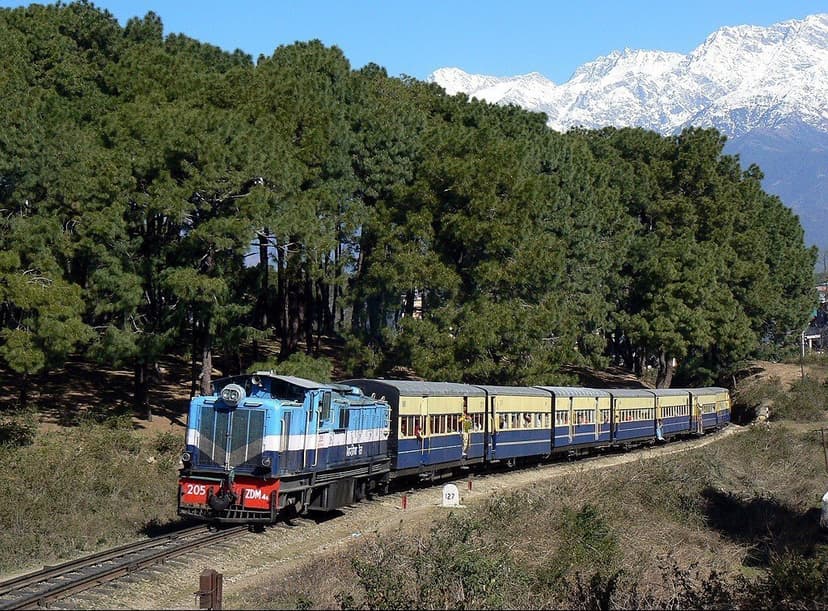
The journey on paper, and the journey now
On paper, the timetable still says this: Pathankot Junction at ten o'clock, Joginder Nagar at quarter to eight in the evening.[6] Nine hours and forty-five minutes. Train 52473 in the down direction, 52474 in the up. A second pair runs later in the day. Both trains are general second class only, no air conditioning, no reservation, no online booking. Tickets cost ten rupees on a short hop and never crossed about thirty for the whole line, even before the suspension. The IRCTC reservation counter at Palampur station, the only computerised one on the line, sat mostly idle.[7]
On the ground, in April 2026, you cannot board at Pathankot. You cannot board at Nurpur Road. You cannot board at any of the eighteen stations between Pathankot and Baijnath. The full Pathankot–Joginder Nagar service has not run since the 20th of August 2022, when the bridge over the Chakki river, bridge number 32, was washed away in a flash flood.[8] A partial restoration kept short trains rumbling between Nurpur and Baijnath through 2023 and most of 2024. Then in July 2025 a landslide near Ranital station took down a section of embankment, and even that partial service stopped.[9]
Status as of April 2026, read this before you book a ticket
The Pathankot–Joginder Nagar through-service is suspended. The new 560-metre Chakki bridge (6 piers, 2 abutments, reconstruction begun May 2023) was inspected in March 2025 and trial-ran in November 2025. The route is still not open end to end. The Nurpur–Baijnath partial section has been down since the July 2025 Ranital landslide. As of mid-April 2026, only the upper section, train 52473 from Baijnath Paprola to Joginder Nagar, about 22 km, is running with a general-class fare of ₹10. Check at Baijnath Paprola, Palampur, or Joginder Nagar station counter the day you want to travel. Do not assume the timetable on aggregator sites is current.
So the railway as a 164 km experience is, for now, theoretical. What you can ride is the last hour of it, Baijnath Paprola up to Ahju, the highest point on the line at 1,290 metres, then down into the small bowl of Joginder Nagar at 1,184. The journey will take you a little over an hour each way. The ticket will cost less than a cup of coffee in Dharamshala. The train will be almost empty. The 1929 mechanical signalling system at each halt will still be working. The conductor will still hand-stamp a cardboard ticket. The Dhauladhar will still be on your left.
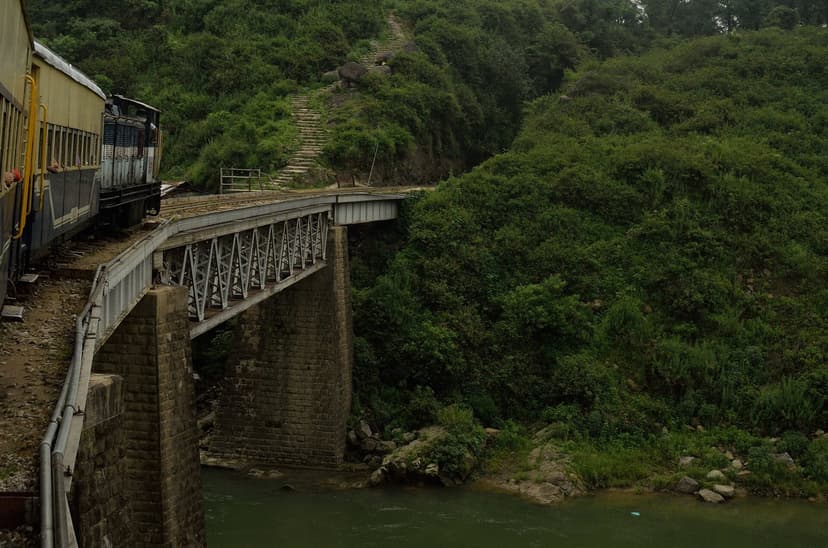
The full route, station by station
Even with most of it dark, the line is worth knowing in full, because the bigger argument right now, gauge conversion or heritage preservation, is about all of it. So here is the line as it stands on paper, west to east, with the stops that matter most.
Pathankot Junction, kilometre 0
The line begins at the corner of a much bigger station. Pathankot Junction is a broad-gauge hub for Punjab, the Jammu line, and the Delhi services. Across the platforms, on a separate forecourt, the narrow gauge has its own small terminal and a working steam-era loco shed.[10] A heritage steam engine has been restored there, kept for chartered runs. On a normal weekday it sat ready, waiting for the all-clear that has not come. Pathankot is at 384 metres above sea level; from here the line will climb 800 metres in 164 km.
Nurpur Road, kilometre 20, and the Chakki bridge
The first proper Himachal Pradesh station. The bridge over the Chakki river just before Nurpur Road is the one whose collapse on the 20th of August 2022 cut the line in two. The new bridge is 560 metres long across six piers and two abutments, much larger than the structure it replaced. Reconstruction began in May 2023; the inspector approved it in March 2025; trial runs followed in November 2025. As of April 2026 the bridge is ready and the trains are not running over it.[11]
Jawanwala Shahr to Nagrota Surian, the 1973 realignment
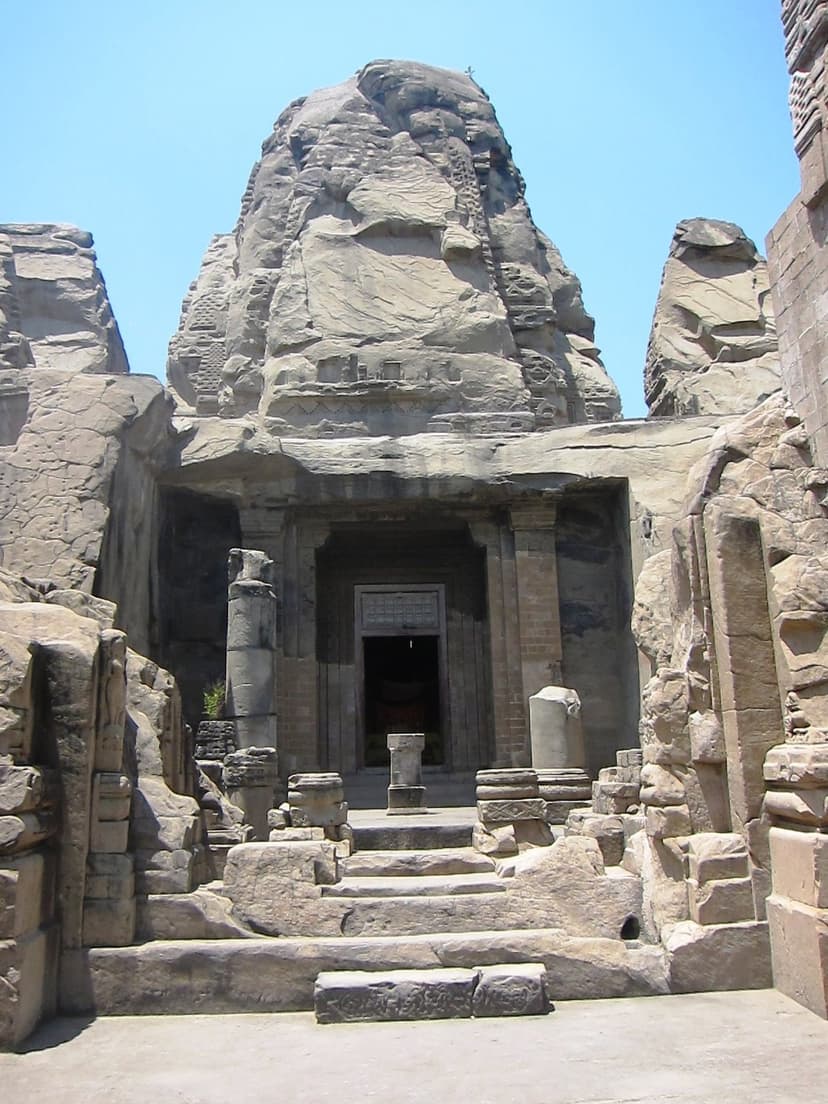
Twenty-five kilometres of the original line lie under Maharana Pratap Sagar, the reservoir created when the Pong Dam was finished in 1974. The realigned track skirts the southern edge of the reservoir; you can see the water from the train. The stop for Masrur is Nagrota Surian. The eighth-century rock-cut temple complex at Masrur is fifteen kilometres from the station, carved out of a single sandstone outcrop, and it is one of the most extraordinary monuments in north India. It was damaged by the 1905 Kangra earthquake; large fragments of its shikhara lie around it like broken teeth.[12]
Guler and Jawalamukhi Road
Guler is where Pahari miniature painting got going in the eighteenth century, the Kangra-school style that British administrators later collected by the trunkful. The village itself is small and dusty; you would not stop unless you were looking for it. From Jawalamukhi Road, twenty kilometres south, the Jwalamukhi shakti peeth burns a low blue flame fed by a natural-gas vent in the rock. There is no idol; the flame is the deity. It is one of the 51 peethas, mentioned in the Mahabharata, and it has been worshipped continuously for centuries.
Kangra and Kangra Fort
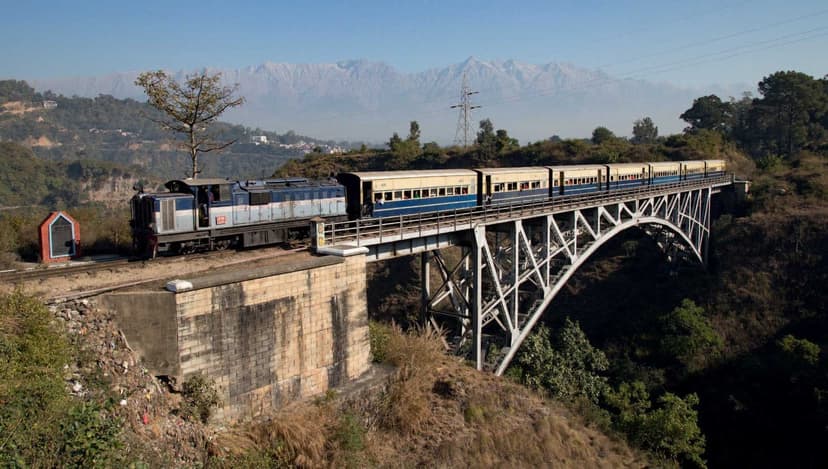
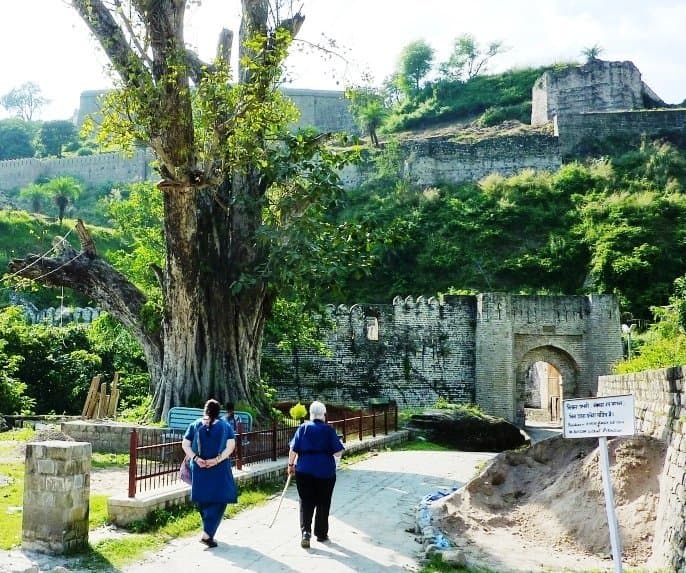
The station that gives the valley and the railway their name. Kangra Fort, on a ridge above the river Banganga, is one of the oldest forts in India, Alexander the Great's chroniclers mention it. Mahmud of Ghazni sacked it in 1009 CE. The Mughals took it. Ranjit Singh took it. The 1905 quake finished it off.[13] The ruin is still huge and steep. Five kilometres of single-track Banganga gorge separate the fort from the town. Just east of Kangra station the line crosses the Reond Nullah on a steel arch bridge that, when you cross it, gives you maybe the best four seconds of railway scenery in north India, the Dhauladhar comes up over the rim of the gorge and stays in your window for the rest of the day.
Palampur, kilometre 128, the railway's office
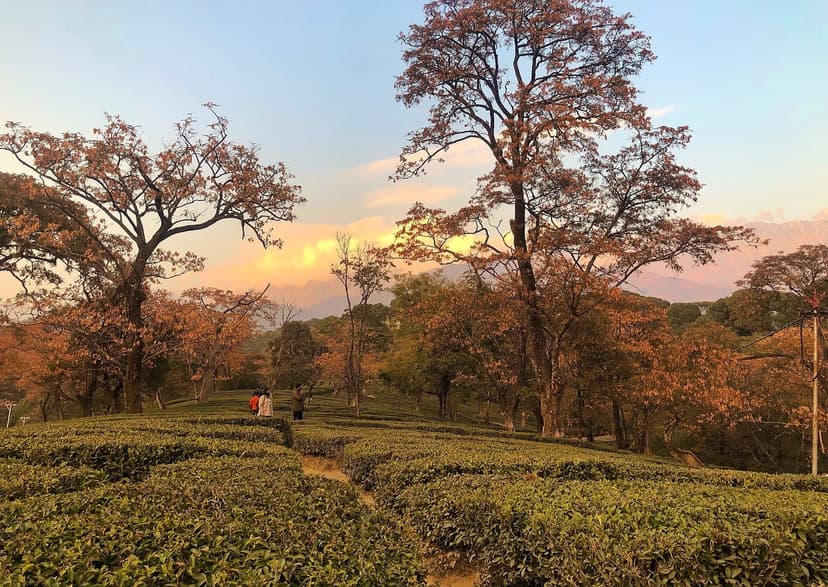
Palampur is the Kangra Valley Railway's working headquarters. It is also where the tea belt begins. The plantations were laid out by British planters in the 1850s; today the cooperative at Wah Estate still produces orthodox-only tea, the way it was made before mechanisation. From Palampur the line goes hard east toward Baijnath. The Dhauladhar runs alongside the whole way; on a clear morning you can pick out individual snowfields.
Baijnath Paprola, kilometre 142
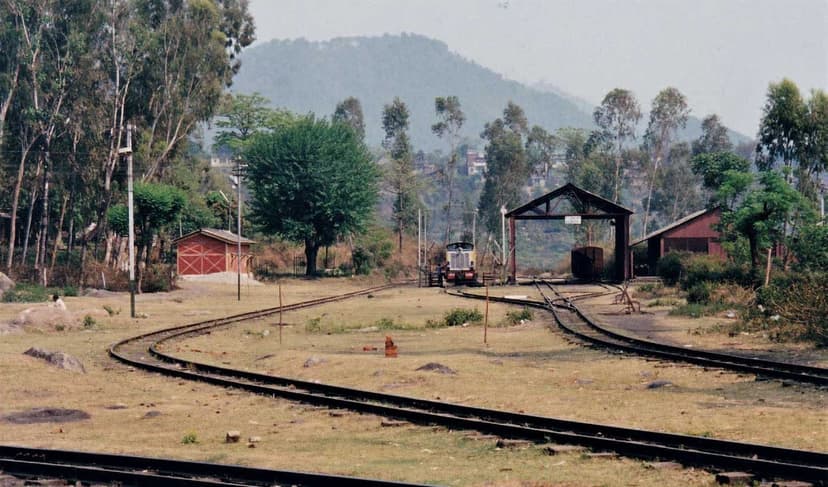
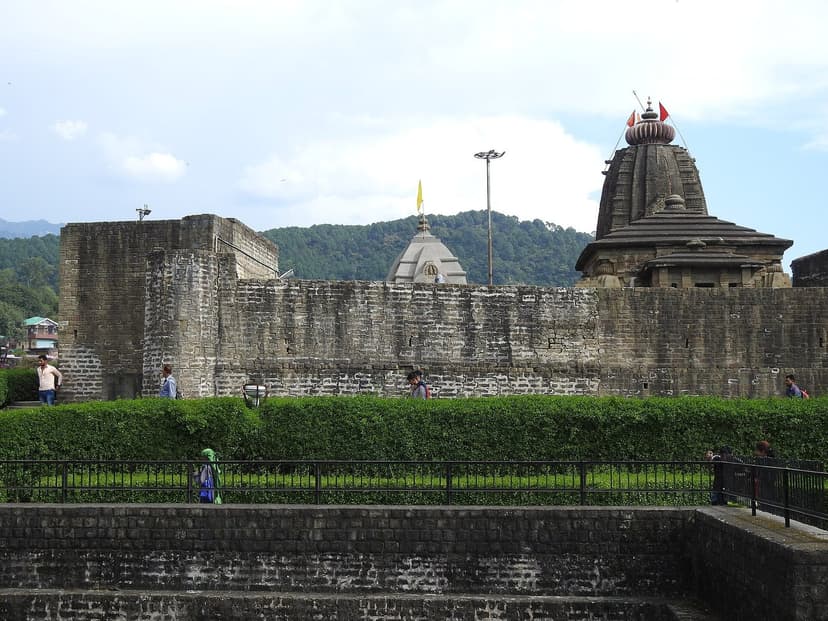
This is where the through-trains used to terminate while crews changed. Most still do, on the rare runs that happen. Baijnath Paprola is one of those vest-pocket Indian Railways yards: a Y-shaped reversing triangle, a small engine shed, three platforms, a tea stall. The locomotive sits on the Y for ninety minutes while you walk the four hundred metres to the Baijnath Vaidyanath temple. The temple is from 1204 CE in the Nagara style; the carvings on its walls are the kind you would queue for in Khajuraho. Here you can stand in front of them alone. The Baijnath Paprola station was redeveloped in 2024-25 under the Amrit Bharat Station Scheme, a small upgrade, new façade, a clean waiting room.[14]
Ahju, kilometre 152, top of the line
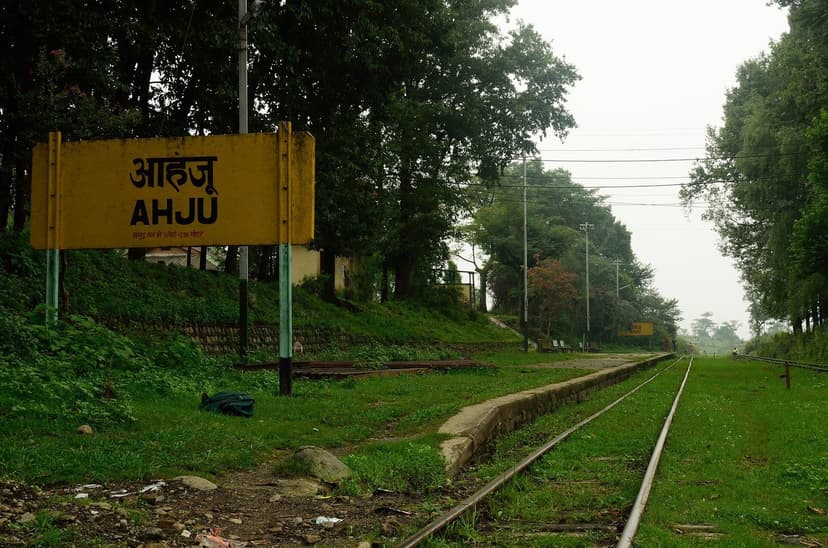
Ahju is a single platform with a yellow board, a small shelter, and the steepest gradient on the line behind you. At 1,290 metres it is the highest point on the Kangra Valley Railway. From Ahju you can walk fifteen kilometres east to Bir Billing, the paragliding capital of Asia, the same mountains you have been watching from the train are the ones pilots launch from. Bir is a different country in tone: foreign travellers, kombucha cafés, the Tibetan colony at Chowgan. But from Ahju it is closer than Kangra Fort is from Kangra station, and it is the easiest way to combine the railway with the Dhauladhar's other big claim on the imagination.
Joginder Nagar, kilometre 164, the reason all this exists
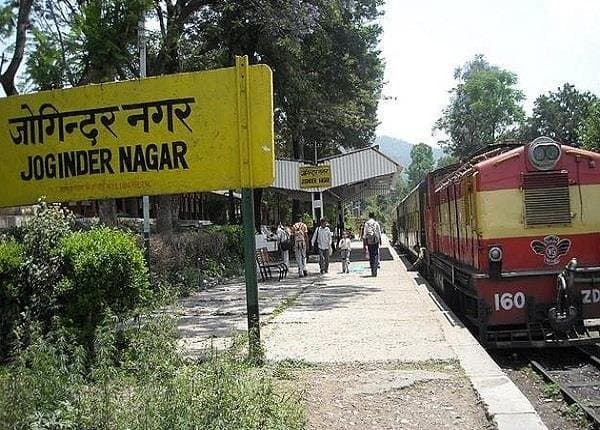
And then, twelve kilometres down the hill from Ahju, the terminus. Joginder Nagar town is small. The station is small. Both exist because the British wanted the hydroelectric power. The Shanan power house, just outside town, was commissioned in 1932. The British lease on Shanan ran for ninety-nine years and expired in March 2024; Himachal Pradesh has been asking Punjab to hand the project back ever since, in language that you don't usually hear in inter-state correspondence. Chief Minister Sukhu's October 2024 line was that chote bhai ko saunp deni chahiye, Punjab should return it to its younger brother.[15]
The Kangra Valley Railway vs the Kalka–Shimla
Anyone who has heard of the KVR has compared it to its more famous cousin. The comparison is worth doing properly, because the two lines are not really the same kind of thing.
| Parameter | Kangra Valley Railway | Kalka–Shimla Railway |
|---|---|---|
| Length | 164 km | 96 km |
| Year opened | 1929 | 1903 |
| Gauge | 762 mm narrow | 762 mm narrow |
| UNESCO status | Tentative list (since 15 Apr 2014) | Inscribed in 2008 |
| Tunnels | 2 | 102 |
| Bridges | 993 | 864 |
| Highest point | Ahju, 1,290 m | Shimla, 2,076 m |
| Journey time | ~10 hours | 5 to 7 hours |
| Second-class fare | Rs 10 to 30 | Rs 280 to 700 |
| TripAdvisor reviews | 189 | 1,844 |
| Service status April 2026 | Only Baijnath–Joginder Nagar running | Full service, often sold out |
| Experience | Wide valley, tea gardens, temples, almost empty | Tunnel-heavy hill climb, pine forests, busy |
If the Kalka–Shimla is engineering drama, 102 tunnels, the relentless climb to a hill capital, the queue of brass-fittinged Vista Domes, the KVR is landscape poetry. Wide. Long. Quiet. It does not crash through ridges; it follows the topography. It is also, for now, half-broken in a way the Shimla line has never been.
The 1942 dismantling, and the Lal Bahadur Shastri restoration
It was not the first time the line has been silent. In 1942, the British dismantled everything beyond Nagrota, about a hundred kilometres of track, and shipped the rails to the Middle East war front.[16] The valley went without its train for twelve years. The line above Nagrota came back only in 1954, on the 15th of April, when Lal Bahadur Shastri, then Union minister for railways, twelve years before he became prime minister, formally restored it.
The British dismantled the line in 1942 and shipped the rails to the Middle East. The Kangra Valley waited twelve years for its train. It was Lal Bahadur Shastri who handed it back, in 1954.
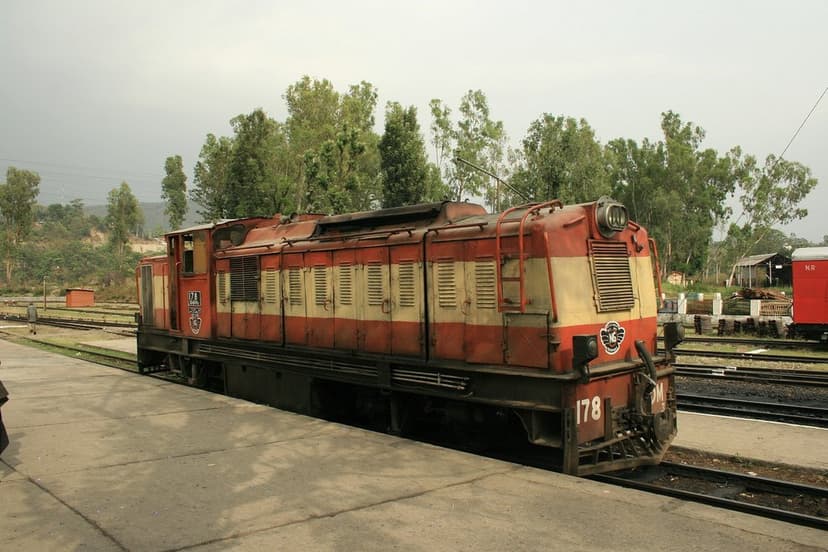
The line ran reasonably continuously through the next sixty-eight years. Steam ended in 1976 when ZDM-class diesel locomotives took over. Solar panels were fitted on nineteen narrow-gauge coaches in the late 2010s as a trial. Then came August 2022.
The disaster years: 2022 to 2026
On the 20th of August 2022 the Chakki river, which had run flat and small under bridge number 32 for nearly a century, came down in a flash flood that took out the bridge in a single afternoon.[8] The cause was a cloudburst higher in the catchment. The line was cut in half between Pathankot and the rest of itself.
What followed was, by Indian Railways standards, fast, and, by community standards, glacial. The Northern Railway commissioned a new bridge. Reconstruction began in May 2023. The new bridge was 560 metres long, six piers, two abutments, a much bigger structure than the original. The inspector signed it off in March 2025. Trial trains ran in November 2025.[17] Locals in the valley wrote in to Himachal Headlines: kangra valley's lifeline set to return after two years. Tribune India said the same. Then nothing.
While the Pathankot end was being rebuilt, a partial service had been running on the upper sections, Nurpur to Baijnath Paprola, for about two years. That partial service was the lifeline that kept the railway in the daily life of the valley. In July 2025 a landslide near Ranital station took it down too.[9] That second cut is the one that hurts most. The railway has been kept off the rails not by one disaster but by a slow chain of them.
By April 2026, when those villagers walked down to Kophar Lahar, the new bridge had been ready for five months. The line, except for that single upper section between Baijnath Paprola and Joginder Nagar, had not run a passenger service in almost a year. Train chalu karo. The Hill Post quoted the residents directly: the suspension was "unjustified," and they were accusing the railway of "negligence and apathy toward a vital public lifeline."[1]
The fight you cannot see from inside the carriage
There is a second story running in parallel, and it is the one that will eventually decide what becomes of all 993 of those bridges.
In September 2025 a railway survey for converting the 195-km Pathankot–Joginder Nagar line from 762 mm narrow gauge to broad gauge was completed and presented to Union Railway Minister Ashwini Vaishnaw. The headline number was Rs 30,000 crore. The technical numbers were seven new tunnels and 1,150 small and major bridges on a 195-km broad-gauge alignment.[18] The Detailed Project Report is now being prepared. Once approved, it will go to NITI Aayog and the Ministry of Finance for clearance.
What gauge conversion would actually do
Broad-gauge means 1,676 mm, more than twice the track width of the current 762 mm. The existing alignment cannot be widened in place; you cannot just relay rails farther apart on bridges built for narrower trains. You would need 1,150 new bridges, seven new tunnels, in many places a new alignment, and you would lose the 1929-era stations, the mechanical signalling, the small Y triangles. The Kangra Valley Railway as a heritage object would, in effect, cease to exist. In return, the valley gets a faster train, possibly direct broad-gauge connectivity to Delhi, and an end to the rebuild-from-flood cycle. Local MPs and most residents support conversion. Heritage advocates and the UNESCO bid say it would amount to demolition. The DPR is still pending. The two arguments are both worth taking seriously.
The heritage advocates point out, with some force, that you cannot have both. UNESCO inscription requires demonstrable preservation of original engineering. A broad-gauge replacement would mean the narrow gauge is gone forever, with it the place on the tentative list and any plausible inscription. The article in Hill Post from 2013, written by a Himachali, put it bluntly: the heritage tag would thwart the line's chances of expansion forever because of preservation constraints.[19]
The locals' side is honest too. Their lives do not turn on UNESCO. They turn on whether goods can move down the valley quickly, whether students can get to college, whether emergency services can reach a town in flood-time. The 762 mm line, even at its busiest, ran four passenger trains a day at 16 km/h. A broad-gauge line could run twenty trains a day at 60. The Tribune India editorial line in 2024-25 has been broadly sympathetic to conversion.[20] The Daily Excelsior coverage of Vaishnaw's announcements has framed conversion as overdue.[21]
Both arguments are right about their own thing. Heritage costs convenience. Convenience costs heritage. The DPR will eventually arrive on a desk, somebody will tick a box, and the valley will get one of the two.
How to actually ride what is running, in 2026
If you are reading this in April 2026 and you want to ride the Kangra Valley Railway, the honest answer is: you can, but only on a short section, and you should plan around that.
| Item | INR | Note |
|---|---|---|
| Train ticket (Baijnath Paprola - Joginder Nagar, return) | 20 | General class only, no online booking, cardboard ticket |
| Bus or taxi to Baijnath Paprola from Dharamshala | 200-450 | HRTC bus Rs 80-120, shared cab Rs 450 |
| Lunch at Baijnath Paprola station or town | 120-250 | Hot paranthas on the platform during a 1.5-hour wait, or sit-down meal in the bazaar |
| Baijnath Vaidyanath temple visit | 0 | Free, ASI-protected |
| Side trip to Bir Billing (taxi from Baijnath) | 400-700 | 15 km, half hour each way; reasonable as a half-day add-on |
| Overnight homestay Baijnath or Bir | 1,200-2,500 | Bookable on Airbnb, Booking, MakeMyTrip |
| Snacks, tea, miscellaneous | 200-500 | Tea stalls at every station and most train cars |
Practical notes for the section that is still running:
- Where to start: Baijnath Paprola, not Joginder Nagar. The station has more frequent buses, more food, and the Vaidyanath temple is a five-minute walk away if your train is delayed.
- How to get tickets: Counter only. There is no online booking for the regular service. The Palampur computerised reservation counter has not been useful for through-tickets since the Pathankot end shut. Just turn up forty-five minutes before departure.
- Which side to sit on: If you are travelling from Baijnath Paprola to Joginder Nagar, sit on the right. The view is over Bir Billing and the Dhauladhar foothills. If you ride down (Joginder Nagar to Baijnath), sit left for the same view.
- What to bring: Water, a light jacket (Ahju at 1,290 m can be five degrees cooler than Baijnath), a phone with offline maps because the signal at Ahju is poor on most carriers, and patience. The train averages 16 km/h and stops at every halt.
- Food: Hot paranthas at the Baijnath Paprola platform while the loco shunts on the Y. There is no food sold inside the train.
- Best season: October to May. Avoid monsoon (July to September) when landslides are routine and even the upper section can shut. February to early April gives you the cleanest Dhauladhar views.
- Best time of day: Morning. The light on the Dhauladhar is best between 7 and 10 AM and the haze rises after noon.
The other half of the Kangra Valley experience: where to break the journey
If the full Pathankot–Joginder Nagar route returns in 2026 or 2027 (and there is no announced date for that, only hope), the right way to ride it is in two days, not one. The full timetable is ten hours of continuous travel, which is the kind of thing you only do if you must. Break it.
- Day 1, Pathankot to Kangra (about 90 km, six hours when the line is open): board the 10:00 from Pathankot, stop at Nurpur Road for the fort, carry on to Nagrota Surian and take a half-day taxi to Masrur (about Rs 800 to 1,200 return), then spend the night at Kangra town. The HPTDC Hotel Dhauladhar has clean rooms from Rs 1,500, or stay at a homestay below the fort.
- Day 2, Kangra to Joginder Nagar (about 70 km, four hours): catch the morning service east. Stop at Palampur for an hour to walk the tea gardens, continue to Baijnath Paprola, get out for the temple during the 1.5-hour layover. Up to Ahju and over to Joginder Nagar by late afternoon. Stay overnight at Joginder Nagar, or push 25 km to Mandi for HRTC bus connections.
- Add-on, Bir Billing (one night): from Baijnath Paprola take a 15-km taxi to Bir, stay one night, paraglide off Billing in the morning if the weather is right, return to Baijnath the same day.
- Add-on, Kangra Fort and Brajeshwari Devi (one day from Kangra): walk the fort in the early morning, Brajeshwari Devi temple is a 20-minute auto from Kangra Mandir station. Both fit in a half-day.
Train to flight, from Ahju to Billing
If you want the most cinematic thing the Kangra Valley Railway can give you, this is it. Take the morning Baijnath–Joginder Nagar train. Get off at Ahju, kilometre 152, the highest point on the line, 1,290 metres. Walk down to the road, take a shared taxi the fifteen kilometres east to Bir. By noon you can be at the Billing takeoff at 2,400 metres. By two in the afternoon you are flying back down over the same valley the train brought you up.
The drop between Billing takeoff and the Bir landing field is about a kilometre vertical. The tandem flight costs about three thousand rupees in 2026 and lasts twenty to thirty minutes depending on conditions. It is the closest you get in north India to the kind of mountain-day-out that takes you from train to glider to bed in twelve hours. Most foreign travellers in the Kangra Valley do one of these two things. Almost nobody does both.
Want help planning a Kangra Valley + Bir Billing trip?
Refuje runs slow trips out of Bir and across the Kangra Valley. If you want a day on the train, a day on the temples, and a day in the air, written around what is actually running rather than what the timetable promises, write to us at hi@refuje.com.
What the railway means, while it sits quiet
It is easy to write about the Kangra Valley Railway as a thing about to be lost. Most coverage does. The Tribune, the Hill Post, even Himachal Headlines, they all return to the same minor-key chord: ninety-seven years old, almost gone, save it. The Reddit threads on r/IndiaSpeaks describe it as the kind of line that is "not a typical railroad in any capacity, especially not in India."[22]
I want to put a different note in. The line is not gone. The new Chakki bridge is built. Trial trains have already run on it. The Baijnath–Joginder Nagar upper section runs every day. The Amrit Bharat upgrade at Baijnath Paprola is being finished. There are people in the Northern Railway's Firozpur division, the engineers who ran the November 2025 trials, the District Kangra office that keeps its tourism page on the railway updated, for whom restoring this line is not an academic question. They want it back. The protest at Kophar Lahar in April is not the railway dying. It is the railway being asked, by the people who live next to it, not to.
I'm from Kullu, not Kangra. But the Kangra Valley Railway is the kind of thing that catches you whether you grew up beside its tracks or not. Nine hundred and ninety-three bridges in 164 km. The longest narrow gauge in India. The train you have to fight for.
The right time to ride this railway is right now, even partial. Take the upper section. Walk to Baijnath. Stand on the Y at Baijnath Paprola while the diesel shunts. Get off at Ahju and take the taxi to Bir. If the rest of the line comes back next year, ride the whole thing then. If the gauge conversion goes through in 2030 or 2032, you will have ridden a piece of railway that no longer exists.
Ninety-seven years ago this April, a freight train climbed from Pathankot to Joginder Nagar for the first time, carrying turbines for a power station that does not even belong to Himachal Pradesh any more. You can still ride pieces of that route, and most of it is the same, same gauge, same alignment, same Dhauladhar in your window. The valley below has not refused the future, exactly. The future has just not yet refused the valley back.
Frequently asked questions
Is the Kangra Valley Railway running in 2026?
Partially. As of April 2026 the full Pathankot to Joginder Nagar through-service has not run since August 2022 because of the Chakki bridge collapse. The new 560-metre Chakki bridge was rebuilt by November 2025 and trial-ran successfully, but full restoration has not been announced. Even the partial Nurpur to Baijnath service halted in July 2025 after a landslide near Ranital station. Only the upper section, train 52473 from Baijnath Paprola to Joginder Nagar (about 22 km), is currently running daily.
How much does a Kangra Valley Railway ticket cost?
Tickets are general-class only, no air conditioning, no online booking. The fare on the currently running Baijnath Paprola to Joginder Nagar section is about Rs 10. The full Pathankot to Joginder Nagar fare, when the through-service ran, was about Rs 30. Tickets are sold at station counters as cardboard stubs. There is a computerised reservation counter at Palampur but it is mostly used for connections to other Indian Railways routes.
Why is the line called narrow gauge and how does that matter?
Narrow gauge here means 762 mm between the rails, less than half the width of standard broad gauge (1,676 mm). It allows tighter curves and steeper gradients, which is why the line could climb 800 metres into the Kangra valley with only two short tunnels. The current debate is whether to convert the line to broad gauge: a survey was completed in September 2025 with a Rs 30,000 crore cost estimate. Conversion would mean rebuilding the line from scratch, with seven new tunnels and 1,150 new bridges on a 195 km alignment.
How does the Kangra Valley Railway compare to the Kalka Shimla toy train?
Both lines are narrow gauge (762 mm). The Kangra Valley Railway is 164 km long with two tunnels and 993 bridges, ascending to 1,290 m at Ahju. The Kalka Shimla is 96 km, with 102 tunnels, 864 bridges, ascending to 2,076 m at Shimla. The Kalka Shimla was inscribed on UNESCO World Heritage in 2008; the Kangra Valley is on the tentative list since April 2014. The Kalka Shimla is busy and runs reliably; the Kangra line is almost empty and currently runs only on the upper section.
Where should I sit on the Kangra Valley Railway for the best views?
Travelling east (Pathankot to Joginder Nagar) sit on the left side for the Dhauladhar range. The mountains are most visible from Kangra station onwards. Travelling west (Joginder Nagar to Pathankot), sit on the right. The Reond Nullah bridge east of Kangra and the section between Palampur and Baijnath Paprola give the best views. Since the train is rarely crowded, you can move freely between sides.
What temples can I visit from the Kangra Valley Railway?
Four major temple complexes are within reach. Masrur rock-cut temples (eighth century, 15 km from Nagrota Surian station). Jwalamukhi shakti peeth (eternal flame, 20 km from Jawalamukhi Road). Brajeshwari Devi at Kangra town (Kangra Mandir station). Baijnath Vaidyanath temple (1204 CE Shiva temple, adjacent to Baijnath Mandir halt). Chamunda Devi temple is also accessible from Chamunda Marg halt, about 10 km uphill.
Can I combine the Kangra Valley Railway with paragliding at Bir Billing?
Yes, easily. Ahju station at 1,290 m, the highest point on the line, is 15 km from Bir, the paragliding capital of Asia. Take the morning Baijnath Paprola to Joginder Nagar train, get off at Ahju, take a shared taxi 15 km east to Bir. By noon you can be at the Billing takeoff at 2,400 m. Tandem paragliding costs about Rs 3,000 in 2026 and lasts 20 to 30 minutes.
What is happening with the gauge conversion?
As of September 2025 the railway survey for converting the line from narrow gauge to broad gauge was completed and presented to Railway Minister Ashwini Vaishnaw. The estimated cost is Rs 30,000 crore for a 195-km broad-gauge alignment with seven new tunnels and 1,150 small and major bridges. A Detailed Project Report is now being prepared, which will then go to NITI Aayog and the Ministry of Finance for clearance. There is no timeline for actual conversion work to begin.
Will UNESCO designation save the narrow gauge?
It is on the tentative list as part of the Mountain Railways of India extension nomination (added 15 April 2014, along with Matheran Light Railway). Inscription requires demonstrable preservation of original engineering, which would in effect rule out broad-gauge conversion. Heritage advocates have urged FSII and ICOMOS to push for full inscription on this basis. Whether UNESCO inscription comes before or after the gauge conversion decision is the open question.
What was Shanan and why was the railway built for it?
Shanan was a 48 MW hydroelectric power house planned by Raja Joginder Sen of Mandi state with British engineer Colonel Batty in 1925, drawing water from the river Uhl near Joginder Nagar. Heavy turbines and generators had to be hauled up from Pathankot in the plains, so the Kangra Valley Railway was built specifically as a freight line to move the machinery. It opened for freight in December 1928, six months before the passenger service. Shanan commissioned in 1932. The British lease on Shanan ran ninety-nine years and expired in March 2024, after which Himachal Pradesh has been asking Punjab to hand back the project.
If you want to ride before it changes
The Kangra Valley Railway is at a fork. The narrow gauge could come back end-to-end if the Chakki bridge restoration is signed off, or it could be replaced by broad gauge over the next decade. Either way, the line you see today, 1929 stations, mechanical signalling, cardboard tickets, ZDM diesels, 16 km/h, will not be the line you see in 2030. If you want a Kangra Valley itinerary written around what is actually running, with photos, train ticket logistics, and homestay suggestions, write to hi@refuje.com.
Sources
- Hill Post, "Kangra Valley Residents Demand Restoration of Rail Services," April 2026. hillpost.in + Tribune India, "Kangra Valley residents protest against delay in restoration of train services," 5 April 2026. tribuneindia.com
- Wikipedia, "Kangra Valley Railway." en.wikipedia.org, 163.72 km, 762 mm, 993 bridges, 2 tunnels (Dhundi 76 m, Daulatpur 328 m), 484 curves, construction 1926-29.
- TripAdvisor reviews, comparison of Kangra Valley toy train and Kalka-Shimla toy train review counts. tripadvisor.in
- Wikipedia, "Kangra Valley Railway" + jogindernagar.com history page. The line was built specifically to haul machinery for the Shanan hydroelectric project on the river Uhl.
- Wikipedia, "Kalka-Shimla Railway." en.wikipedia.org
- Train 52473/52474 schedule on indiarailinfo, ixigo, erail.in. Pathankot 10:00 - Joginder Nagar 19:45 (when running end-to-end).
- District Kangra official tourism page. hpkangra.nic.in, confirms cardboard tickets, station-counter only, IRCTC computerised counter at Palampur.
- UNI India, "Chakki bridge rebuilt, Kangra Valley Railway set for full operations." Tribune India, "Landslides disrupt historic Kangra valley rail services." Chakki bridge collapse 20 August 2022.
- Tribune India, "Landslides disrupt historic Kangra valley rail services." July 2025 Ranital landslide halted Nurpur-Baijnath partial section.
- Northern Railway, "Kangra Valley Section." nr.indianrailways.gov.in, confirms restored steam heritage locomotive at Pathankot.
- Himachal Headlines, "Kangra Valley's lifeline: Pathankot-Jogindernagar train set to return after two years," 20 November 2025. himachalheadlines.com
- Wikipedia, "Masrur Temples." en.wikipedia.org
- Wikipedia, "Kangra Fort." en.wikipedia.org
- Arth Parkash, "Baijnath-Paprola station redeveloped under Amrit Bharat Station Scheme." arthparkash.com
- ETV Bharat (Hindi), "CM Sukhu statement on Shanan power project in Mandi," 18 October 2024.
- Wikipedia, "Kangra Valley Railway", 1942 WWII dismantling, 1954 Lal Bahadur Shastri restoration.
- UNI India, "Kangra Valley Railway partially restored; gauge conversion survey underway." uniindia.com
- Tribune India, "Railway survey estimates Rs 30,000 crore as cost of Jogindernagar line expansion," 25 September 2025. tribuneindia.com
- Hill Post, "Kangra Valley Railway: an instance of strategic neglect," February 2013. hillpost.in
- Tribune India, "Pathankot-Joginder Nagar narrow gauge rail line awaits modernisation." tribuneindia.com
- Daily Excelsior, "Gauge conversion of Pathankot-Jogindernagar heritage rail line under survey: Vaishnaw." dailyexcelsior.com
- Reddit r/IndiaSpeaks + r/geoguessr threads on the Kangra Valley Railway (via Pullpush archive).
- UNESCO World Heritage Centre, "Mountain Railways of India (Extension)" tentative list entry. whc.unesco.org, Kangra Valley Railway added 15 April 2014.
Written from Kullu, sitting with the Tribune India archive, the Hindi-press cuttings on Shanan and the Kangra line, the Himachal Headlines coverage from late 2025, and the Hill Post report on the April 2026 protest at Kophar Lahar. I am from Kullu valley, not Kangra valley. The Kangra Valley Railway is not in my front yard. But it is the kind of railway that earns its lines whether you ride it or not.
You Might Also Like
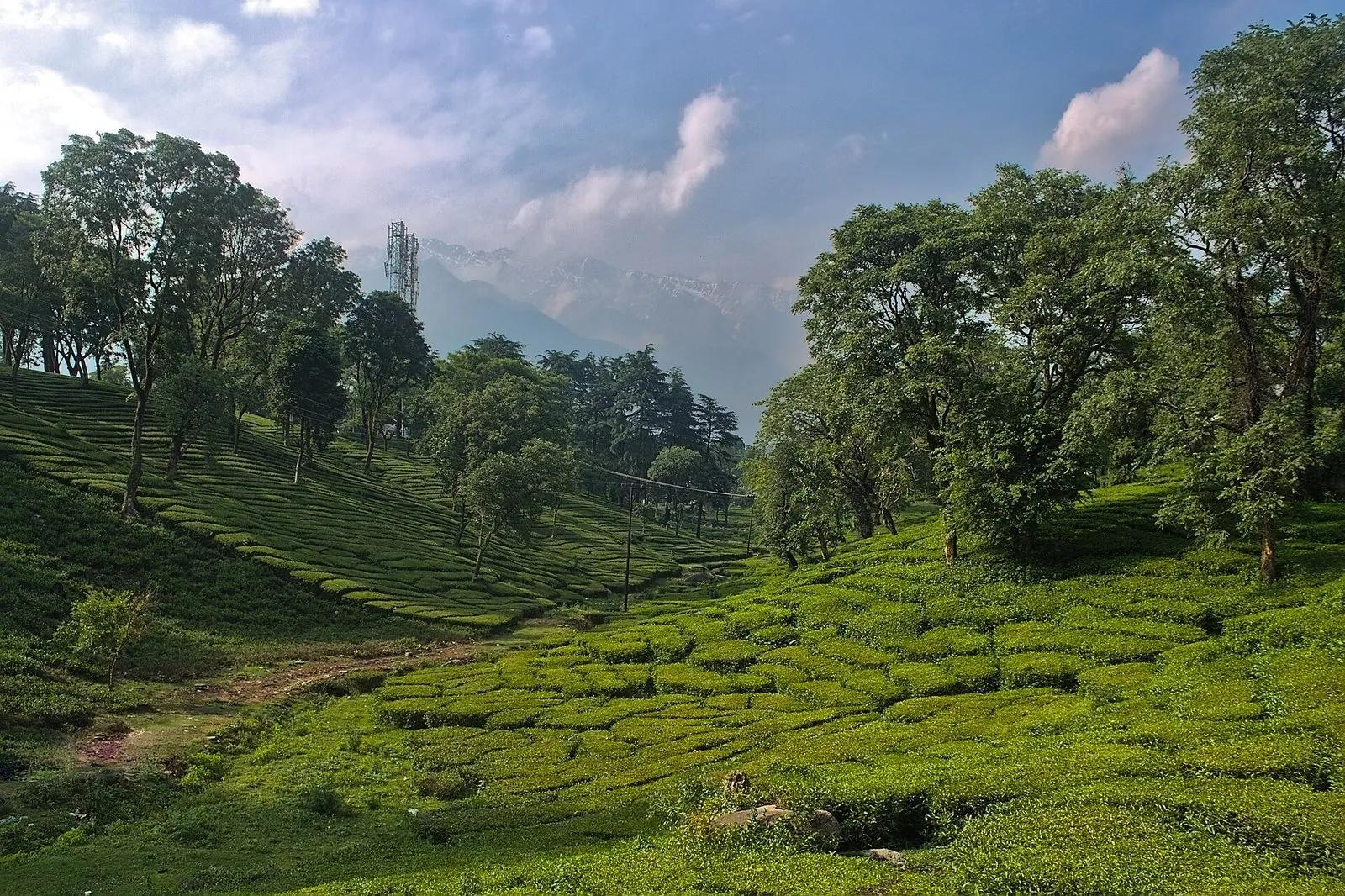
Palampur: India's Tea Capital That Nobody Visits
Thirty-five km from Dharamshala, a fraction of the tourists. India's only all-orthodox tea region, a 1204 CE temple that refuses to burn Ravana, a monastery of yogis, and a narrow-gauge railway that just came back from the dead.
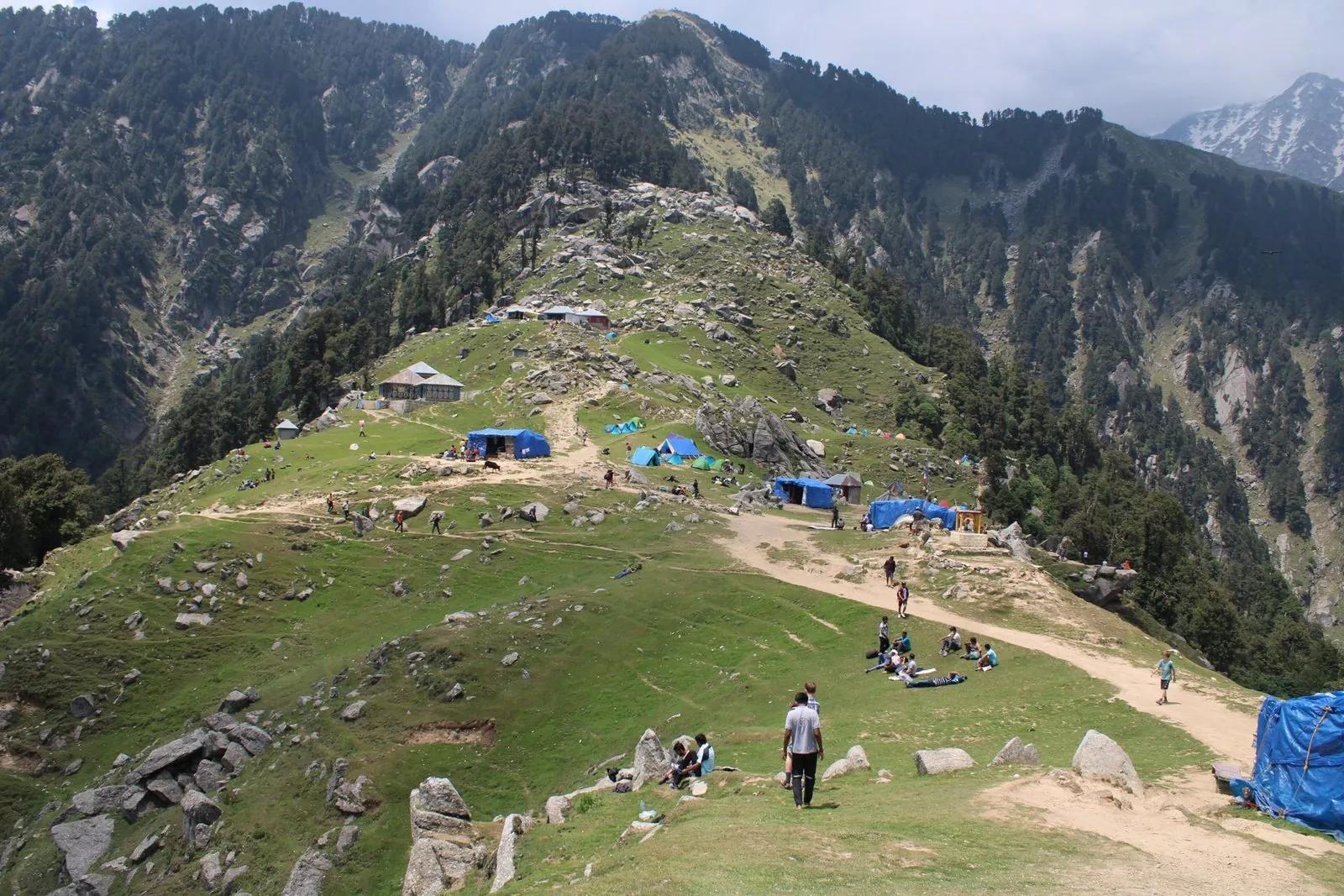
Triund Trek 2026: Complete Beginner's Guide (Route, Checkpoint, Camping & What Nobody Tells You)
Nine km, 1,100 m of gain, and one rule that turns hikers back: the 11:30 AM Gallu Devi check-post. Triund is HP's most-walked beginner ridge trek, with Forest Department fees halved to Rs 100 in January 2024 (per The Tribune), a HP High Court cap of 400 trekkers and 20 tents, and operator packages from Rs 999. Written from Kullu with the Tribune backbone, the Reddit deep-mine, and the four extensions almost no guide covers.
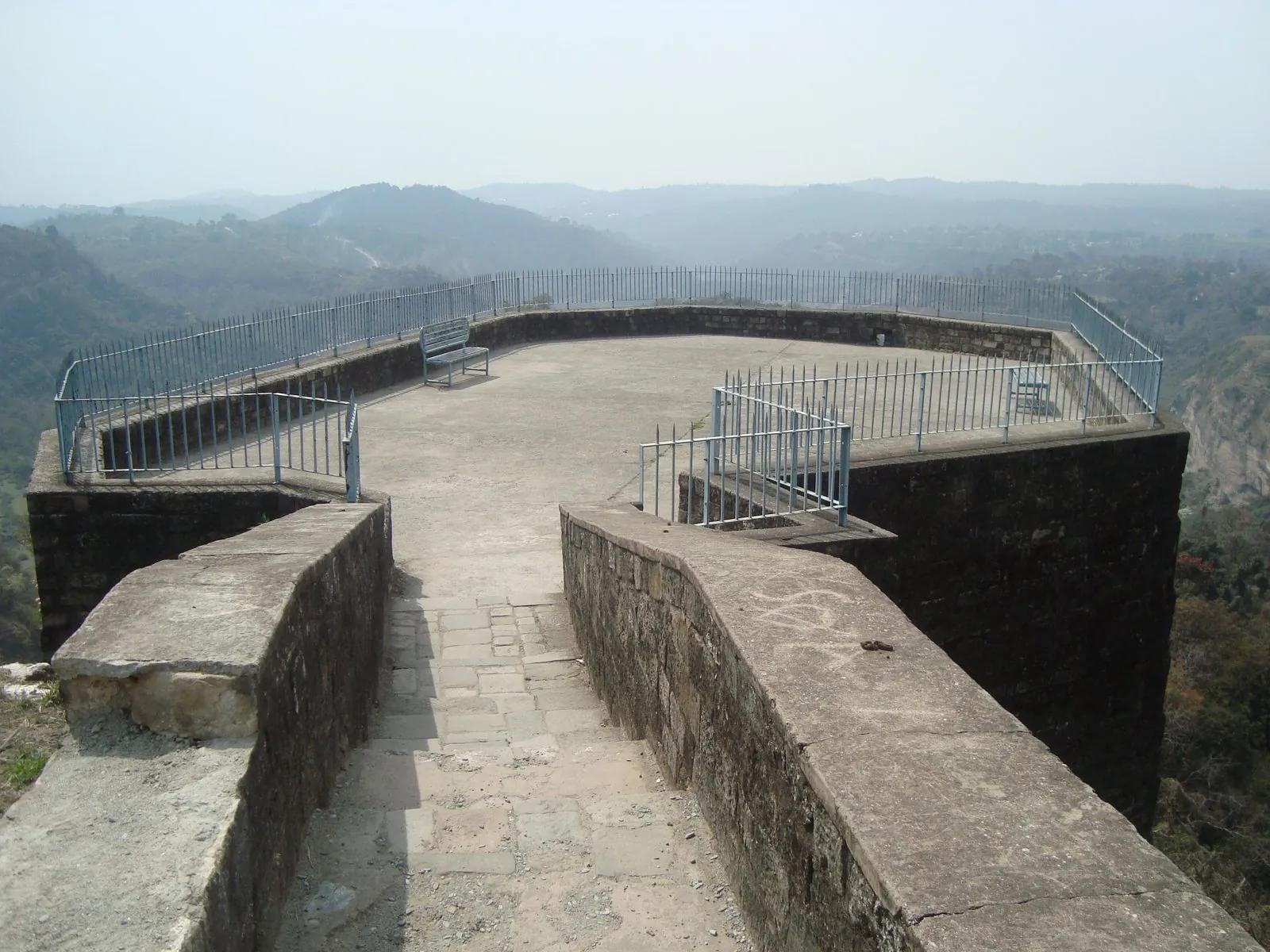
Kangra Fort and Masrur: HP's Ignored Heritage Belt (39,400 Reviews, Zero Coverage)
Three monuments inside a sixty-kilometre triangle on the Kangra plain quietly carry 39,400 Google reviews between them, yet not one comprehensive English-language travel guide exists. Kangra Fort, Masrur rock-cut temples, Chamunda Devi Nandikeshwar Dham, the Bajreshwari Shakti Peetha, Baijnath Vaidyanatha, and a one-day heritage circuit from Dharamshala. Written from Kullu, two valleys west.