
Triund Trek 2026: Complete Beginner's Guide (Route, Checkpoint, Camping & What Nobody Tells You)
By Rajesh Thakur. I write from Kullu town. I have not lived in Dharamkot, I am not a Dhauladhar climber, and I am not the friend of a friend who runs a camp at the Snowline. What I know about this trek comes from the Tribune, the HP Forest Department circulars, the Hindi press that watches the Manimahesh-style camping debates spill over into the Dhauladhar, and a deep mine of Reddit threads where people who have actually slept on the ridge argue about whether the self-pitch rule still applies in 2026.
The trek I want to talk about first is the rule, not the route.
Every season, thousands of trekkers walk up from McLeod Ganj, reach the forest check-post at Gallu Devi temple sometime after noon, and get turned back. The board at the gate says 11:30 AM. The forest officer enforces it. The bus from Delhi runs late, breakfast in McLeod takes longer than planned, the auto to Dharamkot doesn't show up on time, and people end up at the check-post at 12:15 PM thinking they will explain their way through. They don't. The trek does not happen.
I have read this story in roughly thirty Reddit threads. u/iJackCrack on r/SoloTravel_India still thinks "there is any fee in triund" is "probably some local milking the opportunity," which tells you that the fee was introduced recently enough that some regulars haven't caught up to the change. The fee is real. The cap is real. The cut-off is real, and it sits at the centre of any Triund plan you make in 2026.
Quick answer (June 2026): Triund is a 9 km one-way ridge trek above McLeod Ganj, 2,850 m at the meadow, 1,100 m of gain. Forest Department fee is Rs 100 per person per day (halved from Rs 200 in January 2024 by order of CM Sukhvinder Singh Sukhu, per The Tribune). Camping for two people is Rs 550 for two days inclusive of entry. HP High Court cap (23 November 2023): 400 trekkers per day, 20 tents at the meadow, 40 overnight visitors. Gallu Devi check-post turns day hikers back after 11:30 AM; with a confirmed overnight camp booking the last entry is 2:00 PM.
Quick facts
- Trail head
- Gallu Devi, Dharamkot (2 km above McLeod Ganj)
- Summit
- Triund meadow, 2,850 m
- Distance one way
- 5.5 km from Gallu Devi, 9 km from McLeod Ganj
- Elevation gain
- ~1,100 m
- Time up
- 4-5 hours average, 2-3 hours for the fit
- Difficulty
- Easy to moderate
- Forest fee 2026
- Rs 100 per person per day
- Camping fee 2026
- Rs 550 for two people for two days
- Daily cap
- 400 trekkers, 20 tents, 40 overnight (HP High Court)
- Best months
- March-June and September-November
- Permit
- None separate, fee is the permit
The 11:30 AM rule, in plain language
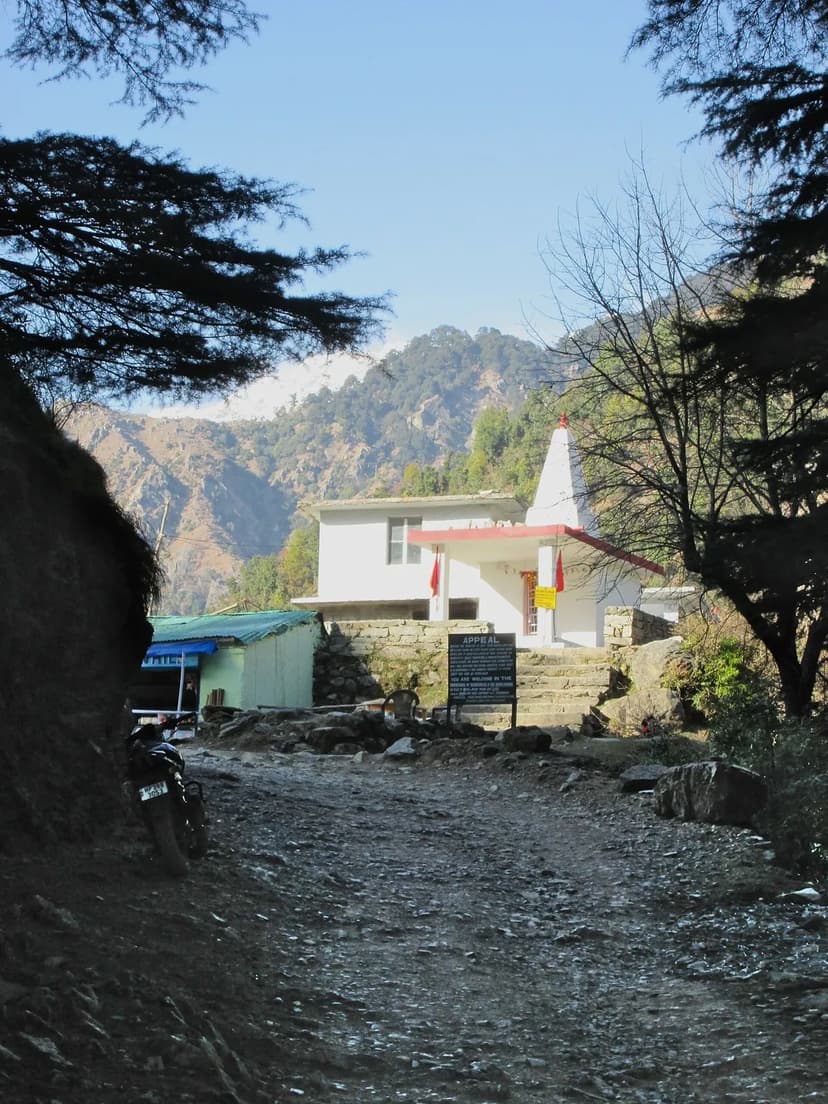
The check-post is a small concrete structure beside Gallu Devi temple, ten minutes uphill from Dharamkot village. A Forest Department officer sits there with a ledger. The ledger has two columns: day hikers and overnight campers. Each column has its own time-window.
Day hikers without a camp booking must clear the post by 11:30 AM. Some seasons the local officer pushes it down to 11:00 AM because of weather or fading daylight. After that, you are politely told to come back tomorrow.
Trekkers with a confirmed overnight camp booking from a registered operator get a longer leash. Last entry is 2:00 PM. The logic is the same: a person who starts the climb past 3 PM cannot reach the ridge before sunset, and the trail has no lighting and several stretches where a slip in the dark would put the rescue team out for the night.
You see why this rule matters when you read what people actually carry up. u/Agreeable-Ostrich536 on r/SoloTravel_India did the trek on 17 March, with the full breakdown: Mumbai to Delhi train Rs 3,000, Delhi to Dharamshala bus Rs 1,300, three nights at Unmad Cafe in Dharamkot at Rs 1,700, food Rs 800 per day. The trek itself was a single day from a Dharamkot base. That is the standard pattern. The locals who hike it as a Sunday walk know to be at the check-post before 9 AM because by 10:30 the ridge is already a queue.
The "fee" question is real and people argue about it. u/iJackCrack is not the only Redditor who has shown up expecting a free walk and bristled at the Rs 100 charge. The Tribune story makes the timeline clear: the Forest Department introduced an entry fee in late 2023, charged Rs 200 per person per day at first, faced pushback from local guides and the Dharamshala hotel association, and on direction of the Chief Minister halved it to Rs 100 in January 2024. Two-person tent for two days is Rs 550. A guided operator who is registered with the Tourism Department does not pay an additional fee for their certified guides.
The two routes from McLeod Ganj
There are two ways up: the Gallu Devi route through Dharamkot, and the Bhagsu Nag route from the temple side. u/giantferriswheel on r/india_tourism asked the question a lot of first-timers ask, "where did you start the trek from, Bhagsunag temple or the other temple? I keep forgetting the name." u/mj130602 answered: "I started from Bhagsunag. Yes the other one is Gallu temple."
You should take the Gallu Devi route. Here is why.
| Detail | Gallu Devi route | Bhagsu Nag route |
|---|---|---|
| Trailhead | Dharamkot village, 2 km above McLeod Ganj | Behind Bhagsu Nag waterfall, McLeod Ganj side |
| Distance to summit | 5.5 km | 7 km approx |
| Forest check-post | At Gallu Devi temple, mandatory | Joins Gallu route higher up |
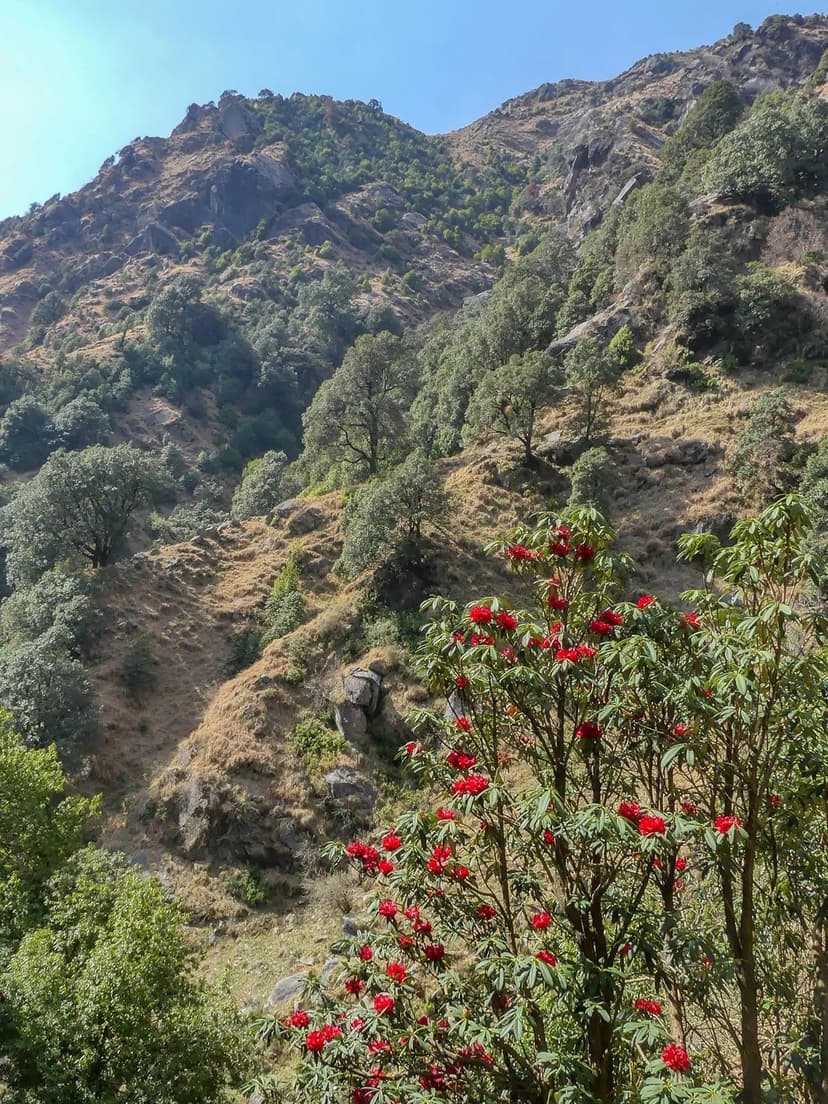
| Terrain | Gradual through oak and rhododendron, steep last km | Steeper, rockier, less maintained |
| Crowd | High, main tourist route | Low |
| Dhabas on trail | Magic View, Best View | Few until the merge |
| Monsoon | Slippery but manageable | Slippery and dangerous, locals avoid |
The two routes merge before the final approach to the meadow. Take the Bhagsu route on your second visit, when you know which rock you are stepping onto. For now, go up through Dharamkot. The trail is busier, which means you are never alone, which is the same reason solo women trekkers consistently rate Triund safe.
Hour by hour, what the trail actually looks like
The published guides like to round numbers. Real time on the path stretches when you stop to breathe and rounds the other way when you find your legs. The breakdown below assumes an average pace with three or four short stops.
- 0:00 - 0:45 | McLeod Ganj to Dharamkot
Paved uphill walk through the main bazaar, past the Tushita Meditation Centre turn-off, into Dharamkot village. Autos charge Rs 100-150 if you want to save the legs. Skip this leg entirely by sleeping in Dharamkot the night before. - 0:45 - 1:00 | Dharamkot to Gallu Devi check-post
Five hundred metres to the temple. ID check, bag inspection, Rs 100 fee, name and phone in the ledger. Carry the original Aadhaar or passport, not a photocopy. - 1:00 - 2:30 | Gallu Devi to Magic View Cafe
2.7 km through oak, deodar and rhododendron. Tree roots underfoot, well-defined path. Songbirds. Last reliable water at Gallu Devi, fill your bottle there. Magic View is the first opening in the canopy where Kangra Valley becomes visible below. - 2:30 - 3:30 | Magic View to Best View Cafe
1.5 km. Trail steepens. Rhododendron thickets dominate. Best View is the second dhaba, last decent food before the meadow. This is where most people quietly question their decision. - 3:30 - 4:30 | The 22 Curves
The final kilometre is a series of steep switchbacks called the 22 curves. Loose rock, exposed to the sun, gradient that doesnt let go. Trekking poles earn their rental here. Count the curves to keep the brain busy. - 4:30 - 5:00 | Summit ridge
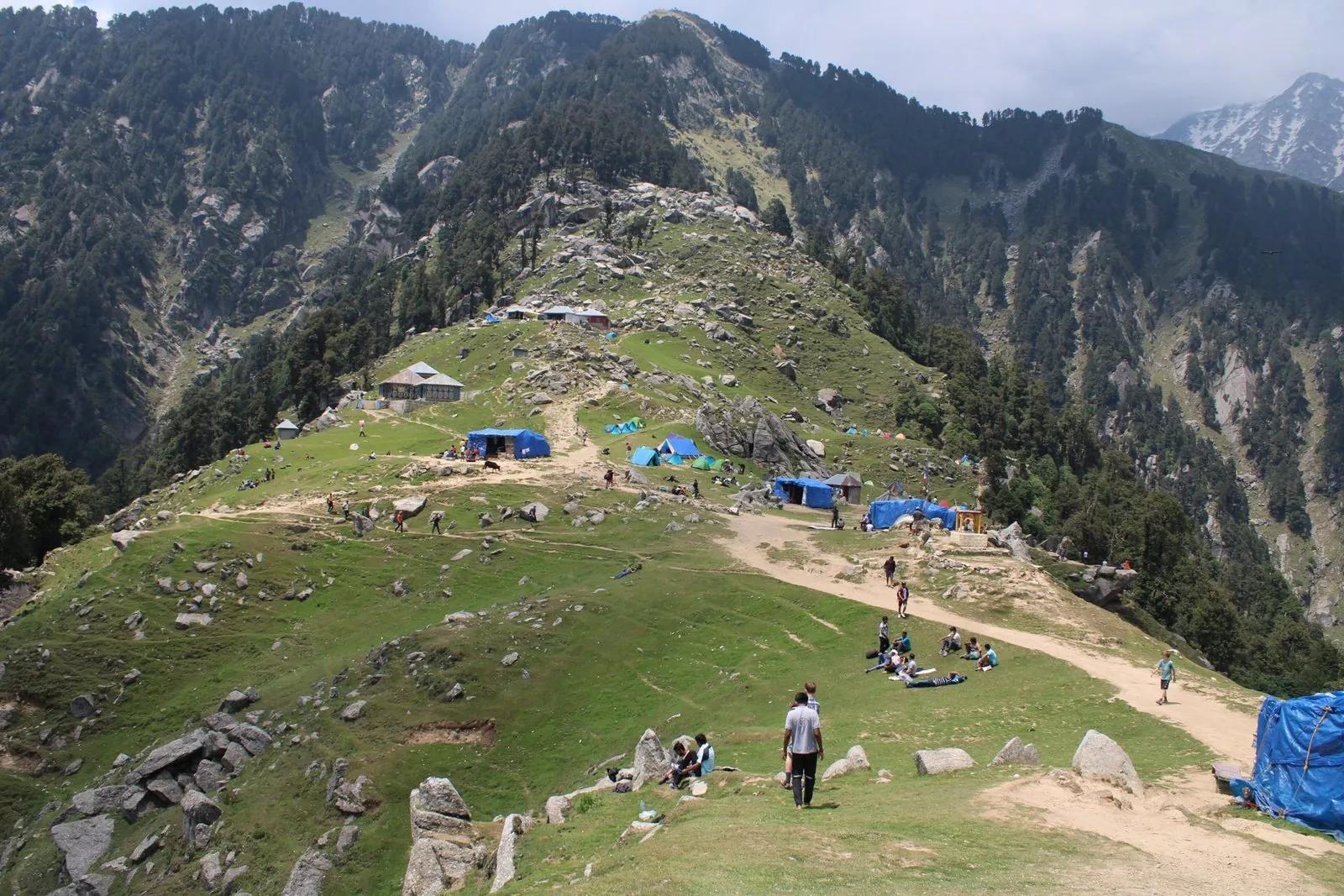
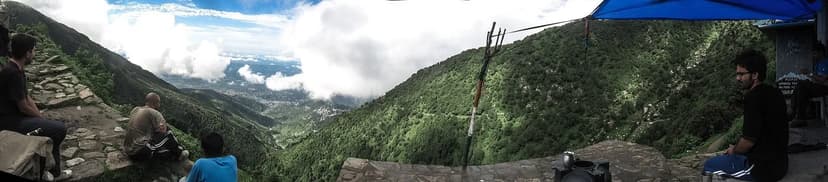
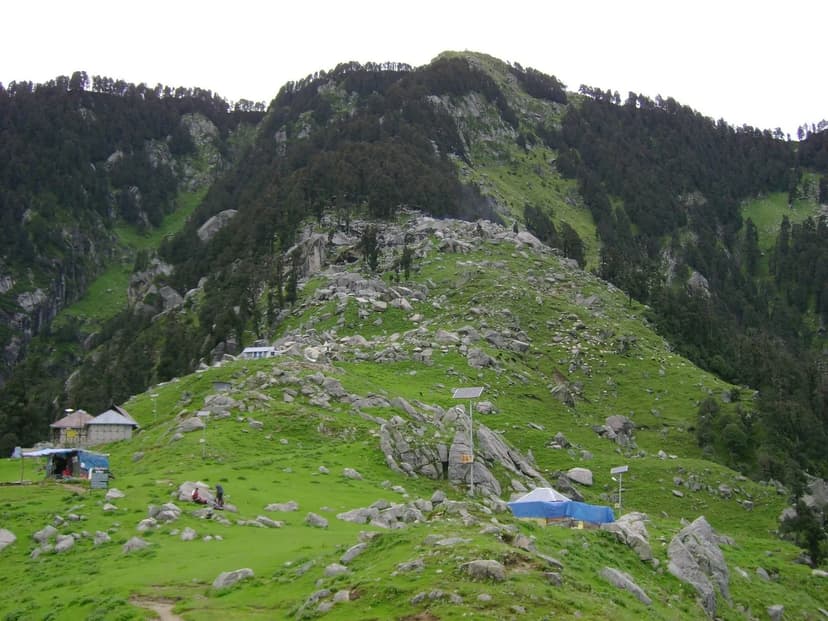
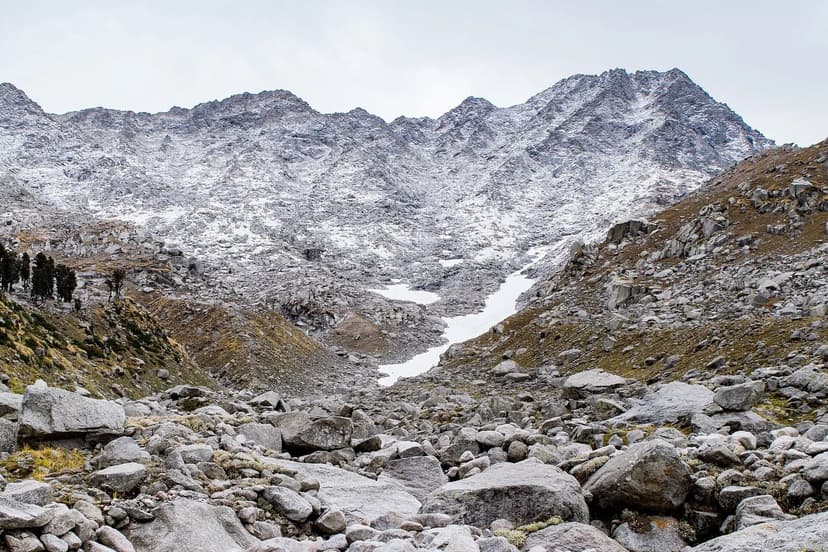
The trail spills onto a wide grassy ridge. South side drops to Kangra Valley, north side opens to the Dhauladhar wall. Three or four dhabas, the Forest Rest House, the Hanuman idol that everyone photographs. Camping zones are marked. The meadow at 2,850 m, the destination.
Camping in 2026: what the rule actually says
Triund camping has gone through three phases in seven years. Pre-2018, anyone could pitch anywhere on the ridge, and they did. The meadow turned into a litter problem the local press kept describing as a tragedy in slow motion. In May 2018 the Forest Department imposed a periodic ban on overnight camping. The Tripoto headline of the season read, "Triund Indefinitely Closes for Overnight Camping." That was real, and it scared a lot of operators out of business for a while.
What is in force now is the order issued by the Himachal Pradesh High Court on 23 November 2023, which Ascent Descent Adventures has documented in plain terms: a daily cap of 400 trekkers at Triund, a maximum of 20 tents on the meadow at any one time, an overnight cap of 40 visitors in the Dhauladhars, and a two-day maximum camping duration. The fees that followed (Rs 200 dropping to Rs 100 entry, Rs 1,100 dropping to Rs 550 camping) are the financial side of the same framework.
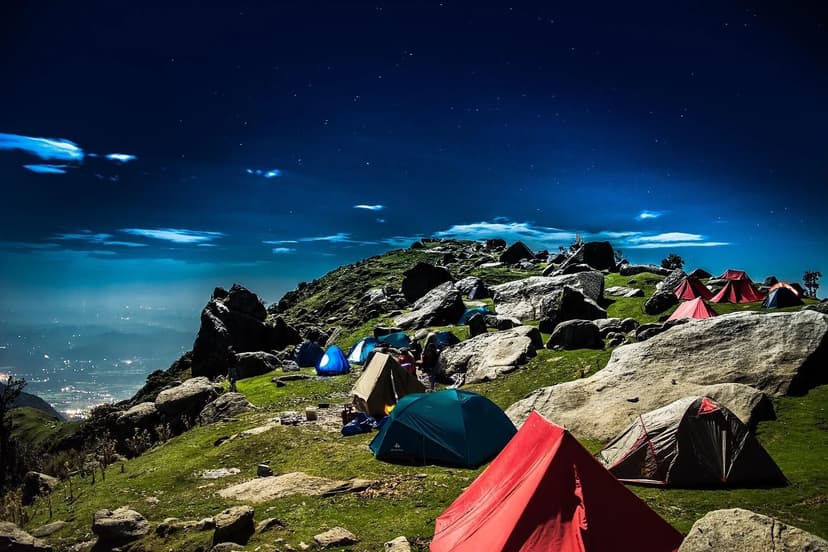
What the rule means for you: If you want a tent on the ridge, you have to be inside the 20-tent quota on the night you book. Registered operators (MadTrek, BanBanjara, Triund-Trek.com, Manchala Mushafir) handle that allocation for you. Self-pitching outside the operator zone is a grey area: Ascent Descent Adventures and Dharamshala Guide read the same rules differently. The Forest Department will issue the camping receipt if you turn up with your own gear and pay the Rs 550. Enforcement depends on the season and the officer on duty. We do not recommend gambling on this on a peak weekend.
The operator math in 2026 is cleaner than the rumour mill suggests. MadTrek lists a Triund overnight package at Rs 999 for two days and one night, including tent, sleeping bag, dinner, breakfast and a guide. BanBanjara runs the same shape with 45% off in their 2026 catalogue after the discount. u/random_est on r/SoloTravel_India booked her first solo through a smaller McLeod operator she called "Mcleodganj Adventures" and paid Rs 1,000 for guide, sleeping bag, tent, chai, dinner and breakfast: "I went on a Monday and I am glad I did that." That is the price band. Anything substantially above Rs 2,000 for a one-night Triund package is paying for transport from Delhi, not the trek.
Want a quick sanity check on your Triund camp booking? Email us your dates and operator. We will tell you whether the 20-tent quota is realistic for your weekend, and whether the operator you found is actually registered with the HP Tourism Department.
Photography: south at sunset, north at sunrise
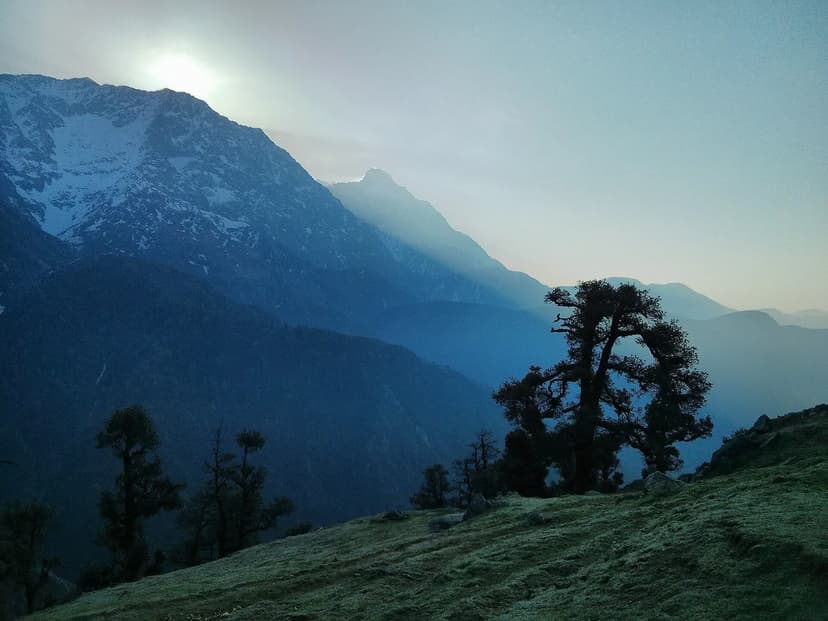
Triund sits on a spur of the Dhauladhar with the ridge running roughly east-west. That puts the Kangra Valley to the south and the snow wall of the Dhauladhar to the north. The light works in two directions across one night, which is why overnight is the move if you can fit it in.
u/Routine_Ad_7210 on r/SoloTravel_India had the simplest summary: "Sunset view from Triund top," and a photo from February 2023 to back it up. u/PermissionCorrect363 from a different thread used the iPhone 16 for the daylight shots and the 17 Pro for the stars: "booked an overnight bus to dharamshala and rented a bike, covered dharamkot and israeli market the first day, trekked the next day, relaxed in zostel mcleodganj the descent day." That is the photographer-traveller pattern in 2026 in a single sentence.
| Detail | South side: Kangra Valley | North side: Dhauladhar wall |
|---|---|---|
| Best light | Sunset, 5:00-6:30 PM | Sunrise, 5:30-7:00 AM |
| Direction | South to south-west | North to north-east |
| What you see | Farms, towns, plains stretching to Punjab | 4,000 to 5,000 m peaks of the Dhauladhar |
| Lens | Wide 16-35 mm, 50 mm for warm portraits | 70-200 mm to isolate peaks, wide for the full range |
| Best month | September-October, post-monsoon clarity | September-October, plus April for pink alpenglow with foreground rhododendron |
The night sky at Triund is decent, not extraordinary. McLeod Ganj's light dome is visible to the south-west, so the southern half of the sky is washed slightly. The northern half above the Dhauladhar is darker, around Bortle 4 on a moonless evening. For the Milky Way you want the moon at less than a quarter and the new-moon weekend if you can find it. Chandratal in Spiti is a full Bortle class darker, which is why our stargazing guide puts Chandratal above Triund for serious astrophotography. Triund is where you learn that the Milky Way is real before you take the longer drive to Lahaul-Spiti.
How much it actually costs
The internet quotes Triund trek costs as if there is a single number. There isn't. The trek itself is almost free if you are already in Dharamkot. The cost is the part that gets you to Dharamkot and the part that puts a tent over your head if you stay. Five tiers below, from the cheapest plausible day trek to the round-trip from Delhi.
| Item | Amount (INR) | Note |
|---|---|---|
| Forest Dept entry fee | 100 | Per person per day, halved by CM Sukhu Jan 2024 |
| Auto McLeod to Dharamkot | 120 | Optional, walkable in 30-45 min |
| Dharamkot hostel bed (one night) | 500 | Zostel, Bunkstay, Unmad Cafe range |
| Camping fee at Triund (your tent) | 275 | Share of Rs 550 two-person, two-day permit |
| Operator camp package (alternative) | 1099 | MadTrek 2026 list, includes tent, sleeping bag, dinner, breakfast, guide |
| Meals on the trail | 350 | Maggi Rs 150, dal-rice Rs 200-250, chai Rs 30-50 |
| Trekking pole rental | 150 | McLeod gear shops, optional but useful on the 22 curves |
| HRTC Volvo Delhi to Dharamshala | 1457 | Apr 2026 fare after the 10% Volvo discount ended |
| Round trip from Delhi, modest version | ~4,200 | One-way Volvo + Dharamkot hostel + day trek + meals + return Volvo |
The Reddit voices agree on this budget shape. u/Agreeable-Ostrich536's full Mumbai-to-Triund trip was Rs 3,000 train + Rs 1,300 bus + Rs 1,700 stay + Rs 800 daily food. Strip out the train and you are looking at a Delhi traveller doing the whole thing for Rs 3,500-4,500 on a budget pattern.
Season by season, the honest version
The "best time to visit Triund" question hides four very different treks under one label.
| Window | What it is | What you get |
|---|---|---|
| March-April | Rhododendron season | Forest trail under red and pink blooms. Cool days, cold nights (2-8 C at the meadow). Some snow patches near the top in March. Most photogenic month. |
| May-June | Peak season | Warm days, manageable nights. The 22 curves get queues on weekends. Start at 6 AM to beat the heat and the crowd. Family-friendly. |
| July-August | Monsoon, avoid | Slippery trail, leeches, low visibility, occasional trail closures. Pine cover helps below Magic View, miserable above. |
| September-October | Best window | Sky scrubbed clean by the monsoon. Dhauladhar peaks visible without haze. Best month for photography. Dussehra and Diwali holidays bring weekend crowds. |
| November | Early winter | Cold nights, golden light, possible first snow on the meadow. Quieter weekdays. Manageable with a proper sleeping bag. |
| December-February | Snow trek | Trail under snow above Magic View. Crampons or micro-spikes required, waterproof boots, four layers, minus-ten-rated sleeping bag. The easy rating does not apply. Forest Dept may restrict access to Snowline only. |
u/EscpdOprt7 on r/SoloTravel_India put it as bluntly as a Kullu farmer would: "go before July." u/Substantial_Age_3327 took the other end of the calendar: "Did it in November. One of my top experience, specially the night camping." Both are right. Triund is two treks in one calendar, and they are not the same trek.
For the monsoon question specifically, our guide to what is actually open in HP during the rains rates Triund as "wet but doable" rather than closed, with the caveat that the trail surface is the killer, not the weather itself. For winter packing on a snow trek, the month-by-month HP matrix covers the gear in detail.
Beyond Triund: the part most guides skip
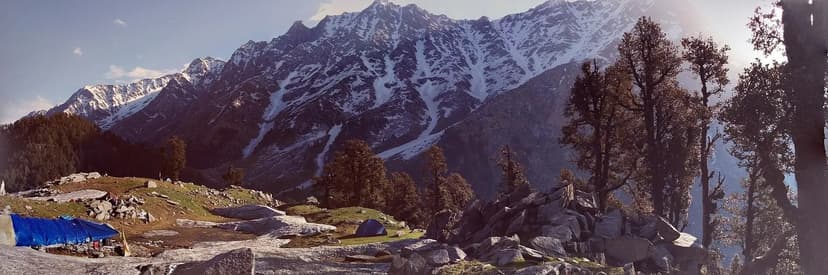
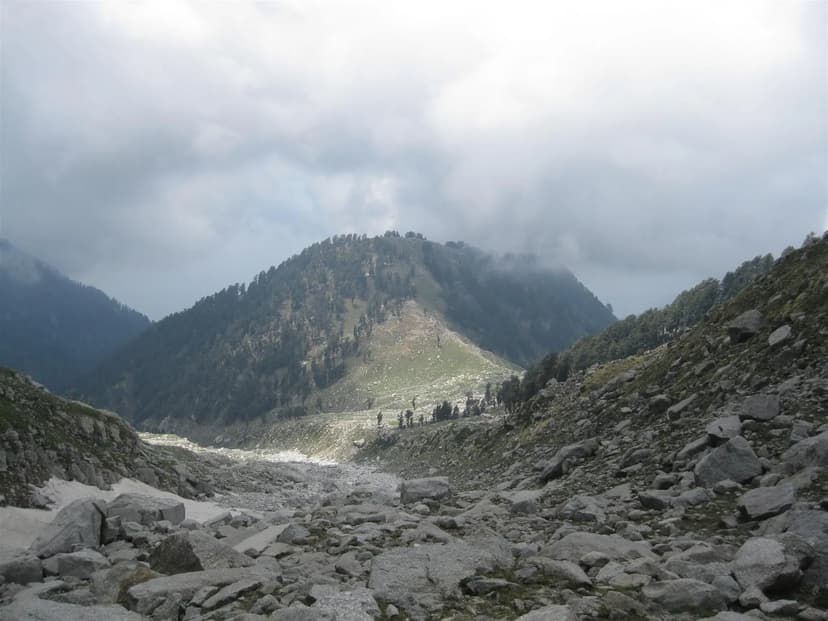
The trail does not end at the meadow. North of the ridge, the path continues into the Dhauladhar towards Indrahar Pass. Most trekkers turn around at the Hanuman idol and walk down. The trekkers who keep going describe a quieter, wilder set of meadows that almost no one in the Sunday-walker bracket sees.
u/rapbotdenzil on r/SoloTravel_India, who actually lives in Dharamshala, said the local-favourite move is to skip the Triund night entirely and push further: "I live in Dharamshala, this is my favourite local hike. If you ever plan to come back, I recommend you hike further, till Laka Glacier, and camp for the night. Pick a night with no moonlight for some decent milky way astro photography and stargazing." That is the Dharamshala local opinion, distilled. The Snowline meadow is less crowded than Triund. Laka is emptier still. Lahesh Cave is where you sleep if you are going for Indrahar.
For the locals who hike Triund as a Sunday walk, the trek does not start until you cross the Hanuman idol. The point of the trip is the meadow above.
The four extensions, in order of difficulty and remoteness:
- Snowline (2 km past Triund, 1 to 1.5 hours). A seasonal tea stall at about 3,100 m. Named for where the snow line begins in winter, not for the alpine snowline you might be picturing. The walk past Triund is gentler than the 22 curves before it, and the views open up northward as the canopy disappears.
- Laka Got (3 km past Snowline, 2 to 3 hours from Triund). A glacial meadow at around 3,200-3,300 m. Seasonal tea house when the season is on. u/Economy_Worker3916 on r/SoloTravel_India: "I packed my bags and left and hiked alone till lahesh caves. Such a wholesome experience. So liberating." Most people who say Lahesh actually mean Laka.
- Lahesh Cave (5 hours from Triund, 3,450-3,500 m). A rock overhang used as a base camp for Indrahar Pass attempts. No facilities. Carry all food, water and warm gear. A guide becomes useful here, not optional.
- Indrahar Pass (4,342 m, multi-day). The full Dhauladhar crossing from Kangra to Chamba. Four days, 35 km, mandatory guide. MadTrek runs the 4D/3N Indrahar package at Rs 5,500 in 2026. June to October only, snow-blocked otherwise. Not a beginner extension. Knowing it exists is the point.
Solo women on the trail
Triund consistently turns up on solo female recommendation lists for one structural reason: the trail is busy. From the check-post to the meadow, you are almost never alone. Even at 7 AM there are porters and dhaba-keepers coming down. Even in November there are weekend trekkers from Delhi and Chandigarh on the path.
The Reddit data agrees. u/Mediocre-Loss696 on r/SoloTravel_India in a thread that pulled 1,290 upvotes: "Dharamshala to Triund is a perfect choice, safe and incredibly rewarding for a first experience." u/YourSEOMan on r/HimachalPradesh: "I have been to Mcleod and Dharamkot twice and these places looks safe for solo female travellers." u/wipeitonthedog on the same sub on staying patterns: "If you want more social interaction with other travelers, then you can stay in dharamkot. Naddi is more laid back and peaceful. But still safe."
The practical specifics for solo women are the same as anywhere in HP and we cover them in detail in our solo women guide: share your itinerary with someone before you start, stay at established campsites at the meadow rather than isolating a tent at the edge, the HP Women Helpline is 1091, and the Pink Taxi service in McLeod can be reached on 94189-56561.
Getting to the trailhead
McLeod Ganj is 525 km from Delhi by road, 240 km from Chandigarh. The Gaggal airport at Kangra runs three or four flights a day to Delhi when the weather cooperates. The cheapest plausible route is the HRTC Volvo overnight; the most reliable is the train to Pathankot followed by a taxi up.
For the bus side specifically, our Delhi to Manali bus guide covers the same ISBT Kashmere Gate Volvo system that runs to Dharamshala, with platform layouts and the booking timing that matters. Our HRTC bus guide has the Sukhu cabinet fare structure that took effect 1 April 2026 after the 10% Volvo discount ended and the minimum fare doubled from Rs 5 to Rs 10. For foreign travellers, the new e-Arrival Card mandatory since 1 April 2026 is covered in our HP for international travellers guide.
What to carry, what not to carry
The packing list for a day trek is short. For an overnight it doubles.
Day trek packing (March-June, September-November): 2 litres of water, a light fleece, a windcheater that lives in your bag in case the ridge weather turns, sunscreen, sunglasses, a basic first-aid kit, ORS sachets, a power bank, original ID, the Rs 100 fee in cash. Wear trekking shoes with ankle support. Trekking poles help on the descent.
Overnight additions: a sleeping bag rated to at least 0 C (operators provide one, but check the rating), a headlamp with spare batteries, an extra warm layer, gloves for the morning, a beanie, your own toilet roll, trash bags (you carry your own waste back down), spare socks. If you are pitching your own tent, the tent itself plus pegs that can handle wind off the Dhauladhar.
What not to carry: alcohol (prohibited and checked at the check-post), aggressive plastic packaging (the officer may confiscate snack bags), single-use water bottles in bulk, cotton clothing as a base layer (cold and wet at altitude is a hypothermia risk), and any expectation that the dhabas will have something more interesting than Maggi and chai.
If the weather turns
The ridge gets weather that doesn't reach Dharamkot until two hours later. A clear morning at the check-post can become a wet ridge by 3 PM. Two specific risks worth naming.
Hypothermia. Wet clothing plus wind plus 2,850 m elevation can push core temperature down faster than you would expect. The fix is dry layers and warm fluids, in that order. If a member of your group is shivering uncontrollably and confused, the trek is over for them: walk down, slowly, with body warmth between them and the wind.
The descent. Most accidents on Triund happen on the way down, not on the way up. Loose rock on the 22 curves, tired legs, a phone in one hand. The Forest Rest House at the meadow is the last call point with a roof. If you are descending late, descend with a group, not alone.
Mobile coverage on the trail is patchy. The summit usually has Jio and Airtel. The forest between Magic View and the 22 curves has dead spots. Download an offline map (Maps.me or Google offline) before you start. Our HP phone-coverage guide covers what actually works above 2,500 m in the Dhauladhar.
Triund and the rest of McLeod Ganj
If you have come this far, you have two or three days more in the corridor worth using. McLeod Ganj is the seat of the Tibetan government-in-exile, which means the Tsuglagkhang complex, the Norbulingka institute and the Library of Tibetan Works and Archives are all within twenty minutes of your hostel. Our Dharamshala guide covers the whole circuit including HPCA stadium, St John in the Wilderness church, and the cafes in Dharamkot itself. The three-tier framework for actually meeting the Dalai Lama covers the public teaching schedule, the private audience route, and the away-days.
For the cafe scene specifically, our HP cafes guide lists Illiterati on a Shimla-style perch, Morgan's Place at the top of Dharamkot, Trek and Dine on the Bhagsu road, and the controversial Free Kasol Cafe further south in Kasol. Coffee in Dharamkot in 2026 is better than the Mall Road in McLeod for the same money.
The full Kangra heritage triangle (Kangra Fort, Masrur rock-cut temples, Bajreshwari Devi) is a forty-five-minute drive south, and our Kangra heritage belt guide walks the temple architecture and the dynasty that built them. If your knees are still functional, Prashar Lake near Mandi is a different shape of trek and our Prashar Lake guide compares the two directly.
The questions people actually ask
Do I need a guide for Triund?
No. The Gallu Devi route is well-marked, heavily trafficked, and impossible to miss in daylight. A guide becomes useful in three situations: a first overnight camp, a winter snow trek above Magic View, or any extension past Snowline. For a standard day trek in March-November, a guide is a comfort, not a requirement.
What is the fee at Triund in 2026?
Rs 100 per person per day for the Forest Department entry, halved from Rs 200 in January 2024 on the direction of Chief Minister Sukhu, per The Tribune. Camping is Rs 550 for two people for two days inclusive of entry. Guides registered with the HP Tourism Department do not pay an additional fee.
Is the 11:30 AM rule actually enforced?
Yes. The forest officer sits at the check-post with a ledger and turns people back. In quiet weeks the cut-off slips to noon. On weekends and on days when the weather forecast is bad it sometimes drops to 11:00 AM. Plan to be at the check-post by 9:30 to be comfortable, by 10:30 at the latest.
Can I pitch my own tent at Triund?
Officially you can, by paying the Rs 550 two-person two-day camping fee at the check-post. In practice, the HP High Court 20-tent quota means you should not assume a spot will be free if you turn up on a peak weekend without a booking. Registered operators have first call on the quota. The Forest Department reserves the right to refuse self-pitched tents on full nights.
How fit do I need to be?
You need to be able to walk steadily uphill for four hours with one or two short breaks. If you cannot manage a brisk one-hour walk at home, the 22 curves will hurt. If you can, you will be fine. Mild altitude breathlessness at 2,850 m is normal and not dangerous if you walk slowly.
Is Triund safe for solo women?
Yes, by every available measure. The trail is busy, the dhabas are social spaces, McLeod has a large backpacker community, and solo female trek reports on r/SoloTravel_India and r/HimachalPradesh are overwhelmingly positive. Standard precautions still apply: share your itinerary, charged phone, stay at established camp clusters.
Can I do Triund in December or January?
Yes, but it is no longer the easy trek. Snow above Magic View, sub-zero nights, slippery descents. Waterproof boots with grip or rented crampons, a minus-ten-rated sleeping bag, four warm layers, balaclava. A local guide is strongly recommended. The Forest Department may restrict access to Snowline during heavy snowfall.
Triund vs Prashar Lake, which one?
Different experiences. Triund is a ridge trek with a 180-degree panorama of the Dhauladhar, busier and more social. Prashar Lake is a forest trek to an alpine lake with a 14th-century Nagara temple, quieter and more mystical. Triund is better for a first trek. Prashar is better if you have done one or two and want depth over altitude. Our Prashar guide compares the two side by side.
What about the 22 curves, is it really that bad?
It is the hardest kilometre of the trek. Loose rock, steep gradient, exposure to sun. The rest of the trail is gentle by comparison. Pace yourself, count the switchbacks, drink water. The view at the top is the reward you came for.
Which operator should I book for an overnight camp?
In 2026, the pricing benchmarks are MadTrek at Rs 999 for the two-day camp package (tent, sleeping bag, dinner, breakfast, guide) and BanBanjara at the discounted equivalent. Smaller McLeod operators run the same shape at Rs 900-1,200; u/random_est on r/SoloTravel_India booked Mcleodganj Adventures at Rs 1,000. Anything above Rs 2,000 for a one-night Triund overnight is paying for transport from Delhi, not the trek.
Planning a Triund trip and not sure which week, which operator, or how your fitness will hold up on the 22 curves? Email us your dates and route. We will tell you whether the operator you found is registered, what the realistic camping cap looks like that weekend, and which alternative trek to point you at if Triund is a poor fit.
What it actually is
Triund is the most-walked beginner trek in Himachal because it gives you a real Himalayan ridge view at the end of a day's effort, on a path that is busy enough to feel safe. The 11:30 AM rule sounds bureaucratic until you remember that it exists because people kept getting hurt on the descent in the dark. The Rs 100 fee sounds like a hassle until you read what the meadow looked like before 2023. The 20-tent quota sounds restrictive until you understand that it is the only thing standing between Triund and the slow-motion disaster that the Forest Department watched happen for fifteen years.
If you go in 2026, go with the rules. Be at the check-post by 9:30 AM. Book your tent through a registered operator. Carry your trash back. Take the photo of the Hanuman idol if you want to, take the better photo of the Dhauladhar wall an hour after sunrise if you have stayed the night. The trail keeps going past the meadow. Most people don't keep going. The ones who do come back changed.
Sources
- The Tribune (15 Jan 2024): HP Forest Dept slashes Triund trekking fee by half (Rs 200 to Rs 100 entry, Rs 1,100 to Rs 550 camping)
- Ascent Descent Adventures (12 Jan 2024): Fees on Triund Trek and Limit: HP High Court (400 trekkers daily cap, 20 tents, 40 overnight, 2-day max camping, 23 Nov 2023 ruling)
- IndiaHikes: Triund Trek (GPS coordinates 32deg14m55s N 76deg19m31s E start, distance 5.45 km, elevation profile)
- FootLoose Dev: Triund Trek (11:30 AM check-post confirmation, distance breakdown)
- HillHikers (Jan 2026): Triund Trek Permit Price 2026
- Dharamshala Guide (2026): Triund Camping Guide 2026 (designated zones, operator booking flow)
- MadTrek (2026): Triund Trek package Rs 999, Snowline Trek Rs 2,500 (3D/2N), Indrahar Pass Rs 5,500 (4D/3N)
- BanBanjara (2026): Triund Trek Camping 45% off
- Triund-Trek.com: Lahesh Cave Trek (3,450-3,500 m altitude, 5-hour walk from Triund)
- Bikat Adventures: Indrahar Pass Trek (4 days, 35 km, Lahesh Cave acclimatization)
- Reddit r/SoloTravel_India: First solo trip: Dharamshala/Triund, Made new friends on Triund, Solo Trip Triund Trek, Triund Trek First Solo Experience 21F
- Reddit r/HimachalPradesh: Sunset from Triund Top, Snow capped Triund
- Reddit r/india_tourism: Triund June 25 shot, Triund trek, Forever Exploring Triund
Last verified: June 2026 via The Tribune (Rs 100 fee confirmation), MadTrek and BanBanjara 2026 catalogues (operator pricing), HillHikers (2026 permit price), Dharamshala Guide (designated zones), Reddit r/SoloTravel_India and r/HimachalPradesh deep-mine (36 attributed trekker voices, March-November 2025 trips). Forest Department rules current as of HP High Court order dated 23 November 2023.
You Might Also Like
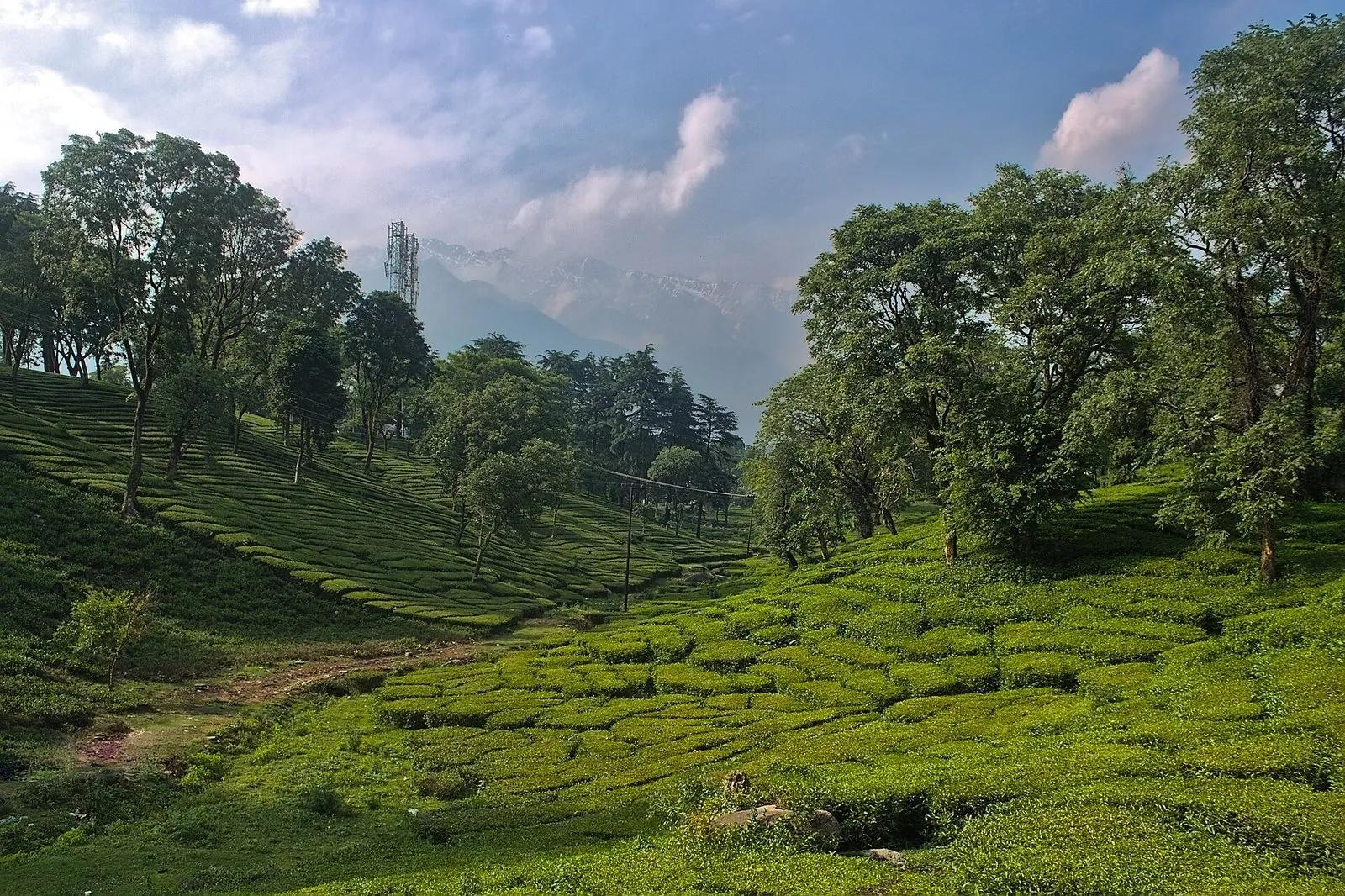
Palampur: India's Tea Capital That Nobody Visits
Thirty-five km from Dharamshala, a fraction of the tourists. India's only all-orthodox tea region, a 1204 CE temple that refuses to burn Ravana, a monastery of yogis, and a narrow-gauge railway that just came back from the dead.
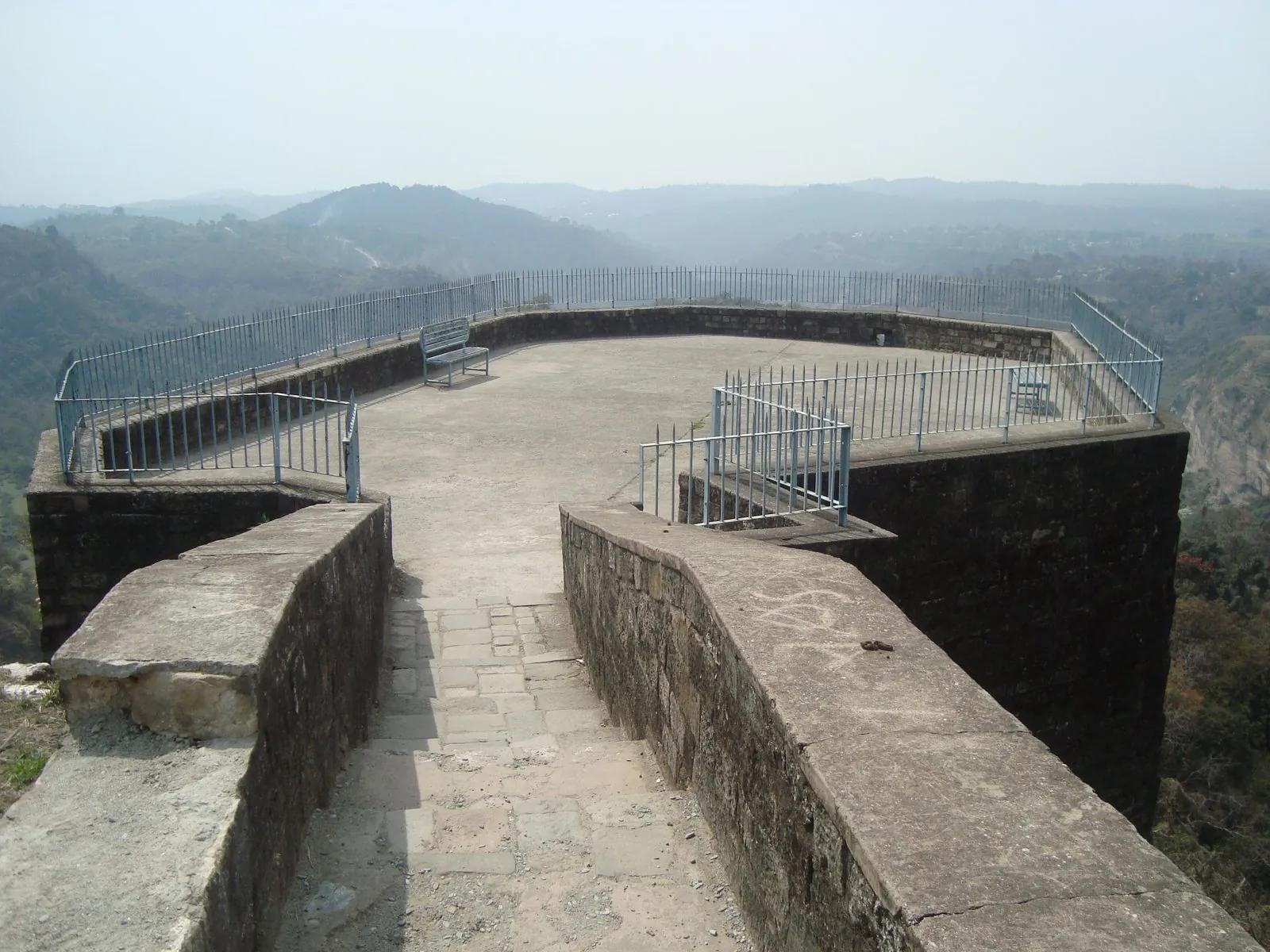
Kangra Fort and Masrur: HP's Ignored Heritage Belt (39,400 Reviews, Zero Coverage)
Three monuments inside a sixty-kilometre triangle on the Kangra plain quietly carry 39,400 Google reviews between them, yet not one comprehensive English-language travel guide exists. Kangra Fort, Masrur rock-cut temples, Chamunda Devi Nandikeshwar Dham, the Bajreshwari Shakti Peetha, Baijnath Vaidyanatha, and a one-day heritage circuit from Dharamshala. Written from Kullu, two valleys west.
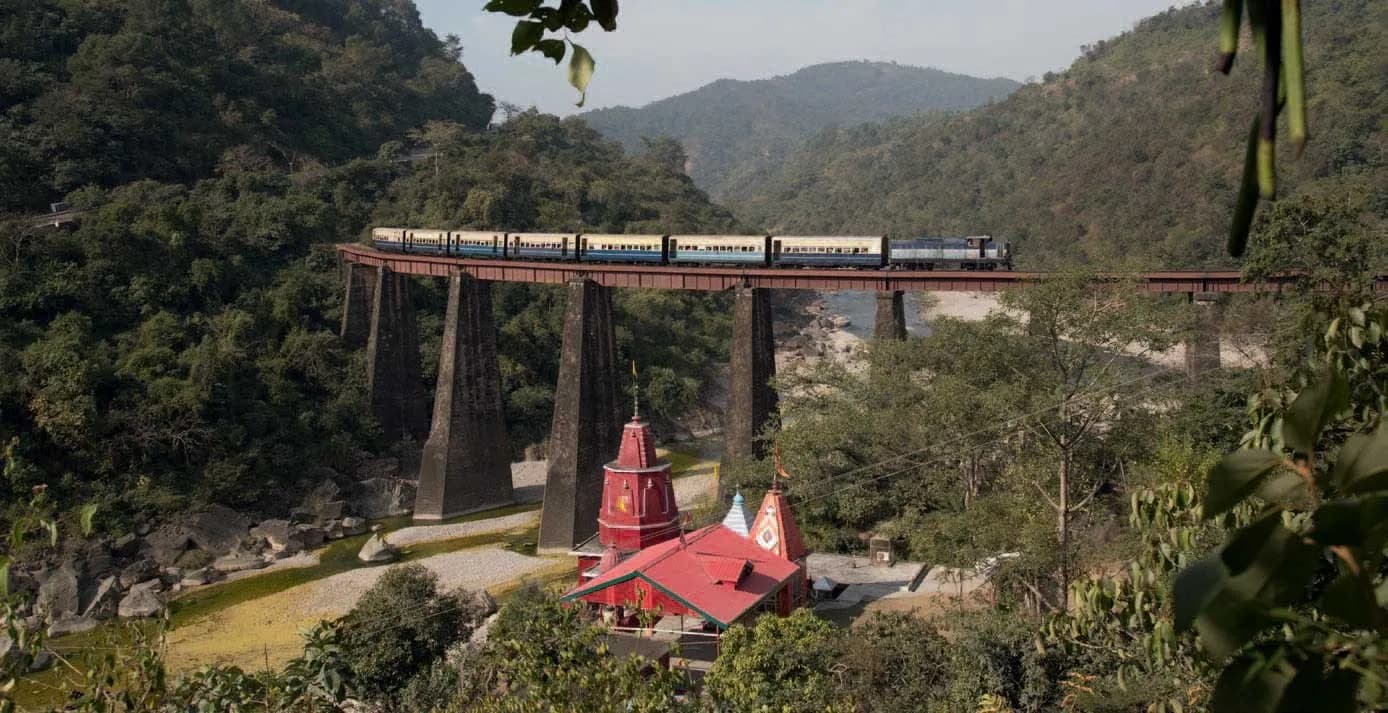
Kangra Valley Railway: India's Forgotten Heritage Train (2026)
The Kangra Valley Railway is 164 km, 993 bridges, two tunnels, 4 hours from Pathankot if you could ride it end to end. As of April 2026, you can't — but here's where it stands, what's running, and why it matters.