
Dharamshala Things to Do: A 2026 Local Guide to McLeod Ganj, Triund, Tibetan Culture and the Dhauladhars
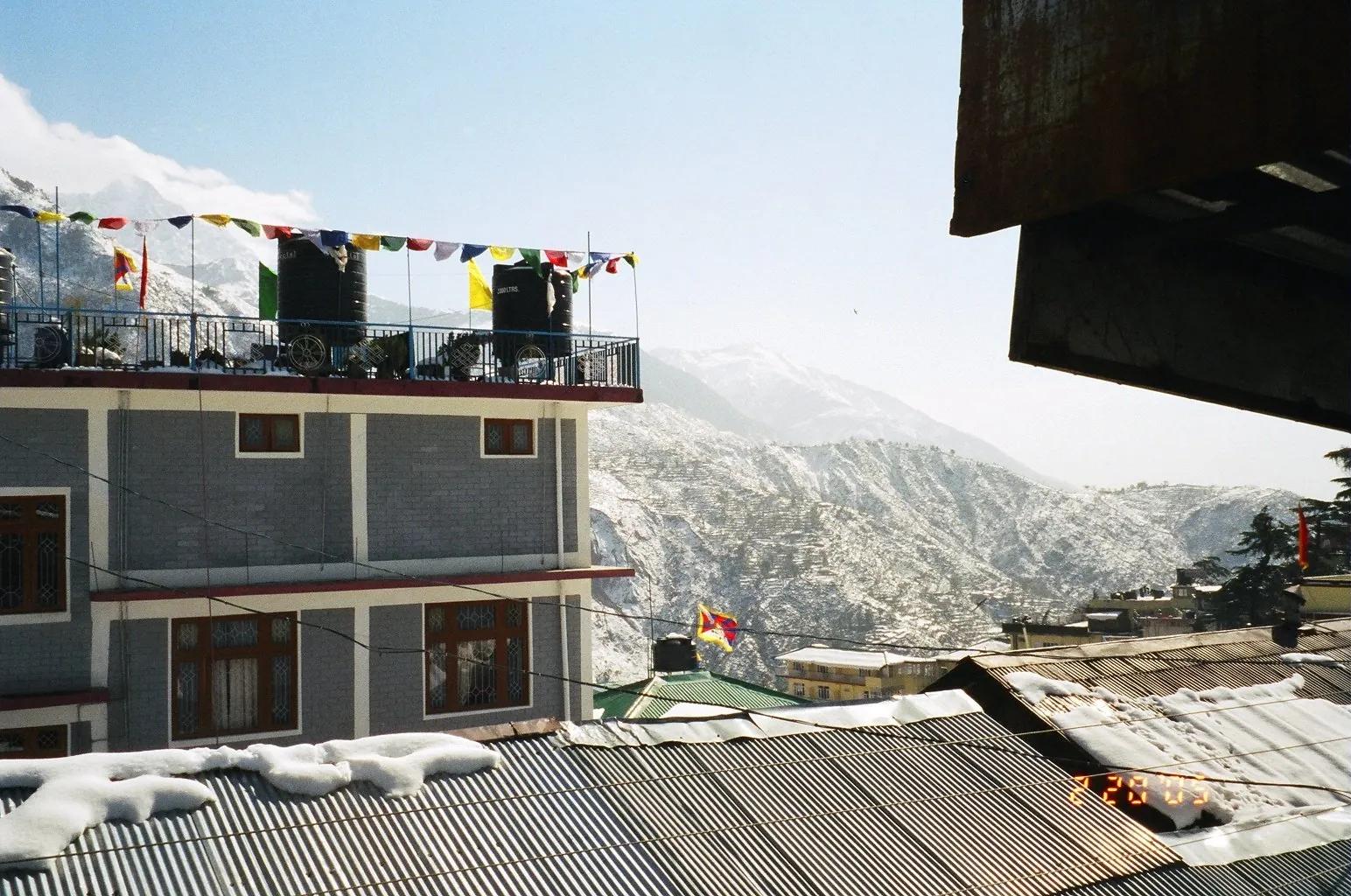
Dharamshala is two places pretending to be one. The lower town is an Indian administrative hub at 1,457 m; the upper town, McLeod Ganj, is the Tibetan seat of the Dalai Lama at 1,770 m. Nine kilometres of switchbacks connect them, and that climb covers most of what makes the place confusing to first-time visitors.
I grew up in the Kullu valley and have been driving across the Dhauladhar to Kangra for years on errands that somehow always end with a night in McLeod Ganj. Old habit. You come for a reason you can defend on paper (a cricket match, a book at the Library of Tibetan Works, a permit signature) and you leave with a half-finished cup of ginger-honey tea and a bill from a cafe you never wrote down.
This guide is what actually works in Dharamshala, organised so you can skim and go. It assumes you want context and a usable short list of places.
Dharamshala at a glance
- Best months
- Mar-Jun (trekking, clear skies), Sep-Nov (post-monsoon clarity, DIFF)
- Avoid
- Jul-Aug (heavy monsoon, 25 June 2025 Khaniyara cloudburst, 45 cloudbursts HP-wide)
- Base yourself in
- McLeod Ganj for culture, Dharamkot for quiet, lower Dharamshala only for cricket or transit
- Time needed
- Minimum 3 days. 5 days if you want Triund + a day trip
- Altitude range
- 1,457 m (lower town) to 2,850 m (Triund)
- Airport
- Kangra Gaggal (15 km), limited flights; most people train to Pathankot (85 km) or bus from Delhi
- Winter capital
- HP Legislative Assembly moved to Sidhbari near lower Dharamshala in 2017
Lower Dharamshala vs McLeod Ganj: which town do you actually want?
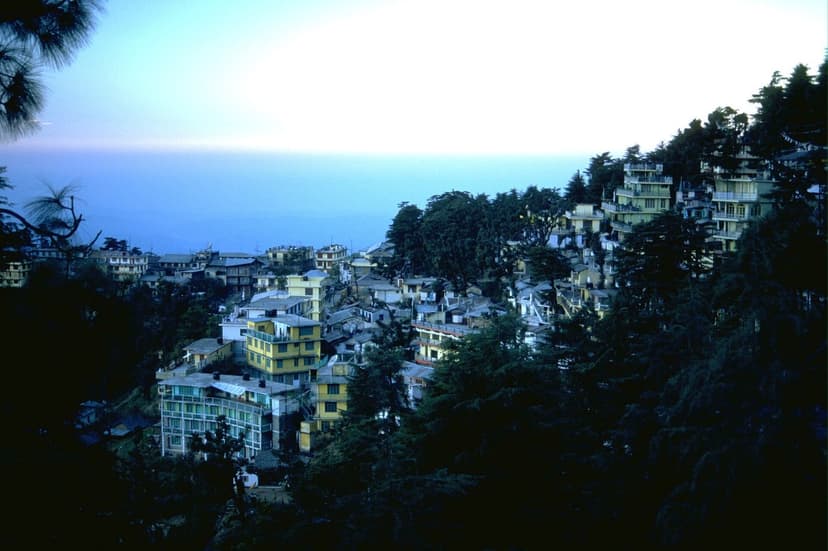
Every Dharamshala guide skips this question. Don't. If you book a hotel in lower Dharamshala assuming you'll be a short walk from the cafes and the Dalai Lama's temple, you'll spend the next three days in a taxi. Those are 9 km of steep mountain road apart.
Lower Dharamshala is where the buses arrive, the HPCA Stadium sits, and the state government has its winter offices. McLeod Ganj, up top, is what people actually mean when they say Dharamshala: the Tibetan refugee settlement, the Dalai Lama's residence, the cafes, the yoga, the trailheads. The Dharamshala Skyway ropeway opened in 2019 and now connects them in 10-12 minutes at Rs 450 one-way, which has quietly become the best first thing a visitor can do here. You understand the geography in one ride.
| Lower Dharamshala | McLeod Ganj | |
|---|---|---|
| Altitude | 1,457 m | 1,770 m |
| Feel | Busy Indian market town, state offices | Tibetan quarter, backpacker lanes, cafes |
| Main pull | HPCA Stadium, War Memorial, transit | Tsuglagkhang, treks, cafes, Bhagsu, Dharamkot |
| Stay for | Cricket, overnight train layover | Everything else |
| Walkable? | Mostly flat around bus stand | Every second lane is uphill |
| Skyway link | Lower station near bus stand | Upper station 10 min walk from main square |
My rule: stay in McLeod Ganj if you want culture and cafes, Dharamkot if you want quiet and yoga, and the lower town only if you have a reason (a match, a 5 a.m. train to Pathankot). Most of the remaining sections in this guide are upper-town experiences. I'll flag the lower-town ones as I go.
The sacred layer: Tsuglagkhang, Namgyal and the Library
McLeod Ganj became the Tibetan government-in-exile's home almost by accident. After Tenzin Gyatso crossed into India in March 1959, the Nehru government offered Mussoorie first; Dharamshala came later, partly because the Raj-era bungalows were empty and the altitude reminded him of Lhasa. What grew on that logistical decision is Tsuglagkhang.
The complex sits at the south end of McLeod Ganj, fifteen minutes on foot from the main square. Free to enter. Cameras are fine in the courtyards and outer halls but not inside the main shrine during worship. If you come for the 8 a.m. ceremony you'll share the courtyard with maybe forty monks, a half-dozen resident nuns, and a scatter of Western students in red robes who took ordination here and never fully went home.
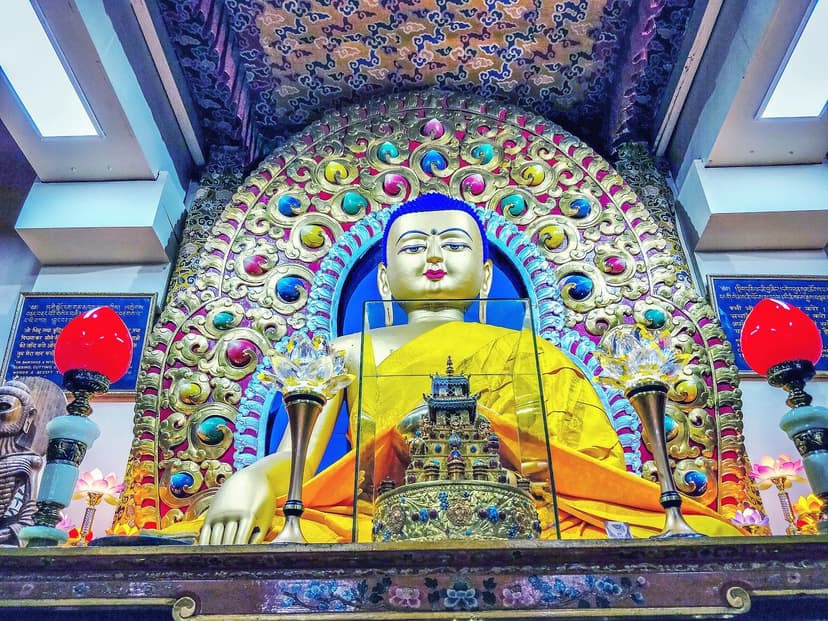
Inside the same complex: Namgyal Monastery, the Dalai Lama's personal seat, with about 200 monks drawn from all four Tibetan Buddhist lineages. The Tibet Museum on the ground floor is 45 difficult minutes. Go. It does not flinch away from the 1950 Chinese invasion, the 1959 flight, the self-immolations of the 2010s. It is the most honest history museum I have seen in India.
The most common question among first-time visitors is, can you meet the Dalai Lama? The answer is: public teachings yes, a private audience almost never. For the full protocol, schedule, and the Tibetan cultural calendar around his presence, see our companion piece: Can you meet the Dalai Lama in Dharamshala?
Fifteen minutes downhill by taxi (or a breezy 40-minute walk if your knees allow) sits the Library of Tibetan Works & Archives at Gangchen Kyishong. 80,000 manuscripts. A tiny museum of bronze ritual objects. It is also where you can sign up for a philosophy course, the cheapest way any serious visitor can spend ten mornings in one place and come home with a mind shaped by it.
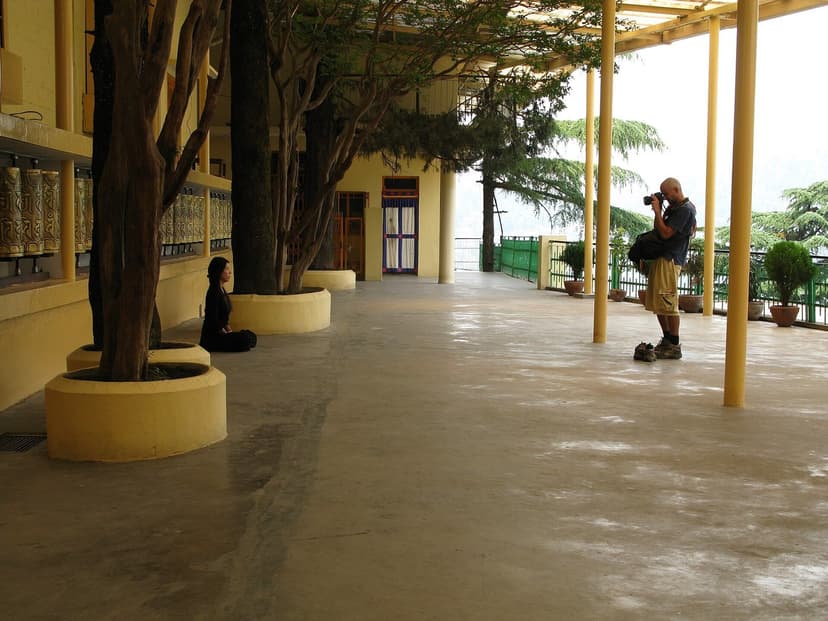
Most Kullu households (this one included) are not Buddhist; our religious life leans toward the Hindu-Shaiva devta tradition of the upper Beas valley. That has nothing to do with what happens here. You can walk the kora (the circumambulation path) at Tsuglagkhang as a tourist, or you can walk it the way old Tibetan women do, once in the morning with a full circuit and a rosary, and the walk is a genuinely different experience on the fifth circuit than on the first.
The cultural layer: Norbulingka, TIPA, and the crafts nobody wrote down
Seven kilometres south of McLeod Ganj, just past Sidhpur, is Norbulingka Institute. It was founded in 1995 to preserve Tibetan crafts that, because of the 1959 exile, lost their home monasteries and workshops almost overnight. Eight acres of walled gardens and craft halls: thangka painters, wood carvers, statue makers, seamstresses, all training apprentices.
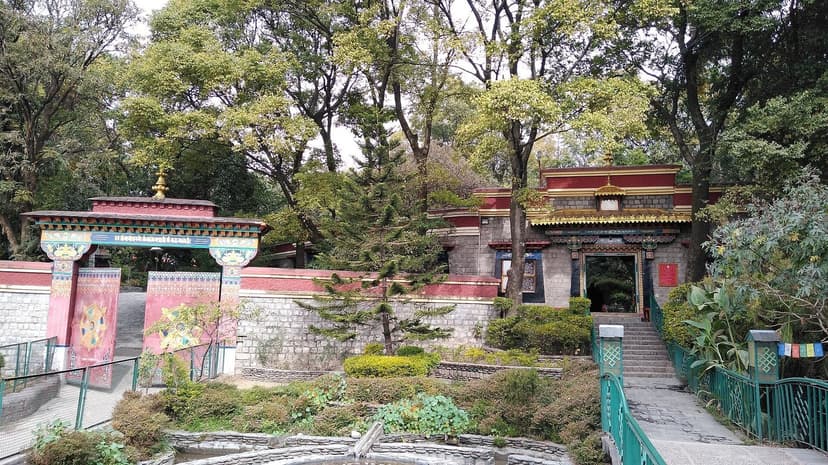
Entry is Rs 50 for Indians, Rs 200 for foreigners. Closed Sundays. The cafe in the garden does a decent thukpa at Rs 180. Go in the morning, when the painters are actually working. A master-class thangka takes 6 months to 3 years; an apprentice piece, 2-4 months. The shop sells both, and nothing on display is below the standard the older monks would accept, which is the whole point.
Want a Dharamshala local to sanity-check your 3-day plan? Email us your draft route. We will tell you which museum is closed that week, which cafe is worth the climb, and where the Bhagsu road has been rough.
TIPA (the Tibetan Institute of Performing Arts) is the other anchor of this layer, also in McLeod Ganj, near the bottom of Jogiwara Road. Lhamo opera, chham dance, folk music. Their calendar is patchy (peak showings around Losar in Feb-March and DIFF in late October); check before you go up. Small auditorium, great acoustics, often half-empty on weekdays.
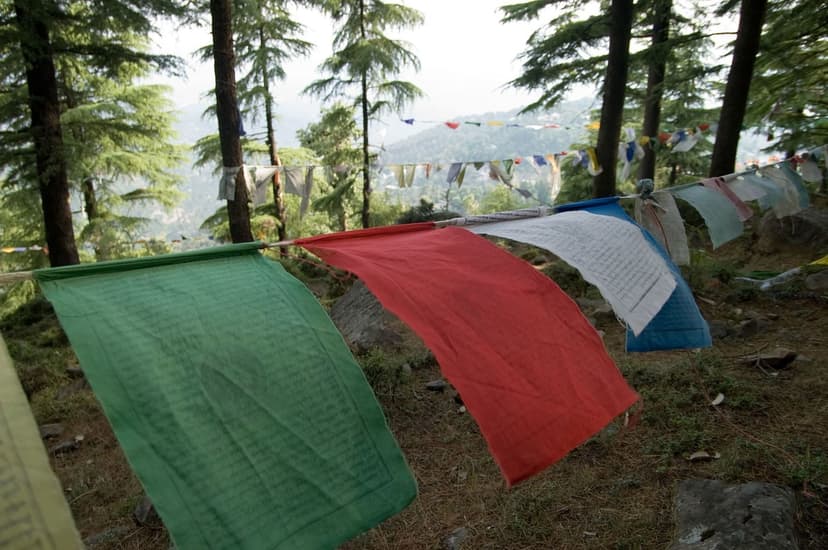
The Library of Tibetan Works I mentioned above doubles as the serious student entry point for this whole ecosystem. If you were going to sit in on one class, pick the Tuesday morning introduction to Buddhist philosophy. It is taught by a resident geshe and translated into English on the fly by one of the long-stay Western students, and it is genuinely hard. Expect to come out with pages of notes and then spend weeks afterwards trying to untangle what the teacher actually meant.
The adventure layer: Triund, HPCA, the Skyway, Kareri
If you have read about Dharamshala anywhere, you have read about the Triund trek. It deserves its reputation, which is not something I say lightly about popular treks.
Triund is 9 km one way from Gallu Devi temple (or 7 km from Dharamkot), topping out at 2,850 m on a ridge that looks straight up at the Dhauladhar wall. The last kilometre is steep enough to have a local nickname: the 22 Curves. Most hikers take 4-5 hours up, 3 hours down. There is a rest-stop teahouse at Magic View Cafe and another at Snowline, which is the good one for maggi and black tea.
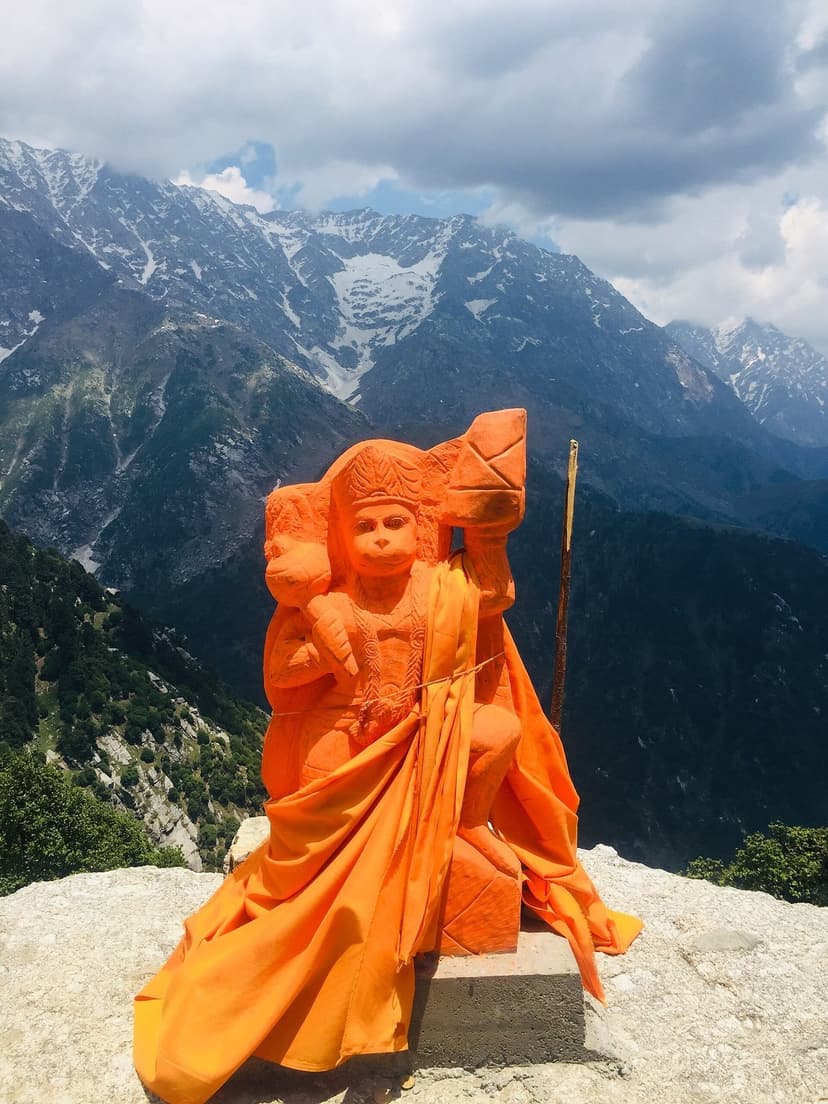
New 2026 rules. HP Forest Dept handed day-to-day management of Triund to a private operator in March 2026 (tender opened 27 March). Entry is now Rs 100 per tourist at the Gallu check-post; pitching a tent on the meadow is Rs 275 per night. Summer entry window is 8:00 a.m. to 2:00 p.m., winter 9:00 a.m. to 3:00 p.m. Locals with traditional rights are exempt. Private operators cannot raise these rates on their own. Source: First Verdict, 26 March 2026.
For the full breakdown of the trek, stages, camp operators, packing and weather windows, see: Triund Trek: Complete Beginner’s Guide.
HPCA Stadium: cricket with a snow wall behind it
The HPCA Stadium in lower Dharamshala has, I am willing to defend, the most photographed boundary in Indian cricket. The Dhauladhar wall sits about 30 km behind the pavilion, snow-topped through most of the cricket season, and the stadium itself (capacity around 23,000) feels improbably small against that backdrop. IPL 2026 has Punjab Kings playing three home matches here in mid-May, versus Delhi Capitals on 11 May, Mumbai Indians on 14 May, and Royal Challengers Bengaluru on 17 May. 7:30 p.m. starts, every one. Tickets run Rs 750 for the general stands up to Rs 7,500 for VIP boxes; hospitality packages start around Rs 25,000.
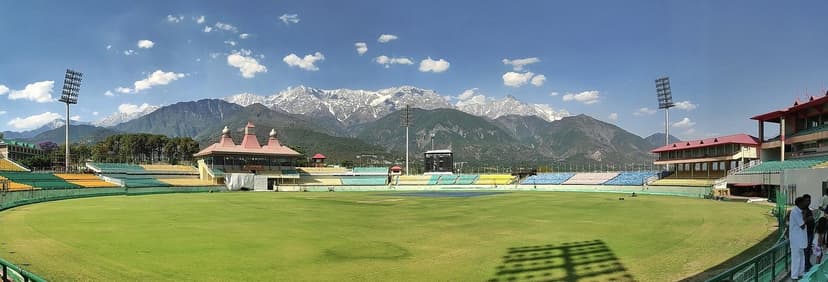
If there is no match, you can still visit. The stadium runs a basic tour on non-event days that takes you through the players' pavilion, the commentary box, and out onto the edge of the playing field for the panorama. Even if you do not follow cricket, the photo is worth it. Entry is nominal, typically Rs 50-100 per person, managed by HPCA staff at the gate. A Reddit traveller summed it up better than I can, talking about how the hell anyone got a stadium built at this altitude, and how the Dhauladhar just knocks the wind out of you on first sight (paraphrased from u/RadlogLutar, r/ipl).
Dharamshala Skyway ropeway
Opened October 2019, runs daily 10 a.m. to 5 p.m. A 1.8 km cable car that carries you from the lower town to a station about a 10-minute walk from McLeod Ganj main square. Single ride Rs 450 per person, 10-12 minutes in the air. On a clear day, you see the entire Kangra valley laid out below you: tea gardens, the Pong reservoir, the chain of villages stepping up the Dhauladhar foothills.
Kareri Lake (2,934 m) for those who want a quieter trek
Kareri Lake is the anti-Triund. 9 km north-west of Dharamshala as the crow flies, two-day trek from Kareri village, frozen December to March/April. The lake sits in a high basin with a small Shiva-Shakti temple and a scatter of Gaddi shepherd huts. Hindi sources call it a place that has escaped most tourists' sharp eyes, and they are, for once, not exaggerating. May-June and September-October are prime windows. You will need a local guide: the last kilometre is pathfinding across scree.
The view layer: Naddi, St John, and the Dal Lake that isn't in Kashmir
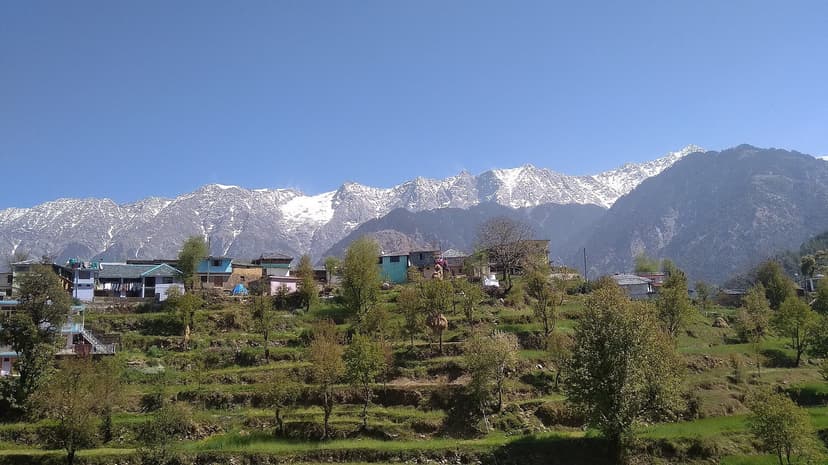
Naddi is a small village 3 km above McLeod Ganj. Go for sunrise. The taxi stand at Naddi is the viewpoint; stand there at 5:45 a.m. in April and the Dhauladhar wall goes from violet grey to alpenglow pink in about eight minutes. A Reddit commenter (u/Away_Profit962) recommends basing yourself in Dharamkot or lower Dharamshala for peace, then "pre-booking a taxi to Naddi the night before so the driver is not still shaking off sleep at 5 a.m." Good advice.
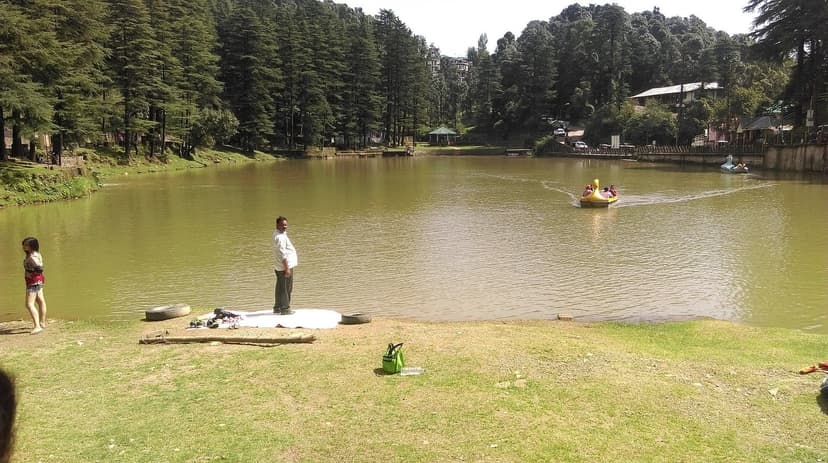
Dal Lake (the Dharamshala one, not the Srinagar one) sits 11 km from the lower town at Tota Rani village, at 1,775 m, ringed by deodars. It is not dramatic. It is quiet. On the bank sits Durveshwar Mahadev Temple, which no English travel blog mentions, and every September the village holds the Nag Devta fair. As of March 2026, the Kangra administration has renovated the lake shore with new ghats, an aarti platform, and a selfie point; see Amar Ujala, 18 March 2026. Go early morning or late afternoon.
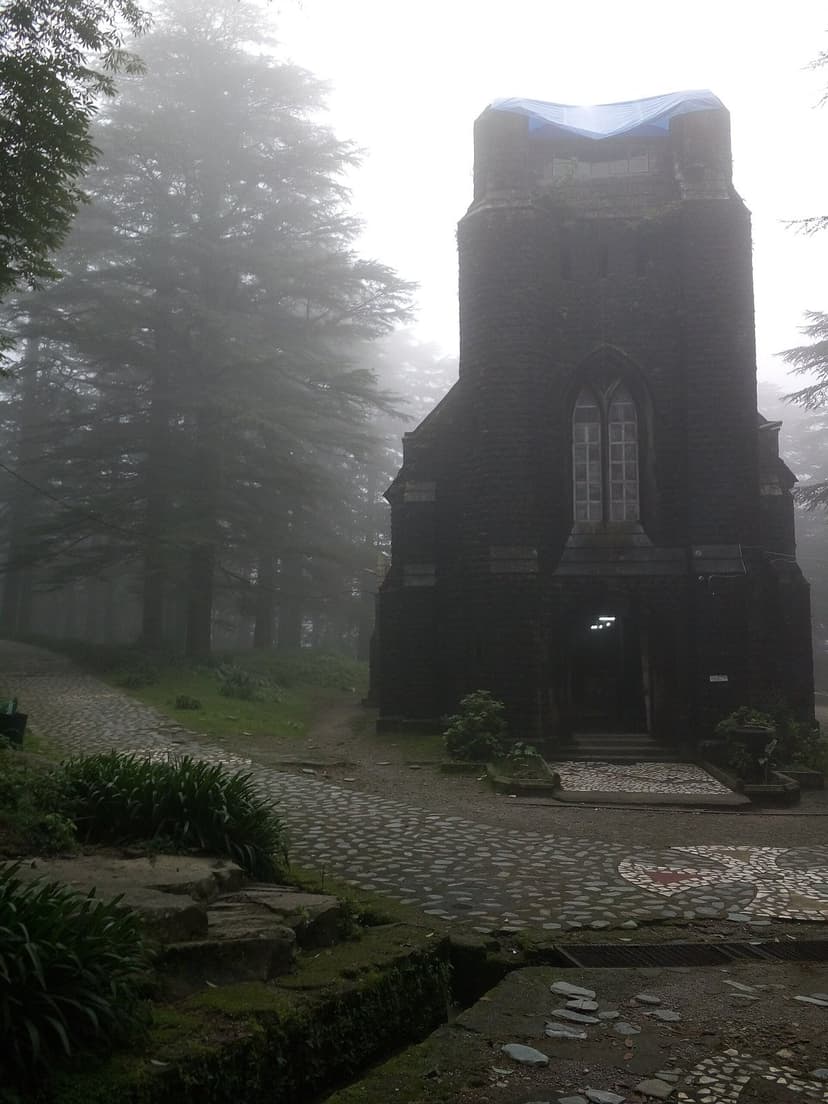
St John in the Wilderness is the neo-gothic Anglican church you pass on the road between Forsyth Ganj and McLeod Ganj. Built in 1852, it holds the grave of Lord Elgin (the Viceroy who died in India in 1863) in its cemetery. The Belgian stained glass in the nave survived the 1905 Kangra earthquake, which dropped the original spire. Open most daylight hours, free entry. The building is worth ten quiet minutes on your way up or down; the inside smells of deodar and damp stone, and if you time it for late afternoon the stained glass drops coloured light onto the altar in a way that is hard to describe without sounding hysterical.
What the Hindi press writes about that the English guides miss
Aghanjar Mahadev at Khaniyara, 8 km from Dharamshala, is a Shiva temple with two stories stacked on it. The first is old: local legend says Arjuna performed tapasya here and received the Pashupatastra from Shiva before the Mahabharata war. The second is recent and improbable. Baba Shri Ganga Bharti's sacred dhuna (fire pit) has reportedly burned uninterrupted for 500 years; Maharaja Ranjit Singh, cured here of a stomach complaint, gifted a silk shawl to the Baba, who threw it into the fire and pulled out hundreds of identical shawls, telling the Maharaja's men, "Pick your own." Ranjit Singh donated the land.
The third layer is 2025. When Abhay Singh, the IIT Bombay aerospace engineer who became a sadhu at the Maha Kumbh and was briefly the most-followed religious figure on Indian Instagram, married his partner Pratika, he chose Aghanjar Mahadev. The temple went viral overnight. You can now get a Khaniyara local to walk you up there for about Rs 200 and they will point out the exact spot.
Khaniyara monsoon warning. On 25 June 2025, a cloudburst in the Manuni Khad at Khaniyara swept away multiple labourers. HP recorded 45 cloudbursts in 2025, roughly twice the normal count, with Rs 883 crore in damage. If you visit between mid-June and mid-September, stay on the McLeod Ganj ridge, not on the khad (stream) bowls at Khaniyara or lower Bhagsu. Sources: ETV Bharat, Aaj Tak.
Chamunda Devi Temple, 15 km from Dharamshala on the Palampur road, is one of the 51 Shakti Peethas. It is around 700 years old and has, by Google Maps review count, more traffic than any other attraction in Himachal Pradesh. The Hindi sources flag something English ones miss: a daily symbolic shava (corpse) ritual that has run for centuries. Worshippers do not see it; the priest performs it in a closed chamber before dawn. You will not find it in any English brochure.
Bhagsu and Dharamkot: the cafe ridge
McLeod Ganj main square is the cultural hub; Bhagsu and Dharamkot are where people actually live when they stay for weeks.
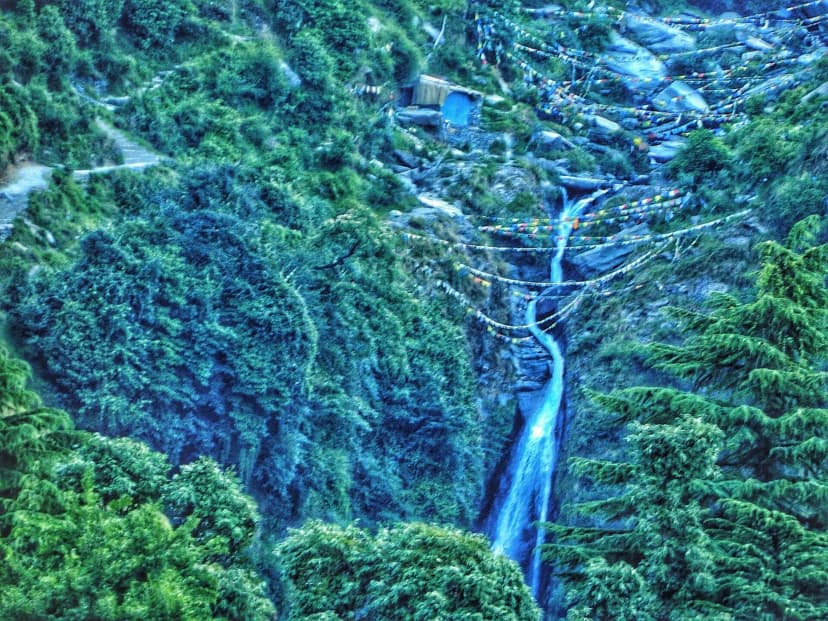
Bhagsu is a 15-minute downhill walk from the main square, built around the Bhagsu Nag Temple, an old Shiva site with a sacred bathing pool. A short uphill forest walk from the temple brings you to the Bhagsu waterfall. The flow is weakest in April-May, peaks in July-August (when it is also dangerous after the Khaniyara warning above), and settles into its magic window in September and October. Shiva Cafe, halfway up the waterfall trail, is the place every returning backpacker mentions; overrated food, irreplaceable atmosphere, and you will probably sit next to an Israeli ex-soldier talking to a Russian digital nomad about whether the trail is open past the falls.
Dharamkot is another 15 minutes uphill from Bhagsu. Quieter, greener, a spine of slate-roof houses and yoga schools along a single road. Tushita Meditation Centre is here. So is one of the longest-running Vipassana centres in the region. The Israeli and Russian long-stay communities settled into Dharamkot from the early 2000s; Hindi tabloids like Times Now specifically call out McLeod Ganj as a "second home" for Russian travellers, more visited than Goa or Kashmir. If that sounds strange, spend an evening at a cafe on the Upper Bhagsu road and count the accents.
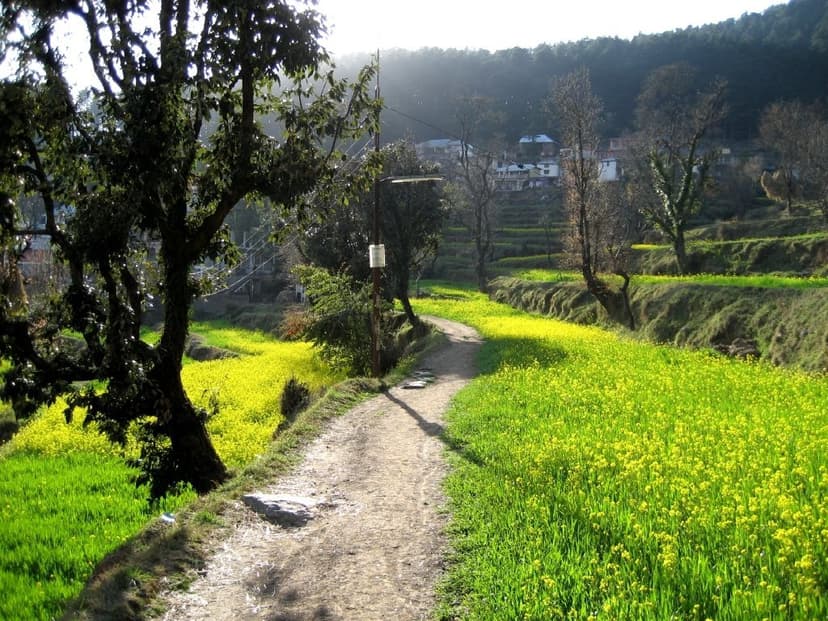
Cafes worth going back to: Moonpeak Espresso on Temple Road for the coffee (single-origin, a rarity in HP, roughly Rs 200-500 a meal); Nick's Italian Kitchen on Jogiwara Road for the spaghetti (Rs 300-600, and yes the owner is Tibetan not Italian, which is part of the story); Illiterati above Jogiwara for the books and the Dhauladhar view; Hope Cafe and Stories in the main square for the samosa chai combo at Rs 150. Skip Sandy's Kitchen unless you need a Nutella pancake and you need it immediately.
Because 80% of Dharamshala is uphill or downhill. A geared cycle will certainly help. And you can wander near Norbulingka Institute above Sidhpur with a bowl of thukpa or laping after.
u/kanishkmax, r/Dharamshala
Yoga and meditation: the Upper Bhagsu and Dharamkot areas have steady drop-in classes, including at Tushita and several private studios that open and close every six months. One Reddit regular (u/varuneco) notes that serious practitioners do fine with drop-ins here, but he warns off full YTT programmes in the peak monsoon months because of the damp. Good instinct.
Day trips: Kangra Fort, Masroor, Palampur, Bir
Dharamshala is a strong base for day trips. Four are worth the drive.
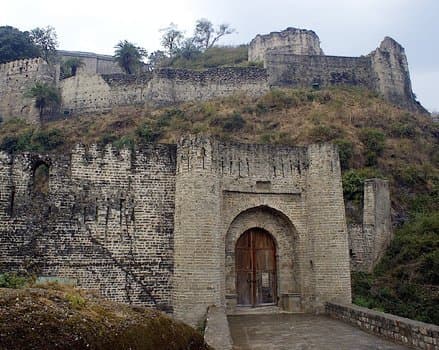
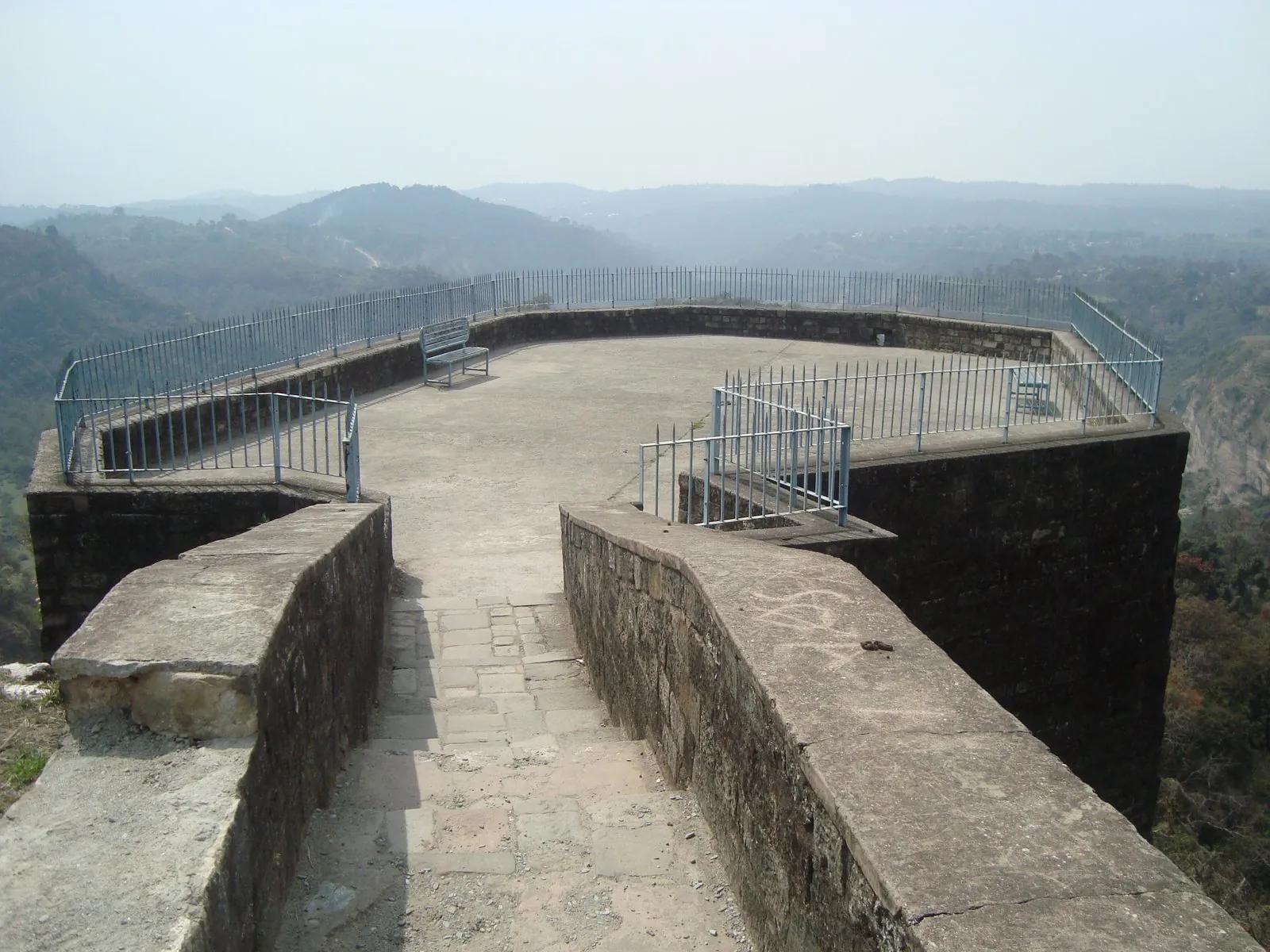
Kangra Fort is twenty kilometres south of Dharamshala, about forty-five minutes by taxi, and it is one of those places where Indian history stacks up on itself until you feel a little dizzy. Mahmud of Ghazni sacked it in 1009 CE, apparently carting off enough treasure to keep Ghazni solvent for a decade. Mughal governors lived in it. Sikh generals held it in the nineteenth century. The 1905 Kangra earthquake then collapsed much of the inner citadel in a long afternoon that killed roughly 20,000 people across the valley. Entry is Rs 25 for Indians, Rs 300 for foreigners. The audio guide is worth the small rental, because the fort is large enough that without it you wander through the outer courts and miss the palace and the Vajreshwari temple ruins entirely. For the full fort + Masroor route, see: Kangra Fort and Masroor: Himachals ignored monuments.
Masroor Rock-Cut Temples, 40 km from Dharamshala in the opposite direction, is a complex of 15 8th-century Hindu monolithic temples carved out of a single sandstone ridge. Think of it as the Kangra valley's quiet answer to Ellora. Almost nobody visits. Free entry, open sunrise to sunset. Pair with Kangra Fort for a long day.
Palampur is 35 km east, reached on the Pathankot-Jogindernagar narrow-gauge line (a heritage toy train if you time it right) or by bus. Tea gardens, Wah Tea Estate covering 526 acres across four generations of the Prakash family, Baijnath Temple from 1204 AD, and a slower pace that makes it a good alternate base if McLeod Ganj feels too busy for the kind of trip you want.
Bir Billing, 70 km / 2 hours, is the paragliding capital of India and by most accounts the second-best paragliding site in the world. Take-off at Billing, 8,200 ft; landing at Bir, 4,600 ft. A tandem flight with a certified pilot is usually Rs 2,500-3,500 and lasts 20-30 minutes, depending on the thermals. November-December and March-May are the strong flying months. Even if you do not fly, Bir is worth a visit for the Tibetan Colony and the nearby Sherab Ling monastery. For the full paragliding breakdown, see: Bir Billing Paragliding Guide.
Getting there, getting around, where to stay
Kangra Gaggal Airport sits 15 km south of Dharamshala. IndiGo and Alliance Air run a thin schedule from Delhi, about 1 hour 20 minutes in the air. The catch: flights cancel when the cloud drops below the ridge, which in a bad monsoon week can mean several cancellations in a row. Flying into Kangra in July or August is a gamble; prefer surface travel in the monsoon months. A safer plan is the Vande Bharat train from Delhi to Amb Andaura (5 hours, cheap) with a 3-hour taxi the rest of the way, or the HRTC Himsuta Volvo from Delhi ISBT Kashmere Gate. The Himsuta is Rs 1,400-1,700, takes 12-13 hours, and the 8 p.m. sleeper variant gets you in by 8 the next morning.
Within Dharamshala, the Skyway links lower town to McLeod Ganj (Rs 450 one-way, 10-12 min). For the rest, walk or take local taxis; rates are fixed at the taxi stand boards. Bhagsu and Dharamkot are walkable from McLeod Ganj if you do not mind slope; budget 15-20 minutes each way. Petrol pumps are in lower Dharamshala and Dari; fuel up before heading for Triund or the Chamunda-Palampur road.
Where to stay: in McLeod Ganj, Zostel McLeodganj (dorm Rs 700-900, privates Rs 2,000-2,500) for solo travellers, or Nowhere McLeodganj for the rooftop view. In Dharamkot, Bhagsu View (Rs 1,500-2,500) for the long walks. Lower Dharamshala has better-than-you-think mid-range options around the bus stand, from Rs 1,200. Avoid the sub-Rs 800 "budget hotels" on Jogiwara Road; most are fronts for commission rackets.
3-day budget in Dharamshala (per person, mid-range)
| Category | Amount | Note |
|---|---|---|
| Accommodation (3 nights, double @ Rs 2,000) | Rs 3,000 | Split across 2 travellers |
| Food (9 meals @ Rs 250-400) | Rs 2,700 | Mix of cafes + Tibetan |
| Skyway (round trip) | Rs 900 | Optional if you enter McLeod Ganj by taxi |
| Triund day hike (permit, tea, snacks) | Rs 500 | Gallu Rs 100 + rest on-trail |
| Norbulingka entry + cafe | Rs 250 | Rs 50 + thukpa + chai |
| Local taxis / Skyway extras | Rs 800 | Naddi, Dal Lake, Bhagsu |
| Shopping (prayer flags, thangka print, book) | Rs 1,500 | Optional |
| Total | Rs 9,650 |
Want a cost sanity-check? Email us what your hotel quoted. We will tell you if it is the April 2026 going rate, high by tourist-month markup, or flat-out optimistic.
A 3-day Dharamshala plan that works
Day 1: arrive, orient, Tsuglagkhang
Arrive McLeod Ganj morning. Drop bags. Walk to Tsuglagkhang for the 11:30 a.m. quiet hour (post-morning prayer). Tibet Museum for an hour. Kora walk. Late lunch at Moonpeak or Nicks. Evening: Naddi sunset. Dinner in main square.
Day 2: Triund or Norbulingka
Pick one. Fit, good weather: 6 a.m. taxi to Gallu Devi, 9 km to Triund, back by 4 p.m. Otherwise: Norbulingka in the morning, Library of Tibetan Works afternoon, Bhagsu waterfall at 4 p.m. Evening: TIPA if theres a show, else cafe.
Day 3: day trip or slow morning
Choice of: Kangra Fort + Masroor (full day, own taxi Rs 3,000), Bir Billing paragliding (tandem, 6 hrs), or Palampur tea gardens (Narrow Gauge Railway). Back to McLeod Ganj for dinner, pack. Early morning departure or last Skyway down to lower town for the night bus.
Optional Day 4: Dal Lake + Chamunda Devi
If youre extending: Dal Lake morning (go early for the aarti), Chamunda Devi Temple afternoon, back by evening. Eat at any Kangra dhaba on the way for the sidu + ghee that McLeod Ganj cafes do not make.
Optional Day 5: Dharamkot slow day
A yoga class, breakfast at a German Bakery clone, Tushita drop-in meditation, cafe crawl on the Upper Bhagsu road, early dinner at a family-run Tibetan kitchen. Treat this as a recovery day after Triund.
Seasonal note. The Dharamshala International Film Festival, DIFF 2026, happens 29 October to 1 November at McLeod Ganj; an online programme follows 2-9 November. Losar (Tibetan New Year) falls in February-March and is the other big cultural peak. Avoid 15 July to 31 August unless the monsoon is specifically your thing; the Khaniyara and Bhagsu lower bowls flood fast.
Everything on one map
Questions people ask before they come up
Whats the difference between Dharamshala and McLeod Ganj?
McLeod Ganj is the upper town, 9 km uphill from Dharamshala at 1,770 m vs 1,457 m. Dharamshala is the administrative centre and HPs winter capital since 2017; McLeod Ganj is the Tibetan cultural hub known as Little Lhasa. Theyre connected by road and by the Dharamshala Skyway ropeway (1.8 km, 10-12 min, Rs 450 one-way). Most tourist activities are in McLeod Ganj.
How many days do you need in Dharamshala?
Minimum 3 days for the core experience (Tsuglagkhang, Namgyal, Norbulingka, one day of walking around McLeod Ganj and Bhagsu). Add a day for Triund, another for Kangra Fort or Bir Billing. Five days is the sweet spot. Three weeks is what most long-stay travellers end up doing.
Whats the best time to visit Dharamshala?
March-June for pleasant weather, clear Dhauladhar views, and trekking. September-November for post-monsoon clarity and DIFF (late October). December-February for possible snow and Losar. Avoid July-August: heavy monsoon, cloudbursts, and the Khaniyara/Bhagsu flash-flood risk.
Can I meet the Dalai Lama in Dharamshala?
Public teachings happen at Tsuglagkhang several times a year, open to registered attendees. Private audiences are effectively impossible for walk-in visitors. Check dalailama.com for the current schedule before planning, and see our dedicated guide: Can you meet the Dalai Lama?
How hard is the Triund trek?
Easy to moderate by Himalayan standards. 9 km one way from Gallu Devi trailhead, topping out at 2,850 m. Takes 4-5 hours up, 3 hours down for a reasonably fit walker. The last kilometre (the 22 Curves) is steep. Good shoes essential; altitude sickness rare but possible.
How do I get IPL tickets at HPCA Stadium?
Through HPCAs official website and authorised partners (iplt20.com, BookMyShow, Paytm Insider). For IPL 2026, Dharamshala hosts three Punjab Kings home matches on 11, 14 and 17 May. Prices start at Rs 750 for general stands and go up to Rs 7,500 for VIP boxes. Book early; Dharamshala matches sell out fast because of the view.
Is Dharamshala safe for solo female travellers?
Generally yes. McLeod Ganj has a dense tourist infrastructure and a welcoming community; Bhagsu and Dharamkot are used to long-stay solo women travellers from many countries. Standard precautions apply for late-night walks on isolated stretches and on the Triund trail. The local police station is on Temple Road.
How is the Dharamshala Dal Lake different from the Srinagar one?
The Dharamshala Dal Lake is a small deodar-ringed pond at Tota Rani, 11 km from the lower town, at 1,775 m. Nothing like the Kashmir one. It holds the Nag Devta fair every September. As of March 2026, the Kangra administration has rebuilt the ghats, added an aarti platform, and (inevitably) a selfie point.
Whats actually worth eating in McLeod Ganj?
Tibetan: momos (try Tibet Kitchen or Tibetan Quarter), thukpa, tingmo, Tibetan bread with honey. Cafe: Moonpeak Espresso for coffee, Nicks for pasta, Illiterati for the views, Hope Cafe for chai. Skip Sandys unless youre with a toddler who needs a Nutella pancake. For a real Himachali dham (Kangri dham with boti-cooked chana madra, teliya maah, boondi meetha), you will need to catch a local wedding; cafe versions are adapted for tourists.
Is it safe to visit during monsoon?
July-August is risky. The 25 June 2025 cloudburst in Manuni Khad at Khaniyara swept away multiple labourers. HP recorded 45 cloudbursts in 2025 versus a normal 20-25. If you must visit in monsoon, stay on the McLeod Ganj upper ridge, avoid Khaniyara and the lower Bhagsu bowls, and do not attempt the Bhagsu waterfall trail after heavy rain.
Where can I do yoga or meditation?
Tushita Meditation Centre (Dharamkot) for structured introduction-to-Buddhism courses and silent retreats. Vipassana centre outside Dharamshala for 10-day retreats. Multiple private yoga studios in Upper Bhagsu and Dharamkot offer drop-in classes; ask at your guesthouse. Serious practitioners tend to do well with drop-ins; longer programmes are better avoided in the damp monsoon months.
Is the Hindi-side Aghanjar Mahadev worth a trip?
Yes, especially if youre curious about how viral internet moments intersect with old HP legends. Its 8 km from Dharamshala at Khaniyara, famous for its Arjun-Shiva story, a 500-year akhand dhuna, and the 2025 IIT Baba Abhay Singh wedding that turned it into a Hindi-press sensation overnight. Allow half a morning. Avoid monsoon (Khaniyara cloudburst risk).
Sources and further reading
Primary sources: hpkangra.nic.in (Kangra district official); norbulingka.org; iplt20.com IPL 2026 fixtures; HPCA Stadium Dharamshala official.
2026 news and updates: First Verdict 26 March 2026 (Triund fees); Amar Ujala 18 March 2026 (Dal Lake renovation); ETV Bharat and Aaj Tak (2025 monsoon casualties); Cricket News 6 April 2026 (IPL 2026 Dharamshala fixtures); FilmFreeway DIFF 2026.
Hindi context and regional depth: TV9 Hindi and First Verdict on Aghanjar Mahadev; Times Now Hindi on the Russian long-stay community; Kareri Lake official page.
Community voices: Reddit r/Dharamshala, r/yoga, r/ipl (April 2026 mining), author's field notes from visits to McLeod Ganj, Bhagsu, and the wider Kangra valley over the years.
Background reading: McLeod Ganj (Wikipedia); HPCA Stadium; Dhauladhar range.
Related Refuje guides
About Rajesh Thakur
Rajesh Thakur grew up in the Kullu valley and has been writing about Himachal Pradesh travel and culture since 2018. He's most at home in upper Kullu, Lahaul, and the Spiti circuit, and has done the Manali-Kaza loop more times than he's counted.
You Might Also Like
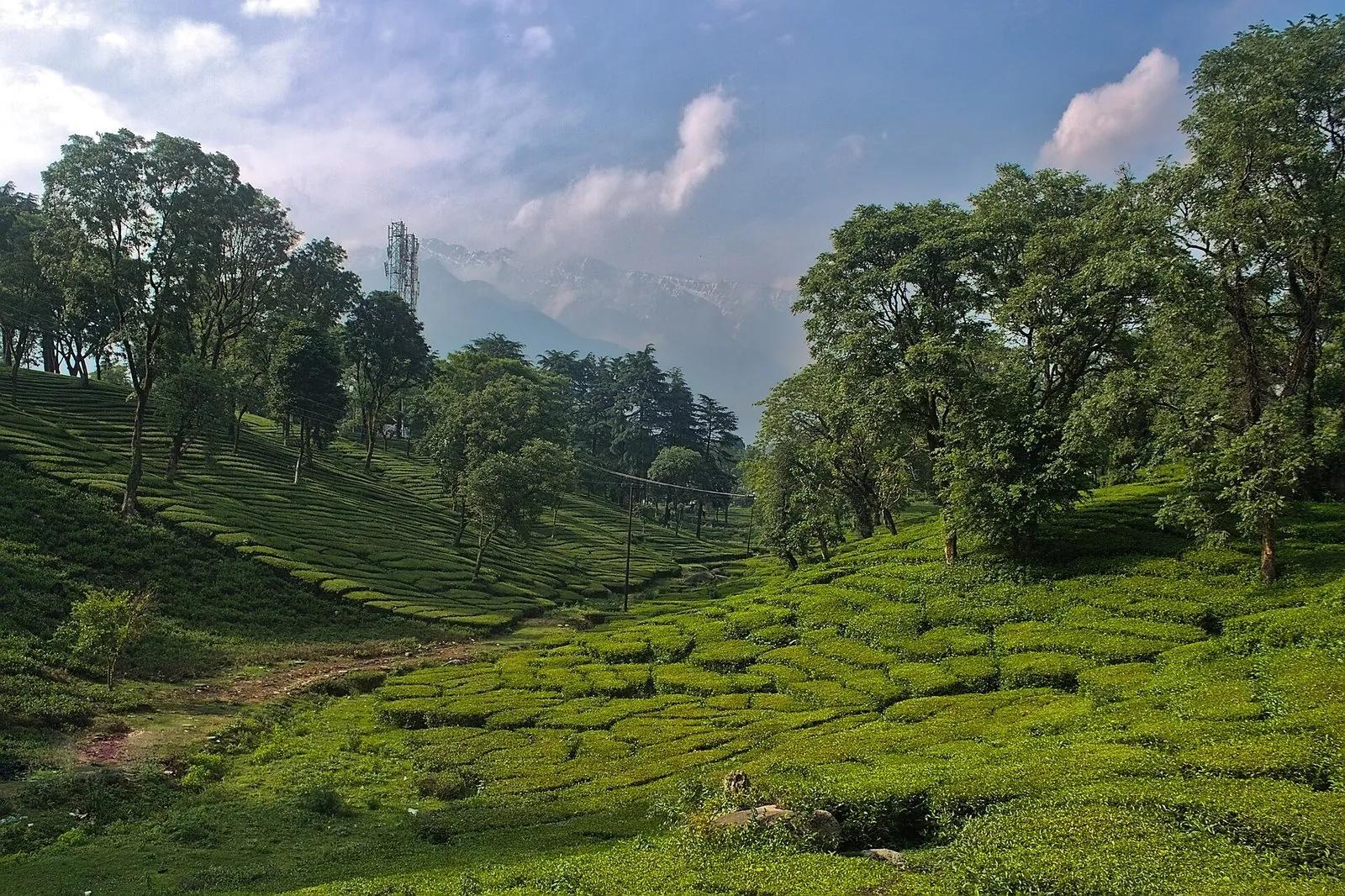
Palampur: India's Tea Capital That Nobody Visits
Thirty-five km from Dharamshala, a fraction of the tourists. India's only all-orthodox tea region, a 1204 CE temple that refuses to burn Ravana, a monastery of yogis, and a narrow-gauge railway that just came back from the dead.
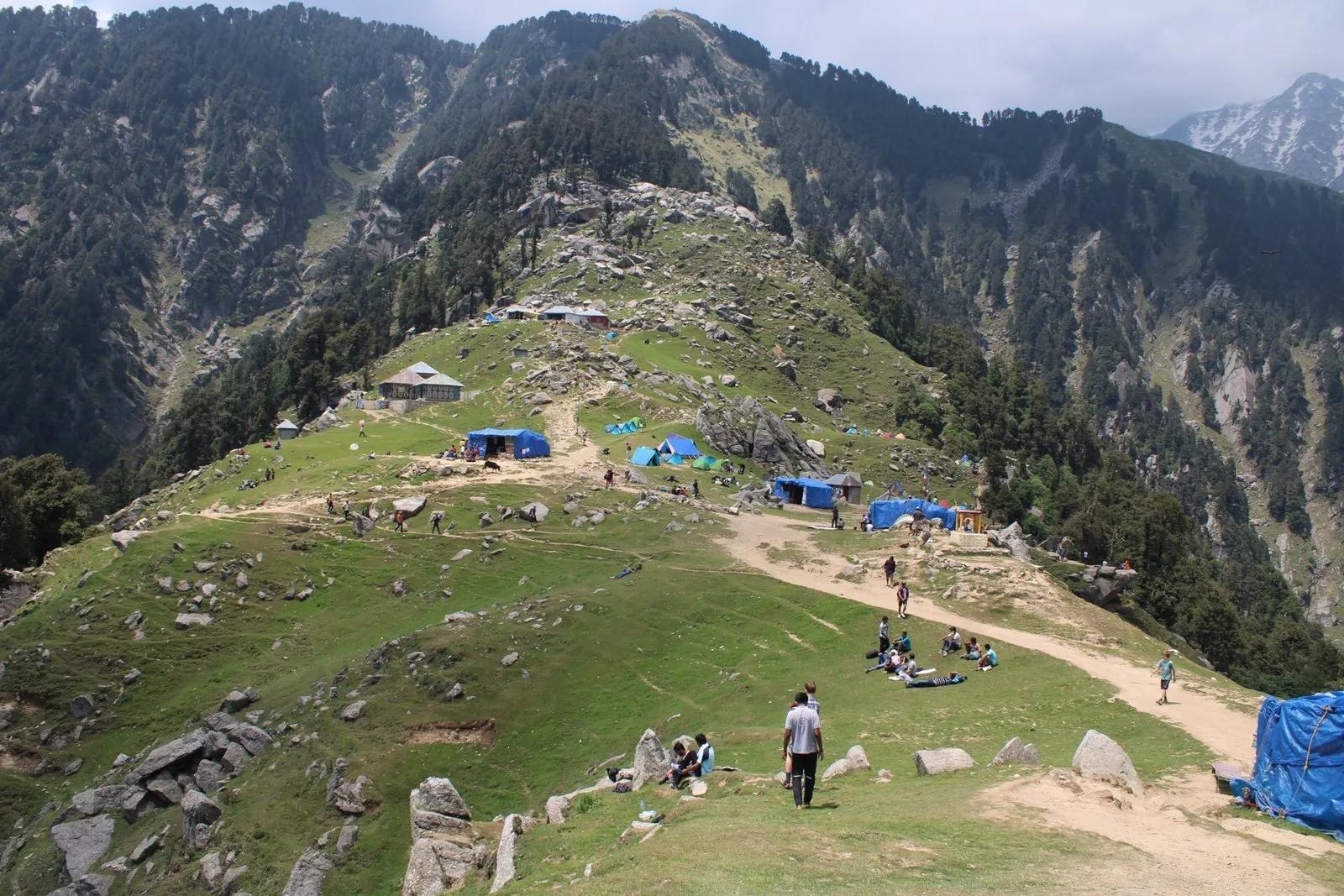
Triund Trek 2026: Complete Beginner's Guide (Route, Checkpoint, Camping & What Nobody Tells You)
Nine km, 1,100 m of gain, and one rule that turns hikers back: the 11:30 AM Gallu Devi check-post. Triund is HP's most-walked beginner ridge trek, with Forest Department fees halved to Rs 100 in January 2024 (per The Tribune), a HP High Court cap of 400 trekkers and 20 tents, and operator packages from Rs 999. Written from Kullu with the Tribune backbone, the Reddit deep-mine, and the four extensions almost no guide covers.
Kangra Fort and Masrur: HP's Ignored Heritage Belt (39,400 Reviews, Zero Coverage)
Three monuments inside a sixty-kilometre triangle on the Kangra plain quietly carry 39,400 Google reviews between them, yet not one comprehensive English-language travel guide exists. Kangra Fort, Masrur rock-cut temples, Chamunda Devi Nandikeshwar Dham, the Bajreshwari Shakti Peetha, Baijnath Vaidyanatha, and a one-day heritage circuit from Dharamshala. Written from Kullu, two valleys west.