
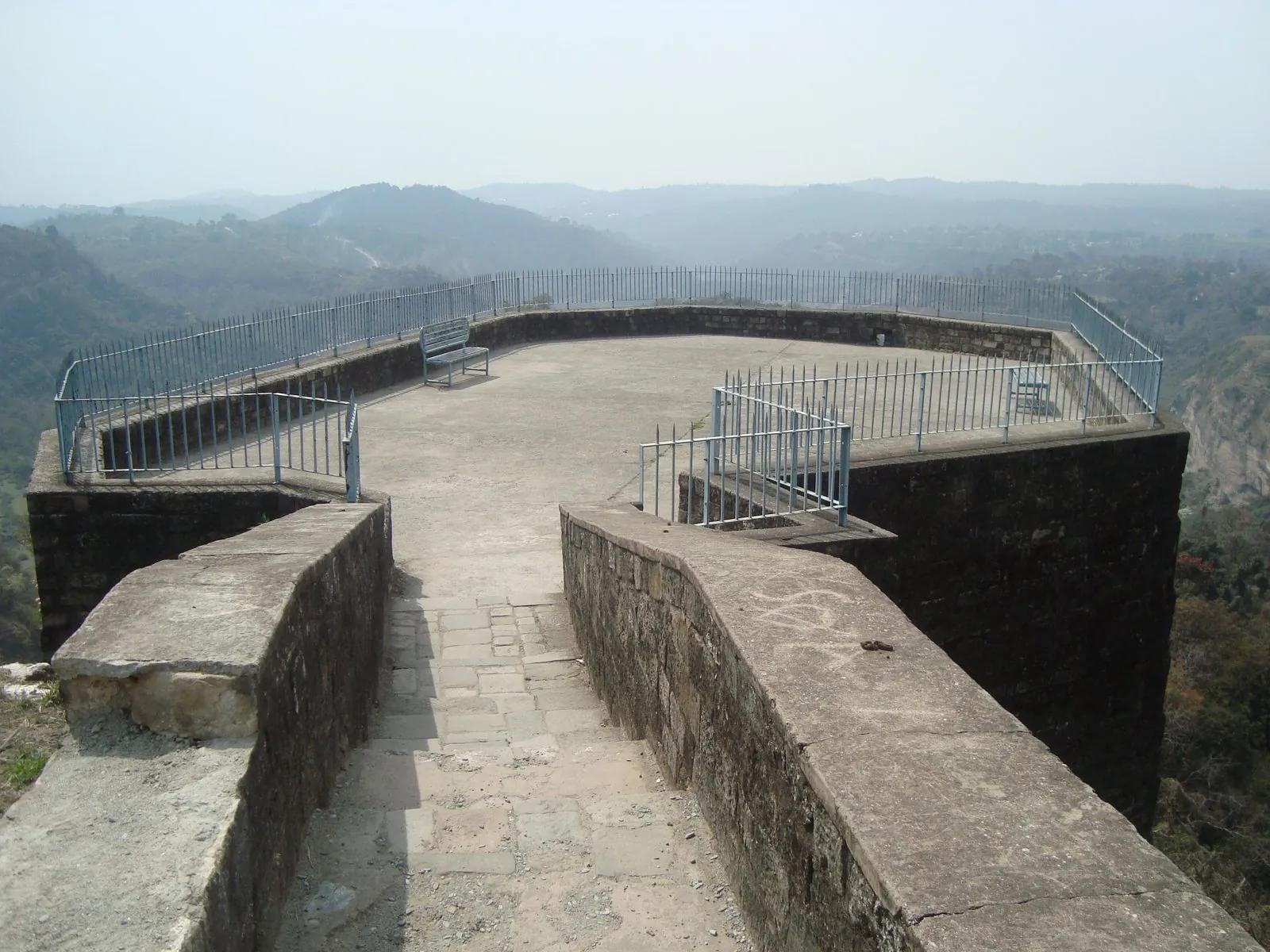
Kangra Fort and Masrur: HP's Ignored Heritage Belt (39,400 Reviews, Zero Coverage)
Three monuments inside a sixty-kilometre triangle on the Kangra plain quietly carry more Google reviews than most ASI-protected sites in India. Chamunda Devi: 24,000-plus. Kangra Fort: 11,000-plus. Masrur rock-cut temples: 4,400-plus. Add the Bajreshwari shrine inside Kangra town and Baijnath's eighth-century Shiva temple half an hour east, and the cluster is past 45,000 reviews on Google Maps alone. Now open a travel blog about the area. You will not find a complete piece on any of these. Not one.
This is the most-reviewed, least-covered heritage belt in north India. The fort that Mahmud of Ghazni stripped in 1009 CE is in here. The eighth-century complex that scholars call the Ellora of the Himalayas is in here. The Shakti Peetha that Sati's left breast is said to have fallen onto is in here. The Pahari miniature paintings that defined a school of Indian art came out of this valley. None of that has produced a single canonical online travel guide. Tourists drive past Kangra on their way to Dharamshala and never come back down.
I am from Kullu, not Kangra. The heritage belt I am writing about sits two valleys west of where I grew up, and I have come to it the same way most Himachalis do, as a researcher reading old Tribune cuttings, as a relative travelling between Pathankot and home, as a Sunday day-tripper out of Dharamshala. What follows is the version of these sites I wish someone had handed me on my first visit. It is a guide for the traveller who already has a Dharamshala stay and wants to see the valley that the McLeod Ganj coffee crowd never bothers with.
Quick facts
- Base: Dharamshala or McLeod Ganj
- Circuit length: About 120 km, one full day, 8 AM to 6 PM
- Headline sites: Kangra Fort, Masrur temples, Chamunda Devi, Bajreshwari Devi, Baijnath
- Combined entry fees: Rs 50-70 for Indian visitors, Rs 500-550 for foreign visitors
- Best months: October to mid-June; avoid July to mid-September (monsoon slides)
- Nearest airport: Gaggal (DHM), 15 km from Kangra Fort
- Suits: Heritage travellers, history readers, slow Dharamshala add-on
- Skip if: You are flying out the next morning
The 39,400-review paradox
Combine the public Google review counts of Kangra Fort (11,000+), Chamunda Devi Nandikeshwar Dham (24,000+), and the Masrur rock-cut temples (4,400+) and you cross 39,400 reviews before you have added the Bajreshwari shrine or Baijnath. That is more than Hampi village, more than the Charminar precinct, more than most ASI sites people actually write about. Open the first two pages of Google search results for any of them and you will find district tourism PDFs, a TripAdvisor listing, and a couple of niche blogs. The valley has the audience already. The writing has not arrived.
Kangra Fort: the citadel everyone forgot they have heard of
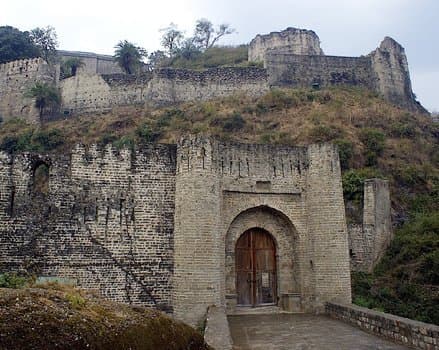
Kangra Fort is widely considered one of the oldest continuously-occupied forts in India. Hindi heritage histories, Tribune cuttings and the ASI's own signboards trace it to Maharaja Susharma Chandra of the Katoch dynasty, who built the original citadel here roughly three and a half thousand years ago. Susharma was the 234th ruler in his line. He fought on the Kaurava side at Kurukshetra, married into Dhritarashtra's family, and Mahabharata-era texts know his kingdom as Trigarta, the land between three rivers. The fort sits on a rocky spur where the Banganga meets the Manjhi, with cliffs on three sides and the road in on the fourth. Eleven gates, twenty-three bastions, and a stairway that climbs through them in a sequence so narrow that an attacker had to come single file.
None of this is invisible. "पर्यटकों की पसंद बनता जा रहा कांगड़ा किला, भारत की सबसे पुरानी धरोहर, महाभारत काल में मिलता है उल्लेख" reads a recent ETV Bharat Hindi piece. The headline translates to: Kangra Fort is becoming tourists' favourite, India's oldest heritage, mentioned since the Mahabharata era. The Hindi press knows what it is sitting on. The English press never quite turned around.
Three conquests, one earthquake
The Katoch held Kangra for most of recorded history. What got the fort into Indian textbooks was who came for it, not who built it. The list is short and brutal.
Six events that shaped the citadel
| Event | Date | What it did |
|---|---|---|
| Mahmud of Ghazni | 1009 CE | Stripped the Bajreshwari shrine of seven hundred thousand gold dinars and seven mans of gold |
| Firuz Shah Tughluq | 1360 CE | Second sack; carried away the rebuilt temple wealth |
| Sher Shah Suri | 1540 CE | Third major conquest; absorbed into the Sur empire |
| Maharaja Ranjit Singh | 1809 CE | Sikh capture from the Katoch; held until 1846 |
| British Empire | 1846 CE | First Anglo-Sikh War; British garrison until 1905 |
| The Kangra earthquake | 4 April 1905 | Magnitude 7.8; about 20,000 dead; ended the fort's military life |
Most travel pages stop at the Mahmud line and move on. The Hindi heritage sources are more specific. Mahmud's chronicler lists the Kangra haul in the kind of detail Mughal accounts later did for Somnath: seven hundred thousand gold dinars, seven mans of gold, silver vessels by weight, jewelled idols, coined treasure, and a quantity of pearls and diamonds the chroniclers did not bother to itemise. The shrine inside the fort, the Bajreshwari, had been the wealthiest in the western Himalaya. It would be looted twice more before the earthquake brought the walls down on what remained.
The 1905 Kangra earthquake
On the morning of 4 April 1905 a magnitude 7.8 earthquake centred near Dharamshala collapsed buildings across the Kangra and Beas valleys. Hindi-press summaries put the toll at roughly twenty thousand humans and fifty-three thousand animals. The Bajreshwari temple inside Kangra Fort, the fort's residential quarters, the Bhagsunag complex up the hill in McLeod Ganj and the spire of St John in the Wilderness all went down within minutes. Modern Hindi headlines still use the phrase "120 साल पहले तबाह हो गई थी हिमाचल की यह खूबसूरत घाटी". The fort never returned to military use. The British shifted their garrison to Dharamshala cantonment and the fort entered the long second life it has now, as a ruin you walk through.
One small detail the brochures miss: the British occupied the citadel from 1846 to 1905, but the period before that, from 1809 to 1846, the fort flew the Khalsa flag. Maharaja Ranjit Singh forced the Katoch raja Sansar Chand to hand it over and ran a Sikh garrison out of it for almost four decades. The Sikh murals on the inner Lakshmi-Narayan and Ambika Devi shrines inside the fort date from this period, not the Katoch one. Most ticketed walks through the fort skip past this; the Hindi heritage sites name it correctly.
What you actually see when you walk it
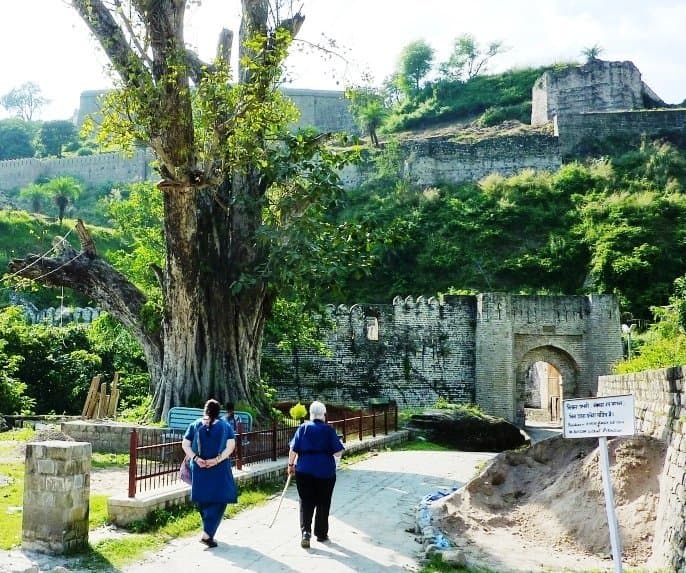
From the ticket gate at the base of the spur, the climb is gentle for the first two hundred metres and then steepens. You pass through the Ranjit Singh gate, the Ahani gate, and the Amiri gate before reaching the upper court. The audio guide hire is at the entrance, in English and Hindi, and is genuinely worth taking; the inscriptions inside are otherwise easy to miss. Inside the upper court the two restored shrines, the Ambika Devi and the Lakshmi-Narayan, are still active in a quiet way. Pujaris come up most mornings. Tribune India ran a long piece in 2023 on the Katoch coronation here, "400 साल बाद कांगड़ा किले में होगा राजतिलक", a Ram Navami ceremony that brought the descendant of the Katoch line back to the upper court for the first time in four centuries. That sense of a living monument is hard to find on Indian tourism pages.
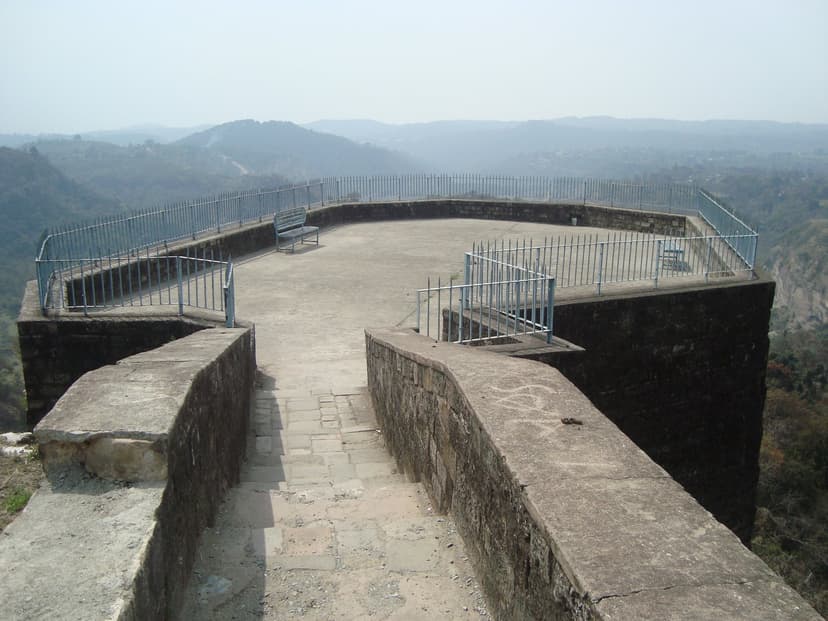
The very top rampart looks out over the Banganga gorge on one side and the Dhauladhar on the other. There are no railings on the older sections. Children should be supervised closely. On a clear winter morning you can see the airport at Gaggal to the north-west and the line of the Manjhi flowing in from the south. ASI signage is sparse. Bring water; there is a small kiosk at the entrance but nothing once you start climbing.
Bajreshwari Devi: the shrine that brought Ghazni to Kangra
The reason Kangra Fort had treasure for Mahmud to take was the Bajreshwari Devi temple sitting inside the old Nagarkot town below it. The shrine is one of the fifty-one Shakti Peethas in the subcontinent. In the Sati legend, the goddess's left breast is said to have fallen on this spot after Shiva carried her body across the Himalayan plain. Hindi tradition holds that the Pandavas first re-established the temple here after a dream of Durga at Nagarkot, which makes the lineage of this shrine older than the fort's own military history.
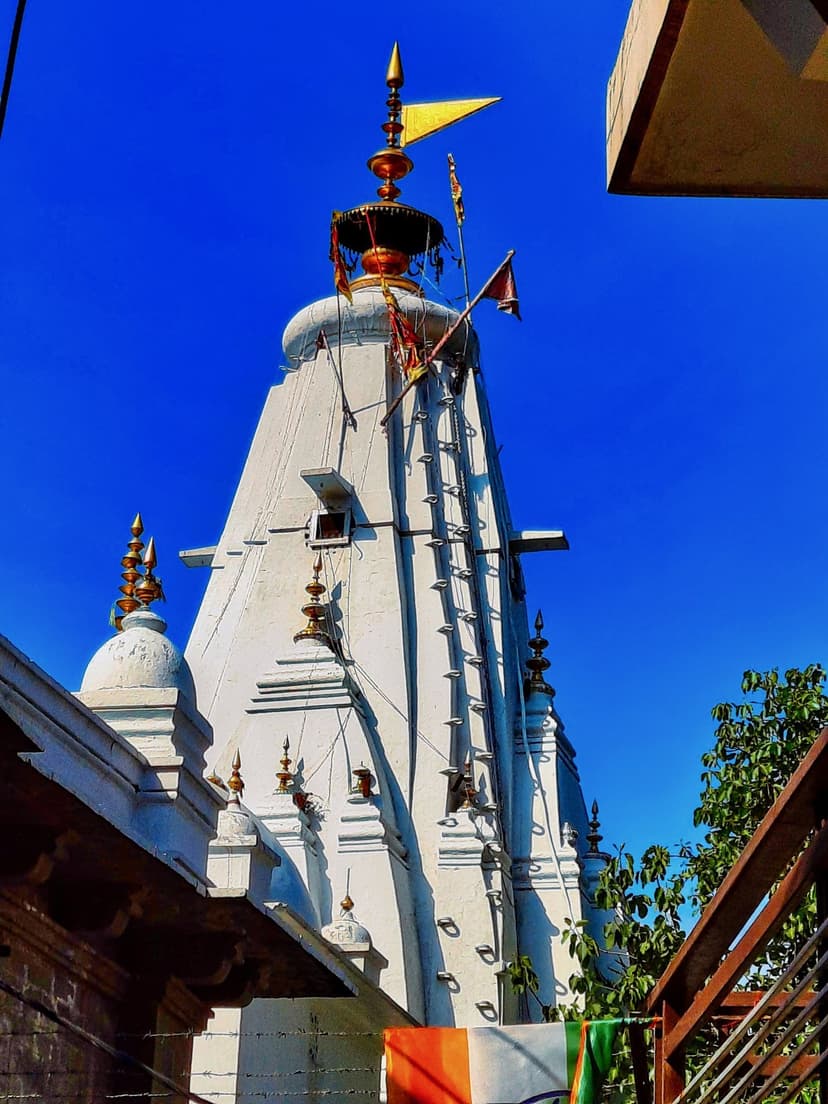
The temple houses three pindis, the worship-stone forms of Brajeshwari, Bhadrakali and Ekadashi. It is the third stop in the north Indian nine-devi yatra that pilgrims walk between Jwalamukhi, Chintpurni, Vaishno Devi and the Shaktipeethas of the Kangra triangle. The shrine has been looted and rebuilt at least four times since Ghazni first emptied it. The current structure dates largely from 1920, after the 1905 earthquake levelled the older one. Hindi sources put this plainly: "मुस्लिम आक्रान्ताओं ने कई बार इस मंदिर को लूटा", the invaders looted this temple repeatedly. Each time it was rebuilt.
The shrine is open from 5 AM to 12 noon and 4 PM to 9 PM. Entry is free. No tickets, no queues except during Navratri, which is when about half of those 24,000 Chamunda Devi reviews and a similar volume here are written. The shoe-deposit kiosks charge two rupees. There is a small offering counter for the laddoo prasad. Take a clean handkerchief or a scarf to cover your head if you plan to enter the inner sanctum. The atmosphere is very different from the meditative quiet of McLeod Ganj. This is a working pilgrimage temple in a working market town.
If you have only time for one of the two devi temples in this circuit, my own bias is to make it Bajreshwari, simply because of how directly it connects to the Kangra Fort story. You read Mahmud's loot list, then you walk into the temple he came for. Chamunda Devi, twenty-three kilometres east, is the more visually photogenic and the more crowded, and we are coming to it next.
Masrur: the Himalayan rock-cut complex nobody told you about
Drive thirty-five kilometres west of Kangra Fort, towards the dry hills above the Beas-Pong reservoir, and you arrive at one of the most quietly extraordinary archaeological sites in India. Masrur is a complex of fifteen monolithic shrines cut into a single sandstone ridge in the early eighth century. The carvers worked downwards into the rock, hollowing out shikharas, vestibules and inner sanctums from one continuous outcrop. The result is what Indian archaeology calls a rock-cut temple complex, and Masrur is the northernmost of its kind in India.
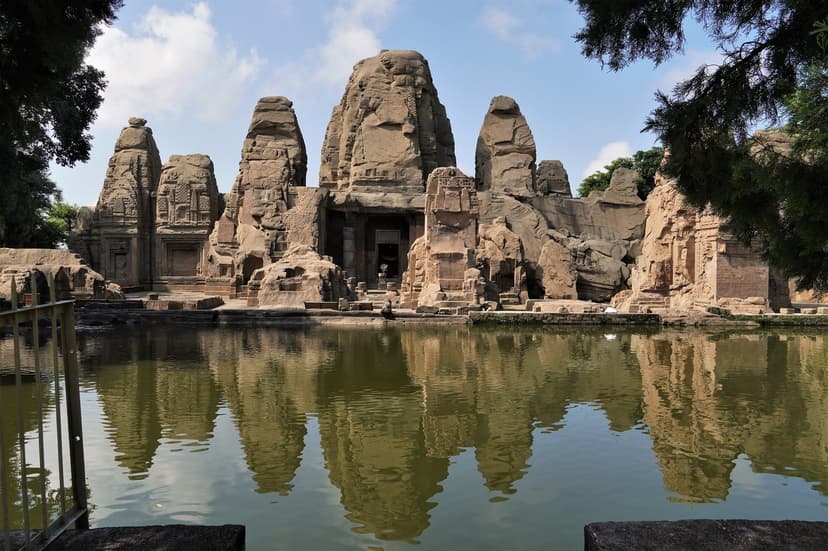
The first thing every visitor notices is the pool. The builders carved a rectangular tank out of the same sandstone bed in front of the temple, oriented exactly to reflect the central shikhara. On a still morning the inverted image of the complex sits on the water surface as cleanly as the upright one. The British surveyor Henry Shuttleworth first described the site in 1913. Harold Hargreaves of the ASI surveyed it formally in 1915. Both wrote about the pool in the kind of language they normally reserved for Ellora.
Where Masrur sits in India's rock-cut tradition
Most Indians can name three rock-cut sites: Ajanta, Ellora, Mahabalipuram. The Buddhist tradition begins at Ajanta in the second century BCE. The Hindu rock-cut tradition matures at Ellora and Mahabalipuram between the sixth and the eighth centuries. Masrur sits at the end of that arc, in the eighth century, but it is the only one of the major sites in the Himalayas. It is also the only one nobody has put on the UNESCO list. Indian Hindi outlets call it baldly "छोटी एल्लोरा", little Ellora. IndiaTV Hindi goes further and notes that Masrur is older than Ellora's mature Hindu temples, which is a claim worth checking against Indian art historians, not just travel writers.
India's major rock-cut temple complexes
| Complex | State and date | Tradition and reviews |
|---|---|---|
| Ajanta Caves | Maharashtra, 2nd century BCE to 6th century CE | Buddhist; UNESCO; about 20,000 reviews |
| Ellora Caves | Maharashtra, 6th to 11th century | Hindu, Buddhist, Jain; UNESCO; about 30,000 reviews |
| Mahabalipuram | Tamil Nadu, 7th to 8th century | Hindu Pallava; UNESCO; about 15,000 reviews |
| Badami Caves | Karnataka, 6th century | Hindu and Jain Chalukya; not UNESCO; about 5,000 reviews |
| Masrur Temples | Himachal Pradesh, early 8th century | Hindu Nagara; not UNESCO; about 4,400 reviews |
The architectural style is north Indian Nagara, the same family of curvilinear shikharas you see at Khajuraho and at Bhubaneswar's older temples. What is unusual is that at Masrur the entire complex, shikharas included, was cut from the same continuous sandstone bed, not assembled stone by stone. "इन मंदिरों को एक ही महान शिला से काटकर शिखरों के साथ तराशा गया था", reads the Hindi Wikipedia entry. The shrines were dedicated to Shiva, Vishnu and the Goddess, in the syncretic eighth-century manner that the Yasovarman court patronised. Three idols of Rama, Lakshmana and Sita inside the central sanctum are believed to have been installed in the medieval period, after the original Vaishnavite shrine was reactivated.
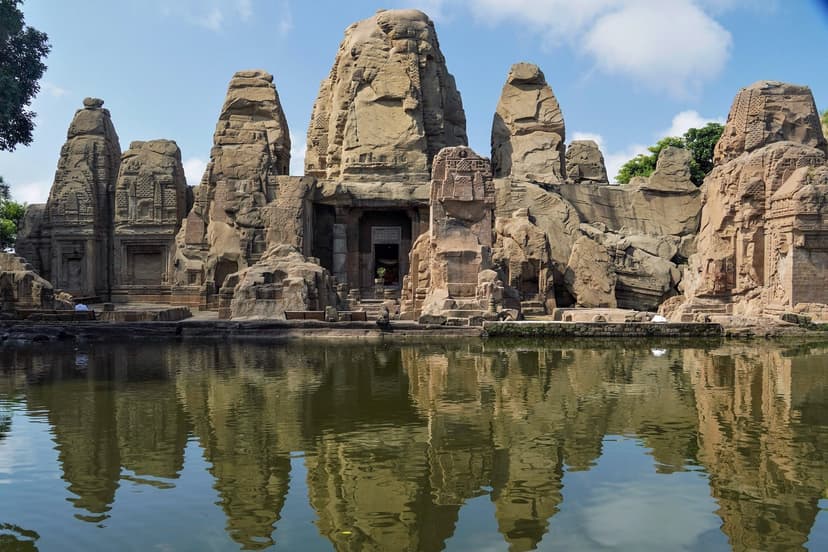
One detail to flag honestly: Hindi sources differ on the temple count. English Wikipedia, the ASI signboard and most academic literature settle on fifteen shrines. IndiaTV Hindi cites nineteen. The discrepancy is probably a counting question, whether you include the smaller satellite shrines and the half-finished corner monoliths or only the fully developed shikharas. If you are walking the complex, you can see both numbers depending on what you choose to count. The ASI site uses fifteen on its signage.
The 1905 earthquake cracked the complex deeply. The central shikhara lost much of its outer carving. The flanking shrines fared better; the rock-cut technique distributes seismic load through the parent rock rather than concentrating it at joints. The complex survived where the British residential architecture of Dharamshala collapsed. That contrast, the fragility of nineteenth-century stone-and-mortar against the resilience of an eighth-century monolith, is one of the quiet stories the site tells.
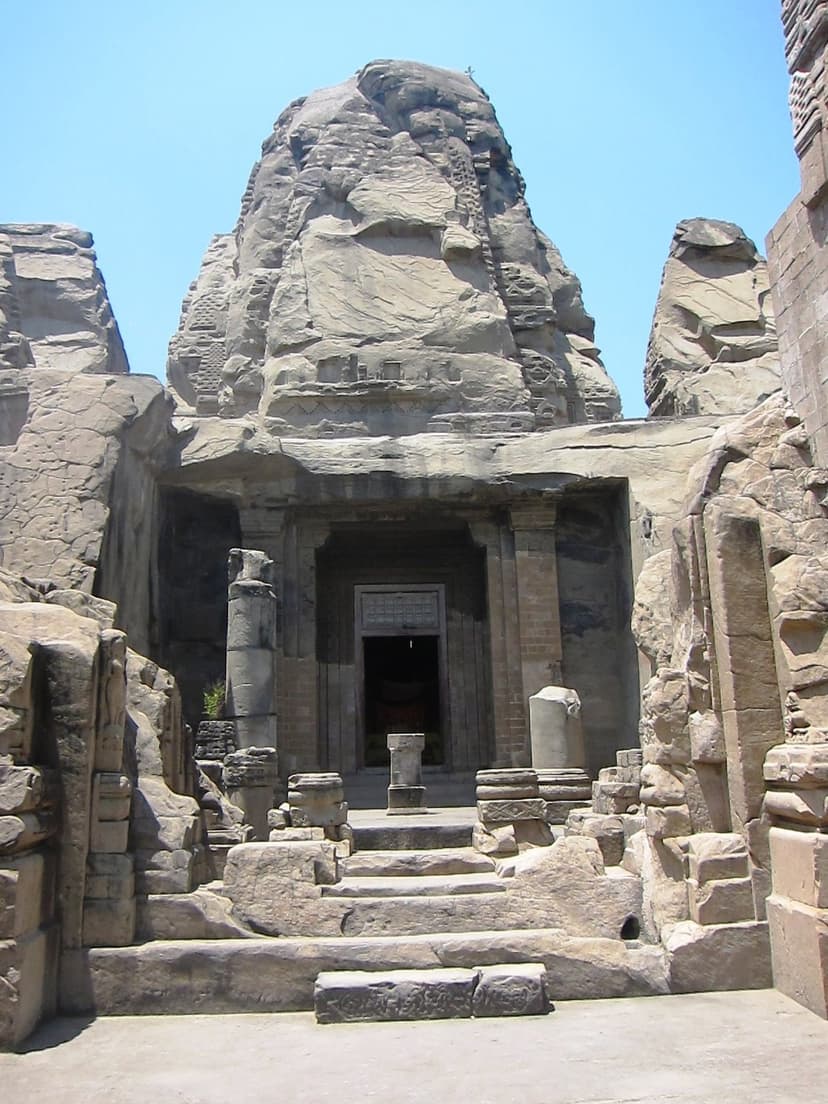
Entry to Masrur is by ASI ticket. The current fee is Rs 20 for Indian visitors, Rs 250 for foreign visitors, with a small additional charge for video photography. There is a small ASI museum at the site that holds fragmented carvings from the complex; entry is included with your ticket. Hours are 9 AM to 5 PM daily. The site is exposed; carry water and a hat. There is one tea stall outside the gate. No proper restaurants for ten kilometres in any direction.
The detail most travel guides miss
Walk around to the back of the complex before you leave. The east face of the sandstone ridge has a series of half-finished shrines, where the carvers stopped mid-shikhara. Nobody knows why. The site was never fully completed. Some scholars argue the Yasovarman dynasty's eclipse interrupted the work; others point to seismic instability that had already shown itself. The half-cut blocks let you see the construction method itself, a layer of sandstone surface peeled back to expose where the next shikhara would have stood.
The Chamunda Devi anomaly
The single most-reviewed monument in this entire heritage belt is also the one almost no English travel writer has profiled. Chamunda Devi Nandikeshwar Dham, on the right bank of the Baner Khad in Dadh village, twenty-four kilometres south-east of Dharamshala, has more than 24,000 Google reviews and a 4.7-star rating. That makes it more reviewed than most paid heritage sites in north India. There is no dedicated English-language guide to the shrine. The Hindi heritage press writes about it constantly, particularly during the two Navratri seasons in March-April and September-October, when the priest counts pilgrims rather than reviews.
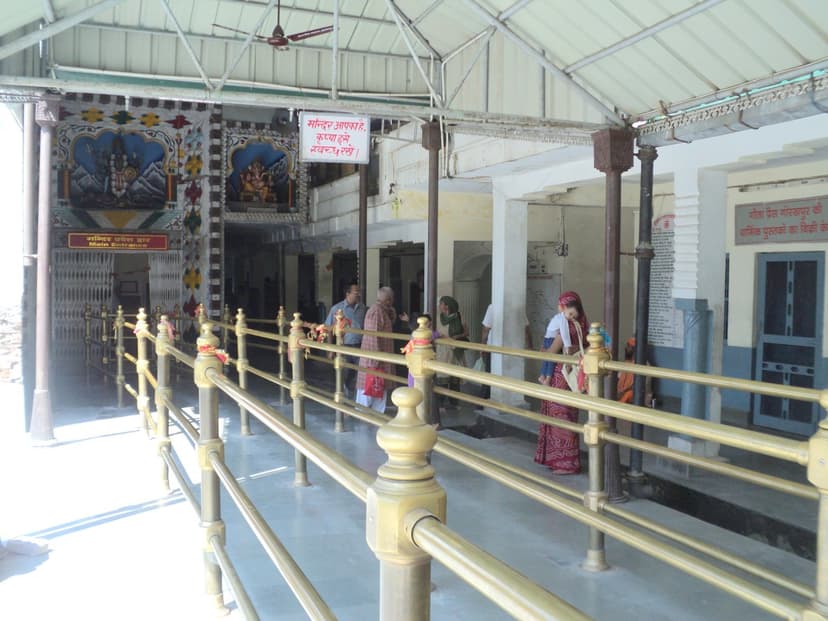
The shrine is dedicated to Chamunda Devi, the fierce form of Durga who in the Devi Mahatmya beheads the asuras Chanda and Munda. The Nandikeshwar prefix comes from a local legend that Shiva, as Nandikeshwar, appeared at this site after the goddess's victory; the priest at the temple will tell you which version of the legend his lineage holds to. The main goddess shrine sits on a small ridge above the Baner river, with smaller side shrines in the same compound. The complex you see today dates from the late nineteenth and early twentieth centuries, rebuilt after the 1905 earthquake levelled the older structure.
Three things make this place worth a stop. The first is the location: the Baner Khad cuts a small gorge below the temple, and the Baner Khad below the temple has long been a working pilgrimage site, which gives Chamunda Devi its layered shakta-shaiva character. The second is the Pahari painting tradition you can read on the outer walls: the folk-style panels around the temple precinct are rougher than the courtly Kangra-school miniatures you will see at the museum in Dharamshala, but they are clearly of the same lineage. The third is the langar, the free pilgrim kitchen, which serves a simple two-meal a day operation around the year and a much larger one during Navratri.
Entry is free. Photography inside the inner sanctum is not allowed, but the outer courtyards are fine. Best time to visit is early morning, between 7 and 9 AM, before the first wave of devotees arrives. The parking lot is across the road from the main gate; rickshaw drivers from Palampur station know the spot. The temple is open from 6 AM to 9 PM through most of the year, with Navratri extending evening hours to 11 PM.
Why this shrine collects 24,000 reviews
The Mata Vaishno Devi pilgrimage in Jammu had been collecting roughly 800,000 visitors a month at its peak. The smaller Shaktipeetha circuit in the western Himalaya, of which Chamunda Devi is the most accessible stop, runs through Kangra in tandem. Buses from Pathankot and Una bring temple groups in for two-day yatras that cover Bajreshwari, Chamunda, Jwalamukhi, and Chintpurni. Each of those buses leaves a hundred Google reviews behind. The English travel-blog world simply does not write for that audience. The Hindi pilgrim press does, exhaustively.
The Kangra heritage belt: a one-day circuit from Dharamshala
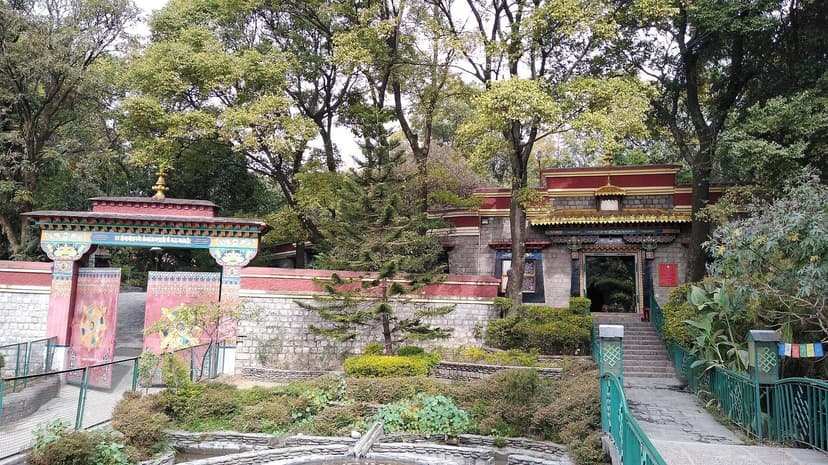
If you have one full day spare from a Dharamshala or McLeod Ganj base, this is the route I would walk you through. The order matters. The fort and Masrur are both ticketed ASI sites that close at 5 PM. The two temples never close. The Norbulingka workshops shut for the day at 5:30 PM. Plan around the ASI closing times and the rest follows.
Map of the Kangra heritage belt: Dharamshala base, the two devi temples, Kangra Fort, Masrur, and the eastern Palampur-Baijnath-Bir corridor.
Suggested one-day route from Dharamshala
- 7:30 AM: Leave McLeod Square by hire taxi or HRTC bus.
- 8:30 AM: Chamunda Devi Nandikeshwar Dham, 45 min.
- 9:30 AM: Drive to Kangra Fort, 50 min.
- 10:30 AM: Kangra Fort, 90 min. Audio guide hire at base.
- 12:15 PM: Bajreshwari Devi shrine and lunch in Kangra town, 1 hr.
- 1:30 PM: Drive to Masrur, 1 hr.
- 2:30 PM: Masrur rock-cut temples, 1 hr.
- 3:45 PM: Drive back via Norbulingka or Palampur.
- 5:00 PM: Norbulingka workshops or Kangra Art Museum (pick one).
- 6:30 PM: Back to McLeod Ganj for dinner.
The transport question is the easy one to get wrong. Hire a taxi for the day if you can. HRTC buses run the Dharamshala-Kangra-Pathankot route every twenty minutes and the Kangra-Masrur side road has two daily buses, but the timing does not connect Masrur back to Kangra before sunset unless you wait for the 4 PM service. A taxi for the full circuit costs Rs 3,000-3,500 in 2026, includes Norbulingka on the return, and lets you stop where you want. Split between three or four travellers it is genuinely cheap heritage.
What the heritage day actually costs (2026, Indian visitor, group of three)
- Taxi for the full day (8 hr, 130 km): Rs 3,000-3,500 between three, so Rs 1,000-1,200 per head
- Kangra Fort ticket: Rs 20-30 Indian (e-ticket on the ASI portal is the cheaper bucket), Rs 200-250 foreigner
- Masrur ticket: Rs 20 Indian, Rs 250 foreigner
- Bajreshwari and Chamunda Devi entry: free; shoe deposit two rupees
- Norbulingka Institute entry: Rs 50 if you visit the cafe and gardens, Rs 100 with the doll museum included
- Audio guide at Kangra Fort: Rs 50-100 depending on group size
- Kangra town lunch (dhaba thali): Rs 150-250 per head
- Camera fee for professional gear at the ASI sites: Rs 50-100 (mobile photography is free)
- Optional Wah Tea Estate tasting: Rs 250-500 per head
Total for an Indian visitor, day trip from Dharamshala: roughly Rs 1,500-2,000 per head if you travel as a group of three, with all entries, transport and lunch included. Add Rs 1,000-1,500 if you want the Wah Tea Estate side stop and a longer evening at Norbulingka. Foreign visitors will pay closer to Rs 3,500-4,500 per head, mostly because of the higher ASI ticket bracket.
The eastern arm: Baijnath, Palampur, Andretta and the monasteries of Bir
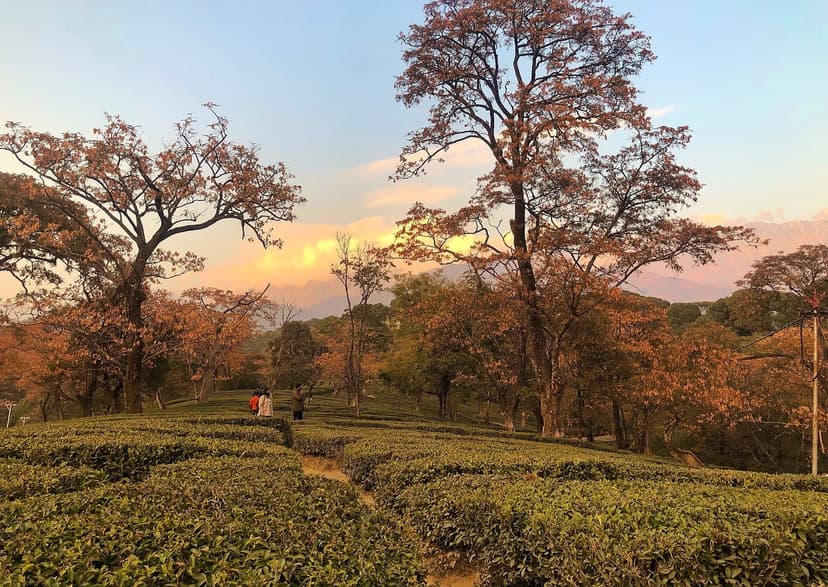
The heritage belt does not really stop at Masrur. If you have a second day to spare, the eastern arm of the Kangra district is a separate slow-day circuit that pairs with the first one cleanly. Baijnath, Palampur, Andretta and Bir all sit on the same east-of-Dharamshala axis. None of them needs the same archaeological focus as Kangra Fort or Masrur. What they share is the secondary heritage layer of the valley: the medieval Vaidyanath shrine at Baijnath, the colonial-era tea estates of Palampur, the artists' village of Andretta and the Tibetan monasteries of Bir and Sherabling that arrived in 1959.
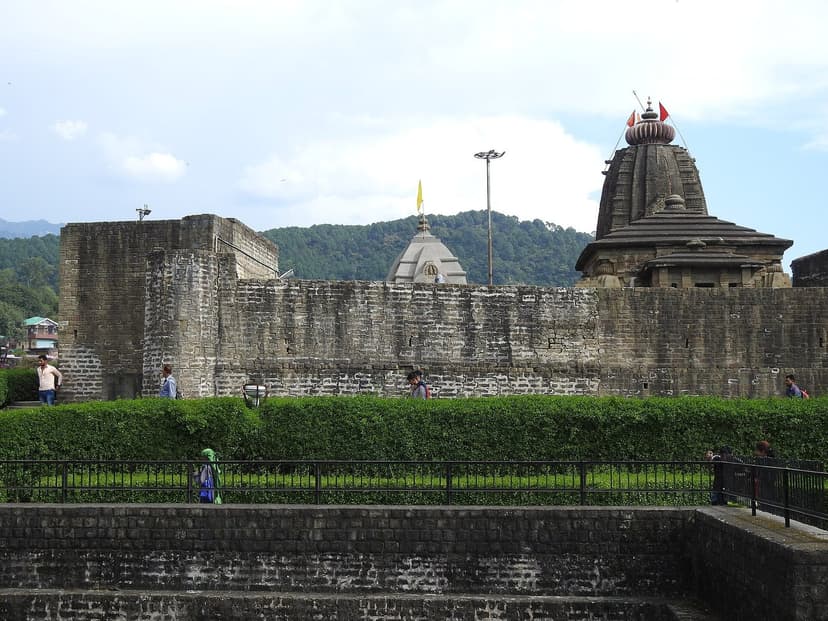
Baijnath Vaidyanatha was built in 1204 CE under the Katoch raja Ahuka, and is the largest medieval Shiva temple of the Himachal hills outside the Bhutesvar in Mandi. The shikhara is in classical Nagara style, the inner sanctum is still active, and the temple precinct is exactly the kind of small heritage stop that Indian tourism brochures will quote two paragraphs on without ever taking you inside. The 1204 inscription, the older Sanskrit prashasti and the relationship with Palampur's Vaidyanath-Paprola railway station are the parts I would read up before you go. There is a separate Kangra Valley Railway piece that covers the trains, the Bathu viaduct and the Joginder Nagar terminus if you are mixing the heritage with a train ride.
Andretta is the village that the Irish theatre teacher Norah Richards moved to in 1920 after a long career in Lahore and London. She built the kath-kuni cottage that still bears her name on what is now Punjabi University land. In the 1980s Sardar Gurcharan Singh and his family started Andretta Pottery in the same village, running it as a working studio that takes two-thousand-rupee day workshops and a longer pottery residential. The combination of theatre school, pottery studio and artists' settlement makes Andretta one of the very few non-monastic creative communities of any age in the Himachal hills, and it has remained almost completely off the Indian tourist radar. Hindi-press coverage of Andretta is sparse, which is itself an indicator.
For Bir, Palpung Sherabling and the eastern monasteries, the canonical companion piece is the longer Bir guide we published earlier this year. The short version: Bir is the part of the heritage belt where the chronology jumps forward by a thousand years. Where Masrur and Kangra Fort give you eighth-century and Mahabharata-era India, Bir gives you 1960s refugee India and the Tibetan religious institutions that have rebuilt themselves on a deodar slope.
St John in the Wilderness and the colonial layer
One small detour that most heritage day-trippers skip: the church between Forsyth Ganj and McLeod Ganj is built in 1852 of dressed Kangra basalt, neo-gothic in style, with stained glass that was shipped in from Belgium. The churchyard holds the grave of Lord Elgin, the Viceroy who died at Dharamshala in 1863 and asked to be buried looking up at the Dhauladhar. The spire of the church collapsed on the morning of 4 April 1905 in the Kangra earthquake; the rebuilt bell-tower is shorter than the original. The Belgian stained glass survived. The bells survived. The church is open for evensong on Sundays and entry is otherwise by request to the caretaker.
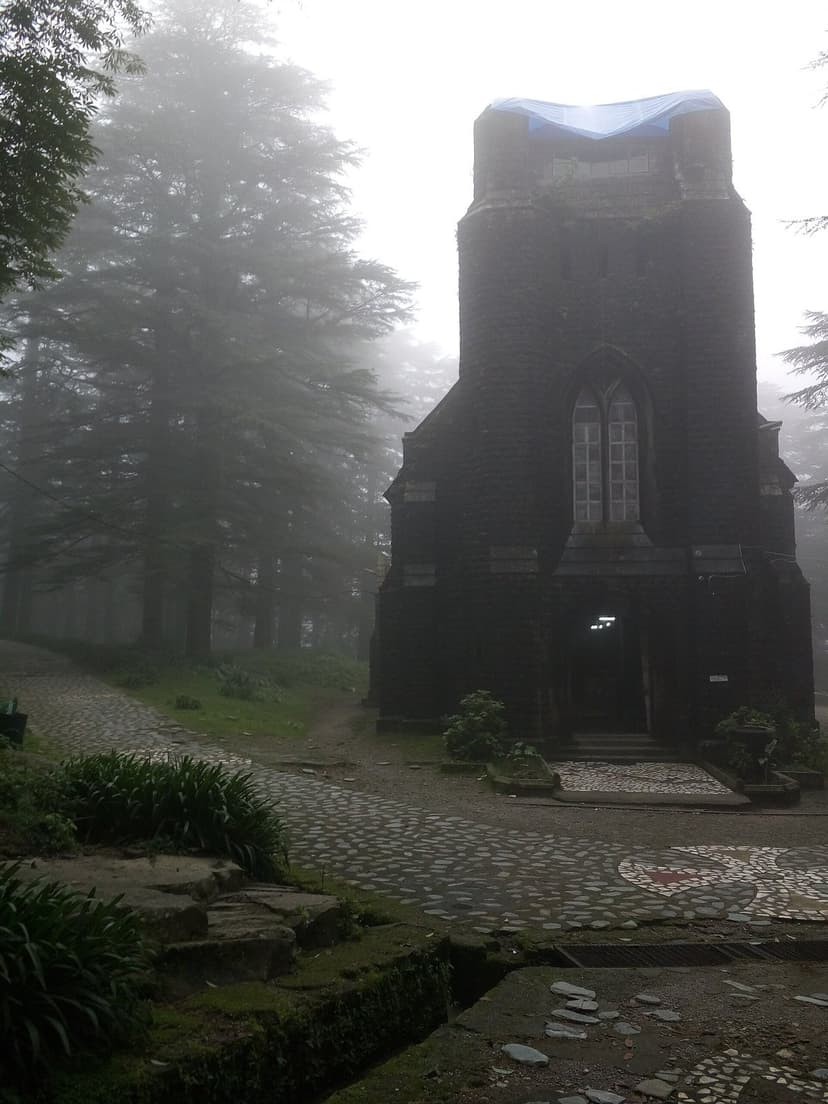
If your heritage belt day ends with daylight to spare, the church is on the way back into McLeod from the lower bypass. A ten-minute walk through the churchyard ties the colonial layer back to the same earthquake that ended the fort's military life and that the rock-cut Masrur survived. The 1905 quake is the one event that connects almost every monument in this guide.
Mail us before you book the day
If you have an existing Dharamshala booking and you want to slot the heritage belt into your stay, write to hello@refuje.com with your dates. We can suggest a taxi operator who knows the Masrur road well and is comfortable with the longer day. The Masrur side of the circuit needs a driver who has done it; the road past Nagrota Suriyan station has unmarked turns.
Why nobody writes about these
Three things together explain the gap between 39,400 reviews and zero proper guides.
First, the Dharamshala overshadow effect. McLeod Ganj has been an English-language travel destination since the 1960s. The Dalai Lama's residence, the Tibetan community, the meditation centres and the small cafes are what foreign and urban Indian visitors come to Kangra district for. The Kangra heritage belt sits a thousand vertical metres below, in the agricultural plains. It is the part of the district that does not show up in Dharamshala hotel marketing material.
Second, content creators tend to write about experiences rather than monuments. A weekend in Tirthan or Spiti makes for a more shareable story than a day at a fort. A Pahari miniature painting at Norbulingka is harder to film than a paragliding launch at Billing. The Indian travel-blog economy of the last decade has rewarded experience pieces over heritage explainers. Kangra Fort, in this taxonomy, falls between categories. It is neither a trek nor a cafe.
Third, the Hindi and English information stacks have grown apart. The Hindi-language heritage press, Tribune, ETV Bharat, Amar Ujala, Punjab Kesari, divyahimachal.com, daily-himachal-gk.com, writes about Susharma Chandra, the 1009 Ghazni loot, the 1905 toll, the Katoch coronation, the Bajreshwari Shaktipeetha, and the Masrur Nagara architecture in continuous, detailed coverage. The English-language travel blog universe writes about hotel reviews and bucket-list rankings. The two ecosystems do not cross-link. If you do not read Hindi, you do not get the heritage; if you only read Hindi, you do not get the travel logistics. This guide is one attempt to bridge that gap.
Conquered by Ghazni, plundered by Tughluq, taken by Sher Shah, occupied by the British. Then in 1905, on a quiet April morning, an earthquake did in fifty seconds what eight centuries of armies had failed to finish. The fort never came back into military use. It became a ruin you walk through.
Synthesised from Tribune India, ETV Bharat Hindi, and the ASI signboard at the ticket gate
What real visitors are saying
I pulled these from current TripAdvisor and Google reviews of the heritage belt, none of them written by travel-blog professionals. They are the kind of one-paragraph reactions that pile up to forty thousand and never become a guide. They are the audience this article is for.
On Kangra Fort: "Must-visit for anyone near Dharamshala or McLeod Ganj. It is not just a pile of stones; it is the heartbeat of the valley." A TripAdvisor reviewer, undated, from the Kangra Fort page. The phrasing is exactly the kind of emotional anchor that a written guide would have done well to keep.
On the views from the upper rampart: "The views from the top of the fort are amazing. We also saw some ancient structures." Another TripAdvisor entry, brief, but it tells you the rampart is the photographer's payoff at the end of the climb.
On Masrur: "Amazing! It is just a small area but we were mesmerised and really enjoyed this! Unbelievable to think it is carved from just one rock." This is the most-upvoted Masrur review on TripAdvisor. The wow-factor reaction at the front of the temple, looking at the pool, is the one almost every visitor leaves behind.
On the comparison most visitors discover for themselves: "A mini Ellora of Himachal in Kangra district." A second TripAdvisor reviewer, putting the Ellora comparison plainly. That is the comparison Hindi sources also make and that the ASI signboard hints at.
On the lesser-known status: "A monument that was hidden for many years and still continues to be less popular." A Tripoto entry on Masrur. The reviewer is correct about the obscurity but generous about the rebuilding work that ASI has done since 2015.
On combining the day: "A must must visit place in Kangra district. Having stopped off at Gyotu Monastery, the Norbulingka Institute and the Kangra Fort, last stop for the day was Masrur." The single most useful traveller review in the entire heritage belt. It validates the four-stop day exactly as we have laid it out above. The reviewer drove the same circuit you can drive tomorrow.
A mini Ellora of Himachal in Kangra district.
TripAdvisor reviewer, Masrur Rock-Cut Temple listing
Planning your heritage day, the practical version
When to go
The heritage belt opens up cleanly from October through mid-June. November and February are my own favourite months; the air is clear, the rampart photographs cleanly, and the Masrur pool is calm. March and April carry the Navratri crowd at the two devi temples. May warms up but the air-conditioned cafes in Dharamshala are still pleasant in the evenings. July through September is the monsoon, when the Pong reservoir backs up and the Masrur road can close for hours after a heavy night of rain. The fort itself is open all year, but the Masrur side road is the bottleneck.
Where to stay
If your heritage focus is Kangra Fort and Masrur, Dharamshala or McLeod Ganj is fine as a base. If you want a quieter heritage stay closer to the fort, look at the small heritage homestays in Kangra town itself, a couple of which have been running since the early 2010s. For the eastern Baijnath-Bir arm, the published Bir guide and the Dharamshala guide cover stays in detail. We deliberately do not link to specific hotels here. The HPTDC Dhauladhar, Norbulingka's small guest cottages, and a handful of independent Kangra homestays are the safest options if you want to book directly.
How to get there
The nearest airport is Gaggal (DHM), fifteen kilometres from Kangra Fort, with daily Alliance Air and IndiGo flights from Delhi. Pathankot Junction is the nearest broad-gauge railhead, eighty-five kilometres west of Kangra; the Kangra Valley Railway narrow-gauge feeder runs from Pathankot to Joginder Nagar, although the through-service was still suspended at the time of writing, with only the Baijnath Paprola to Joginder Nagar upper section currently operational. By road, HRTC Volvo runs an overnight from Delhi to Dharamshala in about twelve hours, between Rs 1,300 and Rs 1,700 in 2026. Private taxis from Pathankot run Rs 2,500-3,000 to Dharamshala.
What to wear and carry
The two temples are working religious sites. Cover your head if you are entering the inner sanctum at Bajreshwari or Chamunda. Both have shoe-deposit kiosks at the gate. Wear closed shoes for the fort; the stairway gets slippery on the worn sandstone. Bring water at Masrur; there is no kiosk inside the site. A small flashlight is useful at the Bajreshwari interior in the morning before the lights come up.
One thing the brochures will not tell you
The audio guide at Kangra Fort is genuinely good. It is recorded in both English and Hindi. It tracks the upper court chronologically rather than spatially, which makes much more sense once you are inside. Most visitors skip it because it looks like an upsell. It is not. Pay the small fee at the ticket booth and walk slowly. It is the difference between a fort you wander and a fort you understand.
If you can only do half the heritage belt
If you only have an afternoon, not a full day, do the Kangra Fort plus Bajreshwari Devi half. Pick a 1 PM start. You can finish both by 5 PM, get the audio guide done at the fort, and be back in McLeod Ganj by 6:30. You will miss Masrur and Chamunda. Both are worth a second day, but if you only get one, you should leave with the fort and the shrine that the fort once enclosed.
If you only have a morning, do Masrur. The light is best at the pool between 9:30 and 11 AM, the drive is shorter than from any other side, and the ASI museum at the gate gives you the context that you would otherwise want a guide for. Skip the fort if you only have this slot; you cannot do justice to Kangra Fort in less than ninety minutes.
The mailing-list version
If you want our seasonal updates on the heritage belt, including the rare years when the Masrur road is closed for monsoon repairs, the few months a year when Bajreshwari is rebuilding part of its enclosure, or when the Norbulingka workshops shut for their winter break, send your dates to hello@refuje.com. We do not publish a calendar of those closures online. They change too quickly. We will email you our latest read before your trip.
FAQs
Frequently asked questions
Is Kangra Fort really the oldest fort in India?
It is widely considered one of the oldest continuously-occupied forts in India. Hindi heritage histories and Tribune cuttings trace it to Maharaja Susharma Chandra of the Katoch dynasty, roughly three and a half thousand years ago. Mahabharata-era texts know his kingdom as Trigarta. The exact age is debated; the standing structure dates from successive rebuildings between the medieval period and the early twentieth century.
What is the Kangra Fort entry fee in 2026?
Rs 20-30 for Indian visitors (the e-ticket on the ASI portal is the cheaper bucket) and Rs 200-250 for foreign visitors. Children below fifteen are usually free. A professional-camera permit costs an additional Rs 50-100. Mobile photography is free.
What are the Masrur Rock-Cut Temples and where are they?
A complex of fifteen monolithic temples cut from a single sandstone ridge in the early eighth century, in the village of Masrur, 35 km west of Kangra Fort. They are Indias fifth major rock-cut temple complex after Ajanta, Ellora, Mahabalipuram and Badami, and the only one in the Himalayas. Local nicknames include Little Ellora and the Himalayan Pyramid.
Can you visit Kangra Fort and Masrur in one day from Dharamshala?
Yes. Both sit within an hour of Dharamshala in opposite directions, and you can combine them with Chamunda Devi, Bajreshwari Devi and Norbulingka in a single 8 AM to 6:30 PM day. A hire taxi for the day in 2026 costs Rs 3,000-3,500 for a small car.
Why do these monuments have so few travel blogs written about them?
Three reasons. The Dharamshala overshadow effect, where McLeod Ganj absorbs all the English-language travel writing in the district. Content-creator preferences, where experiences like paragliding or cafe hopping outrank heritage explainers. And the gap between Hindi and English information stacks, where Tribune, ETV Bharat, Amar Ujala and divyahimachal cover the heritage in depth while the English travel blogs write hotel reviews.
What happened to Kangra Fort in 1905?
On 4 April 1905 a magnitude 7.8 earthquake centred near Dharamshala collapsed parts of the fort, killed about twenty thousand people across Kangra and Beas valleys, and ended the British military use of the citadel. Hindi sources also note about fifty-three thousand animals dead. The fort has been a ruin you walk through ever since.
How do Masrur Temples compare to Ellora and Ajanta?
Masrur uses the same monolithic rock-cut technique as Ellora and Ajanta, but in the Himalayan Nagara style and at a smaller scale, fifteen shrines instead of Elloras thirty-four caves. It is the only rock-cut temple complex in the Himalayas and the northernmost in India. Unlike Ellora and Ajanta, Masrur is not on the UNESCO list despite comparable workmanship.
What is the best time to visit Kangra Fort and Masrur?
October through mid-June. November and February are the cleanest months for photography. March and April carry the Navratri crowd at the two devi temples. Avoid July through September, when the Masrur side road can close for hours after heavy rain.
Is there an entry fee at Chamunda Devi and Bajreshwari Devi?
No. Both temples are free to enter. There is a small shoe-deposit charge of two rupees at both. Photography inside the inner sanctum is not allowed; outer courtyards are fine. Best time is the morning before the first pilgrim wave.
What is the Bajreshwari Devi temple and why was it looted?
The Bajreshwari shrine inside old Nagarkot, now Kangra town, is one of the fifty-one Shakti Peethas. In the Sati legend, the goddesss left breast fell here. Mahmud of Ghazni looted it in 1009 CE for seven hundred thousand gold dinars and seven mans of gold; Firuz Shah Tughluq sacked it again in 1360; it was rebuilt repeatedly. The current structure dates largely from 1920, after the 1905 earthquake.
How do I get from Delhi to Kangra in 2026?
By air to Gaggal (DHM), fifteen kilometres from Kangra Fort, daily Alliance Air and IndiGo flights. By rail to Pathankot Junction, eighty-five kilometres west, then taxi. By road via HRTC Volvo to Dharamshala, twelve hours overnight, Rs 1,300-1,700 in 2026.
Is Andretta and Norah Richards House worth a stop?
Yes, for slow travellers with a second heritage day. Andretta is south of Palampur, twenty kilometres from Baijnath. The kath-kuni cottage Norah Richards built in 1920 is now Punjabi University property, and Andretta Pottery runs day workshops and longer residentials. The village does not have organised tourism infrastructure; come with a hire taxi and a sandwich.
Sources
This piece draws on, in roughly the order I read them:
- ASI signboards and the published volumes of the Annual Report of the Archaeological Survey of India, Vol III (Hargreaves on Masrur)
- Wikipedia: Kangra Fort; Wikipedia: Masrur Temples; Wikipedia: Brajeshwari Devi Temple; Wikipedia: Chamunda Devi Temple, Kangra
- HP Kangra district government page on Masroor temple
- HP Kangra district government page on Bajreshwari Devi temple
- Incredible India: Masroor temple
- OnlineHimachal: Kangra Fort timings, history, entry fee, last updated March 2026
- TripAdvisor reviews of Kangra Fort and TripAdvisor reviews of Masrur Rock-Cut Temple
- Tribune India and ETV Bharat Hindi long-form pieces on the 2023 Katoch coronation at Kangra Fort and the 2025 anniversary coverage of the 1905 earthquake
- Divyahimachal, dailyhimachalgk.com, Bharat Discovery and Amar Ujala on Susharma Chandra, the Ghazni 1009 loot itemisation, and the 1905 earthquake casualty figures
- TV9 Hindi and Punjab Kesari on the Masrur Nagara architecture and the Himalayan Pyramid framing
- Hindi Wikipedia: मसरूर मंदिर, श्री बज्रेश्वरी देवी मंदिर, काँगड़ा, चामुंडा देवी
- OpenStreetMap Nominatim and the Wikipedia coordinates API for the seventeen map markers above
I am a Himachali writer based out of Kullu. I have not lived in Kangra; what I know of this heritage belt comes from Tribune cuttings, the ASI signboards I have read at the ticket gates, the Hindi-press heritage coverage I have followed for years, and travellers who have come back from the circuit to tell me what they wished they had known. If you spot anything inaccurate, write to hello@refuje.com and I will update the piece.
About Rajesh Thakur
Rajesh Thakur grew up in the Kullu valley and has been writing about Himachal Pradesh travel and culture since 2018. He covers the state from Bharmour and Chamba in the west to Spiti in the east, and is most at home in the upper Kullu and Lahaul corridor. This piece on the Kangra heritage belt is written from Kullu, two valleys east of Kangra.
You Might Also Like
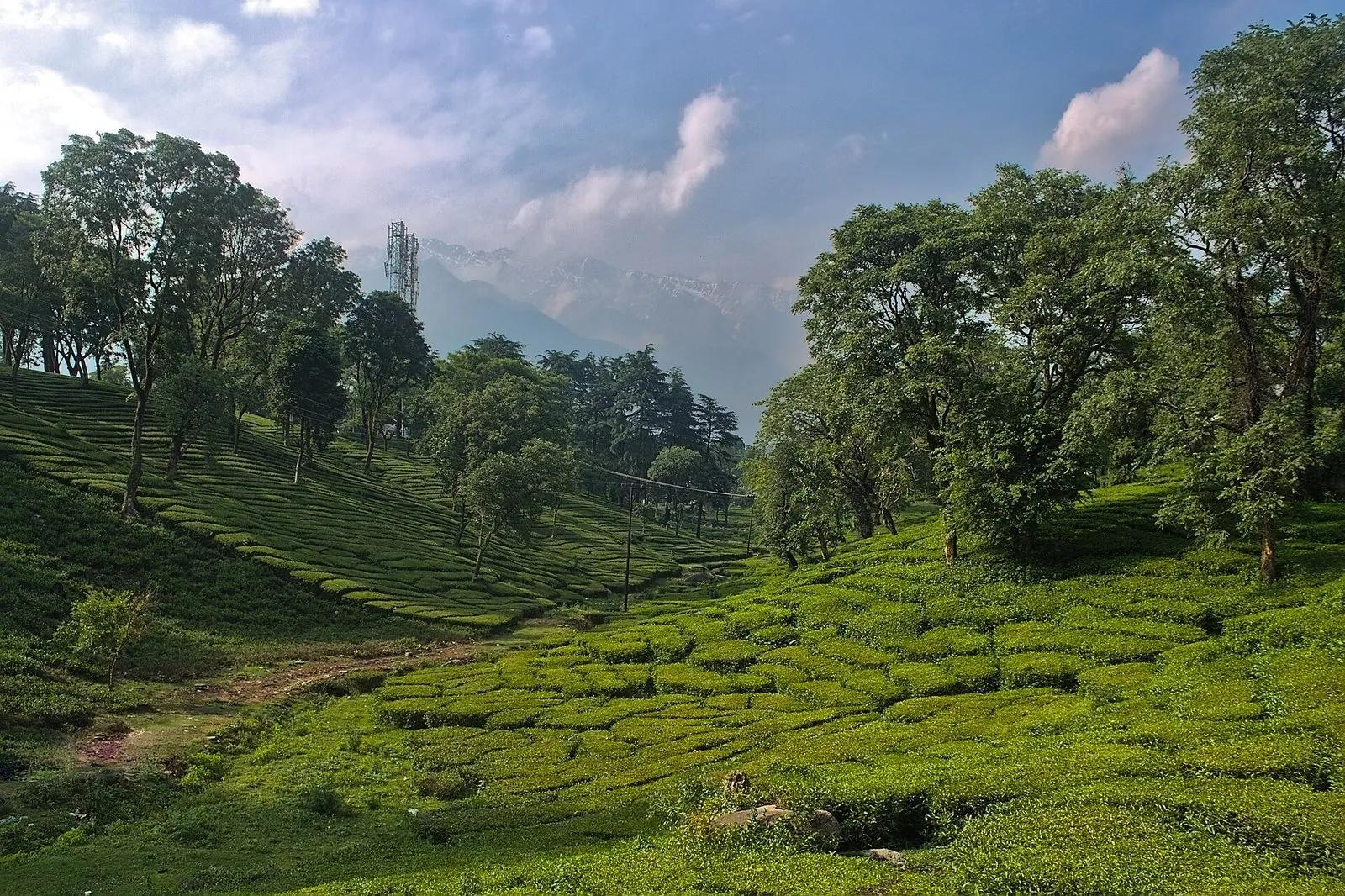
Palampur: India's Tea Capital That Nobody Visits
Thirty-five km from Dharamshala, a fraction of the tourists. India's only all-orthodox tea region, a 1204 CE temple that refuses to burn Ravana, a monastery of yogis, and a narrow-gauge railway that just came back from the dead.
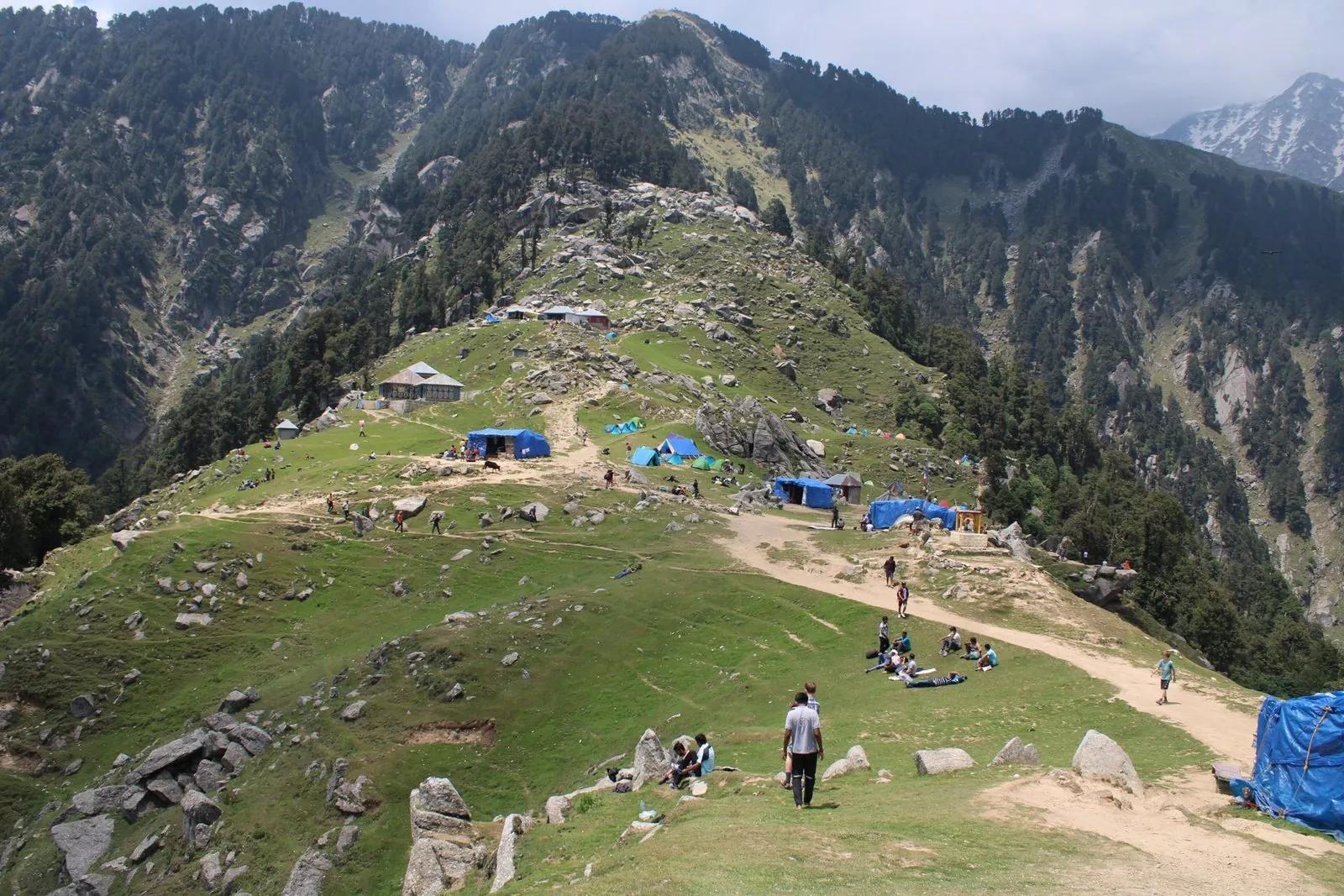
Triund Trek 2026: Complete Beginner's Guide (Route, Checkpoint, Camping & What Nobody Tells You)
Nine km, 1,100 m of gain, and one rule that turns hikers back: the 11:30 AM Gallu Devi check-post. Triund is HP's most-walked beginner ridge trek, with Forest Department fees halved to Rs 100 in January 2024 (per The Tribune), a HP High Court cap of 400 trekkers and 20 tents, and operator packages from Rs 999. Written from Kullu with the Tribune backbone, the Reddit deep-mine, and the four extensions almost no guide covers.
Kangra Valley Railway: India's Forgotten Heritage Train (2026)
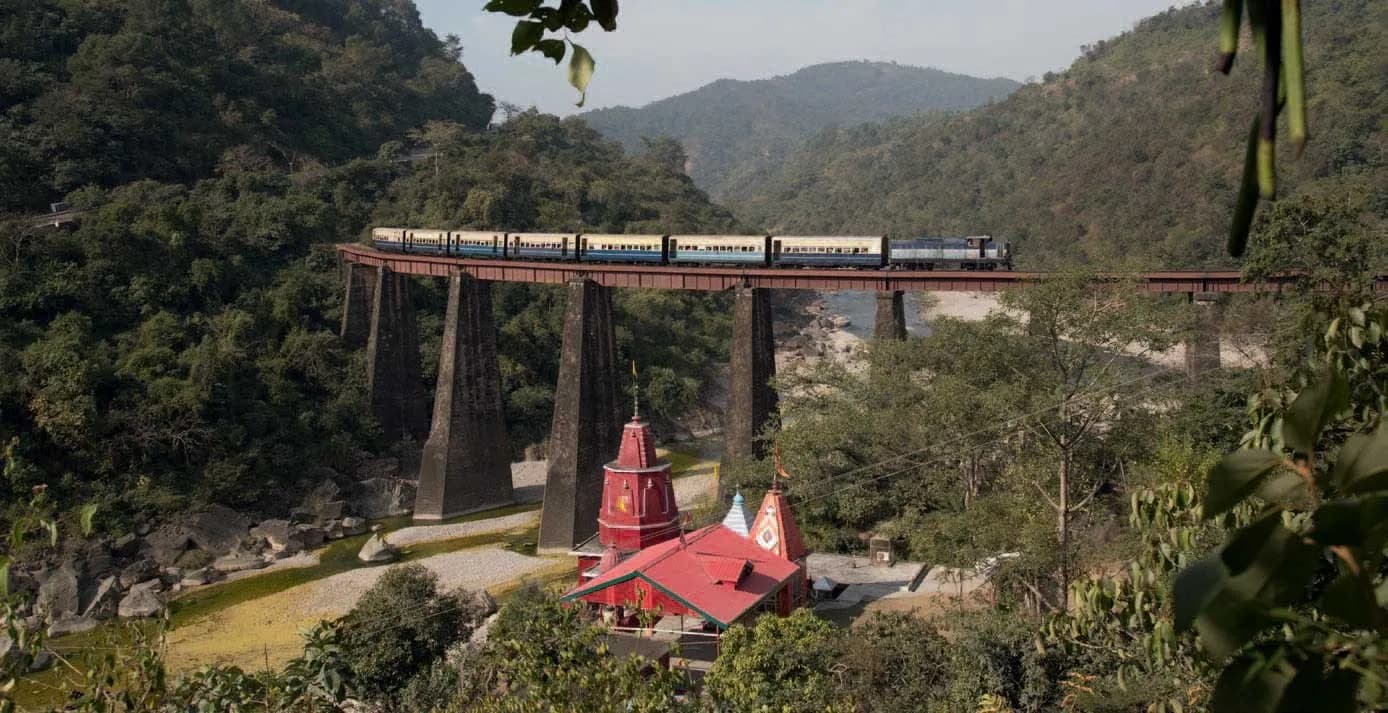
The Kangra Valley Railway is 164 km, 993 bridges, two tunnels, 4 hours from Pathankot if you could ride it end to end. As of April 2026, you can't — but here's where it stands, what's running, and why it matters.