Stargazing in Himachal Pradesh: 8 Dark-Sky Spots Ranked for 2026
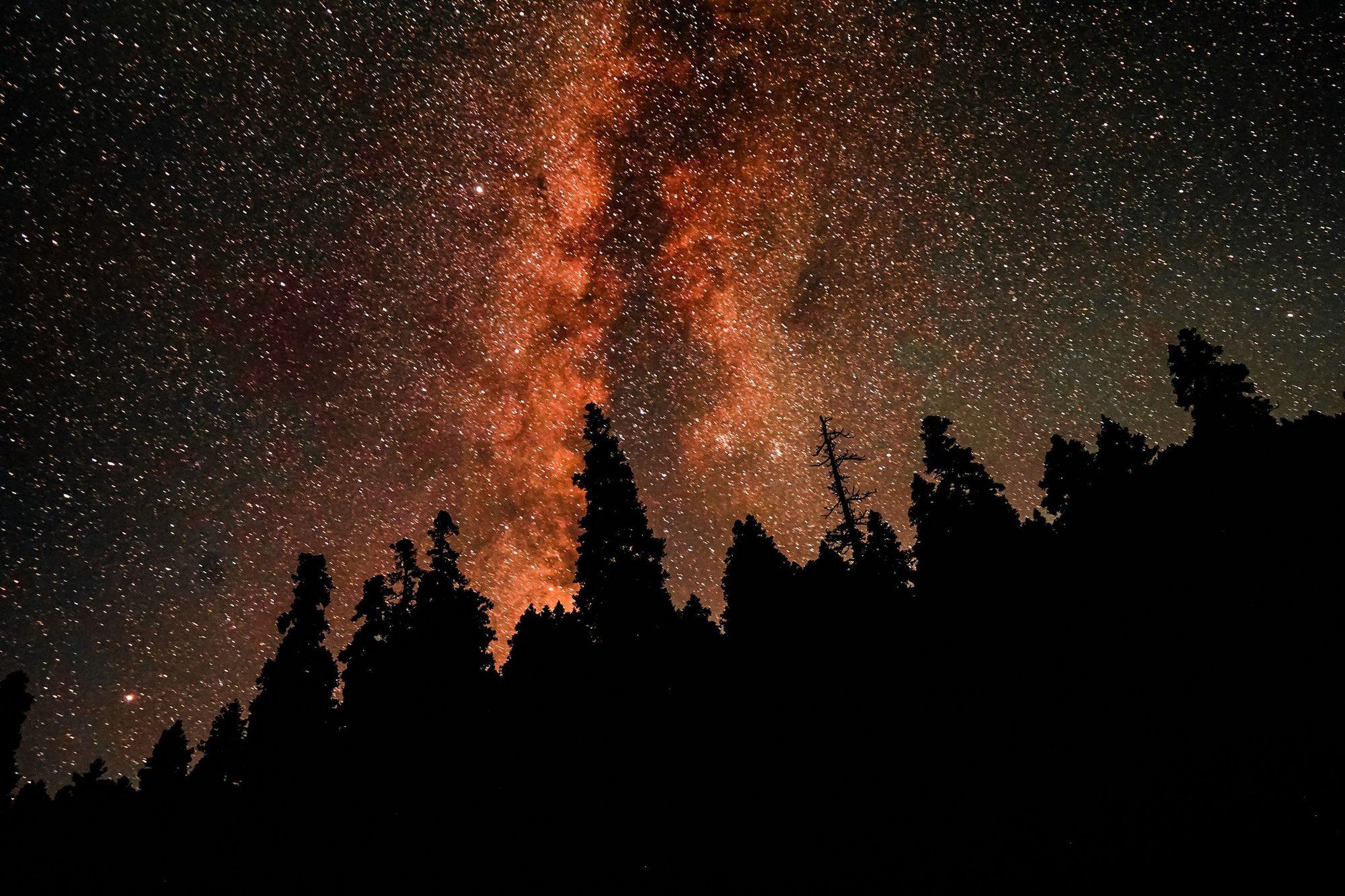
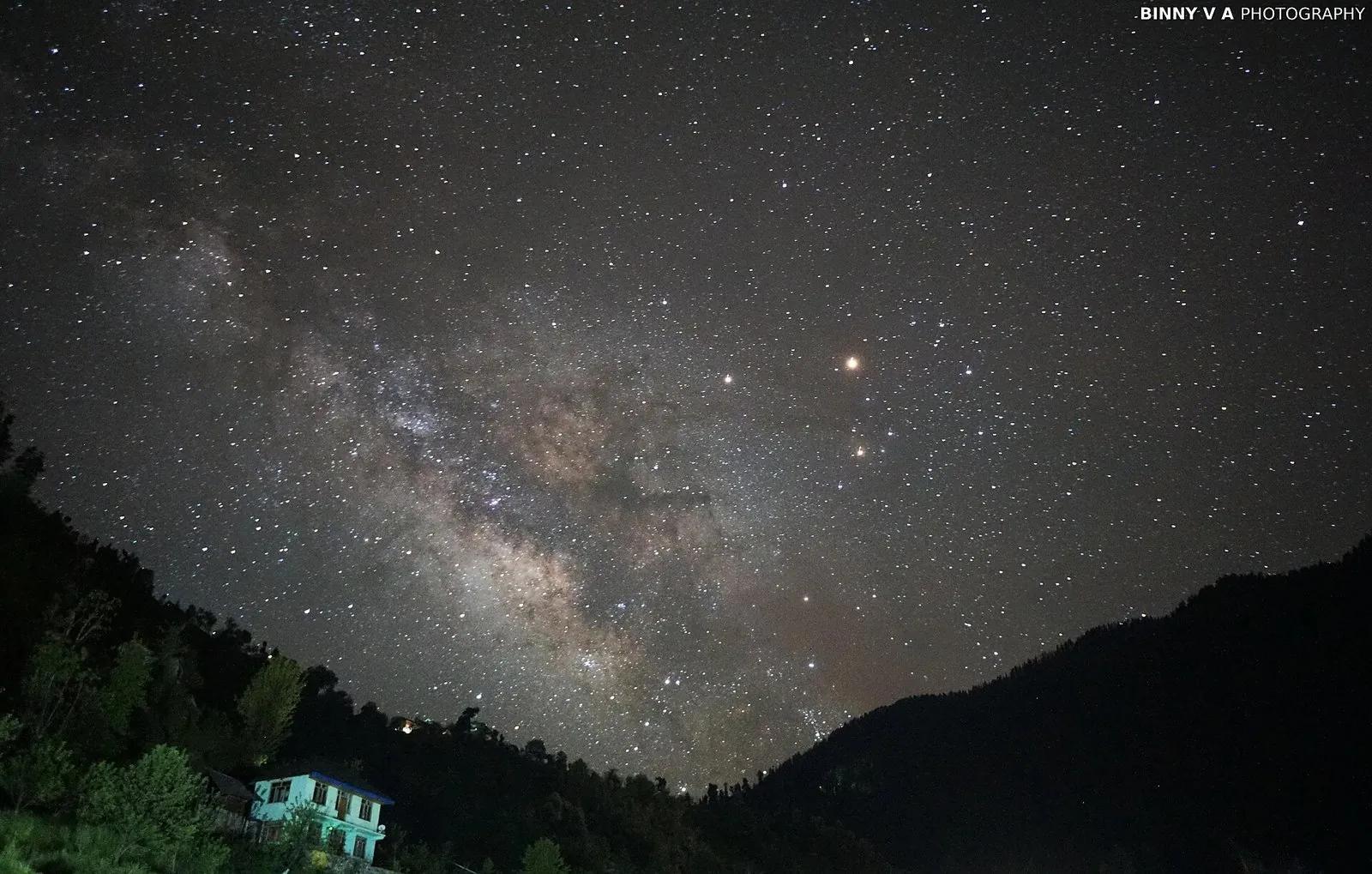
The first time the Milky Way actually cast a shadow on my jacket, I laughed. I was near Komic, half past one in the morning, fingers gone useless inside gloves, and I had assumed the "Bortle 1 casts shadows" line on astronomy blogs was the sort of claim writers make because they have read it somewhere. It is not. At 4,587 metres, on a night with no moon and no cloud, the galactic core is bright enough to read by. Not bright enough to read a book, exactly. Bright enough that a pale sleeve glows.
That is the first and most important thing to know about stargazing in Himachal Pradesh. You have seen stars before, and you have not seen these stars. Spiti and the quieter corners of Lahaul and Kinnaur are on a different scale of dark than anything you can reach from Delhi in a weekend, and on the best night of 2026 (the Perseid peak on August 12, lining up with a new moon for the first time in seven years) you can stand in Langza and watch a hundred meteors an hour come down over the Chau Chau Kang Nilda massif. I have done the Manali to Kaza loop more times than my odometer remembers. This is the guide I would have wanted on my first trip.
- Darkest sky in HP
- Spiti Valley — Bortle Class 1 to 2, rivals Atacama
- Best 2026 night
- Aug 12 to 13, Perseid peak with new moon
- Milky Way season
- April to September (core overhead June to August)
- Easiest dark sky
- Narkanda and Hatu Peak, 65 km from Shimla
- Kaza telescope hub
- HIMCOSTE + IIA programme, launched July 7, 2025
- Chandratal access
- Mid-June to early October, 4x4 past Batal
The Bortle scale, in plain Himachali
Astronomers grade night skies on a nine-point thing called the Bortle scale. Class 1 is wilderness dark, the kind where the Milky Way smears a visible shadow and the horizon airglow looks faintly green. Class 9 is inner Delhi, where you might count twenty stars on a good night if you stand on a roof and squint. Most Indian cities clock in at 7, 8, or 9. Rural plains usually 4 to 5. HP averages 3 to 5. Spiti sits at 1 to 2, and that single number is the whole reason this article exists.
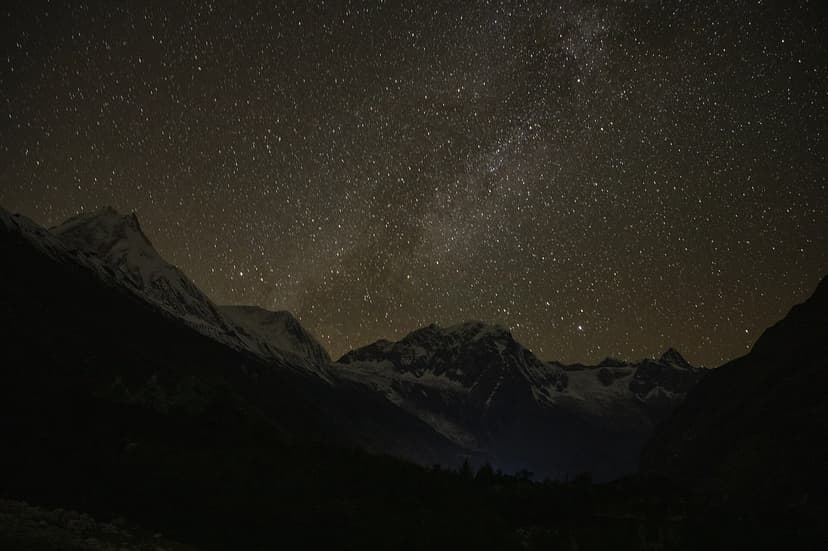
Why does Spiti get that number? Altitude first. You are often above 4,000 m, so roughly a third of the atmosphere is below you already. Add humidity: Spiti sits in the rain shadow of the main Himalayan wall, so air up there can be drier than a Rajasthan summer, single-digit percentages in August, 250-odd clear nights a year. And then add people, or rather the lack of them. Kaza is the big town up there. Kaza has under 2,000 people. The nearest real city, Shimla, is 425 kilometres south across some of the worst roads in north India.
This is finally getting taken seriously. Back in September 2022 the Hanle area of Ladakh (a 22-km disc, about 1,073 sq km, inside the Changthang Wildlife Sanctuary) was declared India's first proper Dark Sky Reserve, run by the Indian Institute of Astrophysics. Hanle is not Himachal. But HP is one administrative line over, sits on the same Tibetan plateau, and has almost the same sky. Spiti just lacks the paperwork.
Eight dark-sky spots in HP, ranked
Here is how I think about the eight places worth planning a trip around. The Bortle numbers are my own readings from lightpollutionmap.app cross-checked against the research of the Starscapes team at Starscapes.zone, not an official certification.
| Place | Altitude / Bortle / season | What you get |
|---|---|---|
| Chandratal Lake | 4,300 m, Bortle 1, mid-Jun to early Oct | HPs only mirror-of-the-Milky-Way shot, 4x4 past Batal, no signal, pre-book camps |
| Komic | 4,587 m, Bortle 1, Jun to Oct | Highest motorable village in the world, 360 degree horizon, monastery on the ridge |
| Langza | 4,420 m, Bortle 1, Jun to Oct | Buddha statue foreground, fossil country, homestays, the classic astrophoto set-up |
| Kibber | 4,270 m, Bortle 1-2, May to Oct | Working village, decent food, Chicham bridge 15 min away, civilised base camp |
| Pin Valley (Mud) | 3,810 m, Bortle 1-2, Jun to Oct | Loneliest dark sky in HP, end-of-the-road feel, road closes Nov to May |
| Sarchu | 4,200 m, Bortle 1-2, Jul to Sep | Camp-only on the Leh road, lethal wind, only for nights you were driving anyway |
| Nako + Chitkul | 3,625 m and 3,450 m, Bortle 2 to 3, May to Oct | Quieter Kinnaur option, sacred lake at Nako, generator-off-10pm at Chitkul |
| Hatu Peak / Narkanda | 3,400 m and 2,700 m, Bortle 3, year-round | The easiest real dark sky, 65 km from Shimla, deodar forest, winter-accessible |
Chandratal Lake, the only mirror shot in HP
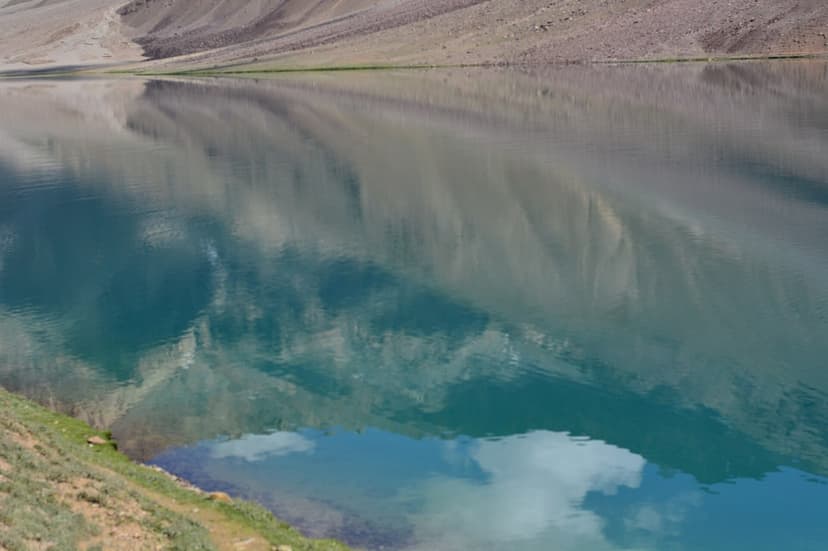
Chandratal is the lake every Indian astrophotographer wants. Crescent-shaped, still as a dropped coin on a windless night, 4,300 metres up. The iconic frame is simple: shoot the Milky Way reflecting in the water between one and three in the morning, new-moon week, August for preference. A Reddit thread I keep coming back to has the travel writer u/gaurav_kumrawat saying "I have seen stars at most parts of northern India (Pangong, Tso Moriri, Kaza, Jaisalmer) but never seen stars as beautiful as I saw in Chandratal. You could see Milky Way from naked eye itself." I agree with him. Chandratal is the best single night of HP stargazing you can plan for.
The logistics are not friendly. The lake sits 14 kilometres of bad unpaved road past Batal, and since the NGT clampdown the commercial camps have all moved 3 to 5 kilometres back from the water. Moonlake Camps, Samsong, Kabila Nature Camp, Parasol. Those are the main operators. Expect around Rs 1,200 to 2,500 a night per person including meals and tent, or Rs 7,200 for a four-day three-night package if you book end-to-end. There is no electricity, no phone signal, and no walk-ins in July and August. Pre-book. Bring cash.
Langza and Komic, the 4,400+ metre homestay villages
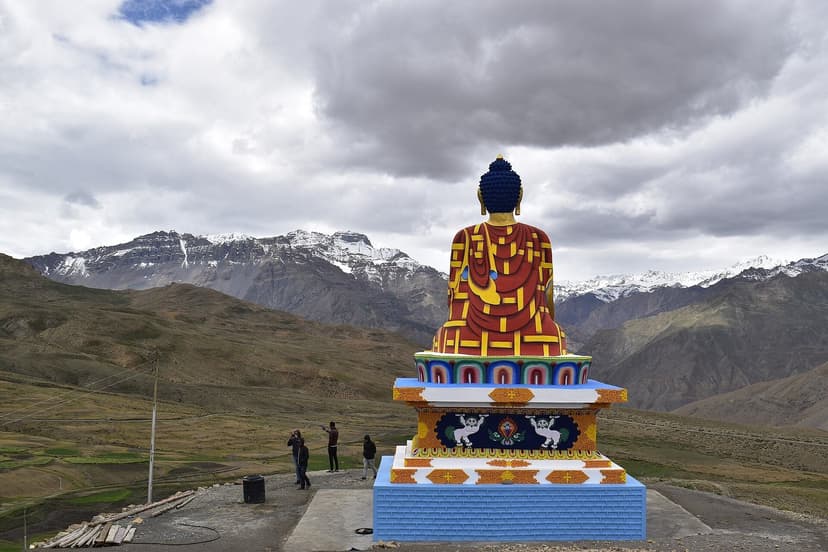
Langza has the statue. Komic has the horizon. Both sit above 4,400 metres, both are Class 1, both have homestays that will pour you black tea at midnight and not ask too many questions about why you are outside. Langza is the standard astrophoto set-up: put the Buddha in the lower third of your frame, let the galactic core rise behind him, expose for 20 seconds. Komic has no single iconic foreground, but from the ridge above the monastery you get a 360-degree unobstructed horizon, which matters more than you think. Meteor showers especially look better when you can see all the way down to the edges of the sky. There is something disorienting about a radiant that arcs from behind you to in front of you in the same minute.
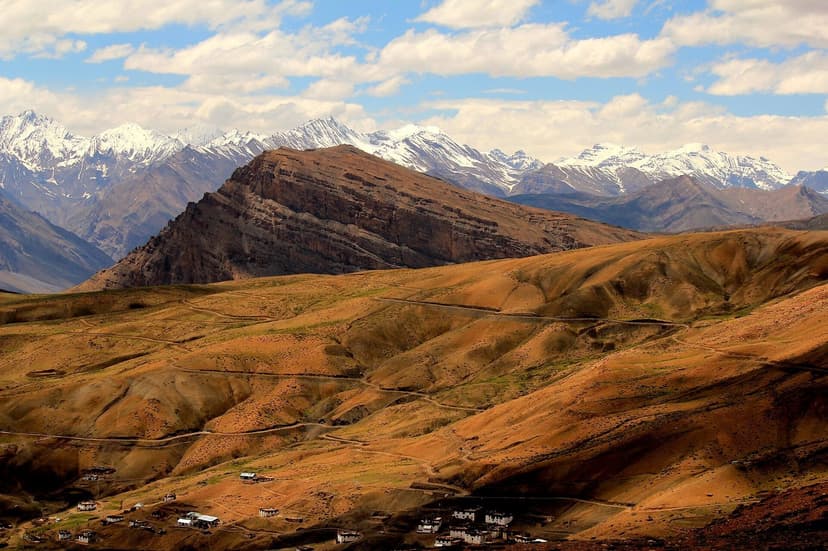
Homestay rates in Langza, Kibber, and Komic sit around Rs 1,500 to 2,500 a night in 2026, including dinner. Sonam Homestay in Langza and Tara Homestay in Komic (you will find them on any of the standard Spiti operator booking pages) are the safe defaults. Skip anything calling itself a "resort" up here. There are none, and the word is being used loosely.
Kibber and Pin Valley, the sensible choice
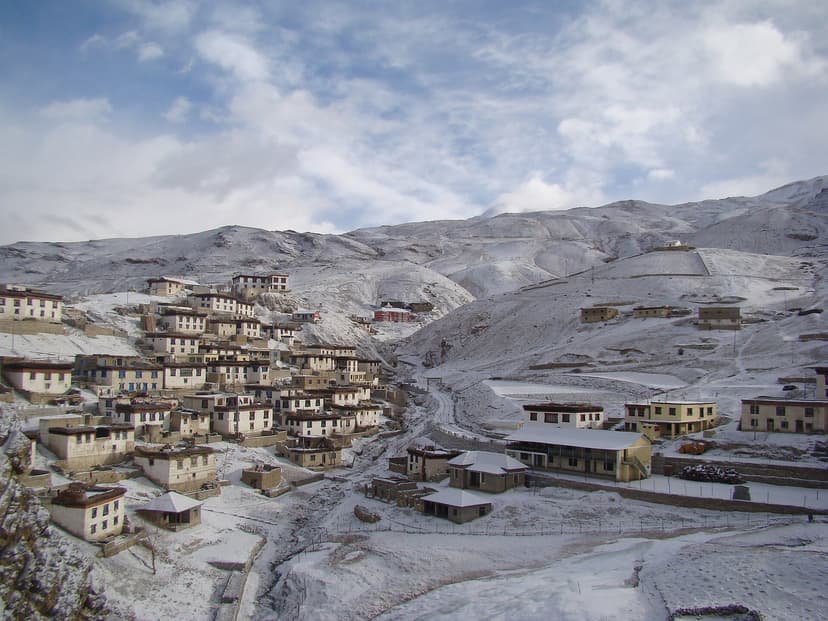
If you want the Bortle 1 sky without the Langza-Komic altitude hammer, base yourself in Kibber. It is 300 metres lower, much easier to sleep in on night one, and it has a working village with proper food. The Chicham bridge, until recently Asia's highest suspension bridge, is 15 minutes down the road and makes a nice sunset foreground before the real night begins.
Pin Valley is where I send friends who have done Spiti once and are asking for the version with fewer Delhi Enfield groups. Mud (3,810 m), the last road-head village, is Bortle 1 to 2 and feels like it sits at the bottom of a brown cathedral, walls running 2,000 metres straight up on either side. The road in is open June to October only. There is one reliable homestay cluster, no diesel for 40 kilometres, and at night, nothing. I mean that. Absolutely nothing except sky.
Nako, Chitkul and Kalpa, the Kinnaur alternatives
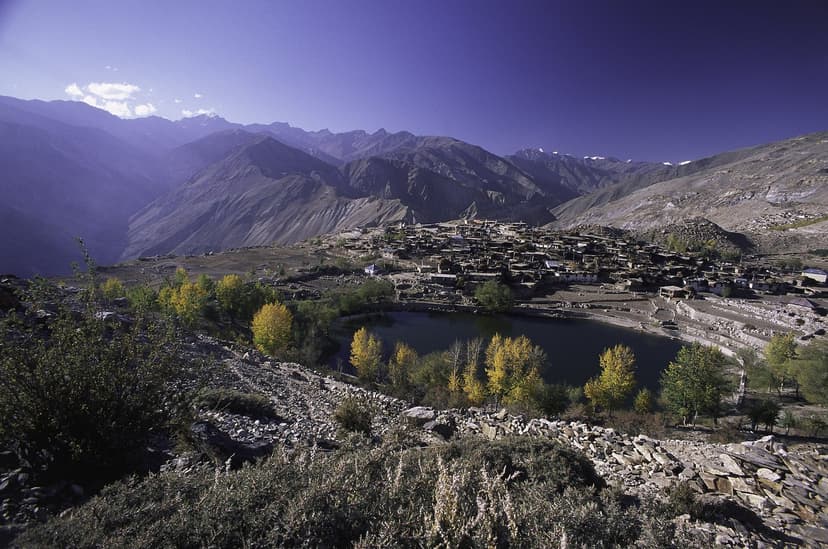
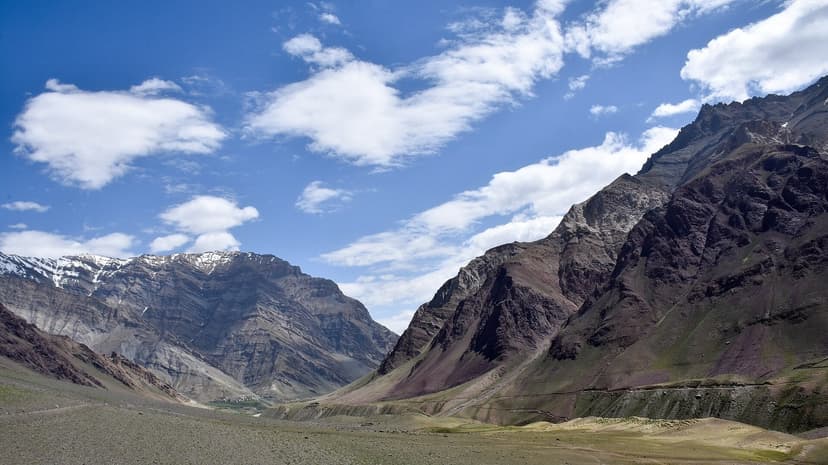
If Spiti-via-Manali is too ambitious, Kinnaur gives you almost the same sky at lower altitude and with much easier logistics. Nako, 3,625 m, sits around a small sacred lake. The village has maybe 600 residents and a half-dozen homestays. A Facebook HP travel group I trust had a poll last June on "best place to see the Milky Way in HP in June" and Nako won 15 votes, beating Spiti entirely, mostly because travellers had actually been there and been surprised.
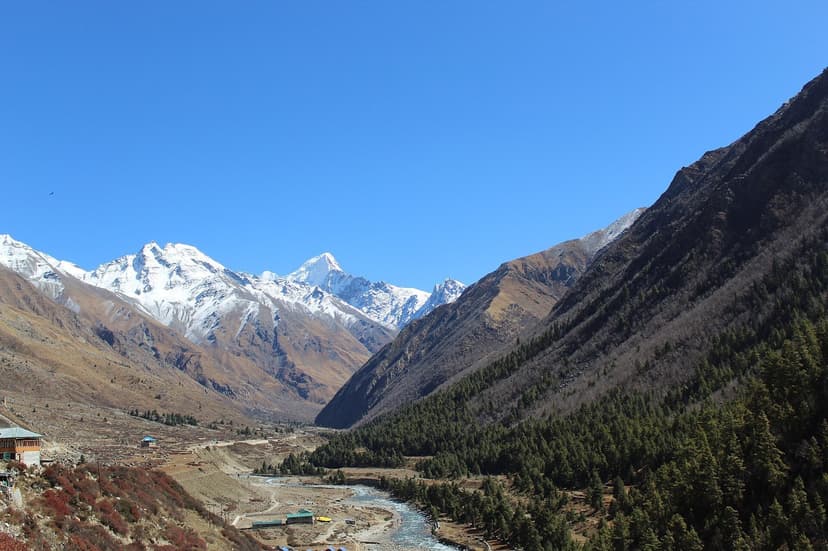
Chitkul is the last Indian village on the Baspa, 3,450 m, with the Kinner Kailash peaks behind it. The practical bit nobody tells you about is the generator. Village power runs off a shared set that cuts out around 10 p.m., give or take. One second you are washing tea cups, the next the village goes dark and the sky does this thing where your eyes take thirty seconds to catch up and then, without warning, there is just an absurd amount of sky. You do not hike anywhere. Step out of your homestay, pee in the cold, look up. This is the only place on the list where a Bortle 2 sky is accidentally free.
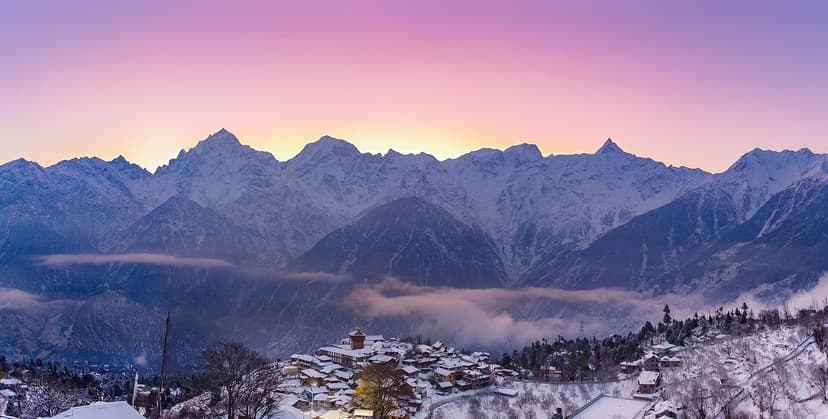
Kalpa at 2,960 m is not a serious dark-sky site. Bortle 3 on its best night. I am putting it on the list because if you are smart about it, Kalpa becomes the bridge. Spend one night at Kalpa to acclimatise, then Nako, then Tabo, then you roll into Kaza with lungs that know what they are doing. And the encore: set an alarm for 5:30 a.m., step onto the ridge with a cup of whatever you can get, and watch Kinner Kailash go from black to bronze to lit pink across the Sutlej. If I have ever come home from HP and had to talk a friend into going within the next month, it has been because of this view, not the stars.
Narkanda and Hatu Peak, the weekend option
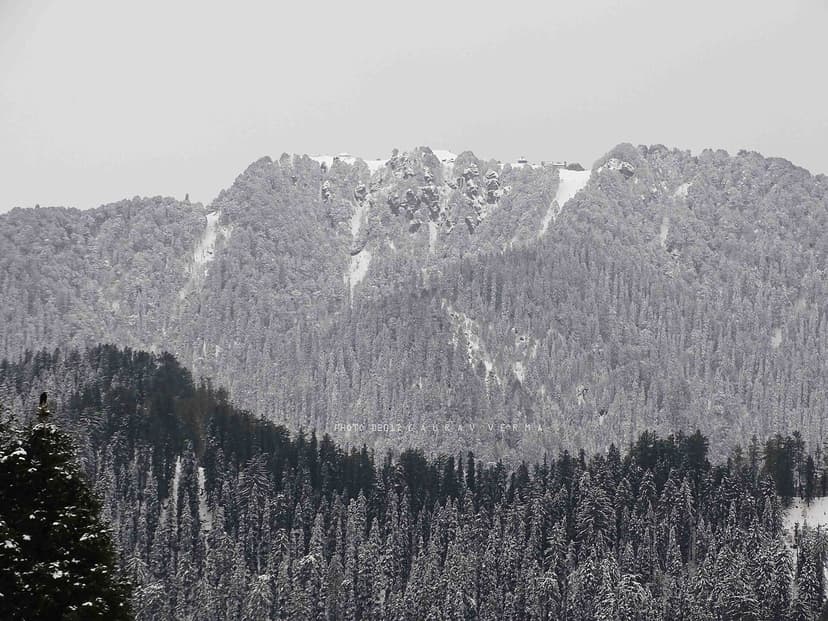
You cannot always get to Spiti. The road shuts from November to May and even in July the Manali side can be cut by one bad landslide. If you need real HP dark sky on a weekend from Delhi or Chandigarh, the honest answer is Narkanda, 65 km past Shimla. Drive up to Hatu Peak (3,400 m) before sunset, park at the little wooden Hatu Mata shrine at the top, eat whatever you packed, and wait for the hour when the last colour drains out of the sky. Bortle 3 on a clear winter night, worse in summer when heat haze softens everything. You will not get the Chandratal mirror. You will count more stars than you have seen in years, and you will be back on Shimla Mall Road for breakfast. Guesthouses in Narkanda village run under Rs 1,500; do not pay more, it is not that kind of town.
Which dark sky is right for you?
| Who you are | Best match | What to expect |
|---|---|---|
| Serious astrophotographer, fit, self-driving | Chandratal Lake | Class 1, lake reflection, camp 3-5 km from water, Rs 2,500 a night |
| Dedicated stargazer, road-trip style | Langza, Kibber, Komic | Class 1, homestays Rs 1,500-2,500, easy to string into 4-5 nights |
| Quiet end-of-the-road, no crowds | Pin Valley (Mud) | Class 1-2, one homestay cluster, zero infrastructure, magical |
| Nature-first, stars as a bonus | Chitkul + Nako | Class 2-3, lower altitude, generator-off-10pm, sacred lakes, Kinnaur food |
| First-timer from Delhi, weekend | Hatu Peak / Narkanda | Class 3, year-round, 8 hours from Delhi, Rs 1,500 guesthouse |
| Couples, low-effort, stars + sunrise | Kalpa | Class 3, Kinner Kailash dawn, orchard homestays, 2,960 m |
| Already in Manali, Manali-Leh drive | Sissu or Sarchu | Class 2-3 at Sissu, Class 1 at Sarchu, camp only |
Not sure which of these fits your actual trip shape? Send us your dates and we will tell you. We will say which place gets you the darkest sky for your schedule, which homestays are currently taking bookings, and whether the road you are counting on is actually open this week.
The 2026 astronomy calendar for HP
Not every night is worth driving for. Meteor showers and the galactic core season line up properly only a few times a year. 2026 has one outstanding date and a handful of good ones.
| Event | Date / peak rate | Where to watch it from |
|---|---|---|
| Quadrantids | Jan 3 to 4, ~120/hr | Only Narkanda is winter-accessible; dress like your life depends on it, because it does |
| TOTAL LUNAR ECLIPSE | Mar 3, 3:20 to 6:48 PM IST | The only eclipse visible from most of India in 2026. Totality 4:34 to 5:33 PM IST (PIB) |
| Lyrids | Apr 21 to 22, ~18/hr | Spiti often still snowed in; Kinnaur (Kalpa, Nako) is the call |
| Eta Aquariids | May 5 to 6, ~40/hr | Near-full moon washes out most of the show |
| Venus-Jupiter conjunction | Jun 8 to 9 | Visible from anywhere in HP in the western sky after dusk, impressive in a phone camera |
| PERSEIDS + NEW MOON | Aug 12 to 13, up to ~100/hr | Peak (Aug 13, 14:53 UTC) is hours from new moon. Galactic core overhead at midnight. Plan Spiti around this |
| Orionids | Oct 21 | Spiti winding down; Pin Valley road often closed by end of Oct |
| Geminids | Dec 13 to 14, ~120/hr | Coldest night of your life, clearest sky you will ever see. Narkanda or Kalpa |
The night of 2026. August 12 to 13. The Perseid peak falls within hours of the new moon (17:37 UTC Aug 12), which happens roughly once every seven years. Under Spiti Bortle 1 conditions you can realistically expect 90 to 100 meteors an hour, with fireballs bright enough to be visible from a campfire. EarthSky has this peaking at 14:53 UTC on August 13, which is 8:23 PM IST, so in practice both the night of Aug 12 and the night of Aug 13 should be spectacular from Spiti. Book homestays in Langza, Kibber, or Komic by June. They will be gone.
When the Milky Way is actually visible
Casual stargazers assume the Milky Way is up there all year. Not true. The galactic core, the fat bright bulge in Sagittarius that you actually want in the frame, hides below the horizon for half the year in the northern hemisphere. April to early October is when it rises at night. In HP the window is tighter than that. April and October have the core sitting too low; you have to wait past midnight and even then you are shooting through a lot of angle.
June, July, August. That is the window. Core transits the meridian (meaning highest in the sky) near midnight local. Problem is, June and September are monsoon everywhere else in HP. Spiti, lucky thing, is behind the main ridge and gets almost no rain. I have driven into Kaza on an August morning when Manali was waterlogged and my friends stuck there were reading novels in hotel rooms. Spiti was dry and 28 degrees. This is why half the HP stargazing Instagram you scroll is shot there, whether the photographer intended to go to Spiti or not.
What changed in 2025: Kaza is now an official astro-tourism hub
On July 7, 2025, CM Sukhvinder Singh Sukhu stood in Kaza and formally launched a stargazing programme. The setup is tripartite: HIMCOSTE (the state's science and environment body), the Indian Institute of Astrophysics, and Central University of HP. Between them they are training Spitians as astronomy guides and have handed out proper kit, Sky-Watcher 8-inch GOTO reflectors, to residents of Kaza, Langza, and Rangrik. Those guides run paid night-sky sessions through summer.
This is a bigger deal than the press coverage made it look. It means you can now book a Spitian at a real eight-inch scope pointing at Saturn's rings, not just stand in a field hoping someone has an app that tells you which dot is which. Rates are Rs 500 to 1,500 a head depending on how many of you there are. Ask at your homestay. If they do not run sessions themselves, they will know whoever does, because everybody in Kaza knows everybody else. My bet is that within two summers every serious homestay up the valley will offer telescope nights as a default add-on.
Camera settings and cold survival
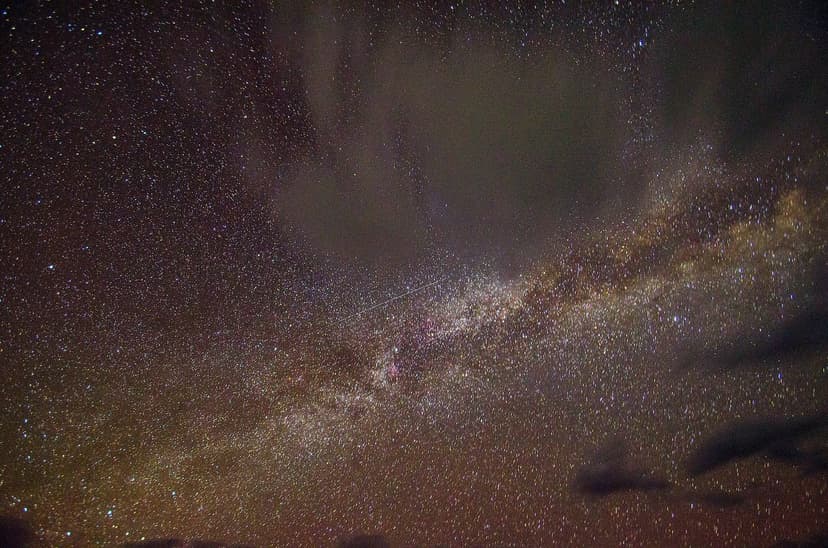
The short version of Milky Way photography. Wide-angle lens, f/2.8 or wider, ISO 3200 to 6400, 15- to 25-second exposure, sturdy tripod, remote trigger or two-second timer. Use the 500 rule or the NPF rule to avoid star trails: roughly, 500 divided by focal length equals max seconds before stars smear. A 14mm lens gets you 35 seconds; a 24mm gets you around 20. Focus manually to infinity (autofocus fails at night, every time). Shoot RAW.
Cold is the bigger problem and nobody warns you enough. At 4,300 metres on a clear August night Chandratal drops to -5 or -10°C even in peak season. Batteries in cold weather drain three times faster. The failure pattern is always the same: you get into position at 1 a.m., take six exposures, and the camera dies. Carry three to four spare batteries. Keep them in an inner jacket pocket next to your body until you need them. Bring a red-filter head torch. Your eyes need 20 minutes to dark-adapt and a white torch kills that adaptation in a second. Download star maps offline; there is no signal past Losar. Hot tea in a thermos is survival equipment, not a nicety.
Acclimatise. I keep having to say this. I have seen two fit people turn back at 3 a.m. from Langza because they tried to shoot all night on their first high-altitude night. Sleep at 3,500 m for a night before pushing above 4,000 m.
What it costs to see the stars in HP
| Line item | 2026 cost (INR) | Notes |
|---|---|---|
| Fuel, Manali-Kaza-Manali (720 km) | Rs 6,000 to 8,000 | Diesel SUV, split between 2, single tank each way + reserve |
| Chandratal camp, 1 night | Rs 1,200 to 2,500 per person | Inclusive of tent + dinner + breakfast; Moonlake, Samsong, Parasol |
| Langza/Kibber/Komic homestay | Rs 1,500 to 2,500 per person | Per night, dinner included, 2026 rates |
| Kinnaur homestays (Nako, Chitkul) | Rs 1,000 to 2,000 per person | Per night, often with breakfast |
| Kaza telescope session | Rs 500 to 1,500 | HIMCOSTE trained guide with Sky-Watcher 8 inch |
| Guided Spiti stargazing tour | Rs 15,999 to 18,499 | 7 to 9 days ex-Delhi, all-inclusive, Spiti Ecosphere / Stargazing Mumbai / AstroNomadLife |
Planning a stargazing trip around the Aug 12-13 Perseid night? Email us your dates and we will sanity-check the plan. We will tell you whether your homestay is in the right place for the meteor radiant, which road is the least likely to be closed that week, and if the specific camp you are booking is on the right side of the 2025 Kaza floodlights.
Want a guided night under the stars without the seven-day Spiti commitment? Refuje runs two. Stargazing Under Himalayan Skies, near Shimla, is an easy, low-cost guided session (around Rs 1,020) and the most accessible way to do this properly. The Under the Stars wilderness camp at Bhandak Thach, up in the Parvati valley (around Rs 3,600), is an off-trail overnight for genuinely darker skies. Both are run by local guides.
One Kinnauri-side detour Negi would kill me for not mentioning
This article is a Kullu-side piece, written by someone who enters Spiti the Manali way. But the truth is that from a pure dark-sky standpoint, the Kinnaur entrance (Shimla, Narkanda, Rampur, Reckong Peo, Nako) is a more gradual altitude gain and probably a better stargazing road. You sleep one clear night at Kalpa, one at Nako, one at Tabo, and then you roll into Kaza already acclimatised. If you have the time, go up through Kinnaur and out through Manali. That way you get both sides of the mountain and you avoid the Rohtang-Atal Tunnel bottleneck on the way back. The Kinnauri villages are quieter, the apples are better, and the Sutlej gorge at dusk is one of those views that make you forget the road only has room for one bus.
Stargazing in HP: frequently asked
Can you really see the Milky Way from Himachal Pradesh?
Yes, from Spiti. Langza, Kibber, Komic, Pin Valley, and Chandratal sit at Bortle Class 1 to 2, where the galactic core is bright enough to cast soft shadows on pale clothing. Best months are June to August.
What is the single best place in HP for stargazing?
Chandratal Lake (4,300 m, Bortle 1), mid-June to early October, for the lake-mirror shot. If you want village comfort and the same sky, Langza or Komic. If you want the easiest real dark sky from Delhi, Hatu Peak above Narkanda.
When is the best month to see stars in HP?
June through August. August 12 to 13, 2026 is the standout single night, because the Perseid peak falls within hours of the new moon, which only happens roughly once every seven years.
What is the Bortle scale and where does Spiti sit on it?
Spiti is Bortle 1 to 2, the darkest classification. Indian cities are 7 to 9, rural India 4 to 5. Spiti competes with Atacama and Hanle (Ladakh) for the darkest sky in Asia.
When are the Perseids visible from India in 2026?
August 12 to 13, 2026. Peak is August 13 at 14:53 UTC (8:23 PM IST). EarthSky predicts up to about 100 meteors per hour under Bortle 1 conditions.
What are the camera settings for Milky Way photography?
Wide-angle lens, f/2.8 or wider, ISO 3200 to 6400, 15- to 25-second exposure. Apply the 500 rule. Focus manually to infinity. Shoot RAW. Carry three to four spare batteries because cold at altitude kills them fast.
Is Chandratal worth the effort?
If you have a 4x4 and one spare night, yes. Pre-book Moonlake, Samsong, or Parasol Camps by June. No walk-ins in peak season.
Is Hanle in Himachal Pradesh?
No, Hanle is in Ladakh. It is Indias first officially designated Dark Sky Reserve (September 2022). Spiti is not a designated reserve but has a similar Bortle Class 1 sky.
What did Himachal launch for astro-tourism in 2025?
On July 7, 2025, CM Sukhvinder Singh Sukhu inaugurated a stargazing programme in Kaza. Sky-Watcher 8-inch GOTO telescopes were distributed to residents in Kaza, Langza, and Rangrik, who run paid sessions for tourists.
Is it safe to stargaze above 4,000 m?
Yes, if you acclimatise. Sleep a night at 3,500 m before shooting at 4,400 m. Do not climb and shoot on the same day. Carry Diamox if you are altitude-sickness prone.
What does a stargazing trip to Spiti actually cost?
A typical 5-night Spiti stargazing trip from Manali costs Rs 22,000 to 35,000 per person for two people sharing a car and homestays. Guided operator trips ex-Delhi are Rs 15,999 to 18,499.
Map: HP dark-sky spots
Sources used
- Press Information Bureau — Total Lunar Eclipse, March 3, 2026 timings (official IMD Positional Astronomical Centre data)
- EarthSky — Perseid meteor shower 2026 peak prediction + new moon timing
- Indian Institute of Astrophysics — Hanle Dark Sky Reserve (HDSR) background
- The News Himachal — Kaza stargazing programme launch, July 7, 2025
- Starscapes.zone — India dark-sky guide, Bortle notes for Spiti locations
- Light Pollution Map — location-specific Bortle readings
- Moonlake Camps — Chandratal 2026 tariffs, NGT-compliant siting
- Reddit — u/gaurav_kumrawat on Chandratal sky (r/SoloTravel_India), u/booega on astrophotography from Rakchham and Kaza (r/spaceporn)
- Himachal Pradesh Tourism Development Corporation — Kinnaur accommodation rates, Kaza fuel pump status
- Background reading — Wikipedia entries for Langza, Kibber, Komic, Nako, Kaza, Mud (village), Sarchu, Kyelang, Hatu peak
About Rajesh Thakur
Rajesh Thakur grew up in the Kullu valley and has been writing about Himachal Pradesh travel and culture since 2018. He is most at home in upper Kullu, Lahaul, and the Spiti circuit, and has done the Manali-Kaza loop more times than he has counted.
You Might Also Like
Volunteering in Himachal Pradesh: 12 Organisations and How to Apply (2026)
Teach English in McLeod Ganj, conserve the Great Himalayan National Park, build with earth in Bir, or harvest apples in Kullu. Twelve real HP volunteer organisations with honest costs, the visa rule that gets foreigners deported, and how to apply.
How to Travel Himachal Without Wrecking It: A Quiet-Travel Manual
A non-preachy field manual for responsible travel in Himachal, by a Kullu local: how to behave, when to go, where to go instead, and the 2026 rules and bans that actually matter.
Mamleshwar Mahadev: The Eternal Flame Temple of Karsog
An eternal fire, a fist-sized wheat grain and a six-foot drum, kept in a mortar-less timber temple in the quiet Karsog valley. The honest story of Mamleshwar Mahadev: what is real, what is faith, and how to go.