
Boti Chefs: The Hereditary Cooks Behind Himachali Dham
A Boti starts work at four in the morning. Not five. Not a quarter past. Four, before the village is awake, when the only light in Pathiar is the diesel lantern hung from a bamboo cross-beam in a structure that did not exist yesterday and will not exist on Monday. He digs a six-foot trench. He arranges pinewood in it. He sets a brass charoti over the fire and, in a gesture every Boti makes and almost no Boti talks about, touches the cooking place with his forehead before he drops the first lentil into it.
This is how a Himachali Dham gets made. It is also how it has been made for roughly a thousand years.
The Botis are a hereditary Brahmin caste of feast-cooks who serve the Dham, our communal vegetarian feast, at every wedding, every thread ceremony, every funeral feast and every temple festival in the upper hills. The Government of Himachal's own tourism page describes them, briefly and accurately, as "hereditary clans of Boti chefs" and notes that "a Mandi Dham is much different from a Chamba, Kangra, Bilaspur, Shimla, Sirmaur or Kullu Dham" (himachaltourism.gov.in/cusine). Six regional dhams, six families of recipes, one occupation that has refused to write its method down. Botis transmit by hand and by ear, father to son, no manuals.
The English-language press has, until now, paid almost no attention to them. Atlas Obscura ran a famous piece on Kashmir's wazas, the men who cook Wazwan; the BBC has done segments on them; Gastro Obscura has photographed their decg. Atlas Obscura calls them "the devil chefs of Kashmir." The Botis cook a feast just as old, with just as much ritual, and most travellers leaving Himachal with a copy of The Beach Cafe have never heard the word.
- What a Boti is
- A hereditary Brahmin cook who specialises in Dham, the Himachali communal feast
- Tradition age
- Roughly 1,000 years, traced to King Jaisthambh and a Kashmiri-Wazwan inspiration
- Knowledge transfer
- Father to son, oral, no written recipes for centuries
- Regional repertoires
- Six districted Dhams: Kangra, Mandi, Chamba, Kullu, Bilaspur, Sirmaur, Shimla
- Booking lead time
- Up to a year for the in-demand Botis (Pahadi Pattals Nitika Kuthiala via Whetstone Magazine)
- Named practitioner
- Sanjay Mishra, Pathiar, Kangra district. JustDial-listed catering business; phone 9816457888 (research file, please verify before booking)
- Cooking start time
- 4 a.m., usually with preparation the previous night
- Serving window
- 12 noon to 4 p.m.
- Crisis
- Sanjays own line: there was a time when Botis were almost extinct
The word, and where it lives
"Boti" is one of those Himachali words that Wikipedia has not made friends with. The English page on Dham gives it a single line, a particular caste of Brahmins who cook the feast, and stops there. The Hindi-language press is more useful. Prabhasakshi notes flatly that "बोटी एक विशेष ब्राह्मण वर्ग हैं जो वंशानुगत शेफ हैं", which translates to: Botis are a specific sub-class of Brahmins who function as hereditary chefs. The Hindi sentence does not bother to soften the caste lock the way English commentary tends to (Prabhasakshi cuisine page).
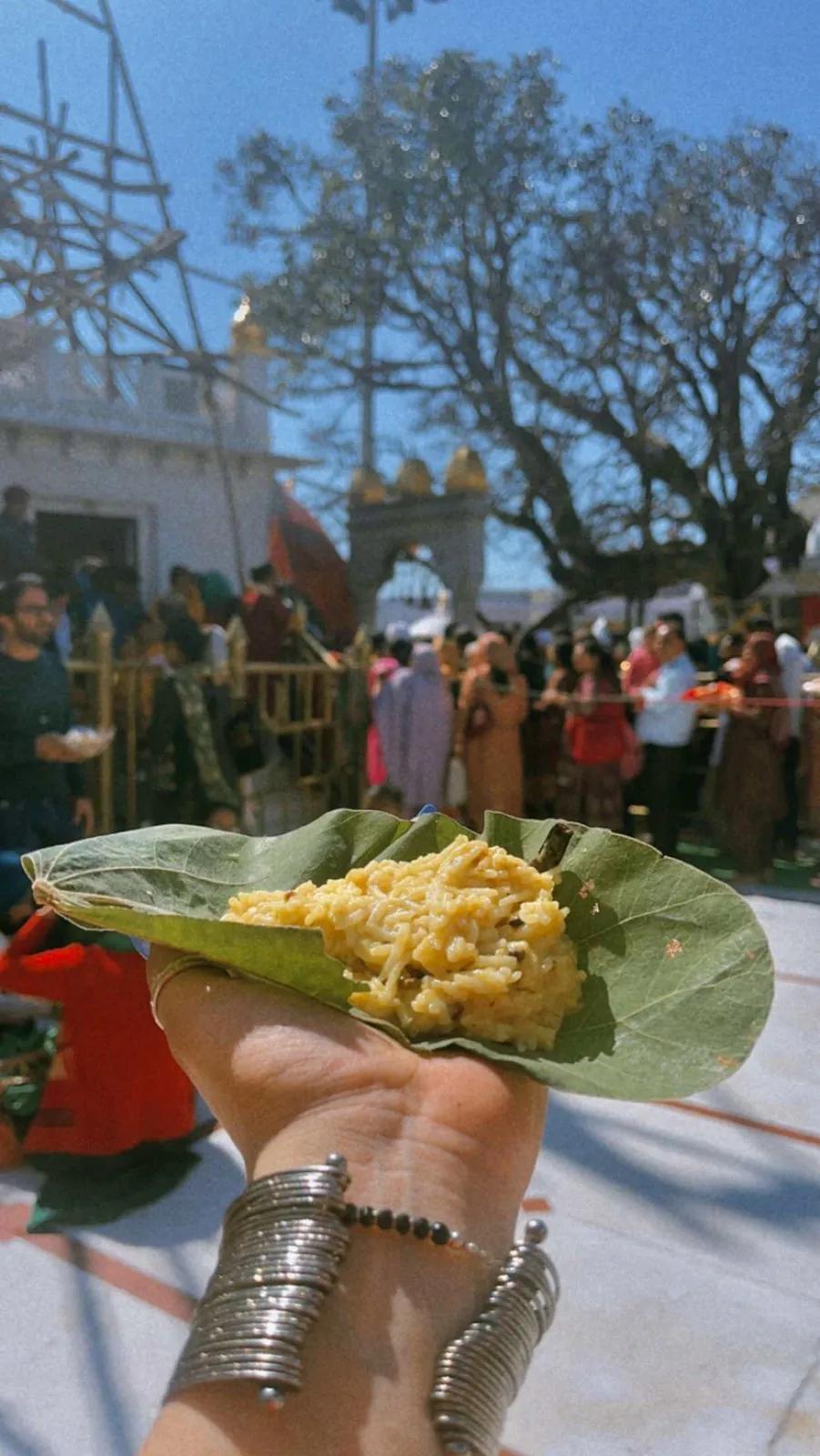
The lock is real and has reasons. Dham started its life as prasad, food cooked at temples and offered first to a god, then to whoever turned up at the door. Sanatana ritual rules required temple food to be Brahmin-prepared. The rule survived the temple. When the kings of Chamba and Mandi started commissioning the same feast for non-religious occasions, weddings, royal birthdays, treaty meals, the cooks they hired had to be Brahmins, because the food still had a residual sacred edge. Over generations the religious requirement crystallised into an occupation. Specific Brahmin families across Kangra, Mandi, Chamba and Kullu became the designated Dham cooks. Over more generations, those families became Botis the way the Khans of Wazpur became wazas, the way the Maharajs of Marwar became palace cooks. Caste shaped the trade; the trade fed back into caste.
Most upper-belt Himachali villages have one Boti family. Some have two who quietly compete. A few villages, in deep Kangra and the Mandi belt, are described in the Hindi press as boti-only: "हिमाचल में अनेक गांव तो बोटियों के ही हैं", "there are villages in Himachal that belong to the Botis themselves."
One thousand years, and a king who liked Wazwan
Multiple Hindi sources, plus Whetstone Magazine's long-form feature, agree on the origin story. Around the eleventh century, a king variously named Jaistambh or Jaisthambh, sources differ on the spelling, not the man, visited Kashmir, ate Wazwan, came home, and ordered his cooks to recreate the experience without meat. The Kashmiri Wazwan is rista, gushtaba, tabak maaz, rogan josh, food built around mutton; the Himachali kings were Hindu, the high passes did not always cooperate with mutton supply chains, and the temple shadow on the kitchen made meat awkward. The cooks delivered a vegetarian feast that kept Wazwan's structure, multiple slow-cooked courses, brass vessels, a procession of dishes, and substituted dairy, lentils, chickpeas and ghee for the meat. They called it Dham, "feast."
That is the polite version. The Hindi Wikipedia version notes that the rulers ate alongside their subjects: "शासक और प्रजा एक ही पंक्ति में बैठकर भोजन करते थे." Eating from the same row meant the king pretended his caste did not matter for one afternoon, which is itself a fairly remarkable thing for an eleventh-century mountain monarch to do.
A thousand years later, the structure has hardly moved. A Boti still cooks in brass over wood. The dishes still arrive in odd numbers, five, seven, nine, eleven. Rice still arrives three times. The diners still sit on the floor in two rows, called the painth, and the food walks down between them in steel buckets and brass karahis carried by the Boti's sons.
The kitchen that did not exist yesterday
The first thing a Boti builds at every site is the kitchen itself. It is called the rasialu. Bamboo poles for pillars, steel sheets for the roof, four sides open to the wind. Whetstone's reporter watched one go up in three hours; the Hindi food blog Jogindernagar describes the same construction with one extra detail, the floor is fresh earth, not concrete, because the char, the fire trench, has to be dug into it.
The char is a six-foot-long, two-foot-wide trench, packed with pine, sometimes deodar where pine is short. The Boti sets the brass charoti vessels over it and feeds the wood from one end. The trench takes about an hour to settle to a steady glow; the dishes that go in next take five.
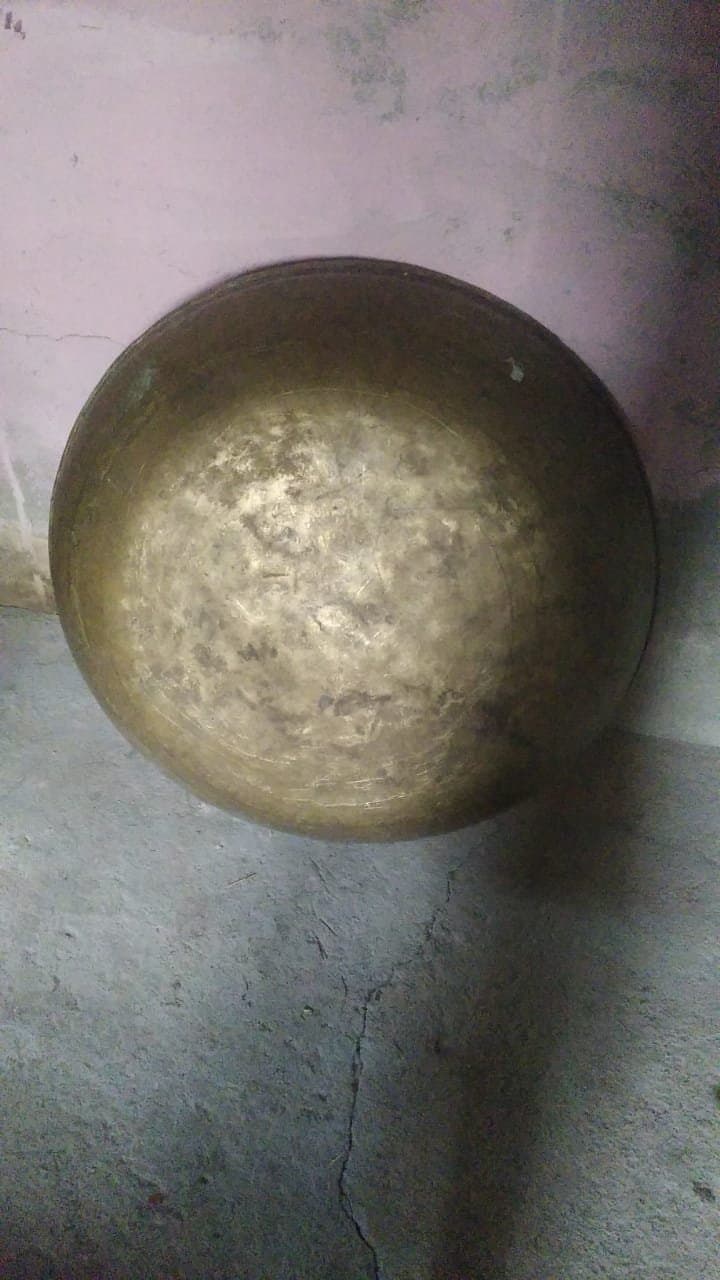
The vessels are the part nobody redesigns. Charoti, sometimes batloi or baltohi, is a brass cooking pot with a broad belly and a narrow mouth. The narrow mouth is not decorative. It traps steam, which keeps the dal at temperature for hours after the fire dies, which is exactly what you need when you are feeding three hundred people in a four-hour serving window. Architectural Digest India documented Charoti vessels older than a hundred years still in use, and noted that families lend them between households for big Dhams. Brass conducts heat slowly; copper, where it is alloyed in, contributes a faint metallic note that nobody who has eaten a brass-cooked dal will mistake for steel-pan dal again.
One technique deserves a paragraph of its own. Dhuni. The Boti pours hot mustard oil over a single piece of burning coal, drops the coal into the dal, and slams the lid on. The oil hits the coal, the oil burns, and a black, mustard-edged smoke fills the inside of the lidded vessel for ninety seconds. The lid comes off, the smoke is gone, the dal carries it forever. TravelShoeBum's reporter watched it in a Kangra kitchen and described the smell as "something between a temple lamp and a barbecue, leaning lamp." That is, allowing for slight romance, the right description. Dhuni is what makes a Boti dal taste different from a restaurant dal. It cannot be reproduced with liquid smoke. It cannot be reproduced with paprika. The Hindi blogs hint, without quite saying, that Botis borrowed the technique from the Adivasi communities of the lower hills, the same people who, in the Sirmaur belt, smoke meat in covered earthen pits.
The other technique a Boti will not tell you about easily is the walnut trick. Walnuts are burnt black, ground to powder, soaked in water, and the strained green-brown liquid goes into certain dishes for colour and a faint bitterness that helps with digestion. Sanjay Mishra of Pathiar mentioned this on the record to The Better India and apparently regretted it; the technique was a closed-door secret across most Boti families until that 2017 piece.
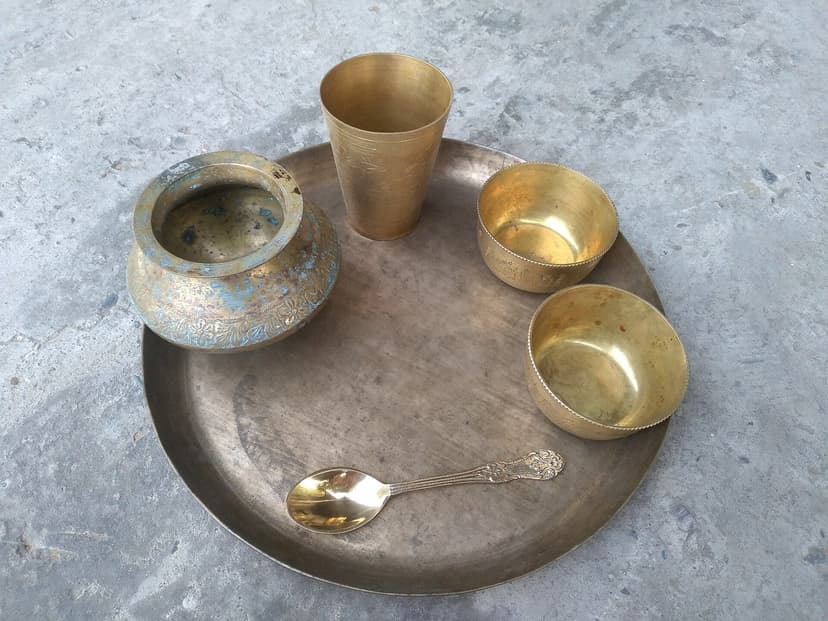
Sanjay Mishra of Pathiar
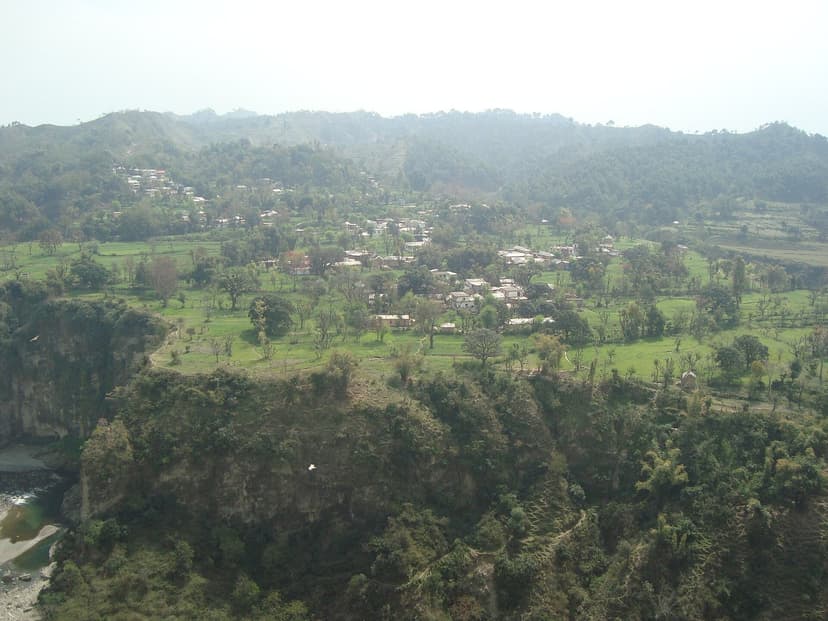
The only Boti who has spoken to the English press at any length is Sanjay Mishra, of Pathiar village, Kangra district. The Better India profiled him in 2017. JustDial and Yappe still list his catering business, "Sanjay Mishra Kangri Dham & Catering," near Bani Mata Mandir, near KCC Bank, Pathiar, and his number, 9816457888, has been carried in every published source on him for nearly a decade (JustDial Kangra). I have not called the number. Anyone planning to should expect Hindi, brisk replies, and the assumption that you are calling because you have a wedding date and not because you are writing a magazine piece.
The line of his that everybody quotes, including in this article, is the same one. "There was a time when Botis were almost extinct," he told The Better India, "but now we have again taken up this profession." The almost in "almost extinct" is doing serious work. He came back to Pathiar to restart the family practice after the village was on the verge of losing it; the Boti families that had been there a generation earlier had drifted toward city restaurant kitchens, and Sanjay was the one who turned the boat. He cooks for what the Better India delicately calls "celebrities, politicians and cricketers," which in Kangra means the men in the photos at the front of the local Congress and BJP offices. He also trains apprentices. He is the reason there is anything to write about Pathiar at all.
Read his interview alongside the Better India profile of Himanshu Sud, the engineer who quit his software job to open Himachali Rasoi at 54 Middle Bazar, Shimla, and the picture sharpens. Himanshu hired Botis to anchor his kitchen. The Botis, in a 30 Stades report, were politely confused: an engineer was running their errands at the prep counter while their own children were leaving to work in restaurants serving Indo-Chinese. The professional pyramid had inverted in a generation, and nobody in the kitchen had a phrase for it.
A Boti's day, in the order it actually happens
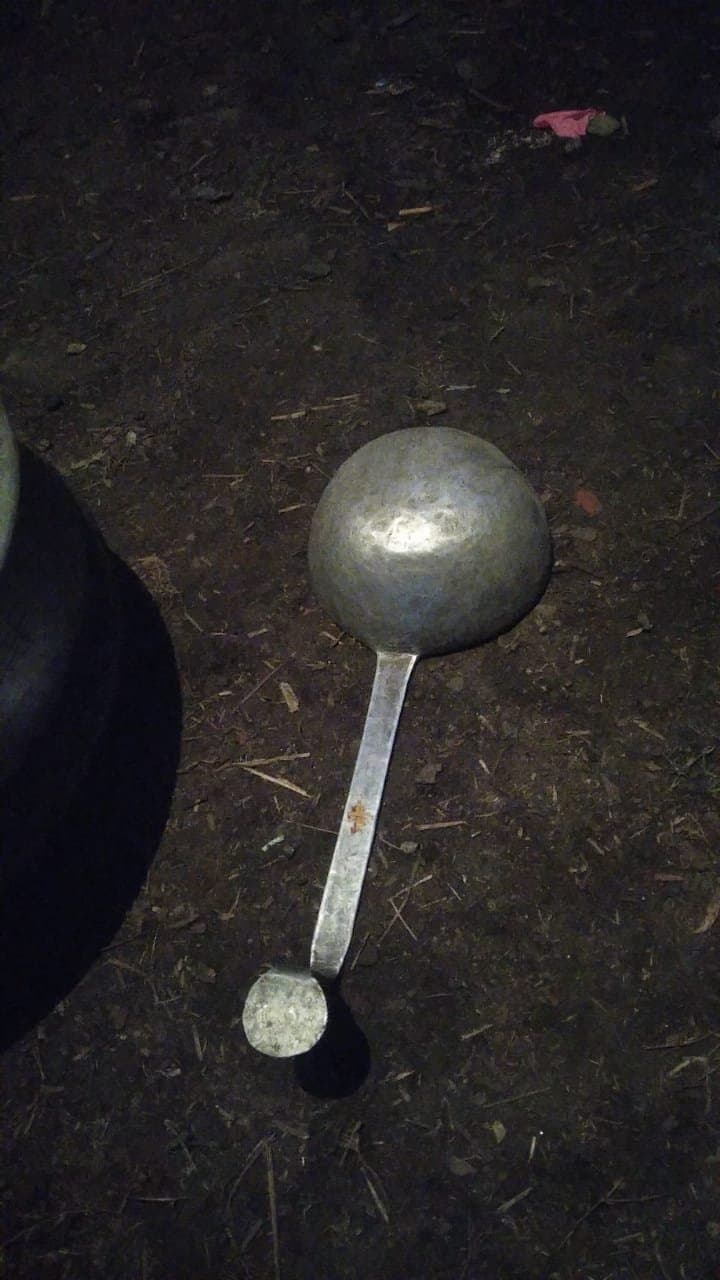
- Previous evening — Lentils sorted and soaked. Dry spices ground in a stone sil-batta. Venue inspected, water source confirmed, firewood ordered. The head Boti walks the site with the host and decides whether the rasialu goes east-west or north-south for the wind.
- 3.30 a.m. — Boti and team arrive at the venue. Bath, change into a fresh dhoti and vest, no shoes from this point on. Worship of the cooking place, brief, on the bare earth where the rasialu will stand.
- 4.00 a.m. — Rasialu construction. Bamboo pillars driven into the ground, steel sheet roof tied on, four sides left open. The char trench is dug from one end of the structure, six feet by two, half a foot deep, lined with pine.
- 4.30 a.m. — Charoti vessels positioned over the trench. Fire lit at one end, fed slowly, allowed to settle for the next half hour into a glow rather than a flame. A flame burns the dal, a glow simmers it.
- 5.00 a.m. — Cooking begins in earnest. Dal, madra base, the long-cooking dishes go on first. The pace from here is unhurried; the Boti is not a sprinter, he is a man who has six hours of slow simmer ahead of him.
- 8.00 a.m. — Dhuni applied to the dal vessels. Mustard oil over a single coal, drop the coal into the pot, lid slams on. Ninety seconds. Lid off, smoke gone, the dal carries it forever.
- 9.00 a.m. — Walnut paste prepared for the green-tinted dishes. Walnuts burnt over the trench until black, ground in a small mortar, soaked, strained. The strained liquid colours the chana madra a particular yellow-green that no commercial dye reproduces.
- 10.00 a.m. — Khatta finishes in an iron vessel, separate from the brass: gur, tamarind, mango powder, fennel. The iron is non-negotiable; brass with sour ingredients turns black.
- 11.00 a.m. — Pattal leaves laid out in two long rows of the painth. The host takes a head count for the first batch.
- 12.00 noon — Service begins. Rice first, then sequential courses ladled out by the Botis sons walking the rows. Five, seven, nine or eleven dishes; rice arrives three times. The host eats last.
- 3.30 to 4.00 p.m. — Service ends. Three to four batches of guests have eaten in rotation. Charoti vessels are scrubbed with hot ash and water, dried, packed. The rasialu comes down before sundown the next day.
The painth, and what eating in rows actually means
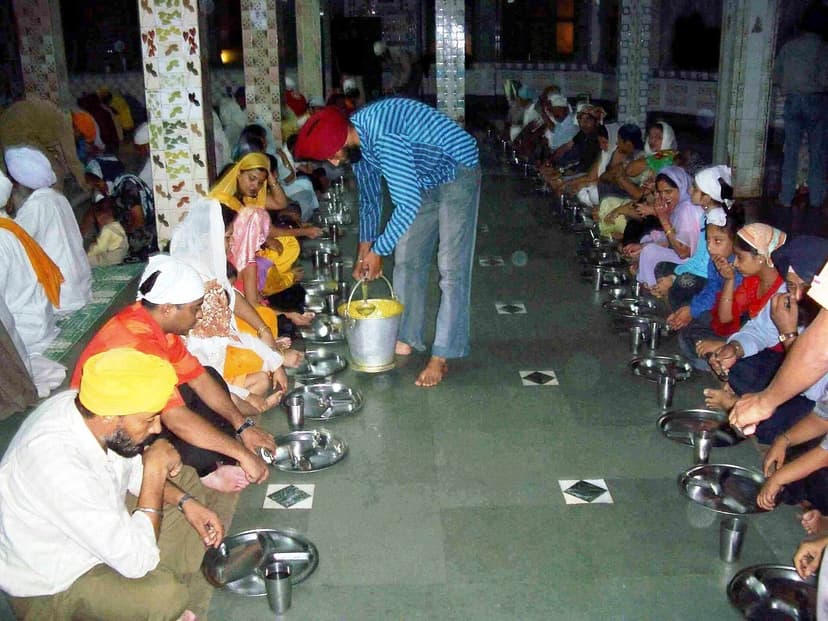
The painth is what the rest of India usually calls a pangat: two long rows of guests on the floor, sometimes on rugs, sometimes on dried grass, the food walking down the middle between them on the legs of younger members of the Boti's family. There are no tables. There are no chairs for the elderly unless an elderly guest insists. The host eats last. The rule that signals the whole affair is the rule about who is allowed where: every guest is in the painth, and the painth flattens caste, employer, neighbour, in-law and stranger to one row of crossed knees.
If you have eaten at the Manikaran Sikh Gurdwara langar, the picture above is what the painth looks like, structurally; the architecture of eating in rows on the floor is older than the Sikh tradition and older than the Boti tradition both. What the Boti adds to it is the cooking caste behind the food, and the brass.
Boti and Waza, India's twin hereditary chef traditions
| Feature | Boti (HP) | Waza (Kashmir) |
|---|---|---|
| Feast | Dham — vegetarian, slow-cooked, brass and pattal | Wazwan — meat-based, slow-cooked, copper and trami |
| Caste / community | Brahmin hereditary cooks, north-Indian Hindu | Sunni Muslim hereditary cooks, descended from Samarkand cooks brought by Timur |
| Tradition age | ~1,000 years (King Jaisthambh era) | ~600 years (post-Timur, Mir Sayyid Ali Hamadani influence) |
| Knowledge transfer | Father to son, oral, no written manual | Father or uncle to apprentice, guild-organised in the Wazpur neighbourhood of Srinagar |
| Signature technique | Dhuni — mustard oil over coal, smoke trapped in lidded brass | Hand-pounding meat for hours; sword kebabs over coal |
| Vessels | Charoti, batloi, paraat — brass with narrow mouths | Deg — large copper cauldrons; trami serving plates |
| Kitchen setup | Rasialu — temporary outdoor bamboo-and-steel kitchen | Open-air setup at the wedding venue, nearer to the marquee |
| Attire | Dhoti, vest, barefoot | White kurta, skull cap, sometimes barefoot |
| Signature dishes | Madra, Khatta, Mash daal, Sepu Vadi, Meetha bhat | Rista, Gushtaba, Tabak Maaz, Rogan Josh |
| English-language press | One Better India profile from 2017, otherwise near-zero | Atlas Obscura, BBC, Gastro Obscura, multiple books |
| Origin link | Inspired by Wazwan around 1,000 years ago | Inspired Dhams creation |
It is hard to overstate how strange it is that a tradition this old, this living, this photographable, has had one English profile in a decade. The wazas have a documented guild in the Wazpur neighbourhood of Srinagar; Hamiast notes that Khan Mohammed Sharief is a fifth-generation waza and that Mushtaq Ahmed Khan heads forty-five of them. Botis have no equivalent census, no equivalent guild card, no equivalent profile of the dean of the trade in any district. Sanjay is the only one whose number you can find on JustDial. There must be twenty-five Botis as visible as he is. They are a phone call away from the next interview.
Six dhams, six districts
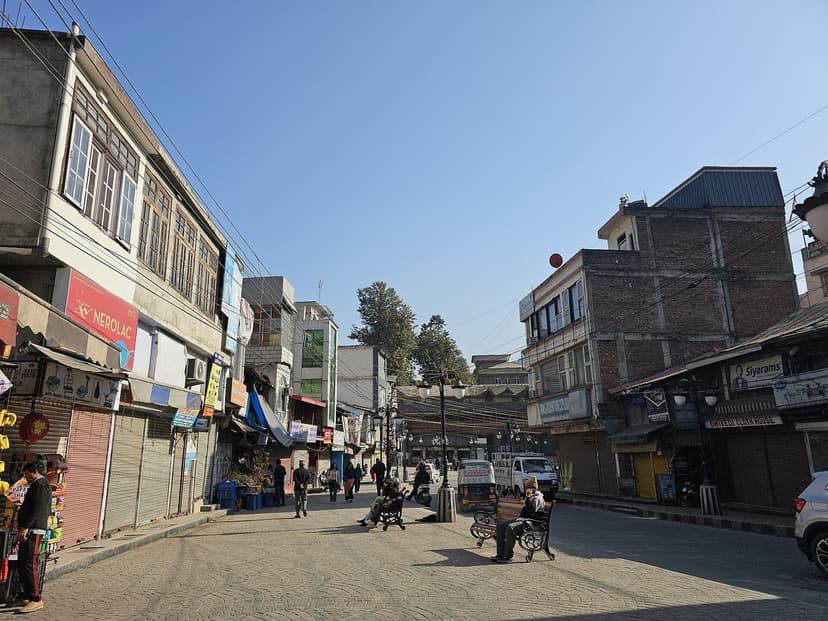
The HP Government tourism page's claim that "a Mandi Dham is much different from a Chamba, Kangra, Bilaspur, Shimla, Sirmaur or Kullu Dham" is the entire content strategy of the next generation of HP food tourism, if anybody is paying attention. Six different feasts, six different Boti repertoires, six different brass-vessel grammars, all alive, all undocumented in English. Here is the working list, drawn from the gov page, the Hindi-press write-ups, and TravelShoeBum's field notes.
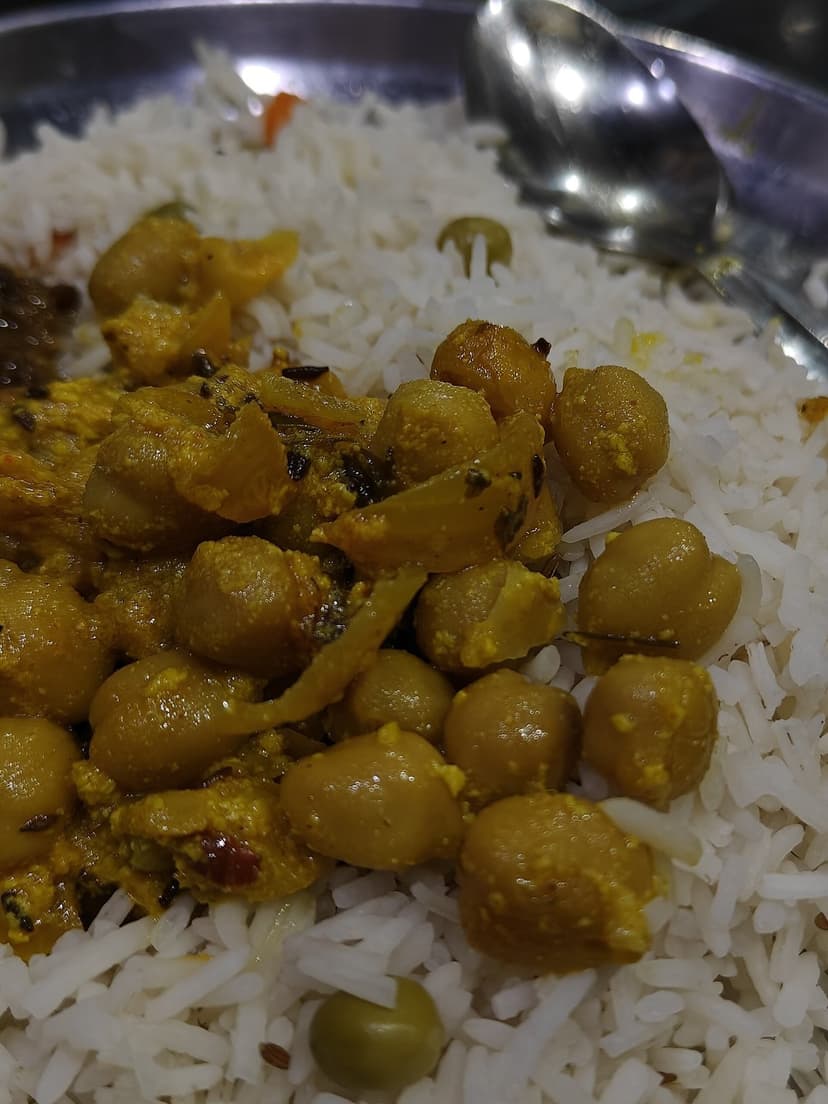
Mandyali Dham (Mandi). The most loved among Botis themselves. Sepu Vadi, the black-lentil dumpling in spinach gravy, is the headline dish; Rajmah Madra is heavier than the chickpea version; Dhule Maah, urad dal slow-cooked in desi ghee, is the long simmer. Khatta with gur and tamarind closes. Eating it during Mandi Shivratri (mid-February to early March), when 200-plus deities arrive in the town, is the maximalist way.
Kangri Dham (Kangra). The most commercially visible. Ten to eleven dishes, anchored by Chana Aloo Madra, Moong Dal, Palda, Teliya Mah, Khatta and Meetha Bhat. Mustard oil rather than ghee for most cooking. Sanjay Mishra is a Kangri Boti.
Chamba Dham (Chamba). Opens with rice and moong daal, runs Madrah and mash daal, finishes Khutta of gur and tamarind, and a Mittha sweet rice with raisins. Some Chamba kitchens use kathauti, small wooden bowls, alongside pattal. Bharmour and the Manimahesh route follow this repertoire.
Kullu Dham. The smallest active Boti circle, and the one closest to me by geography. Pahadi ghee tends to win over mustard oil; Madra runs slightly milder; the Meetha Bhat carries more dry fruit because the Kullu side has more apple-belt orchards within reach. Kullu Botis often double as cooks for the Kullu Dussehra deities, which is its own seven-day operation.
Bilaspur, Shimla, Sirmaur Dhams. The lower belt. Heavier on Pahari-Punjabi flavour profiles, lighter on the brass-charoti weight; in Sirmaur the influence of patande pancakes and chukh chutneys leans the meal toward the everyday Pahari plate rather than the ceremonial Dham. The HP Government cuisine page lists all three as distinct, even if the Boti families operating them are smaller in number than Kangra and Mandi.
The crisis nobody likes to name
The crisis the Botis face is not demand. Whetstone Magazine quotes Nitika Kuthiala, who runs the Pahadi Pattal pop-ups in Noida and is half the reason Delhi-NCR knows what Dham is, saying flatly: "The demand for Botis is so high that you have to book them one year in advance." A Hindi piece on Prabhasakshi adds that experienced Botis are now hard enough to find that "टीम को समय रहते बुक करना पड़ता है", "the team has to be booked well in advance."
The crisis is supply. The Boti families that have cooked Dham for ten generations have, over the last twenty years, watched their sons go to Chandigarh and Delhi to take jobs at multi-cuisine restaurants where the salary is better and the work is on a flat induction stove. The 30 Stades reporter caught the absurd geometry of this in one paragraph: "For the Botis, it was confusing to have a software engineer as a kitchen helper running errands for them when their children did not want to carry on the family occupation and were cooking in multi-cuisine restaurants." The economics of the trade do not pay for the dignity of it. Sanjay Mishra was articulate about this in 2017; nothing in the Hindi press since suggests it has improved.
Add the second-order erosion. Jogindernagar's Hindi piece notes plastic disposable plates replacing pattal at smaller weddings, the leaf-plate cottage industries in the lower hills are dying, the Botis are losing the "eat with your hand off a leaf" experience that gives the Dham its texture, and the next generation of Himachali kids will have grown up with the steel-thali version. Add ferry-fee-style commercial arithmetic: a Boti booking for a 250-guest Dham takes a four-person team, eight pre-dawn hours, three brass loans from neighbours and one lit-up trench for an event the host will pay them less for than the catering equivalent of a single hotel buffet. The math does not love them.
The revival, in three people
The story is not all dark. Three people, in three different cities, are doing distinct kinds of repair on the tradition, and any English-language piece on Botis owes them a paragraph each.
Sanjay Mishra (Pathiar, Kangra) is the practising Boti. He came back to the village to restart the family practice after a generation of drift. He cooks now for whoever is willing to book a year ahead, trains apprentices in the standard Kangri repertoire, and is the only Boti chef whose name appears in print in two languages. He is also, gently, the easiest Boti to call.
Himanshu Sud (Himachali Rasoi, 54 Middle Bazar, Shimla) is the restaurant founder. The Better India tells his story: software engineer, quit, opened the Shimla restaurant, hired Botis, spent a year on the road with them learning the trade. Himachali Rasoi serves Kangri and Mandyali Dhams to walk-in tourists at restaurant prices, and is the most reliable city-side access point to Boti-style cooking outside a wedding.
Nitika Kuthiala (Pahadi Pattal, Noida) is the diaspora champion. Her pop-up dinners in Delhi-NCR have a small but committed following; she sources Boti-style preparations and serves them on actual pattal. The work she does is content as much as cuisine, she is the reason a Whetstone reporter, sitting in New York, decided that a Himachali feast was a story.
None of them, alone, can rebuild a tradition that needs forty more young Botis to carry on past 2050. Together, they are the difference between Dham as a museum object and Dham as something a cousin of yours might eat next weekend.
Where you can actually eat a Boti-cooked Dham
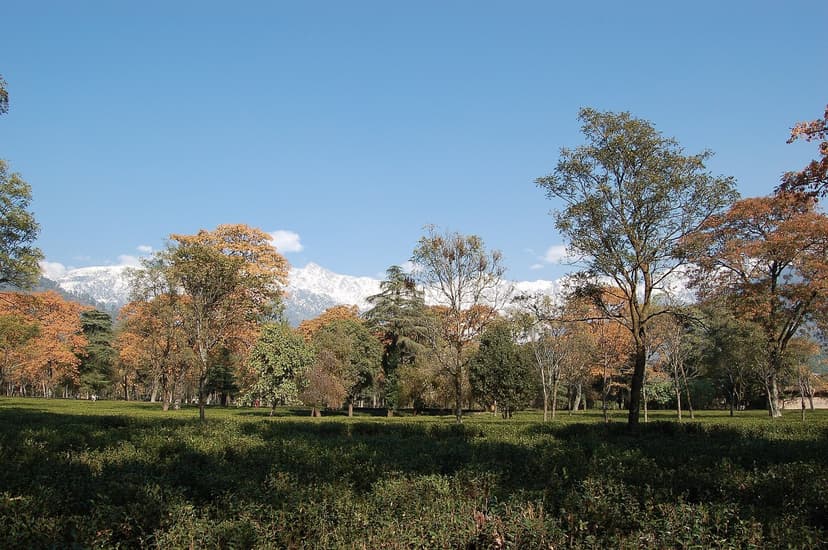
The honest answer to the practical question, "OK, where do I eat one", is a hierarchy. Crashed weddings are the best. Temple Dhams are the cheapest. Restaurant Dhams are the most reliable. Resort Dhams are the most polished. Pop-ups are the most arranged. The order below is in roughly that priority for someone who has a week in HP and wants Dham in it.
| Where | Cost (Rs) | Note |
|---|---|---|
| Local wedding via a Refuje host | Gift token Rs 500-2,000 | Most authentic if a host can introduce you. Wedding pays the Boti; you arrive with a small gift, eat in the painth, leave. |
| Temple Dham at Naina Devi or Chamunda Devi | Free (donation Rs 50-200) | Public-facing on weekends and festival days. Pattal, floor seating. Bilaspur and Kangra circuits both work. |
| Himachali Rasoi, Shimla | Rs 200-450 per Dham thali | 54 Middle Bazar, Shimla. Sit-down restaurant; Kangri and Mandyali on rotation; Botis on staff. |
| Rakkh Resort, Palampur | Rs 2,500-3,500 per guest | Boti booked from a local family, full Kangri Dham with live music. Cost is the resort, not the Boti. |
| Sanjay Mishra Kangri Dham, Pathiar | Quoted on call | Direct booking via 9816457888 (please verify before relying on it). Hindi-only; 2-4 month lead time. |
| Pahadi Pattal pop-up, Delhi-NCR | Rs 1,500-2,500 per ticket | Plated, styled, written about. Closer to a chefs-table than a rasialu, but the recipes are real. |
Want a local sanity-check on a Boti booking, or help finding a Refuje host whose extended family is having a wedding the week you are in Kangra? Email us your dates. We will tell you which week of the year a Mandi Boti is realistic to book and which weeks you should not even try (Mandi Shivratri, Kullu Dussehra, late October Karva Chauth and the December wedding-season peak).
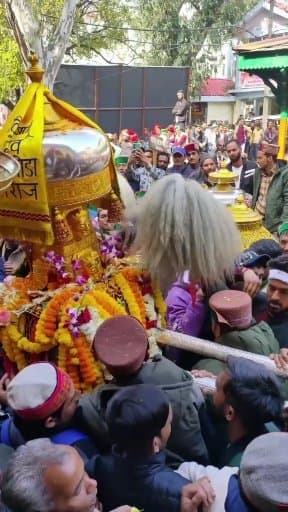
The Boti world, mapped
One question I cannot answer
If you read enough Hindi-language pieces on the Botis, you start to notice that none of them name a Mandi Boti. The Mandyali Dham is widely described as the gold-standard repertoire; the ETV Bharat Hindi service ran a piece in late 2024 about a Mandi family that has been serving Mandyali Dhams for 22 consecutive years; the URL for that piece, as of May 2026, is dead. Either the family does not want to be named, or nobody has bothered to ask. I do not know which one. I would like to.
If you happen to know the name of an active Mandi Boti family, the editor of this piece would like to hear about it. We will go and eat a Mandyali Dham, the right way, and write about it next.
FAQ
What is a Boti chef?
A Boti is a hereditary Brahmin cook from Himachal Pradesh who specialises in Dham, the Himachali communal feast. The word refers to a specific caste of Brahmin families who have been cooking Dham for roughly a thousand years; skills pass father to son orally, with no written manual. Botis cook barefoot in dhoti and vest, starting at 4 a.m., in temporary outdoor kitchens, using brass charoti vessels.
Why are Botis only Brahmins?
Dham started as temple prasad. Sanatana ritual rules required temple food to be Brahmin-prepared for purity reasons. When the rulers of Chamba and Mandi began commissioning the same feast for non-religious occasions a thousand years ago, the cooks they hired had to be Brahmins because the food still had a sacred edge. Specific Brahmin families crystallised over generations into Botis. Modern attitudes are evolving, but authentic traditional Dham is still cooked by Boti families.
How do you book a Boti for a wedding or event?
Popular Botis are booked up to a year in advance. Sanjay Mishra of Pathiar, Kangra, runs Sanjay Mishra Kangri Dham and Catering; the JustDial-listed phone number for him is 9816457888 (verify before booking). For other regions, ask a local temple committee, a Refuje host, or a wedding planner with HP experience. Each district has its own Boti families and you should book the regional repertoire, not only the most-listed name.
What is a charoti vessel?
A charoti, also called batloi or baltohi, is a brass cooking pot with a broad belly and narrow mouth. The narrow mouth is functional, not decorative; it traps steam and keeps the dish at temperature for hours after the fire dies. Some charoti vessels are over a hundred years old, lent between Boti families for big Dhams. Brass conducts heat slowly and the alloyed copper contributes a faint metallic note that does not appear in steel-pan cooking.
What is dhuni smoking?
Dhuni is a smoking technique. The Boti pours hot mustard oil over a single piece of burning coal, drops the coal into the dal, and slams the lid on. The oil burns inside the lidded vessel for about ninety seconds; the lid comes off, the smoke is gone, the dal carries the flavour. Dhuni cannot be reproduced with liquid smoke or paprika, and is one reason Boti dal does not taste like restaurant dal.
Are Botis dying out?
The tradition came close to extinction. Sanjay Mishras own line is that there was a time when Botis were almost extinct. Younger Botis left for restaurant jobs in Chandigarh and Delhi where induction stoves and salaries pay better. Demand, though, is at a record high, a year-long booking lead time is now common. The supply problem is not interest, it is the next generation. Whether the tradition stabilises depends on whether enough families like Sanjays come back to it.
How is a Boti different from a Kashmiri Waza?
Both are Indias hereditary feast chefs. Botis cook Dham, vegetarian, in brass, in Himachal. Wazas cook Wazwan, meat-based, in copper, in Kashmir. Botis are Brahmin Hindus; Wazas are Sunni Muslims descended from Samarkand cooks brought during Timurs invasions. Dham was inspired by Wazwan around a thousand years ago. Wazas have extensive English-language press coverage; Botis do not.
What is a rasialu?
The rasialu is the temporary outdoor kitchen built from scratch for each Dham. Bamboo poles for pillars, steel sheets for the roof, four sides open. Inside it the Boti digs the char, a six-foot trench for the wood fire, and sets the brass charoti vessels over it. The structure is built before dawn and dismantled within a day or two of service ending. A new rasialu is built for every event; the kitchen is as temporary as the menu is permanent.
What does a Boti cook in a typical Dham?
A Dham has odd-numbered courses: five, seven, nine or eleven dishes. A Kangri Dham at the eleven-dish end usually includes Chana Aloo Madra, Moong Dal, Palda, Teliya Mah (black lentils in mustard oil), Khatta in an iron vessel, Maa ki Daal, Meetha Bhat, Chuara Mathri and Maani. No onion, garlic, ginger or tomato. Rice arrives three times. Mandyali Dham anchors on Sepu Vadi, Rajmah Madra, Dhule Maah and Khatta. Chamba Dham finishes with Mittha sweet rice.
Where can a tourist actually eat a Boti-cooked Dham?
In rough order of authenticity: a Himachali wedding via a Refuje host, a temple Dham at Naina Devi or Chamunda Devi, Himachali Rasoi at 54 Middle Bazar in Shimla, Rakkh Resort at Palampur, a direct booking with Sanjay Mishra Kangri Dham at Pathiar, or a Pahadi Pattal pop-up in Delhi-NCR. The wedding option is the best food but the hardest to access; the temple option is the easiest. The restaurant option is the most reliable for visitors on a fixed itinerary.
Travelling for a Dham is the most efficient food trip a person can do in HP, but it needs the calendar more than it needs a budget. Email us with your travel month and we will tell you which Boti families are taking external bookings, which weddings are likely to be open to a respectful guest with a Refuje host, and where the next big temple Dham is scheduled.
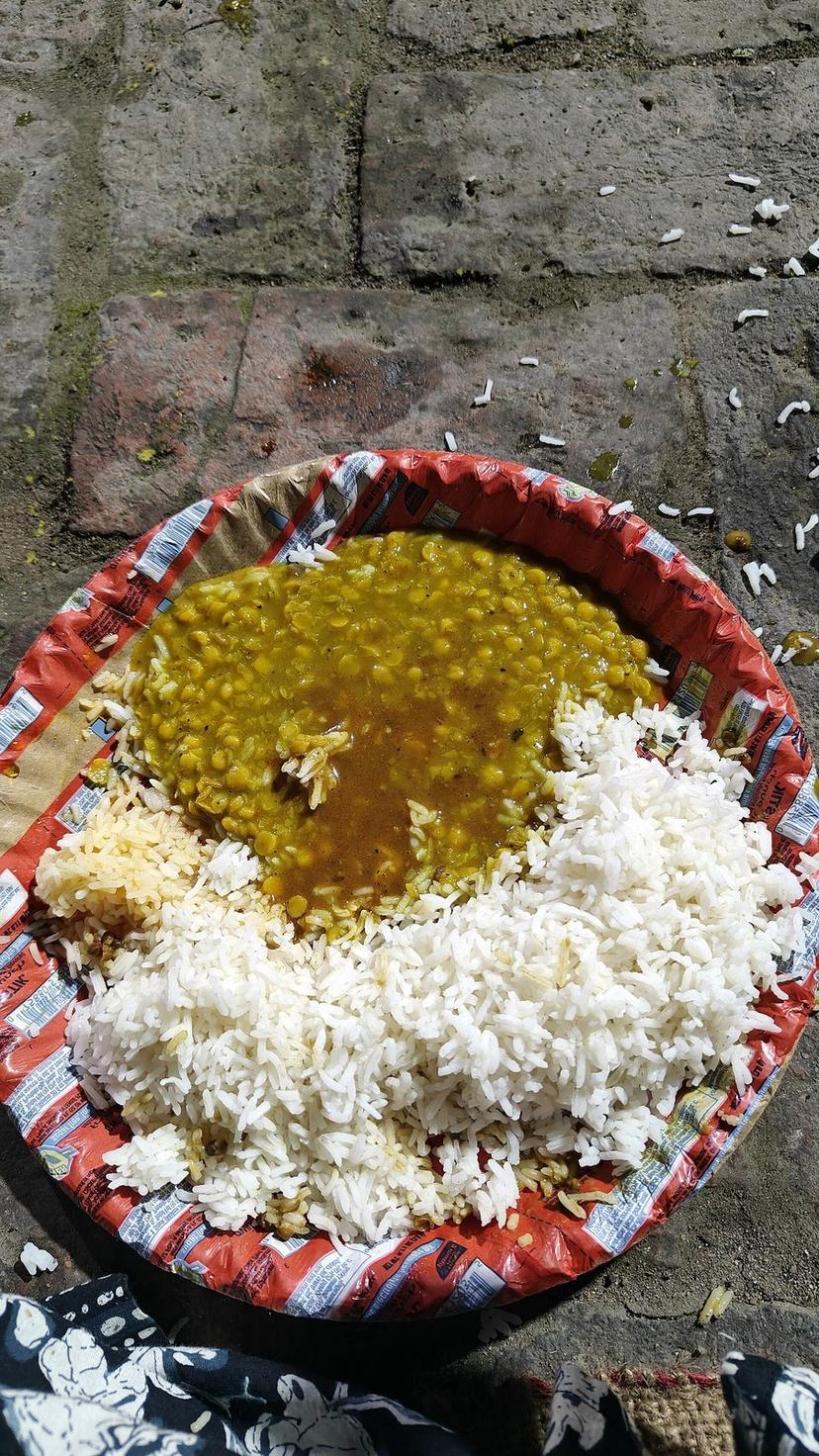
Sources
Primary (government and official). Government of Himachal Pradesh tourism cuisine page (himachaltourism.gov.in/cusine) on hereditary Boti chef clans and the six regional Dhams. Kangra district administration on Kangri Dham (hpkangra.nic.in/kangri-dham).
Journalism (named publication, named author). Whetstone Magazine on Dham heritage food (Whetstone). The Better India 2017 profile of Sanjay Mishra (The Better India); 2022 profile of Himanshu Sud (The Better India). 30 Stades on the engineer-helper irony at Himachali Rasoi (30 Stades). Architectural Digest India on century-old brassware (AD India). Outlook Traveller on Kangra Dham (Outlook Traveller). Conde Nast Traveller India on Dham Thalis (CNT India). Atlas Obscura on the Kashmiri waza tradition for the comparative read (Atlas Obscura). Hamiast on the named wazas of Wazpur (Hamiast).
Hindi-language journalism. Prabhasakshi on Boti scarcity and the Brahmin sub-class definition (Prabhasakshi). Jogindernagar on the leaf-plate erosion (Jogindernagar). Hindi Wikipedia for the king-and-subjects-eat-together story (Hindi Wikipedia).
Practitioners and revival figures. Sanjay Mishra Kangri Dham and Catering, JustDial Kangra listing (JustDial). Pahadi Pattal Instagram (Pahadi Pattal). Rakkh Resort Patrika on Boti booking (Rakkh).
Background reading. Wikipedia on Dham (Wikipedia) and the IIPA GyanKOSH paper on Dham as sustainable food practice (IIPA) for the academic frame.
About Rajesh Thakur
Rajesh Thakur grew up in the Kullu valley and has been writing about Himachal Pradesh travel and culture since 2018. Hes most at home in upper Kullu, Lahaul, and the Spiti circuit, and has done the Manali to Kaza loop more times than hes counted.
You Might Also Like
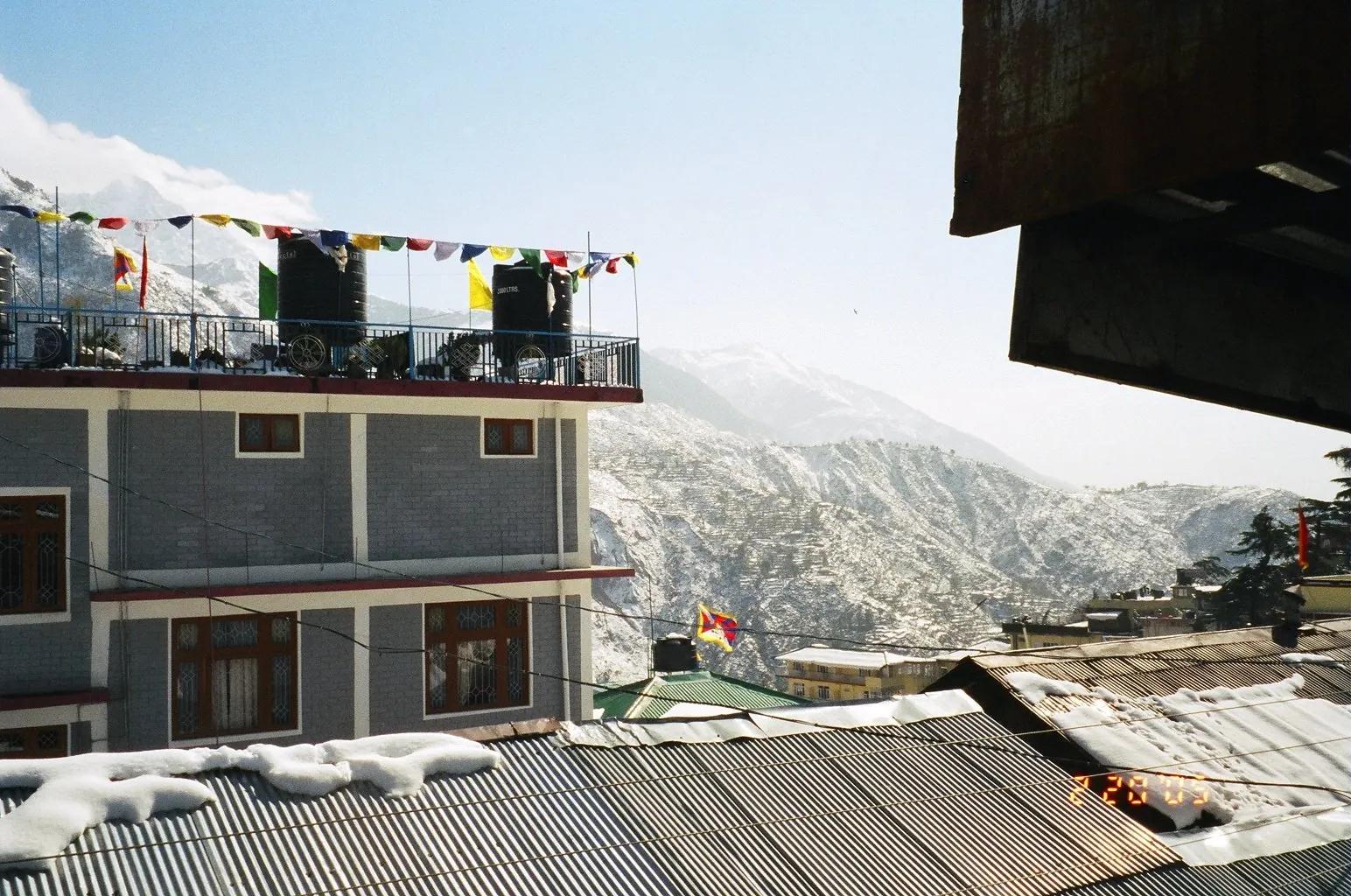
Volunteering in Himachal Pradesh: 12 Organisations and How to Apply (2026)
Teach English in McLeod Ganj, conserve the Great Himalayan National Park, build with earth in Bir, or harvest apples in Kullu. Twelve real HP volunteer organisations with honest costs, the visa rule that gets foreigners deported, and how to apply.
How to Travel Himachal Without Wrecking It: A Quiet-Travel Manual
A non-preachy field manual for responsible travel in Himachal, by a Kullu local: how to behave, when to go, where to go instead, and the 2026 rules and bans that actually matter.
Mamleshwar Mahadev: The Eternal Flame Temple of Karsog
An eternal fire, a fist-sized wheat grain and a six-foot drum, kept in a mortar-less timber temple in the quiet Karsog valley. The honest story of Mamleshwar Mahadev: what is real, what is faith, and how to go.