
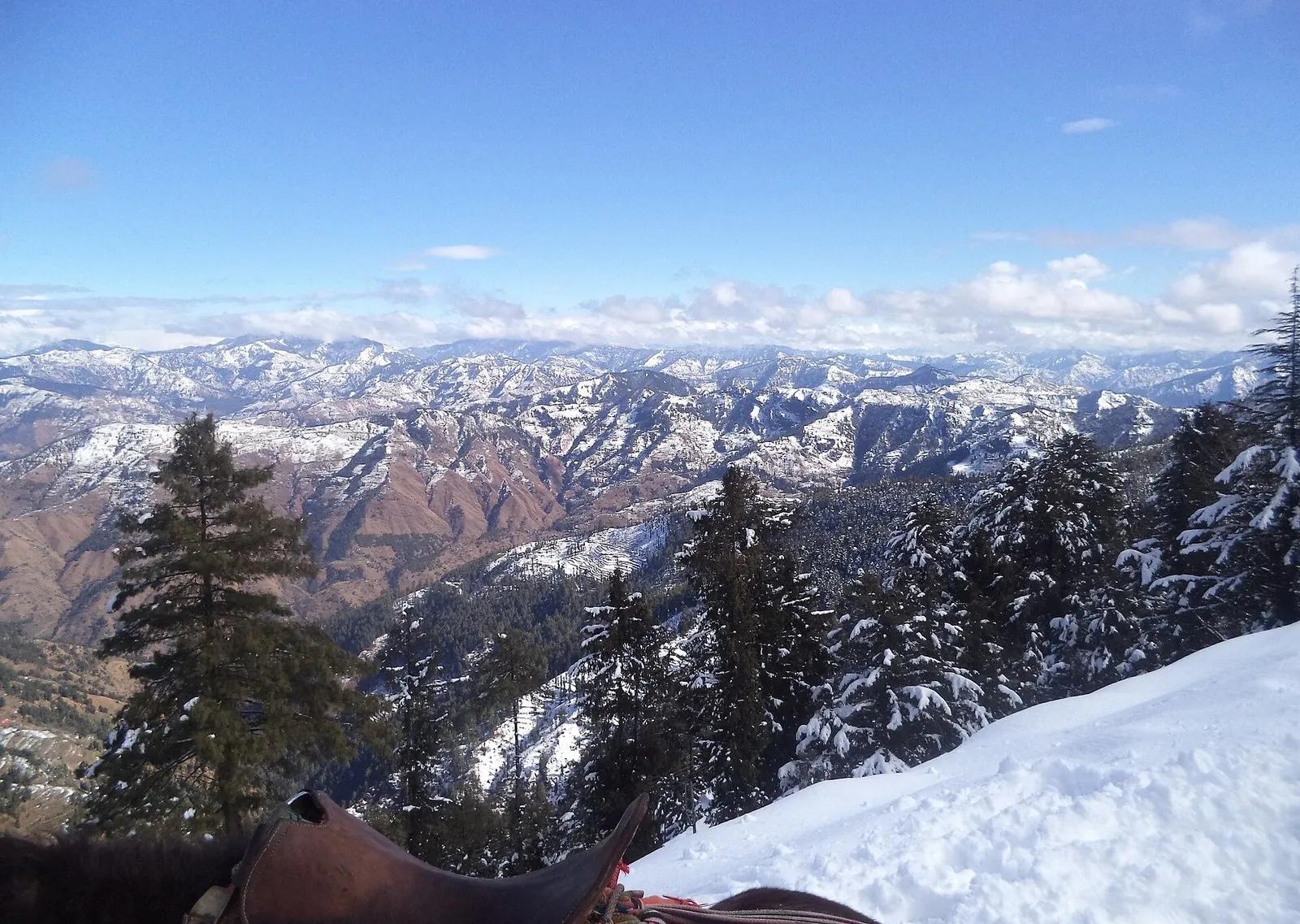
The Great Himalayan National Park: How to Actually Trek the UNESCO Wilderness
Here is a small, useful truth about the Great Himalayan National Park: most people who tell you they went there did not. They went to the ecozone, the ring of meadows and villages around the edge, which is lovely and which I will happily send you to. The park itself is something else. It has no roads. You walk into it with a permit and a guide, and if you want to see it properly you give it the better part of a week.
That gap trips up almost every plan I read. Someone lists Jibhi waterfall, Jalori pass, and GHNP for a single afternoon, and a local sets them straight.
GHNP itself will take up to a week if you want to explore it decently.
So this is a guide to both the park most people can reach and the one most people skip. It sits just east of the Tirthan valley, which we cover in the Tirthan guide, and it is the wildest corner left in Himachal. Let me draw the line between the two clearly, because getting it wrong is what ruins the trip.
What the park actually is
The Great Himalayan National Park became a UNESCO World Heritage Site in 2014, listed for its biodiversity rather than a single famous peak. The protected area runs to about 1,171 square kilometres and drains through four river valleys: the Tirthan, the Sainj, the Jiwa Nal, and the upper Parvati. There is not a single road inside it. That is the entire point of the place, and it is rare enough in India now to be worth protecting hard.
Inside live snow leopard, Himalayan brown bear, Himalayan tahr, blue sheep, and musk deer, plus the western tragopan, a pheasant so shy and so threatened that seeing one is a story you dine out on for years. You will probably see none of the big animals. You go anyway, because the forest and the high pasture and the silence are the reward, and the animals being there, unseen, is part of it.
- Status
- UNESCO World Heritage Site since 2014, listed for biodiversity
- Size
- About 1,171 sq km across four valleys, Tirthan, Sainj, Jiwa Nal and upper Parvati
- Roads inside
- None. The interior is foot-only, on trails and shepherd tracks
- Main entry offices
- Sai Ropa for Tirthan, Ropa for Sainj, head office at Shamshi
- Guide
- Mandatory for any multi-day trek into the core zone
- Ecozone
- Gushaini and Shangarh need no permit and no guide
- Best months
- Mid-April to June, and September to early November
- Roadhead
- Gushaini in the Tirthan valley, reached via Aut and Banjar
The ecozone and the core: know which one you are going to
This is the distinction that saves your trip. The park has an outer ecozone and an inner core, and they are run as two different worlds.
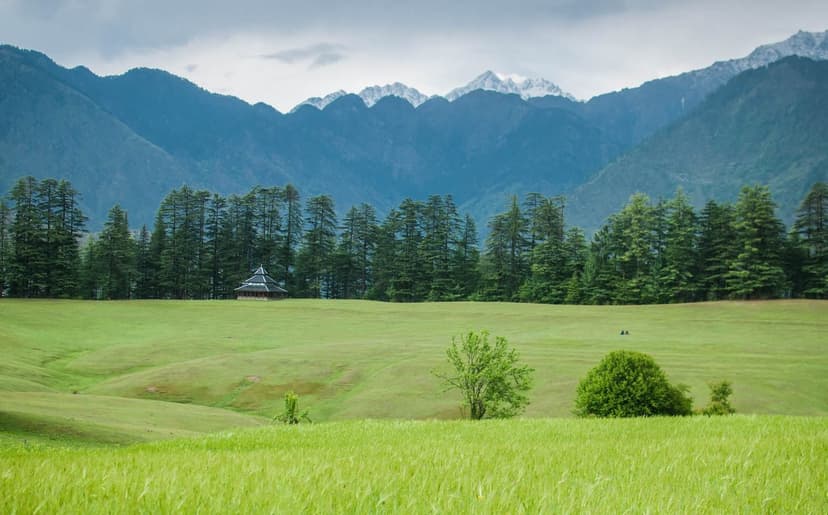
The ecozone is the buffer where people still live and farm. Shangarh, with its wide meadow and the wooden Shangchul Mahadev temple, is in it. So is the country around Gushaini and the nature trails at Sai Ropa. You need no permit and no guide to be here, you can drive most of the way, and a family or a first-timer can spend a happy couple of days doing not very much. This is the GHNP that fills Instagram, and there is no shame in it. One traveller described those ecozone days simply.
I spent my days walking alone in the Great Himalayan National Park area, sitting near the river doing nothing, writing, thinking, and just existing.
The core is the roadless interior, and it is gated for a reason. To go past the last village you need an entry permit and, for anything multi-day, a certified guide. A local trekker put the boundary plainly: what most photos show would be rather accurate to call the ecozone of GHNP. If you really dare to cross into the park area near Ookhal or Marhani pass, then you might wanna get along with local seasonal shepherds. That is the honest line. Below, the two side by side.
| The ecozone | The core park | |
|---|---|---|
| Permit | None | Required, from Sai Ropa or Ropa |
| Guide | Optional | Mandatory and certified for multi-day treks |
| Roads | Yes, up to Gushaini and Shangarh | None. On foot only |
| Time it wants | A day, or an easy overnight | Three days to a week |
| Who it suits | Families, first-timers, slow walkers | Fit trekkers with days to spare |
| What you get | Meadows, river, forest edge | High pasture, ridge, real wilderness |
The trailheads and the classic treks
Everything on the Tirthan side starts at Gushaini, the roadhead at around 1,500 metres. You get there by turning off the Kullu-Manali highway at Aut, following the Banjar road up the Tirthan, and stopping where the tarmac gives out. The Sai Ropa visitor centre sits just before it, and that is where you sort permits and meet a guide. For how the wider valley fits together, our route planner puts it in context.
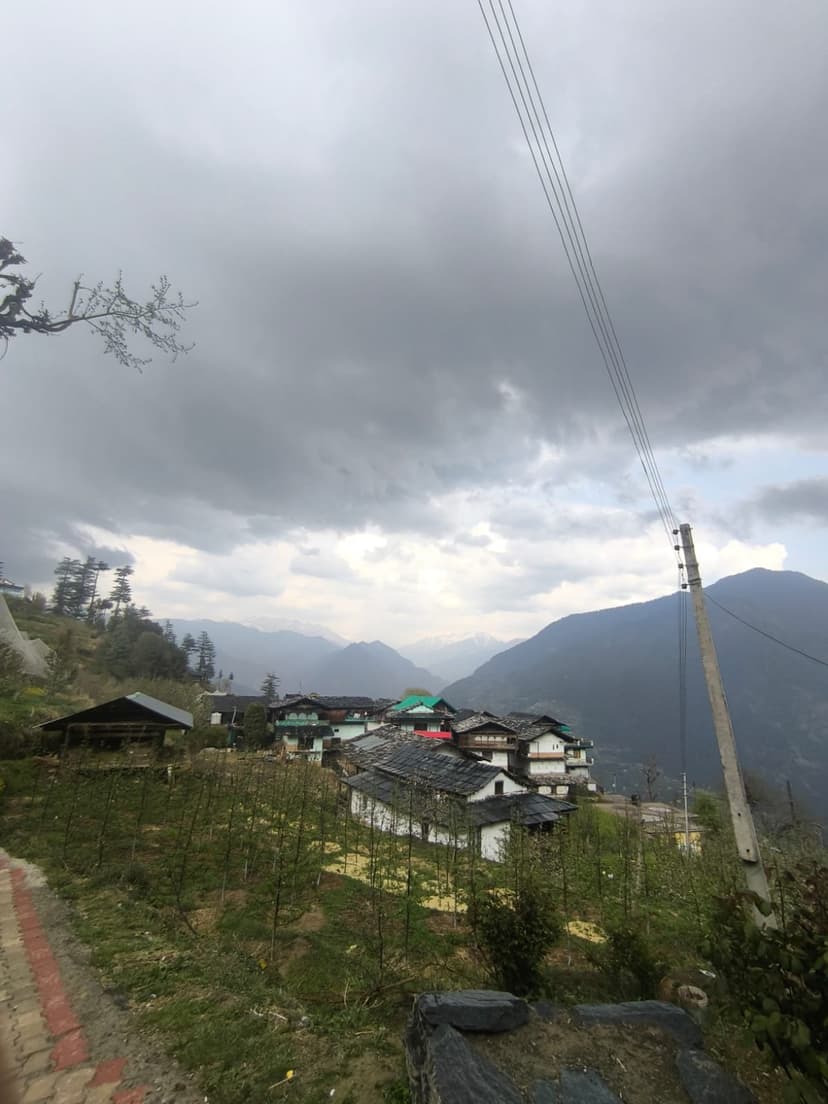
The Sainj side is the park quieter door. You come in from Neuli or Ropa, and the ecozone runs up to Shangarh before the core begins. This is the way toward the deep Sainj basins around Raktisar, and the range office at Ropa issues the permits for it.
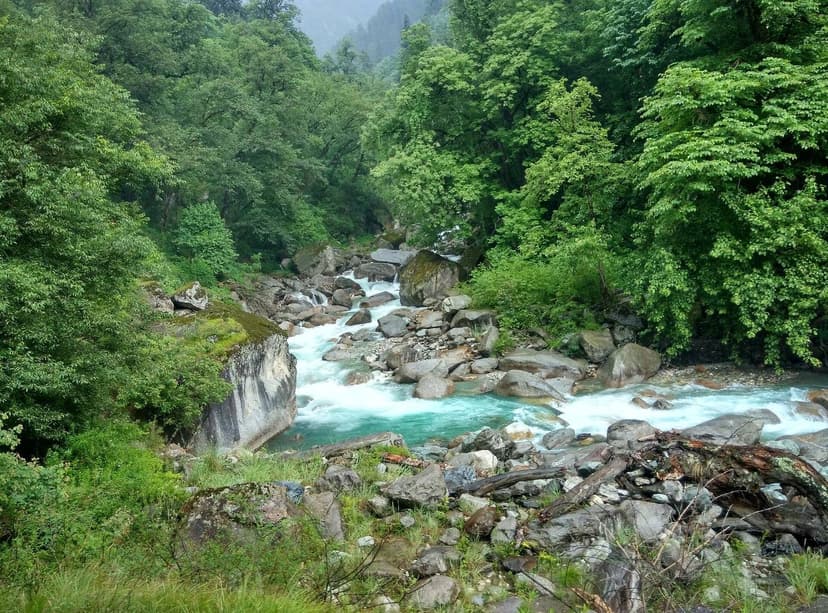
The trek that most people can actually do is Rolla to Shilt. It is short, it is steep, and it takes you from riverside forest to a hut at 3,100 metres in two days of climbing. This is the one to pick if you have never done a Himalayan multi-day and you want a real taste of the core without committing a week.
- Day 1: Gushaini to Rolla
About 9 km along the Tirthan, climbing gently from 1,500 m to Rolla at roughly 2,100 m. Your first night actually inside the park, in deep forest by the river. - Day 2: Rolla to Shilt
The hard day. Around 7 km but relentlessly up, through oak and then conifer, to the Shilt hut at about 3,100 m. Slow is fine. The forest does the work of making you forget the climb. - Day 3: Shilt, and the Rakhundi ridge
A day to walk up onto the open ridge above the tree line for the long views, watch for pheasant and tahr sign, and come back to Shilt. This is the day the park pays you back. - Day 4: Shilt to Gushaini
The long descent out, roughly 16 km back down to the roadhead. Knees complain. You reach Gushaini by afternoon, tired in the good way.
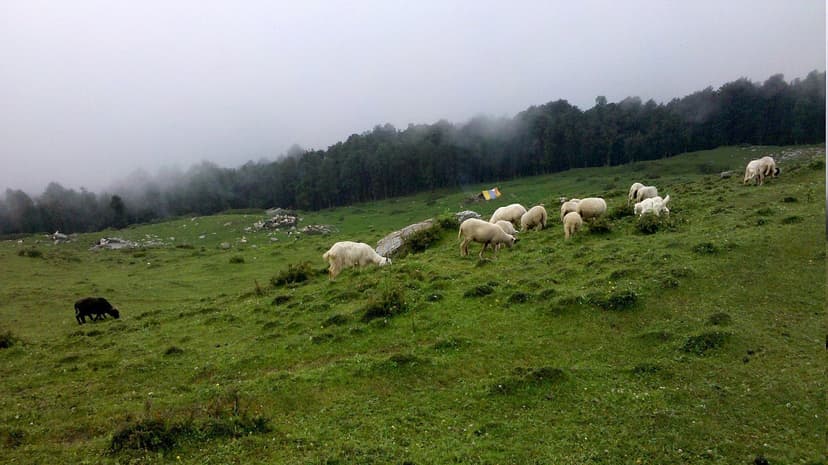
If you have the week that the locals keep telling you the park deserves, the classic long walk is the trek to Tirath, the source of the Tirthan river. It climbs through a string of camps, Chalocha, Balu, Majhoni, to a high basin at around 4,000 metres, with an optional push up to Saketi Top at about 4,280. Eight or nine days round trip. There is also the Rakhundi Top walk as a shorter high-meadow objective, and, for the very fit and very committed, the full traverse from Tirthan across to the Sainj side over high passes, which is genuine shepherd territory and not to be improvised.
Permits, and why the guide is not optional
For any core-zone trek you need an entry permit, issued at the Sai Ropa range office in the Tirthan valley, at Ropa for the Sainj side, or at the head office in Shamshi. A certified guide is mandatory for multi-day treks, and porters are arranged the same way. The entry fee itself is modest and charged per day, with an extra charge for a camera; recent visitor and operator reports put it in the low hundreds of rupees for Indians and a few hundred more for foreigners, but the park does not publish a fixed table, so confirm the current rate at Sai Ropa when you register. See our Himachal permits guide for the wider picture.
People bristle at the mandatory-guide rule until they understand it. You cannot simply walk in and wing it here the way you might on a marked trail elsewhere. A traveller who did an overnight inside the park summed it up: the national park is kind of a package and you cant just enter on your own. Another asked the exact question everyone asks, whether a Gushaini-to-Rolla walk needs prior registration and a guide. The answer for the core is yes. And it is the right rule, because the guides are the second half of this story.
The people who take you in
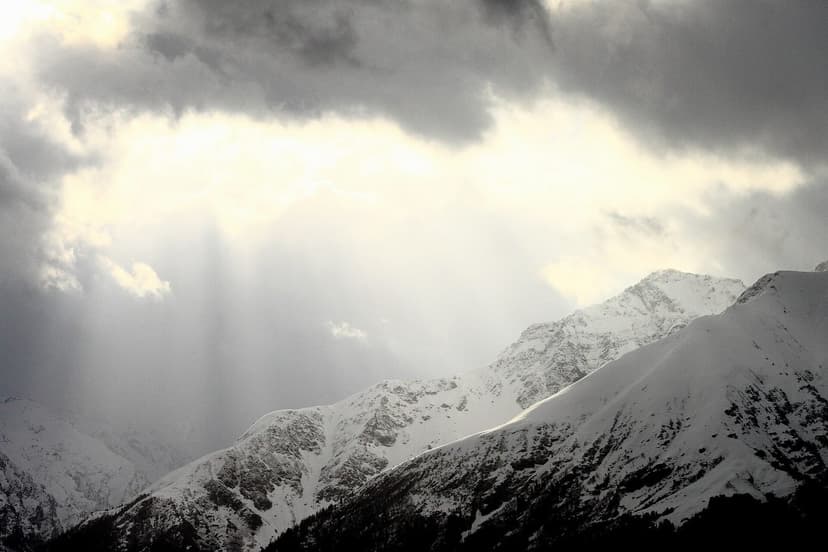
When GHNP was declared, the villages inside lost their old rights to graze, gather herbs, and hunt in what became the core. That is a real cost to real families, and a park that ignores it breeds poaching. The answer worked out here was to make local people the guides and porters, and to give them a stake in keeping the forest intact rather than stripping it.
The clearest example is Himalayan Ecotourism, a cooperative of around sixty-five local guides working with a small management firm and sharing the profits. Book a trek through a setup like this and your money goes to the household in the next valley, not a call centre in a city. Porter support is charged at about 300 rupees a bag a day, with one porter carrying for roughly three trekkers, so nobody hauls more than they should. It is the rare case where the responsible choice is also the better one: local guides read this forest in a way no outside operator can. It is exactly the model our quiet-travel manual argues for.
What you will see, and when to come
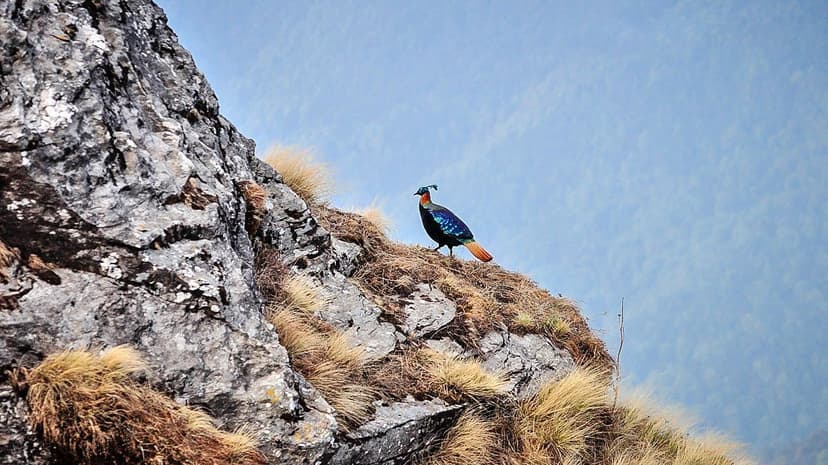
Be honest with yourself about wildlife. The snow leopard and the brown bear are up high and vanishingly rarely seen, even by locals who have worked these forests their whole lives. What you have a fair chance of is a monal flushing off a ridge in a burst of blue, a covey of cheer pheasant, tahr on a far slope, and, if you are patient and lucky and quiet, the western tragopan. Treat any sighting as a gift, not an entitlement.
Come in the shoulders. Mid-April to June gives you clearing snow and rhododendron; September to early November gives you crisp air and gold. Avoid the July to August monsoon for the interior: the approach turns to leeches and the slopes shed landslides, and the high trails are miserable. Winter closes the core with snow, though the lower ecozone walks stay open on a clear day. Our best-time guide has the month-by-month.
What it costs, roughly
A guided four-day Rolla-Shilt trek is not expensive by Himalayan standards, especially split across a small group. Here is a realistic per-person frame for a group of four or so. Solo trekkers pay more because the guide and permit do not divide.
| Item | Amount | Note |
|---|---|---|
| Certified guide (shared) | Rs 2,500 | Roughly Rs 2,000 to 2,800 a day for the group, split among trekkers. |
| Porter (shared) | Rs 1,200 | About Rs 300 a bag a day; one porter carries for around three people. |
| Permit and camera | Rs 600 | Modest per-day entry plus a camera charge. Confirm the current rate at Sai Ropa. |
| Food and camping | Rs 3,200 | Tents and meals, roughly Rs 800 a day over four days. |
| Transfers and buffer | Rs 2,500 | Aut or Banjar to Gushaini by taxi, plus a spare day for weather. |
Carry proper layers even in June, boots you have already broken in, and a dry bag; the Tirthan side sees weather off the high ridges with little warning. Check whether your phone will work first, which mostly it will not once you are past Gushaini, using our connectivity map. That silence, as one visitor to the ecozone put it, is the best part.
Keep it the way it is
The reason GHNP feels different from the rest of touristed Himachal is that it has been gated, guided, and left mostly alone. Himachalis know exactly how fragile that is. On a thread about a quiet Sainj meadow, the top comment was not a rave, it was a worry.
If it were more popular, it would likely be littered with empty beer and cold drink bottles, garbage, and plastic. The current serene ambiance might not be the same.
So the ask is simple. Carry your rubbish out, all of it. Hire the local guide even when a rule does not force you to. Do not light fires, do not play music in the meadows, do not try to sneak into the core to save a permit fee. This is the last big roadless wilderness in the state, and it stays that way only if the people who visit want it to. If you are weighing it against a trip over the border, we compared Himachal and Uttarakhand for first-timers; and if you just want the meadow without the trek, the Shangarh and Sainj guide is your ecozone day.
Planning a GHNP trek and not sure which route or season fits you? Email us your dates and fitness. We will tell you whether Rolla-Shilt or the Tirath week makes sense, and point you at a community guide cooperative rather than a middleman.
Common questions
Do you need a permit for the Great Himalayan National Park?
For the core zone, yes: an entry permit from the Sai Ropa range office (Tirthan), Ropa (Sainj), or the head office at Shamshi. The ecozone around Gushaini and Shangarh needs no permit at all, which is where most visitors actually go.
Can you visit GHNP in a day?
You can visit the ecozone in a day, walking the Sai Ropa nature trails or the Shangarh meadow. You cannot see the core park in a day. The shortest real trek inside, Rolla to Shilt, takes three to four days, and locals say the park deserves a week.
Is a guide mandatory in GHNP?
Yes, for any multi-day trek into the core zone a certified guide is mandatory, and porters are arranged the same way. It is a park rule, not a suggestion, and it channels tourism money to local families who once had grazing rights inside the park.
What is the difference between the ecozone and the park?
The ecozone is the outer buffer where villages, farms and meadows sit; it is road-accessible and open to all. The core park is the roadless interior, entered only on foot with a permit and guide. Most GHNP photos are actually the ecozone.
When is the best time to trek GHNP?
Mid-April to June and September to early November. Avoid the July-August monsoon, when the approach is leech-ridden and prone to landslides. Winter snow closes the high core, though lower ecozone walks stay open on clear days.
How hard is the Rolla to Shilt trek?
Moderately hard. It is short, about 30 km round trip, but the climb from Rolla at 2,100 m to Shilt at 3,100 m is steep and relentless. It suits a reasonably fit walker doing their first Himalayan multi-day, ideally with a day to acclimatise.
Will I see a snow leopard or western tragopan in GHNP?
Almost certainly not the snow leopard, which is high and extremely rare. The western tragopan is possible but shy. Realistically you may see monal, cheer pheasant, and tahr on far slopes. Treat any big sighting as luck, not a plan.
How do I get to the trailhead at Gushaini?
Turn off the Kullu-Manali highway at Aut, follow the Banjar road up the Tirthan valley, and continue to Gushaini where the road ends. From Aut it is a couple of hours by taxi or local bus. Sai Ropa, where you sort permits, is just before Gushaini.
Sources and a note on this guide
I write from Kullu, and the Tirthan and Sainj valleys that gate this park are close to home. The trek logistics here are drawn from the park authorities and the community guide cooperatives that run treks inside it, cross-checked against traveller reports on r/HimachalPradesh and r/SoloTravel_India, and the load-bearing facts were reverified in July 2026.
- UNESCO World Heritage listing (2014), area and wildlife: UNESCO World Heritage Centre, site 1406.
- Permit offices (Sai Ropa, Ropa, Shamshi), mandatory guide rule, camera charge: the official Great Himalayan National Park website. The park publishes no fixed fee table and asks visitors to confirm current rates on site.
- Trek routes (Rolla-Shilt, Tirath, Rakhundi) and the guide cooperative model, including porter charges: Himalayan Ecotourism and Tirthan-valley operators.
- Traveller experience and the ecozone-versus-core distinction: attributed r/HimachalPradesh and r/SoloTravel_India threads, linked inline.
Written by Rajesh Thakur. Fees, permit rules and trail conditions change; confirm the current entry fee and guide arrangement at the Sai Ropa office before you set out, and go with a certified local guide.
You Might Also Like
Birdwatching in North Goa: Where to Go, When, and How to Start
An outsider's honest guide to birdwatching in North Goa: the wetlands and forests where 450+ species live (Salim Ali Sanctuary, Carambolim), the November-to-February migratory season, and how to start for free with the Merlin app and GBCN's bird walks.
Learning to Surf in North Goa: The Honest Beginner's Guide (Beaches, Season, First Lesson)
An outsider's honest guide to learning to surf in North Goa: the north-coast beaches (Ashwem, Mandrem, Arambol), the real season (October to March, not the monsoon), what a first lesson is like, and how to pick a school.
Wild North Goa: Forest Walks, Night Trails and a Waterfall
An outsider's guide, built from what Goan trekkers say, to the wild inland Goa the beaches hide: the Sattari forests, night walks alive with frogs and snakes, and the waterfalls, with the honest word on why you go guided and mind the monsoon.