Birdwatching in North Goa: Where to Go, When, and How to Start
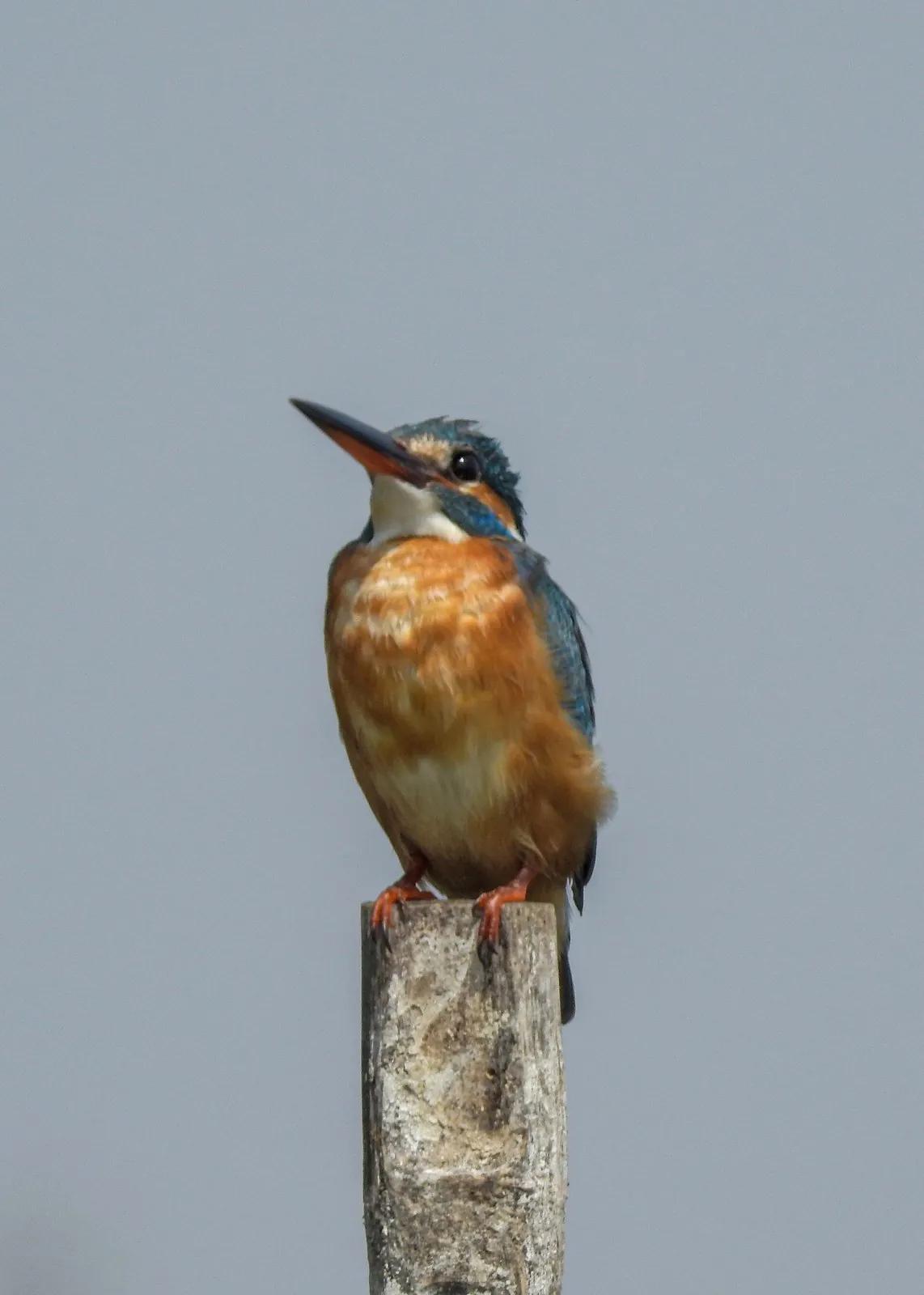
Here is a thing the beaches do not advertise: Goa is one of the best places to watch birds in India. Not metaphorically, in numbers. Something over 450 species have been recorded in a state you can drive across in two hours, from electric-blue kingfishers on the backwater posts to storks and harriers over the winter lakes and, up in the forested east, a handful of birds you can see nowhere on earth but the Western Ghats. You do not need to be a birder to enjoy it, and you do not need a single piece of equipment to start. A quiet lake at dawn and a free phone app will do. This is where to go, when, and how to begin.
I write for Refuje and I do not live in Goa. This is drawn from the sanctuaries and the bird records, and from Goan birders on r/Goa naming their spots, their guides and the apps they start people on. The guides, groups and resorts named below are theirs, reported rather than endorsed, and details change, so treat them as leads to check. The good news for a first-timer is that the two things that matter most, a free app and a free monthly walk, cost nothing at all.
Where to go
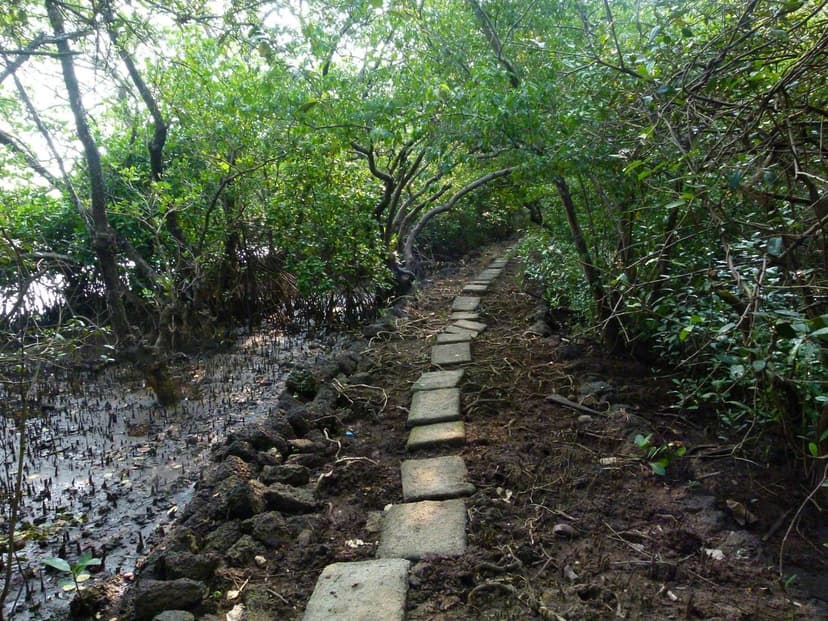
Goan birding sorts itself into water and forest. The water is the easy way in, and the classic first stop is the Dr Salim Ali Bird Sanctuary on Chorao Island, a small patch of estuarine mangrove where the Mandovi widens, reached by a short ferry from Ribandar and named for the man they called the birdman of India. It is little, under two square kilometres, but a slow walk along its boardwalk turns up kingfishers, herons, egrets and mangrove specialists. The other headline spot is Carambolim Lake near Old Goa, a freshwater lake recognised as an Important Bird Area, which fills through the winter with waterfowl, open-billed storks, marsh harriers and, in a good year, flamingos. Add Mayem Lake up towards Bicholim and the wide khazan flats and backwaters that thread the whole north, and you have weeks of easy water birding. Then, when you are ready for the harder, better stuff, the forested interior around Sattari and the Bhagwan Mahavir sanctuary at Mollem is where the Western Ghats endemics live, the birds that bring serious birders to Goa in the first place.
When to go
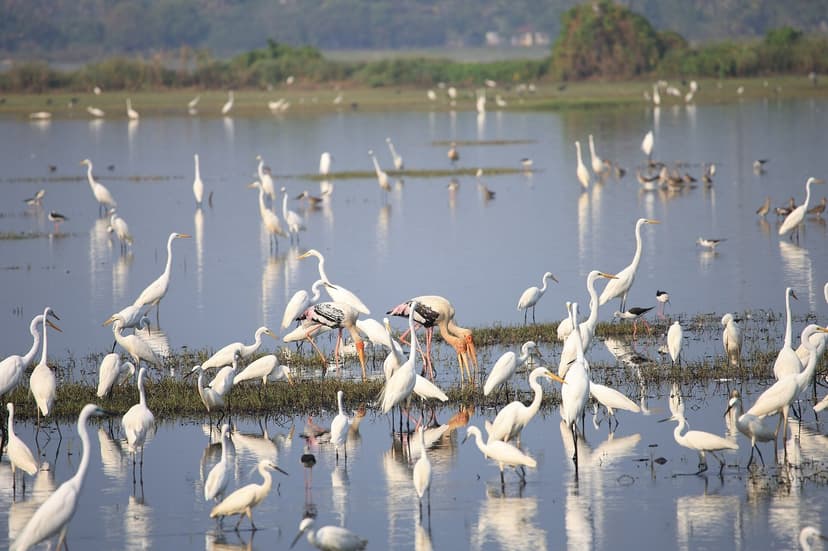
Two timings, and both are firm. The season is winter, roughly November to February, when Goa's resident birds are joined by migrants that have flown down from Europe, Siberia and Central Asia to sit out the cold on these warm lakes and mudflats; a wetland like Carambolim that is quiet in the monsoon can be loud with waders and ducks by December. And the time of day is early. Birds feed hardest in the first two hours of light, the heat later flattens everything, so a birding morning means being at the water not long after dawn and being done by the time the beach crowd is ordering breakfast. Come in high summer or the middle of a hot afternoon and you will wonder what the fuss was about. Come on a January morning and you will not.
How to start, even with nothing
This is the part that surprises people: you can begin properly for free. Two tools do most of the work. The first is the Merlin Bird ID app, which will name a bird from a photo or, cleverly, from its call through your phone's microphone, and which Goan birders hand every beginner as step one. The second is company, and Goa has an unusually generous version of it: the Goa Bird Conservation Network, GBCN, is a local society that runs free public bird walks on the first Sunday of most months, which is about the gentlest possible way in, and the state Forest Department's annual Goa Bird Festival, held at a wildlife sanctuary each winter, is exactly the gateway one r/Goa birder credited with getting them started. Log what you see on eBird and you are, quietly, a birder. If you want to go deeper, Goa has real guides, birders on the forum named people like Parag Rangnekar, Benhail Antao, Loven Pereira and Grenville D'Costa, and birding-focused stays like Mrugaya Nature Resort, all worth looking up and, of course, worth confirming before you rely on them.
Join GBCN Goa, they organise birding walks. And download the Merlin app, it will help you get started.
| On your own | With a guide or a GBCN walk | |
|---|---|---|
| Getting started | The Merlin app and a lake at dawn | Someone who knows the calls and the spots |
| What you find | The obvious water birds | The skulkers and the Ghats endemics too |
| The cost | Free | A guide fee, or a free GBCN monthly walk |
| The identification | Merlin and a bit of guesswork | Named for you on the spot |
| Best for | A casual, curious first morning | Actually building a list, or the forest birds |
Birding in Goa, the short version. Go in winter (roughly November to February), when the migrants are in, and go EARLY, the first two hours after dawn. Start free: download the Merlin Bird ID app (it names birds by photo and by call) and join a free GBCN bird walk on the first Sunday of the month, or the winter Goa Bird Festival. Easy first spots: the Salim Ali Bird Sanctuary on Chorao (ferry from Ribandar) and Carambolim Lake; for the Western Ghats endemics, head inland to Sattari and Mollem, ideally with a guide. Keep quiet, keep your distance, do not play calls to lure birds, and stick to the paths. Confirm any guide, resort or walk before you rely on it.
- The scene
- Goa has more than 450 recorded bird species, including about 11 Western Ghats endemics. Behind the beaches it is one of Indias best birding regions, with mangroves, freshwater lakes, khazan wetlands and Ghats forest.
- Where to go
- The Dr Salim Ali Bird Sanctuary (mangroves on Chorao Island, by ferry from Ribandar), Carambolim Lake (a winter waterfowl magnet near Old Goa), Mayem Lake, the khazan backwaters, and inland Sattari and Mollem for forest and endemic birds.
- When
- The migratory season, roughly November to February, when birds arrive from Europe, Siberia and Central Asia, and always the first couple of hours after dawn.
- How to start
- Free and easy: the Merlin Bird ID app (names birds by photo and call), GBCN Goas free bird walks on the first Sunday of the month, the annual Goa Bird Festival, and eBird for logging. Guides and birding resorts exist for going deeper.
- Etiquette
- Keep quiet and keep your distance, do not play recorded calls to lure birds or disturb nesting sites, and stick to the paths and boardwalks in the sanctuaries.
A dawn at a Goan lake with a pair of borrowed binoculars is the cheapest, quietest good morning the state has going, and it belongs to the same Goa this series keeps chasing. It pairs with a slow paddle through the backwaters and mangroves by kayak, where a lot of these birds live, with the quiet of nearby Divar island, and with the wider case for the Goa beyond the beaches. You can see the North Goa experiences that are currently bookable on the North Goa things-to-do page.
Common questions
Is Goa good for birdwatching?
Very. Goa has recorded more than 450 bird species in a small area, across mangroves, freshwater lakes, khazan wetlands and Western Ghats forest, and it is regarded as one of the best and most accessible birding regions in India. Winter brings large numbers of migratory birds on top of the residents. You do not need to be an expert or own any gear to enjoy it, which makes it a genuinely good, and cheap, thing to do beyond the beaches.
Where are the best birdwatching spots in Goa?
For an easy start, the Dr Salim Ali Bird Sanctuary, a mangrove estuary on Chorao Island reached by ferry from Ribandar, and Carambolim Lake near Old Goa, an Important Bird Area that fills with winter waterfowl. Mayem Lake and the khazan backwaters add more easy water birding. For the harder, richer forest birds and the Western Ghats endemics, head inland to the Sattari area and the Bhagwan Mahavir sanctuary at Mollem, ideally with a guide.
When is the best time for birdwatching in Goa?
The winter, roughly November to February, is the peak, when migratory birds arrive from Europe, Siberia and Central Asia to join the residents and the wetlands are at their busiest. Whatever the month, go early: birds are most active in the first two hours after dawn, and activity drops off sharply once the day heats up. A dawn start on a winter morning is the ideal; a hot afternoon in summer is the worst.
How do you start birdwatching in Goa with no experience or gear?
For free. Download the Merlin Bird ID app, which identifies birds from a photo or from their call through your phone, and go to a quiet lake soon after dawn. Then join a free public bird walk run by the Goa Bird Conservation Network (GBCN) on the first Sunday of the month, or the annual Goa Bird Festival, both aimed at beginners. Log your sightings on eBird. Binoculars help, but you can genuinely start with just a phone.
Do you need a guide, and are there birding groups in Goa?
You do not need one for the easy water birds, but a guide is worth it for the forest and the Western Ghats endemics, which are much harder to find and identify alone. Goa has an active birding community: the GBCN runs free monthly walks, there are enthusiast WhatsApp groups, and birders on r/Goa recommend named local guides and birding-focused resorts. Treat any specific name as a lead to confirm, since availability changes.
What birds can you see in Goa?
On the water and in gardens, expect kingfishers, green bee-eaters, egrets, herons, bulbuls and barbets, and in winter large numbers of migratory ducks, waders, storks, marsh harriers and sometimes flamingos at lakes like Carambolim. In the forested interior you can find the prized Western Ghats endemics that draw serious birders. With over 450 recorded species, a good few days across the wetlands and the forest can turn up a long and varied list.
Sources and a note on this guide
I write for Refuje and I do not live in Goa or keep a Goa bird list. The species count, the sanctuaries and lakes, the migratory season and the festival are from Goa's Forest Department, Goa Tourism, the Goa Bird Conservation Network and birding references; the on-the-ground detail, the spots, the Merlin-and-GBCN starting advice, and the named guides and resorts, comes from Goan birders on r/Goa, quoted and attributed as they appear, and reported rather than endorsed. Guide availability, walk schedules and festival dates change every season, so confirm current details before you go. Nothing here is a first-hand claim of mine. The facts were checked in August 2026.
- Goa's 450-plus bird species and Western Ghats endemics, the Dr Salim Ali Bird Sanctuary (Chorao mangroves, ferry from Ribandar), Carambolim Lake as an Important Bird Area, and the November-to-February migratory season: Goa Tourism, the Forest Department, Wikipedia and birding references.
- The Goa Bird Festival and GBCN's free first-Sunday bird walks, and the Merlin and eBird apps: the Goa Bird Festival and GBCN pages.
- The spots, the start-with-Merlin-and-a-GBCN-walk advice, the named guides (Parag Rangnekar, Benhail Antao, Loven Pereira, Grenville DCosta) and birding resorts, and the go-early habit: attributed r/Goa threads, quoted inline.
Bird numbers, access and guides all shift with the season, so check current schedules and, in the sanctuaries, follow the posted rules. If you bird Goa and know it better than these sources do, that is the correction this guide should carry, so tell us.
You Might Also Like
Edge City India 2026: The Practical Guide
Three weeks in Mandrem, North Goa. October 11 to November 1, 2026. Hundreds of founders, researchers, engineers, and creators living and building on a stretch of beach that is usually known for yoga retreats and quiet cafés, not hackathons. If you have applied, or you are wondering whether you...
Solo Female Travel in Goa: An Honest Safety Guide
An honest, balanced safety guide for women travelling to Goa alone: why it's comparatively safe and loved by many yet has a real, worsening harassment problem concentrated on the party beaches, where to base for a calmer trip, and the practical choices that tilt the odds in your favour.

Working Remotely from North Goa: The Honest Digital-Nomad Guide
An outsider's honest guide to working remotely from North Goa: why it isn't the beach-office of the photos, the power-and-internet problem that decides everything, where to base (Assagao, Siolim, Caranzalem), the cost, solo-female safety, and how to be a good guest rather than a coloniser.