
Shangarh & Sainj Valley: The Quiet Meadow Guide (2026)
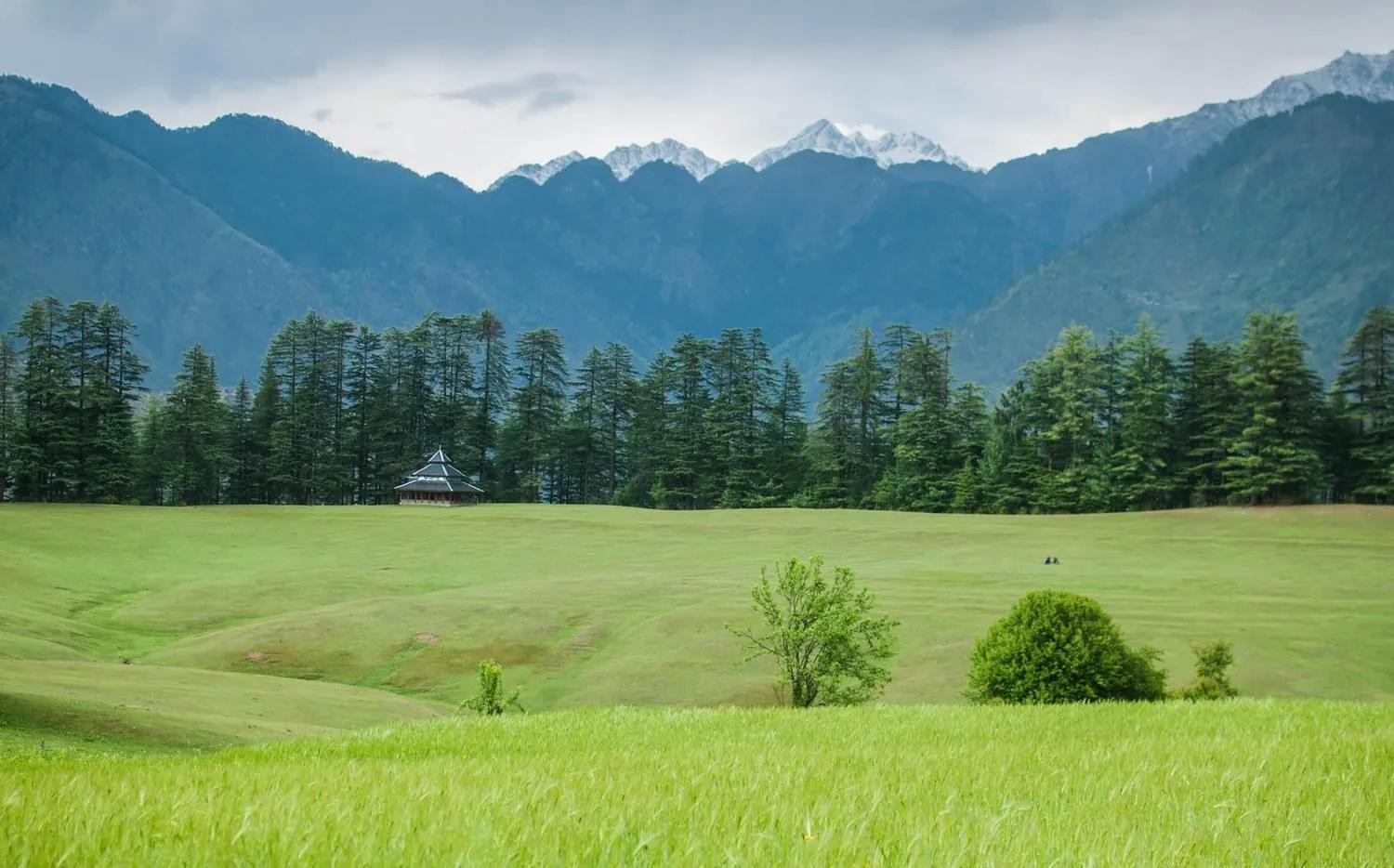
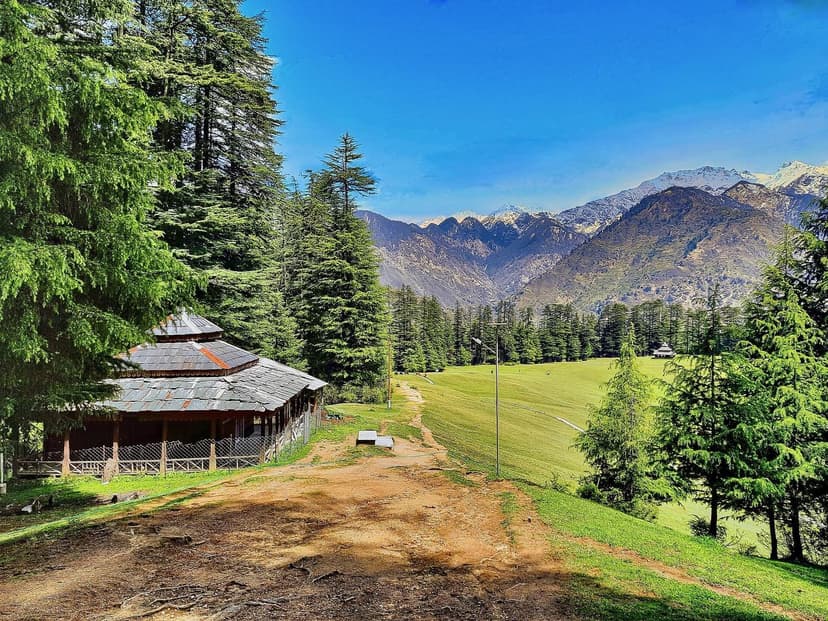
Shangarh is one green meadow with a wooden temple on it, about three hours up a side valley from Kullu, and the people who love it would mostly rather you skipped it.
That is the honest place to start. Half the Reddit threads about this village are travellers telling each other to keep quiet. One of the most-upvoted lines on the biggest thread is four words in Hindi, unknown hi rehne do, leave it unknown, much cleaner that way. Another regular is a man arguing that the broken road is the only thing saving the place.
I am writing about it anyway, because you will find it with or without me. So here is the version with the rules left in.
It sits at roughly 2,000 m in Sainj, one of the three valleys inside the Great Himalayan National Park. No direct bus. One meadow you do not camp on, one temple you take your shoes off near, and a village that genuinely goes quiet after dark. Come for that, or do not come.
The short version. Shangarh is a slow village in Sainj Valley, Kullu district, built around a sacred meadow and the Shangchul Mahadev temple. You get there by taxi from Aut on the Delhi-Manali highway (no reliable bus, no bikes on the last stretch). No permit needed. Best March to June and September to November. The one rule that matters more than the rest: keep it quiet, and keep it clean.
- Where
- Sainj Valley, Kullu district, Himachal
- Altitude
- About 2,000 m
- Getting there
- Taxi from Aut; no dependable direct bus
- Permit
- None for Shangarh and the Sainj villages
- Network
- Patchy on purpose; carry offline maps
- Best time
- Mar to Jun and Sep to Nov
- The one thing
- A sacred meadow you walk gently across
Where Shangarh actually is
Most people meet Shangarh as a photo with no directions attached. So, the map.
Drive or bus up the Delhi-Manali highway to Aut, the town just before the long tunnel. A side road peels off at Larji and follows the Sainj river east. You pass Sainj town, then the road narrows, climbs, and turns to dirt for the last stretch into the village. The Great Himalayan National Park spreads out behind all of it: 1,171 square kilometres, a UNESCO World Heritage Site since 2014, three river valleys (Tirthan, Sainj and Jiwa Nal), and 181 recorded bird species.
One thing worth getting straight, because it saves you money and worry. Shangarh and the lived-in Sainj villages are in the park eco-zone, the buffer. The eco-zone needs no permit and no guide. The core zone, the deep multi-day treks like Raktisar, is the part that needs a permit and a registered guide from the Ropa range office. For Shangarh itself you just turn up.
The Hindi guides call it the Khajjiar of Kullu, or a second mini Switzerland. Ignore the brochure-speak. It is a high meadow ringed by deodar, with a wooden temple on it, and that is enough.
The meadow, the temple, and why the grass is still grass
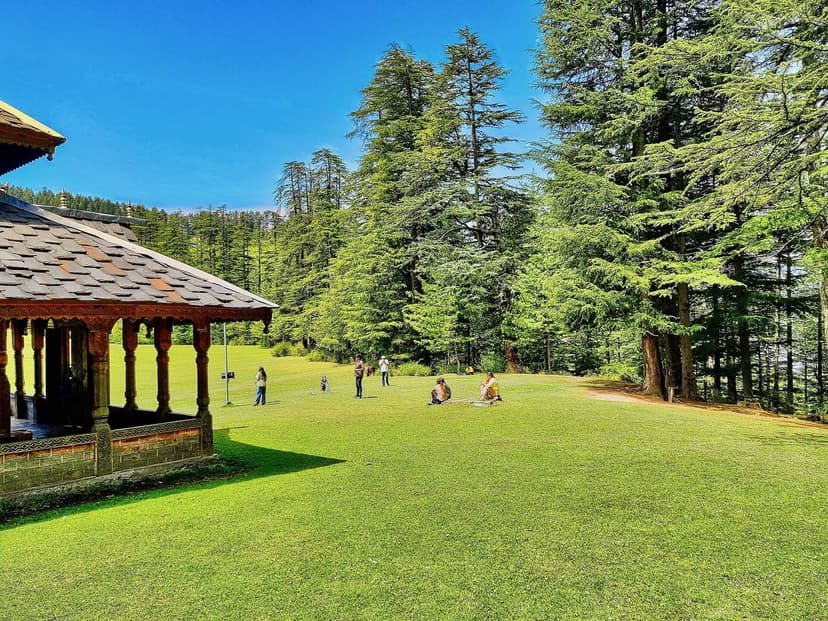
Stand at the edge of the meadow and the first question is the obvious one. Why has nobody built on this? It is flat, it is huge, it is the most valuable land for miles. In most of Himachal it would have four hotels and a parking lot by now.
The answer here is the temple. Local belief holds that Shangchul Mahadev, a form of Shiva, purified this ground when the Pandavas sheltered in the valley, and so the meadow has never been ploughed or built on. ETV Bharat reports the rules that go with that: no vehicles, no alcohol, no leather, no loud talk on the field, which is said to run to 128 bigha without a single loose stone in it. The same report notes that even police and forest staff are expected to remove their uniforms before they cross. The deity is also believed to give refuge to anyone who comes to him, including couples who have run away to marry against their families.
You can take the theology or leave it. The point is what it does. A god lives on this field, so the field stays a field. The conservation and the faith are the same thing here, which is exactly why the building going up around the edges feels like more than an eyesore.
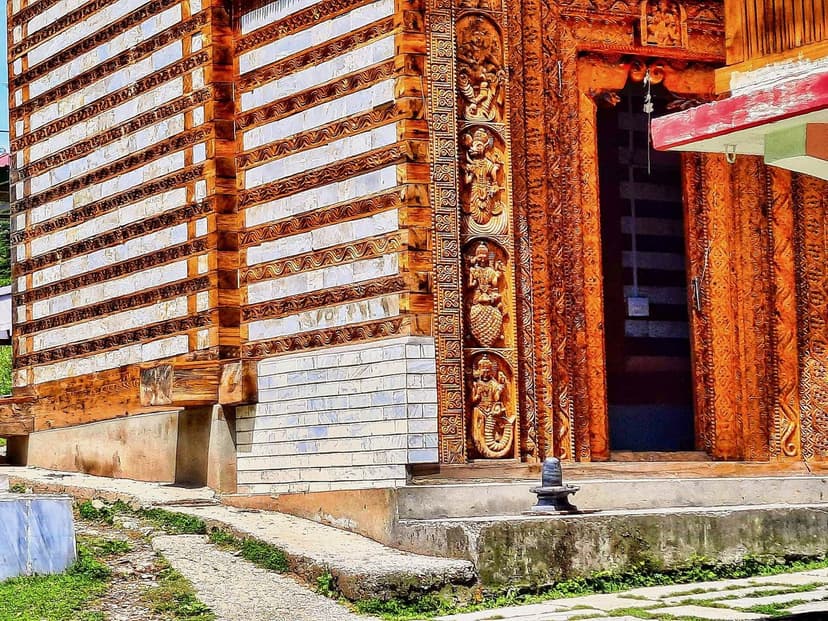
The temple itself is small and three-tiered, deodar beams stacked and locked without nails in the old Kathkuni way, the door carved with gods. People walk slow circles, sit, and leave. As one traveller put it on r/HimachalPradesh, the meadow is a spiritual place, so it has to be respected. That is the whole etiquette in one line.
Getting there from Aut, step by step
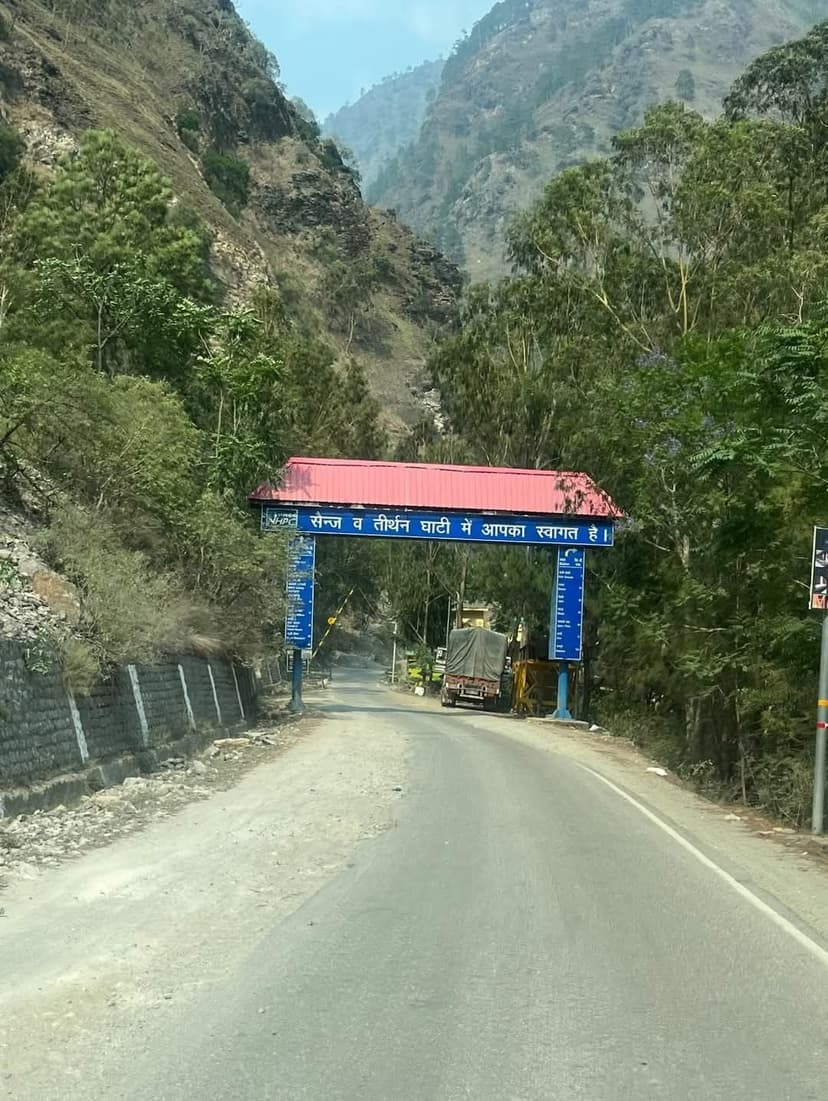
This is the part people get wrong, so here it is in order. There is no dependable direct bus to Shangarh. You get to Aut, and from Aut you arrange a cab.
- Reach Aut
Any Delhi or Chandigarh to Manali bus stops at or near Aut, the town just before the Aut tunnel. From Delhi it is an overnight; from Chandigarh, roughly seven to eight hours. - Aut to Sainj
Local buses run from Aut up to Sainj town for 50 to 80 rupees. The road this far is fine for any car. - Sainj to Shangarh
This is the climb. A private taxi runs about 1,000 to 1,500 rupees; the last 8 to 10 km is narrow, steep and partly dirt. If a shared jeep is going up, take it. - Or one taxi the whole way
An Aut to Shangarh cab is roughly 1,500 to 2,000 rupees one way as of June 2026. Easiest done by asking your homestay to send a driver they trust.
Three warnings from people who have done it. First, the bus to the village is a myth most days. One traveller asking how to reach was told plainly to take a cab only, and that bikes are a big no given the road. Second, the fares drift: a Redditor paid 1,000 rupees from Aut in 2023, others quote more now, so treat any number here as a starting point and confirm on the day. Third, do not plan this for July or August. The final stretch washes out in the monsoon, and you can get stuck on the wrong side of a slide.
Where to stay and eat: slow, simple, social
Shangarh is small enough that you do not really pick a neighbourhood, you pick a vibe. There are family homestays, a few hostels, and a handful of cafes that double as the village social life.
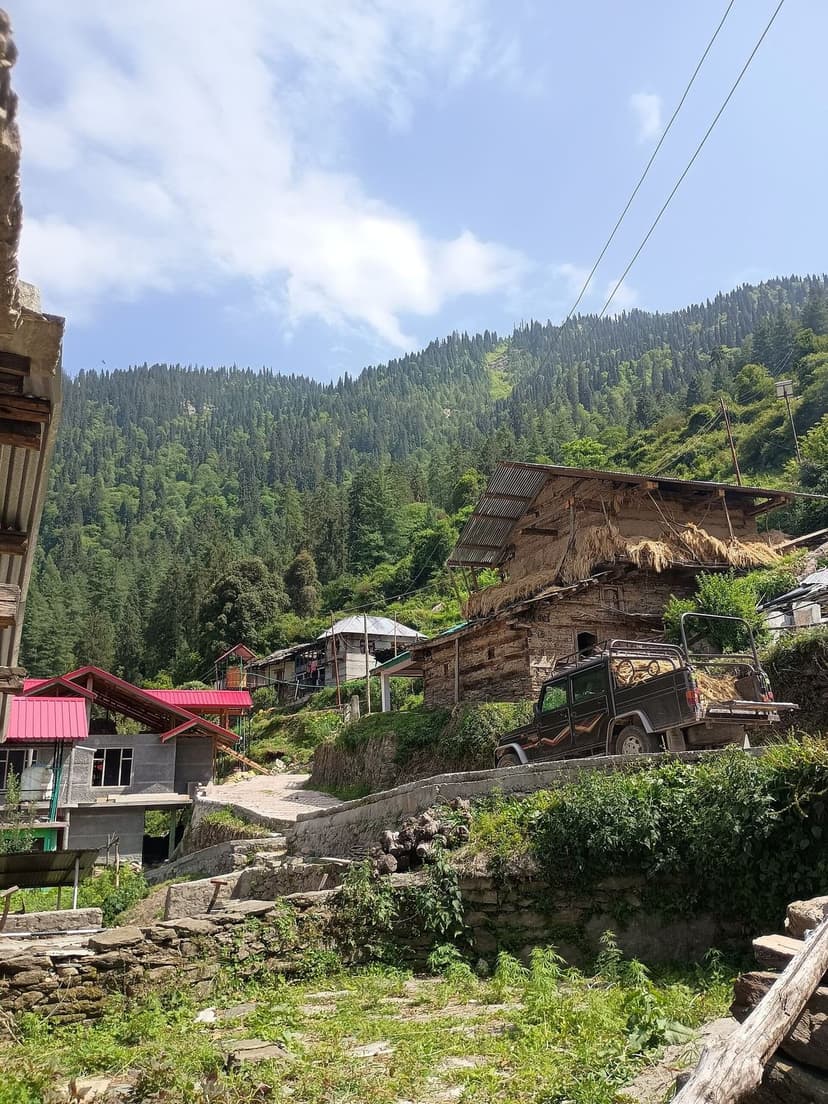
Travellers point to a clear set of names, and I will pass them on with the same caveat they come with: small hill places open, close and change hands fast, so message ahead and do not trust a two-year-old review. Zostel Shangarh comes up most for solo travellers, with female-only dorms and the easy social churn of a good hostel. The Shangri Labs gets named for the snow-peak window views and the cooking. Oreos Cafe and Mysterious Meadows, run by an owner called Dhruv, gets repeat visitors who describe it as more of a community than a guesthouse. Meena Stays, Sifaar, Mud Hostel and a few Kathkuni homestays round it out.
Eat what the house is cooking. Non-veg is genuinely rare here, made a few times a year and usually outside the kitchen because of the household gods, so come expecting dal, rice, sabzi, and siddu, the steamed stuffed bread that is the local treat. Cafes like Plant Pot keep the hot chocolate and the slow afternoons going. Roadside stalls do the cheap siddu.
| Item | Cost | Note |
|---|---|---|
| Aut to Shangarh taxi, return | 3,000 to 4,000 | One cab, split it. As of June 2026; ask your homestay to fix the rate. |
| Bed, 2 nights | 1,200 to 8,400 | Dorm bunk to a private homestay room, two people. Roughly 600 to 4,200 a night. |
| Food, 3 days | 1,500 to 3,000 | Home-cooked thalis and cafe meals for two. |
| Buses, Delhi or Chandigarh to Aut | 2,800 to 6,400 | Return, for two. Sleeper or Volvo; Aut is on the Manali road. |
Want a Sainj-side sanity check on your plan? Email us your rough itinerary and we will tell you which homestay is worth the dirt road this season and whether the bus is running.
Things to do, and how to do them gently
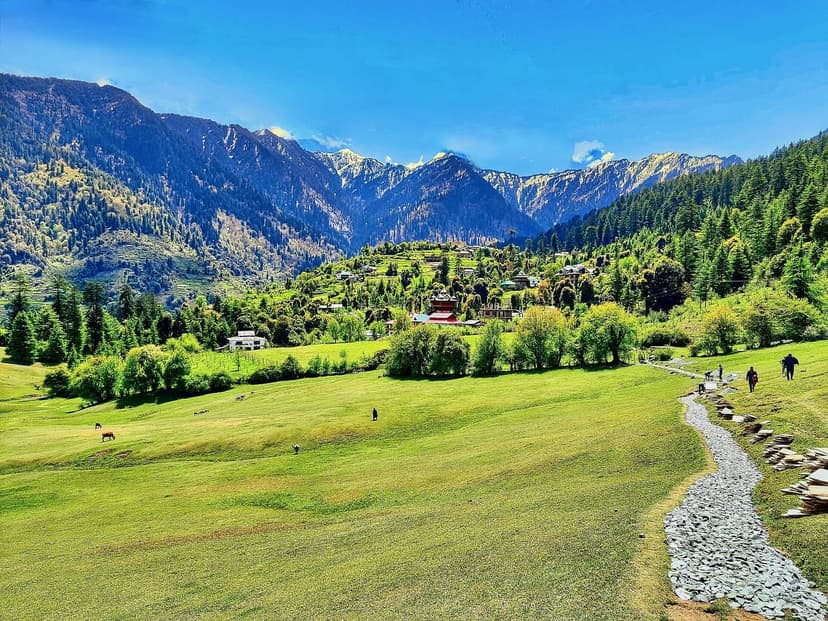
The honest answer is: not much, slowly. That is the draw. A regular on r/india_tourism wrote the best short list I have seen, and it still holds: go to the meadow at dawn when the dew turns to mist as the first sun hits, then a short hike to Barshangarh falls, a lazy day at Plant Pot cafe, a day trip to Pundrik Lake, and the Manu temple above the village for the 360-degree view. He signed off with, just go there before it gets mainstream.
Build a couple of days around that. Barshangarh waterfall is a short forest walk from the village. Pundrik Rishi Lake is a quiet day trip with a cafe near the entrance. Higher up, the deodar trails climb to thach, the high meadows, and Ganjau Thach is the one trekkers come back raving about, the trail starting just past Woodzo cafe through tall forest. Raila, a few km on, has twin wooden tower-temples and an even quieter field.
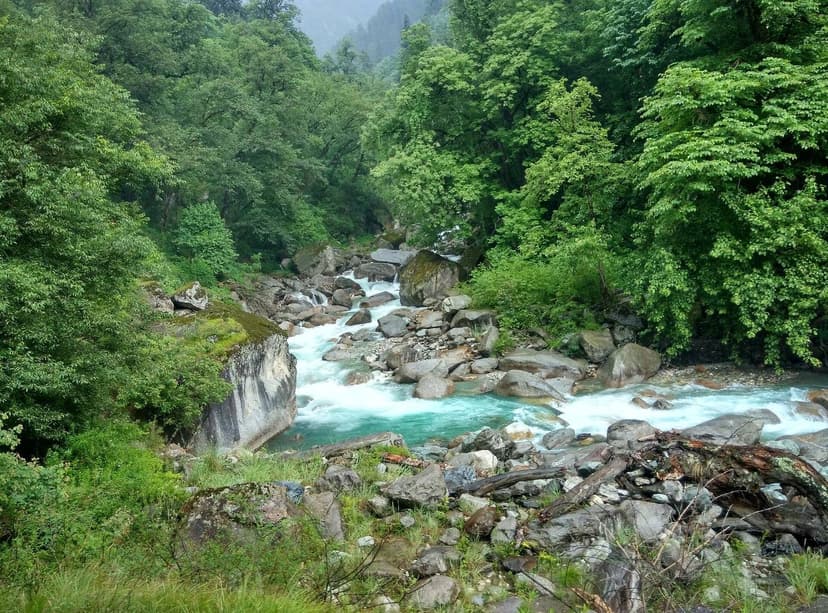
If you came to switch off, this is the rare place that delivers it. The signal is weak by design. As one solo traveller answered when asked about wifi, the network is not good and that is the best part. Another described four days of foggy mornings, cold rivers, clouds inside the room, and the kind of silence where your own thoughts get loud. Believe that, and do not come expecting to take work calls.
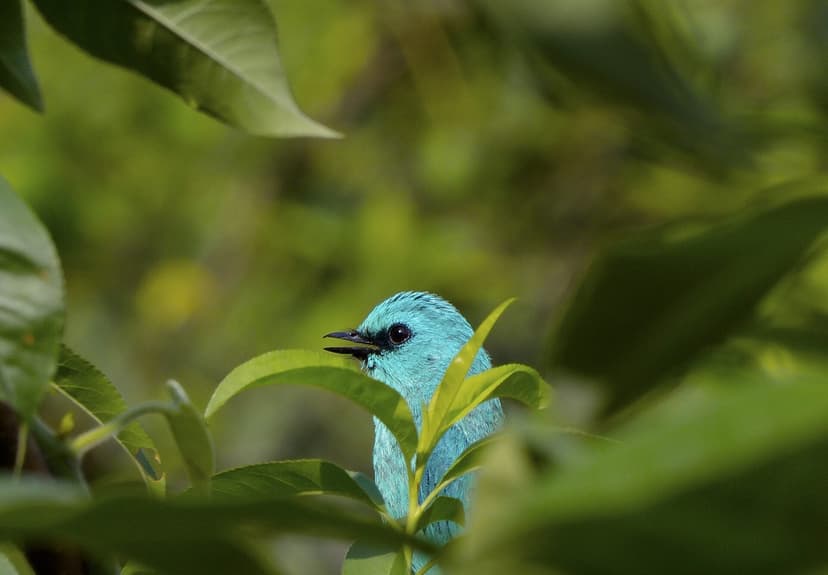
And look up. You are standing in a national park eco-zone with 181 bird species, including the Himalayan Monal and the Western Tragopan. You will not tick them off a list in two days, but a slow morning with binoculars on a forest edge is its own kind of doing nothing well.
Shangarh or Tirthan and Jibhi: which quiet is yours?
People weigh Shangarh against its better-known neighbours, so here is the straight version. If you want comfort, options and an easier road, the Tirthan and Jibhi side is your call. If you want stillness and early nights and you will trade some convenience for it, come to Shangarh.
| Shangarh | Tirthan / Jibhi | |
|---|---|---|
| Getting there | Taxi only, broken last 8 to 10 km | Buses and taxis, road mostly tarred |
| Crowds | Thin, except long weekends | Busier; Jibhi is sliding toward a second Manali |
| Network | Patchy on purpose | Mostly works |
| The draw | One sacred meadow, deep quiet | Trout, GHNP basecamp, waterfalls, more to do |
| Best for | A reset, slow days, early nights | First-timers who want comfort and choices |
One caveat on the word quiet. On a long weekend, even Shangarh fills up; travellers have counted thousands of visitors and a line of police in these same villages people call peaceful. Go midweek, go shoulder season, and the place you were promised actually shows up.
When to go, and what the meadow looks like
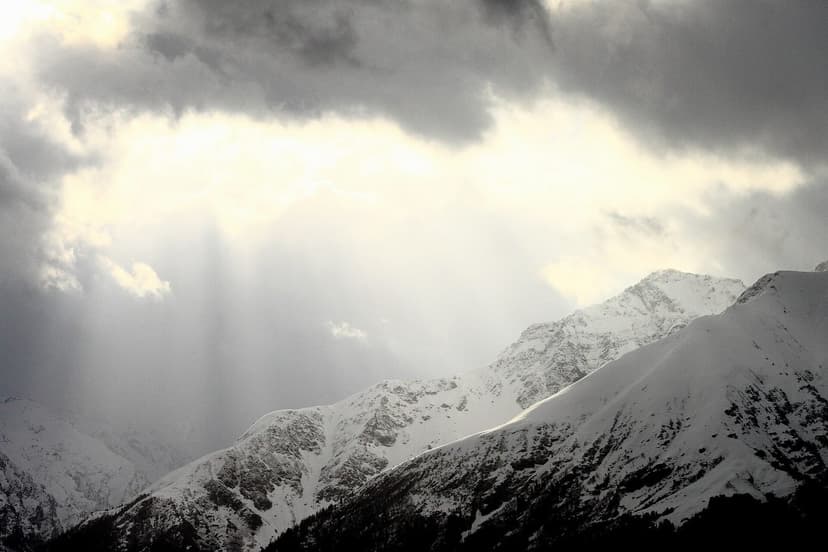
The meadow runs a colour cycle worth planning around. Brown in autumn, deep green through spring and the early monsoon, white under snow December to February. March to June is the easy window: green grass, clear light, open roads. September to November is the other good stretch, cooler and emptier.
Skip July and August unless you have a reason. The monsoon brings landslides, leeches in the forest, and that washed-out final road. Winter is beautiful and doable if you do not mind cold rooms and a chance the dirt road is snowed over; check before you commit.
Visiting a 'best kept secret' without breaking it
Here is the uncomfortable part, the reason this guide exists at all. Shangarh is changing in real time, and not gently. One traveller counted at least 10 properties under construction and over 100 chopped trees on a recent visit. A whole thread is titled, simply, Shangarh: destruction and apathy even in relatively untouched hills. The benami concrete creeping up the slope is exactly what the meadow has been protected from for centuries.
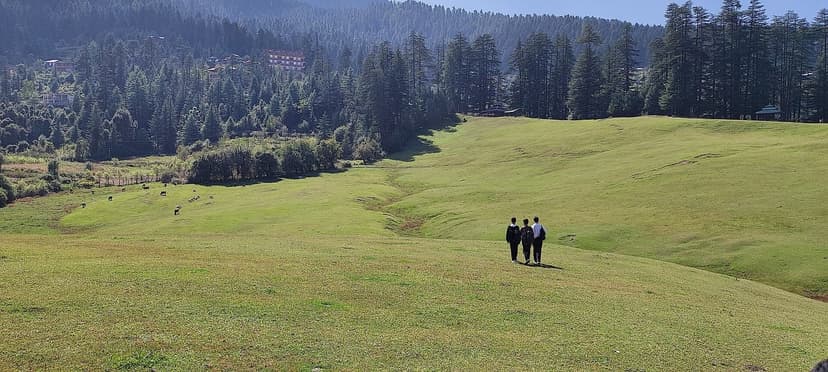
They do not allow loud music here. Even the neighbouring Zostel lowers the sound so it is only audible inside a room after 6 pm. After that this turns into a quiet little village with no cars or bikes passing.
That line is from a traveller quoting their homestay owner on r/HimachalPradesh, and it is the closest thing Shangarh has to a constitution. The locals are not subtle about wanting it kept that way. I support the gatekeepers of such places and despise the reels creators, wrote one. Another, the most-upvoted comment on the whole question of why so few people know about Shangarh, said the plain truth: if it were more popular, it would be littered with empty beer bottles, garbage and plastic.
There is even a strange consensus that the bad road is a blessing. I am glad the roads are terrible so it does not invite casual tourists, one person wrote. It will stay offbeat until they build the road, sad but true, said another. You do not have to agree to take the hint.
The Shangarh covenant, short and non-negotiable. Do not camp or pitch a tent on the meadow. Keep your voice down, and your music off after dark. Carry every scrap of your trash back out; there is no system here to clean up after you. Take your shoes off near the temple and skip the leather. Do not fly a drone over a village that values its quiet. And if you film it, think hard before you geotag it. The kindest thing you can do for Shangarh is enjoy it and undersell it.
Common questions
How do you reach Shangarh?
Get to Aut on the Delhi-Manali highway, then take a private taxi up via Sainj and Neuli, roughly Aut to Sainj 18 km then a steep 8 to 10 km climb. The cheaper combo is a bus Aut to Sainj, then a cab the last stretch. There is no reliable direct bus, and bikes are risky on the broken final road. Confirm current fares before you go.
Is there a direct bus to Shangarh?
Not a dependable one. A local bus has historically left Sainj around 4 pm, but it is often suspended for road damage. Most travellers take a private or shared taxi from Sainj or Aut.
Do you need a permit for Sainj Valley or GHNP?
No permit to visit Shangarh and the Sainj villages, which sit in the park eco-zone. You only need a permit and a registered guide for multi-day treks into the GHNP core zone, issued at the Ropa range office. See our Himachal permits guide for the details.
What is the Shangarh meadow legend?
Locals believe Shangchul Mahadev purified the meadow when the Pandavas sheltered here, which is why it has never been ploughed or built on. The deity is also said to give refuge to couples who have eloped.
What are the rules at the meadow?
No camping or tents on the grass, no loud music (the village quiets after 6 pm), no littering, no alcohol. The field is sacred, and many locals remove leather and shoes. Walk gently and carry your trash out.
When is the best time to visit Shangarh?
March to June and September to November. The meadow is greenest in spring and early monsoon and snow-covered in winter. Avoid July and August for landslides, leeches and a washed-out road.
Where do you stay in Shangarh?
Small homestays and a few hostels, including Zostel Shangarh with female dorms, plus cafe-stays around the village. Book the first night and walk in for the rest. Expect simple home-cooked meals and patchy mobile network.
Is Shangarh good for solo female travellers or a workation?
Yes for solo, with the usual caution: it is small, quiet, with social hostels and female dorms available. For a workation, manage expectations, the internet is weak by design, so it suits a reset better than serious remote work.
Shangarh or Tirthan and Jibhi, which is better?
Tirthan and Jibhi are more set up and busier; Shangarh is quieter, harder to reach, and built around a sacred meadow. Go to Shangarh for stillness, Tirthan for trout, comfort and a GHNP basecamp.
Read next
- Tirthan Valley: the slower, comfier neighbour
- More of Himachal beyond Shimla and Manali
- Prashar Lake and its floating island, on the Mandi side
- Every permit you actually need in Himachal
- When to come to Himachal, month by month
Planning a quiet Sainj trip and want it to stay quiet? Tell us what you are after and we will help you build days that are good for you and good for the village.
Rajesh Thakur grew up in the Kullu valley and has been writing about Himachal travel and culture since 2018. He is most at home in upper Kullu, Lahaul and the valleys around the Great Himalayan National Park.
Sources. Shangchul Mahadev legend and meadow rules, ETV Bharat. Park status and zones, Wikipedia: Great Himalayan National Park and the GHNP official site. Current fares and logistics, Discover With Dheeraj, 2026, cross-checked against traveller reports. Traveller voices throughout are quoted from r/HimachalPradesh, r/india_tourism and r/SoloTravel_India, linked inline. Fares, road status and homestay details change every season, so reconfirm before you travel.
You Might Also Like
Sethan: Igloo Stays and the Quiet Buddhist Village Above Manali
Sethan, 12 km above Manali: winter igloo and dome stays, ski and snowboard slopes, the Hampta Pass trailhead, and a quiet Buddhist hamlet most travellers miss.
Best Cafes in Every Himachal Pradesh Town: A Kullu Writer's Map (2026)
Eight HP towns, eight different cafe scenes, organised by destination. Shimla's heritage (Indian Coffee House since 1957), McLeod Ganj's books (Illiterati), Old Manali's rivers (Cafe 1986), Kasol's hummus (and the locals-ban controversy at Free Kasol Cafe), Bir's artisanal coffee, Jibhi-Shoja's emerging scene (Ailyak, Tenzin), and Spiti's altitude (Sol Cafe Kaza, world's highest at Komic). Written from Kullu with the Hindi-press and Reddit-deep-mine backbone English guides miss.
Is Manali Overrated? What 282 Redditors Actually Said (and Where to Go Instead)
We read every comment of the 282-comment r/india master thread, 349 comments total across eight subreddits, then bolted on May-2026 traffic and price data from Tribune India, ETV Bharat, Amar Ujala and the HP Tourism Department. The honest answer is: stay out of Mall Road, lean on the region around it. Written from Kullu, an hour south.