
Kullu Dussehra 2026: The Festival That Starts When Every Other Dussehra Ends
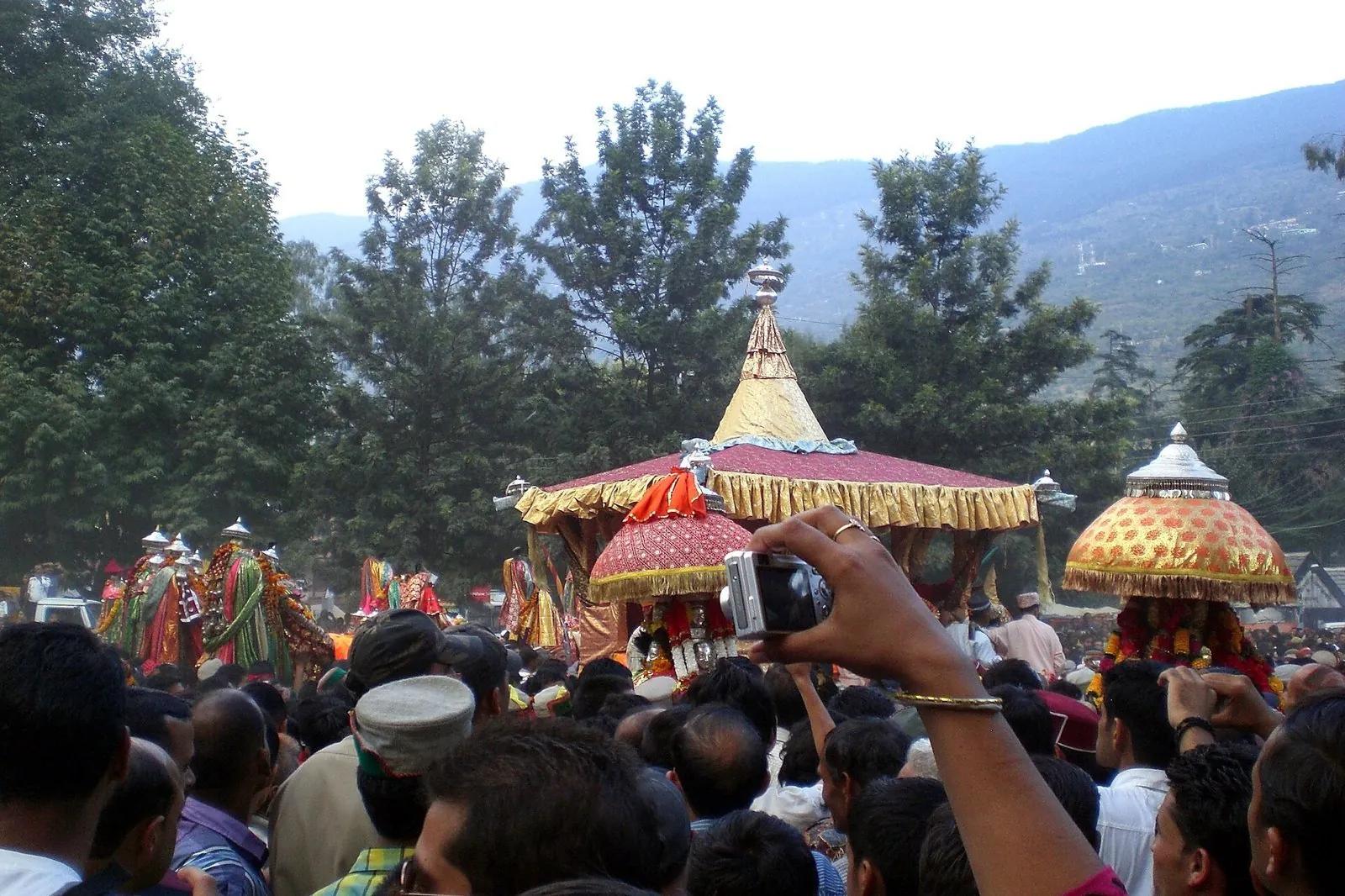
Here is the thing about Kullu Dussehra that nobody warns you about until you are in the Dhalpur crowd: there is no Ravana. No effigy, no arrow of fire, no cheer when the villain goes up in smoke. Nobody here built a villain to burn in the first place. Everywhere else, Dussehra ends the day Ram kills Ravana. Kullu starts that day, runs a week, and spends the whole time on gods turning up, not a demon dying.
I grew up in this valley. Dussehra is not an abstraction here. It is the week the side valleys empty out and 200-odd village gods come down to one field in Kullu town to pay their respects to a borrowed king. Nothing can even begin until Hadimba Devi, the old grandmother goddess, has come down from Manali. The whole festival waits on her. If you have only ever seen the Delhi Ramlila-and-effigy version, this will not feel like the same event. It is not.
In 2026 it falls on 20 to 26 October. Below is what actually happens, why it is built the way it is, the one uncomfortable part the tourism posters skip, and how to be there without wasting the trip.
- Dates in 2026
- 20 to 26 October (7 days)
- Starts on
- Vijayadashami, the day mainstream Dussehra ends
- Where
- Dhalpur Maidan, Kullu town
- Presiding deity
- Raghunath Ji (Lord Rama)
- Gods attending
- 200-plus village devtas, some years 300-plus
- Ravana effigy
- None. This is the key difference
- Nearest airport
- Bhuntar (Kullu-Manali), 11 km from Kullu
- Status
- International festival since 1972
Why there is no Ravana to burn
Mainstream Dussehra is a re-enactment. Effigies of Ravana, Meghnad and Kumbhakarna, the Ramlila on stage for nine nights, the burning on the tenth. Kullu keeps almost none of that.
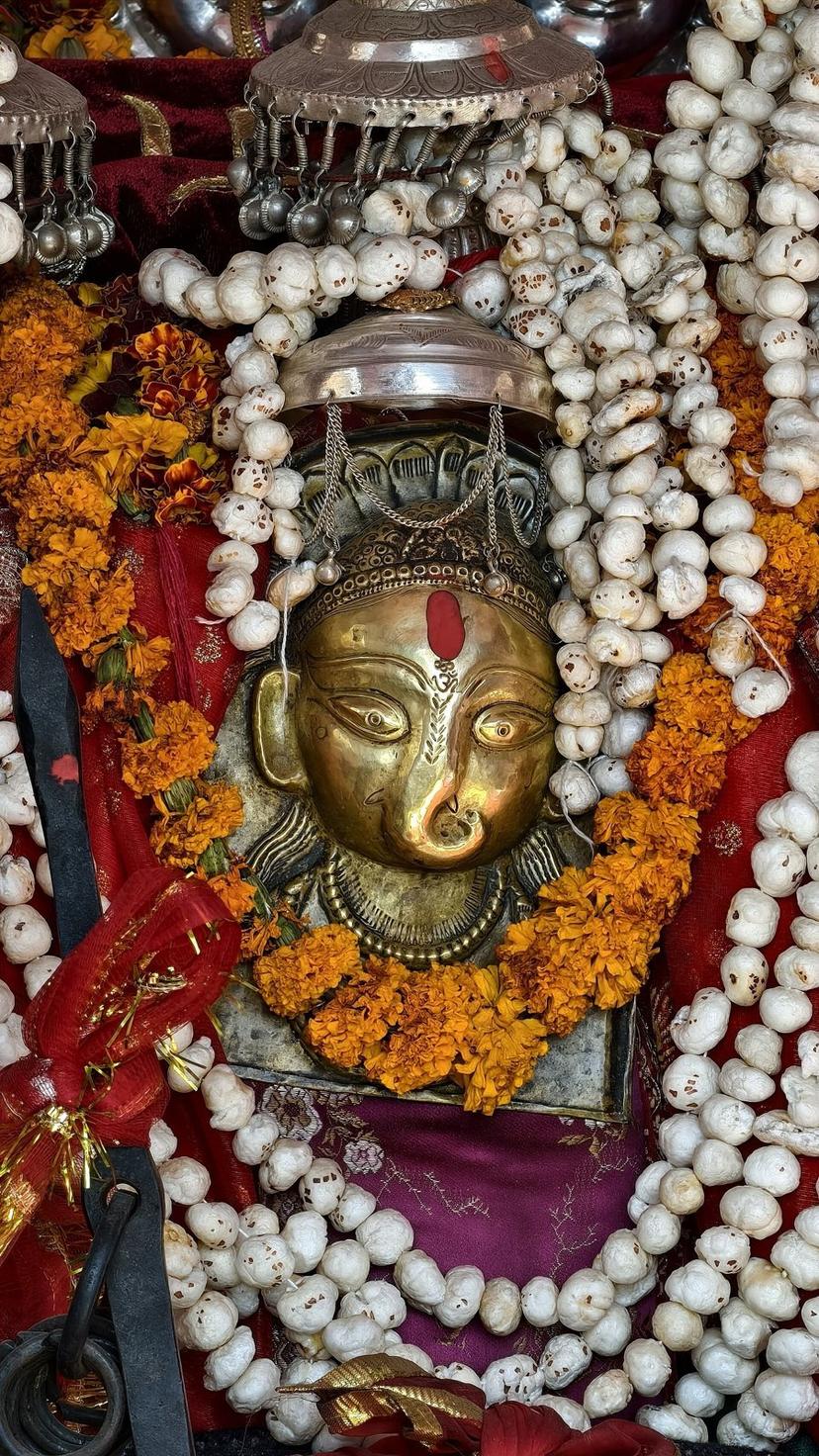
What Kullu has instead is a gathering of gods. The devtas of the valley, each one a set of silver and brass masks called mohras mounted on a palanquin, are carried down from their home temples to Dhalpur. They come to attend on Raghunath Ji, the idol of Lord Rama that sits at the centre of everything. You are not watching a story acted out on a stage. You are watching a few hundred small gods report to their king, close enough to put a hand on the palanquin poles. Almost all of them, anyway. Jamlu Devta of Malana, the most stubborn god in the valley, refuses. Of every deity in Kullu he alone bows to no one and skips Dussehra outright. Malana has always kept apart, and its god keeps apart too.
That is the honest reason people who have seen both say Kullu Dussehra ruins the regular one for you. The regular one is theatre. This is a congregation.
| The Dussehra you know | Kullu Dussehra | |
|---|---|---|
| Timing | Ends on Vijayadashami (day 10) | Starts on Vijayadashami, runs 7 days |
| The main event | Ram kills Ravana, effigies burnt | 200-plus village gods gather around Raghunath |
| Ravana / Meghnad effigies | Central, burnt with fireworks | None at all |
| What you watch | A staged Ramlila re-enactment | Real deity palanquins carried by real villages |
| How it ends | Crackers, then home | Lankadahan on the Beas bank, gods go home |
The 400-year-old guilt trip behind it
The origin story is not a nice one, and locals do not pretend it is. It starts with a king who did something bad.
Raja Jagat Singh ruled Kullu from 1637 to 1672. Somebody told him a poor Brahmin named Durga Dutt, in the village of Tipri, was sitting on a bowl full of pearls. There were no pearls. When the king sent men to seize them anyway, Durga Dutt locked his family inside the house, set it on fire, and cursed the Raja as he burned. The king fell seriously ill. Nothing worked.
The way out he was given was drastic: give up the throne, not to a person, but to a god. An idol of Raghunath, Lord Rama, was brought from Ayodhya, reached Kullu around 1653, and was enshrined in the Raghunath Temple at Sultanpur in 1660. From then on Raghunath Ji was declared the real ruler of Kullu. The Raja ran the valley as the god's regent. The king recovered. And Dussehra in Kullu became the week when the whole valley comes to attend on that transferred crown.
So when you see the rath being pulled, remember it is not a float. It is a king, and the king is a statue, and the statue outranks every human in the field. That framing is not folklore for tourists. It is still, in a real administrative-ritual sense, how the festival treats itself.
Day one: the rath yatra and a field full of gods
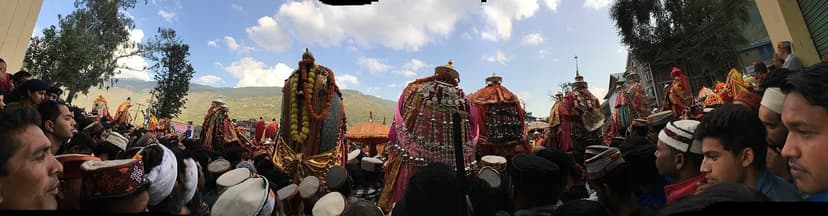
The first evening is the one to see. After the aarti and the parikrama, Raghunath Ji is brought out of the temple and placed on the rath, a tall wooden chariot dressed in red and gold. Thick ropes are thrown to the crowd. Then thousands of people, not a machine, drag the chariot across Dhalpur maidan to its spot for the week. If you have ever wanted to put your hands on a rope alongside a few thousand strangers and pull a god across a field, this is where you do it.
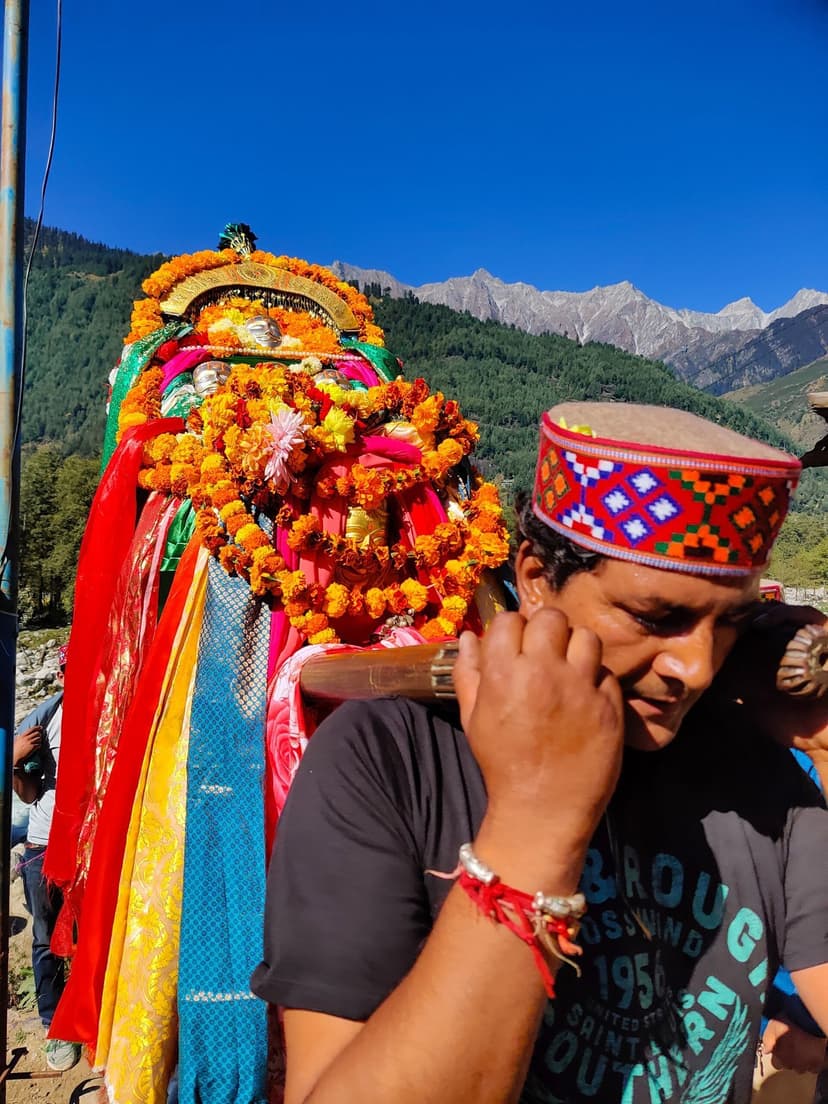
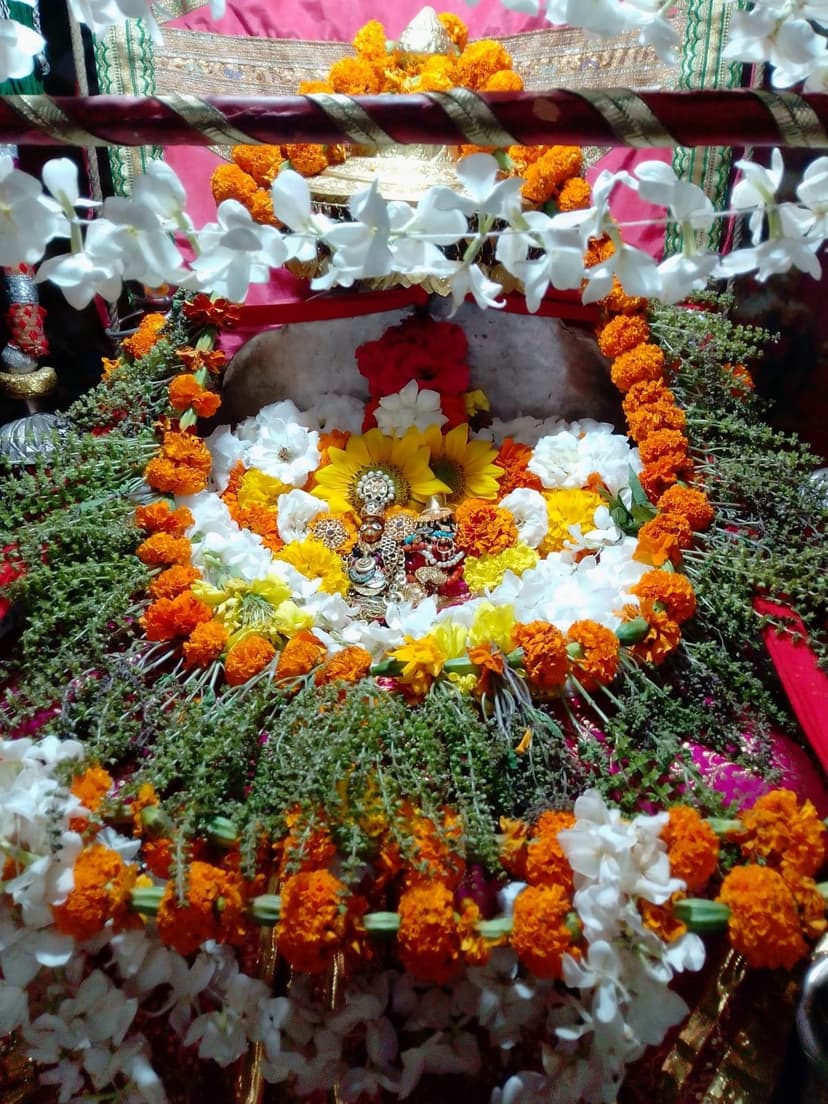
Around the rath, the devtas assemble. Most of them have walked in. A village god does not drive down. It is carried on shoulders, sometimes for a full day, down from hamlets you have never heard of, and set up in a temporary camp at Dhalpur where it is tended around the clock. Wander between the camps at night and you will see oil lamps, drummers, families who have come with their god and will sleep next to it.
There is a belief here you will hear if you talk to anyone local. This past year, on r/HimachalPradesh, u/UpperValleyDude put it plainly: it started raining and turned cold the entire time the devtas were in town, and warmed up the day they left. "It is a coincidence," he wrote, "but the local logic would suggest something else." Somebody replied with the obvious counter, u/Sorrowsorrowsorrow: if the gods can move the weather for their own trip, why can they not stop the landslides and floods? Both of those people are Himachali. That argument, faith against the flood the same faith did not prevent, is the valley talking to itself. You are welcome to listen in.
The middle days: Jaleb, the mela, the nights
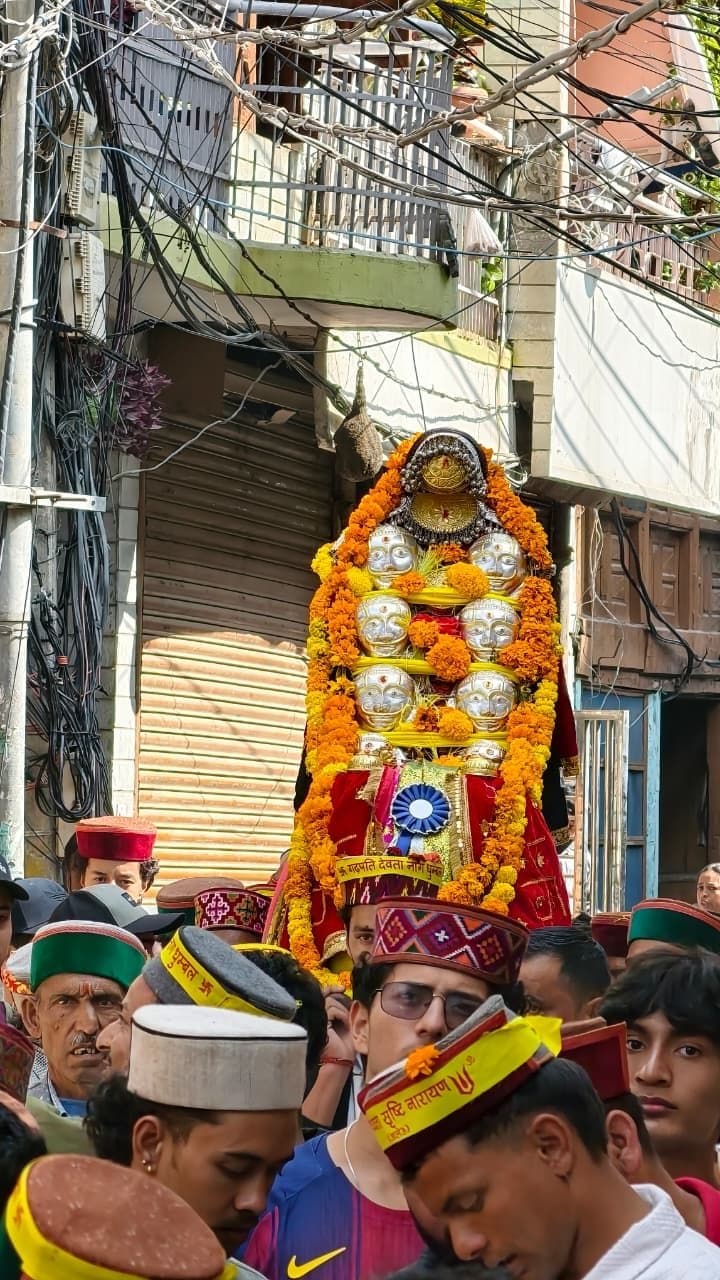
From the second day to the second-last, the shape of each day is the Jaleb, a procession where the deities go around together, and Raghunath at the centre of it. Between processions, the maidan turns into a plain fair. A trade mela with hundreds of stalls, a rickety Ferris wheel, food, wool, shawls, cheap plastic everything. At night there are cultural programmes on a stage, folk troupes from across Himachal and, given the international tag, acts from abroad most years.
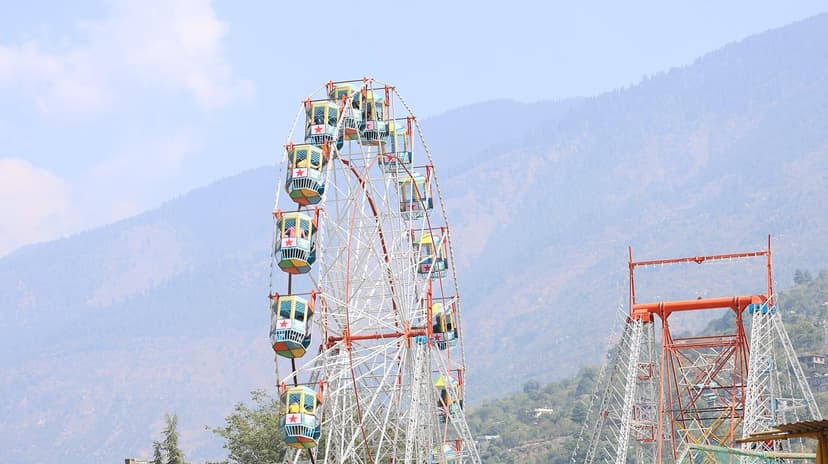
Do not be snobbish about the fair part. The gods and the giant wheel share the same field on purpose. Dussehra in Kullu was always as much a trade gathering as a religious one, the week when high villages that barely see each other all year come down to buy, sell, marry off, and settle scores. The Ferris wheel is not a corruption of the thing. It is the thing.
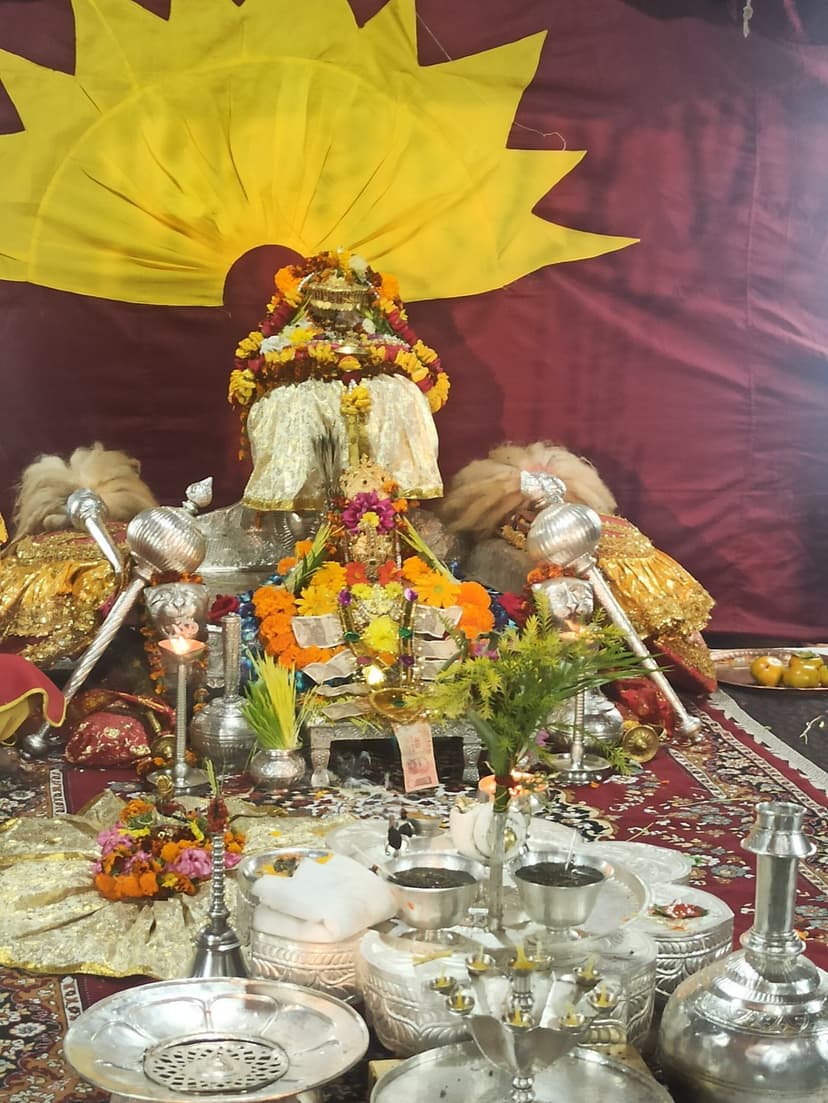
Mohalla and Lankadahan: how the week ends
The penultimate day is Mohalla, the big assembly, when the largest number of deities gather together on the maidan. It is the most crowded, most photographed day.
The last day is Lankadahan, the burning of Lanka. The rath is dragged from the maidan to a spot on the bank of the Beas, downriver toward Bhuntar, still called Lanka. A pile of thorn bushes, dry grass and twigs is burned there. That is the whole Ramayana climax, compressed into one small bonfire by a river, no effigy, no fireworks show. Then Raghunath is taken back to his temple, the gods start the long walk home to their villages, and the field empties.
The part the posters skip: the sacrifice question
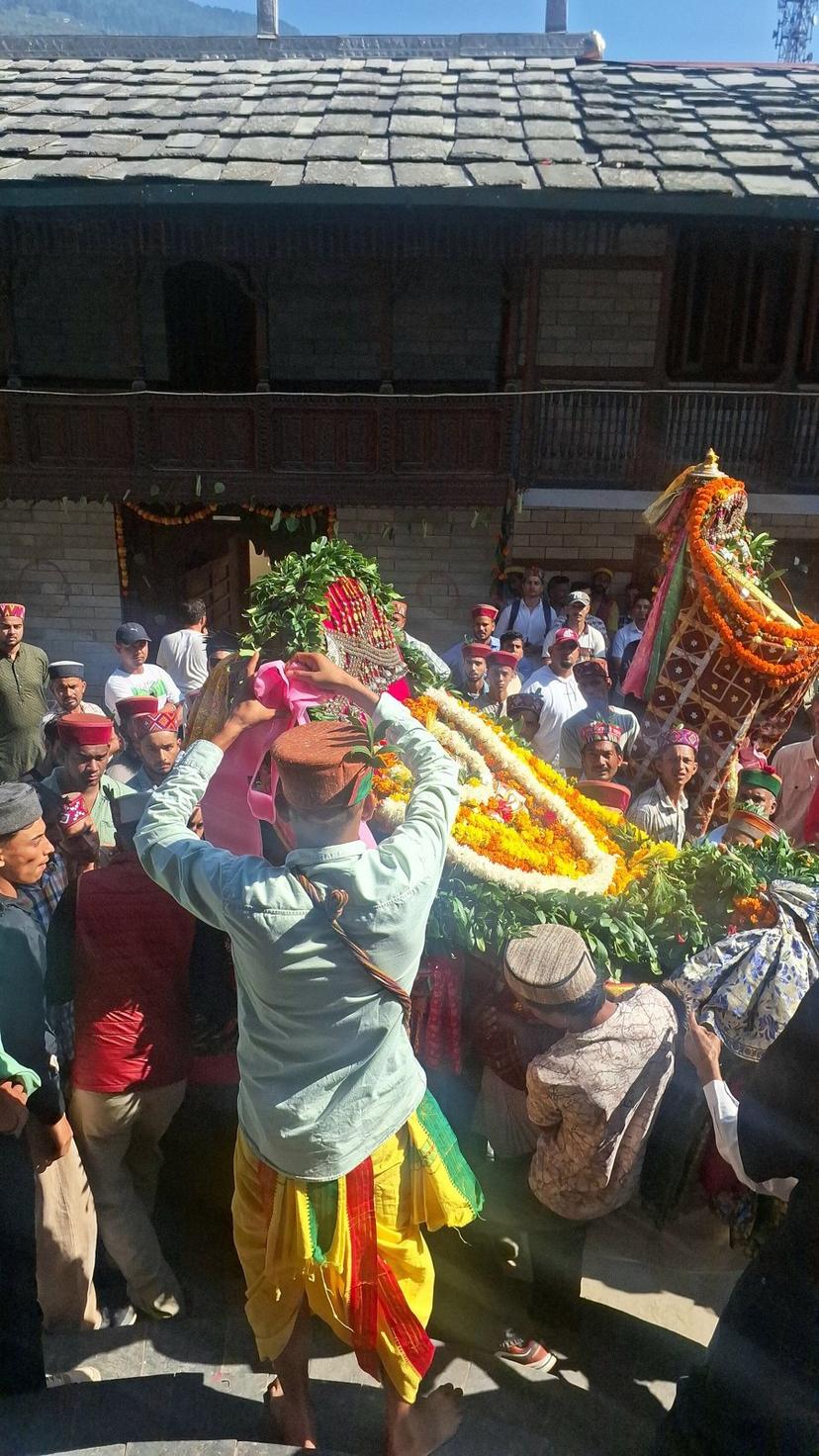
Here is the uncomfortable bit, and I am not going to skip it the way the brochures do. For centuries, Lankadahan day at Kullu ended with animal sacrifice. Five animals, traditionally, offered to appease the gods at the close: a buffalo, a sheep, a fish, a crab and a rooster.
In September 2014 the Himachal Pradesh High Court banned all religious animal sacrifice in the state, at every temple and public place of worship. At Kullu Dussehra the old ritual was officially replaced with coconuts and other symbolic offerings, and that is what you will mostly see at the public congregation now. The Supreme Court in 2017 allowed regulated slaughter in designated spaces, and reporting since then describes the sacrifice returning in a restricted, quieter form rather than the open public event it once was.
To understand why this is even a fight, you have to understand how Kullu sees its gods, and it is worth hearing locals say it rather than me. In a thread about a sacrifice at the Bijli Mahadev temple nearby, u/Ok-Path1964 wrote that his own father is a vegetarian who hates the practice, "but he knows that most devtas are of tamsic types, they will require animal sacrifices. Nature of devtas vary." Another, u/Ok-Lecture-5880: for people who follow Shiv or Shakti, "animal sacrifices are part of life. Even the brahmins eat the sacrificial meat as a prashad." And a vegetarian, u/_voma, refusing to make it simple: "I am a pure vegetarian but I am not someone who thinks that non-vegetarians are immoral. After all, our ancestors were all meat-eaters."
I am not going to tell you how to feel about it. I will tell you that it is real, that the law has changed what happens in public, and that the devta culture behind it is not a tourist prop you can dismiss. Go in knowing the fight exists.
How to actually do it in 2026
Kullu town, not Manali, is where this happens. People confuse the two constantly. Manali is 40-odd kilometres up the valley and has nothing to do with Dussehra beyond being where tourists sleep by mistake and then complain about the drive.
Getting there. Fly into Bhuntar if the fares behave, which they often do not; it is a small airport with unreliable schedules. The dependable way is road. An overnight Volvo or HRTC bus from Delhi to Kullu is roughly 12 hours, and you step off near Dhalpur itself. From Bhuntar airport it is an 11 km, 20-minute hop to Kullu.
Which days. This is where I trust the people who go every year over any official schedule. On r/HimachalPradesh, u/Bend-Pristine laid it out cleanly: "Starting days are best if you want to see rath yatra, and if you are into shopping then last 2-3 days are best, you can bargain easily." u/himanshu_sood said the same and added the money tip: "Book your room in advance near Bhuntar. Travel in buses to save money." So: go for day one if you want the chariot and the gods; go for the tail if you want the mela and cheap shawls. The middle is quieter.
Where to sleep. Kullu fills up and marks up hard during Dussehra week. The local move is to stay in Bhuntar, which is cheaper, and bus the 20 minutes into Kullu each day. In Kullu town itself, HP Tourism runs Hotel Sarvari and The Silvermoon; private hotels and homestays fill the rest. Book weeks ahead, not days.
- Day 1, Vijayadashami (20 Oct 2026): the rath yatra
Reach Kullu by afternoon. Evening rath yatra across Dhalpur, the gods assembling, deity camps lit up after dark. The single best day if you only have one. - Day 2 or 3: deity camps and the mela
Walk the camps in daylight, watch a Jaleb procession, do the trade fair and the cultural stage at night. Add a half-day climb to Bijli Mahadev if the weather holds. - Last days (25 to 26 Oct): Mohalla and Lankadahan
Mohalla is the fullest assembly and the best crowd photos. Lankadahan by the Beas closes it, and the shawl bargains are at their softest.
Want a Kullu-side read on which day to actually turn up for, given your dates and what you are there for, the gods or the mela? Email us your plan and we will tell you where to stand and where to sleep.
| Item | Cost | Note |
|---|---|---|
| Delhi to Kullu return | Rs 2,600-4,000 | Overnight Volvo or HRTC bus, per person |
| Stay, 2 nights | Rs 2,000-4,000 | Bhuntar guesthouse is cheaper than Kullu town |
| Food, local buses, entry | Rs 1,200-2,000 | Mela food is cheap; the festival itself is free |
| Shopping and extras | Rs 700-1,000 | Kullu shawls and caps, softest prices on the last days |
| Total | Rs 6,500-11,000 |
One etiquette rule that is not optional. The deity palanquins and their camps are not photo props, they are treated as living gods. Do not walk up to a devta or into a camp in your shoes, do not shove a lens in a bearer's face, and follow what the locals around you are doing. Feelings run genuinely high about this, more than a visitor tends to expect.
Frequently asked
When is Kullu Dussehra 2026?
It runs 20 to 26 October 2026, seven days. It begins on Vijayadashami, which is the day the rest of India finishes its Dussehra.
Why is there no Ravana effigy at Kullu Dussehra?
Because Kullu Dussehra is not a Ramlila re-enactment. It is a gathering of the valleys 200-plus village gods around Raghunath Ji, the idol of Lord Rama who is treated as the ruler of Kullu. There is no effigy burning at all. The nearest thing is Lankadahan on the last day, a small bonfire of grass and twigs by the Beas.
How many deities come, and where from?
More than 200 in most years, over 300 in some. They are carried on palanquins from home temples across Kullu valley, most of them arriving on foot down from the side valleys.
Where exactly is it held, Kullu or Manali?
Kullu town, at Dhalpur Maidan. Not Manali, which is about 40 km up the valley and has nothing to do with the festival.
How do I reach it?
Fly to Bhuntar (Kullu-Manali) airport, 11 km from Kullu, if schedules cooperate. More reliably, take an overnight Volvo or HRTC bus from Delhi, roughly 12 hours, straight to Kullu near Dhalpur.
Which days are best?
Day one for the rath yatra and the gods gathering. The last two or three days for the Mohalla assembly, the mela and the best shawl bargains. Locals say the opening and closing are the events; the middle is calmer.
Where should I stay?
Kullu fills up and prices spike during the festival. The local trick is to sleep in Bhuntar, which is cheaper, and bus 20 minutes into Kullu each day. HP Tourism runs Hotel Sarvari and The Silvermoon in Kullu town. Book weeks ahead.
Is animal sacrifice still part of it?
The Himachal Pradesh High Court banned religious animal sacrifice in 2014, and the old Lankadahan-day sacrifice was officially replaced with coconuts and symbolic offerings. A restricted, quieter form has been reported since a 2017 Supreme Court order, but the open public sacrifice of the past is no longer what you will see.
If you want the rest of the valley
Dussehra is one week. The gods, the dance and the practical stuff spill across a few other pieces we have written. For the dance that fills Dhalpur, read the story of the Kullu Nati and its 9,892-strong world record. For where this festival sits in the year, see the Himachal festival calendar for 2026 and the month-by-month best-time guide. If you are pricing a wider Kullu-Manali trip, the Kullu-Manali budget breakdown covers it, and if you are on the fence about Manali at all, here is what Reddit actually thinks.
Sources
Official and primary: Kullu Dussehra official portal, Government of Himachal Pradesh (history, rituals). Dates cross-checked against the Vijayadashami 2026 calendar (Dashami tithi, 20 October 2026).
Journalistic: The Statesman on the rath yatra opening the festival; The Tribune on Raja Ki Jaleb and the Dussehra sacrifice history; ETV Bharat and Himachal Guardian on the 2024-2025 openings; Library of Congress Global Legal Monitor and Business Standard on the 2014 Himachal High Court animal-sacrifice ban; The Statesman on the ritual returning in restricted form.
Traveller voices, verified on Reddit: r/HimachalPradesh threads on planning (u/Bend-Pristine, u/himanshu_sood), on the devta-weather belief (u/UpperValleyDude, u/Sorrowsorrowsorrow), and the Bijli Mahadev devta-sacrifice discussion (u/Ok-Path1964, u/Ok-Lecture-5880, u/_voma), all October to December 2025. Background: Wikipedia on Kullu Dussehra.
You Might Also Like
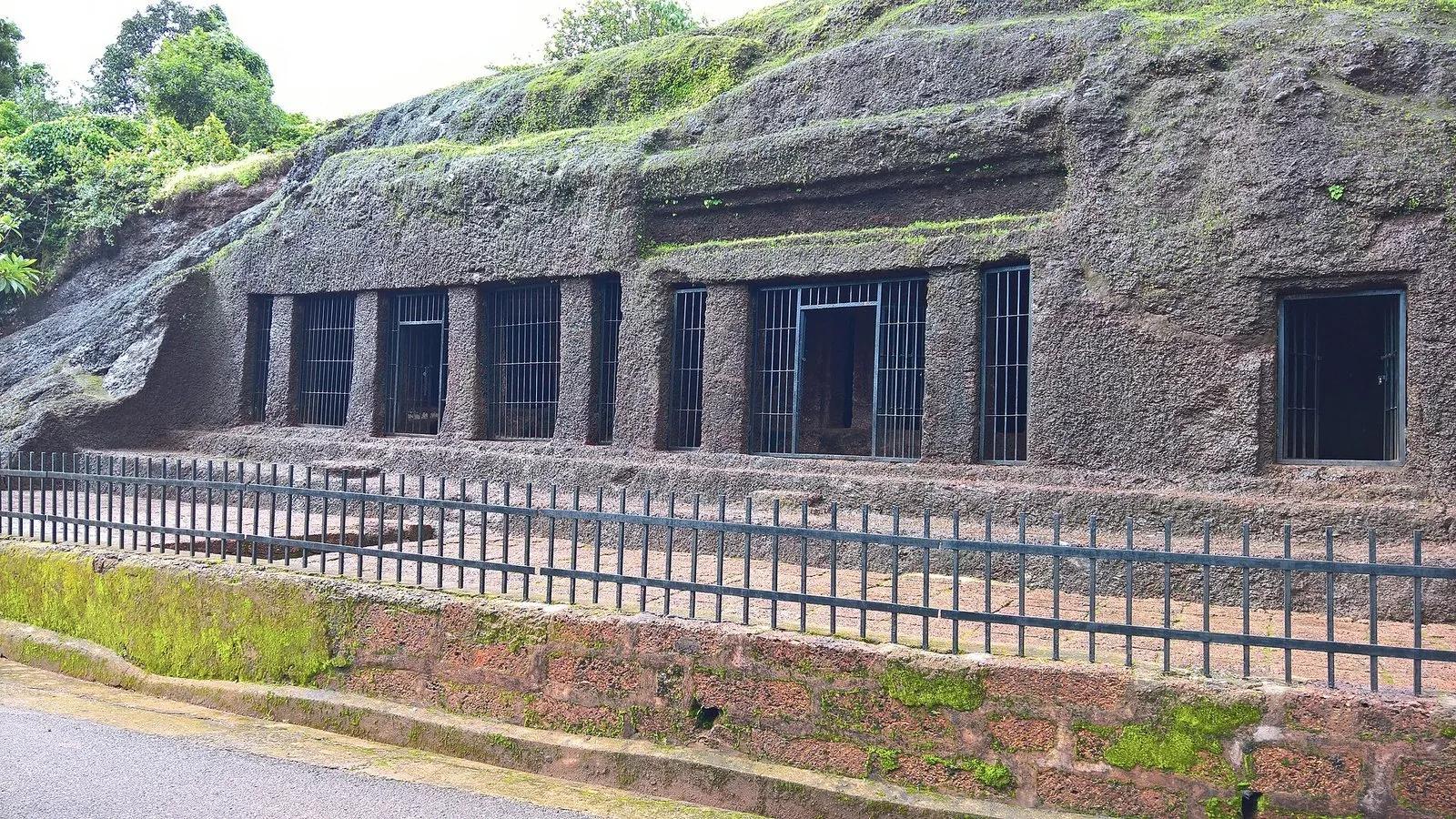
The Caves Before the Beaches: Ancient Rock-Cut Goa
An outsider's guide to North Goa's ancient rock-cut caves, carved into laterite long before the Portuguese: the Arvalem (Pandava) caves and their waterfall near Sanquelim, the Buddhist Lamgao caves near Bicholim, the rediscovered Khandepar caves near Ponda, and the even older Konkan rock carvings.
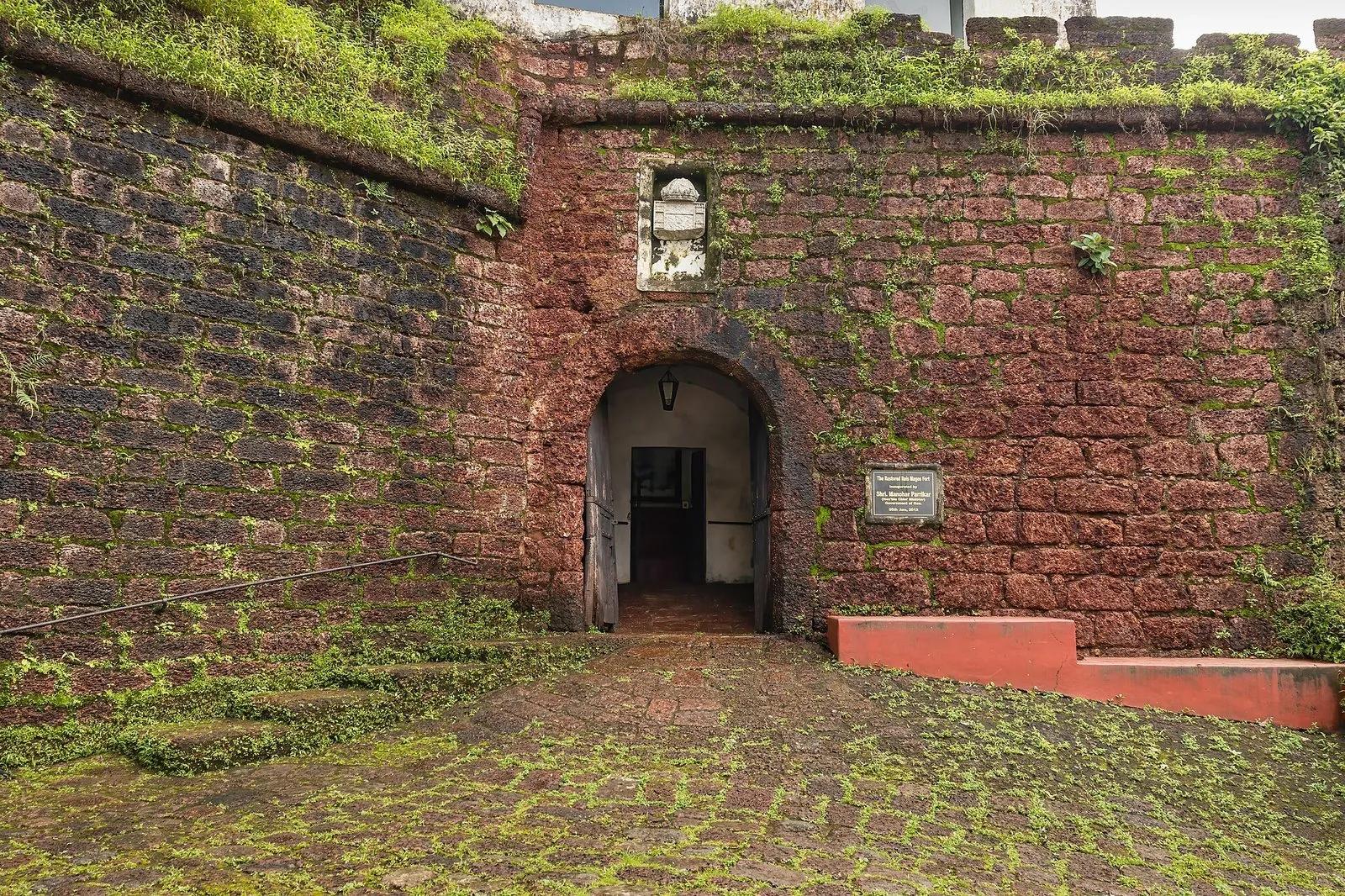
The Forts Nobody Photographs: North Goa Beyond Aguada and Chapora
An outsider's guide to five North Goa forts worth the detour beyond crowded Aguada and Chapora: restored Reis Magos you can walk into, the raw river ruins of Alorna and the island forts of Corjuem and St Estevam, and Tiracol, now a private hotel that locals say has shut them out.
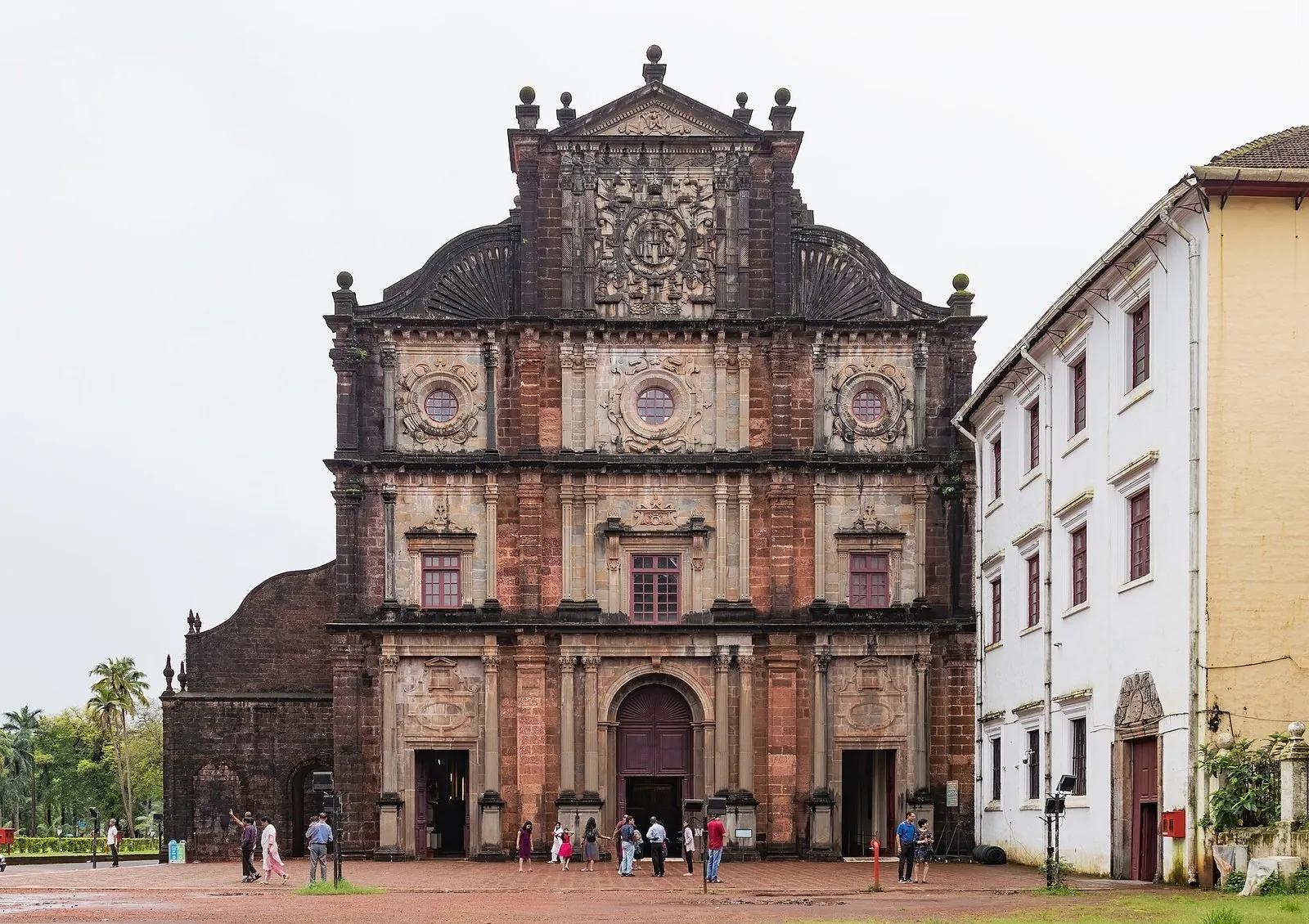
Old Goa: The 'Rome of the East' That Vanished (and How to Visit the Churches Well)
An outsider's honest guide to Old Goa: the Rome of the East, a city once bigger than Lisbon, emptied by cholera and left as churches in fields. Bom Jesus and St Francis Xavier, the Se Cathedral, the ones most people miss, and how to visit early, quiet and slow.