
Patrode and the Himachali Dishes Nobody Outside Has Heard Of
A man from coastal Karnataka went quietly viral on the Himachal subreddit a while back for being shocked in the nicest way. He had just worked out that patrode, the colocasia-leaf roll he grew up eating and had always taken for a secret of his own Tulu coast, is a Himachali dish too. Same broad arbi leaves. Same gram-flour paste rolled inside, steamed, then fried into pinwheels. Near enough the same name. He could not get over it, and reading the replies, half of Himachal could not either.
That mix-up is the doorway into the food this guide is about, and it is not the food the guidebooks sell you. Madra, siddu, a dham off a leaf plate: order all of it, it is wonderful, and our Himachali food guide already has it covered. This is the other menu. The dishes cooked in homes on an ordinary Tuesday, that change their name every valley, that reach neither a signboard nor an Instagram grid, and that Himachalis one district over have often never tasted. When one of them leans on something wild off the forest floor I will send you to our wild foods guide rather than tell that story twice.
Patrode: the dish that turned out not to be ours
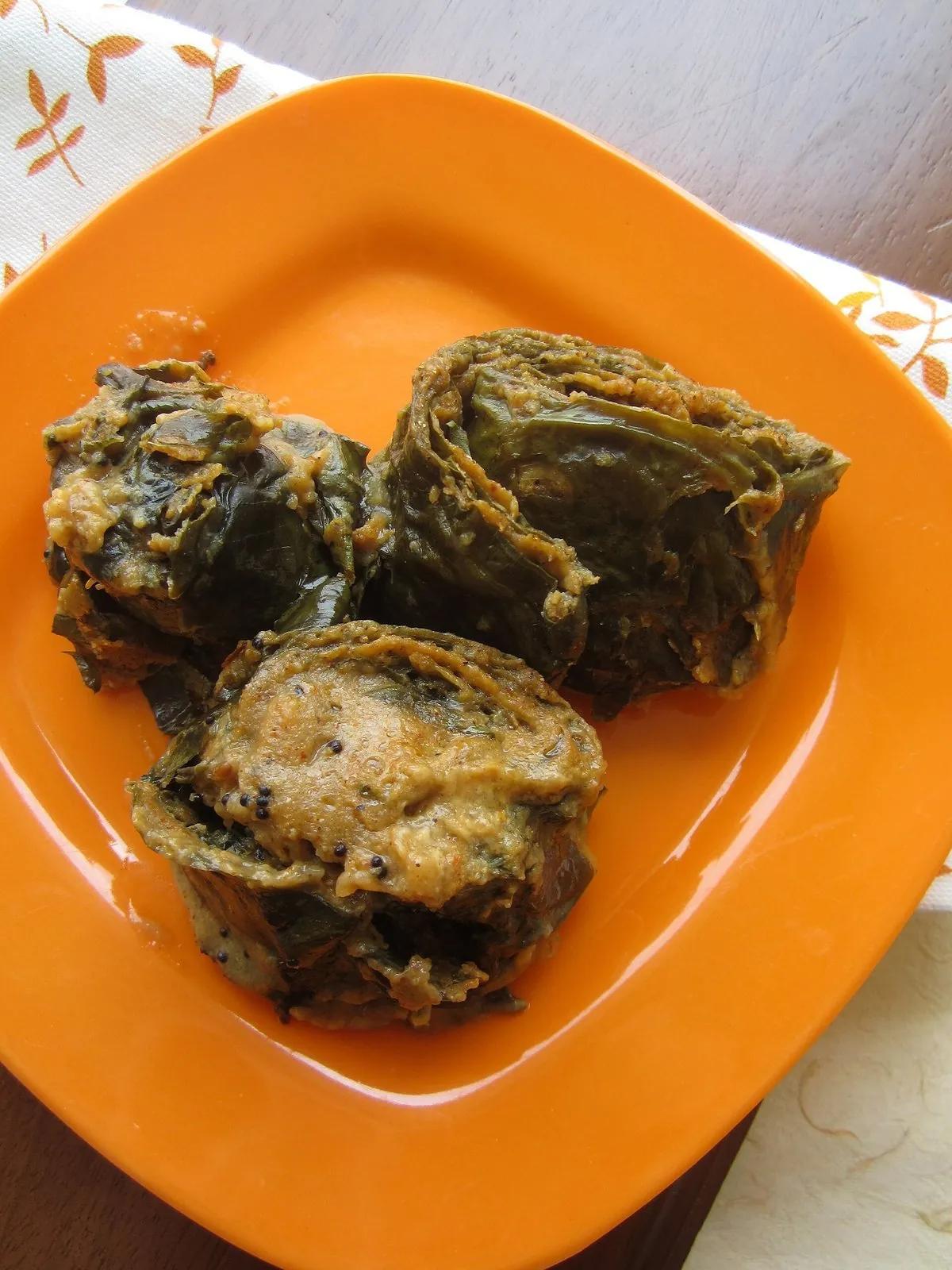
Back to that leaf roll, because it earns the billing. Arbi leaves. The big heart-shaped colocasia ones that grow in every damp corner of the hills. You smear them with a gram-flour paste loud with ajwain and chilli and something sour, roll them up tight, steam the roll firm, then cut it into coins and fry the coins till the edges catch. In Himachal it answers to patrode, or patrodu, or pateed, and every household swears blind its own version is the real one.
What our Karnataka friend ran into is that patrode feels intensely, specifically local wherever it is cooked, and is anything but. Maharashtra fries it as alu wadi. Gujarat steams it as patra. Bihar has its own, Uttarakhand says pataud or patyud, and plenty of Punjabis make it as pateed; one in that thread said her mother learned it from an aunt who had married into Himachal. One commenter put it better than any food historian could.
Every state and culture has grown to believe it is unique to them, and are surprised to know otherwise.
What is odd, and nobody has a clean answer for, is that the plains states right next door, Punjab and Haryana, mostly do not have it, while a state at the opposite end of the country does. The dish travelled by some route we have lost. I find that more interesting than any claim of ownership. Patrode is the doorway into Himachali home food precisely because it is the one dish that refuses to be only ours.
One dish, five names. One name, two dishes.
The naming is the thing to make peace with early, because it runs through everything that follows. Patrode alone is patrodu, pateed, pataud, patyud depending on which slope you are standing on. And it cuts the other way too. Say patande to someone in Sirmaur and they will not picture a colocasia roll at all; they will picture a thin sweet pancake of wheat flour, milk and sugar, a breakfast, closer to a crepe than to patrode. Same sound, different food.
A rule that will save you confusion in any Himachali kitchen: if a dish sounds unfamiliar, it is often a familiar dish wearing a local name, or a familiar name on an unfamiliar dish. Ask what is in it, rather than only what it is called. The recipe is more honest than the word.
Babru, and you had better ask which babru
Babru is the clearest example of the naming trap, because it is not one dish pretending to be two, it is genuinely two different foods sharing a name. Ask for babru in Shimla or Solan and you get a savoury thing, a kind of Himachali kachori: a paste of soaked black gram stuffed inside wheat dough and deep-fried, eaten with tamarind chutney or curd. Ask for it in Kangra and a grandmother will spread a sweetened wheat or rice batter on a hot tawa and hand you something closer to a pancake, made mostly at Holi and at weddings, eaten with mango pickle and a glass of tea.
| Babru in Shimla and Solan | Babru in Kangra and the lower hills | |
|---|---|---|
| What it is | A savoury fried kachori | A sweet tawa cake, near a pancake |
| Main ingredient | Black-gram paste in wheat dough | Sweetened wheat or rice batter |
| When you eat it | A snack, more or less any time | Mostly Holi and weddings |
| Eaten with | Tamarind chutney or curd | Mango pickle and chai |
Neither is wrong. Both are babru. If you want to start an argument in a mixed Himachali room, this is how you do it.
The breads that outrank the chapati
In the upper hills the chapati is the poor relation. The bread a family actually wants at dinner is bhaturu, a leavened wheat bread made from dough left to ferment, soft and slightly sour, and by common agreement better than a plain roti. The ferment is the trick: a starter called malera or treh, alive with wild yeast and lactic bacteria, the same quiet chemistry that leavens sourdough half a world away. Nobody in a Seraj kitchen calls it that. They just know the dough has to sit.
Its cousins are chilra, a leavened pancake of buckwheat or finger-millet flour that sometimes turns sweet with jaggery and cardamom, and marchu, another fermented bread of the high valleys. These are the everyday carbohydrates of Himachal, and they are absent from almost every food guide for the dull reason that a fermented brown flatbread does not photograph like a golden siddu. It should. It is better.
Seera, and the dishes going quiet
Some of this food is disappearing while we watch. Seera is the one that stays with me. It is a Kangra sweet, and it is absurd amounts of work: whole wheat soaked for two or three days until it ferments, ground, the starch settled out and separated from the bran, sun-dried into a pale powder, and only then cooked into something sweet. A Redditor writing from Kangra said it plainly, that seera is one of the snacks his mother used to make and has quietly stopped, because the effort outran the demand.
When I asked around for the dishes people's grandmothers made that no restaurant serves, the names came fast and then trailed off into uncertainty: Khairu, Childu, aenkliya from Bilaspur, a saag called redhu. I could not pin down a reliable recipe for several of them, and that is exactly the point. These are dishes held in a few ageing memories, not in any book. If your family cooks one, write it down. Our foraged-foods guide makes the same argument about the wild side of the larder.
The ordinary-week plate
Most home food is not festival food. It is quiet and cheap and built around whatever the kitchen garden is giving. A plate I love for how unremarkable it is: giya pakora with mani, slices of bottle gourd fried in a light batter, served with a simple dal and hot rotis. In some valleys the same fritters are ghiye de katlu. It is nobody's idea of a signature dish, and it is what a great many Himachali afternoons actually taste like.
Then there is aenn ka saag, a savoury saag cooked down from the leaves of the stinging nettle, the plant every hill child knows to avoid because it burns to touch. Cooked, the sting is gone and what is left is deep and iron-rich and faintly wild. It is one of a whole family of foraged greens that cross from the forest into the home pot; the gathering side of that story is in the wild foods guide. And underneath all of it, in the lower hills, sits khatta, the sour note, a whole category of dishes made deliberately tart to cut through a cold day.
The pot that makes it taste right
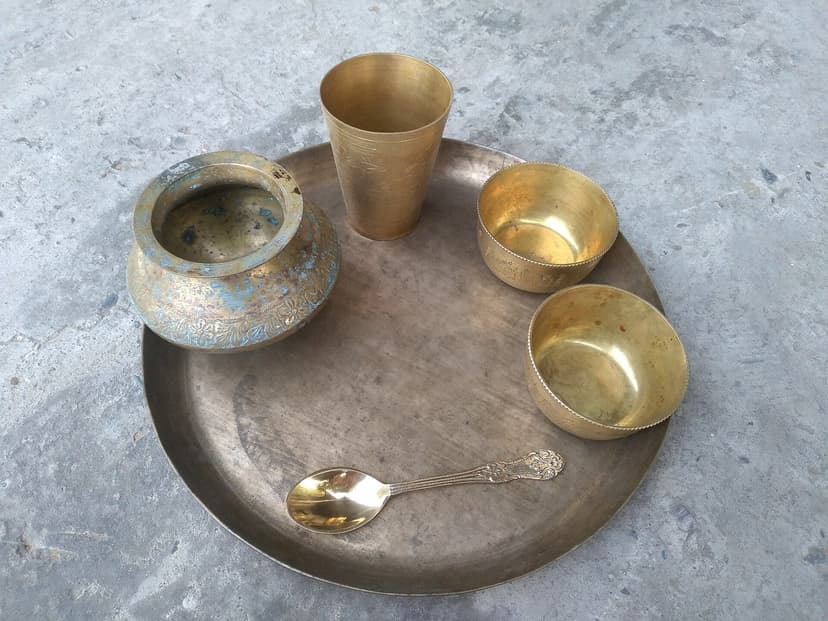
Here is a thing a food guide would never think to tell you: in Himachal the vessel is part of the recipe. The dham, the big communal feast, is not cooked in steel. It is cooked in a baltoi, a heavy brass pot with a round belly and a short narrow neck, thick-walled so it holds its heat and lets a madra tick over slowly for hours while it feeds two hundred people from a fire lit in a trench in the ground. The good ones are hammered by hand in Kangra and passed down like land.
Ask any pahadi dadi or nani, and she will tell you, madra just does not taste the same in anything else.
And, because nothing here escapes the naming problem, the baltoi is not the baltoi everywhere. In one valley it is a charoti. Up the Karsog side it is a tokni, and washing one after a dham is a two-person job nobody volunteers for. A smaller version is a bhadu. Same round brass belly, four different words, and a shared conviction that the food is worse without it.
Even the famous dish splits down the middle
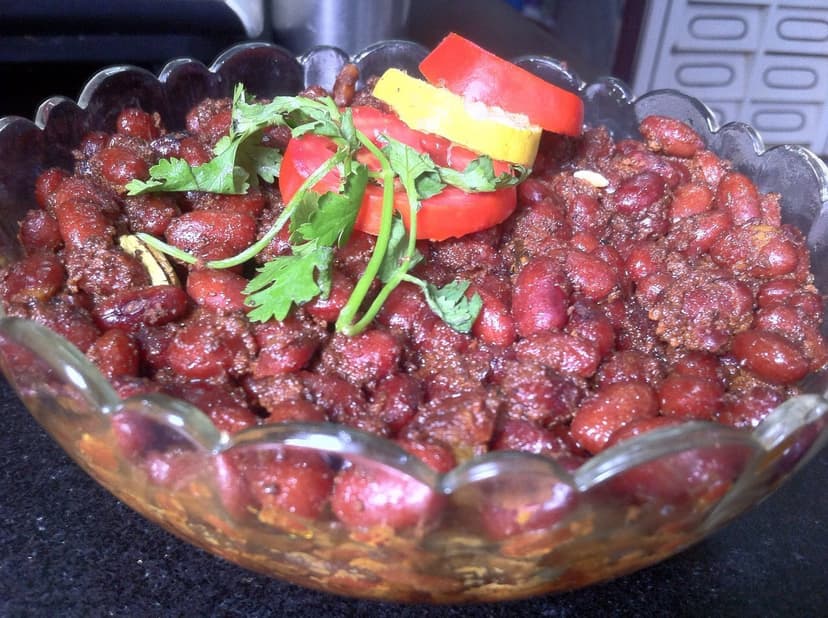
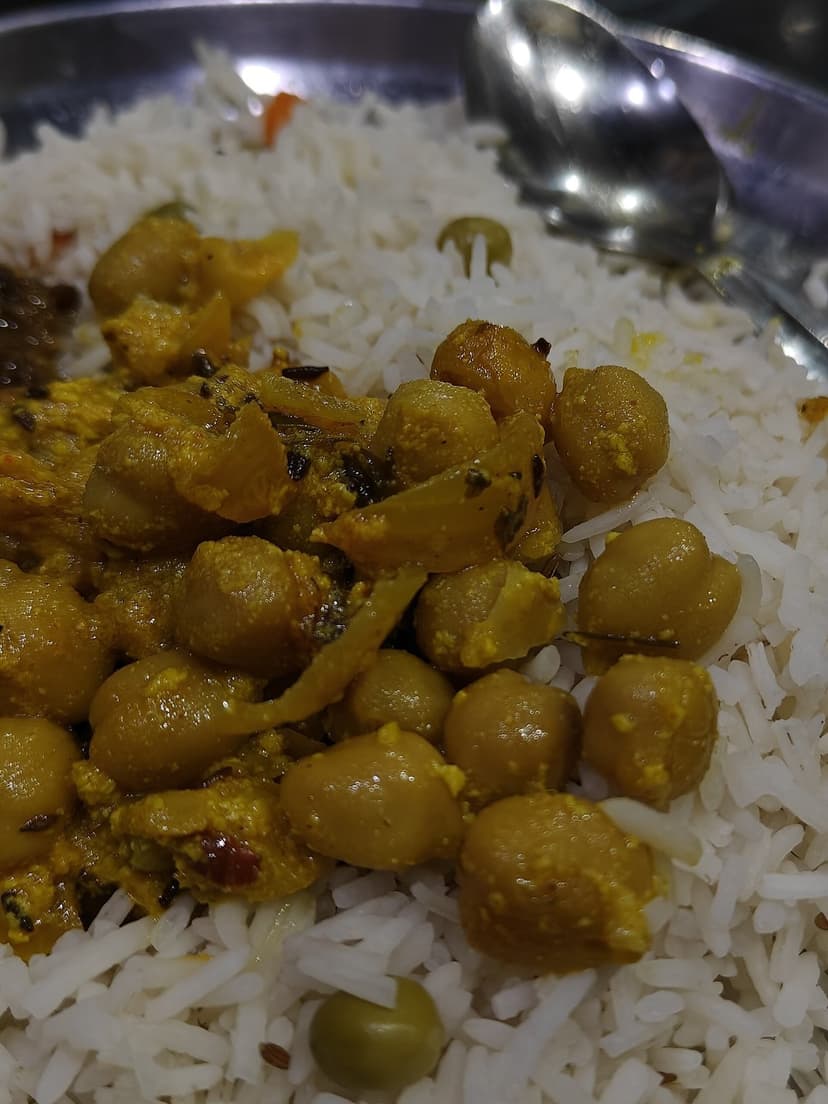
Madra is famous enough to be in the food guide, so I will only tell you the part that guide skips: there is no single madra. In Chamba, madra is built on rajma, the small dark kidney beans that grow well up there, slow-cooked in a yogurt gravy until they go soft and tangy. Carry the dish south into Kangra, where rajma did not grow easily, and it quietly became a chickpea dish instead. The story locals tell is that the brides of Chamba married into Kangra and brought madra with them, and it changed to suit what the new soil could give. Even the beans in your madra carry a small piece of geography. The wider dham story, region by region, is in our seven dhams guide and the Boti chefs who cook them.
A home kitchen, through the year
None of this food is random. It follows the season and the festival calendar as closely as the farming does. Roughly, a Himachali home year on a plate looks like this.
- Spring, and Holi
Babru comes out on the tawa, sweet in Kangra, and the years first real festive cooking begins. Weddings through spring and summer bring out the baltoi and the dham. - Monsoon
Patrode season, when the colocasia leaves are broad and green and the arbi is thriving on the wet slopes. Nettle for aenn ka saag comes off the same rain-fed banks. - Autumn and harvest
New rajma and hill dals come down from the high villages, the beans that make a madra taste of a particular place. The larder fills for winter. - Winter
Khatta and the sour dishes that cut through the cold. And seera, if there is a grandmother left with the patience for three days of soaking and grinding.
A quick glossary, so you can order
- Patrode
- Colocasia leaves rolled with gram paste, steamed then fried. Found across India under other names.
- Babru
- One name, two dishes. A fried black-gram kachori in Shimla, a sweet Holi tawa-cake in Kangra.
- Bhaturu
- Leavened, fermented wheat bread. The upper-Pahari dinner staple, and better than a chapati.
- Chilra
- A leavened pancake of buckwheat or finger-millet flour, sometimes sweetened with jaggery.
- Seera
- A Kangra sweet of fermented, sun-dried wheat starch. Days of work, and slowly disappearing.
- Giya pakora with mani
- Bottle-gourd fritters with a plain dal. The ordinary-week home lunch.
- Aenn ka saag
- A savoury saag cooked from stinging-nettle leaves, the plant everyone calls bichhu booti.
- Baltoi
- Not a dish. The round-bellied brass pot a dham is cooked in, an heirloom, also called charoti or tokni.
- Madra
- A yogurt-based bean curry. Rajma in Chamba, chickpea in Kangra. Never the same twice.
How to actually eat any of this
This is the hard part, and I will be honest about it. Almost none of these dishes are on a restaurant menu, because they were never restaurant dishes. Your real routes in are three. Get invited to a dham, at a wedding or a temple fair, which is the one place you will reliably eat madra out of a baltoi. Stay in a family homestay and ask, a day ahead, whether they will cook babru or patrode for you rather than the tourist thali; most will be quietly delighted to be asked. Or go to one of the handful of kitchens now cooking this food on purpose, which our cafes guide and the dham guide point you toward.
Planning a Himachal trip and want to actually eat like this rather than off a menu? Tell us where you are headed and we will point you at homestays and dham dates in that valley, and warn you which famous dish is worth skipping for the home version.
Do it before too many of these recipes go quiet for good. The food that never made the guidebook is the food most worth chasing, and the surest way to keep it alive is to ask for it, eat it, and tell someone. Travel here in a way that gives back to the people cooking it, the way our quiet-travel manual asks.
Common questions
Is patrode only a Himachali dish?
No, and that is the fun of it. The same colocasia-leaf roll exists across India: alu wadi in Maharashtra, patra in Gujarat, pataud or patyud in Uttarakhand, pateed among Punjabis, and pathrode in coastal Karnataka. Curiously it is rarer in the plains states right next to Himachal.
What is the difference between babru in Shimla and babru in Kangra?
They are two different dishes with one name. In Shimla and Solan babru is a savoury fried kachori stuffed with black-gram paste, eaten with chutney or curd. In Kangra it is a sweet tawa cake of sweetened batter, made mostly at Holi and weddings, eaten with mango pickle and chai.
What is bhaturu?
Bhaturu is a leavened, fermented wheat bread from the upper hills of Himachal, soft and slightly sour, made from dough raised with a wild-yeast starter called malera or treh. It is the everyday dinner bread of the high valleys, widely considered better than a plain chapati.
What is a baltoi?
A baltoi is the heavy round-bellied brass pot that a dham feast is cooked in, thick-walled so it holds heat for slow cooking over a fire trench. Handmade in Kangra and treated as an heirloom, it is also called a charoti, a tokni around Karsog, or a bhadu in a smaller size.
Why does Kangra madra use chickpeas and Chamba madra use kidney beans?
Madra in Chamba is made with rajma, the kidney beans that grow well there. When the dish moved south to Kangra, where rajma did not grow easily, it shifted to chickpeas. Local lore credits Chamba brides who married into Kangra and brought the recipe with them.
What is seera?
Seera is a labour-intensive Kangra sweet made from wheat that is soaked for two to three days until it ferments, then ground, the starch settled out and sun-dried, and finally cooked into a sweet dish. Because it takes so much work, fewer families still make it.
Where can I eat these home dishes as a traveller?
Rarely in restaurants. The best routes are getting invited to a dham at a wedding or temple fair, asking a family homestay a day ahead to cook babru or patrode instead of a tourist thali, or seeking out the small kitchens now serving traditional Himachali food on purpose.
What is the difference between siddu and patrode?
They are unrelated. Siddu is a steamed, stuffed wheat-flour bread eaten with ghee. Patrode is colocasia leaves rolled with spiced gram paste, steamed and then fried. Siddu is famous and on menus everywhere; patrode is a home dish you mostly eat in someones kitchen.
Sources and a note on this guide
I grew up in the Kullu valley, where a fair amount of this is simply what was on the table, but Himachali home food changes so much valley to valley that no one person eats all of it. The dishes and regional variations here are drawn from academic surveys of Himachali traditional foods, from journalism on the state's cookware and cuisine, and above all from Himachalis on r/HimachalPradesh naming what their families cook, all linked or cited through the piece.
- Fermented breads (bhaturu, chilra, marchu) and seera fermentation: academic studies of traditional Himachali foods and dham (IJCRT; ScienceDirect).
- The baltoi and charoti brass vessels: reporting on India's regional cookware (Scroll).
- Babru variants, patande, aktori, and the Chamba-versus-Kangra madra split: Himachali cuisine writing and recipe sources.
- Patrode across India, and the disappearing home dishes: attributed r/HimachalPradesh threads, linked inline.
Written by Rajesh Thakur. Where a dish name or recipe varies by valley I have said so rather than pick a winner, and where I could not verify a dish I have named it as a name, not a fact. If your family cooks something that is not here, that is the whole point, and I would like to know about it.
You Might Also Like
The Best Seafood in North Goa Isn't at the Beach Shacks
An outsider's honest guide to seafood in North Goa: why the best Goan seafood is the fish thali at local canteens, not the tourist beach shacks, what to actually order, the named places locals rate, and the one rule that decides it all, fresh fish and the monsoon fishing ban.

Live Music in North Goa: The Human Scene Behind the Raves
An outsider's honest guide to North Goa's live-music scene beyond the EDM raves: the deep beat-show heritage, the two live-band zones (the Vagator-Candolim bar circuit and the Arambol-Mandrem jam belt), why it's mostly cover bands, and how to actually find a gig.
Goa's Pottery, Old and New: The Kumbhar Potters and Where to Throw Your Own
An outsider's honest guide to pottery in North Goa: the red-clay Kumbhar craft around Bicholim, the well-reviewed studios near Mandrem, Ashwem and Divar where you can throw your own pot, and the revived azulejo tiles of Panjim, with a straight note on why this scene lives on Instagram, not Reddit.