Goa's Khazan Lands: A Walk Through the Wetland Heritage the Beaches Hide
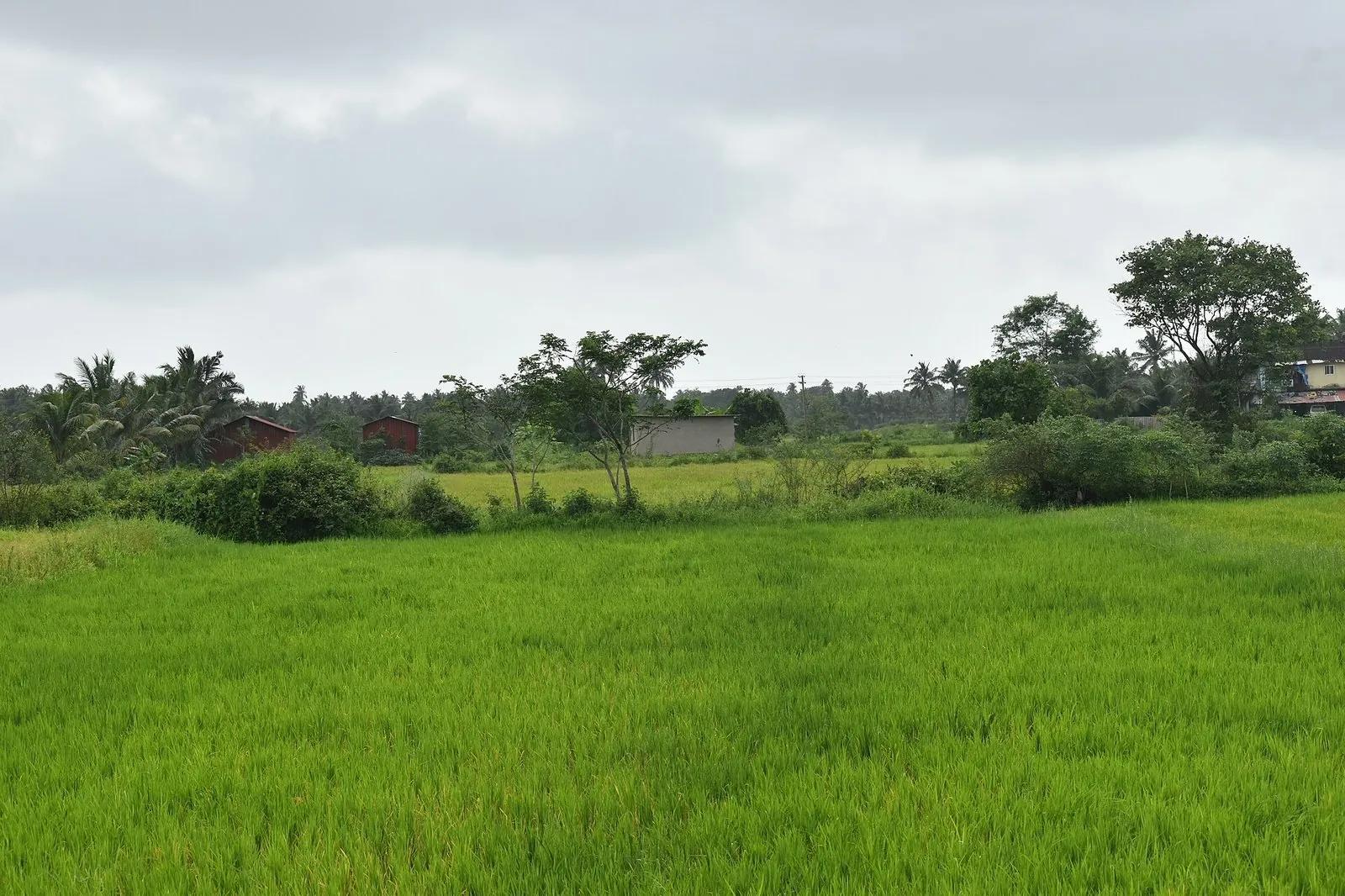
Stand on a low earth bank at dawn somewhere in the Goan interior, a village like Moira or Aldona, and you would be forgiven for thinking you were looking at nothing much. Flat green rice fields on one side. A muddy tidal channel on the other. A squat old stone gate between them where the water slides through. A pair of otters cuts a V across the channel and is gone. An egret lifts off. It looks like ordinary countryside. It is, in fact, one of the most sophisticated pieces of traditional engineering in India, five hundred years old and quietly keeping the sea out of the fields while you watch.
These are Goa's khazan lands, and almost no visitor ever hears the word, let alone walks them. I do not live in Goa, so I have leaned on the people and sources who know these lands, Goan writers, ecologists and residents, rather than my own boots. But it is worth knowing about, because the khazans are the deepest, least-touristed layer of the Goa this whole series is about, the one behind the beaches, and there is now a guided walk that takes you into them with a wildlife biologist. This is what they are, what you see, and why they matter more than their flatness suggests.
Five hundred years of keeping the sea out
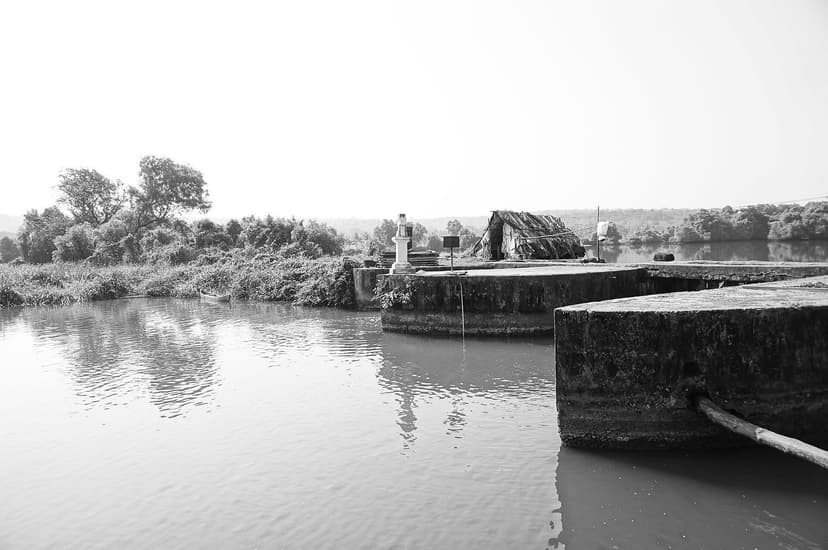
A khazan is farmland reclaimed from tidal saltwater floodplain, and the system that makes it possible is genuinely ingenious. Centuries ago, Goan communities raised earth embankments, called bunds, along the estuaries to hold back the sea, and cut channels, poiems, around the fields inside. Where a bund meets the water, they set a sluice gate that works as a one-way valve: at high tide it lets a controlled pulse of brackish water and young fish into the channels, then closes as the levels equalise; at low tide it opens outward to drain, and a net across the gate catches the fish on their way out. According to journalism on the system in Down To Earth, the whole thing is best described as a topo-hydro-engineered agro-aquacultural ecosystem, run for centuries without a single pump or motor.
What it produces is the Goan plate itself. Salt-tolerant rice grows in the desalinated fields, vegetables on the bunds, and fish, crabs and prawns come in free with the tide, which is why the classic primer on Goan life, the book a Goan on Reddit rightly pointed me to, is literally titled Fish Curry and Rice. The outer bunds grow mangroves, which the farmers kept deliberately because they knew them as fish nurseries and wave-breakers. And the whole estate was traditionally managed not by individuals but by the village collective, the comunidade, which maintained the bunds and gates and leased out the farming and fishing rights. It is, in other words, a five-century-old lesson in living with an estuary instead of concreting over it.
- What a khazan is
- Low-lying farmland reclaimed from tidal saltwater floodplain by earth bunds and sluice gates; a traditional Goan agro-aquaculture system centuries old.
- How it works
- Sluice gates in the bunds act as one-way valves, letting the tide and young fish into channels (poiems), then draining and netting the fish. No pumps, all tidal.
- What it produces
- Salt-tolerant rice, vegetables on the bunds, and fish, crabs and prawns with the tide. Fish, curry and rice, quite literally.
- The wildlife
- Smooth-coated otters (ude in Konkani), marsh crocodiles, and many wading and water birds; mangroves on the outer bunds act as fish nurseries.
- See it
- Bardez khazan villages like Moira and Aldona, and Chorao island where the fields meet the Salim Ali bird sanctuary. Best on a guided walk.
Walking the khazans with a biologist
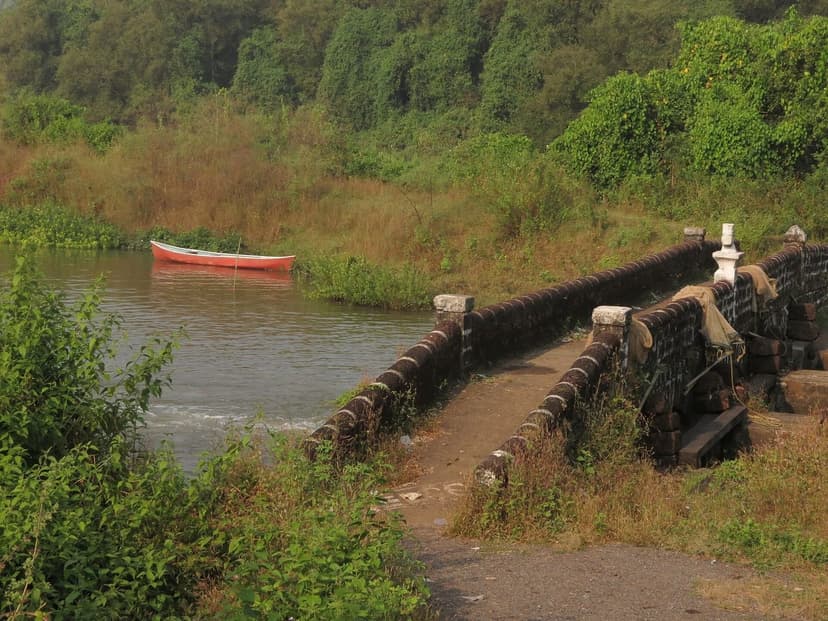
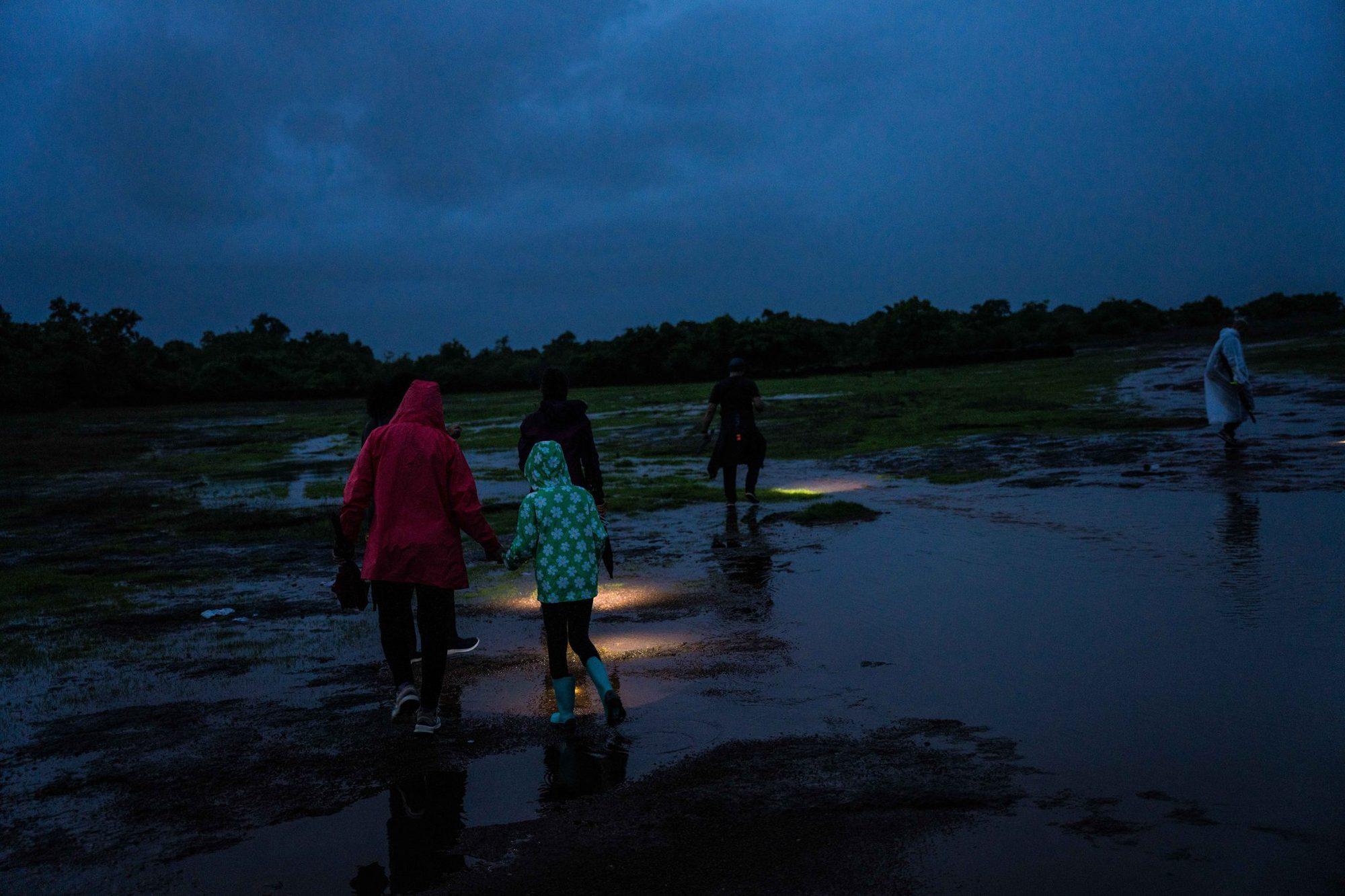
The reason to go with a guide, and specifically with someone who knows the ecology, is that a khazan gives up almost nothing to a visitor who does not know what they are looking at. Left alone you see fields and a gate. Walked with a naturalist you see a working machine and a food web: why that gate faces the way it does, which bird is fishing the drain, what the crabs are doing in the mud, where the otters lie up. One local operator, Beatroute Explorers, runs exactly this, a guided Khazan Land Walk led, per their own listing, by a wildlife biologist, tracing the waterways and the bunds and reading the flora, fauna and the cultural history of the system as you go.
It is gentle walking, flat and slow, on bunds and field edges, and it is the opposite of a checklist. The pleasure is in the detail and the quiet, an estuary going about its business at the pace it has kept for five hundred years. Go early, when the light is low and the birds are feeding and the heat has not arrived, wear shoes you do not mind getting muddy, and expect to stand still a lot. What you take away is not a photo of a monument but an understanding of how a whole landscape works, which lasts longer.
The otters, and why locals keep quiet about them
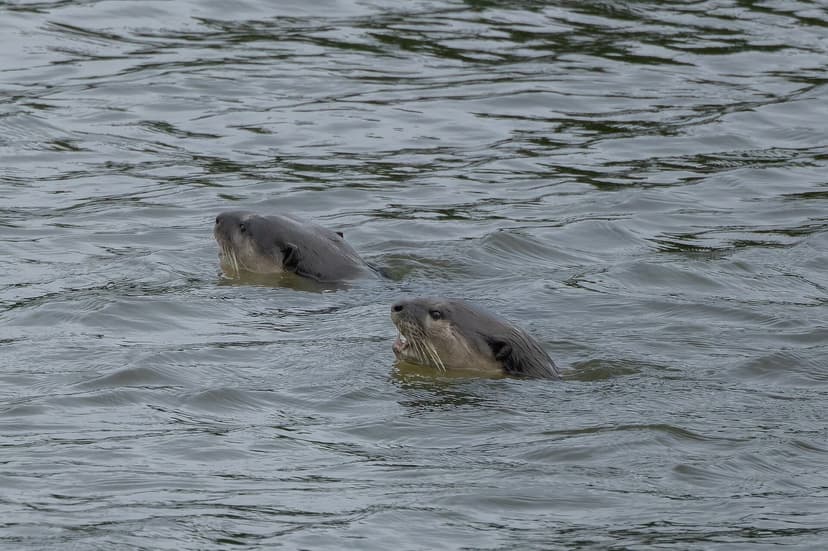
The animal everyone hopes to see is the otter, and the khazans and their channels are exactly where smooth-coated otters live. Goans have a soft spot for them and their own word for them; on one Reddit thread a user explained that the Konkani is ude, and that his aunt remembered them coming, when she was young, to eat the fish the family farmed in the fields, a memory that is really a description of the whole khazan food web in one sentence. Another marvelled that otters had thrived in his neighbourhood over the last couple of years, wondering if the lockdown quiet had helped the ecosystem heal.
They are also, still, a rare sight, and Goans are protective of them in a way worth honouring. When someone posts an otter photo, the most upvoted reply is often not admiration but a request.
Please, no disclosing location, for the sake of the otters.
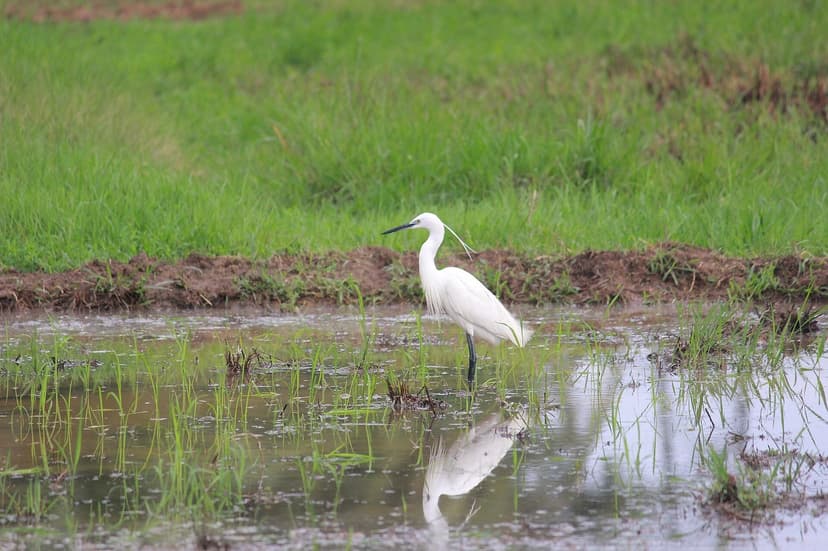
That is the tone to take the whole khazan seriously in. It is not only otters: the fields are worked by egrets, herons, kingfishers and, in winter, migratory birds, which is why Goan birders quietly rate this habitat, and the channels hold marsh crocodiles too, one more reason to walk with a guide and keep your distance from the water's edge. See what you see, keep the noise down, do not geotag the exact bend where the otters were, and let the place stay the way it is.
Why the khazans are disappearing, and who is saving them
Here is the part that turns a pretty walk into something worth caring about. The khazans are in trouble. The old comunidade system that maintained the bunds and gates has largely broken down, and, as the Down To Earth reporting lays out, unmaintained bunds breach, the sea comes back, and fields that could feed a village slide into disuse. Worse, the neglect gets weaponised. On a Reddit thread about fields being burned, one Goan cut through the panic to name the real danger, that the genuine land-grab is happening in the mangrove and khazan areas, where wetlands are quietly dried out and the mangroves killed so the land can be reclassified as barren, and then built on.
It is worth being fair about what you see, though, because not every fire is a conspiracy. Several residents on that same thread pointed out that farmers routinely burn old stubble and that fire departments do controlled burns of dry grassland, and that assuming every column of smoke is a builder is its own kind of ignorance. The honest picture is a slow, uneven decline, not a single villain. And against it there is real hope: another thread carried a local report of a group, Goencho Ekvott, helping village youth plough paddy fields in Pale and Velsao that had lain fallow for more than twenty-five years. Walking the khazans, valuing them, spending a morning and some money on them, is a small piece of the same impulse, the recognition that this is a landscape worth keeping.
The Khazan Land Walk is run by Beatroute Explorers, a small local operator, and led by a wildlife biologist who reads the ecology and the heritage of the system as you walk. The walk itself is booked directly with them; their other guided experiences, and the wider low-impact set, are on the North Goa things-to-do page. Whichever you pick, it is the same low-impact, local-guide way of meeting the quiet Goa.
Where a khazan morning fits
A khazan walk is a half-day and a mindset, not a headline sight, and it belongs with the rest of the quiet, inland Goa rather than the coast. It pairs naturally with the water: do a backwater and mangrove kayak through the same estuary one morning and a khazan walk another, and you have seen the Goan wetland from the water and from the bund, which is the whole of it. It is the deepest cut of the argument this series keeps making, that the Goa worth the trip is the one the beaches hide.
Base inland or near Panjim, give a slow morning to the khazans with someone who can read them, and treat the fields with the same respect the otters get. For the wider case on the quiet Goa and how to travel it lightly, there is a companion piece on whether Goa is overrated. The khazans are the answer at its quietest: not a view to tick off, but a five-hundred-year-old working landscape that rewards anyone willing to slow down and look.
Common questions
What are the khazan lands of Goa?
Khazans are low-lying farmlands reclaimed from tidal saltwater floodplain along the estuaries of Goa, using earth embankments (bunds) and sluice gates. The gates act as one-way valves that let the tide and young fish into channels around the fields, then drain them, so the same land grows salt-tolerant rice, vegetables on the bunds, and fish and crabs from the tide. It is a centuries-old, pump-free agro-aquaculture system, traditionally managed by the village comunidade.
Can you visit or walk the khazan lands?
Yes, and a guided walk is by far the best way, because the system gives up little to someone who cannot read it. Beatroute Explorers, a local operator, runs a Khazan Land Walk led by a wildlife biologist through the bunds and waterways, explaining the engineering, the ecology and the history. It is gentle, flat walking, best done early in the morning; wear shoes you do not mind getting muddy.
What wildlife can you see in the Goa khazans?
The star is the smooth-coated otter, called ude in Konkani, which lives in the channels; the fields and mangroves are also worked by egrets, herons, kingfishers and, in winter, migratory birds, and the waterways hold marsh crocodiles. The mangroves on the outer bunds act as fish nurseries. Go with a guide, keep your distance from the water for the crocodiles, and do not disclose otter locations, which locals ask visitors to protect.
Where are the best khazan lands to see in North Goa?
The Bardez villages inland of the coast, such as Moira and Aldona, have classic khazan fields, bunds and sluice gates along the rivers, and Chorao island in the Mandovi is where khazan fields meet the Salim Ali Bird Sanctuary. These are working agricultural landscapes rather than ticketed sights, so a local guide both helps you understand them and keeps you on the right paths.
When is the best time to walk the khazans?
Early morning, for the light, the cool and the feeding birds and otters, in any season. The fields are greenest in and just after the monsoon, roughly June to October; the drier months are easier underfoot. Whenever you go, it is slow, quiet walking best taken at dawn, and it rewards standing still and watching far more than covering ground.
Why do the khazan lands matter?
They are a five-hundred-year-old example of living with an estuary rather than concreting over it, producing rice, fish and vegetables from the same reclaimed land without pumps, while sustaining mangroves and wildlife. They are also under threat: as the traditional comunidade management has broken down, bunds breach and some wetlands are deliberately dried out to be reclassified and built on, though local groups are also reviving long-fallow fields. Valuing and visiting them respectfully is part of keeping them.
Is the khazan walk suitable for families and beginners?
Yes. It is flat, gentle walking on bunds and field edges, with the pace set by observation rather than distance, so it suits families, beginners and anyone who can walk a few slow, sometimes muddy kilometres. The main requirements are an early start, closed shoes, sun and insect cover, and the patience to stand still and let a guide show you what is there.
How does a khazan walk compare to a Goa beach day?
It is the opposite, and deliberately so. Instead of crowds, shacks and jet skis, you get a quiet estuary, working fields, otters and birds, and an understanding of a landscape most visitors never notice. It is a half-day for the curious rather than a headline attraction, and it pairs well with a backwater kayak to see the same wetland from the water as well as the bund.
Sources and a note on this guide
I write for Refuje and I do not live in Goa. The workings of the khazan system and its decline are drawn from published sources on it; the Konkani name for the otter, the otter-protection request, the land-conversion warning and its counter-arguments, and the fallow-field revival are from Goans on r/Goa, quoted and attributed as they appear. Nothing here is a first-hand claim of mine, and the details of the walk are as its operator describes them. The facts were checked in July 2026.
- How khazans work (bunds, sluice gates, poiem channels, tidal fish capture, mangroves as nurseries, comunidade management) and their contemporary decline: reporting in Down To Earth ("Mangroves and Khazan agriculture: Sustaining Goa's promise for fish, curry and rice") and the Sahapedia essay "The Khazans of Goa: A Socio-Cultural Perspective"; the Goan primer "Fish Curry and Rice" (ed. Claude Alvares) as a wider reference.
- The Konkani word ude and otters eating farmed fish, the otters-thriving and no-disclosing-location comments, the mangrove-and-khazan land-conversion warning and the controlled-burn counterpoints, and the Goencho Ekvott fallow-field revival: attributed r/Goa threads, quoted inline.
- The Khazan Land Walk, its wildlife-biologist guide and format: Beatroute Explorers' own listing (beatroutexplorers.fun), described as offered, not endorsed.
Access to working farmland, tides and which fields are active change, so go with a local guide and follow their lead. If you are from Goa and think this gets your khazans wrong, that is the correction it should carry, so tell us.
You Might Also Like
Edge City India 2026: The Practical Guide
Three weeks in Mandrem, North Goa. October 11 to November 1, 2026. Hundreds of founders, researchers, engineers, and creators living and building on a stretch of beach that is usually known for yoga retreats and quiet cafés, not hackathons. If you have applied, or you are wondering whether you...
Solo Female Travel in Goa: An Honest Safety Guide
An honest, balanced safety guide for women travelling to Goa alone: why it's comparatively safe and loved by many yet has a real, worsening harassment problem concentrated on the party beaches, where to base for a calmer trip, and the practical choices that tilt the odds in your favour.

Working Remotely from North Goa: The Honest Digital-Nomad Guide
An outsider's honest guide to working remotely from North Goa: why it isn't the beach-office of the photos, the power-and-internet problem that decides everything, where to base (Assagao, Siolim, Caranzalem), the cost, solo-female safety, and how to be a good guest rather than a coloniser.