Yoga Teacher Training in Goa: The Honest Guide (Cost, Goa vs Rishikesh, and Whether It's Worth It)
Go to the Arambol-to-Mandrem stretch of North Goa in December and you will find, tucked behind the beach, a few hundred people in the middle of a month they hope will change their lives. They are doing a yoga teacher training. A 200-hour course, three or four weeks of it, and this coast is one of the busiest places on earth to sign up for one. The appeal is easy to see. It costs a fraction of what the same month runs in the West, the weather is warm, the sea is right there, and you finish holding a certificate that lets you teach yoga more or less anywhere. Most of that pitch is true. But a training is a real decision, a month of your life and a good chunk of money, and there are a couple of things the glossy brochures leave out. Better to know them before you book than after.
I write for Refuje and I do not live in Goa, and I am not a yoga teacher. This is drawn from the schools and the certification bodies, and from the people on r/yoga and r/Goa who have actually done a training and are honest about what it did and did not give them. The short version is this. A Goa training is the pleasant, beachy version of a thing you could also do more intensely up in Rishikesh; the certificate at the end is easier to get than it sounds; and it will almost certainly not turn you into a working yoga teacher, though it may do something quieter and better than that. Here is how to think about it.
What a 200-hour actually is
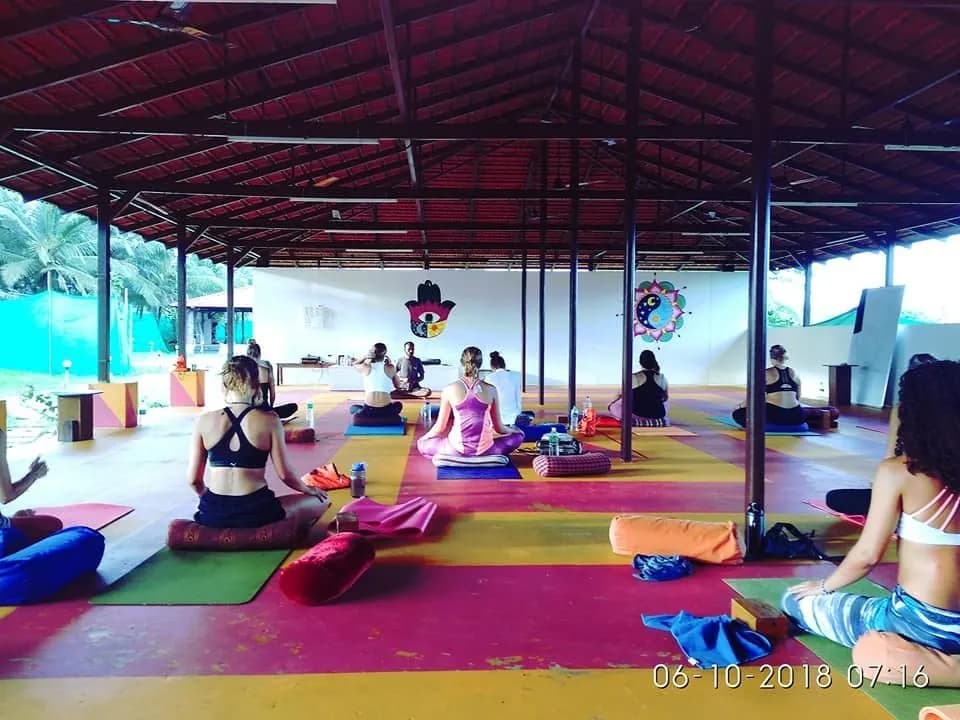
The standard entry-level training is a 200-hour course, and in Goa it is usually run as a residential intensive of three to four weeks, often around twenty-four days, with a new batch starting most months of the season. You live at the school, you eat its vegetarian food, and you spend your days on asana, usually an Ashtanga Vinyasa base, plus pranayama, meditation, a run through the philosophy and the anatomy, and, most of all, practice teaching. The good schools are registered with the Yoga Alliance as an RYS 200, which means that on passing you can register as an RYT 200, the internationally recognised baseline qualification. The cost in Goa runs from roughly seven hundred US dollars in a dorm to twelve or thirteen hundred for a private room, food and lodging included, a fraction of the three to six thousand a Western training charges. The season is the dry winter, October to March, with November to February the sweet spot; in the monsoon most schools shut or move indoors.
- What it is
- A 200-hour teacher training, run in Goa as a roughly 24-day residential intensive; asana, pranayama, meditation, philosophy, anatomy and practice teaching.
- Certificate
- Yoga Alliance RYS 200 schools issue an RYT 200 on completion, an internationally recognised baseline qualification you can teach on anywhere.
- Cost
- Roughly USD 700 (dorm) to 1,200-1,500 (private) in Goa, food and lodging included, versus 3,000-6,000 for a Western training.
- Season
- The dry winter, October to March, peak November to February. Most schools shut or go indoors in the monsoon.
- The honest note
- The cert is easy to pass and will not make you a working teacher on its own. Do it to deepen your practice, and choose a serious, well-reviewed school.
Goa or Rishikesh?
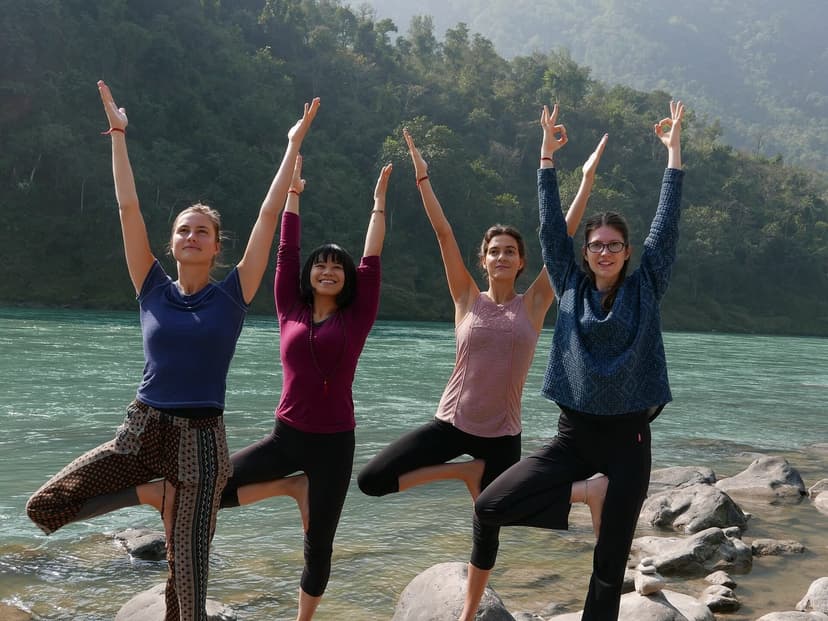
If you are training in India, the real fork is Goa or Rishikesh, and Goans on Reddit put it more honestly than the schools do. Rishikesh, on the Ganga in the Himalayan foothills, is the traditional home of Indian yoga, the source, the intense and spiritual version, with the widest choice of schools; it also comes with noise, construction and cold. Goa is the pleasant one. As one Goan summed the choice up, for an authentic experience, Rishikesh; for a pleasant experience, Goa. Another was blunter, that Goa is not really famous for yoga and Rishikesh is. So be honest about what you want. If you are a beginner, or you want warmth and the sea and a gentler first month, Goa is genuinely the easier place to learn. If you want the deep, sometimes overwhelming, go-to-the-source immersion, that is Rishikesh, and Goa will feel a little like yoga on holiday. Neither is wrong. Just do not pick the beach and then feel short-changed on the spirituality.
| Goa | Rishikesh | |
|---|---|---|
| Setting | Warm beach, palm groves, the sea | The Ganga, Himalayan foothills, an ashram town |
| Vibe | Pleasant, relaxed, beginner-friendly | Traditional, intense, spiritual, the source |
| Choice of schools | Plenty, but fewer | The widest choice in India |
| The catch | Can feel like yoga on holiday, not the deep end | Noise, construction, cold in winter |
| Best for | Beginners, warmth-seekers, a gentler first course | Depth, immersion, go-to-the-source seekers |
The two things the brochures don't say
First, the certificate is easier to get than it sounds. On r/yoga, teachers are candid that a 200-hour is close to impossible to fail, that if you turn up and put in the hours you get the diploma more or less regardless. As one long-time teacher put it, people are paying, and god forbid the school does not hand over the certificate; the real test, he said, comes afterwards, in being able to hack it out in the real world. So an RYT 200 on its own certifies that you showed up for a month, not that you are a good teacher. That is not a reason to skip it. It is a reason to choose a serious, well-reviewed school over the cheapest beach fast-track, because what you get out of the month depends almost entirely on the teaching, not the certificate.
People are paying us, god forbid we dont give them their diploma. The real test is whether they can hack it in the real world.
Second, and more important, it will probably not become your job. The yoga world is not short of teachers; it is short of good ones, and it is a hard, crowded, often badly paid way to make a living. Teachers on r/yoga describe the reality without much romance: the thin daytime demand, renting a hall for a class that three people turn up to, studio rates that only add up if you are running eight or ten or twelve classes a week. The people who make real money mostly do it online, and that takes a whole second skill set, the business and marketing side, that almost no 200-hour course teaches. So if you are doing a Goa training as a career plan, go in knowing the odds. Most people who do one never teach professionally at all.
So should you do it?
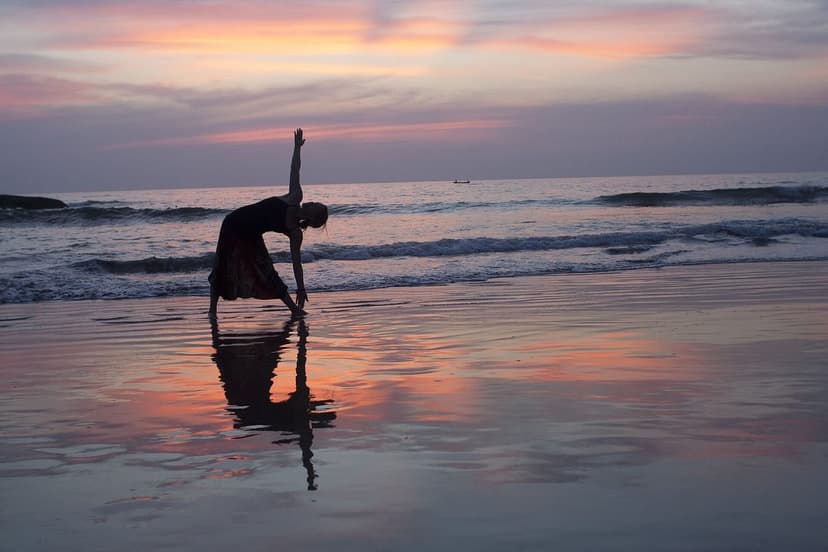
For most people the honest answer is yes, but for a different reason than the brochure gives. Do a training to deepen your own practice, to understand what you have been doing on the mat for years, to spend a month living slowly by the sea inside your own body. On that measure it delivers, and the joy is real; the forums are full of people who came out the far end changed and glad they did it, teaching or not. If that is your reason, Goa is a lovely place to do it. Choose a school registered with the Yoga Alliance and backed by genuine, recent reviews rather than the cheapest option or the prettiest Instagram. Come in the dry winter. Base yourself at the quieter Mandrem end of the coast rather than the thick of Arambol which, as the companion piece on the yoga belt covers, is crowded and, women report, no longer as safe as it was. And go in for the practice, not the paycheck. On that trade you will not be short-changed.
A month of yoga sits naturally beside the slower North Goa the rest of this series keeps turning up: the food, the quiet beaches, the inland forest for a day off. And if a full course sounds like more than you want, a shorter wellness retreat gives you the same coast at a lighter dose. For the wider case for this quieter Goa, there is a piece on whether the place is overrated at all.
North Goa has around two dozen independent yoga schools running teacher trainings along the Arambol-to-Ashwem coast, and Refuje is looking at curating a trusted wellness and training option. In the meantime, you can see the North Goa experiences that are currently bookable on the North Goa things-to-do page. Whichever school you choose, the rule holds: a Yoga-Alliance-registered course with real reviews, the dry season, and going in to deepen rather than for a guaranteed job.
Common questions
Is a yoga teacher training in Goa worth it?
Yes, if you go in for the right reason. A Goa 200-hour is a genuinely good way to deepen your own practice, understand yoga properly and spend a transformative month by the sea, and it is cheap and beginner-friendly. It is not a reliable route to a paid teaching career; the industry is saturated and most graduates never teach professionally. Do it to deepen and enjoy, not as a guaranteed job, and it delivers.
How long is a 200-hour YTT in Goa, and what does it cost?
It is usually a residential intensive of three to four weeks, often around 24 days, with batches most months of the season. The cost in Goa runs roughly from USD 700 in a dorm to about 1,200 to 1,500 for a private room, with food and lodging included, much cheaper than the 3,000 to 6,000 a Western training charges. Prices vary by school, so confirm what is included before booking.
Goa or Rishikesh for yoga teacher training?
Rishikesh, on the Ganga, is the traditional, intense, spiritual home of Indian yoga with the widest choice of schools, but it is busier and colder. Goa is the warm, relaxed, beach version, gentler for beginners. As Goans on Reddit put it, for an authentic experience Rishikesh, for a pleasant one Goa. Choose Goa for warmth and a softer first course, Rishikesh for depth and immersion, and set your expectations accordingly.
Is the RYT-200 certificate recognised, and can I teach with it?
Yes. Schools registered with the Yoga Alliance as an RYS 200 issue a certificate that lets you register as an RYT 200, the internationally recognised baseline qualification, and teach yoga in most of the world. Be aware, though, that the certificate mainly proves you completed the hours; it does not by itself make you a good or employable teacher. Choose a well-reviewed, properly registered school.
Can you make a living teaching yoga after a 200-hour?
For most people, no, or not easily. The yoga world is oversupplied with teachers, daytime demand is thin, and studio pay per class only adds up if you teach many classes a week. The teachers who earn well mostly do it online and have learned business and marketing skills that a 200-hour does not teach. Treat a Goa training as personal growth rather than a career guarantee, and go in with realistic expectations about paid work.
When is the best time for a yoga teacher training in Goa?
The dry winter season, roughly October to March, with November to February the peak, when the weather is warm and pleasant and schools run their full programmes. The monsoon, June to October, is wet and many Goa schools either close or move training indoors. For the best conditions and the widest choice of courses, aim for the November-to-February window and book ahead.
How do I choose a good yoga school in Goa?
Pick a school registered with the Yoga Alliance (RYS 200) and, more importantly, one with genuine, recent, detailed reviews from past students, rather than a polished website or Instagram alone. Look at who actually teaches and their experience, the daily schedule and group size, and what is included. Favour the quieter Mandrem and Ashwem end of the coast, especially if travelling solo, and be wary of the cheapest fast-track options.
Sources and a note on this guide
I write for Refuje and I do not live in Goa or teach yoga. The course structure, costs, certification and seasons are from the yoga schools and Yoga Alliance and yoga-industry sources; the honest picture, that the certificate is easy and the career is hard, and the Goa-versus-Rishikesh call, comes from teachers and trainees on r/yoga and r/Goa, quoted and attributed as they appear. Costs and schools change, so verify current fees and reviews before you book. Nothing here is a first-hand claim of mine. The facts were checked in August 2026.
- 200-hour course structure (roughly 24-day residential, curriculum), cost (about USD 700 to 1,500 in Goa versus 3,000 to 6,000 in the West), and Yoga Alliance RYS 200 / RYT 200 certification: Goa and Rishikesh yoga schools and Yoga Alliance references.
- Goa versus Rishikesh (pleasant-and-beachy versus authentic-and-intense) and the November-to-February Goa season: yoga-school comparison guides and attributed r/Goa.
- The certificate being easy to pass, and the hard career reality (industry short on good teachers not teachers, thin demand, business skills most trainings omit): attributed r/yoga threads and yoga-career writing, quoted inline.
Fees, schools and the wider yoga job market all shift, so check current programmes, reviews and costs and, if travelling alone, plan your base with care. If you have trained here and know it better than the sources above, that is the correction this guide should carry, so tell us.
You Might Also Like
Edge City India 2026: The Practical Guide
Three weeks in Mandrem, North Goa. October 11 to November 1, 2026. Hundreds of founders, researchers, engineers, and creators living and building on a stretch of beach that is usually known for yoga retreats and quiet cafés, not hackathons. If you have applied, or you are wondering whether you...
Solo Female Travel in Goa: An Honest Safety Guide
An honest, balanced safety guide for women travelling to Goa alone: why it's comparatively safe and loved by many yet has a real, worsening harassment problem concentrated on the party beaches, where to base for a calmer trip, and the practical choices that tilt the odds in your favour.

Working Remotely from North Goa: The Honest Digital-Nomad Guide
An outsider's honest guide to working remotely from North Goa: why it isn't the beach-office of the photos, the power-and-internet problem that decides everything, where to base (Assagao, Siolim, Caranzalem), the cost, solo-female safety, and how to be a good guest rather than a coloniser.