
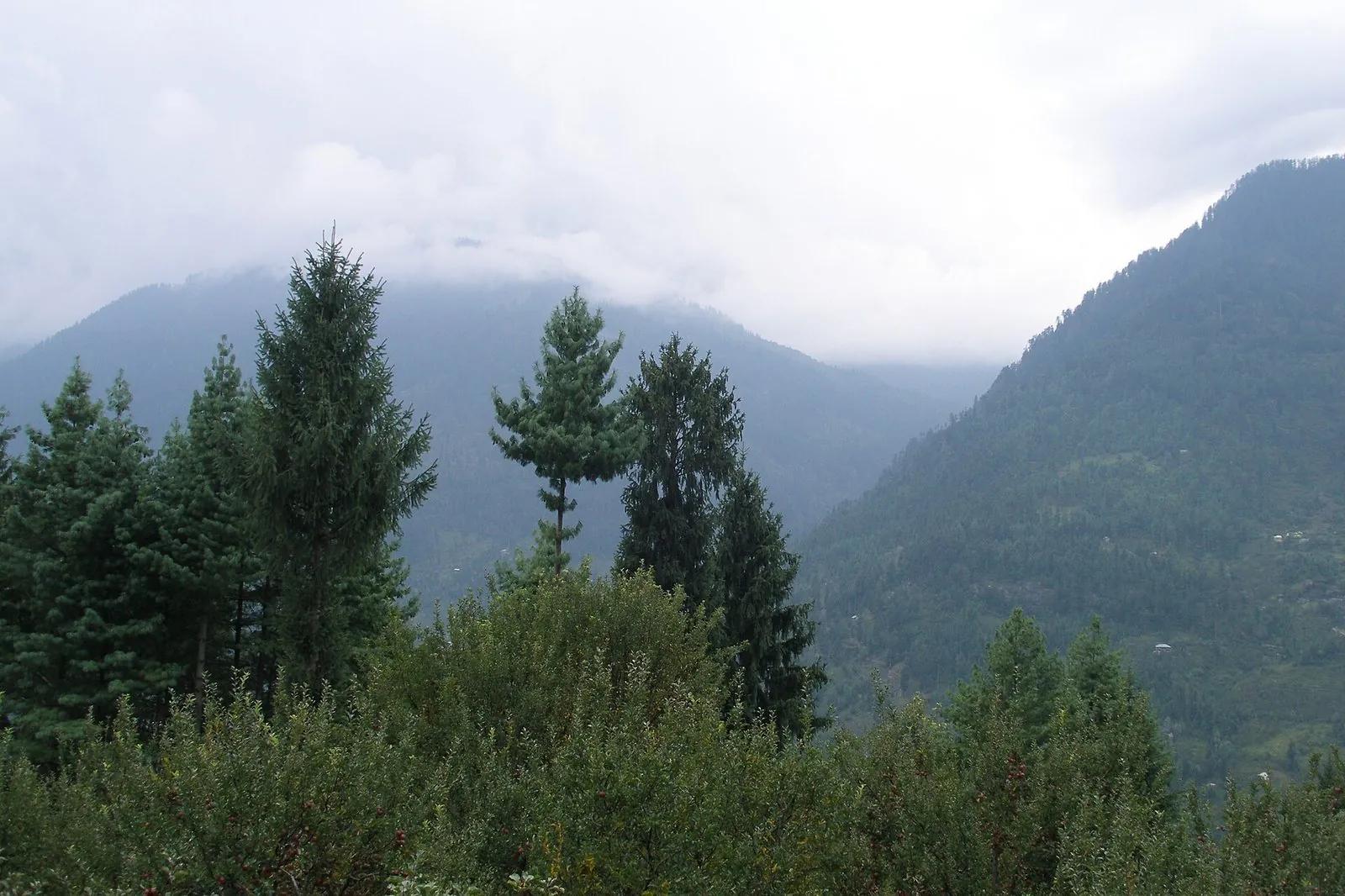
Forest Bathing in the Himalayas: Science, Locations & How to Start
A single walk in a deodar forest can boost your immune system for thirty days. Not a metaphor. Not wellness marketing. Six peer-reviewed studies confirm it, and the mechanism is embarrassingly simple: the trees breathe out terpene compounds, you breathe them in, and your natural killer cells spike for a month. Japan figured this out in 1982 and called it shinrin-yoku. India has been doing it since the Aranyakas, the Vedic forest texts composed by sages who literally lived under these trees. We just forgot to give it a name.
I think forest bathing is the most underrated thing you can do in Himachal Pradesh. I know that sounds absurd when the state has Rohtang and Triund and every other Instagram summit. But HP has 68,872 hectares under Cedrus deodara alone, the tree the Sanskrit scholars called devadaru, timber of the gods. And nobody is writing about what these forests actually do to your body.
This is that article.
- Scientific studies cited
- 6 peer-reviewed (PMC, PubMed, Frontiers)
- Immune boost duration
- NK cells boosted 7-30 days after one forest visit
- Minimum effective dose
- 15 minutes for measurable mental health benefit
- HP deodar hectares
- 68,872 ha across Chamba, Kullu, Shimla, Kangra, Mandi, Kinnaur
- Key terpenes
- Alpha-cedrene (17%), cedrol (15.5%), thujopsene (28%)
- HP forest bathing locations
- 5 mapped, all free and self-guided
What forest bathing actually is (and what it is not)
Forest bathing is not hiking. That distinction matters more than anything else in this article, so let me get it out of the way.
Hiking: you cover distance, you gain altitude, you reach a summit or a lake or a campsite, you come back tired and satisfied. Forest bathing: you walk less than a kilometre in two hours. Maybe three hours. You sit on a rock. You breathe. You listen to the canopy. There is no destination. Stanford Lifestyle Medicine puts it cleanly: the goal is sensory immersion, not physical achievement.
The Japanese government formalised the practice in 1982 as shinrin-yoku, forest atmosphere bathing. Thirty years of research later, the health outcomes are not disputed by anyone who reads the literature. The argument is only about mechanism, and even that is narrowing.
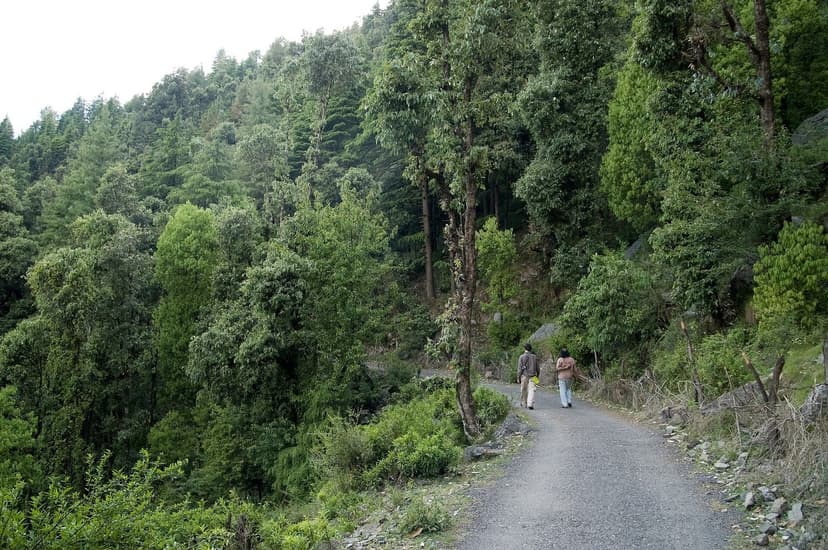
Forest bathing is not hiking. Hiking = covering distance, physical exercise, destination-focused. Forest bathing = stillness, sensory immersion, no destination. You walk gently. Pause often. HP forests are ideal because they have flat forest floors and gentle slopes with no summit pressure.
What six studies found (the short version)
I am not going to pretend I read these papers for fun. I read them because I did not believe the claims. Immune boost from walking in trees? Sounded like another turmeric-latte thing. It isn't.
Dr. Qing Li established "Forest Medicine" as a research field. His key finding: natural killer cell activity, the immune cells that destroy virally infected and tumour cells, stays high for seven days after a single forest visit. The anti-cancer proteins lasted more than thirty days. A 2019 cortisol meta-analysis confirmed that forest environments reliably reduce cortisol, the stress hormone. A 2025 Frontiers review added blood pressure reduction, improved sleep, and significant drops in depression and anxiety versus urban controls.
The mechanism is terpenes. Trees release monoterpene compounds into the air, mainly alpha-pinene and limonene, and you inhale them; the parasympathetic nervous system then shifts you from fight-or-flight into rest-and-digest. A 2025 MDPI review confirmed the pathway across immune modulation, stress regulation and neurocognitive resilience. Per the 2025 narrative review in PMC, even fifteen minutes in a natural environment registers measurable short-term mental health benefits.
All six studies are Japanese. Not one Indian field trial. That's a gap in the research, not a reason to doubt the chemistry. Terpenes don't check your passport.
The minimum dose is 15 minutes. But the immune boost requires longer immersion (2-4 hours in the same forest area). The Japanese standard is 2-3 hours walking less than 2.5 km. Quality over distance.
Why Himalayan deodar forests are different
Here is where HP earns its specific advantage.
The tree is Cedrus deodara, devadaru in Sanskrit, which translates to timber of the gods. The name is not metaphorical. The Vedic sages who composed the Aranyakas, the forest texts, lived and meditated under these trees. The tradition predates Japan by roughly three thousand years.
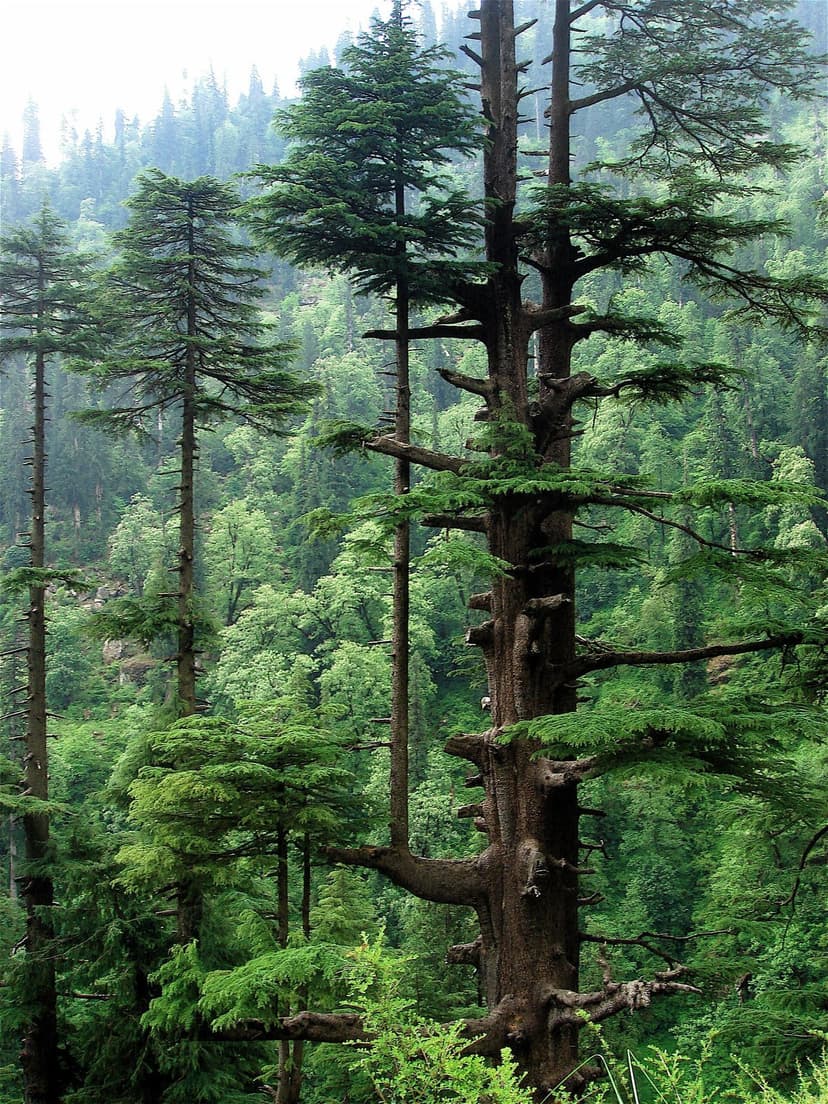
The modern science catches up to what the rishis already knew. When you crack open a deodar branch (don't, but hypothetically), the oil inside is roughly 17% alpha-cedrene, 15.5% cedrol, 28% thujopsene. I am listing the numbers because they matter: a PubMed study on the oil composition documented these, and a 2020 paper found the same oil inhibits inflammation through the COX-2 and NF-kappaB pathways. Those are the exact pathways the Japanese shinrin-yoku studies measure. Same chemistry, different mountain range.
HP has 68,872 hectares of the stuff. Chamba, Kullu, Shimla, Kangra, Mandi, Kinnaur. The trees grow between 1,500 and 3,200 metres, where the air is thin enough to be clean and thick enough to carry the compounds into your lungs. Below 1,500 metres you get highway diesel. Above 3,200 you get scrub and rock. The sweet spot is deodar country, and HP has more of it than anywhere else in India.
The Aranyakas are literally forest-bathing scripture. We just forgot.
Five forests to bathe in
I have walked in all five. Four of them are free. One sits inside a UNESCO World Heritage Site. None requires a guide, though Ailyak in Jibhi runs guided sessions if you want structure.
1. Prospect Hill, Shimla (2,155 m)
This one is almost too easy. Five minutes from The Forest hotel, western edge of Shimla. Pine and deodar mixed, flat enough for sandals. The locals walk here at 6 AM and they don't call it forest bathing, they call it the morning walk, because they've been doing it since before Japan spent thirty years studying why it works. September and October are best. The air after monsoon feels like someone rinsed the whole hillside.
2. GHNP Ecozone, Tirthan Valley (1,600-2,500 m)
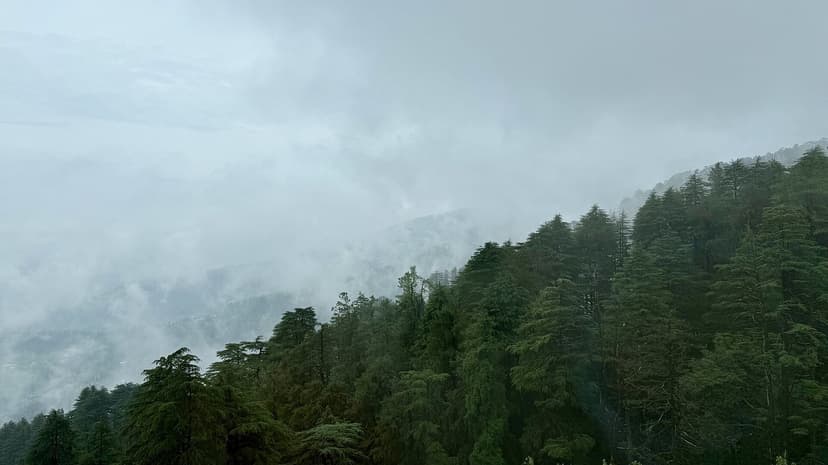
UNESCO-listed. Four forest types stack by altitude: oak low down, deodar above it, fir higher still, and rhododendron where the air starts to thin. I walked in from the Gushaini gate last April and made the mistake of trying to reach the park boundary. Don't. The forest-bathing version is to walk thirty minutes in, find a rock, sit on it, and not move for two hours. The Tirthan Valley guide has the logistics.
Rs 100 entry for Indians. Rs 400 for foreigners. Worth every rupee for the oak-to-deodar transition alone.
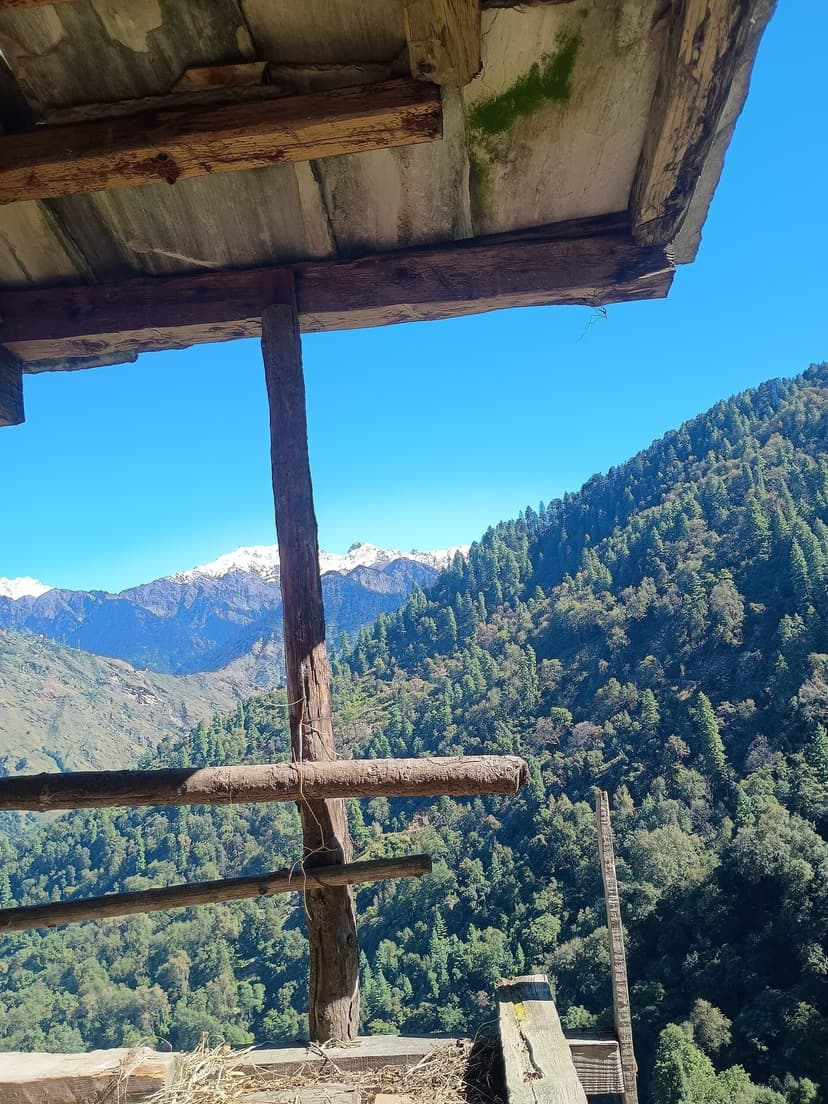
3. Jalori Pass Forest, near Jibhi (2,800-3,120 m)
Drive from Jibhi, park at the pass, walk into the treeline on either side of the road. That's it. No gate, no ticket, no trail map. The Serolsar Lake path cuts through some of the thickest deodar I've seen in HP, but here's the thing: don't walk to the lake. Everyone walks to the lake. Sit down before you get there. The forest between the pass and the lake is the actual point. April to November only.
Ailyak in Jibhi charges Rs 2,000-3,500 for a guided half-day session. I went without a guide and did fine, but I also sat in the wrong spot for forty minutes before finding one that felt right. A guide saves you the bad first guess.
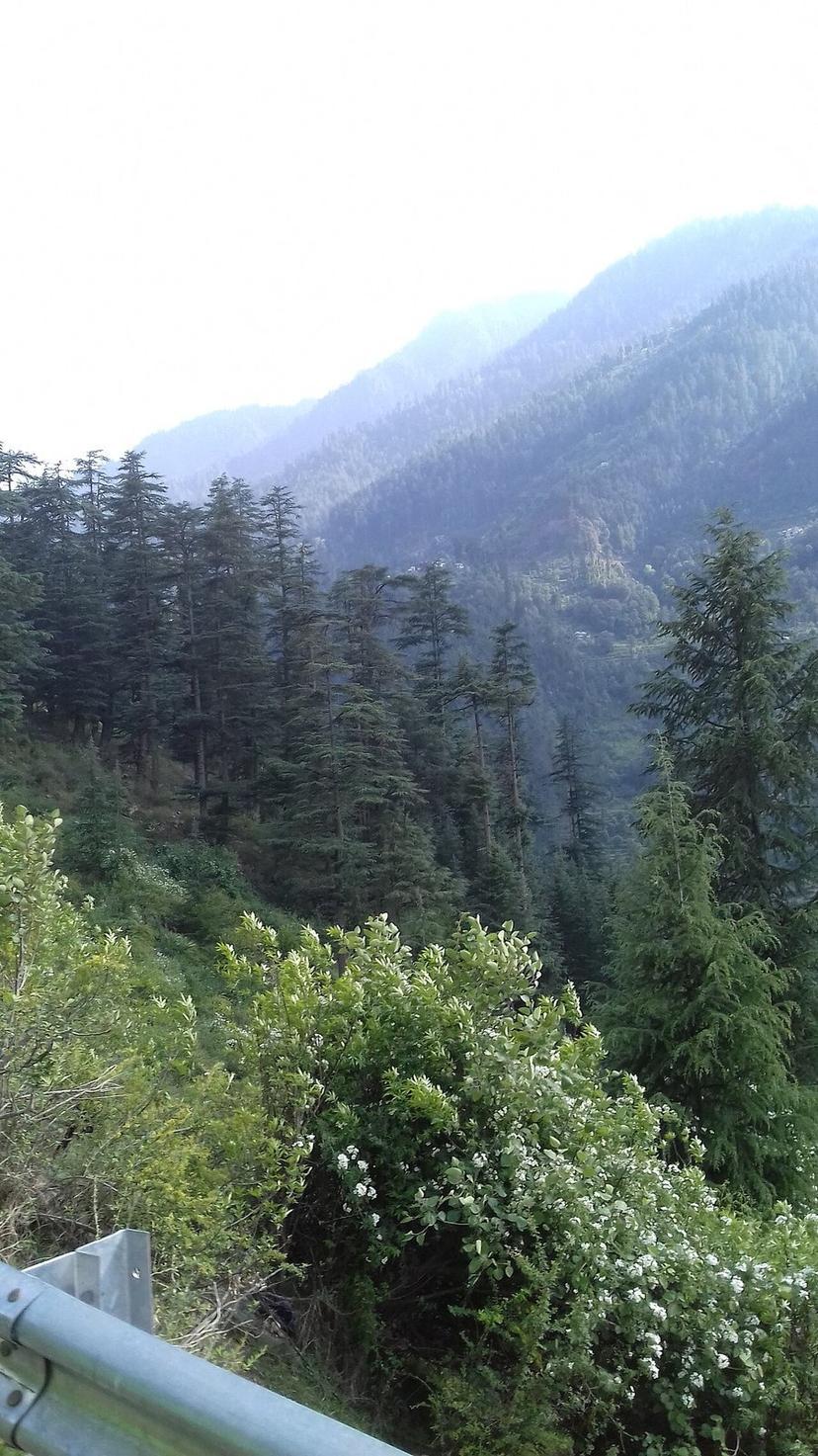
4. Narkanda Deodar Forest (2,700 m)
My favourite. The densest single-species deodar belt I know in HP, right on the Shimla-Kinnaur highway. Hatu Peak (3,400 m) sits above it. Agyatvaas Retreat uses this forest for wellness programming, but you can just walk in from the main road. I came here in January once. Snow on every branch, not a single other human being for two hours, and a silence so complete I could hear my own heartbeat. The science papers don't account for that. They should.
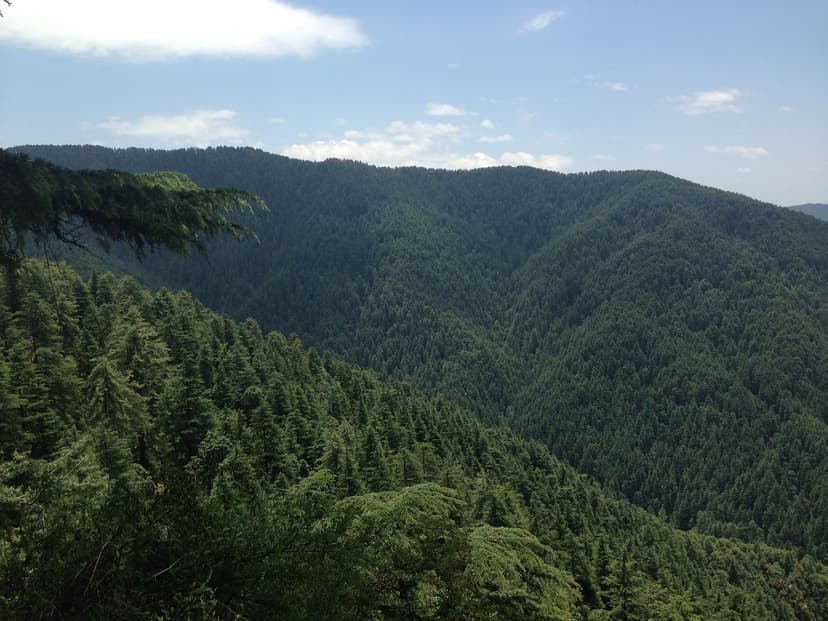
5. Dharamshala Forest (1,700-2,100 m)
Pine and rhododendron lower down. Deodar once you climb. The trails out of McLeod Ganj, Bhagsu, and Dharamkot all cut through forest within twenty minutes of walking, and most tourists blow right past the treeline on their way to Triund.
Don't be those tourists.
Tushita Meditation Centre sits in these forests, with a 4.7-star Google rating across 1,400 reviews and ten-day Buddhist meditation retreats run on a Rs 4,000-8,000 donation basis. A forest walk before a meditation sit is the combination that separates Dharamshala from any other hill station that happens to have pines.
The terpene calendar: when forest bathing is strongest
Terpene release varies by season. This matters if you are planning a trip around forest bathing specifically.
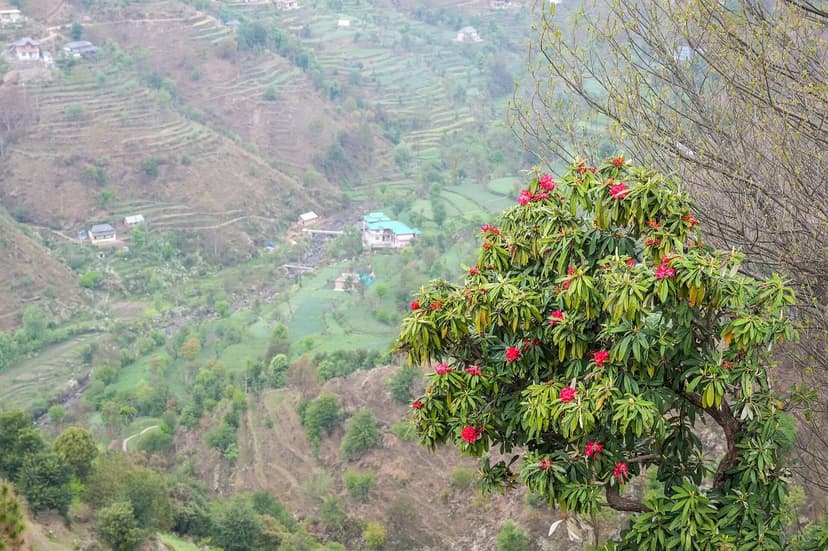
Spring (March to May) is the best. New growth means peak terpene release. Rhododendron blooms add visual therapy. The air is warming but not yet humid.
Post-monsoon (September to October) comes second. The rains wash every leaf, the air is the cleanest it will be all year, and the forests glow. Terpene release spikes after rain.
Summer (June) works well. Warm, lush canopy, longest daylight for extended sessions.
Winter (December to February) works too. Deodar is evergreen. Snow adds a sensory contrast the science does not measure but your body registers. The silence is different.
Monsoon (July to August) is complicated. Petrichor after rain is peak terpene release. But access to most forests is limited, leeches are real below 2,000 m, and trails get slippery. Doable for experienced walkers. Not recommended for your first session.
How to actually do it (a session protocol)
You do not need a guide. You do not need equipment. You need two hours and the willingness to feel stupid sitting under a tree while other tourists race past you toward a viewpoint.
Leave your phone in the car. Not in your pocket on silent. In the car.
Walk for twenty minutes. Slowly. Find a place where you cannot hear the road. Sit.
Run a sensory inventory. Five things you can see. Four sounds. Three smells. Two textures (touch the bark, touch the soil). One taste (chew a pine needle if you are brave, or just notice the air on your tongue).
Then wander. Less than one kilometre per hour. Two to three hours total. The Japanese standard is 2.5 km in that time, but I have done sessions where I covered maybe 400 metres and it was the best afternoon of a two-week trip.
Close with a sit spot. Thirty minutes in one place, eyes open. If you brought a thermos, this is when you drink the chai.
That is it. No chanting, no app, no crystals. The trees are doing the work.
Want a local sanity-check on your Himachal wellness itinerary? Email us your draft plan. We will tell you which forest matches your dates, which retreats are worth the price, and where to skip the guided tour and just walk in.
The wellness ecosystem: beyond the trees
HP has a complete wellness offering that nobody maps in one place. Forest bathing is one layer. Here is the rest.
| Wellness type | Cost | Details |
|---|---|---|
| Forest bathing (self-guided) | Free | All 5 locations, bring water and patience |
| Forest bathing (guided, Ailyak Jibhi) | Rs 2,000-3,500 | Half-day session with trained guide |
| Vipassana (Dhamma Sikhara, Shimla) | Free (donation) | 10 days, Google 4.7/483 reviews |
| Buddhist meditation (Tushita, Dharamshala) | Rs 4,000-8,000 | 10 days, Google 4.7/1,400 reviews |
| OSHO meditation (Gopalpur) | Rs 2,000-5,000/day | 1-7 days, Google 4.8/1,000 reviews |
| Yoga retreat (Dharamshala) | Rs 15,000-1,50,000 | 5-30 days, BookRetreats.com listings |
| Hot springs (Vashisht) | Rs 20-50 | Temple pools, 3 km from Manali |
| Hot springs (Manikaran) | Free | Gurudwara + Hindu temple, Parvati Valley |
Four hot springs: the water bathing complement
Pair a morning forest session with an afternoon soak. The Japanese call this onsen culture. In HP, we have had it longer than Japan has had running water.
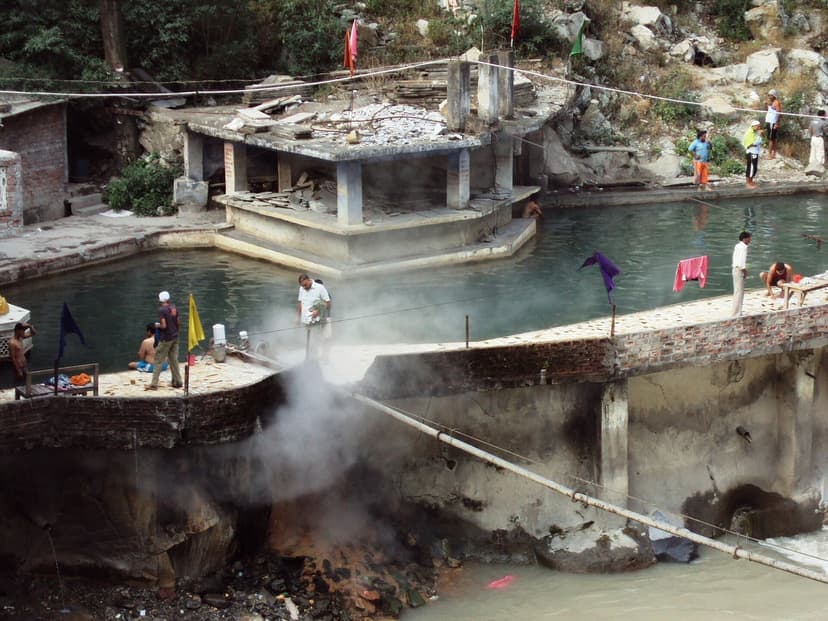
Vashisht (1,800 m, 3 km from Manali): Ancient temple pools. Rs 20-50 entry. Hot, not scalding. Walk from Old Manali. The most accessible option and the one most tourists already know.
Manikaran (1,760 m, Parvati Valley): The water is genuinely hot enough to cook rice in, which the Gurudwara does for langar every day. Both a Hindu temple and a Sikh Gurudwara share the springs. Free entry.
Tattapani sits at 650 m on the Shimla-Mandi road, riverside, lower than the other three options and noticeably less touristy. It works as a stop on the drive between Shimla and Mandi. The springs were partially submerged when the Kol Dam reservoir filled, but the pools that remain still run hot.
Kheerganga (2,960 m, Parvati Valley): The hardest to reach. Twelve-kilometre trek from Barshaini, five to six hours. Natural pool at the top. Day-trek only as of 2024 (camping ban). Worth every bloody step. See the best time to visit HP guide for seasonal access.
Planning a forest bathing + hot springs combination trip? Email us your dates and budget. We will match you with the right forest, the right spring, and tell you which road is open this week.
What I still do not know
Nobody has measured terpene concentrations in HP deodar forests during different seasons. I am extrapolating from Japanese cedar research and Cedrus deodara oil chemistry papers. The actual field data for Indian Himalayan forests? Does not exist. Not a single study. If you are a forest researcher reading this and want a publication that writes itself: go measure terpene levels in the Narkanda deodar belt across four seasons. I will buy you chai in Shimla when the paper comes out.
I also don't know if Kalatop near Dalhousie (19.63 square kilometres of dense deodar and fir, flatter trails, more uniform canopy) is better than GHNP for forest bathing. My gut says yes. I haven't done a proper head-to-head. If you have, tell me.
And here is the embarrassing part: HP has zero certified forest bathing guides. The whole state. India has four total. Vaishnavi Viswanathan in Bangalore (FTHub certified), someone named Dipika in Noida, Merin Mathews in Kerala, Suraj Rawat in Mussoorie. None of them are here where the best deodar forests in Asia are.
Frequently asked questions
What is forest bathing?
Slow walking in a forest with no destination. The Japanese call it shinrin-yoku. You sit, you breathe, you notice what the canopy smells like. Studies say 15 minutes is enough for your cortisol to drop. Your NK immune cells stay boosted for up to 30 days after one session.
What are the proven health benefits?
Your cortisol drops. Your NK immune cells go up and stay up for a week to a month. Blood pressure down. Sleep better. Less anxious. Six studies. The mechanism is almost too simple: trees release terpenes into the air, you breathe, your nervous system calms down. That is genuinely it.
Where in Himachal Pradesh can I do this?
Five free spots: Prospect Hill in Shimla (2,155 m), GHNP ecozone in Tirthan (UNESCO forest, 1,600-2,500 m), Jalori Pass near Jibhi (deodar at 3,120 m), Narkanda (2,700 m, thickest deodar belt on the Shimla-Kinnaur road), and Dharamshala (pine + rhododendron, 1,700-2,100 m). Ailyak in Jibhi runs guided sessions if you want structure.
Is forest bathing different from hiking?
Completely. Hiking gets you somewhere. Forest bathing keeps you in one place for 2-4 hours walking less than a kilometre. Stanford calls it sensory immersion, not physical achievement. No summit, no pace, no destination.
Why deodar forests specifically?
Deodar means timber of the gods in Sanskrit. The essential oil has alpha-cedrene (17%), cedrol (15.5%), thujopsene (28%). These are the compounds that trigger the immune and nervous system responses the Japanese studies measured. HP has 68,872 hectares of it.
Best season?
March to May. New growth on the deodars means peak terpene release, and the rhododendrons are blooming. September-October is a close second because the monsoon washes the air clean. Deodar is evergreen, so technically it works year-round. Avoid July-August below 2,000 m unless you enjoy leeches.
How long should a session last?
Fifteen minutes for a cortisol drop. Two to four hours if you want the full immune thing. I have sat in one spot for three hours and covered maybe 400 metres total. Felt better than after a 15 km trek. The Japanese say 2-3 hours in a 2.5 km area, but honestly, less distance is more.
Any guided retreats in HP?
Ailyak in Jibhi (Rs 2,000-3,500 half-day). Dharmalaya in Bir runs silent retreats on a forested hillside. Sambhaavnaa near Palampur has mud-and-stone buildings with Dhauladhar views. For a formal multi-day programme, Delotus in Rishikesh is the nearest (Rs 21,999-23,999 for 3N/4D). Nobody in HP is doing dedicated forest bathing retreats yet.
Where I got this
The immune data comes from Dr. Qing Li's Forest Medicine paper (PMC, 2022) and his 24-forest physiological study (2009). The cortisol claims are from Antonelli's 2019 meta-analysis. Three 2025 reviews filled in the rest: Frontiers, PMC narrative review, MDPI Medical Sciences on immune modulation.
Deodar oil chemistry: PubMed composition study and J Essential Oil Bearing Plants (2020) on the anti-inflammatory pathways. The hiking distinction is from Stanford Lifestyle Medicine. Harvard Health and ANFT for the accessible summaries.
On the ground: Ailyak (Jibhi), GHNP official site, Dharmalaya (Bir), Sambhaavnaa (Palampur). Background reading on deodar: Wikipedia.
You Might Also Like
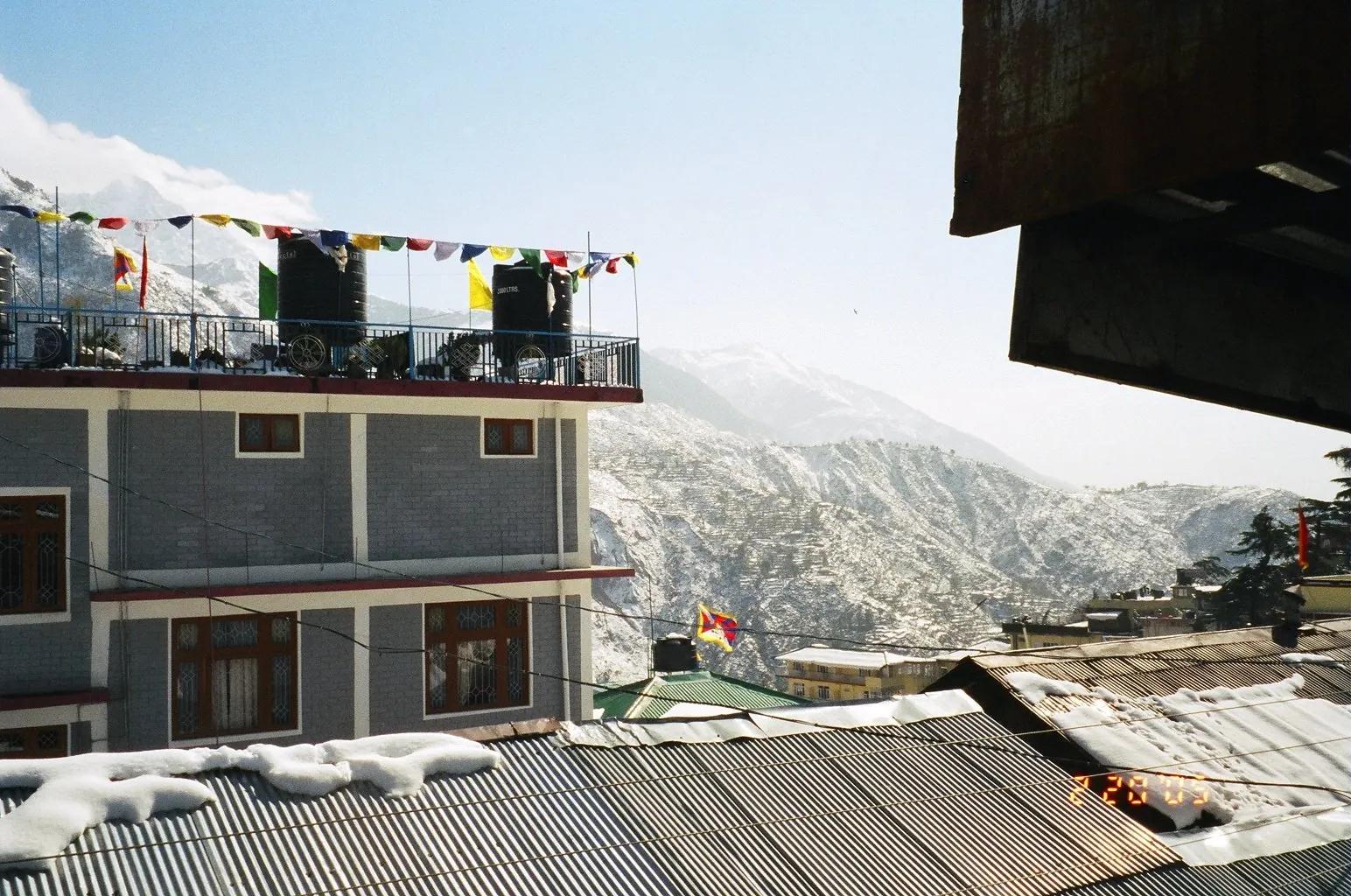
Volunteering in Himachal Pradesh: 12 Organisations and How to Apply (2026)
Teach English in McLeod Ganj, conserve the Great Himalayan National Park, build with earth in Bir, or harvest apples in Kullu. Twelve real HP volunteer organisations with honest costs, the visa rule that gets foreigners deported, and how to apply.
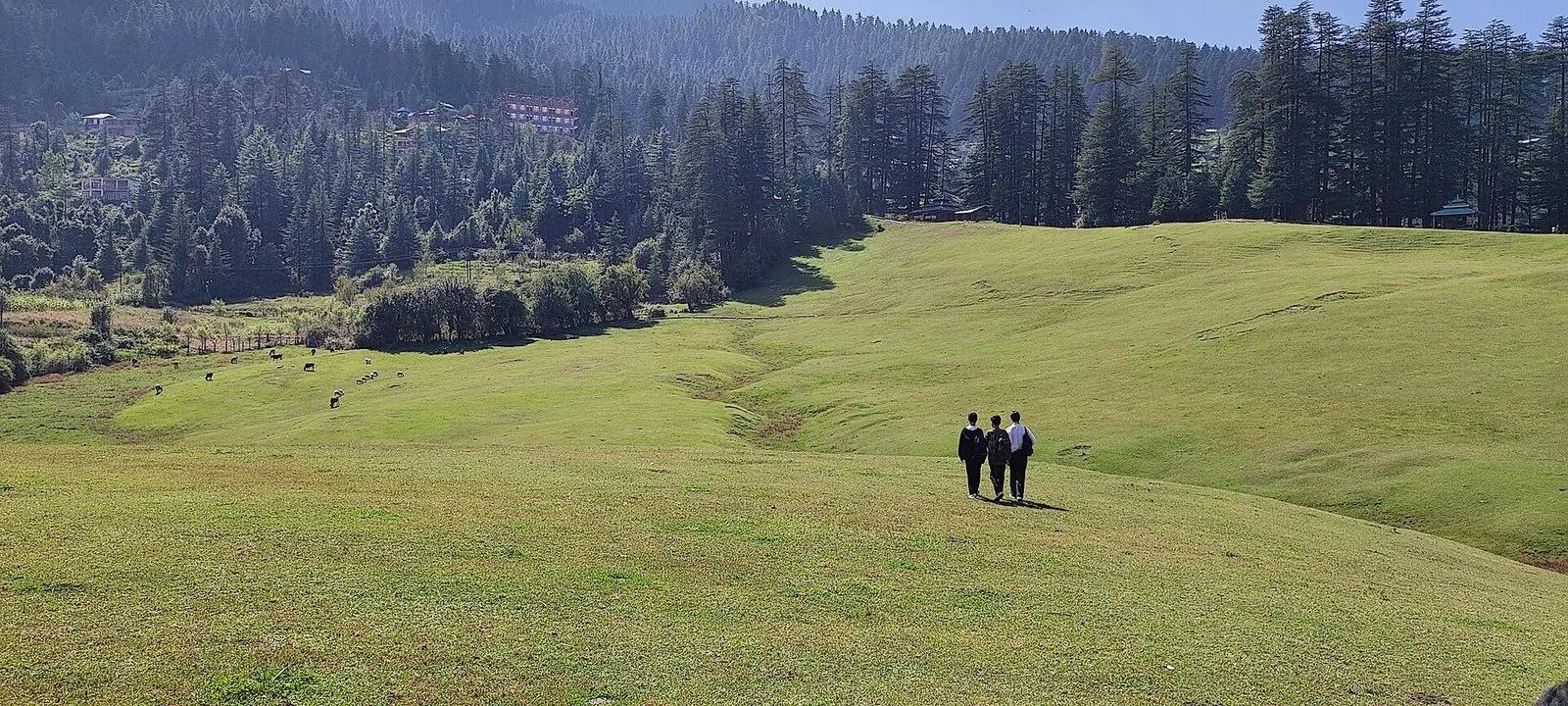
How to Travel Himachal Without Wrecking It: A Quiet-Travel Manual
A non-preachy field manual for responsible travel in Himachal, by a Kullu local: how to behave, when to go, where to go instead, and the 2026 rules and bans that actually matter.
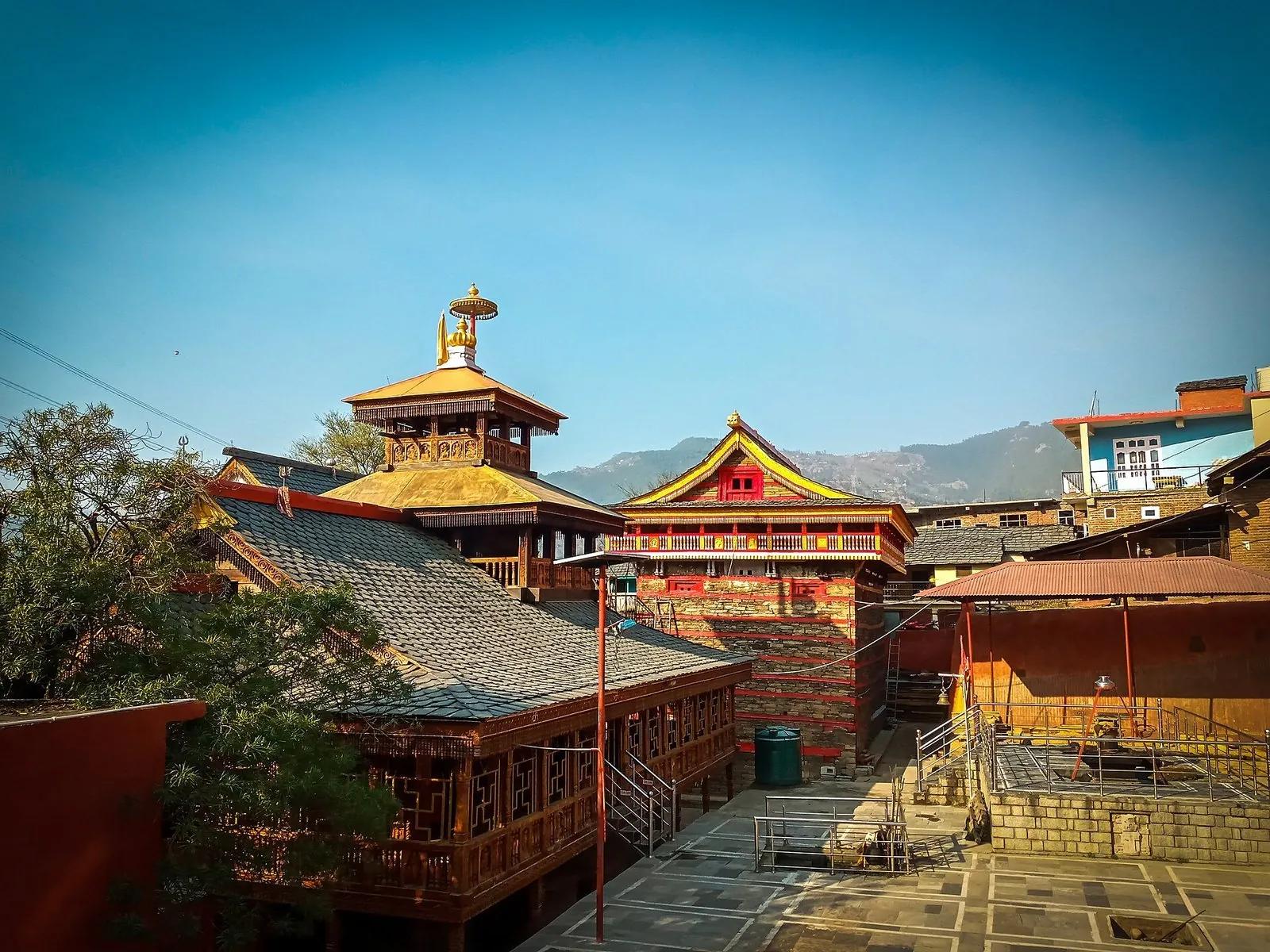
Mamleshwar Mahadev: The Eternal Flame Temple of Karsog
An eternal fire, a fist-sized wheat grain and a six-foot drum, kept in a mortar-less timber temple in the quiet Karsog valley. The honest story of Mamleshwar Mahadev: what is real, what is faith, and how to go.