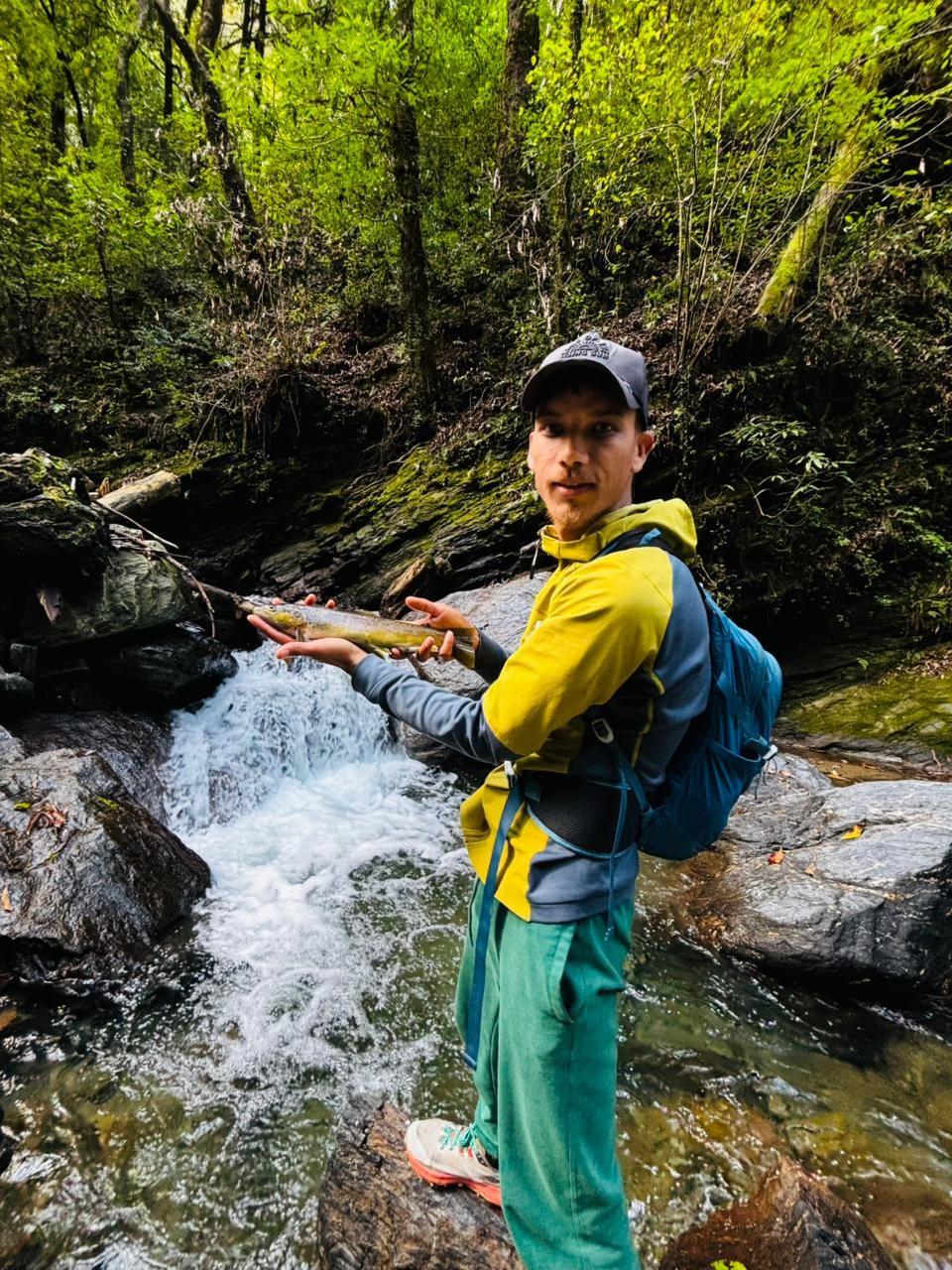
Overview
The rainbow trout (Oncorhynchus mykiss, also referred to in India as Salmo gairdneri gairdneri) is the primary commercially farmed trout in Himachal Pradesh and across the Indian Himalayas. Native to the Pacific coast drainages of North America, it was brought to India alongside brown trout to promote sport fisheries, and it has since become the cornerstone of the country's cold-water aquaculture.
It earns that role because it is easier to farm than the brown: it adapts more readily to artificial diets, grows faster, and tolerates slightly higher stocking densities, which is exactly why the HP Government's Indo-Norwegian Trout Project chose it as the primary species. It also leaps energetically when hooked and keys on insect drift, so it is prized as both a sport fish and a table fish.
Quick Facts — Indian Context
| Scientific Name (Global) | Oncorhynchus mykiss |
| Scientific Name (India) | Salmo gairdneri gairdneri |
| Family | Salmonidae |
| Origin | Pacific coast drainages of North America |
| Introduction to India | Late 19th / early 20th century; major farming push from 1989 |
| Primary Role in India | Commercial aquaculture (table fish) & sport fisheries |
| Key Farming State | Himachal Pradesh (primary); also J&K, Uttarakhand, Arunachal |
| Optimal Rearing Temp. | 55–65°F (13–18°C); stressed above 70°F |
| Egg Incubation Temp. | Must not exceed 10–12°C; ~195 degree-days to hatch |
| Marketable Size | 250–300 g portion size in 10–12 months |
| Spawning Season in HP | Spring (February–April); eggs incubate 4–7 weeks |
| HP Fisheries Contact | Directorate of Fisheries, Matsya Bhawan, Bilaspur — 01978-224068 |
Physical Characteristics
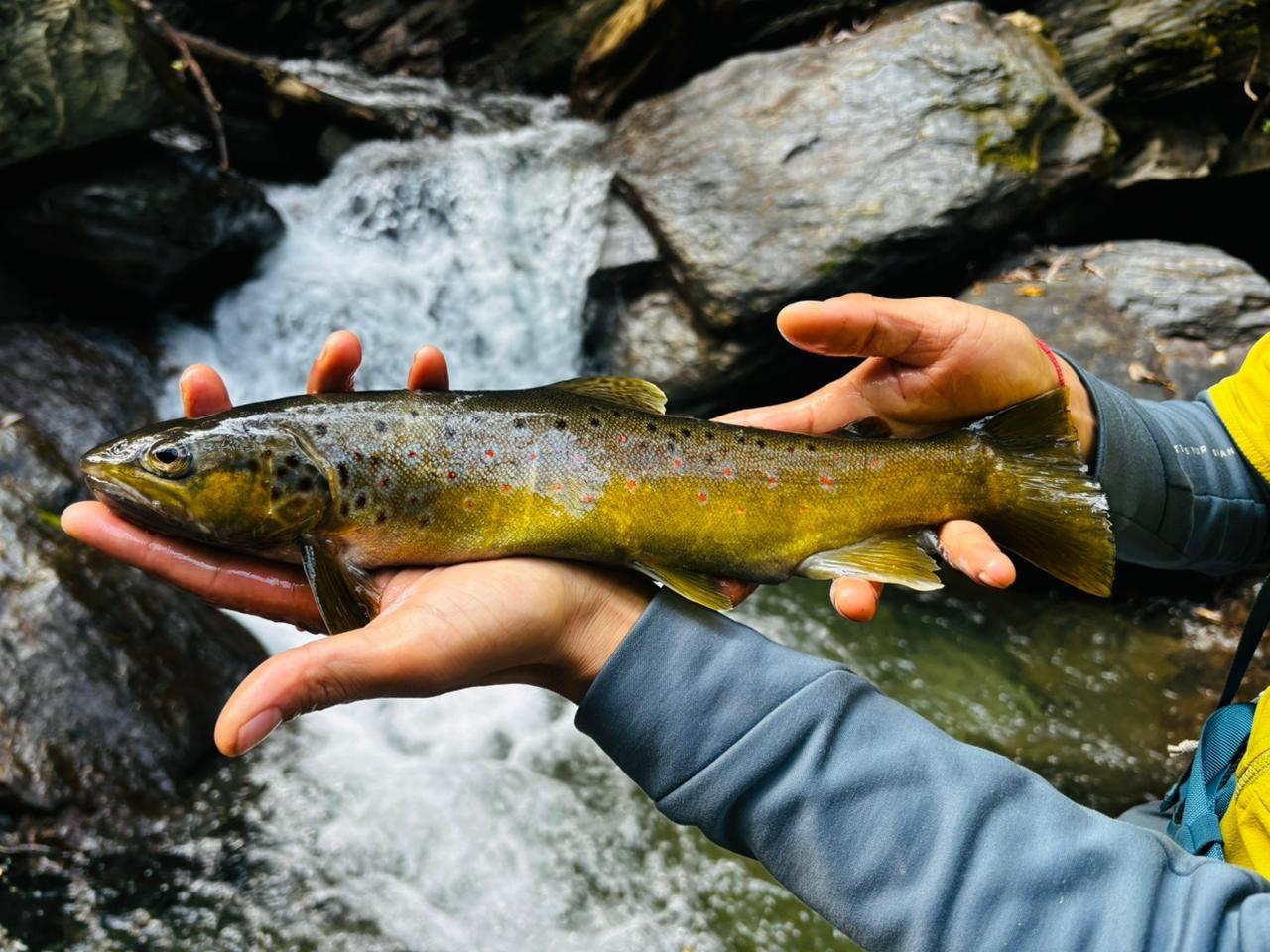
The defining mark is the pink-to-red lateral stripe running from gills to tail, brightest on stream residents and breeding males. The back is blue-green to olive and the belly silvery white, with black spots scattered across the back and the dorsal, adipose and caudal fins. Colour shifts with habitat — farmed HP fish tend to be silvery and lightly marked, while stream residents darken and intensify the stripe. You separate it from a brown trout by the absence of haloed orange/red spots and the presence of a clearly spotted tail, and from a cutthroat by the lack of a red slash under the jaw. HP farm fish typically reach 250–300 g in 10–12 months; in rivers and larger waters they make 1–3 kg, and trophy fish exceed 5 kg.
History & Programme in Himachal Pradesh
Rainbow trout is the cornerstone of the HP Government's trout-farming programme, the Indo-Norwegian Trout Project. A scheme prioritising rainbow farming was formulated in the mid-1980s; the Norwegian Government agreed to provide bilateral assistance, the agreement was signed in 1988, and the project became operational in May 1989.
Habitat & Location in Himachal Pradesh
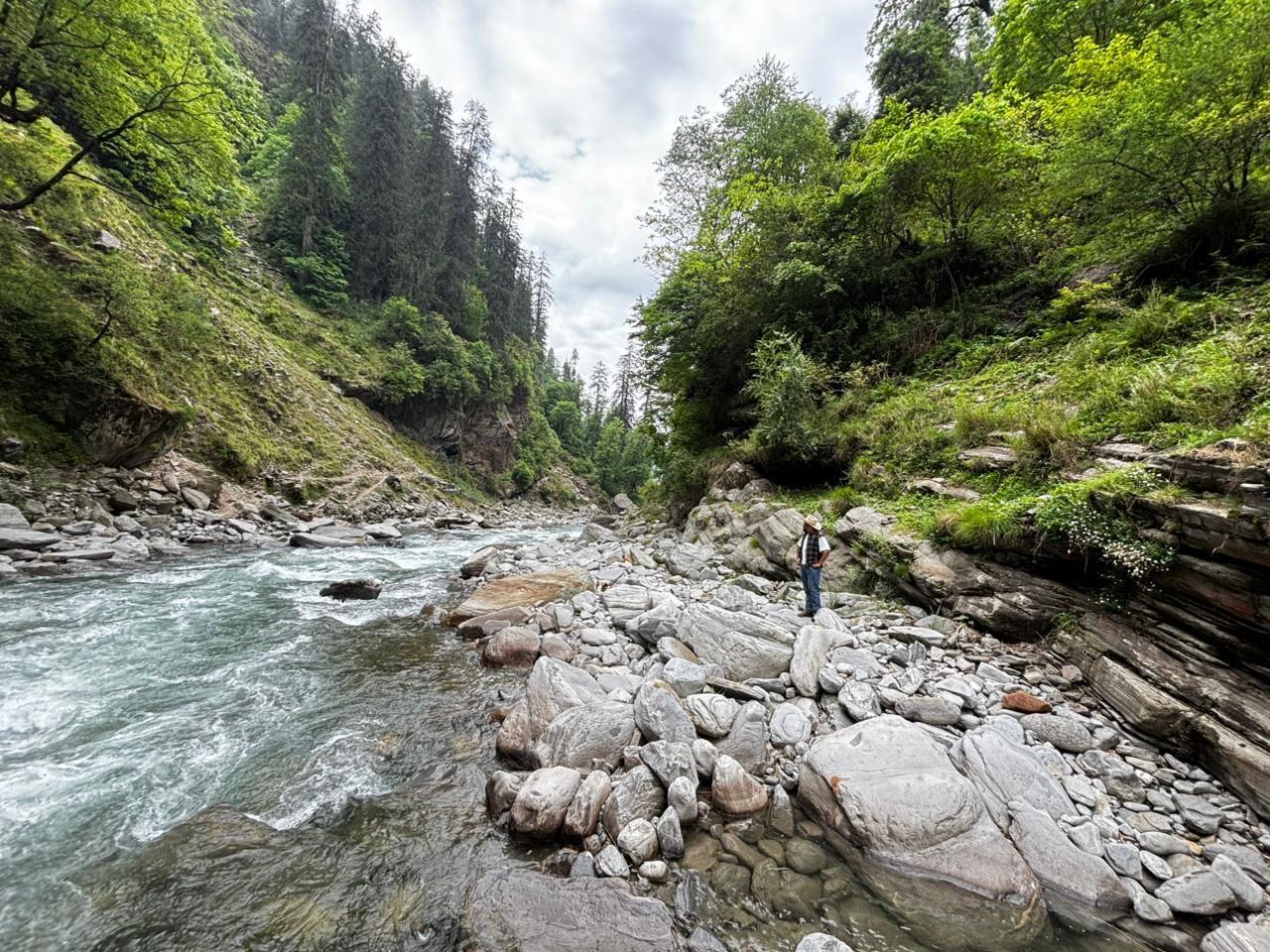
It is a cold-water specialist that needs clean, well-oxygenated water in the 55–65°F (13–18°C) range to thrive and is stressed, even at risk of mortality, above a sustained 70°F. Egg incubation requires water no warmer than 10–12°C (about 195 degree-days to hatching), so spring-fed sources with uniform year-round temperatures are ideal, and the pH should sit between 6.5 and 8.0 — natural reproduction is compromised below 6.0.
For a hatchery, a continuous year-round water supply is essential; any interruption causes failure, and the source ideally sits at least 10 feet above the site for gravity flow. The water-quality factors that matter most in HP are dissolved oxygen, turbidity and mineral content, plus freedom from agricultural runoff and road-construction debris.
Gear Recommendations for Angling in HP
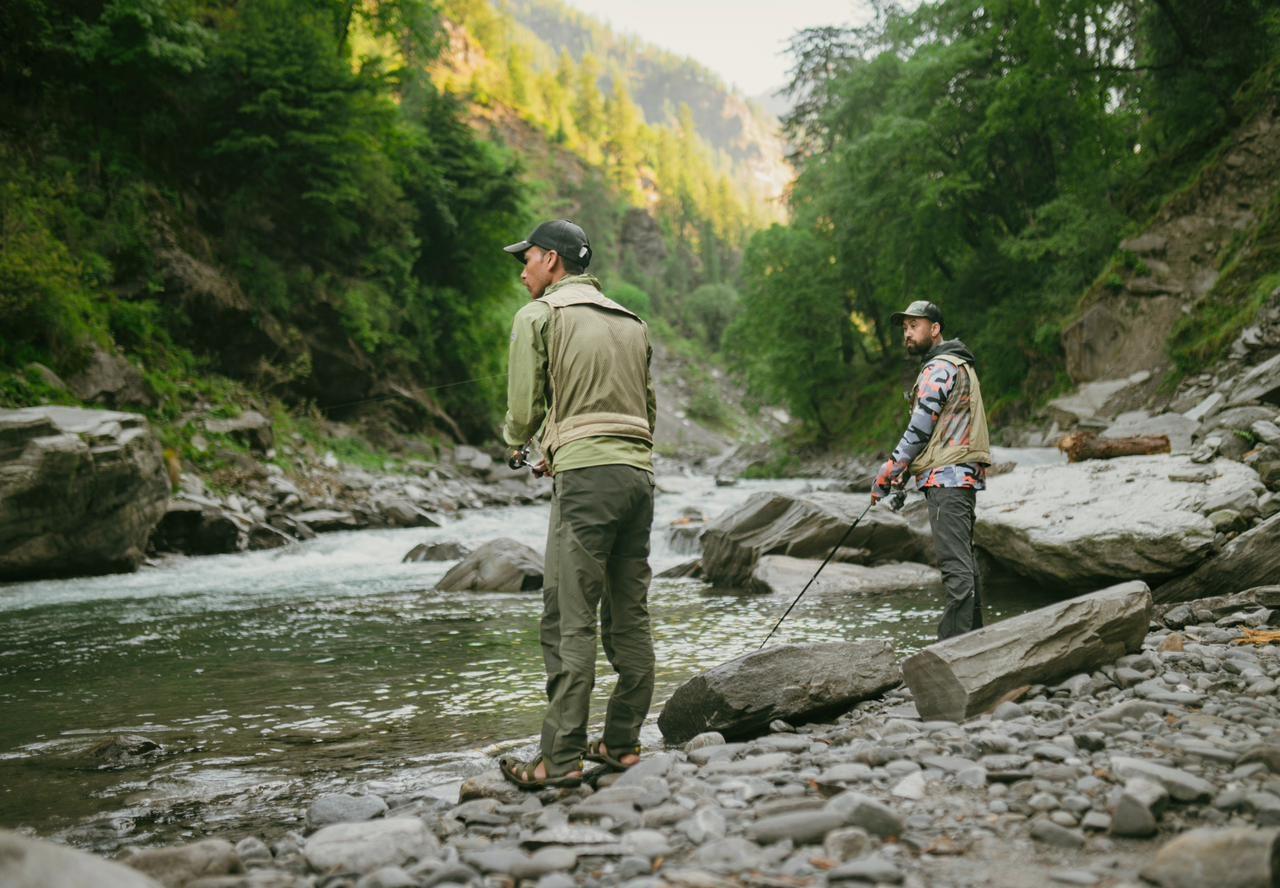
Fly fishing is what's most practised on HP streams, and a 9-foot 5-weight is the do-everything setup for most Kullu Valley water — dries, nymphs and small streamers all handled. Drop to a 3- or 4-weight on small, tight hill streams and step up to a 6-weight for a bigger river like the Beas. A weight-forward floating line with a 9-foot leader to 4X–6X tippet covers most situations, fluorocarbon tippet is noticeably more productive in the clear slow pools, and for the cold reservoirs an intermediate or sink-tip line gets flies down to the fish.
On patterns: nymphs are the most productive year-round — Pheasant Tail and Hare's Ear for mayflies, Zebra Midge and Copper John for subsurface work, and a Prince Nymph when nothing specific is hatching, fished under an indicator or Euro-style in the pocket water. For dries, a Parachute Adams covers most mayfly hatches, an Elk Hair Caddis the very common caddis activity, and Blue-Winged Olive patterns the slower stretches. From June to September, hopper, ant and beetle terrestrials fall from the lush streamside vegetation, and a hopper-dropper rig is deadly. For larger rainbows in the deep pools of the Beas and Parbati, swing a Woolly Bugger, Muddler Minnow or small Clouser at low light.
If you spin, run an ultralight-to-light rod (5'6"–7') with a soft tip, a 1000–2500 reel and 3–6 lb fluorocarbon — drop to 2–4 lb on clear, pressured streams. Inline spinners (Rooster Tail, Panther Martin) and small spoons (Kastmaster) in gold and silver are reliable on most HP rivers, small minnow-imitating crankbaits come into play when larger rainbows chase baitfish in the deeper Beas, and where bait is permitted, single salmon eggs, nightcrawlers and small worms drifted under a float are a guide-grade technique.
Behaviour & Conditions
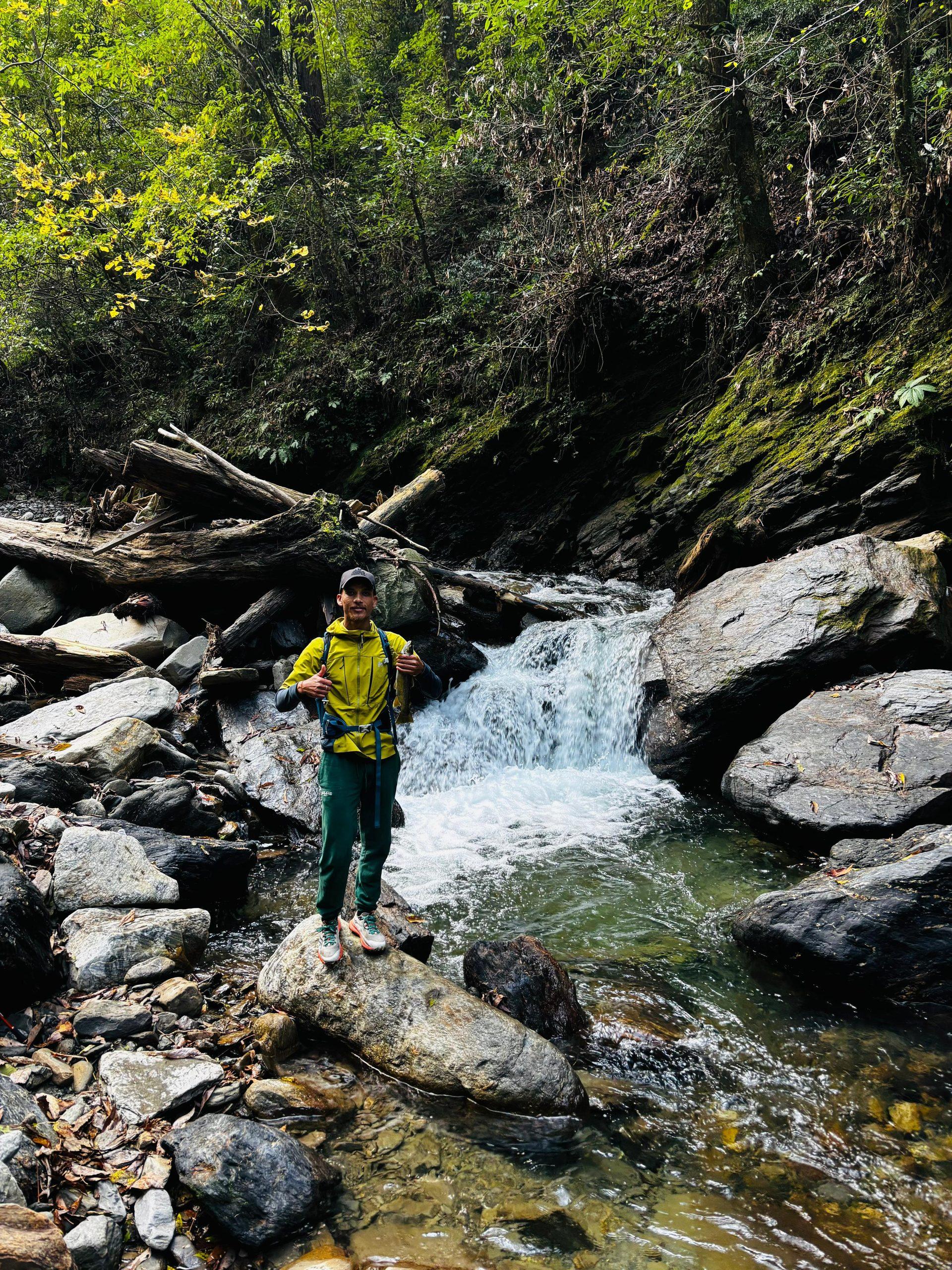
Optimal growth sits at 55–65°F (13–18°C), with stress above a sustained 70°F — which is what defines viable farming altitude in HP, typically above 1,200 m. The fish need high dissolved oxygen and clean substrate, and a pH of 6.5–8.0 (reproduction fails below 6.0). In the hill streams, summer heat from June to August pushes them into deeper, shaded plunge pools with high oxygen and makes them sluggish through midday, so the prime windows are early morning and evening.
Aquatic insects do the heavy lifting in HP streams — mayflies, caddis and midges in their nymph and emerger stages — which is exactly why Pheasant Tail, Hare's Ear and Zebra Midge nymphs are the most productive patterns year-round. In summer a terrestrial bias develops as ants, beetles, hoppers and crickets fall off the heavily vegetated banks (hopper-dropper rigs shine then), and larger fish over 500 g turn increasingly to small baitfish in autumn, when streamers and inline spinners earn their keep. Farmed fish are fed dry compound pellets; the HP Patlikuhl farm produces feed locally from raw materials, with an FCR target of 1:1.5 and a target production cost of about ₹20/kg.
Behaviourally, rainbows are drift feeders — they hold in the current and let the river bring food to them, inspecting what arrives, so matching the hatch in size and silhouette matters more than exact realism. They spawn in spring in HP streams (eggs incubate 4–7 weeks depending on temperature) and pre-spawn fish colour up, grow territorial, and are the most actively caught. They are visual predators with sharp eyesight, easily spooked by movement, shadow and heavy tippet in the clear water, feed most around dawn and dusk, and leap energetically when hooked — the trait that makes them so popular with HP sport anglers and tourists.
Conservation Status & Concerns
Rainbow trout are fully introduced (non-native) in India and, like browns, pose documented risks to native Himalayan fish — particularly snow trout (Schizothorax spp.) and other indigenous cold-water species — through predation and competition. They do not breed naturally as readily as browns, so the habitat needs active assistance to keep populations up.
Several concerns are specific to rainbows in the Indian Himalaya. Whirling disease (Myxobolus cerebralis) hits young fish hard, which is why the HP farming programme specifically prohibits rearing juveniles in earth ponds — it is a major worry for wild and farmed stock alike. Himalayan warming is shrinking viable cold-water habitat, especially at lower elevations and in southern HP districts; many fisheries are entirely stocking-dependent because natural reproduction can't keep up in degraded or low-altitude reaches; and pollution from road construction, hydropower and urban runoff degrades the Beas and its tributaries, while illegal electric fishing, poisoning and netting threaten the accessible stretches. The HP Fisheries Department enforces seasonal restrictions and catch-and-release on designated wild trout streams, so check the current rules with the nearest office before you fish.