Overview
Grass carp (Ctenopharyngodon idella) is an eastern-Asian native, originally from the large river systems of China and eastern Russia. In India it is one of the five major Chinese carps introduced for polyculture fisheries — alongside silver carp, bighead carp, common carp and catla — and it has been stocked in Himachal's major reservoirs, including Gobind Sagar (Bilaspur), Pong Dam (Kangra) and Koldam (Bilaspur), mainly for biological control of aquatic vegetation and to supplement reservoir fish production.
Among carp anglers in India it holds a distinctive place: a large herbivore that cruises the shallow vegetated margins and demands careful, delicate presentation. Its wariness and selective feeding make it one of the more challenging targets in Indian reservoir fishing.
Physical Characteristics
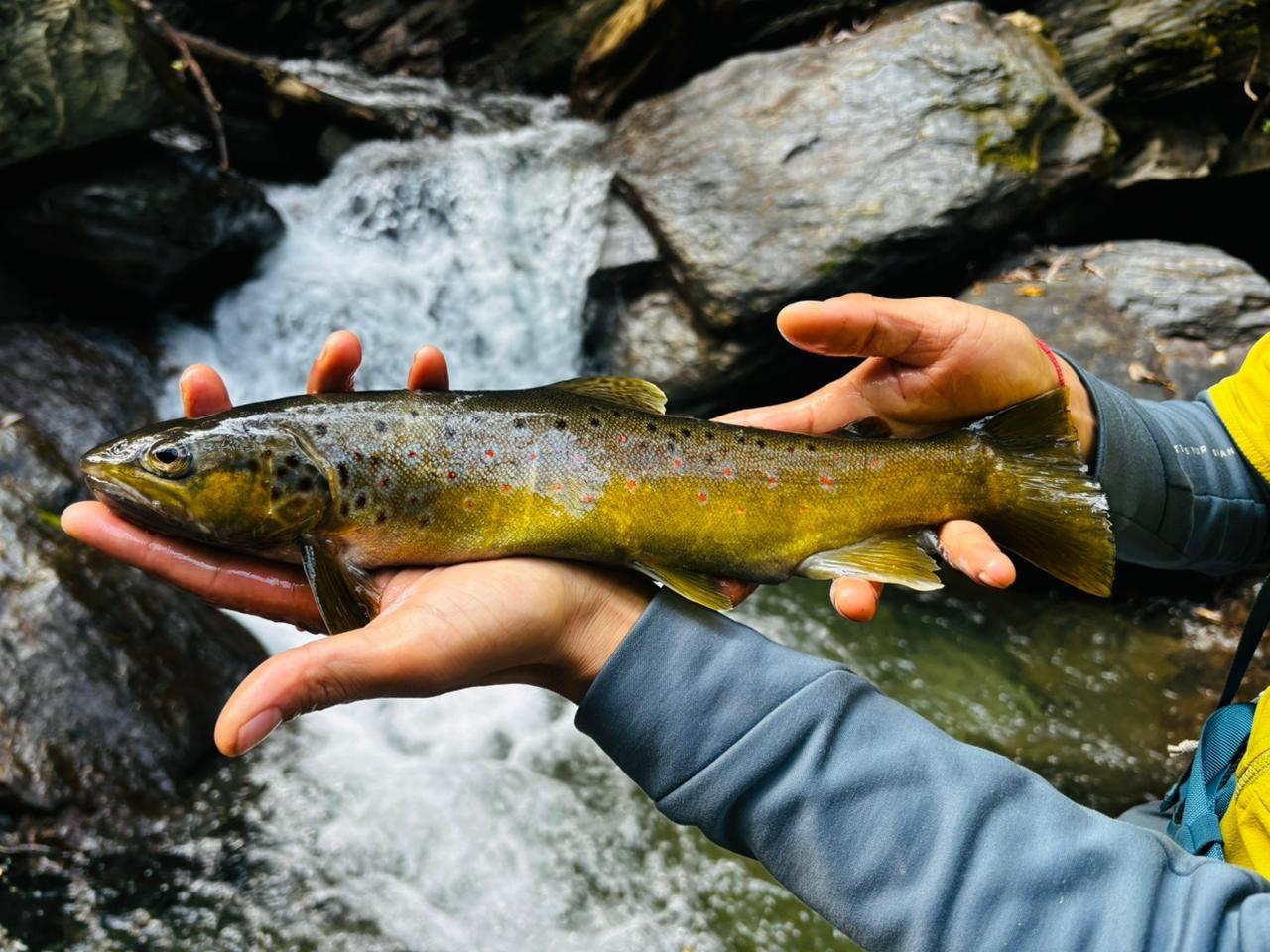
The body is long and torpedo-shaped — noticeably more cylindrical than the deeper-bodied common carp or rohu — with olive to brownish-yellow sides, a clean white belly, and large, dark-edged scales. The terminal mouth has firm, non-fleshy lips and no barbels, which tells it apart from common carp immediately, and the head is wide and flat-topped with small, low-set eyes above a short dorsal fin of 7–10 soft rays. Adults in Indian reservoirs typically run 2–10 kg, with exceptional fish in Gobind Sagar and Pong Dam exceeding 15–20 kg; the IGFA all-tackle world record stands at 39.75 kg (87 lb 10 oz).
Distribution in Himachal Pradesh
Grass carp are present as stocked populations in all three major HP reservoirs but not in the cold, swift hill streams of the upper Beas, Tirthan or Parbati, where the water is too cold for sustained feeding and growth; they thrive instead in the warmer, slower lower reaches and the lacustrine environments of the big dams. Gobind Sagar is the primary stocking site, with large open water and vegetated margins; Pong Dam, a Ramsar-listed reservoir, sees significant weed-control stocking; Koldam is a recently commissioned, managed fishery; and the lower Beas plains around Mandi to Una produce the occasional fish from slow-moving seasonal backwaters.
Habitat & Location
These are adaptable generalists with a wide thermal tolerance (0–38°C) that feed most actively between 20–28°C, which in HP reservoirs means peak feeding from late spring through the monsoon and into early autumn — broadly March to October, depending on elevation and reservoir depth. They favour vegetated shallows and weedy margins as primary feeding habitat, the slow arms and bays where aquatic macrophytes accumulate, inlet areas where seasonal streams carry in terrestrial vegetation and overhanging trees drop leaves and fruit, drawdown zones where receding winter water lets shoreline vegetation regrow, and the open water column at dawn and dusk when surface stratification breaks.
They are among the hardiest of the major carps, tolerating dissolved oxygen as low as 0.5 ppm (though they prefer above 3 ppm), a pH of 6–9, and salinity up to 10 ppt. HP reservoirs swing a lot across the seasons — monsoon turbidity, winter destratification — and grass carp handle those transitions far better than the more sensitive cold-water species.
Gear Recommendations
Grass carp are notoriously sensitive to disturbance and have excellent vision in clear, shallow water, so the whole game is minimising splash and vibration and presenting natural baits. For bank fishing, use a medium-heavy 3–3.6 m carp rod (or a 3-piece Indian-market feeder rod rated 2.5–3 lb TC) with a baitrunner/freespool reel of 4000–6000 size — their bolt runs are powerful and the line must peel freely — and run 15–20 lb monofilament or 30 lb braid with a 15 lb fluorocarbon leader of 8–10 ft, finishing with a hair rig and a size 4–8 wide-gape hook so the bait sits off the shank. A method or open-end groundbait feeder works well in the silty margins.
Corn is the bait to start with. Tinned sweetcorn or dried maize has caught more grass carp than anything else across Indian reservoirs. During the monsoon, when the natural diet is everywhere, fragments of grass and aquatic vegetation come into their own, and in calm sheltered bays a crust or a piece of floating bread will do. Boilies work too — grass, scopex or fruity flavours, 14 to 18 mm. The deadliest baits, though, are the ones already falling into the water: mulberry (shahtoot), wild fig and fallen guava from the overhanging trees. Gobind Sagar's bank regulars swear by cooked chickpeas and maize on a hair rig.
Fly fishing is a quieter, more deliberate game. Use a 7–8 weight with a floating line and 10–14 lb fluorocarbon, and lean on mulberry and fig imitations — you are matching the hatch from the trees, not the river. A foam beetle, a Coch-y-Bondhu or a large Hare's Ear nymph covers fish that are tailing on the shallow flats. Approach from downstream and cast well ahead of a cruising fish, letting the fly settle to its feeding depth. The take is the hard part: not a violent grab but a drift in the line or a gentle head-down upturn, and you have to be watching for it.
Behaviour & Conditions
Grass carp are obligate herbivores — unlike common carp, they don't root the sediment for invertebrates — and an adult can consume up to 45 kg of vegetation a day, which makes them superb for weed control and also wholly predictable: where there is abundant aquatic vegetation, grass carp won't be far. They feed on aquatic macrophytes, submerged grasses and algae, plus terrestrial vegetation that falls in, become active above 14°C with peak feeding above 20°C (May through October in Gobind Sagar), follow a crepuscular pattern that puts them in the shallows at dawn and dusk and deeper water through the midday heat, and are so spooky and vibration-sensitive that heavy footfall, boat engines or splashing will clear a feeding flat instantly. They move in loose groups along predictable margin routes.
Spawning happens in warm flowing water once temperatures reach around 20°C. In large impoundments like Gobind Sagar natural recruitment is limited, so the HP Fisheries Department tops up the populations with annual fingerling stocking produced at the government fish-seed farm at Deoli (Mandi) and at private hatcheries in the Kullu and Kangra districts; fish in spawning condition turn warier and harder to tempt.
Conservation & Regulations in Himachal Pradesh
Grass carp are not threatened globally, and managing them in Indian waters means holding two things in tension. They are stocked on purpose, for weed control and food. Left unchecked, though, they can strip the native vegetation other wildlife needs. In HP reservoirs they sit under the Himachal Pradesh Fisheries Act as a cultivated, stocked species, and a few rules follow from that. You need a valid angling permit for the major reservoirs — Gobind Sagar, Pong Dam, Koldam — from the HP Fisheries Department or the district fisheries officer. The HP Fisheries Act 1976 and its amendments set the size limits, closures and gear. Pong Dam is a Ramsar site and Wildlife Sanctuary, so it carries extra restrictions; clear it with the Kangra District Fisheries Office first. There is no national minimum size for grass carp specifically, so go by the 30 cm general minimum or local guidance, and treat the closed season as roughly January to June (check the current year's notification). Netting runs through licensed contractors; recreational hook-and-line angling is generally fine with a licence.
Ecologically, the fish earn their keep: in Gobind Sagar and Pong Dam they control invasive weeds such as water hyacinth (Eichhornia crassipes) and hydrilla, both of which can choke a waterbody and crash its oxygen. That makes stocking density a balancing act — too few and the weed control fails, too many and the loss of macrophytes removes habitat for juvenile fish, waterfowl and invertebrates. Catch and release is increasingly the norm, especially among visiting sport anglers: use barbless or debarbed hooks, keep the fish in the water as long as possible, and release it in calm shallow water, where its robust constitution lets it recover well.
Fishing Tips for HP Reservoirs
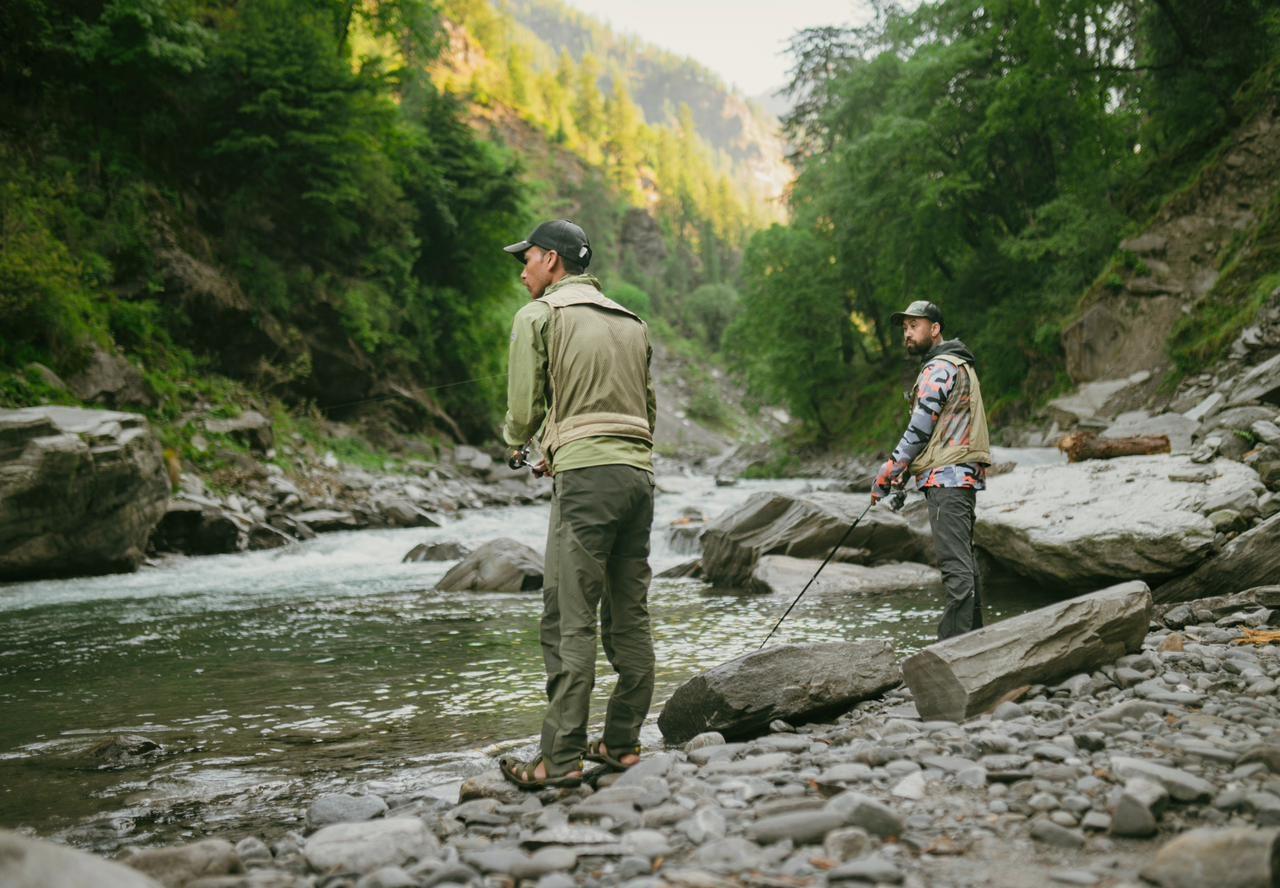
Success with grass carp in Gobind Sagar and Pong Dam hinges on stealth and patience; the fish have been targeted by net fishermen for decades and are notoriously boat-shy under pressure. Arrive before dawn and fish the first two hours of light when the calm surface lets you spot cruising fish; pre-bait the swim with handfuls of sweetcorn or cut grass the evening before, since grass carp are creatures of habit and return to a reliable food source; use a lightweight leadcore or leadless system so the main line sinks out of sight in clear shallow water; and set the rod on a rest with the clutch barely engaged, because a first run can strip 50 m of line in seconds. In Pong Dam's northern shallows, wade carefully and look for bow waves in the reeds, casting a floating piece of bread or a mulberry imitation ahead of the fish; at Gobind Sagar, boat fishing the quieter upper Sutlej arm near Slapper and Lathiani reaches undisturbed weed beds.
The best months are May, June, September and October — warm enough for active feeding, before the monsoon turbidity peaks — and the productive windows are 5:30–8:30 AM and 5:00–7:30 PM, with midday largely a write-off in summer. Avoid windy days, when surface chop makes spotting and surface presentation impossible, and note that new and full moons reportedly see more activity in Indian carp fisheries generally. Once a fish is landed — they fight with powerful, sustained runs and little jumping — wet your hands, support the full body weight, take the photo quickly, and if releasing, lower it back and hold it upright until it swims away strongly.