Overview
Brown trout are not native to India — they are a deliberate piece of colonial nostalgia. The British wanted the fly-fishing of European rivers recreated in the hills, and from the 1860s they kept trying to seed Indian cold water with it. The first organised attempt, in 1863, was Dr Francis Day, a British Army surgeon and naturalist, releasing salmon and trout into the cold streams of the Nilgiri Hills in the south; it failed outright.
The breakthrough came at the turn of the century in Jammu and Kashmir, and it owed almost everything to a Scotsman living in the region, Frank James Mitchell. A first gift of 10,000 trout eggs, shipped by the Duke of Bedford to the Maharaja of Kashmir in 1899, perished entirely en route. The second try worked: in December 1900 a consignment of brown trout (Salmo trutta fario) fry and eggs arrived from Scotland in excellent condition. Mitchell and local experts — among them Pandit Sodhama Miskeen, remembered affectionately as “Gada Sodhama” — reared them, and by 1901 India had its first dedicated trout hatchery at Harwan, near Srinagar, from which browns were systematically stocked into snow-fed rivers like the Lidder, Sindh and Bringhi. The fish took, and spread through most of the country's cold water, the streams and tributaries of the Himalayas included.
The last three or four decades have run the other way. Catches have fallen sharply, and not for any single reason: large-scale road construction in the mountain valleys has destroyed breeding and feeding grounds, river-valley and hydropower projects have altered the flows, the hill towns have urbanised fast, fishing pressure has climbed, and illegal, destructive methods have done the rest.
Quick Facts
| Scientific Name | Salmo trutta fario |
| Common Names | German Brown, German Trout, Brownie, Lake-Run Brown |
| Family | Salmonidae |
| India Introduction | 1883 — first stocked from Germany |
| Himalayan Distribution | India's first dedicated trout hatchery established at Harwan, near Srinagar, by 1901 |
| Stream Adult Size | 35–60 cm, 400–3000 g |
| Primary States | Himachal Pradesh, Jammu & Kashmir, Uttarakhand, Sikkim, Arunachal |
| Optimal Water Temp | Below 10–12°C for egg incubation; 15–18°C (60–65°F) for rearing |
| Spawning Season | Fall — triggered by temperatures dropping to the mid-40s°F |
| Spawning Habitat | Shallow gravel redds in rivers and tributaries |
Physical Characteristics
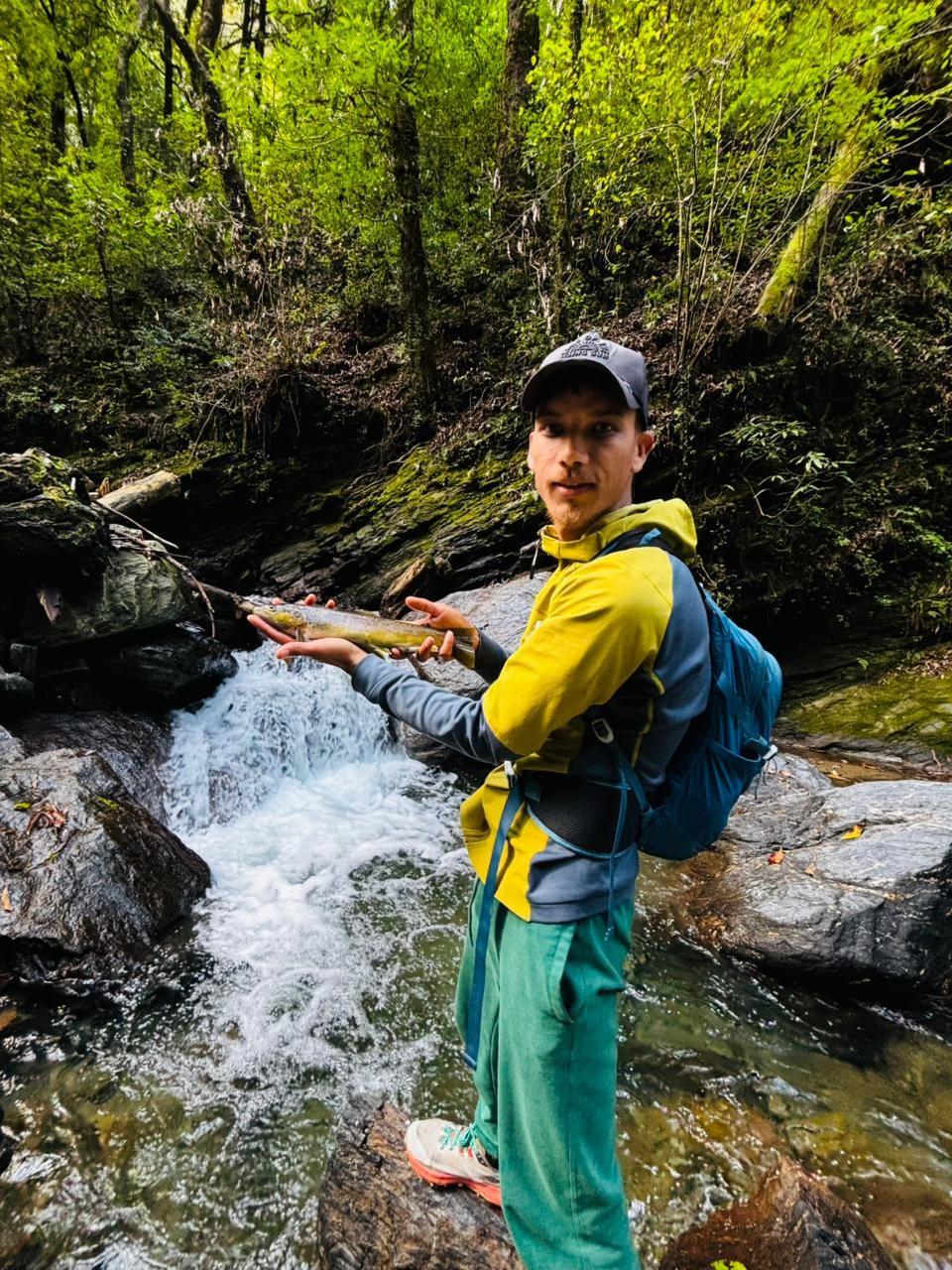
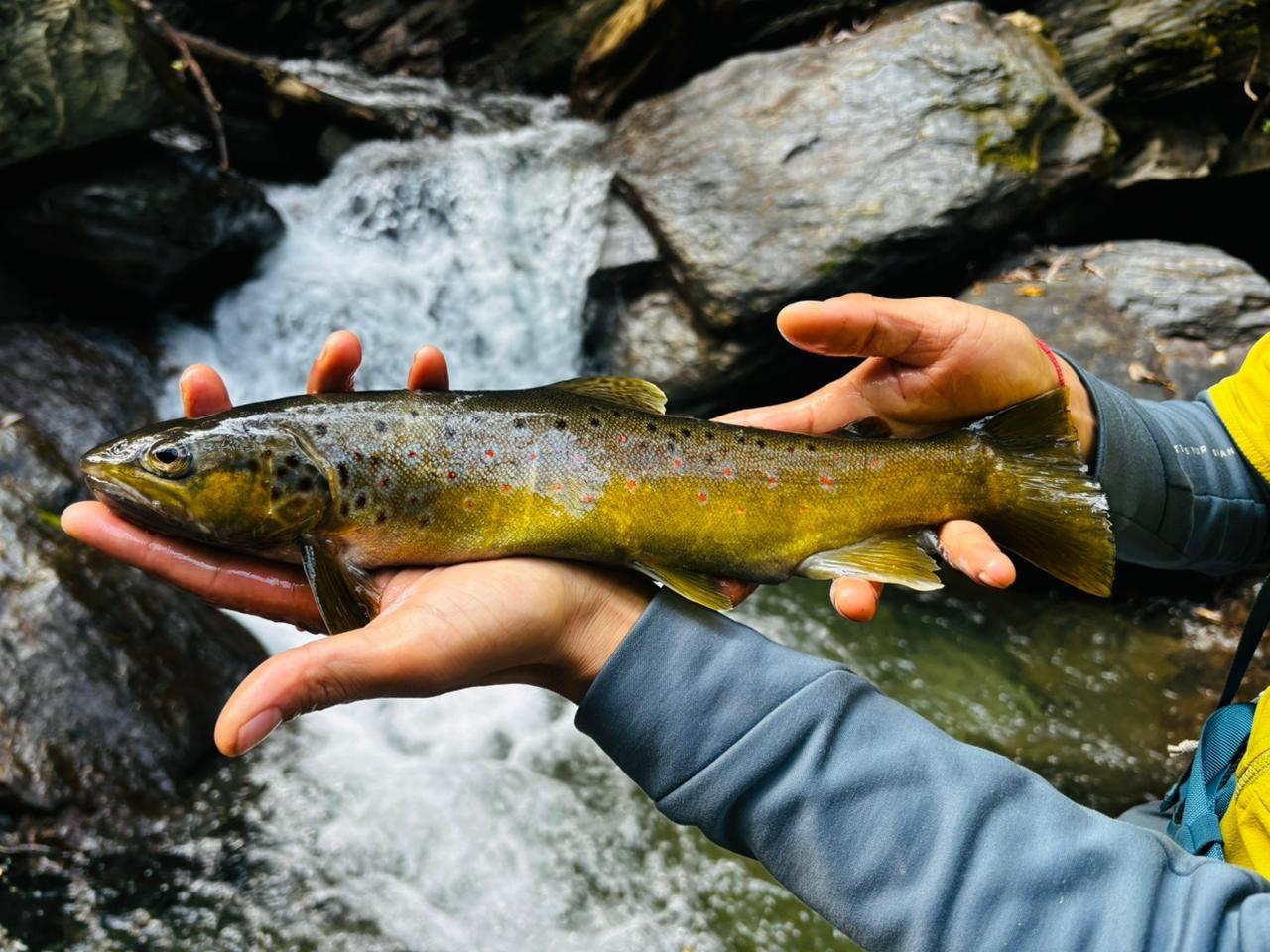
You tell a brown trout by its colour and its tail. The back is brown to gold-brown, fading to yellow or silver sides, marked with black spots in pale halos and red spots that are sometimes ringed in blue — colours that are most vivid in stream fish. The tail is the clincher: nearly square, with only sparse spotting along the upper edge, which separates it cleanly from the heavily spotted, forked tail of a rainbow. The adipose fin carries a reddish-orange margin and dark spots, and the pelvic and anal fins lack the white leading edges you see on a brook trout. In Indian hill streams an adult typically runs 14–24 inches; in larger rivers and lakes, once a fish switches to a baitfish diet, it can exceed 10 lbs.
Habitat & Location
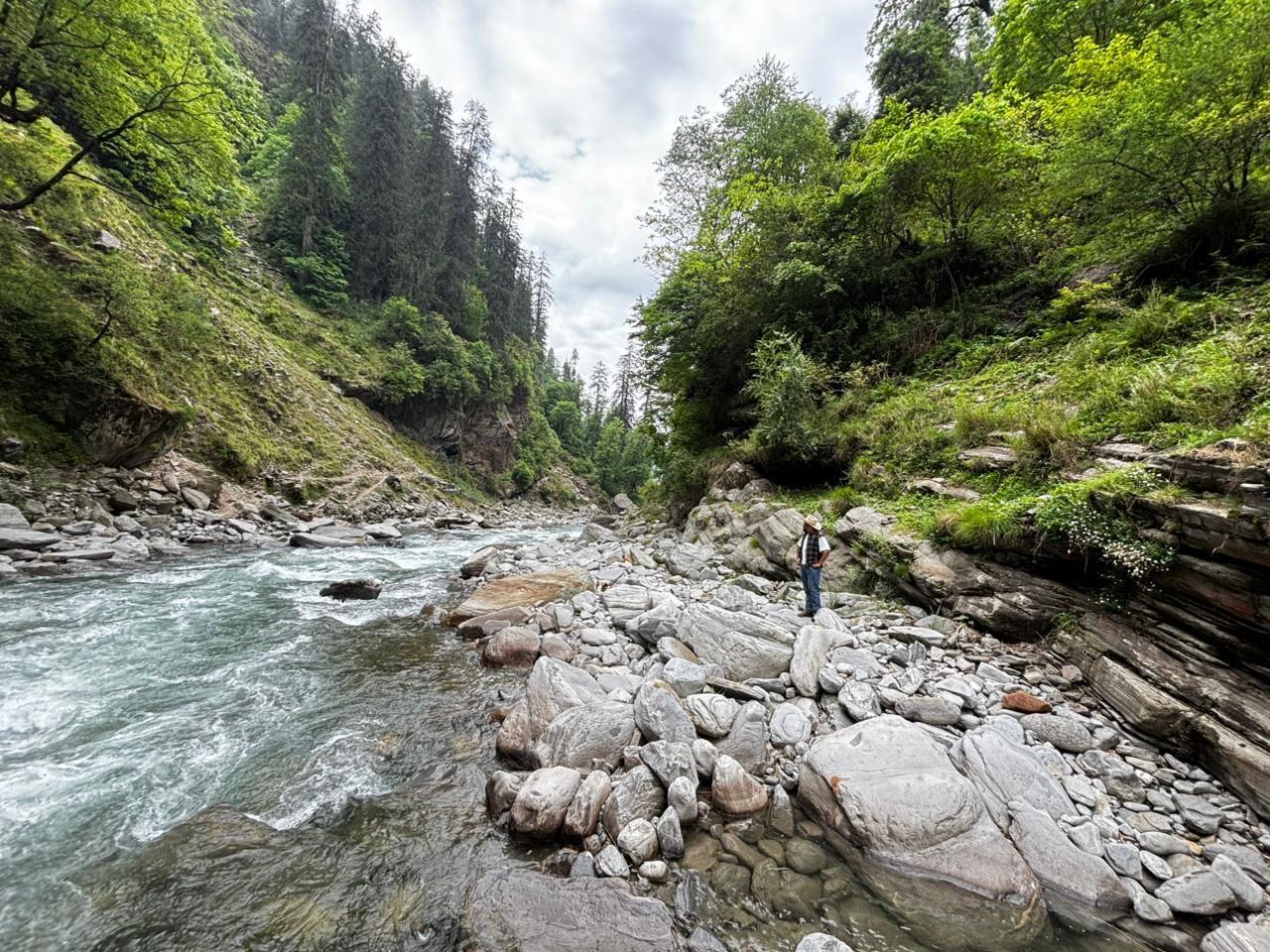
Brown trout are non-native everywhere in the Himalayas but are now established across Himachal's streams, with the strongest self-sustaining wild populations where the water stays clean and undisturbed. They are a coldwater fish — thriving around 60–65°F and demanding well-oxygenated water — so sustained warmth pushes them toward deep holes, fast riffles, or whatever thermal refuge they can reach.
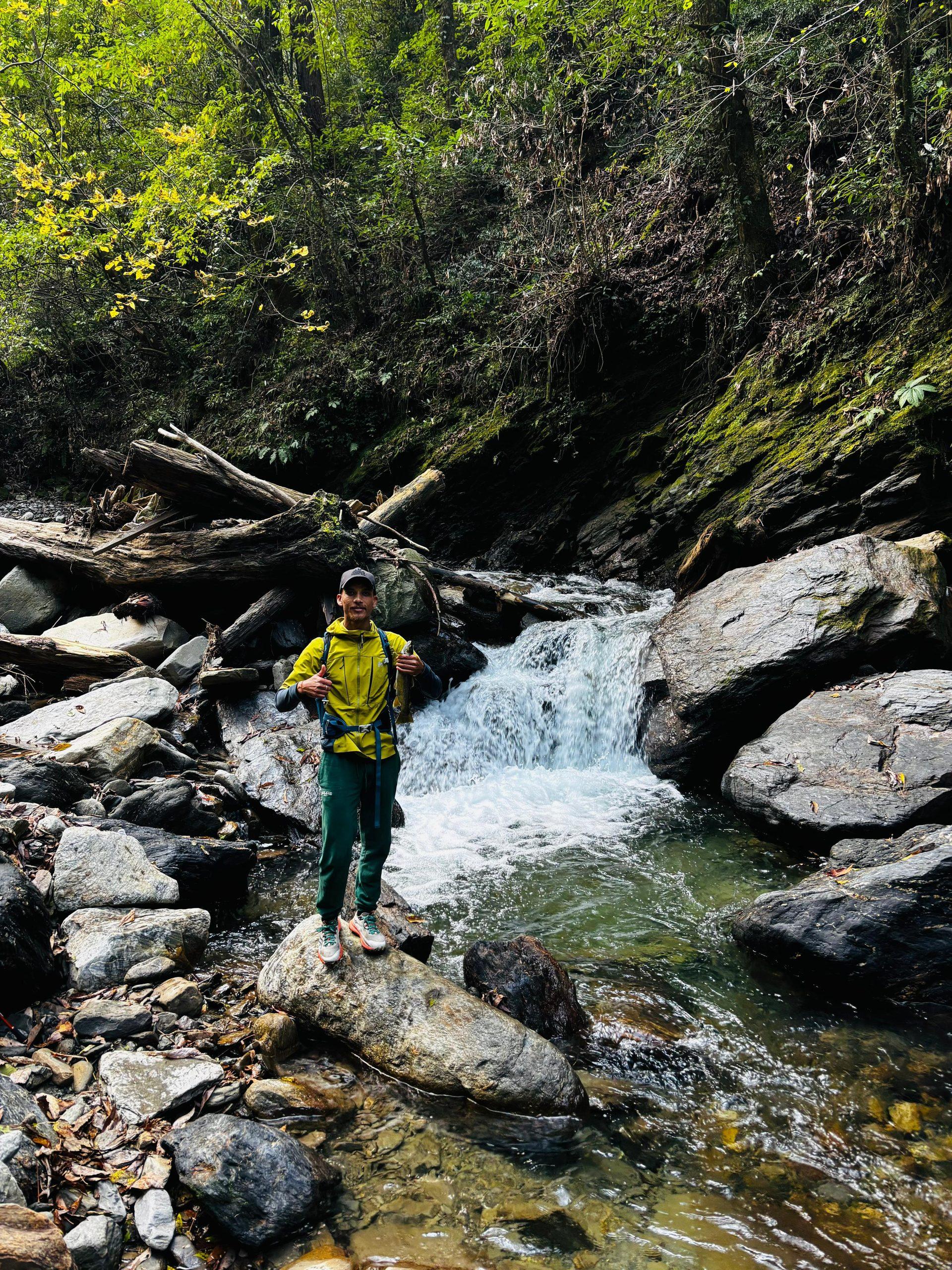
Big browns sit in soft water tight to bank cover — undercuts, rootwads, sunken logs, boulder pockets — where they can ambush prey without burning energy in the main current. They concentrate along the seams between fast and slow water, in the eddies behind boulders, and in the tailouts of deep pools, especially at low light when they slide out of cover to feed. Summer heat pushes them either deep or into oxygen-rich riffles and plunge pools; winter sends them to the slowest, deepest water available. In stillwaters, work the weed-bed edges and drop-offs near structure — the depth shifts with thermal stratification and with wherever the baitfish are holding.
Gear Recommendations
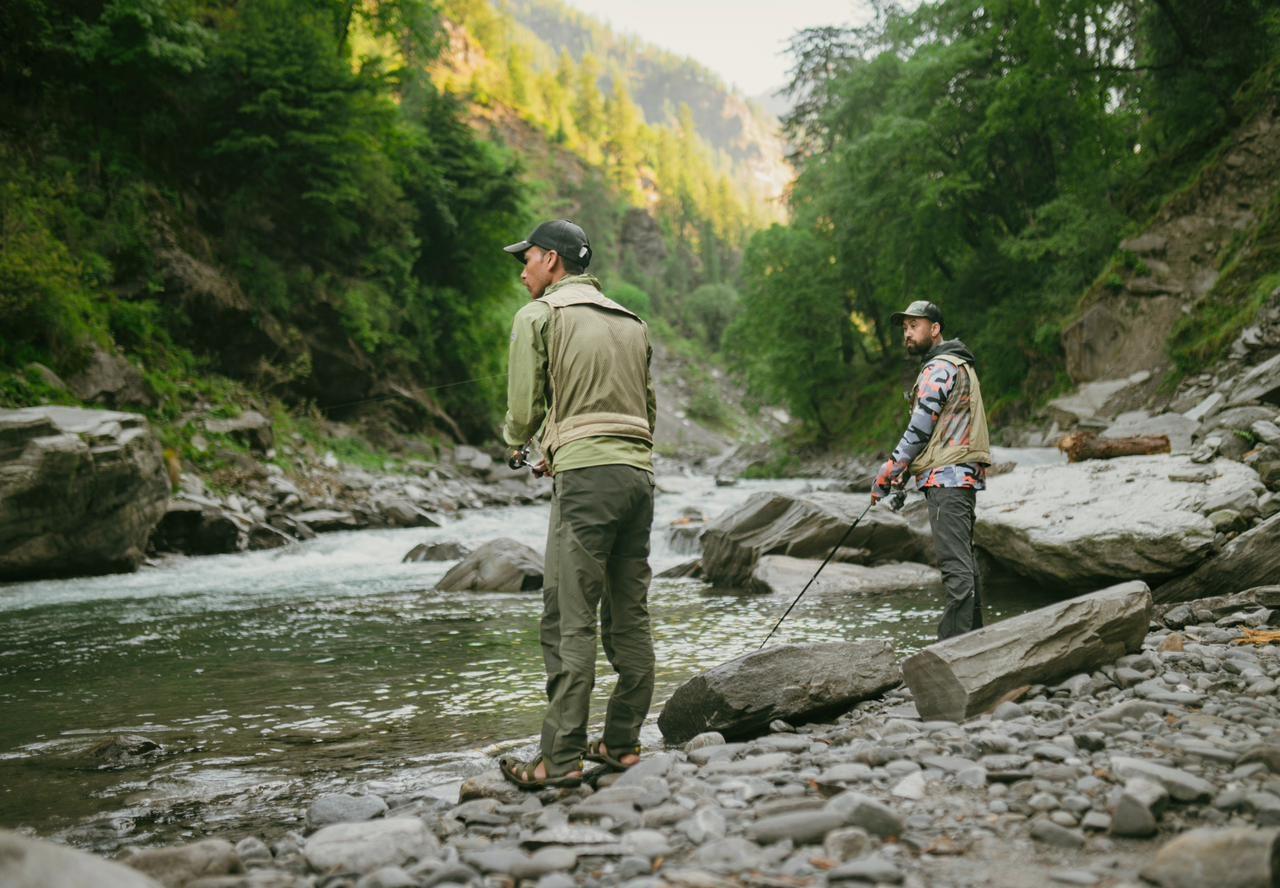
Fly fishing is what most people practise in HP, and a 9-foot 5-weight rod handles the bulk of the hill streams — dry flies, nymphs and small streamers all sit comfortably on it. Run a 9 ft leader tapered to 4X–6X for dries and nymphs, and shorten to 5–7.5 ft of 0X–1X for streamers on a bigger river like the Beas. Watch the water before you tie anything on: hatch-matching genuinely pays here. For dries, a Parachute Adams or Elk Hair Caddis covers most hatches; for nymphs, a Pheasant Tail or Hare's Ear imitates the mayfly and caddis larvae these streams are full of; for the larger browns in the deep pools of the Beas and Tirthan, reach for a Woolly Bugger or a sculpin pattern; and from June through August, ant and beetle terrestrials come into their own.
If you would rather spin, a light 6–7 ft rod with 4–6 lb fluorocarbon suits the smaller streams, with something slightly heavier for the Beas and Parbati. Small inline spinners — Mepps, Panther Martin — and gold or silver spoons work on most HP waters, and minnow-profile jerkbaits or small crankbaits in gold and brown finishes are the call for trophy fish in the larger rivers.
Behaviour & Conditions
The temperatures that matter are easy to hold in your head: 60–65°F (15–18°C) for rearing, below 10–12°C for egg incubation, and a drop into the mid-40s°F to trigger spawning, which in Himalayan streams falls roughly between November and January. Throughout, the fish need well-oxygenated water and clean gravel redds to spawn on.
Diet shifts with size. Juveniles live on the aquatic insects abundant in clean Himalayan streams — mayfly, caddis and stonefly nymphs — and once they pass 12–14 inches they turn to fish: small stream fish, crayfish and large insects. In summer, terrestrial insects that fall into the water — ants, beetles, grasshoppers — become a major food source.
Browns feed hardest at dawn, dusk and through the night; the big fish in particular are confirmed nocturnal feeders, which is exactly why first light and the hour before dark produce so consistently. In the fall, as the water drops into the mid-40s°F, females dig redds on shallow gravel and males turn aggressively territorial, growing the hooked kype that gives a big buck its character — pre-spawn fish are the most catchable, but fish actually on the redds should be left alone. Year-round they are territorial and, in clear water, notoriously wary: the dominant fish hold the best lies and refuse a sloppy presentation, which is what makes the brown the hardest freshwater gamefish to fool consistently.
Conservation
Be clear-eyed about this. Brown trout are fully introduced in India and have caused documented harm to native Himalayan fish through predation and competition, and the HP Fisheries Department actively manages them as a trade-off between sport-fishing value and that ecological cost. The concerns specific to the Indian Himalaya are competition with and predation on native snow trout (Schizothorax spp.) and other indigenous hill-stream fish; the climate-driven warming of Himalayan streams that is squeezing cold-water habitat at lower elevations; pollution from road construction, hydropower projects and urbanisation; and over-fishing, including electric fishing and poisoning, in the accessible stretches. Many HP fisheries now depend on ongoing hatchery stocking, because natural reproduction alone is not enough in the degraded reaches. The department enforces seasonal closures and catch-and-release on select streams, and the ask of anglers is straightforward — follow every local regulation and release wild fish with care.