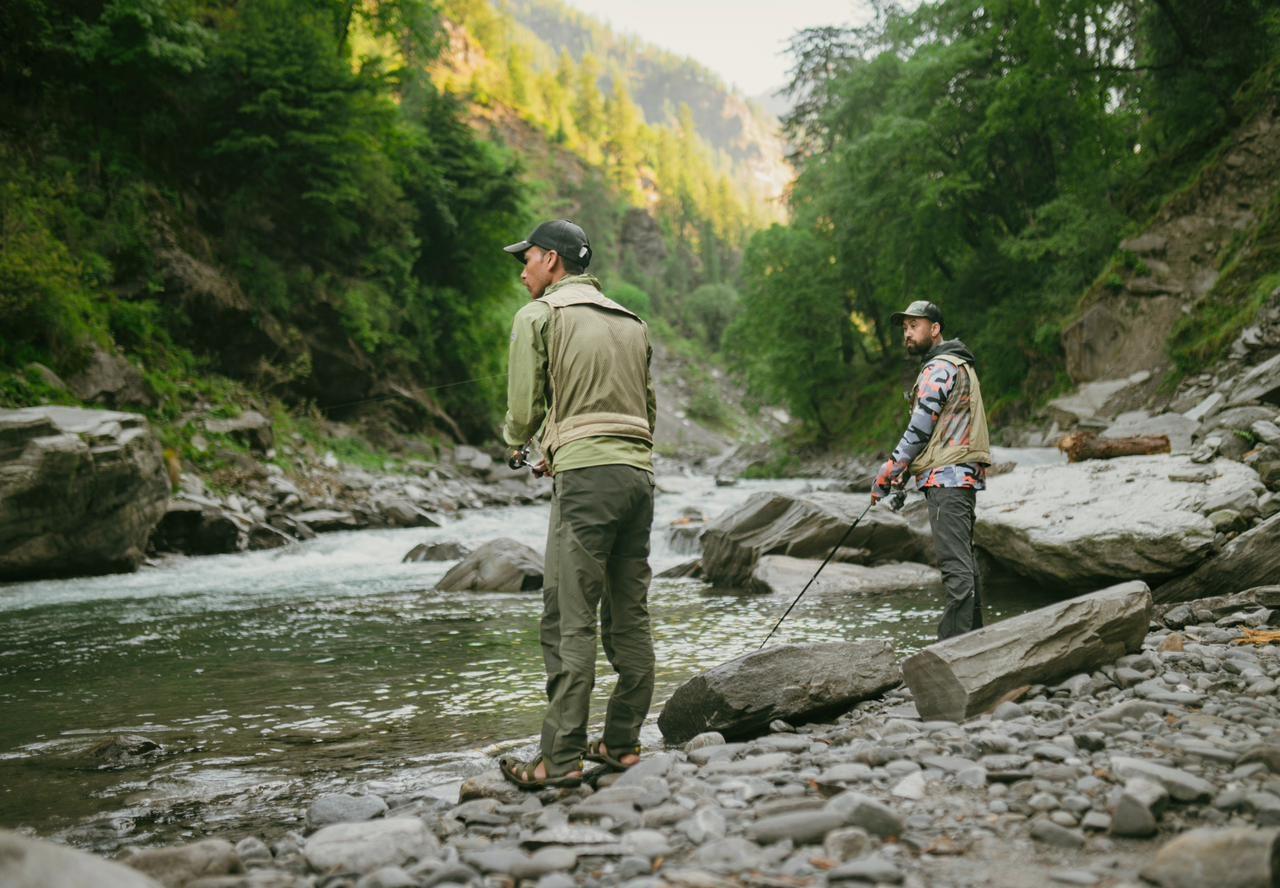
Overview
The Golden Mahseer (Tor putitora) is the crown jewel of Himalayan freshwater angling - a fish that Rudyard Kipling famously ranked above the Tarpon, and that Victorian-era sport writers described as "pound for pound far superior to the lordly salmon." It is the state fish of Himachal Pradesh, and its golden flanks in the clear riffle-and-pool rivers of the Beas, Tirthan, Sainj, and Parbati represent one of the finest freshwater sport-fishing experiences available anywhere in Asia.
Mahseer belong to the family Cyprinidae, the same family as carp, but they are the apex predator of Himalayan river systems, combining the power of a large carp with the speed and aggression of a game fish. A large mahseer in a fast Himalayan river is genuinely capable of stripping 200 metres of backing in seconds, running downstream into rapids, and taking 30 minutes to bring to net.
In Himachal Pradesh, Tor putitora once dominated the catches of every major river from the Sutlej to the Ravi. Decades of dam construction, over-exploitation, electrofishing, and habitat degradation have drastically reduced populations. The HP Fisheries Department now classifies mahseer as an endangered species and has implemented strict catch-and-release regulations, closed seasons, and minimum size limits to allow recovery.
Physical Characteristics
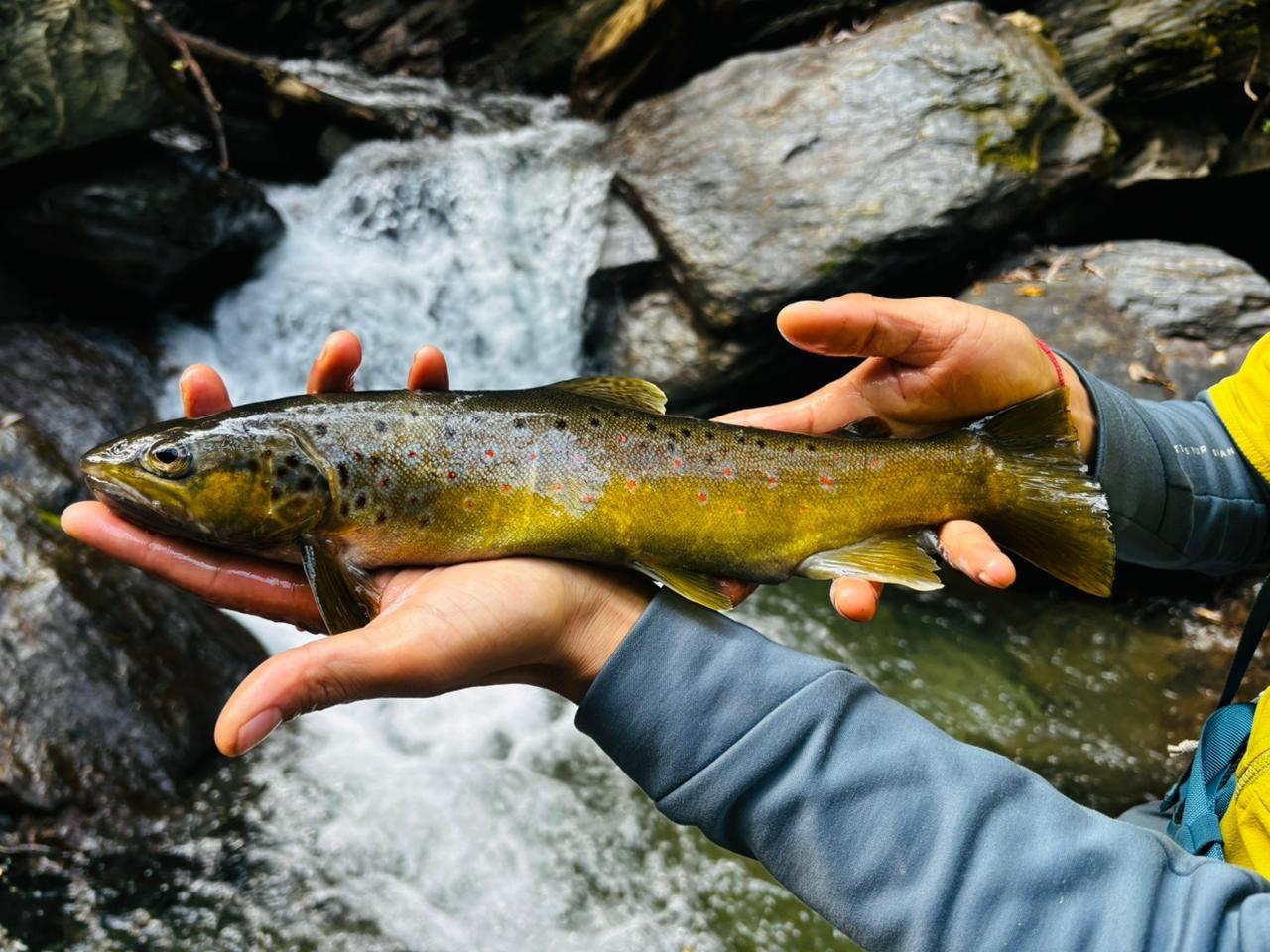
- Large, powerful cyprinid with thick, golden-olive to deep copper scales that catch the light in fast water, hence called "Golden" Mahseer
- Thick, fleshy lips adapted for gripping slippery boulders and dislodging invertebrates in fast current
- Two pairs of short barbels at the corners of the mouth
- Deeply forked tail, large pectoral fins — built for sustained performance in strong current
- Scale size is distinctive- large, overlapping, with a metallic gold-orange sheen in breeding fish
- Average caught fish in HP rivers: 1–5 kg; reservoir fish (Pong Dam): up to 8–12 kg; exceptional fish can exceed 30 kg in optimal habitat
- Recorded maximum: 70–80 kg (historical accounts from the 19th century; such fish no longer exist in HP rivers)
- Juveniles show dark spots and bars that fade with age
Distribution in Himachal Pradesh
- Beas River — from Manali downstream through Kullu, Mandi, and into Pandoh Reservoir; best wild populations in Kullu–Manali stretch
- Tirthan River (Great Himalayan National Park buffer zone) — one of the most pristine and actively protected mahseer streams in HP
- Sainj River — joins the Beas at Larji; excellent early season fishing
- Parbati River — tributary of the Beas near Bhuntar; clear glacial water, good populations
- Giri River — tributary of the Yamuna in Sirmaur district; historically significant but heavily impacted
- Pong Dam Reservoir (Kangra) — self-sustaining reservoir population; regular catches of 1–4 kg
- Gobind Sagar (Bilaspur) — populations much reduced from historic levels; occasional large fish
- Ravi River tributaries — Chamba district; relatively less disturbed upper reaches
Habitat & Location
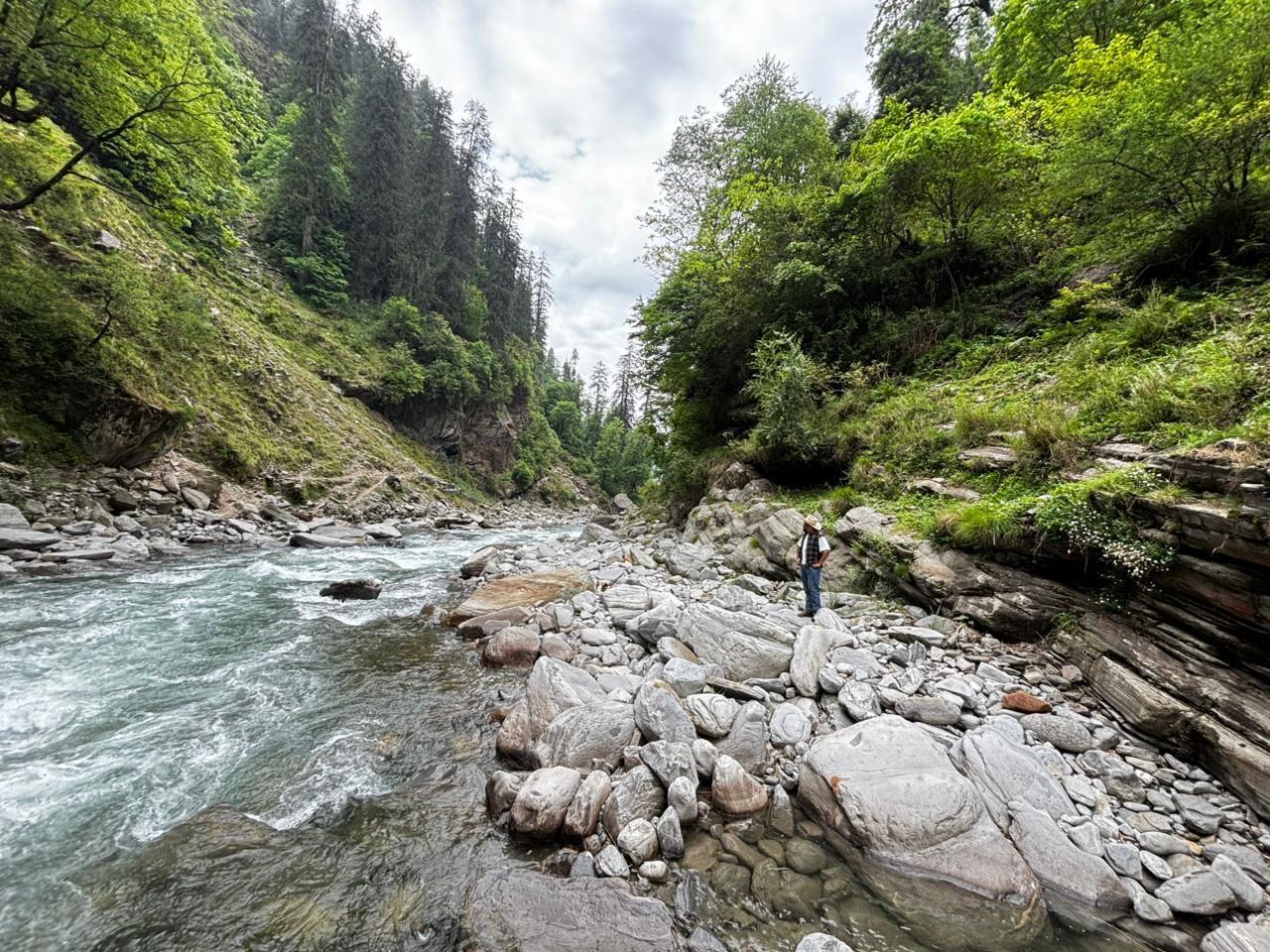
Golden Mahseer are specialists of clear, fast, well-oxygenated Himalayan rivers with boulder and cobble substrates. Unlike the tolerant common carp, mahseer require high water quality — they are sensitive to turbidity, low dissolved oxygen, and thermal pollution. This specificity makes them excellent ecological indicators: where mahseer thrive, the river is healthy.
Preferred Habitat
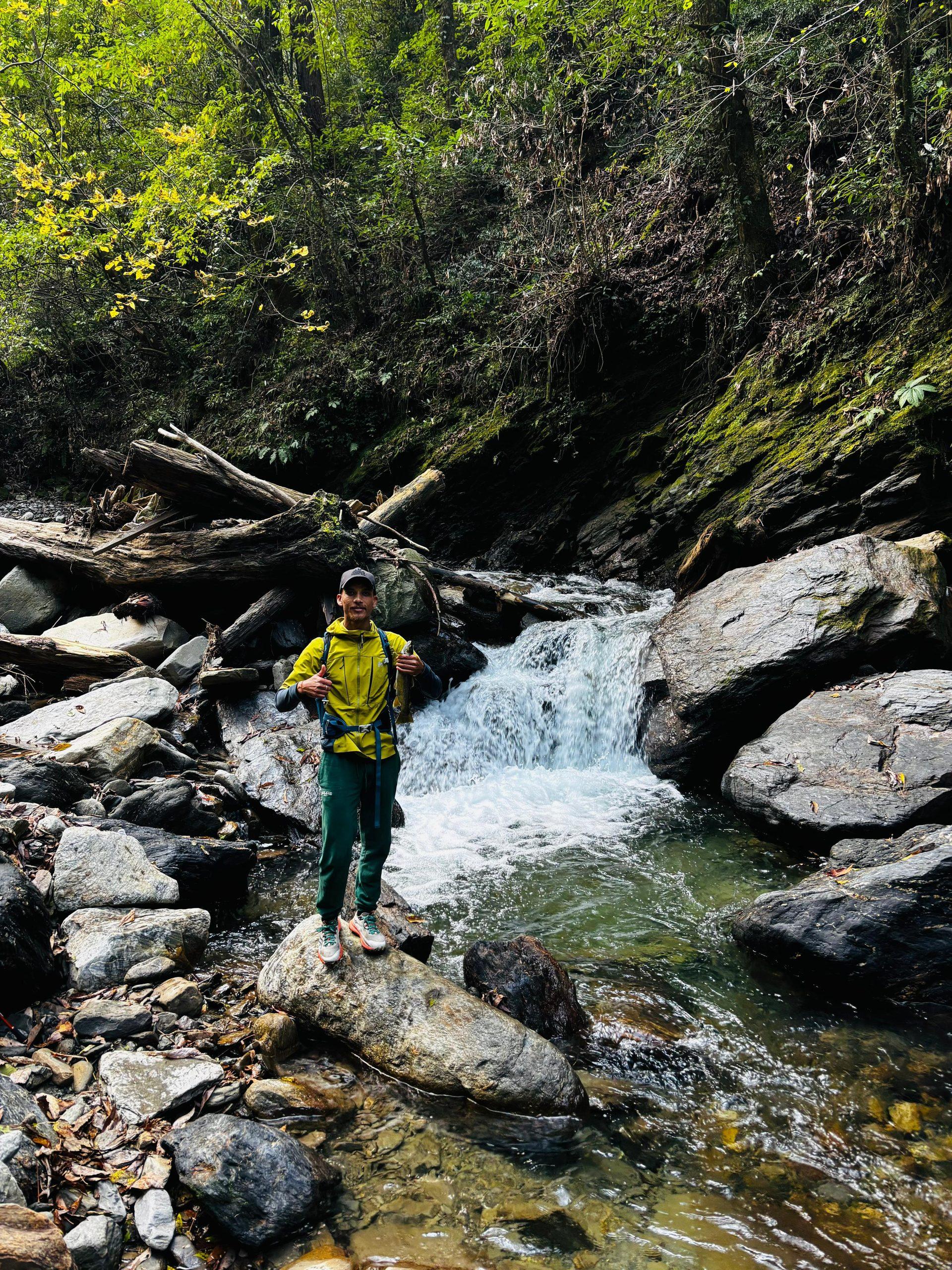
- Deep pools below rapids and waterfalls — classic holding lies where mahseer rest and ambush prey
- Tail-outs and runs at pool exits where current accelerates over gravel — active feeding zones
- Boulder gardens and rock gardens in moderate to fast current — prime ambush lies for large fish
- Undercut banks with overhanging vegetation — shade, insect fall, and cover
- Confluence pools where tributaries meet the main river — concentrated food and oxygen
- Deep river bends with soft inner bank and fast outer current — large fish hold here in summer heat
Migration Pattern
Golden Mahseer are a migratory species with a three-phase annual movement pattern well documented in the Himalayan rivers of HP:
Phase 1 (March–April): Adults ascend from larger rivers and reservoirs into smaller hill streams and tributaries. This "learning migration" is thought to re-establish familiarity with natal streams.
Phase 2 (May–September, peak July–August): Spawning migration. Fish move to shallow, gravelly riffles in headwater tributaries. Water temperature 17–22°C triggers spawning. Multiple spawning events possible within the season.
- Phase 3 (October–November): Post-spawn descent back to larger rivers and reservoirs for winter feeding and holding.
Dam construction has catastrophically interrupted this migratory behaviour. Pandoh Dam on the Beas, Pong Dam, Bhakra on the Sutlej, and Chamera on the Ravi all act as permanent barriers, preventing fish from accessing traditional spawning grounds. This is the single most significant driver of mahseer population decline in HP.
Water Temperature Range
Golden Mahseer are active between 13–30°C, with peak feeding activity in the 16–24°C range. In HP rivers this corresponds to April–June and September–October. At below 10°C fish become torpid and extremely difficult to tempt. Above 28°C fish move into deeper, cooler water or into tributary mouths.
Gear Recommendations
Mahseer fishing demands robust, purpose-built tackle. A fish that can exceed 10 kg in HP rivers, run 100 metres of fast water downstream, and use boulders and the current as weapons against the angler requires gear that is overbuilt by most freshwater standards. The following recommendations draw on guidance from Mahseer Fishing India (mahseerfishingindia.com), one of India's foremost mahseer-specific outfitters based at Patlikuhal, Kullu.
Spinning Setup
- Rod: 9–12 ft spinning rod (10 ft is the ideal sweet spot for HP rivers), rated 40 lb+ mainline, 60 g+ casting weight — the long rod helps mend line across complex currents and keeps pressure on a running fish
- Reel: High-performance 6000-size spinning reel with minimum 25 lb drag and 300 yards of 60 lb braid capacity — the drag system is critical; a mahseer's first run is explosive
- Main line: 60 lb braid — sensitivity, zero stretch, and casting distance
Leader: 5–6 ft of 60 lb fluorocarbon — essential; mahseer's massive scales and river rocks act like sandpaper on monofilament. Do NOT use wire traces — mahseer have excellent vision and spook easily
- Swivels and split rings: Ball-bearing swivels rated 80 lb+; replace factory split rings on all lures with 80 lb rated rings — mahseer jaws will straighten standard hardware
Hooks: Replace all factory trebles with 4X or 6X heavyweight single inline hooks (e.g. BKK Lone Diablo, Mustad Kaiju) — stronger hold, safer release, less snagging on boulders
Best Lures for HP Rivers
Lure weight: 20–40 g for most HP rivers, heavier for high-water monsoon conditions. Natural-looking colours — gold, copper, olive, natural perch — outperform flashy patterns in clear mountain water. Lures must sink; surface lures are rarely effective.
Fly Fishing Setup
- Rod: Double-handed 9/10 wt (or heavier) Spey rod for large HP rivers; single-handed 8 wt for smaller tributaries like the Tirthan and Sainj
- Running line/head: Skagit-type shooting head with short, heavy sink tips (T-14 to T-17) to reach fish in deep, fast water
- Reel: Large arbor with powerful, smooth drag; minimum 250 yards of strong backing
- Leader: 30 lb+ fluorocarbon — minimum; do not go lighter
- Stripping guards recommended — high-speed line burn on fingers is a real hazard with large mahseer
Fly patterns: Large, durable streamers 7.5–12.5 cm with maximum movement — Intruders, Clousers, Woolly Buggers, Game Changers, Tube flies, Snake flies. Natural colours (olive, tan, gold, copper) outperform in clear water; darker patterns work in coloured monsoon water
- Carry generous spare flies and sink tips — specialist fly gear is virtually impossible to source in HP
Natural Bait Fishing
- Ragi (finger millet) dough balls — the traditional and most effective natural bait for HP mahseer; kneaded firm, sized to 3–5 cm diameter, fished on a heavy hair rig or directly on a 4/0–6/0 hook
- Boiled rice balls — effective in slower pools
- Large earthworms — excellent during high, coloured monsoon water
- Rohu or catla pieces — used by some local anglers in reservoirs; check legality with local DFO
- Atta (wheat flour) dough with turmeric — traditional preparation
- Note: In rivers with catch-and-release regulations, natural bait use may be restricted; confirm with the local fisheries authority before fishing
Knots
Mahseer fight with brute force — knot failure is the most common cause of lost fish. Always lubricate knots before tightening.
- Line to leader (spinning): FG Knot or Double Uni Knot (back-to-back uni)
- Lure to leader: Improved Clinch Knot or Palomar Knot
- Fly line to leader: Surgeons Loop, Albright Knot, or Nail Knot
- Fly to leader: Non-Slip Mono Loop Knot (Lefty Kreh Loop) or Improved Clinch
- Re-tie knots after landing a large fish or pulling through a heavy snag — silt and rocks abrade line invisibly
Fish Care Equipment
- Unhooking mat — mandatory for fish care on the bank; protects the mahseer's slime coat
- Large rubber-mesh landing net — never use knotted nylon which damages scales
- Long-nosed forceps and heavy-duty pliers for hook removal
- Weigh sling and accurate scales if weighing fish — support fish fully, weigh quickly, return immediately
Behaviour & Conditions
Feeding Behaviour
Golden Mahseer are omnivorous opportunists — they feed on invertebrates, crustaceans, smaller fish, frogs, fallen fruit, and plant material depending on availability. Their thick lips allow them to dislodge invertebrates from boulders in strong current. In slower pools they feed mid-water on drifting nymphs and emerging insects. Under fruiting trees in summer and monsoon — fig, mulberry, wild plum — they rise to the surface to take fallen fruit.
- Primary diet: Invertebrates (stonefly, mayfly, caddis nymphs), small fish, crustaceans, gastropods, fallen fruit, algae
- Opportunistic predators — will strike lures aggressively, especially in clear water where visibility is good
- Wary and intelligent — large fish (above 5 kg) in pressured rivers become extremely cautious; approach and presentation matter enormously
- Spooked fish alert others via pheromone release — stealth is critical; avoid wading aggressively or casting shadow over the lie
- Best feeding windows: Dawn (5:30–8:00 AM) and evening (4:30–7:00 PM); midday feeding rare except in cool overcast conditions
Conservation & Regulations in Himachal Pradesh
Golden Mahseer is officially listed as Endangered by the IUCN and is protected under Schedule I of the Wildlife Protection Act 1972 — the highest level of legal protection afforded to any species in India, equivalent to the tiger and elephant. Killing, injuring, or possessing mahseer is a cognizable, non-bailable offence under HP law.
The HP Fisheries Department's own data tells a stark story: mahseer once constituted 9% of total catches in Gobind Sagar during 1984–95. By 1999–2000 that figure had fallen to 1%. This collapse — driven by dam construction, electrofishing, dynamite fishing, netting, and the destruction of spawning grounds — prompted the legislative and conservation response that is now in place.
Key Regulations (HP Fisheries Act 1976 & Amendments)
- Fishing during the breeding season (approximately May–August, exact dates gazetted annually) is a cognizable, non-bailable offence carrying imprisonment up to 3 years
- Minimum catchable size: 500 mm (approximately 1.2 kg) — increased from 300 mm after 1998 to allow every female to breed at least once before harvest
- Catch and release is mandatory in most sport-fishing stretches designated by the HP Fisheries Department and in GHNP buffer zones
- Electrofishing, dynamiting, netting, and use of poison are banned throughout the state
- All angling in designated rivers requires a valid fishing permit from the District Fisheries Officer
- Inner Line Permit (ILP) additionally required for fishing in restricted border areas of Spiti, Kinnaur, and parts of Chamba
The HP Government Action Plan
- National Mahseer Fish Farm sanctioned with ₹2 crore central government assistance — to produce seed for stock enhancement in rivers and reservoirs
- Mahseer hatchery established at Deoli Fish Farm, Bilaspur — artificial breeding trials ongoing in collaboration with ICAR and Punjab University
- Sanctuary stretches declared on several rivers — stretches reserved for rod-and-line only with bag limits and catch-and-release requirements
- Watch-and-ward posts on key rivers during spawning season to prevent poaching
- Seed ranching programmes — hatchery-reared mahseer juveniles stocked into rivers and reservoirs to supplement wild populations
The Tirthan Model
The Tirthan River, flowing through the buffer zone of the Great Himalayan National Park, represents the gold standard of mahseer conservation in HP. GHNP authorities and the HP Fisheries Department jointly manage the river as a catch-and-release-only stretch. Fishing permits are limited in number, guides are locally trained, and the fish populations are monitored. As a result, the Tirthan holds some of the best-quality mahseer fishing remaining in Himachal Pradesh — a model that advocates want extended to the Sainj, Parbati, and upper Beas.
Catch & Release Protocol
Mahseer Fishing India and the HP Fisheries Department both practice 100% catch and release for Golden Mahseer. Given the endangered status of the species, this is not merely good practice — it is the only ethical approach.
- Use barbless or debarbed hooks — reduces hooking trauma and speeds unhooking dramatically
- Keep the fish in water throughout unhooking wherever possible — use long-nosed forceps to remove hook without lifting fish
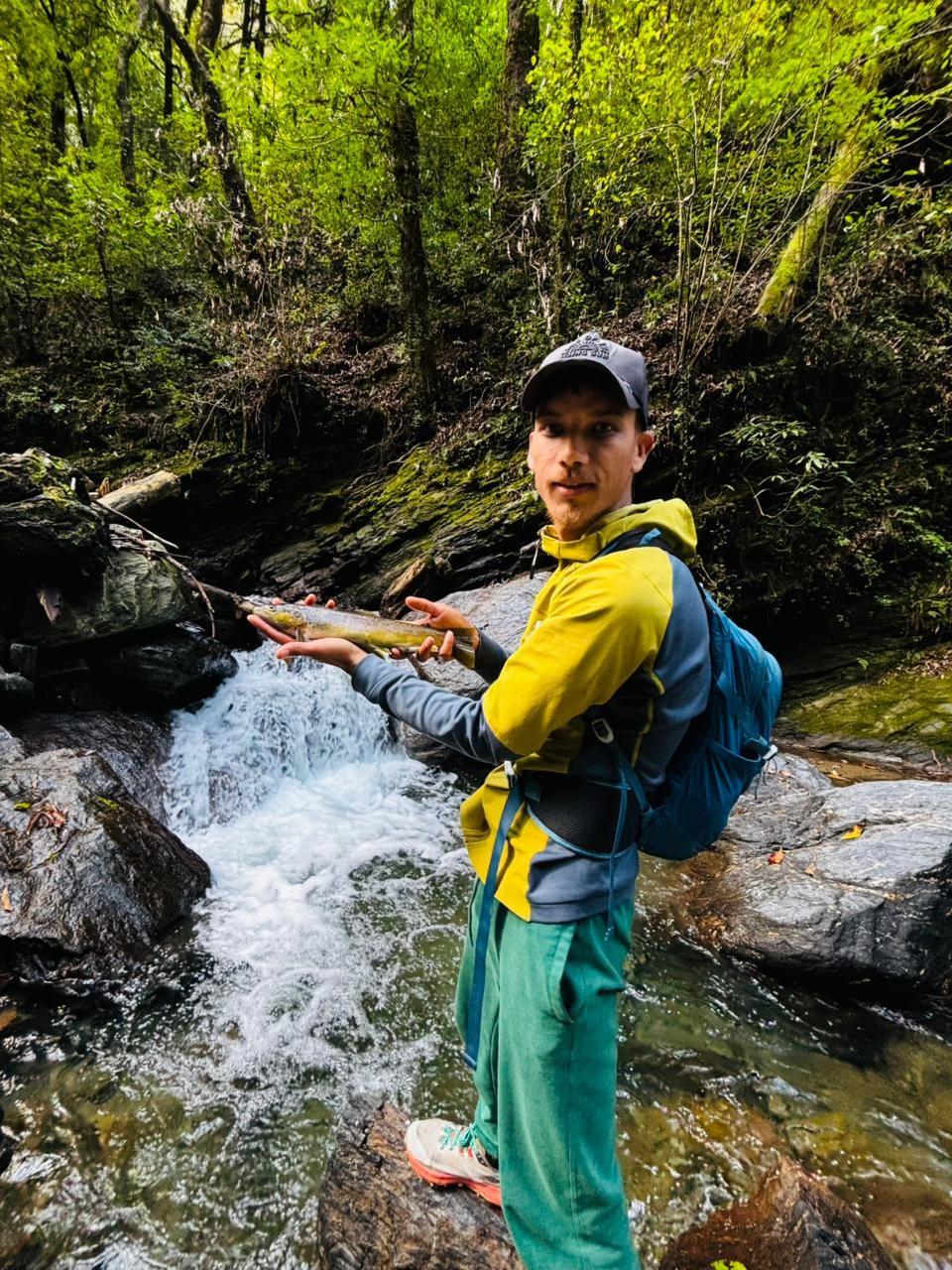
- If weighing or photographing: wet hands first, support full body weight horizontally, limit air exposure to 30 seconds maximum
- Do not squeeze the fish or allow it to thrash on rocks or dry ground
- For larger fish (above 5 kg): hold upright in current with one hand supporting the body, facing upstream; allow full recovery before release — may take 3–10 minutes
- If fish rolls or appears distressed after release, gently hold and support until it swims strongly under its own power
- Never lift large mahseer by the jaw alone — the weight damages the jaw structure
- Use an unhooking mat on the bank; never place fish on dry gravel or rock
Field Notes for Key HP Rivers
Tirthan River (Kullu — GHNP Buffer)
The Tirthan is the benchmark mahseer river in HP. Access via Banjar or Gushaini; permits from the GHNP Director at Sai Ropa. Catch-and-release only. Best fished April–June and October–November. The river is rocky and wading can be treacherous — felt-soled wading boots or studded rubber soles essential. Sight fishing in low water conditions (May) is superb — fish holding in deep boulder pools are visible from the bank and can be targeted with lures or nymphs.
Beas River (Kullu to Manali)
The most accessible mahseer fishery in HP. Best stretches at Katrain, Raison, Naggar, and above Manali. Permits from the Kullu DFO. Fish the deep pools below rapids with heavy spoons or jointed plugs at dawn. The Beas receives significant fishing pressure; large fish (above 3 kg) are wary. Early season (March–April) and post-monsoon (October) are most productive.
Parbati River (Kullu — Bhuntar to Kasol)
Glacially fed and exceptionally clear in pre-monsoon. Sight fishing opportunities where the river is not in spate. Fish are often visible holding behind boulders in the lower stretch. The Parbati joins the Beas at Bhuntar; fish the confluence pool in April–May for consistent results.
Sainj River (Kullu)
The Sainj valley is one of HP's most beautiful and least-pressured mahseer rivers. Flows through Sainj Wildlife Sanctuary above the confluence with the Beas at Larji. Access requires some trekking beyond the road. Excellent April–June season. Fish pools and runs in the middle reaches.