Quiet Villages Above Kasol: Grahan, Kalga, Tosh and Kutla (2026)
There is a sentence that turns up on the Himachal forums every few weeks now, usually written by somebody who first came to the Parvati Valley a decade ago. A traveller who first visited Kasol in 2008 put it plainly on r/india_tourism: back then there were no phones, no maps, and almost no garbage, and a recent weekend left them close to tears over the Punjabi and Bhojpuri music at full tilt all day. You can argue with the nostalgia. You cannot really argue with the traffic.
So people walk past Kasol. As one commenter on that same thread said, the crowd is exactly why travellers have started going beyond Kasol, up the side valleys and the foot trails where the cars cannot follow. That is what this guide is about: the cluster of small villages above Kasol where the valley still goes quiet, which one is quiet right now in 2026 and which has tipped the other way, and how to walk it without adding to the problem you came to escape. For the honest picture of Kasol itself, and why you might still base a night there, see our honest guide to Kasol.
I am from Kullu, one valley over, and the homestay owners up here have watched this shift happen in real time. The short version: the quiet has moved uphill. The places that were the secret in 2016 are the loud ones now, and the calm has migrated to the settlements that take an hour or two on foot to reach.
The cluster at a glance
Five walkable settlements sit above Kasol, split across two arms of the valley. To the west, reached on foot from Kasol, is Grahan. To the east, past the roadhead at Barshaini, sit Kalga, Pulga and Tosh, with Kutla a steep climb above Tosh. They are close on a map and very different in temperament.
- Base
- Kasol, then Barshaini
- Best season
- March to June, September to mid-November
- Days needed
- 4 to 6 for the full loop
- Quietest now
- Kutla and Grahan
- Loudest now
- Tosh, and the wrong stays in Kalga
- Network
- Patchy, often none at Kutla
- Cash
- Essential, few card machines
- Difficulty
- Easy to moderate walking
Chalal, the warm-up walk
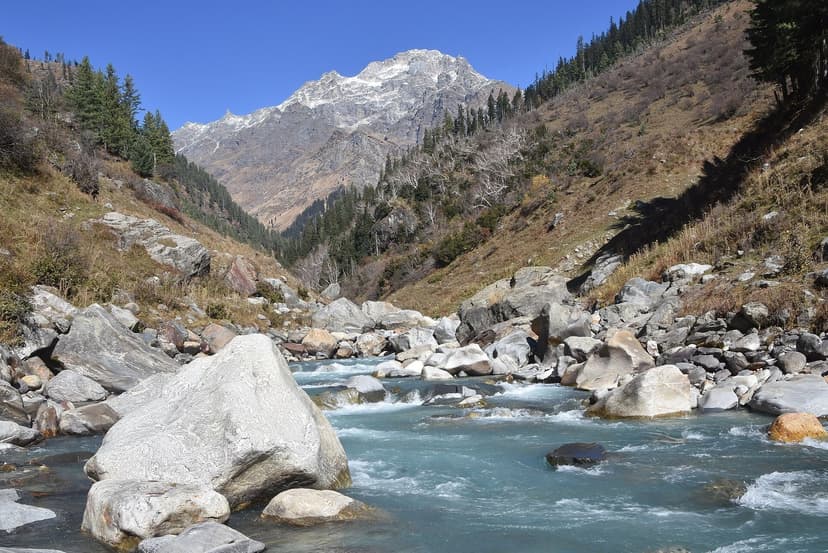
Start gently. Chalal is a 20 minute walk along the Parvati from Kasol, across one of the iron footbridges that the locals cross to get home, and it carries a slower version of Kasol cafe culture without the main-road noise. A traveller who walked the upper villages last winter stayed at Perkup in Chalal and rated Meraki and ATS among the cafes, and mentioned a stay called Hidden a little further along at Katagla. It is the kind of place to spend a first afternoon while your legs adjust to the altitude, not a destination in itself.

Grahan, the foot-only one
Grahan is the village most people mean when they say they want quiet near Kasol, and it earns it the hard way: no road reaches the houses. A rough 4x4 track now runs from Kasol market to a base point, and from there it is a walk. A solo traveller who documented the route paid about 200 rupees for the shared 4x4 and then hiked in, describing dense forest of tall pines with the Parvati running alongside. Reach the village on your own two feet from Kasol and it is roughly nine kilometres, four to six hours up at an easy pace with one steeper stretch near the end.
The village itself is small, somewhere around fifty houses in a green bowl, with a handful of homestays where there were only one or two a decade ago. Everything that arrives, gas cylinders, sacks of rice, building material, comes up on the backs of porters and mules. That supply chain is worth keeping in mind, because it is the reason a homestay plate of food up here is a fair bit of work, and the reason cash matters.
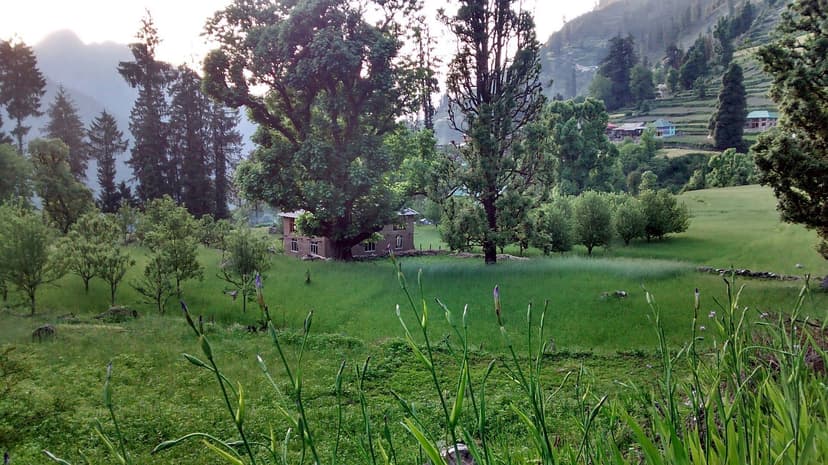
Grahan is also where the cost of popularity shows. A widely shared post titled Grahan Road, once a forest trail, is now buried under garbage drew hundreds of upvotes and a long thread of people who remember it differently. One had first visited in 2009 and called it beyond beautiful before the hotels arrived. The honest move is not to skip Grahan, it is to walk it cleanly: carry your own trash back down, because nothing goes down that trail except on somebody back.
Walk it like the porters do. Carry every wrapper and bottle back out to Kasol, pay in cash so the money stays in the village rather than a booking platform, and skip the amplified speaker. None of this is preachy on the ground. It is just what keeps the place worth the walk.
Kalga and Pulga, choose your stay before your village
Across the valley, past the roadhead at Barshaini, sit the three small villages that travellers often weigh against each other. A redditor trying to decide between Pulga, Kalga and Tulga got the most honest answer in the thread: go to Pulga for the fairy forest and the waterfall if you want to slow right down. The deeper truth, though, is one that the highest-engagement local threads keep landing on, and it is the single most useful thing in this article: in Parvati, the property matters more than the village.
The clearest account came from a traveller whose first two days in Kalga were ruined by a non-local owner playing cacophonous music, before they moved to a stay called Shalom that was, in their words, peaceful. Their advice, lightly paraphrased: when you go to Kalga or Pulga, make sure you do not end up somewhere that does not respect the quiet, and the good cafes are Rare House, Holy Cow, Freedom and Cafe Original. Another visitor remembered loving Kalga a few years back but hating the loud music in the evenings. The lesson is not which village. It is which gate you walk through.
When you go to Kalga or Pulga, make sure you do not end up in a place which does not respect the peace of the nature.
A traveller on r/HimachalPradesh, after moving stays in Kalga
Practical notes from people who went recently: Kalga is around ten kilometres from Manikaran, and the government buses run only when the road is intact, which after a hard monsoon it often is not. One traveller found the bus cancelled and took a shared cab from Manikaran for 200 to 300 rupees, paid 500 to 600 a night for a room with the standard geyser bathroom, and singled out Friends Cafe, where the chef is from Nepal and the thukpa is the thing to order. Pulga, just below, is the last village the road reaches: a traveller who stayed at Arkham Cafe in Pulga for 400 rupees a night called it a two minute walk from the fairy forest. If you want the fuller picture of Pulga and that forest, it has its own Pulga destination page on Refuje.
How to pick a quiet stay. Message the host before you book and ask one question: is there amplified music in the evenings. Read the recent reviews for the words loud or party. Names travellers themselves recommend for calm in this cluster include Shalom, Rare House, Holy Cow, Freedom and Cafe Original. The village on the signboard tells you less than the terrace next door.
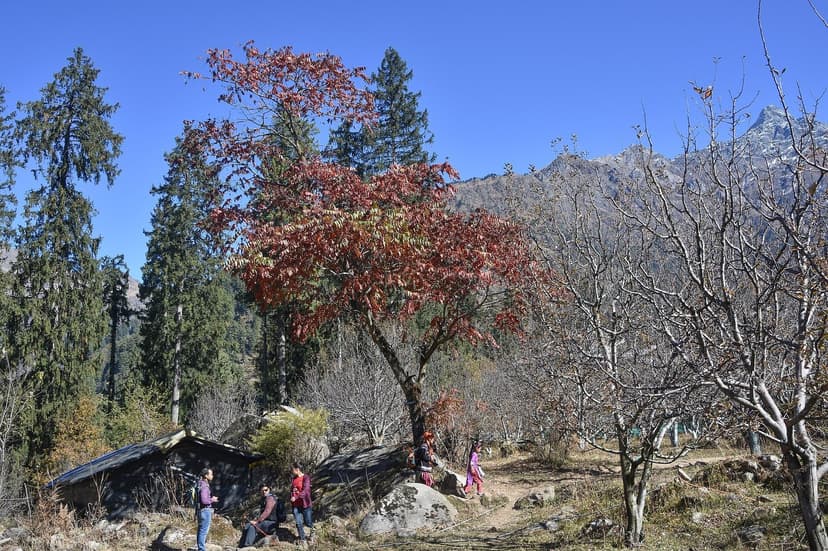
Tosh, beautiful and now the loud one
Tosh is the postcard: a village stacked on a shoulder of the valley with snow peaks behind it and the turquoise of the Pulga dam below. It is also, by most recent accounts, the busiest and noisiest of the cluster, which is the irony of the place. The road has a lot to do with it. As one visitor summed up the access, the road is fully completed and you can take a private taxi from Kasol most of the way, and a car can reach Barshaini and the lower edge of Tosh. Easy to reach is also easy to crowd.
It is about twenty kilometres from Kasol; a traveller who logged the trip paid 200 to 300 rupees for a shared cab to the Pulga dam, another couple of hundred for the uphill stretch, and 600 a night at a guest house with the wifi that makes Tosh a working-from-the-mountains favourite. Go for the view, the cafes and the Kheerganga trailhead, but go in clear about what it is now: scenic, well served, and not where you come for silence. Stay a night for the morning light, then move up or across.
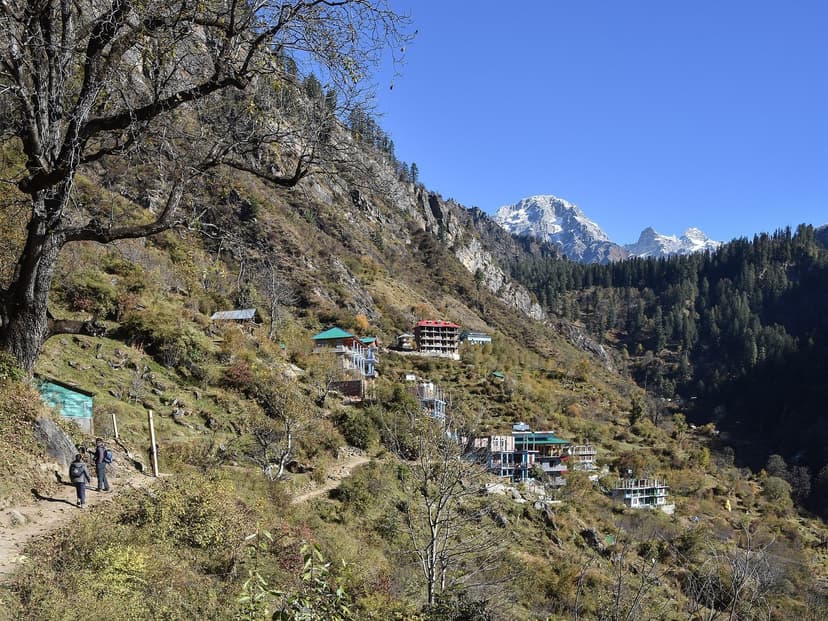
Kutla, where the quiet went
If Tosh is where the crowd is, Kutla is where the calm migrated. It is a steep two to two and a half hour climb above Tosh, through forest and then open ground, and it is barely a village in the usual sense. As the traveller who wrote the clearest account of it put it, the word Kutla means the last point of human settlement, and beyond it there is mostly wilderness. There is little to do in the tourist sense, which is the point: you sit, you catch your breath, you let the silence do the work.
Reports differ on the network, some find a surprisingly stable signal, others none, so plan for none. The same winter walker who linked the cluster together was unequivocal about why you climb: Tosh is lovely but crowded now, and for peace, no loud music, just nature, Kutla is the option, a couple of hours up with the calm worth the effort. Stays here are simpler and dearer for what they are, often around a thousand rupees, because everything has been carried up. You can also do it as a day walk from Tosh and sleep lower.
It is more about sitting down, catching your breath, and just absorbing the silence.
A solo traveller on r/SoloTravel_India, on reaching Kutla above Tosh
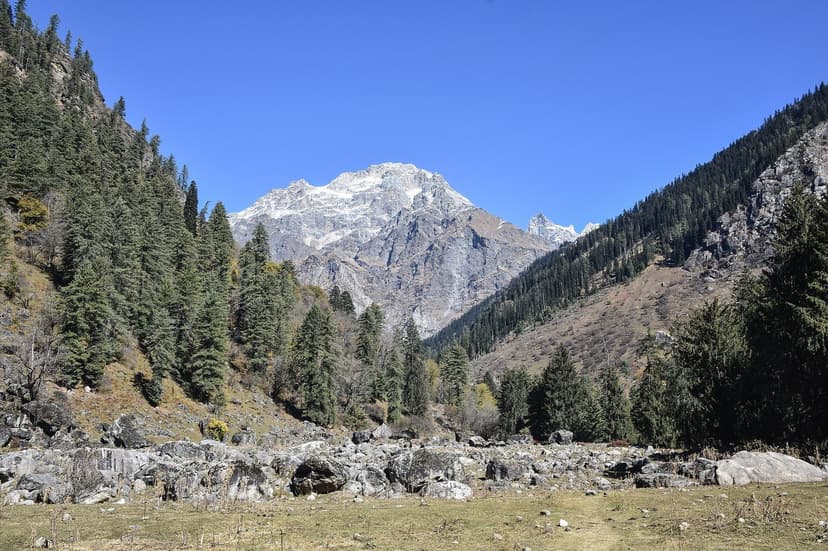
One more, for walkers who want to go past the obvious: a traveller described a newer trek around Kalga called Bunbuni, carrying their own camp and food, water collected on the way. It is a reminder that the cluster is a doorway, not a dead end, and that the further you walk the quieter it stays.
Which village, honestly
If you only have time for one or two, match the village to what you actually want. This is the cluster ranked by how it feels in 2026, not by an old listicle.
| Quiet end | Busy end | |
|---|---|---|
| Quietest now | Kutla, then Grahan | Tosh, and party stays in Kalga |
| Getting there | Foot only above the roadhead | Car to Barshaini and Tosh |
| Best for | Silence, slow days, walking | Views, cafes, wifi, sociability |
| Network | Patchy to none | Mostly usable |
| Stay cost | 600 to 1000 a night | 500 to 900 a night |
| Pick it if | You want the valley to itself | You want the postcard and company |
The slow circuit, day by day
The geography lets you string these together on foot and shared cabs, no private car needed. A relaxed loop runs five to six days. Treat the walking as the experience rather than the gap between sights.
- Day 1, Kasol and Chalal
Settle in, walk the 20 minutes to Chalal for a quiet riverside afternoon and an early night to adjust. - Day 2, walk to Grahan
Shared 4x4 to the base point, then the pine-forest walk up to Grahan. Overnight in a village-core homestay. - Day 3, cross to Barshaini and Kalga
Descend, transfer round to Barshaini, walk up to Kalga. Slow village evening, dinner at a quiet cafe. - Day 4, Tosh and the Pulga side
Walk or cab to Tosh for the view and the dam, dip into Pulga and the fairy forest below Kalga. - Day 5, climb to Kutla
The two hour climb above Tosh for the silence. Day walk and back, or carry up for a night. - Day 6, ease out
An easy last morning, optional Pulga waterfall, then back down to Kasol and the road.
Getting there, costs, season and safety
The nearest airport is Bhuntar, about an hour and a half below Kasol; the common approach is an overnight bus to Bhuntar or Kasol and shared transport from there. For the eastern villages you change at Barshaini. Local buses and shared cabs cover the valley cheaply, and a traveller doing it on a budget confirmed they ran regularly between the main stops, which is the way to keep both cost and footprint down.
| Item | Cost | Note |
|---|---|---|
| Shared 4x4 or cab | 200 to 300 per leg | Kasol to Grahan base, or to Barshaini and Tosh |
| Grahan homestay | 300 to 600 / night | Meals often included, cash only |
| Kalga or Pulga stay | 500 to 900 / night | Geyser bathrooms standard, popular stays dearer |
| Tosh guest house | 400 to 600 / night | Wifi common, 600 typical |
| Kutla homestay or camp | around 1000 / night | Everything carried up, so dearer |
| Meals | 150 to 350 / meal | Dhaba and homestay food, simple and filling |
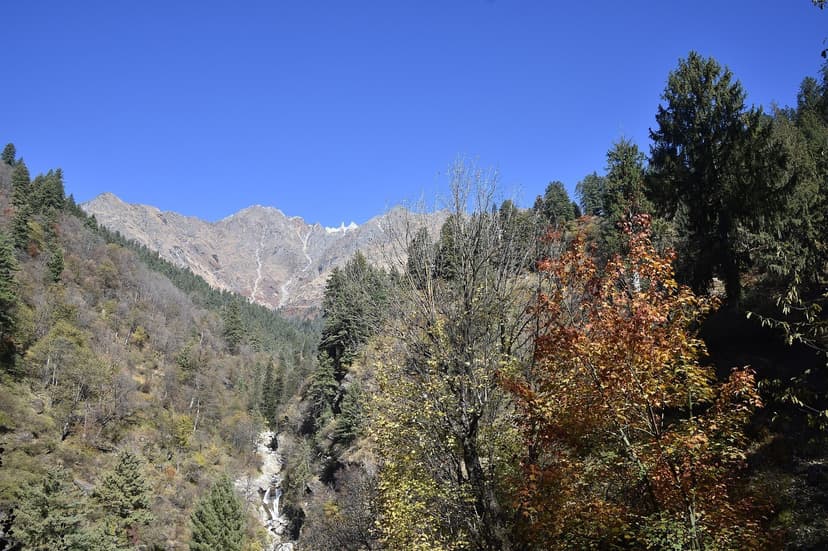
Avoid the peak monsoon. July and August are the wrong months up here. The region saw repeated cloudbursts and road and trail damage through the 2025 monsoon, buses get cancelled when the road to Manikaran slips, and the forest trails turn dangerous. Stick to March to June and September to mid-November. Deep winter is beautiful and very cold, and some homestays close, so confirm before you go.
On safety: these are small, walkable villages and plenty of solo travellers, including women, do this circuit. A solo female traveller weighing the three sister villages of Pulga, Kalga and Tulga asked exactly the right question about how safe it is, and the sensible answer is the usual one, sharpened for the mountains: stay in occupied village-core homestays rather than isolated outliers, avoid the amplified-party properties, walk the trails in daylight, and keep someone informed of your plan where there is no signal.
Visiting so it stays worth visiting
The anger in those Kasol threads is not really about noise. It is about watching a place get loved to pieces. You do not fix that with a sermon, you fix it with small habits. Carry your trash back to where it can actually be collected. Pay in cash so the porter-and-homestay economy keeps the money. Leave the Bluetooth speaker switched off; the valley has its own soundtrack. And choose the stay where the village still lives, not the one built only for the season. Some locals have started arguing for tolls and limits on the fragile zones. Whether or not that arrives, the quiet you came for is something visitors can protect one trail at a time.
Common questions
Which village above Kasol is the quietest?
As of 2026, Kutla, a two to two and a half hour foot climb above Tosh and often with no mobile signal, is the calmest, with the quieter corners of Grahan close behind. Tosh is the most scenic but also the busiest and most music-heavy now, so pick your homestay carefully there.
Is there a road to Grahan village?
No road reaches Grahan village itself. A rough 4x4 track now runs from Kasol to a base point, around 200 rupees shared, after which it is a foot trail, and all supplies are carried up by porters and mules.
How long is the walk from Kasol to Grahan?
About nine kilometres one way, four to six hours up and three to four down. It is mostly a gentle pine-forest walk beside the Parvati, with one steeper stretch near the end, so easy to easy-moderate.
Can I do this circuit without the party scene?
Yes, that is the whole point. Walk Chalal, Grahan, Kalga, Tosh and Kutla, stay in quiet village-core homestays rather than the loud-music cafes, and you get Parvatis forests and silence without the rave.
How much does a homestay in these villages cost?
Roughly 300 to 600 rupees in Grahan, 500 to 900 in Kalga and Pulga, 400 to 600 in Tosh, and around 1000 in remote Kutla. Most are cash only and prices move with the season, so confirm when you book.
Is it safe for solo travellers, including women?
The villages are small and walkable and many solo travellers visit. Stay in occupied village-core homestays rather than isolated outliers, avoid amplified-party properties, walk trails in daylight, and share your plan where there is no signal.
When should I avoid going?
Avoid the July to August monsoon, when the region saw cloudbursts and road damage in 2025 and trails get dangerous. March to June and September to November are best, and deep winter is beautiful but cold with some stays closed.
Read next
- The honest guide to Kasol, for why you might still base a night in the valley town.
- The Kheerganga ban, explained, if you plan to push past Tosh toward the hot springs.
- Offbeat places in Himachal, for more valleys where the quiet has not run out.
- Pulga, the destination page for the fairy-forest village below Kalga.
A note on sources
Written from Kullu, the next valley over. I have not stayed in every homestay named here; what is in this guide comes from the villages own logistics, a read of the current Himachal forums, and the first-hand traveller accounts quoted throughout, each linked to its original thread. Prices, bus status and which stays are quiet all change fast, especially after a monsoon, so confirm the current figure before you travel. Traveller accounts are drawn from r/india_tourism, r/HimachalPradesh, the r/SoloTravel_India Parvati series and r/india.
You Might Also Like
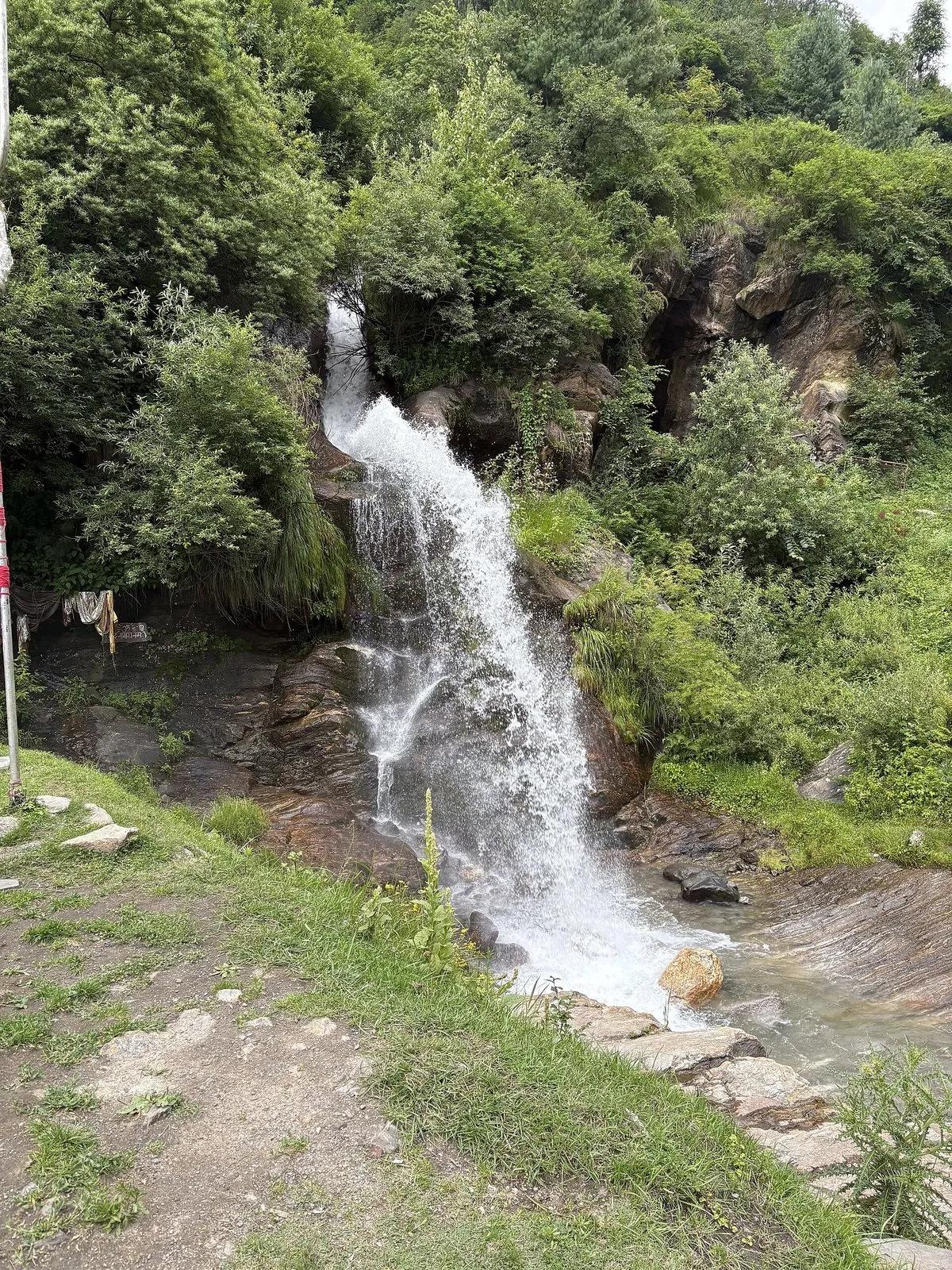
Kheerganga in 2026: The Hot Spring Is Closed. Is the Trek Still Worth It?
The famous hot-spring bath is closed and overnight camping is banned since 2024. An honest 2026 take: Kheerganga is a day trek now, the soak is gone, but the deodar walk, the Rudra Nag waterfall and the meadow are still worth your legs. How to do it now.
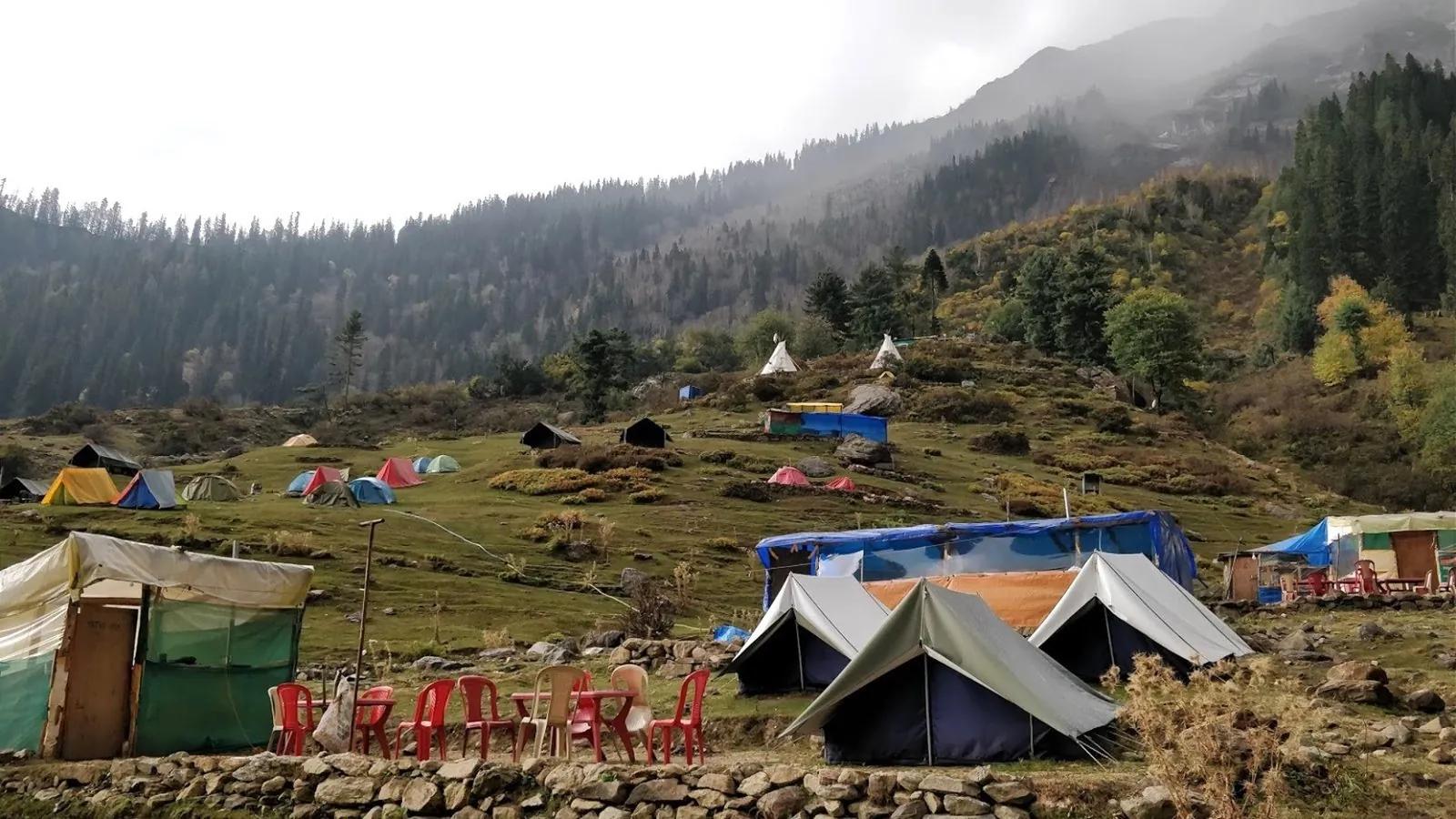
Off-Grid Camping Above Pulga: Bun Buni & Bhandak Thach (2026)
The best night in Parvati is on a high meadow above the villages. Since Kheerganga's camping ban, the thaches above Pulga, Bun Buni and Bhandak, are where you sleep out, carry-in and leave-no-trace. What it's really like, and how to do it.
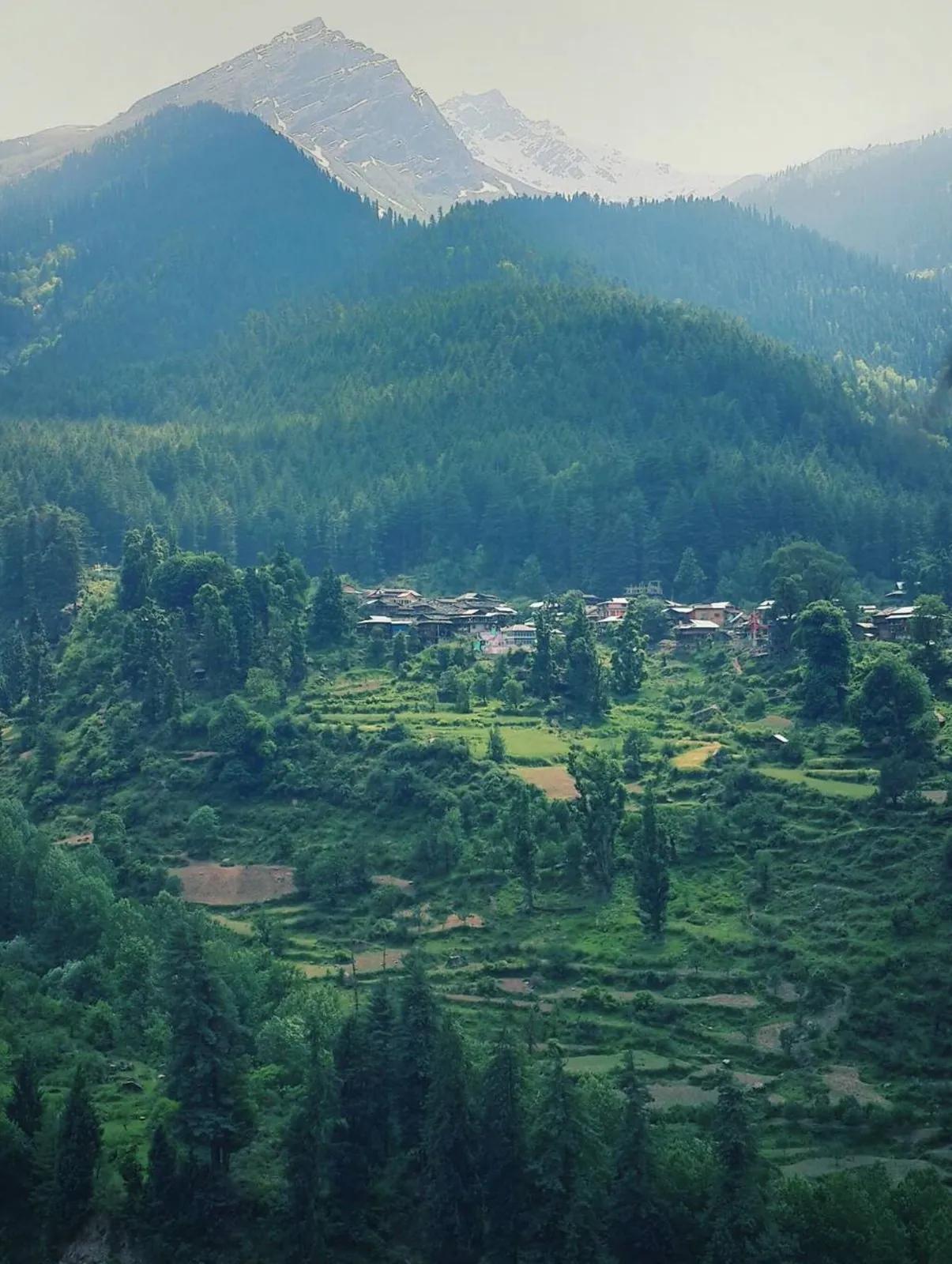
Pulga: The Quiet Base for Parvati Valley (2026 Guide)
Stay in Pulga and day-trip the rest. How to reach the upper Parvati Valley's quietest base past the roadhead at Barshaini, where to sleep in the orchards, and what to walk to from there.