Kheerganga Trek 2026: Is It Open? The Camping Ban, Explained
Yes, you can still trek to Kheerganga. No, you cannot camp up there anymore, no matter what the booking site told you. If you booked an overnight package for April or May 2026, somebody oversold you, and the worst case is an FIR with your name on it at the Barshaini checkpoint.
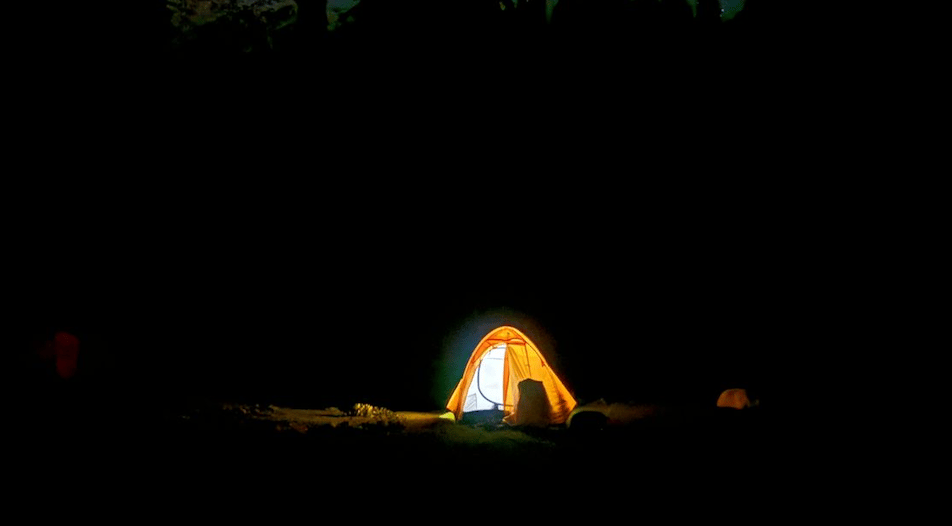
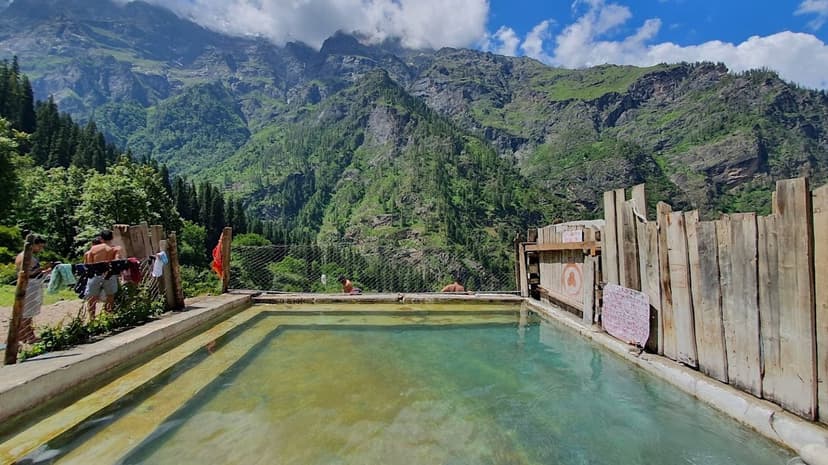
I have been up that trail enough times to have opinions. The climb is still one of the best short walks in Himachal. The hot spring at the top is still warm, still 40 to 45 degrees, still segregated for men and women, still worth the five hours it takes to reach. What is gone is the meadow-full of tents, the makeshift cafes, the midnight sound systems, and the tolerance for any of it.
Quick answer (May 2026). Yes, Kheerganga is open as a day trek. Overnight camping has been banned by the Himachal Forest Department since the DFO Praveen Thakur order of July 10, 2024, and the ban is being enforced through the 2026 season. Entry through the Barshaini checkpoint must be before 10 AM, descent by 2 PM, with a Rs 100 forest permit and photo ID. Operators including MadTrek (Rs 1,099), BanBanjara (Rs 1,150), Universal Adventures and Thrillophilia are still selling overnight camping packages despite the ban; booking one risks an FIR and a permanent permit revocation. If you wanted the meadow-night experience, sleep at Nakthan or Kalga instead and day-trek up.
Kheerganga status, April 2026. Day trek only. Entry before 10 AM. Descent by 2 PM. Overnight camping and tents remain banned under the July 2024 Forest Department order. Violation penalty: FIR, permanent permit revocation, and in practice a very uncomfortable conversation with the DFO Parvati office. Forest permit Rs 100 per person at Barshaini checkpoint, photo ID required. Operators still selling camping packages are selling you trouble.
| What changed | Pre-2024 | May 2026 reality |
|---|---|---|
| Overnight camping | Allowed pre-2024; up to 500 tents during peak season | Banned. FIR + permanent permit revocation for violators per DFO Praveen Thakur order July 10, 2024. |
| Day trek | Open with no formal time window | Allowed with an entry-before-10-AM and descent-by-2-PM rule, enforced at the Barshaini checkpoint and the Icy Point barrier. |
| Forest permit | Required, Rs 100 per person | Still required, still Rs 100 per person at Barshaini checkpoint with photo ID. |
| Hot spring bathing | Open all day and overnight | Open only during the day window; the spring stays at 40 to 45 degrees and remains segregated. |
| Operator camping packages | Legitimate businesses with 500 tents on the meadow | Sold by MadTrek, BanBanjara, Universal Adventures and Thrillophilia despite the ban; the package itself is illegal to deliver. |
| Overnight base alternative | Camp at Kheerganga directly | Stay at Nakthan (3 km from Barshaini on the trail), Kalga, Pulga, Tosh, Grahan, or Rasol and day-trek up. |
This is the honest version of the story: how the ban happened, why it was needed, what to do instead of booking an illegal camping package, and how to do Kheerganga properly as a day trek from Nakthan or Kalga, without breaking the law or ruining the meadow you came up to see.
The 2024 ban, and why this one is sticking
Kheerganga has been here before. The first ban, in 2018, came out of a court order to clear all tents, huts and cafes from the meadow. It lasted about one monsoon; by summer 2019 the camps were back. They got louder through 2022. By April 2024 the meadow had 500 tents on it.
Five hundred. Think about that number for a minute. A high-altitude pasture at 2,960 metres, protected by forest law, with a sacred hot spring at one end, and somebody was running what looked like a music festival on it every night from April to November.
The Forest Department counted the garbage: plastic wrappers in the spring, beer bottles in the stream that feeds the Parvati, cooking oil in the grass, human waste uphill of the bathing pool. Somebody finally decided this was not a camping debate. It was an ecosystem collapsing in real time.
The order that stopped it is dated 10 July 2024, signed by DFO Praveen Thakur of Parvati Division. The full text is dry; the operative lines are not. No overnight camping. Day visits only, arrive before 10 AM and begin the descent by 2 PM. Any violation triggers an FIR at the nearest police station and the permanent revocation of your future HP trekking permissions.
This time they did what the previous bans had never bothered with. A barrier went up at a spot called Icy Point, about an hour below the meadow, and was staffed. Forest guards rotate through from April to November, checking permits, noting names, and turning back anyone heading up after the cut-off. Of the original 500 tents on the meadow, around 400 came down voluntarily once it was clear this round was serious. The rest were removed by the department.
Why this one is sticking, when the 2018 ban collapsed, comes down to three things that used to be missing. The physical barrier at Icy Point. The NGO-backed waste management plan. And a public preference (stated in the order and repeated in HP Tourism material through 2025) for shifting overnight stays to local-run homestays in Kalga, Pulga, Nakthan, Barshaini, and Tosh instead of commercial camp outfits.
I am not convinced the enforcement will hold through a peak May weekend forever. It has held through every season since the order, so far, and through the 2025 crush. That is better than any previous attempt.
The operators still selling you illegal camping
Here is the part that makes me angry. As of April 2026, at least four major trekking platforms are actively selling overnight Kheerganga camping packages. Pulled the pages myself this week.
Do not book these packages. They are selling an experience the Forest Department banned 21 months ago. Either the operator plans to camp you illegally (your FIR, not theirs), or they plan to camp you at Kalga or Barshaini and call it Kheerganga (bait and switch). Neither is a trip you paid for.
| Operator | What they sell | What the law says |
|---|---|---|
| MadTrek | Rs 1,099 two-day Kheerganga with camping | Overnight at the meadow is a forest offence under the 10 July 2024 order. FIR risk is on you. |
| BanBanjara (Kheerganga) | Rs 1,150, 2D/1N with camping | Same. Forest guards turn back camping gear at Icy Point. |
| BanBanjara (Kasol + Kheerganga) | Rs 2,199, 3D/2N all-inclusive | Same. Or a bait-and-switch to a lower camp. |
| Thrillophilia | Kheerganga with Camping 2026, discounted listing | Same risk profile. |
| UniversalAdventures | Kheerganga Camping 2026 package | Same risk profile. |
When questions land in the Parvati Division office about these packages, the standard reply is that the operator camps at Kalga and the top is a day trip. Fine, except the listings clearly say "camping at Kheerganga." That is the gap customers pay for, and the forest officials have been open about the pattern in local press.
My advice is blunt. Book a day trek, or book a homestay in Kalga or Nakthan and do the walk yourself. Do not pay somebody to put you in a situation where the worst outcome is a police case and a name on the Parvati Division forest-offender list. It is not a theoretical risk. Parvati Division filed multiple FIRs in the 2024 and 2025 seasons, reported in the local press, and the division keeps a list of violators that affects future permit access.
How to do Kheerganga as a day trek, properly
The honest problem with the day-trek rule is maths. Barshaini to Kheerganga is 12 to 13 km one way, and even a fit trekker takes four to six hours up. If you start from Barshaini at 6 AM you reach the meadow around 11 AM, already past the 10 AM entry. You get one hour at the top. You go back down exhausted.
The way locals do it now is by pre-positioning at Nakthan the night before, then starting at dawn. Here is the plan that actually works.
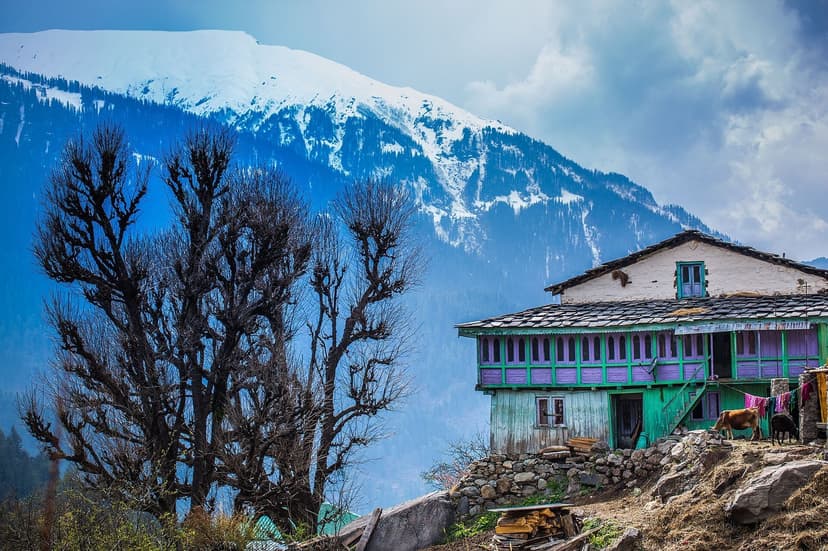
- Day before, afternoon. Kasol to Barshaini by shared taxi Rs 100-150 per seat, or a full taxi for Rs 400-500. From Barshaini walk up to Nakthan, 3 km and about an hour easy uphill. Stay in one of the village guesthouses, plain rooms Rs 700 to 1,200. Eat dal chawal by 8 PM. Sleep by 10.
- Day 1, 5 AM. Leave Nakthan by headlamp. You want to clear the first steep hour in the cool dark. On a same-day start from Barshaini you lose an hour waiting for the checkpoint to open at 6 AM. Pre-positioned trekkers carry the permit stamped from the afternoon before.
- Day 1, 8 AM. Reach Rudra Nag at 2,700 m. Snake-shaped waterfall, small Shiva shrine on the rock, cold tap drinking water, pilgrim shelter. Sit for 20 minutes. Eat something. Halfway by distance, slightly less by time.
- Day 1, 9 to 10 AM. Cross the Icy Point barrier within the cut-off window. Forest guards stamp the permit. Another hour of climbing to the meadow. Arrive at Kheerganga by 10 to 10.30 AM.
- Day 1, 10.30 AM to 1.30 PM. Three hours at the top. Sit in Parvati Kund for an hour (mineral water is 40 to 45 deg C, the outside air is 5 to 10 this time of year). Visit the Shiva shrine. Walk to the edge of the meadow for the Pir Panjal view. Eat out of your own bag. No cafes at the top now. No litter.
- Day 1, 1.30 to 4 PM. Start descending by 1.30 PM at the latest. Rudra Nag in 90 minutes, Nakthan in another 90, Barshaini in 30. Pick up your overnight bag from the Nakthan guesthouse on the way down.
- Day 1, evening. Taxi to Kasol by 5.30 PM. Hot shower. Siddu and rajma chawal at Moon Dance or Evergreen. Sleep like a small stone.
Two things about this plan. First, it needs you to be honest about fitness. If you have never done a 12 km uphill at altitude, do Triund or the Jibhi walks before you try this. Second, the Nakthan stay costs almost the same as the commercial camping packages, and the guesthouse rupees go straight to a local family instead of a Delhi tour operator. This is not a sacrifice.
The climb, in five honest sections
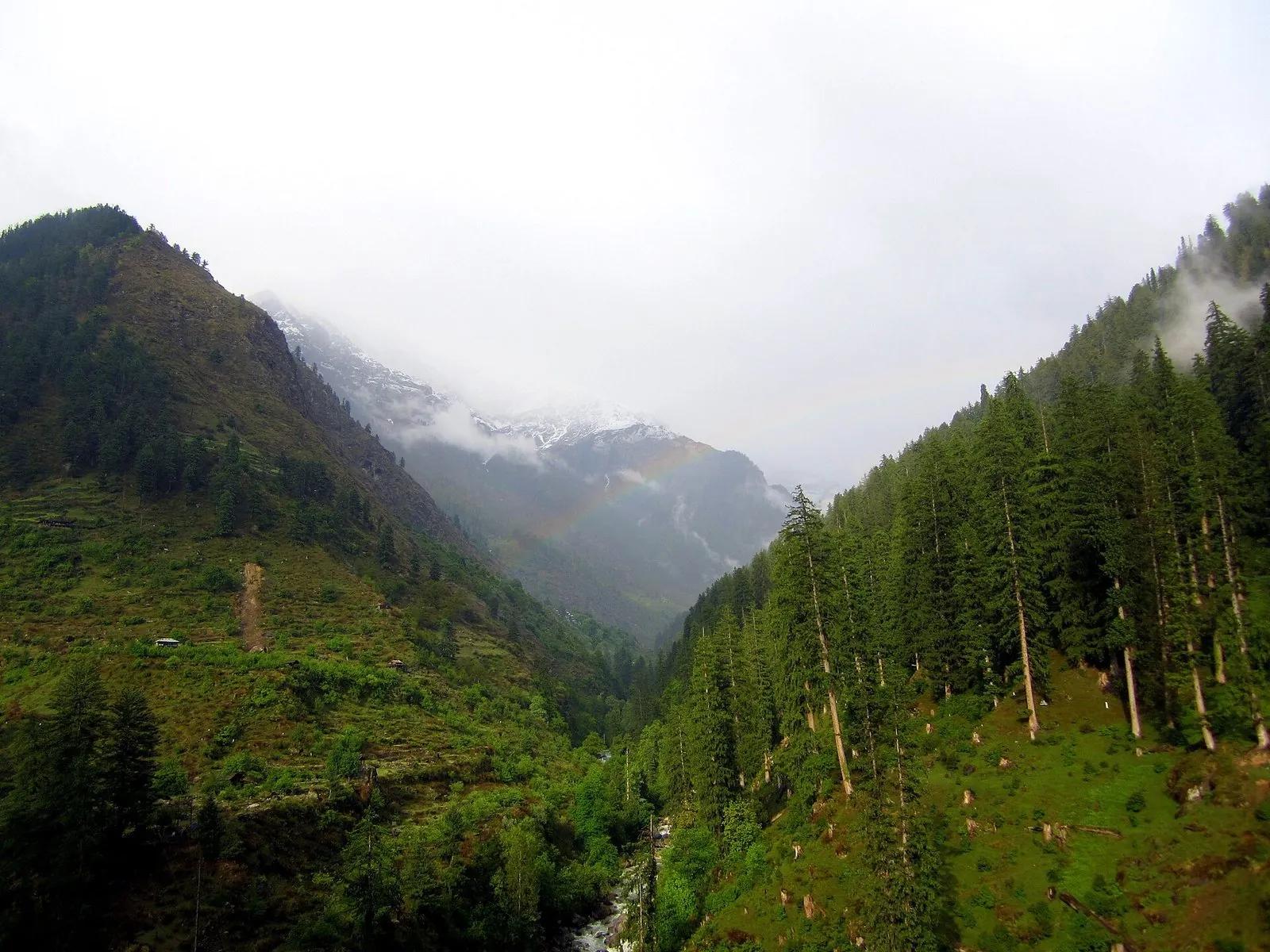
Barshaini (2,000 m) is a scrappy little road-head. Concrete bridge over the Parvati, a few shops selling instant noodles and 10-year-old maps, taxi aunties shouting prices. The Forest Department checkpoint sits on the Kheerganga side of the bridge. This is where you register, show photo ID, and pay the Rs 100 day-permit.
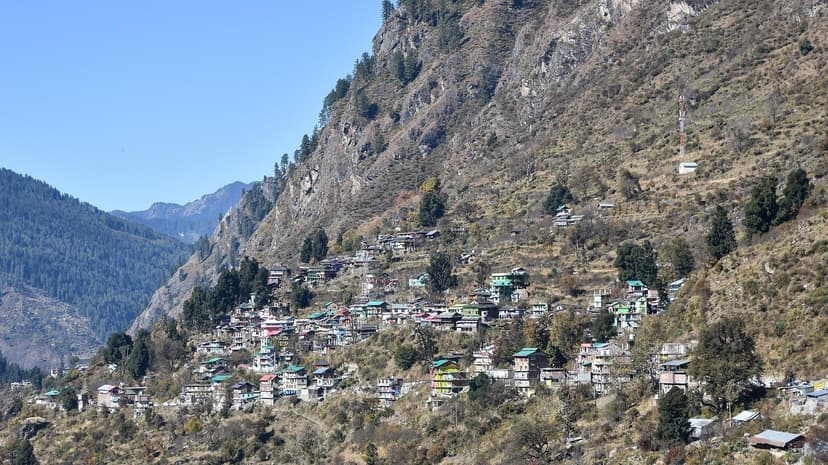
Three routes go up. Nakthan is the shortest (roughly 4 hours), well-marked, and what most trekkers take. Kalga runs about 14 km through deeper forest, less crowded, better if you would rather not see other humans for a while. Tosh is the longest at around 17 km and only earns the extra effort if you are already in Tosh and cannot be bothered to backtrack. My honest preference: up via Kalga, down via Nakthan. The forest belongs in the fresh-leg morning, the faster descent in the tired afternoon.
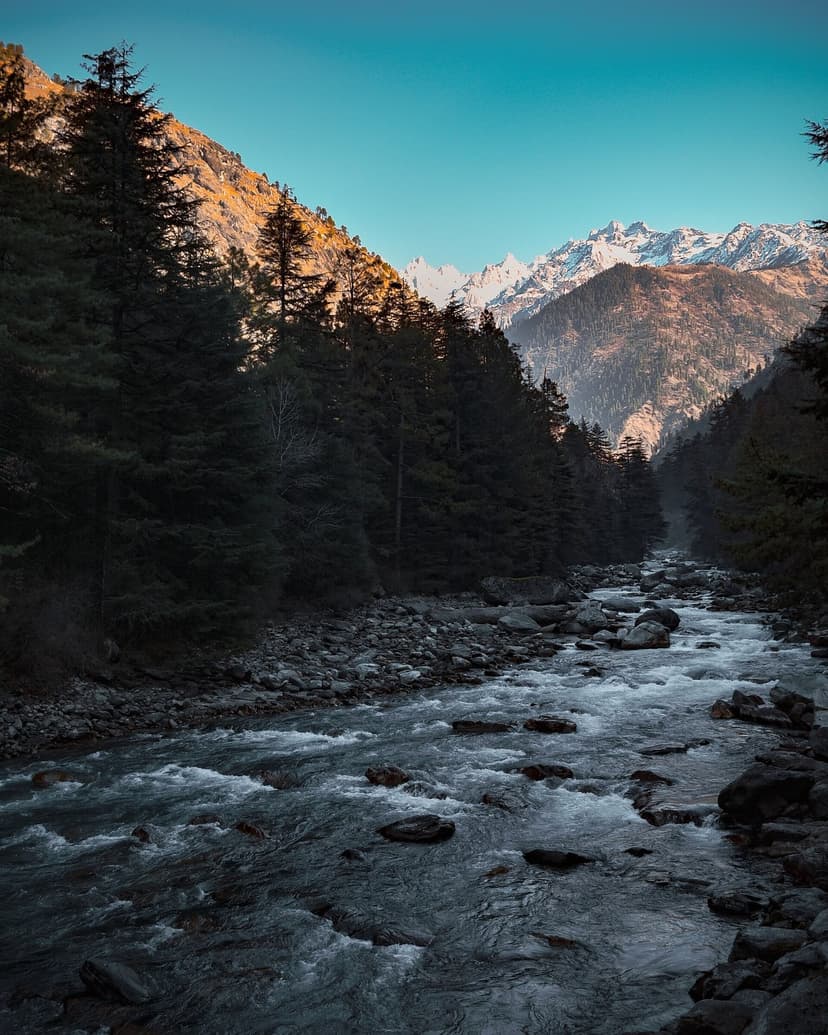
Barshaini to Nakthan (3 km, 1 to 1.5 hours). Gentle start. Apple orchards on both sides, deodar pines overhead, the Parvati roaring below. Nakthan is the halfway-ish village with proper guesthouses and the last reliable tap. Past Nakthan you are on the mountain proper.
Nakthan to Rudra Nag (4 km, 1.5 to 2 hours). The climb starts in earnest. The trail narrows. Deodar gives way to mixed pine and birch. You will cross wooden bridges over side streams. There are places the old maps mark as shortcuts. Do not take any of them. The Parvati Valley rescue notes list several fatal falls on those cut-offs over the last decade. The main trail is slower and does not kill you.

Rudra Nag to Icy Point (3 km, 1 to 1.5 hours). Steepest section. Open ridge, thinning vegetation, views start. The Shalom Waterfall Cafe is roughly here, the last place you can buy a watermelon juice and a Maggi before the meadow. This is the part that breaks most trekkers. The grade is unforgiving and the air is thinner than it looks on a phone screen. Drink water. Walk slowly. Nobody is timing you.
Icy Point to Kheerganga (2 km, 40 minutes to 1 hour). The Forest Department barrier sits just below a stand of silver birch. Guards check the permit, stamp a chit, wave you on. The trail opens. You round a last ridge and the meadow is there, suddenly, vast and obvious.
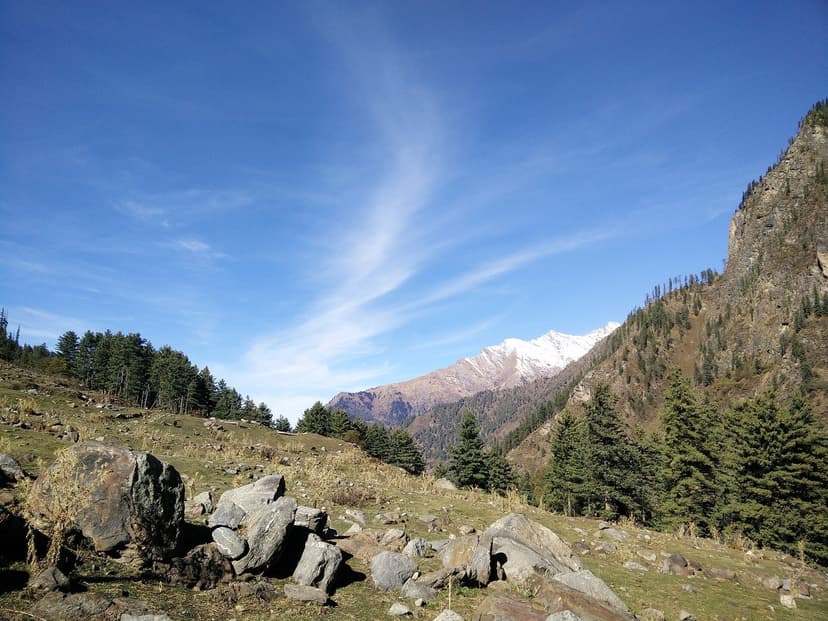
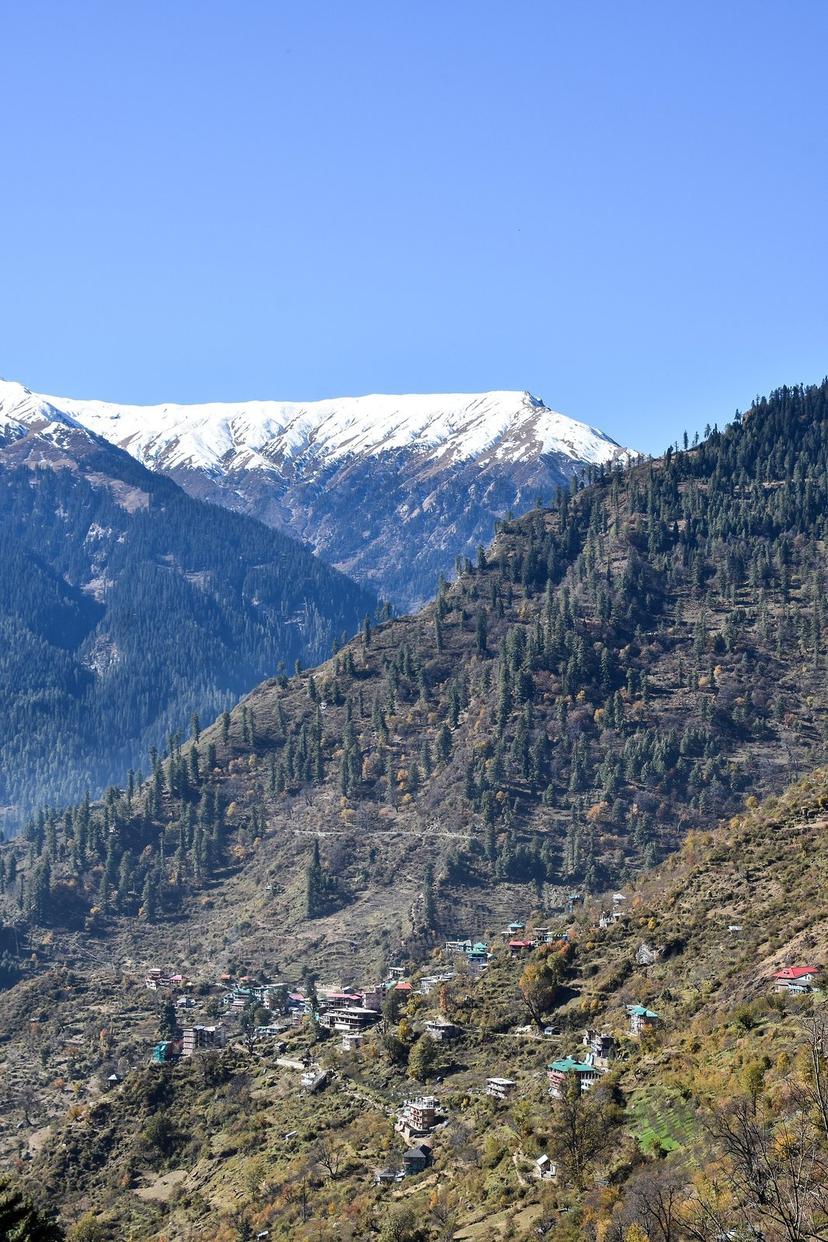
Kheerganga meadow (2,960 m). Open alpine pasture, small Shiva temple on the high side, hot spring pool fed by the mineral stream, views down the Parvati and up at the Kheerganga Peak and the glimmer of Pir Panjal ice beyond. The meadow is quieter than it has been in a decade. Recent day-trek reports describe the basin as near-empty mid-week in shoulder season, with only a handful of trekkers on any given afternoon. Through the 2017 to 2019 peak you could find 80 tents and several sound systems visible from the shrine, by most local accounts. Now the shrine is the loudest thing up there.
Why this meadow matters, in two paragraphs
The name is not a tourism invention. In the Puranic telling the mountain pass above Kheerganga is where Kartikeya, the elder son of Shiva and Parvati, came to meditate after losing a contest to his younger brother Ganesha. (The contest involves a race around the world; Ganesha circled his parents and claimed the world was them. Kartikeya had taken the long route, literally.) Hurt, he retreated to these mountains for a thousand years. Parvati, his mother, is said to have poured a stream of kheer (sweet rice pudding) down the slope to bring him home. The hot spring is that stream, still warm, still running.
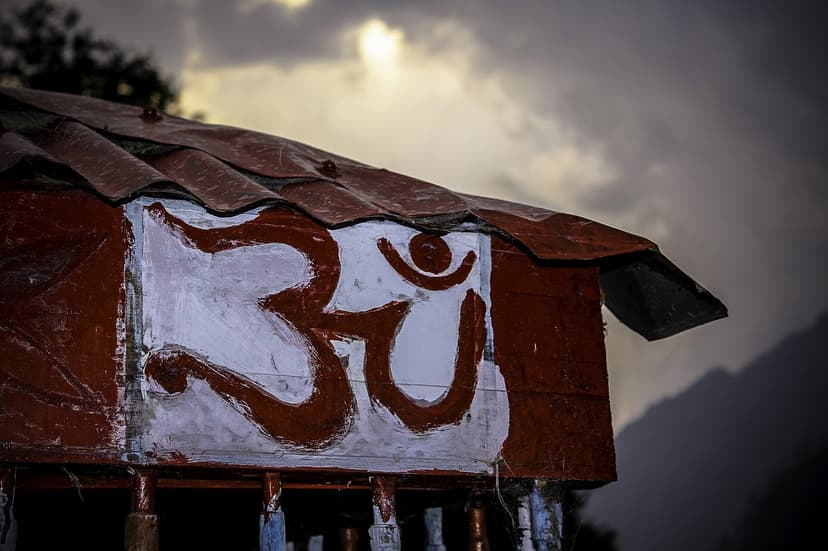
The story matters because it frames what the place is. Kheerganga is a Shaiva pilgrimage site before it is a trek, and a trek before it is a campsite. The 2024 ban did not invent the idea that this meadow was not a festival ground. It restored it. There are sadhus still in the shrine, older than the hot spring infrastructure, who remember the years before commercial camping and will tell you the quiet is back.
If you cannot do the day trek, five real alternatives
I understand the appeal of a high, quiet bed under stars you can actually see. Good news: the Parvati Valley has four or five legal alternatives that are not overrun. A handful of them were better than Kheerganga even before the ban, and they are improving as the camping crowd reroutes.
| Village / trek | Distance from Kasol or Barshaini | What you get |
|---|---|---|
| Kalga | 2 km walk from Barshaini, 30 minutes | Sleepy apple-orchard hamlet. Legal homestays Rs 500 to 1,200 per room. The new Kheerganga pre-trek base. Views back down the Parvati are as good as anything in the valley. |
| Pulga | 1 km from Barshaini up the other side | Smaller than Kalga. Forest setting. No nightlife, no shops beyond basics. The anti-Kasol. |
| Tosh to Kutla | 3 km, 2 hours from Tosh village | Legal meadow camping at Kutla. Traditional Himachali wooden homes in Tosh itself, which is 20 km from Kasol by road. |
| Grahan | 8 km, 3 to 4 hours from Kasol | A side valley most people skip. Alcohol-free by community rule. Legal homestays. Dense forest, waterfalls, zero tour groups. |
| Rasol | 5 km, 4 to 5 hours from Kasol | Steep uphill climb from Chalal. Panoramic Parvati view. Small handful of homestays. Not for the unfit. |
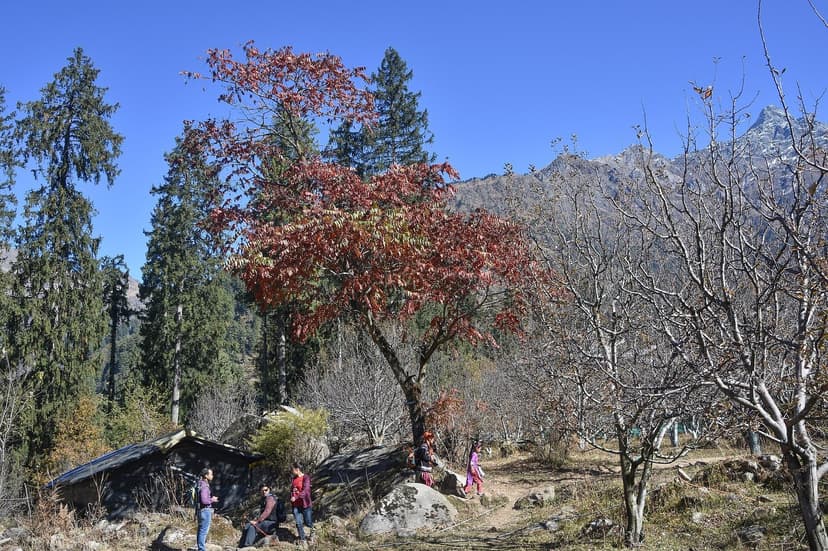
If I had to rank them for a first-timer, I would send you to Kalga for the pre-trek stay (you walk 30 minutes to Barshaini in the morning and start), Tosh-Kutla for the meadow-camping fix, and Grahan for the genuinely quiet village stay. Rasol is a fitness test disguised as a village. Pulga is Kalga's quieter cousin for people who found Kalga busy.
Where everything is, on a map
Practical info, concentrated
- Status April 2026
- Day trek open. Overnight camping banned since July 2024.
- Entry window
- Before 10 AM. Descent by 2 PM.
- Forest permit
- Rs 100 per person, Barshaini checkpoint, photo ID required.
- Violation penalty
- FIR plus permanent permit revocation.
- Distance
- 12 to 13 km one way from Barshaini. 4 to 6 hours up, 2 to 3 down.
- Altitude
- 2,960 m at the meadow. 2,000 m at Barshaini.
- Hot spring
- 40 to 45 deg C. Segregated for men and women.
- Best months
- March to June, September to November.
- Avoid
- July and August (monsoon, landslides). December to February (snow, trail may be impassable).
- Nearest airport
- Bhuntar (Kullu-Manali), 31 km from Kasol.
- Nearest hospital
- Bhuntar civil hospital, 62 km from Barshaini.
- Mobile
- BSNL best, Airtel patchy above Nakthan, Jio usable in Kasol only.
What a trip actually costs
| Item | Cost (INR) | Note |
|---|---|---|
| Kasol to Barshaini taxi | 100 to 500 | Rs 100 to 150 per seat shared, Rs 400 to 500 full taxi. 15 km. |
| Nakthan guesthouse | 700 to 1,200 | Plain room. Meals extra at Rs 150 to 250. |
| Forest permit | 100 | Per person, day of trek, at Barshaini checkpoint. |
| Meals on the trail | 300 to 500 | Rudra Nag cafe Maggi Rs 100, watermelon juice Rs 80, pack your own lunch for the top (no cafes at meadow now). |
| Bus Kasol to Delhi return | 900 to 1,500 | HRTC ordinary Rs 900, Volvo Rs 1,399 to 1,499 via Bhuntar. 14 hours overnight. |
| Total, 2 days solo, ex-Delhi return | 2,500 to 4,500 | One Nakthan night, permit, day trek, food. |
For reference, the operator camping packages start at Rs 1,099 (MadTrek) and climb to Rs 2,199 (BanBanjara). Self-organised is cheaper, legal, and the money stays in the valley. Paying less to do it properly is not a difficult trade.
Planning help
If you want a day-trek plan that fits your dates, your fitness, and your budget, write to us. We will send back a pre-positioned Nakthan plan, a homestay contact in Kalga, and a packing list that fits the 5 to 10 deg C reality of the meadow.
Frequently asked
Is Kheerganga open for trekking in 2026?
Yes. Day trek only. You must arrive before 10 AM and descend by 2 PM. Overnight camping has been banned since 10 July 2024 by order of DFO Praveen Thakur, Parvati Division. Stay overnight at Nakthan, Kalga, Pulga, Barshaini, or Tosh instead.
Why was camping banned at Kheerganga?
By April 2024, about 500 tents were spread across the meadow. Garbage was choking the streams, the hot spring was polluted, and human waste had reached the water source. The Forest Department banned overnight camping to let the ecosystem recover. The area is also a Shaiva pilgrimage site and was being treated as a festival ground.
Can I still bathe in the Kheerganga hot springs?
Yes. The pool is 40 to 45 deg C, fed by the mineral stream, and segregated for men and women. It is accessible during the day-trek window. Bring a towel and a dry change of clothes. There are no cafes or shops at the meadow now, so bring your own water and snack.
What happens if I camp at Kheerganga anyway?
The 10 July 2024 order states an FIR will be registered and your trekking permission will be permanently revoked. A barrier is staffed at Icy Point, an hour below the meadow, and guards check permits and gear. The 2024 and 2025 seasons saw multiple FIRs filed. Do not try it.
Are operators still selling Kheerganga camping packages in 2026?
Yes, unfortunately. MadTrek, BanBanjara, Thrillophilia, and UniversalAdventures were all actively selling Kheerganga camping packages as of April 2026. Either these operators plan to break the law (your FIR, not theirs) or they bait-and-switch to a Kalga or Barshaini camp. Either way, do not book them.
How long is the Kheerganga trek?
12 to 13 km one way from Barshaini at 2,000 m to Kheerganga meadow at 2,960 m. Four to six hours up for average fitness, two to three hours down. Round trip is 24 km.
What is the best time to trek Kheerganga?
March to June for clear days and warming weather. September to November for post-monsoon skies. Avoid July and August for rain and landslides. Avoid December to February for snow on the trail, when the climb to the meadow may be impassable.
Do I need a forest permit?
Yes. Rs 100 per person for the Nakthan route. Paid at the Barshaini Forest Department checkpoint on the trek side of the bridge. You need a valid photo ID. The permit is for the day only.
Is the trek safe?
The main trail is well-established and rated easy to moderate. The risks are altitude (2,960 m at the top, so watch for AMS), cold (5 to 10 deg C at the meadow even in summer), slippery river crossings near Rudra Nag, and the illegal shortcut paths that have caused fatal falls over the years. Stick to the marked trail.
Can I skip the 2 PM descent rule?
No. Forest guards at Icy Point record who went up. If you are not back through the barrier by late afternoon, you are now in the system as a violator. The penalty is an FIR and a revoked permit. This is not an enforcement gap. Respect the clock.
Can I camp at Kheerganga in 2026?
No. Overnight camping at Kheerganga has been banned by the Himachal Forest Department since 10 July 2024 and remains banned through the 2026 season. The penalty for violation is an FIR and permanent permit revocation per the DFO Praveen Thakur order. Sleep at Nakthan, Kalga, Pulga, Tosh, Grahan or Rasol instead and day-trek up.
Is the Kheerganga trek allowed now in 2026?
Yes as a day trek. Entry through the Barshaini checkpoint is allowed before 10 AM, the Icy Point barrier closes ascent after that, and all trekkers must descend by 2 PM. Forest permit is Rs 100 per person with photo ID. The trek is 12 km one way from Barshaini and takes 5 to 6 hours up; the practical way to make the timing work is to sleep at Nakthan (3 km up the trail) the night before and start at dawn.
What is the alternative to Kheerganga in 2026?
Five Parvati Valley alternatives where overnight stay is still legal: Kalga (1 km uphill from Barshaini, easy access), Tosh-Kutla (4 to 5 hours, dhabas at the top), Grahan (8 km from Kasol, no road access village experience), Rasol (4 to 5 hours, Malana cousin village with its own customs), and Waichin Valley (the wider grassland that absorbed the trekkers who used to camp at Kheerganga). All are inside the same Parvati Valley district and reachable from the same Bhuntar arrival point as Kheerganga.
Need help planning?
For a trip that lines up with the current enforcement rules, write to us at hello@refuje.com. We will send a Nakthan pre-position plan, a legal homestay shortlist for Kalga and Tosh, and a packing list fitted to the current state of the trail.
Sources
- Forest Department camping prohibition order, 10 July 2024, Parvati Division. Reported in Tribune India, 2024-07 and The News Himachal, 2024-07.
- April 2026 ban-status verification via Google AI Overview and Discover with Dheeraj Kheerganga guide, April 2026.
- Operator listings checked April 2026: BanBanjara Rs 1,150 package, MadTrek Rs 1,099 package, Thrillophilia listing, UniversalAdventures listing.
- Ban timeline and previous enforcement via Whistling Hound and Travelling Slacker.
- Kartikeya mythology via TanhaDil Kheerganga mythology and Free Press Journal.
- HPTDC official Kheer Ganga trek page: hptdc.in.
- Coordinates verified against OpenStreetMap Nominatim, April 2026.
About Rajesh Thakur
Rajesh Thakur grew up in the Kullu valley and has been writing about Himachal Pradesh travel and culture since 2018. He is most at home in upper Kullu, Lahaul, and the Spiti circuit, and has done the Parvati Valley loop more times than he has counted.
You Might Also Like
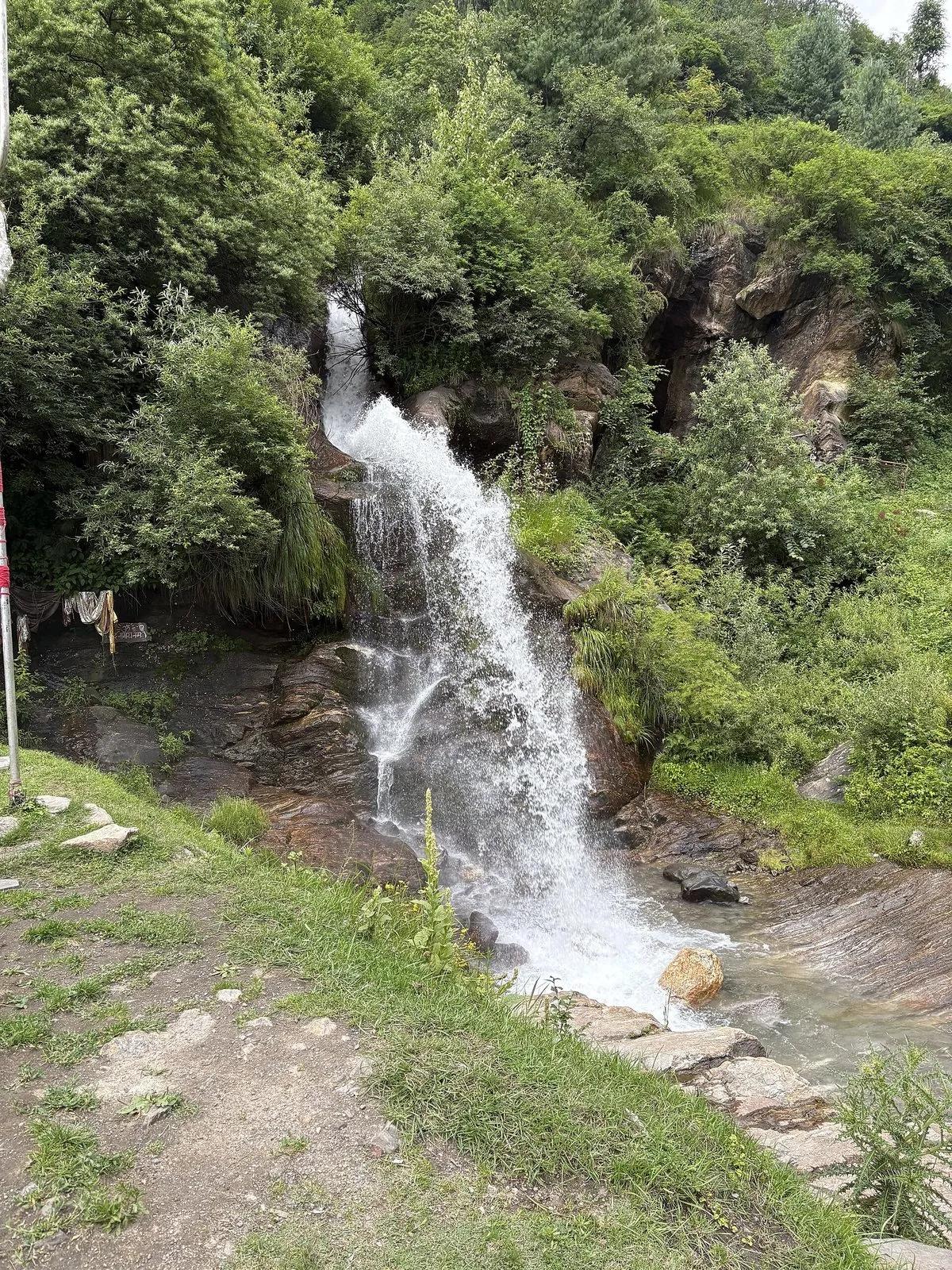
Kheerganga in 2026: The Hot Spring Is Closed. Is the Trek Still Worth It?
The famous hot-spring bath is closed and overnight camping is banned since 2024. An honest 2026 take: Kheerganga is a day trek now, the soak is gone, but the deodar walk, the Rudra Nag waterfall and the meadow are still worth your legs. How to do it now.
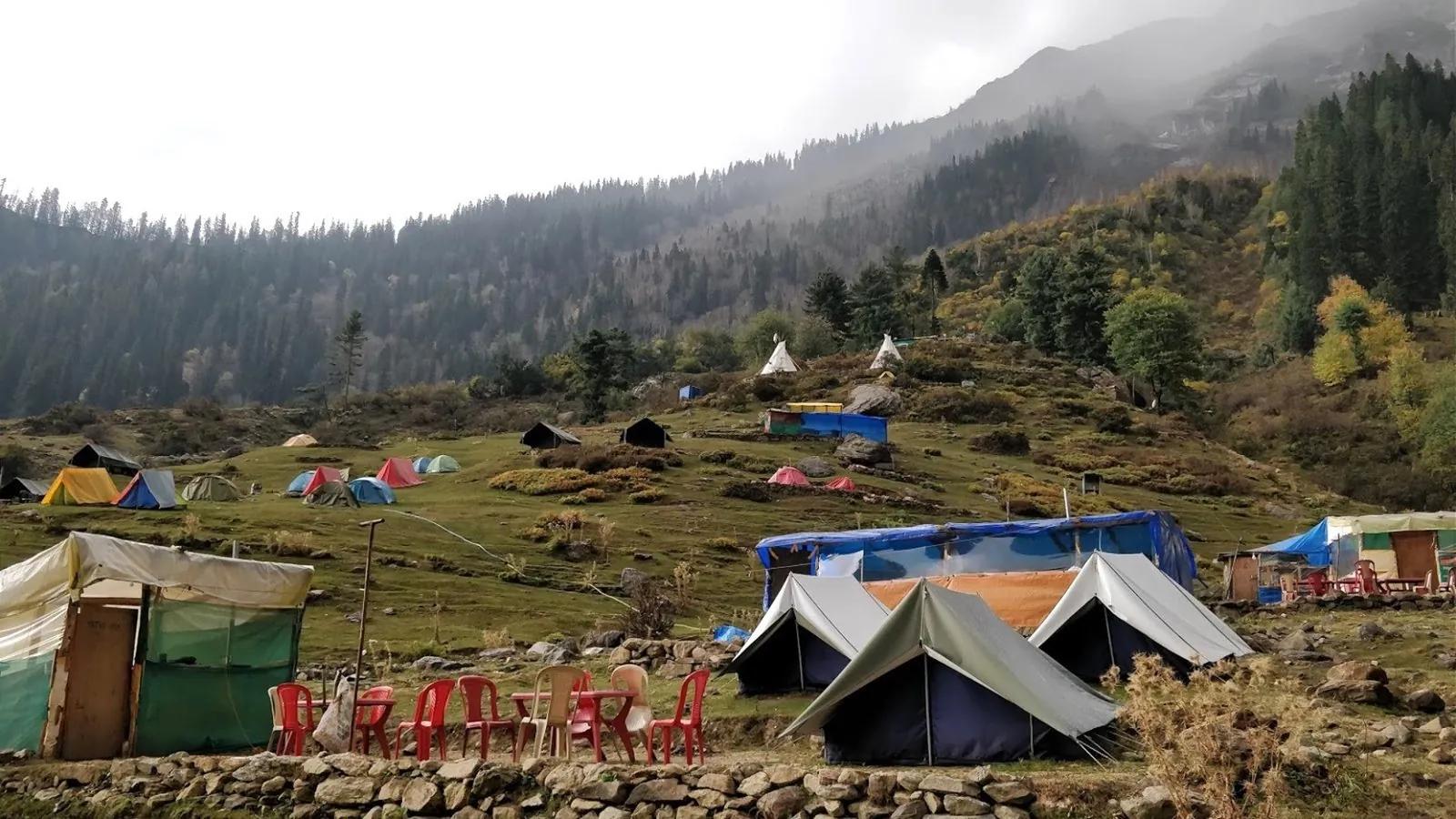
Off-Grid Camping Above Pulga: Bun Buni & Bhandak Thach (2026)
The best night in Parvati is on a high meadow above the villages. Since Kheerganga's camping ban, the thaches above Pulga, Bun Buni and Bhandak, are where you sleep out, carry-in and leave-no-trace. What it's really like, and how to do it.
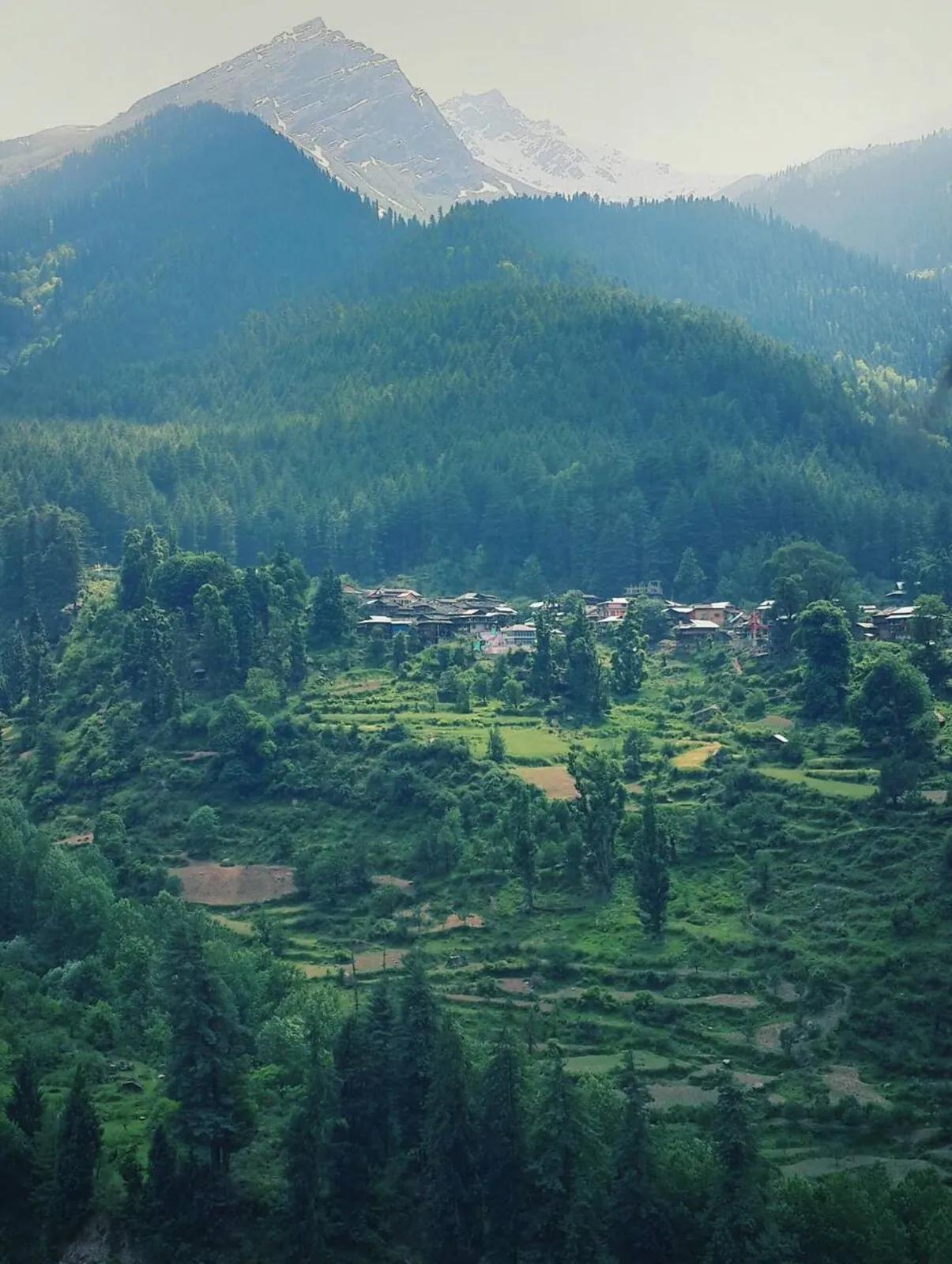
Pulga: The Quiet Base for Parvati Valley (2026 Guide)
Stay in Pulga and day-trip the rest. How to reach the upper Parvati Valley's quietest base past the roadhead at Barshaini, where to sleep in the orchards, and what to walk to from there.