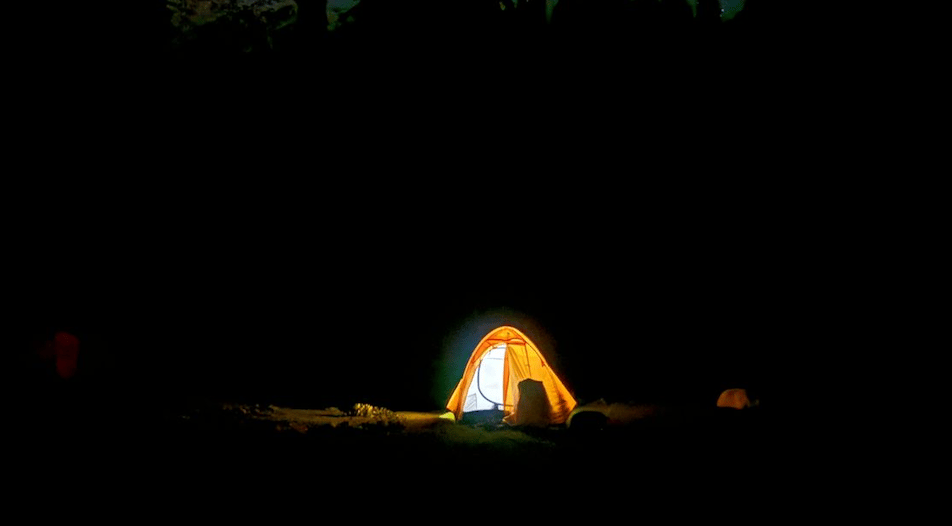
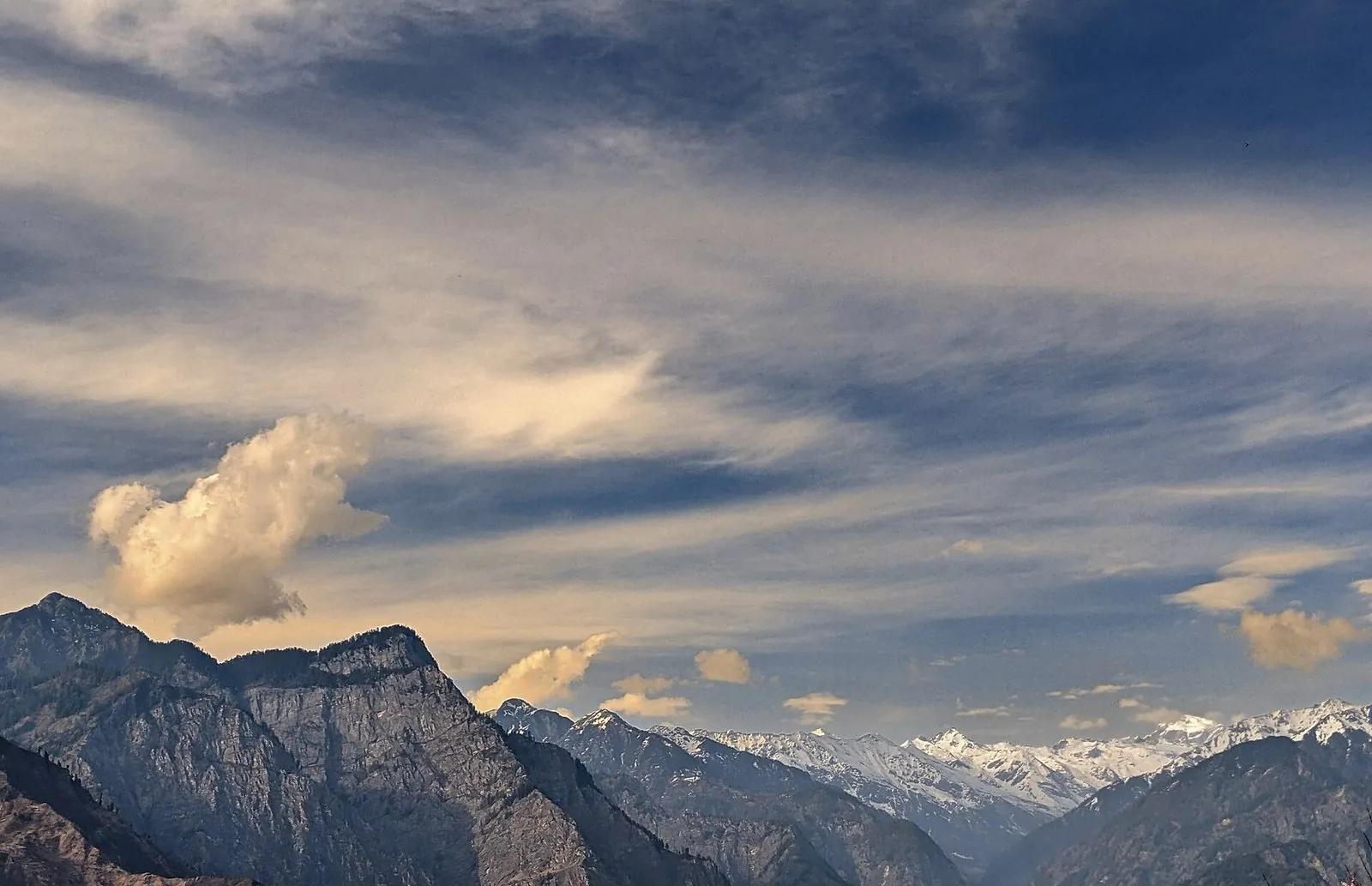
Kasol 2026: An Honest Guide (And Why You Should Go to Tosh, Grahan or Pulga Instead)
The honest answer to "is Kasol overrated" is: the main town, yes. The valley around it, no. Those are two very different sentences and most travel writing about Kasol collapses them into one.
I grew up in the Kullu valley and Kasol has reshaped itself under us over the years. It used to be a quiet Himachali hamlet with a handful of Israeli-run cafes. By the mid-2010s it had turned into a backpacker destination. By 2022 it was a weekend car-park for Delhi, Gurgaon and Chandigarh. What it is now, in 2026, is a town that has priced itself out of the budget-backpacker story and has not fully decided what to be instead. And yet the rest of the Parvati valley, the six villages around it that most guidebooks barely map, is as quiet, cheap and beautiful as Kasol itself was 20 years ago.
This guide validates the "overrated" criticism where it is true, and then redirects you to what actually works. Kasol is a bus stop, not a destination. Once you accept that, the whole valley opens up.
Parvati valley at a glance
- Best months
- Mar-Apr and Oct-Nov for clarity and fewer people; May-Jun is peak crowds; Jul-Sep is monsoon, do not go
- Base yourself in
- Kasol for transit and one night; Tosh, Kalga, Pulga, or Grahan for the actual trip
- Time needed
- Minimum 3 days (Kasol + Tosh + Manikaran); 5 days to do Parvati properly with Kheerganga + Grahan
- Altitude range
- 1,640 m (Kasol) to 2,960 m (Kheerganga meadow)
- Airport
- Bhuntar (Kullu) airport, 30 km from Kasol on NH-3. Very weather-dependent. Most people bus from Delhi
- Kheerganga camping
- Banned since July 2024, still enforced in 2026, day trek only, entry before 10 a.m., out by 2 p.m.
- Budget
- Rs 300-450/day shoestring, Rs 850-1,500/day comfortable, Rs 2,800-5,300/day mid-range
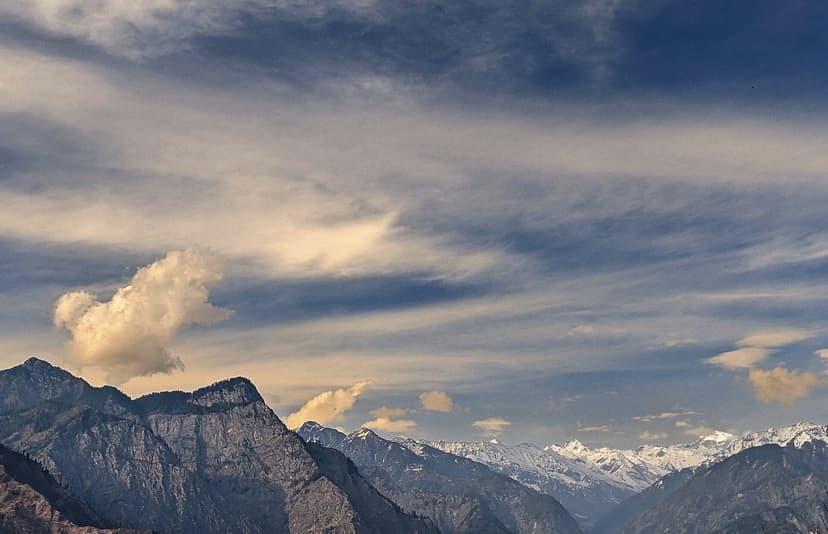
Why Reddit says Kasol is overrated (and why Reddit is right)
There is a specific kind of Kasol guide I have stopped reading: the one that opens with "Kasol is a backpacker's dream in the heart of the Himalayas, a peaceful hippie village tucked above the Parvati." Anyone who has been through Kasol in April any year since 2018 knows that sentence is a lie. The town has one road. The road fills up. The cafes have hour-long waits. The Parvati river looks beautiful and the retaining wall it runs past is covered in plastic.
On Reddit I pulled 33 comments across r/IndianEnts, r/SoloTravel_India, r/Bhubaneswar, r/Kochi, r/gurgaon and r/desitravellers, searching variants of "kasol overrated". Roughly 70 per cent of the Kasol-specific comments came back negative. Six attributed quotes from that pile:
- u/Admirable_Industry76 (r/SoloTravel_India): "Kasol is overrated I think. Specially for a solo trip."
- u/Puzzleheaded_Text780 (r/SoloTravel_India): "Kasol is overrated and full of people who consume weed whole day."
- u/Gibe_da_Pusi_b0ss_ (r/Bhubaneswar): "Kasol is pretty overpriced and overrated… the place has lost its unique culture mostly."
- u/godsdontplaydice (r/Kochi): "Kasol is overrated."
- u/freakedmind (r/gurgaon): "Bro Kasol is overrated and overcrowded AF, watch some of the recent videos of tourists there."
- u/maouromen (r/IndianEnts): "Main Kasol town is unnecessarily expensive, crowded and overrated."
That is a consistent signal. And the complaint is always the same seven problems:
- Overcrowding. Peak season turns a Himalayan village into a Delhi parking lot. Cafes have waits. The road is a single-lane traffic jam on Saturday afternoons.
- Commercialisation. Hebrew signs on every third shutter, souvenir stalls selling mass-produced "hippie" patches, cafes charging Delhi prices for mediocre hummus.
- Environmental damage. Plastic bottles on the river banks, beer cans in the pine forest, concrete-block guesthouses going up where wooden kath-kuni houses used to be.
- Inflated prices. A dorm bed that costs Rs 300 off-season hits Rs 800 in May. Cafe meals that should be Rs 100 run Rs 400.
- The Instagram effect. Every bridge, every riverside rock, every cafe chair has a queue of people waiting to be photographed on it.
- The drug-tourism reputation. Cannabis is openly available and the town's brand is inseparable from it. More on this in a later section because it has a real safety dimension.
- Lost identity. To quote u/Gibe_da_Pusi_b0ss_ again: "the place has lost its unique culture mostly." What was once a Himachali village with an Israeli backpacker layer is now a generic tourist town with a marijuana veneer.
All seven are true. And all seven apply only to the main Kasol bazaar. Walk 20 minutes upstream, or sit in a jeep for half an hour out of town, and the valley is still the valley.
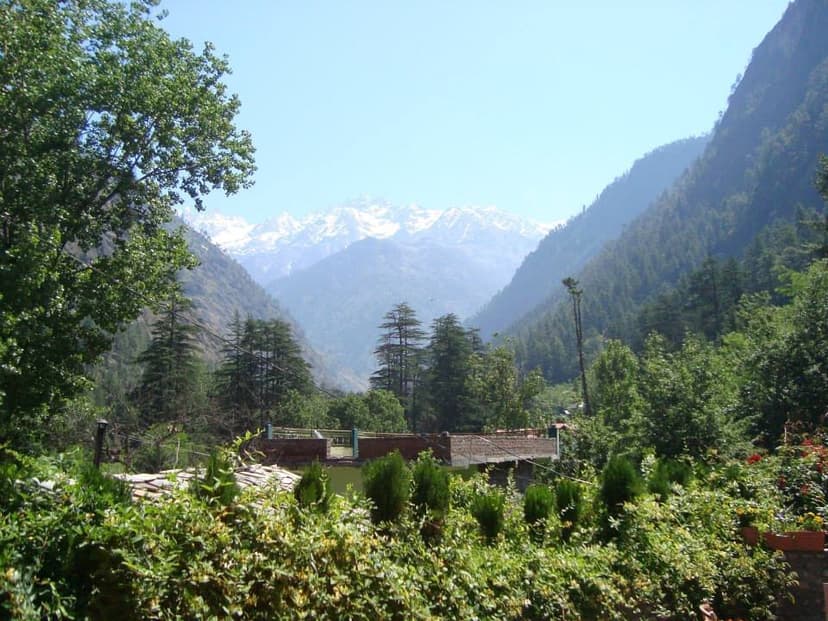
The plot twist: Kasol is not the destination, it is the bus stop
Here is the most upvoted piece of advice on any Kasol Reddit thread, almost no matter which sub you read it on. It is paraphrased versions of the same sentence:
Do not stay in Kasol. Better options would be: Waichin, Pulga, Grahan, Kalga, Tosh. A few more small villages nearby.
u/maouromen, r/IndianEnts
And u/freakedmind, in almost the same words:
If you want a pure meditative experience with nature and herbs, Kasol is not what you want. You should go to smaller villages like Waichin or Grahan, with Kasol being your main base where you rent a room and dump your suitcase.
u/freakedmind, r/gurgaon
That is the entire insight. The Parvati valley is a constellation of villages. Kasol is where the bus stops. Complaining that Kasol is overrated is like complaining that the airport is ugly. You were never supposed to stay at the airport.
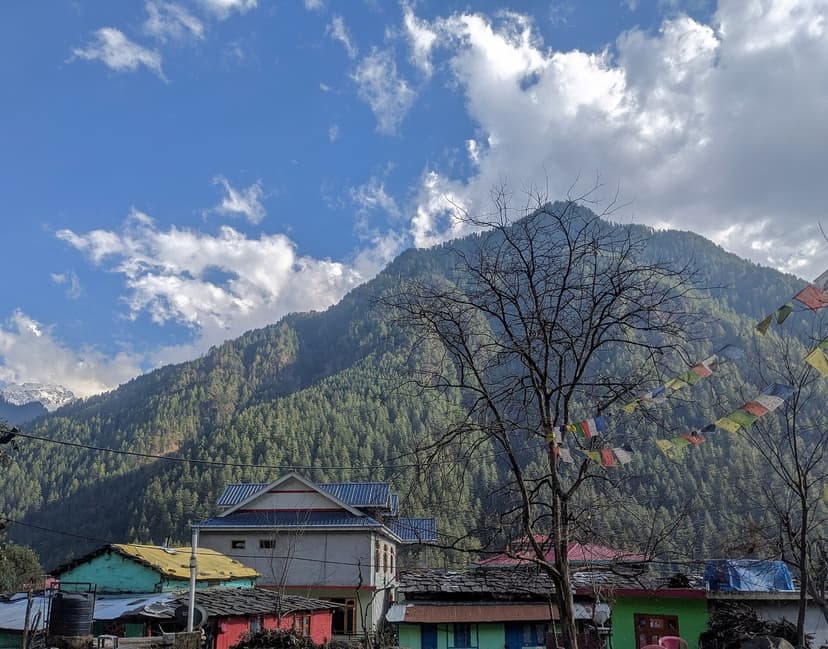
Six villages do the real work in this valley. Tosh, Kalga and Pulga sit upstream of Kasol near Barshaini, where the road ends. Grahan and Waichin sit up side valleys you can only walk into. And Chalal is a 20-minute walk from Kasol across a bridge most day-trippers never cross. Here is how I tell people to sort them.
| If you want… | Go to | Access and honest note |
|---|---|---|
| Kasol-adjacent with better views | Tosh | 20 km drive, getting busy on weekends |
| Rustic, Kheerganga-trek base | Kalga | 22 km drive, limited beds, book ahead |
| True forest hideaway, writing retreat | Pulga | 25 km drive + 1 hour uphill walk, genuinely remote |
| No phone, no alcohol, stars | Grahan | 10 km trek from Kasol, 4-6 hours up |
| Most remote, experienced backpackers only | Waichin | Hike in from Kasol side, very basic |
| Quiet cafes without a trek | Chalal | 20 min walk from Kasol, cross the footbridge |
Tosh, 2,400 m, the next-Kasol
Tosh sits on a steep spur above the Tosh Nala, about 20 km and a 30-minute drive plus a short uphill walk from Kasol. It is the most popular escape, which means it is already commercialising in the same way Kasol did ten years ago. Go mid-week, not on a long weekend. Guesthouse rooms run Rs 500-1,500 a night in season, meals Rs 100-300. The mountain cafe circuit (Pink Floyd Cafe, Olive Garden, the handful of terrace cafes) is the best part. u/Key-Status-4145 on Reddit captures the winter reality: "If you go Tosh and a little higher altitude places, it is snowing… beautiful but only bad thing is the rain, vehicles are skidding." True for November-February.
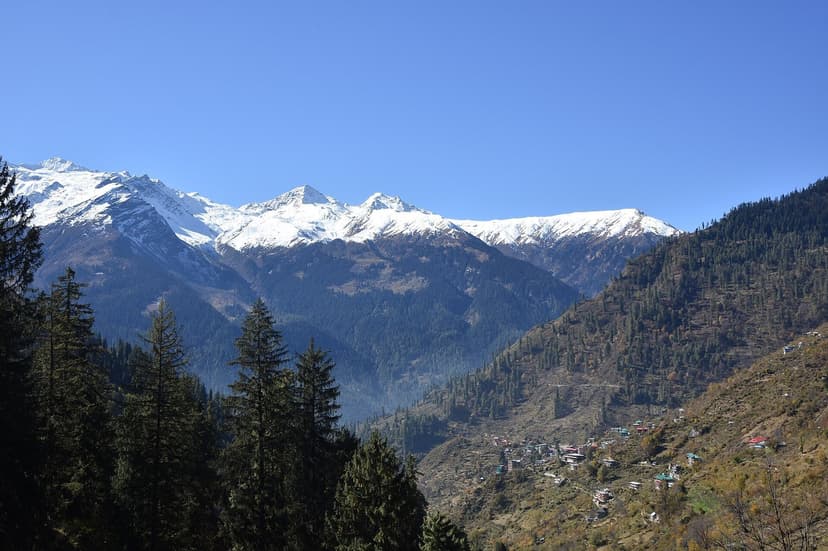
Kalga and Pulga, 2,600 m and 2,200 m, the Kheerganga staging villages
Kalga and Pulga are paired in most guidebooks and really are a pair on the ground: a 300-metre forest walk separates them, and both sit above Barshaini, the road-head that doubles as the Kheerganga trailhead. Kalga is the one most trekkers use for the night before a Kheerganga day-hike. Pulga is the quieter one, deeper in pine, with a reputation as a writing retreat during the off-season.
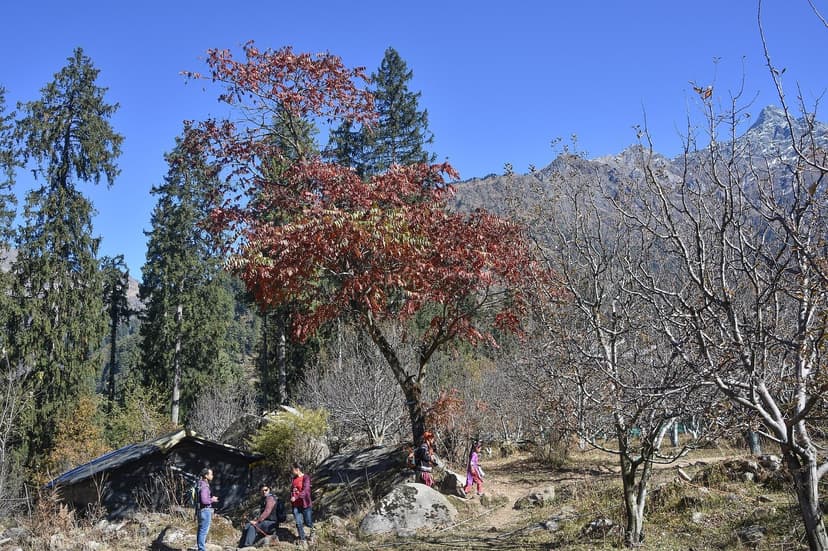
Kalga has maybe 40 beds across ten or so homestays. Book ahead between April and June. Rooms run Rs 400-1,000. The stone huts in the apple orchard are the ones locals will steer you towards if you ask at the first tea stall. Pulga is cheaper and emptier, Rs 300-800 for a basic room, and the walk in from the Barshaini road-head (the last kilometre is a foot path, no cars) deters most weekend tourists. Which is the whole point.
Grahan, 2,350 m, the village that banned alcohol
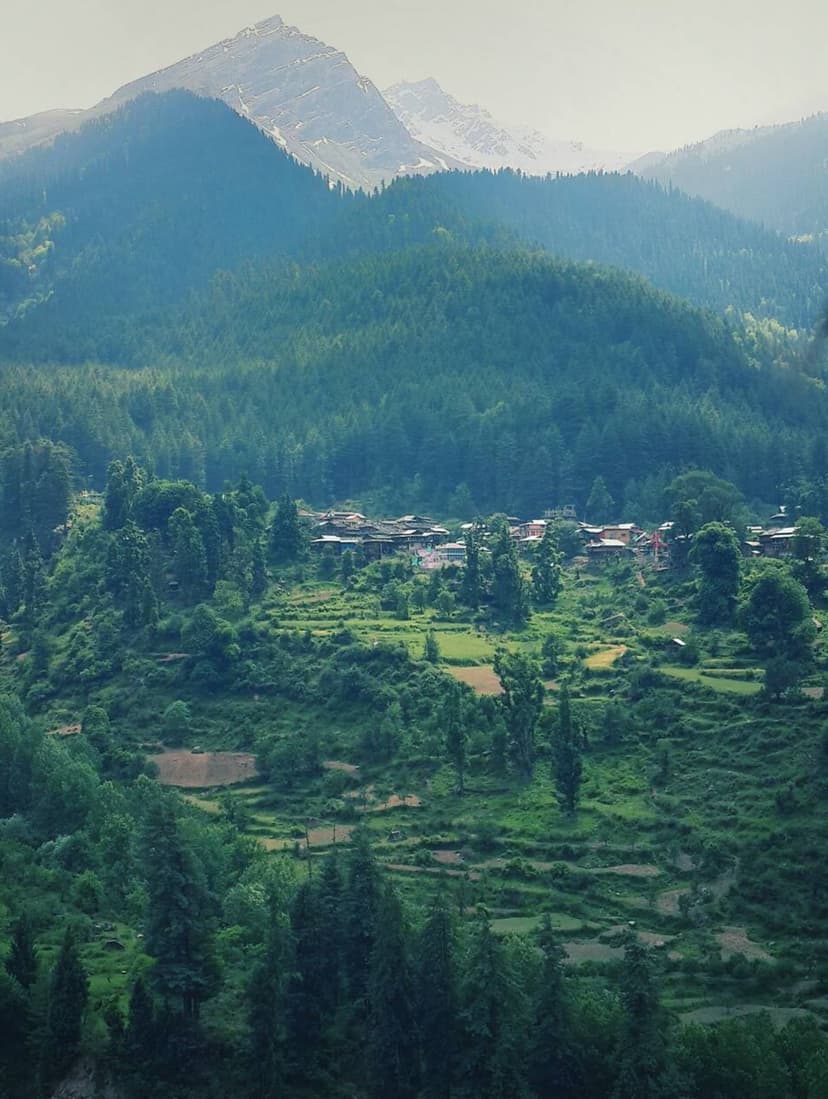
Grahan is the village I tell everyone about and almost no guidebook mentions. It sits 10 km up the Grahan Nullah, a side valley that opens south-west of Kasol. Four to six hours of moderate trekking gets you there. Roughly 350 people in 50 houses, some of them 200 years old, stone-and-timber kath-kuni. No cell signal. No alcohol (the village elders voted it out decades ago and enforce it). Zero commercialisation. Basic homestays run Rs 300-600 a night with meals at a few.
u/maouromen ranks Grahan third in the valley, behind Waichin and Pulga. The Hosteller calls it "Parvati valley's little secret." Neither claim is wrong. What you walk in for is the silence, and a sky clean enough that you can pick out the Milky Way with the naked eye.
Waichin, the village Reddit ranks number one
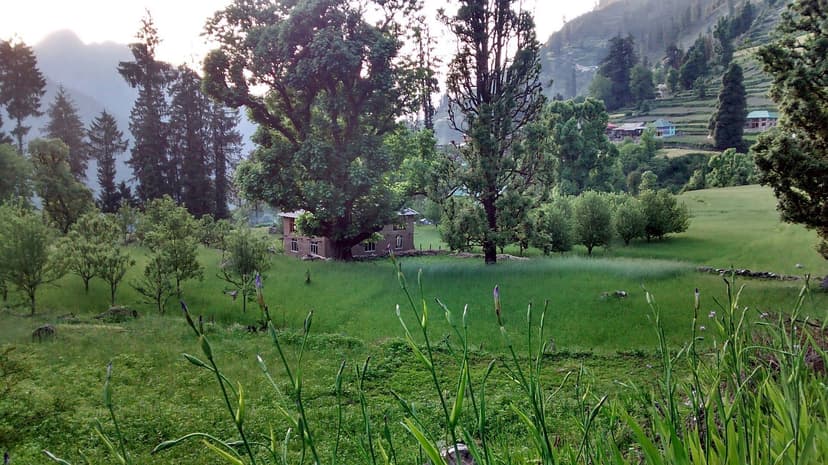
Waichin is a few hours hike above the Parvati valley floor on an old herders' path. Perhaps a dozen basic homestays, Rs 200-500 a night, run by families who rotate summer pastures up and down the slope. Very basic infrastructure. Spotty phone signal at best. This is actual rural Himachal, not a cafe approximation of it. Reddit consistently ranks it first. Every Kasol veteran I know agrees. It is the purest of the six if you have the legs for the walk in.
Chalal, the 20-minute escape
Chalal is the one everyone skips and should not. A 20-minute walk from Kasol: cross the iron footbridge, turn left up the Parvati bank, follow the path past the washermen's ghat. Quieter cafes, cheaper beds, the same river and the same mountains. Getting discovered, especially on weekends, but still a different animal from main Kasol. Good for a half day.
The map, in one place
The drug culture section, honest but not naive
Most Kasol guides skip this section. They should not. It has a real safety dimension and a real legal one, and pretending it is not there is the kind of dishonesty that gets travellers into trouble.
The reality. Kasol and the broader Parvati valley have an entrenched cannabis/hashish economy. The Narcotics Control Bureau classifies Kasol as a "major drug haven in North India" (TheCitizen). The famous product is Malana Cream from the neighbouring village of Malana. Taxi drivers, guesthouse owners and cafe staff can arrange it. As u/Puzzleheaded_Text780 puts it in one sentence: "Kasol is overrated and full of people who consume weed whole day."
The Hindi press has been writing about this for years and is still writing now. A recent raid on a Kasol dhaba turned up 1 kg 312 g of charas; the woman running the stall was arrested (Amar Ujala). At a rave in the Parvati valley, eight people including tourists were taken in (Amar Ujala). In Kullu, a Nepali-origin individual was picked up with 1.220 kg of hashish; police told reporters they were tracing an international network (First Verdict). These are 2025 headlines, not the decade-old stories the cafes still cite.
Four risks that cannabis enthusiasm ignores:
- Legal. Cannabis is illegal in India (NDPS Act, 1985). Penalties include jail time. Tourists have been arrested. Foreigners face deportation and a long legal process in a country whose courts are not built around English.
- Entrapment. There are documented cases of dealers working with local police, selling to a tourist and tipping off police within ten minutes for a cut of the "fine." This is not urban legend; VICE and ThePrint have both published first-person accounts.
- Disappearances. Official records show 1,078 persons went missing in the Parvati valley between 2003 and 2023, of which 21 were foreigners. Only 498 were traced. The valley has been called "India's Bermuda triangle for backpackers" (SCMP). Many cases are drug-linked: impaired judgement on treacherous trails near deep gorges, ending in a fall into the Parvati or a rockfall nobody witnesses. Named cases include Justin Shetler (USA, 2016), Bruno Muschalik (Poland, 2015), and more than 25 others since the 1990s.
- Harder stuff. Cannabis is the primary substance but reports of psychedelics (LSD, mushrooms) and harder drugs in the party scene are on the record. The risk curve is different and steeper.
Our recommendation. Be aware. The culture exists, pretending it is not there is dishonest. Do not participate: the legal risk alone is not worth it and impaired judgement on a Himalayan trail is a much more serious threat than a criminal record. Do not moralise either: many families in the valley depend on the cannabis economy and have for four generations. If the scene itself makes you uncomfortable, skip Kasol entirely and read our Tirthan Valley guide, same mountains, different town, no haze.
Kheerganga: the 2024 ban changed everything
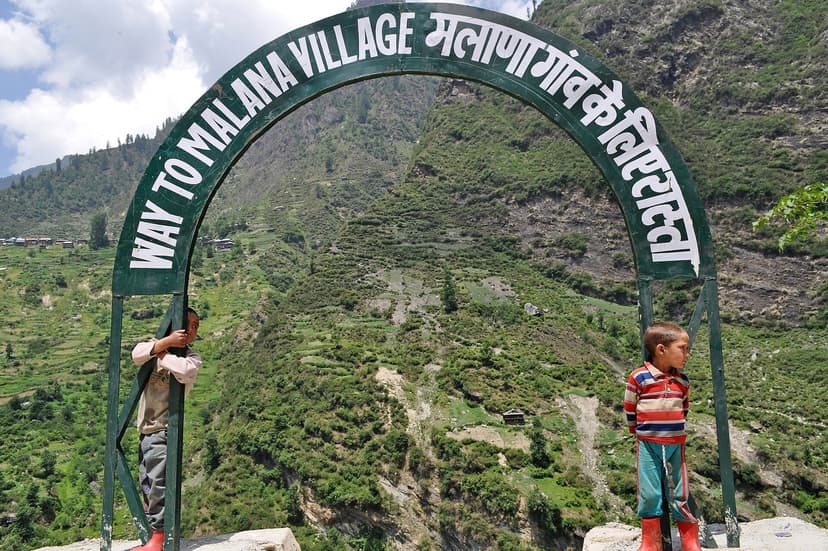
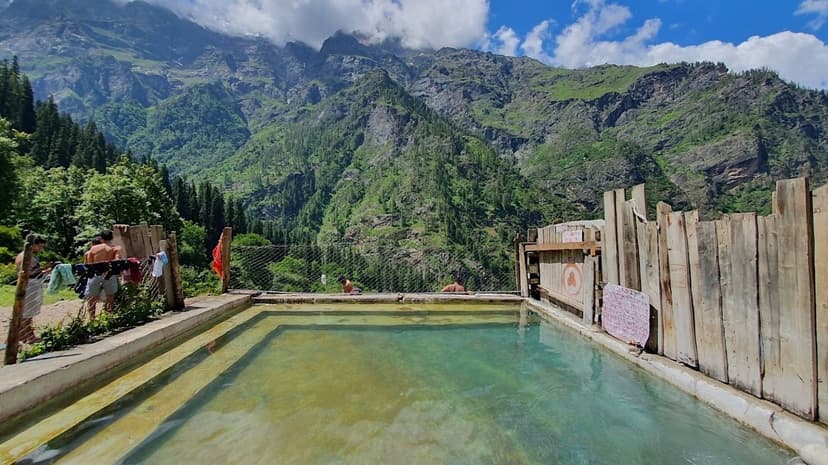
If you went to Kheerganga before 2024, what you remember is a meadow full of tents, a Shiva temple, hot springs, and the cafes where chai came at summit prices. That meadow is gone. What I mean by "gone" is that every tent and cafe has been dismantled. By April 2024 the HP Forest Department counted close to 500 tents on the Kheerganga meadow, and the National Green Tribunal stepped in to enforce a complete overnight ban on environmental grounds. The ban is still in force in April 2026 (verified via WhistlingHound, Discover with Dheeraj, February 2026 guides). Day visits only, entry before 10 a.m., out by 2 p.m. No tents, no cafes at the top. Illegal camping now gets you a fine and potentially a trek-blacklist.
| Before the ban (pre-2024) | After the ban (2026) | |
|---|---|---|
| Format | Two-day trek with overnight camping | Day trek only |
| Summit facilities | Tents, cafes, parathas | Nothing, bring your own food and water |
| Entry | Anytime | Before 10 a.m., leave by 2 p.m. |
| Cost | Rs 2,000-3,000 tent + meals | Rs 50-100 forest check-post fee, rest is free |
| Crowd at top | 500-tent party meadow | Silent meadow + hot springs, the way it always was |
| Night camping | Free for all | Illegal, fined |
My honest take: the ban has improved Kheerganga. The meadow and the hot springs were a Shaivite pilgrimage site long before the backpacker economy arrived, and what was being traded away for party-tent revenue was exactly the silence people said they came for. Now you have to earn it. Base yourself in Kalga the night before, leave at first light from Barshaini, walk 12 km one way, eat what you brought, soak, and head down. The day that gives you is arguably better than the old two-day version.
Staging strategy for a Kheerganga day-hike
- Sleep in Kalga the night before. Barshaini is a five-minute drive (or 10-minute walk) below Kalga.
- Leave Barshaini between 5:00 and 6:00 a.m. Expect 4-5 hours up, 3 hours down.
- Pay the forest check-post fee (Rs 50-100 per person, cash, kept at the post).
- Hit the summit by 10-11 a.m. Soak, eat what you brought.
- Start down by noon, back at Barshaini by 3-4 p.m.
- Total: ~24 km, 8-10 hours, moderate-difficult. Carry water (the summit taps are not reliable), sunscreen (the meadow has no shade), a rain shell (weather flips fast above 2,500 m).
Manikaran Sahib: the layer every backpacker guide skips
Most Kasol guides give Manikaran two lines: "hot springs, Gurudwara, skip if short on time." This is a mistake. Manikaran is the single most culturally serious place in the Parvati valley and it sits 5 km from the Kasol bus stand, a 15-minute jeep ride. Free to enter. Worth an afternoon.
The name comes from a Hindu story. Goddess Parvati lost an earring (mani, gem; karan, ear) in the river here, and Shiva's Tandava forced the naga to surface it. That is the Hindu reading and the Shiva temple, the rebuilt Naina Bhagwati and the older Ramchandra temple sit on the bank to prove it.
The Sikh reading is the other half of the story. In 1574 Bikrami (late 15th century CE), Guru Nanak Dev Ji visited Manikaran on his third Udasi (journey) with disciple Bhai Mardana. When Mardana had no fire to cook langar, Guru Nanak told him to lift a stone; a hot spring appeared. The Gurudwara Manikaran Sahib marks that spot and runs a continuous langar (free community kitchen) to anyone who walks in, regardless of faith. Both buildings share the site. This interfaith coexistence is rare in north India; almost every other pilgrimage place of this scale has sorted itself into one religion only.
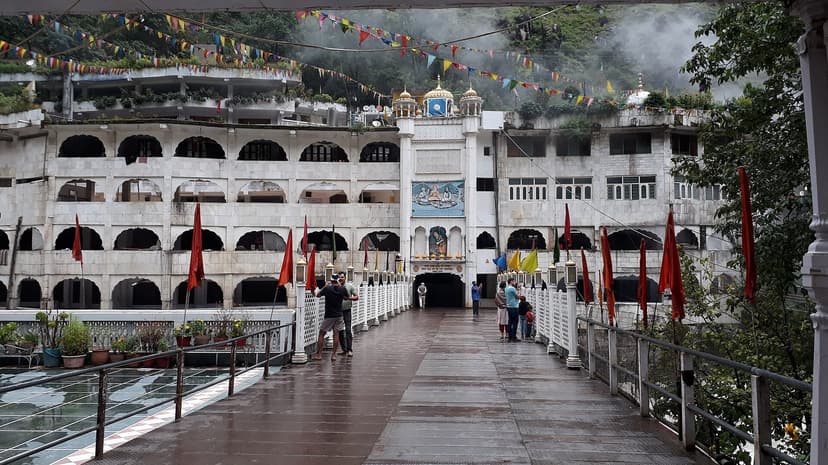
The hot springs are the physical thing. Temperatures of 64 to 80 degrees Celsius at different points on the bank. Pilgrims and residents cook rice and dal in cloth packets lowered into the water; you can sit and watch it happen. Bathing pools are fed by cooler side-channels and are considered therapeutic for arthritis and skin conditions (a lot of older Himachalis come here on a circuit that also covers Vashisht near Manali). Cover your head before entering the Gurudwara, remove your shoes, and do not climb into the primary hot water: it can burn.
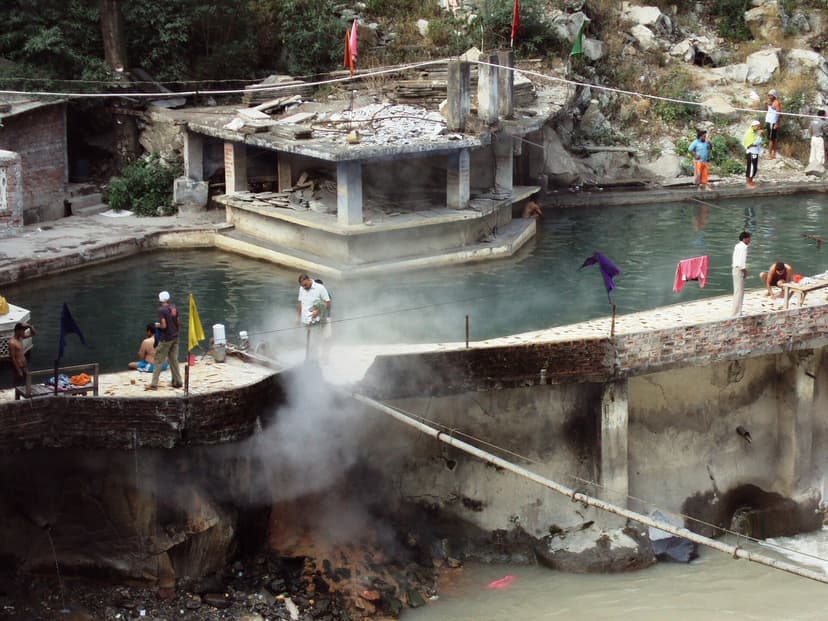
Honest notes: weekends and Sikh holidays are busy, weekday mornings are best. The langar is a real spiritual offering, not a traveller's hack. Eat, leave a contribution if you can, do not bring your camera into the Gurudwara's inner sanctum.
Safety: the stuff other guides will not put on paper
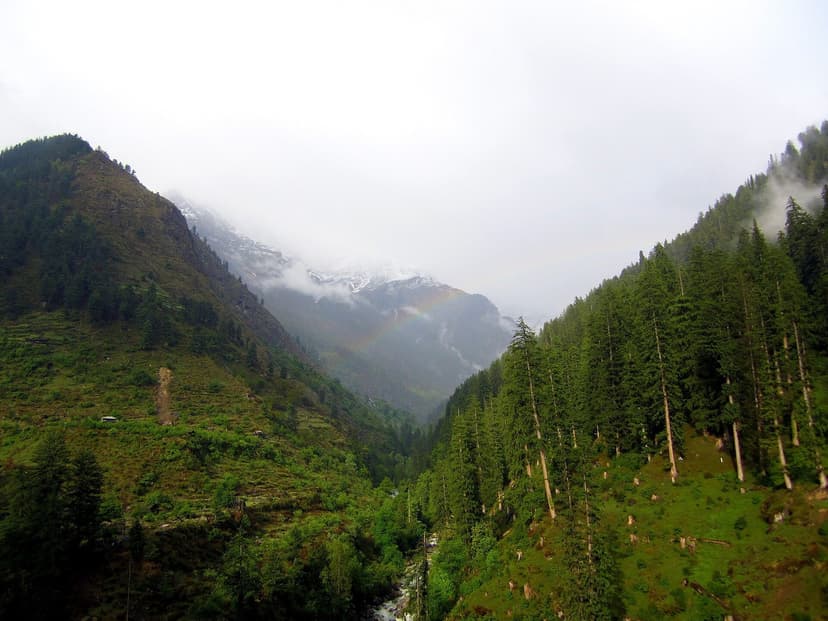
Monsoon, July to September: do not go
This is not a cautious footnote. People die in this valley in monsoon, every year, and the road history backs it up.
- Flash floods. The Parvati swells into a different river. Northlines reported a flash-flood that nearly wiped out Kasol itself. The retaining walls are not built for the worst-case flow.
- Landslides. The Bhuntar-Kasol road is carved out of a slope that gets undercut every monsoon. Entire sections close. Getting stuck is normal; getting stuck for four days is common.
- Road closures. One road in, one road out. The Kullu administration does not have the equipment to clear every slide fast.
u/freakedmind puts it in six words: "Plus not a great time due to rains." That undersells it. A better sentence, from somebody who drives this route for work: monsoon Parvati is a place to avoid, full stop.
Trail and river
- Never trek alone while intoxicated. This is the single largest cause of the "disappearance" statistics. Impaired judgement on steep unmarked paths near deep gorges is how tourists end up in the official records.
- The Parvati river is lethal. The current is far stronger than it looks. Do not wade in. Drownings are annual.
- Tell someone your route. If you are walking to Grahan, Waichin or any of the smaller hamlets, tell your guesthouse where you are going and roughly when you expect to return.
- Carry a power bank. Grahan has zero mobile signal. Waichin is patchy. Jio and Airtel are the better carriers on paper but both die once you step off the main Parvati road.
Solo women
Kasol itself is generally safe in daylight. The main road is well-trafficked, there are other tourists everywhere, and violent crime against solo women travellers is not the pattern here. That said, the drug scene brings unpredictable behaviour from other tourists, and that is the threat. Stick to established hostels with reviews (The Hosteller Kasol, ArtBuzz Hostel, Nomads House). Avoid isolated trails after dark (the Chalal footpath, riverside walks, the Grahan approach past sunset). If you want a mountain trip without the scene, Tirthan and Jibhi (two hours south-west, same mountains) are both better first choices for a solo female traveller. We cover both in our Tirthan Valley guide and our HP solo women's guide.
Want a local second opinion on your Parvati itinerary? Email us your draft plan. We will tell you which homestay is actually open, which village road is passable this week, and whether a monsoon date should be moved.
What a Parvati week actually costs
Kasol is one of the cheapest Himachali destinations if you are willing to eat at dhabas and sleep in dorms. It is Delhi-priced if you want comfort. The range is wider than in most hill towns.
| Item | INR | Notes |
|---|---|---|
| Accommodation (budget, 5 nights) | 1,500-2,500 | Dorm bed Rs 300-500 off-season, Rs 500-800 in season. Private room Rs 1,000-2,000 |
| Food (5 days) | 1,500-2,000 | Dhaba meals Rs 60-100, cafe meals Rs 300-500. Mix 2:1 in favour of dhabas |
| Delhi-Bhuntar Volvo return | 2,000-2,800 | HRTC Himsuta one-way Rs 963-1,399 (April 2026). 12-14 hours overnight |
| Bhuntar-Kasol shared taxi | 200-400 | Rs 100-200 per person each way, shared. Private taxi Rs 1,200-1,500 |
| Kheerganga forest fee + packed lunch | 200-400 | Rs 50-100 forest check-post, rest is food you carry |
| Manikaran visit + langar | 100-200 | Langar is free; leave a small offering. Bus from Kasol Rs 20 each way |
A 5-day Parvati trip in budget mode comes in around Rs 5,500-8,300 per person, excluding Delhi transport. Switch to private rooms, cafe meals and a guided Kheerganga trek and the same five days will cost Rs 15,000-25,000. Either way it works out to roughly half the equivalent cost of Rishikesh or Manali, which is the main reason Kasol keeps winning the budget-backpacker bracket despite everything that is wrong with the main town.
Itinerary options
- Day 1, Delhi to Kasol, arrive, orient. Overnight HRTC Himsuta Volvo from ISBT Kashmiri Gate (departs ~20:00-22:00) reaches Bhuntar ~08:00-10:00 next morning. Shared taxi to Kasol, 45 minutes. Check into hostel, eat, walk 20 minutes to Chalal via the footbridge. Evening back in Kasol, cafe meal, early to bed.
- Day 2, Kasol to Tosh, mountain day. Morning bus or shared taxi to Barshaini (1 hour, Rs 70). Walk up to Tosh (20 min uphill, or short taxi). Settle in, afternoon walk toward the Kutla meadow or just cafe-sit and read. Sleep Tosh.
- Day 3, Tosh to Kalga, Kheerganga day-trek. Early descent to Barshaini. Start Kheerganga trek at 5:30-6:00 a.m. from Barshaini (12 km one way, 4-5 hours up). Pay forest fee Rs 50-100. Soak at the hot springs, eat packed lunch. Down by 2 p.m., back Barshaini by 4-5 p.m. Sleep Kalga.
- Day 4, Kalga rest day, Manikaran afternoon. Morning in Kalga or an easy walk to Pulga (1 km). After lunch, shared jeep back down to Manikaran. Hot springs, Gurudwara, Shiva temple, langar. Evening return to Kasol, sleep Kasol.
- Day 5, Grahan day walk, evening bus back to Delhi. For those with energy: Grahan day walk (or an overnight, if you can add a day). Else, Chalal in the morning, pack up, 4-5 p.m. shared taxi Bhuntar, 7-8 p.m. HRTC Volvo back to Delhi, arrive dawn.
Short on time? The 3-day compressed version is: Day 1 Kasol arrive + Chalal + Manikaran. Day 2 Kasol to Tosh and back. Day 3 Delhi. That is enough to say you went. It is not enough to understand the valley. For that you need the full 5.
Stuck between Kheerganga and Grahan? Or between Tosh and Pulga? Email us your trip dates and fitness level and we will tell you which combination makes sense this particular week. Road conditions, homestay openings and trail snow vary more than any guide can capture in writing.
Seasonal verdicts
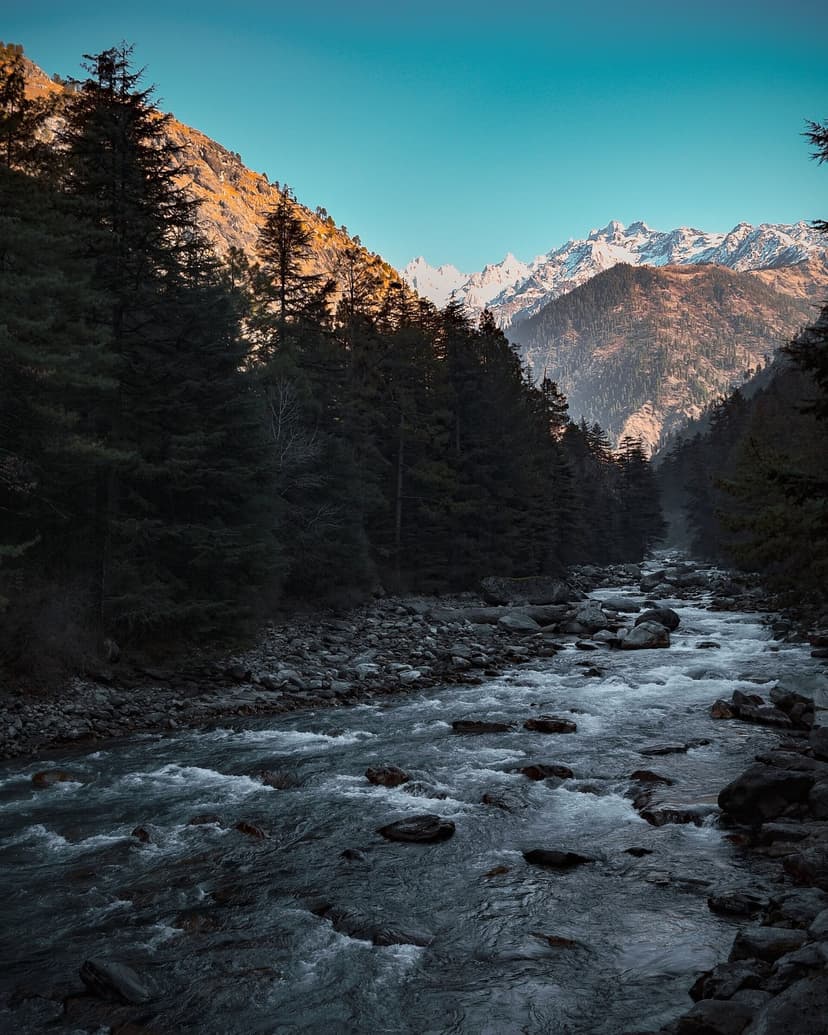
- March-April: best time. Warm enough to trek, crowds have not arrived, flowers are on. Come now if you can.
- May-June: good weather, peak crowds, peak prices. Come mid-week only.
- July-September: do not go. Monsoon is the reason.
- October-November: excellent. Post-monsoon clarity, fewer people, Diwali week is the one spike.
- December-February: cosy if you like cold and quiet. Some higher village roads close. Vehicles skid on the Tosh road. Bring thermals you actually trust.
Who should go, who should skip
Go to Kasol + Parvati if… you want a budget Himalayan trip; you are a trekker with Kheerganga, Sar Pass, or village hikes on your list; you are comfortable around a backpacker / cannabis scene even if you do not participate; you will use Kasol as a one-night base and spend real time in Tosh, Kalga, Pulga or Grahan; you want to visit Manikaran Sahib.
Skip Kasol if… you want a peaceful, family-friendly mountain week, go to Tirthan or Jibhi. You are travelling with young children, Jibhi or Naggar. The drug scene makes you uncomfortable, Dharamshala or Bir. You want adventure sports (paragliding, skiing), Manali or Bir-Billing. You are coming in monsoon, anywhere else in HP. You have already "done" Kasol and want something quieter and more demanding, read our Spiti road-trip guide instead.
What the Hindi press writes about that the English guides miss
The Hindi-language coverage of Kasol is more honest than the English one. Three threads from 2025 that shaped how I think about the current state of the town:
Drug busts are ongoing, not historical. Amar Ujala ran the Kasol dhaba story in 2025: 1 kg 312 g of charas, a woman arrested. The same paper covered an eight-person rave bust in the Parvati valley including tourists. First Verdict followed a 1.220 kg hashish case with a Nepali-origin individual, which police describe as an international-trafficking lead. None of this is 2010 reporting; it is current.
Kasol really is a "mini Israel." Hindi Vikatan reports roughly 1,500 Israeli nationals living permanently in Kasol: "कसोल में लगभग 1500 इजरायली नागरिक स्थायी रूप से रह रहे हैं।" That is a population the size of a small Himachali town, settled in one bazaar. It explains the Hebrew signage, the shakshuka on every menu, and the way the town's economy flexes with Tel Aviv's tourism cycle.
Israeli tourism dropped in 2025 and the administration reacted. ETV Bharat and Deshbandhu covered the steep fall in Israeli footfall caused by the Israel-Iran-Gaza tensions of 2024-25. The HP government and Kullu administration organised a Kasol carnival from 25 December 2025 to 1 January 2026 to revive the season. Whether the 2026 year-end edition runs on the same dates is worth checking closer to the time.
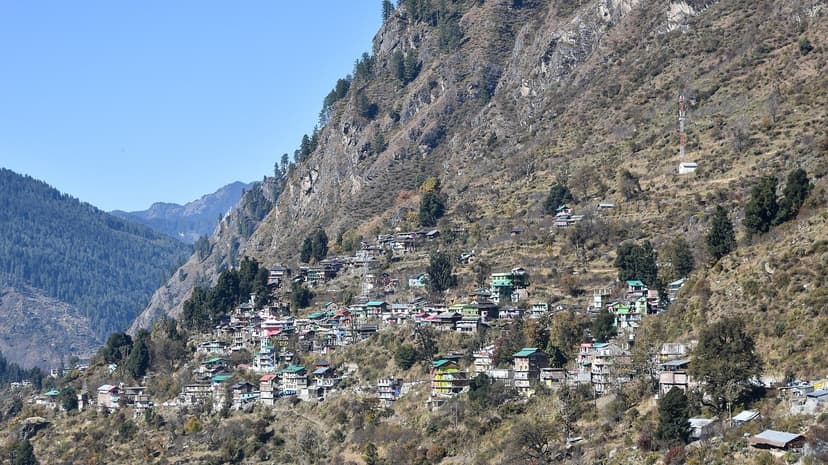
Those three threads, read together, say something useful. Kasol is not a hill-station in the ordinary Indian sense. It is a Himalayan outpost whose economy is tied to three things, cannabis, Israeli backpacker tourism, and Delhi-weekend traffic, and all three are volatile. Which is part of why the village alternatives are so important. Tosh, Kalga, Grahan do not ride any of those cycles. They ride the seasons, the apple harvest, the cattle up-and-down-the-slope, and the occasional trekker. The old rhythm is still there.
Frequently asked questions
Is Kasol overrated?
Main Kasol town, yes. It is overcrowded, commercialised and environmentally stressed. The Parvati valley around it (Tosh, Kalga, Grahan, Pulga, Waichin, Chalal) is not overrated at all. Use Kasol as a base and spend most of your time in the villages.
How many days should I plan for Kasol?
1 day for Kasol itself, 3 to 5 days for the valley. A compressed 3-day trip covers Kasol + Tosh + Manikaran. 5 days adds Kheerganga + Grahan.
Why is Kasol called Mini Israel?
Post-military-service Israeli backpackers have been coming since the 1990s. Hindi Vikatan reports around 1,500 Israelis living permanently in town, which is why Hebrew signs, shakshuka-hummus menus, and Middle Eastern cafes are everywhere. The landscape reminded them of home.
Is Kasol safe for solo female travellers?
Generally safe in daylight in main Kasol. Use established hostels (The Hosteller, ArtBuzz, Nomads). Avoid isolated trails after dark. The drug scene brings unpredictable behaviour from other tourists and that is the real threat. For a quieter solo experience, Tirthan Valley or Jibhi are better starting points.
Is Kasol better than Manali?
Different trips. Kasol is the backpacker + trek base, cheap, cafe-heavy, cannabis-adjacent. Manali is larger, family-friendly, has paragliding and skiing, and is on the Rohtang-Atal-Tunnel circuit. If Manali felt too busy and you still want HP, try Kasol. If you have not done either and you want comfort, start with Manali. See our Manali budget guide at /blog/kullu-manali-trip-cost-budget-2026 for the numbers.
Is the Kheerganga trek still open in 2026?
Yes, as a day trek. Overnight camping was banned in July 2024 and the ban is still enforced in April 2026. Entry before 10 a.m., out by 2 p.m., forest check-post fee Rs 50-100. Base yourself in Kalga the night before; start Barshaini at 5:30-6:00 a.m. Camping is illegal and gets you fined.
Is Kasol safe in monsoon (July-September)?
No. Flash floods, landslides and road closures are the rule, not the exception. The Parvati river becomes lethal. The single road from Bhuntar is landslide-prone. Visit March-June or October-November, never monsoon.
What is Manikaran Sahib?
A combined Sikh Gurudwara and Hindu temple complex 5 km from Kasol, built around hot springs running at 64-80 degrees Celsius. The Gurudwara marks the spot where Guru Nanak visited in the late 15th century. Free langar for everyone. Pilgrims cook rice and dal in cloth packets dropped into the spring. The most culturally serious site in the valley.
What are the best cafes in Kasol?
Jim Morrison and Moon Dance are the famous ones. But honestly, Chalal cafes (across the bridge, 20 minutes on foot) are quieter and often better. Evergreen and Stone Garden do Israeli food well. Anywhere with a riverside terrace beats any cafe on the main bazaar.
How much does a 5-day Kasol trip cost?
Shoestring Rs 300-450/day. Budget Rs 850-1,500/day. Comfortable Rs 2,800-5,300/day. A 5-day budget trip comes in at Rs 5,500-8,300 excluding Delhi transport. Volvo return from Delhi is another Rs 2,000-2,800.
What are the best alternatives to Kasol?
For the same mountains without the crowds and drug scene: Tirthan Valley (our top recommendation), Jibhi, Shoja. For backpacker vibes elsewhere in HP: Bir-Billing, Vashisht near Manali. For families or first-timers: Naggar, Dharamshala. If you have already done Kasol and want truly remote, Spiti.
Sources
- BackpackingNomad, "Is Kasol Overrated?", backpackingnomad.com/is-kasol-overrated/
- DiscoverWithDheeraj, "Budget Kasol Under 5K", discoverwithdheeraj.com
- WhistlingHound, "Kheerganga Camping Ban 2025", whistlinghound.com/kheerganga-camping-ban/
- TravellingSlacker, "Kheerganga Tourist Ban Explained", travellingslacker.com/kheerganga-tourist-ban/
- TheCitizen, "High on Kasol: A Thrilling Insight into the Dark World of Drugs", thecitizen.in
- ThePrint, "Foreigners Keep Vanishing in Himachal's Parvati Valley", theprint.in
- SCMP, "Parvati Valley: India's Bermuda Triangle for Backpackers", scmp.com
- TheHosteller, "Grahan Trek", thehosteller.com/blogs/all-about-the-grahan-trek/
- Wikipedia, "Manikaran", en.wikipedia.org/wiki/Manikaran
- SikhiWiki, "Manikaran Sahib", sikhiwiki.org/index.php/Manikaran_Sahib
- AbhiBus, "HRTC Delhi to Bhuntar Bus Booking", abhibus.com (April 2026 Volvo Himsuta fares Rs 963-1,399)
- Himalayan Hikers, "Kheerganga Trek 2026", himalayanhikers.in/kheerganga-trek
- Amar Ujala (Hindi), "Kasol dhaba charas bust", amarujala.com
- Amar Ujala (Hindi), "Parvati valley rave, 8 arrested", amarujala.com
- Hindi Vikatan, "Kasol 1,500 Israelis Mini Israel", hindi.vikatan.com
- ETV Bharat, "Kasol New Year Carnival 2025-26", etvbharat.com
- Reddit mega-mine (internal), 33 comments across r/IndianEnts, r/SoloTravel_India, r/Bhubaneswar, r/Kochi, r/gurgaon, r/desitravellers. All quotes in this piece attributed by username + subreddit.
About Rajesh Thakur
Rajesh Thakur grew up in the Kullu valley and has been writing about Himachal Pradesh travel and culture since 2018. He covers the HP-wide food, festival and road circuits from upper Kullu, Manali and Lahaul outward.
You Might Also Like
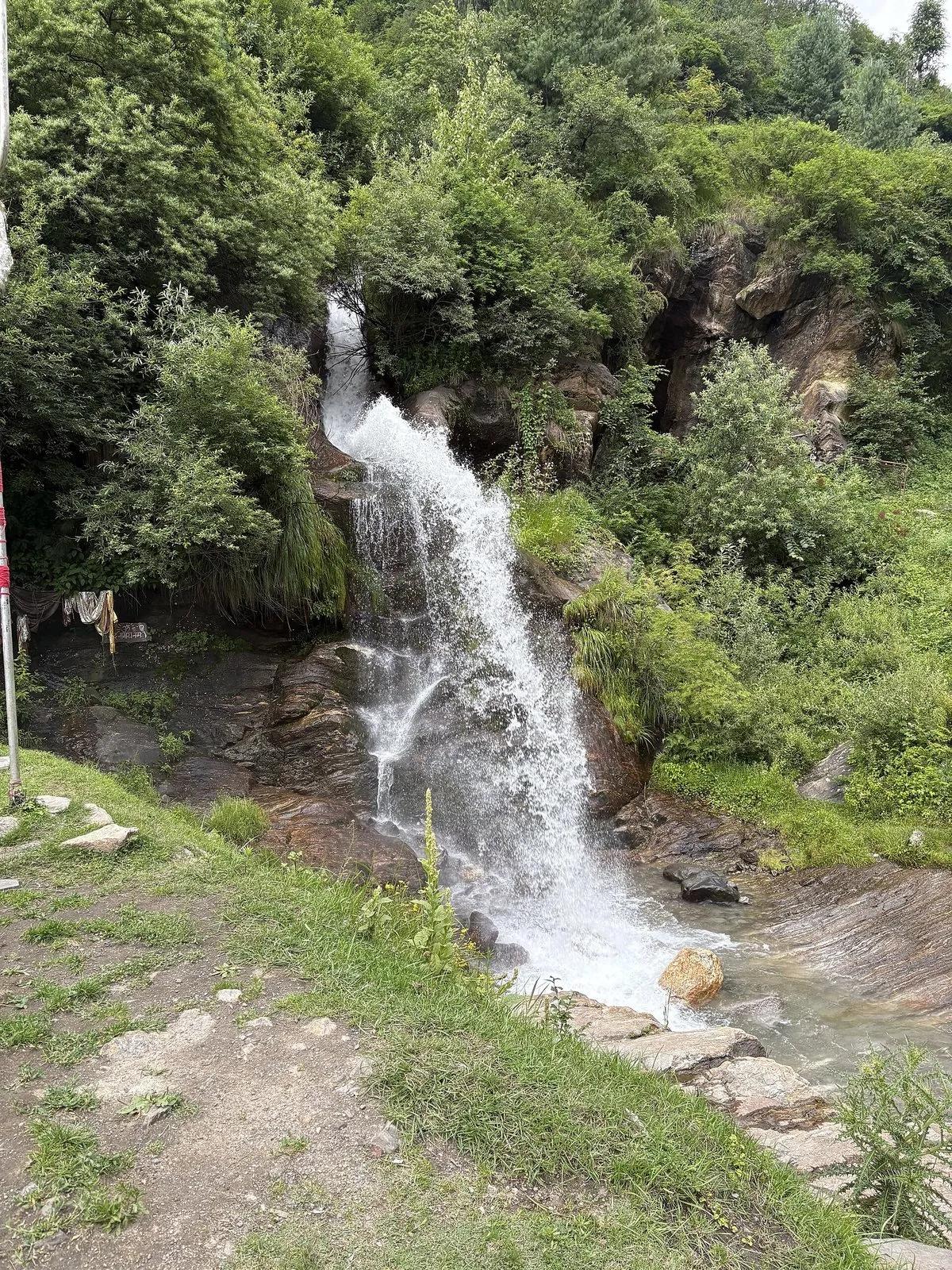
Kheerganga in 2026: The Hot Spring Is Closed. Is the Trek Still Worth It?
The famous hot-spring bath is closed and overnight camping is banned since 2024. An honest 2026 take: Kheerganga is a day trek now, the soak is gone, but the deodar walk, the Rudra Nag waterfall and the meadow are still worth your legs. How to do it now.
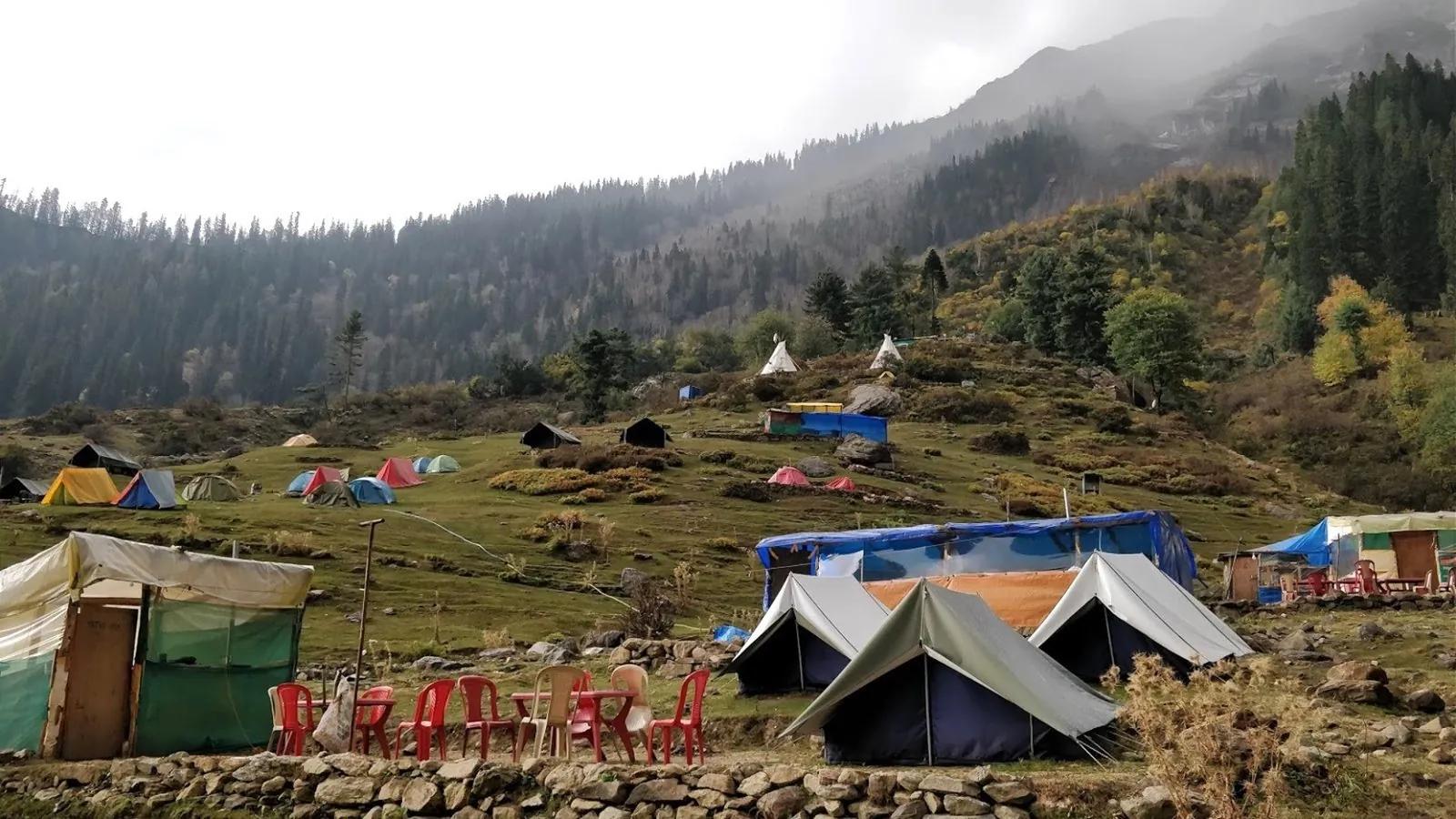
Off-Grid Camping Above Pulga: Bun Buni & Bhandak Thach (2026)
The best night in Parvati is on a high meadow above the villages. Since Kheerganga's camping ban, the thaches above Pulga, Bun Buni and Bhandak, are where you sleep out, carry-in and leave-no-trace. What it's really like, and how to do it.
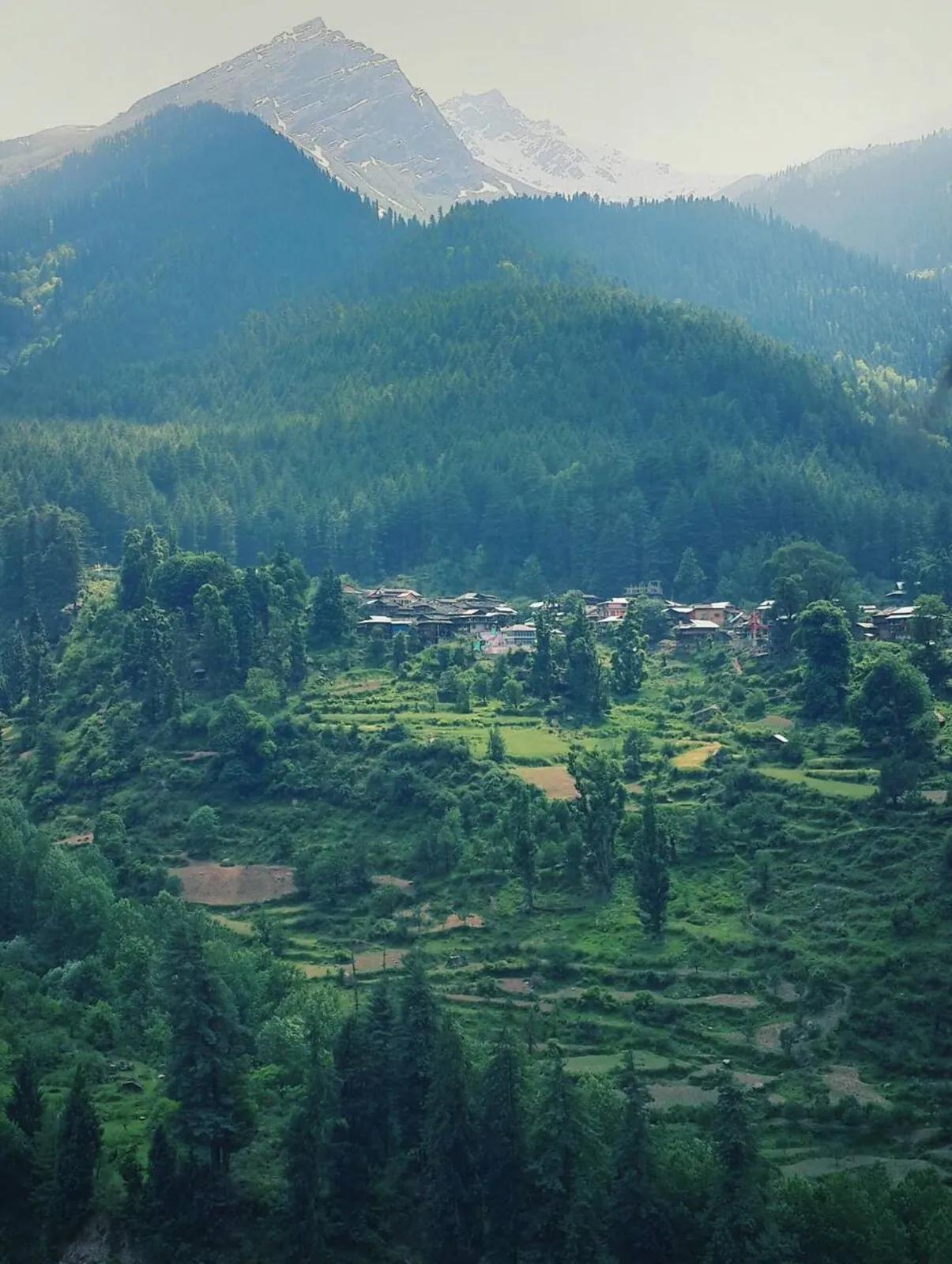
Pulga: The Quiet Base for Parvati Valley (2026 Guide)
Stay in Pulga and day-trip the rest. How to reach the upper Parvati Valley's quietest base past the roadhead at Barshaini, where to sleep in the orchards, and what to walk to from there.