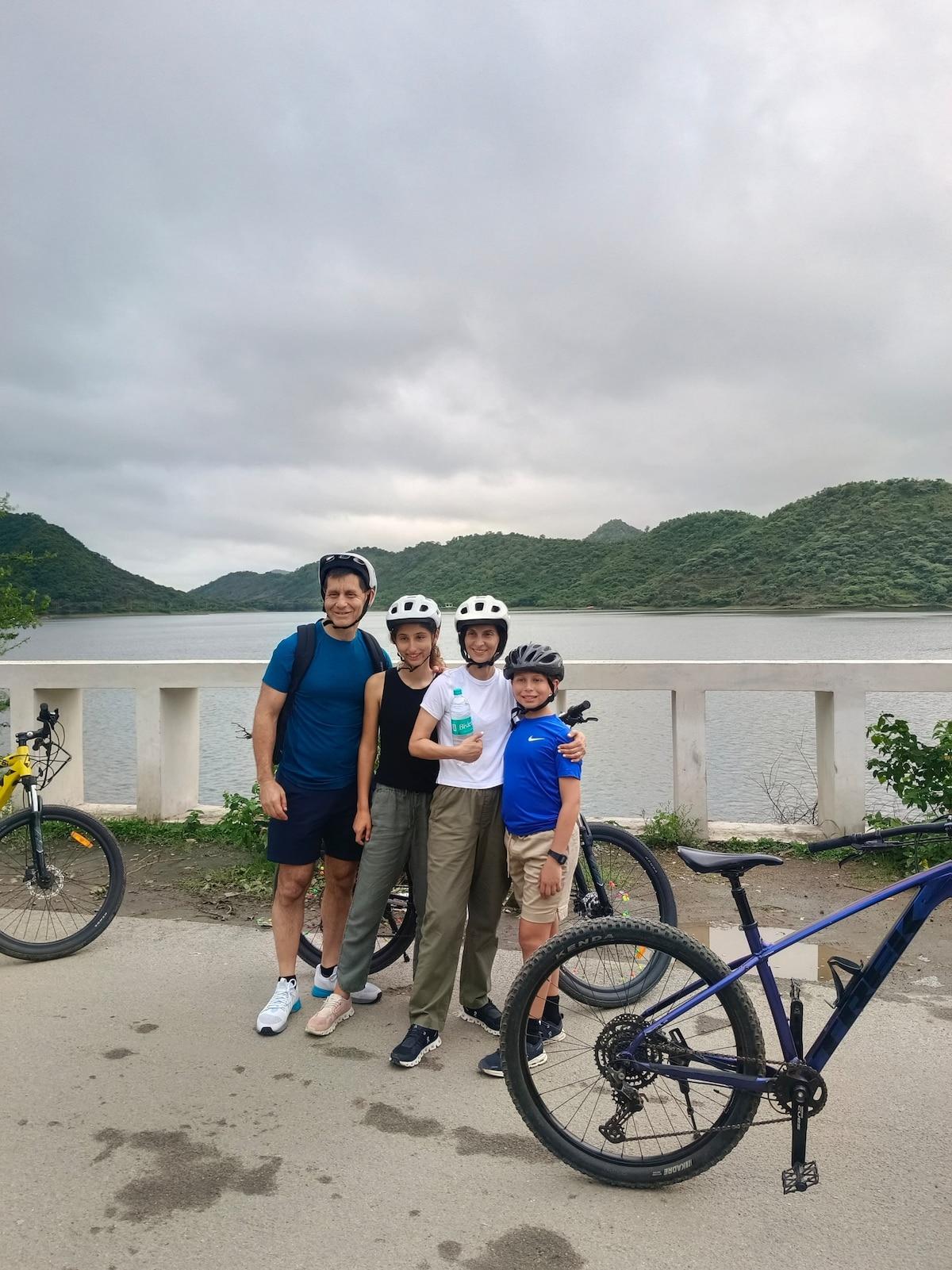
Beyond the Lake: Udaipur's Countryside, Hills and Quiet Lakes by Bike
By six in the morning the lake road out of Udaipur belongs to almost nobody. The boat operators are asleep. The rooftop cafes are shuttered. The autos that will swarm the City Palace gate by ten are still parked in rows with their drivers dozing across the seats. And on that empty road, where the last hotel gives way to scrub and the first low hills of the Aravalli start to climb, a few people are out on bicycles, heading for the water before the sun clears the ridge.
I do not live in Udaipur, so I will not pretend the countryside on its edges is mine to describe from memory. But I have spent a long time reading the city's own residents talk about it online, and one thing they say over and over is worth listening to. The Udaipur that disappoints people is the crowded core, done at midday, off a checklist. The Udaipur they love is the ring around it: the hills, the quieter lakes, the farm roads, done early, on two wheels. This is a guide to that ring, and to the tour that packages the best of it into one morning ride.
What the postcard leaves out
Udaipur sells itself on four lakes and a palace on the water. Fair enough. But look at where the city actually sits. It is folded into the Aravalli, a range old enough to make the Himalaya look brand new, worn down over hundreds of millions of years into the humped brown-and-green hills that ring every side of town. The lakes get the photographs. The hills get skipped, and they are where the good early hours hide.
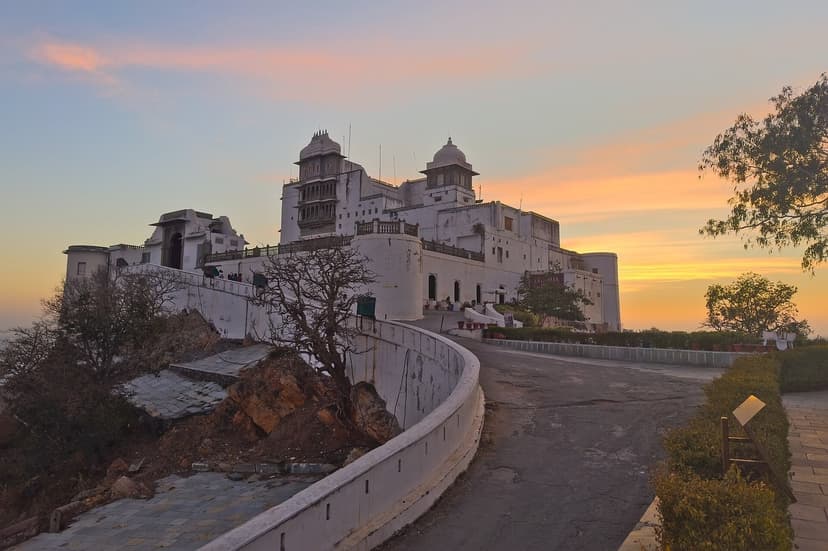
Point yourself at the western and northern edge and the map fills in fast. Fateh Sagar, the big artificial lake north of Pichola, named for Maharana Fateh Singh. Above it, on a hilltop inside a small wildlife sanctuary, the white Monsoon Palace, Sajjangarh, built in 1884 for Maharana Sajjan Singh so he could watch the rain clouds roll in. Further out, Badi Lake, calm and low-key about twelve kilometres from the centre. And on the ridges around Badi, the sunrise points, Bahubali Hills and Rayta, that residents argue about the way people argue about their favourite bar. None of it is far. All of it is quiet if you go at the right hour.
- The ride
- About 20 km through the countryside west and north of Udaipur, roughly 3.5 hours at an easy pace.
- The route
- Sunrise at Fateh Sagar, out past the Monsoon Palace hill, to Badi Lake, through villages and farms, and back.
- The bike
- An imported geared bike, or an optional e-bike that flattens the climbs to the ridges. Rated moderate, not hard.
- When to start
- Before dawn. The whole point is the empty road and the light before the heat and the crowds arrive.
- Best months
- October to March for the weather. Right after the monsoon the hills are still green and the small waterfalls still run.
- What it costs
- The Refuje countryside bike tour runs about Rs 1,920 per person as of mid-2026. Confirm the current rate when you book.
Why a bike beats a car out here
Here is a small, telling argument I watched play out on r/udaipur. Someone asked about the best offbeat trails for sunrise drives, in a post showing a big vehicle being driven up the narrow hill lanes. The locals did not hold back. One told him plainly not to take such big vehicles on these narrow roads and make everyone's life difficult. Another wished him luck but asked him to drive responsibly in these lanes. A third just called the practice an absolute menace on the road.
They have a point, and it is the whole case for doing the countryside on a bicycle. The roads out to Badi and the ridges are narrow, they wind, and in places they are more village lane than highway. A car is the wrong tool: too wide for the lanes, too fast to see anything, and one more vehicle in a place residents already feel is filling up with them. A bike fits where a car does not. It moves at the speed the countryside is worth seeing at. And if the climbs to the Monsoon Palace and the ridges worry you, the e-bike option quietly does the hard part while you keep the view.
Sunrise, before the city is awake
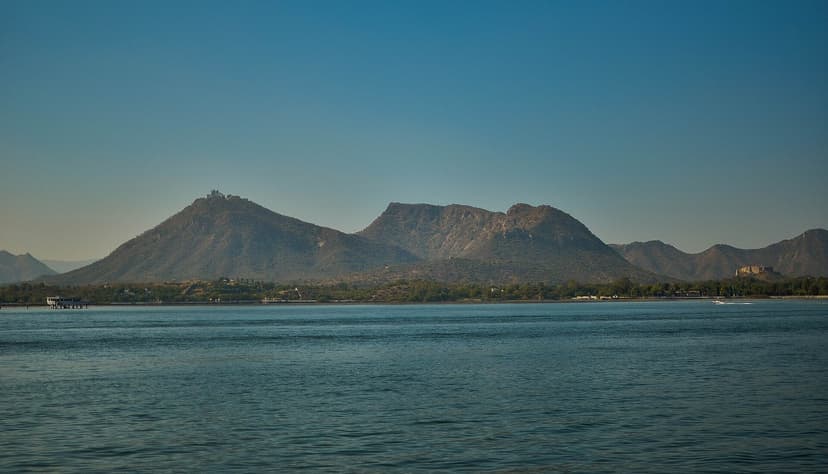
The ride is built around one hour, and it is the hour before Udaipur opens for business. Fateh Sagar at first light is a different lake from the one the day-trippers photograph. The water is still, the Aravalli sit dark behind it, and the promenade that will be packed by evening has a handful of walkers and nobody selling anything. It is the calm the crowd numbers erase later, handed to you for the price of a very early alarm.

Residents have firm opinions about where the light is best. One, listing the good times, put it neatly: Bahubali Hills and Neemach Mata for sunrise, Fateh Sagar for sunset. Neemach Mata is the temple on the green hill on the bank of Fateh Sagar, reached by a climb of about nine hundred metres of steps and slope, and it earns the walk with a view straight down the lake. Not everyone agrees on the timing, mind you. Another regular argued Fateh Sagar is better at night than in the morning. On a bike you can settle it yourself, because you are moving through all of it while the argument is still theoretical.
- Before dawn, roll out of a sleeping city
Wheels on the lake road while it is still dark and empty, before the autos and the boats start. This first quiet stretch, more than any single viewpoint, is what people remember. - First light at Fateh Sagar
The big lake north of Pichola, calm at dawn, the Aravalli behind the water. A slow lap of the promenade before anyone is trying to sell you a boat ride. - Up toward the Monsoon Palace
The road climbs below Sajjangarh, the hilltop palace built to watch the monsoon. This is where the e-bike earns its keep on the gradient. - Out to Badi Lake and the farms
Off the lake road and into village lanes and farm plots, about twelve kilometres out to the calm water of Badi. Fewer people, more birds, low hills all round. - Chai at a roadside shack
The countryside runs on small black shacks doing Maggi and tea, the kind one rider described stopping at until the fuel ran low. Stop at one. Spend the twenty rupees. - Back before the heat
A loop of roughly twenty kilometres, done and dusted by mid-morning, back in town before the sun is high and the day-trip traffic builds.
Badi Lake and the quiet the numbers miss
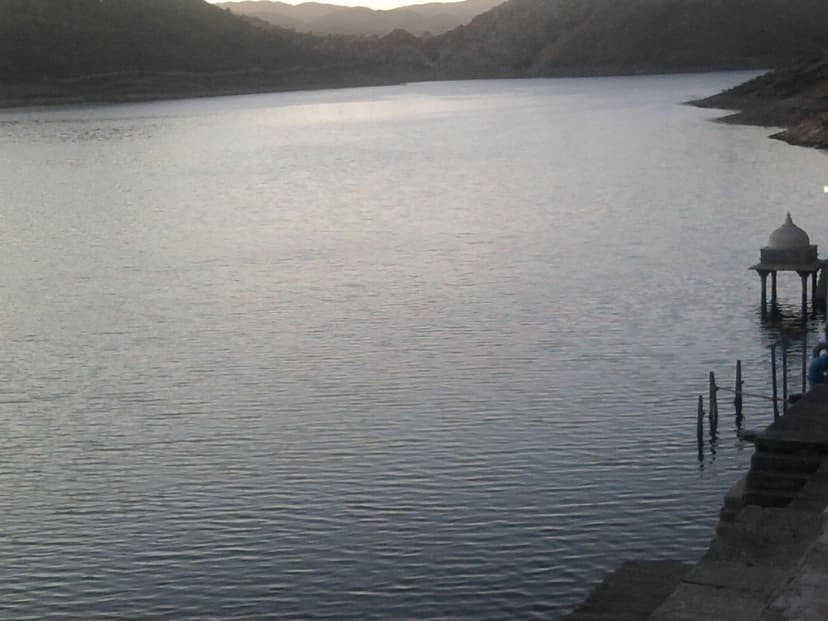
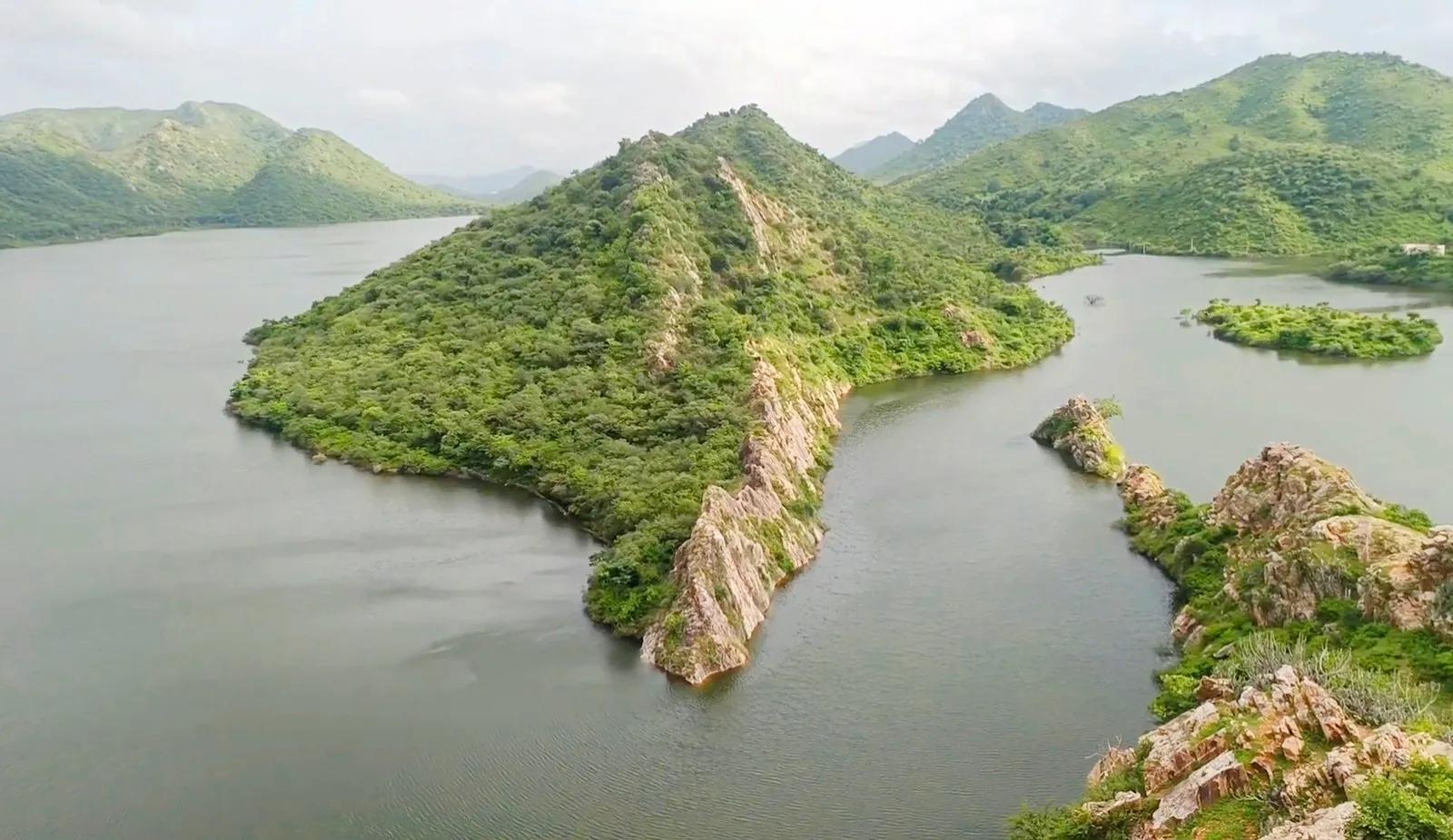
Badi Lake is the payoff of heading out rather than staying in. It is a calm sheet of water ringed by low hills about twelve kilometres from the centre, with a small stone chhatri standing in the shallows and not much else demanding your attention. Residents route people here almost as a reflex. One, sketching a day out, said simply to head over to Badi Lake or Chhota Madar Lake after Sajjangarh if you have a scooty. On a bike you get the same loop, slower, and you actually notice it.
What Badi has, that the city lakes have lost, is room to breathe. One older resident got wistful about it, remembering how a decade back they used to climb these hills and swim in Badi Lake, when there were no shops and no stalls, and the trek up the hill behind Sajjangarh was empty enough to spot leopards and sambar. It is busier now than that. But it is still the version of Udaipur that the crowd counts never reach, and that gap is exactly what people are chasing when they head out here.
Not telling anyone to stop going, but it's much crowded. Always eager to find some hidden gems.
Chhota Madar and Badi Madar, the twin lakes past Sajjangarh, are the natural extension of a Badi Lake morning if you have the legs for it. Go in daylight and take water. There are stretches with no shops and no shade, which is the price of the quiet.
Bahubali or Rayta: the crowd found the sunrise
The one genuine debate in Udaipur's sunrise-hill scene is Bahubali versus Rayta, and it is worth understanding before you point your wheels at either. Bahubali Hills, the forested ridge above Badi Lake, is the one that went viral: the pyramid of green with the lake wrapped around it that you have probably already seen on a reel. Which is the problem. It now draws a rush, especially at sunrise on a weekend.
So the regulars send you to Rayta instead. One resident laid out the trade-off cleanly, in Hindi: Bahubali gets a real crowd, he said, while Rayta stays far emptier and is genuinely lovely, though the road out to it is a bit deserted, so go in daylight rather than at first dark. Another kept it to four words that do the job: Rayta, early morning, peaceful. There is a monsoon catch, which a third raised as a question the thread never fully settled, that Rayta's small waterfall only really runs in and just after the rains, so the reward is seasonal.
One more piece of the Rayta case is honest to flag, because it cuts both ways. When I went looking for a precise location to map it, I could not find one in any of the usual place databases the way I could for Fateh Sagar or Badi. Rayta is offbeat enough that it is barely pinned. That is the appeal and the caution in a single fact: the emptiness is real, and so is the deserted road residents keep mentioning. Go by day, and the advice one gave a group of women travellers is worth repeating, that if you are a solo or all-female group and want to keep it simple, the busier Bahubali is the safer default.
| Bahubali Hills | Rayta Hills | |
|---|---|---|
| The crowd | Popular and rising, a real rush at weekend sunrises | Far quieter; residents send you here to escape the crowd |
| The road | Well travelled, easy to find | A bit deserted in stretches; go in daylight |
| The view | The viral green ridge wrapped by Badi Lake | Open hills, a seasonal waterfall right after the monsoon |
| Best for | First-timers, solo or all-female groups wanting company around | Repeat visitors chasing quiet, ideally in a small group by day |
| When | Sunrise, any clear month | Early morning by daylight; best just after the rains |
The countryside, and doing it kindly
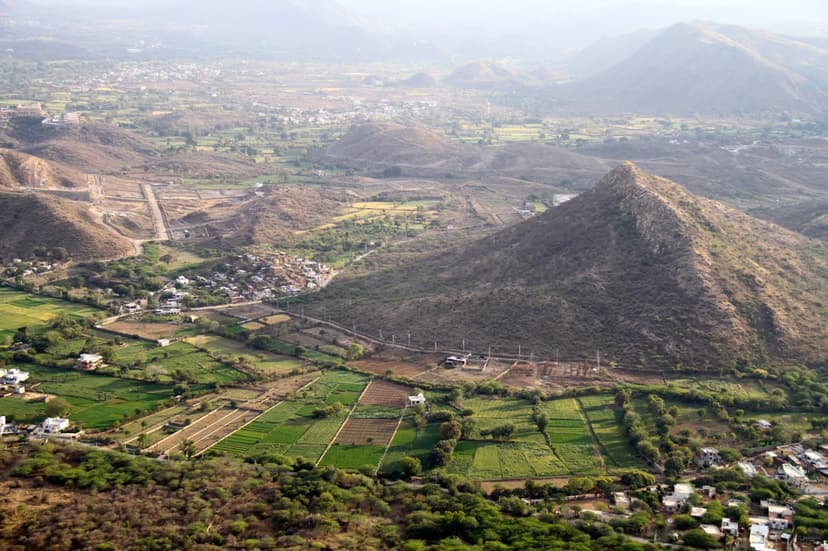
Between the lakes and the ridges is the part with no ticket and no viewpoint sign: the farm country. Green plots in the wet months, the odd tractor, village houses scattered up against the hills, and the long Aravalli ranges fading back in the haze. It rarely makes anyone's itinerary, which is precisely why it is worth the pedalling. Even the bigger drives out this way get this. One resident, recommending the road to Kumbhalgarh, said the thing that made it was the drive itself, with the Aravallis running alongside the whole way.
This is also the part of Udaipur that mass tourism has not yet flattened, and the residents who send you out here are quietly asking you to keep it that way. Ride like a guest. Take the narrow lanes at the speed they were built for, the one the big-vehicle crowd got scolded about. Carry your water and your rubbish out. Buy the tea and the Maggi at the roadside shack rather than bringing your own, because that twenty rupees is the whole economy of the quiet road you came to enjoy. Do not geotag every empty ridge into the next Bahubali.
The packaged version of all of this is the Udaipur countryside bike tour (about Rs 1,920, roughly 3.5 hours, geared bike or optional e-bike). It runs the sunrise-Fateh-Sagar-to-Badi-Lake loop through the villages and farms, with someone who knows which lanes are worth taking and which climb the e-bike should do for you. It is the early-morning ring that residents keep pointing at, done in one clean morning.
Common questions
What is there to do in Udaipur beyond the lakes and palaces?
The countryside on the western and northern edge: Fateh Sagar and the Monsoon Palace hill, Badi Lake about twelve kilometres out, the sunrise ridges of Bahubali and Rayta, and the farm roads between them. Residents consistently say this quieter ring, done early, is the part of Udaipur worth the time once you have seen the old city.
Is a bike tour a good way to see the Udaipur countryside?
Yes, and locals unintentionally make the case for it. The lanes out to Badi Lake and the ridges are narrow and winding, and residents openly complain about big vehicles on them. A bicycle fits the lanes, moves at the pace the scenery deserves, and adds no traffic. An e-bike option handles the climbs if you want it.
How long and how hard is the Udaipur countryside bike ride?
The Refuje countryside bike tour is about 20 km over roughly 3.5 hours, rated moderate rather than hard. It runs from a sunrise start at Fateh Sagar out to Badi Lake through villages and farms. The optional e-bike makes the gradients easy, so casual riders manage it comfortably, with no serious fitness needed.
Bahubali Hills or Rayta Hills for sunrise near Udaipur?
Bahubali is the famous, more crowded one, with the green ridge wrapped by Badi Lake. Rayta is quieter, which is why residents send repeat visitors there, though the road out is a bit deserted so it is best in daylight. Its small waterfall really only runs just after the monsoon. Solo and all-female groups often prefer the busier Bahubali.
How far is Badi Lake from Udaipur?
About twelve kilometres from the city centre, out past the Monsoon Palace and Sajjangarh Wildlife Sanctuary. It is a calm, low-key lake ringed by hills, and residents routinely suggest it, along with the nearby Chhota Madar lake, as an easy escape from the crowded city lakes.
When is the best time for a countryside ride around Udaipur?
October to March for the weather, and the early morning whatever the month, because the roads are empty and the light and temperature are best before the day warms up. Right after the monsoon the hills stay green and the seasonal waterfalls, including the one at Rayta, still run.
What is the Monsoon Palace in Udaipur?
Sajjangarh, a white hilltop palace overlooking Fateh Sagar, built in 1884 for Maharana Sajjan Singh chiefly to watch the monsoon clouds roll in. It sits inside a small wildlife sanctuary in the Aravalli hills and is now managed by the forest department. The countryside ride passes below it rather than queuing at the top.
Do I need to be an experienced cyclist for this?
No. The Udaipur countryside tour is rated moderate and offers an e-bike that does the climbing for you, so a casual rider who can sit on a bicycle for a few gentle hours is fine. The bigger requirement is the early start, since the whole value is in riding the empty roads at dawn.
Sources and a note on this guide
I write for Refuje and I do not live in Udaipur. The feel of the countryside here, which hills are quiet and which have filled up, where locals send people and why they prefer a scooter or bike to a car, is drawn from Udaipur residents and repeat visitors describing their own edges of the city on r/udaipur, quoted and attributed as it appears. Nothing here is a first-hand claim of mine. The place facts were checked against current sources in July 2026.
- Monsoon Palace (Sajjangarh, 1884, Maharana Sajjan Singh, built to watch the monsoon), Fateh Sagar Lake (Maharana Fateh Singh), Neemach Mata (hillside temple on Fateh Sagar, ~900 m climb), and Sajjangarh Wildlife Sanctuary in the Aravalli hills: Wikipedia and standard references.
- Bahubali Hills location and the Badi Lake area: OpenStreetMap and Wikipedia geodata. Rayta Hills is deliberately left off the map because no verified coordinate exists for it in the usual databases, which matches how offbeat residents say it is.
- The countryside bike tour details (about Rs 1,920, roughly 3.5 hours, 20 km, geared bike or optional e-bike, sunrise Fateh Sagar to Badi Lake via villages and farms): the current Refuje activity listing, verified July 2026.
- Resident sentiment, the narrow-lanes scolding, the Bahubali-versus-Rayta debate, the Badi Lake nostalgia and the scooter routing, and the roadside-shack detail: attributed r/udaipur threads, quoted inline.
Prices, road conditions and how busy each ridge is can change, so confirm before you ride, and if you are from Udaipur and think this misreads your countryside, that is the correction this guide should carry, so tell us. For the wider argument about the crowded core and what to do instead, see the piece on whether Udaipur is overrated, and you can book the ride on the Udaipur things-to-do page.
You Might Also Like
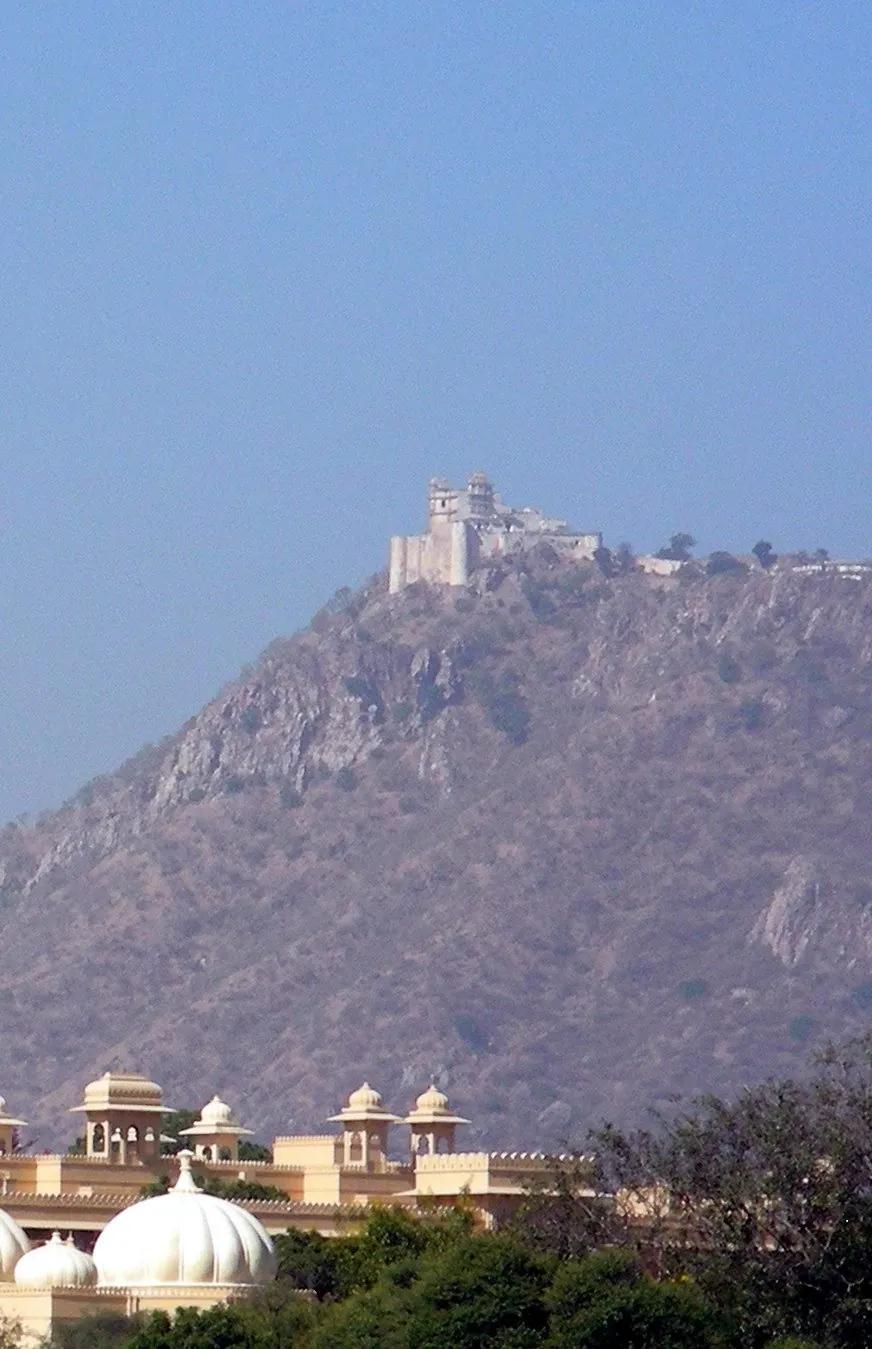
Udaipur Beyond the Boat Ride: The Quiet Lakes, the Monsoon Palace, and the Slow Way Round
An outsider's guide to the Udaipur the boat queue skips: the interconnected lake system, the quiet lakes locals actually go to (Badi, Doodh Talai), the Monsoon Palace view, and how two listed vintage-Willys experiences differ: lake country or off-road Aravalli.
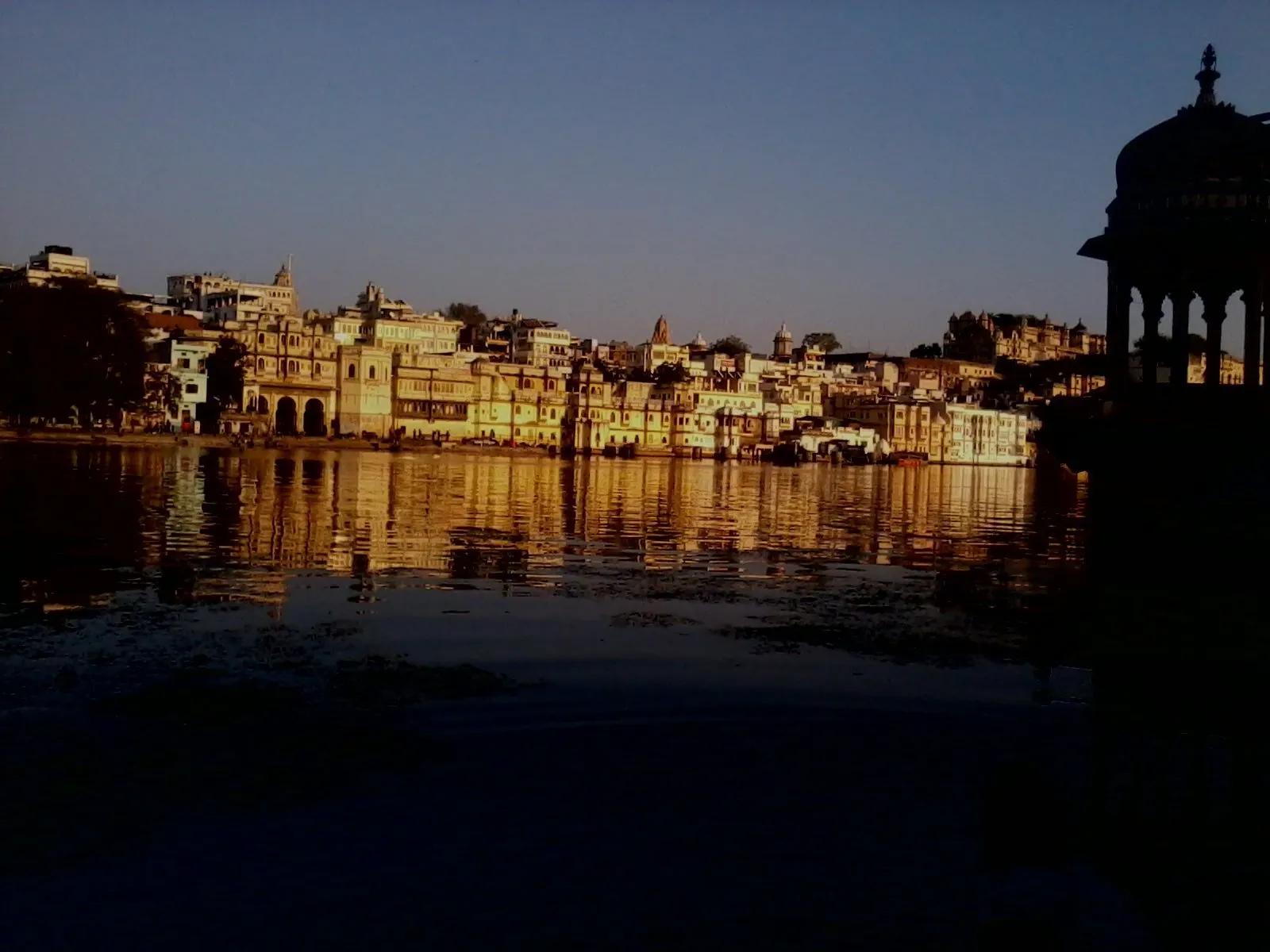
Where to Stay in Udaipur: The Honest Area Guide (and Whether the Lake View Is Worth It)
An outsider's honest, resident-sourced guide to where to stay in Udaipur: which side of Lake Pichola to pick, the old city versus Fateh Sagar, hostels to palaces, and whether the lake-view premium is actually worth paying.
Day Trips from Udaipur: Which Are Worth It, Which to Skip, and the One Nobody Warns You About
An outsider's honest, resident-sourced ranking of day trips from Udaipur: why Kumbhalgarh with Ranakpur wins, how to settle the Kumbhalgarh-versus-Chittorgarh fork, which one to save for an overnight, and the lonely drive back nobody warns you about.