Udaipur painting workshops: miniature or Pichwai?
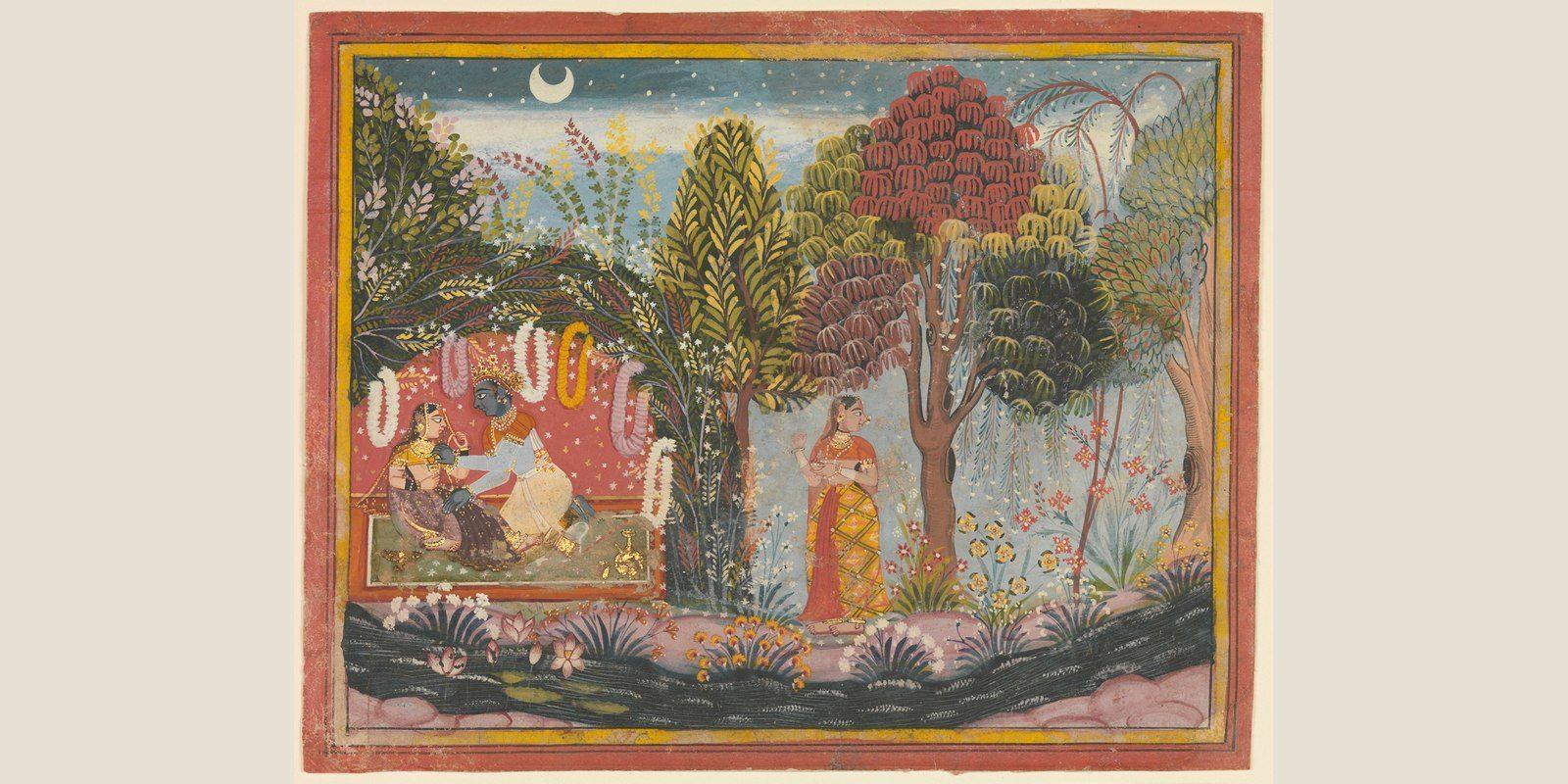
Cover illustration: Krishna and Radha in a Bower: Page From a Dispersed Gita Govinda — Sahibdin. Reproduction: The Metropolitan Museum of Art, New York; Gift of Ernest Erickson Foundation, 1988. CC0 1.0. Original image file. Preview adaptation: Resized and placed on a neutral 2:1 matte; entire source image retained, no artwork crop. Historic Mewar painting by Sahibdin, ca. 1665, in The Metropolitan Museum of Art. Context for looking at miniature painting—not a workshop photograph or a promised participant result.
Choose a miniature-painting workshop if you want to try fine brushwork on a small subject, such as an animal, flower or portrait. Choose Pichwai if you are more interested in the Krishna-related imagery and stories included in the session. The workshop name alone will not tell you whether you will sketch, fill an outline, watch a demonstration or share the work with an artist.
Rajasthan Studio's advertised miniature experience with Kanhaiya Sharma combines a demonstration with co-creating a motif. Its Pichwai experience with Rajaram Sharma also describes making a motif. These are introductions with an artist, not promises that a beginner will learn an entire painting tradition in an afternoon. For the lessons and longer courses advertised by other studios, time and outcome need a separate discussion.
The published programmes offer different ways to spend the time: watching a skilled painter, practising a technique yourself, or making a small piece with enough help to take it home. Compare them by how much painting you want to do and what you hope to leave with.
Miniature and Pichwai: what are you choosing?
In Rajasthan Studio's miniature programme, the suggested guest subjects are an animal, flowers or a face portrait. Its description includes a discussion of Rajasthani miniature schools and a live demonstration. If you want a small subject to work on and a chance to see how an experienced painter handles detail, that is the clearest advertised fit.
The Art Institute of Chicago's description of its Pichwai study connects the paintings to the daily and seasonal veneration of Shrinathji, a form of Krishna, in Nathdwara. Rajasthan Studio's Pichwai session promises discussion of Nathdwara and Shrinathji alongside trying a motif. Choose that format if the explanation of the imagery matters as much as the brushwork.
Ashoka Arts teaches both miniature and Pichwai painting. Ask which form and project your lesson will cover; an offer to teach both does not mean you will complete two separate projects in one visit.
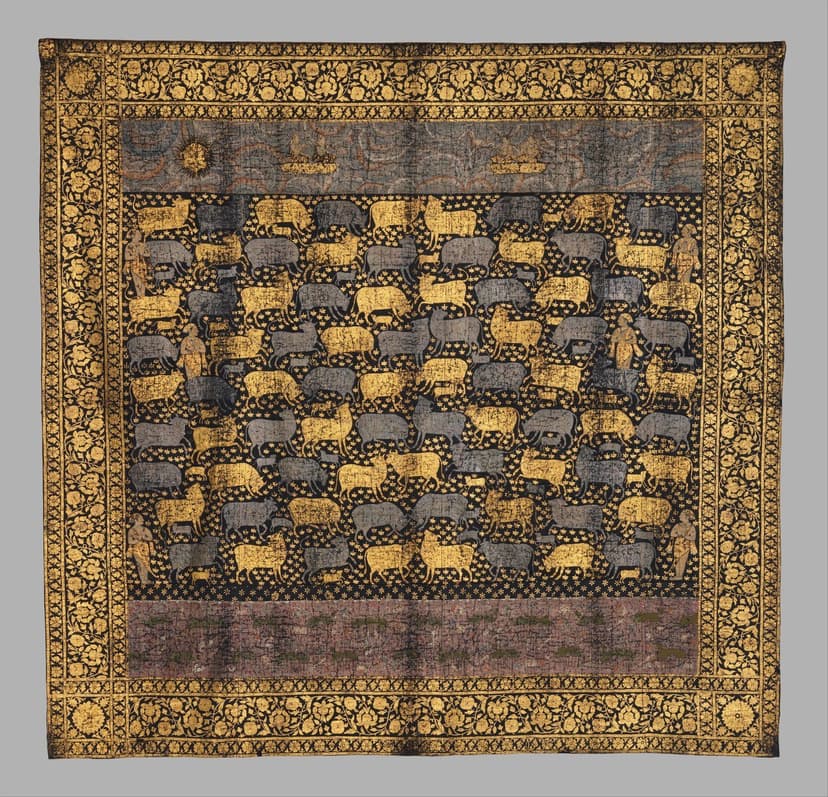
A museum example puts the scale of a workshop exercise in perspective. The Smithsonian's Rasa Lila, accession S1992.27, is catalogued as a Pichwai from Nathdwara, in opaque watercolour on cotton, measuring 249.4 by 286.2 centimetres. That is an example of a substantial cloth painting, not a model for what a visitor should expect to finish in a short class. It also does not mean every contemporary Pichwai lesson uses cotton.
For miniature painting, avoid reducing Mewar's art to the size of the object. The City Palace Museum's collection description includes Mewar paintings in varied sizes and media, with portraits, royal processions, celebrations and religious scenes. For a workshop, focus on the technique and subject the teacher will introduce. Regional painting does not follow a single size or material recipe.
If you are undecided, ask to see the proposed beginner design. Would you enjoy spending the session on its outlines and small details? Choose a subject you want to spend time painting; a promise of a museum-like result tells you less about the lesson.
Compare the published workshop formats
Artist encounter with a miniature motif
Rajasthan Studio lists its Kanhaiya Sharma experience at ₹7,434 per person for three hours. It describes a live demonstration and co-creating a miniature motif using colours it calls natural. The advertised subjects include an animal, flowers or a face portrait. One-to-one conversation with the artist is part of the description; that wording does not establish an exclusively private booking.
The page includes the materials and tools needed for the souvenir, a handcrafted takeaway, a coordinating team member, and refreshments depending on what the artist has available. It also offers to capture photos and videos. Accommodation, local sightseeing and travel to and from the experience are marked as excluded.
This format suits a traveller who wants to meet the named painter and see his process as well as have a go. The page does not specify the support you paint on, its dimensions, or the division of brushwork between you and the artist. Those details matter if your main aim is an independently made picture.
Pichwai encounter with a motif
Rajasthan Studio lists its Rajaram Sharma experience at the same ₹7,434 per person, for two hours. The programme combines looking at Pichwai paintings and their making with trying a motif using colours described as natural. Its discussion centres on Nathdwara, Shrinathji and Pichwai imagery.
The listed inclusions follow the same pattern as the miniature session: materials and tools for the souvenir, a handcrafted takeaway, coordination, conditional refreshments and an offer to capture photos or video. Travel, accommodation and sightseeing are excluded. The page does not name a guaranteed guest motif, support or finished size.
Choose this for the Pichwai subject and artist interaction. Do not infer that a two-hour booking produces a complete cloth hanging because the explanatory text discusses temple paintings. The actual guest activity is described more narrowly.
A studio lesson or a longer course
Ashoka Arts' art-lessons page advertises miniature and Pichwai teaching for beginners and more advanced learners, with guidance and help finishing the work. Its separate Pichwai course description outlines drawing and composition, colour preparation, layering, brushwork and borders. It mentions lotus, cow and peacock designs, and both short- and long-term study.
That curriculum is a useful lead if you want instruction arranged around a technique or more than one session. It is not a timed itinerary for a single tourist class. The lessons page says fees vary by course and asks readers to enquire. Neither page supplies a fixed visitor-session duration or a sufficiently detailed all-in quote to compare directly with Rajasthan Studio's packages. For an afternoon class, request a short-session brief. The full curriculum is not a promise of what you will cover that day.
Another miniature-workshop lead
Indigo Art School's own site advertises hands-on miniature workshops. Its current marketplace programme could not be verified for this guide, so we have not used that listing's package specifications.
If you are considering a lesson there, ask the studio which project and support you will use, what materials are supplied, the session duration and total price, and whether and when you take the physical piece home. These are questions to settle, not inclusions verified here.
How much of the painting will be yours?
If drawing is what you want to learn, make sure the lesson leaves time for it. Colouring an artist's outline lets you concentrate on brush control and may suit you just as well. Decide which you want before paying.
Ask which stages you will do: choosing the design, drawing or transferring it, applying colour, adding fine detail and completing the border. If the teacher prepares the outline before you arrive, you can still spend the session learning how to use the brush. If drawing is your main interest, request time for it explicitly.
Teacher intervention also changes the outcome. Rajasthan Studio uses co-creation language; Ashoka Arts says its tutors guide the process and help fix the final work. Neither statement gives a percentage of guest brushwork. A teacher demonstrating a difficult passage on your piece may be welcome if your priority is a neat souvenir. If you want a record of what you can do yourself, ask for demonstrations on a separate sheet and corrections explained before they are made. That is a requested teaching arrangement, not a standard inclusion verified for every host.
A motif is a subject or element you work on. A completed motif can be a satisfying result without being a fully composed traditional painting.
For a couple or group, establish whether each person receives a separate support and works on a separate piece. Shared work may suit your group, but a booking for several people does not tell you whether that is the arrangement. If one person mainly wants to watch, ask whether an observer can attend and what they would pay.
Materials, the supplied object and taking it home
Start with the object. Is it loose paper, prepared cloth, silk, canvas or another support? What are its dimensions? Is the surface already prepared, and is the design already drawn? The Rajasthan Studio pages do not fix those details for the guest project. Ashoka Arts' broader Pichwai curriculum mentions handmade papers and cloth canvases. That curriculum does not establish the support supplied in every short lesson.
Rajasthan Studio and Ashoka Arts describe natural colours. That phrase is not a product-level materials or safety specification. If pigment ingredients, brush fibres or other materials affect whether you can participate, ask about the actual supplies for your session. This guide does not certify them as non-toxic, animal-free or suitable for skin contact.
Tools supplied for use are different from tools supplied to keep. Rajasthan Studio includes the tools needed to make the souvenir; it does not promise a take-home brush kit. Do not add a set of paints, a frame or packaging to the inclusion list unless your quote does.
A finished design may not yet be ready to pack. Before paying, settle whether you leave with your work that day, collect it later or need delivery. Ask what happens if your piece is unfinished when the booked time ends, and whether extra teaching time or finishing costs more. A photograph of the piece is not the same arrangement as taking the physical object home.
Care instructions need to match the actual support and paint. Ask the teacher when the surface can be covered, whether it must travel flat and what packing they provide. If they suggest rolling a cloth piece, have them explain how to do it for that particular work. Do not assume a paper painting can be rolled, a cloth painting is washable, or a dry-looking surface is ready to touch. Get display and framing advice for the finished object too. No single care instruction has been verified across these workshops.
Price and the arrangements that need settling
The ₹7,434 prices above were displayed on Rajasthan Studio's two pages when checked on 18 October 2026. They are per-person advertised prices, not a quote for your chosen date. Recheck the total payable, taxes, inclusions and cancellation terms before paying. This guide does not treat an active product page as confirmation that the artist is available.
The published group limits and booking lead times differ:
- The miniature page lists one to four guests, participation above age ten, and a suggested booking lead time of 24 to 36 hours or earlier.
- The Pichwai page lists one to five guests, participation above age ten, and at least 24 hours' suggested notice. Elsewhere on that page, it asks groups larger than four to contact the team. A party of five needs clarification rather than an assumption that the two statements agree.
- Both say the experience takes place at the artist's home and the exact meeting point is supplied after booking. Both list English and Hindi, with bilingual volunteers, and other-language translators on request. A translator's availability and any extra cost still need an agreement.
Those are Rajasthan Studio's terms, not citywide rules. Do not transfer its age threshold or advance-booking advice to Ashoka Arts or Indigo. Their reviewed pages do not provide enough detail to settle every child's participation, group arrangement or access need. For a child, request an appropriate project and the actual age policy. If stairs, seating, vision or hand mobility affect the session, describe what you need before choosing a venue; the pages reviewed do not establish universal step-free access or adaptations.
Ashoka Arts lists its address on Gangaur Ghat Marg near Bagore Ki Haveli, but its published shop hours are not an appointment with a teacher. Get the exact meeting instructions for the class you book. Rajasthan Studio's exclusions make clear that the class price is not a hotel-transfer package. Build your journey around the confirmed venue, not a guess from an artist's biography or a shop photograph.
Keep artwork shopping separate from the class decision. Rajasthan Studio says guests can buy work directly from the artist. That does not include a gallery painting in the workshop fee. If you want to buy something as well, ask for its price and packing separately, and leave yourself time to decide without using up the teaching session.
Fit the workshop into your Udaipur day
Choose the class before filling the rest of that afternoon. Rajasthan Studio's three-hour miniature and two-hour Pichwai sessions are different commitments, and neither includes the journey to the venue. If you only have a short gap between sightseeing stops, a demonstration may fit your interests better than expecting an independently drawn and finished piece. A shorter format would need to be agreed in advance; neither programme promises one.
If you are staying longer, use Ashoka Arts' curriculum to frame your enquiry: can you divide learning between sessions, with drawing first and colour or detail later? The public course description supports asking about that possibility, not promising a particular timetable. Tell the studio how many days you have and which stage you most want to learn.
A museum visit can give the painting session a useful point of reference. Look at the City Palace Museum's published painting collection, then ask your teacher about a compositional or brushwork detail that interests you. Do not expect a short class to reproduce a gallery work. Museum admission and sightseeing are separate arrangements from the workshops described here.
For the rest of the trip, our slow old-city day guide covers walking and time at the ghats. It does not include hands-on painting. Our day-trips guide covers Nathdwara as an excursion; a Udaipur Pichwai lesson does not include a visit there or temple access.
Before committing, send the host a short brief: your date and number of painters, miniature or Pichwai interest, time available, and whether you want to draw yourself or use a prepared outline. Ask them to reply with the teacher, guest project and support, expected finishing stage, total price and collection or packing arrangement. Use those replies to compare the lessons. A gallery painting alone tells you little about the experience you will get.
How this guide was checked
This is a desk-researched comparison, not a report of attending a class, interviewing the artists or testing their materials. Rajasthan Studio, Ashoka Arts and Indigo's own pages were rechecked on 18 October 2026; the museum context was checked on 17 October. Operator pages establish what is advertised, not date availability or an independent quality endorsement. Indigo's marketplace package could not be reverified, so its specific inclusions are excluded. Prices and arrangements can change.
Refuje had no Udaipur painting activity in the catalogue checked for this guide. There is no Refuje painting booking offer attached to these comparisons; use the named public programme pages to obtain the arrangement you need.
You Might Also Like
Udaipur Beyond the Boat Ride: The Quiet Lakes, the Monsoon Palace, and the Slow Way Round
An outsider's guide to the Udaipur the boat queue skips: the interconnected lake system, the quiet lakes locals actually go to (Badi, Doodh Talai), the Monsoon Palace view, and how two listed vintage-Willys experiences differ: lake country or off-road Aravalli.
Where to Stay in Udaipur: The Honest Area Guide (and Whether the Lake View Is Worth It)
An outsider's honest, resident-sourced guide to where to stay in Udaipur: which side of Lake Pichola to pick, the old city versus Fateh Sagar, hostels to palaces, and whether the lake-view premium is actually worth paying.
Day Trips from Udaipur: Which Are Worth It, Which to Skip, and the One Nobody Warns You About
An outsider's honest, resident-sourced ranking of day trips from Udaipur: why Kumbhalgarh with Ranakpur wins, how to settle the Kumbhalgarh-versus-Chittorgarh fork, which one to save for an overnight, and the lonely drive back nobody warns you about.