
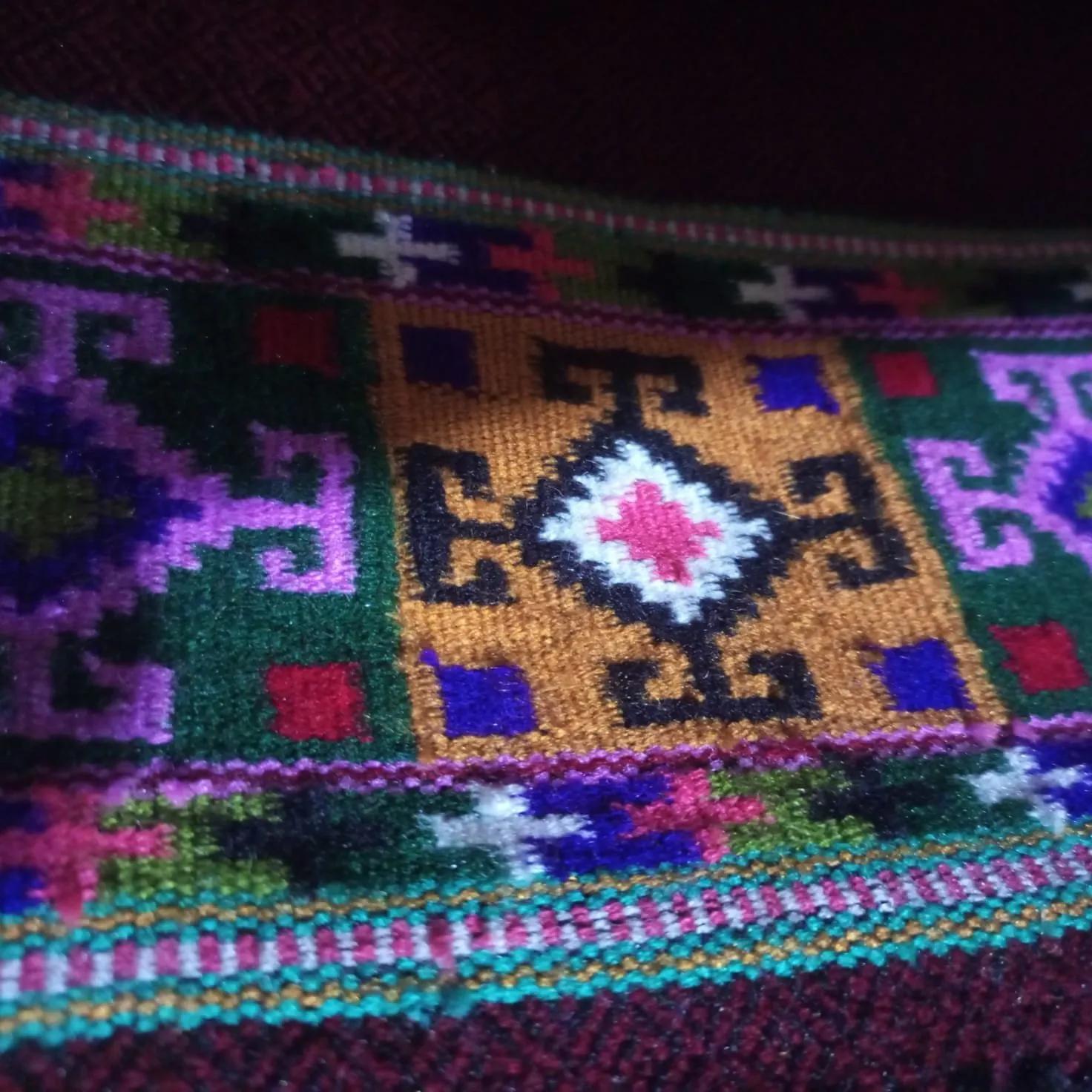
Kullu vs Kinnauri Shawl: The Honest Buyer's Guide (Patterns, Prices & How to Spot a Fake)
Here is what I wish someone told every tourist who walks into a shawl shop in Manali: a huge share of what gets sold as a Kullu shawl is machine-made, and you would not know until you got it home. One widely-cited investigation put it at around seventy percent of the tourist-market stock. So the wrap you bargained down from eight hundred rupees to five hundred is almost certainly a powerloom acrylic, and the real thing was three shops away.
I write this from Kullu, where the shawl is not a souvenir but a household object, the thing your grandmother pins at both shoulders all winter. So I am partial, and I will say so up front. But this is not really Kullu against Kinnauri as a fight. It is two sisters from the same loom, and the useful question is not which one wins. It is which one is right for you, what it should cost, and how to make sure the one you carry home was actually woven by a person.
- The short version
- Kullu is bright, fast, affordable. Kinnauri is dark, slow, premium
- GI tags
- Kullu 2004 (Himachal's first), Kinnauri 2010
- Kullu price
- About 800 to 6,000 typical; up to 70,000 at the very top
- Kinnauri price
- About 5,000 to 25,000 typical; up to a lakh for a 6-month piece
- Weave time
- Kullu 1 to 3 weeks; Kinnauri about 45 days, up to 6 months
- The catch
- Around 70% of tourist-market Kullu shawls are machine-made fakes
- Buy from
- Bhuttico, the government emporium, or Kinnaur weavers direct
Quick answer. Want an everyday shawl that will not bankrupt you? A real handloom Kullu, roughly 3,000 to 6,000 rupees. Want an heirloom? A Kinnauri, 8,000 and up. The one rule that matters: flip it over. A genuine handloom shows its pattern on both sides; a fake reads blank or faint on the back.
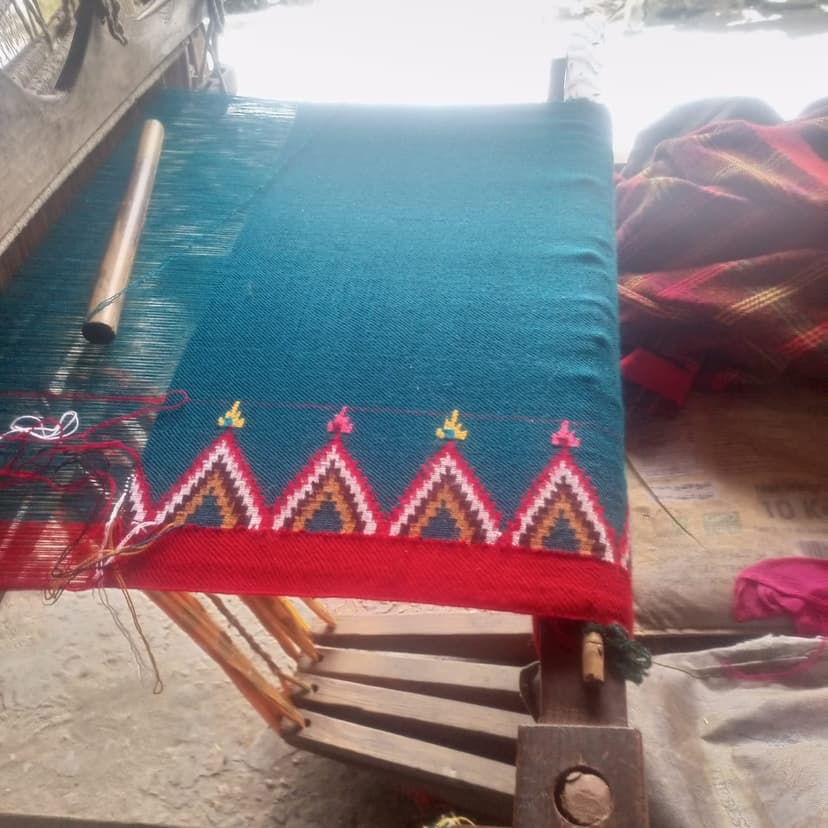
Two sisters from one loom
The two shawls share a bloodline, and it is worth knowing before you compare them, because it explains why they look like cousins.
In the 1830s, a skilled weaver came down from Kinnaur to the Kullu valley and brought the fine geometric weaving that Kullu did not yet have. Old Kullu weaving was plain and functional, a thick wrap called the pattu. The Kinnauri patterns changed that. Over the next century, Bushahri weavers added more, and by the time cooperatives formed in the 1940s the Kullu shawl had become its own thing, bright and geometric and everywhere. The Kinnauri shawl stayed closer to the source: darker, denser, slower, dearer.
Both are protected now. The Kullu shawl earned Himachal's very first Geographical Indication tag, in December 2004; the Kinnauri followed in 2010, its law threatening a two lakh rupee fine or three years in prison for anyone faking it. Which tells you the faking is real enough to legislate against.
The Kullu shawl: the people's one
The Kullu shawl is the extrovert. Bright, primary colours, red and yellow and green and magenta, with bold geometric bands, the patti, running across both ends. The motifs have names that tell you what they are: chabi (keys), tara (star), mandir (temple), leheriya (waves), kangha (comb), and the one I like best, diwar-e-Chine, the Great Wall of China, for the stepped zigzag border. Weavers make the patti strips on separate narrow looms and set them into the field, which is why the pattern sits in bands rather than all over.
It is a fast shawl, relatively. A plain one takes a week or two, a heavily patterned one three, and a skilled weaver turns out twenty or thirty in a year. That speed, plus the cooperatives, is why it is the shawl of the whole valley, not only the well-off. Nearly every Kullu family has a hand in it somewhere.
The cooperative that made it famous is Bhuttico, founded by twelve weavers in December 1944 and now about twelve hundred people turning over some fifteen crore rupees a year, exporting to Europe and America. On the sub, a Shimla local who works in tourism said it flatly: in the private sector they are the only one I trust on quality (r/shimla). Another put the gap in the bluntest possible terms: you will see caps on Mall Road for 200 bucks, but the difference is like day and night, what you pay here is totally worth it (r/shimla).
Prices run from about eight hundred rupees for a basic wool-blend, three to six thousand for pure handloom wool, fifteen to twenty-five thousand for designer work, and at the very top, the Divya Himachal papers reported a Kullu shawl selling for around seventy thousand in 2025. Pashmina versions sit around four and a half to six thousand.
And then there is the pattu, which earns its own line: the thick black-and-white wrap Kullu women pin at the shoulders over a blouse, heavier than a shawl, a marker of who you are at a wedding. It is the oldest Kullu weave, the one that predates all the pretty patterns.
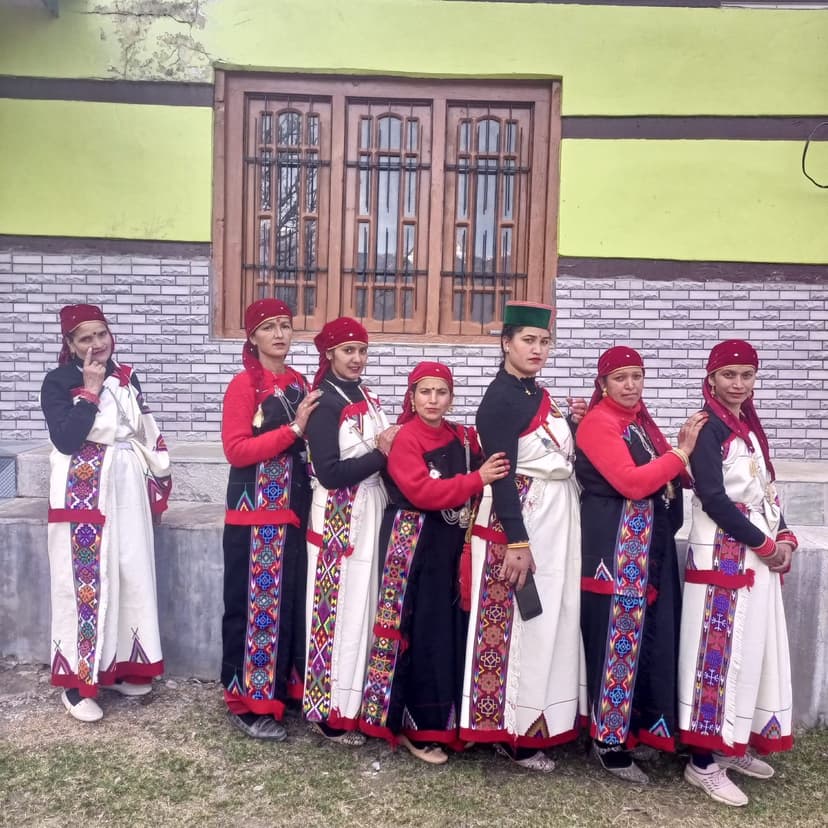
The Kinnauri shawl: the slow one
Now the honest part: I am from Kullu, not Kinnaur, so what I know of the Kinnauri shawl comes from the weavers quoted in the Hindi press and the looms I have watched in Reckong Peo, not from making them.
Where the Kullu shawl shouts, the Kinnauri one broods. Darker grounds, maroon and black and deep blue, with tighter, denser geometric bands running along every edge, not only the two ends, and motifs that carry meaning: the eight-petal star, the swastika, and the dragon that gives away the old Central Asian and Tibetan trade routes. The colours are a code. Five of them stand for the five elements: white for water, yellow for earth, red for fire, green for air, blue for ether. You are not buying a pattern, you are buying a small cosmology.
It is slow. A Kinnauri shawl is woven in two halves on a traditional khaddi and then hand-stitched together up the middle, a seam you can find if you know to look. The average runs about forty-five days. A large premium piece, a Kinnaur weaver told Divya Himachal in early 2025, can take up to six months and sell for a full lakh: the most expensive shawl is one lakh, and it takes up to six months to weave; the design draws on our culture. The fine ones use pashmina, and a Kinnaur trader, Dharm Lal Negi, explained to ETV Bharat why they cost what they do: it takes a lot of hard work to prepare pashmina wool, which is why the products are expensive, at around fifteen thousand rupees a kilo for the raw fibre, now sourced from Spiti since the old Tibet trade closed.
There is no Bhuttico of Kinnaur, no single big cooperative. It is roughly fifteen thousand weavers on ten thousand looms scattered through Reckong Peo, Nichar, Sangla and Kalpa, mostly women, mostly working from home. Which is exactly why buying one well matters, a point I will come back to.
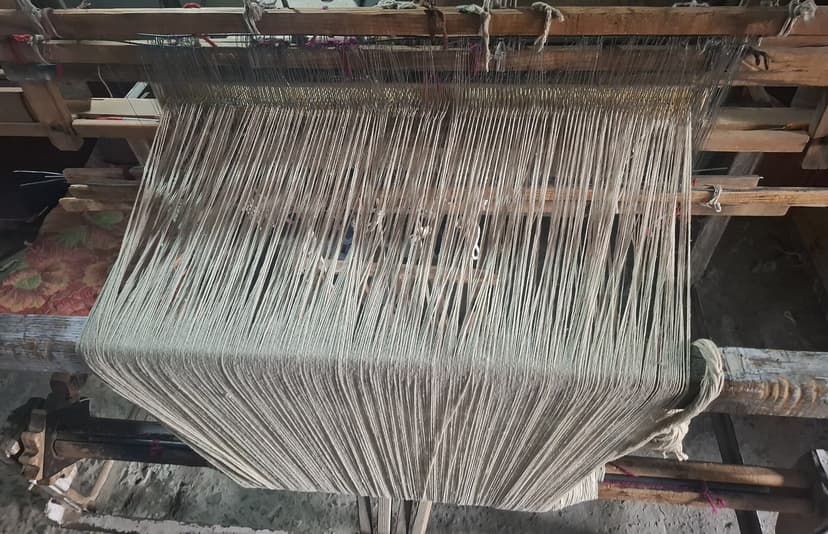
Head to head
| Kullu shawl | Kinnauri shawl | |
|---|---|---|
| Look | Bright colours, bold bands on the two ends | Dark grounds, dense geometry on all edges |
| Colours | Playful red, yellow, green, magenta | Coded: 5 elements, water, earth, fire, air, ether |
| Weave | Patti bands set into one field | Two halves hand-stitched up the centre |
| Time | One to three weeks | About 45 days, up to 6 months for premium |
| Price | 800 to 6,000, up to 70,000 top-end | 5,000 to 25,000, up to a lakh |
| Best for | Everyday warmth, gifting, budgets | Collectors, heirlooms, special occasions |
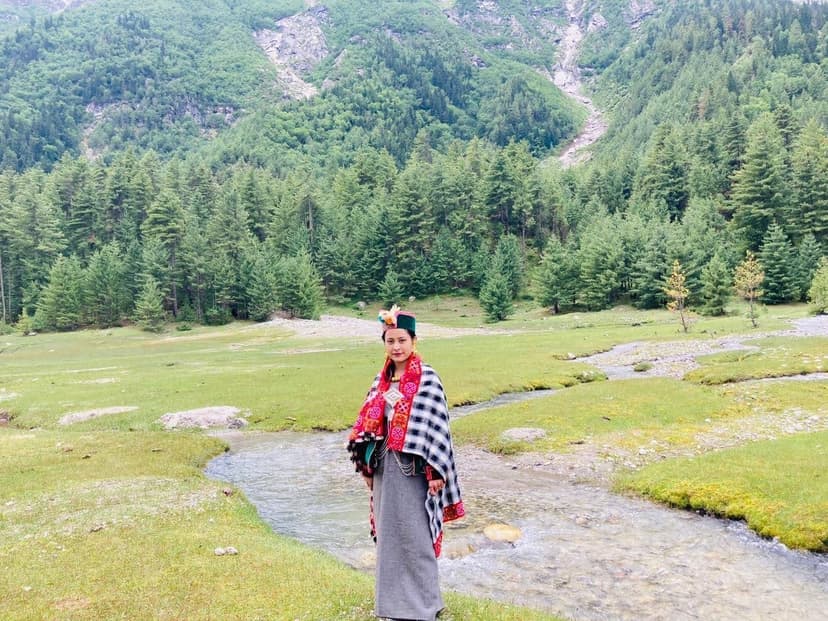
The seventy percent problem
Back to the fakes, because this is the part that saves you money and heartbreak. The powerloom copies are everywhere and convincing at a glance. Here is how to tell, in the shop, before you pay.
| Real handloom | Machine-made fake | |
|---|---|---|
| The reverse | Pattern near-identical on both sides | A faint reflection or loose floats on the back |
| Feel | Slightly rough, organic, heavier | Slick, uniform, lighter |
| Price | Never a suspicious 70% discount | Cheap, or sold at a huge fake discount |
| Tag | Carries a GI or handloom mark | No certification at all |
| Burn test | Smells like burning hair, turns to ash | Smells like plastic, melts to a hard bead |
The single most reliable test is the reverse. On a handloom shawl the pattern shows on both sides, near-identical, because the weaver actually carried the coloured thread through. On a powerloom fake the back reads like a faint ghost of the front, or shows loose floats. Flip it over. If the back is blank or blurry, walk away.
The rest back that up. A real one feels slightly rough and organic, not slick, and it is heavier, because wool weighs more than acrylic. It is never dumped at a suspicious seventy-percent discount. It should carry a GI tag or handloom mark, so ask for it, and be wary if the shopkeeper waves the question off. If you can spare a thread, the burn test settles it: real wool smells like burning hair and turns to ash, acrylic smells like plastic and melts into a bead. And on a Kinnauri shawl, feel for that hand-stitched centre seam. No seam, no Kinnauri.
Where to actually buy one
The rule is simple: buy from the makers or the government, not from the man who calls you in off the street.
In Kullu and Manali, Bhuttico is the safe default, with its head office and weaving centre at Shamshi just south of Kullu town and stores across the state. It is not the cheapest, and locals will tell you so, one on the sub calling it a bit overpriced now and pointing to Theog market instead (r/shimla). If you want that quality for less, the same thread names the Shamshi industrial-area shops on the main road, and the two or three sellers in Kullu's Vipasha Market, as better value (r/HimachalPradesh). The government HP State Handloom Emporium, in Shimla and Delhi, is the other trustworthy option: GI-verified, no hard sell.
For Kinnauri shawls, the best value is direct, from the cooperative showrooms in Reckong Peo or a weaver's home in Kalpa or Sangla. You will pay less than in Manali and the money goes to the person who made it.
Online, Bhuttico's own site is the reliable one, alongside the GI-certified platforms; the same names come up from actual buyers again and again. And whatever you do, take the standing local advice for the tourist strips: avoid the souvenir shops at tourist places, and do not go in as a group, they will charge you far higher than the normal rate (r/HimachalPradesh). Scour a few shops, and bargain.
Building a Kullu or Kinnaur trip and want a shawl stop that is worth the detour? Tell us your route and we will point you to a Bhuttico store, a government emporium, or a Kinnaur weaver near where you are going.
| Type | Cost (INR) | Notes |
|---|---|---|
| Kullu, basic wool-blend | 800 to 1,200 | everyday, but check it is handloom, not acrylic |
| Kullu, pure handloom wool | 3,000 to 6,000 | the sweet spot for a real one |
| Kullu, pashmina | 4,500 to 6,000 | finer and lighter |
| Kinnauri, entry | 5,000 to 8,000 | genuine, simpler borders |
| Kinnauri, premium | 12,000 to 1,00,000 | collector pieces, reported up to a lakh for a 6-month weave |
| Machine-made fake (avoid) | 200 to 500 | powerloom acrylic, roughly 70% of tourist stalls |
A real everyday Kullu shawl lands around 3,000 to 6,000; a genuine Kinnauri starts around 5,000. Figures reported 2025-26, and they move, so treat them as ranges.
The one test that catches most fakes: turn the shawl over. A genuine handloom shows its pattern on the back nearly as clearly as the front. A powerloom fake reads blank, blurry, or shows loose floating threads. If the back does not match the front, it was made by a machine, whatever the price tag says.
You will see caps on Mall Road for 200 bucks, but the difference is like day and night.
The part that is not on the price tag
One last thing, and it is the one that actually matters. When a big brand or an influencer lifts a Himachali motif, prints it on a ten-thousand-rupee product and sells the inspiration, the weaver who owns that design usually sees none of it. The sub has argued this out more than once. As one person put it, taking designs off indigenous weavers while making huge profits and giving them no recognition is cultural appropriation (r/HimachalPradesh). Another was blunter about who loses: the people who worked on this probably got paid minimum wage, while the company and the influencer gained the most (r/HimachalPradesh).
You cannot fix that from a shop counter. But you can decide where your money lands. Buy from a cooperative or a weaver, not a middleman. Pay the real price instead of hunting the fake one. A Bhuttico weaver, Satya Prakash Thakur, told a Himachal paper in 2026 that the recent handloom fairs had made weavers see the weaving as a viable economic opportunity for the future, rather than only an inheritance from the past. That future depends on people paying for the real thing. So pay for the real thing.
Not sure what you are looking at in the shop, or want a sanity-check before you spend serious money on a Kinnauri piece? Email us a photo and the asking price and we will give you an honest read on whether it is handloom and whether the price is fair.
For more of Himachal's textile heritage, our Chamba Rumal guide covers the embroidery with no wrong side. If you are heading up to buy Kinnauri direct, our Kinnaur valley guide gets you there, and our responsible-travel guide is about exactly this kind of buying-well. And if you are basing the trip around Kullu and Manali, our Kullu-Manali budget guide covers the rest of the spend.
FAQ
What is the difference between a Kullu and a Kinnauri shawl?
A Kullu shawl is bright, with bold geometric bands on the two ends, costs roughly 800 to 6,000 rupees, and takes one to three weeks to weave. A Kinnauri shawl is darker, with dense patterning on all edges, is woven in two halves and hand-stitched together, takes about 45 days (up to six months for premium), and runs from 5,000 to a lakh. Both are GI-protected: Kullu since 2004, Kinnauri since 2010.
How can I tell if a Kullu shawl is real or machine-made?
Flip it over. A genuine handloom shows its pattern on both sides, nearly identical; a powerloom fake reads faint or blank on the back. A real one is slightly rough and heavier, carries a GI or handloom tag, and is never sold at a suspicious 70% discount. A snipped thread of real wool smells like burning hair when lit.
Why are Kinnauri shawls so expensive?
They are patterned on all four edges rather than just the ends, woven in two halves and hand-stitched together, and take around 45 days, up to six months for the finest. The best use pashmina, which runs about 15,000 rupees a kilo as raw fibre. More labour and finer material means a higher price.
Where is the best place to buy an authentic Kullu shawl?
Bhuttico, the cooperative founded in 1944, with its weaving centre at Shamshi near Kullu and stores across Himachal, or the government HP State Handloom Emporium in Shimla and Delhi. For cheaper genuine pieces, try the Shamshi main-road shops and Kullu's Vipasha Market. Avoid roadside tourist stalls, where an estimated 70% is machine-made.
Where do I buy a Kinnauri shawl?
Direct from the cooperative showrooms in Reckong Peo, or from weavers in villages like Kalpa and Sangla. Buying at the source costs less than in Manali and the money reaches the person who wove it.
What do the colours mean on a Kinnauri shawl?
Five colours stand for the five elements: white for water, yellow for earth, red for fire, green for air, and blue for ether. The colour code reflects the Kinnauri people's spiritual traditions and their old Central Asian cultural links.
Which shawl is better for a gift?
For an everyday or budget gift, a real handloom Kullu shawl at 1,500 to 3,000 rupees is warm, handsome and honest. For a special occasion or an heirloom gift, a Kinnauri at 8,000 and up carries more heritage and exclusivity. Both are meaningful.
Is it worth buying a shawl online?
Yes, from Bhuttico's own website or a GI-certified platform, which sell tagged handloom pieces with delivery across India. Be careful with untagged marketplace listings, where the same powerloom fakes turn up as in the tourist stalls.
Written from Kullu, where the shawl is a household thing and not a souvenir, so I am partial to my own valley's weave and have said so. For the Kinnauri side I have leaned on the weavers quoted in the Hindi press and time spent watching looms in Kinnaur, not on making them myself. Prices and the fake-market figures come from 2025-26 press reports and the Reddit voices linked above; prices move, so treat them as ranges and reconfirm before you spend big.