Kotgarh: Where India's First Apple Was Planted
In the winter of 1918, give or take a year, a woman in Philadelphia wrapped a handful of apple saplings in sackcloth and damp moss and shipped them eight thousand miles to her son in a village most of America had never heard of. Golden Delicious, from Stark Brothers nursery in Missouri. The son had refused to come home. He had abandoned the family elevator business, moved to a tuberculosis-leper colony near Shimla at twenty-two, fallen in love with a Rajput Christian girl, and bought himself a scrap of mountainside in Kotgarh, fifty miles past the last British club. Those saplings, that Christmas gift, are what the Himachal apple industry sits on today. A parcel. From a mother. Seeded something worth Rs 5,000 crore a year.
That's the whole story, really. You can stop reading. But if you want the messy version, the one with sedition trials and a jail cell and a body that died a year before the country it helped free, keep going.
- Where
- Kotgarh village, Shimla district, Himachal Pradesh
- Coordinates
- 31.31N, 77.47E
- Altitude
- Kotgarh 2,134 m. Thanedhar 2,350 m. Hatu Peak 3,400 m
- Road
- NH-5 (Hindustan-Tibet Road). 82 km Shimla, 16 km Narkanda
- Nearest airport
- Shimla (Jubbarhatti), 22 km past Shimla city
- Best season
- April-May blossom. August-October harvest
- HP apple production 2025-26
- 647,000 tonnes (+28.6% on 2024-25)
- Annual industry value
- Rs 4,000-5,500 crore
- Founder
- Samuel Evans Stokes (later Satyanand Stokes), 1882-1946
The boy from Philadelphia
Samuel Evans Stokes Jr. was born on August 16, 1882, in Philadelphia, to money. His father ran Stokes & Parish Machine Company, which made the elevators that went into America's earliest skyscrapers. The path was set. Harvard, the firm, an heir by thirty, lunches at the Union League Club. Samuel would have none of it.
He sailed for India at twenty-one, arrived in 1904 at Subathu, a sub-district of Solan, and went to work at a Quaker mission that treated lepers. He was there as a missionary in the loose sense of the word. His granddaughter Asha Sharma, who later wrote his biography, put it gently: he soon became disillusioned with the foreign missionary community. You can read that as he thought the other missionaries were racist and self-important, because they were, and he said so.
He wandered. He learned Hindi. He dressed in khadi long before khadi was a political garment. He walked up and down the Sutlej valley on foot because that was how the local economy moved. By his mid-twenties he was living at Kotgarh, a cluster of villages on a ridge two days' walk east of Shimla, and he had bought farmland near the home of a girl called Agnes Benjamin, the daughter of a first-generation Rajput Christian.
Love, land, and a house called Harmony
They married in 1912. She was Agnes then; she'd be Priyadevi twenty years later, after both of them converted to Hinduism. He built a three-storey stone and wood house on the ridge at Thanedhar, six kilometres from Kotgarh proper, and called it Harmony Hall. Grey-stone, deodar beams, slate roof that the locals could recognise as traditional kath-kuni except for the American-scale porch. It's still standing. You can see the top floor from the road if you know what you're looking for.
His mother Florence bought two hundred acres in Kotgarh for her son, a former tea estate from a woman named Emma Matilda Bates. That purchase is the physical basis of everything that followed. They had seven children. Three sons, four daughters. One son, Tara, died young of amoebic dysentery. Priyadevi ran the household and, later, the trust that managed the estate after Samuel died. You don't read much about her in the English-language histories. That's a gap.
The apple revolution
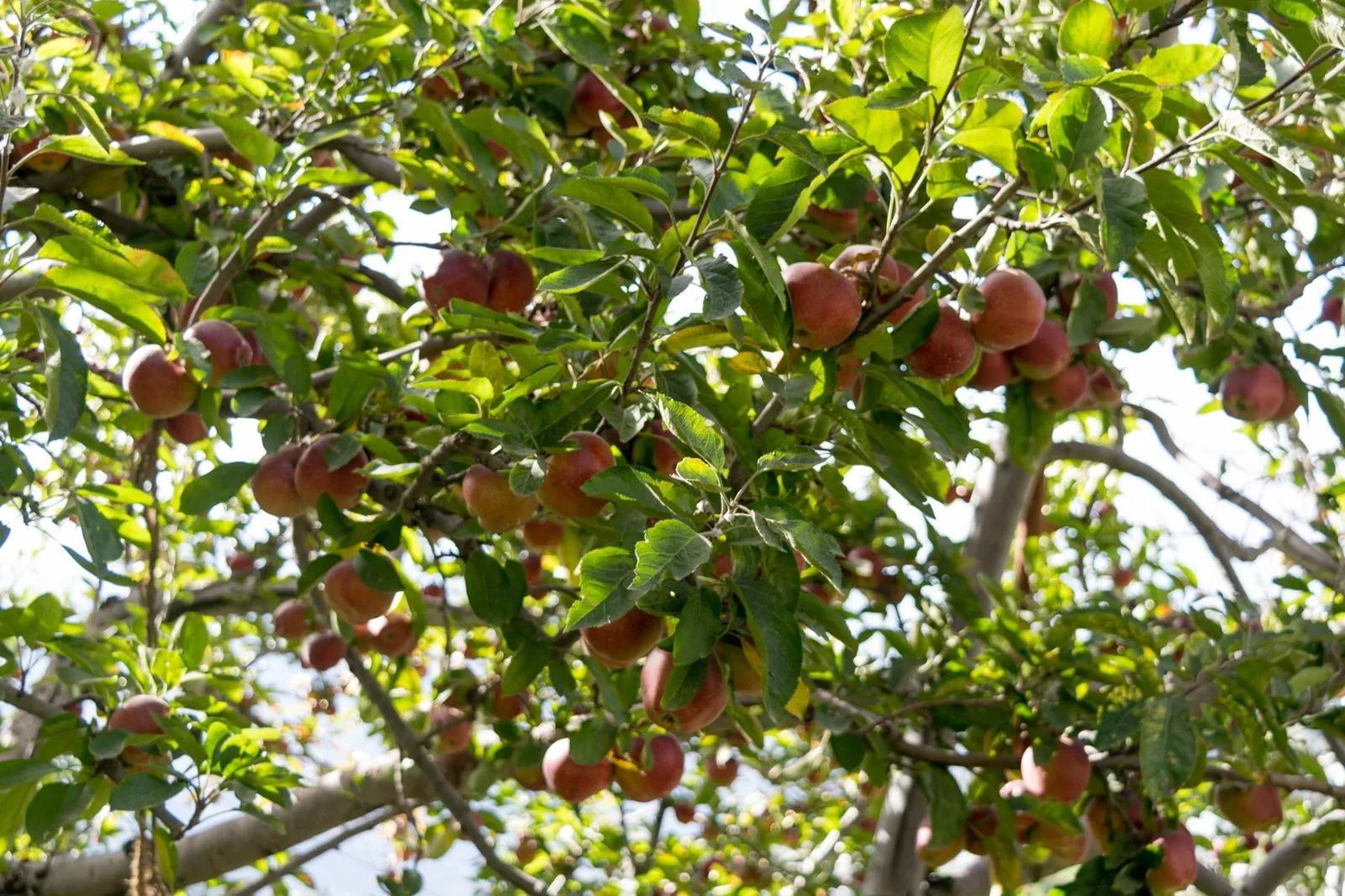
Here's where it turns. Samuel went back to the US on a visit in 1914. Somewhere in Missouri or Louisiana he stopped at the Stark Brothers nursery and talked to someone about high-altitude fruit. Stark had just released the Red Delicious. Someone, probably Samuel himself, figured that the climate of Kotgarh, a cold, sun-heavy mid-montane belt around 2,100 metres, would do well with American temperate-zone apples. He carried saplings back with him.
In 1916 he planted the first commercial apple orchard at Barubag village, in Thanedhar Panchayat. Live History India dates the first pear and plum saplings to the same year. A couple of winters later, his mother sent the Golden Delicious as a Christmas gift, probably by steamer and bullock cart. Then pears, plums, walnuts. The old pear trees and walnuts she gifted him are, as far as anyone knows, dead now. The apple trees are not, and their great-great-grandchildren are still fruiting every September across half a state.
Bumper crops arrived in 1926. Ten years from sapling to fruit is slow, but the yields were real. Hill Post calls them an instant hit: European settlers in Delhi and Shimla had the buying appetite and the rail connections to move them to the plains. By 1928, the Live History India piece puts it plainly: apples from Harmony Hall had taken over the Himachal valleys. Not quite yet, but close enough. Neighbours had started grafting Samuel's rootstock onto their own trees. Kumharsain, the sub-division next door, went over. Rampur Bushahr picked it up. Then Kullu, Kinnaur, Lahaul, all of it, the ripple still moving outward a century later.
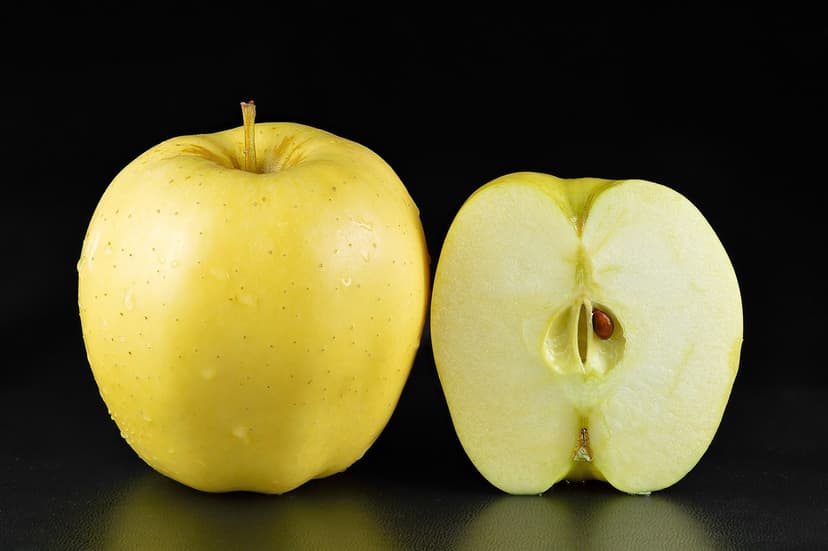
A mother's Christmas gift. The Golden Delicious saplings Florence Stokes shipped from Philadelphia around 1918 are, in a practical sense, the origin point of the golden-colour varieties grown across Himachal today. Red Delicious came from Samuel's own 1914 trip. Golden Delicious was a parcel, a mother's gift to a son who had refused to come home. The two varieties together made the foundation of every HP orchard that followed.
The only American in Gandhi's jail
You can't tell this story as only an apple story. By the time the first bumper crops hit, Samuel had spent ten years arguing with the British presence around him, and he was about to do something that cost him his freedom.
In 1920 he was the only American delegate at the Nagpur session of the All India Congress Committee. He represented Punjab alongside Lala Lajpat Rai. In 1921 he became the only non-Indian signatory of the Congress manifesto opposing the visit of the Prince of Wales, the future Edward VIII. The British charged him with sedition. He went to jail. Gandhi wrote about it, calling the arrest a unique move on the part of the government, which is Gandhi's dry way of saying it was stupid and would backfire.
He also ran a years-long campaign against begar, the forced-labour system the British administration relied on to haul baggage and supplies through the hill districts. Samuel, writing in English newspapers and petitioning the government, kept the issue live enough that it eventually had to go. Scroll's "American in khadi" piece lays out the sequence cleanly: the begar work in Kumaon, the sedition trial, the Congress work, and then, at the end, the conversion.
In 1932 he became Satyanand Stokes. His wife took the name Priyadevi. He built a temple at Thanedhar in 1937 called Paramjyoti Mandir, grey local stone and dark Burma teak, traditional kath-kuni construction done by locals. A Hindu temple built by a Philadelphia-born Quaker who had converted and spent half a lifetime fighting for a country that was not yet free. You can still visit it. The temple is on the same ridge as Harmony Hall, a ten-minute walk along the orchard path.
He died at home in Shimla on May 14, 1946. Fifteen months before independence. One more summer, really. He didn't get it.
Three generations later
The children stayed. That's the part of this story I find hardest to fit into a paragraph, because everything about the Stokes family in India should say, by the normal logic of mixed-race Raj-era marriages, that the kids would grow up and leave. They didn't. They are still here, a hundred and ten years after Samuel first put a spade into the Barubag earth.
Asha Sharma, Samuel's granddaughter, went to Columbia's journalism school and then came back and wrote his biography. An American in Gandhi's India came out in 1999, got reissued in 2008 with extra family letters. Oral history, journals, and a scrap of Samuel's own handwriting. It is the book to start with if you want the truth about Kotgarh before the tourist websites got to it.
Dr Vijay Kumar Stokes, grandson, is a retired IIT Kanpur mechanical-engineering professor in his late seventies. Bishop Cotton School in Shimla, IIT Kanpur for his master's, then decades of engineering research and teaching in India and the US. He has spent the last thirty-five years documenting the vanishing language, music and oral culture of Ilaqa Kotgarh, a forty-two-page paper on disappearing traditions, and he still does recording work with older village singers. In 2021, as documented by ETV Bharat, Vijay announced that fifty bighas (about ten acres) of the family's orchard land would be donated to a charitable trust named for his grandfather. HimbuMail describes the plan in detail: two acres for a museum complex, eight acres for a working research orchard, the whole thing meant as a knowledge centre for Kotgarhi apple growers.
And Vinay Sirkeck, the great-grandson, still lives in the orchard. He and his wife Veena run Grandma Stokes' Bed & Breakfast, a four-bedroom homestay set in the apple and cherry orchard. Registered on the HP Tourism Department homestay list as Granmaa Stokes, Phalali Thanedhar, Kumharsain. Vinay answers his own phone (9816420213) and, per TripAdvisor reviews that span years and star counts, knows everyone in the village and remembers which orchard planted what.
Stay with the family. Grandma Stokes' Bed & Breakfast in Thanedhar is run by Vinay Sirkeck (Samuel Stokes's great-grandson) and his wife Veena. Four bedrooms, home-cooked food by their cook Chameli, 180-degree views of the Sutlej valley six thousand feet below and Pir Panjal snows across it. You eat with the family. Direct booking only (phone 9816420213). HP Tourism registered. This is the closest you get to sleeping inside the story.
The industry he built, by the numbers
This is what that one 1916 orchard became.
| Metric | Value | Note |
|---|---|---|
| HP apple production 2025-26 | 647,000 tonnes | +28.6% over 2024-25. Recovery year after four-year downturn. |
| HP apple production 2024-25 | 503,000 tonnes | Post-downturn low. Climate + hailstorms driver. |
| Area under cultivation | 116,338 hectares | 48.6% of the state's total fruit area. |
| Share of total HP fruit production | 80% | Apple is the state's single biggest fruit crop. |
| Annual industry value | Rs 4,000 to 5,500 crore | Combined farmgate, processing and retail. |
| Premium LMS 2025 procurement rate | Rs 85 per kg | Adani Agri Fresh opening rate, benchmark for mandis. |
| Early-variety farmgate range | Rs 1,800 to 2,200 per 20-kg box | Kotgarh-side early varieties, July harvest. |
| Historical peak production | 770,000 tonnes | 2015-16 season. |
| Historical low | 275,000 tonnes | 2011-12 season. 2.8x swing from peak. |
Seventy per cent of Himachal's population works in agriculture. A sizeable minority of those are apple growers, and an even larger share depend on apple wages one step removed, through packing, trucking, commission agency, juice processing, grading. One 1916 orchard. Every number above, every truck heading down from Rampur to Kalka in September with wooden boxes stacked eight high and a tarpaulin flapping in the wind, traces back to it.
The belt is moving
This is the part I find hard to write about without getting gloomy. The industry Samuel planted is shifting under its own feet, and Kotgarh, the birthplace, is where the shift shows first.
A PLOS One paper on apple-orchard altitude shift in the western Himalayas puts it in three numbers: in the 1980s, HP apples were grown from 1,200 to 1,500 metres. In the 2000s, 1,500 to 2,500. Now, new commercial orchards are going in at 3,500 metres, at places like Leo village in upper Kinnaur and, unthinkably, parts of Lahaul. The belt has walked a thousand metres uphill in forty years. Kotgarh at 2,134 m used to be optimal. It is now at the lower margin.
Why? Chilling hours. Apples need a stretch of cold below 7°C, something like a thousand to thirteen hundred hours depending on the cultivar, to set fruit properly. Kotgarh used to get those without anyone counting. It doesn't now, not reliably. Outlook reports an eleven per cent productivity drop across the HP belt from climate change alone, before you add hailstorms during bloom, unseasonal rain at harvest, and the Alternaria blotch that finished off a lot of the 2024 crop.
The Kotgarh farmers are responding. Hari Chand Roach, an apple pioneer in the village, told The Tribune for a piece titled Apple no longer king in Kotgarh that old trees are drying up and new plantings are failing, and that a lot of village land is quietly being shifted to cherry, plum, apricot, and, in a few experimental plots, to kiwi, blueberry, avocado and almond. Vijay Stokes, quoted in the same piece, disagrees with the wholesale switch: his line is that the right move is to modernise apple cultivation with lower-chilling varieties (Super Chief, Scarlet Spur, Gala, Granny Smith) and to invest in hydro-cooling and cold-chain logistics, not to abandon the crop Samuel planted.
Deepak Singha, president of the Plum Growers Forum Kotgarh, told Dialogue Earth Hindi that the forum is trialling Red Beauty, Black Amber, and Friar plum varieties plus blueberry and avocado. Aditya Grek, a thirty-year-old Kotgarh farmer, put it simpler in the same Hindi piece: अब सर्दियों में बर्फ नहीं पड़ती। मेरी फसल आधी रह गई है, और पिछले साल की बारिश ने वो भी बर्बाद कर दी — it doesn't snow in winter now, my crop has halved, and last year's rains ruined even that. A Reddit user, u/genome_walker, put it in English on r/HimachalPradesh: if temperature keeps rising, apple farming will be unviable. That's not the consensus view in Kotgarh itself. But it's close enough that a working farmer in Kotgarh will nod at it.
Don't romanticise the market. As of early 2026, HPMC, the state apple corporation set up partly on Stokes's legacy, is in public trouble. BJP-led growers' protests in Shimla in January 2026 flagged Rs 16 crore of procured apples rotting on roadsides, a corporation running at a Rs 80 crore operating loss, and payment delays to small growers (Tribune India, Jan 2026; HimbuMail, Feb 2026). If you're visiting Kotgarh and a farmer tells you HPMC hasn't paid him yet, they're not exaggerating.
Getting there, and when
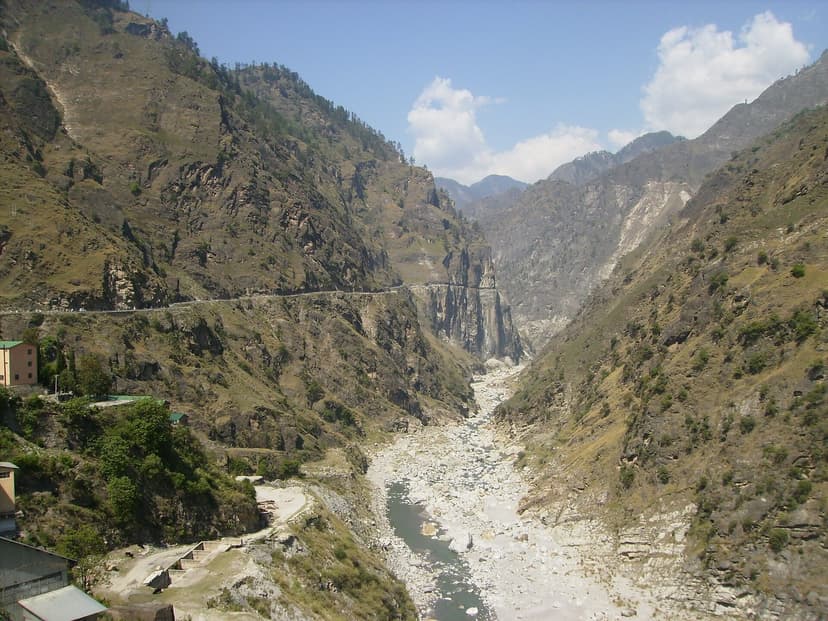
Kotgarh is 82 km east of Shimla. Everyone says three hours. Plan for four in summer traffic. You're on NH-5, the old Hindustan-Tibet Road, the same 1850s route the British engineered for wool and salt trade between Lahore and Lhasa. Cross the Sutlej at Dhalli, rise through Theog and Kufri, drop to Naldehra, then climb again through Kumarsain to Narkanda at 2,708 m. Kotgarh is 16 km beyond Narkanda, down a right fork; Thanedhar another six kilometres along the same ridge.
- Day 1: Shimla to Kotgarh (82 km, 3-4 hrs). HRTC bus from Shimla old ISBT to Narkanda (Rs 130 to 180, roughly 3 hrs), shared taxi Narkanda to Kotgarh/Thanedhar (Rs 60-80 per seat). Or hire a private cab from Shimla for Rs 3,500-5,000 one-way. Stop at Kufri for chai if you must, skip Naldehra.
- Day 1 afternoon: Harmony Hall ridge walk. Walk the orchard path from Thanedhar through Barubag. Paramjyoti Mandir is a ten-minute detour. Samuel Stokes is buried near the temple; the tombstone is plain, the setting is not.
- Day 2 morning: Kotgarh village and the Stokes Museum land. Walk the village, see the Satyanand Stokes Memorial Trust land (the 8-acre working research orchard is partly open, ask locally). Buy apples direct from a grower if it's harvest season. Rs 80 to 120 per kg depending on variety.
- Day 2 afternoon: Tani Jubbar Lake. 8 km back toward Narkanda. Deodar forest, small temple on the bank, usually empty on weekdays. Rs 30 parking if you drive in.
- Day 3 morning: Hatu Peak. 3,400 m summit with Hatu Mata Temple. 8 km trail climb from Narkanda, or drive most of the way. Views of the entire apple belt below. Go before 9 AM for clear skies.
- Day 3 afternoon: Narkanda to Shimla. Same road back. HRTC buses from Narkanda back to Shimla every 90 minutes till around 5 PM. Or carry on east to Rampur (60 km) if you're pushing for Kinnaur the next day.
Want a local sanity-check on your Kotgarh-Thanedhar route? Email us your draft itinerary. We'll tell you which day is too ambitious, which orchard owners are worth calling ahead, and whether the road past Narkanda has had landslides in the last fortnight.
When to go
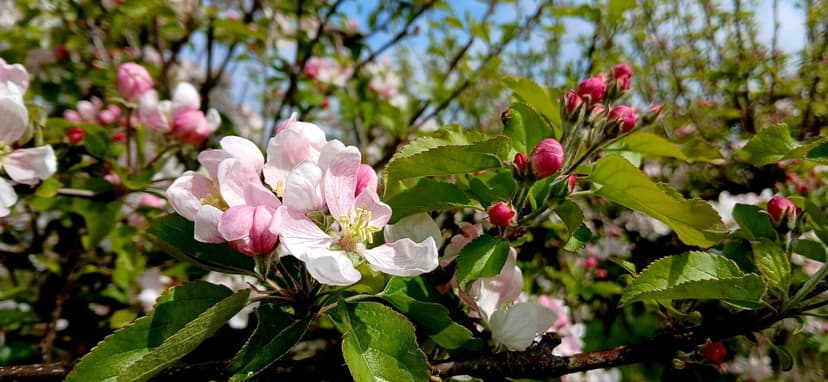
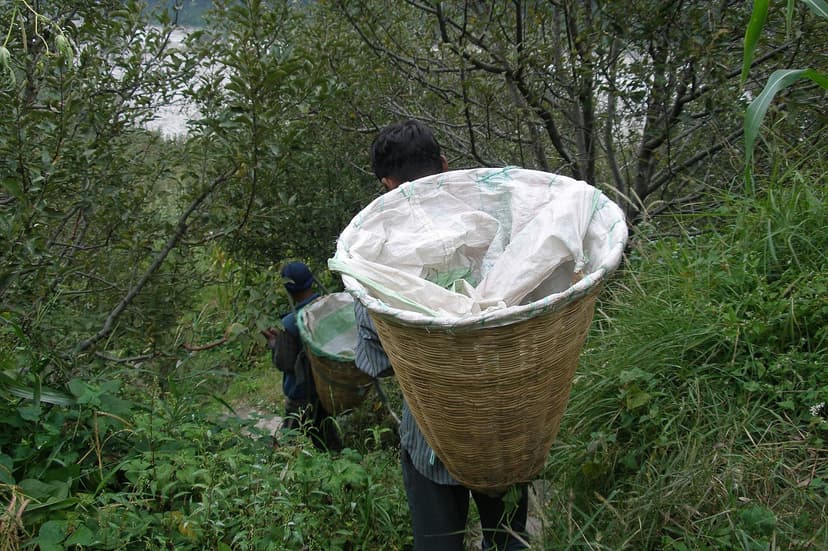
Two windows worth your airfare. April to mid-May is blossom season: pink buds opening to white flowers, the entire ridge dressed up for its own wedding. Cold nights, warm afternoons, almost no tourists. August to October is harvest: you'll see the kiltas (wicker picking baskets) on every path, smell apples on every breeze, and hear the tractor-trailers moving boxes toward Rampur and the Kalka rail line. September is the peak. The third window, June, is a secret: cherries at Thanedhar come ripe in June, the plums follow in July, and the crowds haven't arrived yet.
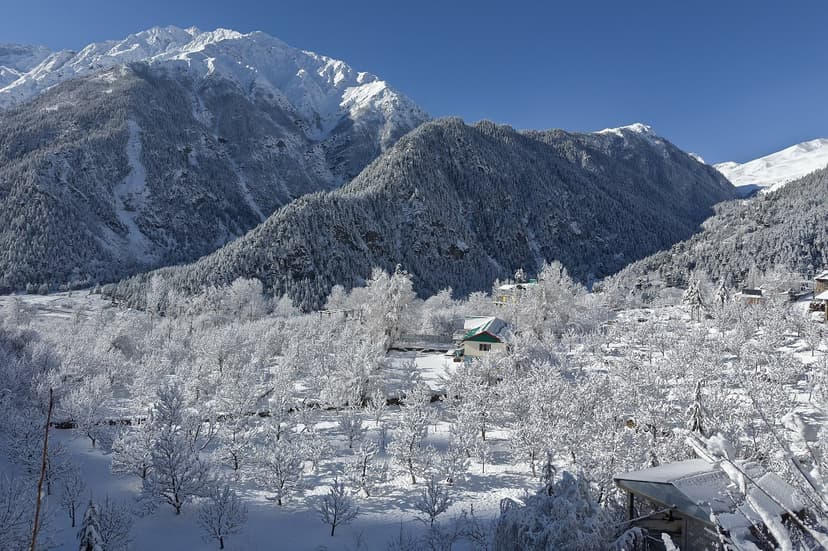
Winter is a choice. December to February gets snowfall (less than it used to, see the climate section) and Narkanda has a functional if creaky ski slope. Kotgarh proper goes quiet; many homestays close. If you're romantic about empty apple orchards in snow, this is your window. Budget extra days for weather.
Where to stay, what it costs
| Item | Price | Note |
|---|---|---|
| Grandma Stokes BB, Thanedhar | Rs 3,500 to 5,500 per night | Home-cooked meals included. 4 bedrooms, great-grandson of Samuel Stokes hosts. Phone 9816420213. HP Tourism registered. |
| Banjara Orchard Retreat, Thanedhar | Rs 5,599 per night | 6 rooms, 2 suites, 2 cottages at 2,350 m. Breakfast + parking free. Booking.com, MakeMyTrip. |
| Local homestay, Kotgarh village | Rs 1,500 to 2,500 per night | Ask at Kotgarh panchayat office for HP Tourism registered list. Basic but clean. |
| Narkanda hotels (mid-range) | Rs 2,500 to 4,000 per night | Hatu, Snowview, Mashobra Greens. Convenient for the Hatu Peak day trip. |
| HRTC bus Shimla to Narkanda | Rs 130 to 180 one-way | 3 hours. Buses every 90 minutes from Shimla Old Bus Stand. |
| Private cab Shimla to Kotgarh | Rs 3,500 to 5,000 one-way | Rs 4,500 to 6,500 return with waiting. Use HP Tourism-licensed drivers. |
| Apples direct from orchard | Rs 80 to 120 per kg | Premium Royal Delicious commands the top. Early varieties Rs 90 per kg from grower in July. |
| Orchard walk guided | Rs 300 to 500 per person | 2-3 hours. Ask at Grandma Stokes BB or Banjara Orchard Retreat. |
Want orchard-side recommendations for apple season 2026? Email us your travel dates and we'll tell you which orchards are picking that week, which homestay has rooms left, and what the ridge will look like when you arrive.
What to see besides the orchards
You didn't fly to Himachal for one ridge. Here's the rest of the list.
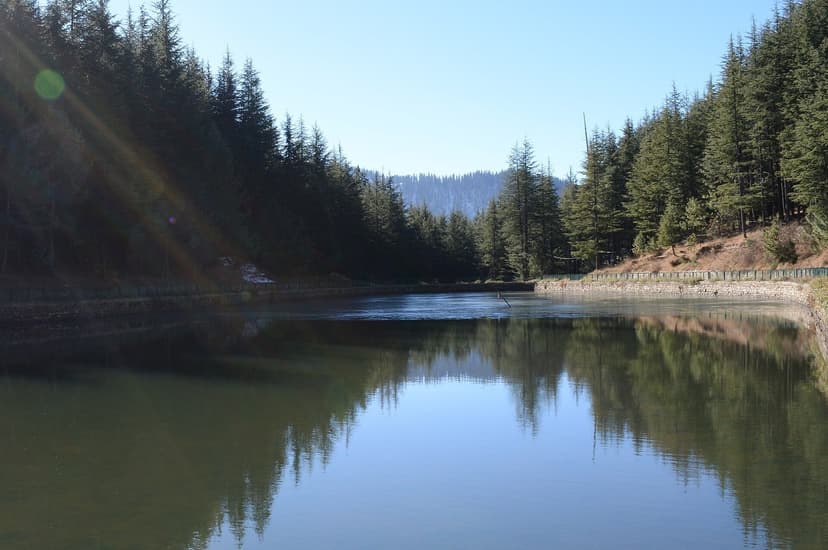
St. Mary's Church, Kotgarh. Eighteenth-century stone chapel with a tin-clad steeple and stained-glass windows in colours that don't quite match. Built during the Bishop of Calcutta's jurisdiction period; Stokes would have walked past it weekly in his missionary years before he left the faith. Ask the chowkidar to open it if the door is locked.
Paramjyoti Mandir, Thanedhar. The temple Stokes built in 1937 after his conversion. Burma teak pillars, dark grey local stone, kath-kuni construction with a traditional pagoda roof. There is something about the wood inside, the way it's aged, that you don't get at newer temples. Take your shoes off, sit for five minutes.
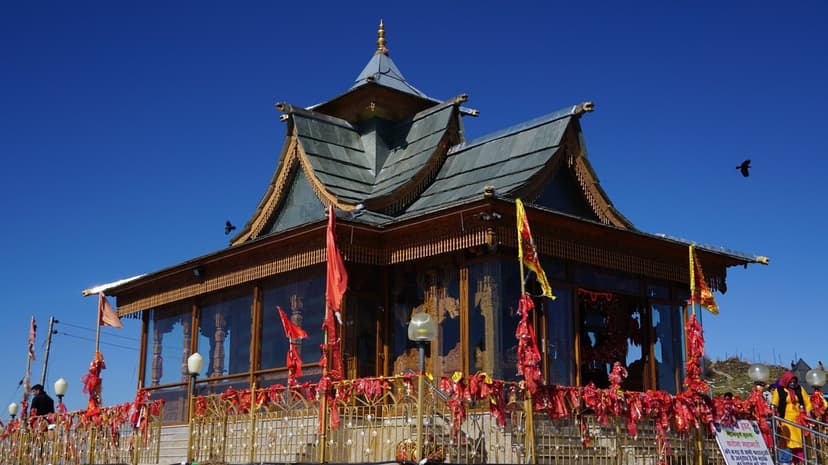
Hatu Peak. 3,400 m summit with the Hatu Mata Temple at the top. The last 2 km is trail-only. Views stretch from the Dhauladhars in the west to the Kinner Kailash line in the east, and on a clear day you can see Srikhand Mahadev. Go in May or October. July is cloud; February is ice.
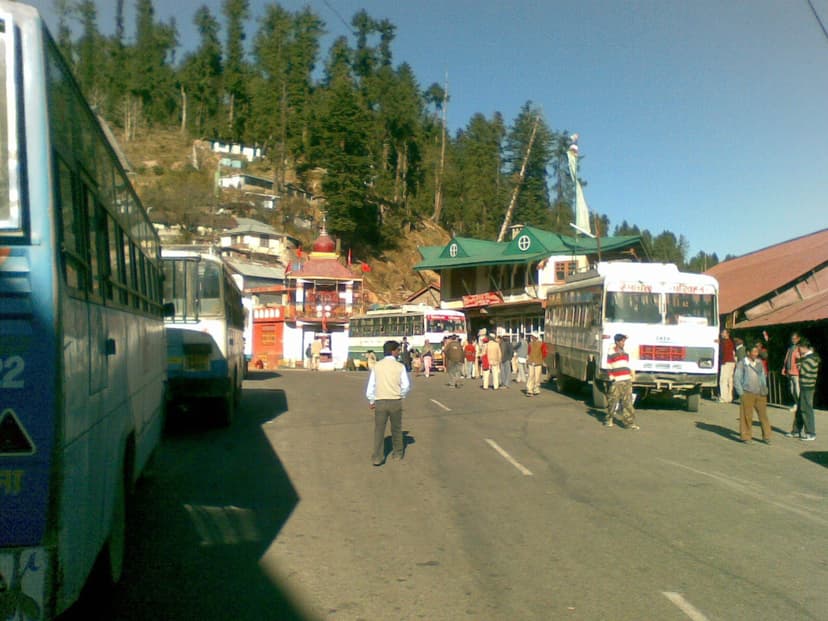
Narkanda. Ski town from December to February, junction for every direction in summer. The bus stand is small and loud and the chai stalls open at 5 AM. Don't stay here by choice if you can stay in Thanedhar, but if you're doing a Hatu trek at dawn, Narkanda wins on proximity.
Kotgarh and Kinnaur: the belt has a new centre
If you're writing an apple story in 2026, you can't stop at Kotgarh. Samuel's industry kept moving east. By the 1970s, Kumarsain and Rampur were planting. By the 1990s, the best yields were coming from Kinnaur. Today, Kalpa and the Sutlej villages around Telangi, Rarang, Urni, and Ribba produce apples of a grade that Thanedhar's best years in the 1930s couldn't have matched. Cold nights. Higher chilling-hour count. Dry summer sun. The physics moved. The industry went with it.
That's where Refuje's apple-orchard sundowners happen, at Telangi near Kalpa, during August and September harvest. It's not a tribute to Samuel; it's a continuation. You walk through orchards that were planted in the 1960s on rootstock that came up from Kotgarh. Somewhere in the DNA of those trees is a Stark Brothers sapling from Missouri, 1914, and a Philadelphia mother's Christmas parcel from 1918. Apples don't know any of that. But the families farming them do.
FAQ
Who planted the first apple tree in India?
Samuel Evans Stokes, an American Quaker from Philadelphia, planted the first commercial apple orchard at Barubag village (Thanedhar panchayat, Kotgarh, Shimla district) in 1916. He sourced the Red Delicious variety from Stark Brothers nursery in Missouri on a 1914 visit home. His mother Florence later shipped Golden Delicious saplings from the US as a Christmas gift. He converted to Hinduism in 1932 and took the name Satyanand Stokes.
How do I reach Kotgarh from Shimla?
82 km east on NH-5 (Hindustan-Tibet Road). HRTC bus from Shimla old ISBT to Narkanda is Rs 130 to 180 and takes 3 hours; shared taxi from Narkanda to Kotgarh/Thanedhar is Rs 60 to 80 per seat. Or hire a private cab from Shimla for Rs 3,500 to 5,000 one-way. Nearest airport is Shimla (Jubbarhatti); nearest broad-gauge railhead is Kalka.
When is the best time to visit Kotgarh for apples?
Two windows. April to mid-May for the blossom season (pink buds opening to white flowers, cold nights, almost no crowds). August to October for harvest, with September as peak. July is early-variety cherry and plum harvest (Thanedhar is a cherry area too). Winter (December to February) is for snow and empty villages; many homestays close.
Can I visit Stokes Farm and Harmony Hall?
Harmony Hall (built 1912) is still the Stokes family home in Thanedhar and is not a museum. You can see the exterior from the orchard paths that run past the estate. The Satyanand Stokes Memorial Trust land (fifty bighas donated by Vijay Stokes in 2021) is partly open; the planned museum and research orchard complex is still in build-out. Ask locally. Paramjyoti Mandir, the 1937 temple Stokes built, is publicly accessible.
Can I stay with the Stokes family?
Yes. Vinay Sirkeck, Samuel Stokes's great-grandson, runs Grandma Stokes' Bed & Breakfast in Thanedhar with his wife Veena. Four bedrooms, home-cooked meals by their cook Chameli, 180-degree views across the Sutlej valley. HP Tourism registered. Direct booking only by phone (9816420213). Rates vary by season; roughly Rs 3,500 to 5,500 per night. This is the closest you'll get to sleeping inside the Kotgarh story.
Why is Kotgarh called the "Apple Bowl of India"?
Kotgarh is the geographic and historical origin point of India's commercial apple industry. Samuel Stokes planted the first Red Delicious orchard here in 1916. From that single site, apple cultivation spread to Kumarsain, Rampur Bushahr, Kullu, and Kinnaur, eventually making Himachal the leading apple state. HP produces roughly 647,000 tonnes per year (2025-26), 80% of the state's total fruit output, worth Rs 4,000 to 5,500 crore.
Is the apple industry in Kotgarh under threat?
Yes. The apple belt has shifted upward in altitude from 1,200-1,500 m in the 1980s to 3,500 m plus today, driven by reduced chilling hours, less snowfall, and unseasonal hailstorms. Kotgarh at 2,134 m is at the lower margin of the viable zone. Farmers are responding with lower-chilling varieties (Super Chief, Gala), and in some cases diversifying to cherry, plum, kiwi, and avocado. See Tribune India "Apple no longer king in Kotgarh" (2023) for the granular picture.
Who are the Stokes descendants alive today?
The family did not leave. Asha Sharma (granddaughter, Columbia Journalism graduate) wrote the authoritative biography "An American in Gandhi's India" (1999, reissued 2008). Dr Vijay Kumar Stokes (grandson, retired IIT Kanpur professor) has documented Kotgarhi language and music for 35 years and donated 50 bighas of family orchard land to the Satyanand Stokes Memorial Trust in 2021. Vinay Sirkeck (great-grandson) runs Grandma Stokes' Bed & Breakfast in Thanedhar.
Where should I eat in Kotgarh?
Honestly, on a homestay plate. Grandma Stokes BB, Banjara Orchard Retreat, or any HP Tourism registered homestay will serve you siddu, lingri ka achaar, madra with kidney beans, rajmah-chawal, and a fresh-picked apple for dessert in harvest season. Narkanda has basic dhabas. There are no tourist restaurants worth naming; the good food is in private kitchens.
Is Kotgarh good for solo women travellers?
Yes, calmer than Shimla and with a strong HP Tourism homestay network. Kotgarh village itself is small enough that you walk everywhere. The Narkanda bus stand is the only rough edge; avoid arriving after dark. Vinay Sirkeck and Veena at Grandma Stokes BB are known hosts for solo women travellers. Pair with the solo-women Himachal guide for wider-state practicalities.
Can I do apple picking with a guided orchard tour?
Yes, during harvest (August to October). Banjara Orchard Retreat runs guided walks (Rs 300 to 500 per person) and most homestays will organise one informally. Red Delicious is the classic pick; ask for Royal Delicious if you want a richer flavour, or early Gala in late July. Refuje runs an apple-orchard sundowner experience at Telangi near Kalpa in Kinnaur during the same season, for the other end of the belt.
He never saw it
Satyanand Stokes died on May 14, 1946. India became a country on August 15, 1947, fifteen months later. One missed summer. He never saw the nation he helped free. He never saw the Rs 5,000-crore industry his saplings would make. He never saw his granddaughter at Columbia writing the book. He never saw his grandson walk the old orchard at seventy-five, or his great-grandson take in guests in the house he built. But drive through Kotgarh on a Saturday in September, when every branch bends under the weight of Red Delicious apples and the trucks are lined up on the Thanedhar road and the air smells the way it smells, and you'll see him everywhere.
Sources
Primary and official. HP Shimla District (government). World Bank on HP apple cultivation (Dec 2024). HPMC.
Journalism. Live History India: Satyananda Stokes and the Apple State. Scroll: The American in Khadi. The Tribune: Apple no longer king in Kotgarh. Outlook: Climate crisis pushing HP apples higher. Hill Post: How the Apple Came to India. HimbuMail: Vijay Stokes 50 bigha donation.
Hindi press. ETV Bharat: Grandfather gave Himachal the apple, now the grandson gives the mountains 50 bighas. Amar Ujala: 111 years of Stokes and Himachal apple. Dialogue Earth (Hindi): Kotgarh climate diversification. Patrika (Hindi): The father wanted a businessman.
Academic and data. PLOS One: Apple orchards shifting to higher altitudes in western Himalaya. FreshPlaza: HP apple output 2025-26.
Book. Asha Sharma, An American in Gandhi's India (1999, reissued 2008).
Background. Wikipedia entries for Satyananda Stokes, Narkanda, Hatu Peak, Kotgarh.
About Rajesh Thakur
Rajesh Thakur grew up in the Kullu valley and has been writing about Himachal Pradesh travel and culture since 2018. He's most at home in upper Kullu, Lahaul, and the Spiti circuit, and has done the Manali-Kaza loop more times than he's counted.
You Might Also Like
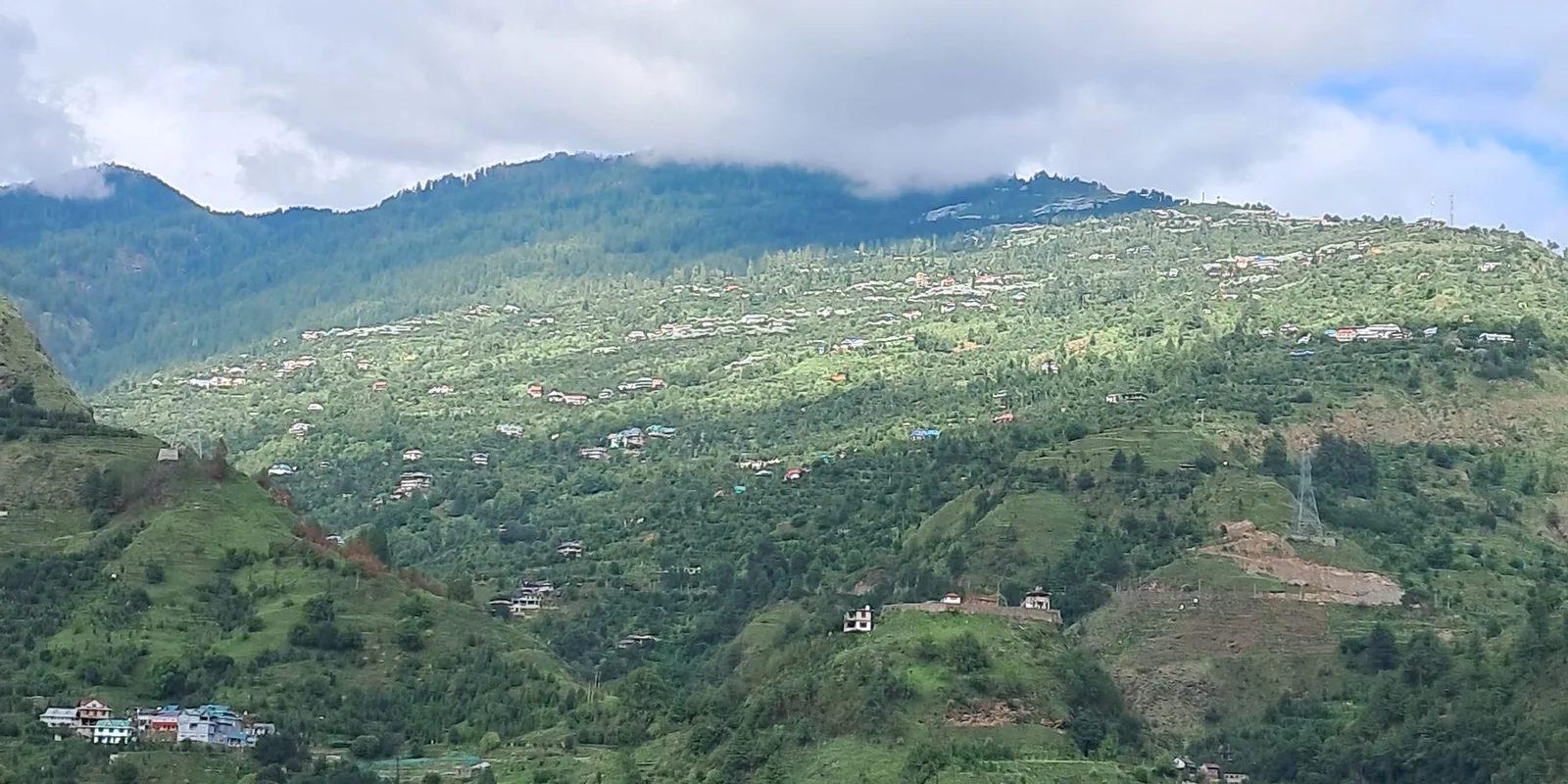
Hosted Himachali Food Near Shimla
Compare the advertised tasting and story-making formats at Sarog, including guest activities, group conditions and the timings to settle before booking.
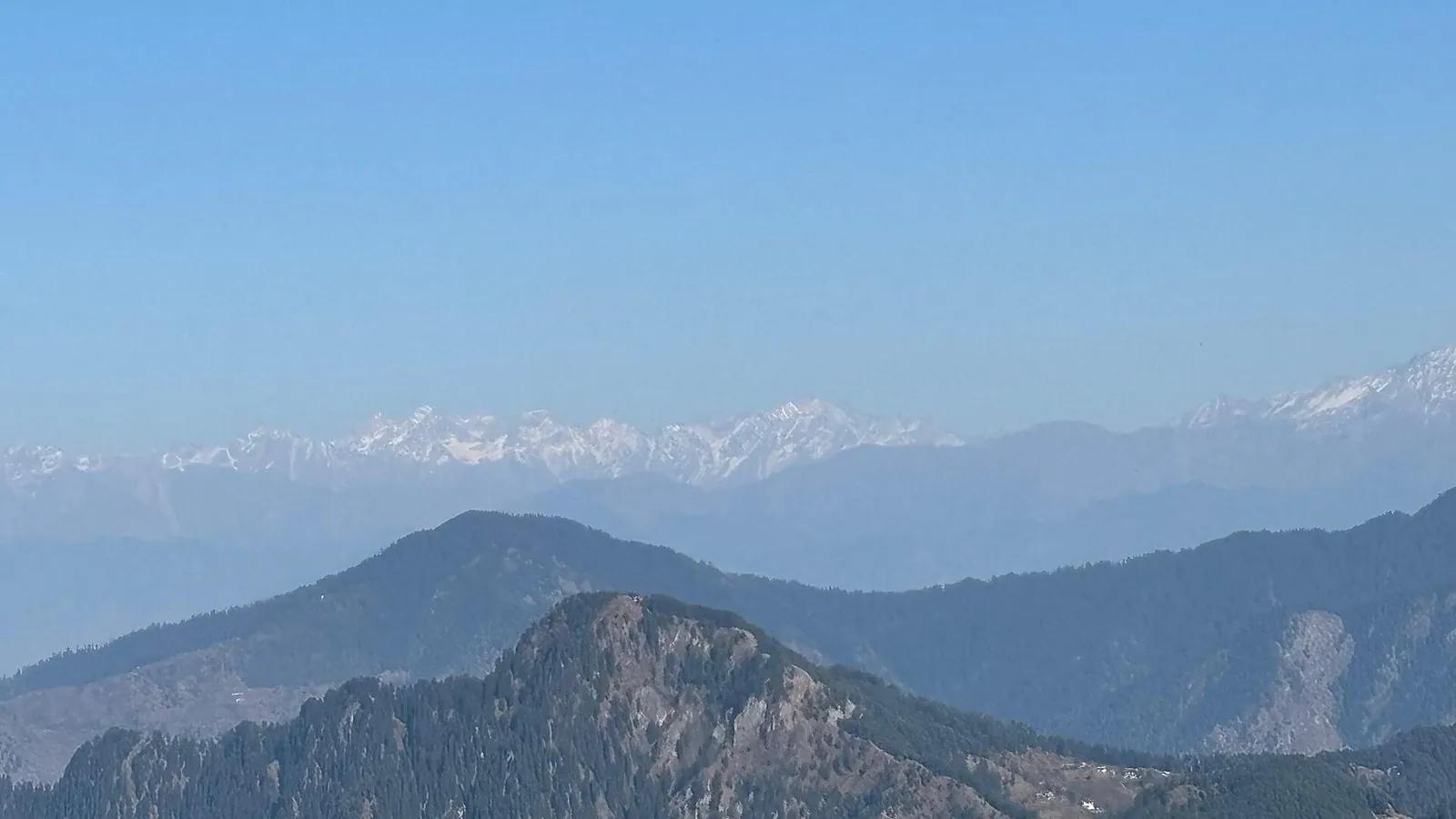
Day Hikes and Forest Walks Around Shimla (2026): Jakhu, the Glen, Tara Devi & Shali Tibba
The on-foot Shimla, sorted by effort: from the Jakhu and Tara Devi temple walks and the easy Glen forest to the full-day Shali Tibba climb to a 2,870 m summit. What each one costs your legs, and what is at the top.
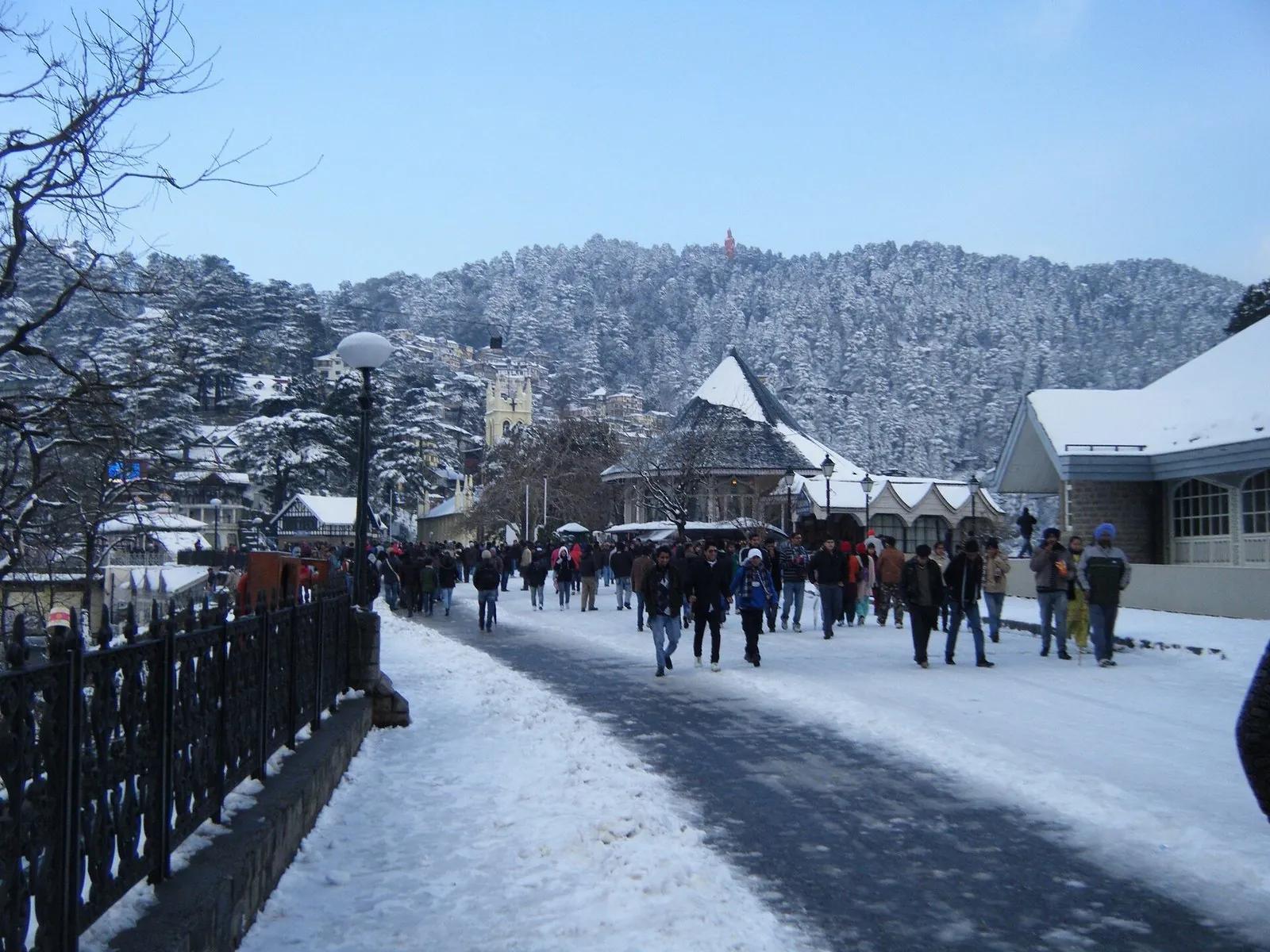
Day Trips from Shimla: 10 Excursions with Real Costs and Honest Verdicts
Ten day trips from Shimla, sorted by half-day vs full-day. Mashobra, Naldehra, Kufri, Fagu, Narkanda, Tattapani, Chail, Kotgarh, Kasauli, Sarahan. Distances re-verified against Wikipedia and OSM in April 2026. Honest verdicts on what is overrated, what changed (Tattapani natural springs are submerged now), and what HRTC bus or private taxi will cost. By a Kullu local who drives the Shimla day-trip belt every time he leaves the state.